Home Blog Page 676

Hon’ble PM Modi inaugurate Bogibeel bridge

0
PM Narendra Modi Unveiled Bogibeel Bridge

Dibrugarh, Metro Rail News: This Christmas Day, Prime Minister Narendra Modi celebrates the completion of a Bogibeel Bridge project his predecessor Atal Bihari Vajpayee inaugurated 16 years ago.

All you need to know about Bogibeel Bridge

Bogibeel Bridge is India’s first and only fully welded bridge construction. Which combined road and rail bridge over the Brahmaputra river in the state of Assam between Dhemaji district and Dibrugarh district. The bridge has double rail line and 3 lane road on the upper deck, built 17km downstream of Dibrugarh in the south and Dehmaji to the river’s north, spans 4.98km, and emerges as a vital link between Assam and Arunachal. The bridge will provide connectivity to nearly 50 lakh people residing in Upper Assam and Arunachal Pradesh, giving direct access to north bank from the rest of the country. This is the 4th longest bridge in India after Dhola Sadiya Bridge, Bandra-Worli Sea Link and Mahatma Gandhi Setu.


The Bogibeel Bridge Now Open for Public Today

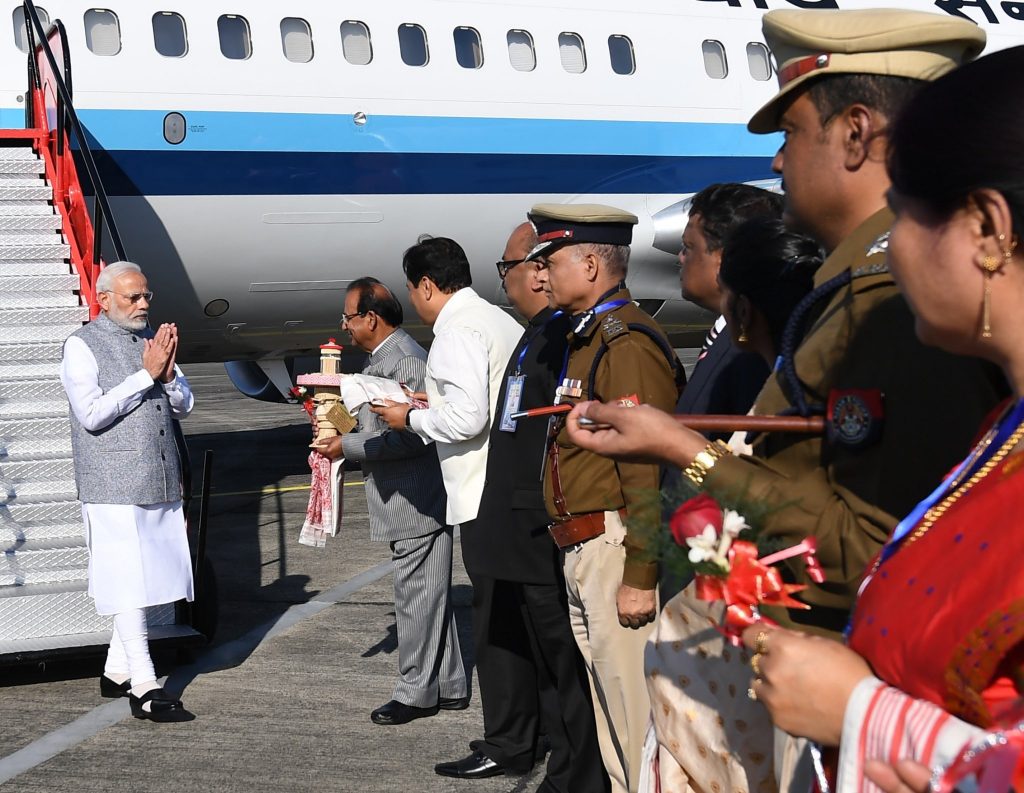
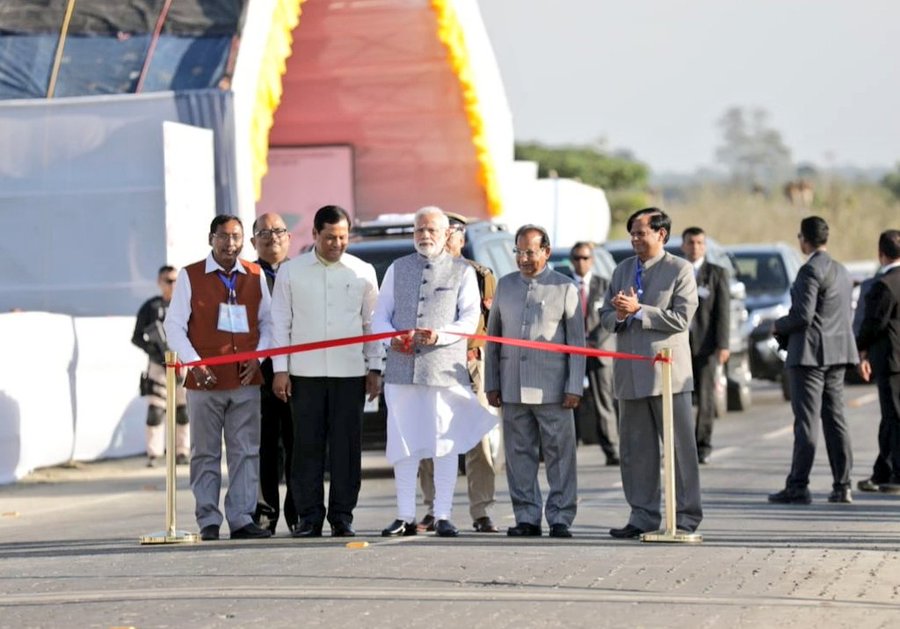
Prime Minister Narendra Modi Inaugurate India’s longest rail-cum-road Bogibeel bridge Today. The bridge is, in many ways, considered a dream come true for the people of Assam and Arunachal Pradesh.

Tight security has been arranged on both sides of the bridge for the inaugural programme. The 4.94 km-long bridge over the mighty Brahmaputra river is situated 17 km downstream of upper Assam’s Dibrugarh city.

The Bogibeel bridge project was a part of Assam Accord 1985. Former Prime Minister HD Deve Gowda had laid the foundation stone of the bridge on January 22 in 1997. Former prime minister Atal Bihari Vajpayee had inaugurated the construction work of the bridge on April 21, 2002.

The project was initially sanctioned at a cost of Rs 3,230.02 crore and the final cost was revised to Rs 5,920 crore.

“Completing the Rs 5,900-crore project over two decades (the foundation was laid in 1997) has been but a daunting task, especially taming and bridging the unpredictable and flood-prone river during monsoons,” said Mahendra Singh, chief engineer, Northeast Frontier Railway’s Bogibeel project. The bridge built 17km downstream of Dibrugarh in the south and Dehmaji to the river’s north, spans 4.98km, and emerges as a vital link between Assam and Arunachal. “Once the bridge is opened, troops and supplies can move faster to Arunachal Pradesh, which is India’s eastern-most state sharing border with China,” said an Army official.


The bridge reduces travel time from Assam to Arunachal Pradesh to four hours because all this time, one had to detour via Tinsukia covering an additional 170km. The current route through Guwahati in the south bank is long and torturous.

“Located just 20km away from the Assam-Arunachal border, it now becomes the most preferred alternative to the Kolia Bhomora Setu in Tezpur,” said Singh.

Bogibeel Bridge falls in Seismic Zone-V, which is most vulnerable to earthquakes with magnitudes more than 7.0. To offer good stability, the heavy spans (1,700MT) are provided with seismic restrainers.

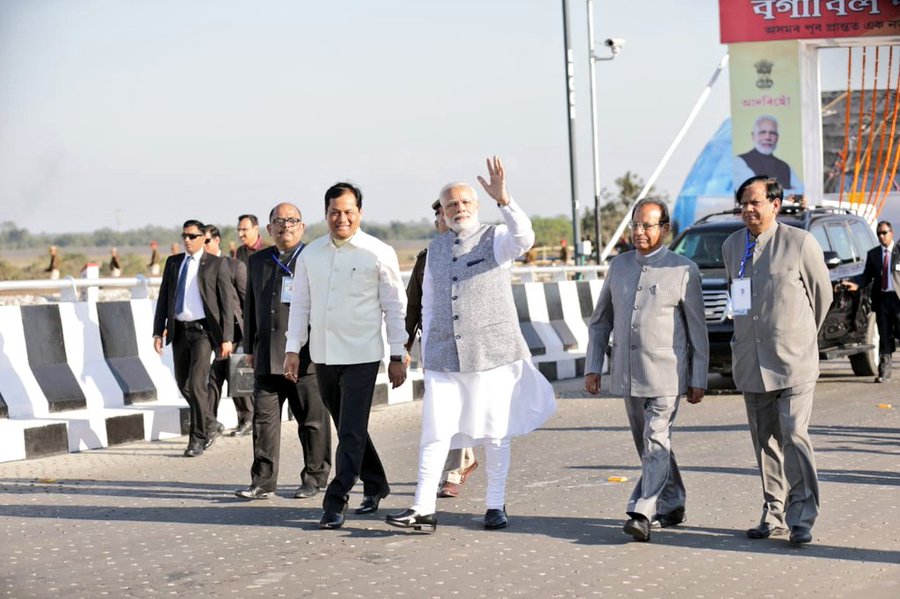
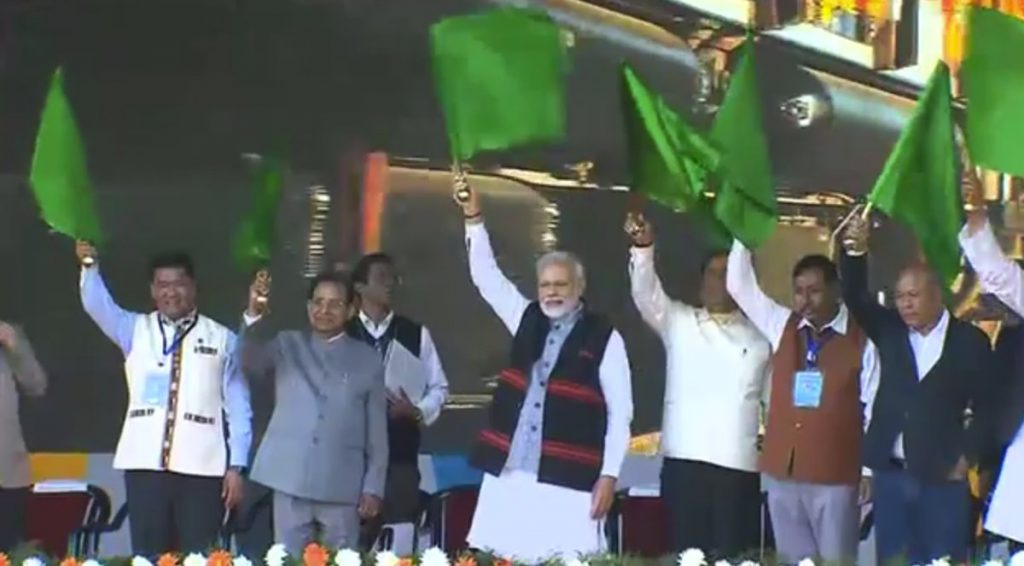
Glimpse of Bogibeel Bridge Inugration

Advertisement1
InnoMetro_2026

Delhi Metro Year End Review Report for 2018

0

New Delhi, Metro Rail News: The year 2018 was a historic year for the Delhi Metro Rail Corporation (DMRC). This year, a record, 86.72 kilometres of new sections of phase III were opened by Delhi Metro. E-Rickshaws were also launched from some stations as part of efforts to increase the last mile connectivity from the stations.

       2nd January:   The Delhi Metro started the test runs on the Noida – Greater Noida Corridor on 2nd January. The train was flagged off by Dr. Mangu Singh, Managing Director, DMRC and Mr. Alok Tandon, Managing Director, NMRC. 

       14th March: The Majlis Park – Durgabai Deshmukh South Campus Pink corridor of the Delhi Metro was formally inaugurated for passenger services by the Union Minister of State (Independent Charge) for Housing and Urban Affairs, Sh. Hardeep Singh Puri and the Chief Minister of Delhi, Sh. Arvind Kejriwal in the presence of Union Minister for Science and Technology, Earth Sciences, Environment, Forests and Climate Change, Dr. Harsh Vardhan and many senior dignitaries.   

       28th May:  The 24.82 kilometre long Kalkaji Mandir – Janakpuri West Metro corridor was flagged off on 28th May, 2018 (Monday) by the Hon’ble Union Minister of State (Independent Charge), Ministry of Housing and Urban Affairs, Sh. Hardeep Singh Puri and the Hon’ble Chief Minister of Delhi, Sh. Arvind Kejriwal from the Nehru Enclave Metro station.

        24th June: The 11.18 kilometre long City park (Bahadurgarh) – Mundka Metro corridor was flagged off via remote by the hon’ble Prime Minister, Sh. Narendra Modi on 24th June, 2018. Bahadurgarh became the third city in Haryana to be connected by the Delhi Metro.

        3rd August: Hon’ble Lt. Governor of Delhi, Shri Anil Baijal flagged off a fleet of 100 e-rickshaws, called SmartE, from Dwarka Sec-10 Metro station to boost the last mile connectivity service in Dwarka sub-city for Metro commuters. These E-rickshaws ply from 8 Metro stations of Dwarka sub-city namely, Dwarka, Dwarka Sec-14, Sec-13, Sec-12, Sec-11, Sec-10, Sec-9 and Sec-8 from 6 AM to 11 PM.

     6th August:  The 8.10 kilometre long Durgabai Deshmukh South Campus – Lajpat Nagar Metro corridor was formally flagged off on 6thAugust for passenger operations by Sh. Hardeep Singh Puri, Union Minister of State (Independent Charge), Housing and Urban Affairs and Sh. Arvind Kejriwal, Chief Minister, National Capital Territory of Delhi in the presence of the Sh. Anant Kumar, the Union Minister for Chemicals & Fertilizers and Parliamentary Affairs. 

      16th September: The Delhi Metro introduced QR code based ticketing facility for travel on Airport Express Line from 16th September. With the introduction of this facility, commuter’s using Delhi Metro’s Airport Express Line can use the QR Code generated on their smart phones instead of smart cards or tokens to travel.

      31st October: The 17.8 kilometre long Trilokpuri Sanjay Lake – Shiv Vihar Metro corridor was formally flagged off on 31st October for passenger operations by Sh. Hardeep Singh Puri, Union Minister of State (Independent Charge), Housing and Urban Affairs and Sh. Manish Sisodia, Deputy Chief Minister, National Capital Territory of Delhi.

        19th November: The 3.2 km long Raja Nahar Singh (Ballabhgarh) – Escorts Mujesar extension of the Kashmere Gate – Escorts Mujesar corridor (Violet Line) of Delhi Metro was formally flagged off via remote by the hon’ble Prime Minister of India, Sh. Narendra Modi on 19th November, 2018. 

Source: DMRC

Advertisement1
InnoMetro_2026

Now Hyderabad Metro will run every 6 minutes during peak hours

0
Now Hyderabad Metro will run every 6 minutes during peak hours

Hyderabad, Metro Rail News: Good news for Hyderabad people, A train is now being operated every six minutes during peak hours on the route, To reduce the waiting time for Metro Rail passengers, especially those travelling on the Miyapur-LB Nagar route.

On 22 December 2018, The L&T Metro Rail Hyderabad announced that the service frequency of Metro trains on the Miyapur-LB Nagar route is now for every six minutes during peak hours i.e. from 8 am to 12 noon and 5 pm to 9 pm. The service frequency during non-peak hours has reduced to 7 minutes against earlier which was 8 minutes.

Hitec City Metro work may take more time

A majority of the eight stations on the Ameerpet-Hitec City Metro Rail line is yet to get staircases and lifts. Staircases have been built at Durgam Cheruvu, the demolition of buildings on the other side was still taking place on Friday.

The staircase construction is in progress at Madhapur and Jubilee Hills Road No. 5 . Construction of piers and viaduct uptil Cyber Towers is underway.

An official on condition of anonymity stated that not only access to the commuters but also the signalling system would take time to be synchronised.

As work on the Cyber Towers piers for train reversal facility has not been completed, HMRL has hit upon the technical solution of “twin single line method” wherein double line railway track functions as two separate single lines. 

But the twin single line needs a lot of testing. Additionally, since Metro Rail systems involve highly complicated signalling systems, they have to be synchronised for proper functioning. The Commissioner of Metro Rail Safety (CMRS) will conduct an inspection, only after which the final approval will be received.

Governor E.S.L. Narasimhan had asked Metro Rail officials to start the Ameerpeet-Hitec City services from this month. While that looks unlikely, officials, while not wanting to divulge a date, said they were targeting an inaugural with basic amenities in January. 

However, it appears that the works would seem to take longer than that. The official pointed out that land acquisition had been completed across the stretch. The deadline for making the line operational is March.

Advertisement1
InnoMetro_2026

Nizamuddin Railway station ready to connect with Delhi Metro Link

0
Nizamuddin Metro station front view

New Delhi, Metro Rail News: In the coming days, a new transport hub will come up after Delhi Metro links the city’s third busiest railway station at Hazrat Nizamuddin and the Inter-State Bus Terminus at Sarai Kale Khan. The new Hazrat Nizamuddin metro station, part of the Lajpat Nagar-Mayur Vihar Pocket-1 stretch of the Pink Line, is expected to become operational later this month

Sources in Delhi Metro Rail Corporation (DMRC) revealed that a safety audit of the 9.7-km Lajpat Nagar-Mayur Vihar Pocket-1 section of the Pink Line’s Majlis Park-Shiv Vihar corridor will be likely conducted next week by the Commissioner of Metro Rail Safety. Once this is through and cleared, DMRC is expected to open the section to the public this month itself.

“The nearest metro stations at the moment are 3-4 kilometres away, but the new station at Hazrat Nizamuddin will change that,” observed Anuj Dayal, executive director (corporate communications), DMRC.

Delhi Metro’s presence will only add to the importance of the location as a transport hub, given the plans to have the three high-speed corridors of the proposed Regional Rapid Transit System converging at Sarai Kale Khan and connecting Delhi with Keeping in mind the integration with the RRTS station, DMRC has made one of the three entry gates wider. “Gate No 3 is 13 metres wide instead of the usual 7-8 metres,” said a DMRC official. “The entry point has extra-wide staircases and two escalators, with provisions for the addition of two more escalators in the future.”

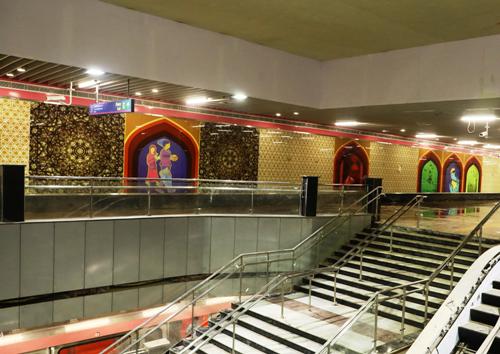
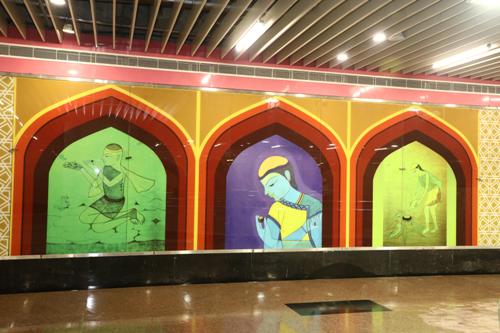
Around 50,000 people are expected to use this metro halt, so the station has three atria unlike the two in most other son the Pink Line. The station has the history of the nearby areas reflected in the 30 artworks that adorn its interiors. Thematic impressions and ‘jharokhas’, apart from motifs from the architecture of Humayun’s Tomb, mark the station. But the beauty aside, there are a few drawbacks here. While Gate No 1 leads commuters to the Hazrat Nizamuddin railway station, the second gate is close to the bus terminal. Commuters travelling between the railway station and the metro station will, therefore, have a 250-metre trek from one to the other.

Paucity of land forced the construction of the underground metro station at a considerable distance from the railway station. DMRC couldn’t even create a dedicated pathway connecting the railway station with the metro station because the road between them belongs to PWD. As soon as commuters exit the metro premises, they will be bang in the middle of traffic, crowds and encroached pavements. “We have provided whatever facilities we could wherever possible for commuters,” a DMRC official insisted. “There are two elevators, apart from escalators at the entry/exit point closest to the railway station so that passengers don’t have to carry their luggage.

Ominously, even before the station is officially open, many of its entry/exit point walls have been taken over by hawkers. “We have put up fences wherever possible to ensure there is no encroachment and also put up bollards on our premises so that vehicles don’t enter the area without authorisation,” the official claimed.

Advertisement1
InnoMetro_2026

Lucknow metro to run on airport-Munshipulia route from April 2019

0
Lucknow metro to run on airport-Munshipulia route

Lucknow, Metro Rail News: From April 2019, commuters in the capital city Lucknow will have the option of taking a Metro ride from the airport to Munshipulia.

Currently, Lucknow Metro running on an 8-km stretch from Transport Nagar to Charbagh, the Metro will be operational on the entire 23-km stretch from Chaudhary Charan Singh Airport to Munshipulia (North-South corridor), said LMRC officials. The passenger load, which is around 10 lakh per year, is expected to increase 10 fold, they added.

“Now, the entire 23-km stretch would be available for the ride so more commuters are expected to board the Metro train. We have all the rolling stocks with us and they all would be pressed in according to the traffic on the route,” said an official.

The LMRC has completed all its engineering work, including construction of tunnels, track-laying work, signaling, well before time just to start Metro operations on time.

Lucknow Metro Rail Corporation (LMRC) will complete overhead wiring in two days. It has completed civil construction work near Polytechnic crossing, which further leads to the joining of the complete section from Chaudhary Charan Singh Airport to Munshipulia.

Besides, the corporation is focused on clearing the remaining installation work in this corridor by the end of this year. This would pave way for the test of Lucknow Metro by the Commissioner Railway Safety.

LMRC has also completed the track laying work from CCS Airport to Munshipulia Metro Station about a week back.

“The completion of all the work from CCS Airport to Munshipulia in such short duration could only be possible because of the highly skilled work force and dedication, expertise and right guidance,” said Kumar Keshav, MD, LMRC.

The LMRC has already moved an application for the clearance by the Commissioner Railway Safety. It will start testing the track, signalling, OHC work from next week or from the first week of the January, said an official.

Recently, Lucknow metro MD Kumar Keshav inspected the work from Lucknow University station to Munshipulia Station. The university metro station is one of the three stations in this corridor to have a radio tower with Badshah Nagar and Indira Nagar metro stations.

The tower installed here helps in the signalling of Metro that will help in making operational functioning like surveillance, tetra connectivity smoother. These towers will work on the frequency between 380 mhz-385 mhz.

The installation work for the glasses at the ticket office machine (TOM) has also started and it would be completed in the last week of this month.

The civil work of KD Singh & RS Mishra Metro Station is also progressing. Metro has developed a commercial space (property development area) on both sides of KD Singh Metro Station along with one side at all other seven elevated Metro stations.

The artwork at the outer side of Ram Sagar Mishra Metro Station has also started.

TRACK TESTING SOON

The LMRC has already moved an application for clearance by the Commissioner Railway Safety.

It will start testing the track, signalling, OHC work from next week or from the first week of the January, said an official.

The installation work for the glasses at the ticket office machine (TOM) has also started and it would be completed in the last week of this month.

Advertisement1
InnoMetro_2026

JICA sanctions Rs 4,760 crore for Chennai Metro Rail Phase-2

0
Japan agency sanctions Rs 4,760 crore for Chennai metro rail phase 2

Chennai, Metro Rail News: In a major step to the metro railway network in the Chennai, the Japan International Cooperation Agency (JICA) on Friday sanctioned a Rs 4,760.67 crore (75.519bn JPY) loan to kickstart the 107.55 km Chennai Metro Phase-2. An agreement in this regard was signed between C S Mohapatra, additional secretary, department of economic affairs, The ministry of finance, and Katsuo Matsumoto, chief JICA representative, New Delhi.

“The Chennai Metro Project (2) (I) aims to meet growing traffic demand by building mass rapid transit system to mitigate worsening road traffic/ traffic pollution and eventually lead to balanced regional development and enhancement of environmental condition in Chennai Metropolitan Area,” said a release from the ministry of finance.

Phase-2, initially estimated to cost Rs 85,047 crore, was cut by nearly Rs 11,300 crore after a revised detailed project report was prepared, officials said, adding that the Centre, which is yet to officially accord sanction, will share a part of the cost.

Line Map of Rail Network in Chennai City

Since 2008, JICA had funded Rs 11,000 crore in loans for developing around 52.4km of the metro rail network 45km of Phase 1 and a 9km extension. Phase 2 may link 4 corners to core of city

Phase-2, with 116 stations across corridors, is expected to link all four corners of the city with the core area. The corridors include the stretch from Madhavaram to SIPCOT in Siruseri via Mylapore over 46.1km, from CMBT to Lighthouse over 17.1km and from Madhavaram to Sholinganallur via St Thomas Mount over 45.2km.

A separate detailed project report has been prepared for extending the CMBT-Light House section to Poonamallee.

Chennai Metro Rail Ltd (CMRL) will first begin construction of the priority corridor a 52.01km stretch from CMBT to Sholinganallur with 57 stations across the Madhavarm-Sholinganallur and Madhavaram-Siruseri sections and has begun conducting soil tests. “We have changed underground stations to elevated wherever possible. We have also trimmed down the size of the stations. This is to cut cost as well as the time of construction. The finer details will be ready only in the detailed design process which is underway,” a CMRL official said. “The priority corridor alone will have 15 to 20 elevated stations. We decided to change based on the availability of land and space.”

Several other measures have also been taken to bring down the cost. It includes acquiring government land wherever possible. So far, CMRL has issued notices to 800 people to the their land to build the priority corridor.

Officials said about around 30,000 square metres of land would be required for Phase 2, one-third the 90,000 square metres acquired for the 45km phase-1. The size of the stations in Phase 2 will be around 150 metres against 220 metres in Phase 1.

Advertisement1
InnoMetro_2026

NMRC approves Safety inspection report, seeks Aqua Line inauguration date from govt

0
Aqua Line
Image for representation only

Noida, Metro Rail News: On 21 Dec 2018, A final and mandatory safety inspection report has given the Noida Metro Rail Corporation (NMRC) for the approval to launch commercial operations of the much awaited Noida’s Aqua Line. After the approval, the NMRC has now written letter to the Uttar Pradesh government to finalise the date of inauguration of the much-awaited Aqua Line that would run between Sector 71 station in Noida and the Depot Station in Greater Noida, covering 29.7 km through 21 stations.

“The Commissioner of Metro Rail Safety (CMRS) report has been received and it has its sanction for the commercial operations of the metro service. The report also praised the civil and track work of the metro system, NMRC ED P D Upadhyay said.

NMRC’s managing director has written a letter to the state government for finalizing the date of inauguration, said Upadhyay, who was in Lucknow Friday, handed over a letter to Chief Secretary Anup Chandra Pandey.
He also said the fares of the Aqua Line would be decided in the NMRC Board meeting scheduled on December 28.

“Chairman Sanjay K Murthy, the additional secretary to the Ministry of Housing and Urban Affairs (MoHU) will chair the meeting, he added. 

Earlier, the Greater Noida Industrial Development Authority (GNIDA) approved the second phase of the Metro link from Noida Sector 71 to Knowledge Park 5 in Greater Noida.

The extension will comprise nine stations and with a project cost of cost Rs 2,602 crores.

This decision was taken at the Authority’s 113th board meeting. “NMRC would be the nodal agency for the project. The first phase of the Metro project comprising five stations from Noida Sector 71 to Greater Noida Sector 2 is expected to cost around Rs 1521 crore, officials said.

The extended line of Noida Metro’s Aqua Line will have a total of nine metro stations out of which two will be in Noida and seven will be in Greater Noida. The metro stations in Noida include sectors 122 and 123 and the metro stations in Greater Noida include sector 4, Ecotech 12, sectors 2, 3, 10, 12 and Knowledge Park V.

Akhilesh Yadav earlier had given its approval for construction of a 15-km Metro project.

“We have asked builders to contribute fund and generate ideas to lure investment and buyers,” said a senior official of UP government.

“We are adhering to the direction of the government. This project will change the fortune of this belt. We have decided to plan stress-free homes where we will offer facilities for all family members,” said Rahul Gupta, Director of Ace group.

“We believe that this project is crucial as it will benefit thousands of homebuyers who have shifted to the newly built apartment complexes in Greater Noida West and nearby Crossings Republik in Ghaziabad that has 36,000 housing units,” said Geetambar Anand, CMD, ATS.

Greater Noida West has around 3.5 lakh under-construction housing units of which around 40,000 are occupied.


Advertisement1
InnoMetro_2026

Delhi Metro invites tender for private operation of train services

0
Delhi Metro invites tender for private operation of train services

New Delhi, Metro Rail News: The Delhi Metro Rail Corporation (DMRC) invites online open e-tenders for an eligible tenderer, who fulfill qualification criteria as specify in the Notice Inviting Tender (NIT) for the work of train operation service on Delhi Metro Line-1 (Red Line) and Line-2 (Yellow Line).

Two tenders are being floated for Train Operation services of Line1 & Line-2 i.e TRAIN OP-01/2018 and TRAIN OP-02/2018 respectively.

Tender Notice No. Train OP-01/2018

Name of Work: Contract Package: TRAIN OP-01/2018: Contract for Train Operation Services of Line-1 (Shahdara Crew Control).

Approximate Cost of work: INR 19.64 crores Tender Security

Amount/Earnest Money Deposit: INR 19.64 Lakh

Tender Notice No. Train OP-02/2018

Name of Work: Contract Package: TRAIN OP-01/2018: Contract for Train Operation Services of Line-1 (Shahdara Crew Control).

Approximate Cost of work: INR 19.64 crores Tender Security Amount/Earnest Money Deposit: INR 19.64 Lakh

General Information

Completion period of Work: 51 months (48 months of operation + 3 months for training/mobilization). The contract period may be extended further for six months after the performance review.

Tender Documents on sale: From 20.12.2018 to 21.01.2019 (up to 1500 hrs)

Tender Document Cost: Rs.23,600.00 (Non-refundable)

Last date of Seeking Clarification: 27 December 2018 (up to 05.00 pm) Pre-bid Meeting: 28 December 2018 at 11.00 AM

Date and Time of submission of Tender (Online): From 11 January 2019 (from 11.00 AM) to 21 January 2019 (up to 03.00 PM)

Date & Time of opening of Tender online (Technical Bid): 22 January 2019 (at 4.00 PM)

Authority, the place for submission of tender cost & Tender Security (EMD), seeking clarifications on tender documents and

Pre-bid meeting: The Chief General Manager (Contracts), Delhi Metro Rail Corporation Ltd., 5th Floor, A-Wing, Metro Bhawan, Fire Brigade Lane, Barakhamba Road, New Delhi –110001 Based upon the quantum and the location of the work, the present Requirement of Train Operation Services has been divided into following two contract packages for engagement of Services provider, which shall be dealt as under:

CONTRACT PACKAGE: TRAIN OP-01/2018: Contract for train operation services of line-1 (Shahdara crew control). Approximate cost of work is INR 19.64 crore.

CONTRACT PACKAGE: TRAIN OP-02/2018: Contract for train operation services of Line-2 (Kashmere Gate Crew Control & Qutub Minar Crew Control). Approximate cost of work is INR 29.95 crore.

Technical Packages of both the contracts packages shall be opened and finalized simultaneously. However, financial packages shall be dealt with in the following sequence:

Financial Package of Contract OP-02/2018 shall be opened first and finalized.

After finalization of Contract OP-02/2018, the financial packages of OP-01/2018 shall be opened.

The financial package of the bidder who has been awarded Contract OP-02/2018 and becomes technically compliant in Contract OP-01/2018, shall not be opened.

Advertisement1
InnoMetro_2026

Delhi Metro is now officially on Twitter: Follow them @officialDMRC

0
Delhi Metro on Twitter: By operating as many as eight lines, Delhi Metro in March this year had registered a steady rise in the average number of passengers, with nearly 27 lakh commuters taking the rapid transit network daily in February.

New Delhi, Metro Rail News: On Thursday, Delhi Metro Rail Corporation (DMRC) announced that it has finally joined Twitter, where it will interact with and address all complaints and suggestions of Delhi Metro commuters

While the Launching the Official Twitter handle @OfficialDMRC, Managing Director Mangu Singh said, “DMRC is now on Twitter. Let us keep in touch. Your feedback will help us serve you better.”

By operating as many as eight lines, Delhi Metro in March this year had registered a steady rise in the average number of passengers, with nearly 27 lakh commuters taking the rapid transit network daily in February, officials had told PTI. Between the opening of a corridor of the Magenta Line in December last year and a section of the Pink Line in March, the number of passengers travelling has seen growth.

However, according to a study published by the Centre of Science and Environment in September, the metro had received nearly 32 per cent less than the number of daily passengers it had hoped to serve this year. The research and advocacy group attributed fare hike as the reason behind the sudden drop in ridership, approximately by 4.2 lakh passengers in 2018 as compared to the previous year.

While the average daily ridership projections made by DMRC in 2016 stood at around 40 lakh for this year, it has been only around 27 lakh — 31.66 per cent less than the projections, the study had said.

Of nine metropolitan cities across the world which have operational metro systems and where the cost for a 10-km trip is less than half-a-US dollar, the Delhi Metro remains the second-most unaffordable system in terms of percentage of income spent for using it, it said.

Advertisement1
InnoMetro_2026

NHSRCL to Recruit 3500 Employ for PM Modi Ambitious Bullet Train Project

2
Bullet train will consume 40% more power than Delhi Metro

New Delhi, Metro Rail News:  Construction of the Mumbai–Ahmedabad high-speed rail corridor will begin soon.  The land acquisition for this project will be completed by this month i.e December 2018. The first high-speed train is scheduled to leave for its first run on 15 August 2022.  According to our sources, high values tender for this project will be floated from January 2019

Its good opportunity for job seekers that National High-Speed Rail Corporation Limited will conduct direct job placement of about 3500 people. The recruitment will be done for technical as well as non-technical staff for operation maintenance of the Bullet Train project. There will be staff for piloting, running and maintaining trains for running the trains. There will also be recruitment for signaling and other technical works. The opening for 

The NHSRCl will set up four factories to lay around 2 lakh sleepers for the bullet train project and additional recruitment will be done for carrying out this work. In addition to these direct recruitments, this government project is expected to provide employment to more than 10,000 people indirectly

Work will start from January According to the Achal Khare Managing Director of the NHSRCL the company will start issuing high-value tenders from January 2019. Tender document preparation work is going very fast and experts have been assigned to complete this task Vadodara this monththe i.e. December.

It can take two to three months to open the tender. After this construction work will be started for the bullet train project. In order to give training to personnel for the operation of the bullet train, a training center has been set up in Vadodara. A track of about 200 meters bullet train will be prepared here by February. To prepare this track, 20 slabs ‘Made in Japan’ have been imported. How to add these slabs, what kind of fitting is used in it and when preparing track for bullet train, what are the things to keep in mind? All these things will be trained here.

Japanese experts will extend help Japan will specialize in the expertise of Indian architects in developing 12 railway stations of the bullet train. In the meeting of the Mumbai Metropolitan Regional Development Authority and the Gujarat Urban Development and Municipal Commissioner, it was decided that the expertise of Japan experts in preparing the architecture of the bullet trains station and the development of the surrounding area will be taken.

A budget of Rs 1.10 lakh crore will be spent on the
Ahmedabad-Mumbai bullet train project proposal was announced in 2014. It was planned from 2010. It will be constructed with a huge amount of Rs 1.10 lakh crore, of which nearly 20 percent of the amount will be taken from Japan as long-term easy loan. There will be eight stations in Gujarat on Ahmedabad-Mumbai corridor- Vapi, Bharuch, Vadodara, Anand, Ahmedabad, Bilimora, Surat, while there will be about three stations in Maharashtra. 

Bullet train stations will have the better collectivity
bullet trains will be connected to metro, bus the and other transport modes. There are 12 stations for bullet train between Gujarat and Mumbai, which are Bandra Kurla Complex, Thane, Virar, Boisar, Vapi, Bilimora, Surat, Bharuch, Varodara, Anand, Sabarmati and Ahmedabad.

Advertisement1
InnoMetro_2026