Home Blog Page 672

Delhi Metro fined Rs 1 lakh for polluting drains in Kaushambi

0
Delhi Metro fined Rs 1 lakh for polluting drains in Kaushambi

Ghaziabad, Metro Rail News: The Uttar Pradesh pollution control board (UPPCB) on Monday told the National Green Tribunal (NGT) that it has levied a fine of Rs 1 lakh on the Delhi Metro Rail Corporation (DMRC) as five restaurants at Kaushambi Metro station run by the agency were allegedly discharging untreated water into the stormwater drains of Kaushambi.

The green court was hearing a petition, filed by the Kaushambi Apartments Residents’ Welfare Association (KARWA) in August 2018, which contended that sewer water from seven drains was flowing into the stormwater drains in the locality.

AK Tiwari, regional manager of the UPPCB, said, “We have imposed a fine of R1 lakh on the DMRC and the matter has been stated before the NGT during Monday’s hearing. A notice on the basis of a report submitted by the Ghaziabad municipal corporation, has also been sent to the DMRC. The inspection was carried out on January 7.”

DMRC sources, however, said UPPCB had tweeted about the issue, tagging DMRC’s officials Twitter account on December 20, 2018. Reacting to this, the complaint cell forwarded the complaint to the DMRC’s property development cell and they started taking corrective measures by ensuring that sewage is treated before dumped in a drain.

Sources in the DMRC said the agency decided to connect the food court’s sewage pipe directly to corporation’s line and also paid a certain amount to the corporation for the purpose.
buy zoloft online medstaff.englewoodhealth.org/wp-content/languages/new/zoloft.html no prescription

They added that the legal department did not receive the UPPCB’s notice but it was received by the property development cell only on January 14. The DMRC sources said they have not received any written communication regarding the fine. “Once orders are available we shall take suitable action,” said DMRC spokesperson.

Meanwhile, the Ghaziabad municipal corporation, during inspection, carried out a survey of seven drains in Kaushambi. These include drains from Jaipuria apartment to hotel Samrat, Udaygiri apartment to Panchmadhi apartment, Sumeru apartment to Malaygiri apartment, Dabur to Wave cinema, Kaushambi’s Central Park to Wave cinema, Nanda tower to Shivalik tower and Shivalik tower to Kamadgiri apartment.

The inspection report stated that waste water from the septic tanks and washing of cars, etc at the five restaurants in Kaushambi Metro station was flowing into the drain. This, the corporation said, needs to be corrected by the DMRC.

The report also stated that untreated water from a toilet was flowing into the drain leading from Shivalik tower to Kamadgiri apartment. This, they stated is to be corrected by Ghaziabad development authority.

“After the petition and directions by NGT, the agencies started work and the issues with storm water drains will be resolved in couple of months. The UPPCB fined the DMRC but did not fine GDA,” said VK Mittal, president of KARWA.

The UPPCB officials said the GDA had told them that they have started the work hence no fine was levied

Advertisement1
InnoMetro_2026

Mobile signals on two metro lines to improve by end of feb 2019

1
Mobile signals on two metro lines to improve

Delhi, Metro Rail News: In a bid to provide commuters with better mobile connectivity in the recently opened Pink and Magenta Lines of the Delhi Metro, mobile network boosters are being installed and the work is currently under progress, said an official of the Delhi Metro Rail Corporation (DMRC). The work is expected to be complete by February, the official added.

The move follows complaints from commuters that mobile connectivity is lost while travelling on certain underground sections of the Shiv Vihar-Majlis Park (Pink Line) and Janakpuri West-Botanical Garden (Magenta Line).

“Work is currently under progress to provide mobile connectivity on the Pink and Magenta Lines of the Delhi Metro. About 300 workers are toiling hard during non-operational hours at night for the same and the work is expected to be completed next month,” said a DMRC official.
buy lasix online https://pavg.net/wp-content/themes/twentytwentyone/inc/en/lasix.html no prescription

The official added that private telecom service providers have undertaken the work, for which tenders had been floated earlier.

Adding that the exact date of completion cannot be ascertained yet, the official said, “It may be appreciated that work of this nature can be done only during the non-operational hours and blocks on train movement have to be considered during these hours so that the workers can go to the tunnels and carry out the work.”

Advertisement1
InnoMetro_2026

3 Metro coaches reach in Nagpur Today

0
3 Metro coaches reach Nagpur

Nagpur, Metro Rail News: The wait for commuting through Nagpur in Metro rail is fast appearing to be over as the trucks loaded with metro rail coaches arrived in Nagpur on Tuesday morning. The consignment was accorded a warming welcome as the Rotary Club members attired in whites with orange turban received the much awaited ‘delivery’.

The members in traditional Maharashtrian costumes performed cultral Lejhim dance before the trucks.
buy desyrel online blackmenheal.org/wp-content/languages/new/noprescription/desyrel-no-prescription.html no prescription

3 Metro Coaches has arrived at Mihan flyover on Wardha road in Nagpur at 9.30 am Today
3 Metro Coaches has arrived at Mihan flyover on Wardha road in Nagpur at 9.30 am on Tuesday morning

The three coaches arrived at Mihan flyover on Wardha road at 9.30 am on Tuesday morning.

Sources informed that soon the coaches would be put up on tracks for trial run.

Advertisement1
InnoMetro_2026

Mumbai Metro records highest weekday ridership

0
Mumbai Metro One
Mumbai Metro One/Representational image only

Ridership touched mark of 5.2 lakh in a day

Reliance Infrastructure promoted Mumbai Metro One recorded highest weekday ridership of 5.2 Lakh on 11 Jan, 2018. This surge was in the wake of ongoing BEST strike which started from 8th Jan. For four consecutive days 8th,9th,10th & 11th Jan, an average of additional 55,000 commuters took Metro for their travel needs and were accommodated by introducing 12 additional train services.

An incremental increase was witnessed uniformly throughout the day. Morning peak hours between 9:00 a.m. & 10:00 a.m. and evening peak hours between 6:00 p.m. & 8:00 p.m. showed maximum surge contributing around 55,000 commuters.

The major routes which showed growth are:

Routes Hike %age
Andheri to D N Nagar 31%
Andheri to Airport Road 31%
Andheri to Versova 29%
Andheri to Marol Naka 23%

The footfalls at these stations were the highest:

Station Hike %age
Saki Naka 23.7 %
Marol Naka 19.5 %
Andheri 17.8 %
Ghatkopar 9.3 %

In a short span of 4.5 years, Reliance Infrastructure promoted Mumbai Metro One has become the lifeline of Mumbaikars in the Versova-Andheri-Ghatkopar corridor. Rain or shine, India’s first PPP Metro Rail project Mumbai Metro has become a reliable travel partner for its loyal commuters. Mumbai Metro has been able to achieve 99.9 % punctuality and 100% train availability primarily due to the maintenance work that happens in the 4 hour window at night.

Mumbai Metro One has set newer benchmarks on all fronts such as ridership, safety, frequency, reliability, cleanliness, modernity, customer service & operational excellence and has been consistently providing relief and comfort to Mumbaikars. Various ridership improvement initiatives undertaken Mumbai Metro has transformed the corporate hub in the Andheri Business District i.e. Saki Naka – Andheri belt.

An MMOPL spokesperson said, “We are happy to service additional commuters who have chosen Mumbai Metro during the strike period. Our systems are equipped to handle the increased capacity. We are grateful to our commuters for extending their patience and kind support. Passenger safety and convenience remain to be of paramount importance to us.”

Crowd Management Measures

In the wake of BEST Strike, we took the following measures:

  1. Train services: We introduced 12 additional train services while ensuring 100% train availability and 99.9% punctuality.
  • Ticketing: We increased the number of ticketing counters at critical stations to cater to additional patronage.
  • Crowd management: Additional manpower was deployed for crowd management and to assist first time users of Metro. In order to ensure safe and secure environment, senior managerial staff were also deputed to the stations.

Staff was assigned at road level, skywalks, FOBs and concourse level to ensure proper queuing and avoid any untoward incident.

  • Security management: Security was strengthened for ensuring smooth movement of commuters from non-secured area to the secured area (concourse level). For the safety of commuters, at times we did hold people at concourse so as to avoid crowding at platform level.

An MMOPL spokesperson said, “Since inception, passenger safety and convenience has been of paramount importance to us. It was heartening to receive overwhelming support of Mumbaikars who were really cooperative and disciplined right from queuing up to boarding the train and exiting from stations.”

Advertisement1
InnoMetro_2026

Exicom wins EV Infrastructure Company of the Year Award

0
6th Energy Storage India Conference & Expo 2019, New Delhi

New Delhi, Metro Rail News: Exicom wins “EV Infrastructure Company of the Year” award at India Energy Storage Alliance (IESA) Industry Excellence Awards 2019 held at 6th Energy Storage India conference & expo.

Powered by Customized Energy Solutions and Messe Dusseldorf India, IESA Industry Excellence Awards is an initiative by IESA to recognize the perseverance, innovation and achievements of organizations involved in the energy storage landscape in India. These awards celebrate the value these organizations have created for the end consumers in the country.

Receiving the Award, Anant Nahata, Managing Director, Exicom said, “I would like to thank IESA for honoring our efforts in developing innovative EV charging solutions for all types of charging needs. We continuously work towards introducing new technologies in the area of energy storage applications to address the ever growing energy demands.”

DSC 0783

Exicom MD Anant Nahata received ‘EV Infrastructure Company of the Year’ Award

Honorable Commerce Minister Shree Suresh Prabhu was the keynote speaker at this annual event and made a case for increasing investments in research and development activities in the area of energy storage. Highlighting the importance of the Design in India initiative, Anant Nahata, further added “It is important for energy storage manufacturers to have command over technology as it provides them with a better chance of servicing the product in the long run.”

Addressing the congregation, Shree Amitabh Kant, Chief Executive Officer of the NITI Aayog said that in a meeting he had proposed to the Chief Secretaries of various states that aside from monetary relief that they were being offered from the center, that states should consider a no road tax policy for electric vehicle and issuing a green permit for electric vehicles.

The event opened new doors to accelerate Make in India, EV transformation and micro-grids  by developing the country as a global manufacturing hub for advance energy storage technologies. 

The event was attended by more than 1000+ industry experts, 100+ speakers, 50+ exhibitors and partners participating from over 25 countries.

Advertisement1
InnoMetro_2026

High Speed Bullet Train will consume 40% more power than Delhi Metro

0
Bullet train will consume 40% more power than Delhi Metro

India’s first super-fast bullet train, which will connect Mumbai and Ahmedabad, will consume 40% more electricity than what the entire Delhi Metro network requires, according to an estimate by the National High Speed Rail Corporation Limited (NHSRCL), which is executing the project.

NHSRCL said the project, once operational, will require 1,100 million units of electricity per year to power the train and the stations it will stop at. In comparison, Delhi Metro, which runs on eight lines spanning 350 kilometres serving 236 stations and connects the capital with satellite towns like Gurugram and Noida, consumes 850 million units per annum.

Officials said this difference in consumption is because bullet trains need to attain a certain speed — much higher than what a metro train is capable of — and because metro trains deploy regenerative braking, a technology that recovers some energy while stopping and converts it back into usable electricity.

According to NHSRCL, approximately 350 kilometres of transmission lines and high voltage cabling would be constructed in Gujarat and Maharashtra for the bullet train, for which the foundation stone was laid by Prime Minister Narendra Modi and his Japanese counterpart Shinzo Abe in September 2017.

The introduction of the country’s first bullet train, known as the Shinkansen in Japan and expected to be operational in 2022, will mark India’s shift to an era of high-speed trains capable of hitting speeds of up to 350 kilometres per hour. Train 18, which will connect New Delhi and Varanasi, hit a top speed of 180 kilometres per hour during a test run in December, and is billed as India’s fastest train.
buy xenical online https://calibudsman.com/wp-content/themes/twentytwentytwo/inc/patterns/en/xenical.html no prescription

NHSRCL has already tied up with power generating companies, which will supply the 1,100 million required per year to power the inaugural bullet train.

Power requirement will grow as the number of train services increases in 2033, 2043, and 2053.

“After finalizing the alignment in October 2017, we appointed consultant to decide the power requirement for the project. After a detailed study, we have finalized the locations of substations and how much power will be required at how many locations. We have also tied up with power distribution companies so that they can start work on the transmission lines,” NHSRCL managing director Achal Khare said in an interview in November.

The official added that the consumption estimates are in line with what similar networks elsewhere consume.

According to NHSRCL, traction power requirements are assessed by electrical works contractors that carry out power system simulation studies. The maximum projected train traffic and time table is simulated using software and the electric power requirement at each power substation, location and spacing of substations is assessed.

“The power requirements of all the 29 substations and locations were finalised by January 2018 and the power utility companies in Gujarat and Maharashtra were approached. The joint surveys with power utility companies were completed by April 2018. The utility companies are now going ahead with related works,” said a spokesperson for NHSRCL.

As part of a green energy initiative, the Mumbai–Ahmedabad bullet train corridor will tap solar energy at the rolling stock depots in Sabarmati and Thane, the High-Speed Rail Training Institute in Vadodara, and Sabarmati HSR Complex.

“Power requirement is not an issue in India today, because installed capacity is almost double the peak demand. The good thing is Railways is going for solar, which will take care of lighting of stations,” said SR Sethi, a former member of Delhi Vidyut Board.

Of the 508.17-km-long bullet train corridor, 155.76 km will be in Maharashtra, 348.04 km in Gujarat and 4.3 km in Dadra and Nagar Haveli.

The Narendra Modi government has set the ambitious deadline of completing the project by August 15, 2022, when India marks 75 years of Independence.

Land acquisition process for ambitious bullet train project might be going at a slow pace but the National High Speed Rail Corporation (NHSRCL), which is executing the project between Mumbai and Ahmadabad, has finalised the electricity requirement for the project.

Advertisement1
InnoMetro_2026

Ghaziabad metro project get nod from PIB

0
Metro Rail Towards Ghaziabad City

Ghaziabad, Metro Rail News: On Friday the Ghaziabad development authority (GDA) said that the Public Investment Board (PIB) has approved the 9.41-km Metro extension project in Ghaziabad. The project, which will connect the Rithala-Dilshad Garden Line to Ghaziabad’s New Bus Stand, which is in the trial run stage.

The project was placed before the Board during a high-level meeting on December 19, 2018. The Delhi Metro Rail Corporation (DMRC) has conveyed to the GDA that the revised completion cost of the project is close to ₹1,805 crore, instead of the earlier estimated cost of ₹2,210 crore.

The revised cost included lesser share of DMRC of ₹272 crore and Centre’s share of ₹330 crore. The revised share of UP agencies also came down from the earlier ₹1,480 crore to ₹1,203 crore (inclusive of taxes).

“The final approval by the Centre will help us get the pending share. The project has been approved by the Board and has been forwarded to the Cabinet without any objections and with a recommendation for funds from the Centre,” Kanchan Verma, GDA vice chairperson, said.

For final clearance, the project will now move to the Cabinet Committee on Economic Affairs. The DMRC had said it will invite the commissioner of Metro rail safety (CMRS) for inspections once the project gets approval from the Centre. “The project will be taken up by the Cabinet which is expected to hold a meeting next week. Once we get clearance, the project will be inaugurated and opened for public after safety clearance inspection,” she added.

In a meeting held January 3, the Ghaziabad district magistrate had directed DMRC to complete all pending works by January 20.

District magistrate Ritu Maheshwari had said finishing works on this Link should be completed beforehand, apart from repairs of broken dividers, painting of Metro pillars and repairs of broken road stretches.

The 9.41km Metro network has stations eight at Shaheed Nagar, Raj Bagh, Rajendra Nagar, Shyam Park, Mohan Nagar, Arthala, river Hindon and New Bus-Stand. “Besides this, we have also asked the DMRC to complete the revised detailed project report of Sector 62 to Mohan Nagar (Phase III) project and submit it at the earliest. We have paid ₹20 lakh to the DMRC for the preparation of the revised report. Once this is received, the phase III project will be sent to the state government for a decision on the funding pattern,” an officer from the authority said.

Advertisement1
InnoMetro_2026

Additional Metropolitan Commissioner reviews work on Metro-2A and Metro-7 Corridors

1
Additional Metropolitan Commissioner reviews work on Metro-2A and Metro-7 Corridors

Mumbai, Metro Rail News: The Additional Metropolitan Commissioner Mr.Pravin Darada has issued directions to complete all civil work on the Dahisar to DN Nagar Metro-2A and Andheri (East) to Dahisar (East) Metro-7 corridors before monsoon. This will facilitate removal of the barricades to ease traffic movement.

The work on both these corridors is progressing despite various challenges. 85% of foundation work, 69% of pier construction work and 50% of girder launching has successfully been completed on both the Metro corridors. Likewise, many underground utilities such as gas pipes, electrical, telephone lines have successfully been shifted and Mr.Darade has thanked all the concerned organizations for their cooperation.

Besides the fact that work on all stations is in progress, the Authority has also received Metro tracks and work related to laying of the tracks is expected to begin soon. All concerned organizations that are working towards fulfilling the Metro dream, concerned Consultants, Contractors and officers “deserve the praise”, concluded Mr.Darade.

Mr.PRK Murthy, Director, Metro Project Implementation Unit; Mr.Tanaji Bhosale, Chief Engineer; Mr.
buy Lopressor generic bloonlineandnew.com over the counter
PK Sharma, Director, DMRC; Mr.Yashpal Mehta, Chief Engineer, DMRC and other senior officers, consultants and contractors were present during the visit

Advertisement1
InnoMetro_2026

BMRCL to get Rs 1,700 crore loan from EIB for Metro Phase-2

0
BMRCL to get Rs 1,700 crore loan for Metro Phase-2

Bengaluru, Metro Rail News: The Bangalore Metro Rail Corporation Limited (BMRCL) signed a project agreement with the European Investment Bank (EIB) for 200 million Euros (approximately Rs 1,700 crore) for Phase-2 of the Namma Metro project.

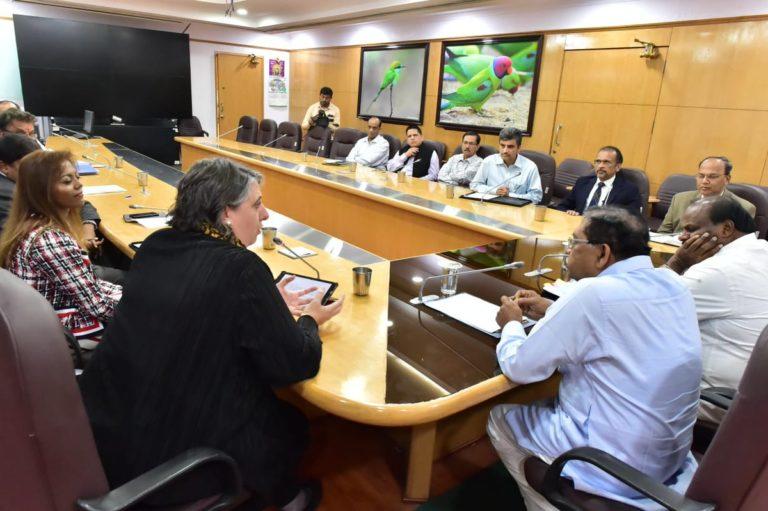
The agreement was signed by BMRCL MD Ajay Seth and Maria Shaw Barragan, the director of Global Partners Department, EIB, on Friday, in the presence of Chief Minister HD Kumaraswamy, Deputy CM and Bengaluru Development Minister G Parameshwara and other senior officers. At the signing of the agreement between the Karnataka government and the EIB, deputy chief minister G Parameshwara thanked the Bank for funding Rs 1,540 crore (200 million Euros) for funding the Bangalore Metro Rail Corporation Limited for its Phase-2 Reach-6 project from Nagawara to Gottigere in the city.

The CM thanked EIB for offering loans at a low interest rate with no conditions for the Metro project. “This is a positive development in the interest of developmental projects in the city and we look forward for assistance from the EIB in the future as well. The Metro project is being developed to control pollution due to increasing number of vehicles in Bengaluru, which has a population of over 11 million.”

“While thanking EIB of this, I would like to reiterate our chief minister’s request that EIB may consider funding other infrastructure and sustainability projects in the state,” Parameshwara told the delegation.

The EIB had agreed to lend Euro 500 million in two tranches to BMRCL for funding part of project cost for Reach 8 (Gottigere to Nagawara) Line, Phase-2. Asian Infrastructure Investment Bank (AIIB) will co-finance it along with EIB for Euro 300 million. Thus, the total loan amount will be Euro 800 million for Reach-8.

The sovereign loan agreement for the first tranche of Euro 300 million was signed between Government of India and EIB in October 2017. The loan agreement for the second tranche of Euro 200 million was signed in September 2018. These loans are untied and have a 20-year tenure, which includes 4 years’ moratorium for principal repayment. In all, 800 million Euro funding has come for the project, he said.

Maria Shaw Barragan of EIB and others were present besides Karnataka government officials, an official release said.

Also Read

BMRCL Recruitment 2019

Advertisement1
InnoMetro_2026

Opinion: Failure of Mumbai Monorail holds lessons for Urban Planners

0
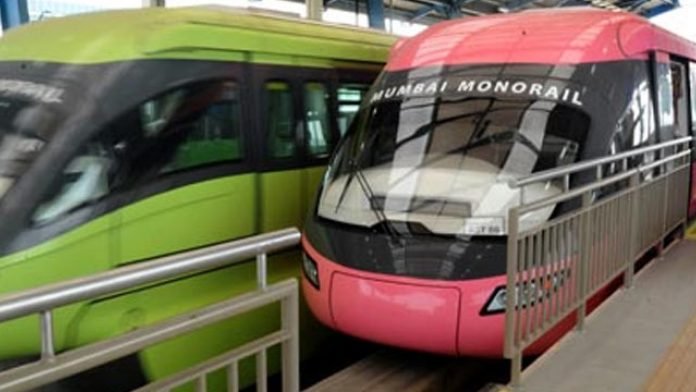
The failure of the first phase of monorail has cast a doubt on any further expansion plans.

On December 14, the Mumbai Metropolitan Region Development Authority (MMRDA) abruptly terminated its contract with the Indo-Malaysian consortium L&T-Scomi Engineering Bhd to manage the city’s monorail. The authority said that there had been issues such as poor maintenance of the monorail fleet since many rakes were found unfit. This ended another chapter in the sorry saga of a transportation experiment that was doomed from its very inception.

India’s first monorail was flagged off on February 1, 2014, with the hope that it would resolve Mumbai’s transport woes – or some of them, at least. The MMRDA initially spent a total of Rs 2,716 crore on the 19.5 km Chembur-Wadala-Jacob Circle corridor.

Experts had warned even then that it was a foolhardy idea, which would have no practical or substantive impact on the city’s transportation since monorail rakes have low carrying capacity, the planned route is unnecessary and expensive and the technology untested – it hasn’t been used as a mode of mass transportation anywhere in the world – and will have low cost-recovery rate.

Additionally, cheaper modes, such as the bus rapid transit system – which could achieve the same ridership and speed at a lower cost – were not considered.

“Monorail is a new experiment, one that has hardly any use for the city,” said Ashok Datar, chairman of the Mumbai Environmental Social Network.

MMRDA first conceptualised monorail in 2005 and approved its implementation in a meeting conducted on September 28, 2007. A Consortium of Larsen & Toubro with Malaysian partner Scomi Engineering Bhd was awarded the contract On November 11, 2008, to build and operate the monorail.

Now, eight years later, it has become apparent that the project has neither served the purpose of taking the load off the suburban train network nor act as an efficient feeder system. If anything, it has suffered from a string of accidents, maintenance issues, and stagnant passenger load. Its services were shut for ten months after a coach caught fire in November 2017.

Post the closure, monorail saw a decrease in ridership – from almost 15,000 per day to around 10,000, barely 10% of the estimated daily ridership of at least 1.5 lakh passengers.

The stated objective behind bringing monorail was that Mumbai needed a supplementary system to the existing suburban rail network, which carries more than 80 lakh passengers per day, far in excess of its capacity. The bus services in the city are crowded and traffic congestion makes bus services slow. The MMRDA justified the monorail as best suitable for congested places since it requires less space, is capable of taking sharp turns and has the capacity to carry 20,000 passengers per hour per direction.

However, there was a vast difference between what was stated and what was eventually implemented.

What went wrong?

MMRDA started the monorail project in a corridor that passes through some of the most vacant areas of Mumbai on the eastern side. The first phase was routed through areas of marshy lands with no shops, offices or residential blocks.

The original plan was to start construction from the other side, where the human density was higher, but land acquisition in the crowded parts was not easy. “The route planning and prioritisation of phases went wrong, MMRDA should have given priority to the other route,” admitted B.C. Khatua, project director at the Mumbai transformation support unit, a state government think-tank that had the mandate to advise, monitor and coordinate projects undertaken by various government bodies, including the MMRDA in Mumbai.

“Or the MMRDA could have completed the entire route in one go, instead of two phases. We can’t blame the monorail technology. It’s a failure of planning,” Khatua added.

In addition, the monorail on its route was barely integrated with other modes of transport. Its stations are neither properly connected to suburban train stations nor are there frequent buses nearby to take passengers to their destinations. The closest suburban railway station where the monorail ends is 4 km away. Moreover, some stations are located away from residential areas. This increased the travel time and cost for passengers.

In 2017, the Maharashtra legislatures’ public accounts committee sharply criticised the MMRDA for poor planning, misjudging the ridership estimation, not studying the overall feasibility of the monorail route and wasting public money.

But it was dogged by other problems too. The implementation kept on getting delayed because of lack of permissions from different authorities, difficulties of acquiring land, changes in route alignment and a slowdown in government decision making in the wake of the November 2008 terror attacks. The overall cost jumped to Rs 3,000 crores.

Activists have long suspected that the monorail was pushed through to open up the vacant land in the eastern corridor of Mumbai to development, which will allow for more buildings. “One can see this as a push towards development on the eastern side,” says Madhav Pai, director of EMBARQ India, a network of professionals and part of the World Resources Institute Ross Centre that focuses on sustainable urban transport.

P.R.K. Murthy, the former chief of transport of MMRDA confirmed this, stating that “the long-term purpose is to open up the land for development and spur economic growth, this is what the monorail project will do”. Some major residential projects by big builders have already begun construction in the area, which offers tremendous future possibilities.

Future of monorail 

The failure of the first phase of monorail has, however, cast doubt on any further expansion plans, which included a total of nine corridors. Getting funding for them is going to be highly difficult.

With little or no public demand or consultation, the decision to go ahead with the project without studying its impact was a poor one. The shoddy planning and failure of a showpiece project have several lessons for city policymakers all over the country – that vanity projects taken up by governments and supported by politicians and urban planners for their own agendas do not end up serving the very people they are designed for.

Advertisement1
InnoMetro_2026