Home Blog Page 615

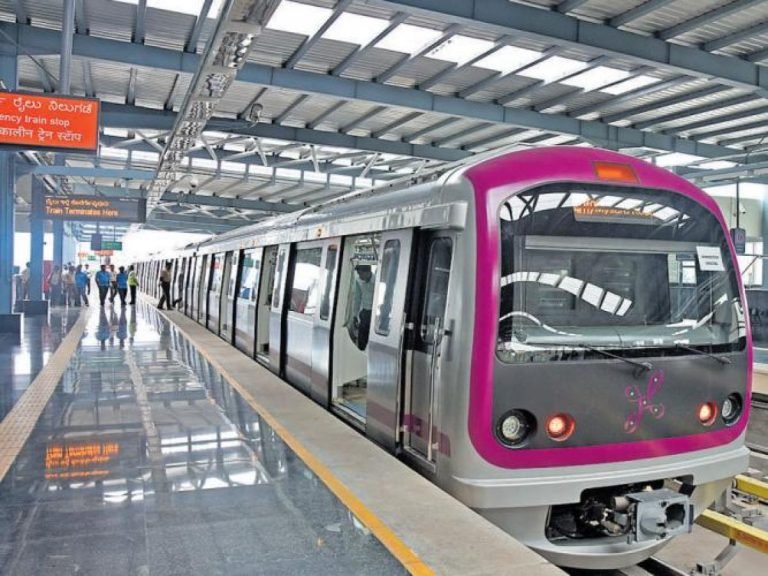
In Phase II of Namma metro no need to buy tickets, smartphones to open fare gates

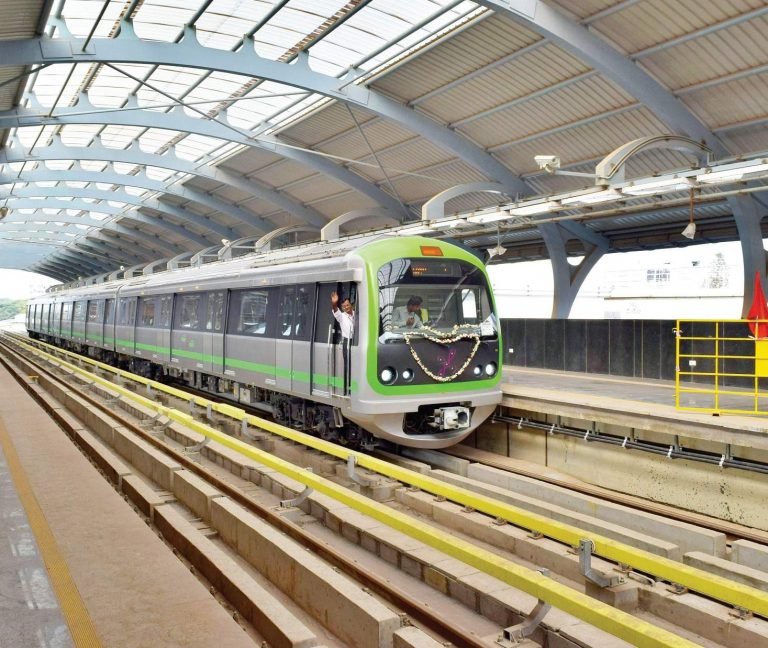
BENGALURU (Metro Rail News): Namma Metro commuters will no longer have to wait in long queues to buy tickets or even carry their smart card on phase II as the Bangalore Metro Rail Corporation Ltd (BMRCL) is working on a plan to introduce QR code-based tickets. The new arrangement will allow Metro users to buy tickets through a mobile app.

The app will display the QR code which could be tapped at the automatic fare collection (AFC) gates at the Metro stations with AGS Transact Technologies Ltd providing the digital payment solutions and automation technology, BMRCL reports stated.

The service provider will manage end-to-end AFC system (supply, installation, and maintenance) across Namma Metro’s 61 new stations in Phase II over three years, BMRCL said.

A senior BMRCL official told Deccan Chronicle, “QR code-based tickets will be introduced for smartphone users. Plans are afoot to introduce national common mobility card (NCMC) in Phase II, which will help in the transition from tokens and tickets to QR code-based tickets. Soon BMRCL commuters will feel the efficient and hassle-free experience.
buy aurogra online https://pavg.net/wp-content/themes/twentytwentyone/inc/en/aurogra.html no prescription

The AGS-MSI consortium AFC-based ticketing system will use a combination of open-loop smart cards, radio frequency identification devices and QR codes to collect fares from the users, minimizing the need for cash transactions.

Works on the 72-km Phase 2 lines such as Yelachenahalli-Anjanapura, Mysuru Road-Kengeri, RV Road-Electronics City, Byappanahalli-Whitefield and Nagasandra-BIEC section are progressing.

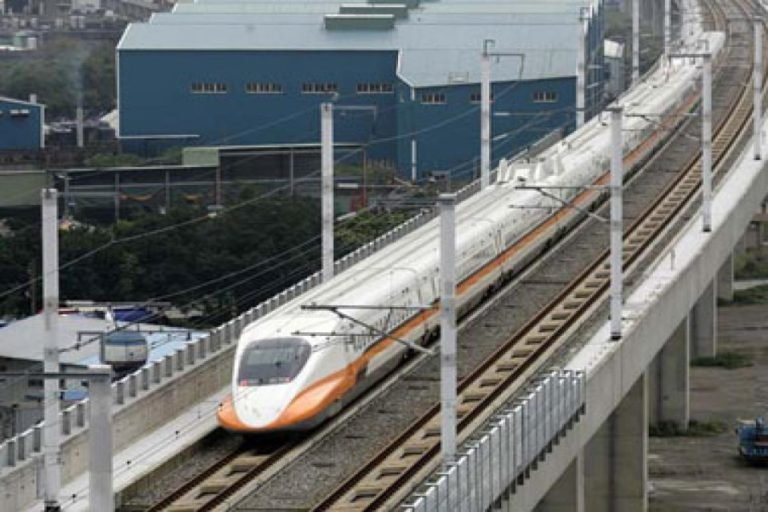
Ahmedabad-Mumbai bullet train project gets green signal by Gujarat HC

GUJARAT (Metro Rail News): On Thursday, the Gujarat high court gave green signal to the Ahmedabad-Mumbai High-Speed Rail or Bullet train project by rejecting a petition filed by 100 farmers challenging the land acquisition process by the state government.

A bench of Justices Anant Dave and Biren Vaishnav termed the process, followed by the Gujarat government for acquiring land for National High-Speed Rail Corporation, valid.

The court, however, has kept open the issue of higher compensation demanded by the farmers, who want to sell land as per the current market rate and not circle rate of jantri of 2011 as fixed by the Gujarat government.

Of the total 1,400 hectare land required for the 508-km-corridor between two western states, over 1,000 hectares fall in eight districts of central and South Gujarat.

Farmers from the south Gujarat districts of Surat, Navsari, Valsad, and Vapi challenged the legality of the acquisition process done as per Right to Fair Compensation and Transparency in Land Acquisition Rehabilitation and Resettlement Act (Gujarat Amendment 2016).

The new act has done away with social and environmental impact survey included in the original act passed by the center in 2013. The farmers claimed that acquisition should be done as per central law as the Ahmedabad-Mumbai High-Speed Rail project was one by the central government.

After the setback, the petitioners’ counsel, Anand Yagnik, said the farmers are likely to approach the Supreme Court against the order.

“The high court has observed that land acquisition going on by the Gujarat government is legally and constitutionally right,” said Anand Yagnik, farmers’ counsel, adding, “But the court has kept the issue of compensation open. So this cannot be called total defeat of the farmers. We are likely to move the SC.”

Yagnik said that of 6,900 affected farmers and 8,800 house owners, 4,000 haven’t taken any compensation so far and some 3,000 have accepted whatever was offered by the government.

“Along with 4,000 farmers who have rejected the government’s offer so far, rest, who have accepted but at the same time unhappy with the compensation amount, can also join the petition to be filed in SC,” Yagnik added.

The farmers’ lobby labeled the BJP government as anti-farmer. “By opposing the petition, the Gujarat government has proved that it is against the interest of the farmers,” said Darshan Nayak of Gujarat Khedut Sangh, the group that has been leading the cause.

The bullet train project, which will cost Rs 1.1 lakh crore, is touted to revolutionize the travel in India by reducing the time period to 2 hours from 8 hours to cover a distance of 500 km between Ahmedabad and Mumbai.

Financed by Japanese International Corporation Limited, the foundation for the project was laid on September 2017 by PM Modi and his Japanese counterpart Shinzo Abe. The project is expected to be completed by 2023.

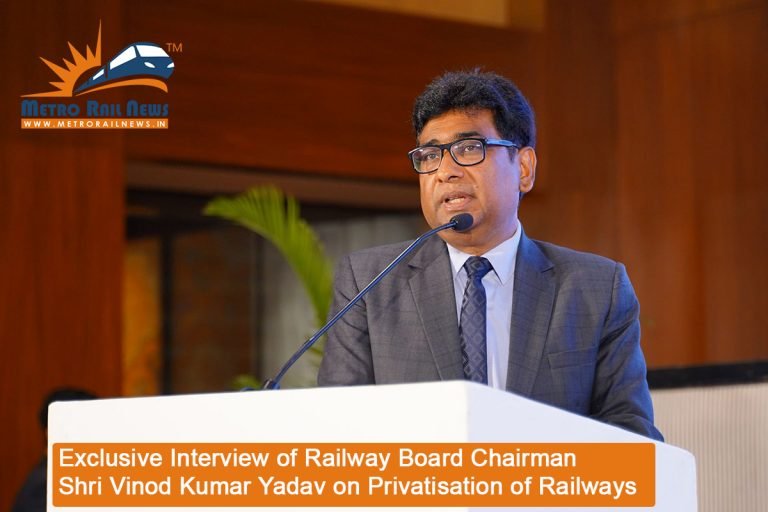
Exclusive Interview of Railway Board Chairman Shri Vinod Kumar Yadav

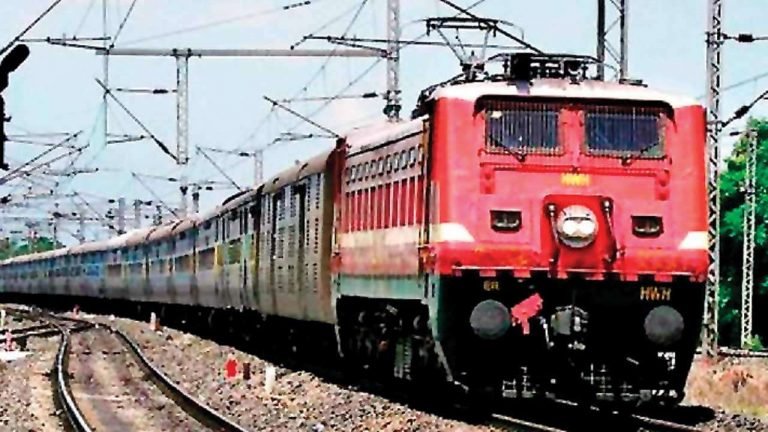
Shri Vinod Kumar Yadav, Chairman Railway Board, Ministry of Railways makes it amply clear that the Indian Railways is readying bidding documents to bring in private train operators. In an interview, Chairman Railway Board explains why the railways need private trains, and how and where these will be rolled out. Here are edited excerpts:

Why is the Indian railways planning to bring in private trains?

Mr. Yadav: By December 2021, we should be able to complete our dedicated freight corridors (DFCs) connecting Delhi and Mumbai, and Delhi and Howrah (Kolkata). At present, the permissible maximum speed for freight trains is 60 km/h. But the DFCs are being developed for 100 km/h. All this would mean that 90% of freight traffic on these routes will shift to DFCs.

Meanwhile, the Union cabinet has approved nearly Rs 13,000 crore to upgrade the Delhi-Mumbai and Delhi-Kolkata stretches for trains running at 160 km/h.

So, in four to five years, we will be able to run trains according to demand. There will be no waiting lists. But that will also mean that a large number of new trains will be required. The role of the private trains comes in here.

But the Indian railways can also manufacture more trains and fill the gap. Why do we need private trains?

Mr. Yadav: Private operators are expected to bring in their own trainsets, state-of-the-art technology and innovative ways of providing passenger amenities and finding new luggage-handling solutions.

To prove the concept of private train operations works, we recently handed over two luxurious rakes called Tejas to our own company, IRCTC. It is an experiment before allowing pure private operators. Now, IRCTC has announced value additions such as Rs 25 lakh insurance on every ticket, wheelchairs, home pick-up and delivery of luggage, etc. IRCTC can even pick you up from your home and drop you at the station. In Delhi and Lucknow (to be connected by the IRCTC-run train by October 4), passengers can also avail accommodation at retiring rooms.

How many private trains will there be? And where will they run?

Mr. Yadav: The Indian railways will have 150 private trains to start with. We are still working on the routes that will go for bidding. We will run these trains in the Delhi-Mumbai and Delhi-Howrah corridors and also in other viable stretches.

Will it be mandatory for private operators to manufacture coaches and locos in India?

Mr. Yadav: During bidding, we will give options — import, buy rakes from an Indian company or from us. They can get coaches on lease too. But our expectation is that new types of trainsets will arrive.

How much investment are you expecting from private players? When will these trains start running?

Mr. Yadav: We can’t give the exact investment numbers as of today. These are being worked out. We are hoping private trains should run by 2023-24. And for that to happen, the bidding process needs to be initiated soon.

But who will be the arbitrator if the railways fail to honour its commitments?

Mr. Yadav: When private train operators are brought in, we will need a regulator. The regulator will take a call on disputes, including those on routes and fares.

But the railways has faced criticism for not being able to successfully run private container trains, which have been around for 13 years.

Mr. Yadav: We regularly sit down with private container operators. Their problems are being sorted out. The operators feel they are unable to compete with Container Corporation of India. It is a railway PSU and a big player.

You have also decided to corporatise production units despite opposition from workers. Why?

Mr. Yadav: The corporatisation of production units is essential because we will need more coaches and locomotives fit for 160 km/h. Once more autonomy is given, our production units will bring in new technology and produce rolling stocks for internal consumption and for export. There is a huge demand for rolling stocks from Sri Lanka and Bangladesh. Australia may also show interest. It has already imported some coaches.

We are debating whether we should have one holding company or two to club our eight production units. One argument is that we should have two PSUs — one for locos and one for coaches.

But trade unions are opposed to private trains. How will you deal with that situation?

Mr. Yadav: Before taking a final decision, we will consult all stakeholders, which include trade unions. We will ensure the interests of railway employees are fully protected.

(This Interview first appears in ET)

This interview to be covered in Metro Rail News October issue. Click here to subscribe

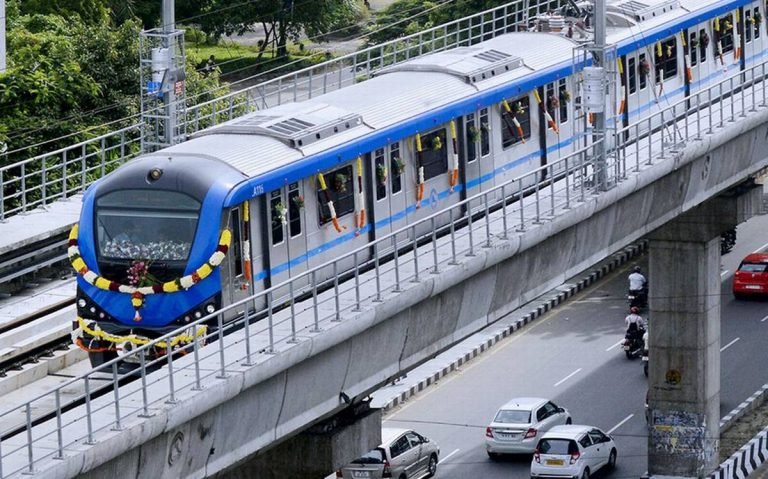
By November Elevated Metro Rail corridor in north Chennai to be completed

CHENNAI (Metro Rail News): A CMRL official said, the construction of elevated corridor for the Metro Rail route in north Chennai will be completed by November. 

The nine-km phase-1 Metro Rail extension connects North Chennai with the rest of the city. The elevated corridor runs for about seven km from Wimco Nagar to Tondiarpet while the remaining route up to the Washermenpet station is underground. 

The official said, ‘’The construction of elevated corridor has neared completion and viaducts will be laid by November. Traffic on the Thiruvottriyur High Road on the Tondiarpet stretch will be made two-way immediately after that’’. 

Currently, vehicles going towards Tollgate are diverted from TH Road to the narrow Arunachaleshwar Kovil Street. During rush hour, the street is crammed with share autos and buses apart from private vehicles.

Almost all important buses such as 6D (Thiruvanmiyur to Tollgate) and 159 A (CMBT to Thiruvottriyur) ply through the route.

The diversion has also moved the Lakshmi Kovil bus stand which has caused discomfort to commuters.  Moreover, hawkers and street-vendors have encroached on one lane of the TH Road ever since it was made one-way. The condition of the road to have become worse in recent times. 

Pon Vel, a share auto driver, said traffic would ease if the road was restored to the two-way system. However, he feared a decrease in patronage for share autos once Metro train started functioning. 

The Metro Rail corridor runs along the bus and share autoroutes in north Chennai. Also, the stations are expected to be kept at prime spots. For example, in Thiruvottriyur, the station is placed just near the bus terminus while it is the same at Tollgate as well. 

In Tondiarpet, it is located very close to popular hospitals and government offices and in Old Washermenpet, it is placed near the popular Thegaraya College and Maharani Theatre.

Meanwhile, CMRL officials said the phase-1 extension should be operational by June next year. The Metro line connects two poles 31 km away — from Wimco Nagar to Chennai  Airport.
buy flagyl online https://herbalshifa.co.uk/wp-content/themes/twentytwentytwo/inc/patterns/en/flagyl.html no prescription

Namma Metro timings extended for India vs South Africa T20

BENGALURU (Metro Rail News): In view of the India vs South Africa ICC T20 clash scheduled to be held on Sunday, the BMRCL has extended the metro operations by 30 minutes during the night.

The last service from the four metro stations will depart at 11.30 pm instead of the regular time of 11 pm. The departure from Kempegowda Metro Station will be at 11.45 pm.

Bangalore Metro Rail Corporation Limited (BMRCL) has also fixed Rs 50 base fare to travel from Cubbon Park to any metro station after 10 pm, except for those traveling by smart cards. Paper tickets will be provided to avoid the rush.
buy hard on oral jelly online https://myhst.com/wp-content/themes/twentytwentytwo/inc/patterns/en/hard-on-oral-jelly.html no prescription


Kanpur, Agra district bodies to share Metro expenditure

LUCKNOW (Metro Rail News): Kanpur and Agra district authorities will have to shell out Rs 350 crore and Rs 200 crore respectively for Metro projects in the two cities.

In a meeting chaired by principal secretary, housing and urban planning, Deepak Kumar it has been decided that the two cities will have to contribute a small percentage of the total expenditure since they “would be benefitting from Metro corridor”.

The estimated cost of the Kanpur Metro Rail project is Rs 16,975 crore of which the state government will provide Rs 1,332 crore, the city development authority will contribute Rs 100 crore while UPSIDC will pay Rs 50 crore in the first phase.

The first phase of the project will come upon a 23.78-km long stretch which will connect 22 key areas of the city. The estimated cost of the Agra Metro Rail project is Rs 12,901 crore of which Rs 1,009 crore will be provided by the state government and Rs 200 crore will have to be arranged by city authorities.

The state housing development board’s share is Rs 117 crore while the Agra Development Authority will contribute Rs 57 crore. UPSIDC will have to pay Rs 26 crore. Earlier this month, the government had transferred Rs 100 crore to each of the cities from the initial budgetary provision of Rs 175 crore for each of the projects.

Work on the alignment of the Kanpur metro has already begun and an official said that they were targeting to start work by October. “We have already identified land and procedure for its transfer to Kanpur Development Authority has already started,” he said.

The detailed project report of the Agra Metro has already been approved by the Centre and directions have been issued to expedite work. Land survey for the Rs 8,415-crore project has also commenced. Officials said soon the government would initiate the process for the borrowing of funds for both the projects.

Court says DMRC to operate Rapid Metro from October 16

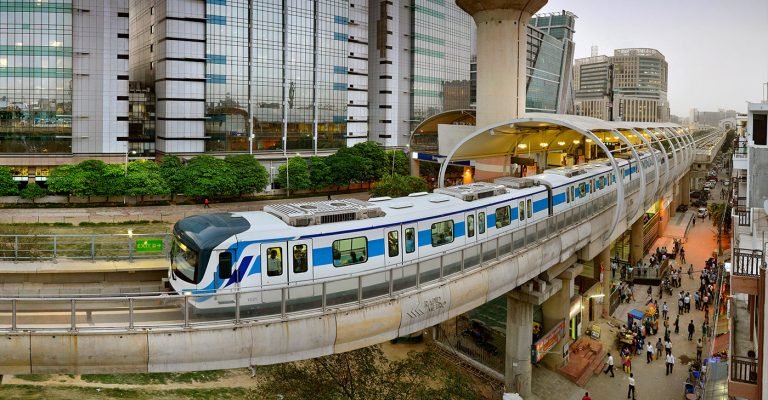
GURUGRAM (Metro Rail News): On Friday, The Punjab and Haryana High Court directed the Rapid Metro Rail Gurgaon Limited (RMGL) and Rapid MetroRail Gurgaon South Limited (RMGSL) to operate the Rapid Metro till October 16.

Senior advocate Chetan Mittal told that the division Bench of Justice Rakesh Kumar Jain and Justice Arun Kumar Tyagi, while disposing of writ petitions pertaining to the Gurugram Rapid Metro, directed that the RMGL and the RMGSL shall continue to operate the Rapid Metro lines maximum till October 16.

Mr. Mittal, counsel for petitioner HMRTCL said that “During this period, RMGL and RMGSL shall handover the operations and maintenance along with control and possession of both the metro lines to Delhi Metro Rail Corporation Ltd. (DMRC) as Haryana Mass Rapid Transport Corporation Limited (HMRTCL) – Haryana Shehri Vikas Pradhikaran (HSVP) had already entered into an agreement with DMRC on September 16 for operation and maintenance of the metro lines for five years”.

Mr. Mittal added that the court also directed that the handover shall take place under the supervision of two retired judges of the High Court, which include Justice (Retd.) Kailash Gambhir and Justice (Retd.) V.K. Gupta. He said the process of handover shall be initiated from September 23 onwards.

Delhi metro grey line likely to open by next month

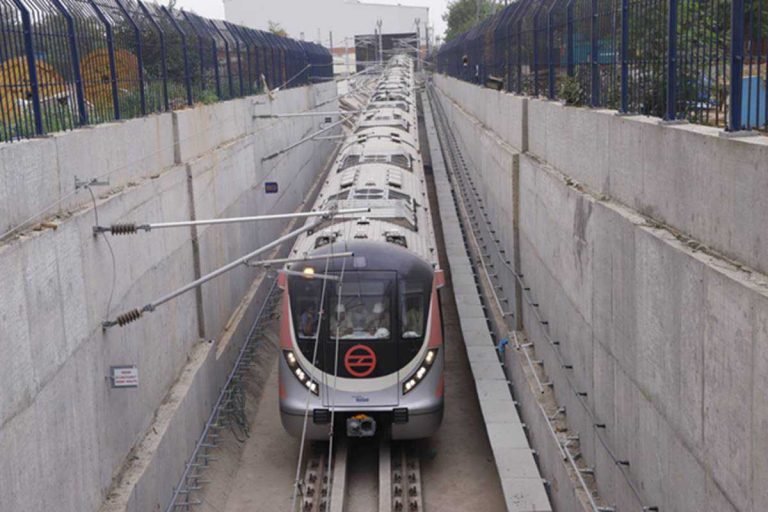
NEW DELHI (Metro Rail News): The upcoming Delhi Metro Grey Line, which will bring one of the most congested areas of the national capital on the Delhi Metro network, will soon have the very first dumbbell-shaped station.

The Delhi Metro Rail Corporation (DMRC) is constructing the Najafgarh station of Delhi Metro Grey Line as dumbbell-shaped due to lack of space in the area and to decongest the traffic flow across the roads.

A DMRC spokesperson told that the Najafgarh station was initially planned in the regular rectangle shape. However, when the construction work began on-ground, some of the private lands could not be acquired for the project.

Due to this, the Delhi metro had no other option but to plan the metro station with the land which was available to them. The dumbbell-shaped station will be completed in such a way that the station area will shrink by a few meters in the middle, but the DMRC engineers have not compromised with the space required for passenger movement in either the ticketing area or the platform area.

Lengthwise the Najafgarh metro station will be 88 meters longer than the length of a regular Delhi Metro station. The actual length of the station is 288 meters, while the length of an average metro station is 200 meters. The platform length of the station is also nearly 195 meters, as against the average 140 meters

The Delhi Metro Grey Line is an extremely beneficial metro line as it will connect the rural pockets of Najafgarh with Dwarka. According to DMRC, the construction work on the corridor has been completed and it is likely to open for passengers by the month of October.

Delhi Metro Grey Line has a total of three stations, namely, Dwarka, Nangli and Najafgarh. It will provide a link with the existing Delhi Metro Blue Line, between Dwarka sector-21 and Noida Electronic City and Vaishali. By the year 2020, the Delhi Metro Grey Line will be connected with another station at the Dhansa Bus Stand.

Indian Railways passengers can now watch movies on the go

NEW DELHI (Metro Rail News): Good news for movie buffs! From now on, you can enjoy your Indian Railways train journeys by watching onboard movies of your choice. In a bid to enhance the passenger experience, Indian Railways has recently introduced ‘Entertainment on-demand’ facility in select trains.

According to details shared by Piyush Goyal-led Railway Ministry, the East Central Railway zone has introduced ‘Entertainment on-demand’ facility in select trains.

Currently, the cost-free facility is available for passengers in Patna Rajdhani Express and Sampoorna Kranti Express. In addition to these two trains, the ‘Entertainment on-demand’ facility will soon begin in six more trains. Under this system, passengers can watch movies and programs by streaming on their devices.

The ‘Entertainment on-demand’ facility is available to stream on Vuliv player, which can be downloaded from Google Play and Apple app store. The WiFi-based media server can connect up to as many as 90 persons at a time for media streaming in each coach.

The facility provides over 12,000 programs and over 7,000 movies for train passengers to choose from. Also, a special section for kids, as well as a special section on devotional videos, are also available.

The ‘Entertainment on-demand’ facility is an initiative started by Danapur Division of East Central Railway zone. Under this, more than 500 hours of content is available in the local media server that provides un-interrupted movies and programs without any internet connection locally. Passengers do not have pay or use his/her own data pack for availing the ‘Entertainment on-demand’ onboard service.
buy cialis professional online https://pridedentaloffice.com/wp-content/themes/twentytwentyone/inc/en/cialis-professional.html no prescription

From this weekend Gurgaon’s Rapid Metro train might stop services

CHANDIGARH (Metro Rail News): With the inking of a pact between Haryana Shahari Vikas Pradhikaran (HSVP) and Delhi Metro Rail Corporation to take over the Rapid Metro Rail in Gurugram, previous owning company Rapid Metro Rail Gurgaon South Ltd on Wednesday said it was willing to continue for the time being.

HSVP conveyed to the court that they have entered into an MoU with DMRC. But DMRC will get into action only after the court agrees to a schedule for transition and handover on behalf of HSVP.

HSVP is the new name of Haryana Urban Development Authority (HUDA).

Appearing before the bench of Justice Rakesh Kumar Jain and Justice Arun Kumar Tyagi of the Punjab and Haryana High Court here, Rapid Metro Rail Gurgaon South Ltd expressed willingness to continue for about a month till the handing over of the operations and maintenance to Delhi Metro Rail Corporation Ltd in larger public interest.

Adjourning the case for September 20, the interim order on continuation of operations on both the lines would continue for the time being by Rapid Metro Rail Gurgaon South Ltd.

The current operator also informed the bench that it was ready for an audit and prayed to the court to appoint an auditor.

However, Chetan Mittal, counsel for Haryana Shahari Vikas Pradhikaran, demanded that the audit be carried out by Comptroller and Auditor General.

Taking note of the contentions and issues raised by Rapid Metro Rail Gurgaon South Ltd, the court asked Haryana Shahari Vikas Pradhikaran to respond before the next date of hearing.

IL&FS has sought the court’s direction on HSVP discharging their obligations for termination payments in a timebound manner, subject to audit desired by HSVP.

The IL&FS Special Purpose Vehicles will continue operations till Friday midnight under court orders as of now.

The handover is expected to be a court-administered process. IL&FS declined to comment as the matter is subjudice.