Home Blog Page 603

UP CM Yogi Adityanath to lay the foundation stone of Kanpur Metro on Nov 15

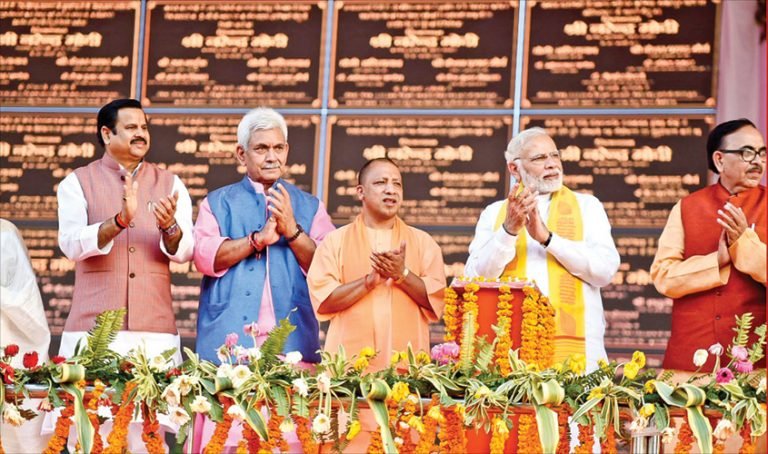
KANPUR (Metro Rail News): Uttar Pradesh Chief Minister Yogi Adityanath will lay the foundation stone of Kanpur Metro rail project in front of IIT Gate on November 15, 2019. After the foundation stone ceremony, the work of Kanpur Metro Rail project will start on the ground.

According to the source, Uttar Pradesh Metro Rail Corporation Limited (UPMRC) formerly known as Lucknow Metro Rail Corporation (LMRC) have started preparation work for laying off of foundation stone ceremony in Kanpur. The foundation stone of the metro rail project will be unveiled in the main auditorium of IIT.

Shri Deepak Kumar, Principal Secretary, Housing and Urban Planning Department, reached IIT. Where He held a meeting with the Municipal Commissioner SM Bobde, District Magistrate Vijay Vishwas Pant, Inspector General Mohit Aggarwal, UPMRC Managing Director Kumar Keshav, etc. regarding the inaugural program of the Kanpur metro project on November 9, 2019. He checked the preparations made for the foundation stone laying ceremony and directed officials to make necessary preparations for the same.

To unveil the foundation stone laying ceremony, a piling machine is kept in front of the National Sugar Institute. The construction work of the Kanpur Metro project will be commenced by breaking the divider on the GT road.

For the foundation stone laying ceremony, the corridor has been built by putting a board on the UPMRC GT Road from IIT Gate to National Sugar Institute. Not only this, IIT, NSI, and CSJMU have also done road cutting by checking the underground services. UPMRC MD Kumar Keshav and Chief Project Manager visited these places and inspected and gave necessary instructions to the team of AFCONS Infrastructure Limited on November 9, 2019

There are two corridors that will be built under the Kanpur Metro metro project. The first corridor is from IIT Kanpur to Moti Jheel via Phulbag to Naubasta and the second corridor is from CSA to Barra-8.

According to UPMRC officials, the metro will run from IIT Kanpur to Moti Jheel first. The Rs 735 crore project will span 8.7 km long and elevated viaduct along with 9 metro stations are to be built in this priority section. On September 19, AFCONS Infrastructure Limited has been awarded to carry out the constriction work of viaducts and stations of Corridor I.

Earlier, the AFCONS Infra teams arrived in Kanpur with machines. Earlier, October 24 was fixed to start the construction work but due to no dates received from the CMO, so it has been postponed.
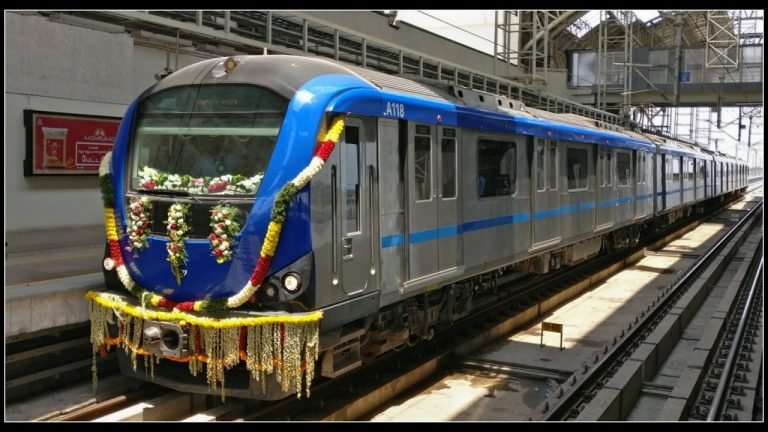
NCRTC floats 1st tender for civil construction of Delhi-Gurugram-SNB RRTS Corridor

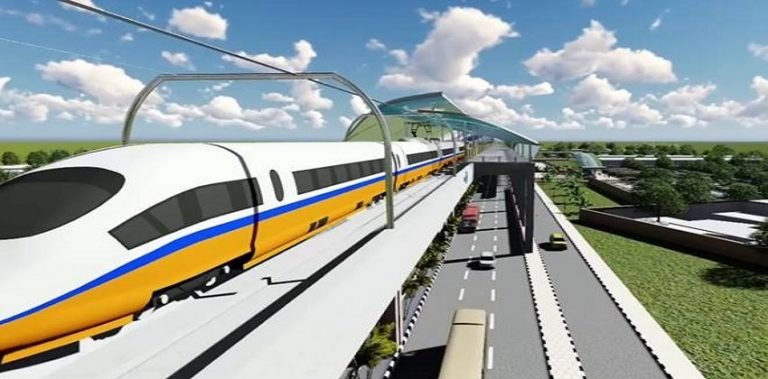
DELHI (Metro Rail News): The National Capital Regional Transport Corporation (NCRTC) has floated the 1st tender for civil construction of the Delhi-Gurugram-SNB (Shahjahanpur-Neemrana-Behror Urban Complex) RRTS corridor.

NCRTC is implementing the regional rapid transit system (RRTS) in the national capital region (NCR).

Scope of work

NCRTC is inviting bids for the construction of the elevated viaduct, spanning from the end of the ramp at IDPL complex to the start of the ramp at Rajiv Chowk. This distance on the route, will cover three elevated RRTS stations, namely, Udyog Vihar, Sector-17 and Rajiv Chowk. The tender floated by NCRTC has excluded the architectural finishing as well as the pre-engineered steel roof structure of the RRTS stations.

The organisation has already Floated a tender for the engagement of a detailed design consultant (DDC) for the architectural, civil and the E&M work for the design of three RRTS elevated stations in Gurugram-Udyog Vihar, Sector 17, Rajiv Chowk and also for the elevated viaduct between IDPL complex ramp to the Rajiv Chowk ramp for the Delhi-SNB RRTS corridor. The pre-construction activities such as soil testing, utility diversion, geotechnical investigation, pile load test have been in progress on this route of the corridor.

The 106-km long Delhi-Gurugram-SNB corridor is part of the 164-km long Delhi-Alwar RRTS project. Delhi-Alwar RRTS is one of the three corridors prioritized for implementation, along with Delhi-Meerut RRTS and Delhi-Sonipat-Panipat RRTS.

All you need to know about Delhi-Gurugram-SNB-RTTS corridor:-

  • The Delhi-Gurugram-SNB corridor will be constructed on the elevated stretch for about 71 km, covering 11 RRTS stations. The remaining 35 km distance, covering five stations, will be constructed underground, mostly in Delhi and Gurugram.
  • Once operational, the Delhi Gurugram SNB corridor is expected to bring down the travel time between Delhi-SNB to about 70 minutes.
  • This corridor will originate from Sarai Kale Khan in Delhi and connect the areas of Munirka, Aerocity and Gurugram.
  • It will converge at Delhi’s Sarai Kale Khan station with the other two RRTS corridors, namely, Delhi-Meerut and Delhi-Panipat RRTS.
  • These RRTS corridors will be interoperable and will be seamlessly integrated with the other modes of public transport such as Delhi Metro, interstate bus terminals (ISBT) and Indian Railways station. This line will also connect Delhi’s Indira Gandhi International (IGI) airport to the RRTS network
  • This smart line will be passing through the industrialized and urbanized areas of Haryana and Delhi. This will increase the overall productivity of NCR through fast, reliable and safe mode of travel.
  • The RRTS trains will have an operating speed of 160 kmph and an average speed of 100 kmph and will be available at a frequency of every 5-10 minutes on the network.

Chennai Metro 2.0 stations will be high on technology

CHENNAI (Metro Rail News): The second phase of the metro rail, which is expected to be operational in six years, may have stations with different look and feel. This is because the design consultants and architects at Chennai Metro Rail Limited (CMRL) are using computer software for running simulations to come up with designs that suit each place.

The computer program will also help install critical systems required for train operations along the 118.9km stretch of phase-2. This, according to CMRL, will reduce cost and time of construction, while also making optimal use of the available space.

An official said, “The difference is like buying a readymade garment and getting a tailor-made one. If it’s too big or too small for us, it’s not going to serve the purpose. We are designing stations taking into account projected passenger traffic without compromising on comfort. It will not be a cut-paste design for all stations”.

As the detailed design for the 52km priority corridor between MadhavaramSholinganallur and Madhavaram-Koyambedu is being prepared, the design consultants are feeding computers with projected ridership, site conditions and available space for the construction.

“For instance in phase-1, the Airport station has only two entry-exit points, while Thirumangalam has four. But both the stations handle the same passenger traffic, which means we can make do with two entry-exit points.” In phase-1, CMRL went with a standard design with four entry-exit points and other features like staircases, escalators, and elevators as well as other critical systems like tunnel ventilation in almost all stations.

While transit hubs like Alandur and Central were bigger in size and had additional features, most of the other stations were near the same size. A Metrorail official said while the average station length maybe around 145m, the width may vary. Similarly, all stations except changeover points may have only two entry points unlike four in phase-1 stations.

Stations in phase-2 may not have a big concourse area. Some of the stations planned in phase-2, like Thousand Lights and Kilpauk, which already have stations in phase-1, may be linked, so commuters could use the existing entry-exit points to access the stations.

An official said other features like the size and number of staircases, escalators, and elevators linking station at three levels street level, concourse and platform may vary with stations. “The size of the stations may be the same because we need space for the evacuation of passengers during emergencies,” an official said.

Nagpur Metro to be part of India’s first four-layer transport system

NAGPUR (Metro Rail News): The city of Nagpur will get to see an engineering marvel soon after a proposal by Nagpur Metro for flyover and Metro route at Kamptee Road has been cleared by National Highway Authority of India (NHAI).

The proposal of constructing a four-layer transport system was given an unconditional clearance by NHAI which amounts to a total of ₹573 crores.

The proposed four-layer structure will come up on Kamptee Road of Nagpur. The structure is part of the Reach-II segment of Nagpur Metro Rail Project which stretches from Sitabuldi Interchange Metro Station to Automotive Square Metro Station.

The total length of the via-duct in Reach-II stretches to 7.23 km. The total length of fly-over to be constructed is 5.3 km.

NHAI nod has thus paved the way for the construction of the country’s first 4 layer transport system in Nagpur. The Nagpur Metro network, work on which started in June 2015, consists of two corridors with a total length of 38 kilometers. The two corridors of Nagpur Metro will have 38 stations, two depots and a fleet of 69 metro cars, including a special “Nari Shakti” women’s coach in each train.

The Nagpur metro is one of the greenest metros in the country with 65% of its electricity consumption is generated from a solar metro according to a senior official of Nagpur Metro. The first phase of the Nagpur metro railway was flagged off by Prime Minister Narendra Modi off the inaugural run of the 13.5 km from Khapri to Sitabuldi route via video link.

Bengaluru Metro rail network to be extended

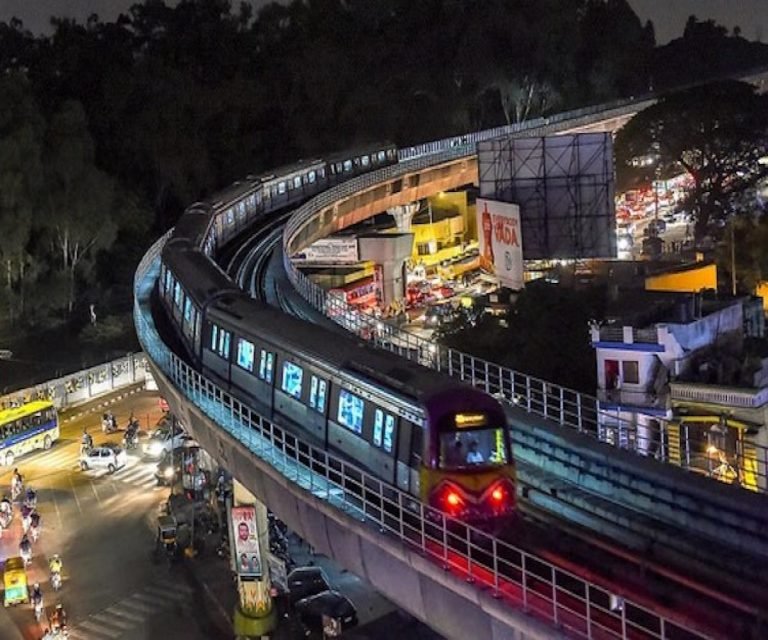
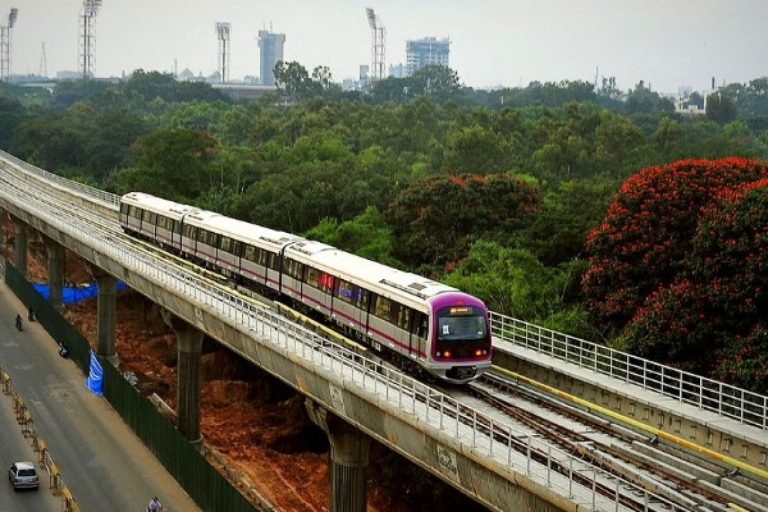
BANGALORE (Metro Rail News): With about 70,000 vehicles choking the roads and causing gridlocks across the city, the Karnataka government has decided to extend the commuter service of the state-run Bengaluru Metro network to 300 km from 119 km at a whopping cost of Rs 30,695 crore, an official said on Thursday.

“To ease the chaotic traffic across the city where about 80,000 vehicles choke the arterial roads, the state government has decided to extend the metro rail network to 300 km by adding 181 km in the third phase to reach satellites towns by 2025,” an official in the Chief Minister’s Office told.

The 43-km metro network in its phase-1 is being expanded by another 76 km in phase-2 at a cost of Rs 26,405 crore to provide efficient and punctual service to more commuters across the bustling city from 2021.

“As the Bengaluru Metro Rail Transport Corporation Ltd (BMRTCL) is a Centre-State funded project, we are approaching the Central government for its equity share and approvals to fast-track its third phase,” said the official monitoring the project.

In phase-3, the service will be extended to Hoskote on the city’s eastern outskirts from K.
buy nolvadex online https://pridedentaloffice.com/wp-content/themes/twentytwentyone/inc/en/nolvadex.html no prescription
R. Puram, up to Electronics City in the southern suburb from Silk Board under construction in phase-2, Ramangaram from Kengeri in south-west, and Nelamengala from Nayandanahalli in the north-west and to Devanahalli from M.G. Road station in the northern suburb, connecting the city with the airport, about 40 km away.

“An extended metro service and a 162-km suburban rail service will not only ease pressure on roads, highways, and flyovers but also minimize migration of people from towns and villages around the city to reduce pressure on the civic amenities,” the official said.

The metro services on the east-west and north-south routes ferry about 4-5 lakh citizens on the 43-km route, easing pressure on the state-run bus service plying across the city.

To promote public transport and discourage the use of cars and two-wheelers for commuting across the city, the state government has decided to hire about 6,000 buses to be operated by the state-run Bengaluru Metropolitan Transport Corporation (BMTC).

“Bengaluru Mobility Management Authority will soon be set up to jointly regulate and maintain the traffic of buses, metro, and suburban rail services across the city,” the official added.

KEC bags Rs 955 cr civil contract from Delhi Metro for Phase IV project

New Delhi (Metro Rail News): KEC International, a global infrastructure building EPC major, has bagged new contracts as the lowest bidder (L1) for the first civil construction package of Delhi Metro Phase IV project. The Delhi Metro Rail Corporation (DMRC) has opened price bid of the contract package DC-01 of Delhi MRTS Phase IV today.

There is a total of three contractors viz. KEC International Limited, Larsen and Toubro Limited (L&T Construction) and Tata Projects participated in the contract package DC-01 of Phase IV of Delhi Metro Rail Project whereas L&T Construction and Tata Projects emerged as L2 and L3 respectively.

Bidders Bid Amount

L1. CCECC-KEC JV 954.86 Cr.
L2. L&T 1009.00 Cr.
L3. TPL 1015.67 Cr.

This is the third MRTS (including RRTS) work order which has been secured by the KEC International Limited in India. 

Scope of work: Contract DC-01

Part Design and construction of Elevated Viaduct, Elevated Ramp, Sliding line and Ten Elevated Stations viz. Keshopur, Paschim Vihar, Peeragarhi, Mangolpuri, West Enclave, Pushpanjali, Deepali Chowk, Madhuban Chowk, Prashant Vihar and North Pitampura (Excluding Architectural Finishing at stations, Steel FOB and PEB works of stations) of Janakpuri West to RK Ashram Corridor (Extension of Line 8) of Phase – IV of Delhi MRTS.

The tender was floated in the first week of July and the estimated value of work was Rs.896.69 crores. The technical bid was opened on August 14, 2019.

Estt. Cost: INR 896.00 Cr.
Length: 12.50 km
Bid Due Date: 11/09/2019

Recently, KEC International Limited secured two civil contracts worth Rs.845 crores from the National Capital Region Transport Corporation (for Rs.580 crores) and Kochi Metro Rail Limited (Rs.265 crores).

KEC International Limited is involved in various verticals of infrastructure development viz. Power Transmission and Distribution, Railways, Solar, Civil, Smart Infrastructure and Cables. The company is currently executing infrastructure projects in 30+ countries and has a footprint in 100+ countries (including EPC & Supply).

Tunneling for Phase 2 underground section to begin in February

BENGALURU (Metro Rail News): Much delayed, the city’s longest underground Metro corridor — between Dairy Circle and Nagawara (14km-Phase 2) — is finally on track. Come February, the giant will drill and cut through Bengaluru’s underbelly between Vellara Junction and Pottery Town (5.5km).

Last February, Larsen & Toubro received bids for the underground section from Vellara Junction to Shivajinagar (2.7km) and Shivajinagar to Pottery Town (2.8km). The corridor on Red Line will have stations at Vellara Junction, MG Road, Shivajinagar, Cantonment and Pottery Town.

Bangalore Metro Rail Corporation Limited (BMRCL) said tunneling will begin in February 2020. “TBMs will arrive in the city by December 2019. Four TBMs will be deployed for these two packages,” said a BMRCL official.

He denied that tunneling was being delayed due to land acquisition issues. “Tunnel shafts are being created at Shivajinagar and Cantonment stations, for which work is underway,” he said. BMRCL has started digging vertical shafts, which will be used to lower the machines. Work on both shafts will be completed before the TBMs arrive. Officials said the contractor is procuring the TBMs from China Railway Construction Heavy Industry Corporation Limited (CRCHI).

However, BMRCL is yet to finalize the machines’ names. “These TBMs will tunnel 2.5-5 meters per day, depending on the geographical condition they encounter. They are of higher capacity as compared to the TBMs used in Phase 1. Detailed soil investigation has been carried out at smaller intervals for Phase 2,” said a BMRCL official.

The corporation has been conducting soil tests along the section for the past few months. This phase of Metro tunneling is likely to be more challenging as the TBMs will pass through densely populated areas and there are concerns regarding the safety of old buildings in areas like Shivajinagar.

BMRCL has set 2024 as the deadline for the commissioning of the underground section. It took about five years to complete the 10km tunneling work during Phase I and missed multiple deadlines. Sources said ITD Cementation India Ltd has emerged as the lowest bidder for construction of the 4.6km underground section with four stations: Tannery Road, Venkateshpura, Arabic College and Nagawara. Similarly, Afcons Infrastructure emerged as the lowest bidder for the 3.7km underground section with three stations: Dairy Circle, MICO Industries and Langford Town

To fund future Metro projects JMRC to sell land

JAIPUR (Metro Rail News): The Jaipur Metro Rail Corporation (JMRC) has begun an exercise to create a dedicated Metro fund by selling its land for future expansions. According to JMRC officials, the corporation will auction its prime land, approximately 1.5 lakh sqm near B2 Bypass, to raise funds. E-auction for the scheme named as ‘Metro Enclave’ started on October 18 and will continue till November 18.

The amount received will be deposited in the dedicated Metro fund. “The JDA will auction the land on the behalf of JMRC. The amount will be transferred to JMRC’s account that will be used for expansion of projects,” said a JMRC official. Sources said the fund would be created soon and the Urban Development and Housing (UDH) department will issue a notification after examination of the nitty-gritty.

The fund will be collected under three heads — levying entry tax on heavy vehicles, selling land and providing premium floor area ratio (FAR) along the metro corridor.

“The government is hesitant to levy entry tax on heavy vehicles. The proposal is being considered again. Once approval is given, a notification will be released and a committee will be constituted to monitor the funds.” To increase non-fare revenue, the JMRC is also mulling a proposal to lease out the land.

As per the (JMRC) assessment, the project is staring at an annual operating loss of Rs 41 crore for the next five years. The loss is calculated at 60% of the ridership. The amount will rise up to Rs 71 crore a year if the loss is calculated at 20% ridership.

 As phase IB corridor is delayed and no earning has started yet it would be also a challenge to repay the Rs 969-crore loan taken from the Asian Development Bank (ADB). The state government’s installment will start in June 2021. For example, even if JMRC receives 60% ridership in 2020-2021, annual losses for operational purposes will be Rs 29 crore.

“The route is very short and not feasible. Serious efforts are required to bridge the gap between operational cost and expenses,” added sources.

Alstom and MMRC unveil life-sized mock-up of Mumbai Metro Line 3 (Aqua Line) Rolling Stock

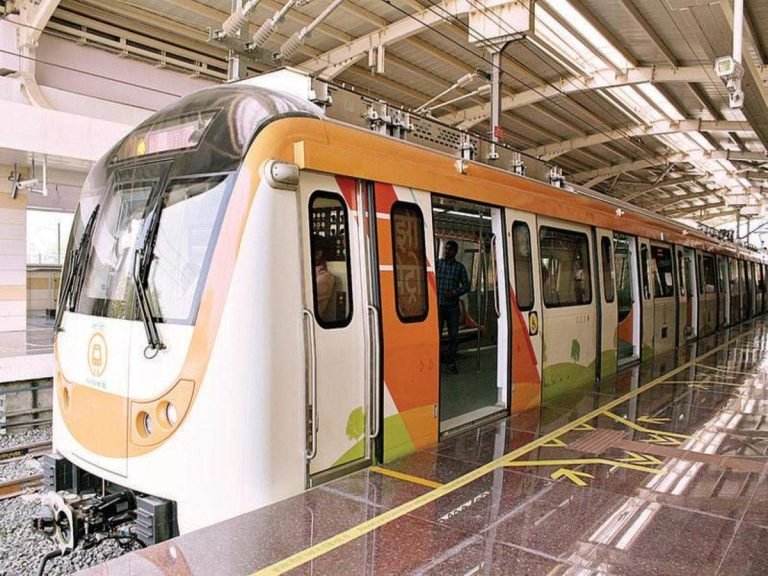
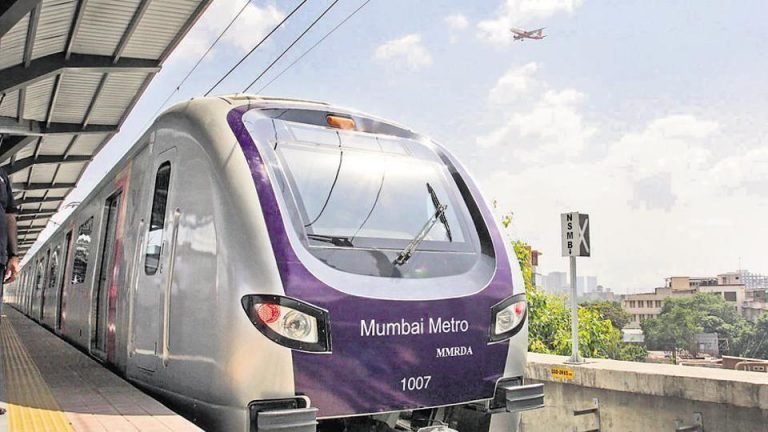
Mumbai (Metro Rail News): Alstom and Mumbai Metro Rail Corporation (MMRC) unveiled the life-sized mock-up of the trainset for Mumbai Metro Line 3 (Aqua Line). The new, iconic and exclusive design for Mumbai meets all technical and manufacturing parameters. The mock-up provides a glimpse of the advanced features that will make daily commute substantially easier for millions of citizens in the city.

Once operational, the Aqua Line will reduce vehicular congestion by offering a better alternative that will be fast, efficient and sustainable. Earlier, in August this year, the scale model of the rolling stock was unveiled by Devendra Fadnavis, Chief Minister of Maharashtra in presence of Ashwini Bhide, Managing Director of MMRC along with senior officials. At the same event, Line 3 was christened as Aqua Line, inspired by the vital flow of the sea which is an integral part of the city.

Speaking of this milestone, Alain Spohr, Managing Director, Alstom India and South Asia said, “Our objective was to create an appropriate, future-proofed design that is relevant to the people, the city and their expectations. This theme is called – Dynamic Fluidism. All technical and manufacturing parameters have been met in respect to the high interior density layout and space efficiency. We are proud to present this ‘New Face of Mumbai Transportation’. Alstom is committed to support MMRC in easing the transportation challenges of Mumbai. With the project stipulating more than 80% localized manufacturing, this contract further reinforces Alstom’s commitment to invest, grow and Make in India.”

The design takes inspiration from the positive energy of Mumbai and architecture of the city–which is an amalgamation of different styles from around the world. The theme captures evolution of the city’s architectural landscapes over the years.

The exterior theme is a tribute to the energy flowing through the city of Mumbai–the city that never sleeps. Inspired by the vital flow of water and aspiring to be a fast, efficient and sustainable mode of travel, to become the new lifeline for the people of Mumbai.

The interior colour harmony is inspired by the people of Mumbai–always on the move, who turn to the sea for peace and are soothed by its waves and breeze. This inspired the idea to use a unique blend of comfort (beige) and freshness (arctic green) to provide a relaxing and refreshing travel experience.

The trainsets for Aqua Line will be equipped with regenerative braking system aiding significant reduction in carbon emissions. The 177.2 meter-long trainsets will have higher capacity capable of ferrying around 3,000 passengers in one trip to accommodate high passenger flow.

Aqua Line trainset will have safety features that include CCTV cameras, smoke detectors, emergency intercoms, fire extinguishers with large detrainment doors to quickly evacuate passengers in an emergency. The trainsets have appropriate signages, three rows of grab rails, grab handles, poles for holding and dedicated space for passengers with luggage. The design also ensures easy accessibility and comfort for the differently abled, with dedicated space for wheelchair in every car.  

MMRC awarded Alstom a contract worth €315 million to supply 31 lightweight, fully-furnished modern passenger trainsets of 8 cars each (total 248 metro cars) for Mumbai Metro Line 3 (Aqua Line) in September 2018. Along with rolling stock, Alstom will also execute the power supply contract and equip Line 3 with Urbalis 400, its latest generation of CBTC signalling technology. The scope of the signalling contract (worth €100 million) includes unattended train operation (UTO), computer-based interlocking and centralised train supervision, platform screen doors, as well as the electrical and mechanical supervisory control and data acquisition system (E&M SCADA).

The Aqua Line has 27 stations (26 under-ground & 1 at-grade), 33.5-km long underground stretch connecting the busiest and most congested regions in Mumbai – one of the fastest growing cities in India. The metro line will connect Cuffe Parade business district in the extreme south of the city to Santacruz Electronics Export Processing Zone in the north-central. The Aqua Line will be the first underground metro line in Mumbai and will be one of the longest underground continuous stretches in India.

Mumbai Metro one Crosses A Staggering 600 Million Commuter Mark

MUMBAI (Metro Rail News): Reliance Infrastructure promoted Mumbai Metro One crossed a significant landmark on Saturday by carrying 600 millionth commuter within just 5 years and 5 months of its operation. This unparalleled achievement has been backed by world-class service, customer-centric experience, and flawless operational excellence.

Year after year, Mumbaikars are using Mumbai Metro One as their preferred choice of commute to reach their destinations. Every additional growth in ridership by 100 million Mumbai Metro One commuters is noteworthy as the number of days it takes to reach is consistently decreasing, thus reinforcing that it is indeed the new lifeline of Mumbaikars in the Versova-Andheri-Ghatkopar corridor. Considering the timeline, Mumbai Metro One took 398 days to carry its first 100 million commuters, 388 days to add another 100 million, while its third 100 million marks were achieved in 337 days. The fourth 100 million commuters have been added in only 300 days, the fifth 100 million commuters have been added in 273 days. And now the sixth 100 million milestones adding to a total of 600 million commuters have been completed in a record time of 264 days.


Milestone (in 100 Millions)
Days taken to achieve
1st 398
2nd 388
3rd 337
4th 300
5th 273
6th 264

While achieving the landmark figure of 600 million, Mumbai Metro One witnessed growth in various routes in last year. Here are the top 3 routes.

Route Sep-19 Sep-18% Growth
Andheri-Western Express Highway-Andheri3,40,732 2,68,520 27%
Andheri-Chakala,JB Nagar-Andheri6,17,105 5,28,823 17%
Ghatkopar-Western Express Highway- Ghatkopar5,49,008 4,86,890 13%

This increase has established Mumbai Metro One as a preferred mode of transport for traveling between suburban stations of Andheri and Ghatkopar, and shorter distance stations.

Ridership – Emerging stations

Apart from the connecting stations Ghatkopar and Andher, the next top 5 emerging stations are Saki Naka (48,544), Chakala (38,154), Marol Naka (38,149), Western Express Highway (28,038) and Airport Road (21,398) on a typical weekday.

Currently Mumbai Metro One operates 422 daily trips on weekdays. The year also marked high-performance levels in punctuality and availability of trains. It operated 1,35,248 train trips from Oct’18 to Sept’19 with a punctuality performance of 99.9% and train availability of 100%.
buy viagra sublingual online no prescription
Operational excellence is benchmarked also in Peak Hour Peak Direction Traffic (PHPDT) which is approximately 25,326 commuters.

An MMOPL spokesperson said, “As Mumbai’s first Metro line, we have redefined MRTS commuter experience in the country. The impressive growth in the number of commuters is attributed to our persistent efforts to provide safety, security, cleanliness, reliability and comfort to our esteemed commuters. Because of our customer-centric approach and world-class standards, Mumbai Metro One has become a unanimous choice for commuters, advertising brands, retail partners. We are grateful to Mumbaikars for their continued patronage and unflinching support in achieving these milestones.”