Home Blog Page 597

Railway Board Approves DPR of Rs 418 cr Nagpur Broad Gauge Metro

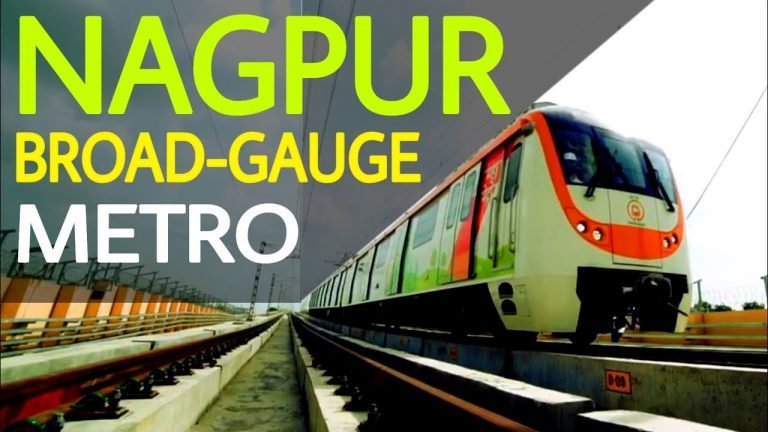
NAGPUR (Metro Rail News): The Railway Board has cleared the detailed project report (DPR) of proposed Broad Gauge Metro in Nagpur, Maharashtra, India linking the city to nearby towns is ready and will be submitted to the state government soon.

Dr. Brijesh Dixit, Maha Metro said that We had made a presentation before the railway minister on October 9. The Board has cleared it in seven weeks, for which we are grateful.

After approving the project, the railway board has asked zonal offices of Central Railway (CR) and South-Eastern Central Railway (SECR) to draft concession agreements for the proposed Broad Gauge Metro in Nagpur.

“We will sign these agreements with the two agencies. Our officers will soon go to Mumbai and Bilaspur to help their officials in preparing the agreements. Once the agreements are signed, we will purchase the coaches,” said Dr. Dixit.

Nagpur Broad Gauge Metro Project Cost

According to the detailed project report (DPR) prepared by Gurugram based consultancy firm, Urban Mass Transit Company (UMTC), the cost of the Nagpur Broad Gauge Metro project is estimated to Rs 418 crore. The trains will cost Rs 200 crore, fare collection system Rs11.64 crore, information technology (IT) infrastructure Rs 15 crore, construction of car shed, station up-gradation and passenger amenities Rs 23.12 crore, pre-operative expenses Rs 4.97 crore,
station integration (BG Metro and Nagpur Metro) Rs 25 crore, depot Rs80 crore and taxes Rs 48 crore. 70% of this amount will be debt while 30% will be equity from state and central governments.

The maximum design speed will be 200km per hour and the operating speed will be 160 kmph.  The trains will have three cars having a total carrying capacity of 885 passengers. The three cars with passenger capacity are – driver motor car 285, trailer car 315 and car train 285.

Nagpur Broad Gauge Metro Routes Map

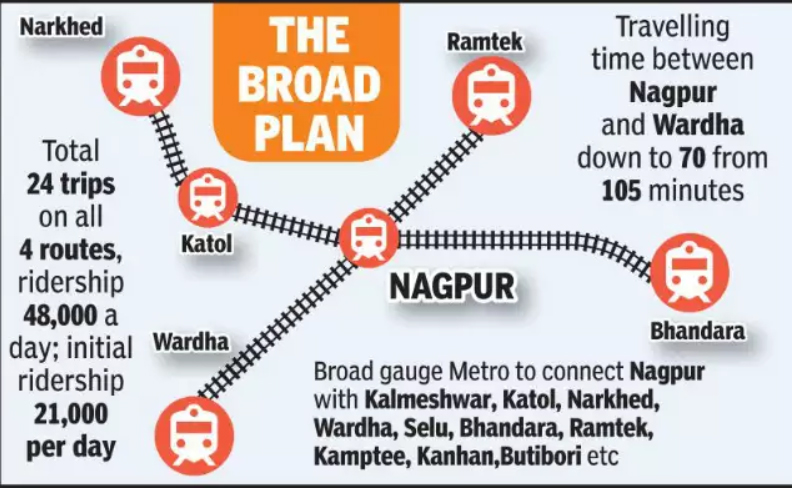
According to the DPR, the Metro will connect four towns near Nagpur — Wardha, Bhandara Road, Ramtek and Narkhed. The distances and stations on these routes are Wardha (78.8 kilometres, 12 stations), Narkhed (85.53km, 11), Ramtek (41.6km, 8) and Bhandara Road (62.7km, 11). The travel time between Nagpur and these towns will be: Wardha 1.10 hours, Narkhed 1.15, Ramtek 1 hour and Bhandara Road 55 minutes.

Nagpur Broad Gauge Metro Fares & Travel Time
Nagpur Broad Gauge Metro Fares Travel Time
Nagpur Broad Gauge Metro Fares & Travel Time

The cost of the Metro tickets will be 1.38 times the railway fare. The minimum fare for distances up to 5km will be Rs 20 while that above 70km will be Rs 90. Monthly pass tickets will range from Rs 400 to Rs 1,800.

The travel time between Nagpur and these towns will be: Wardha 1.10 hours, Narkhed 1.15, Ramtek 1 hour and Bhandara Road 55 minutes. The cost of the Metro tickets will be 1.38 times the railway fare. Fare structure will be:

Nagpur Broad Gauge Metro Expected Ridership

The total ridership is 14,700 expected of the Metro in 2021 including various routes is Wardha 5,669, Narkhed 2,616, Ramtek 3,929 and Bhandara Road 2,556. The maximum design speed will be 200 kilometres per hour and the operating speed will be 160 km/hr.

The trains will have three cars having a total carrying capacity of 885 passengers. The three cars with passenger capacity are driver motor car 285, trailer car 315 and car train 285.

Initially, MahaMetro has been asked to buy six set of trains. Another two should be purchased in 2041 when the traffic increases. The depot will be constructed in Khapri while the stabling line (where trains are parked at night) will be at Ajni. UMTC has recommended that Nagpur Metro’s automatic fare collection (AFC) card should be used for buying tickets for BG Metro. UMTC has also recommended widening of footpaths near Nagpur and Ajni railway stations. It has stressed that feeder bus service should be provided for BG Metro users.
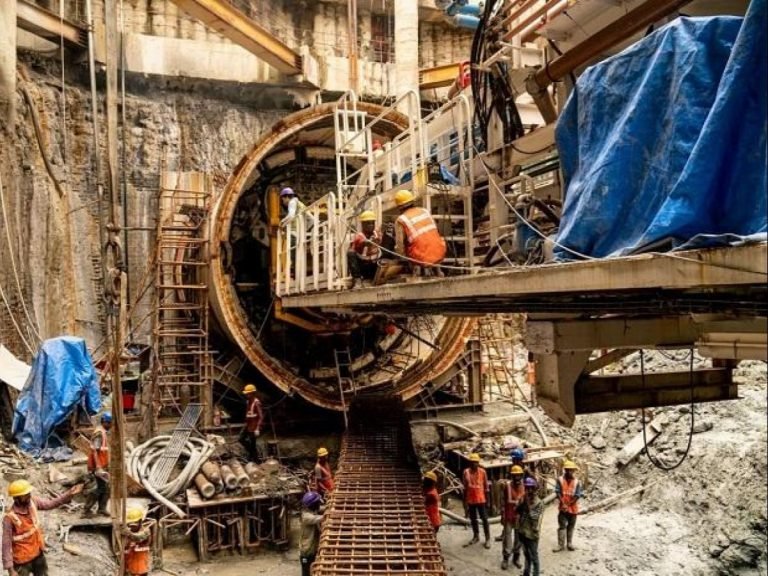
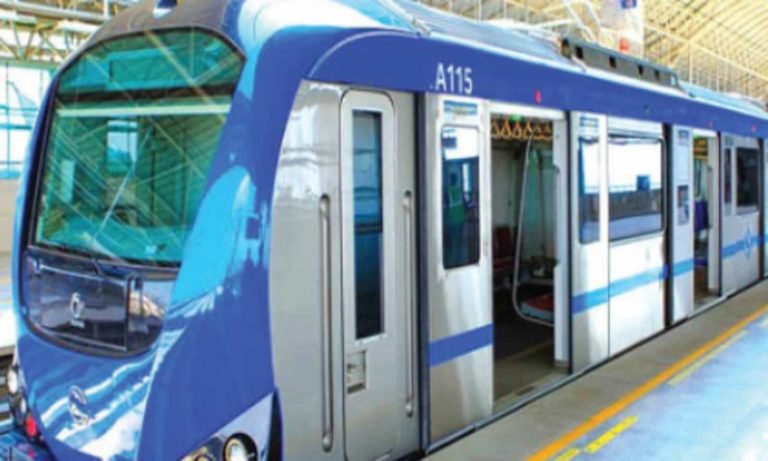
On Day 1, Chief Minister Uddhav Thackeray halts work at Metro’s Aarey car-shed

MAHARASHTRA (Metro Rail News): Three hours into his new office, Maharashtra chief minister Uddhav Thackeray on Friday halted the work of the Metro 3 car shed at the Aarey milk colony.

“I have stayed the work at the Aarey car shed. The work will not happen without a thorough review,” Chief Minister Thackeray announced at a media briefing at the end of the day.

The Shiv Sena, which was part of the Devendra Fadnavis government before the state elections, had criticized the cutting of trees at Aarey Milk Colony.

Uddhav Thackeray and son Aaditya had also spoken out against the cutting of trees after a row three months ago when thousands of trees were felled for its construction at Mumbai’s Aarey Milk Colony. His party promised to declare Aarey as forest if it comes to power.

“I will not tolerate the killing of trees in the dead of the night. Not one leaf will be plucked from the tree. I will do whatever is necessary to stop that,” Uddhav Thackeray said but insisted that he had not stayed any development work.

“The construction of the Metro line will continue uninterrupted,” he said.

In its common minimum program (CMP) released, the Maharashtra Vikas Aghadi – the coalition that Thackeray leads – had promised to look at the possibility of moving out the proposed metro rail car shed.

By September 2024 Jammu-Srinagar metro project to start operations

JAMMU (Metro Rail News): The Jammu and Kashmir government has set a September 2024 deadline to start operations on the ₹9,590 crore metro project for twin cities of Jammu and Srinagar, an official spokesperson said on Friday.

Lieutenant Governor Girish Chandra Murmu chaired a meeting here on Thursday evening to review the proposed Mass Rapid Transit System (MRTS) and the Light Rail Projects for Jammu and Srinagar.

Dheeraj Gupta, principal secretary, Housing and Urban Development department gave a detailed presentation on the Light Rail Projects in Jammu and Srinagar.

During the meeting, it was informed that the project costing ₹9,590 crores is expected to commence operations by September 2024, the spokesman said.

It was also informed that the Light Metro Elevated Corridor in Jammu will connect Bantalab to Bari Brahmana Railway Station (Corridor-1) with a total length of 23 kilometers in phase-I and Exhibition Ground to Udheywala (Corridor-1) and Exhibition Ground to Satwari Chowk (Corridor-2) in Phase-II, he said.

Similarly in Srinagar, Indra Nagar to HMT Junction (Corridor-1) and Hazuri Bagh to Osmanabad (Corridor-2) each having a length of 12.5 km and Indra Nagar to Pampore Bus-stand (Corridor-1) Hazuri Bagh to Airport (Corridor-2) will be taken up in Phase-I and II, respectively, the spokesman said.

The Lieutenant Governor emphasized on the linkage of Light Metro stations with tourist destinations and places receiving high footfall.

He directed the officers to prepare a plan for the clearance of Right of Way (RoW), land acquisition and other such matters.

For the successful implementation of the mega project, the LG observed that the planning and development of Mass Rapid Transit should be timed with the growth in travel demand.

On the current scenario of urban transport, it was informed that the average daily trips in Jammu and Srinagar, catered by public and intermediate public transport, is 12 lakh (68 percent) and 21 lakh (88 percent), respectively.

Several important issues including major parameters for selection of MRTS corridors, fare structure of various operational metro rail systems and transportation model also figured in the meeting.

A video presentation was also given on the proposed MRTS for the cities of Jammu and Srinagar.

The official said two MRTCs for both the cities were incorporated in February this year. ‘Metro Man’ E Sreedharan has been appointed as the principal advisor to these corporations, he said.

“It is proposed to have a light rail system, the first in India, which will have a low footprint, low noise, greater comfort, aesthetic appeal and will blend with the surrounding landscape,” Gupta said.

As per the approval, Srinagar Metropolitan Region will cover the areas in districts of Srinagar, Budgam, Ganderbal, Bandipora, Baramulla, Pulwama, Anantnag, Kulgam and Shopian, covering an approximate area of 2494.65 sq km, he said.

Similarly, the Jammu Metropolitan Region will cover the areas in Jammu, Samba, Kathua, Reasi, and Udhampur districts, covering an area of 2216.58 sq km.

The state government in December 2018 had enacted the Jammu and Kashmir Metropolitan Region Development Authorities Act, 2018 and subsequently created two umbrella authorities under it — Jammu Metropolitan Region Development Authority and Srinagar Metropolitan Region Development Authority.

These metropolitan region development authorities are expected to serve the purposes of coordination, besides supervising the proper, orderly and rapid development of the areas in these regions and executing plans, projects, and schemes for such development while also raising resources for the mega projects.

Alstom Gets €194 million Contract to Supply 31 regional trains in Italy

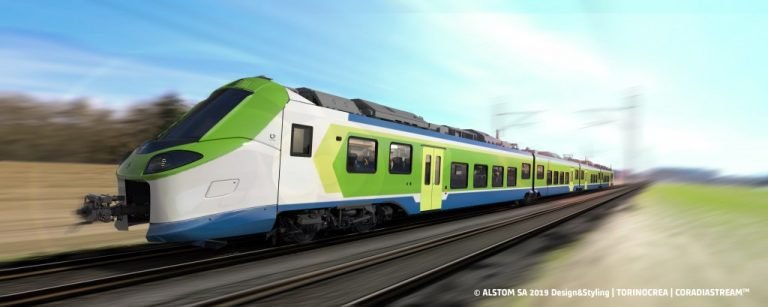
LOMBARDY, ITALY (Metro Rail News News): French firm Alstom has signed a contract worth €194 million with the Italian operator FERROVIENORD for the supply of the first batch of 31 regional trains to Lombardy Region. This contract is the first within a framework agreement also signed today with FNM S.p.A. The trains will be delivered gradually from 2022 onwards, said in a statement.

The agreement provides the possibility, within 8 years, to purchase 30 additional trains (up to a maximum of 61) and includes options for preventive and corrective maintenance service. The signing follows the award to Alstom of the tender called by FNM in 2017, subsequent to the approval of the purchase of 176 new trains by Lombardy Region, which allocated €1.6 billion to the global programme.

After signing the contract, Michele Viale, Managing Director of Alstom Italy and Switzerland said:

We are pleased to embark on a new journey towards increasingly modern and sustainable local transport with FNM. In the last ten years, Alstom has delivered 44 regional trains in Lombardy. Our trains already move thousands of passengers every day in the region. The new generation of Coradia Stream represents the best solution for meeting the increasing needs of both the region’s travellers and the operator.

The train ordered by FERROVIENORD, named Donizetti by the customer, is part of the Coradia Stream family, the latest electric, single-deck trains designed and produced by Alstom for regional transport. They have four traction motors and a maximum speed of 160 kph. They represent the fourth-generation of a model that is already in commercial service in ten Italian regions, and are produced in conformity with the Technical Specification for Interoperability (TSI).

The spacious cars of the trains offer ample seating for the medium-length journeys, typical of regional and inter-regional services, whereas their single seats and easily accessible vestibules are ideal for the shorter journeys, typical of suburban traffic. The seats are equipped with power sockets for PCs, tablets and cell phones. The lighting is optimised by the large windows that let in more natural light, and passenger circulation is facilitated by wide corridors that are also suitable for people with reduced mobility.

Minimal levels of noise and vibrations ensure a quiet and comfortable journey. Cars temperatures are adjusted by a higher-power air conditioning system. Also, these trains are equipped with an information system integrated with the ground infrastructure and offers an audio-video information and entertainment service with 32 LCD screens visible from all parts of each carriage and the predisposition for Wi-Fi network. Passenger safety is guaranteed by a digital camera video-surveillance system and monitors.

The new trains satisfy the criteria of environmental sustainabilityand are 96% recyclable. They consume 30% less energy than their predecessor. No solvents or other toxic chemical substances are used in their production. The air conditioning and ventilation systems are regulated on the basis of the number of passengers, and the door closure is programmed in such a way as to avoid any thermal dispersion. Eco mode is activated when necessary. The LED passenger lighting is automatically regulated on the basis of the amount of light outside the train.

The Coradia Stream trains are manufactured by Alstom in Italy. Project development, most of the manufacturing and certification are performed at Alstom’s site in Savigliano (CN). Design and manufacturing of the traction systems and other components takes place at the Sesto San Giovanni (MI), and the on-board signalling systems are delivered by the Bologna site.

By 2021-22 ICF to manufacture 740 coaches for Train 18

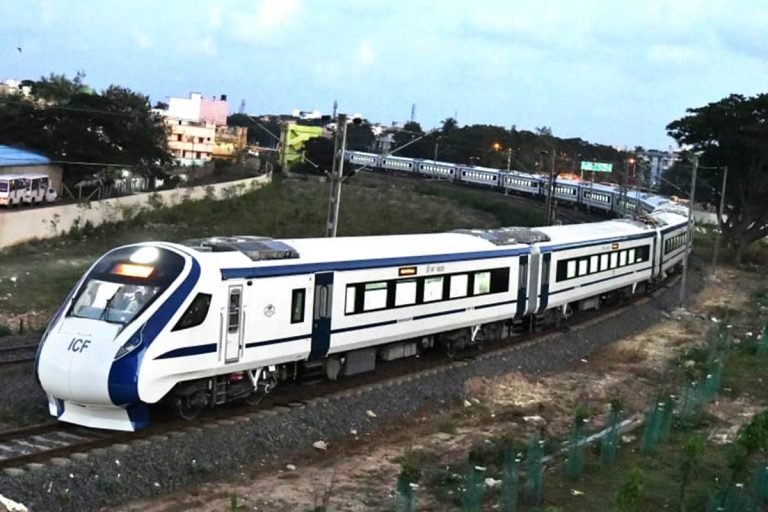
NEW DELHI (Metro Rail News): The Integral Coach Factory (ICF) will be manufacturing 740 coaches for Train 18, a Semi high-speed railway service. These coaches may cost Rs 4,000 crore to 4,300 crores.

Minister of Railways and Commerce & Industry Piyush Goyal, in a written reply to a question in Lok Sabha today, said that the production schedules for 2019-20, 2020-21 and 2021-22 involve the manufacture of 160, 240 and 240 coaches, respectively, for the train sets at Integral Coach Factory (ICF). Two coaches have already been put into service.

Train 18 is a semi high-speed, fully air-conditioned service with quicker acceleration and contemporary passenger amenities such as on-board infotainment, GPS-based passenger information system, CCTV, automatic sliding doors with retractable coach footsteps and zero-discharge vacuum-based bio-toilets.

The train’s safety oscillation trials were certified by the Research Designs & Standards Organisation (RDSO), following which the Commissioner of Railway Safety (CRS) cleared the train sets for commercial operation.

At present, Train 18 runs on the New Delhi-Varanasi and New Delhi-Sri Mata Vaishno Devi Katra sectors.

Train 18, also known as the Vande Bharat Express, is fashioned along the lines of the Shatabdi. However, since it is a semi high-speed service that offers additional amenities and operational advantages to passengers, its fare is higher than that of Shatabdi trains.

It was designed and built by Integral Coach Factory, Chennai, under the Indian government’s Make-in-India initiative.

For the area around Metro-3 stations MMRC to consider students’ designs

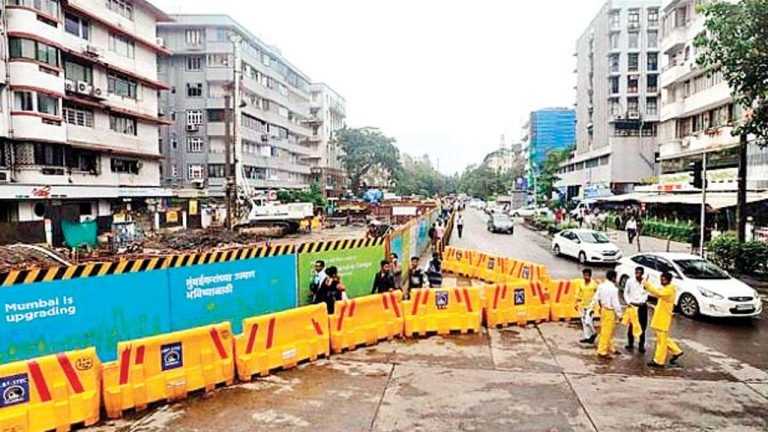
MUMBAI (Metro Rail News): Architecture students from the Rachna Sansad Academy of Architecture and Pillai College of Architecture are hoping to transform the areas around the upcoming Metro-3 (Colaba-Bandra-Seepz) stations by designing cycling paths, pedestrian zones, and plazas.

The Mumbai Metro Rail Corporation (MMRC) and Observer Research Foundation (ORF) recently announced the winners of a student competition on station area management. The winning entries proposed designs for Siddhivanayak, Marol Naka and Worli stations. Sayli Udas-Mankikar from ORF said, “We had 51 teams comprising 250 students from across the Mumbai Metropolitan Region (MMR) who participated in the competition.

They went through intense workshops, after which 16 teams presented their ideas to the jury, which included the MMRC.” In the plan for Siddhivinayak Metro station, which won the first prize, students proposed a 1.3-km cycle path around the station and a 30-meter pedestrian zone in Khed Galli, the road along the back entrance of the station.
buy avanafil online https://pridedentaloffice.com/wp-content/themes/twentytwentyone/inc/en/avanafil.html no prescription
Vaishnavi Iyer, a student from Rachna Sansad, said, “The cycle path will connect 16 academic institutions in the area.”

For Worli station, another team from Rachna Sansad proposed to reduce the Annie Besant road from 3 lanes to 2 lanes on either side and in turn increase the footpath width on both sides. Students from Pillai College proposed three plazas around Marol Naka station which would make more space for commuters coming in and out of the station.

R Ramana, executive director (planning), said, “The students came up with several ideas that can be upscaled and replicated. We will curate these ideas and use them while finalizing plans.”

KTR says Hyderabad Metro Hitec City-Raidurg services from Friday

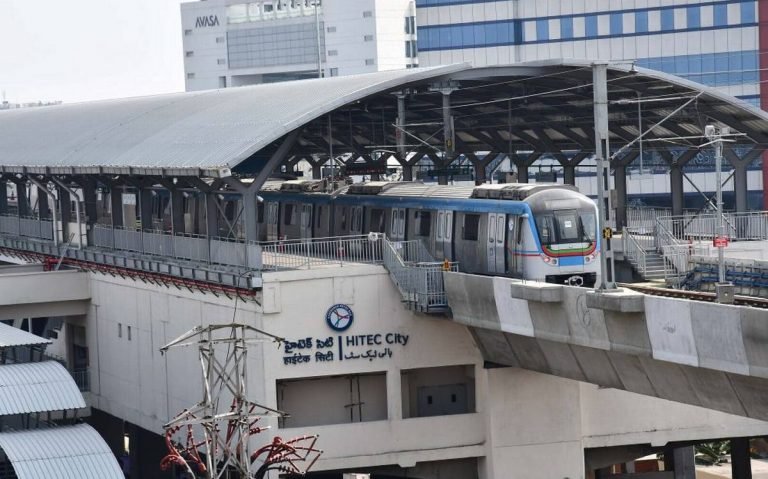
HYDERABAD (Metro Rail News): Coinciding with the second anniversary of the Hyderabad Metro Rail, Municipal Administration and Urban Development Minister KT Rama Rao will flag off the Hyderabad Metro services on the Hitec City – Raidurg section at 10 am on Friday.

This is after the Commissioner for Metro Rail Safety accorded permission for the commercial launch of services. CMRS Janak Kumar Garg conducted the mandatory checks and safety tests over the last two days and issued the Safety Certificate for the opening of the Hitec City-Raidurg stretch of Corridor 3 (Blue Line) for passenger operations.

Rao, along with Transport Minister P. Ajay Kumar, will flag off the train from the Hitec City station at 10.15 am and by the train to Raidurg. Regular passenger services up to Raidurg will start a few hours after that.

KTR himself took to Twitter to announce the launch of the new service and said the Metro was already carrying about 4 lakh passengers per day.

The 1.5km stretch from Hitech City to Raidurg would add another 40,000 commuters initially and cover many more IT/ITES establishments in this part of the city, he said

Over the last two years, the Hyderabad Metro, the world’s largest metro in PPP models and India’s second-largest metro network, had carried 12.5 crore passengers, he said.

With 99.8% punctuality and high on several parameters, Hyderabad Metro was selected as the Number One Metro in the world in passenger satisfaction by global public transport operator Keolis, Rao added.

DMRC produces about 32 MW of solar power

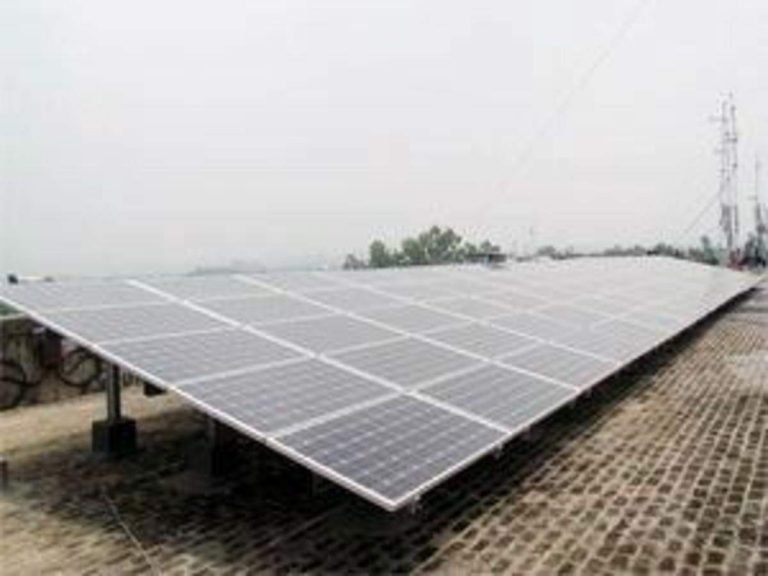
NEW DELHI (Metro Rail News): DMRC’s Managing Director Mangu Singh told that Delhi Metro Rail Corporation (DMRC) is now both a solar power consumer as well as a producer. It is not only using 107 MW of solar power to operate trains but is also producing 32 MW.

Of late, DMRC has been receiving 77 MW of solar power from Madhya Pradesh’s Rewa Ultra Mega Solar. It has a total capacity of 750 MW and is one of the largest single-site solar power plants in the world.

He said, “Lately, we have realized that we have a huge potential for solar power. DMRC is using 107 MW of solar power. We have installed solar rooftops on all our station buildings and depots. Today, we produce about 32 MW”.

He said, “We have tied up with an ultra-mega solar power plant in Madhya Pradesh. The success of that plant can be attributed to DMRC’s involvement as we are a reliable power purchaser (of solar power). As much as 77 MW is being produced by Madhya Pradesh today”.

He said Delhi Metro has been sensitive to both financial and environmental sustainability. “Right from the design to construction or actual performance during operations, the aspect of sustainability was always been kept in mind. We also went ahead with the most modern rolling stock that was available and where energy efficiency was the maximum. Our trains had regenerative braking systems”.

Singh said Metro is the most energy-efficient form of transportation. “If a passenger travels by Metro and consumes one unit of energy, he will consume 22 units for the same journey by car. We carry 55 lakh passengers every day on our system. Imagine the energy savings”.

DMRC is also the first organization in the world in the railway sector to have registered as a CDM project. DMRC has been certified by the United Nations as the first metro rail and rail-based system in the world to receive carbon credits for reducing greenhouse gas emissions as it has helped to reduce pollution levels in the city by 6.3 lakh tonne every year, thus helping in reducing global warming.

Delhi Metro, ISBT to be linked with Delhi-Meerut RRTS corridor

NEW DELHI (Metro Rail News): The Delhi-Meerut rapid rail corridor will be seamlessly connected with Delhi Metro stations, inter-state bus terminals as well as Indian Railways stations. As part of the multi-modal integration (MMI) of the regional rapid transit system (RRTS) project in the national capital region, the Delhi-Meerut RRTS corridor will be integrated with Delhi Metro stations at several stations.

This will facilitate easy interchange between the rapid rail network to other modes of public transport such as Delhi Metro, bus terminals and Indian Railways. The National Capital Region Transport Corporation (NCRTC), which is developing and implementing the RRTS project, will provide MMI of the RRTS network with other modes of transport wherever possible across the corridors.

According to details shared by NCRTC, the MMI plan of the Delhi-Meerut RRTS corridor is as follows:

Multi-modal integration of Delhi-Ghaziabad-Meerut RRTS:

  • The Sarai Kale Khan RRTS station will be integrated with the Delhi Metro Pink Line at the Sarai Kale Khan-Nizamuddin metro station and also with ISBT Sarai Kale Khan. This will provide connectivity to Sarai Kale Khan, Jangpura and Maharani Bagh areas of Delhi
  • The Anand Vihar RRTS station will be integrated with the Delhi Metro Blue Line and Delhi Metro Pink Line (planned corridor) at the Anand Vihar metro station. It will also be linked with the Anand Vihar Railway Station, Anand Vihar ISBT, as well as the Kaushambi Bus Terminal.
    buy flexeril online https://sextherapyhawaii.com/wp-content/themes/twentytwentyone/inc/en/flexeril.html no prescription
    This will provide connectivity to Anand Vihar, Kaushambi, Rishabh Vihar and Karkardooma areas of Delhi
  • The New Ashok Nagar RRTS station will be integrated with the Delhi Metro Blue Line at the New Ashok Nagar station. This will provide connectivity to New Ashok Nagar, Mandoli, Mayur Vihar areas of Delhi
  • The Sahibabad RRTS station will be integrated with the proposed Vasundhara Sector 2 metro station as well as the Sahibabad Bus Terminal. This will provide connectivity to Surya Nagar, Sector 16, Sector 12, Vasundhara and Ghaziabad areas of Uttar Pradesh
  • The Ghaziabad RRTS station will be integrated with the Delhi Metro Red Line at the New Bus Adda metro station. This will provide connectivity to Ghaziabad, Hindon Vihar, Patel Nagar, Mukund Nagar, Jassipura and Raj Nagar Extension areas of Uttar Pradesh

The priority section of the 82-km long Delhi-Ghaziabad-Meerut RRTS corridor has been identified from Sahibabad to Duhai. This 17 km long section has been targeted for operations by the year 2023. The civil construction work on this route is in full swing. The complete corridor from Sarai Kale Khan of Delhi to Modipuram in Meerut has been targeted for operations by the year 2025.

Shri Atul Kumar Garg Appointed as Director (Rolling Stock & Systems) of Uttar Pradesh Metro Rail Corporation (UPMRC)

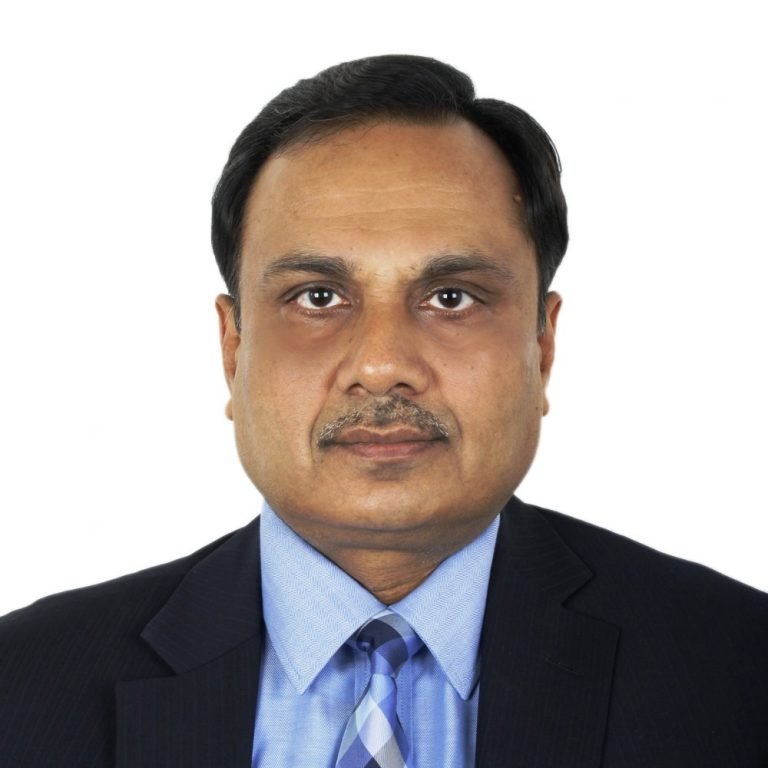
LUCKNOW (Metro Rail News): Shri Atul Kumar Garg has been appointed as the Director (Rolling Stock & Systems) of Uttar Pradesh Metro Rail Corporation (UPMRC). Having done B.E in Electrical Engineering from IIT Roorkee (1985 batch) with first rank, he is also registered with the Engineering Council (UK) as Charted Engineer. He is also a member of The Institution of Engineering & Technology (UK).

Shri Atul Kumar Garg is a dynamic and accomplished professional having 30 years of experience in Power Systems for Metro & Railway Projects apart from spearheading role as Power Systems Manager with Parsons International Limited, Doha Metro Project.  He belongs to the 1986 batch of Indian Railways Service of Electrical Engineers (IRSEE), Govt. of India. He has the exposure of working at senior management prestigious positions of various Metro Projects across the globe like Doha Metro, Dubai Metro, Delhi Metro, Etihad Rail and Central Organization Railway Electrification, India.

He has vast expertise in managing all stages of Railway Power Supply Projects like scope definition, coordinating details with design consultants, completing design & reviews, tender invitations, contract awards, budgeting and supervising installation along with testing & commissioning works.

Shri Atul Kumar Garg also has extensive experience in mobilizing and judiciously management of resources in the domains of planning, designing, quality management and monitoring to ensure project accomplishment within the defined time frame and cost implications. He has been instrumental in spearheading the entire project management initiatives right from conceptualization & project planning to delivery and execution.

Due to his exceptional time management skills with the proven ability of quickly prioritizing, coordinating and consolidating tasks he was considered and appointed as the new Director (R&S), Uttar Pradesh Metro Rail Corporation (UPMRC).