New Delhi: Prime Minister Narendra Modi has flagged-off the Delhi-Faridabad Metro Line that would allow hassle free travel for around two lakh daily commuters between the national capital and the industrial hub in Haryana.
The extension of the Delhi Metro connects Badarpur to Escorts Mujesar in Faridabad.
The total cost of the project from Badarpur to Escorts Mujesar is nearly Rs. 2,500 crore. Out of this, Rs. 1,557 crore was borne by the Haryana Government, the Centre contributed Rs. 537 crore, while the Delhi Metro provided Rs. 400 crore.
All these are elevated and located on either side of the Delhi-Mathura Road (NH-2).
“The nine-station metro corridor which was 95 per cent indigenously built will provide people a safe, affordable, quick, comfortable, reliable, environment-friendly and sustainable transport facility,” a Haryana government spokesperson said.
Haryana Chief Minister ML Khattar, addressing a press conference on Saturday, had thanked the Prime Minister for “gifting” the Metro service which would take the city to “another level of progress” with better connectivity with other NCR towns.
He had also said that the Prime Minister would be announcing the go-ahead for connecting Gurgaon with Faridabad by Metro.
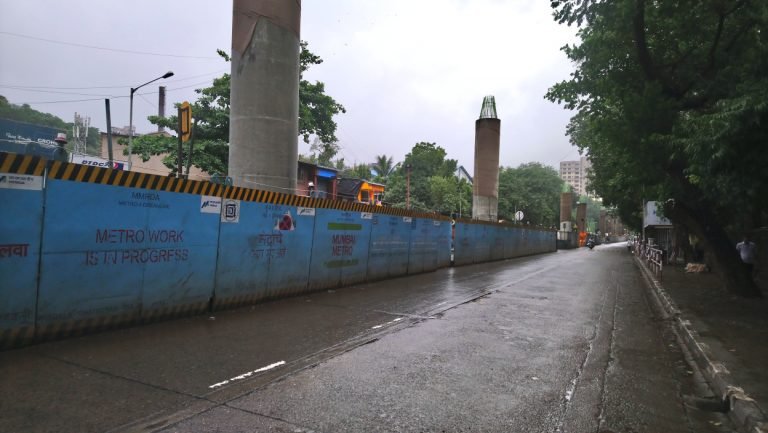
PUNE (Metro Rail News): The Maharashtra Metro Rail Corporation (MahaMetro) has said that it has so far completed laying of track in the 11.4-km-long stretch on PCMC-Range Hills section and about 540 meters of tracks on Vanaz-Civil Court section of the metro project.
The work of the erection of tubular portals for overhead traction has also been initiated in both sections. The portals and traction help maintain the power supply required for the running of metro rakes.
The MahaMetro has said that work has been expedited in both sections. About 55 portals have been erected so far in the PCMC-Range Hills section while 20 in Vanaz-Civil Court stretch. buy cialis professional online https://pavg.net/wp-content/themes/twentytwentyone/inc/en/cialis-professional.html no prescription
Work on commencement of two power substations has also been started to provide uninterrupted power.
The substations are coming up at Vanaz and Vallabhnagar. The work of laying of tracks in PCMC-Dapodi stretch is expected to get over by December. A target has been set to complete similar work taken up in the VanazGarware College route by January end. The metro corridors are coming up in Pune and Pimpri Chinchwad in a 32 km stretch. Work has been taken up in four sections. Digging of the tunnel for the underground section is expected to begin in the next few days.
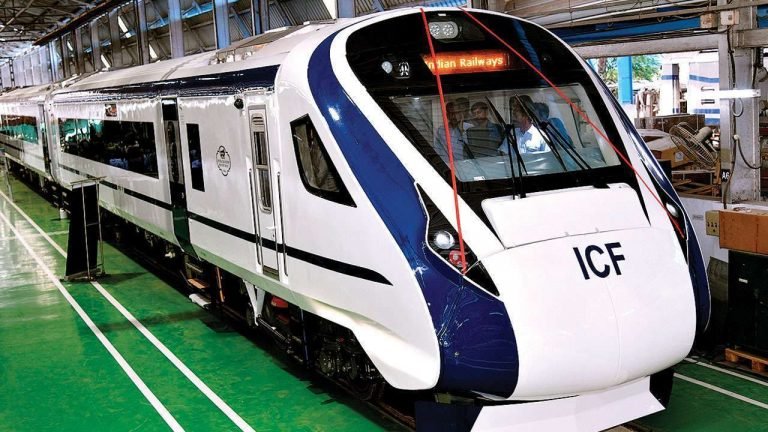
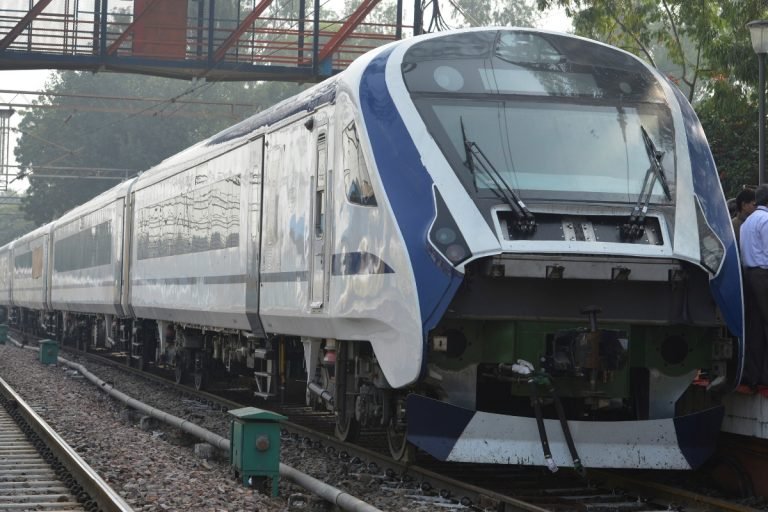
CHENNAI (Metro Rail News): On November 27 Union railway minister Piyush Goyal informed Parliament that Chennai-based Integral Coach Factory (ICF) will manufacture 160 coaches of Train-18 in 2019-20.
However, top railway officials say that it is unlikely that even a single coach of Train-18 will roll out of ICF this year or in the near future as top companies have raised concerns about specifications for the procurement of a new electrical propulsion system. buy lexapro Canada langleyrx.com/lexapro.html no prescription
In November the specifications set by the Research Design and Standards Organisation (RDSO) and Indian Railways research wing were released.
Former chief
mechanical engineer (CME) of ICF in a letter to V K Yadav said that chairman of
Railway Board (CRB) on November 13 “RDSO has exceeded its brief and included
items to which likely bidders have objected to in writing,” said Shubhranshu.
Shubhranshu is now posted at Rail Wheel Plant and was earlier part of the core team which made two Train-18 rakes which now run as Vande Bharat Express on the Delhi-Varanasi and Delhi-Katra route.
His letter is a formal complaint demanding a vigilance inquiry into what he calls the sabotage of the Train-18 project at ICF. Shubhranshu’s letter said the delay in production at ICF has been cited as the reason for floating the proposal of import of 60 train sets (960 coaches) at a cost of ₹25,000 crores. Despite repeated attempts, ICF general manager Rahul Jain could not be reached for comments.
Railway sources told that at least three multinational companies have complained against the specifications, which indicate that the supplier should provide bogies, automatic doors, and a brake system along with the propulsion system.
Railway sources said that RDSO revised the specifications after board officials found fault with the propulsion system in the first two rakes. A vigilance probe is also looking into the procurement of the propulsion system for the first two rakes from a Hyderabad-based company. “The revised specifications will make the competition narrower and the playing field more uneven,” the letter said.
This means ICF would not be able to deliver the third Train-18 before March 2023, even as the nation waits, the letter added. In addition, the production of air-conditioned EMUs for Mumbai suburban and MEMUs for branch lines have also been stalled indefinitely, the letter said. “Now ICF is manufacturing only LHB coaches,” an official said. “We don’t know when ICF will be able to process these tenders due to the issues,” a railway board official said.
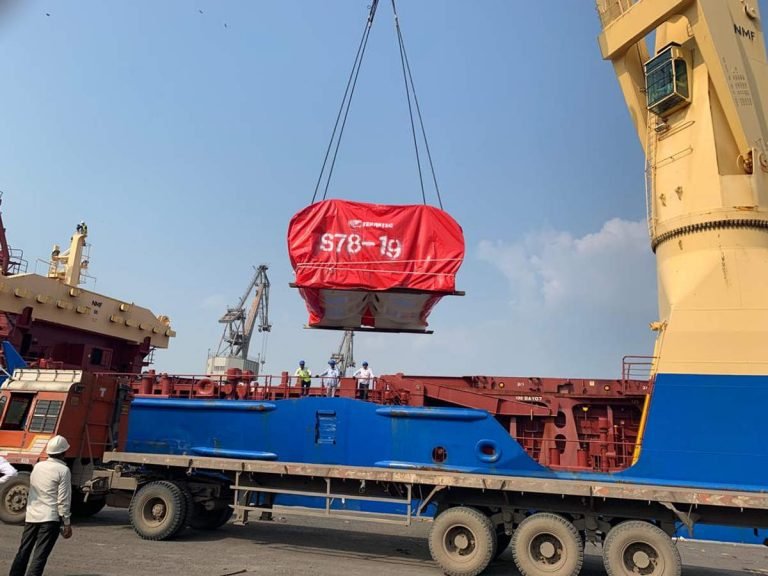
PUNE (Metro Rail News): The Maharashtra Metro Rail Corporation (MahaMetro) has said that the work of underground metro stretch is likely to expedite in the coming months as first tunnel boring machine (TBM) which will be used for tunneling work has reached the city recently. A total of four machines are expected to be deployed for the tunneling work. The remaining machines will arrive in a phased manner in the next three months.
The MahaMetro said that it took seven days for the first TBM to reach Pune from the JNPT port in Mumbai by road. The machine parts were brought in three trucks because of its huge size and weight. Additional pullers were deployed to climb the ghat section of Lonavla and Khandala.
At some spots, vehicular traffic was stopped for a few hours as a precautionary measure to make way for the convoy of TBM. A senior official from MahaMetro said that the work of the assembling machine has been taken up. About 70% of the work of assembling has been completed so far. The remaining work is expected to get over in the next few days.
The actual excavation work will begin after completion of assembling and preliminary trial runs, the official added. The MahaMetro has said that all the machines to be used for metro tunneling work are of international standards and will work on advanced technology.
CHENNAI (Metro Rail News): Against the backdrop of a vigilance probe into the manufacture of the country’s first indigenously manufactured train set, Train 18, at Integral Coach Factory (ICF) in Chennai, the Railway Board has decided to import 60 train sets (960 coaches) from global manufacturers at more than double the cost required to manufacture Train-18 by ICF, sources said.
A senior railway official said, at a conservative estimate, including 10-year maintenance cost, the total allocation would be between Rs 20,000 crore and Rs 35,000 crore, officials said. buy super kamagra online https://pridedentaloffice.com/wp-content/themes/twentytwentyone/inc/en/super-kamagra.html no prescription
“Train 18 was manufactured at Rs 100 crore. Nobody was willing to bid for Train 20 at even Rs 200 crore. So, the minimum cost for the imported train sets will be Rs 250 crore”.
Board officials are of the view that production units like ICF should not be involved in the procurement of train sets as they aren’t mandated to do so. Officials also cited the irregularities in the Train 20 tender, which the department of industrial policy and promotion (DIPP) objected to.
The move to
import train sets comes after top railway officials involved in the Train 18
manufacture at ICF including former general manager Sudhanshu Mani have been
questioned in a vigilance case pertaining to Train 18 and Train 20.
This has also put brakes on manufacture, despite the first two rakes running non-stop on the Delhi-Varanasi and Delhi-Katra routes. The board is of the opinion that its engineering arm and public sector unit RITES would be the procurement agency for the acquisition of 60 train sets, sources said.
Train 18 is
India’s first indigenously manufactured locomotive-less train with high-end
features while Train 20 was a project to procure better train sets from foreign
manufacturers, which did not take off.
Another
senior railway official told that the procurement would also not be according
to rules. Rule 704 of the Indian Railway Stores Code, which deals with
purchases, states that coaches can only be procured by the Railway Board itself
and not any other agency.
“This would make procurement by RITES an irregularity,” said the official. The code is subordinate legislation that is presented in Parliament but is not voted upon. Incidentally, the same code was cited by the Railway Board’s vigilance wing to question the Train 20 tender floated by ICF when Mani was the general manager.
Mani, former chief mechanical engineer of ICF LC Trivedi and former chief accounts officer have been asked to fill in a questionnaire by the vigilance wing on how they ‘approved the tender for purchase of train sets when as per the store’s code only the Railway Board was authorized to do it’.
When
contacted, a senior official in the board accepted there was ‘a horrible
controversy’ around the train set issue and that it had opened a Pandora’s box.
“ICF has not been able to manufacture the third rake due to the vigilance case
and other issues,” the official said, requesting anonymity. However, the
official said he did not want to clarify on the issue of import of train-sets.
A few officials who have worked at ICF said this ‘crippling’ situation of ICF and other production units has become a tool to justify imports. “Had ICF been allowed to go ahead with the manufacture of the same design of Train 18 at least six more trains would have been turned out by now,” one official said. The situation may have a disastrous effect on the development of indigenous technology.
MUMBAI (Metro Rail News): Uddhav Thackeray Maharashtra Chief Minister said that he has ordered a review of all on-going development projects in the state, including the Mumbai-Ahmedabad bullet train.
The bullet
train project has faced stiff opposition from farmers and tribals whose lands
are to be acquired.
On late Sunday night, he told reporters that “This government is of the common man. Like you asked now, yes, we will review the bullet train (project). Have I stayed the bullet train project like Aarey car shed? No, I haven’t”.
Thackeray said the state government will also come out with a white paper on the financial condition of the state.
He said the
state government, which has a debt of nearly Rs five lakh crore is a firm on
giving unconditional loan waivers to farmers.
The
announcements came a day after the Thackeray-led Maharashtra Vikas Aghadi (MVA)
government forged by the Shiv Sena, Nationalist Congress Party (NCP) and
Congress more than a month after the election results were out won the trust
vote in the state Assembly with the support of 169 legislators in the
288-member House.
He said that the priorities of the previous BJP-led government in the state in which his party was a constituent – were not “misplaced”, and he further added that there would be no vendetta politics.
VISAKHAPATNAM(Metro Rail News): Amaravati Rail Corporation Limited, which is executing the Vizag metro rail project, has prepared a metro rail master plan for the area under the aegis of the Visakhapatnam Metropolitan Region Development Authority (VMRDA) at the directions of the state government.
Minister for Municipal Administration and Urban Development Botcha Satyanarayana announced on Saturday that Visakhapatnam Metro Rail Project will be taken up in three phases during which work on corridors in different routes would be commenced.
The main corridor would be from Kurmanapalem to Madhurawada. While one route will go to East Point Colony, the other to Old Post Office, the Minister stated.
Surveying the different routes for the project, the Minister stated that a comprehensive plan would soon be readied to take up the metro rail project in the city at an estimated cost of Rs 8,300 crore. Further, he mentioned that Chief Minister Y S Jagan Mohan Reddy was according to top priority to developing Visakhapatnam on the lines of Mumbai and Chennai.
The 140-km-long Vizag metro rail network is proposed to be executed in three phases over a period of 10 years. In the first phase of the project, the highway corridor will be extended to the Vizag Steel Plant, instead of ending at Gajuwaka. This will increase the length of the highway corridor from 30.8 km (Kommadi to Gajuwaka) to 34.2 km (Kommadi to Steel Plant).
The bidding process for the 43km-long metro rail project began in September 2017. According to the conditions of the bidding process, the AMRC has the right to increase or decrease the length of the project by 15 per cent.
Different Design of Piers (to be proposed) for Visakhapatnam Metro Rail Project.
Therefore, at the direction of the state government, the AMRC has decided to extend the project to 46.42km. The length of the other two corridors— Old Post Office Junction to Gurudwara Junction (5.29km) and Thatchipalem to China Waltair (6.91km) will remain as per the original plan.
The second phase of the project will cover 77.31km and the third phase will cover 16.4km running from Rushikonda to Bheemili.
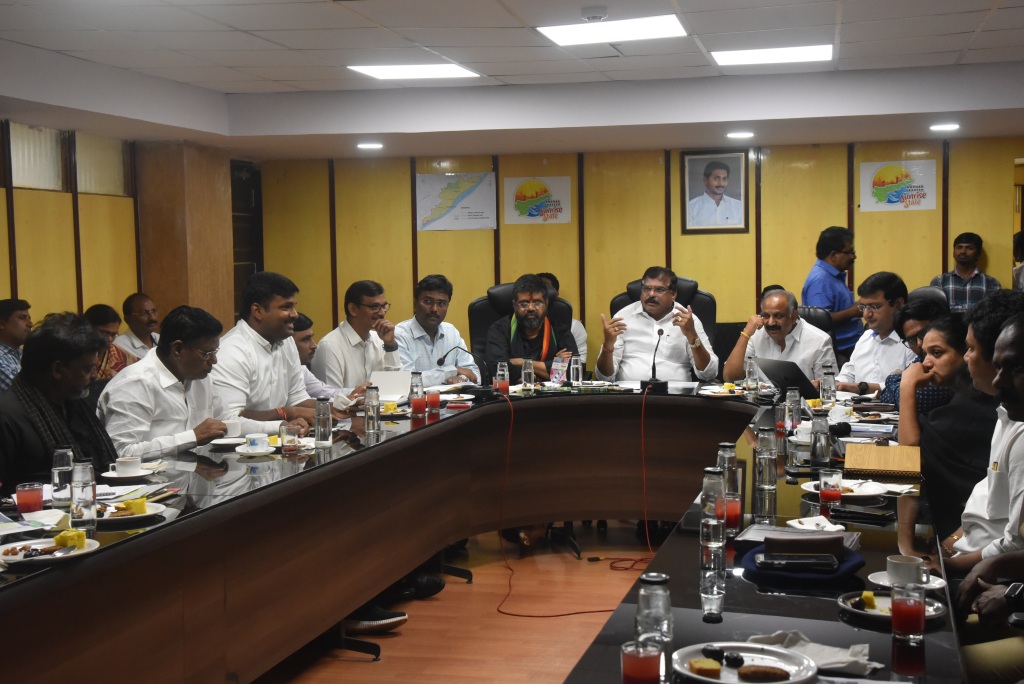
Presentation On #VisakhapatnamMetro Rail Project Meeting at VRMDA Office on Nov 30.Hon’ble Municipal Minister Sri B Satyanarayana , Tourism Minister Sri M Srinivasa Rao VMRDA Chairman, MP VSP,Dist Collector, MLA’s , VMRDA Commissioner, GVMC Commissioner Dist officers participate.
Urban development minister Botcha Satyanarayana said that the tendering process will begin in the next few weeks. “The state government is keen on launching the project as early as possible,” he said.
The various proposals under the project also include trackless metro trains on the beachfront in the second and third phases. The proposal for trackless metro trains is intended at increasing the aesthetic of the beach stretch. The trackless metro corridor will have almost invisible railway lines on the flooring which get operated by magnetic strips and sensors. AMRC officials said that the 140km-long project could be taken up in a mixed-model system with some having elevated corridors and some having other models.
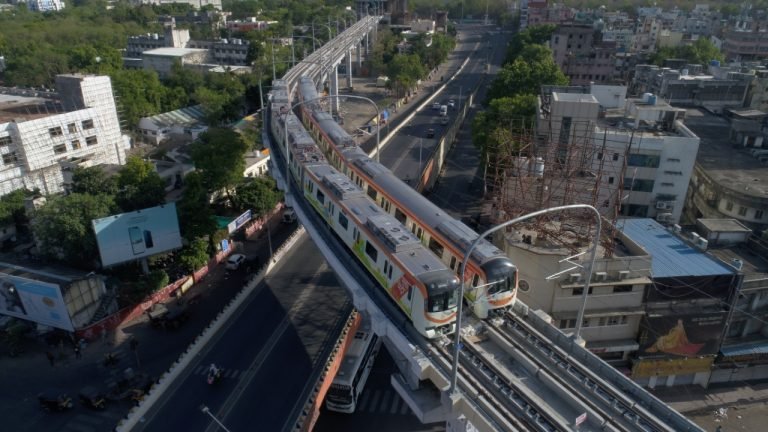
NAGPUR (Metro Rail News): Maha Metro Nagpur achieved a major milestone when its train traveled on Khapri-Sitaburdi route for the first time at 80 KMPH every 15 minutes on 27th November. With all necessary clearances under its belt, Metro successfully started operations at said speed and frequency. The dream that over 3 million Nagpurians had seen for years now, finally became a reality.
But this was not an easy task and had its share of trials and tribulations. But it was the dedication of Maha Metro team led by MD Dr Brijesh Dixit which ensured that this dream becomes a reality. It was the culmination of efforts put in by over a thousand officials, employees and workers that city got to see `Mazi Metro’ at its peak speed.
As commercial services had started, it was impossible to undertake track-related work in the day time. The commercial services stretched from 8 am to 8 pm and hence work could be done only between 10 pm and 5 am. Though adequate lighting arrangements were made, visibility was always an issue.
If executing track work, especially in night hours was a tough task, work involving setting up OHE network was a big effort. Similar to OHE work, Maha Metro team had to overcome many constraints in laying of 132 kV power cable in main areas. There were utilities from the power supply, telecom and water supply authorities running underneath city road.
The 132 kV Cable was laid below these utilities without major damage. Another hurdle was crossing of 132 kV Cable at Nag River at Akashwani Square, Panchasheel Square and Maharaj Bag. It was crossed on specially designed steel structures on Nag River successfully. The non-availability of stations was a major constraint for Signal department.
Initially, Signaling System had been designed considering that all stations would be available at the same time. However signaling equipment had to be accommodated with available stations. Alike Track Department, Signaling team too faced constraints while discharging its duty due to revenue services.
Testing could be done only after revenue operations between 9 pm and 5:50 am. These multiple factors proved a major challenge for Maha Metro while executing project work. Rolling Stock, like other departments, too had its own share of problems. CMRS gave its clearance for running metro train at speed of 80 KMPH and subsequently Maha Metro launched operations every 15 minutes.
Timelines:
Approval of civil, track, signal, OHE & rolling stock systems by RDSO & Rly Board – Dec 2017
Inspection of rolling stock by CMRS – 20th September 2019
Interim Speed Certificate @ 80 kmph by RDSO for CRRC Rolling Stock – 25th September 2019
Independent Safety Assessment for CBTC Signaling System – 11th October 2019
Railway Board nod to rolling stock to run @ 80 kmph max – 11th November 2019
CMRS sanction to run trains in CBTC signaling system at 80 kmph – 22nd November 2019
PARIS, FRANCE (Metro Rail News): The Alstom and Bombardier consortium has been awarded the contract to design and manufacture the new generation of metros for Île-de-France Mobilités and RATP. The confirmed part of the contract covers the delivery of 44 trains for a sum of over 530 million euros. This may be supplemented by an option’s exercise for a total of up to 410 trains. The respective share for Alstom and Bombardier amounts to approximately 265 million euros or 50% of the total.
Initially, the new trains will be deployed on three Paris metro lines (3bis, 7bis and 10) and their entry into service will take place between 2024 and 2026. The options will then be used to equip 5 other lines (13, 12, 3, 8 and 7).
“I am honoured that Île-de-France Mobilités and RATP have chosen to trust us to renew travelling comfort on the historic lines of the Paris metro. Together, we want to turn the region into the world’s showcase for the cutting-edge technologies of the French rail sector,” says Jean-Baptiste Eyméoud, President of Alstom in France.
“The combined expertise of our two companies makes it possible to offer RATP and Île-de-France Mobilités a metro equipped with the latest on-board technologies that is part of tomorrow’s modern mass transportation. Passengers will appreciate the special attention paid to the interior atmosphere, level of comfort and quality of on-board services. In addition to optimal performance and reliability, the MF19’s innovation lies in its modularity and scalability adapted to the existing Paris network,” says Laurent Bouyer, President of Bombardier Transport France.
Based on Alstom’s and Bombardier’s steel-wheeled metro solutions, the new trains will benefit from the latest technological developments to increase comfort, availability, accessibility and passenger information, as well as facilitate maintenance.
The fleet will consist of 30 five-car trains for line 10 (76m long) and 14 four-car trains for lines 7bis and 3bis (60.86m long). These first 44 trains will have a driver’s cabin. Each train will be in “boa” configuration with modern passenger information systems, large bay windows and themed, 100% LED lighting. The trains will also offer a pleasant, safe travel experience, with a heating and air conditioning system, USB sockets for charging mobile devices, video protection cameras throughout the entire train, etc. buy doxycycline online https://gilbertroaddental.com/wp-content/themes/twentyseventeen/inc/en/doxycycline.html no prescription
The environmentally friendly new metros will be eco-designed (20% recycled materials used in their production), making them 98% recoverable at the end of their lifespan. They will consume 20% less energy than the trains currently in service (MF77) thanks in particular to 100% electric braking and 100% LED lighting. These new trains will also make it possible to reduce maintenance costs by 15% compared to the MF01.
2,300 people at Alstom and Bombardier, including 700 engineers, will work on the project as part of the consortium. The two sites of Valenciennes (Alstom) and Crespin (Bombardier) will respectively assemble the complete trains to address the challenge of industrial capacity. Each site will be in charge of studies, design, train assembly, testing/validation and certification.
Alstom’s sites will develop and produce the engines (Ornans), traction chains (Tarbes), on-board electronics (Villeurbanne) and IT safety systems (Aix en Provence). Bombardier’s site at Crespin will be responsible for designing the mechanical components of the trains, such as body shell design and the design and production of the bogies, as well as the air conditioning system and all components contributing to the design of the interior layout to ensure passenger comfort, such as lighting, seats, configuration of space and panelling equipment.
In total, this project will involve 9,000 jobs in the French rail sector.
NEW DELHI (Metro Rail News): Railway sources said on Friday that the top officials of the Integral Coach Factory (ICF) here who were part of the team that built Train 18, later flagged off as Vande Bharat Express by Prime Minister Narendra Modi, have been booked by the Vigilance Directorate of the Railway Board on charges of procedural flaws.
Vigilance
officials served questionnaires on the former ICF officials — General Manager
(retired) Sudhanshu Mani, Principal Chief Mechanical Engineers L.V. Trivedi and
Shubhranshu, Chief Design Engineers (Electrical) D.P. Dash and Vavre, Chief
Design Engineer (Mechanical) Srinivas, and Kanwaljeet Asla, Financial Advisor
and Chief Accounts Officer and others who are presently serving in other
positions, the sources said.
These officials played a key role in developing the Train18 that was rolled out in a record 18-month time. The self-propelled train set, comprising 16 air-conditioned coaches, was built at a cost of ₹100 crores, about half the estimated cost of importing such a rake, with about 80% indigenous components in alignment with the Prime Minister’s call for ‘Make in India’. buy kamagra gold online https://lasernailtherapy.com/wp-content/themes/twentytwentytwo/inc/patterns/en/kamagra-gold.html no prescription
The sources said, while the train is operating without any glitch between New Delhi and Varanasi since February this year, issues over violation of certain procedures cropped up resulting in the project getting shelved at the ICF.
Vigilance officials took away huge volumes of files pertaining to the making of Train18 a few months for investigation and top officials who were part of the ambitious project were transferred out. Tenders floated by ICF to build more rakes of Vande Bharat Express were canceled. However, the Ministry of Railways made it clear that more Train18 type rakes will be available soon.
Railway Minister Piyush Goyal told the Lok Sabha a couple of days ago that the ICF would manufacture 740 coaches of Train18 in 2019-20, 2020-21 and 2021-22. On Friday, Mr. Goyal replying to a question said that there was no question of closing down the ICF. “We are very proud of the achievements of ICF. Their engineers and workers made Vande Bharat, the first semi-high speed train that India has ever made in its 168-year history. It is a jewel in the crown and there is every effort to grow, expand and modernize the company.”
Vigilance officials are now probing allegations that the tender for making the first Train18 set was awarded to a firm in violation of certain norms and also that the development team compromised on the safety of the train by not obtaining technical approval for the electrical systems from the Research Designs and Standards Organisation (RDSO), Lucknow. The RDSO is a standardization organization of the Indian Railways.
The sources
said, Amid reports that protocol issues between officers of the Mechanical and
Engineering departments were the main reasons why the production of Train18
came to a grinding halt, the Ministry of Railways has constituted a committee
of Additional Members of the Railway Board to sort out the differences between
the two departments and bring about a working synergy. The findings and
recommendations of the high-level committee were not made public, the sources
added.
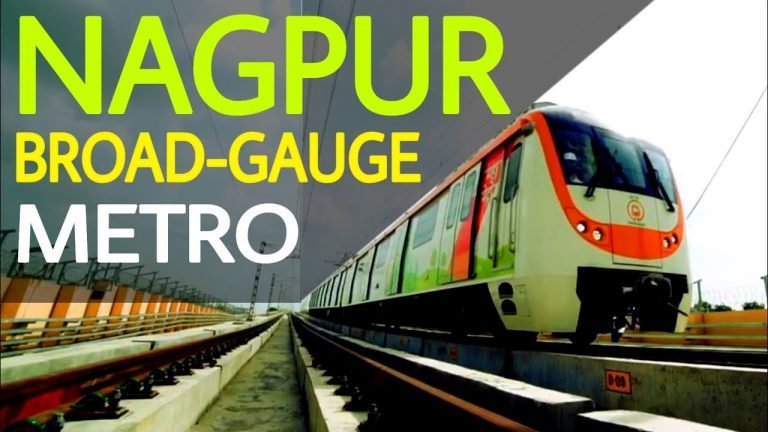
NAGPUR (Metro Rail News): The Railway Board has cleared the detailed project report (DPR) of proposed Broad Gauge Metro in Nagpur, Maharashtra, India linking the city to nearby towns is ready and will be submitted to the state government soon.
Dr. Brijesh Dixit, Maha Metro said that We had made a presentation before the railway minister on October 9. The Board has cleared it in seven weeks, for which we are grateful.
After approving the project, the railway board has asked zonal offices of Central Railway (CR) and South-Eastern Central Railway (SECR) to draft concession agreements for the proposed Broad Gauge Metro in Nagpur.
“We will sign these agreements with the two agencies. Our officers will soon go to Mumbai and Bilaspur to help their officials in preparing the agreements. Once the agreements are signed, we will purchase the coaches,” said Dr. Dixit.
Nagpur Broad Gauge Metro Project Cost
According to the detailed project report (DPR) prepared by Gurugram based consultancy firm, Urban Mass Transit Company (UMTC), the cost of the Nagpur Broad Gauge Metro project is estimated to Rs 418 crore. The trains will cost Rs 200 crore, fare collection system Rs11.64 crore, information technology (IT) infrastructure Rs 15 crore, construction of car shed, station up-gradation and passenger amenities Rs 23.12 crore, pre-operative expenses Rs 4.97 crore, station integration (BG Metro and Nagpur Metro) Rs 25 crore, depot Rs80 crore and taxes Rs 48 crore. 70% of this amount will be debt while 30% will be equity from state and central governments.
The maximum design speed will be 200km per hour and the operating speed will be 160 kmph. The trains will have three cars having a total carrying capacity of 885 passengers. The three cars with passenger capacity are – driver motor car 285, trailer car 315 and car train 285.
Nagpur Broad Gauge Metro Routes Map
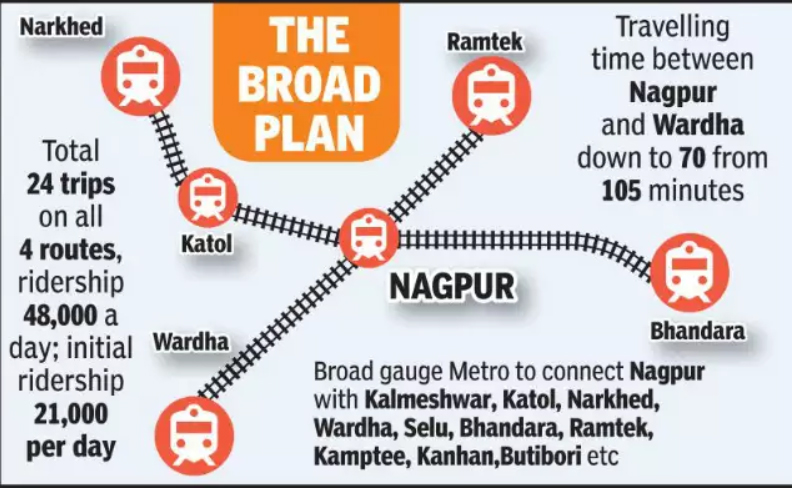
According to the DPR, the Metro will connect four towns near Nagpur — Wardha, Bhandara Road, Ramtek and Narkhed. The distances and stations on these routes are Wardha (78.8 kilometres, 12 stations), Narkhed (85.53km, 11), Ramtek (41.6km, 8) and Bhandara Road (62.7km, 11). The travel time between Nagpur and these towns will be: Wardha 1.10 hours, Narkhed 1.15, Ramtek 1 hour and Bhandara Road 55 minutes.
Nagpur Broad Gauge Metro Fares & Travel Time
Nagpur Broad Gauge Metro Fares & Travel Time
The cost of the Metro tickets will be 1.38 times the railway fare. The minimum fare for distances up to 5km will be Rs 20 while that above 70km will be Rs 90. Monthly pass tickets will range from Rs 400 to Rs 1,800.
The travel time between Nagpur and these towns will be: Wardha 1.10 hours, Narkhed 1.15, Ramtek 1 hour and Bhandara Road 55 minutes. The cost of the Metro tickets will be 1.38 times the railway fare. Fare structure will be:
Nagpur Broad Gauge Metro Expected Ridership
The total ridership is 14,700 expected of the Metro in 2021 including various routes is Wardha 5,669, Narkhed 2,616, Ramtek 3,929 and Bhandara Road 2,556. The maximum design speed will be 200 kilometres per hour and the operating speed will be 160 km/hr.
The trains will have three cars having a total carrying capacity of 885 passengers. The three cars with passenger capacity are driver motor car 285, trailer car 315 and car train 285.
Initially, MahaMetro has been asked to buy six set of trains. Another two should be purchased in 2041 when the traffic increases. The depot will be constructed in Khapri while the stabling line (where trains are parked at night) will be at Ajni. UMTC has recommended that Nagpur Metro’s automatic fare collection (AFC) card should be used for buying tickets for BG Metro. UMTC has also recommended widening of footpaths near Nagpur and Ajni railway stations. It has stressed that feeder bus service should be provided for BG Metro users.