Home Blog Page 539

Plan for three RRTS stations back on drawing board for Delhi-Gurugram

DELHI (Metro Rail News): The metro work has gained pace after the three months long nationwide lockdown and the NCRTC is future trying to work without delays.

As the nationwide lockdown hampered the works for three consecutive months, now works on the Delhi-Gurugram-SNB Regional Rapid Transit System (RRTS) corridor is gaining pace. Its Pre-construction phase has already begun at multiple locations in the city which will help in the detailed structural design with saving time and reducing chances of further delays. 
NCRTC which is the concerned agency implementing RRTS has started a detailed designing of three RRTS stations of the Delhi-Gurugram-SNB RRTS corridor.

Work on multiple preliminary stages of the RRTS such as project office setup, road widening, geotechnical investigation, shifting of utilities among others has already begun in areas such as Udyog Vihar, Atul Kataria Chowk, IFFCO Chowk, Dharuhera, among others.

For the faster implementation of works, the NCRTC is first trying to complete most of the pre-construction activities for the corridor so that the civil construction of the corridor can start immediately. It has brought on board  L&T Infra as the Detailed Design Consultant (DDC) for civil, architectural, and other design-related works for an elevated viaduct between IDPL complex Ramp to Rajiv Chowk Ramp and the three elevated stations in the city — Udyog Vihar, Sector 17, Rajiv Chowk.

Sudhir Kumar Sharma, chief PRO of NCRTC, was quoted by the media agencies saying “We did lose around three months due to the lockdown. In May, once lockdown was eased, we began the work but now the project is catching momentum. Just like the Delhi-Ghaziabad-Meerut corridor, we are expediting pre-construction work on Delhi-Gurugram-SNB segment. Once this phase is completed, there’ll be a proof-check of the design. We are also working out supervision and quality-check mechanisms.”
With simultaneous development of the Dwarka expressway, the RRTS will not only ease traffic woes in the city but will also bring down accidents, experts feel.

The 107-km long Delhi-Gurugram-SNB corridor will be elevated for about 72km (11 stations), the remaining 35km (five stations) will be underground.
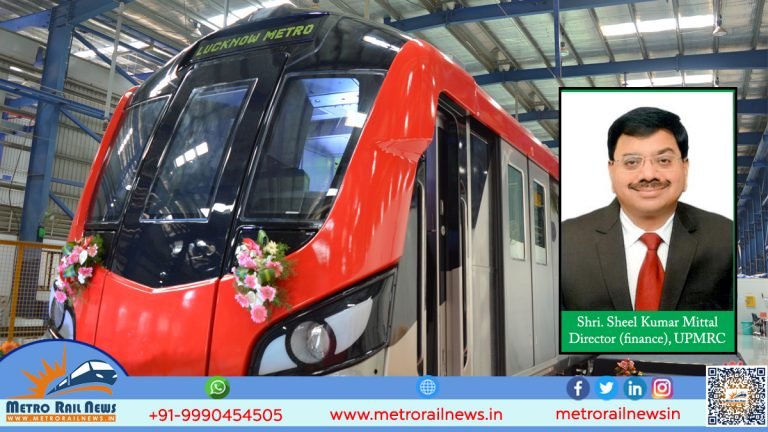
Sheel Kumar Mittal appointed as Director (finance) of UPMRC

LUCKNOW (Metro Rail News): Shri. Sheel Kumar Mittal has been appointed as Director (finance) of Uttar Pradesh Metro Rail Corporation Limited (UPMRC) with effect from 31st July 2020. He graduated from Delhi University in Commerce and a Cost Accountant with an MBA  (specialization in Finance) having vast professional experience of more than 25 years in finance and accounts. Previously he served the organization (UPMRC) as GM (finance) since 8th December 2014. During his tenure as GM (finance) at UPMRC, he was assigned overall control and management of Finance Section of UP Metro and CVO. 

With the working experience of 25  years, Shri. Sheel Kumar Mittal had the privilege of working with prestigious organizations like DMRC, UPMRC,  NBCC etc. During his service at the Delhi Metro Rail Corporation as Additional General Manager (finance), he was responsible for the finances of property development, property business, land section and Contract management of various projects. 

Apart from this for implementation of Kanpur Metro Rail project and Agra Metro Rail project has appointed Project Directors for each Metro project in Agra and Kanpur as per the approval of Government. 

Shri. Arvind Singh selected as Project Director, Kanpur Metro Project. Shri. Arvind Singh is presently working as Chief Project Manager in Uttar Pradesh Metro Rail Corporation. He has been working with Lucknow Metro Rail Project from initial stages of project implementation since December 2014 onwards. He has done exceedingly well in the implementation of Lucknow Metro Phase-1A Project in a very strict timeline and ahead of schedule. He was Chief Project Manager for construction of underground section and CCS Airport underground Metro station and completed this work of underground construction in just fifteen months. Presently he is posted as Chief Project Manager for Kanpur Metro project Priority Section and there also works are very well organized for implementation in this difficult time and civil construction of viaduct and stations is progressing fast.

Shri. Arvind Kumar Rai is selected as Project Director, Agra Metro Project. Shri. Arvind Kumar Rai is presently posted as Chief General Manager in Chennai Metro Rail Corporation Ltd. Prior to that for nearly five years he worked in Dubai Metro and nearly five years in Delhi Metro Rail Corporation through General Consultants. He has also worked with the Land Transport Authority for Singapore Metro. 

UPMRC invited applications for the post of Project Director for Kanpur and Agra Metro Projects (one for each project) in UPMRC vide advertisement No. LMRC/HR/Rectt./17/2019, dated 25th October 2019. Total fifteen eligible candidates have been shortlisted for the posts against the above notification.

EU gives nod to Alstom for acquisition of Bombardier Transportation

BRUSSELS (Metro Rail News): The European Commission has given its clearance to the acquisition of the rail business of Canadian engineering firm Bombardier by French train maker Alstom. Alstom, which makes the French TGV high-speed trains had signed an agreement this year to buy full control of Bombardier transportation for a price 5.8-6.2 billion euros ($6.3-6.7 billion) paid via a mix of cash and new Alstom shares.

The Commission had launched an investigation and initially found that the transaction raised serious competition issues. The bloc’s competition authorities cleared the acquisition on Friday after Asltom offered “significantly improved” commitments before the commission.

Both firms are leading train makes and suppliers of the European Union. This move will further make France the second largest producer of the train after China. “It includes a transfer of Bombardier Transportation’s contribution to the V300 ZEFIRO very high-speed train and an offer of IP licence to Hitachi for the train co-developed by Hitachi and Bombardier”, said a press release issued by the firm. The system will be used in future with very high-speed tenders in the UK, the note further added.

The move also proposes the divestment of the Alstom Coradia Polyvalent and the Reichshoffen production sites in France along with divestment of the Bombardier TALENT 3 platform and dedicated production facilities located within the Hennigsdorf site in Germany. However, the deal will continue to provide certain interfaces and products for some of Bombardier transportation, sources said.

The firm hopes for closing of the acquisition by the first half of 2021 according to its press note.

AIIB to approve USD 3 billion loans in the next 12 months

NEW DELHI (Metro Rail News): As part of its effort to improve connectivity, Beijing-based multilateral funding agency AIIB is looking to provide loans worth USD 3 billion for various large infrastructure projects, including Delhi Meerut Rapid Rail, Mumbai Metro Rail and Chennai Peripheral Ring Road project, over the next 12 months.

India is till date the largest borrower of the AIIB which accounts for 25 per cent of the total lending by Asian Infrastructure Investment Bank (AIIB).

According to reports, AIIB has already approved  around USD 19.6 billion for 87 projects in 24 economies. AIIB has already provided around USD 4.5 billion to 17 projects in India since its foundation in 2016.

As per media reports, various projects are at various stages of approval at the AIIB. This is how China has captured the whole Indian market,one person familiar with the matter told. As per different reports, project worth USD 4.5 billion are there in pipeline.

According to the AIIB officials as quoted by PTI, the projects which are being considered for financing by the institution include  Delhi-Meerut rapid rail corridor (USD 500 million), Haryana Bypass Link Railway (USD 400 million), Mumbai Metro Line V (USD 350 million) and Mumbai Urban Transport Project (USD 500 million).

In Maharashtra alone, three projects of about USD 1.2 billion are under consideration as per official reports. There are three road projects of Tamil Nadu itself including Chennai Peripheral Ring Road project which worth USD 1.1 billion are also being considered by the agency.

Although, Covid – 19 has delayed the process but things are now improving and AIIB is further finding ways to fund projects in India.

The AIIB is also funding for Covid related things and  The first such  loan in this field is  of USD 500 million sanctioned in May. It was for building a health system that can effectively treat COVID-19 patients and prevent its spread. The Indian government received a loan of  USD 750 million  to fight  against the adverse impact of COVID-19 on poor and vulnerable households.

Visakhapatnam metro to be operational by 2024

VISAKHAPATNAM (Metro Rail News): As the Coronavirus outbreak has brought everything at a standstill, the urban mobility system has speeded up its works more efficiently. The metro corporations are leading in this matter. They have been working tremendously on several projects as the world waits for a new normal.  The government had chosen UMTC for works of DPR for the light metro and tram corridor. With this, it has been reported that the proposal for the estimated cost of the scheme is being set up in the Metro Rail Corporation.
buy vibramycin online https://www.parkviewortho.com/wp-content/languages/new/prescription/vibramycin.html no prescription

With this, by looking at how much traffic remains in the metropolis, a route map of the metro corridor in the same direction is being prepared. Indeed, in view of the changes and increasing traffic in Visakhapatnam by the year 2050, DPR is being prepared. It was earlier reported that the deadline for completing the work was 6 months. However, the consistent delays by the agency have hampered the progress of the metro development works.

The good news about the matter is that the government has accepted the proposal of UMTC which states that it shall complete the DPR connected to the Light Metro by the end of December and the DPR connected to the tram corridor by the end of December. These happening bring hopes and sources familiar with the matter told that if the things go well, the metro services in the city will start operating by 2024.

A long route for contactless “One Nation One Card” scheme for metros across the nation

Even after more than a year of its launch, the dream project remains a dream only as no adequate works on the ground has been done so far.

As we live under a pandemic induced by China and trying to adapt the “new normal”, things have already changed overnight. COVID-19 has already devastated the ways we used to live in. It has hampered the lives of millions in India and across the globe and the things are going to change in future dramatically. One of the worst affected sectors is travel, tourism and hospitality sector.

We all know the importance of urban mobility in the development of a nation and since the start of the century we are living in, metro systems have taken the place of greater importance specially in the most populous urban centres of trade and economy. The rapid growth of the metropolitan cities has attracted people from different states of rural and semi-urban societies for the fulfillment of their aspirations.

The coronavirus has already induced a new way of living with changing many aspects of our lives. Masks and sanitizers have now become a kind of necessity. The metro services, however, remain suspended for more than four months but once the situations improve, the urban transport system will start working in the ‘new normal mode’. The things now need to be improved in all the sectors of transportation and we need to bring in a place open-loop system of fare collection in place of existing ones here have been reports that Delhi Metro Rail Corporation( DMRC ) has been working tremendously to complete its ongoing projects in a rapid manner and trying to adapt to new technologies for the opening of its wide range of Metro Rail network. The things now need to be seen from a different perspective. Once the things are back to new normal and the Metro networks reopen again in different cities of the nation, few noticeable changes are going to take place.

At the DMRC automated fare collection (AFC) gates, you need to touch the terminal/validator with your metro card or token to proceed further for entries and exits at the metro stations. The system needs to be replaced with new technology as these places may become a breeding ground for the coronavirus. The need of the hour is to go fully digital and contactless in the metro systems when the services resume later this year. 

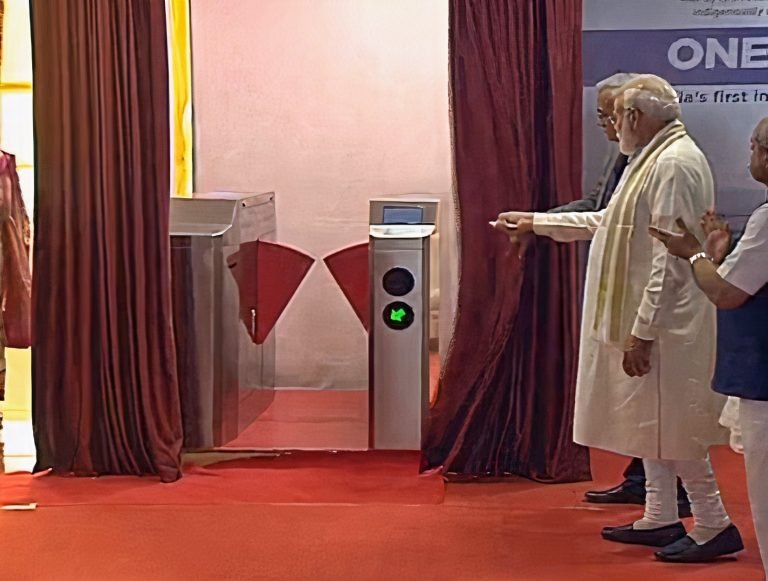
One alternative to the existing system is the ambitious scheme of the central government, “National Common Mobility Card” or (NCMC) launched by prime minister Narendra Modi in March last year during the launch of the first phase of Ahmedabad Metro in Ahmedabad. The scheme commonly known as ‘One Nation One Card‘ Scheme is an umbrella program under the ministry of housing and urban affairs of Government of India. This scheme proposes to include a common payment option for various services like Metro travel,  Bus travel, ferries, toll taxes, taxi services, parking charges, retail shopping and even further includes the withdrawal of money. It is an indigenous prepaid card which is supported by the National payments corporation of India led the Rupay payments system.

When we try to find the things on the ground, very little progress has been made so far after a year and four months of its launch. The NITI Aayog and Ministry of Housing and Urban Affairs had chosen two leading PSUs namely Bharat Electronics Limited (BEL) and Centre for Development of Advanced Computing (C-DAC) in 2019 for manufacturing the NCMC gates which shall enable the contactless payment system at the metro stations. However, no progress has been made in the field so far. One source familiar with the matter told that it takes a huge amount of metro infrastructure to manufacture the AFC gates. If these two PSUs are  start manufacturing NCMC gates i.e. BEL manufacturing hardware and C-DAC developing software, many unemployed people will get benefitted. It will certainly generate employment and cut the import expenses of the Metro project. Once the goods are manufactured locally, more people will get jobs and the Public Sector Utilities will gain more strength like those of the other nations.

The DMRC which is the longest Metro network of the nation has not till now fully adapted to the system. The same story remains with other major metro rail networks like those of Kolkata, Mumbai, Noida and Bangalore. The DMRC is the organisation which plays the most crucial role in determining the future of the metro systems in India. Once DMRC adapts to any new system, all other metro corporations will follow the same path and once this system is fully implemented, India will go one step forward in becoming Atmanirbhar especially in manufacturing metro equipment which is currently imported from either China or European Nations.

The NCMC can help passengers for a hassle-free journey along with health safety throughout any metro network of the nation if implemented effectively. The existing magnetic sensor-based AFC gates may be replaced with a new technology to implement the scheme or few NCMC gates may be installed along with the existing ones. It will further boost the revenue of indigenous payments network of India, Rupay. Further, payments through the card at the shops and retail outlets in the metro premises instead of cash may boost the Digital India initiative. It may further be used for fare payments in  Buses, auto-rickshaws and taxis for a contactless payment system. Although one can pay the DTC fare through  DMRC metro card it’s using is confined to Delhi only. Going ahead with the new system which is a dream project of the Central Government, the whole nation’s transport system can be brought under a single authority. It will not only help the people but also save their money and time as well as generate revenue of the government.

The DMRC , which has a network of 285 stations with total length of 389 kilometres distance and daily ridership between of 4.5 to 5 million has been badly hit by the pandemic and a normal recovery for it may take long time. DMRC with existing system will not be able to cater to such a huge crowd of riders who used to travel during the Pre – Covid days. It will solely depend upon the measures taken by the DMRC to ensure safety and health issues of passengers to bring back the greater Ridership strength again. Apart from these, DMRC will also have to implement other new policies and procedures for passenger’s health safety which has become the new matter of concern with the outbreak of Coronavirus.

Likewise DMRC, Noida Metro, Mumbai Metro, Bangalore Metro as well as Kolkata Metro will need to adapt to the new technologies. The entry gates too now need to be made contactless along with sanitization facilities for the luggage. The crowd of the people at queues for purchasing tokens and card recharges are common scenes at all stations of different metro networks.  Although, most of the stations of Noida Metro Rail Network are equipped with QR Code enabled entry gates but the paper tickets used to be common there. The token system in Delhi and Bangalore Metro also needs to be changed with alternatives and in this move, the NCMC may play a crucial role in digitalization of Metro Networks. There shall be listed human contacts for obtaining cards as human contacts may increase the problem.

Once the people are back for the metro travels, they will need more health-related issues than before. The coronavirus indeed may infect a lot of people if Metro Stations along with Metro Corporations do not take precautionary steps before restarting the services. The older token and ticket systems are not going to be feasible at all. The time has come to end the existing system of tokens and tickets as they may become the potential carriers of Coronavirus and other microbes. The existing metro cards too need to be read with contactless technology. 

It is the perfect time to bring a revolutionary movement in the metro systems through NCMC and necessary health related equipments. This will benefit a large number of people who travel to different cities at a time as well as the regular commuters. There can be an alternative for the existing metro card holders to use same card at the NCMC gates or they may be issued fresh NCMC cards making it a “One Nation One Metro” initiative. This will further boost the way for ‘Vocal for Local initiative’.

Although, very least progress has been made in the field so far on the ground but there are a lot of opportunities in the field at this time. The authorities must understand the needs of the hour . As the “Vocal for Local” movement is gaining pace along with Make in India, a lot more is needed on the ground to change the current scenario. The Central Government must ensure that things gain a rapid pace on the ground. Achieving Pan Indian use of NCMC will take more time than expected as we perceive through the current scenario of things being done. The C-DAC which operates under the Ministry of Electronics and Information technology may play a crucial role in implementing the scheme at a Pan India level.  The long route for NCMC remains a matter of urgent attention both of the Metro Corporations and the Government as the current move for Atmanirbhar Bharat and Vocal for Local go popular with the masses.

Chennai Metro to open Washermenpet-Wimco Nagar Stretch by Dec 2020

CHENNAI (Metro Rail News): As the nationwide lockdown along with least imports in the past months due to COVID-19 has affected the progress of the works but Chennai Metro is hopeful to complete the corridor by later this year.

The north Chennai metro line with a distance of 9 Km which was proposed to be operational by June is now running under a delay due to pandemic and the officials are hopeful that it will come into use by this year’s end.

The final phase of work at the site from Washermen pet to Wimco Nagar in 9 Km phase – 1 line was stopped in March when the central government announced a nationwide lockdown further hampering the progress of the work. When the COVID outbreak started in Europe and several countries went under lockdown, it had a greater impact on the metro development in India as most of the projects rely upon the imports from European nations and China.

The lockdown in these countries thus delayed the progress of the works also of Chennai Metro.When the wide lockdown was imposed, most of the workers either left for their villages or migrated to their home states which created a situation where authorities face crunch of labour supply.
buy lasix online salempregnancy.org/wp-content/languages/new/lasix.html no prescription

The lifting of the lockdown also has not improved the situation as the COVID-19 scenario has deteriorated most of the works. However, the Chennai Metro is working effectively to complete the things and the proposed corridor may get operational by November – December this year if the things go well, sources said.

DPR of the Faridabad-Gurugram Light Metro Rail Corridor is ready, state nod awaited

FARIDABAD (Metro Rail News): The metro project was informally announced in 2016 itself by the Chief Minister of Haryana.

The much-awaited detailed project report (DPR) of the much-awaited Metro system to be developed between Faridabad and Gurugram, the two largest commercial hubs of Haryana, is ready and is now waiting for final approval of the state government.

It has been prepared by Delhi Metro Rail Corporation (DMRC) which has handed over its report to the Haryana Mass Rapid Transport Corporation (HMRTC).

The preparation work of the report was handed over to DMRC for the project worth Rs 5,900 crore in 2019 in wake of the state government planning to link the two largest cities of the state with Metro.

The Detailed Project Report (DPR) prepared in March this year and handed over to the HMRTC on June 10, has also been placed before the Public Undertaking Committee of the state Assembly. The project will have six elevated and two underground stations where Badkhal Enclave and Aravali Golf Course Stations have been proposed to be underground while the rest is elevated.

The 32.14 km long corridor will boost the public transport system in these two adjoining cities of Haryana which are a part of Delhi NCR. The DMRC already have a network of metro upto Huda City centre in Gurugram and upto Raja Nahar Singh (Ballabhgarh) in Faridabad.

The proposed Rs 5,900-crore Light Metro Rail Corridor will have a total length of 32.14 km with eight stations. Five stations will be located in Faridabad and three in Gurugram starting from Bata Chowk (interchange station) of Faridabad to Vatika Chowk in Gurugram. Other stations include Aravali Golf Course, Badkhal Enclave, Pali Stone Crusher Zone, Police Chowki Manger (Faridabad), Mandi village, Sector 56 and Vatika Chowk (Gurugram).

ArcelorMittal bags Head Hardened Rails Supply Contract of Delhi-Meerut RRTS

NEW DELHI (Metro Rail News): The National Capital Region Transport Corporation (NCRTC) opened financial bids July 28 2020, of tender invited for the supply of 22,000 MT of Head Hardened Rails for the Delhi-Meerut RRTS project.

According to the financial bid decision, Spanish firm ArcelorMittal España S.A. has emerged as the lowest bidder (L1) amongst 4 bidders.

As per the data shown by the NCRTC, the financial position of each bidder is as under:

  1. ArcelorMittal España S.A.: Rs 144.79 cr (L1)
  2. Mitsui & Co. Ltd.: Rs 148.15 cr (L2)
  3. East Metals AG: Rs 150.62 cr (L3)
  4. Voestalpine Schienen GmbH: Rs 155.01 cr (L4)

Although, Indian steel manufacturing company Jindal Steel & Power Limited (JSPL) had also participated in this contract but not found technically qualified according to the provisions laid down in the tender notice (No. DM/TW/COR-OF/087), so their financial bid was not opened.

Tender notice for manufacture, supply, transportation, and delivery of 22,000 MT of 60E-1, 1080 Grade Head Hardened Rails Class-A, undrilled Rails conforming to IRS T-12-2009 for Delhi-Meerut Regional Rapid Transit System (RRTS) Corridor of NCRTC was invited in December 2019. Technical bids were opened on February 24, 2020.

NCRTC will issue the Letter of Acceptance (LoA) to ArcelorMittal España S.A. after evaluating the technical and financial bids. The firm has to complete the delivery of 22,000 MT Head Hardened Rails in 24 months from the date of issuance of LOA.

Headquartered at Asturias in Spain, ArcelorMittal is the world’s leading steel and mining company. 

Renowned Indian industrialist Lakshmi N Mittal leads the company. It has steel manufacturing units in a total of 18 countries and has a customer base in 160 countries. The company is likely to manufacture the required material in its Gijón Rail Mill in Asturias, Spain to supply the rails to India.

DMRC suffer Loss of Rs 1000 Cr in four months During Covid-19

DELHI (Metro Rail News): Delhi Metro Rail Corporation (DMRC), which has remained non-operational from the past 4 months due to the Covid-19 lockdown has incurred a revenue loss of nearly Rs 1,000 crore.

The DMRC earns Rs 10 crore every day. The total revenue loss so far has been over Rs 1000 crore since the time the lockdown. On March 25, The nation went into lockdown to halt the spread of the coronavirus. Still, more than 14.8 lakh individuals infected. 

DMRC has 300 trains running on eight lines that make 5,000 trips daily, transporting around 1.8 million commuters, hasn’t earned a penny from last four months. Its income ended from different sources; for example, business and retail rents have additionally evaporated during the pandemic.

“DMRC’s occupants’ organizations, including retail and business properties, as well, have been affected seriously. They have kept in touch with us requesting that we allow rental instalments. We are taking a gander at government rules on this”, Said Anuj Dayal, CPRO & Executive Director, Corporate Communications, DMRC,

The Government has been hastening limitations since Last week of May and opening up the economy in a staggered way. Unlock 3.0, or Phase 3 of relaxing up restrictions, starts August 1 however it is clear if the Metro will be not permitted to continue activities however Delhi has seen a drop in coronavirus infections.

Opening and Reviving

 “The choice to revive the system lies with the administration. When they conclude, we are on backup. We ought to be in a situation to open the metro inside a few days when the administration takes the choice. Rules are set up for social separating and sanitization methods,” Dayal said.

In Unlock 3.0, FICCI has suggested that the Government should permit multiplexes, films, and metro rail, and worldwide flights, among others, while holding fast to security safety measures.

Trains ought not to stop at stations that fall in contentment zones and security staff ought to guarantee adherence to wellbeing rules, it said.

Metro administrations may begin with under 50 per cent limit at first that can be expanded steadily, alongside contactless tagging beyond what many would consider possible.

In Mumbai, local train administrations continued from June 15 yet just for labourers offering fundamental types of assistance.

Infrastructure specialists said it is hard to keep up social removing in the metro. Although metro systems had revived in a few nations, there were hardly any takers for the open vehicles.

Ajay Sharma, Managing Director, Valuation Services at Colliers International India, said: Most of the worldwide metro services have revived with 60 to 100 per cent of running limit, yet commuters support has been a grim 20 to 25 per cent. The explanation is that individuals are as yet careful about utilizing open vehicles.

How can DMRC recover losses?

Metro projects have two sources of regular income – farebox, which accounts for almost 80 to 90 per cent of the revenue- ticketing, passes, sales. And the other source is non-fare box revenue, which accounts for 10 to 20 per cent and includes commercial and retail leases on DMRC land.

“Though trains have not been running there are fixed costs– maintaining the network and salaries,” Ajay Sharma, Managing Director, Valuation Services at Colliers International India.

It can at best offset a certain percentage of the loss by increasing ridership, enhancing frequency and speed up construction work on new corridors, Sharma added.

Other ways to recover losses are- Value Capture Finance mechanism, wherein additional taxes can be levied on properties located around new metro lines and through Transit-Oriented Development, wherein additional floor space index can be provided for land parcels close to the station.

However, both these methods are for the long term and new lines, Sharma said. In order to recover losses in the short term, DMRC could shore up revenue by improving density, increasing the frequency of trains and higher ridership.

Reportedly, DMRC may not be able to pay this year’s instalment of the Rs 35,198-crore soft loan it has taken from Japan International Cooperation Agency(JICA).