Home Blog Page 538

Cracks in Bengaluru metro pillar near Mysuru Road raises concerns about public safety

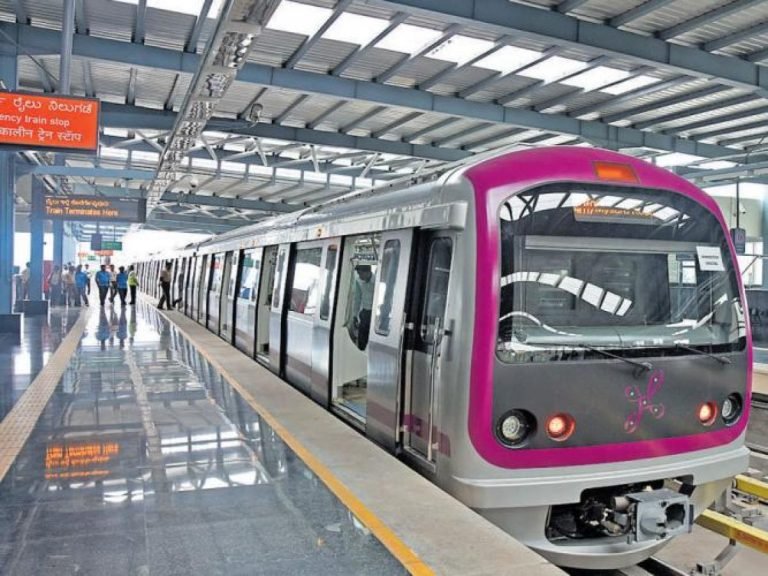
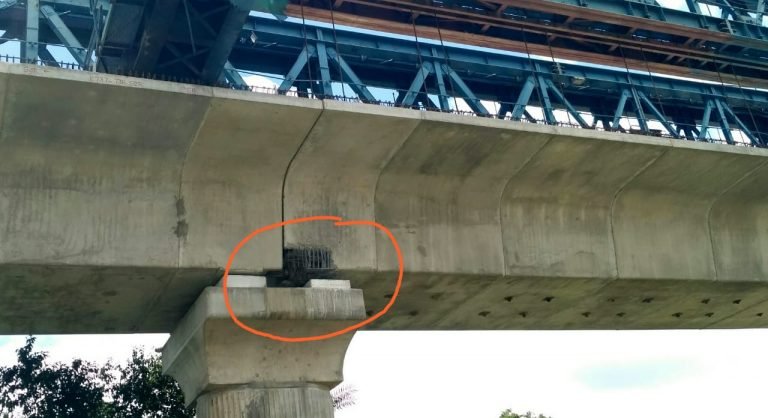
BANGALORE (Metro Rail News): Threats about a potential public safety hazard arises after photos appeared of a possible crack in a Namma metro pillar in Kengeri-Challaghatta Metro section off NICE Road. However, the metro line is under construction and is proposed to start operating by 2021. The matter came into limelight after pictures of a metal structure of a viaduct resting on a pillar near the Rajarajeshwari Hospital on the Bengaluru-Mysuru highway went viral on social media networks.

“This is not a crack. Our experts are looking into the issue and we will take corrective action and ensure that this does not cause any harm to the public,” a senior official of the Bangaluru metro was quoted by news agencies.

“Whenever there is a situation where there is doubt over the stability of the structure, we have to do an oscillation test. During normal train movement a lot of vibrations will take place due to its speed, so we have to ensure that this structure can sustain that” told a senior official.

The metro operations were shut for  four days when similar cracks developed in the metro pillar structure near Trinity Metro Station. This had hampered the transport system of Bangaluru for four consecutive days in the year 2018 and later the pillar was repaired to resume metro operations.

In 2012, the same spot had developed cracks just one year after it was built. Officials however denied the charges and told that experts were looking into the matter to take corrective measures.

Why private entities are being invited to run trains in India

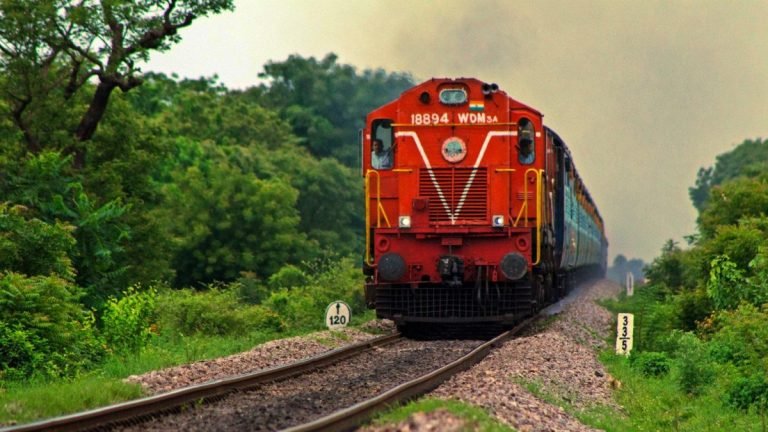
The Indian government has recently identified 109 busy routes across the nation to start running 151 private trains for a period of 35 years. However, these all 151 trains will only constitute 5% of the total trains currently running under the vast network of Indian Railways.

The move comes after the government planning to invest around Rs 50 lakh crore Rupees in the rail projects up to year 2030. The proposed amount is around one-third of the total GDP of the country and it is obvious that government is not going to spend such huge part of GDP only for the development works of the Railways. When we go through the Union Budget of financial year 2019, only a part of it can be financed through government coffers, and public-private partnerships are needed for faster development of Rail networks within the country.

As the government can’t afford such a huge amount for railways, it is now finding out possibilities to bring investment from the private sector. The government is also giving free hand to private players on fare and operation related issues which make them more autonomous. The decision to allow private players to run passenger trains can be seen as a trial for further disinvestment of the Indian railways and moving towards complete privatisation of the sector.

The success of the 151 trains which are proposed to start running on the 109 busy routes will be a litmus test both for the government and the private players. This is the reason why the government is planning in such a manner that no hurdle comes before the private firms who are going to run the trains.

The things will change for India if the government and private players are successful in operating these set of trains. The government will further bring in private players on board in developing new stations and tracks if the things remain good for the private firms and if they are able to make desirable profits.

The government will allow them to run more trains once the trial phase is successful and if the things go well with the parties, Indian Railways will have more than half of its stakes in private hands by the year 2030 as per the reports and experts.

The impacts of the move can only be seen once the trains start operating. The dynamic fare system of the private trains can be a factor which will keep away the poors from its luxurious travel. This move however will benefit the business houses and busy people across the domains. It will further provide time saving world class travel services to businessmen and officials as well as other people for whom time has a greater importance than the commoners.

The move is, however, is seen by the experts as a move towards complete privatisation of the Railways. Whether it is going to be beneficial or harmful, only time can determine that issue. The government, however, remains reluctant on its move to bring changes across different domains of the existing system of public transport especially Railways.

MMRDA invites bids for developing a common mobility phone app

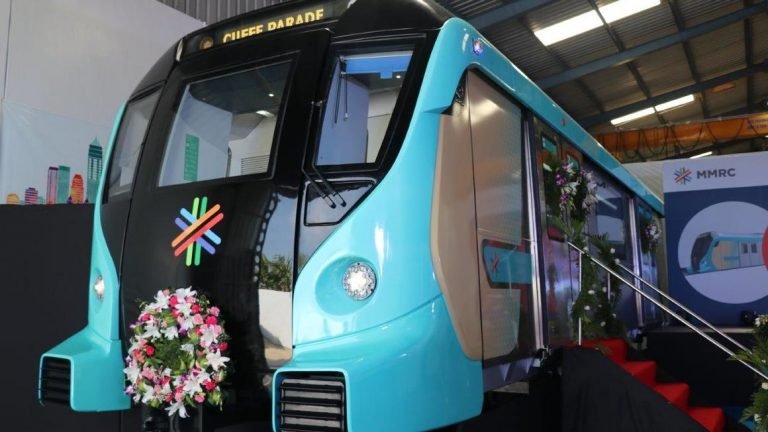
MUMBAI (Metro Rail News): The metropolitan city has initiated its first step towards contactless travel. As per media reports, The Mumbai Metropolitan Region Development Authority (MMRDA) has invited bids for getting a mobile technology partner on its board for development, operation and maintenance of a common mobility application under its integrated ticketing services (ITS) project.

Responding to the problems created by the pandemic, the authority set aside various options and has decided to create a “journey planner”, a mobile application to enable a contactless travel system for different public transport interfaces.

In a meeting earlier in July, chaired by the state’s urban development minister, MMRDA approved the revised proposal which is likely to roll-out from December 2020. Once operational, Mumbaiites can use the application to plan their journey by making a payment on the app, which will create a QR code that can be used for the journey. Sources say that the application will work across Metros, monorail, BEST buses, app-based cabs and the suburban railways.

State environment minister Aaditya Thackeray on Thursday tweeted, “A long-standing promise now being realised by CM Uddhav Thackeray Ji for MMR. Ease of living and travelling is the main intent.” The move is being seen as an ambitious project of Maharashtra government like that of NCMC program of Central Government.

Each transport system in Mumbai now has its own ticketing system — for suburban trains, commuters can use the ATVM card apart from the physical tickets, Mumbai Metro One also its own card, Mumbai monorail has a token system, while all payments for taxis and auto-rickshaws, even BEST buses, need to be done through cash.

Across the world, big metros have single or multiple common mobility cards — London has the Oyster card; Hong Kong, the Octopus card; Sydney has the Opal card; Toronto has Presto, and Manila has the Beep card. The plan will help to integrate the ticketing and pricing system of all and bring them under a single entity.
buy doxycycline online https://www.ecladent.co.uk/wp-content/themes/twentyseventeen/inc/en/doxycycline.html no prescription
The future of the project depends solely upon the agencies which are working for it.

Three Chennai Metro stations get their names after Anna, MGR & Jaya

CHENNAI (Metro Rail News): The Tamil Nadu government on Friday announced that it will rename three of the Metro stations of the city after the names of late Chief Ministers C N Annadurai, M G Ramachandran and J Jayalalitha. The move was welcomed by the BJP state unit but the party’s state wing also demanded that few other metro stations be named after the late stalwarts like B R Ambedkar and Atal Bihari Vajpayee.

A government order states that the Alandur station will be called ‘Arignar Anna Alandur Metro’, the Central Metro as ‘Puratchi Thalaivar Dr M G Ramachandran Central Metro’ and the CMBT station as ‘Puratchi Thalaivi Dr J Jayalalitha CMBT Metro.’

Chief Minister K Palaniswami highlighted the role of late Chief Minister J. Jayalalitha in the development of metro project works and told the reporters that the stations had been renamed after the recommendations made by a high-level committee appointed earlier by the state government. The move was also welcomed by the ruling party AIDMK.

Ex-Army Official urges Maharashtra Government to not give metro works to Chinese firms

Mumbai (Metro Rail News): After India experienced an aggressive stand-off in Ladakh at LAC with China, a Mumbai-based charitable trust has come up along with ex-Army personnel named Dilip Abhyankar, a retired Colonel from the Indian Army to write to the Maharashtra Chief Minister Uddhav Thackeray to take actions on the Chinese firms who are involved in the metro development projects in the City.

The media reports are stated saying that Chinese companies, including the Shanghai Tunnel Engineering Co Ltd (STEC), China Railway Tunnel Group Co Ltd (CRTG) and Continental Engineering Corporation (CEC), are undertaking civil and tunnel works for Metro-3 (Colaba-Bandra-Seepz). The Mumbai Metro Rail Corporation (MMRC), which is building the fully-underground Metro, has also appointed SJEC Corporation for system works along with other Chinese firms.
buy vibramycin online https://www.facebeautyscience.com/wp-content/themes/twentyseventeen/inc/en/vibramycin.html no prescription

The China based CRTG in a joint venture with J Kumar Infra Projects Ltd is also involved in development of some parts of Metro-2A (Dahisar-DN Nagar) and Metro-6 (Swami Samarth Nagar-Vikhrol. A different Chinese firm, China Harbour Engineering Company Ltd (CHEC), is building some parts of Metro-4 (Wadala-Kasarwadavali) project in a joint venture with Tata Projects.

In a letter to Mr. Thackeray, Udaan charitable trust was stated saying, “We appreciate Maharashtra government cancelling the contracts with Chinese companies, but the attempt seems insufficient, given we continue to let Chinese companies dominate the Metro space.”

As per the recent media reports, industries minister Subhash Desai was stated saying that status quo was being maintained in the memorandums of understanding (MOUs) signed with the Chinese companies. In his interview to Shiv Sena mouthpiece Saamana, the chief minister had said that the Centre must clear it stands on the involvement of Chinese companies in metro development works.

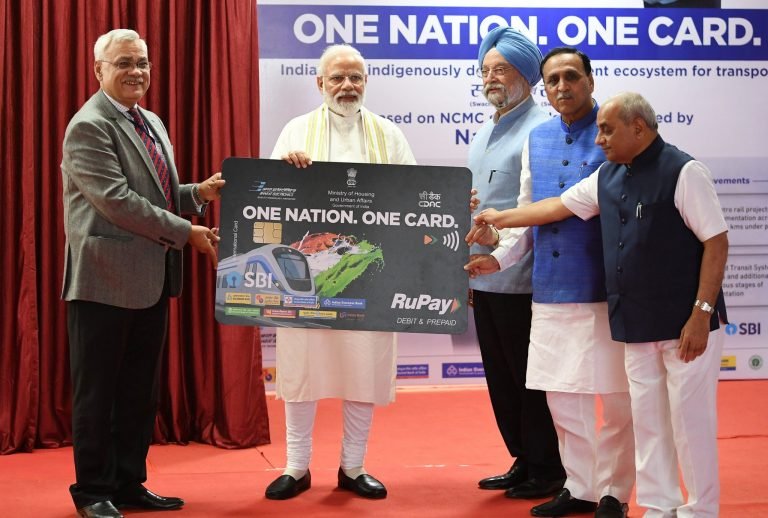
How to implement The One Nation One Card scheme across the Nation

The Nation brought in the RuPay QSparc card a few years ago with an intent to make this a “One Nation, One Card” for everyone to use as a transit card and gradually over time will expand it into “The Card” for everyone in the country.

The detailed design of the card involves these two key aspects :-

  • Enabling a stored value concept for offline transactions
  • Enabling the concept of multiple service areas ( local data elements) in the card itself

The above 2 concepts were ideal for transit in india and this concept was introduced as “the Card for transit” to start with.

However, due to multiple reasons, this concept has not reached the desired objective/goals of the Government and it’s still languishing as a “one more limited application” card. The objective here of this exercise is to work within the limitations of the basic outline defined and expand the capabilities to expand the card usage and really make it a “one Nation One Card”.

The primary reasons for this card acceptability across the customers is :

  • It’s a bank driven initiative : misses the card issuance simplicity with the KYC complications and applicability only in the specific transit operator.
  • Another transit operator – To get another card , one needs to go through the KYC exercise once again.

It also comes to the basic hesitation with anyone – “One more card” and how many cards one need to carry ? With these aspects, a team of experts suggest that we may move forward with a single Card if few things are improved in the existing system. The following things may help to bring changes.

  1. Simplified issuance : why does it have to be at the operator premises, can’t anyone go online and configure any fare media, map a payment rail to it and start using this immediately ?
  2. Simplified acceptance at the transit operators – the system built for a true “One Nation One Card” concept. Take any card to any operator and use it
  3. Simplified Fare media : why only the NCMC card, the objective of the issuing bank is to acquire the customer and acquire transactions. Why does it have to be Card and not another fare media
  4. Simplified Customer and self care : instant and with full clarity on queries, preferably online. 

While the above took care of the aspect of the commuter on-boarding with the Fare media and the acceptability at multiple transit operators, there needed a corresponding upgrade at the transit operators end also to ensure the above including inter operator transaction support and cross operator fare media issuance.

Thus with the above as the background, the authorities may upgrade to the existing AFCS design document detailed by CDAC and help the nation accept this card in totality.

We need the building of ecosystem for a  wider, simpler acceptance and enabling a smoother experience at the operators :

  • Why limit to only the NCMC card – we will tomorrow have additional Commuter ID fare media – Face / Bio / UPI QR etc.,
  • Enabling inter- operators acceptability – tickets and passes
  • Enabling easy ticket/pass issuance within the operator premises – how to ease travel for a traveller and journey planning for remote ticketing
  • Enabling “blacklist” management with ease – today its possible only within the acquiring host network – not possible across acquiring hosts. Needs to be enabled for easier travel across networks and across fare media
  • Customer Care/service: smooth, online and quick redressal
  • Enabling ticket/pass purchase online / at multiple locations.

These are few things which may help us to bring the One Nation One Card into reality.

Indian Railways to set to give free hand to private players on ticket pricing

New Delhi ( Metro Rail News ) – This was clarified by Piyush Goyal at a recent pre-application meeting that government is not going to interrupt the private firms in fare pricing. The move comes when the government is planning to give out 109 routes to run as many as 151 trains to private players for 35 years, according to the reports. The national transporter while replying to different queries said that the private train fares will be market-driven and the government will not interfere in that matter.

According to sources quoted in the report, Indian Railways may need approval from the Cabinet or even Parliament sanction to make this provision legally tenable.
buy cialis super active online https://herbalshifa.co.uk/wp-content/themes/twentytwentytwo/inc/patterns/en/cialis-super-active.html no prescription
Since under the Railways Act, only the Union government or the Railway Ministry can decide fares for passenger trains in India, they said.

According to officials, the fares for the upcoming private trains are expected to be way steeper than existing train services as there is no upper limit for fares and it has a steep project cost because of the expensive, modern rolling stock. The private operator of the train is free to sell train tickets through its website. However, it has been reported that the back end of the website will be tied to the railway passenger reservation system of Indian Railways.

Also, the national transporter did not come out with technical specifications for the upcoming private train sets that it seeks the private players to bring in. According to sources quoted in the report, technical specification contemplated for private operators of the trains is that it requires maintenance after running a distance of 40,000 km or for 31 days.

The matter arises speculations whether we are moving to a fully privatised railway system which will be governed by the rules of market. However, it will depend upon the success of these 151 trains which will decide the future of privatisation of Railways in India.

DPR Preparation begins for 865-km long Delhi-Varanasi high-speed rail corridor

NEW DELHI (Metro Rail News): The National High-Speed Rail Corporation Limited (NHSRCL) has started its work for preparing a detailed project report (DPR) for the proposed Delhi-Varanasi high-speed rail (HSR) corridor following directions by the central government.

The 865 kilometers long Delhi-Noida-Agra-Lucknow-Varanasi rail corridor is one of the eight HSR passageways which will transform the Railways systems in the coming years with reducing the time duration of travels within few major cities.

The other seven corridors are Delhi-Jaipur-Udaipur-Ahmedabad (886-km), Varanasi-Howrah (760-km), Mumbai-Nashik-Nagpur (753-km), Mumbai-Pune-Hyderabad (711-km), Ahmedabad-Mumbai (508-km), Delhi-Chandigarh-Ludhiana-Jalandhar-Amritsar (459-km) and Chennai-Bangalore-Mysore (435-km

The proposed rail corridor between Varanasi and Howrah is the latest addition to the government’s HSR corridor plan which is being seen as making Varanasi a key economic hub keeping in mind the importance of Purvanchal region of Uttar Pradesh.

The corridors have been proposed to optimise high-speed rail connectivity between major cities and give an impetus to the industrial sector, according to a report prepared by The Economic Times.
buy diflucan online gaetzpharmacy.com/diflucan.html no prescription

Bengaluru’s Peenya may get a metro station soon

BANGALORE ( Metro Rail News ): To improve connectivity in the city, the government is planning to use an unused amount of Rs 40-crore of Basaveshwara KSRTC bus terminal in Peenya, the Bangalore Metro Rail Corporation Limited (BMRCL) was stated saying in media reports. The agency plans to set up a station on the Green Line (Yelachenahalli – Nagasandra).
buy flomax online medstaff.englewoodhealth.org/wp-content/languages/new/flomax.html no prescription
Though two stations — Peenya Industry and Jalahalli — are in the vicinity, bus passengers are reluctant to use the terminal because of poor connectivity. The new station will be off the mainline.

The train (from Yelechenahalli side) will take the depot track from Peenya Industry station and those coming from Nagasandra will have to change at Peenya station.

The completion of the work may take upto an year if KSRTC, BMTC and transport department show green signal for the use of the terminal, The media reports reveal that the new station will facilitate an integrated transport hub in Peenya with entry and exit w through an FOB which will connect the new station and the bus terminus across the road.

“The idea is that KSRTC, BMTC and inter-state public and private buses (coming from Nelamangala side) should use the terminus. The two-acre vacant land can be used for private buses,” an official said. KSRTC prior to this had shelved the plan to shift buses heading to Tumakuru, Pavagada, Davanagere, Hassan and Chikkamagaluru to the terminal due to poor patronage from different agencies and state government.

In response to the above developments, an expert of the urban transport industry told that it was not going to be viable at all to build a new station from an operational line. “The station with the signalling system will cost Rs 250 crore. Instead, the terminus can be linked to Peenya Industry or Jalahalli stations using tram system which may cost Rs 80 crore,” he said. It could be either a monorail or tram feeder service, the person added.

Mysuru-Chennai Bullet Train route gets finalised

NEW DELHI (Metro Rail News): The 435-km high-speed rail (bullet train) corridor between Mysuru-Bengaluru-Chennai will finally be a reality soon and the route will be among a network of high-speed bullet trains on seven new routes, sources confirmed.

The Indian Railways along with the National Highways Authority of India (NHAI) will start the process to acquire additional land soon. As per different media reports, the NHAI will soon acquire land to lay tracks for high-speed trains along Greenfield expressways for integrated development of the rail transport network in the country. 

During an Infra Sector Group meeting held recently, it was decided that the NHAI will take over land acquisition and a four-member committee was formed to look into the matter. The committee will work on the modalities for acquiring land and its cost estimation.

As per reports, the Indian Railways plans to run bullet trains on 7 important new routes of the country. The seven high-speed rail corridors are Delhi to Varanasi via Noida, Agra and Lucknow; Varanasi to Howrah via Patna; Delhi to Ahmedabad via Jaipur and Udaipur; Delhi to Amritsar via Chandigarh, Ludhiana and Jalandhar; Mumbai to Nagpur via Nasik; Mumbai to Hyderabad via Pune and Chennai to Mysore via Bengaluru.

The Railway Board has recently written to the NHAI and given details of seven high-speed rail corridors for running bullet trains for which the detailed project reports are being prepared. NHAI has also been asked to depute a nodal officer for this purpose for better integration of the mammoth planning exercise

The bullet train will run at a maximum speed of 320 kilometres per hour and the actual distance from Mysuru to Chennai is over 485 kilometres while the bullet train corridor will be 435 kilometres. Going by the train speed, it can cover the 145-km distance from Mysuru to Bengaluru in just 45 minutes.