Home Blog Page 5

Pune Metro’s Vanaz-Chandni Chowk extension enters construction phase

PUNE (Metro Rail News): The long-awaited construction activity has finally started on the metro extension between Vanaz and Chandni Chowk in Pune. The 1.5 km elevated stretch is a part of Pune Metro Line 2 (Aqua Line). The stretch is expected to improve connectivity in the city’s western areas. It will have two stations – Korthud Depot and Chandni Chowk. As of now, the metro service is operational between Vanaz and Ramwadi. This extension will push the network further towards Chandni Chowk. It is a major entry point to the city and a busy traffic junction.

Work Status on Ground

An official mentioned that the initial work has started near the Chandni Chowk area. This includes soil testing and surveys. An agency was appointed last month to build the flyover and the station structure. Officials said the work will be carried out in phases. Barricading will be placed carefully so that traffic movement is not badly affected.

Project Details

Under Construction Route
1.5 km elevated stretch (Vanaz – Chandni Chowk)
Line
Pune Metro Line 2 (Aqua Line)
Stations
Kothrud Depot & Chandni Chowk

What else is planned

  • A flyover will be built near Kothrud Depot along with the Metro line
  • A foot overbridge is being designed at Chandni Chowk for safe crossing

Right now, people from Kathrud and nearby areas have to travel to Vanaz station by auto or bike to catch the Metro. There is no direct access beyond this point. Many commuters say the line should have been extended earlier, as Chandni Chowk is an important area.

Once ready, the extension will make it easier for the people living in western Pune to access the Metro and reduce travel time on busy roads. 

Also Read: Mumbai Monorail returns to track: MMMOCL awards O&M Contract to Power Mech

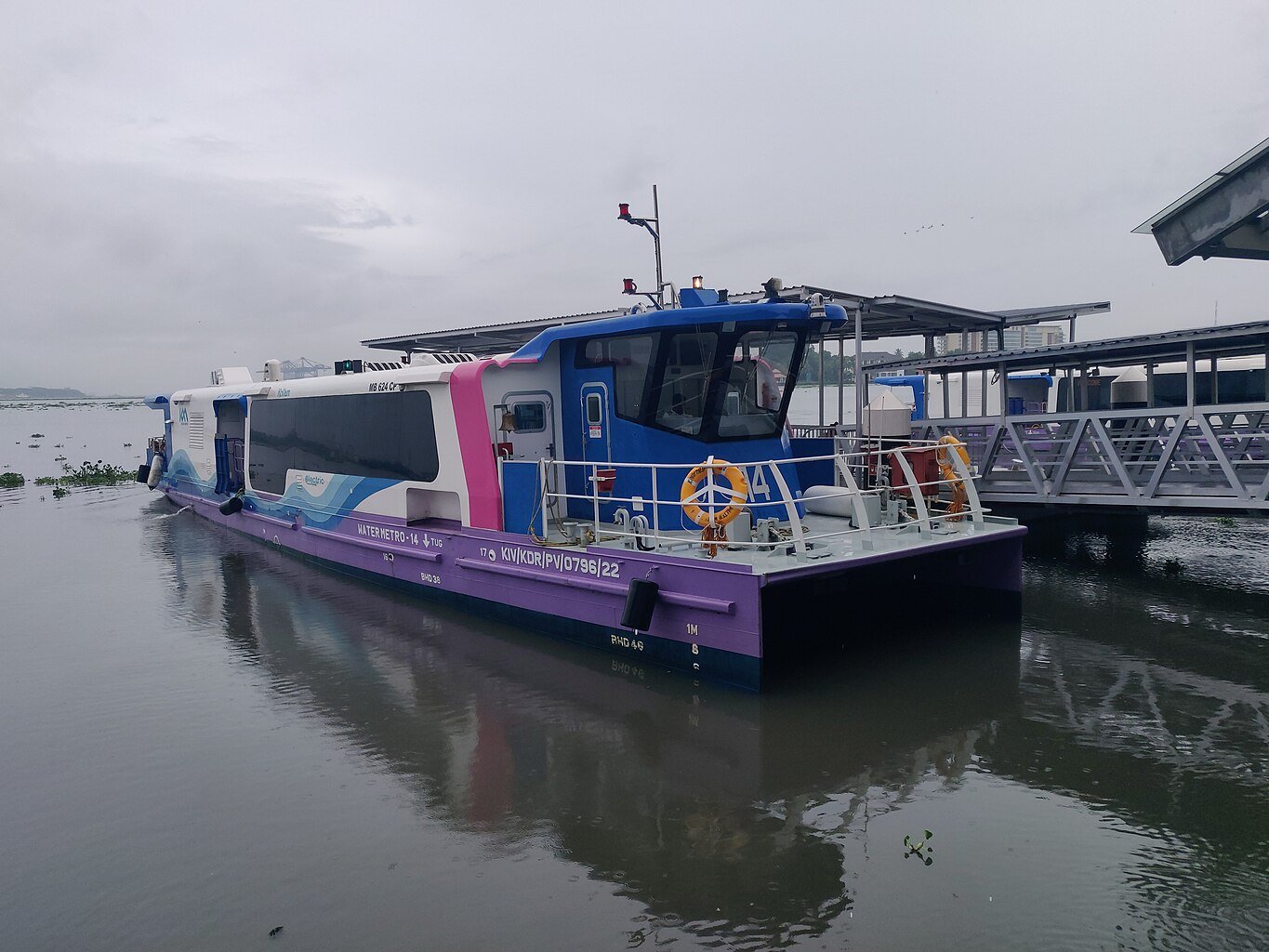
Also Read: Mumbai Water Metro Project gains momentum with consultancy tender for terminal development


Discover how AI is bringing the next phase of sustainable urban rail mobility for Viksit Bharat at InnoMetro 2026, India’s prime exhibition and conference for metro & railways, which is going to be held on 21-22 May 2026 at Bharat Mandapam, New Delhi.

Register Now: https://zma.page/ek

Mumbai Monorail returns to track: MMMOCL awards O&M Contract to Power Mech

MUMBAI(Metro Rail News): Maha Mumbai Metro Operation Corporation Limited (MMMOCL) has awarded a contract to M/s Power Mech Projects Ltd, for the Operations and Maintenance (O&M) of the Mumbai Monorail covering the Sant Gadge Maharaj Chowk to Chembur corridor. The Letter of Acceptance (LOA) was issued on April 8, 2026.

Mumbai Monorail Key Facts

19.54 km
Total corridor length
17
Stations on Line 1
12 rakes
Planned for operations
8 min
Target headway interval

Mumbai Monorail – Line 1 (Sant Gadge Maharaj Chowk to Chembur)

Sant Gadge Maharaj Chowk Wadala Depot Bhakti Park Wadala Road Chembur Naka Chembur Line Length: 19.54 km | 17 Stations

Mumbai Monorail Revival in Progress

The contract award comes as Mumbai’s 19.54 km monorail line connecting Chembur in the east to Sant Gadge Maharaj Chowk (Jacob Circle) approaches a long-awaited return to service after months of suspension.

Mumbai Monorail services had been suspended on September 20, 2025, following repeated technical failures, including three sudden mid-journey breakdowns. MMRDA halted operations to carry out a comprehensive system overhaul including new rolling stock, CBTC signalling, and fleet refurbishment.

In February 2026, MMRDA announced that an Independent Safety Assessor, Bureau Veritas, had issued mandatory safety certification for the monorail’s new rolling stock and the CBTC-based signalling system.

Under the revival plan, Medha Servo Drives, which supplied 10 newly built monorail rakes, has been instructed to synchronise testing schedules with the planned restart. Trials covering rolling stock, signalling, telecommunications, automatic fare collection gates, and passenger information systems are ongoing.

Also Read: Mumbai Water Metro Project gains momentum with consultancy tender for terminal development


Discover how AI is bringing the next phase of sustainable urban rail mobility for Viksit Bharat at InnoMetro 2026, India’s prime exhibition and conference for metro & railways, which is going to be held on 21-22 May 2026 at Bharat Mandapam, New Delhi.

Register Now: https://zma.page/ek

Mumbai Water Metro Project gains momentum with consultancy tender for terminal development

MUMBAI (Metro Rail News): The Maharashtra Maritime Board (MMB) has floated a Request for Proposal (RFP) for the selection of a Project Management, Design, Procurement Support, and Supervision Consultant for the development and upgradation of terminal, navigational, and emergency infrastructure under Mumbai Water Metro Phase 1. The assignment covers 26 terminals spanning 16 routes; eight existing and eight new across the Mumbai Metropolitan Region (MMR).

Phase 1 Scope: 16 Routes and 26 Terminals

Phase 1 of the Mumbai Water Metro Project encompasses 16 routes (8 existing, 8 new) and 26 terminals across the MMR, connecting Mumbai with Navi Mumbai, Thane, Kalyan, Vasai, and Mira-Bhayander. Three terminals, Gateway of India, Navi Mumbai International Airport (NMIA), and Nariman Point are being developed directly by MMB or other designated agencies and are excluded from the core PMC scope, though the consultant will be responsible for coordinating interface requirements with these entities.

Mumbai Water Metro – Route Network Overview

Existing Routes (8)

  1. Versova – Madh
  2. Borivali/Marve – Esselworld
  3. Marve – Manori
  4. Gateway of India – Elephanta
  5. Gateway of India – Mandwa
  6. New Ferry Wharf – Mandwa
  7. Belapur – Nerul
  8. Belapur – Elephanta

Proposed Routes (8)

  1. Vasai – Mira-Bhayander
  2. Jessel Park – Fountain – Gaimukh – Nagla Bunder – Nagale – Kalher
  3. Vashi – Navi Mumbai International Airport (NMIA)
  4. Belapur – NMIA
  5. Gateway of India – NMIA
  6. Gateway of India – Vashi
  7. Kalyan – Dombivli – Mumbra – Kalher – Kolshet
  8. Bandra – Worli – Nariman Point

Consultant’s Scope of Services

Selection of Project Management, Design, Procurement Support, and Supervision Consultant for Development and Upgradation of Terminal, Navigational and Emergency Infrastructure for Mumbai Water Metro Phase 1

Tender Details

ParameterDetails
Issuing AuthorityMaharashtra Maritime Board (MMB)
Tender ReferenceMMB/CEO/Planning-1/2026/
Nature of AssignmentSelection of PMC for Mumbai Water Metro Phase 1
EMD₹16,00,000 (₹16 lakh)
Tender Document Fee₹3,540 (incl. GST, non-refundable, via Net Banking)
Document Download17 April 2026 (17:00 hrs) to 7 May 2026 (12:00 hrs)
Seek Clarification17 April 2026 to 24 April 2026 (11:00 hrs)
Pre-Bid Meeting24 April 2026, 12:00 hrs (MMB Office, Ballard Estate)
Bid Submission Window24 April 2026 (18:00 hrs) to 7 May 2026 (17:00 hrs)
Bid Opening8 May 2026, 17:00 hrs
Bid Validity90 days from date of bid opening

Mumbai Water Metro Project Background

The Government of Maharashtra is pursuing a large-scale expansion of passenger water transport in the MMR to ease pressure on road and rail networks and leverage the region’s extensive coastal and creek geography. Mumbai currently hosts around 1.6 crore annual water transport passengers across 21 existing routes. A comprehensive Pre-feasibility Study and Detailed Project Report (DPR) was prepared by Kochi Water Metro Limited (KMWL), which recommended the upgradation of 20 terminals on existing routes and the development of 24 new terminals on 12 new routes.

The project is to be implemented under a Public-Private Partnership (PPP) model: the Authority (MMB) will develop civil and associated infrastructure, while private concessionaires will handle vessel procurement, operation, and maintenance.

Also Read: Aecom India wins General Consultancy Contract of Thane Integral Ring Metro Project


Discover how AI is bringing the next phase of sustainable urban rail mobility for Viksit Bharat at InnoMetro 2026, India’s prime exhibition and conference for metro & railways, which is going to be held on 21-22 May 2026 at Bharat Mandapam, New Delhi.

Register Now: https://zma.page/ek

Aecom India wins General Consultancy Contract of Thane Integral Ring Metro Project

THANE (Metro Rail News): Maharashtra Metro Rail Corporation (MMRC) has announced Aecom India Pvt. Ltd as the lowest bidder (L1) for the General Consultancy (GC) contract for the Thane Metro project. Aecom India submitted a bid of ₹142 crore, emerging as the lowest among the three competing bidders.

The contract is valued at approximately ₹148 crore and includes a defined completion timeline of 48 months.

The appointed contractor will provide comprehensive project management services, design review, construction supervision, quality assurance, and safety oversight. The consultant will also play a critical role in coordinating between multiple stakeholders and ensuring the timely execution of the project in line with technical and regulatory standards.

Bidders’ Details

FirmBid Price
Aecom India Pvt. Ltd₹ 142 Cr
Ayesa Ingenieria Y Arquitectura, S.A.U₹ 148.1 Cr
Systra Mva Consulting (India) Private Limited₹ 170.3 Cr
Hill International Private Limited₹ 209.7 Cr

Scope of work: Engagement of a General Consultant for the Thane Integral Ring Metro Project.

The Thane Metro project will span approximately 29 kilometres and include 22 stations. The corridor will streamline connectivity on east-west regions of Thane and integrate with existing suburban rail and metro networks. With an estimated project cost of around ₹12,200 crore, the Thane Metro has the primary objective of addressing the congestion in one of MMR’s fastest-expanding urban centres.


Also Read: Thane gets its first direct metro link to Mumbai with inauguration of Mumbai Metro Line 9

Discover how AI is bringing the next phase of sustainable urban rail mobility for Viksit Bharat at InnoMetro 2026, India’s prime exhibition and conference for metro & railways, which is going to be held on 21-22 May 2026 at Bharat Mandapam, New Delhi.

Register Now: https://zma.page/ek

InnoMetro 2026 receives official support from Indian Railways, Ministry of Railways, Government of India

DELHI (Metro Rail News): InnoMetro is proud to inform all stakeholders that the 6th edition of InnoMetro – Asia’s Leading Expo & Conference for Metro, Railways, RRTS and HSR – has received official backing from Indian Railways. This distinction, confirmed by the Ministry of Railways, Government of India, firmly establishes InnoMetro as one of the most credible and institutionally recognised platforms in India’s urban transportation landscape. The event is scheduled to take place on 21-22 May 2026, at Bharat Mandapam, New Delhi, India. 

WhatsApp Image 2026 04 20 at 4.40.13 PM

The formal approval, issued by the Railway Board via letter No. 2025/PR/11/06 dated 20th April 2026, reflects the Ministry’s recognition of InnoMetro as a genuine, high-integrity platform that has served as a mainstay in metro rail development and urban mobility in India bringing together policymakers, metro rail operators, rolling stock manufacturers, technology innovators, urban planners, and engineers to collectively explore solutions under one roof.

Participation from Government Institutions

Beyond this milestone, InnoMetro 2026 has also secured alliances with several other prominent government organisations. These include MMRDA as Urban Transformation Partner, along with DFCCIL, Mumbai Metro Rail Corporation, Kochi Metro Rail Limited and the National Capital Region Transport Corporation (NCRTC) as exhibitors. This lineup speaks to the breadth of institutional trust InnoMetro has earned across India’s urban mobility sector. Their participation is expected to result in clear business advantages for other participants and open up opportunities for vendor empanelment, strategic partnerships, and entry into upcoming project pipelines. 

Each edition of InnoMetro has grown in scale, diversity of participation, and depth of dialogue, which reflects the rapidly expanding role of metro systems in India’s urban future and the enduring relevance of this platform.

For businesses, innovators, and institutions operating across metro rail, urban mobility, and allied sectors, InnoMetro 2026 presents a valuable opportunity to engage with key decision-makers and showcase modern rail solutions to transform the urban mobility landscape in India and secure maximum industry exposure.


Discover how AI is bringing the next phase of sustainable urban rail mobility for Viksit Bharat at InnoMetro 2026, India’s prime exhibition and conference for metro & railways, which is going to be held on 21-22 May 2026 at Bharat Mandapam, New Delhi.

Register Now: https://zma.page/ek

IRFC 2.0: Shri Manoj Kumar Dubey Shares the Vision of Indian Railways’ Financial Arm

DELHI (Metro Rail News): Metro Rail News conducted an exclusive interview with Shri Manoj Kumar Dubey, Chairman & Managing Director (CMD) and CEO of the Indian Railway Finance Corporation (IRFC). During this interaction, Shri Dubey reflected on the evolving role of IRFC in financing the railway projects. In addition to this, he deliberated on IRFC’s vision to finance the metro, RRTS and HSR projects in the coming years. He concluded by mentioning the significant role that IRFC is playing in building the rail infrastructure for Viksit Bharat. Here are the edited excerpts:

Q1. Your association with Indian Railways spans over 3 decades. Could you reflect on your professional journey and explain how this depth of experience influences your leadership and decision-making at IRFC today?

I joined the Railways through the civil services, and in the civil services, there are many services. There are All India Services like IAS, IPS; there are revenue services, customs services; and there is a very important organisation called Railways, where four civil services are working. I got the opportunity of selection in the Indian Railway Accounts Services. The two-year training gave us the first flavour of what is in store, and I can tell you it is a behemoth system completely aligned with national service.

My father was a police officer. In India, we feel that those in uniform are in national service. It is a fact. But one fact that is perhaps not very magnified is that others are equally contributing. Railways in particular is in constant 24 into 7 service of the nation. This is one tribe of more than 11 lakh people who don’t make any noise about it, but they are always on the receiving end. Whenever there are festivals, whenever there is a national requirement, without making any fuss, everybody goes into the job.

Railways taught me three things. One, to be focused on whatever I am doing, is going to national service. Two, it is one of the rare ministries maintaining its own balance sheet; despite all the subsidies and restrictions on rates, it has to show some profit  that is called the operating ratio. Being in the nation’s service and remaining financially and commercially viable is something I learned every day from railways, and these values have come along with me in IRFC as well. Three, output can be quantified. These are the values that I inculcated. I worked in three divisions, then came to the Railway Board, worked extensively on public-private partnership policy. During this period, key initiatives such as the Madhepura and Marhowra locomotive factories were executed; the high-speed rail corridor was started in my time, and the Dedicated Freight Corridor (DFC) gained significant momentum. Then I joined Container Corporation of India Limited, CONCOR, as Director of Finance and worked there for six years. In late 2024 I came here, and today we are financing anything and everything coming in the railway ecosystem.

Q2. IRFC recently completed 40 years of its journey. How has the organisation evolved over the years in terms of its mandate, operating philosophy, and approach to financing rail infrastructure?

Out of these 40 years, 38 years of IRFC’s journey was to finance Indian Railways as its sole customer for anything required over and above budgetary support or internal generation. In the last three decades, aspirations of India and hence of Indian Railways have grown. Rajdhani and Shatabdi, the flagship trains, came only after IRFC started financing them. As a result, the movement of people for business and the growth of the nation increased manifold in the 1980s. In the wake of this, the requirement was to raise money from the market at cheaper rates and start building better-quality rolling stock, passenger coaches, and wagons to bring more efficiency in the loading of goods.

Today, more than 80% of the coaching and goods rolling stocks  all coaches starting from Rajdhani coaches, general coaches, Tejas, Vande Bharat  and more than 80% of locomotives are on the books of this company. From 2015 onwards, we started doing project financing also. Prior to 2015, we were only doing rolling stock financing. Today, nearly 50% of my ₹4 lakh-plus crore loan book with Indian Railways is through projects. The model is 15-year plus 15 year, 30-year long-term lending, and we are funding at the cheapest possible rate  cheaper than any other financial institution in the country. The new journey started last year when we launched our new version, IRFC 2.0.

Q3. IRFC is preparing for its next phase of growth under the ‘IRFC 2.0’ vision. Could you outline the key pillars of this strategy?

I took over in 2024 in the later part of the year. If we take a closer look at the Railways’ requirement, we will find out that the capex of Indian Railways, which used to be less than ₹1 lakh crore in 2015, today is consistently nearly ₹3 lakh crore. In FY 2024, the Government of India put a special focus on Indian Railways and extended the required budgetary support.

For the past four years, including the current one, the Government of India has been catering for the complete Capex requirement of Indian Railways through budgetary support. IRFC came into a little quandary as there was no additional requirement of funds from extra budgetary resources. When I took over, the mandate was re-examined. The mandate was saying we could fund anything having a backward or forward linkage with the Railways. We never used this before. We started working on it.

We realised our strengths. IRFC operates as a lean organisation, with overhead costs that are minimal relative to its revenue, and it is far lower than anybody else in the industry. We are the only NBFC of this balance sheet size which is zero NPAs. These two factors together gave us the flexibility to raise funds at competitive rates and pass on that efficiency to our clients. As a result, IRFC has been able to finance most entities within the railway ecosystem, often at rates that are 70 to 80 paise to a rupee cheaper than others. Despite being cheaper than peers, earlier Railways was giving us only 40 paise of margin on a cost-plus model  today we are making 2x to 3x margin.

We started funding NTPC Green, who will provide electricity to Indian Railways. We looked at DFCCIL, where a World Bank loan was at more than 10% rate, and funded them at nearly 7.5 to 6%. We started funding SPVs we never funded earlier in railway ecosystem  minimum 1% to 1.5% cheaper than what they had. We also funded two fertiliser companies where all evacuation is done by the railways, again nearly 1% cheaper than they had earlier. By the end of the first FY of 2.0, we have sanctioned more than ₹80,000 crore of assets  all in whole-of-government approach. Disbursement this year was higher than FY23, when we did ₹33,000 crore with the Railways; today we did ₹35,000 crore of disbursement itself. We have started running like any Vande Bharat or Rajdhani.

Q4. The refinancing of the Eastern Dedicated Freight Corridor’s World Bank loan has been described as a landmark transaction. Could you highlight the significance of this deal?

This deal emerged from the strong synergy within the railway ecosystem. We have our colleague officers in DFCCIL from the Indian Railway Accounts Service, and within a month of my joining, we began discussions and identified that the existing World Bank loan could be refinanced. The initial idea came from colleagues in DFCCIL, which we then took forward with the Railway Board and the Ministry of Finance. All stakeholders came on board, including the World Bank. Their philosophy is to assume risk during the construction phase. Once commercial operations begin, they prefer to exit so that their capital can be redeployed to other projects.

This was one successful venture where all stakeholders came on board. We leveraged our strength of raising funds at highly competitive rates, supported by a zero-NPA track record. With the approval of the Ministry of Finance, the Ministry of Railways, and the World Bank, we refinanced a loan of over ₹10,000 crore in INR terms, approximately USD 1.2 billion in one go, which resulted in total savings of more than ₹2,700 crore for DFCCIL. This has opened up a new pathway for us to either fund like a bilateral thing or align with bilateral or multilateral agencies: fund during the construction period, and after construction ends, take over the full loan. We are actively working on scaling this model.

Q5. Your mandate allows lending to projects linked with railways. How is the organisation rebalancing its portfolio as it diversifies beyond the railway sector?

Our mandate allows lending to projects linked with railways, and in a country like India, logistics is the backbone of any business. Whether it is export or import, everything comes to the ports, but consumption lies in the hinterland. Ports are essentially transhipment points. From Mumbai’s JNPT or Mundra in Gujarat, goods move towards northern regions like Delhi, Punjab, and Rajasthan, and in bulk, this movement is primarily handled by railways. The railways are the centre of all logistic solutions. Anything, road, boat or air cargo is linked to the railways. And “railway” is not only Indian Railways; the metro railways or the rapid railways are also a rail. Our business gamut today is huge. Any factory producing in bulk relies on rail for evacuation. All the coal being taken to powerhouses is 100% done by railway, unless the power generation company is right at the pit head, which is less in numbers. So there is no dearth of business, and this is something we recognised in the very first year of the IRFC 2.0 initiative.

At present, we have largely aligned ourselves with a whole-of-government approach. That is our mainstay, our forte. We understand how to appraise such projects, and importantly, we want to continue as a zero-NPA organisation. Whenever we fund a government-backed agency, that discipline remains intact. Earlier, we operated at around 40 paise spreads, with a NIM of about 1.4; today, our margins have increased nearly threefold. Over a 5–7 year horizon, both the deployed capital and NIM continue to grow steadily each quarter.

Q6. Beyond refinancing, are you exploring co-financing structures with multilateral agencies for upcoming infrastructure projects?

Absolutely. The positive and very heartening issue is that multilateral agencies are also approaching us. We are in discussions with a wide range of partners, and together we are identifying opportunities, particularly in long-gestation infrastructure projects such as metro rail, new Dedicated Freight Corridors, and high-speed rail corridors. These projects require intensive capital expenditure and long-term financing. There is now a natural convergence between IRFC and multilateral and bilateral agencies. This is perhaps going to be a game changer in financing these projects, which are largely promoted by government entities. There is a huge business gamut. Our team is already working with them, and in the future you will find that maybe some metro railway, maybe some DFC, maybe some high-speed train, we are funding together.

Q7. Indian Railways has largely relied on budgetary support in recent years. Do you expect it to return to market borrowings?

The government operates through a unified budget, and there are nearly 30 ministries competing for allocations. At present, there is a strong policy focus on the logistics sector, and for the past three years, the highest allocations have gone to the road and rail sectors. However, priorities can shift. The government may, at some point, decide that sufficient investment has been made in logistics and redirect its focus towards the social sector. We remain the sole financing arm for the logistics sector and Indian Railways in particular. The government can decide anytime, and we are ready.

Our balance sheet is strong and sizeable, so we have no dearth of legroom to finance Indian Railways as well as other siblings in the railway ecosystem. If we finance Indian Railways, it is on a cost-plus model. At the same time, we have the flexibility to fund other entities at relatively higher rates, which remain competitive compared to other lenders. This is the whole win-win gamut for IRFC today.

Q8. Metro rail projects are expanding rapidly across tier 1 and tier 2 cities in India. How large is the financing opportunity in this segment over the next few years?

This is a very large opportunity. The target is to add nearly 100 km of metro rail every year. On average, the cost is around ₹200 crore per kilometre, whether elevated or underground. Nearly ₹1 lakh crore, or to be very conservative, not less than ₹50,000 crore, is the requirement going for more than a decade. 51 metros have been sanctioned in this country. With a population of 1.4 billion, every tier-2 and tier-3 city is looking at two things: quality of air, directly linked to the transportation running in the city, and affordable shift. The Metro railway is the first choice.

Until now, these projects have largely been funded by bilateral and multilateral agencies. We see ourselves as a third option, or even a hybrid partner alongside them. When IRFC was granted Navratna status, this specific mandateto finance metro railwas given to us. The rationale is clear: we are among the most cost-effective NBFCs. The metro railway is not profit-making, but its economic return is very high. It is incumbent upon the state and central governments to see that metro railways proliferate, so that dirty fuel is not coming onto the roads and the quality of air is safeguarded. We have the headroom, the financial strength, and the frameworks in place, and very soon you will find that IRFC is funding metro railways.

Q9. How do you view Indian Railways’ long-term funding requirement, and what role do you see IRFC playing as its dedicated financing arm?

One thing is very clear  the way Railways is expanding in line with the nation’s requirements, and the way the focus of the Government of India and the Ministry of Railways is there on the proliferation, with a 20-year and 25-year vision  the Capex requirement of Indian Railways, at nearly ₹3 lakh crore, will go for many, many years. I can see at least for 10 years this requirement will be there. This will come directly through budgetary support, or the mega project can come on a PPP or concession model. In either case, IRFC is well-positioned and ready to finance them.

In this particular budget, 7 high-speed rail corridors and 1 DFC from Dankuni to Surat have been announced. A massive amount of funding will be required to cover these projects. The Honourable Minister has very clearly said that these projects are not only on paper; they will see physical progress very soon. For any physical progress, the first raw material needed is financing, and IRFC is here to facilitate this. The capital expenditure of around ₹3 lakh crore for Indian Railways is expected to continue for years; however, all the expenses can’t be met through budgetary support only. In the past, for high-speed rail corridors and for DFCs, funding came through bilateral and multilateral. We believe those businesses are on the platter. Railways and their allied requirements, such as First-mile connectivity, last-mile connectivity to ports and industrial parks, all these will remain in the picture. A lot of requirements are there for efficient and cheaper financing, where IRFC fits in.

Q10. What message would you like to give to the industry leaders and the readers of Metro Rail News?

Capex in the country should be taken as a national service. It is to be used by the public at large, not by some group of people. You create a railway line, you go to the road, and it is for everyone. You may have diverse philosophers, thinkers, and politicians, but for capital expenditure and development, everybody must be aligned.

As a financing company, we always say that the first raw material for any capital-intensive project is financing. The moment it comes at a cheaper rate, the project becomes viable. The moment we bring in smooth, subtle, hassle-free and cheaper financing, the project becomes viable right from day one. Number two, the onus lies on the executors to see the project is done within the timeframe. If these two things come together, there is no looking back in India.

My message to the industry: from the financing point, we should not pass on our inefficiency to the borrower. We have to be very efficient as a lender. At the same time, we should be part of the borrower’s project management as a watchdog so that they are not deviating and are doing things on time. If these two kinds of trust are there between the two, the country is really moving towards the Viksit Bharat, which is the dream of the Honourable Prime Minister, a dream he wants to inculcate in every Indian.

Centre sanctions Rs 24,815cr railway multi-tracking projects in UP and Andhra Pradesh

DELHI (Metro Rail News): The Union Cabinet has approved huge rail expansion projects worth Rs 24,815 crore to reduce pressure on some of the busiest routes. This Project focuses on adding more tracks to improve train movement and capacity. The approved project will cover around 15 districts across these 2 states. It is expected to add around 601 km to the railway network through additional lines. 

In Uttar Pradesh, the Ghaziabad-Sitapur corridor will see the construction of the third and fourth lines. It will cover a distance of approximately 403 km. This corridor is amongst the busiest in the region and often faces heavy congestion. In Andhra Pradesh, a 198 km stretch between Rajahmundry and Visakhapatnam will also be expanded with third and fourth lines, aimed at improving traffic flow on the eastern coast.

Railway Minister Shri Ashwini Vaishnaw also mentioned that there is a need to increase line capacity on these corridors due to rising traffic demand. This project will help reduce congestion and improve efficiency. The projects are expected to support smoother train operations, reduce delays, and strengthen connectivity across both states once completed.

Also Read: Direct travelator link between Ghaziabad RRTS Station & Shaheed Sthal Delhi Metro Station


Discover how AI is bringing the next phase of sustainable urban rail mobility for Viksit Bharat at InnoMetro 2026, India’s prime exhibition and conference for metro & railways, which is going to be held on 21-22 May 2026 at Bharat Mandapam, New Delhi.

Register Now: https://zma.page/ek

Indore Metro: MPMRCL Floats ₹101.87 Crore Tender for Lifts and Escalators 

INDORE (Metro Rail News): Madhya Pradesh Metro Rail Corporation Limited (MPMRCL) has invited bids for the design, manufacture, supply, installation, testing, and commissioning of heavy-duty lifts along with heavy-duty escalators for the Indore Metro Rail Project, at an approximate contract value of ₹101.87 crore.

Tender Details

ParameterDetails
Tender Number843/MPMRCL/2026/Package IN-12
Bid TypeNational Competitive Bidding (NCB)
Approximate Contract Value₹101.87 crore (inclusive of GST)
EMD / Tender Security₹1.02 crore
Pre-Bid Meeting11:00 AM, 5 May 2026
Bid Submission Window29 May 2026 (11:00 hrs) to 8 June 2026 (16:00 hrs)
Technical Bid Opening16:30 hrs, 9 June 2026
Completion Period1,498 days (214 weeks), excluding DLP and CAMC
Stations Covered2 Elevated Stations + 9 Underground Stations

Scope of Work

Design, Manufacture, Supply, Installation, Testing and Commissioning of HeavyDuty Machine Room-Less & Gear-Less Lifts and Heavy-Duty Escalators along with two years of DLP (Defects Liability Period) followed by three years of CAMC (Comprehensive Annual Maintenance Contract) for Indore Metro Rail Project.

About Indore Metro

The Indore Metro project includes the 33.53 km Yellow Line connecting Devi Ahilyabai Holkar Airport to the city’s main terminal. The commercial operations began on a 6 km priority corridor of the Yellow Line on May 31, 2025.

Also Read: Direct travelator link between Ghaziabad RRTS Station & Shaheed Sthal Delhi Metro Station


Discover how AI is bringing the next phase of sustainable urban rail mobility for Viksit Bharat at InnoMetro 2026, India’s prime exhibition and conference for metro & railways, which is going to be held on 21-22 May 2026 at Bharat Mandapam, New Delhi.

Register Now: https://zma.page/ek

Northern Railway Awards Rs 130 Crore Contract to Monarch Surveyors, Shares Climb

DELHI (Metro Rail News): Monarch Surveyors and Engineering Consultants’ shares moved upward on Wednesday after the company announced a significant order win from Northern Railways. The stock jumped 12.63% to Rs 244.40, soon after the huge investment of Rs 130 crore contract announcement.

The company has been assigned the project for survey and land acquisition-related work for railway infrastructure development. As part of the contract, Monarch Surveyors will undertake the Final Location Survey (FLS), which includes geopolitical studies, design planning, and preparation of technical drawings. These activities are critical in determining the possible risk and alignment of the proposed railway projects.

Beyond survey work, the company will also contribute to preparing Detailed Project Reports (DPRs) through Preliminary works, assist in land acquisition processes and create EPC tender documentation. 

Broad scope of work 

The project will involve multiple railway development activities, such as –

  • Survey of new railway lines and routes
  • Planning support for doubling and multi- tracking of existing lines
  • Technical assistance for flyovers and other railway infrastructure 

The company will also work closely with the Authority for Land Acquisition (CALA) to facilitate land-related approvals and processes, which are often a big challenge in infrastructure projects.

Timeline details

According to the company, the project is expected to be completed within 36 months from the date of receiving the letter of acceptance. The project is within India, and all work will be carried out locally. 

Even though the contract is awarded, the work can move forward only after getting all the required permission and clearance from government authorities.

Financial Performance and Outlook

In FY25, Monarch Surveyors reported a 16.1% rise in net profit to Rs  34.83 crore, while revenue increased 10.5% to Rs 154.14 crore. This new contract is expected to strengthen the company’s order book and improve its visibility in the railway sector.


Discover how AI is bringing the next phase of sustainable urban rail mobility for Viksit Bharat at InnoMetro 2026, India’s prime exhibition and conference for metro & railways, which is going to be held on 21-22 May 2026 at Bharat Mandapam, New Delhi.

Register Now: https://zma.page/ek

Maha Metro floats AFC tender for Nagpur Metro Phase 2 

NAGPUR (Metro Rail News): Maharashtra Metro Rail Corporation has invited bids to install and commission the Automatic Fare Collection systems across the Nagpur Metro Phase 2 project. The estimated cost of work is Rs 154.30 crore. The tender signals Nagpur Metro Phase 2’s readiness as it inches closer to completion. 

Tender Information:

Tender Id 2026_MMRCL_1294629_1
Tender NoN2-079/AFC-04/2026
Cost of Work Rs 154.30 crores
Work completion period 180 Weeks 
Pre -Bid Meeting24 April 2026
Tender Submission Deadline25 May 2026

Scope of work: Design, Supply, Installation, Testing, and Commissioning of Open Loop Emv Ncmc Card And Qr Code Based Automatic Fare Collection (Afc) System along with CAMC for Nagpur Metro Rail Project Phase-II.

About Nagpur Metro Phase 2

Nagpur Metro Phase 2 will cover a total length of 43.8km via 4 extensions of the existing two corridors of Phase 1. After the revision, the project cost stands at ₹6,708 crore (US$790 million).

Funding Mechanism of Nagpur Metro Phase 2

Equity (Central & State)Rs 3123 Cr
EIBRs 2058 Cr
ADBRs 1527 Cr
Cost per kmRs 160 Cr

Also Read: Direct travelator link between Ghaziabad RRTS Station & Shaheed Sthal Delhi Metro Station


Discover how AI is bringing the next phase of sustainable urban rail mobility for Viksit Bharat at InnoMetro 2026, India’s prime exhibition and conference for metro & railways, which is going to be held on 21-22 May 2026 at Bharat Mandapam, New Delhi.

Register Now: https://zma.page/ek