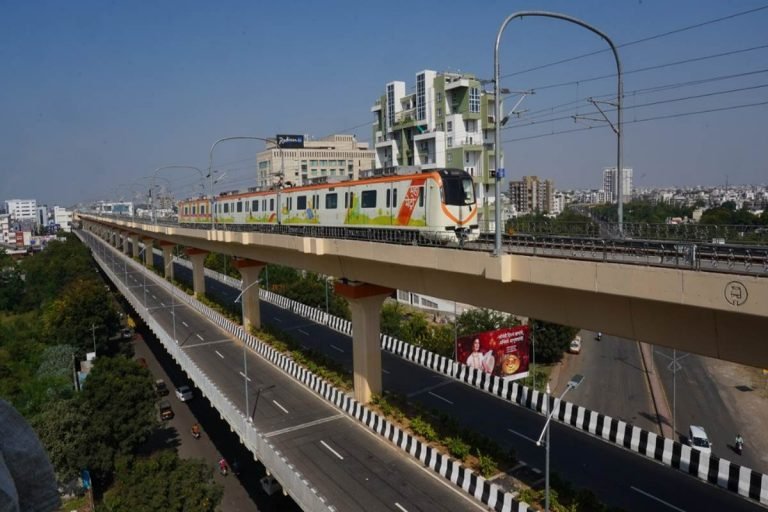
New Delhi: Prime Minister Narendra Modi has flagged-off the Delhi-Faridabad Metro Line that would allow hassle free travel for around two lakh daily commuters between the national capital and the industrial hub in Haryana.
The extension of the Delhi Metro connects Badarpur to Escorts Mujesar in Faridabad.
The total cost of the project from Badarpur to Escorts Mujesar is nearly Rs. 2,500 crore. Out of this, Rs. 1,557 crore was borne by the Haryana Government, the Centre contributed Rs. 537 crore, while the Delhi Metro provided Rs. 400 crore.
All these are elevated and located on either side of the Delhi-Mathura Road (NH-2).
“The nine-station metro corridor which was 95 per cent indigenously built will provide people a safe, affordable, quick, comfortable, reliable, environment-friendly and sustainable transport facility,” a Haryana government spokesperson said.
Haryana Chief Minister ML Khattar, addressing a press conference on Saturday, had thanked the Prime Minister for “gifting” the Metro service which would take the city to “another level of progress” with better connectivity with other NCR towns.
He had also said that the Prime Minister would be announcing the go-ahead for connecting Gurgaon with Faridabad by Metro.
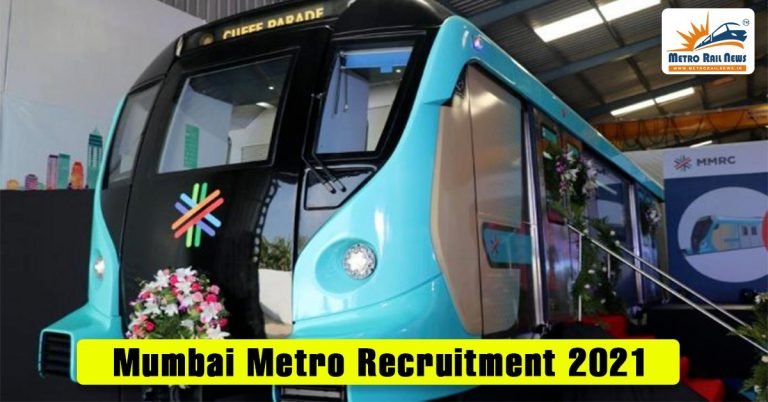
MUMBAI (Metro Rail News): Mumbai Metro Rail Corporation Limited (MMRCL) has released a notification for recruitment to the post of Deputy Engineer and Junior Engineer.
Mumbai Metro Recruitment 2021 Details
1. Deputy Engineer (PST)
Grade (E2) Rs. 50,000 – 1,60,000/-
No. of Posts – 02
Age Limit – Maximum 35 years
Qualification – Full time Degree in Electrical Engineering from recognized institute/university/ college.
2. Deputy Engineer (E&M)
Grade (E2) Rs. 50,000 – 1,60,000/-
No. of Posts – 05
Age Limit – Maximum 35 years
Qualification – Full time Degree in Electrical or Mechanical Engineering from recognized institute/university/college.
3. Jr. Engineer-II (PST)
Grade (W6) Rs. 35,280 – 67,920/-
No. of Posts – 02
Age Limit – Maximum 35 years
Qualification – Degree/ Diploma in Electrical Engineering from recognized institute/university/ college.
3. Jr. Engineer-II (E&M)
Grade (W6) Rs. 35,280 – 67,920/-
No. of Posts – 10
Age Limit – Maximum 35 years
Qualification – Degree/ Diploma in Electrical or Mechanical Engineering from recognized institute/college.
Selection Procedure –
Candidates applying for the posts mentioned in the advertisement will be called for Personal Interview. MMRCL reserves the right to shortlist the Candidates for Personal Interview. The Candidates will be shortlisted for interview, based on their eligibility/ experience in the relevant field.
Online registration will start from 21st July, 2021 at 10:00 Hrs. and will end on 31st August, 2021 at 23:59 Hrs.
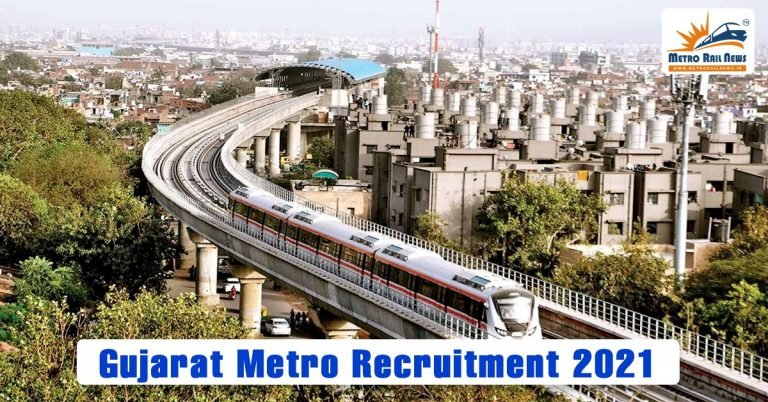
GANDINAGAR (Metro Rail News): Gujarat Metro Rail Corporation (GMRC) Limited invites applications from qualified and experienced candidates as per the following posts
Gujarat Metro Rail Corporation (GMRC) Limited, a 50:50 Special Purpose Vehicle (SPV) jointly owned by Government of India and Government of Gujarat is entrusted with the responsibility of implementation of Ahmedabad Metro Rail Project phase-I, Phase-II and Surat Phase-I.
GMRC Recruitment 2021 Details
I. Civil Wing: For Ahmedabad Metro Rail Project Phase – I & Phase – II & Surat Metro Rail Project
Sr.No.
Post
Pay/Revised IDA Pay Scale
No. of Posts
Age as on date of Advertisement Max.
1
Additional General Manager (Civil)
100000 – 260000
4
53 years
2
Joint General Manager (Civil)
90000 – 240000
3
50 years
3
Sr. Deputy General Manager (Civil)
80000 – 220000
1
48 years
4
Deputy General Manager (Civil-Safety)
70000 – 200000
2
45 years
5
Deputy General Manager (MMI)
70000 – 200000
1
45 years
6
Manager (Civil)
60000 – 180000
4
40 years
7
Manager (Architect)
60000 – 180000
2
40 years
8
Manager (Multi Modal Integration)
60000 – 180000
1
40 years
II. SER Wing
Sr.No.
Post
Discipline
No. of Posts
Revised Pay Scale (IDA Pattern)
Age Limit (Max.) as on date ofAdvertisement
1
General Manager
Electrical/Rolling Stock
1 No.
120000‐280000
55 years
Traction
2 Nos.
Signalling
1 No.
Telecom
2 Nos.
2
Additional General Manager
Rolling Stock/Electrical
2 Nos.
100000‐260000
53 years
3
Joint General Manager
Signalling & PSD
2 Nos.
90000-240000
50 years
4
Senior Deputy General Manager
Rolling Stock
2 Nos.
80000‐220000
48 years
Traction
2 Nos.
5
Deputy General Manager
Rolling Stock
1 No
70000‐200000
45 years
E&M
1 No
L&E
1 No.
Signalling
2 Nos.
Telecom/AFC
2 Nos.
6
Manager
Rolling Stock
2 Nos.
60000‐180000
40 years
Traction
2 Nos.
Signalling
2 Nos.
GMRC Recruitment 2021: Educational Qualification
For Civil Wing
Sr. No. 1: Additional General Manager (Civil), No. of posts – 4.
Candidate must be B.E/ B.Tech in Civil Engineering from a Govt. recognized University/ Institute.
Sr. No. 2: Joint General Manager (Civil), No. of posts – 3.
Candidate must be B.E/ B.Tech in Civil Engineering from a Govt. recognized University/ Institute.
Sr. No. 3: Sr. DGM (Civil) – No. of posts ‐ 1.
Candidate must be a B.E / B. Tech (Civil) engineering graduate from a Govt. recognized University/Institute.
Candidate must be a B.E / B. Tech in Civil Engineering from a Govt. Recognized University/Institute with a Diploma/P.G. Diploma in Construction/Industrial Safety from an Institute recognized by State /Central Govt. or other Statutory authority.
.
Sr. No. 5: DGM – Multi Modal Integration (Transport Planning) – No. of posts ‐ 1.
Candidate must be a Bachelor in Planning from a Govt. Recognized University/Institute & Masters in Transport Planning or related field from a Govt. Recognized University/Institute.
Sr. No. 6: Manager (Civil) – No. of posts ‐ 4.
Candidate must be a B.E / B. Tech (Civil) engineering graduate from a Govt. recognized University/Institute.
Candidate must be a B.Arch engineering graduate from a Govt. Recognized University/Institute.
Sr. No. 8: Manager (MMI) – No. of posts ‐ 1.
Candidate must be a Bachelor in planning from a Govt. Recognized University/Institute.
For Systems, Electrical & Rolling Stock Wing:
Sr. No. 1: General Manager, No. of Post – 6 Nos.
For Electrical / Rolling Stock-Electrical, No. of post – 1
Candidate must be a B.E /B.Tech (Electrical/ Electrical & Electronics/ Applied Electronics / Industrial Electronics / Power Electronics/Instrumentation or equivalent) engineering graduate from a Govt. recognized University/Institute.
For Traction, No. of post – 2.
Candidate must be a B.E /B.Tech (Electrical/ Electrical & Electronics) engineering graduate from a Govt. recognized University/Institute.
For Signaling, No. of post – 1:
Candidate must be a B.E /B.Tech (Electrical/ Electrical & Electronics/ Applied Electronics / Industrial Electronics / Power Electronics/Instrumentation or equivalent) engineering graduate from a Govt. recognized University/Institute.
For Telecom, No. of post – 2.
Candidate must be a B.E /B. Tech (Electrical/ Electrical & Electronics/ Applied Electronics / Industrial Electronics / Power Electronics/Instrumentation or equivalent) engineering graduate from a Govt. recognized University/Institute.
Sr. No. 2: Additional General Manager (Rolling Stock/Electrical) No. of posts-2
Candidate must be a B.E /B. Tech (Electrical/ Electrical & Electronics/ Applied Electronics / Industrial Electronics / Power Electronics/Instrumentation/Mechanical or equivalent) engineering graduate from a Govt. recognized University/Institute.
Sr. No.3: Joint General Manager (Signaling & PSD) No. of Posts-2
Candidate must be a B.E /B. Tech (Electrical/ Electrical & Electronics/ Applied Electronics / Industrial Electronics / Power Electronics/Instrumentation or equivalent) engineering graduate from a Govt. recognized University/Institute.
Sr. No.4: Sr. Deputy General Manager (Rolling Stock/Traction) No. of Posts-4
For Rolling Stock No. of Posts-2
Candidate must be a B.E /B. Tech (Electrical/ Electrical & Electronics/ Mechanical/Applied Electronics / Industrial Electronics / Power Electronics/Instrumentation or equivalent) engineering graduate from a Govt. recognized University/Institute.
For Traction No. of Posts-2
Candidate must be a B.E /B.Tech (Electrical/ Electrical & Electronics) engineering graduate from a Govt. recognized University/Institute.
Sr. No.5: Deputy General Manager (Rolling Stock/E&M/L&E/Traction/Signaling/Telecom/AFC) No. of Posts-7
For Rolling Stock No. of Post-1
Candidate must be a B.E /B. Tech (Electrical/ Electrical & Electronics/ Applied Electronics / Industrial Electronics / Power Electronics/Instrumentation/Mechanical or equivalent) engineering graduate from a Govt. recognized University/Institute.
For E&M, No. of Post-1:
Candidate must be a B.E/B.Tech (Electrical/ Electrical & Electronics/ Mechanical) engineering graduate from a Govt. recognized University/Institute.
For L&E, No. of Post-1:
Candidate must be a B.E/B.Tech (Electrical/ Electrical & Electronics/ Mechanical) engineering graduate from a Govt. recognized University/Institute.
For Signaling No. of Posts-2:
Candidate must be a B.E /B. Tech (Electrical/ Electrical & Electronics/ Applied Electronics / Industrial Electronics / Power Electronics/Instrumentation or equivalent) engineering graduate from a Govt. recognized University/Institute.
For Telecom & AFC No. of Posts-2:
Candidate must be a B.E /B. Tech (Electrical/ Electrical & Electronics/ Applied Electronics / Industrial Electronics / Power Electronics/Instrumentation/Electronics and communication/ Computer Science/ Electrical) engineering graduate from a Govt. recognized University/Institute.
Sr. No. 6: Manager, No. of Posts – 6 Nos.
For Rolling Stock No. of Posts-2:
Candidate must be a B.E /B. Tech (Electrical/ Electrical & Electronics/ Applied Electronics / Industrial Electronics / Power Electronics/Instrumentation/Mechanical or equivalent) engineering graduate from a Govt. recognized University/Institute.
For Traction No. of Posts-2:
Candidate must be a B.E /B.Tech (Electrical/ Electrical & Electronics) engineering graduate from a Govt. recognized University/Institute.
For Signaling No. of Posts-2:
Candidate must be a B.E /B. Tech (Electrical/ Electrical & Electronics/ Applied Electronics / Industrial Electronics / Power Electronics/Instrumentation or equivalent) engineering graduate from a Govt. recognized University/Institute.
SELECTION
Applicants should fill up the required information online only on our Company website through the link under http://www.gujaratmetrorail.com/careers/ “APPLY ONLINE” along with necessary attachments in a merged single PDF file containing CV, payslips & testimonials etc., on or before 20th August, 2021.
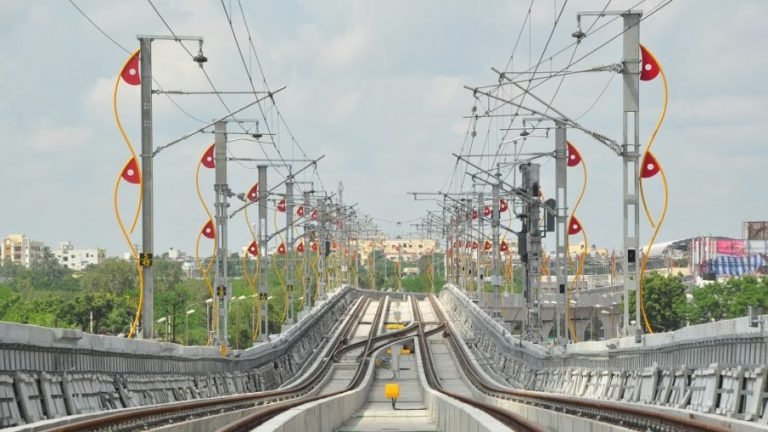
DELHI (Metro Rail News): Delhi Metro Rail Corporation Ltd. (DMRC) invites open e-tender from eligible applicants for the work related to supply and commissioning of 25KV Overhead Equipment (OHE) System, Auxiliary Sub stations for Elevated Sections and SCADA System for Underground and Elevated sections for Corridor 1 & 2 and ISBT Depot of Patna Metro Rail Project.
Name of Work
Supply, Installation, Testing and Commissioning (Including Integrated Testing and Commissioning) of 25KV Overhead Equipment (OHE) System, Switching Posts, 33KV Ring mains, Auxiliary Sub stations for Elevated Sections and SCADA System for Underground and Elevated sections for Corridor 1 & 2 and ISBT Depot of Patna Metro Rail Project.
Important Details
Contract Package: PE-03
Approximate Cost of Work: INR 144.65 Crores
Completion Period of the Work: 36 Months
Sale of Bidding Documents: From 22.07.2021 to 02.09.2021 up to 16:00 Hrs
Pre Bid Meeting: 05.08.2021 at 11:00 Hrs.
Tender submission start date: 26.08.2021 at 09:00 Hrs
Tender submission end date: 02.09.2021 till 16:00 Hrs
Technical Bid Opening Date: 03.09.2021 at 16:00 Hrs
For more information and detailed scope of work, interested applicants can download tender documents from the website – https://eprocure.gov.in/eprocure/app
Under Phase-1 of Patna Metro Rail Project, two corridors (East West Line & North-South Line) will be constructed having total length of 30.91 km consisting of 24 stations. The first corridor (East West Line) will have length of 16.86 km from Danapur Cantonment to Khemni Chak while the second corridor (North-South Line) will have length of 14.05 km from Patna Junction Railway Station to New ISBT.
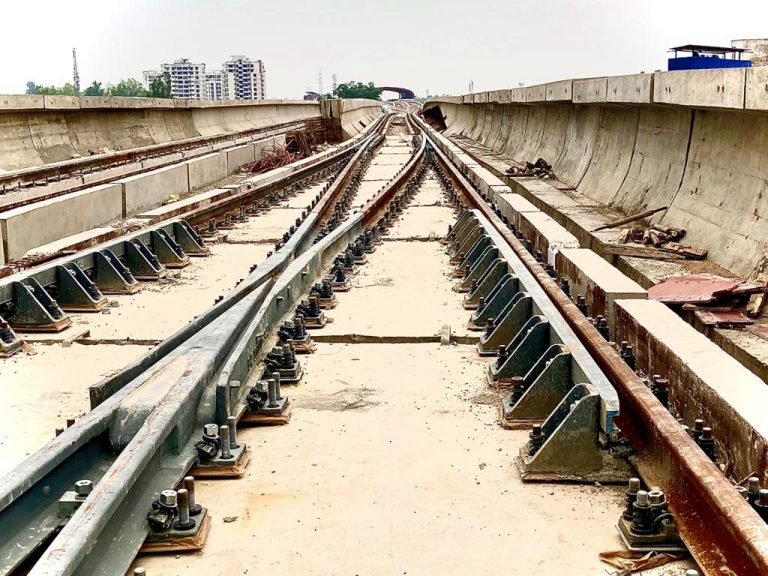
KANPUR (Metro Rail News): Uttar Pradesh Metro Rail Corporation (UPMRC) has completed metro track laying work from IIT to SPM station for the 9 km long Priority Corridor running from IIT to Motijheel of Kanpur Metro Rail Project.
Metro track laying work was started on 11th May from IIT Metro station and so far has reached till SPM Metro Station. Metro track is laid down by joining segments of rail of 18 meters each through rail welding machine and a long track is made by joining these segments and then laid down on the track.
For the given distance from IIT to SPM station, UPMRC has laid down the track of 3.5 km including Up-line and Down-line. For the Priority Corridor from IIT to Motijheel, about 18 km long track is to be laid including both the lines (9 km each for Up-line & Down-line).
It is important to mention that ballastless tracks are being laid down for the mainline while ballasted tracks are being laid down for the metro depot. The track work is also progressing at rapid pace in the metro depot which is being constructed at Government Polytechnic. So far, 65% of the track work in the depot is completed. A total of 18 lines are to be laid in the depot out of which 12 lines are already being laid.
According to the Managing Director of UPMRC, Kumar Keshav, “The track work is progressing at a good pace at the mainline as well as the depot in Kanpur. Signalling, telecom and electrical systems are also being installed. We are moving forward towards the target of trial run on the Priority Corridor in November with full positivity.”
The Priority Corridor of Kanpur Metro will have 9 elevated stations. UPMRC aims to start operation of metro trains on this 9 km long Priority Corridor from December this year. On completion as per deadline, Kanpur Metro will become the fastest built and commissioned metro project in the world.
As mentioned earlier, Phase-1 of Kanpur Metro Rail project will have two corridors. The first corridor (Red Line), with length 23.7 km, will have 22 metro stations and the second corridor (Blue Line), with length 8.6 km, will have 8 metro stations. Recently, work has also commenced on underground section of Kanpur Metro.
NAGPUR, (Metro Rail News): Maharashtra Metro Rail Corporation Limited (Maha Metro) invites another tender for the construction of an Elevated Viaduct of length 9.55 Km and five Metro Stations (four elevated and one at grade) for the 18.5 km long Reach-1A from MIHAN to MIDC ESR under Phase-2 of Nagpur Metro Rail Project.
The work also includes the construction of an embankment at a grade section of length 1.017 km in two different parts along with fabrication and launching of the superstructure of railway span of length 70 meters.
Name of Work
Design and Construction of Elevated Metro Viaduct of length 9.550 km between Ch. 19970 m to Ch. 20700 m & Ch. 21296.917 m to Ch. 30117.298 m in Reach 1A, Construction of Embankment for At-Grade section of length 1.017 km (Ch. 19550 m to Ch. 19970 m & Ch. 20700 m to Ch. 21296.917 m), Fabrication And Launching of the superstructure of Railway span of length 70 m and Construction of Five metro stations (Four Elevated And One at-grade) in Reach-1A of NMRP Phase-2.
Important Details
Tender Number: N2 C-01/2021
Approximate Cost of Work: INR 470.30 Crores
Completion Period of the Work: 30 Months
Sale of Bidding Documents: From 30.07.2021 at 16:00 Hrs to 31.08.2021 up to 16:00 Hrs
Pre Bid Meeting: 10.08.2021 at 11:00 Hrs
Date of Submission of Tender: Online submission till31.08.2021 up to 16:00 Hrs
Technical Bid Opening Date: 31.08.2021 after 16:30 Hrs
Sale of the document, e-payment procedure, submission, and other details are available on Maha-Metro tender portal under section in e-tenders portal – https://mahametrorail.etenders.in.
NAGPUR, (Metro Rail News): Maharashtra Metro Rail Corporation Limited (Maha Metro) invites tender for the construction of an Elevated Viaduct of length 4.856 Km and three Elevated Metro Stations for the 5.5 km long Reach-4A from Prajapati Square to Transport Nagar under Phase-2 of Nagpur Metro Rail Project.
Name of Work
Design and Construction of Elevated Metro Viaduct of length 4.856 Km Between Ch. (-) 580 M to Ch. (-) 5436.085 M in Reach 4A, and Construction of Three Elevated Metro Stations In-Reach-4A of NMRP Phase-2.
Important Details
Tender Number: N2 C-02/2021
Approximate Cost of Work: INR 246.17 Crores
Completion Period of the Work: 30 Months
Sale of Bidding Documents: From 30.07.2021 at 16:00 Hrs to 31.08.2021 up to 16:00 Hrs
Pre Bid Meeting: 11.08.2021 at 11:00 Hrs
Date of Submission of Tender: Online submission till31.08.2021 up to 16:00 Hrs
Technical Bid Opening Date: 31.08.2021 after 17:30 Hrs
Sale of a document, e-payment procedure, submission, and other details are available on Maha-Metro tender portal under section in e-tenders portal – https://mahametrorail.etenders.in.
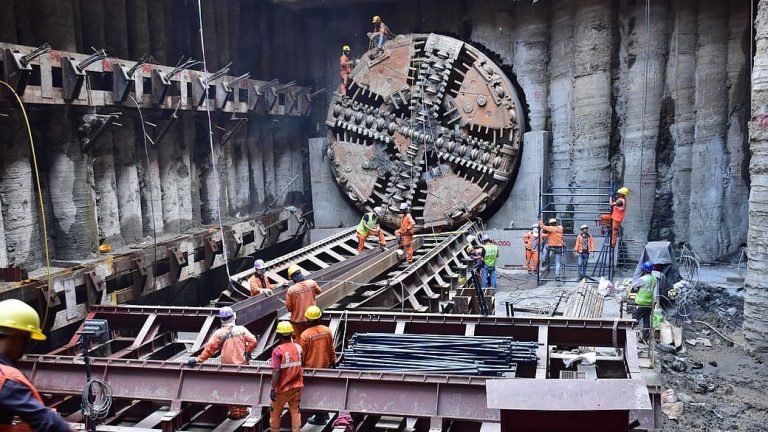
MUMBAI, (Metro Rail News): Mumbai Metro Rail Corporation (MMRC) achieved the 39th breakthrough at Mahalaxmi Metro Station on Wednesday out of the total 42 breakthroughs planned for the 33.5 km long Colaba-Bandra-Seepz underground line (Line-3) of Mumbai Metro.
The Robbins Company made TBM (Tunnel Boring Machine), named Tansa-2, operated by Doğuş and Soma JV has completed 1,117.5 meters of upline drive of tunneling from Science Museum Metro Station to Mahalaxmi Metro Station. TBM Tansa-2 took 257 days using 745 concrete rings to finish the breakthrough.
Package-3 (Mumbai Central–Worli) includes five stations namely – Mumbai Central, Mahalaxmi, Science Museum, Acharya Atre Chowk, and Worli Metro stations. It is the longest stretch of the corridor and has now witnessed a total of three breakthroughs out of six breakthroughs planned under this package. The three breakthroughs which are completed are – (Science Museum to Worli – upline-2072m and downline-2057m) and (Science Museum to Mahalaxmi – upline-1117.5m).
Three more breakthroughs are remaining, all under Package-3, finishing of these breakthroughs will mark the completion of the tunneling work on this 33.5 km long fully underground line with 27 stations on the route.
“This was indeed a challenging task as this particular stretch encompasses tunneling below the buildings that are more than 80 years old and live western railway track between Mahalaxmi and Lower Parel Station. Our team has accomplished this tough task efficiently,” said Mr. Ranjit Singh Deol, Managing Director, MMRC.
With this breakthrough, the overall tunneling completed on the project is 52.60 km out of the total 54.50 km double line which is approximately 96.5 % of the total project.
Mumbai Metro Line-3 (Colaba-Bandra-SEEPZ) is a 33.5 km long fully underground line with 27 stations which would connect 06 business districts, 30 educational institutes, 30 recreational facilities, and domestic as well as international airport terminals. It will have a total of five interchange points for the suburban railway and one each for Monorail and ‘Versova-Andheri-Ghatkopar’ Line-1.
MMRC, a joint venture of the Govt. of India and the Government of Maharashtra, is the nodal agency responsible for the implementation of the Mumbai Metro Line-3 project.
CHENNAI, (Metro Rail News): Chennai Metro Rail Limited (CMRL) recently opened technical bids for the construction of Metro Depots at Madhavaram and Poonamallee for Phase-2 of the Chennai Metro Rail Project.
This depot will be the largest metro rail maintenance depot in Chennai and will be located in North Chennai to be exact. It will be constructed on 69 acres of land. It will work as the main center for the upkeep of driverless trains which will operate for Line-3 from Madhavaram to Siruseri (45.81 km with 48 stations) and Line-5 fromMadhavaram to Sholinganallur (47 km, 46 stations) under Phase-2 of Chennai Metro.
CMRL opened technical bids recently for the tender invited for this depot construction in February this year with an unknown estimated cost and completion period of 1030 days. Technical bids revealed names of 6 firms –
BGR Energy Systems Ltd.
Hindustan Construction Company Ltd.
ISGEC Heavy Engineering Ltd.
JMC Projects (India) Ltd.
Power Mech Projects Ltd.
URC Construction Pvt. Ltd.
Tender No. – PHASE-II/CORR-5/CP16-MMC-DPT/2021
Name of Work – Construction of metro train depot with administration & workshop buildings at Madhavaram Milk Colony include civil, MEP, roofing, signage, architectural finishes, STP, external drainage, internal roads, boundary wall, and all associated works in Corridor-5 of CMRL Phase-II Project.
This depot will work for the upkeep of driverless trains which will operate for Line-4 from Light House to Poonamallee (26.1 km, 28 stations) under Phase-2 of Chennai Metro. It will be constructed in 38 acres of land.
CMRL also opened technical bids recently for the tender invited for this depot construction in January this year with an unknown estimated cost and completion period of 1095 days. Technical bids revealed names of 5 firms –
Altis Holding Corporation
BGR Energy Systems Ltd.
Hindustan Construction Company Ltd.
Power Mech Projects Ltd.
URC Constructions Pvt. Ltd.
Tender No. – CMRL/CON/PHASE-II/C4-DPT-01/2021
Name of Work – Construction of Depot at Poonamallee including Structural Works, Architectural Finishes, Plumbing Works, Signages, Utility shifting & Boundary wall and all Associated works.
Now bids for both these contracts will be sent for technical evaluation which will take a couple of months. After that, financial bids of the technically qualified bidders will be opened which will reveal the name of the lowest bidders and the most likely winners of these contracts. CMRL will operate 112 driverless metro trains on 3 lines totaling 118.9 km under Phase-2.
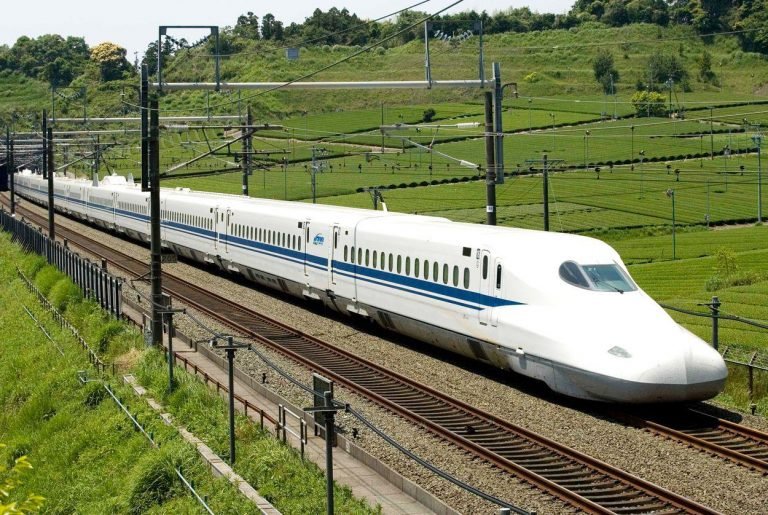
NEW DELHI (Metro Rail News): The National High-Speed Rail Corporation Limited (NHSRCL) on Tuesday opened financial bids for the Package Number-MAHSR-P-1(C)which involves construction of one PSC bridge and four steel truss bridges located between Vadodara and Ahmedabad in Gujarat for the 508.17 Km long Mumbai–Ahmedabad High-Speed Rail Corridor.
Financial bids revealed the bid values of three bidders in which MG Contractors Pvt. Ltd. emerged as the lowest bidder by quoting bid value of INR 261.24 Crores in comparison to the bid value of INR 349.22 crore + 14.79 million Yen from KEC – SAM India JV and INR 388.85 Crores from GRIL – GPT JV.
NHSRCL invited bids for this package in November 2020 with an unknown estimated cost and completion period of 3 years. Technical bids for the same were opened in March this year which revealed name of five bidders. Later, two bidders disqualified based on technical evaluation and the financial bid values of the remaining three bidders is mentioned above.
Package No. – MAHSR-P-1(C)
Name of Work – Construction of Bridges for Double Line High Speed Railway for 01 No. PSC Bridge (GAD 33) and 04 No. Steel Truss Bridges (GAD 28, 1967, 31 and 32) [excluding fabrication and transportation of steel truss girders] between Vadodara (MAHSR Km. 401.898) and Ahmedabad (MAHSR Km. 489.467), in the State of Gujarat for the Project for Construction of Mumbai-Ahmedabad High Speed Rail.
All these 05 bridges correspond to the under construction 87.569 km Package-C6 which runs from north of Vadodara to the south of Ahmedabad. Contract for this package was awarded to Larsen & Toubro (L&T). Piling and pier work is already underway for this package at different sites throughout the route.
As the NHSRCL estimate for this contract is not known, it will be interesting to know about the awarding of this contract which is still likely to be awarded to MG Contractors on account of being the lowest bidder among the three bidders.
Just few day back, MG Contractors was also the lowest bidder for the construction of 11 bridges [MAHSR-P-1(B)] which correspond to the under construction 237.1 km Package-C4 which runs from Zaroli Village at Maharashtra-Gujarat Border to the south of Vadodara.
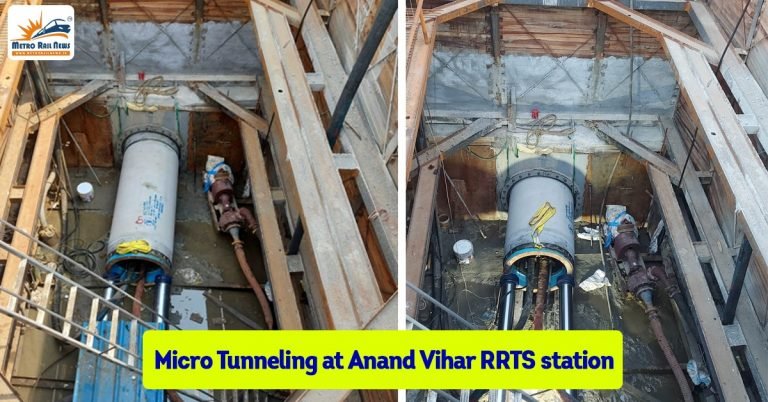
DELHI (Metro Rail News): Keeping public convenience in mind, NCRTC has chosen micro tunneling technique for diverting existing interceptor sewer line of Delhi Jal Board at Anand Vihar RRTS station site. This interceptor sewer line was infringing RRTS corridor at this location.
Micro tunneling is a trenchless underground tunnel construction technique generally used for constructing smaller tunnels for utilities diversion such as drainage pipelines etc. to minimize the public inconvenience caused during the construction.
It is using Micro Tunnel Boring Machine (MTMB) which follows the proposed diversion alignment with the help of a guidance system and uses pipe jacking method for laying the pipes behind the shield while moving forward.
About 600-meter-long interceptor sewer line of 900 mm diameter high capacity non-pressure (NP-4) concrete pipes will be laid at a depth of about 6 meters below the ground surface.
Micro Tunneling is an efficient, fast and reliable way for installing RCC or concrete pipelines of various diameters below highways, railroads, runways, ports and environmentally sensitive areas without disturbing the surface activities and users.
It allows free public movement in the area, therefore mostly adopted in places where footfall is quite high and trenching is not advisable as the extraction of debris cause blocking of passages restricting people movement. It is also very helpful for preserving existing infrastructure from any physical damage or alteration.
Anand Vihar RRTS station site is one of the busiest commuter transit hubs having a huge daily footfall, as it is surrounded by a Metro station serving two metro lines, a Railway Station and two ISBTs – one at Delhi side and the other one at Kaushambi, UP side.
Like all other NCRTC’s construction sites, here also during the execution of this work, NCRTC is taking all necessary measures to ensure minimum disturbance to the day-to-day life of public over there. For this construction is being done in a barricaded zone; a detailed study of soil quality and construction situation survey has been done before the start of the work and precautions are being taken to avoid any air or noise pollution during construction.
Apart from providing a next-generation mobility solution in the National Capital Region (NCR), many basic utility infrastructures are also being constructed, upgraded or relocated by NCRTC which are infringing the alignment of the RRTS corridor. This Delhi Jal Board’s sewer interceptor line is one amongst them. Residents of NCR will be benefitted from this improved infrastructure for a very long period of time.
The construction activities at Anand Vihar, Delhi is going in full swing with the work of launching shaft of tunnel boring machine, measuring 20 m in length and 16 m in width.
Two Tunnel Boring Machines (TBMs) will be lowered in the launching shaft to bore RRTS twin tunnels of 6.5 meter diameter from Anand Vihar towards Sarai Kale Khan to construct around 3 km of tunnels.
It will be the longest tunnel section between any two stations amongst the available Metro Systems in the country.