Home Blog Page 433

Long queues outside Delhi Metro stations is now a common phenomenon

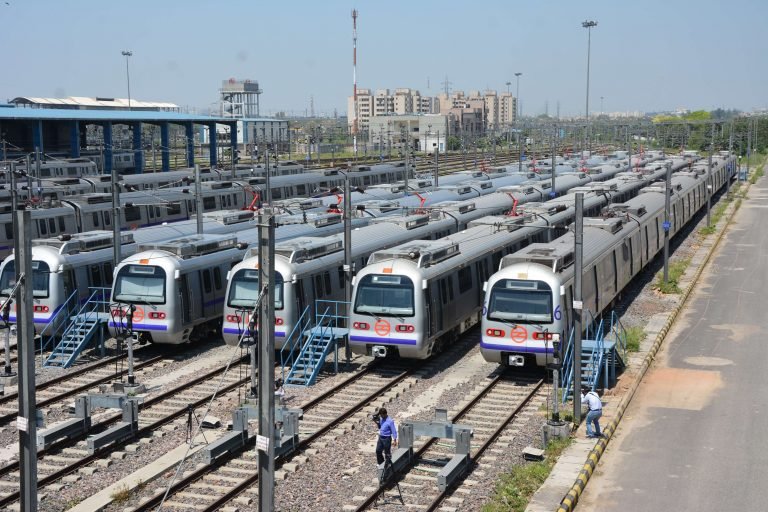
NEW DELHI (Metro Rail News): As Delhi Metro resume its services from 7th June, long queues of commuters outside Delhi Metro stations has become a common phenomenon, especially during peak hours.

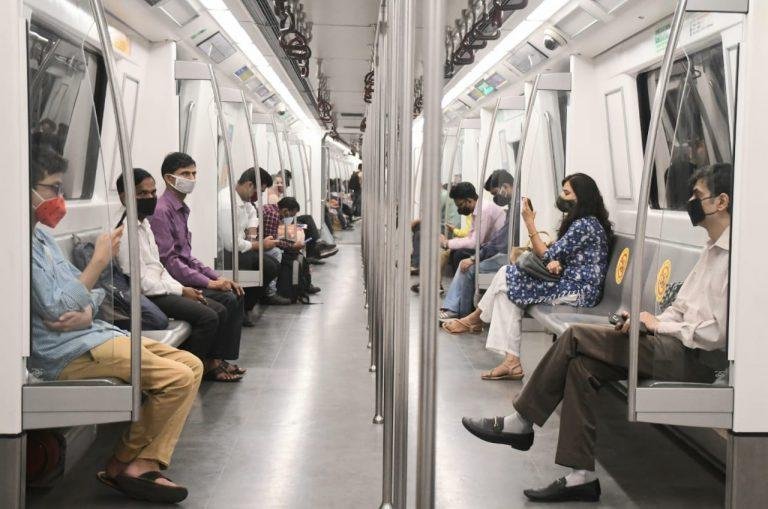
Delhi Metro resumes its operations with 50% of the seating capacity and commuters are not allowed to stand. As Delhi eases lockdown restrictions which came as a great relief to the people, the passenger load has also increased significantly for Delhi Metro since 7th of June.

Delhi Metro Rail Corporation (DMRC) also needs to make sure that all Covid-19 guidelines are followed by commuters for safe travel in metro and at the same time, commuters are also now complaining about the increased waiting period as the queues gets longer day by day and also demanding increase service of metro trains to reduce waiting time.

According to a DMRC official, “We are operating on 50% of the seating capacity and no standing passengers are allowed. We have increased the frequency of trains. Trains are now available at 2 to 5 minutes intervals during peak hours. In case the waiting time is more than 20 minutes, we are informing people about it through social media.”

https://twitter.com/OfficialDMRC/status/1407241213502132245

DMRC also stated that in order to ensure social distancing and compliance to 50% seating in trains, entry of passengers is allowed in limited and controlled manner. Drives are also being carried out to counsel or sensitise passengers. Announcements are being made in trains in this regard.

DMRC is expecting the situation to improve once more relaxations are allowed by the authorities in the coming days as Covid-19 cases continue to drop in the capital.

J&K Almost all the Railway Stations have Free WiFi access

SRINAGAR (Metro Rail News): All 15 Kashmir Valley Railway Stations, including Srinagar, have now been linked into the Indian Railways’ 6021-station Wi-Fi network. “It is a crucial step for Digital India’s mission and will go a long way in connecting the unconnected,” said Shri Piyush Goyal.

Public Wi-Fi, branded RailWire, is offered at 15 stations in the UT of Kashmir (Baramula, Hamre, Pattan, Mazhom, Budgam, Srinagar, Pampore, Kakapora, Avantipura, Panzgam, Bijbehara, Anantnag, Sadura, Qazigund, and Banihal).

Wi-fi was previously accessible in 15 stations throughout the Jammu and Kashmir Union Territory – Kathua, Budhi, Chhan Arorian, Hira Nagar, Ghagwal, Samba, Vijaypur, Bari Brahman, Jammu Tawi, Bajalta, Sangar, Manwal, and Ram Nagar.

RailTel has been tasked by the Ministry of Railways with the responsibility of providing public Wi-Fi at all railway stations. The goal was to transform the Railway platform into a digital inclusion platform. Today, the Wi-Fi network is stretched across the country’s 6000+ railway stations, making it one of the world’s largest integrated wi-fi networks.

Shri Piyush Goyal, Hon’ble Minister of Railways, Commerce & Industries, and Consumer Affairs, Food & Public Distribution, stated on this occasion, “Wi-Fi plays a critical role in connecting people and is rapidly closing the digital divide between rural and urban India.” Indian Railways, in collaboration with its RailTel Corporation of India Ltd, is a critical component of the effort to provide high-speed Wi-Fi to every corner of the nation. Today, on World Wi-Fi Day, I am pleased to report that Srinagar and 14 stations around the Kashmir Valley have joined one of the world’s largest integrated public Wi-Fi networks, which connects over 6000 locations nationwide. As a result, all Valley stations now provide public Wi-Fi. It is a critical step in achieving the Digital India mission’s goal of connecting the disconnected. I would like to express my gratitude to the staff at Indian Railways and RailTel for their hard efforts in achieving this great feat.”

Dr. Jitendra Singh, Hon’ble MoS(IC) DONER,MoS, PMO,DOAE, DOS, Ministry of Personnel, Public Grievance & Pension, stated, “Today, Wi-Fi plays a critical role in connecting communities and encouraging creative solutions that help bridge the digital divide.” Due to the epidemic, the requirement for virtual connectivity is greater than ever. Indian Railways is instrumental in bridging the rural-urban gap with its CPSU RailTel’s station Wi-Fi network. I am delighted to report that 15 stations in Jammu & Kashmir’s Kashmir Valley now have RailWire Wi-Fi. This will provide an additional amenity for the region’s and country’s residents. I wish everyone a very Happy World Wireless Internet Day.”

Designed to provide the greatest possible internet experience for customers, Wi-Fi at railway stations will be available to anybody with a smartphone and a functional mobile connection for KYC purposes.

Wi-Fi connectivity not only connects communities, but also creates new opportunities for innovation and prosperity. This year’s World Wi-Fi Day celebrations emphasise the critical importance of accelerating access to cheap Wi-Fi in order to close the Digital Divide. India suffers from a pronounced digital divide between urban and rural areas. RailWire Wi-Fi at stations is assisting in connecting the disconnected, as the network’s more than 5000 stations are located in rural India with little connection.

Indian Railways is transforming railway stations into digital hubs by offering public Wi-Fi at stations across the country; 6021 stations now have RailTel’s RailWire Wi-Fi operational.

Delhi Metro | 1st twin tunnels on Janakpuri West-Krishna Park Ext. stretch to start in Sep 21

DELHI (Metrorail News): Despite severe restrictions imposed by the second wave of the Covid – 19 pandemic in recent months, the Delhi Metro Rail Corporation (DMRC) maintained construction of its Phase 4 routes and accomplished several significant construction milestones. Prior to the installation of the lockdown in April 2021, the total number of employees at DMRC’s locations topped 4,000. However, following the lockdown, many workers chose to return to their native lands. Additionally, several workers who had previously gone to the Holi festival did not return. This resulted in a steady reduction of the workforce to around 2,500.

DMRC not only looked after the employees who remained behind with medical care and housing, but also achieved several significant milestones during its Phase 4 building operation. Throughout this time span, all Covid-related instructions issued by the government were likewise strictly observed. Following the removal of Covid-related restrictions, DMRC’s locations are gradually increasing their workforce capacity.

Tunneling between Janakpuri West and Krishna Park EX1ension on the Janakpuri West – RKAshram Marg corridor for the DMRC’s first underground segment of Phase 4 achieved a number of significant objectives during this period. DMRC completed the tunnelling of 500 meters of one of the 2.8-kilometer-long twin tunnels during these months. Additionally, the Delhi Metro has finished casting more than half of the tube segments in the casting yard. The first of the twin tunnels on this segment is scheduled to open in September.

On the same length, DMRC recently marked another significant milestone by building Phase 4’s first T-girder at Mukarba Chowk. These pre-tensioned T-girders are cast at Mundka’s casting yard. Following casting, these girders are transported to the site and hoisted into place using two gigantic 400 MT capacity cranes. Each girder is 37 metres long and weighs around 90 tonnes. The first girder was built around 18 metres above the piers. Additionally, the launcher was loaded in Majlis Park, and the u-girder would be launched from the launcher along the same stretch from Majlis Park to Mukarba Chowk.

On the Majlis Park – Maujpur route as well, despite personnel shortages, considerable work has been achieved. U-Girders and T-Girders were cast, U-Girders and Pier Caps were erected, and piers at the station and viaduct locations were constructed. As part of this route near the Signature Bridge, work on the Delhi Metro’s fifth bridge over the river Yamuna is also underway. This corridor is crucial because it will complete the Pink Line’s ring of connection.

On the Tughalakabad-Aerocity route, the Panchsheel Park casting yard was ready for casting by installing all essential equipment, including gantry cranes. Additionally, the casting of u­ girders and piles was continued.
buy citalopram online http://padstyle.com/wp-content/languages/new/citalopram.html no prescription
The silver-colored Aerocity-Tughlakabad Metro route will connect the Kashmere Gate-Raja Nahar Singh Violet Line to the Airport Express Line.

Additionally, four major civil tenders for DMRC Phase 4’s subterranean portions were floated in April and May 2021. These are all being financed by the loan obtained from JICA. Three of the tenders are for the Aerocity-Tughalakabad corridor, while one is for the Janakpuri West-RK Ashram Marg sector. All of the bids are currently in various stages of processing.

With the improvement of the Covid – 19 situation in the country, building activity is likely to accelerate in the coming days.Numerous vaccination camps have already been established on-site for workers, and more are planned.

Additionally, a campaign to educate employees about the benefits of immunisation was performed. As part of its Phase 4 development, the DMRC is currently constructing 65 kilometers of additional lines along three priority routes. By 2025, these routes are anticipated to be finished. However, given the dynamic nature of the Covid situation, completion targets will be adjusted accordingly.

How to Cope Up with Boredom on a Long Train Journey

The trains are among the safest and reliable transportation channels in India for the journey. Whether you are on vacation with your family or a professional meeting, the train journey can be overwhelming. However, you can get bored on a long journey. You cannot have exciting 30-40 hours on the train. This is why you should do some activities to kill your boredom. There are many ways to deal with loneliness or boredom in a long train journey. Here, we have mentioned all the exciting activities to keep your enthusiasm up.

Look Forward and Enjoy Yourself

The eager eyes can have good entertainment in a long and short journey. If you look around, you will find a lot has been going on. You can look outside the windows thoughtlessly, letting the landscape go by, and enjoy the view. You can keep yourself entertained by making crazy plans for your trip in your mind or imagine how your destination would be like. Most people like the feeling of being out and about in the world, and the eagerness makes the journey pass twice as fast.

Watch Movies or Series

This is one of the most clichés, but an amazing way to cope with boredom while you are on a long journey. These days, there are several online streaming applications for smartphones. You can sign up for any of them and watch the latest movies. However, if you had some movies and series in your mind that you are longing to watch for many months, this is the right time. Just wear the earbud in your ear and immerse yourself in the cinematic world. You would complete a whole series, and your journey will get shorter without boredom.

Play Some Games

This is another activity that we frequently do in our free time. Whether we are waiting for a bus or waiting for our turn at the doctor, games are a great time pass. Thus, it would be best to play some games on your smartphone to have a good mood. There are lots of games on the App Store and Google Play Store for free. If you love real money games, you can play casino games. Betting on sports is also a great way to deal with boredom and infuse some entertainment into your journey. If you have no idea what it is, you can find information about sports betting here. You can bet on live sporting events, and if you have the right strategies, you can make a decent profit.

Read Books

Just like watching movies, reading books is another most common activity to deal with boredom in a long train journey. If you love reading books, then they must be in your bag like a first-aid box.  Many people lack time to read books that they wanted to read for a long time in their everyday lives. Thus, boredom on long journeys is the perfect reason to dedicate yourself to some good books. Reading books is not comfortable in a car or bus, but a train journey is perfect for reading your favorite books. Here, you can immerse yourself for hours between pages without the pressure of having to do anything else. Thus, reading books is a perfect way to slay your boredom.

Get in Touch with Fellow Travelers

Well, you are not the only person on the train who is getting bored. There are lots of fellow people who feel like locked in a tin box. Thus, it would be best for you to start a conversation with others. You may not make it for life, but such conversations can make nice contacts. Sometimes a conversation with strangers can make your journey more beautiful. There is actually never a shortage of topics to talk about if you find an extrovert person. And when was the last time you took the time to meet new people or chat with a stranger? So, just start a conversation at the right time. It is important to be open to your counterpart and not to be disappointed if he/she prefers to delve into a book. Then you try the next person.

Sleep and Relax the Body

Indian trains can be the best place to have some good sleep if you have a comfortable seat. Many of us don’t get enough sleep due to the hectic schedule of our daily life. Thus, it is important to take some quality rest at this time. Don’t stay awake too much to watch movies or read books. Whether you are on a vacation or professional meeting, you have t be prepared once you get off the train. Thus, relaxing your body by taking enough sleep could be the best idea on a long journey on a train.

Exercise or Some Physical Activity

Yes, you can do some exercises on your train journey. While you may be tied to a seat, exercise should not be neglected. Not only is movement extremely important on a long train journey, it just feels good too. We don’t recommend exercises that take too much space, but you can take a walk as Indian trains have a long walkway. You can also do some stretches so that you can have an active day.

Delhi Metro Pink Line Extension has eight bidders for OHE Electrification

NEW DELHI (Metro Rail News): Delhi Metro Rail Corporation (DMRC) had opened the technical bids in the first week of June for the supply and commissioning of 25 kV Overhead Equipment (OHE) and 33 kV Auxiliary Power Supply for the 12.55 km long Pink Line Extension from Maujpur to Majlis Park under Phase-4.

The technical bids revealed the name of eight bidders for this work under Contract Package DE-

DMRC invited bids for this work in March this year with an estimated cost of INR 79.52 Crores with a completion period of 540 days. The work also includes augmentation works of Mukundpur depot. The names of eight bidders are –

  1. Alstom Transport India
  2. Cimechel Electric
  3. Kalpataru Power Transmission
  4. KEC International
  5. Ojasync Pvt. Ltd.
  6. Salasar Techno Engineering
  7. Shyam Indus Power Solutions
  8. Texmaco Rail and Engineering

Brief Scope of Work – Design, Supply, Installation, Testing and Commissioning of 25 kV Overhead Equipment (OHE), 33 kV Auxiliary Power Supply for an elevated section of Line-7 Ext.

(Maujpur to Majlispark) and Augmentation works of Mukundpur depot of Delhi Metro MRTS Phase-IV.

Now the bids will be sent for technical evaluation. Then the financial bids will be opened for technically qualified bidders who will reveal the name of the lowest bidder and the most likely winner of this contract.
buy vega extra cobra online https://blackmenheal.org/wp-content/themes/twentytwentytwo/inc/patterns/en/vega-extra-cobra.html no prescription
The whole process will take a couple of months.

DMRC has set a deadline of December 2022 for the operation of this 12.55 km long line from Majlis Park to Maujpur will have eight elevated stations. The names of the stations are Burari, Jharoda Majra, Jagatpur Village, Wazirabad Surghat, Sonia Vihar, Khajuri Khas, Bhajanpura and Yamuna Vihar.

Bhopal Metro construction in full swing despite Covid-19 challenges

BHOPAL (Metro Rail News): Construction work is moving at rapid pace for Bhopal Metro despite the challenges imposed by the Covid-19 second wave and the resultant lockdowns in the city. 

At present, construction work is underway for the elevated viaduct from AIIMS to Subhash Nagar for a stretch of 6.22 km which is a part of Purple Line of Length 14.99 km from Karond Circle to AIIMS under Phase-1.

About 50% work is completed on this stretch as 122 pillars and 36 girders have been laid down so far in last 30 months. Work on this first section under Package-01 was awarded to Dilip Buildcon Ltd. in October 2018 by Madhya Pradesh Metro Rail Co Limited (MPMRCL) for a contract price of INR 247.06 Crores with completion period of 27 months.

On this section, eight elevated stations will be constructed for which tenders were invited on 31st March this year with an estimated cost of INR 421 Crores and completion period of 847 days. These stations are AIIMS, Alkapuri, Habibganj Naka, Habibganj, M.P Nagar Zone-1, DB City Mall, Kendriya Vidyalaya and Subhash Nagar. This contract package will be funded by European Investment Bank (EIB).

Preliminary work has also started for the construction of metro depot by taking pre NOC from the concerned departments. The metro depot is to be constructed at Subhash Nagar Underpass where metro trains for this line will be stabled and maintained. Bhopal Metro had sought 85 acres of land for the construction of metro depot but the administration has reserved 65 acres of land for the same.

Work on this section from AIIMS to Subhash Nagar is expected to be completed by August 2023 while construction work is yet to be started on Subhash Nagar to Karond Circle section which has a deadline of December 2024.

Resumption of metro services in Chennai, Bangalore and Hyderabad

DELHI (Metro Rail News): Metro train services will resume in the cities of Chennai and Bangalore as State governments further relaxing Covid-19 imposed restrictions as cases of Covid-19 continue to decline.

In Chennai, metro train services will resume from Monday by Chennai Metro Rail Limited (CMRL) as the Tamil Nadu government has extended the lockdown in the state till June 28 with further relaxations.

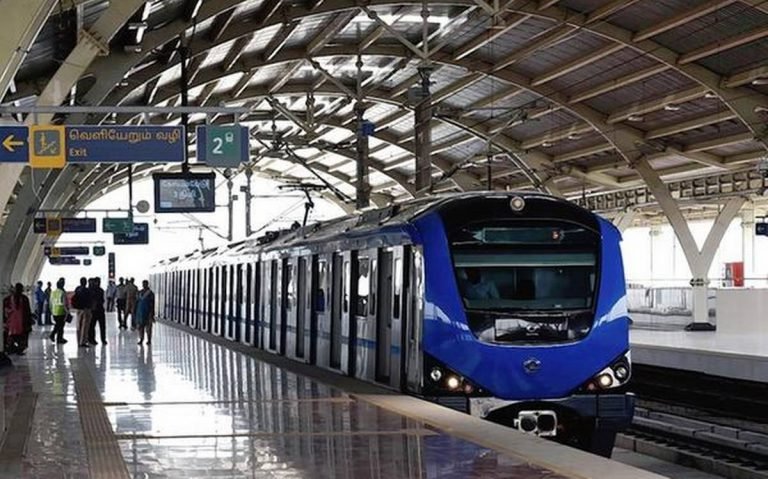
Chennai Metro trains will operate with 50% occupancy from 6.30 am to 9.00 pm in both the Blue Line (Airport to Wimco Nagar) and Green Line (St Thomas Mount to Dr MGR Central Metro Station).

Bangalore Metro will also resume its services from Monday on both the lines with trains to operate between 7.00 am to 11.00 am and 3.00 pm to 6.00 pm with a frequency of 5 minutes. 

However, metro services in Bangalore will be available on weekdays from Monday to Friday and will not be available on Saturday and Sundays as the weekend curfew imposed in the state and the capital.

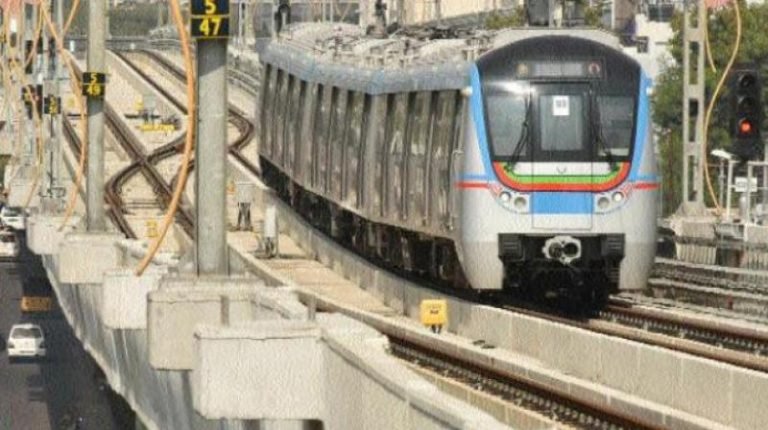
Hyderabad metro has also rescheduled its timings from Monday with the first train from respective terminal stations to start at 7.00 am and the last train will start now from respective terminal stations at 9.00 pm and reach the respective terminating stations around 10.00 pm.

Commuters in all these cities would require to strictly follow all Covid-19 protocols while travelling in metros including wearing of masks, maintain social distancing, regular hand sanitization, thermal screening etc.

On the other hand, Kochi metro is still awaiting State government permission to resume services as it has taken all measures related to Covid-19 safety.

54% work is completed for BKC Metro Station on Line-3 of Mumbai Metro

MUMBAI: According to the Mumbai Metro Rail Corporation (MMRC) around 54% work is completed on the Bandra Kurla Complex (BKC) Metro Station which is the longest station of the 33.5 km long underground Metro Line-3 (Colaba–Bandra-SEEPZ Line)

The BKC station will be an important junction station in terms of being an interchange station with the elevated Metro Line-2B and an imperative hub for the Mumbai Metro rail network along with having connectivity with the station of the proposed Mumbai-Ahmedabad High Speed Rail Project.

The BKC station consists of three tunnels which will be passing under the Mithi river. Work on two tunnels between BKC to Dharavi is already completed using TBM (Tunnel Boring Machine) by August 2020, while work on the third tunnel of length 153 meters is currently underway using New Austrian Tunneling Method (NATM) technology.

As per MMRC, this third tunnel will be used as stabling line which will enable faster train operations during peak hours. This will also work as sick lines to park a disabled train, if the requirement arises.

This station is expected to have the highest density among all the stations on Metro Line-3 and will have seamless interchange with Metro Line-2B with commuters would not need to go out of stations of either metro lines to change. On completion, BKC station will the largest metro station in Asia.

Metro Line-3 is a 33.5 km long fully underground line with 27 stations which would connect 06 business districts, 30 educational institutes, 30 recreational facilities and domestic as well as international airport terminals. 

It will have five interchange points for suburban railway and one each for Monorail and ‘Versova-Andheri-Ghatkopar’ Line-1.

MMRC, a joint venture of the Govt. of India and the Government of Maharashtra, is the nodal agency responsible for the implementation of Mumbai Metro Line-3 project.

Metro Neo – A suitable and viable option for a crowded transportation system in India

Introduction

Metro Neo in simple terms can be stated as an innovative cost-effective Urban Transport Solution for Tier – II and Tier – III Indian cities. High usage of personal transport and crowded roads with diverse traffic has long demanded an Indian centric solution to the problem. Thus, there has been a search for a cost-effective solution for crowded transportation in Tier-II and Tier-III Indian cities. The Maha Metro in India proposed an innovative solution and came up with the concept of Metro Neo. The new transportation system combined the best features of a mass rapid transport system across the globe.

A committee of transport experts was formed by the Ministry of Urban Transportation in India to address the solution for this issue and standardize the specification of MetroNeo by analysing and studying the best transit systems available around the world. The committee members included Dr. Brajesh Dixit (MD/MahaMetro), Mr Narasim Prasad (DRSO/Chennai Metro), Mr. Pramit Garg(Director/BD/DMRC), Mr. Janardan Prasad (Director/MoHUA) and Mr. Sanjay Kumar (Director/MoHUA) visited various manufacturers, operators and vendors to formulate the best solution for MetroNeo.

After its study in various countries and the feasibility report it was found that MetroNeo is a combination of the best features worldwide and possesses an innovative solution for crowded transportation in Tier-II and Tier-III Indian cities. It was found that new features like rubber-tired bi-articulated electric coaches, quality at par with the metro running on elevated or grade roads powered by overhead traction at a substantially lower cost to that of the heavy metro rail give it an edge and make it a better transportation option.

Metro Neo 2 edited
Metro Neo Coaches

The specifications of MetroNeo has been standardized in India. It has been approved by the ministry of housing and urban affairs as per the Metro Railways OM Act 2002 and has been approved by the railway board. It is also studied that level boarding, comfortable seats, automatic doors, robust communication and station and bus arrival information would ensure an effective and comfortable service.

Additionally, energy-efficient, air-conditioned, low floor coaches with regenerative braking, friendly for divyang people shall allow easy evacuation of passenger during emergencies through the flat ways. These coaches can negotiate sharp curves suitable to the narrow roads of Tier-II and Tier-III cities. Articulation of the coaches can be increased based on the ridership. MetroNeo’s overhead twin wire traction system running on 750 volts DC is easily installable, safe for passenger operations and cost-effective.

One DC traction substation every two to three kilometres are planned per section In the event a substation fails the adjacent substation can provide power to the section through the scada system. The coaches run on an automatic train protection mode with anti-collision safety features such as lane departure monitoring, forward and side-collision control, auto speed control and an auto braking application to maintain a safe distance between coaches. A control centre for overall monitoring of the coaches and stations with robust communication with station staff and drivers are also deployed. Automated fair collection and ticketing will be carried out either through transit cards or QR code tickets or through a mobile app.

Therefore, MetroNeo undoubtedly shall be faster, safer, flexible, economic and cleaner Mass Rapid Transit system for an energy-efficient city transport that shall operate with minimal noise and zero emissions towards a greener planet.

The details of Metro Neo can be summarized as under:

  • Metro Neo is a mass rapid transit system providing low-cost, energy-efficient and eco-friendly urban transport solutions for Tier-II and Tier-III cities.
  • Metro Neo systems are lighter and smaller than conventional Metro trains.
  • They cost about 25% of conventional systems but with similar facilities, and are cheaper than the other budget option Metrolite, which costs about 40% of the normal Metro.
  • Drawing traction power from overhead wires, Metro Neo will not run on track but on road. It is suitable for places where the traffic demand is around 8,000 passengers one way in peak time.
  • The Maharashtra government has already given a green signal for this state-of-the-art Mass Rapid Transit System (MRTS) for Nashik in India.

Metro Neo in India

The Mass Rapid Transit System (MRTS) that aims to provide a comfortable, rapid, energy-efficient and less noisy transport medium in the city of Nashik would be the first Metro Neo project in India. The project will be implemented by Maharashtra Metro Rail Corporation Ltd (Maha-Metro).

In 2019, the feasibility report was made in consultation with the Nashik Municipal Corporation. M/s RITES Limited proposed a Detail Project Report (DPR) was prepared by and after approval of the State Government, it was sent to Government of  India for sanction. The Report has identified a 32 km main route and a 24 km feeder route for the implementation of the Metro Neo project.

Frequency – There will be a train service every two minutes. The main elevated corridors will have a capacity of 15,000 PHPDT (peak hour peak direction traffic).

Stations – They will be similar to other Metro rail stations and will house staircases, lifts, escalators and information display for the passengers. The station entry and exit will be provided on both sides of the road.

The Metro-Neo in Nashik will have two corridors. These are as follows:

  1. Corridor 1: A 10-km long route having 10 stations– starting from Gangapur, Jalapur, Ganpat Nagar, Kale Nagar, Jehan Circle, Thatte Nagar, Shivaji Nagar, Panchavati, CBS and ending at Mumbai Naka.
  2. Corridor 2: A 22-km long route having 20 stations– starting from DHRUV Nagar, Shramik Nagar, Mahindra, Shaneshwar Nagar, Trimbak Rd, Satpur Colony, MIDC, ABB Circle, Parijat Nagar, MICO circle, CBS, Sharda Circle, Dwarka Circle, Gayatri Nagar, Ambedkar Nagar, Upnagar, Nehru Nagar, Datta Mandir, and ending at Nashik Road.

Central counterpart funding will be provided to:

  1. Kochi Metro Railway Phase-II of 11.5 km at a cost of Rs. 1,957.05 crore.
  • Chennai Metro Railway Phase–II of 118.9 km at a cost of Rs. 63,246 crore.
  • Bengaluru Metro Railway Project Phase 2A and 2B of 58.19 km at a cost of Rs. 14,788 crore.
  • Nagpur Metro Rail Project Phase-II at a cost of Rs. 5,976 crore.
  • Nashik Metro at a cost of Rs. 2,092 crore.

Metro Lite and Metro Neo have become the new buzzword for smaller cities across India to augment public transport as cheaper alternatives to conventional metro rail. Thane, Gorakhpur, Jammu, Srinagar, and Coimbatore administrations are in talks with the Centre to get these modes of transport apart from Nashik which has already approved Metro Neo.

  • While it costs Rs 222 crore per km to construct a conventional metro rail, a Metro Lite, which resembles a tramway, costs Rs 140 crore per km, and Metro Neo, which is more like an electric trolleybus, costs Rs 71 crore per km.
  • The Union Govt. in India has also said that Metro Lite and Metro Neo will be deployed to provide metro rail systems at much lesser cost with same experience, convenience and safety in Tier-2 cities and peripheral areas of Tier-1 cities.
  • Proposals from Gorakhpur and Delhi (Rithala to Narela link) for Metro Lite project, and from Nashik for a Metro Neo project have already been submitted with Union Govt.
  • Nashik in Maharashtra has proposed two Metro Neo lines of total 32 km with an estimated cost of Rs 2,100 crore. Delhi has proposed a Metro Lite project to provide last-mile connectivity in the peripheral areas.
  • Thane, Coimbatore, Warangal, Hyderabad, Jammu and Srinagar are other Indian cities planning to start Metro Neo and Metro Lite.
  • Thane has also readied the DPR (Detailed Project Report) for developing a Metro Lite corridor and is likely to send the proposal for approval.
  • Metro projects are capital-intensive and are viable for big cities with very high ridership and per hour per direction traffic (PHPDT)’. For smaller cities with lesser traffic, light rail solutions like Metro Lite or a Metro Neo will be more viable and cost-effective.
  • Both new technologies – Metro Neo and metro Lite will not only complement the conventional metro, but could be good alternatives for providing last-mile connectivity in the peripheral areas of big cities like Delhi.

India already has 717 km of metro rail network and work is under way in another 1,000 km stretch. By 2024-2025, India will have over 1,700 km of metro network, the second highest after China, which has over 7,000 km of metro network.

Metro Neo resembles an electric bus trolley and can cater to a ridership of upto 8,000 PHPDT, which can be extended upto 10,000. It does not require a standard gauge track. The coaches will have rubber tyres and will run on road slabs, which are either elevated or at grade. They will have dedicated tracks and will draw power supply from overhead traction.

They can have a single coach of around 12-metre length or two articulated coaches of around 18-metre length or three articulated coaches of around 24 metres — catering to upto 250 passengers.

The railway ministry has already finalised the specifications for Metro Lite and Metro Neo in India. Both the transport systems will be covered under the Metro Act.

Globally, many cities such as Budapest, Melbourne, Vienna, Zurich, Salzburg, San Francisco, Riyadh and Lyon have these cost and fuel-efficient public transport systems.

Zero Mile Metro station of Nagpur Metro to be named as Zero Mile Freedom Park Station

NAGPUR (Metro Rail News): The Nagpur Heritage Conservation Committee on Tuesday approved the proposal of Maha Metro (Maharashtra Metro Rail Corporation Limited) during its meeting to name Zero Mile Metro station as Zero Mile Freedom Park Station.

The proposal was moved by Maha Metro and submitted to the Heritage Committee. A formal ceremony will took place on the occasion of India’s 75th Independence Day to name the station as “Zero Mile Freedom Park Station ′′ at the Amrit Jubilee ceremony.

The historic Cannons which were found during excavation at Kasturchand Park will be placed for display at this station which will add to the beauty of the station. These cannons are believed to be of the British era and are said to be manufactured by East India Company (EIC).

Recently, Maha Metro successfully conducted trail run of a Metro train on Reach 2 from Zero Mile to Kasturchand Park station. Reach 2 from Sitabuldi to Automotive Square is expected to become operational by December this year.
buy levitra oral jelly online https://www.adentalcare.com/wp-content/themes/medicare/editor-buttons/images/en/levitra-oral-jelly.html no prescription
Reach 4 from Sitabuldi to Prajapati Nagar is also expected to become operational by the end of this year. This will mark completion of Phase-1 of Nagpur Metro.

According to sources, the proposed Phase-2 of Nagpur Metro which is expected to cost INR 6717 Crores is sent to Prime Minister Office (PMO) for approval.

Phase-2 of comprises construction of four corridors of total length of 43.8 km which includes Khapri-MIHAN-Butibori MIDC (Reach 1A) of length 18.5 km, Automotive Square to Kanhan (Reach 2A) of length 13 km, Lokmanya Nagar to Hingna (Reach 3A) of length 6.7 km and Prajapati Nagar to Transport Nagar (Reach 4A) of length 5.6 km. All four corridors are expected to become operational by 2026.