Home Blog Page 396

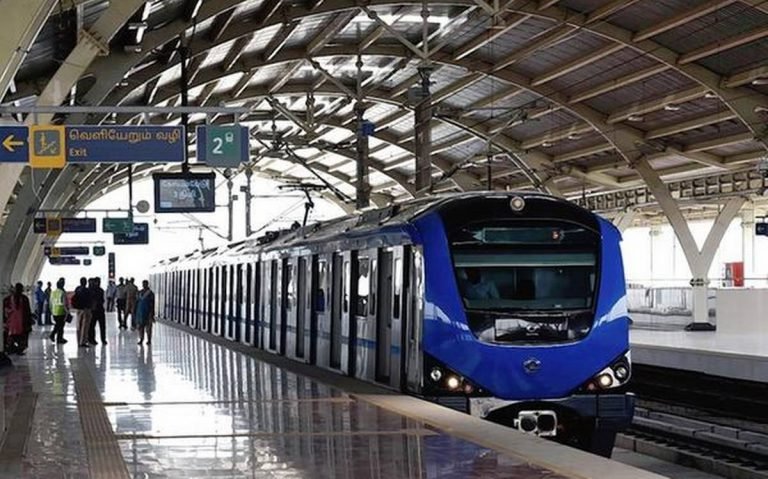
Altis-VC JV won the contract of Chennai Metro Poonamallee Depot

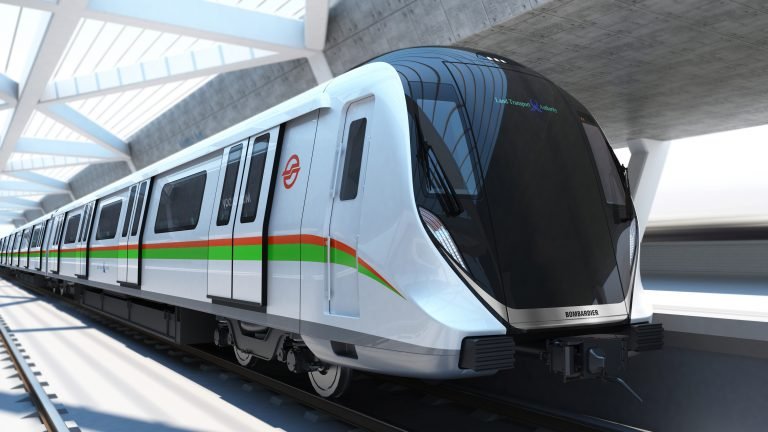
CHENNAI, INDIA (Metro Rail News): Altis Holding Corporation – Varindera Constructions JV on 20 October 2021 was awarded a prize of Rs. 187.49 crore contract for Chennai Metro Line-4’s Poonamallee Depot (Package DPT-01).

The 118.9 KMs Chennai metro phase 2 project railway station will provide trains to the new 26.09 KMs line, which will connect the Light House- Poonamallee Bypass to 30 stations.

CMRL invited three depot construction tenders in January 2021 with a 3-year deadline and opened technical bids in July 2021.

Financial Bid Values 

ContendersBids (INR. Crore)
Altis Holding Corporation187.49
HCC – KEC JV195.80
Power Mech Projects197.10
URC Constructions (URC)200.90
BGR Energy Systems206.20

Package: DPT-01

Project’s Scope: Poonamallee Depot Construction which includes Structural Works, Architectural Finishes, Plumbing Works, Signages, Utility shifting and Boundary wall and all related activities.

7 firms in the race to construct the underground section of Agra Metro Phase-I

AGRA, INDIA (Metro Rail News): Seven firms have submitted tenders to construct the Agra Metro Phase-I (AGCC-02) underground between the RBS College Ramp and the Taj Mahal Ramp after the Uttar Pradesh Metro Rail Corporation Ltd. (UPMRCL) opened technical bids today.

This 7.93 km package from chainage 3630 to 11564.485 contains two tunnels connecting seven Taj Mahal, Agra Fort, Jama Masjid, SN Medical College, Agra College, Raja ki Mandi and RBS College.

According to tender documents, the assigned contractor will be required to install only three boreholes (TBMs).

UPMRC has invited bids for this package in August 2021 at an estimated cost of Rs. 2200 crore and four-year completion deadline. The contract will be funded by the European Investment Bank (EIB) with a debt of 480 million Euros (approx..) loan.

Contestants:

· Afcons Infra – SAM India JV

· DRA – Evrascon JV

· J Kumar Infra – NCC JV

· JMC Projects – CAI JV

· Larsen and Toubro (L&T)

· Gulermak

· ITD Cementation India

Package: AGCC-02

Project’s Scope: Design and Construction of the Tunnel from the beginning of the subway (near Fatehabad Road Metro station) to the end of the ramp after the RBS College Metro station, which includes seven municipal underground stations (i.e., Taj Mahal, Agra Fort, Jama Masjid, SN Medical College, Agra College, Raja ki Mandi and RBS college) which includes Architectural finishes, E&M, TVs, ECS etc. Corridor-1 of the Agra MRTS Project in Agra, Uttar Pradesh, India.

IRCON International is the lowest bidder of Package (MAHSR T2) project for Bullet Train Corridor

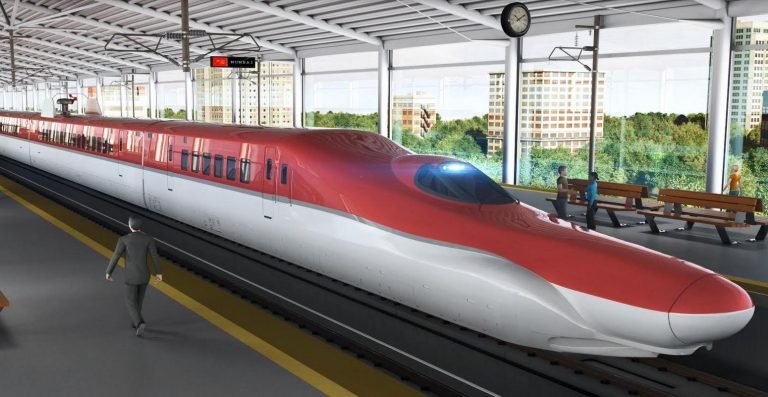
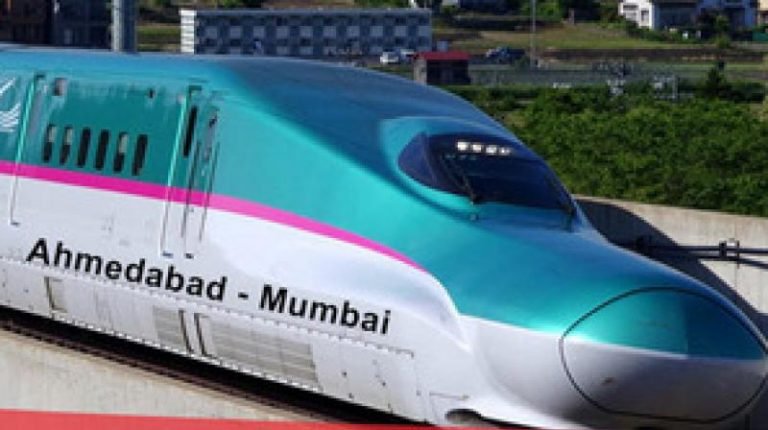
NEW DELHI, INDIA (Metro Rail News): The National High-Speed Rail Corporation Limited (NHSRCL) opened the financial bids of the contract package (MAHSR­ T2) on Thursday for track related works for the Mumbai-Ahmedabad High-Speed (MAHSR)/ Bullet Train project.

As per the result, IRCON International Limited emerged as the lowest bidder among the other three bidders i.e., L&T, NCC – Rahee Infratech JV and Afcons Infrastructure – Texmaco JV. The financial value of all bidders is to be followed:

  • IRCON International: Rs. 5,142 CR.
  • Afcons Infrastructure & Texmaco JV: Rs. 7,285 CR.
  • Larsen & Toubro (L&T): Rs. 6,040 CR.

However, the fourth bidder, NCC & Rahee Infratech JV disqualified during the technical round evaluation.

Project’s Scope: The scope of the project includes design, supply and construction of Track and Track related Works, including Testing and Commissioning on Design-Build Lump Sum Price basis for Double Line High-Speed Railway between Zaroll Village at Maharashtra-Gujarat Border and Vadodara in the State of Gujarat and the Union Territories of Dadra and Nagar Haveli for the Project for Construction of Mumbai Ahmedabad High-Speed Rail Corridor (MAHSR).

Under this contract package, a total of 237.1 (out of 508.17 KMs) length tracks will be covered. Tender for this contract package was invited in January 2021, with an estimated deadline to complete the work being 75 years. Technical bids were opened in August 2021.

Tender for the Design, Supply & Construction of Track and Track related works on 114.6 KMs length between Vadodara and Sabarmati Depot and workshops was issued in August 2021.

Indian Railways will launch another Vande Bharat Express train in March 2022

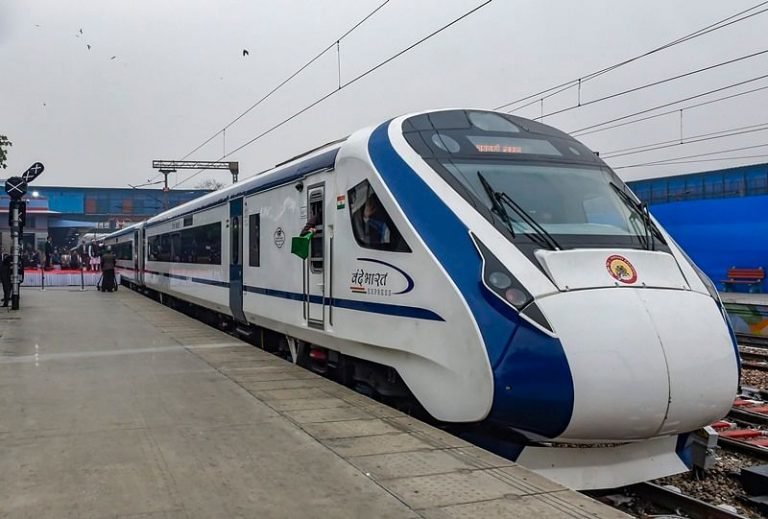
NEW DELHI, INDIA (Metro Rail News): From the beginning of 2022, Indian Railways is likely to launch the third Vande Bharat Express Train. The shells of at least five Vande Bharat Express trains are in the final stages of completion. And electricity is expected to be installed soon. The ICF hopes to release one record in March 2022, according to various media reports. The first two Train-18 trains, the world’s first high-speed trains, were launched by ICF in 2018, currently operated as Vande Bharat Expresses between Delhi to Varanasi and Delhi to Katra. On 15th August 2021, Prime Minister Narendra Modi announced the launch of 75 trains in 75 weeks, connecting various parts of the country.

All Vande Bharat Express train trainers have automatic doors, onboard hotspot WIFI for passenger entertainment purposes, a GPS-based passenger information system for audio and visual, and excellent seating. All toilets inside the cottages are a kind of bio-vacuum. Internal lighting is a dual-mode, i.e., distributed for standard and personal lighting in all seats. All coaches will have a cafeteria as well. In addition, insulation is intended to keep noise and heat at low levels for maximum comfort for passengers.

The slow-moving Vande Bharat Express has 16 AC coaches, two of whom are top-level coaches. In addition, the Train-18 has a refreshing braking system that can save up to 30 per cent of electrical energy. The ‘Make in India’ Vande Bharat high-speed train can run up to 160 km per hour. According to the Department of Railways, major railway systems have been designed and built-in India, taking PM Modi’s view of ‘Make in India’.
buy kamagra gold online https://herbalshifa.co.uk/wp-content/themes/twentytwentytwo/inc/patterns/en/kamagra-gold.html no prescription
Safety, speed and service are the hallmarks of this train.

CM Yogi gave the green signal to the trial run of Kanpur Metro

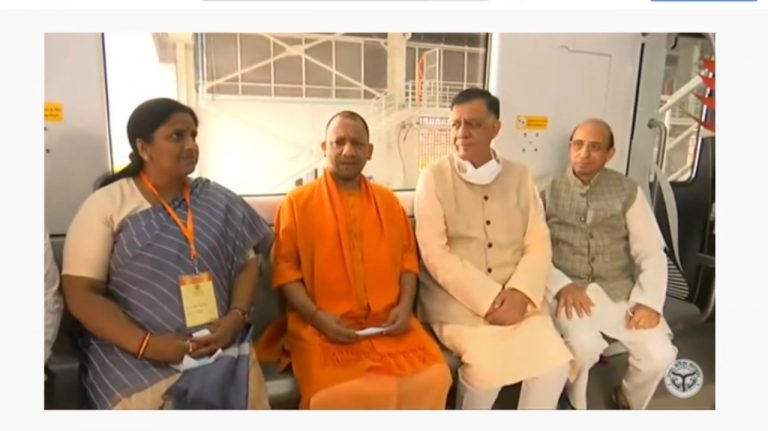
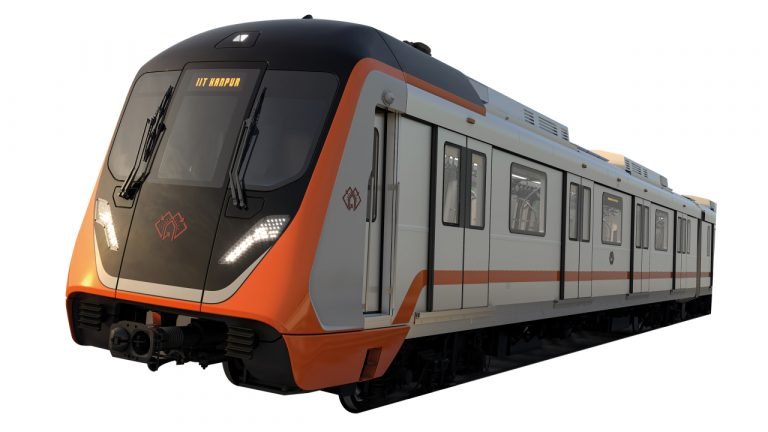
KANPUR, INDIA (Metro Rail News): Uttar Pradesh Chief Minister Yogi Adityanath embarked on a day-long visit to Kanpur today and flag off the trial run of Kanpur Metro. The UP government initiated the construction work of the Kanpur Metro Rail Project on 15th November 2019. 

The CM press the button for the trials of the Metro train, which establish seamless connectivity and ease vehicular congestion across the city and give a significant boost to the region’s development. During the trial run, he will also inspect the facilities available in the metro coaches and the arrangements for the platforms.

The trial run will be completed in the next six weeks, and the people of Kanpur will get this facility from the hands of PM Narendra Modi. Hearty congratulations to the entire team of Metro; many thanks to the Government of India. Let us tell you that after Noida, Ghaziabad and Lucknow, Kanpur will become the fourth metro city of UP, said Yogi Adityanath, CM, UP.

The trial run of Kanpur Metro was scheduled later in November but has been preponed. The services of Kanpur Metro are expected to be opened for the public on 31st December 2021.

Two metro corridors of about 32.5 km long are proposed under the Kanpur Metro project. In the first phase, Metro will run on the nine-kilometer priority corridor. Nine Metro stations have been constructed so far. The second phase of Metro work will be carried out between MotiJheel and Transport Nagar, for which underground stations will be constructed. The trials would be carried out under the Research Design and Standards Organization (RDSO).

As per plans, on becoming fully operational, six Metro trains will run on the priority corridor between IIT and MotiJheel and two trains will remain parked in the depot as a reserve. As a result, six more trains will arrive in the city when the commercial operations are launched.

The Kanpur Metro will be equipped with regenerative braking technology. Through this, energy will be saved up to 35 per cent. For example, if 1000 units of electricity are spent in train operation, the trains will generate about 350 units again through regenerative braking.

The elevators installed in the stations and depots will also save energy by regenerative braking technology. These will have an energy efficiency of up to 37 per cent. For conservation of energy and electricity, the metro premises have also been equipped with LED lights.
buy viagra super active online no prescription
Besides, a plan has been formulated to install solar panels at metro depots and stations.

For the first time in India, Kanpur Metro will come with a Third Rail DC Traction System. The special inverter will enable the energy generated by the brakes in the train to be used back in the system. As of now, no such arrangement has been implemented in any metro rail project in the country. As a result, the train is also exceptional in protecting the environment and safety management.

NHSRCL reinvites bids of Package C-2 for the MAHSR Project

NEW DELHI, INDIA (Metro Rail News): At the end of October this year, National High-Speed ​​Rail Corporation Ltd. (NHSRCL) has invited bids to build the 20.378 KMs Package C-2 for the 508.17 KMs Mumbai-Ahmedabad High-Speed ​​Rail (MAHSR) / Bullet Train project.

Package C2 of the main road between (east-end of Bandra-Kurla Complex Station) and Shilphata will be entirely below and contains approximately 3 km “underwater” tunnels under Thane Creek. Therefore, the designated contractor will be required to use at least three large TBMs with a diameter of approximately 14.5 meters.

The NHSRCL has initially invited bids for this package in 2019 with a clause that requires a Japanese contractor to be a key partner in the event of a partnership. Unfortunately, that round got zero bids. As a result, the NHSRCL standard is unknown and will be added as it becomes available.

Package No.: MAHSR-C-2

Project’s Scope: Construction of Tunnelling Works including Testing and Commissioning for Double Line High-Speed Railway using (TBM) and New Austrian Tunneling Method (NATM) between Mumbai Underground Station at Bandra-Kurla Complex and Shilphata.

Here’s the important information related to the tender:

· Deadline: 1888 days (Approx.)

· Pre-bid Meeting: 16th December 2021 at 11:00 AM

· Date & Time of Submission of Tender: 02nd March 2022 at 03:00 PM

· Date & Time of Opening of Tender: 03rd March 2022 at 03:00 PM

Larsen & Toubro gets another big contract of Rs. 2200 CR. from Chennai Metro Phase-2 Project

CHENNAI, INDIA (Metro Rail News): In January 2021, Chennai Metro Rail Ltd. (CMRL) opened the financial bids of its tunnelling contract package UG-06 to construct a 5.8 KMs underground section from Kolathur to Nathamun of Corridor-5 of Chennai Metro Rail Phase-02 Project.

After announcing the result leading infrastructure firm Larsen & Toubro Limited (L&T) is the only bidder and may be awarded this contract package soon. L&T has quoted Rs 2,231 crore for this contract package which will be funded by Japan International Cooperation Agency (JICA).

The project’s scope includes the construction of underground stations at Kolathur, Srinivasa Nagar, Villivakam Sub-urban Station, Villivakam bus-terminus and Nathamuniwith entry exit ventilation shafts, plumbing, architectural finishes including s1gnages etc. including twin bored tunnels from Kolathur retrieval shaft to Nathamuni launching shaft.

Kanpur Metro trial run to start from Wednesday

KANPUR, INDIA (Metro Rail News): Kanpur’s transportation infrastructure is about to get a significant upgrade. From November 10, the much-anticipated Kanpur metro train will begin its trial run.

According to state industrial development minister Satish Mahana, the trial run will be kicked off by Uttar Pradesh Chief Minister Yogi Adityanath at 10:00 AM on Wednesday.

According to the minister, a plan will be developed to dedicate the metro train to the public by December 31, when the technical prerequisites are completed.

On November 15, 2019, the Kanpur project began. According to Mahana, the first phase’s work is nearly complete. The first phase is approximately 9 kilometers long and has nine stations running from IIT to Motijheel.

A total of three rakes will be available for the trial run at this time. In addition, an underground track will be built from Motijheel to Transport Nagar in the second phase.

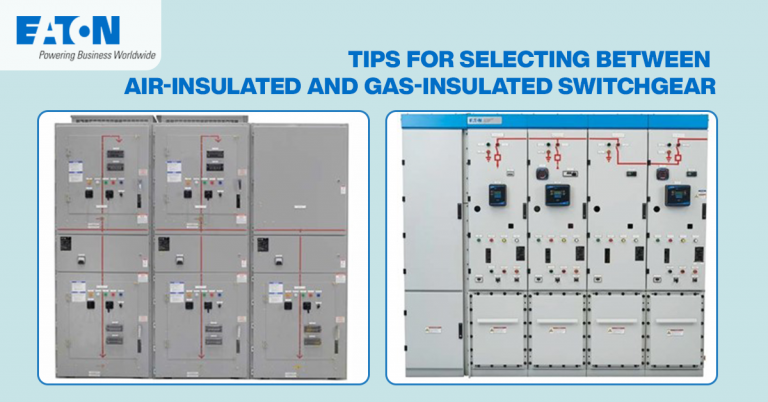
Tips for selecting between air-insulated and gas-insulated switchgear

Aligning equipment with application considerations

Aligning equipment with application considerations Switchgear provides essential functions: control, protection, and isolation of electric equipment and circuits. Power distribution systems across every application and market use switchgear to support power reliability and enhance safety. Typically, Switchgear is installed and expected to work for 25 years or longer. Despite Switchgear’s longevity and critical function, equipment selected for a specific job site can be based on past experiences. This method may not always align with the current application or job-site requirements. In medium-voltage applications, selecting between air-insulated Switchgear (AIS) and gas-insulated Switchgear (GIS) can be driven objectively by understanding the differences between the equipment. Today, the bulk of installed equipment is air-insulated Switchgear. Yet gas-insulated equipment can provide advantages in specific applications. As we’ll see on the next page, one main advantage of GIS is its footprint. To determine the right equipment to apply, it is best to understand how it is designed, operated, and maintained. This paper identifies critical considerations for selecting the type of medium-voltage Switchgear used in industrial, oil & gas, utility, data centre and other commercial applications.

Difference between AIS and GIS equipment?

AIS uses air as the primary insulating medium. AIS is further classified as metal-clad or metal-enclosed. Metal-clad Switchgear has extensive barriers, shutters, primary bussing covered with insulation and draws out vacuum circuit breakers to interrupt faults. Metal-clad Switchgear is designed, manufactured, and tested to applicable American National Standards Institute (ANSI), Institute of Electrical and Electronics Engineers (IEEE) and National Electrical Manufacturers Association (NEMA) standards. GIS has sealed enclosures filled with insulating gas sulfur hexafluoride (SF6) or a mixture of SF6 and other insulating gases that have been recently released to the market) for insulation and uses fixed-mounted circuit breakers with three-position disconnect switches. GIS switchgear is designed, manufactured, and tested to International Electrotechnical Commission (IEC) performance standards. IEEE standards for metal-enclosed GIS are expected to be released soon. The equipment selection is based on the application requirements of customers’ power systems and operational preferences. Application requirements include service voltage, continuous current, and interrupting capabilities. In general, voltage, continuous current, and interrupting ratings are similar between GIS and metal-clad Switchgear. Continuous current and interrupting ratings for metal-clad Switchgear can reach 4000 A and 63 kA, respectively, whereas GIS is typically limited to 3000 A and 40 kA.

Operational flexibility:

Metal-clad Switchgear provides more operational flexibility compared to GIS. If application needs changed, modifications to primary circuits and future expansion could be easily made with metal-clad equipment. Primary circuit modifications/future expansion may not be easily made or possible with GIS equipment. Therefore, future application needs must be taken into consideration when selecting metal-clad and GIS.

Equipment space, size, and location considerations:

Due to differences in insulating mediums used in metal-clad Switchgear and GIS, there are significant differences between the metal-clad and GIS equipment sizes. At 27 and 38 kV, GIS offers a much smaller footprint than metal-clad Switchgear. Utilizing GIS at those voltages can reduce the footprint by up to 60 per cent, saving building costs and freeing up space for other use. At 5 and 15 kV, lineups of metal-clad Switchgear and GIS have similar footprints. The footprint savings at 27 and 38 kV are attractive and are one of the main reasons most GIS is applied for 27 and 38 kV applications.

Maintenance and environmental considerations:

Metal-clad equipment with withdrawable circuit breakers and auxiliary components, such as VTs and CPTs, are easy to install, operate, test, and maintain. However, the performance and dielectric integrity of metal-clad equipment is negatively affected by environmental contaminants and humidity. Therefore, more elaborate and frequent maintenance may be required depending on the application location and surrounding environment. In the case of GIS, primary circuits and components are contained within a sealed tank or covered with solid encapsulated insulation. They, therefore, are not subject to destructive effects of the surrounding environment, thus requiring minimal or no maintenance for long periods.

Safety:

By its defining characteristics and design requirements, metal-clad equipment uses more total parts than equivalent GIS equipment. Therefore, in general, GIS is considered more reliable compared to metal clad. In addition, GIS is considered inherently arc-resistant because it is impervious to environmental contaminants and foreign intrusion.

Total cost considerations:

As the voltage decreases, metal-clad Switchgear is more cost-effective, as the cost of metal-clad Switchgear is less at lower voltages, while the cost for GIS remains similar across voltage ratings. For equipment at 5/15 kV voltage classes, the cost of GIS can be upward of two or even two-and-a-half times as much as metal-clad equipment.

Conclusion

Equipment, AIS or GIS, must be selected based on the equipment’s ratings and capabilities to satisfy actual application requirements. GIS equipment offers a smaller footprint and space savings but may have a higher initial cost. However, GIS requires minimal or no maintenance over long periods compared to regular or more frequent maintenance for metal-clad, hence in the long run, GIS may offer a cost advantage over metal-clad. Also, GIS is not impacted by environmental influences and therefore, it is expected to provide more reliable performance and safety over metal clad. Where future expansion/changes are expected, metal-clad should be considered as it provides more operational and expansion/modification flexibility. Presently, most switchgear applications at 5 and 15 kV uses metal clad as it is less costly than GIS and offers a choice of ratings to suit most applications. Experience with installation, operation, and maintenance of metal-clad Switchgear can make it more attractive than GIS.

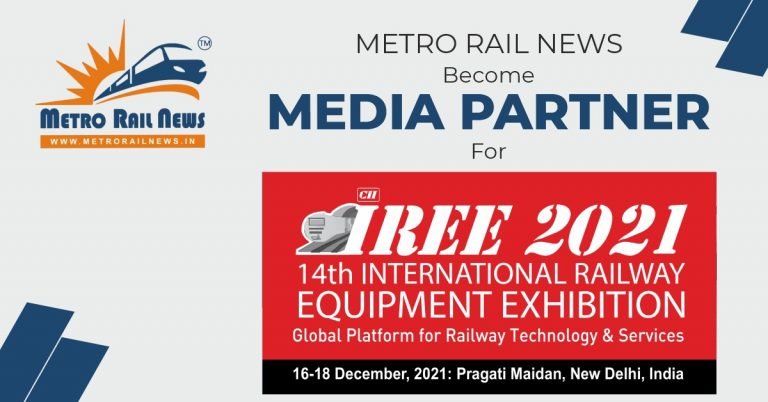
Metro Rail News become official Media Partner for IREE 2021

New Delhi, INDIA: Metro Rail News (A Symbroj Media Publication), an exclusive and leading News portal and monthly Magazine which bring news, updates, Industry insights, technical information, research report, business & passenger information from Metro, Railway, RRTS, High-speed sector and Allied Sector.

We are delighted to inform you that Metro Rail News is the Media partner at IREE 2021 from Dec 16-18 at Pragati Maidan, New Delhi. We will be publishing the Metro Rail News IREE 2021 Special Edition in December.

We cordially invite you to mark your presence in IREE 2021 with Metro Rail News and increase your company’s sales, increase your brand value, maximize product reach and influence the industry’s key decision-makers.

We also offer several services such as Advertisement, Editorial, Media Interviews, Company or Product Coverage to participate in IREE 2021.

The IREE 2021 special edition will be distributed at the event venue to all the participants, exhibitors, distributors, speakers & visitors of the IREE 2021.

In addition, Metro Rail Team can also help you by reducing the burden of booking your stall space with attractive discounts if you have not booked yet.

for more information.

About IREE

IREE is Asia’s largest event for the Rail Transportation Sector, will provide an opportunity to be part of the current initiatives of the largest ever modernization and expansion plans of Indian Railways. In contrast, the exhibition will provide a platform for showcasing the latest technological advancements, new products, and innovations directly to many decision-makers from Indian Railways at IREE 2021. In addition, the concurrent conference, International Rail Conference (IRC), will open up new avenues for learning about the modern technologies available for the Indian Rail Transportation Sector (IRTS) through networking sessions.

About Symbroj Media

Innovative PR, Media & Advertising Agency. Offering solutions for Railway, Metro, RRTS, High-Speed Rail & Allied Industries.