New Delhi: Prime Minister Narendra Modi has flagged-off the Delhi-Faridabad Metro Line that would allow hassle free travel for around two lakh daily commuters between the national capital and the industrial hub in Haryana.
The extension of the Delhi Metro connects Badarpur to Escorts Mujesar in Faridabad.
The total cost of the project from Badarpur to Escorts Mujesar is nearly Rs. 2,500 crore. Out of this, Rs. 1,557 crore was borne by the Haryana Government, the Centre contributed Rs. 537 crore, while the Delhi Metro provided Rs. 400 crore.
All these are elevated and located on either side of the Delhi-Mathura Road (NH-2).
“The nine-station metro corridor which was 95 per cent indigenously built will provide people a safe, affordable, quick, comfortable, reliable, environment-friendly and sustainable transport facility,” a Haryana government spokesperson said.
Haryana Chief Minister ML Khattar, addressing a press conference on Saturday, had thanked the Prime Minister for “gifting” the Metro service which would take the city to “another level of progress” with better connectivity with other NCR towns.
He had also said that the Prime Minister would be announcing the go-ahead for connecting Gurgaon with Faridabad by Metro.
UTTAR PRADESH (Metro Rail News): Sushil Kumar, present Director Operations, Uttar Pradesh Metro Rail Corporation has been appointed as the Acting Managing Director of UPMRC. According to the order issued by the Government of Uttar Pradesh, he has been given additional (temporary) charge till the regular appointment of the Managing Director. Kumar joined UPMRC in 2015 and has contributed significantly in the metro rail operations in Lucknow and now in Kanpur as well. Previously, he had also worked as General Manager (Operations) in Uttar Pradesh Metro Rail Corporation (formerly Lucknow Metro Rail Corporation) and took over as Director (Operations), UPMRC in 2018.
He is a graduate in Electrical Engineering from the University of Roorkee (now IIT Roorkee) and a Masters from IIT Delhi. He is an officer of the Indian Railway Electrical Engineering Service – 1991 batch. Kumar has about 28 years of experience of working in senior positions in Indian Railways, Delhi Metro Rail Corporation and Uttar Pradesh Metro Rail Corporation.
While serving as Director (Power) in Indian Railways, he has also been part of committees of various Ministries working in the areas of Energy Conservation and Energy Planning. Apart from this, he had also held the charge of Additional General Manager in Delhi Metro Rail Corporation.
CHENNAI (Metro Rail News): The first tunnel boring machine (TBM) has arrived in Chennai from China which will be used to build the underground network for the Chennai Metro phase-2 project.
According to the officials, 23 more such TBMs will be needed for the CMRL‘s phase-2 project, and they will be arriving in the coming months. The TBM, has arrived at the Chennai Port from where it will be taken to Madhavaram for assembling. This process will take around three months whereas the tunnelling is expected to start in October.
The phase II project, is a 118.9 km stretch built at a cost of Rs 61,843 crores.
It has three corridors that are Madhavaram to SIPCOT via Kellys (corridor 3), Madhavaram to Shollinganallur (corridor 5) via Medavakkam and Light House to Poonamallee via T. Nagar (corridor 4).
This TBM has been brought to Chennai after it received the Factory Acceptance Test approval from CMRL recently.
GHAZIABAD (Metro Rail News):NCRTC has entered into an agreement on July 1, 2022, with DB India for the comprehensive operation and maintenance of the 82 km long Delhi-Ghaziabad-Meerut RRTS corridor for a period of 12 years.
The rail-based transit systems in India are run by public entities, at times by outsourcing certain activities to private contractors. There has been limited participation by the private sector in this sector and till now the scope has generally been limited to the provision of facility management and ancillary services.
Ministry of Housing & Urban Affairs issued the Metro Rail Policy in 2017 which, inter alia, advocates the need for private sector participation in regional rail and metro rail projects. By adopting the long-term private participation model entailing comprehensive outsourcing of O&M activities, NCRTC has initiated steps to fulfil this objective of the Metro Rail Policy-2017 and the key initiatives being pursued by MoHUA under the leadership of Hon’ble Minister, Shri Hardeep Singh Puri.
Deutsche Bahn Engineering and Consultancy India Pvt Ltd (DB India) is a subsidiary of Deutsche Bahn AG, National Railway Company of Germany.
Speaking on the occasion, Mr Vinay Kumar Singh, MD, NCRTC said, “RRTS is a capital-intensive project, where long-term sustainability is paramount without compromising the safety and comfort of commuters. I am certain that, using the expertise and experience of our O&M partner combined with advanced technology adopted by NCRTC will bring in the predictability of long-term costs, managerial efficiencies and entrepreneurial spirit of the private sector in providing quality services to the commuters. I truly believe that this pioneering initiative by NCRTC will lead to a paradigm shift in the entire sector and will make the sector cost effective and competitive, thereby realizing the dream of a New India of our Hon’ble Prime Minister.”
This leapfrog initiative will undoubtedly pave the path for the transfer of knowledge, best international practices and managerial services that are available around the globe to the Indian metro and rail O&M industry. The employment of local engineers will enable the enhancement of existing skill sets by adopting international expertise and best practices. Through this model, it is expected that apart from efficient delivery of services, the private sector involvement will lead to operational efficiencies and optimum utilisation of assets/ resources. This model incentivises optimised performance through a system of incentives and penalties. The O&M model developed by NCRTC will be able to provide commuters world class customer experience through private O&M operator as well as help boost domestic capacities in the sector, having a multiplier effect. It will also assist in realizing GOI’s goal of brownfield monetization of infrastructure assets due to predictability and transparency of O&M costs.
NCRTC has also adopted the first-of-its-kind model for integrated procurement cum long-term (15 years) comprehensive maintenance of rolling stock through private participation to capture lifecycle costing. This procurement model was adopted to tap the use of the most suitable technologies and durable components on the one hand and latest state of the art technologies and practices on the other at optimum costs. The comprehensive O&M contract and the aforesaid procurement cum long-term maintenance contract are now being proposed to be adopted by Indian Railways and other metro companies.
The implementation of RRTS is part of the ‘Comprehensive Action Plan’ (CAP) for Air Pollution Control in Delhi & NCR’ and the recommendation of the ‘High Powered Committee on Decongesting Traffic in Delhi’. Once operational, a shift of traffic from private modes to a rapid rail system and multimodal integration and seamless connectivity will reduce the energy use by the transport sector in the National Capital Region and will promote ease of living as well as ease of doing business within the NCR. It will also lead to a significant reduction in pollution in the region. It is envisaged that the savings achieved with efficient operations would be recurring in nature and would have a direct impact on the long-term sustainability of RRTS.
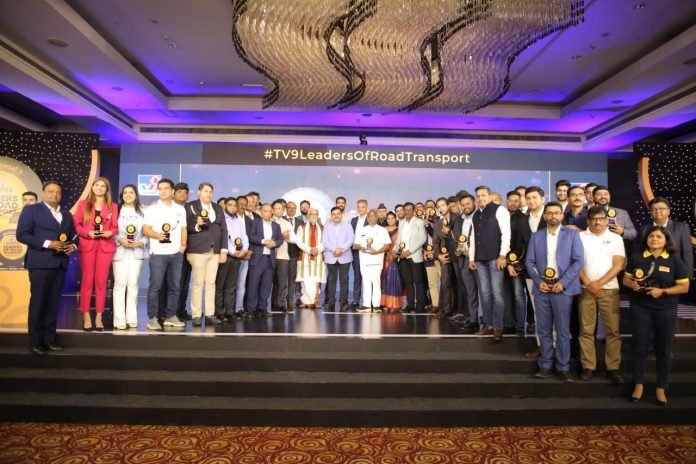
NEW DELHI (Metro Rail News): TV9 Bharatvarsh, in association with Continental Tires and Maruti Suzuki Commercial, organised the Leaders of Road Transport (LORT) Awards 2022 on June 23, celebrating the wheels of the nation i.e. the road transport sector.
Road transport is not just an economical and preferred sector for goods and passenger transportation, it is also responsible for more than 87 per cent of the country’s passenger traffic and 60 per cent of freight traffic. However, despite the crucial role it plays in the movement of goods and people, its contribution to the economy goes largely unsung. TV9 Bharatvarsh has consistently and continuously acknowledged the efforts of the road transport sector and the people who run this industry.
Even in the times of the coronavirus pandemic, TV9 Network vaccinated more than 17,000 truck drivers of 25 transportation hubs in 15 cities through initiatives like Suraksha Bandhan and Highway Heroes.
At TV9 Bharatvarsh event, Minister of State for Food and Public Distribution and Environment, Forest and Climate Change, Ashwini Kumar Choubey encouraged and honoured the people working in the road transport sector.
The Minister also shared this information on Twitter and appreciated the vital role of this sector in the pandemic period. Mr Choubey congratulated the awardees and TV9 Bharatvarsh’s team for the campaign to vaccinate truck and bus drivers in the transport sector during the Pandemic. “Today, we have assembled to honor and recognize the leaders of road transport, organized by TV9 Network. During the COVID times, this sector played a pivotal role to supply vaccines and food distribution to the entire nation. Heartiest congratulations to all the winners,” Choubey said.
TV9 Bharatvarsh recognised and rewarded the efforts of nearly 50 transport companies and their promoters together with Continental Tires and Maruti Suzuki Commercial.
On the Leaders of Road Transport Awards, Raktim Das, Chief Growth Officer, TV9 Network (Digital & Broadcasting) said post the event: “Heartiest congratulations to all the winners. We are extremely happy to be able to recognize and reward these unsung heroes who have made last mile connectivity a possibility, in spite of innumerable challenges faced by the sector.
When the entire country was in the lockdown, these brave-hearts moved the nation forward with their unstinted commitment and dedication towards service to the nation.”
On the participation in the awards, Samir Gupta, Managing Director, India and Head of Central Asia Region, Continental Tires said: “We are happy to partner with TV9 Network to recognise the businesses and business leaders of the Indian road transport industry. India is one of the largest automotive markets globally and is a very important market for Continental. Continental has always worked towards empowering fleets with quality and innovative solutions to increase their profitability.”
Awards were distributed in categories like Women Entrepreneurs, Young Business Leader and All India Company of the Year. These awards were divided into four main segments based on fleet size. Mann Tourist Services won the Leader of Road Transport – Commercial Passenger Vehicle award in the fleet size of more than 75 vehicles, and Agarwal Packers and Movers for the All India Company of the Year in the fleet size of more than 300 vehicles.
Shashank Srivastava, Senior ED, Maruti Suzuki India Limited, said: “In a short span of a few years, Maruti has been a huge success in the commercial transport segment with around 22% market share. We are very happy to partner TV9 in this felicitation ceremony to acknowledge and reward the contributions of these individuals and businesses who have contributed to our success in this category.”
The awards were given out to the winners by the hon’ble minister, Samir Gupta, MD, Continental Tires, Kalina Dalibor, Head of Business Area Replacement Tires APAC, Continental Tires and Shashank Srivastava, Senior ED, Maruti Suzuki Commercial; in presence of the key representatives from TV9 including Amit Tripathi, CRO, TV9 Network, Continental Tires and Maruti Suzuki Commercial, in front of an august gathering comprising the who’s who of the transport industry.
MUMBAI (Metro Rail News): Maharashtra Deputy Chief Minister Devendra Fadnavis after taking the oath on June 30 has ordered the government’s legal team to inform the Bombay High Court that the state will relocate the metro car shed to Aarey Colony. which was earlier shifted to Kanjurmarg.
The Aarey Colony is about 1,287 hectares of land that is located adjacent to the Sanjay Gandhi National Park. It is also known as the green lung of Mumbai.
The Mumbai civic body had granted the metro authorities permission to cut as many as 2,700 trees. After protests from the environmental activists and people, the Mumbai Metro Rail Corporation (MMRC) said the tree felling is only restricted to a small area in Aarey Colony and is necessary to ensure a modern transport system for Mumbaikars.
But the protest grew after which the Maha Vikas Aghadi (MVA) government, which came to power in 2019, decided to shift the project to Kanjurmarg and declared almost 812 acres of land, part of Aarey Colony, as a reserve forest.
LUCKNOW (Metro Rail News): Uttar Pradesh Metro Rail Corporation’s (UPMRC) Managing director, Kumar Keshav retired on Thursday, June 30 after eight years of tenure as MD, UPMRC. The Lucknow Metro and Kanpur Metro Projects were executed under his tenure and leadership.
— Uttar Pradesh Metro Rail Corporation (@OfficialUPMetro) June 30, 2022
Kumar Keshav’s tenure was going to end on 16th February, 2022 but he got a four-month extension of service from the UP government till June 30, 2022.
“Under his leadership, Uttar Pradesh Metro has achieved the distinction in the execution of Metro project. Lucknow and Kanpur Metro projects are the fastest-ever executed metro projects in the country so far. The operations of Lucknow Metro commenced on entire North-South corridor in just four-and-a-half years while Kanpur Metro started functioning in just over two years. Both the projects were inaugurated and flagged off by Prime Minister Narendra Modi. No other metro rail project has ever been able to achieve this feat,” a press release stated.
HYDERABAD (Metro Rail News): L&T Metro Rail (Hyderabad) Limited (L&TMRHL) has initiated a unique concept of ‘Office Bubbles’ – offering the secured, remote, co-working spaces as part of its Transit oriented Development (ToD). This concept is going to be one of its kind ever explored in Indian Metro Rail history. Through Office Bubbles, L&TMRHL would fulfil the surging demand for co-working spaces and locational flexibility of office spaces in Hyderabad.
Transit Oriented Development segment of Hyderabad Metro Rail has been creating vibrant urban spaces integrated with a high-quality transit system with a focus on enhancing the quality of life. ToD offers around 18.5 million sqft of space for work, shopping, leisure, entertainment, healthcare along with parking and circulation area. Focusing on IT companies, Office Bubbles concept offers ‘Hub and Spoke’ model, enabling them to open strategically dispersed smaller offices across the city. LTMRHL would be using the high-quality transit oriented spaces in the un-paid (pre-ticketing) areas on the concourse level of its stations. Close to 0.4 million sqft would be dedicated to Office Bubbles for lease, encompassing 1750 sqft of 2 units across 49 typical metro stations and 5,000-30,000 sqft of spaces at 8 non-typical metro stations. One can expect spaces to be offered in bare shell, warm shell, and plug & play formats depending on the clients’ requirements.
Mr. KVB Reddy, MD & CEO, L&T Metro Rail (Hyderabad) Limited said, “We are proud to offer ‘Office Bubbles’ as first of its kind concept being rolled out in the Indian urban transportation sector. Office Bubbles aspires to help corporates with its competitive advantage of highly connected, secured and reliable Remote Co-working Spaces. This solution would also cater to the new normal, where locational flexibility and data security become a prime concern for the corporates. This concept is not only a natural and logical choice for start-ups, but also large corporations who are progressing towards co-working spaces owing to the agility and flexibility it offers.”
Very realistic 3D rendering of a modern corporate office in white, glass and blue
Benefits of Office Bubbles:
Offer Flexible workspace, working style with a reduction in employee travel time
Predominantly lower operational costs, better infrastructure, and networking opportunities
Protection of clients’ intellectual property
Secured spaces in 57 stations across the city with CCTV and Access Control.
Dedicated data connectivity (LAN) coupled with ready Fibre Optic Network
Reliable power supply, High safety & security including fire safety compliant infrastructure
Availability of round-the-clock security and operations
Easy travel for employees by metro rail; available Parking spaces
Downsized city centre offices and reduced costs
Other conveniences – Bank ATMs, F&B Outlets, etc.
Easy to isolate any affected person(s), without disturbing functioning of other units, in event of any pandemic or related crises
While the concept of co-working spaces has been gaining momentum over the past few years for its efficiencies in space management; during the pandemic times, it has gained further traction when corporates are exploring the concept of multiple smaller offices spread across different locations over a consolidated office located centrally.
Co-working spaces are understood to be flexible to adapt to the new normal in smart and creative ways by responding to the needs of evolving business landscape. Market studies show that co-working spaces in India are becoming growth drivers in office leasing market. Demand for co-working spaces is driven by the changing nature of work environment that is now based upon agility, collaboration, and flexibility. Companies in order to support the wider strategic agenda (based on collaboration, innovation, flexibility as well as talent attraction and retention) are seeking co-working spaces.
Leasing trends across the top seven cities in India including Hyderabad clearly reflect the rising proportion of mainstream corporates and established entities from different sectors increasingly opting for co-working spaces. Further, as the start-up economy expands, there is a growing need for co-working office spaces with elevated standards of amenities to provide better flexibility, low-risk and scalable workspace solutions that provide customised services, which can evolve and adapt to their occupants.
Roland Busch (r.), CEO of Siemens AG and Jensen Huang, founder and CEO of Nvidia at the launch event of the Siemens Xcelerator on June 29, 2022 in Munich.
MUNICH (Metro Rail News): Siemens, a leader in industrial automation and software, infrastructure, building technology and transportation and NVIDIA, a pioneer in accelerated graphics and artificial intelligence (AI), today announced an expansion of their partnership to enable the industrial metaverse and increase use of AI-driven digital twin technology that will help bring industrial automation to a new level.
As a first step in this collaboration, the companies plan to connect Siemens Xcelerator, the open digital business platform, and NVIDIA Omniverse™, a platform for 3D-design and collaboration. This will enable an industrial metaverse with physics-based digital models from Siemens and real-time AI from NVIDIA in which companies make decisions faster and with increased confidence.
The addition of Omniverse to the open Siemens Xcelerator partner ecosystem will accelerate the use of digital twins that can deliver productivity and process improvements across the production and product lifecycles. Companies of all sizes will be able to employ digital twins with real-time performance data; create innovative industrial IoT-solutions; leverage actionable insights from analytics at the edge or in the cloud; and tackle the engineering challenges of tomorrow by making visually rich, immersive simulations more accessible.
“Photorealistic, physics-based digital twins embedded in the industrial metaverse offer enormous potential to transform our economies and industries by providing a virtual world where people can interact and collaborate to solve real-world problems. Through this partnership, we will make the industrial metaverse a reality for companies of all sizes,” said Roland Busch, President and Chief Executive Officer, Siemens AG. “For over a decade, our digital twin technology has been helping customers across all industries to boost their productivity and today offer the industry’s most comprehensive digital twin. When Siemens Xcelerator is connected to Omniverse, we will enable a real-time, immersive metaverse that connects hardware and software, from the edge to the cloud with rich data from Siemens’ software and solutions.”
“Siemens and NVIDIA share a common vision that the industrial metaverse will drive digital transformation. This is just the first step in our joint effort to make this vision real for our customers and all parts of the global manufacturing industry,” said Jensen Huang, founder and CEO, NVIDIA. “The connection to Siemens Xcelerator will open NVIDIA’s Omniverse and AI ecosystem to a whole new world of industrial automation that is built using Siemens’ mechanical, electrical, software, IoT and edge solutions.”
This partnership brings together complementary technologies and ecosystems to realize the industrial metaverse. Siemens is uniquely positioned at the intersections of the real and digital world, information technology and operational technology. The Siemens Xcelerator platform connects mechanical, electrical and software domains across the product and production processes and enables the convergence of IT and OT.
NVIDIA Omniverse is an AI-enabled, physically simulated and industrial-scale virtual-world engine that enables for the first time full-fidelity live digital twins. NVIDIA AI, used by more than 25,000 companies worldwide, is the intelligence engine of Omniverse in the cloud and autonomous systems at the edge. NVIDIA Omniverse and AI are ideal computation engines to represent the comprehensive digital twin from Siemens Xcelerator.
CHENNAI (Metro Rail News): In Chennai Phase 2 project a casting yard is being set up at Muttukadu along East Coast Road to cast ring segments for building metro rail tunnels to operate driverless trains across Chennai’s important areas.
According to the officials, the ring segments which are to be cast will go into tunnels on corridor-4 from Lighthouse to Power House in Kodambakkam and will cover around 10 km. Phase-2 tunnelling is expected to begin before the end of this year whereas the 118.9 km phase-2, including underground sections covering 48km, is expected to be operational by 2025-26 and a part of corridor-4 will open first by June 2025.
As per the officials, tunnels are being constructed by putting together precast concrete rings. The yard will cast approximately 9,000 ring segments which will go into the construction of the 10 km twin tunnels. Two stretches which are Lighthouse to Bharathidasan Road covering 5.15 km and 4.8 km Bharathidasan Road to Power House ramp with 10 stations and carry a four-year deadline.
According to the CMRL officials, tunnel boring machines will start arriving by August whereas the tunnelling is expected to begin in various locations by October end or the start of November. At least 23 tunnel boring machines will be operated across the phase-2 corridors for faster construction.
CMRL will use the ‘earth pressure balance’ method for tunnelling in which the cutters on the cutter head of the TMB rotate and drill through soil supplying force and pressure. It injects foam to soften the earth for drilling and then the machine holds up a few feet of earth in front of its face by applying pressure before moving forward.
MUMBAI (Metro Rail News): The Mumbai Metro Line (MML) which is a stretch from Colaba to SEEPZ has been completed on June 28 after the tunnel boring machine (TBM), Tansa – 2 completed its final downline, which was 832.5 metres long in 263 days, the Mumbai Metro Railway Corporation (MMRC) officials informed.
Now using a total of 555 concrete rings from Mahalaxmi to Mumbai Central metro station, the MML from Colaba to SEEPZ has been completed.
“MMRC achieved its 41st breakthrough as TBM Tansa-2 completed its final downline drive of 832.5m in 263 days using 555 concrete rings frm Mahalaxmi to Mumbai Central Metro Station. buy viagra super fluox force online no prescription
With this, entire downline of #MML-3 from Colaba to SEEPZ is now complete,” Mumbai Metro tweeted.
MMRC achieved its 41st breakthrough as TBM Tansa-2 completed its final downline drive of 832.5m in 263 days using 555 concrete rings frm Mahalaxmi to Mumbai Central Metro Station.With this, entire downline of #MML-3 from Colaba to SEEPZ is now complete. pic.twitter.com/P1mjTQZfqe
The Mumbai Metro Line 3 will run across Colaba-Bandra-SEEPZ and after it becomes operational it will reduce traffic congestion and also reduce the travel time between these places. The travel time will be cut from 100 minutes to 50 minutes on the route. The estimated cost of this project is around Rs 30,000 crore.