Home Blog Page 308

Kochi Metro to construct Metro Light in Kozhikode and Thiruvananthapuram

0
Kochi Metro
Representational Image only

THIRUVANANTHAPURAM (Metro Rail News): The cabinet meeting was held on Wednesday, and it was resolved to entrust Kochi Metro Rail Ltd construction for the Light Metro/Metro Light projects and three flyovers that will be built in Thiruvananthapuram and Kozhikode by Kerala Rapid Transit Corporation Ltd. For the Light Metro projects, the Kochi Metro will be tasked with creating a new, comprehensive project report. The DPR needs to be created in accordance with the instructions provided by the Union Government.

The Kerala Land Reforms Act, 1963’s principles and requirements for granting exemptions from the law’s land ceiling restriction were modified by the government. Applications for exemption will be conducted through an entirely online approach.

The Kochi metro project is the first metro in the country which connects rail, road, and water transport facilities. The first phase is being set up at an estimated cost of ₹51.81 billion. In October 2017, Kochi Metro was named the Best Urban Mobility Project in India by the Urban Development Industry, as part of the Urban Mobility India (UMI) international conference hosted by the ministry every year.

Advertisement1
InnoMetro_2026

Indian Railways connecting Northeastern states with rest of country

0
Railways
Representational Image

MANIPUR (Metro Rail News): Indian Railways has been relentlessly constructing train connections between all of India’s states. Railways have one of the greatest rail networks in the world, having expanded rail networks to unreachable rural locations and now offering train services in every state, including connecting North-East India with the rest of the country. Indian Railways does all possible to provide travelers with comfort and convenience.

A recent video tweeted by Kiren Rijiju, Minister of Law and Justice, demonstrates how in the 1990s when asked about the railway projects for Manipur, the then-governing party responded with the assurance that construction had already begun on them. But the present Modi administration has only just resolved, after so many decades by connecting all the Northeastern states with a proper railway link.

Kiren Rijiju stated that now, Railway Projects for Manipur were conceived in 1990. It’s only Narendra Modi Ji, who has fulfilled it. Now, all North East States are connected and more projects are in the pipeline to link NE with the rest of India. And reservation provisions are made easy for the passengers.

Additionally, by 2024, a train network will connect the state capitals of the northeastern states with Delhi, Railway officials stated. Over 60% of the construction connecting Northeastern states to the national capital is complete and the remaining 40% is anticipated to be finished by 2024, stated Raosaheb Patil Danve, Minister of State for Railways.

Advertisement1
InnoMetro_2026

World premiere: 14 Coradia iLint to start passenger service on the first 100% hydrogen-operated route

0
alstom high speed train
Representational Image

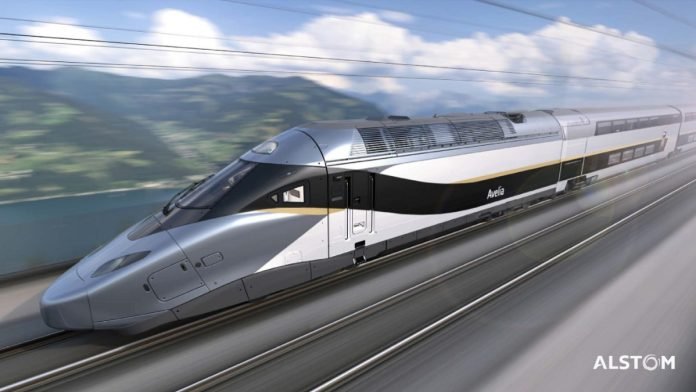
GERMANY, BREMERVORDE (Metro Rail News): Alstom, global leader in smart and sustainable mobility, is proud to announce that the world’s first hydrogen train, the Coradia iLint, reached another historical milestone today in Bremervörde, Lower Saxony, Germany. It is now used on the world premiere 100% hydrogen train route, in passenger operation. This regional train only emits steam and condensed water while operating with a low level of noise. The 14 vehicles with fuel cell propulsion belong to Landesnahverkehrsgesellschaft Niedersachsen (LNVG). LNVG had already started looking for alternatives to diesel trains in 2012 and thus provided momentum for the development of the trains in Germany. Other project partners for this world debut are the Elbe-Weser railways and transport company (evb) and the gas and engineering company Linde.

“Emission free mobility is one of the most important goals for ensuring a sustainable future and Alstom has a clear ambition to become the world leader in alternative propulsion systems for rail. The world’s first hydrogen train, the Coradia iLint, demonstrates our clear commitment to green mobility combined with state-of-the-art technology. We are very proud to bring this technology into series operation as part of a world premiere, together with our great partners,” says Henri Poupart-Lafarge, CEO and Chairman of the Board of Alstom.

On the route between Cuxhaven, Bremerhaven, Bremervörde and Buxtehude, 14 hydrogen-powered Alstom regional trains will be operated by evb on behalf of LNVG, gradually replacing 15 diesel trains. They will be fuelled daily and around the clock at the Linde hydrogen filling station. Thanks to a range of 1,000 kilometres, the Alstom multiple units of the Coradia iLint model, which are emission-free in operation, can run all day long on just one tank of hydrogen on the evb network. In September 2018, there had been a successful trial run of almost two years with two pre-series trains.

Despite numerous electrification projects in several countries, a significant part of Europe’s rail network will remain non-electrified in the long term. In many countries, the number of diesel trains in circulation is still high, with more than 4,000 cars in Germany, for instance.

Alstom currently has four contracts for hydrogen fuel cell powered regional trains. Two are in Germany, the first for 14 Coradia iLint trains in the region of Lower Saxony, and the second for 27 Coradia iLint trains in the Frankfurt metropolitan area. The third contract comes from Italy where Alstom is building 6 Coradia Stream hydrogen trains in the region of Lombardy – with the option for 8 more, while the fourth is in France for 12 Coradia Polyvalent hydrogen trains shared across four different French regions. Furthermore, the Coradia iLint has been successfully tested in Austria, the Netherlands, Poland, and Sweden to name a few.

About the Coradia iLint

The Coradia iLint is the world’s first passenger train to run on a hydrogen fuel cell that generates electrical energy for propulsion. This completely emission-free train is quiet and emits only water vapour and condensation. The Coradia iLint features several innovations: clean energy conversion, flexible energy storage in batteries, and intelligent management of motive power and available energy. Specifically developed for use on non-electrified lines, it enables clean, sustainable train operation while maintaining high performance. On evb’s network, the train travels at speeds of 80 to 120, with a maximum speed of 140 kilometres per hour.

The iLint was designed by Alstom teams in Salzgitter (Germany), our centre of excellence for regional trains, and in Tarbes (France), centre of excellence for traction systems. The project benefits from the support of the German government and the development of the Coradia iLint was funded as part of the National Innovation Programme for Hydrogen and Fuel Cell Technology (NIP) by the German government.

The Coradia iLint is the 2022 German Sustainability Design Award recipient. The award recognises technical and social solutions that are particularly effective in driving the transformation to sustainable products, production, consumption, or lifestyle in line with the United Nations’ 2030 Agenda.

About the Fuelling System

The Linde facility in Bremervörde contains sixty-four 500-bar high-pressure storage tanks with a total capacity of 1,800 kilograms, six hydrogen compressors and two fuel pumps. The use of hydrogen as a fuel for trains noticeably reduces the burden on the environment, as one kilogram of hydrogen replaces approximately 4.5 litres of diesel fuel. A later hydrogen production on site by means of electrolysis and regeneratively generated electricity is planned; corresponding expansion areas are available.

The project is funded by the Federal Ministry of Digital Affairs and Transport as part of the National Hydrogen and Fuel Cell Technology Innovation Programme. The federal government is contributing 8.4 million euros to the costs of the vehicles and 4.3 million euros to the costs of the filling station. The funding directive is coordinated by NOW GmbH and implemented by Project Management Jülich (PtJ).

Advertisement1
InnoMetro_2026

BMRCL floats bids for remodelling of Baiyappanahalli Depot for the Purple Line

0
Bangalore Metro
Representational Image

BANGALORE (Metro Rail News): Bangalore Metro Rail Corporation Limited (BMRCL) floated bids for proposals for the construction and remodelling of the operational Baiyappanahalli Depot for the Purple Line on Monday.

The city’s new 57 km Blue Line, which will connect Central Silk Board – KR Puram – Bengaluru International Airport with Phase 2B (Airport Line), would be used to serve this train repair depot in Phase 2A (ORR Line).

The depot, which initially consisted of 16 stabling bay lines (SBL), 3 inspection bay lines (IBL), and 4 repair bay lines, was constructed in Bangalore Metro’s Phase 1 by URC Constructions (RBL). With the potential to build a new floor, its renovation will increase stabling capacity from 16 to 42 lines.

This contract is being financed by the Asian Development Bank (ADB) which approved a USD 500 million (approx. Rs 3680 crore) loan in December 2020.

  • Estimated Cost for the bids is Rs. 266.21 Crore.
  • Deadline / Period of Work is 821 Days.
  • Pre-bid Meeting will be held on 12th September, 2022.
  • Bid Submission Start Date will start 03rd October 2022.
  • Bid Submission End Date will be 07th October, 2022.
  • Technical Bid Opening Date will be 10th October, 2022.

Construction & remodeling of existing Baiyappanahalli Depot for Bangalore Metro Rail Project-Phase 2A are included in the brief scope of the tender.

In order to avoid affecting Purple Line train operations, Baiyappanahalli Depot’s remodelling is being planned in stages. The Blue Line’s CBTC-equipped trains will be the only ones served by Baiyappanahalli Depot after the Purple Line’s Challaghatta Depot and Kadugodi Depot are operational.

A smaller depot known as Doddajala Depot or Shettigere Depot close to the airport will assist operations on the Blue Line as well for which land acquisition for this depot is under progress.

Back in September 2021, the Detailed Design Consultant (DDC) contract worth Rs. 3.94 crores for both depots was given to the joint venture between PADECO Co. Ltd. and Ardanuy India Pvt Ltd.

As part of a 318 coach contract supported by the Japan International Cooperation Agency (JICA), both depots will house 222 new coaches (37 x 6).

Advertisement1
InnoMetro_2026

Egis Rail S.A. bags the contract of Gurgaon Metro line linking HUDA City Centre and Cyber City

0
Gurgaon Metro
Gurgaon Metro/Representational Image

GURGAON (Metro Rail News): Egis Rail S.A. emerges as the only bidder for the Detailed Design Consultant contract GGNCCDD-01 of Gurgaon Metro’s 28.5 km line linking HUDA City Centre and Cyber City on Monday.

This elevated new corridor will connect Gurugram and Old Gurugram with 27 stations to form a ring line. The final Detailed Project Report (DPR) for the project, which is expected to cost Rs. 6821.13 crores, was approved by the cabinet of the Haryana Government in August 2020.

In June 2022, the Haryana Mass Rapid Transport Corporation Ltd. (HMRTC) issued a call for bids for this consulting project, with an estimated cost of Rs. 17.68 crore and a 1440-day (3.94-year) deadline.

The following project has a limited scope of Detail Design Consultant DDC for Civil Architectural and E and M works of Elevated Section 28 KM 500 m with 27 Stations Main Corridor from HUDA City Centre to Cyber City Gurgaon of Gurgaon Metro Project and also inclusive of Depot connection.

This package will go to a second tender if HMRTC is not pleased with the first bid. If so then Egis’s bid will be sent for the technical review, which will take a few months to complete, will be sent. If Egis is eligible then their financial bid will be opened to determine whether it falls within a certain range of the budgeted estimate for a contract to be awarded.

Details about the line’s funding sources/split, depot site, construction recommendation (U-girder or segmental box girder), train operations plan, etc., are still unknown because the formal DPR has not yet been made available to the public.

The Dwarka Expressway in New Gurgaon, which is now under construction and scheduled to open in December 2022, would be directly in the path of the line. It will probably have an interchange with the 106 km Delhi – SNB RRTS line at Udyog Vihar in addition to the Yellow Line of the Delhi Metro and the Rapid Metro of Gurgaon.

Advertisement1
InnoMetro_2026

Pune Metro line 3 piers achieve half-century

0
Pune metro line 3 pier

PUNE (Metro Rail News): The piers of the Pune Metro Line 3 project connecting the IT hub of Hinjewadi with the central hub of Shivajinagar have gained sustained momentum now. Yesterday evening witnessed the ‘half century’ of pier erection of the Hinjewadi-Shivajinagar metro at the Balewadi Phata location. The notable part is developers have managed to achieve this milestone of erecting the 50th pier within the period of just six months after starting the pier work.

IMG 20220620 WA0015

The work of Pune Metro Line 3 on the Hinjewadi to Shivajinagar route has been jointly undertaken by Tata Group and PMRDA on the basis of Public Private Partnership (PPP). Work on Pune Metro Line 3 has now gained momentum. Although pier casting has been started on this metro line at various stages, work is also underway for the casting of the pilling of metro stations.

“The Pune Metro Line 3 piers having a circular shape with a diameter of 2000 mm are very special in nature. These piers are being made to be fully compliant with the design parameters of the metro rail system. Also, they strictly follow all construction safety parameters as mentioned in the design and construction manual of the Bureau of Indian Standards (BIS). These piers are cast in a way to handle the traffic load of Metro Rail and other vehicles; The construction of Metro on the Hinjewadi to Shivajinagar route will provide easy, fast, and cheap options for public transport,” said Alok Kapoor, Chief Executive Officer, Pune IT City Metro Rail Limited.

“The construction of the metro between Hinjewadi and Shivajinagar will provide easy, convenient, and affordable public transport options. It is the policy of the Tata Group not to compromise on quality and safety in all phases of the project, which was undertaken for the convenience of the citizens,” Mr. Kapoor added.

About Pune Metro line 3:

The Pune Metro line III is a ~23 Km elevated Metro rail project connecting the IT hub of Hinjawadi to the Central business district of Shivajinagar. It is a Public Private Partnership (PPP) project awarded by the Pune Metropolitan Region Development Authority (PMRDA) to a consortium consisting of Tata Group’s TRIL Urban Transport Private Limited (TUTPL) and Siemens Project Ventures GmbH. The Project would be developed & operated on Design, build, finance, operate & transfer (DBFOT) basis by a special purpose vehicle (SPV), Pune IT City Metro Rail Limited (PITCMRL) for a Concession Period of 35 years including the construction period.

Advertisement1
InnoMetro_2026

Made in India Girder Launcher erects its First Kilometer of Viaduct for the Mumbai-Ahmedabad high-speed rail

0
Mumbai Ahmedabad bullet-train-viaduct

MUMBAI (Metro Rail News): The first mile of the continuous viaduct for the Mumbai-Ahmedabad High-Speed Rail (MAHSR) project has been finished, marking a significant advancement in its development.

The fact that this erection was completed using Made in India Full Span girder launcher is also notable.

The 1,100MT full-span launching apparatus was designed and produced domestically by M/s Larsen &Toubro at Kanchipuram, Chennai.

To create it, M/s L&T collaborated with 55 Micro-Small Medium Enterprises (MSME). India is now joining the exclusive club of nations that design and produce such equipment as Italy, Norway, Korea, and China.

The Mumbai-Ahmedabad High-Speed Rail Project (MAHSR) will use innovative construction techniques including the Full Span Launching Methodology (FSLM) to build its 508 km long viaduct superstructures.

Erecting the precast girders for a double-track viaduct as a single unit, this method will expedite the launching of girders. FSLM is quicker than the segment-by-segment launching method, which is typically used to build viaducts for metro systems, it has been employed all over the world.

The 508 km long MAHSR project, which has 12 stations, would cover 348.04 km in Gujarat, 155.76 km in Maharashtra, and 4.3 km in the Union Territory of Dadra & Nagar Haveli.

Upon completion, the High-Speed Rail will operate at 320 Kmph, covering the entire distance in approximately 2 hours with limited stops and 3 hours with all stops.

Land acquisition for the MAHSR project has been completed in Gujarat and Dadra and Nagar Haveli at 100% and 98.8%, respectively. Land acquisition is now progressing at 75.25% in Maharashtra.

The bullet train project’s executing agency, the National High-Speed Rail Corporation Limited (NHSRCL), wants to move construction along quickly.

162 km of piling and 79.2 km of pier construction have already been finished. Additionally, the Sabarmati Passenger Terminal Hub is almost finished.

Advertisement1
InnoMetro_2026

Rishikesh–Karnaprayag achieves its first breakthrough in the excavation of Tunnel 12

0
Rishikesh-Karnaprayag Rail Line Project achieved the first breakthrough

UTTARAKHAND (Metro Rail News): Ministry of Railways shared the information about Rishikesh-Karnaprayag Rail Line Project which has achieved the first breakthrough in the excavation of Tunnel 12 – Escape Tunnel of length 1965.50 m on its Twitter handle.

The Rishikesh–Karnaprayag line is an under-construction railway line, which will run from Yog Nagari Rishikesh railway station in Rishikesh to Karnaprayag. It is Indian Railways’ proposed route for the Char Dham Railway to connect the Char Dham pilgrimage of Uttarakhand. 

It will help improve connectivity to the Char Dham shrines of Yamunotri, Gangotri, Badrinath and Kedarnath in the Garhwal region of the Himalayas in Uttarakhand.

The project received funding and other authorisations from the government; it was reportedly India’s longest tunnel-rail project, which would play a vital role in national security and the welfare of Uttarakhand.

One of the Indian Railways‘ most ambitious projects is the connection between Karnaprayag and Rishikesh. Despite geographical and technological difficulties, the project is moving quickly over Uttarakhand’s difficult terrain. The project, which aims to provide last-mile connectivity, will further the socioeconomic and cultural growth of the hill state.

The Rishikesh-Karnaprayag Rail Project, in addition to giving tourists easy access to Kedarnath and Badrinath, is crucial for the country’s defense requirements. The new line project between Rishikesh and Karanprayag was approved in the Union Budget for 2010–11. The project is expected to cost 16,216 crore rupees.

Advertisement1
InnoMetro_2026

Railway Board disapproves feasibility report for bullet train between Delhi and Varanasi

0
high-speed-train/ representational image

NEW DELHI (Metro Rail News): The railway board rejected the project’s feasibility report for bullet train between Delhi and Varanasi. According to sources, the railway board highlighted several curves along the Delhi-Varanasi bullet train route as obstacles to 350 kmph operation.

According to the sources, the decision to reject the feasibility report for the proposed Delhi-Varanasi bullet train was made last week during a meeting called by R N Singh, secretary of the Railway Board, to discuss the project.

The feasibility report of the Delhi-Varanasi bullet train project had proposed that the corridor be built along the National Highway (NH) 2. The feasibility report also mentioned that this will help in the acquisition of land at cheaper rates and reduce the cost of construction.

The NH-2 featured numerous curving parts between Delhi and Varanasi, which was a technical problem. Running the bullet train at 350 kmph would be extremely risky due to several curving parts.

The track of high-speed corridor should be straight to run a bullet train at a speed of 350 kmph.

The Railway Board is cautious, especially in light of the delays and obstacles in the ongoing bullet train project between Mumbai and Ahmedabad, despite NHSRCL’s eagerness to start work on the project.

According to sources, the expected price for the Mumbai-Ahmedabad project will be 1.50 lakh crore. Officials stated that each kilometre of construction costs about 200 crore.

Advertisement1
InnoMetro_2026

Construction of world-class Agra Metro Rail Depot is in full swing

0
Agra metro rail depot

AGRA (Metro Rail News): A world-class metro rail depot is being constructed in the 15th battalion PAC Premises by Uttar Pradesh Metro Rail Corporation. The depot will be used for stabling and maintaining the metro trains inside the depot area after day long operations.
Various structures are being made inside Agra Metro Rail Depot using the PEB Technique (Pre Engineered Building ) Technique which is a modern technique for building various civil structures and uses comparatively lesser time, effort and is more efficient.

Agra metro1
Agra metro 2

The progress of depot construction is going on at a rapid pace and structures like integrated workshop, auto – coach washing plant and stabling yard are being constructed in the depot for various functions.

A shed above these structures is being built and very soon the work of covering these PEB Structures will be complete. Similarly, test track work inside the depot premises is also complete and pit wheel lathe machine has also been installed in the depot which will be used to check any malfunctions in the wheel, its alignment, etc.

It is to be noted that presently, civil construction work is on for the first corridor of Agra Metro Rail Project, which runs from Taj East Gate till Sikandara. The first corridor is 14 kms long comprising 13 stations. The work on the second corridor will also begun very soon.

Advertisement1
InnoMetro_2026