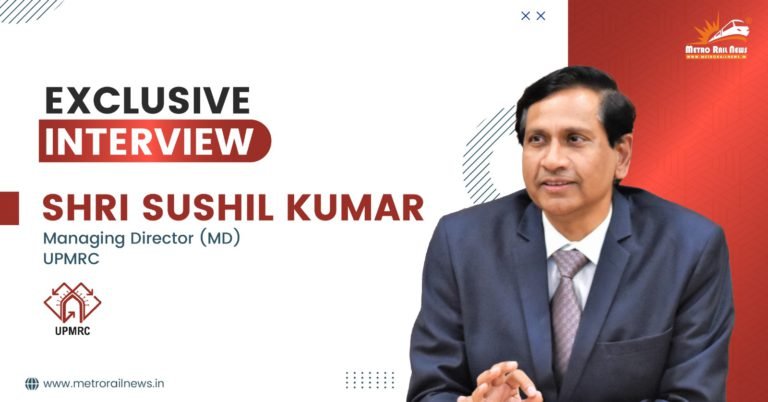
Metro Rail News team conducted an exclusive email interview with Shri Sushil Kumar, Managing Director, Uttar Pradesh Metro Rail Corporation.
Shri Sushil Kumar is a highly experienced and accomplished professional in the field of metro rail operations. He joined the Uttar Pradesh Metro Rail Corporation (UPMRC) in 2015 and has made significant contributions to the growth and development of the Lucknow and Kanpur metro rail networks. He is a graduate in electrical engineering from the University of Roorkee (now IIT Roorkee) and has a master’s degree from IIT Delhi. He is also an officer of the Indian Railway Electrical Engineering Service (1991 batch).
Previously, Mr. Kumar had worked as General Manager (Operations) in the Uttar Pradesh Metro Rail Corporation (formerly Lucknow Metro Rail Corporation) and later took over as Director (Operations) in 2018. He has also held the position of Additional General Manager in the Delhi Metro Rail Corporation.
The interview mainly discusses the ongoing and upcoming metro projects in Uttar Pradesh, including Gorakhpur, Prayagraj, Varanasi, Jhansi, Bareilly, and Meerut.
Here are some excerpts from the interview.
What is the extension plan for Gorakhpur, Prayagraj, Varanasi, Jhansi, Bareilly and Meerut Metro? What is the status of the Agra Metro Project? Are you meeting the deadline of the projects?
Uttar Pradesh is fast emerging as a ‘metro’ state with a maximum number of ongoing metro projects which are operational as well as in the execution stage. Uttar Pradesh Metro Rail Corporation, after executing Lucknow and Kanpur Metro Projects, is now executing Agra Metro Rail Project at a fast pace. Lucknow and Kanpur Metro Projects became operational in a record time before their set deadline, and Agra Metro Project is also being executed along the same lines.
Right now, 5 cities of UP have metro projects which include Lucknow, Kanpur, Noida, G.Noida, and Ghaziabad. There is a plan to get the metro operational in cities like Gorakhpur, Prayagraj, Varanasi, Jhansi, Bareilly, and Meerut. The DPR of Gorakhpur for 15.14 km long corridor is approved by the UP govt and PIB. In the rest of the cities, the feasibility study has been done, and the preparation of DPR is under consideration.
Status of Agra Metro Rail Project:

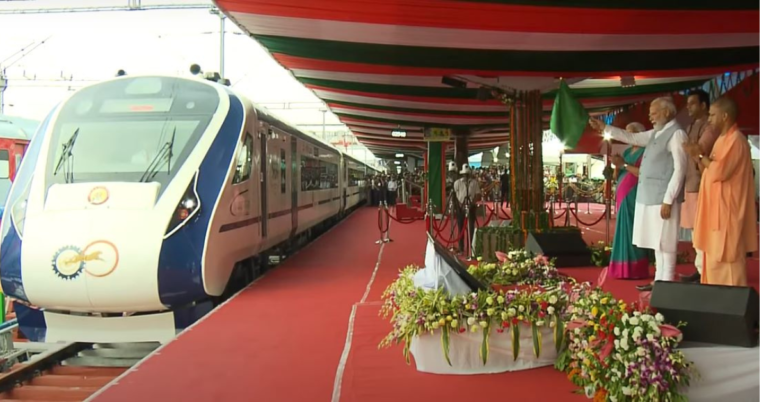
Agra Metro Rail Project, inaugurated by the Hon’ble Prime Minister of India on 7th December 2020 in the presence of Chief Minister of Uttar Pradesh Yogi Adityanath, is being executed at a very fast pace by the dedicated team of UPMRC. On the 6 km long priority corridor running from Taj East Gate to Jama Masjid, the civil works on the 3 km long elevated section are complete, with finishing works in an advanced stage. The underground section is also being executed at a fast pace, and TBM ‘Ganga’ and ‘Yamuna’ are constructing the tunnel from Ramlila Maidan till Taj Mahal Metro Station. Raja Ki Mandi metro station work is being carried out in a phased manner so as to provide minimum inconvenience to people going to Rajaki Mandi Railway Station. The third rail work, systems and utility works are also in place, and the trial of the metro train on the 700-metre-long test track in the world-class metro depot has also begun.
Special features of the project:
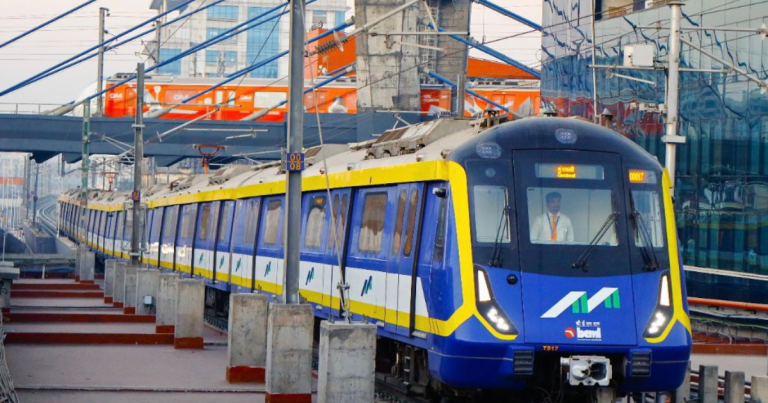
There will be 28 metro trains with 3 cars each for Agra Metro Rail Project. The Rolling Stocks
(Metro Coaches) for the Project are being manufactured in Savli, Gujrat, in line with the initiatives of ‘Make in India’ and ‘Aatmanirbhar Bharat’ that have been promoted by the Government of India.
Trains will have dedicated space for wheelchairs and will have priority sittings for senior citizens, differently able, and women.
Trains will be equipped with LED lights to reduce energy consumption with USB charging ports for charging mobile phones.
Energy-efficient HVAC (Heating, Ventilation and Air-conditioning) units will also be installed for passenger comfort, apart from Digital Route Maps for route and station identification. Separate LCD screens will be installed in order to display advertisements and special/emergency messages.
All the cars will be under CCTV surveillance, and passengers can also talk directly to the train operator in case of any emergency. Each car will be equipped with fire extinguishers for passenger safety.

Shedding some more light on the architecture of metro stations, Managing Director UP Metro Shri Sushil Kumar said, “The city of Agra bears an ancient, illustrious heritage and even today the city continues to hold a powerful impact on the culture of Uttar Pradesh. Keeping in mind the rich, traditional culture of this city which is gradually intermingling with modern times, we have conceptualised and created a world-class metro system which will truly resonate with the soul of this beautiful city.”
Speaking about Gorakhpur Metro Project, which will likely operate as a metro-lite system, the DPR consists of two corridors from Shyam Nagar to MMM Engineering College and BRD Medical College to Nausad Chauraha. The Revised DPR was submitted to the Government of Uttar Pradesh. Subsequently, the DPR approved by State Govt was submitted to the Ministry of Housing and Urban Affairs, Government of India. The PIB granted approval for Gorakhpur Metrolite System on 29.11.2021, and cabinet approval is awaited.
Similarly, for Meerut Metro Rail Project, DPR Prepared for Meerut Metro identified two corridors to be implemented, namely: Corridor-1 from Partapur to Modipuram (18 km), which has now been merged with RRTS being implemented by National Capital Region Transport Corporation (NCRTC).
- Corridor-1 from Partapur to Modipuram (18 km) of Meerut Metro coinciding with the RRTS corridor in Meerut City has been merged with RRTS being implemented by National Capital Region Transport Corporation (NCRTC).
- Corridor -2- Shradhapuri Ph-2 to Jagriti Vihar Extension (15 km)
- CMP of Meerut is being prepared by UMTC, and AAR and DPR of Meerut Metrolite Project are being prepared by Meerut Development Authority through M/s RITES Ltd. as per instructions of GoUP.
For Varanasi Metro Rail Project, in order to explore alternate possibilities of Public Transport, RITES has been engaged by Varanasi Development Authority to explore Rope-way System along with Integrated Multi-Modal Public Transport for Varanasi city.
In the Comprehensive Mobility Report, RITES has suggested the implementation of MRTS corridors in two phases.
Phase-1:
Corridor-1: BHU to BHEL- 16 km
Phase-2:
Corridor-1: Kashi MMH to Sarnath- 7 km
Corridor-2: Kashi MMH to Mughal Sarai- 11 km
Corridor-3: BHU to Ramnagar- 6.5 km
Prayagraj Metro Rail Project:- Draft DPR for Metro/Metro-lite has been prepared and is under consideration by Prayagraj Development Authority.
- Two Corridors with a total length of 42.4 km have been considered in the DPR.
- Corridor-1 is from Bamrauli to City Lake Forest of length 22.30 Km with 16 elevated and 2 underground stations.
- Corridor-2 is from Shantipuram to Cheoki of length 20.11 km with 16 elevated stations.
- GoUP has instructed for the preparation of AAR, DPR and CMP of the Prayagraj Metrolite Project.
- M/s RITES Ltd. has submitted the final AAR of Prayagraj Metrolite to Prayagraj Development Authority, and Final CMP was prepared and submitted by UMTC.
- DPR is yet to be prepared as LOA to be issued by PDA for preparation of DPR.
Similarly, the DPR for Bareilly and Jhansi Metro System is also in the preparation stage and will soon be sent for approval.
U.P. is heading for the highest number of metro projects in the country. What is the plan and strategy to complete the projects in time? Are you also planning HSR, S-HSR, and BRTS projects in the state?
Uttar Pradesh has emerged as a state with the highest number of metro projects, with maximum cities either having operational or under execution metro projects. Uttar Pradesh Metro Rail Corporation, the organisation which is constituted to execute the metro project in Uttar Pradesh, is setting new benchmarks with every project and is striving hard to give the people of Uttar Pradesh a world-class metro rail system.
UPMRC has a record of completing and commissioning metro projects ahead of its schedule. Lucknow and Kanpur Metro Projects were also commissioned way ahead of their schedule.
After creating history by successfully commencing the operations of Lucknow Metro in a very short span of time – precisely speaking, 36 days before its schedule, Uttar Pradesh Metro Rail Corporation broke its own record by commencing the revenue operations of Kanpur Metro in just 2 years and 2 months and achieved an illustrious milestone in the area of infrastructure development.
Team UPMRC is consistent and devoted towards its goal of commissioning the Agra Metro Rail Project before the proposed timeline of August 2024 and give the people of Agra a world-class metro rail system.
As per recent developments, the Government is planning on connecting the entire proposed UPSCR through metros and expressways.
With the highest number of citizens, UP is also one of the most densely populated states. What is the urban plan envisaged for densely inhabited & congested regions across the state?
UPMRC strives to work in close coordination with other departments involved in urban planning and ensures multi-faceted development of the city in all respects and not just public transport. The governing body of UPMRC is the Ministry of Housing and Urban Affairs, Govt. of India, and Govt. of Uttar Pradesh and analysis pertaining to tackling the problem of population influx in cities is done on the basis of geological and demographic segmentation.
In Uttar Pradesh, the Metro system is operational in cities where the pressure of population is increasing day by day, and these cities have many densely inhabited and congested areas. For instance, Lucknow, being the capital of Uttar Pradesh, is facing massive urbanisation and migration due to better livelihood and career opportunities. In the present as well as proposed corridors, all major transport terminals, universities, schools, parks, market areas, and medical colleges are connected through the metro.
Kanpur is a densely populated industrial city in Uttar Pradesh. With the population of over 35 lacs, it is going to benefit the residential areas, schools, hospitals, colleges, universities, and businesses operating in an array of segments. Kanpur metro will decongest the areas witnessing traffic congestion. It will save time and money for the commuters.
Agra being the fourth most populated city of Uttar Pradesh, will soon have a metro system that will not only help in the decongestion of traffic and reduce pollution caused by vehicles but will also help in multi-modal integration and make urban transit hassle-free.
All metro systems have been designed in such a way that they blend seamlessly with the aesthetic of the city and are an unobtrusive means of transport.
What is the work-out plan for intermodal and last-mile connectivity to commuters amidst infrastructure being developed in the state, especially expressways and metros?
Well, UPMRC has taken a holistic approach in this regard by integrating various modes of urban transportation so that first and last-mile connectivity can be significantly improved in the long run. Various tie-ups and collaborations with mobility partners like Rapido, Ola, and Uber are playing a vital role in enhancing smart mobility to the doorstep. Integration with the city bus transport services in the respective cities (Lucknow & Kanpur, where the metro is operational) is also changing the current scenario when it comes to providing last-mile connectivity.
In fact, Lucknow Metro recently received the National Award from the Government of India for the Best Multi-Modal Integration.
For instance, the CCS Airport is just 92 meters from the CCS Airport Metro Station, and passengers coming from the airport can conveniently take their luggage trolleys to the Airport Metro station and leave them there.
The Charbagh Railway Station is directly connected from the metro station gate through a Foot-over bridge and lifts.
- The Lucknow Junction railway station is connected with the Durgapuri Metro station internally in such a way that a passenger lands directly at the platform of Lucknow Junction from the Metro station concourse through the escalator and FOB.
- Similarly, Badshahnagar railway station is also within 120 metres from Badshahnagar Metro Station gate.
- Alambagh Bus Terminal, the largest bus terminal of Lucknow, is just 22 meters from the gate of Alambagh Bus Stand metro station and is connected through a FOB.
The under-construction Kanpur Central Metro Station will be the game changer with direct connectivity to the city’s biggest railway station, the Kanpur Central Railway Station and the bus stand.
The inter-modal integration with existing modes have been planned at all metro stations of UPMRC for efficient passenger movement. Major interchange stations have been planned with other existing bus/rail terminals, which serve as complementary/ feeder for the passengers from their respective origins to destinations and vice-versa. For interchange station planning, many factors, such as nature of the station, its catchment, availability of access/dispersal modes, interchange with other public transport modes, distance from the station, trip length and destinations etc., have been considered. It provides a convenient and economical connection of various modes to make a complete journey from origin to destination.
Besides, parking provisions have also been made at almost all the metro stations of Lucknow & Kanpur metro services. Dedicated parking provision for metro commuters is one of the key factors determining the success of the metro system. Parking provisions, along with a priority to pedestrians through foot over bridges and feeder bus services, would encourage more commuters to use the metro system. Passengers can safely park their vehicles at the nearest station, walk to the station or rely on feeder connectivity.
Right from the planning stage of any metro project, UPMRC aims at intermodal integration, which enhances the usefulness and viability of the project. Intermodal integration refers to the connectivity between important transport hubs and modes of transport so that commuters can seamlessly travel within and between cities.
UPMRC has adopted many initiatives to boost last-mile connectivity, which includes tie-up and signing of MoUs with taxi services like Uber, Ola and Rapido Bike Service. These services provide pick-and-drop services easily to commuters willing to take the metro.
With an infrastructure boost in the state of Uttar Pradesh in the form of expressways and highways, inter-city connectivity has also increased, and people can easily travel from one city to another in just a couple of hours. As soon as they enter the city, they may park their vehicle at the metro station parking and explore the city via metro, which connects almost all-important points. Such integrated movement will help in optimising resources and providing a premium travel experience to tourists as well as locals.
The state being a land of holy rivers, epics, ancient cities, and pilgrimage, what can be the plan for the development of metro and rail circuits connecting these important sites? Has there been any important development in this regard?
Yes, Uttar Pradesh is a state which is culturally rich and diverse. It has several life-source rivers, historical monuments, ancient cities and several pilgrimage sites, which not only hold historic significance but are also great tourist attractions.
The operational Lucknow Metro already seamlessly connects the Gomti River, ancient temples, and century-old markets that hold a strong historical and religious significance.
Similarly, the Famous Taj Mahal in Agra will now be connected with the Metro and even have its own dedicated Metro station, i.e. the Taj East Gate. Visitors from all around the globe can witness the grandeur and beauty of the famous monument much more easily by taking the metro to the nearest station.
The Kanpur Metro stations like Bada Chauraha, Naveen Market and Chunniganj connect the centuries-old Bada Chauraha market, the holy Ganga river, which is just 1 km away from the metro station and major places of business and historic significance.
Moreover, Varanasi, which is one of the oldest living cities in the world, bears an illustrious heritage and is a very important pilgrim site. A metro system in Varanasi will be extremely beneficial for the city as the pilgrims will be able to visit most of the temples and monuments easily through one means of transport.
Similarly, metro routes proposed in Gorakhpur, Ayodhya, Meerut etc., will also have seamless connectivity with all major places of interest, including heritage sites, rivers, temples, medical institutions etc.
The state government is planning to introduce ITMS in seven more cities apart from ten others where the system is already operational. In what ways the system would be unique compared to other cities? What are the plans to integrate metros and urban rail transit with ITMS?
As we all know, recent years have seen ‘Intelligent Traffic Systems’ becoming popular day by day due to their endless possibilities, which range from managing traffic congestion, information & control in traffic management to efficient infrastructure usage and road safety.
The concept of Intelligent Traffic Management Systems (ITMS) in India can be perceived as a multidisciplinary field of work, prompting several organisations worldwide to develop advanced solutions to ease traffic congestion and control. ITMS are becoming indispensable components of traffic management, saving time for commuters while ensuring smooth vehicle flow along with safety and comfort.
Through a comprehensive network of metro, buses, rope-ways, water metro and other eco-friendly vehicles for short distances, the load on roads and dependency on only one kind of mode of transport may be considerably reduced. Information technology may be effectively utilised to cater to the problem of traffic management.
Uttar Pradesh Metro Rail Corporation uses the state-of-the-art ‘Communication Based Train Control System’ (CBTC) in all its metro trains with Automatic Train Protection (ATP) for automatic braking to prevent any collision and Automatic Train Supervision (ATS) system to ensure automatic management of train movement.
Kindly share the details of the metro and rail transit plan for the state envisaged for the next 10-15 years. What is the vision to develop the system in a sustainable way?
The GoI has the vision of having metro rail in 100 cities of India by 2047. UP being the most populous state of India and 4th largest in terms of land area, will also see expansion in its metro rail metro with cities including Gorakhpur, Lucknow, Kanpur, Agra, Meerut, Prayagraj, Bareilly, Jhansi, Ayodhya, Varanasi, etc.
As an organisation, we aim to bring metro rail systems to the maximum number of cities in the state of Uttar Pradesh in the coming future.
All metro projects of UPMRC are sustainable and adopt multiple Green Initiatives like:
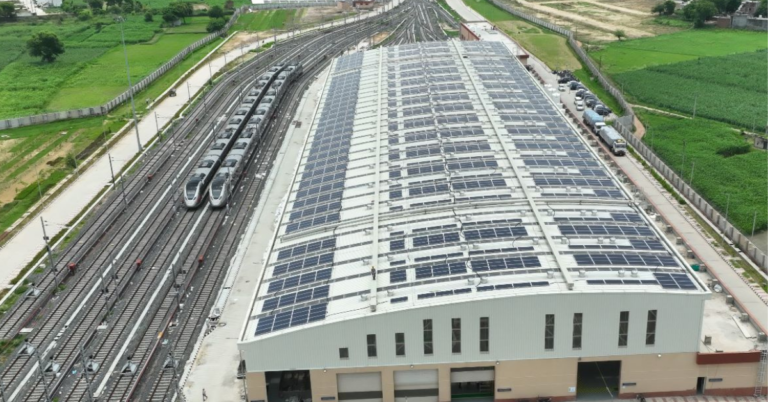
- Harnessing Solar Energy: A 1.28 MW capacity solar plant has been installed at the Administrative Building premises along with a 1.1 MW capacity solar plant at Transport Nagar Metro Depot. It has generated 30 lakhs units of electricity till date and has resulted in a lower carbon footprint.
- Regenerative energy in trains & lifts: Rolling Stock of Lucknow Metro has an efficiency of 40% due to regenerative braking technology. The lifts of Lucknow Metro also regenerate 37% of the energy consumed.
- Rainwater harvesting: In a 23 km long stretch of North-South, more than 300 rainwater harvesting pits have been created with a capacity to harvest 20 lakhs litres of water.
- Lucknow Metro became the First Metro in India to have 100% LED lighting in trains and stations.
- Water efficient fixtures: UPMRC has installed efficient fixtures at Lucknow Metro stations to save lakhs of water.
- Wastewater treatment: To minimise water wastage, a sewage treatment plant has been installed at various metro stations and metro depots. The wastewater is being recycled for horticulture purpose. The metro depot is also functioning as a ‘Zero Discharge Facility’.
- Green median along North-South corridor: A green median has been developed with green plantation along the corridor to minimise the effects of vehicular pollution. It is built and executed in a very sustainable manner, right from the design to material sourcing and, ultimately, the operations. Energy and cost optimisation are always given topmost priority while executing a metro project.
All future projects will be designed and executed on similar sustainable lines.
What are the ongoing efforts toward achieving net zero carbon emissions? Kindly state the action plans being adopted with significant accomplishments till date?
Uttar Pradesh Metro Rail Corporation (UPMRC) has always manifested its commitment towards environmental protection and has also ensured the various provisions of its metro projects for environment and energy conservation. The factor of environmental protection is the key aspect in the development of metro projects. Metro Projects are environment friendly as compared to other modes of public transport as the metro system operates with zero carbon emissions. UPMRC has further reinforced this factor through various innovations under Kanpur and Agra Metro projects. The use of regenerative braking technology in metro trains and lifts to generate and conserve energy through braking, the use of an HVAC system to control the air conditioning system in metro trains and 100% LED lighting in the entire metro system, etc., are excellent examples of UPMRC’s commitment towards environmental protection.
Taking another positive initiative in this direction and moving towards the goal of energy conservation and energy efficiency, UPMRC is going to install a solar plant under the Kanpur Metro project in line with the Lucknow Metro Project. The work of installing a solar plant in the Kanpur Metro Depot of Corridor-1 (IIT to Naubasta) has started, and it is likely to be completed by August this year. About 12 lakh units of electricity can be produced from this 1 MW plant in a year. UPMRC has already installed a total capacity of 1.28 MW rooftop solar plant at its premises in Lucknow Metro. Following are the various measures taken by UPMRC for environment protection:
Embracing Solar Energy
UPMRC has installed a total capacity of 1.28 MW rooftop solar plant at its premises. A 1.1MW capacity solar plant is installed at Transport Nagar Metro Depot. More than 30 lac units of electricity have been generated through these solar plants till date in Lucknow alone. In Lucknow additional 2MW solar plant establishment is in the process; this is in the Resco model and will provide ample green energy to charge auxiliaries for operations as well as cost saving would be there.
In Kanpur, also 1MW solar plant establishment is under process. It is expected to generate electricity in a couple of months. UPMRCL is also planning to install a rooftop solar plant in the ongoing Kanpur and Agra Metro projects. The work of installation of a 1 MW solar plant has started in the Kanpur Metro depot of Corridor-1 under the Kanpur Metro project. There are various benefits of solar energy ranging from being cost-effective in comparison to electricity procured from the grid. It costs almost 30% less than the electricity procured from the grid. Also, harnessing solar energy results in a lower carbon footprint for the organisation.
Regenerative Energy in Trains and Lifts
The rolling stock of the Kanpur and Agra Metro Project has an efficiency of 45 per cent through regenerative braking technology. Similarly, Rolling stocks used in Lucknow Metro Project have an efficiency of around 40% due to Regenerative Braking Technology. It means out of 1000 units being used in running Trains, almost 400 units are generated through Regenerative Braking Technology.
Besides rolling stocks, Regenerative Braking is also used in lifts of all UPMRCL Projects. The lifts in various Uttar Pradesh Metro premises recorded almost 37% energy efficiency. Along with this, the Kanpur Metro trains have a carbon-dioxide sensor-based air-conditioning system, which operates according to the number of passengers present in the train and saves energy.
Relocation and Transplantation of Trees
In Lucknow Metro Project, more than 400 trees were transplanted with the survival rate of more than 95%. A similar model has been followed in Kanpur, where till date, more than 100 big trees have been transplanted under the priority section of the Kanpur metro project. In Agra Metro Project, UPMRCL is working with the forest department to plant 10 trees in lieu of every single tree being cut during the Project execution. UPMRCL has identified the land parcel for compensatory afforestation in Agra in close co-ordination with the forest department to ensure the afforestation activity shall happen in a timely manner. UPMRCL has a strong commitment to safeguard every possible tree coming in the Metro alignment and to keep the number of trees to be cut down as minimum as possible.
Rain Water Harvesting
In the Lucknow Metro Project, comprising of 23km long alignment, more than 300 rainwater harvesting pits have been created to capture the rainwater for harvesting. With this, we have created a capacity to harvest almost 20Lac litre of water during the rainy season.
A similar arrangement has been planned in Kanpur and Agra Metro. It is expected that upon completion of the Projects, they will create an additional 15lac – 20lac litre rainwater harvesting capacity in the city of Kanpur and Agra.
Water-Efficient Water Fixtures
It was always emphasised to have efficient water fixtures in the Metro rail stations of UPMRCL. Be it Lucknow or now Kanpur and Agra, it is followed with great commitment. Water fixtures used at UPMRCL Metro stations are 30-40 % more efficient than conventional water fixtures. By this, it is expected that Metro stations of UPMRCL will save lacs of a litre of water every year.
Wastewater Treatment
UPMRCL is taking care of every drop of water by minimising its wastage. A sewage Treatment Plant has been installed at various Metro stations and Depot premises. UPMRCL is cleaning the wastewater and reusing it for horticulture in Depot and Viaduct section. Metro Train Depot is functioning as a “Zero Discharge Facility”, as no wastewater is discharged from its premises.
LED Lighting
Lucknow Metro became the first Metro in India to have 100% LED lighting in trains and stations. A similar approach has been followed for both Kanpur and Agra Metro Projects. Besides, translucent sheets have been used in the construction of the roofs of Metro stations with the aim of making full use of the natural light of the sun.
Development of Green Median
The green median has been developed with green plantation along the corridor to minimise the effects of vehicular pollution. Saplings have been planted in the middle of the elevated corridor of both Lucknow and Kanpur Metro, and UPMRC is also taking regular care of them. Saplings have been planted at every possible place in the Metro premises.
UPMRC has been lauded by Indian Green Building Council (CII-IGBC) for leading the green building movement by promoting a cleaner and greener environment while executing a huge infrastructure project of public transport in our cities. All 21 stations of the Lucknow Metro Rail Project and 09 stations of the Priority corridor (IIT-Motijheel) of the Kanpur Metro Project achieved the highest green building rating, “Platinum certification”, even before the commencement of commercial operations. Green Building Certification is given to building having provisions for minimising energy consumption, water consumption, proper waste management arrangements, having wastewater treatment facilities and many other environment-friendly features. Now, Agra Metro Rail Project is also incorporating these features to achieve Green Building Certificates of the highest standard.
Besides, UPMRCL achieved its ISO certification of ISO 14001 (Environment Management Systems) Project for its construction activities for the entire 23 km of the Lucknow Metro Project as well as for Kanpur Metro Rail. ISO certifications are awarded to organisations displaying commitment to the standard requirements. Having ISO 14001 certification showcases our commitment to safeguarding the Environment by adopting environment-friendly practices in an organised manner. Similar arrangements to achieve ISO certification for the balance section of Kanpur Metro and for the Agra Metro Rail Project are already in progress; it will be achieved in due course of time.
Any message for our readers?
This is an advent of a new era for Uttar Pradesh as it is the only state of India with a maximum number of operational and under-construction metro projects. I feel extremely happy and proud that the people of Uttar Pradesh have been gifted with a ‘Green Mobility System’ that would surely provide relief from traffic congestion and reduce carbon footprint. Along with saving time and money, this smart mobility system will ensure the safety and security of the passengers.
UPMRC, with a strong conviction to provide a one-stop mobility solution, it is committed to balanced and sustainable development, delivering world-class metro services. UPMRC delivered Lucknow and Kanpur metro projects ahead of schedule with efficient processes and customer-focused service. The construction work on the 6 KMs long priority corridor of Agra Metro, starting from Taj East Gate to Jama Masjid, commenced on 7th December 2020 and is going on in full swing. Gorakhpur Metro Lite Rail Phase 1 (15.14 KMs )- Shyam Nagar to Madan Mohan Malviya College has been approved by the GoI. Gorakhpur is the most important city in Eastern Uttar Pradesh with moderate demographics; the Govt. of India has considered Metro Rail Lite as a suitable mobility solution for commutation. With overall ownership of managing 4 Metro Rail Projects, UPMRC in future will operate 100 KMs of the metro network.
We are proud to turn these visionary projects into reality in Uttar Pradesh.