Home Blog Page 193

Exclusive Interview with Mr. Foong, MD, Stratus, Asia South & Mr. Monish More, CSD, Stratus India

0
Mr. Foong, MD, Stratus, Asia South & Mr. More, CSD, Stratus India

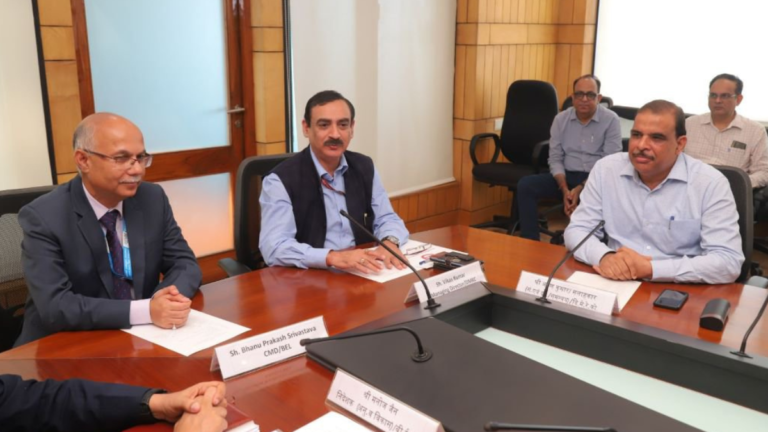
Metro Rail News conducted an exclusive in-person media interview with two industry experts from Stratus, Mr. Lin Hoe Foong, Managing Director, Stratus, Asia South and Mr. Monish More, Country Sales Director, Stratus India. 

Watch on Youtube: Click here

Mr. Foong is a Managing Director at Stratus, Asia South. He has a wealth of experience in the field of Information technology, Operational technology, and Technology-Enabled services.

He has a proven track record of successfully growing businesses in the Asia Pacific region, with a strong background in P&L management, global accounts management, direct sales, channel development, and go-to-market strategy execution. Mr. Foong’s vast knowledge and skills make him a valuable asset in driving business growth and delivering outstanding results.

Mr. Monish More serves as a Country Sales Director at Stratus India. He is a seasoned sales and marketing veteran with over 20 years of experience in OT, technology-enabled services, and the IT industry. He specializes in hardware-software solutions and has a strong track record in sectors like Oil & Gas, chemical, pharma, public sector, metals, and IT & transportation. With expertise in global accounts management, direct sales, and go-to-market strategies, Mr. More has successfully grown businesses in India and neighbouring countries.

 Mr. Lin Hoe Foong and Mr. Monish More, discuss their experiences, Stratus’ role in various sectors, including transportation, and their focus on sustainability, “Always On” computing solutions, edge computing, and the concept of Society 5.0. They also highlight their partnerships with major Indian firms and organizations and their future plans for the Indian market, particularly in the metros and railway sectors.

Here are the excerpts from the interview

Mr. Narendra: Starting from an inventory engineer to managing director, how has your experience been?

Mr. Foong: It has certainly been very exciting, especially how I was put in a position starting off as an inventory engineer responsible for optimizing network availability in a large mobile operator. Over time, I transitioned into helping various enterprises resolve issues and address challenges. Transitioning from my initial role to a new position in an IT company presented me with diverse challenges. I actively contributed to resolving profit and loss issues, as well as addressing customer expectations and enhancing their experience. It’s amazing starting from my country-level role in Malaysia and progressing to the Asia Pacific region, I have had the privilege of gaining exposure to various countries, including India. Now, as part of the Stratus team, I am deeply involved in the operations technology space, where I assist different manufacturing plants and Industrial Automation users in resolving their automation-related challenges. This journey has been exciting and has provided me with valuable experiences.

 Mr. Narendra: What does Stratus do? What is your specialization, and how do you use it for different services and sectors?

 Mr. Foong: First of all, we help our end users to prevent downtime before downtime happens. We provide a set of machine-critical infrastructure and compute infrastructure to help our clients achieve their goals. We use the technology “fault-tolerant” which allows an end user to experience a 99.999 per cent uptime. We play in many different industries, so in India, we started off in the banking sector in a capital Market sector. One of our largest customers here is “National Stock Exchange”, and of course, outside India, we also have many other customers in that sector. We have our forex changes in different countries. Our technologies are being utilized by securities firms across various countries in the Asia Pacific region, as well as by clearing houses and commodity exchanges. We also provide assistance to end users in the oil and gas industry across various sectors. This includes supporting companies in the upstream sector, the midstream sector, and the downstream sector, where the final products of the oil and gas industry are distributed to consumers and other industries.

Coming to the transportation itself, we are really well adopted in a lot of countries in this region in Asia South, where we are being used for visioning critical environments, including signalling systems and the management solutions for different stations that are being built to operate. In addition, we contribute to the rail industry by providing essential technologies such as door screen control systems and video surveillance systems. These systems play a crucial role in ensuring uninterrupted and reliable operations throughout the transportation process. This is where Stratus comes into the picture.

 Mr. Narendra: The Mobility landscape is changing very rapidly. With rapid urbanization, cities need sustainable transport options for their people. How are you helping in this regard? 

 Mr. Foong:  First of all, the mobility landscape is definitely changing rapidly, be it the rail industry, the air industry or the sea industry. These are the different sectors within the mobility industries wherein we are helping our customers. Within Stratus, our focus on sustainability encompasses two main aspects. Firstly, we address the issue of greenhouse emissions, aligning with the broader sustainability agenda. Secondly, we emphasize the rail system’s ability to accommodate the increasing passenger demand. This entails transitioning from single lines to multiple lines, expanding metro networks, and scaling up to serve hundreds or even millions of commuters daily. Scalability forms an integral part of our sustainability considerations in this context. At Stratus, our top priority is sustainability, which we approach through various means. Our primary focus lies in minimizing the environmental footprint of our systems by aiming to decrease carbon emissions by 2030. To uphold our commitment to sustainability, we ensure that our equipment is manufactured in an optimized environment. Furthermore, we tackle concerns related to scalability by offering highly adaptable systems capable of accommodating the growing ridership and demand in the rail sector. This all-encompassing strategy exemplifies our global outlook on the evolving mobility landscape and our unwavering dedication to fostering beneficial transformations. 

Mr. Monish More: Taking into consideration the Indian perspective, the Indian government has made a firm commitment to decreasing emission intensity. They aim to achieve a 45 percent reduction from the levels recorded in 2005. Specifically in the transportation sector, the government has set a target of reducing emissions by 33 percent. In alignment with this goal, the Indian government is implementing measures to promote rail freight over road transport. Their objective is to increase the share of rail freight from the current 35 percent to 45 percent by 2030, thereby reducing emissions. Lin Hoe’s statement regarding Stratus’s efforts to promote sustainability and emission reduction is in accordance with the Indian government’s plans. By ensuring the continuous operation of rail lines, Stratus contributes to the reduction of fuel consumption and maintenance requirements. Consequently, this aids in reducing emissions, aligning with both global and Indian sustainability objectives.

 Mr. Narendra: What is “Always On” Computing Solutions, a term globally associated with Stratus? Is the technology an add-on for Industry 4.0? What are the major benefits of technology for the mobility sector, especially in Metro and Railways? 

Mr. Monish More: In Stratus, we are proud that we have been associated with “Always On”, helping our customers to have business continuity and data integrity for last 40 years and almost one and half a decade in India. For example, in the financial services sector, the utmost importance is placed on ensuring that no transactions are missed. As an illustration, our systems are operational within the National Stock Exchange, where any downtime is simply not permissible due to the critical nature of the operations. This exemplifies the high level of criticality involved. At Stratus, one of our primary objectives is to provide the highest level of uptime for our customers’ mission-critical applications. By doing so, we aim to enhance the customer experience and ensure uninterrupted service without any disruptions. 

Mission-critical applications in various sectors, including financial services, manufacturing, and pharmaceuticals, are subject to significant risks if a failure occurs. For instance, a single moment of failure can lead to the spoilage of an entire batch of pharmaceutical drugs or tons of steel coils in the manufacturing industry, resulting in substantial production losses. Consequently, it has become crucial for these industries to ensure that their mission-critical applications remain constantly operational and “always on,” leaving no room for any downtime.

Transportation is another sector where downtime is unacceptable and not anticipated. Customers and operators alike are driven by the urgency to reach their destinations without any interruptions. The concept of being “Always On” is deeply ingrained in this context, and we take immense pride in our association with this critical aspect of ensuring uninterrupted operations in the transportation industry.

In Industry 4.0, the integration and collection of data are crucial for generating useful information for customers and service providers. The concept of “Always On” in the IoT context ensures continuous data availability and real-time processing. Without a reliable and constant connection, data failures can occur, rendering the collected information irrelevant or unusable for specific transactions or understanding the current state. To harness the full potential of IoT, it is essential to maintain an “Always On” system, enabling proper analytics and the effective utilization of IoT-generated information. Real-time utilization of data from sensors and equipment is vital, as without it, the information holds no value for customers. Through its constant connectivity, “Always On” enhances IoT, allowing for optimal utilization and unlocking its maximum potential.  

 Mr. Narendra: Is an edge Computing platform similar to big data analytics? What is a Fault Tolerant system? In what ways this technology is helping rail operators in modern times? 

Mr. Foong: Edge computing is a transformative approach that involves shifting some of the computing workload away from centralized data centers to locations closer to where activities occur. For instance, in a railway setting, compute systems are moved from the data center to stations or areas near the tracks. This enables the collection, processing, and real-time decision-making based on the data, empowering train operators or station operators to make prompt decisions. It effectively brings computing capabilities to the edge.

Now, let’s consider how edge computing complements big data. Big data focuses on effectively utilizing and analyzing information gathered from various sources like sensors, IoT devices, or on-the-ground data. The question arises: where should this information be processed? In the past, much of it was processed centrally in the cloud or data centers. However, the demand for real-time processing has led to the emergence of edge computing. It allows immediate processing, data collection, and real-time decision-making at the very locations where activities are happening. This integration of edge computing with big data enables quicker processing, data gathering, and immediate decision-making at the point of action or execution. In summary, edge computing and big data work together to enhance data analysis by facilitating immediate processing and decision-making at the source.

The importance of edge computing has grown due to the increasing volume of data generated and the bandwidth required for data transfer. Edge computing optimizes bandwidth usage by processing critical information at the edge, reducing the reliance on network connectivity to central data centers. This approach saves on bandwidth and allows for more efficient data processing. Additionally, fault-tolerant technology plays a crucial role in edge environments by ensuring availability without the need for extensive IT resources on-site. With fault-tolerant technology, IT personnel can be centrally located in a command center or network operator environment, eliminating the need for physical presence in each location. This autonomous and self-recovering technology simplifies operations and enhances the importance of fault-tolerant technology in edge environments. 

 Mr. Narendra: How do you envisage the concept of society 5.0 and what digital infrastructure is needed for a super smart society, which is being accelerated in the coming years? In what ways rail sector is expected to be a part of Society 5.0? 

Mr. Foong: Society 5.0 is a highly human-centered and knowledge-intensive concept where individuals have real-time access to vast amounts of information. In the context of the rail sector, this concept translates to improved convenience and efficiency for commuters. Instead of relying on limited train timetables, we now have access to information about train schedules, optimized routes, and estimated travel times. This integration of data involves collaboration between train operators and platforms like Google to create a seamless experience for multi-modal transportation. For example, one can drive to a train station, take a train to their destination, and then use another mode of transport, such as a bus, to reach their final destination. The goal is to connect various information sources in cyberspace to enhance day-to-day human interactions. The pace of adopting these advancements varies across countries, with Japan being at the forefront. In Japan, it is so seamless that people can access a transportation prepaid wallet on a watch; they can tap the watch into the NFR near fuel contactless reader and can just pass through the gate entry. So, these things are really happening. All these things require the integration of technology.

In India, envisioning a 24×7, seven-day-a-week rail service requires a highly functional and integrated system that delivers the quality and uplifted service experience of Society 5.0. It’s very important to have their infrastructure in place, and that’s how we envisage and research that we can help a lot of networks operate and train operators to really uplift the service availability based on the different systems that they have.

Mr. Narendra: Please State your partnering or association with major Indian firms and organizations for various projects & assignments. What are the major orders on the book and significant accomplishments till date?

Mr. Monish More: As I mentioned, we have been in a decade and a half in India and made substantial progress. We are present in National Stock Exchange. Our servers keep the transaction on 24×7. In the financial services sector, we provide support to customers by ensuring the reliability and functionality of their services. For instance, we strive to prevent ATM transaction failures and ensure that customers have clarity and confidence regarding their money. This is a crucial aspect for the financial industry, and we assist numerous financial services customers in India to meet these requirements.

 We take great pride in our association with a prominent conglomerate that operates in the steel industry. With their 14 steel manufacturing plants located throughout India, we are responsible for running their mission-critical applications across multiple plant installations. In the steel industry, it is essential to track the production and distribution of steel to end-users. Our role involves providing the conglomerate with reports and insights on the status of their products, enabling them to share this information with their customers. This engagement allows us to support our customer in effectively managing their steel operations and providing transparency in their supply chain.

 At the Jamnagar oil refining facility, we have a significant presence and provide comprehensive support. Through our various installations, we assist in ensuring zero production loss for their operations. In the pharmaceutical industry, even a momentary failure or data loss can result in the complete discarding of a drug batch due to stringent compliance requirements. We are proud to serve major pharmaceutical customers throughout India, with installations spanning across various locations. Our focus is on enabling an “always on” environment to safeguard their production and compliance needs.

 In the transportation sector, we are actively collaborating with transportation consultants on major projects. We are introducing the benefits of Stratus’ “Always On” solution, which we have successfully implemented globally and in India, to upcoming metro projects. Our goal is to ensure uninterrupted system operations and maximum uptime for these metros. Additionally, we have already deployed SCADA and other mission-critical applications for the dedicated Freight Corridor, specifically the West and East Corridors.

Mr. Narendra: What are your future plans and prospect for the Indian market, especially for the Metros and Railway sectors?

Mr. Monish More: Transport infrastructure is growing in India rapidly. When there is such a complex network like a metro network with multiple phases & multiple lines. Everyone expects it to be reliable or always on and safe for operations. That’s where Stratus will come into the picture. Stratus aims to provide an always-on and dependable system that ensures uninterrupted operations and enriching experiences for customers. We offer support for mission-critical applications in the transportation sector, such as control platform doors and train signaling, both of which are vital for safety. The recent incident has emphasized the importance of uninterrupted train signaling for passenger safety. By implementing Stratus solutions, we can ensure that train signaling works without disruptions, thereby enhancing safety. We have already engaged with prominent consultants and have been involved in various metro and dedicated freight corridor projects. Our solutions have been successfully implemented in India and abroad. For example, in Korea, the entire subway system, including train signaling and control platform doors, relies on Stratus solutions. Similarly, the complete SCADA system in Singapore operates on the Stratus Always-On reliable solution. We aim to replicate these successes and make significant contributions to the reliable and safe infrastructure development in India.

Mr Narendra: Amidst the numerous ongoing infrastructure projects in India, particularly in the transportation sector, like the Mumbai-Ahmedabad high-speed rail project and metro projects in around 25 cities, how can Stratus contribute to modernizing and ensuring efficient passenger and freight movement, thus providing excellent service to the people?

Mr. Foong: Definitely, investment into the infrastructure is happening. A lot of digital systems are being implemented as well. Stratus is ideally positioned to support modern digital systems, including SCADA systems and advanced signaling control systems. Our primary focus is to ensure that the computing environment for these systems remains “always on” and reliable. Drawing from our experience outside India, we can also offer valuable insights and best practices to our Indian partners, operators, and consultants. For instance, I recently had a session with an operator who faced the challenge of the integration of silo systems, providing end-to-end information rather than having information of certain systems standing by itself. Our expertise can be instrumental in addressing such integration issues and bringing in valuable knowledge from international experiences. These contributions demonstrate the value we can bring to the rapidly evolving Indian rail market.

Mr. Narendra: Kindly share your views on Metro Rail News Magazine.

Mr. Foong: I would say, definitely Indian government is investing a lot into the Railway infrastructure. Sustainability and scalability are key aspects, as we aim to serve more commuters and alleviate traffic congestion across different parts of the country. Stratus shares this commitment to sustainability and believes in providing systems that are always reliable and operational. It is crucial to design and build the railway infrastructure correctly from the beginning to avoid disruptions and the need for system upgrades or improvements later on. Interruptions in rail service can be highly inconvenient for the public and must be minimized. Through this session, I hope readers have gained a better understanding of the significance of critical systems and how they can enhance the value of the rail sector. That will be my message to the readers of Metro Rail News Magazine. 

Mr. Monish More: We are grateful to Metro Rail News for providing us with the opportunity to share our insights and contributions to the transportation segment. We have established a strong presence in India over the past 15-20 years, including a dedicated team and a well-established channel network. Moving forward, we aim to expand further in the transportation sector and continue supporting our customers with the same level of excellence we have demonstrated globally and in India. By providing an always-on and reliable system, we can enhance the safety and enrich the experiences of operators and consumers alike. 

Mr. Narendra: Thank you so much for your time and for sharing valuable insights in the session. 

Advertisement1
InnoMetro_2026

Karnataka Govt. Considers Extending Namma Metro to Four Towns of Bengaluru

0
Bengaluru Metro
Bengaluru Metro / Representational image only

BENGALURU (Metro Rail News): The Karnataka state government is looking into the possibility of extending the Namma Metro to four satellite towns on the outskirts of Bengaluru – Doddaballapura, Devanahalli, Nelamangala, and Hosakota.

The topic was brought up in a meeting involving Chief Minister Siddaramaiah, Deputy Chief Minister DK Shivakumar, and Congress MLAs from Bengaluru Rural. Additionally, a separate meeting took place with MLAs from Kodagu, Mandya,  Hassan, Chikkaballapura, Davanagere, Bengaluru Rural, and Chamarajanagar.

At the meeting of Bengaluru Rural legislators, an MLA stated, ‘The extension of the Metro to the four towns is sought to enhance connectivity between these areas and Bengaluru city.’ Another MLA added, ‘This step is expected to boost the towns’ development and also alleviate congestion in Bengaluru.’

Siddharamaiah and Shivakumar reportedly mentioned that the ongoing Metro project’s phases 2A and 2B will connect Bengaluru’s suburbs, including the Kempegowda International Airport.

Advertisement1
InnoMetro_2026

RLDA Team Visits Nashik for Multi-Modal Hub Project

0
Nashik Road Railway Station
Nashik Road Railway Station / Image from Wikipedia

NASHIK (Metro Rail News): A team from the Rail Land Development Authority (RLDA) in New Delhi came to Nashik Road railway station to make plans for a multi-modal hub. Vice Chairman of RLDA, Shri Ved Parkash Dudeja, along with other officials, visited the station.

According to an official, “The RLDA team from New Delhi visited Nashik Road station to understand how to develop the station. They looked at all four platforms, checked the current facilities, and asked about the available railway land in the area.”

The design of the hub is already being worked on by a company. Before finalizing the plan, officials inspected different parts of the station to understand it better. An official mentioned, “The plan should be ready within the next month.”

The area on the Sinnar side of the station will be used for the multi-modal hub (MMH). This hub will include the Nashik-Pune semi-high-speed railway by MahaRail, the MahaMetro’s Metro Neo, and NMPML services operated by Nashik Municipal Corporation (NMC).

Advertisement1
InnoMetro_2026

Mumbai Metro One: MMRDA Sets Up Committee to Evaluate RInfra’s Stake Sale Proposal

0
Mumbai Metro
Mumbai Metro/ Representational Image

MUMBAI (Metro Rail News): The MMRDA (Mumbai Metropolitan Region Development Authority) has set up an internal study group (ISG) to help review a proposal from Reliance Infrastructure Ltd. The proposal entails the sale of Reliance Infrastructure’s stake in the Mumbai Metro One corridor, that links Versova, Andheri, and Ghatkopar.

Metro One is unique as it’s the only corridor developed through a public-private partnership (PPP). Currently, MMRDA has a 26% stake in Mumbai Metro One Private Limited (MMOPL), the special-purpose vehicle that operates Metro I. The remaining 74% is owned by Rinfra, a company owned by Anil Ambani. The ISG, formed in April, comprises former chief secretary Johny Joseph, additional chief secretary Bhushan Gagrani, and executive director of Mumbai Metro Rail Corporation Ltd (MMRCL) R Ramana.

The ISG’s task is to study Reliance Infrastructure’s representations and prepare a report on MMRDA’s potential acquisition of Metro One. This report will cover various aspects, including the project’s valuation and advice on the acquisition, including its enterprise value.
According to the document obtained under Right to Information (RTI) by Anil Galgali in January 2023, Reliance Infrastructure had offered this proposal in July 2020. Their proposal suggests that MMRDA could develop a depot at DN Nagar in the suburbs and create 12 stations through real estate ventures.

The document states that under the current Development Control (DC) rules, there’s Floor Space Index (FSI) available for development, amounting to around 68 lakh square feet. Currently, the construction area is 5.06 lakh square feet, and the available development area is 85.81 lakh square feet. This totals 91 lakh square feet of saleable area, which could be utilized for headquarters and government offices for all metro lines.

The original agreement between MMOPL and MMRDA was signed on March 7, 2007. The entire project, developed through the PPP model, was initially estimated to cost Rs 2,356 crore. However, MMOPL has disputed this cost and claimed that it escalated to Rs 4,321 crore, justifying their fare hike in the past.

Once the ISG presents its report, it will need the green light from both MMRDA’s executive committee and its authority. The final call will be made by the state cabinet.

Advertisement1
InnoMetro_2026

Delhi Metro Awards Rs. 236.25 Crore Contract to China’s KTK Group for PSD

0
Delhi Metro with PSD
Delhi Metro with Platform Safety Door

DELHI (Metro Rail News): KTK Group Co. Ltd., a China-based company, has recently won a contract worth Rs. 236.25 crore from the Delhi Metro Rail Corporation (DMRC) to set up Platform Screen Doors on three lines of Delhi Metro’s Phase 4 project.

The scope of work involves designing, manufacturing, supplying, installing, testing, and commissioning of both the Half-height platform gate system and the Full height platform screen door system for the Mukundpur to Maujpur, Aerocity to Tughlakabad, and Janakpuri west to R.K. Ashram Marg corridor of Phase-4 of Delhi MRTS.

This project is a significant part of the ongoing construction of Delhi’s Phase 4, which includes a new Silver Line (23.62 km Aerocity to Tughlakabad), as well as extensions of the Magenta Line (28.92 km Janakpuri West to R.K.Ashram) and Pink Line (12.58 km Mukundpur to Maujpur).

The installation of Half-height Platform Gate Systems will be done at 27 elevated stations across all three lines. Meanwhile, 18 underground stations on the Silver and Magenta lines will get Full-height PSDs. The total contract value is approximately INR 74,24,79,000 along with USD 1,96,32,000.

DMRC had called for tenders for this contract (Package DS-08) back in September 2022, setting a deadline of 1095 days (3 years). After technical evaluations in December 2022, four bidders emerged. However, only two firms, KTK Group Co. and Nanjing Kangnin Mechanical & Electrical Co., met the tender conditions. The financial bids of these two firms were revealed in July 2023, with KTK Group being the lowest bidder, narrowly beating Nanjing Kangni.

The purpose of these Platform Screen Doors is to enhance safety by preventing accidents and suicides related to passenger movement. Additionally, they will contribute to reducing maintenance costs in underground stations for DMRC. By improving the station environment, these doors will lead to lower air-conditioning and ventilation expenses.

Advertisement1
InnoMetro_2026

DMRC and IIIT-Delhi Collaborate for Technological Advancements and Enhanced Passenger Experience

0
DMRC and IIIT-Delhi Sign MoU
DMRC and IIIT-Delhi Sign MoU to bring innovation to public transportation./ Image from DMRC

DELHI (Metro Rail News): DMRC (Delhi Metro Rail Corporation) has teamed up with IIIT-Delhi (Indraprastha Institute of Information Technology, Delhi) through its Centre for Sustainable Mobility (CSM) to bring technological progress and innovation to public transportation. They recently signed a Memorandum of Understanding (MOU) to collaborate on this endeavour. The signing event was attended by Sh. Vikas Kumar from DMRC, Dr. Amit Kumar Jain from DMRC Ltd, Dr. Pushpendra Singh from IIIT-Delhi, and Dr. Pravesh Biyani from IIIT Delhi.

image 3


This partnership between DMRC and IIIT-Delhi aims to achieve the following:

Open Transit Data (OTD): Open transit data is all about sharing transportation-related information such as schedules and routes. This information is made available to the public in a standardized format. With support from DMRC , IIIT Delhi has begun publishing transit data on the OTD platform of Delhi (https://otd.delhi.gov.in/). This information will include details about stations, fares, and schedules in a format called General Transit Feed Specification (GTFS). This data sharing will improve the overall experience of using public transportation and help create a more seamless and efficient travel experience within the metro system. This data will be accessible through various means such as mobile apps, websites, and digital displays at transit stops and stations.

Dynamic Advertising Screens: As part of this partnership, Delhi Metro has proposed dynamic advertising screens at the gallery of Dwarka Metro station (an interchange of the Blue and Grey Lines). These screens are designed for digital marketing purposes. Marketing agencies can register themselves on an online platform created for this purpose. This platform provides information about available advertising space and rates for different time periods. Marketing companies can select and purchase time slots for advertisements online, complete payments online, and even upload their advertising content (videos or static images) through this platform.

Notably, this project introduces a unique approach in the Indian metro system. The collaboration between DMRC and IIIT-Delhi, signifies a notable step towards technological innovation within the transit industry. Together, they are focused on enhancing passenger experience, driving technological advancements, and shaping the future of public transportation.

Advertisement1
InnoMetro_2026

Commencing Trials: RapidX Trains Begin Speed Test Runs, Covering 17km in Only 12 Minutes

0
Rapidx train
Rapidx train/ Representational image only

GHAZIABAD (Metro Rail News): The RapidX trains are being tested at high speeds of 160 km/h on a 17 km stretch between Sahibabad and Duhai depot. This short distance is covered in just 12 minutes.

To check for any technical issues, the empty trains are running from 6 am to 11 pm, with a 15-minute gap in between. Soon, passengers will be able to use this route.

The RAPIDX semi-high-speed regional railway service is a collaboration between the central government and the state governments of Delhi, Rajasthan, Haryana, and Uttar Pradesh. The aim is to create a modern railway system that connects places better and makes travel quicker.

Known as the RRTS project, the Ghaziabad-Meerut Rapid Rail is India’s first high-speed rail corridor. By 2025, this project is planned to be fully operational. When the 82 km Delhi-Ghaziabad-Meerut corridor is ready, people can travel the whole distance in about an hour, with trains every 5-10 minutes.

The initial part of the project is 17 km long and has five stations: Sahibabad, Ghaziabad, Guldhar, Duhai, and Duhai Depot. The trains can go as fast as 180 km/h. The Duhai depot is the main hub for managing the RapidX services. After this, more routes like Delhi-Gurgaon-SNB-Alwar and Delhi-Panipat will be started.

rrts train by deepu dharamarajan


RAPIDX is going to be expanded with more routes: Delhi-Gurgaon-SNB-Alwar and Delhi-Panipat. The first plan will happen in three parts. Firstly, a 107 km track from Delhi’s Sarai Kale Khan to SNB Urban Complex. Secondly, from SNB to Sotanala, which is 33.3 km. Thirdly, the SNB-Alwar route, which is 58 km. RapidX trains will make it easier for people from Haryana towns like Murthal, Gannaur, Samalkha, and Panipat to travel to Delhi using the Delhi-Panipat line.

RapidX trains can bring down travel time between cities, making commuting faster and more convenient. The focus on tests and checks before starting regular services shows how much they care about safety and reliability.

Advertisement1
InnoMetro_2026

L&T Declared As the Lowest Bidder for Hyderabad Airport Metro Project

0
Hyderabad Metro/Representational image only

HYDERABAD (Metro Rail News): L&T (Larsen and Toubro) has been declared the lowest bidder for the civil construction and system procurement contract of the 31-km Hyderabad Airport Metro project. The project aims to connect Mindspace Junction to Rajiv Gandhi International Airport (RGIA) at Shamshabad, reducing travel time significantly.

In May 2023, the Hyderabad Airport Metro Limited (HAML) had invited bids for the engineering, procurement, and construction (EPC) contract. After much interest from national and global firms, only L&T and NCC submitted their bids. L&T’s bid stood out, securing them the contract.

The project, funded by the state government, involves designing and constructing various aspects, including viaducts, underground structures, stations, tracks, electrical and mechanical works, rolling stock, power supply, and more.

The 31-km metro corridor will include an elevated section of 29.3 km and an underground part of 1.7 km. With nine stations planned, including an underground one by the airport terminal, provisions for four additional stations are also considered.

The financial bids were assessed jointly by SYSTRA – RITES – DB Engineering JV, the General Consultant, and HAML’s officials. The recommendation for the contract award will be made to the Telangana state government for L&T’s bid. A groundbreaking ceremony is slated for September 11.

Advertisement1
InnoMetro_2026

GMR Airport Instructed to Provide 48 Acres of Land for Metro Rail Depot Construction

0
Hyderabad Airport Metro/ Representational Image
Representational Image

HYDERABAD (Metro Rail News): The Hyderabad Airport Metro Rail project is moving ahead with significant developments. GMR Airport has been instructed to provide 48 acres of land for the depot’s construction. This depot is crucial for the proposed 31-km ₹6,250 crore Hyderabad Airport metro rail project.

To ensure the smooth alignment of the fast metro route from Mindspace Junction to Shamshabad, various government departments and organizations that own land obstructing the path have also been asked to hand over the identified land. This directive was issued by K.T. Rama Rao, the Minister for IT, Municipal Administration, and Urban Development.

Furthermore, there are plans to expedite the acquisition of land for the remaining 5.5 km stretch of the Old City Metro, connecting MGBS, Imlibun, and Falaknuma. This extension is estimated to cost ₹1,800 crore, and the construction work is eagerly anticipated.
During a meeting at the Metro Rail Bhavan, key officials discussed strategies for executing these projects. HAML Managing Director N.V.S. Reddy presented the proposed plan of action for construction on these routes and the challenges they face.

Rama Rao emphasized the importance of initiating surveys for the newly approved metro corridors. He urged the MD to prepare Preliminary Project Reports and Detailed Project Reports for these corridors in the next few months. These reports will be submitted to the Central government for funding consideration. Various funding options will also being explored.

To enhance the existing metro rail network spanning 69 km, the Minister proposed increasing the number of coaches, enhancing feeder services, and improving footpaths. These measures aim to double the current daily metro ridership of five lakh, contributing to reduced traffic congestion in the city.

The progress of the Hyderabad Airport Metro Rail project brings hope for improved connectivity and urban mobility in the region.

Advertisement1
InnoMetro_2026

RailTel Secures Work Order from Pimpri Chinchwad Smart City Limited

0
Representational image only

NEW DELHI (Metro Rail News): RailTel Corporation of India Ltd, a Mini Ratna PSU under the Ministry of Railways, has received a Work Order from Pimpri Chinchwad Smart City Limited (PCSCL) for providing end-to-end services for monetisation of PCSCL City Network Infrastructure on “Revenue Sharing Model” for 10 years. It is the first of its first-of-its-kind order bagged by RailTel to monetise the Telecom infrastructure of a Smart City.  The Pimpri Chinchwad city is in Pune area & is the eighteenth most populous city in India and the fifth-largest in the state of Maharashtra. During monetisation, RailTel shall generate revenue through leasing arrangements. The projected Estimated Annual Revenue is ₹ 70 Crores with total revenue of ₹700 Crores for 10 years.

 RailTel shall pay 32.4 Cr of fixed revenue to PCSCL annually. Additionally, RailTel shall pay a minimum of 21 % as additional revenue to PCSCL over the total additional revenue generated for 10 years.

The project also entails setting up of a Network Operation Centre (NOC), operations and maintenance of the existing digital infrastructure connecting citizens, government, business, communities and future extension of PCSCL network Infrastructure along with operations & maintenance activities for a period of 10 years. Also, the project involves making the PCSCL self-sustainable organisation and to evolve its credit worthiness for raising additional resources from the market Under this Smart city network project, OFC and Telecom duct network infrastructure of PCSCL covering all the critical and major areas like PCMC offices, police stations, critical junctions, footfall area etc, under the PCMC municipal limits shall be monetised by RailTel by leasing the spare ducts and poles.

 RailTel shall also provide PCSCL-required cores of fibre cable for providing connectivity to smart city elements across the PCMC to create a digitally connected ecosystem for its citizens and to render connected, efficient, and responsive city services (PCMC, PCSCL & Police). This order has been acquired through the rigorous and open competitive bidding process based on the highest Cost Method (H1).

Commenting on the development, Sh. Sanjai Kumar, Chairman and Managing Director, RailTel said, “RailTel is one of the largest neutral telecom infrastructure providers in the country. We are thrilled to collaborate with PCSCL in this transformative journey. RailTel is committed to create a digitally connected city that embraces innovation, inclusivity and economic growth. RAILTEL is eager to embark on this transformative venture and looks forward to working closely with PCSCL to achieve its vision of a digitally advanced and prosperous city.”

Advertisement1
InnoMetro_2026