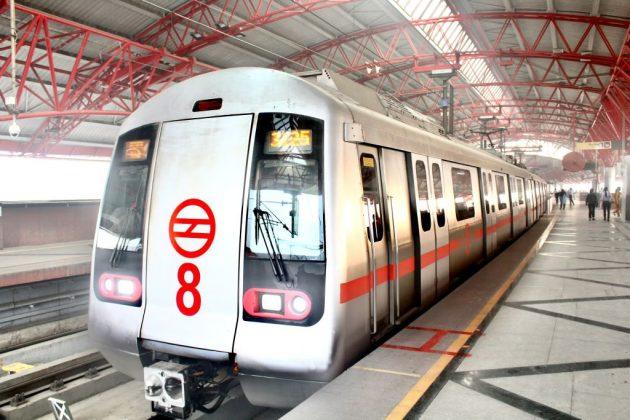
New Delhi: Prime Minister Narendra Modi has flagged-off the Delhi-Faridabad Metro Line that would allow hassle free travel for around two lakh daily commuters between the national capital and the industrial hub in Haryana.
The extension of the Delhi Metro connects Badarpur to Escorts Mujesar in Faridabad.
The total cost of the project from Badarpur to Escorts Mujesar is nearly Rs. 2,500 crore. Out of this, Rs. 1,557 crore was borne by the Haryana Government, the Centre contributed Rs. 537 crore, while the Delhi Metro provided Rs. 400 crore.
All these are elevated and located on either side of the Delhi-Mathura Road (NH-2).
“The nine-station metro corridor which was 95 per cent indigenously built will provide people a safe, affordable, quick, comfortable, reliable, environment-friendly and sustainable transport facility,” a Haryana government spokesperson said.
Haryana Chief Minister ML Khattar, addressing a press conference on Saturday, had thanked the Prime Minister for “gifting” the Metro service which would take the city to “another level of progress” with better connectivity with other NCR towns.
He had also said that the Prime Minister would be announcing the go-ahead for connecting Gurgaon with Faridabad by Metro.
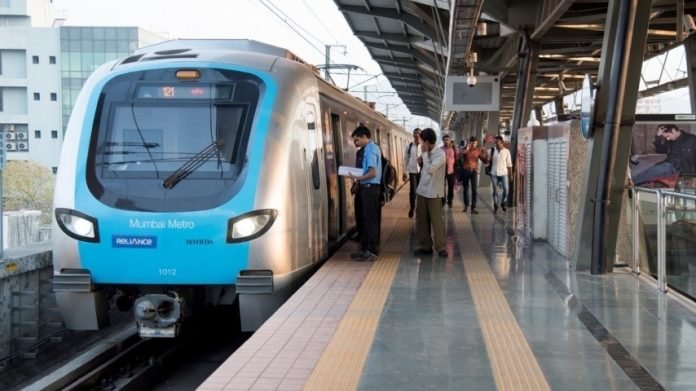
BHOPAL (Metro Rail News): Bhopal, the capital of Madhya Pradesh, is on the brink of welcoming a new metro system. Chief Minister Shivraj Singh Chouhan unveiled the metro’s model coach at the Smart City Park in Shyamla Hills, an event coordinated by Madhya Pradesh Metro Rail Corporation Limited. CM Chouhan initiated the unveiling by pressing a button and subsequently entered the model coach. The metro train comprises three of these coaches, each spanning 22 meters in length and 2.9 meters in width.
During the initial phase of the Bhopal metro, a single train will be composed of three rail coaches. Each coach is designed to comfortably seat approximately 250 passengers. However, the train can accommodate many more passengers who are standing. The trial run for the metro is scheduled for September. The metro train is anticipated to operate along the route from Subash Nagar depot to Habibgang, covering a distance of approximately 4 km.
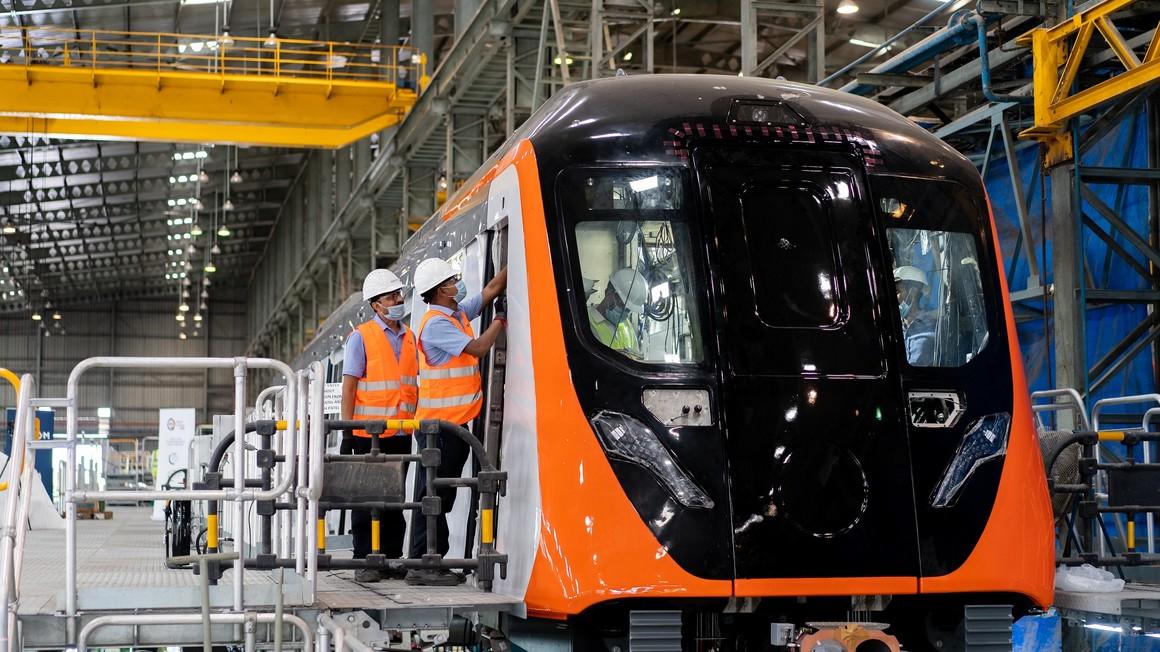
At least two metro rail stations, one of which is the Rani Kamlapati metro railway station, are anticipated to be finished and ready for trial runs in September. This trial run is a significant step toward enhancing urban transportation in Madhya Pradesh. The responsibility for executing the Bhopal and Indore metro projects lies with the Madhya Pradesh Metro Rail Corporation Limited (MPMRCL). The French mobility company has been awarded the contract, worth an estimated Rs 3,200 crore, to provide metro trains and various systems for the Bhopal and Indore metro rail initiatives. The manufacturing is underway at their Savli plant in Gujarat as part of the Make In India initiative.
The work in the contract involves designing, manufacturing, supplying, installing, testing, and commissioning of 52 standard gauge Movia metro passenger trainsets, each configured with three cars. Bhopal will receive 27 of these trainsets, while Indore will have 25. Each train car measures 22 meters in length and 2.9 meters in width. The Bhopal Metro Rail Project obtained approval from the Union government on November 30, 2018. It encompasses a network stretching 27.87 kilometers, divided into two corridors: one linking Karond Circle to AIIMS, and the other connecting Bhadbhada Square to Ratnagiri Intersection. The approved budget for completion in 2018 was Rs 6,941.40 crore.
CM Chouhan announced that the trial run will be conducted next month, with full-fledged operations expected to start in April. Despite delays during the 15-month Congress government, the project is now progressing rapidly. The metro train will eventually be extended to Mandideep and Sehore, passing through Bairagarh.
World’s Largest Combined Rectangular Pipe Jacking Machine Breaks Through
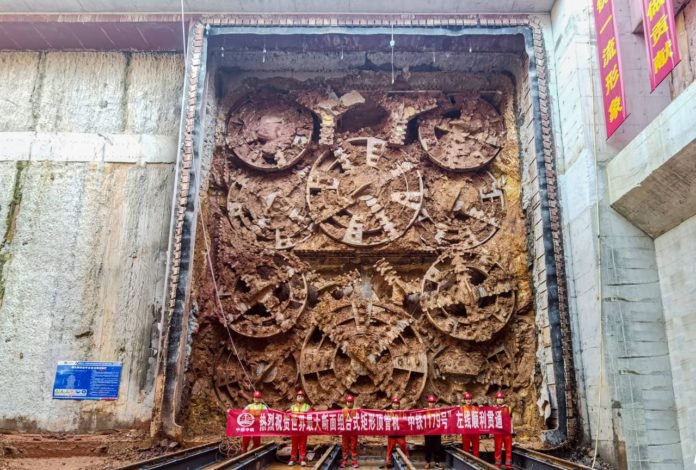
On August 22, 2023, the world’s largest combined rectangular pipe jacking machine CREC 1179, developed and manufactured by China Railway Engineering Equipment Group, Co. Ltd. (CREG), successfully broke through the left line for the Shasan Station of Shenzhen Metro Line 12 project.
Completed Tunnel
Shasan Station is a two-story underground island station and has a total length of 208.4m, among which a 70m section is excavated by CREC 1179. Its cross-section upon completion is 22.6m wide and 13.5m high, accounting for about three-fourths of a standard basketball court. To overcome complex geological conditions such as rich underground water and “upper soft and lower hard” stratum, CREG has customized the super-large cross-section rectangular pipe jacking machine CREC 1179 with a width of 11.29m and height of 13.55m, which is equal to the height of four-story building. CREC 1179 is composed of upper and lower equipment, designed with multiple cutter heads cooperated by multiple screw conveyors and adopts the micro-benching tunnelling technique and the attitude measurement and control system to realize the excavation with shallow overburden, large cross-section and zero gap, which could guarantee the safe, high-quality and efficient construction.
During the excavation, CREC 1179 worked stably with a controllable attitude and didn’t cause obvious ground settlement, achieving a good desired result. Shasan Station on Shenzhen Metro Line 12 is the China’s first project that uses a super-large cross-section rectangular pipe jacking machine, which realizes a major innovation of underground subway construction methods.
Railway signalling is the fundamental safety system that regulates train movements. It is a vital safety component of the railway’s train control function. It is responsible for setting up non-conflicting and safe routes for trains, defining movement limitations, and communicating instructions or directives to train drivers once instructed by a signaller or an automation system. A train protection system consists of two major components: train detection (knowing where the train is) and movement authority (telling the train how far it can travel). These two components are used by the train protection system to ensure the safe functioning of a train.
Background
Traditionally, signalling systems in Europe, Britain, and many other nations relied on train drivers reacting to indications displayed by line-side semaphore or colour light signals and adjusting the train’s speed accordingly. Over the 150-year history of railway signalling, failures by drivers to respond to directives communicated by signal elements of any type have resulted in a number of accidents, some resulting in a substantial number of fatalities. Various types of driver warning devices and signal command enforcement systems have been developed in response to the ongoing need to mitigate risks caused by train drivers failing to comply with signal commands. These are referred to as Train Protection Systems. Automatic Train Protection (ATP) systems are those that continuously monitor actual train speed and enforce conformity to a specified speed pattern.
Types of Train Protection Systems
The goal and objective of almost all train protection systems is to reduce or avoid and eliminate the likelihood of driver mistakes resulting in a train movement-related accident by failing to heed a visibly displayed line-side or in-cab signal instruction. Train protection on main line railways began with introducing and setting up warning systems and progressed to the execution and enforcement of the directives issued by these systems.
Originally, warning systems notified and warned the drivers when they approached an unfavourable or restrictive line-side signal aspect and required the drivers to recognise and acknowledge the indication issued by the warning systems. Otherwise, the systems would apply the brakes after a short delay or brief period of inactivity. Later advancements by national railway administrations included varied levels of speed limitation and enforcement. In addition, certain systems have been expanded to accommodate speed limits for permanent or temporary speed restrictions. Combinations of permanent magnets and electro-magnets, inductive polarity-changing responders, coded beacons, and simple coded track circuits are among the technologies used in such warning and train control systems.
Recently, fully Automatic Train Protection (ATP) systems have been designed and developed to enforce speed limits and movement authorities at the complete range of restrictive signals, including permanent and temporary line speed limitations, with and without line-side signals. Driving is still done manually, although speed limits are strictly enforced most of the times. However, degraded modes typically include low-speed driving on sight.
Two-Channel Safety Systems
Many older railway safety systems were built with the statistical nature of driver and equipment failure in mind. By carefully designing the systems, it is fair to presume that driver mistakes and equipment failures will not occur concurrently. A significant feature of such systems is that the driver is not informed whether the train protection system is operational or not, and is thus encouraged to drive with full responsibility for the train’s movement. The technical subsystem will only interfere if the driver attempts to pass a signal or drives too quickly. TPWS, train controls, and Indusi are typical instances of this type of setup.
Automatic Train Protection Systems
ATP systems are generally divided into two types: intermittent and continuous. Intermittent systems use electronic beacons (inductive or radio frequency) or brief electrical loops placed within a four-foot radius. These short-range gadgets are commonly known as ‘balises’ (from the French word for ‘marker’). Continuous systems feature a permanently active data transmission and monitoring system, either through electrical inductive coupling using track loops or coded track circuits or by means of radio communication of limit of movement authorities.
Fully working ATP systems were originally installed on metros in the late 1960s and are now widely used on such systems around the world. The majority of metro applications feature continuous systems in tandem with autonomous train operations. ATP was also introduced on the Japanese Shinkansen high-speed route in 1964, and it has since then been used and introduced in various forms on a number of main-line railways, frequently in conjunction with high-speed train operations.
Principles
The fundamental defining premise of ATP is that train speed is measured and monitored in context to currently approved speed limitations. The speed may be regulated by the line profile or signal indication, i.e., the requirement to safeguard other trains’ routes and track-related limits. If the permitted speed is exceeded, the brakes are applied until the speed is reduced to the acceptable limit or the train is halted. Most ATP systems rely on typical block signalling, which can be relatively short. A fixed dataset describes each block’s location, length, gradient, and maximum civil speed limits. Each block will also have a variable data set derived and generated from the signal aspects ahead and their impact on the resulting speed limits for that block and the blocks following it.
Enforcement
On the approach to a restricted signal, the speed limit creates a gradually decreasing curve that follows the braking profile required to reach the target speed at the signal. If the signal indicates a stop, the desired speed will be zero. The on-board monitoring technology will constantly compare the train speed to the curve required to attain the desired speed and shall initiate and issue a warning, which is usually both audible and can be seen. If no action is taken, the system will apply the brakes.
Track Mounted balise and the Train Mounted Data Reader
Automatic Warning System (AWS)
Following the death of 112 people in a Signal Passed at Danger (SPAD) accident in poor visibility at Harrow and Wealdstone in 1952, British Railways decided to deploy their Automatic Warning System (AWS) across the entire network to provide train drivers with an in-cab warning of the indication of the next signal. This was a non-contact variant of a system which was originally used and deployed on the Great Western Railway. After a lengthy development and certification process, widespread installation began in 1956. This system is still operational today.
Arrangement of AWS Ramp on the approach to a signal
The AWS ramp is installed between the rails so that a detector on the train may detect it and send a signal. As a result, the ramp alerts the driver about the signal’s state. The French railways use a similar system known as ‘the Crocodile,’ and the Germans’ Indusi.’
Position of AWS Ramp in the track on the approach to a signal
The AWS ramp has two magnets, one permanent and one electro-magnet, coupled to the signal, which provides an indication of the aspect.
The ramp is placed between the rails so that the indication data can be received by a detector on the train. The ramps between the rails are often visible to the more observant passenger on a station platform. The AWS ramp has two magnets, one permanent and one electro-magnet, coupled to the signal, which provides an indication of the aspect. The ramp is placed between the rails so that the indication data can be received by a detector on the train. The ramps between the rails are often visible to the more observant passenger on a station platform.
Driver’s Reminder Appliance (DRA)
The Driver’s Reminder Appliance (DRA) was launched in 1998 to help with SPAD prevention, especially at station launching signals. In the strictest definition of the phrase, it is not a train protection device. The usefulness of this technique is debatable because it may be ‘automated’ as part of the train starting route and sequence.
Train Protection and Warning System (TPWS)
To counter the limitations of AWS, the British railway system designed and developed an enforcement system known as TPWS (Train Protection and Warning System). It has been developed to enforce conformity and observance to restricted speed regulations and signal stops by prompting full brake application when overspeed is detected, or a train drives past a stop signal. TPWS was tested on a segment of the Thameslink line in 1996 before being implemented over the majority of the UK network between March 2000 and December 2003.
TPWS Setup on the Approach to a Stop Signal
The theory behind TPWS is that if a train approaches a stop signal with a danger aspect at too high speed to stop at the signal, it will be compelled to stop regardless of the driver’s action or inaction.
Radio Electronic Token Block (RETB)
In some rural parts of the United Kingdom, where long portions of single-line require token block operation, a centralised control system based on current computer technology was implemented. It is referred to as a Radio Electronic Token Block (RETB).
A computer system is provided to the signaller, which assigns the coded tokens to each section and prohibits more than one token from being issued for an occupied section. It also accepts the tokens that each train sends back as it reaches the end of the single-line portion.
Diagram of route with Radio Electronic Token Block system
This system has been superseded by ERTMS test installation on designated routes. It was decommissioned in October 2012. RETB is still used on some of Scotland’s most isolated routes.
PZB Indusi (Israel, Serbia and others)
PZB or Indusi is a train protection and intermittent cab signalling system used in Germany, Austria, Slovenia, Croatia, Romania, Israel, Serbia, on two lines in Hungary, the Tyne and Wear Metro in the United Kingdom, and formerly on the Trillium Line in Canada. The historical and ancient short-term Indusi was taken from German Induktive Zugsicherung (inductive train protection) and was developed in Germany. Later, different versions of the system were named PZB, which stands for Intermittent Automatic Train Running Control, underlining that the PZB/Indusi system is part of a family of intermittent train control systems. Later, PZB systems, which rely on a train computer, give stronger enforcement. Germany, Indonesia, Austria, Romania, Slovenia, Croatia, Bosnia and Herzegovina, Serbia, Montenegro, Macedonia, and Israel all use the system.
In Germany, the system is used for lines with maximum speeds up to 160 km/hr, and in Austria, used for lines with top speeds up to 120 km/hr. It incorporates speed supervision to a braking curve in the more recent computerised version. It is not fully developed to meet essential standards.
Continuous Automatic Warning System (CAWS, Ireland)
Some sections of the Republic of Ireland’s mainline routes, as well as the entire line between Dublin and Cork, are equipped with coded track circuits that provide in-cab signal indicators. The system is referred to as the CAWS (Continuous Automatic Warning System). When there is a change to a more restrictive aspect, the in-cab signal communications repeat line-side indications and are accompanied by an alarm siren. The driver must acknowledge the alarm within 8 seconds to avoid an irreversible automated emergency brake application. After emergency brakes being activated, there is a two-minute delay before the system can be reset and the train can proceed. However, the technology does not seem to be vital and important because the driver may recognise a restriction signal warning and let the train proceed without slowing down.
Train Stops (Trip-Cocks, London Underground)
On most of its lines, LUL (London Underground Limited) uses mechanical train stops in conjunction with fixed blocks and individually computed signal overlaps to offer train protection. The system avoids crashes by giving an individually computed full-speed braking distance beyond each stop signal, ensuring that a train ‘tripped’ by the train stop comes to a stop without violating a restricted block. Trains are limited to 10 mph after being tripped for three minutes to enforce driving on sight at a cautious speed. This is referred to as SCAT (Speed Control After Tripping).
ALSN (Russian Federation/Ex-Soviet Union States)
ALSN, which stands for Continuous Automatic Train Signalling in Latin, is a train control system that is widely used on the main lines of the ex-Soviet states (Russian Federation, Ukraine, Belarus, Latvia, Lithuania, and Estonia). Similar to the Italian RS4 Codici and American Pulse Code Cab Signalling, it involves modulated pulses injected into rails. On high-speed lines, the ALS-EN (-H) variation is used, which takes advantage and utilises a twofold phase difference modulation of the carrier wave.
CBTC (Multi Nation)
Communications-based train control (CBTC) is a railway signalling system that uses telecommunications between the train and track equipment to manage traffic and control infrastructure. CBTC enables more precise tracking of trains than standard signalling systems. This improves the safety and efficiency of railway traffic management. Metros (and other train systems) can minimise travel times while preserving or even improving safety using this system.
According to the IEEE 1474 standard, a CBTC system is a ‘continuous, automatic train control system using high-resolution train location determination independent of track circuits; continuous, high-capacity, bidirectional train-to-wayside data communications; and trainborne and wayside processors capable of implementing automatic train protection (ATP) functions, as well as optional automatic train operation (ATO) and automatic train supervision (ATS) functions.’ Brazil, the United States of America, Canada, Singapore, Spain, Gabon, Hong Kong, Indonesia, Denmark, the United Kingdom, and India all employ this train security system.
Fully Automatic Train Protection Systems
BR-ATP (Two Versions)
In the early 1990s, British Rail trialled two Automatic Train Protection systems with full-speed supervision, one on the Great Western Main Line (by ACEC Belgium – now Alstom) and one on Chiltern Railways (Selcab by Alcatel) between Marylebone and Aynho Junction. Both are intermittent systems with infill loops that allow for the early release of brake demand and its supervision when signal aspects change. Despite the fact that the systems were presented as an experiment, they are still working.
Tilt Authorisation and Speed Supervision (TASS)
The primary goal of TASS is to keep trains from tilting when clearances between trains or between trains and infrastructure are restricted. In addition, depending on whether or not the tilting mechanism is active, TASS imposes line speed limits for equipped trains. The TASS system, which is designed to European Rail Traffic Management System (ERTMS) demand and specifications, is installed on the Virgin Pendolino Class 390 and Super Voyager Class 221 fleets.
Docklands Light Railway
The Docklands Light Railway (DLR) features Seltrac, an ATP system with complete continuous speed supervision supplied by Alcatel of Canada and now part of the Thales empire. Seltrac is a transmission-based ATC system combining automatic train protection (ATP) and automatic train operation (ATO) technologies. This system is only suitable for metro-type operations with a high service frequency.
Transmission Voie-Machine 430 (TVM 430)
TVM is a safe, dependable, and well-proven system, but it is expensive to install and maintain because it is based on track circuit technology.
The Channel Tunnel Rail Link (CTRL) Phase I has been equipped with the French TVM 430 continuous transmission ATP system. This is the same technique that is used in the Channel Tunnel and will be used in Phase 2. TVM 430 is a cab signalling system used on more current TGV lines that was developed by the French company CSEE from the preceding TVM 300 system.
The ATB NG system was introduced to the NS (Netherlands) in the mid-1990s in order to implement full ATP and replace the costly and time-consuming coded track circuits. It comprises track-mounted balise and onboard computing hardware. The original ATB EG trackside equipment is fully compatible with the ATB NG onboard equipment.
Ebicab (Sweden, Norway and others)
In Sweden, Norway, Portugal, and Bulgaria, Ebicab is the standard ATP system. Despite variations in signalling systems and rules, identical software in Sweden and Norway enables cross-border train movement and operations without changing drivers or locomotives. The systems in Portugal and Bulgaria use different software. The system is available in two versions: Ebicab 700 and Ebicab 900, both of which provide identical safety functions.
KVB (France)
Contrôle de Vitesse par Balises, abbreviated KVB, is a train protection mechanism used in France and at London’s St. Pancras International Station. It monitors and regulates the speed of moving trains. Based on the signals received from the balises, the onboard computer generates two-speed thresholds. If the train exceeds the speed limit, passing the first speed threshold, an audible alarm begins, and the control panel instructs the driver to lower the train speed as soon as possible. If the second speed threshold is exceeded, the KVB automatically applies the train’s emergency brakes.
Except for locomotives that operate in conjunction with other locomotives, every locomotive unit on the French national railway network must be fitted with this technology. More than 5,000 engines are equipped, including foreign locomotives that move within France. This system is installed on all TGV routes that use conventional rail lines. ETCS, a European railway control system, will replace this and many other different systems in the European Union’s various member states. KVB is comparable to ETCS Level 1 Limited Supervision because it provides beacon-based speed regulation with no driver indication.
TBL 2 (Belgium)
TBL 2 is used on all Belgian lines where the allowable line speed exceeds 160 km/h. TBL 2 is a cab signal system similar to the UK GWML ATP system that uses and features a powered balise in the form of a steel loop with additional, long, and extended infill cable loops to provide early warning of signal indication changes. TBL 2 is sensitive to direction. This capability is achieved through mounting the balises between the rails at a slight offset from the centre.
LZB (Germany, Australia, Spain)
Linienzugbeeinflussung (LZB) is a cab signalling and train protection system that is used on certain German and Austrian railway lines, as well as the AVE and several commuter rail lines in Spain. The system was mandatory in Germany and Spain, where trains were allowed to exceed speeds of 160 km/hr. It is also used to boost capacity on some slower railway and urban rapid transit lines.
LZB has been planned to be phased down in favour of the European Train Control System (ETCS) between 2023 and 2030. The European Union Agency for Railways (ERA) refers to it as a Class B train protection system in National Train Control (NTC). Most driving cars must replace traditional control logic with ETCS Onboard Units (OBU) with a standardised Driver Machine Interface (DMI). Because high-performance trains are frequently not discarded or reused on second-order lines, special Specific Transmission Modules (STM) for LZB have been developed to help further and support the installation of LZB.
CTCS (China)
The Chinese Train Control System (CTCS) is a train control system used on Chinese railway lines. CTCS is a train control system similar to the European Train Control System (ETCS). It is divided into two subsystems: the ground subsystem and the onboard subsystem. Balise, track circuit, radio communication network (GSM-R), and Radio Block Centre (RBC) may be used in the ground subsystem. The onboard subsystem consists of the onboard computer and the communication module. CTCS is divided into five levels (Levels 0 to 5). Levels 2–4 are backwards compatible with earlier ones.
PTC (ITCS, USA)
Positive train control (PTC) is a type of automatic train protection system that is widely used in the United States. PTC is used on the majority of the United States’ national rail network lines. These systems usually serve the purpose to ensure that trains move safely and to stop them if they do not.
Negative train control is a simplified form of train traffic governance in which trains must halt when issued a stop order and can move otherwise. Indusi is an example of negative train control. Positive train control, on the other hand, restricts and limits train movement to a stated permit; movement is terminated upon invalidation. A PTC-enabled train receives a movement authority with information about its location and where it is safe to travel. According to the American Association of Railways (AAR), the nation’s leading freight railways has been using PTC on 83.2 percent of the mandated route miles as of 2019. The ITCS (Incremental Train Control System) is a positive train control application.
KLUB (Russia)
The modern Russian train control systems are known as KLUB. The KLUB-U systems can handle high-speed tracks as the Velaro RUS (Sapsan). The KLUB-P type is limited to cab signalling and lacks track safety equipment. Only category II trains (including special cars and shunting actions) use it. The KLUB-UP variation is permitted for category-I trains (including passenger transport), where it substitutes the ALSN cab signalling.
KLUB-U is the most prevalent version, with U indicating for unified. KLUB-U in-cab signalling systems can decode trackside ALSN codes (Continuous Automatic Train Signallisation), which are akin to RS4 Codici (Pulse Code Cab Signalling in the United States). The KLUB-U systems in the latest ABTC-M block control decode signals through TETRA digital radio, including remote activation of a train stop. A satellite navigation system (GPS or GLONASS) determines the train’s position in certain areas. The ITARUS-ATC connects the KLUB-U in-cab system to the ERMTS Level 2 RBC block control via GSM-R digital radio.
European Rail Traffic Management System
The European Rail Traffic Management System (ERTMS) is an essential component and fundamental building block in the TEN’s interoperability implementation. The European Train Control System (ETCS) handles ERTMS’s physical signalling and train control section of the ERTMS. ERTMS has been developed and established to assist with the execution of two European ‘interoperability’ directives: 96/48/EC for high-speed lines and 2001/16/EC for conventional services. The European Rail Traffic Management System (ERTMS) includes the requirements for European interoperability.
ETCS
The ETCS design has three significantly different ATP functioning levels that enable for a stepwise transition from traditional line-side signalling to a full moving block concept with certain incremental modifications. Throughout a train’s journey, the levels give complete speed supervision and varied amounts of in-cab information, and can be summarised as follows:
Level 1 – No Infill (System A)Level 1 – With Infill (System B)
Level 2
Level 3
Global System for Mobile Communications (GSM-R)
GSM-R or satellite-based train control systems require some ground-based validation (passive Eurobalises) and train detection through track circuits most likely required for turnout locking and in complex junction areas. The installation of GSM-R as the data and speech carrier is required to implement ETCS Levels 2/3.
Conventional (Community) Railways
The ETCS technical specifications for conventional rail systems are yet to be released and made public. However, the equipment is expected to be identical to and compatible with that required for high-speed lines. This will allow trains to travel freely between ETCS-equipped high-speed lines and community railways without the need for dual system installation.
Kavach Automatic Train Protection System, India
Kavach is a train collision prevention system developed in India. This anti-collision technique reduces the likelihood of an error to one error in ten thousand years. Kavach technology is also known as the Train Collision Avoidance System (TCAS) or the Automatic Train Protection System (ATP) system. The primary objective is to eliminate all rail accidents. The technology has also received SIL4 certification, indicating that it can minimise errors to one in several hundred decades.
Kavach, designed and developed in collaboration with the Indian industry by the Research Design and Standards Organisation (RDSO), can assist locomotive pilots in avoiding Signal Passing At Danger (SPAD) and overspeeding. Additionally, it facilitates train operations in adverse weather situations such as heavy fog. The device promotes train speed management and minimises potential accidents by automatically deploying brakes when necessary.
Other popular warning and train control systems
Crocodile (France)
This is a French-designed AWS system that is conceptually very similar to the UK AWS. The term is derived from the track-mounted equipment’s corrugated appearance. It is officially referred to and described as the Brosse Repetition Signal (BRS). BRS is installed on all main lines of SNCF, SNCB, and CFL. Crocodile basically is a vigilance system. Crocodile tends to be lesser protective than AWS since voltage absence cannot be detected. The device usually fails to provide the driver with any indication if the system becomes problematic or faulty. The crocodile system may now be considered obsolete and outdated.
ASFA (Spain)
ASFA is a popular cab signalling and train protection system in Spain. Intermittent track-to-train communication is based on magnetically coupled resonant circuits and can communicate nine different sets of data. A trackside resonant circuit is tuned to a frequency representing the signal aspect. The device is not fail-safe, but it does remind the driver of the signalling conditions and requires him to recognise limiting characteristics within 3 seconds. The driver is given a lamp and bell warnings.
On Dutch railway lines, the ATB system is available in two basic configurations: ATB EG and ATB NG. The original continuous system is the ATB-EG, while the new intermittent system, ATB-NG, is suited for speeds up to 360 km/hr.
ATB EG is a fail-safe system that uses coded track circuits of traditional design and two variants of on-board equipment, ACEC (computerised) or GRS (electronic) and is deployed on the vast majority of ProRail (the new Dutch infrastructure authority) lines. Vehicle-mounted induction pickup coils suspended above the rails transmit data between coded track circuits and onboard equipments.
Transmission Balise Locomotive – (TBL, Belgium)
TBL is available in two versions: TBL1 and TBL2. TBL1 indicates the signal aspect in advance, followed by an emergency brake application and a train trip function for signals passed at risk. Data is delivered by track-mounted loops. Unlike most other balise systems, the TBL loops require an external power supply.
BACC-RS4 Codici /-SCMT (Italy)
BACC or BAcc (automatic block with codified currents) is a signalling block system used on 3 kV DC electrified railway lines in Italy. The track circuits that detect the presence of a train also provide coded signals to the trains for train protection and cab signalling. RS4 Codici, RS9 Codici, and SCMT are train protection systems that use BAcc.
BACC is used in two variants on the majority of RFI (Rete Ferroviaria Italiana) infrastructure, both of which operate in a similar fashion. Conventional coded track circuits operate at one of two carrier frequencies to handle two train classes that travel at speeds higher than 180 km/hr or lesser. Induction pickup coils suspended above the rails transmit data between coded track circuits and onboard equipments.
Train Protection and Warning Systems in various countries
Sweden, Denmark, Norway, Brazil, South Korea, Japan, Australia (Queensland), United Kingdom
ATCS
United States of America
ATP
United Kingdom, United States of America, Brazil, Australia (Queensland), Hong Kong, Indonesia, Ireland, Dominican Republic, Denmark
AWS
United Kingdom, Queensland, South Australia
BACC-RS4 Codici /-SCMT
Italy
CAWS
Ireland
CBTC
Brazil, United States of America, Canada, Singapore, Spain, Gabon, Hong Kong, Indonesia, Denmark, United Kingdom
CONVEL
Portugal
Crocodile/Memor
Belgium, France
CTCS
China
EBICAB
Bulgaria, Finland, Norway, Portugal, Spain, Sweden
EVM 120
Hungary
HKT
Denmark
I-ETMS
United States of America
Integra-Signum
Switzerland
ITARUS-ATC
Russian Federation
ITCS
United States of America
Kavach
India
KLUB
Russian Federation
KVB
France
LZB
Germany, Austria, Spain
LS
Czech republic, Slovakia
LKJ 2000
China, Ethiopia
PZB Indusi
Germany, Indonesia, Austria, Romania, Slovenia, Croatia, Bosnia-Herzegovina, Serbia, Montenegro, Macedonia, Israel
SACEM
France, Hong Kong
SHP
Poland
TASC
Japan
TBL
Belgium, Hong Kong
TPWS
United Kingdom, Victoria
TVM
High speed lines in: France, Belgium, United Kingdom, Channel Tunnel, South Korea
VEPS
Estonia
ZUB 123
Denmark
ZUB 262
Switzerland
Metros and Light Railways
Although most metro systems around the world already have more or less advanced train protection systems available, and risks are generally low, the European Union is working to standardise a single European Urban ATP system for better train security and enhanced operations. Since most operators have their own standards, implementation is likely to be a long-term and extended objective. The benefits of unified metro train protection may appear limited at first glance, but they could result in significant cost savings in the long run.
High-Speed Line Requirements
In recognition of the difficulty in preventing driver perception overload, line-side signals are no longer considered suitable for trains travelling at speeds in excess of 125 miles per hour. Full ATP with cab signalling is expected to boost operating speeds to 140mph and above, and the deployment of ETCS-compatible equipment is expected to be an unambiguous approach to accomplish this. The current signalling systems need to be maintained for conventional trains and may be required for fall-back purposes, at least during the early years of operation of any stand-alone ETCS Level 2/3 system, until reliability and operational experience allow line-side signals to be removed.
Conventional Railways
When signalling renewals become essential, it will be a logical development for traditional railways to incorporate ATP using ETCS standards. Once the GSM-R network is built and developed and the omission of full line-side signalling has been approved, viable, and reasonable, this is expected to be demonstrated as a cost-effective alternative for renewals.
Conclusion
As per the analysis of various train protection systems around the world, it is possible to conclude that the majority of the systems require a positive action to issue a warning or restrictive data and that almost every signalling systems discussed are more or less used for continuous speed supervision and that all of them can be isolated in the cab and the train can be driven at normal speeds regardless of signal aspects. While the signalling technologies discussed above appear to give some protection against collisions and over-speed derailments, none seem to provide the complete and critical safety as provided by modern automatic train protection systems.
Given that the system is capable of recognising missing balises, TASS exhibits some of the behaviours of a legitimate ATP system. In the case of TPWS, the transmitters at a given location are linked to the signal in the rear so that in the event of TPWS failure at the next signal, this signal will show a red aspect. This is because passing trains are unable to notice track-mounted equipment failures. The indigenous Kavach train safety system, newly deployed by Indian Railways, is a SIL4 (Safety Integrity Level-4) certification technology, demonstrating that it can decrease errors to one in several hundred decades.
However, fully automatic railway protection systems have some drawbacks as well. First and foremost, it is crucial to approach the implementation of any new system from a life cycle perspective. Rapid technical change is not permitted in the railway industry. The high equipment cost and the requirement to design to tough specifications to guard against a severe operating environment necessitate a lengthy depreciation period before replacement. This limits the ability to adapt to technological progress and development. Shortages of skills will further limit the scope of change that can be handled through a life-cycle replacement task.
The benefits of deploying a fully ETCS-compliant ATP system may be difficult to sustain in many regions, with TPWS and TPWS+ train protection systems being deployed across most of the advanced and majority of the European rail networks. When maintenance is factored in, the situation becomes even more challenging and complicated. Infrastructure managers aim to reduce the amount of line-side or track-based hardware that needs to be maintained regularly. However, a balance needs to be established between the cost of providing complex technology and updating software with highly trained staff on one hand and ground-based hardware that requires regular but less expensive maintenance on the other. With modern, safe working practice regulations and the proliferation of electronic signalling systems and accompanying knowledge, this balance is likely to benefit ETCS systems.
However, the position regarding the provision of ETCS capabilities is obvious in the case of new trains – all new stock is provided with at least the physical capability of accommodating ETCS. It should also be a necessity that future rolling stock designs accommodate the needs and sensitivities of the new generation of electronic control and protection systems across all rail transport networks worldwide for increased and safe rail transit.
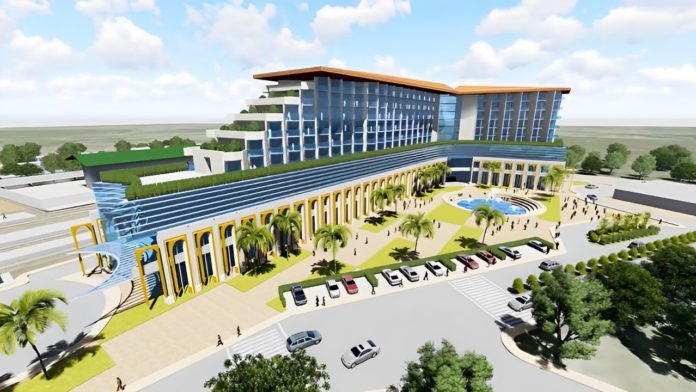
Visual representation of the proposed redevelopment of Puducherry Railway Station/Image from X (Twitter)
PUDUCHERRY (Metro Rail News): The Puducherry station is undergoing a major renovation at a cost of Rs. 93 Crores providing top-notch amenities to the rising number of tourists and passengers. The tender for the redevelopment work was awarded in September 2022 and work is making steady progress. A noteworthy event took place on August 6, 2023, when Prime Minister Shri Narendra Modi laid the foundation stone for the station’s redevelopment under the Amrit Bharat Station Scheme.
Representational image for the proposed redeveloped Puducherry Railway Station/ Image from X (Twitter)
Recent accomplishments in the renovation efforts encompass several critical aspects:
•Completion of the new operation building column up to the lintel level.
•Completion of the TTE Rest Room Pile Cap and grade Beam Shuttering.
•Completion of grade beam PCC work and Driver Rest Room pile cap.
•Completion of parcel office column up to the lintel level.
Work accomplished so far:
•Master Plan Validation has been finished.
•Completion of preliminaries including mapping and topographical surveys, drone surveys, DGPS surveys, traffic surveys, tree inventories, and joint inventories of movable and immovable assets.
•Work on the project management services has begun.
•The EPC contractor has been granted the right of way, or the legal permission to enter and do the work, for the building of the New Operation Building, Parcel Office, TTE Rest Room, Driver Rest Room, Officer Rest House, Substation, and UG Sump.
• The site premises has been completely barricaded.
•The project’s stakeholders are invited to a number of meetings.
The extensive redevelopment project has been entrusted to M/s Engineering Projects (India) Limited, Chennai, through an Engineering, Procurement, and Construction (EPC) contract valued at Rs. 93 Crores. The projected timeline for project completion stands at 24 months. Additionally, M/s TUV India Private Limited, Chennai, has been assigned the responsibility of Project Management services (PMS), accounting for Rs. 4.06 Crore.
Two terminals are proposed to be built, one on the Beach Side and the other on the Villupuram Side. World-class amenities such a waiting lounge, ticketing area, commercial area, and roof plaza are envisioned for the terminal buildings on both sides. In this building, FOB, an air concourse, enough lifts, and escalators are planned. The G+M+1 structure that makes up the proposed beachside terminal facility has complete air conditioning. The suggested terminal building for Villupuram side is a G+1 structure. For easy passenger movement, two FOBs—one in each of the two terminal buildings—as well as a 36-meter-wide, fully-air-conditioned air concourse at the beachside terminal building are being provided.
The redevelopment plan intends to reduce traffic problems and improve passenger comfort. The station’s landscaping and exterior will be upgraded, ensuring that the new design merges seamlessly with Puducherry’s visual appeal. Easy access will be made possible by wide driveways and walkways, and standardized parking areas will be designated for two-wheelers, personal vehicles, and taxis. A smooth connection to all sections of the city would be made possible by the deployment of feeder buses and e-bus parking facilities, fostering the integration of both sides of Puducherry.
Ultimately, passengers will experience a warm and friendly environment in this roomy and contemporary concourse, which will help to promote a favorable perception of Puducherry.
NEW DELHI (Metro Rail News): The Delhi Metro Rail Corporation (DMRC) has recently floated an e-Tender valued at INR 70.30 crores for the execution of architectural finishing work at three elevated stations of the Mumbai Metro Line 06. The stations included in this project are IIT Powai, KanjurMarg (W), and Vikhroli (EEH).
The scope of work encompasses “Architectural Finishing Works including Design, supply,Fabrication, erection & Roof Sheeting of Pre-Engineered Building (PEB) Structures and Design and construction of External façade, water supply, Drainage, Sanitary Installation, Site development works at Three (03) Elevated stations namely IIT Powai, KanjurMarg (W) and Vikhroli (EEH) of Mumbai Metro line 06 Project”.
The interested parties are required to submit a tender security amount of INR 35.15 lakhs. The estimated completion period for the designated work is 24 months.
The cost of the tender document is set at INR 23,600, and a pre-bid meeting has been scheduled for September 15, 2023.
The timeline for tender submissions is as follows:
Tender Submission Start Date: September 25, 2023 Tender Submission End Date: October 3, 2023
In the last few years, the government has made extraordinary expenditures in modern infrastructure, propelling the country to new heights. The quality of a country’s infrastructure is a major factor in determining its economic trajectory. The government has prioritised infrastructure development in its development strategy. In recent years, the country has seen rapid infrastructural development in all areas. Through the Pradhan Mantri Gram Sadak Yojana, about 53000 km of national highways have been added, with rural road connection growing to over 95% coverage.
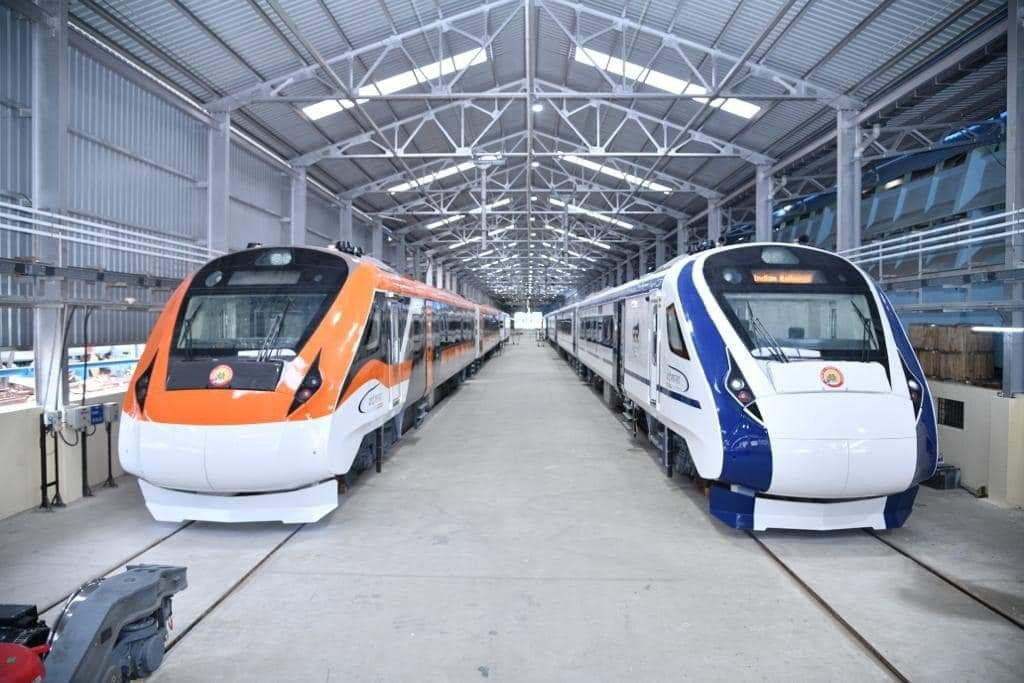
The highway is being developed at a rate of 37 kilometres per day. The Vande Bharat, India’s first domestic Semi-High-Speed train, is a key ‘Make in India’ success story. Vande Bharat trains are already in service, and 400 more are scheduled to be built over the next three years. Metro rail initiatives have reached 20 cities in the past years.
Through the Udan project, steps have been taken in the aviation section to make it more inexpensive and accessible for the common man. In the last ten years, 74 new airports have been developed and opened. A total of 111 waterways have been designated as National Waterways. During this time, the country also witnessed major constructions, such as the world’s highest railway bridge (the Chenab Bridge) and the world’s longest highway tunnel (the Atal Tunnel) as well as the completion of many long-pending projects, such as the Saryu Nahar Irrigation Canal, Eastern and Western Peripheral expressway and others. The PM Gati Shakti National Master Plan (NMP) has also been unveiled by Prime Minister Narendra Modi, with the aim of expediting development operations in the country, institutionalizing holistic planning, and inter-departmental cooperation through a single integrated platform. Recent infrastructure development projects are helping to accelerate the country’s progress toward becoming a developed nation by 2047.
Further, given the context of the last many years, it is necessary to state that the rate of progress, both in terms of project approval and execution, has been impressive, as opposed to the situation in which projects were just passed on paper with little execution on the ground. Better infrastructure is one of the most fundamental criteria for a healthy economy since it facilitates the establishment of new firms and simplifies commutes and logistics. Today, the country witnesses improved infrastructure in most of the sectors, including national highways, trains, and new airports. The Indian road network has virtually doubled in size. It has helped transform the impression of the country’s road network from potholes between roads to high-speed national highways. Roads have been built in places where there were none previously. Two lanes have been converted to four lanes, and the existing four lanes have been converted into highways and expressways.
Another stated government ambition is to seamlessly connect India’s north to eastern states such as Assam, Arunachal Pradesh, Tripura, among others. Last-mile connectivity, such as new lines in Jammu and Kashmir, bringing new luxurious trains such as Vande Bharat, vista-dome coaches, improving existing train facilities, increasing the number of trains, doubling and electrifying tracks, facilities at railway stations with improved security, have all been prioritized by the government over time. Many projects have been completed, while others are nearing completion. The Rishikesh-Karnaprayag Rail Line Project is going steadily. Despite the topographical limitations of Uttarakhand’s difficult terrain, the project is gaining traction. It will promote socioeconomic, economic, and cultural growth in the region, as well as last-mile connection.
The government is focussing not only on the national railway but also on regional connectivity with faster speeds and improved facilities to simplify travel between cities. The Regional Rapid Rail Transport System (RRTS) is one such initiative. Trains that are faster than metro and have better stations would allow for a faster and more secure transit between cities. Several RRTS projects have been approved, and the first line between Delhi and Meerut is more than halfway built, with the priority segment expected to be operational this month. Once completed, this project will relieve traffic congestion between Delhi and Meerut and benefit daily commuters. In addition, metro lines in many other cities are being constructed to improve connections and ease of travel.
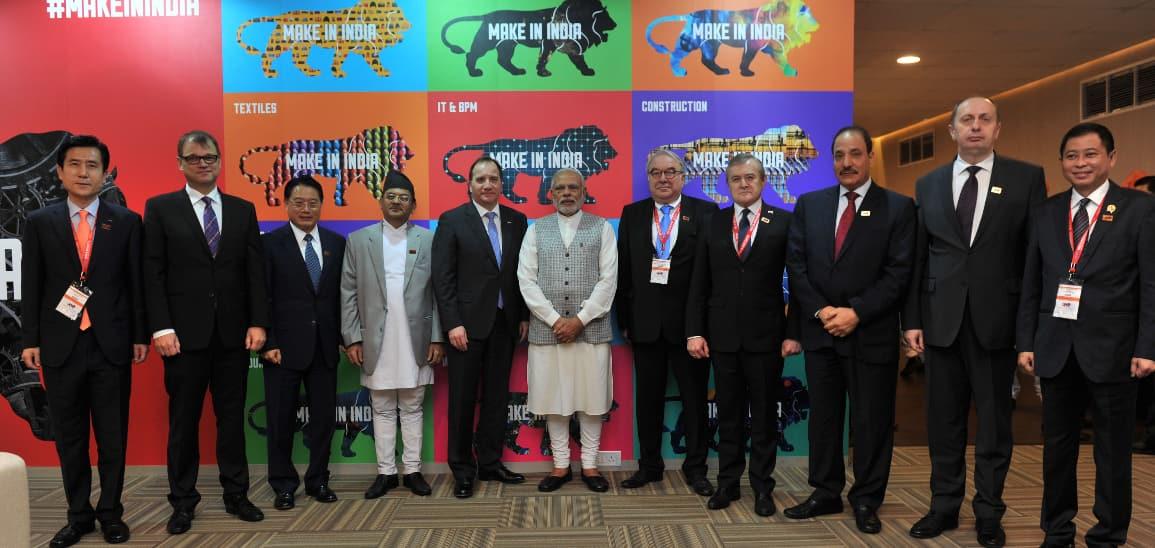
Make in India is a Government of India initiative announced in 2014 by Prime Minister Narendra Modi to stimulate domestic manufacturing and increase investment in the country. Through this scheme, the government wishes to revitalise the sluggish industrial and manufacturing sectors and stimulate economic growth. The GoI also seeks to encourage foreign enterprises to invest and manufacture in India by strengthening the country’s ‘Ease of Doing Business’ index. The long-term goal is to gradually transform India into a global manufacturing hub while also simultaneously improve job prospects in the country.
The highlights of this scheme are mentioned in the table below:
Name of the Scheme
Make in India
Date of Launching
25th September 2014
Launched By
PM Narendra Modi
Government Ministry
Ministry of Commerce and Industry
Make In India – Focus on various Sectors
The campaign focuses on twenty-seven sectors outlined as under:
Manufacturing Sectors:
Aerospace and Defence
Automotive and Auto Components
Pharmaceuticals and Medical Devices
Bio-Technology
Capital Goods
Textile and Apparels
Chemicals and Petro chemicals
Electronics System Design and Manufacturing (ESDM)
Leather & Footwear
Food Processing
Gems and Jewellery
Shipping
Railways
Construction
New and Renewable Energy
Services Sectors:
Information Technology & Information Technology enabled Services (IT & ITeS)
Tourism and Hospitality Services
Medical Value Travel
Transport and Logistics Services
Accounting and Finance Services
Audio Visual Services
Legal Services
Communication Services
Construction and Related Engineering Services
Environmental Services
Financial Services
Education Services
Need of Make in India
The government has chosen to focus on manufacturing and make efforts to boost production for a variety of reasons. The following are the most important:
The services sector appears to have led India’s growth and economic story over the last two decades. This strategy paid off in the short run, as India’s IT and BPO sectors rose sharply, helping the nation often referred to as the ‘back office of the world.’ Although the fact that the services sector’s proportion to the Indian economy increased to nearly 57% in 2013, it just accounted for a meagre twenty-eight percent as the percentage share of jobs and employment in the economy. Withstanding the fact, in order to increase employment, the manufacturing sector has been envisaged to be elaborated and expanded. This is because, considering the country’s demographic dividend, the services sector currently seems to experience low absorption potential of job opportunities.
Another reason for launching the campaign is India’s dismal manufacturing position. Manufacturing accounts for roughly 15% of the Indian economy overall. There is no need to compare with developed nations, the manufacturing share in the country’s GDP is also significantly lower even when compared to our East Asian neighbours. When it comes to goods, there is an overall trade imbalance. The services trade surplus barely covers one-fifth of India’s goods trade deficit. This trade deficit cannot be addressed alone by the services sector. Manufacturing will have to contribute. The government hopes to encourage domestic and foreign enterprises to engage in manufacturing in India, which will benefit the sector and create jobs at both the skilled and unskilled levels.
Another reason for launching the campaign is India’s dismal manufacturing position. Manufacturing accounts for roughly 15% of the Indian economy overall. There is no need to compare with developed nations, the manufacturing share in the country’s GDP is also significantly lower even when compared to our East Asian neighbours. When it comes to goods, there is an overall trade imbalance. The services trade surplus barely covers one-fifth of India’s goods trade deficit. This trade deficit cannot be addressed alone by the services sector. Manufacturing will have to contribute. The government hopes to encourage domestic and foreign enterprises to engage in manufacturing in India, which will benefit the sector and create jobs at both the skilled and unskilled levels.
According to several studies and research, no other sector appears to have as a large multiplier effect on a country’s economic growth as manufacturing does. Because the manufacturing sector has more backward links, growth in manufacturing encourages growth in other sectors as well. This results in more jobs, investments, and innovation, leading to an overall better and higher standard of living of the people in an economy.
Various Initiatives
For the first time, railways, insurance, defence, and healthcare equipment sectors have been opened up for greater FDIs (Foreign Direct Investment).
The maximum FDI ceiling in the defence sector under the automatic route has been raised from 49% to 74%. On May 16, 2020, Finance Minister Nirmala Sitaraman announced an increase in the FDI.
Hundred percent FDI has been approved under the automatic route in construction and certain rail infrastructure projects.
There is an Investor Facilitation Cell that aids investors from the time they arrive in India till they leave. This was established in 2014 to provide services to investors at all stages, including pre-investment, execution, and post-delivery.
The government has taken several steps to enhance India’s ranking in the ‘Ease of Doing Business’ index. In 2019, India climbed 23 points in the Ease of Doing Business ranking to 77th place, making it the highest-ranked country in South Asia in this index.
The Shram Suvidha Portal, as well as the eBiz Portal, have been launched. The eBiz portal provides one-stop access to eleven government services related to launching a business in India.
Other permits and licences needed to start a business have also been eased. Reforms are being implemented in areas like property registration, tax payment, obtaining a power connection, contract enforcement, and insolvency resolution.
Other reforms include the licencing process, time-bound clearances for foreign investor applications, automation of processes for registration with the Employees State Insurance Corporation and the Employees Provident Fund Organisation, state adoption of best practices in granting clearances, reducing the number of documents required for exports, and ensuring compliance through peer evaluation, self-certification, and so on.
The government intends to improve physical infrastructure mostly through PPP investment. Investment in ports and airports has increased. In addition, dedicated freight corridors are also being developed.
The government has initiated plans to build five industrial corridors, which is currently under progress. These corridors shall spread and run through the length and breadth of the country, with a strategic emphasis on inclusive development that would supplement industrialisation and urbanisation in a structured manner. The corridors are as follows:
Delhi-Mumbai Industrial Corridor (DMIC)
Amritsar-Kolkata Industrial Corridor (AKIC)
Bengaluru-Mumbai Economic Corridor (BMEC)
Chennai-Bengaluru Industrial Corridor (CBIC)
Vizag-Chennai Industrial Corridor (VCIC)
The various schemes
Several schemes and programmes have been initiated to support the Make in India initiative. These schemes are discussed below:
(i) Skill India: The programme aims to train ten million individuals in diverse sectors in India every year. To make ‘Make in India‘ a reality, the vast amount of human resource available must be up-skilled. This is significant because India’s formally skilled workforce accounts for barely 2% of the population.
(ii) Start-up India: The basic aim behind this project is to create an ecosystem that promotes the growth of start-ups while also driving long-term economic growth and generating large-scale employment.
(iii) Digital India: The goal is to make India a knowledge-based and digitally enabled economy.
(iv) Pradhan Mantri Jan Dhan Yojana (PMJDY): The objective envisions financial inclusion ensuring affordable access to financial services such as banks savings and deposit accounts, remittances, credit, insurance, and pensions to a vast group of society and people.
(v) Smart Cities: The project attempts to rejuvenate and transform Indian cities. The goal through various sub-initiatives is to build and create hundred smart cities in India.
(vi) AMRUT: The Atal Mission for Rejuvenation and Urban Transformation is abbreviated as AMRUT. Its goal is to improve basic public services and make 500 Indian cities more livable and inclusive.
(vii) Swachh Bharat Abhiyan: Swacch Bharat Mission has been one of the most successful campaigns of the government. The aim of this campaign is to make India cleaner and to promote basic sanitation and hygiene.
(viii) Sagarmala: The focus and objective of this scheme is to enhance ports and promote port-led growth in the country.
(ix) International Solar Alliance (ISA): The ISA is an alliance of 121 countries, the majority of which are sunshine countries that lie entirely or partially between the Tropics of Cancer and Capricorn. This is India’s initiative to promote solar technology research and development and to formulate policies in this area.
(x) AGNII: AGNII, or Accelerating Growth of New India’s Innovation, has been initiated to propel the country’s innovation ecosystem by linking people and supporting the commercialisation of innovations.
Key Objectives
The key objectives of Make in India mission has been envisaged as under:
Raise the growth of manufacturing sector by twelve to fourteen percent, taking every year into account and on an annual basis.
Creating 100 million additional jobs in the manufacturing sector by 2022.
Increasing the share of the manufacturing sector’s contribution to GDP by twenty-five percent until 2022.
Developing necessary skill sets among urban poor and rural migrants to promote inclusive growth.
An increase in domestic value addition and technological depth in the manufacturing sector.
Having a growth that is environmentally sustainable.
Augmenting and strengthening the Indian manufacturing sector’s global competitiveness.
Significant Progress
The Make in India initiative has achieved various milestones. Some of the notable accomplishments are as follows:
The implementation of the Goods and Services Tax (GST) has simplified the taxation structure for businesses. The GST has given the Make in India campaign a boost.
The Digitization scheme has been a mammoth success, and it is continuously gaining momentum not only in India but across the world. Many countries have recognised the Indian UPI digital system and have allowed transactions in respective countries through UPI gateway. Similarly, Indian RuPay credit card is gaining international acceptance.
Recently, RuPay achieved a major milestone of issuing 25 million RuPay – Discover global cards. In addition, Taxation, company development and incorporation, and a variety of other activities have been made available online, streamlining the overall process and increasing efficiency. This has improved India’s position in the EoDB index.
The new insolvency code, known as the Insolvency and Bankruptcy Code 2016, has helped consolidate all insolvency laws and rules into a single legislation system. This has brought India’s bankruptcy code at par with global and international standards.
Financial Inclusion initiative like Pradhan Mantri Jan Dhan Yojana (PMJDY) has been an ambitious program launched by the Government of India under Make in India campaign to ensure access to financial services like bank accounts, remittances, credit, insurance and pension in an affordable manner to every citizen especially. Nearly 48 crore accounts have been opened under the scheme so far. The scheme, ever since its launching, made remarkable progress. The total balance in PMJDY account crossed 2 lakh crore recently as a major milestone.
India’s EoDB index has been benefited from FDI liberalisation. Increased FDI inflows are expected to result in the creation of employment, revenue, and investments.
Infrastructure and connectivity have garnered considerable focus with the help of schemes like Bharatmala and Sagarmala, as well as different railway infrastructure development schemes and programmes.
BharatNet is a telecom infrastructure provider established by the government of India to improve digital networks in rural areas of the country. This is perhaps the largest rural broadband projects in the world.
India is ranked fourth in the world for its ability to harness wind power and sixth in the world for its ability to harness solar electricity. In terms of installed renewable energy capacity, India ranks fifth in the world.
The Various Advantages
The Make in India programme has resulted in a number of positive outcomes for the country. The following are some additional benefits that have been an outcome of this scheme.
Creating new job opportunities.
Increasing GDP by accelerating economic growth.
With more and more countries recognising the Indian RuPay, UPI payment and financial service system and with an increase in FDI inflows, rupee is expected to strengthen.
Small manufacturers and entrepreneurs have been significantly benefitted by financial inclusion programs and schemes like Mudra Yojna, Start-Up India etc. With nation improving on the Ease of Doing Business index, a greater influx of capital is expected through investors from all sections, both domestic and abroad. Accordingly, with the arrival of various investors from different countries to invest in India, an up-gradation of technologies is also expected with exchange and know-how of the latest technologies in various fields that would accompany the investors.
As a result of the Mission’s various initiatives, India has risen in the EoDB index. Similarly, establishing manufacturing centres and companies in rural areas is helping and promoting the growth of these communities.
Major Challenges
Despite the campaign’s success in various circles, there have been a number of concerns as well that need to be addressed on priority. There are also other hurdles as well that the country must overcome if it is to meet the ambitious goals set by the establishment. Some of the concerns may be stated as under:
India has more than sixty per cent cultivable land. The over emphasis on industry can have a negative impact on agriculture. It has the potential to permanently destabilise fertile land.
It is also considered that fast industrialization (especially with the emphasis on ‘going green’) might contribute to natural resource depletion.
Local farmers and small entrepreneurs may be unable to compete with foreign players as a result of welcoming large-scale FDI.
The campaign’s emphasis on manufacturing may result in pollution and adverse environmental effects.
There are significant gaps in the country’s physical infrastructure facilities. For the campaign to be effective, it is vital to improve the country’s infrastructure while simultaneously addressing issues such as corruption at the grassroots level. India may learn from China, which increased its share in global manufacturing from 2.6% in the 1990s to 24.9% in 2013. China rapidly expanded its physical infrastructure, such as railways, roads, power, and airports.
Make in India in Railways: Metro Coaches – A Success Story
When the first line of the Delhi Metro opened in 2002, the coaches were supplied from Germany and South Korea as CBUs (Completely Built Units). After twenty-one years, ninety percent of the coaches that run on the ten lines of the nearly four hundred km network of India’s largest and the world’s eighth-longest Metro network are built in India. The contract requirements of DMRC, which set a ceiling on the upper limit of 25 percent for production abroad with the balance to be made in India, permitted this indigenization of Metro coaches. As a result, multinational manufacturers such as Bombardier and Alstom established their businesses, subsidiaries and joint ventures in the country.
According to the International Association of Public Transport (UITP), a non-profit advocacy organisation for public transportation authorities and operators, policymakers, scientific institutes, and the public transportation supply and service industry, the capital costs of Metro coaches manufactured in India are significantly lower than those in the rest of the world. According to UITP estimates, the capital cost of an Indian-made coach is roughly INR 89.4 million (US$ 1.35 million), which is much lower than the cost in Vancouver (US$ 2.5 million) and San Francisco (US$ 2.30 million).
Bombardier Transportation at Savli near Vadodara, Alstom Transport India in Sricity near Chennai (Tamil Nadu), and Bharat Earth Movers Limited (BEML) in Bengaluru are the three metro coach manufacturing facilities in India already operational. Other organisations, including Hitachi, Mitsubishi, Hyundai, and a couple of Chinese firms, have also established consortiums with one or more of these three companies.
Bombardier Transportation
Bombardier has been a supplier to Indian Railways for over three decades and opened the Metro Coach production facility in Savli in 2008. The company actively participates in the Make in India programme by offering locally built rail vehicles, products, and solutions for both Indian and overseas markets. Apart from being a significant supplier to the Delhi Metro, to which it has delivered nearly thousand coaches to date, Bombardier has begun exporting Metro rail coaches to Australia, as well as components to Brazil, Australia, and Saudi Arabia. In addition to the Savli location, the company also has a transportation engineering services centre in Gurgaon. Bombardier’s India unit received its first export order in 2012 for the supply of components for trains in Adelaide and has since then supplied and delivered components and railway coaches for projects in Australia’s Victoria and Queensland, Brazil’s Sao Paulo, and Saudi Arabia’s Riyadh. It also provides engineering services to its parent company’s projects in Germany, Switzerland, China, and the United Kingdom.
Bombardier also has supplied enhanced rail control for the new, automated Delhi Metro route 7, which is a significant milestone because it is a completely automated route that will eventually run driverless trains. To ensure safe and reliable automatic train operations, all four stages of Line 7, or the Pink Line, that have opened in the last 14 months are equipped with the Bombardier Cityflo 650 communications-based train control solution. To enable centralised train supervision, Cityflo 650 employs advanced radio networks and moving block operation.
Alstom Transport
Alstom marked a key milestone in December 2018 by completing the export of the final of 22 Metropolis trains for Sydney Metro, delivered from its Sricity manufacturing facility. Alstom was awarded a contract in 2014 to supply 22 six-car trainsets and the CBTC signalling system for the North West Rail Link, Australia’s largest public transport project and the country’s first fully-automated Metro network. Alstom’s engineering base in Bengaluru tailored the Metropolis and Urbalis applications to the specific needs of Sydney Metro in order to provide people with rapid, safe, and dependable services.
Sricity, which began production in 2014, has already established high quality and operational safety standards via excellence in innovation and sustainable manufacturing practices. The factory, which has an annual production capacity of 240 automobiles, has delivered coaches to the cities of Chennai, Kochi, and Lucknow. It has already started construction of its second export order for the light Metro project in Montreal and production for the Mumbai Metro Line 3. Alstom’s Sricity manufacturing facility is now one of the group’s global manufacturing centres of excellence for rolling stock, following the quality standards maintained and on-time delivery of the trainsets for various projects globally.
Alstom has also been recently awarded a contract by Mumbai Metro Rail Corporation Limited (MMRCL) to supply a CBTC signalling system for the Mumbai Metro‘s Line 3. The contract, which builds on prior rolling stock and power supply contracts won and awarded for the same line, is worth more than €100 million. Alstom shall outfit Line 3 with Urbalis 400, the company’s most recent generation of CBTC signalling equipment. Unmanned train operation (UTO), computer-based interlocking and centralised train supervision, platform screen doors, and the electrical and mechanical supervisory control and data acquisition system (E&M SCADA) are all included as per the contract.
The BEML
The Rail Coach manufacturer of BEML Limited, located in Bangalore, India, was the first all-steel integrated rail coach manufacturing unit set up and established by the Government of India in 1948. It was established with the support and technological know-how offered by M/s MAN of Germany to produce passenger rail coaches (of broad gauge) for Indian Railways.
BEML, a public sector undertaking of the Government of India, and Rotem (now Hyundai Rotem) signed a Technical Collaboration agreement in 2002 during the implementation of DMRC’s first urban transit project for its Phase-1, and BEML became the first to indigenously manufacture Metro Cars for DMRC RS1 contract, manufacturing 220 units of Metro cars. BEML later received a developmental order from DMRC to develop 8 units of intermediate cars in order to indigenise the manufacturing and integration of Metro train sets. BEML’s position as an indigenous source of Metro cars has been strengthened by the successful execution of this development order.
BEML’s three production lines have provided over nearly 1,500 Metro cars for various projects in India so far. BEML extended its role and presence in the Metro Business as an outcome of its experience in the manufacture, integration, and testing of Metro cars, and it now commands a significant market share in India. Encouraged by India’s good track record in manufacturing world-class Metro coaches, all three players have begun further indigenisation, with the main subsystems of Metro coaches indigenised. Window glasses, battery boxes, brake blocks, bogie frames, vacuum circuit breakers, propulsion systems and signalling systems, among other components, are made in India.
The Delhi Metro is the largest of sixteen currently operational or active Mass rapid transit or metro systems in fifteen cities across India. As of March 2023, India had 859 kilometres of operating metro lines and 16 systems. In the last ten years, the country’s metro rail services have grown at an exponential rate. The expansion is set to accelerate further, with more than 1,000 km of new metro lines planned to connect over 30 cities by 2025. More and more cities in India are working on Metro plans today, extending from Srinagar in the north to Thiruvananthapuram in the south, while dozens more are in need of one, opening up a vast avenue for additional business in the sector in the near future.
Recent Achievements & Latest Update
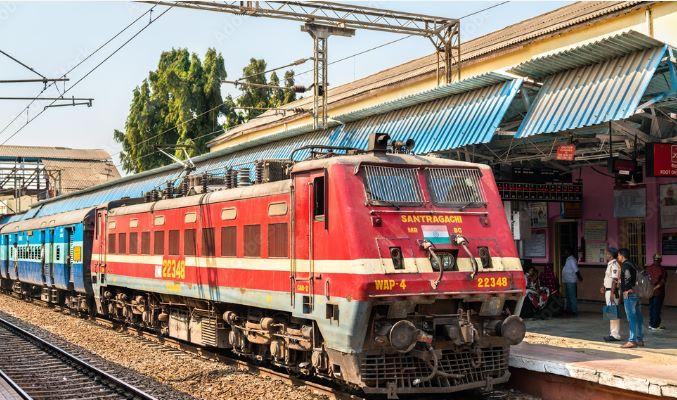
Russian and Indian Railways have reached an agreement to build Vande Bharat trains as part of the Make in India campaign. In March this year, the Russian-Indian consortium of Transmashholding (TMH) and Rail Vikas Nigam Limited (RVNL), which operates as an extension of the Ministry of Railways, won the tender for the manufacturing, supply, and maintenance of 120 passenger electric trains (1920 cars) for India. The $1.7 billion contract is believed to be the largest foreign order in Russian railway engineering.
After formally endorsing the planned agreement in mid-May this year, TMH had claimed that everything would be built in India because India has a make-in-India act that necessitates localisation. The Transmashholding, which competed in the tender through its Metrovagonmash facility in the Moscow Region’s Mytishi, stated that the first sample of the train would be available in two years, with the first delivery of Vande Bharat Express trains expected within the next five years.
The overall cost of rolling stock under the tender, including maintenance organisation over a 35-year period, might reach $6 billion. Transmashholding also signed a deal in March this year for the supply of 28 new modern metro cars for the Belarusian subway after representatives from the Minsk Metro visited its production site. Between 2020 and 2023, the Russian conglomerate will also supply sixty cars for the Baku Metro in Azerbaijan’s capital.
TMH signed a 1 billion Euro contract with the Egyptian National Railways in 2018 for 1300 passenger cars, with production taking place in Russia and Hungary. Trains with new passenger cars run daily between Cairo and Alexandria (208 km), Asyut (380 km), and Sohag (473 km). The Vande Bharat Express, India’s first indigenous and locally-produced semi-high-speed train, is a huge effort made by the government to strengthen and acknowledge the ‘Make in India’ project as an impressive success story. The train, which is outfitted with cutting-edge passenger facilities, has significantly transformed the country’s passenger travel experience. Till July 2023, a total of twenty-five Vande Bharat trains are operational in the country. In the next five years, four hundred Vande Bharat trains have been planned to run across the country on various routes.
Shri P Uday Kumar Reddy, General Manager, Metro Railway on Kolkata Metro during the trial run
KOLKATA (Metro Rail News): On August 23, 2023, a trial run on the Kavi Subhas – Hemanta Mukhopadhyay stretch of the Kavi Subhas – Jai Hind (Airport) Metro Project (Orange Line) was carried out in the gracious presence of Shri P. Uday Kumar Reddy, the General Manager of Metro Railway with an AC rake. During the return journey from Hemanta Mukhopadhyay to Kavi Subhas station, the speed trial was conducted at 80 kmph. The trial began at 13:24 hrs, and by 13:32 hrs, the rake reached Kavi Subhas station without any stops. During the trial, Shri Reddy was present at the Driving Motorman’s cab.
It’s important to mention that this stretch is designed for trains to reach a maximum speed of 80 kmph. Shri P Uday Kumar Reddy, along with other Principal Heads of Departments and senior officials from Metro Railway and Rail Vikas Nigam Limited, observed the trial run.
The General Manager also took the opportunity to inspect the passenger facilities at various stations along this stretch. He also examined the arrangements for passengers to switch between the Blue Line and Orange Line at Kavi Subhas Metro station.
After witnessing the trial run‘s success and overall progress, Shri Reddy expressed his satisfaction. He even took a Metro ride from Park Street to Kavi Subhas, interacting with commuters during the journey.
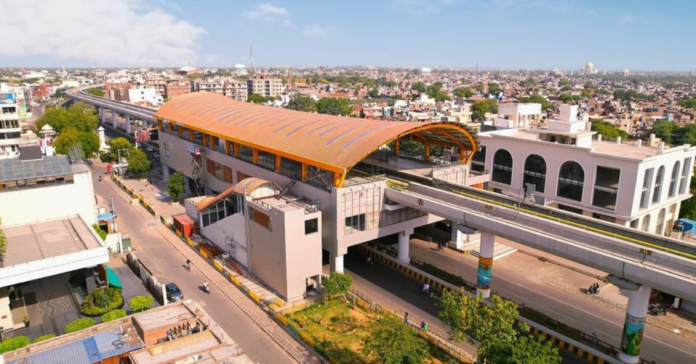
AGRA (Metro Rail News): Agra metro stations have been designed very thoughtfully and meticulously, keeping in mind the rich cultural heritage of this city. However, the main PEB structure (rooftop) of all elevated stations deserves special mention as it is a special design feature.
As you may see, the roof projects upwards (like a saddle), which can be seen from the sides as well as from the front. It is a unique design which may be described as a ‘Hyperbolic paraboloid structure’ that resembles the shape of a horse saddle formed by the combination of concave and convex surfaces.
Shedding light on this design inspiration, UPMRC MD Shri Sushil Kumar said,” Apart from being aesthetically suitable, this modern design has also been proven to be structurally efficient due to the capacity to cover long spans without intermediate supports. This form is a result of the culmination of modern architecture and advanced structural engineering.”
The main advantage of this design is that it is comparatively lightweight, unlike standard roof structures. Due to the versatility of this design, it can withstand a significant amount of wind load.
This design is also cost-effective, covering a large area free from intermediate columns and beams. Since this design is popular in contemporary architecture, UPMRC adopted this for Agra Metro Stations and fused this modern-day design with traditional details inside the stations like ‘Jaali’ work and ‘Marble’ work.
Agra metro stations are an accurate representation of modern architecture intermingling with the traditional and heritage theme of the city.
Metrolite is an Indian light rail urban transit system being designed for cities and areas with lower projected ridership and as a feeder route for existing metro systems. It has been designed to serve a smaller passenger capacity at a lesser cost than a metro line. The system features its own dedicated tracks that are isolated from the road. RITES has received the survey report from the Urban Mass Transit Company (UMTC). Based on the UMTC study, the draft plan shall be submitted to the government prepared by RITES. After getting approvals, the detailed project report (DPR) on the ‘Metrolite’ has been planned to be prepared. The concept of a Metrolite was agreed in principle last year at a meeting presided over by the Principal Secretary, Urban Development.
It was additionally decided that the same would be made available to Sangam City commuters before the Mahakumbh in 2025. A survey has been conducted for the operations of Metrolite on two city routes—Phaphamau and Bamrauli and Andawa (Jhunsi) to Bamrauli. Either of the two routes could begin prior to the Mahakumbh. Another development is that a considerable proportion of Sangam City commuters will be able to take an electric bus before Mahakhumbh 2025. Prayagraj will receive 100 new electric buses by 2025. Electric vehicles will be added in the fleet of 50 buses by 2023. The bus maintenance will be handled by the charging station established at Naini. These fully air-conditioned buses have been proposed to have CCTV cameras for passenger safety, comfortable seats, and other modern facilities. Its operation shall also help mitigate and lower the city’s pollution. The buses have been planned to start arriving in Prayagraj around May before the completion of the scheduled registration process by December 2024.
Currently, fifty electric buses operate on five city routes. A proposal has been sent to operate 150 electric buses in Prayagraj; 50 are currently operational, and more such buses are expected to reach to the city in the coming months. Meanwhile, the Public Works Department (PWD) has approved Rs 41.88 crore for the construction of a rail over bridge (ROB) at Cheoki station in Naini on the North Central Railway‘s Prayagraj-Pandit Deen Dayan Upadhyay (Mughalsarai) railway section.
After the approval from the Ministry, now the work of ROB is expected to gain momentum. This would help in relieving daily traffic congestion for those travelling from Banda to Prayagraj. ROB had been approved five years back. NCR had spent Rs 7 crore on ROB till March 2022. ROB’s primary pillar had been completed. Meanwhile, due to some issues regarding land ownership, the ongoing work was halted after the army opposed the construction work. The PWD has now released the budget for the remaining amount after receiving approval by the army to continue with the work.
Prayagraj Metro
Prayagraj Light Metro, with two lines and thirty-nine stations, is a light rail transit (LRT) system proposed by the Uttar Pradesh Metro Rail Corporation Ltd. (UPMRCL) for Prayagraj (Allahabad), Uttar Pradesh. The Government of Uttar Pradesh appointed the Uttar Pradesh Metro Rail Corporation (UPMRCL) as the ‘coordinator’ in 2017 to get all stakeholders together and get the Phase 1 project underway. Later in the year, RITES had been assigned with the responsibility of preparing its feasibility report and Detailed Project Report, both of which had been submitted to the Prayagraj Development Authority (PDA) in November 2019.
Key Figures
Operational: 0 km
Under Construction: 0 km
Approved: 0 km
Proposed: 42 km
Metro Lines (Proposed)
Line-1: Shantipuram in Phaphamau – Naini
Type: Elevated
Line-2: Bamrauli – Jhunsi
Type: Elevated
Interchange Station is proposed to be constructed at Parade Grounds near Alopibagh
Conclusion
Metro rail networks in India have demonstrated how the landscape of cities changes dramatically when the metro is operational. While large cities like Delhi and Bangalore benefited greatly from such projects, their adoption in tier I and II cities also promises to accelerate development in these places. The forthcoming Prayagraj Metro is also projected to transform the city’s infrastructure and economy.
Prayagraj Metro, also referred to as the Allahabad Metro, is a proposed light rail system for Prayagraj. The metro project has been planned to consist two lines spanning over twenty kilometres. Notably, in 2019, the Rail India Technical and Economic Service (RITES) submitted a comprehensive project report to the Prayagraj Development Authority. The metro is set to open before the Kumbh Mela in 2025.
The Prayagraj Metro plan was approved in 2016 at a cabinet meeting presided over by then-Uttar Pradesh Chief Minister Akhilesh Yadav. The State government allotted Rs 175 crore in its 2019 budget to commence with the preliminary works. The rail system has been planned to have two lines: one from Manauri to Trivenipuram (East-West) and another from Shantipuram to Karchana (North-South). Line 1 will have 20 stations, while Line 2 will have 19 stations. The project’s total cost is expected to be around Rs 8,000 crore.