Home Blog Page 189

Redevelopment Works of Puducherry Station Worth 93 Cr. Gains Momentum

1
Visual representation of the proposed redevelopment of Puducherry Railway Station
Visual representation of the proposed redevelopment of Puducherry Railway Station/Image from X (Twitter)

PUDUCHERRY (Metro Rail News): The Puducherry station is undergoing a major renovation at a cost of Rs. 93 Crores providing top-notch amenities to the rising number of tourists and passengers. The tender for the redevelopment work was awarded in September 2022 and work is making steady progress. A noteworthy event took place on August 6, 2023, when Prime Minister Shri Narendra Modi laid the foundation stone for the station’s redevelopment under the Amrit Bharat Station Scheme.

WhatsApp Image 2023 08 26 at 11.47.08
Representational image for the proposed redeveloped Puducherry Railway Station/ Image from X (Twitter)

Recent accomplishments in the renovation efforts encompass several critical aspects:

  •Completion of the new operation building column up to the lintel level.

  •Completion of the TTE Rest Room Pile Cap and grade Beam Shuttering.

  •Completion of grade beam PCC work and Driver Rest Room pile cap.

  •Completion of parcel office column up to the lintel level.

Work accomplished so far:

•Master Plan Validation has been finished.

•Completion of preliminaries including mapping and topographical surveys, drone surveys, DGPS surveys, traffic surveys, tree inventories, and joint inventories of movable and immovable assets.

•Work on the project management services has begun.

•The EPC contractor has been granted the right of way, or the legal permission to enter and do the work, for the building of the New Operation Building, Parcel Office, TTE Rest Room, Driver Rest Room, Officer Rest House, Substation, and UG Sump.

•The construction of the project management site office is complete.

• The site premises has been completely barricaded.

•The project’s stakeholders are invited to a number of meetings.

The extensive redevelopment project has been entrusted to M/s Engineering Projects (India) Limited, Chennai, through an Engineering, Procurement, and Construction (EPC) contract valued at Rs. 93 Crores. The projected timeline for project completion stands at 24 months. Additionally, M/s TUV India Private Limited, Chennai, has been assigned the responsibility of Project Management services (PMS), accounting for Rs. 4.06 Crore.

Two terminals are proposed to be built, one on the Beach Side and the other on the Villupuram Side. World-class amenities such a waiting lounge, ticketing area, commercial area, and roof plaza are envisioned for the terminal buildings on both sides.  In this building, FOB, an air concourse, enough lifts, and escalators are planned. The G+M+1 structure that makes up the proposed beachside terminal facility has complete air conditioning. The suggested terminal building for Villupuram side is a G+1 structure. For easy passenger movement, two FOBs—one in each of the two terminal buildings—as well as a 36-meter-wide, fully-air-conditioned air concourse at the beachside terminal building are being provided.

The redevelopment plan intends to reduce traffic problems and improve passenger comfort.  The station’s landscaping and exterior will be upgraded, ensuring that the new design merges seamlessly with Puducherry’s visual appeal.  Easy access will be made possible by wide driveways and walkways, and standardized parking areas will be designated for two-wheelers, personal vehicles, and taxis.  A smooth connection to all sections of the city would be made possible by the deployment of feeder buses and e-bus parking facilities, fostering the integration of both sides of Puducherry.

Ultimately, passengers will experience a warm and friendly environment in this roomy and contemporary concourse, which will help to promote a favorable perception of Puducherry.

Advertisement1
InnoMetro_2026

DMRC Invites e-Tender Worth INR 70.30 Cr. for Architectural Finishing Work at Mumbai Metro Line 06 Stations

0
Mumbai-Metro
Mumbai-Metro/ Representational Image

NEW DELHI (Metro Rail News): The Delhi Metro Rail Corporation (DMRC) has recently floated an e-Tender valued at INR 70.30 crores for the execution of architectural finishing work at three elevated stations of the Mumbai Metro Line 06. The stations included in this project are IIT Powai, KanjurMarg (W), and Vikhroli (EEH).

The scope of work encompasses “Architectural Finishing Works including Design, supply,Fabrication, erection & Roof Sheeting of Pre-Engineered Building (PEB) Structures and Design and construction of External façade, water supply, Drainage, Sanitary Installation, Site development works at Three (03) Elevated stations namely IIT Powai, KanjurMarg (W) and Vikhroli (EEH) of Mumbai Metro line 06 Project”.

The interested parties are required to submit a tender security amount of INR 35.15 lakhs. The estimated completion period for the designated work is 24 months.

The cost of the tender document is set at INR 23,600, and a pre-bid meeting has been scheduled for September 15, 2023.

The timeline for tender submissions is as follows:

Tender Submission Start Date: September 25, 2023
Tender Submission End Date: October 3, 2023

Advertisement1
InnoMetro_2026

A Period of Dedicated Efforts Arising Need of Further Development for a Developed Nation Status by 2047

0
Delhi-Gurgaon-Dharuhera Rapid Rail corridor
Delhi-Gurgaon-Dharuhera Rapid Rail corridor (Representational image only)

In the last few years, the government has made extraordinary expenditures in modern infrastructure, propelling the country to new heights. The quality of a country’s infrastructure is a major factor in determining its economic trajectory. The government has prioritised infrastructure development in its development strategy. In recent years, the country has seen rapid infrastructural development in all areas. Through the Pradhan Mantri Gram Sadak Yojana, about 53000 km of national highways have been added, with rural road connection growing to over 95% coverage. 

The highway is being developed at a rate of 37 kilometres per day. The Vande Bharat, India’s first domestic Semi-High-Speed train, is a key ‘Make in India’ success story. Vande Bharat trains are already in service, and 400 more are scheduled to be built over the next three years. Metro rail initiatives have reached 20 cities in the past years. 

Through the Udan project, steps have been taken in the aviation section to make it more inexpensive and accessible for the common man. In the last ten years, 74 new airports have been developed and opened. A total of 111 waterways have been designated as National Waterways. During this time, the country also witnessed major constructions, such as the world’s highest railway bridge (the Chenab Bridge) and the world’s longest highway tunnel (the Atal Tunnel) as well as the completion of many long-pending projects, such as the Saryu Nahar Irrigation Canal, Eastern and Western Peripheral expressway and others. The PM Gati Shakti National Master Plan (NMP) has also been unveiled by Prime Minister Narendra Modi, with the aim of expediting development operations in the country, institutionalizing holistic planning, and inter-departmental cooperation through a single integrated platform. Recent infrastructure development projects are helping to accelerate the country’s progress toward becoming a developed nation by 2047.

Further, given the context of the last many years, it is necessary to state that the rate of progress, both in terms of project approval and execution, has been impressive, as opposed to the situation in which projects were just passed on paper with little execution on the ground. Better infrastructure is one of the most fundamental criteria for a healthy economy since it facilitates the establishment of new firms and simplifies commutes and logistics. Today, the country witnesses improved infrastructure in most of the sectors, including national highways, trains, and new airports. The Indian road network has virtually doubled in size. It has helped transform the impression of the country’s road network from potholes between roads to high-speed national highways. Roads have been built in places where there were none previously. Two lanes have been converted to four lanes, and the existing four lanes have been converted into highways and expressways.

Another stated government ambition is to seamlessly connect India’s north to eastern states such as Assam, Arunachal Pradesh, Tripura, among others. Last-mile connectivity, such as new lines in Jammu and Kashmir, bringing new luxurious trains such as Vande Bharat, vista-dome coaches, improving existing train facilities, increasing the number of trains, doubling and electrifying tracks, facilities at railway stations with improved security, have all been prioritized by the government over time. Many projects have been completed, while others are nearing completion. The Rishikesh-Karnaprayag Rail Line Project is going steadily. Despite the topographical limitations of Uttarakhand’s difficult terrain, the project is gaining traction. It will promote socioeconomic, economic, and cultural growth in the region, as well as last-mile connection. 

The government is focussing not only on the national railway but also on regional connectivity with faster speeds and improved facilities to simplify travel between cities. The Regional Rapid Rail Transport System (RRTS) is one such initiative. Trains that are faster than metro and have better stations would allow for a faster and more secure transit between cities. Several RRTS projects have been approved, and the first line between Delhi and Meerut is more than halfway built, with the priority segment expected to be operational this month. Once completed, this project will relieve traffic congestion between Delhi and Meerut and benefit daily commuters. In addition, metro lines in many other cities are being constructed to improve connections and ease of travel. 

Advertisement1
InnoMetro_2026

Make in India: Metro & Railways in India and the Make in India Campaign

0
Representational image only

Overview

Make in India is a Government of India initiative announced in 2014 by Prime Minister Narendra Modi to stimulate domestic manufacturing and increase investment in the country. Through this scheme, the government wishes to revitalise the sluggish industrial and manufacturing sectors and stimulate economic growth. The GoI also seeks to encourage foreign enterprises to invest and manufacture in India by strengthening the country’s ‘Ease of Doing Business’ index. The long-term goal is to gradually transform India into a global manufacturing hub while also simultaneously improve job prospects in the country.

The highlights of this scheme are mentioned in the table below:

Name of the SchemeMake in India
Date of Launching25th September 2014
Launched ByPM Narendra Modi
Government MinistryMinistry of Commerce and Industry

Make In India – Focus on various Sectors

The campaign focuses on twenty-seven sectors outlined as under:

Manufacturing Sectors:

  • Aerospace and Defence
  • Automotive and Auto Components
  • Pharmaceuticals and Medical Devices
  • Bio-Technology
  • Capital Goods
  • Textile and Apparels
  • Chemicals and Petro chemicals
  • Electronics System Design and Manufacturing (ESDM)
  • Leather & Footwear
  • Food Processing
  • Gems and Jewellery
  • Shipping
  • Railways
  • Construction
  • New and Renewable Energy

Services Sectors:

  • Information Technology & Information Technology enabled Services (IT & ITeS)
  • Tourism and Hospitality Services
  • Medical Value Travel
  • Transport and Logistics Services
  • Accounting and Finance Services
  • Audio Visual Services
  • Legal Services
  • Communication Services
  • Construction and Related Engineering Services
  • Environmental Services
  • Financial Services
  • Education Services

Need of Make in India
PM at inauguration of Make In India Center

The government has chosen to focus on manufacturing and make efforts to boost production for a variety of reasons. The following are the most important:

  1. The services sector appears to have led India’s growth and economic story over the last two decades. This strategy paid off in the short run, as India’s IT and BPO sectors rose sharply, helping the nation often referred to as the ‘back office of the world.’ Although the fact that the services sector’s proportion to the Indian economy increased to nearly 57% in 2013, it just accounted for a meagre twenty-eight percent as the percentage share of jobs and employment in the economy. Withstanding the fact, in order to increase employment, the manufacturing sector has been envisaged to be elaborated and expanded. This is because, considering the country’s demographic dividend, the services sector currently seems to experience low absorption potential of job opportunities.
  2. Another reason for launching the campaign is India’s dismal manufacturing position. Manufacturing accounts for roughly 15% of the Indian economy overall. There is no need to compare with developed nations, the manufacturing share in the country’s GDP is also significantly lower even when compared to our East Asian neighbours. When it comes to goods, there is an overall trade imbalance. The services trade surplus barely covers one-fifth of India’s goods trade deficit. This trade deficit cannot be addressed alone by the services sector. Manufacturing will have to contribute. The government hopes to encourage domestic and foreign enterprises to engage in manufacturing in India, which will benefit the sector and create jobs at both the skilled and unskilled levels.

    Another reason for launching the campaign is India’s dismal manufacturing position. Manufacturing accounts for roughly 15% of the Indian economy overall. There is no need to compare with developed nations, the manufacturing share in the country’s GDP is also significantly lower even when compared to our East Asian neighbours. When it comes to goods, there is an overall trade imbalance. The services trade surplus barely covers one-fifth of India’s goods trade deficit. This trade deficit cannot be addressed alone by the services sector. Manufacturing will have to contribute. The government hopes to encourage domestic and foreign enterprises to engage in manufacturing in India, which will benefit the sector and create jobs at both the skilled and unskilled levels.
  3. According to several studies and research, no other sector appears to have as a large multiplier effect on a country’s economic growth as manufacturing does. Because the manufacturing sector has more backward links, growth in manufacturing encourages growth in other sectors as well. This results in more jobs, investments, and innovation, leading to an overall better and higher standard of living of the people in an economy.

Various Initiatives

  1. For the first time, railways, insurance, defence, and healthcare equipment sectors have been opened up for greater FDIs (Foreign Direct Investment).
  2. The maximum FDI ceiling in the defence sector under the automatic route has been raised from 49% to 74%. On May 16, 2020, Finance Minister Nirmala Sitaraman announced an increase in the FDI.
  3. Hundred percent FDI has been approved under the automatic route in construction and certain rail infrastructure projects.
  4. There is an Investor Facilitation Cell that aids investors from the time they arrive in India till they leave. This was established in 2014 to provide services to investors at all stages, including pre-investment, execution, and post-delivery.
  5. The government has taken several steps to enhance India’s ranking in the ‘Ease of Doing Business’ index. In 2019, India climbed 23 points in the Ease of Doing Business ranking to 77th place, making it the highest-ranked country in South Asia in this index.
  6. The Shram Suvidha Portal, as well as the eBiz Portal, have been launched. The eBiz portal provides one-stop access to eleven government services related to launching a business in India.
  7. Other permits and licences needed to start a business have also been eased. Reforms are being implemented in areas like property registration, tax payment, obtaining a power connection, contract enforcement, and insolvency resolution.
  8. Other reforms include the licencing process, time-bound clearances for foreign investor applications, automation of processes for registration with the Employees State Insurance Corporation and the Employees Provident Fund Organisation, state adoption of best practices in granting clearances, reducing the number of documents required for exports, and ensuring compliance through peer evaluation, self-certification, and so on.
  9. The government intends to improve physical infrastructure mostly through PPP investment. Investment in ports and airports has increased. In addition, dedicated freight corridors are also being developed.

The government has initiated plans to build five industrial corridors, which is currently under progress. These corridors shall spread and run through the length and breadth of the country, with a strategic emphasis on inclusive development that would supplement industrialisation and urbanisation in a structured manner. The corridors are as follows:

  1. Delhi-Mumbai Industrial Corridor (DMIC)
  2. Amritsar-Kolkata Industrial Corridor (AKIC)
  3. Bengaluru-Mumbai Economic Corridor (BMEC)
  4. Chennai-Bengaluru Industrial Corridor (CBIC)
  5. Vizag-Chennai Industrial Corridor (VCIC)

The various schemes

Several schemes and programmes have been initiated to support the Make in India initiative. These schemes are discussed below:

(i) Skill India: The programme aims to train ten million individuals in diverse sectors in India every year. To make ‘Make in India‘ a reality, the vast amount of human resource available must be up-skilled. This is significant because India’s formally skilled workforce accounts for barely 2% of the population.

(ii) Start-up India: The basic aim behind this project is to create an ecosystem that promotes the growth of start-ups while also driving long-term economic growth and generating large-scale employment.

(iii) Digital India: The goal is to make India a knowledge-based and digitally enabled economy.

(iv) Pradhan Mantri Jan Dhan Yojana (PMJDY): The objective envisions financial inclusion ensuring affordable access to financial services such as banks savings and deposit accounts, remittances, credit, insurance, and pensions to a vast group of society and people.

(v) Smart Cities: The project attempts to rejuvenate and transform Indian cities. The goal through various sub-initiatives is to build and create hundred smart cities in India.

(vi) AMRUT: The Atal Mission for Rejuvenation and Urban Transformation is abbreviated as AMRUT. Its goal is to improve basic public services and make 500 Indian cities more livable and inclusive.

(vii) Swachh Bharat Abhiyan: Swacch Bharat Mission has been one of the most successful campaigns of the government. The aim of this campaign is to make India cleaner and to promote basic sanitation and hygiene.

(viii) Sagarmala: The focus and objective of this scheme is to enhance ports and promote port-led growth in the country.

(ix) International Solar Alliance (ISA): The ISA is an alliance of 121 countries, the majority of which are sunshine countries that lie entirely or partially between the Tropics of Cancer and Capricorn. This is India’s initiative to promote solar technology research and development and to formulate policies in this area.

(x) AGNII: AGNII, or Accelerating Growth of New India’s Innovation, has been initiated to propel the country’s innovation ecosystem by linking people and supporting the commercialisation of innovations.

Key Objectives

The key objectives of Make in India mission has been envisaged as under:

  1. Raise the growth of manufacturing sector by twelve to fourteen percent, taking every year into account and on an annual basis.
  2. Creating 100 million additional jobs in the manufacturing sector by 2022.
  3. Increasing the share of the manufacturing sector’s contribution to GDP by twenty-five percent until 2022.
  4. Developing necessary skill sets among urban poor and rural migrants to promote inclusive growth.
  5. An increase in domestic value addition and technological depth in the manufacturing sector.
  6. Having a growth that is environmentally sustainable.
  7. Augmenting and strengthening the Indian manufacturing sector’s global competitiveness.

Significant Progress

The Make in India initiative has achieved various milestones. Some of the notable accomplishments are as follows:

  1. The implementation of the Goods and Services Tax (GST) has simplified the taxation structure for businesses. The GST has given the Make in India campaign a boost.
  2. The Digitization scheme has been a mammoth success, and it is continuously gaining momentum not only in India but across the world. Many countries have recognised the Indian UPI digital system and have allowed transactions in respective countries through UPI gateway. Similarly, Indian RuPay credit card is gaining international acceptance.

    Recently, RuPay achieved a major milestone of issuing 25 million RuPay – Discover global cards. In addition, Taxation, company development and incorporation, and a variety of other activities have been made available online, streamlining the overall process and increasing efficiency. This has improved India’s position in the EoDB index.
  3. The new insolvency code, known as the Insolvency and Bankruptcy Code 2016, has helped consolidate all insolvency laws and rules into a single legislation system. This has brought India’s bankruptcy code at par with global and international standards.
  4. Financial Inclusion initiative like Pradhan Mantri Jan Dhan Yojana (PMJDY) has been an ambitious program launched by the Government of India under Make in India campaign to ensure access to financial services like bank accounts, remittances, credit, insurance and pension in an affordable manner to every citizen especially. Nearly 48 crore accounts have been opened under the scheme so far. The scheme, ever since its launching, made remarkable progress. The total balance in PMJDY account crossed 2 lakh crore recently as a major milestone.
  5. India’s EoDB index has been benefited from FDI liberalisation. Increased FDI inflows are expected to result in the creation of employment, revenue, and investments. 
  6. Infrastructure and connectivity have garnered considerable focus with the help of schemes like Bharatmala and Sagarmala, as well as different railway infrastructure development schemes and programmes.
  7. BharatNet is a telecom infrastructure provider established by the government of India to improve digital networks in rural areas of the country. This is perhaps the largest rural broadband projects in the world.
  8. India is ranked fourth in the world for its ability to harness wind power and sixth in the world for its ability to harness solar electricity. In terms of installed renewable energy capacity, India ranks fifth in the world.

The Various Advantages

The Make in India programme has resulted in a number of positive outcomes for the country. The following are some additional benefits that have been an outcome of this scheme.

  • Creating new job opportunities.
  • Increasing GDP by accelerating economic growth.
  • With more and more countries recognising the Indian RuPay, UPI payment and financial service system and with an increase in FDI inflows, rupee is expected to strengthen.
  • Small manufacturers and entrepreneurs have been significantly benefitted by financial inclusion programs and schemes like Mudra Yojna, Start-Up India etc. With nation improving on the Ease of Doing Business index, a greater influx of capital is expected through investors from all sections, both domestic and abroad. Accordingly, with the arrival of various investors from different countries to invest in India, an up-gradation of technologies is also expected with exchange and know-how of the latest technologies in various fields that would accompany the investors.
  • As a result of the Mission’s various initiatives, India has risen in the EoDB index. Similarly, establishing manufacturing centres and companies in rural areas is helping and promoting the growth of these communities.

Major Challenges

Despite the campaign’s success in various circles, there have been a number of concerns as well that need to be addressed on priority. There are also other hurdles as well that the country must overcome if it is to meet the ambitious goals set by the establishment. Some of the concerns may be stated as under:

  • India has more than sixty per cent cultivable land. The over emphasis on industry can have a negative impact on agriculture. It has the potential to permanently destabilise fertile land.
  • It is also considered that fast industrialization (especially with the emphasis on ‘going green’) might contribute to natural resource depletion.
  • Local farmers and small entrepreneurs may be unable to compete with foreign players as a result of welcoming large-scale FDI.
  • The campaign’s emphasis on manufacturing may result in pollution and adverse environmental effects.
  • There are significant gaps in the country’s physical infrastructure facilities. For the campaign to be effective, it is vital to improve the country’s infrastructure while simultaneously addressing issues such as corruption at the grassroots level. India may learn from China, which increased its share in global manufacturing from 2.6% in the 1990s to 24.9% in 2013. China rapidly expanded its physical infrastructure, such as railways, roads, power, and airports.

Make in India in Railways: Metro Coaches – A Success Story
A train in a stationDescription automatically generated

When the first line of the Delhi Metro opened in 2002, the coaches were supplied from Germany and South Korea as CBUs (Completely Built Units). After twenty-one years, ninety percent of the coaches that run on the ten lines of the nearly four hundred km network of India’s largest and the world’s eighth-longest Metro network are built in India. The contract requirements of DMRC, which set a ceiling on the upper limit of 25 percent for production abroad with the balance to be made in India, permitted this indigenization of Metro coaches. As a result, multinational manufacturers such as Bombardier and Alstom established their businesses, subsidiaries and joint ventures in the country.

According to the International Association of Public Transport (UITP), a non-profit advocacy organisation for public transportation authorities and operators, policymakers, scientific institutes, and the public transportation supply and service industry, the capital costs of Metro coaches manufactured in India are significantly lower than those in the rest of the world. According to UITP estimates, the capital cost of an Indian-made coach is roughly INR 89.4 million (US$ 1.35 million), which is much lower than the cost in Vancouver (US$ 2.5 million) and San Francisco (US$ 2.30 million).

Bombardier Transportation at Savli near Vadodara, Alstom Transport India in Sricity near Chennai (Tamil Nadu), and Bharat Earth Movers Limited (BEML) in Bengaluru are the three metro coach manufacturing facilities in India already operational. Other organisations, including Hitachi, Mitsubishi, Hyundai, and a couple of Chinese firms, have also established consortiums with one or more of these three companies.

Bombardier Transportation

Bombardier has been a supplier to Indian Railways for over three decades and opened the Metro Coach production facility in Savli in 2008. The company actively participates in the Make in India programme by offering locally built rail vehicles, products, and solutions for both Indian and overseas markets. Apart from being a significant supplier to the Delhi Metro, to which it has delivered nearly thousand coaches to date, Bombardier has begun exporting Metro rail coaches to Australia, as well as components to Brazil, Australia, and Saudi Arabia. In addition to the Savli location, the company also has a transportation engineering services centre in Gurgaon. Bombardier’s India unit received its first export order in 2012 for the supply of components for trains in Adelaide and has since then supplied and delivered components and railway coaches for projects in Australia’s Victoria and Queensland, Brazil’s Sao Paulo, and Saudi Arabia’s Riyadh. It also provides engineering services to its parent company’s projects in Germany, Switzerland, China, and the United Kingdom.
A train on the tracksDescription automatically generated

Bombardier also has supplied enhanced rail control for the new, automated Delhi Metro route 7, which is a significant milestone because it is a completely automated route that will eventually run driverless trains. To ensure safe and reliable automatic train operations, all four stages of Line 7, or the Pink Line, that have opened in the last 14 months are equipped with the Bombardier Cityflo 650 communications-based train control solution. To enable centralised train supervision, Cityflo 650 employs advanced radio networks and moving block operation.

Alstom Transport
Movia Metro train at Savli site India

Alstom marked a key milestone in December 2018 by completing the export of the final of 22 Metropolis trains for Sydney Metro, delivered from its Sricity manufacturing facility. Alstom was awarded a contract in 2014 to supply 22 six-car trainsets and the CBTC signalling system for the North West Rail Link, Australia’s largest public transport project and the country’s first fully-automated Metro network. Alstom’s engineering base in Bengaluru tailored the Metropolis and Urbalis applications to the specific needs of Sydney Metro in order to provide people with rapid, safe, and dependable services. 

Sricity, which began production in 2014, has already established high quality and operational safety standards via excellence in innovation and sustainable manufacturing practices. The factory, which has an annual production capacity of 240 automobiles, has delivered coaches to the cities of Chennai, Kochi, and Lucknow. It has already started construction of its second export order for the light Metro project in Montreal and production for the Mumbai Metro Line 3. Alstom’s Sricity manufacturing facility is now one of the group’s global manufacturing centres of excellence for rolling stock, following the quality standards maintained and on-time delivery of the trainsets for various projects globally.

Alstom has also been recently awarded a contract by Mumbai Metro Rail Corporation Limited (MMRCL) to supply a CBTC signalling system for the Mumbai Metro‘s Line 3. The contract, which builds on prior rolling stock and power supply contracts won and awarded for the same line, is worth more than €100 million. Alstom shall outfit Line 3 with Urbalis 400, the company’s most recent generation of CBTC signalling equipment. Unmanned train operation (UTO), computer-based interlocking and centralised train supervision, platform screen doors, and the electrical and mechanical supervisory control and data acquisition system (E&M SCADA) are all included as per the contract.

The BEML 

The Rail Coach manufacturer of BEML Limited, located in Bangalore, India, was the first all-steel integrated rail coach manufacturing unit set up and established by the Government of India in 1948. It was established with the support and technological know-how offered by M/s MAN of Germany to produce passenger rail coaches (of broad gauge) for Indian Railways.

BEML, a public sector undertaking of the Government of India, and Rotem (now Hyundai Rotem) signed a Technical Collaboration agreement in 2002 during the implementation of DMRC’s first urban transit project for its Phase-1, and BEML became the first to indigenously manufacture Metro Cars for DMRC RS1 contract, manufacturing 220 units of Metro cars. BEML later received a developmental order from DMRC to develop 8 units of intermediate cars in order to indigenise the manufacturing and integration of Metro train sets. BEML’s position as an indigenous source of Metro cars has been strengthened by the successful execution of this development order.

BEML’s three production lines have provided over nearly 1,500 Metro cars for various projects in India so far. BEML extended its role and presence in the Metro Business as an outcome of its experience in the manufacture, integration, and testing of Metro cars, and it now commands a significant market share in India. Encouraged by India’s good track record in manufacturing world-class Metro coaches, all three players have begun further indigenisation, with the main subsystems of Metro coaches indigenised. Window glasses, battery boxes, brake blocks, bogie frames, vacuum circuit breakers, propulsion systems and signalling systems, among other components, are made in India.

The Delhi Metro is the largest of sixteen currently operational or active Mass rapid transit or metro systems in fifteen cities across India. As of March 2023, India had 859 kilometres of operating metro lines and 16 systems. In the last ten years, the country’s metro rail services have grown at an exponential rate. The expansion is set to accelerate further, with more than 1,000 km of new metro lines planned to connect over 30 cities by 2025. More and more cities in India are working on Metro plans today, extending from Srinagar in the north to Thiruvananthapuram in the south, while dozens more are in need of one, opening up a vast avenue for additional business in the sector in the near future.

Recent Achievements & Latest Update
Trains in a building with a roofDescription automatically generated

Russian and Indian Railways have reached an agreement to build Vande Bharat trains as part of the Make in India campaign. In March this year, the Russian-Indian consortium of Transmashholding (TMH) and Rail Vikas Nigam Limited (RVNL), which operates as an extension of the Ministry of Railways, won the tender for the manufacturing, supply, and maintenance of 120 passenger electric trains (1920 cars) for India. The $1.7 billion contract is believed to be the largest foreign order in Russian railway engineering.

After formally endorsing the planned agreement in mid-May this year, TMH had claimed that everything would be built in India because India has a make-in-India act that necessitates localisation. The Transmashholding, which competed in the tender through its Metrovagonmash facility in the Moscow Region’s Mytishi, stated that the first sample of the train would be available in two years, with the first delivery of Vande Bharat Express trains expected within the next five years.

The overall cost of rolling stock under the tender, including maintenance organisation over a 35-year period, might reach $6 billion. Transmashholding also signed a deal in March this year for the supply of 28 new modern metro cars for the Belarusian subway after representatives from the Minsk Metro visited its production site. Between 2020 and 2023, the Russian conglomerate will also supply sixty cars for the Baku Metro in Azerbaijan’s capital.

TMH signed a 1 billion Euro contract with the Egyptian National Railways in 2018 for 1300 passenger cars, with production taking place in Russia and Hungary. Trains with new passenger cars run daily between Cairo and Alexandria (208 km), Asyut (380 km), and Sohag (473 km). The Vande Bharat Express, India’s first indigenous and locally-produced semi-high-speed train, is a huge effort made by the government to strengthen and acknowledge the ‘Make in India’ project as an impressive success story. The train, which is outfitted with cutting-edge passenger facilities, has significantly transformed the country’s passenger travel experience. Till July 2023, a total of twenty-five Vande Bharat trains are operational in the country. In the next five years, four hundred Vande Bharat trains have been planned to run across the country on various routes.

Advertisement1
InnoMetro_2026

Successful Speed Trial Conducted on Hemanta Mukhopadhyay-Kavi Subhas Metro Stretch

0
Shri P Uday Kumar Reddy, General Manager, Metro Railway on Kolkata Metro during the trial run

KOLKATA (Metro Rail News): On August 23, 2023, a trial run on the Kavi Subhas – Hemanta Mukhopadhyay stretch of the Kavi Subhas – Jai Hind (Airport) Metro Project (Orange Line) was carried out in the gracious presence of Shri P. Uday Kumar Reddy, the General Manager of Metro Railway with an AC rake. During the return journey from Hemanta Mukhopadhyay to Kavi Subhas station, the speed trial was conducted at 80 kmph. The trial began at 13:24 hrs, and by 13:32 hrs, the rake reached Kavi Subhas station without any stops. During the trial, Shri Reddy was present at the Driving Motorman’s cab.

WhatsApp Image 2023 08 25 at 12.23.40


It’s important to mention that this stretch is designed for trains to reach a maximum speed of 80 kmph. Shri P Uday Kumar Reddy, along with other Principal Heads of Departments and senior officials from Metro Railway and Rail Vikas Nigam Limited, observed the trial run.

WhatsApp Image 2023 08 25 at 12.23.40 1

The General Manager also took the opportunity to inspect the passenger facilities at various stations along this stretch. He also examined the arrangements for passengers to switch between the Blue Line and Orange Line at Kavi Subhas Metro station.

After witnessing the trial run‘s success and overall progress, Shri Reddy expressed his satisfaction. He even took a Metro ride from Park Street to Kavi Subhas, interacting with commuters during the journey.

Advertisement1
InnoMetro_2026

Agra Metro Stations: A Blend of Modern and Heritage Features

0
A station on the Agra Metro

AGRA (Metro Rail News): Agra metro stations have been designed very thoughtfully and meticulously, keeping in mind the rich cultural heritage of this city. However, the main PEB structure (rooftop) of all elevated stations deserves special mention as it is a special design feature.

As you may see, the roof projects upwards (like a saddle), which can be seen from the sides as well as from the front.
It is a unique design which may be described as a ‘Hyperbolic paraboloid structure’ that resembles the shape of a horse saddle formed by the combination of concave and convex surfaces.

Shedding light on this design inspiration, UPMRC MD Shri Sushil Kumar said,” Apart from being aesthetically suitable, this modern design has also been proven to be structurally efficient due to the capacity to cover long spans without intermediate supports. This form is a result of the culmination of modern architecture and advanced structural engineering.”

The main advantage of this design is that it is comparatively lightweight, unlike standard roof structures. Due to the versatility of this design, it can withstand a significant amount of wind load.

This design is also cost-effective, covering a large area free from intermediate columns and beams. Since this design is popular in contemporary architecture, UPMRC adopted this for Agra Metro Stations and fused this modern-day design with traditional details inside the stations like ‘Jaali’ work and ‘Marble’ work.

Agra metro stations are an accurate representation of modern architecture intermingling with the traditional and heritage theme of the city.

Advertisement1
InnoMetro_2026

Prayagraj Light Metro or Metrolite proposed for Sangam City

0
Representational image only

Overview

Metrolite is an Indian light rail urban transit system being designed for cities and areas with lower projected ridership and as a feeder route for existing metro systems. It has been designed to serve a smaller passenger capacity at a lesser cost than a metro line. The system features its own dedicated tracks that are isolated from the road. RITES has received the survey report from the Urban Mass Transit Company (UMTC). Based on the UMTC study, the draft plan shall be submitted to the government prepared by RITES. After getting approvals, the detailed project report (DPR) on the ‘Metrolite’ has been planned to be prepared. The concept of a Metrolite was agreed in principle last year at a meeting presided over by the Principal Secretary, Urban Development. 

It was additionally decided that the same would be made available to Sangam City commuters before the Mahakumbh in 2025. A survey has been conducted for the operations of Metrolite on two city routes—Phaphamau and Bamrauli and Andawa (Jhunsi) to Bamrauli. Either of the two routes could begin prior to the Mahakumbh. Another development is that a considerable proportion of Sangam City commuters will be able to take an electric bus before Mahakhumbh 2025. Prayagraj will receive 100 new electric buses by 2025. Electric vehicles will be added in the fleet of 50 buses by 2023. The bus maintenance will be handled by the charging station established at Naini. These fully air-conditioned buses have been proposed to have CCTV cameras for passenger safety, comfortable seats, and other modern facilities. Its operation shall also help mitigate and lower the city’s pollution. The buses have been planned to start arriving in Prayagraj around May before the completion of the scheduled registration process by December 2024. 

Currently, fifty electric buses operate on five city routes. A proposal has been sent to operate 150 electric buses in Prayagraj; 50 are currently operational, and more such buses are expected to reach to the city in the coming months. Meanwhile, the Public Works Department (PWD) has approved Rs 41.88 crore for the construction of a rail over bridge (ROB) at Cheoki station in Naini on the North Central Railway‘s Prayagraj-Pandit Deen Dayan Upadhyay (Mughalsarai) railway section.

After the approval from the Ministry, now the work of ROB is expected to gain momentum. This would help in relieving daily traffic congestion for those travelling from Banda to Prayagraj. ROB had been approved five years back. NCR had spent Rs 7 crore on ROB till March 2022. ROB’s primary pillar had been completed. Meanwhile, due to some issues regarding land ownership, the ongoing work was halted after the army opposed the construction work. The PWD has now released the budget for the remaining amount after receiving approval by the army to continue with the work.

Prayagraj Metro

Prayagraj Light Metro, with two lines and thirty-nine stations, is a light rail transit (LRT) system proposed by the Uttar Pradesh Metro Rail Corporation Ltd. (UPMRCL) for Prayagraj (Allahabad), Uttar Pradesh. The Government of Uttar Pradesh appointed the Uttar Pradesh Metro Rail Corporation (UPMRCL) as the ‘coordinator’ in 2017 to get all stakeholders together and get the Phase 1 project underway. Later in the year, RITES had been assigned with the responsibility of preparing its feasibility report and Detailed Project Report, both of which had been submitted to the Prayagraj Development Authority (PDA) in November 2019.

Key Figures

Operational: 0 km

Under Construction: 0 km

Approved: 0 km

Proposed: 42 km

Metro Lines (Proposed)

Line-1: Shantipuram in Phaphamau – Naini

Type: Elevated

Line-2: Bamrauli – Jhunsi

Type: Elevated

Interchange Station is proposed to be constructed at Parade Grounds near Alopibagh

Conclusion

Metro rail networks in India have demonstrated how the landscape of cities changes dramatically when the metro is operational. While large cities like Delhi and Bangalore benefited greatly from such projects, their adoption in tier I and II cities also promises to accelerate development in these places. The forthcoming Prayagraj Metro is also projected to transform the city’s infrastructure and economy.

Prayagraj Metro, also referred to as the Allahabad Metro, is a proposed light rail system for Prayagraj. The metro project has been planned to consist two lines spanning over twenty kilometres. Notably, in 2019, the Rail India Technical and Economic Service (RITES) submitted a comprehensive project report to the Prayagraj Development Authority. The metro is set to open before the Kumbh Mela in 2025.

The Prayagraj Metro plan was approved in 2016 at a cabinet meeting presided over by then-Uttar Pradesh Chief Minister Akhilesh Yadav. The State government allotted Rs 175 crore in its 2019 budget to commence with the preliminary works. The rail system has been planned to have two lines: one from Manauri to Trivenipuram (East-West) and another from Shantipuram to Karchana (North-South). Line 1 will have 20 stations, while Line 2 will have 19 stations. The project’s total cost is expected to be around Rs 8,000 crore.

Advertisement1
InnoMetro_2026

Patna Metro: Real-Time Monitoring of Buildings Above Moin-ul-Haq Metro Station

2
DMRC to use BEAM system in Patna metro project for real time monitoring to predict the TBM excavations during tunneling.

PATNA (Metro Rail News): The Patna Metro Rail Project has introduced a state-of-the-art mechanism to monitor the condition of buildings by implementing a suitable Instrumentation and monitoring system and Real Time monitoring while carrying out tunnelling work. DMRC is committed not only to providing hassle-free commuting to its riders but also to keeping people’s safety first as its top priority during the ongoing construction work. Several measures are being taken to put people at ease of their apprehensions regarding the tunnel process staying in nearby areas where tunnelling work is in progress.

Measures and monitoring systems used during the tunnelling work

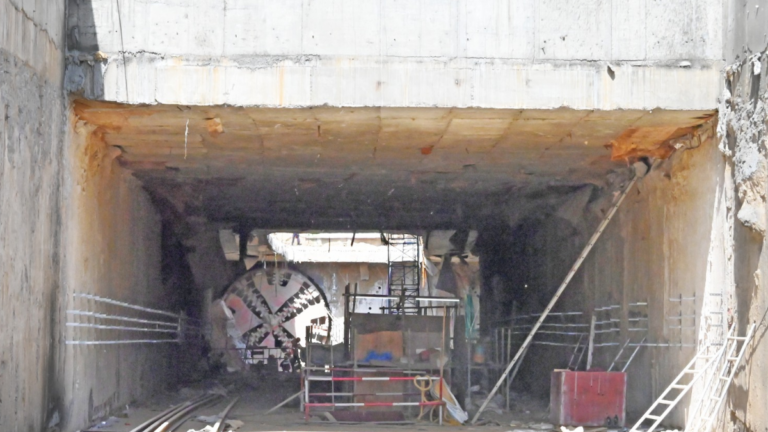
For the first time, BEAM (Bore Tunneling Electrical Ahead Monitoring) system is being used in India and the Patna Metro Project by DMRC to do real-time monitoring to predict the TBM excavations during tunnelling.  

What is a Bore Tunnelling Electrical Ahead Monitoring (BEAM) system

The Bore Tunnelling Electrical Ahead Monitoring (BEAM) system is a geophysical ground prediction technique especially designed for TBM operations. BEAM is a non-intrusive focused-electrical induced polarization ground prediction technique, permanently operating while TBM advances.

According to the Instrumentation & Monitoring Plan of Underground stations and tunnel alignment, various instruments like Inclinometer (INC), Strain-Gauge(SG), Inclinometer-cum-Extensometer(I/E), Vibrating Wire Piezometer (VPZ), Multi Point Borehole Extensometer (MPBX), Convergence Point (CP), Ground Settlement Marker (GSM), Pavement Settlement Marker (PSM) to be installed in the alignment and Building Settlement Marker (BSM), Tilt Plate (TP), Crack Meters (CM), 3D Bi-reflex Targets (BRT) etc. have been installed on concerned buildings falling in the alignment.

Regular monitoring during TBM tunnelling is being done. Currently, the tunnelling drive is in progress in the Moin Ul Haq underground metro station, which is tunnelling towards the Patna University tunnel stretch.

It is to be noted that there are innumerable buildings which are centuries-old, and some are not in very good condition. The conditions of these structures are continuously being monitored as the tunnelling drive is progressing from Moin Ul Haq towards Patna University and PMCH. Utmost care is taken to ensure that tunnelling work does not affect any of the existing buildings in the surrounding areas.

Since Patna is one of the oldest cities, there are a number of structures and buildings falling in the alignment which are very old in age and of historical importance. Based on these factors, a Building Condition Survey was conducted in the underground metro alignment, and each building/structure falling in the underground metro station alignment has been listed based on the present condition of the building, severity, etc. This measure is taken for round-the-clock monitoring to ensure that there is no settlement of land anywhere or any damage is done to the structures above.

These measures help build the confidence of the people staying in these areas that Metro is not only going to change the face of local transportation, but it is also not compromising with the safety of people and buildings.

Advertisement1
InnoMetro_2026

Škoda Group Partners with Tata AutoComp Systems for Indian Railway Components

0
Škoda Group collaborates with TATA AutoComp systems to produce components for Indian Railways

MUMBAI (Metro Rail News): Tata AutoComp Systems, a major player in the Indian auto component industry, has entered into a Memorandum of Understanding (MoU) with Škoda Group, a prominent European company that makes parts and vehicles for public transportation. Their goal is to create a strong partnership focused on making components for the expanding railway and public mobility market in India.

According to Tata AutoComp, it is a major player in the supply of electric vehicle systems and parts, and this alliance will help it further diversify its business and bolster its position in the bus, metro, and railway industries.

Arvind Goel, who is the Chairman of Tata AutoComp, said that teaming up with Škoda Group will make their presence stronger in making the latest electrical equipment and parts for trains, subways, and buses in India.

Petr Novotný, President ( Components & Bus Mobility ), Škoda Group, expressed enthusiasm about their collaboration with TATA AutoComp Systems. He highlighted this partnership as an exciting chance to enter the Indian railway and bus public mobility market. He further emphasized that India’s immense potential, combined with its skilled workforce and high market demand, seamlessly aligns with Škoda Group’s growth strategy. Novotný affirmed their joint commitment to exploring fresh opportunities and devising innovative solutions to cater to the evolving needs of the Indian railway sector.

Apart from selling their own stuff, Škoda wants to get bigger in the train and city transport areas. This is what the company said.

Advertisement1
InnoMetro_2026

Luxury and Grandeur Guaranteed: The Luxury Trains in India

0
Representational image only

Travelling back in time and seeing the magnificent luxury and grandeur of a nation, if fascinates and attracts someone, then luxury trains in India may easily exceed anyone’s expectations. There are seven luxury trains in India, managed by Indian Railways and the IRCTC: The Maharajas Express, The Palace on Wheels, The Deccan Odyssey, The Golden Chariot, The Royal Rajasthan on Wheels (modelled on Palace on Wheels and follows a similar route through Rajasthan), The Royal Orient Train, The Fairy Queen Express and the Heritage on Wheels. These top luxury trains in India cater to travellers who want to explore India’s rich cultural heritage in style, luxury, comfort and elegance. Their opulence can be seen in their mind-boggling interiors, magnificent ambience, exquisite gastronomical fare, significant security systems, and virtually anything else anyone can think of. Travelling on these trains provides unparalleled comfort onboard and allows travellers to visit some of India’s most renowned tourist destinations. It is indispensable to join these luxury train journeys in India to discover India in ways that would otherwise be impossible.

The Maharajas Express: The Maharajas’ Express is the best of all Indian luxury trains and one of the five most extravagant and luxurious trains in the world. This half-mile-long train boasts professionals trained to provide the greatest level of hospitality, fully stocked bars, exquisite suites, butler services, and other amenities, and it is one of India’s most expensive trains. Tourists on board get to enjoy the country’s hidden scenic beauty, cultural tradition, demographic treasures and richness in the most prestigious way imaginable. It has been rated ‘World’s Leading Luxury Train’ consecutively in year 2012, 2013, and 2014.

Untitled design 2023 08 23T173704.539

Image from the Maharajas

Routes:

  • The Heritage of India: Mumbai–Ajanta–Udaipur–Jodhpur–Bikaner–Jaipur– Ranthambore–Agra–Delhi
  • Gems of India: Delhi–Agra–Ranthambore–Jaipur–Delhi
  • The Indian Panorama: Delhi–Jaipur–Ranthambore–Fatehpur Sikri–Agra– Gwalior–Orchha–Khajuraho–Varanasi–Lucknow–Delhi
  • Indian Splendour: Delhi–Agra–Ranthambore–Jaipur–Bikaner–Jodhpur– Udaipur–Balasinor–Mumbai
  • Treasures of India: Delhi–Agra–Ranthambore–Jaipur–Delhi

Operations Month 

The Maharajas’ Express runs from October to April in a year and covers the five routes stated above.

Palace on Wheels: Palace on Wheels is another luxury train ride in India that was renovated and re-launched in 2009 to boost tourism. Luxurious cabins, magnificent wallpapers, a well-stocked bar, considerate hospitality and local culture portrayed and displayed via the artful use of paintings and handicrafts – it’s very much like a castle on wheels that recreates the bygone era of kings and royal palaces! It’s no surprise that it has been voted as the fourth best luxurious and deluxe train of the world. This is one of India’s best royal trains and undoubtedly the most ideal choice if someone is planning a premium and luxurious trip to Rajasthan.

Maharajas Express@2x 100

Image from the Palace on wheels

Route: Delhi–Jaipur–Sawai Madhopur–Chittorgarh–Udaipur–Jaisalmer–Jodhpur –Bharatpur–Agra–Delhi

Operations Month

From September through April, Palace on Wheels is open for service. The seven-night, eight-day voyage includes seven stoppages where guests are taken on city excursions. This train’s main attractions include:

  • Delhi: India Gate, Lotus Temple, Qutab Minar, Humayun’s Tomb
  • Jaipur: Hawa Mahal, Amber Fort, Rajasthali, City Palace, Jantar Mantar
  • Sawai Madhopur & Chittorgarh: Ranthambore National Park, Chittorgarh Fort
  • Udaipur: Jag Niwas, Lake Pichhola
  • Jaisalmer: Yellow Sandstone Fort, ancient mansions
  • Jodhpur: Mehrangarh Fort, grand palaces, shopping tour in Jodhpur
  • Bharatpur: Keoladeo Ghana National Park
  • Agra: Fatehpur-Sikri, the Taj Mahal

The Deccan Odyssey: The Deccan Odyssey is a 5-star hotel on wheels that takes visitors to some fascinating locations in India, inspired by the travel ways and style of the kings and emperors during different royal eras of ancient India. It is one of the best luxury trains in India and worldwide, featuring royal treatment for passengers, palace-like cabin decoration and interiors, multi-cuisine restaurants, lounges, a conference car, an onboard spa, and other cutting-edge amenities for passengers and travellers.

The Deccan Odyssey@2x 100

Image from Deccan Odyssey India

Routes:

  • Maharashtra Splendor: Mumbai–Nasik–Ellora Cave–Ajanta Caves– Kolhapur–Goa–Ratnagiri–Mumbai
  • Indian Odyssey: Delhi–Sawai Madhopur–Agra–Jaipur–Udaipur– Vadodara–Ellora Caves–Mumbai
  • Hidden Treasures of Gujarat: Mumbai–Vadodara–Palitana–Sasan Gir– Somnath–Little Rann of Kutch–Modhera–Patan–Nashik–Mumbai
  • Indian Sojourn: Mumbai–Vadodara–Udaipur–Jodhpur–Agra–Sawai Madhopur–Jaipur–Delhi
  • Jewels of the Deccan: Mumbai–Bijapur–Aihole–Pattadakal–Hampi– Hyderabad–Ellora Caves–Ajanta Caves–Mumbai
  • Maharashtra Wild Trail: Mumbai–Aurangabad–Ramtek–Tadoba– Ajanta–Nashik–Mumbai

Operations Month

The Deccan Odyssey runs from October to April, with a duration of all six excursions spanning seven nights and eight days.

Golden Chariot: The Golden Chariot is one of India’s finest luxury trains, taking visitors to some of the most popular tourist destinations in South India. The Golden Chariot, which opened in 2008, is highly renowned for its exceptional service. The train features AC cabins with royal, elegant furnishings and interiors, bars, restaurants serving a wide range of cuisines, a tiny gym, an Ayurveda spa, and other 5-star amenities. Tourists regard it as one of India’s best luxury trains, and it has also been awarded as ‘Asia’s Leading Luxury Train’ in 2013.

Golden Chariot@2x 100

Image from Golden Chariot

Routes

  • Pride of the South: Bangalore–Kabini–Mysore–Hassan–Hampi–Badami–Goa–Bangalore
  • Southern Splendour: Bangalore–Chennai–Mahabalipuram–Pondicherry– Thanjavur–Madurai–Thiruvananthapuram–Alleppey–Kochi–Bangalore

Operations Months

The Golden Chariot runs from October to March, with duration of both routes extending to seven nights and eight days.

Royal Orient Train: To have an unforgettable experience, tourists need to embark on a graceful and royal journey with the Royal Orient Train and have a lovely experience travelling to major tourist locations onboard with one of India’s top luxury trains. Travelling by luxury train in India is an experience of incredible splendour and total chivalry. It is without a doubt India’s unrivalled royal train. The Royal Orient Train offers palatial-style comfortable accommodations, well-trained hospitality professionals, a multi-cuisine restaurant with the ‘Watering Hole’ Bar, spacious baths, a library and practically all facilities that come to mind while visualising oneself in a five-star hotel.

Routes

Delhi–Chittorgarh/Udaipur-Junagarh/Veraval-Sasan Gir/Dilwara–Palitana- Sarkhej-Ahmedabad- Jaipur- Delhi

Operations Month

The Royal Orient Train operates all year and lasts seven nights and eight days. On the way, one can see and view the following city attractions:

  • Delhi : Qutub Minar, Red Fort, Jama Masjid and India Gate
  • Chittorgarh/Udaipur : Chittorgarh Fort, City Palace, boating in Lake Pichhola, Shilpgram, and Royal Gardens
  • Junagarh/Veraval: Ashokan Rock Edict, Darbar Hall Museum, Mausoleum of Nawab Mahabat Khanji, Somnath Temple on the shore of the Arabian Sea
  • Sasan Gir National Park: Lion Sanctuary
  • Dilwara: St. Paul’s Church and Mandir Beach
  • Palitana: Jain Temple atop Shatrunjaya Hills
  • Ahmedabad: Gandhi Ashram, Calico Museum of Textiles, Sidi Sayyad’s Mosque
  • Jaipur: Amar Fort and elephant ride, Hawa Mahal, City Palace, Jantar Mantar (observatory)

Fairy Queen Express: Last but not least, the Fairy Queen Express is one of India’s oldest trains, offering luxury rail experiences and train journeys. Fairy Queen, powered by the oldest serving steam locomotive built around 1855, has its own charm as it rambles across Rajasthan to Alwar. With a mention in the Guinness Book of World Records and a National Tourism Award, Fairy Queen easily ranks amongst one of India’s finest and most extravagant trains.

A train on the tracksDescription automatically generated

Image from Luxury trains of India

Route

Delhi–Alwar–Sariska-Alwar–Delhi

Operations Month

From October through March, on the second and fourth Saturdays of the month. The journey lasts one night and two days. Attractions at its two stoppages, Sariska and Alwar, include:

  • Sariska: Lake Palace, Sariska National Park
  • Alwar: Alwar Museum

The Heritage on Wheels: The Heritage on Wheels, one of India’s oldest luxury trains, shows the traditions and culture of Rajasthan that have been passed down from generation to generation in the most luxurious way conceivable. With interiors that never fail to carry the onboard passengers back to the golden days of the state, the Heritage on Wheels is one of India’s most expensive and premium trains. With local restaurants serving authentic and continental cuisine on the train’s floors and rooms that never fail to emanate the Royal vibes and emotions, this is one of those trains that everyone should experience at least once in their life. This luxury train in India is sure to offer a spectacular experience, treating passengers as if they were queens or kings.

A room with green carpet and tablesDescription automatically generated

Image from Luxury trains of India
Route

Jaipur –Bikaner–Tal Chhapar and Shekhawati – Jaipur

Popular sights to view when going on the Heritage on Wheels for three nights and four days include:

  • Bikaner: Junagarh Fort, Haat, Camel Safari, Lalgarh Palace and National Research Centre
  • Tal Chhapar & Shekhawati: Laxmangarh Fort, Goenka Haveli, Sikar, Churu, Mandawa and Nawalgarh
  • Jaipur: Hawa Mahal, Amber Palace, City Palace and Jantar Mantar
Advertisement1
InnoMetro_2026