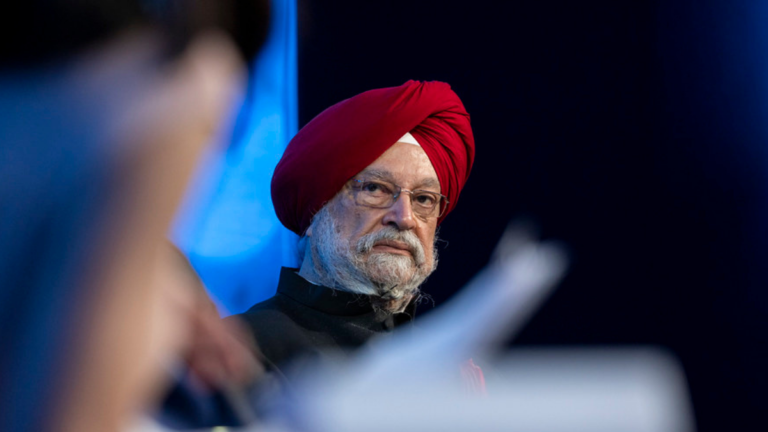
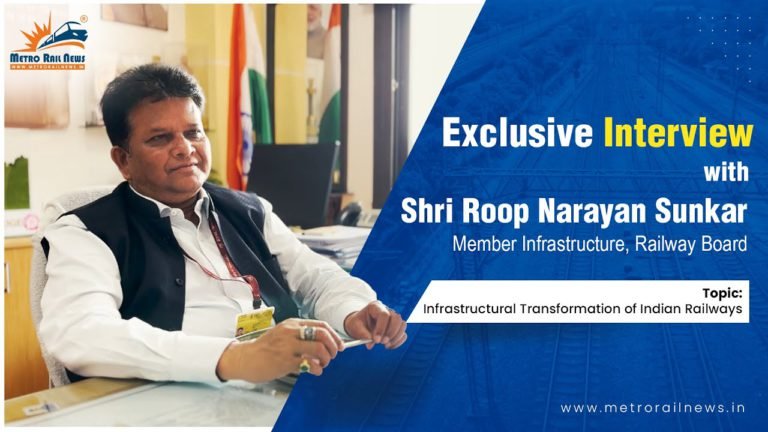
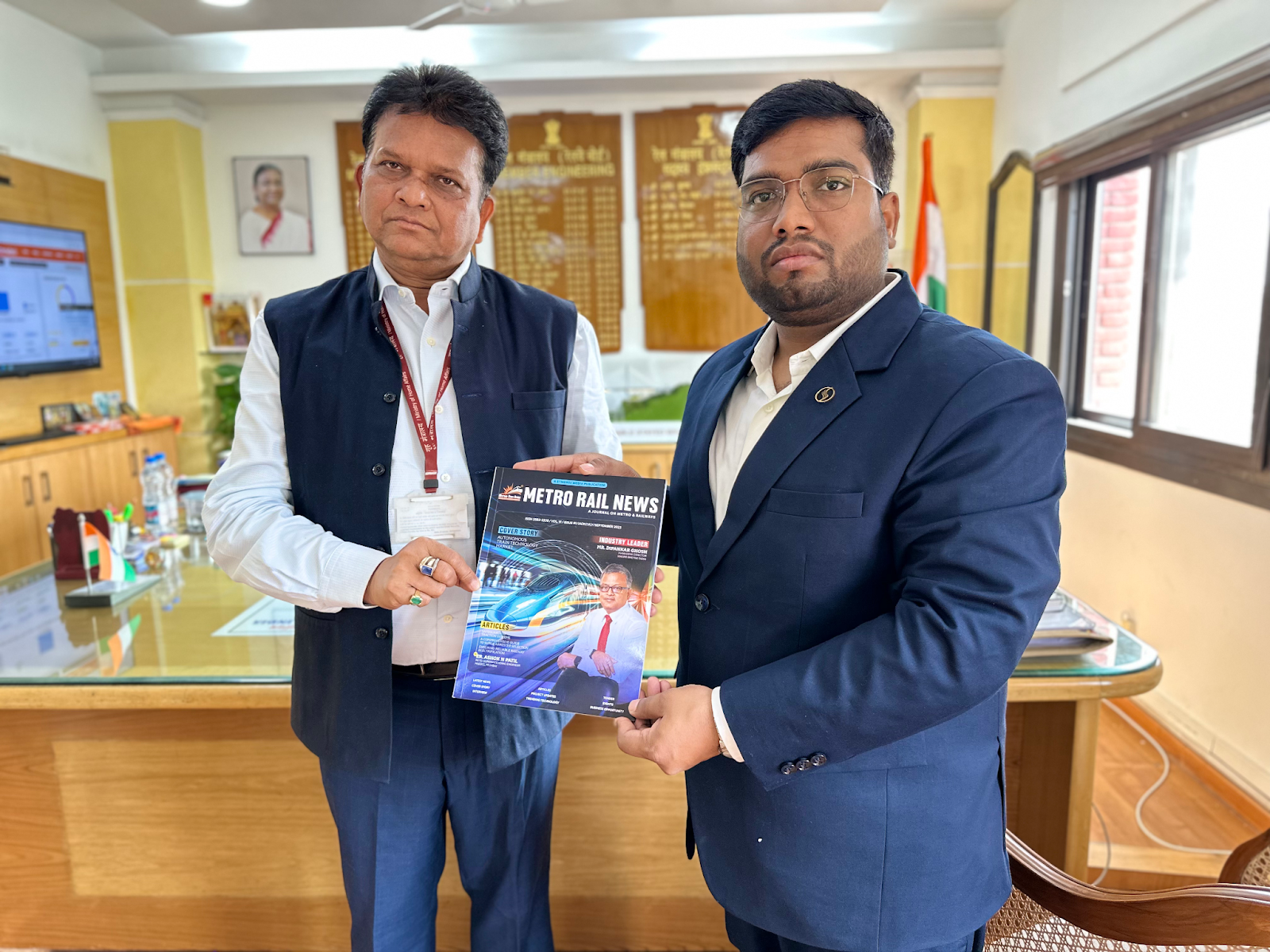
Our Managing Editor, Mr Narendra Shah, conducted an Exclusive Interview with Shri Roop N Sunkar, Member (Infrastructure), Ministry of Railways (Railway Board), Government of India, at Rail Bhavan, New Delhi.
Shri Roop N Sunkar is an officer of the Indian Railway Service of Engineering (IRSE) 1985 batch and has recently taken charge as Member Infrastructure of the Railway Board. He has previously served as the GM of the East Coast Railway. He has held various other roles such as Chief Project Director (CPD)/Bridge Work in West Central Railway, Divisional Railway Manager (DRM)/Ratlam, Chief Bridge Engineer in North Central Railway & West Central Railway, and Chief Engineer (Construction) at Bilaspur.
Apart from his degree in B.Tech from Barkatullah University, Bhopal, he completed his LLB from Rani Durgavati Vishwavidyalaya, Jabalpur, in 2005, and has also completed a PG-Diploma in Environment and Sustainable Development as well as Disaster Management from IGNOU, Delhi.

Q.1: Indian Railways is going through a transformational change across all its segments. How do you analyse the developmental works? The railways being the national transporter of the country, what are the priority and focus areas identified for equitable development?
Indian Railway is the country’s lifeline, and as the national transporter, we are committed to moving bulk quantities for longer distances, mainly coal, iron ores, bauxite and others. The railways cover nearly 1,26,000 kilometres of the network, which is fully saturated. We are serving approximately two crores of passengers daily. Two crore passengers move in our trains daily. So, we have significant challenges in developing the infrastructure further because we have to expand to handle the traffic volume. In the last few years, we have been significantly improving. Earlier, we were laying only two thousand kilometres of new tracks annually, up to five thousand kilometres annually. Last year, we did five thousand kms new track work.
Road over bridges and road under bridges are being constructed to eliminate the inconvenience caused to the passengers and improve safety. We have planned to eliminate the level crossing gates across the system, and that is being taken up. Freight movement being our core business, modern good sets are used and provided to move goods from one place to another. Across the country, 1309 stations have been sanctioned for modernisation. Major stations are being developed in a big way with extensive facilities like the city centres. We are making city centres, connecting people with foot-over bridges of wider width so that people can cross from one end to other with ease is also one of the crucial steps taken. For passenger traffic, as we have to deal with a large population, the length of trains is being increased. Platforms are being restructured to accommodate 24 coaches and, at the critical station, even 26 coach trains. The speed of trains has also been increased. New trains like Vande Bharat are being introduced. Demand is coming from all sections, and we are in a position to fulfil the public’s expectations. So, this is the volume of the work being done by Indian Railways in all sections, everywhere. All parameters are being covered.
Q.2. Railways in India have been criticised for improper asset management, under-utilisation and lack of utilisation of resources, cost-overruns and other fundamental issues at various levels for decades. How are you planning to address these challenges? What have been the significant accomplishments in recent years?
In railways, we plan for the future. Something is being underutilised. It is not being underutilised, and it is a futuristic belief about how we will expand. For future expansion, all these things are required. Land, for instance, is required to make the double, triple, or fourth line. Ours is always the futuristic thinking that it should not be the end. Whatever we are doing, it should not be the end. We believe in sustainable development. Whatever you do, leave the option for future development and renew for the new generation; they will end. So, what’s been done earlier, because of that only land is available and we can make third and fourth line and other places. Now, stations are being developed. So, it was only possible if the land were there.
With the growth of the cities, stations are now being developed as the city centres. You will have marketing; people will like to come to those areas, they will have their business, it will be almost everywhere in major cities, major business hub, all sort of facilities will be available. That is the necessary thought process. So, no way it is underutilisation. Seeing the efforts being taken, you can say it is being underutilised, but tomorrow it may not be. It is only the way of looking at things.
Q.3. Do you agree with the statement that bullet train, HSR and S-HSR projects initiated and worked upon currently remain long delayed in the nation? Apart from high-speed train travel, do these projects also help provide congestion-free train travel in the country?
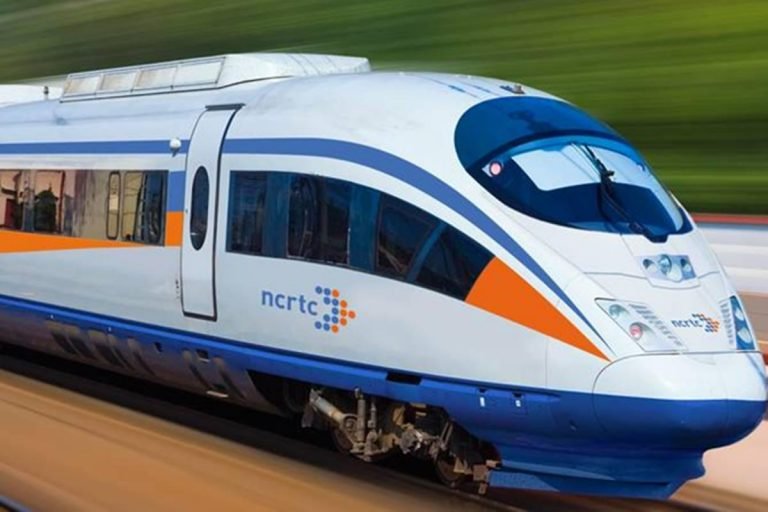
Naturally, we need not limit ourselves to what we have done in the last few years; we must compare and compete with the developing world. See the bullet train project, which is being executed much faster. In other stretches also, the speed of trains is being increased. Earlier, it was 100-110 kmph. It has already been increased to 130 kmph in many stretches, and then we are going up to 160 kmph in limited stretches. Delhi, Howrah, Mumbai, and Chennai are the main stretches where we have to see that we can enhance the speed on priority.
To serve the passengers better, speed is the most important thing. So, to achieve that, tracks are being upgraded. The coaches, locos, signalling systems, everything is being upgraded. We must minimise the travel time. That is the basic idea. For that only, new tracks are being constructed with high-speed potential. Even semi-high-speed sections have been identified. We are working on that. We have made DFC exclusively for goods traffic to offload the load on existing tracks to have more and more passenger trains run on these tracks. So, these are the various steps taken by us.
Q.4. What can be the best way to control over-crowding in Indian trains, especially in peak and festive seasons, amidst an ever-increasing and growing number of passengers through train travel? Where do you think the problem lies in running double-decker trains on busy routes to address such issues?
Seeing our vast population, Indian Railways is committed to helping the nation. For that, we are developing several terminals in all major cities. Delhi, Mumbai, and Patna are developing facilities everywhere for coaching, maintenance, etc. We must maintain the coaches, the tracks, and the locos. Several coaching depots have been developed; several local maintenance sheds have been developed. We have developed the platforms and expanded the stations and passenger facilities. So, all the steps have been taken to increase the facilities. The number of trains has also been increased. Every year, we add a few numbers of trains. For faster movement, Vande Bharat train Tejas is there. Earlier, we had the traditional ICF type of coaches having a speed potential of 110 kmph. Now, we have LHB coaches. The speed potential of these is very high. Tracks and signals are also being upgraded. So, with all these steps taken, we should be able to tackle the problem.
Q.5. What efforts are being undertaken to augment track capacity and strength across the entire route length of IR? What is the deadline set for the work? Kindly share the roll-out plan for the train protection systems. What have been the significant developments so far?
Everywhere saturation is there, we are going for the multi-tracking. Replacing the single track, we are making double track, third line, fourth line. Then, to increase the speed, we have taken steps to improve the track conditions. Track structures have been improved, curves have been realigned, and bridges have been strengthened. All these have been done. But what happens if we increase the speed? Then, we have to take corrective action so the driver can quickly control the speed. Because of the manual intervention, even if he loses control or misses the signal, it should be possible for the train to stop before the red signal. It should not cross the signal. It should not collide with another train ahead or a train coming from the opposite direction.
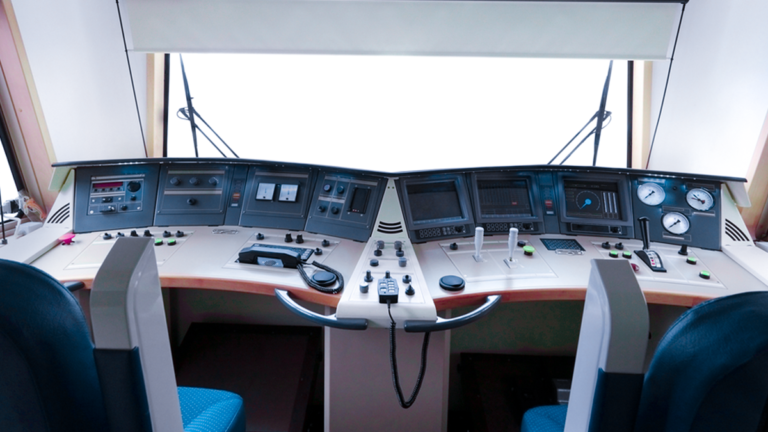
For that, we have introduced the system of Kavach. Kavach is basically to protect and avoid collision of the train, and it prevents the signal passing danger. The technology is provided at various levels. It is provided in the train loco, in the system, provided at stations. So, even if the driver misses the signal aspect, automatically, brakes will apply, and the train will come to a halt. Already 1345 kilometres, stretch has been completed, work has been completed. Almost 3000 kilometres of track is being covered. We are in advanced stages. The work is in progress. Within the next few months, we will take up six thousand kilometres of more length.
Tenders will be invited, and slowly and steadily, the intention is to cover entire mail/express train areas and the entire route network. Regarding the deadline, it is a time-consuming process. It is not something that we can say is to be done tomorrow, or it will happen. It is highly technical, and safety is paramount for Indian Railways. We assign the top priority to safety in railways. Whatever we do, it has to be a proven technology, and it has to be a fail-safe system. Even if something goes wrong in the system, it has to be fail-safe. Fail-safe means the most dangerous aspect should be displayed. This red signal is the most dangerous aspect. Even if some failure takes place, the red aspect should come. So, that train is controlled by the driver or by this Kavach application. That is the requirement, development.
Q.6. With a hundred per cent electrification, DFCCIL is also expected to bring notable changes in the rail transport system in the country. What are the other significant initiatives envisioned for IR in the coming years?
If we have stretches with diesel loco, and there are stretches electrified, trains must first be brought with diesel loco and changed with an electrified loco. In the change process, time is consumed, and other lines also get occupied. First, removing and detaching the diesel loco and attaching the electric loco, then keeping the line for this detachment and attachment of loco. Hence, line capacity is reduced. If only the electrical loco is done through, it will help take minimum time; no time is required to change the traction.
Secondly, the speed of the electric loco is comparatively better, and it is environmentally friendly. Then fuel consumption is also less, compared to diesel loco it costs much less. So, all these things are there. It is more environmentally friendly and promotes green industry. All these initiatives are there, and Indian Railways is moving, which is a big thing.
Q.7. Please share your views on Metro Rail News. Any message for our readers?
Metro Rail News, what I know, what I have seen, it covers so many things being developed all over the country in the metro and rail sector. What industries are doing, what government departments are doing, and what are government departments’ expectations in various areas? It covers everything. That way, it reconciles the monthly publication; it is very informative for industry, even government officials, to have the information because having information in one place is always helpful for anybody. You may be in the business, or you may be in the government services or the private industries. So, having the information in one place is always desirable. That way, Metro Rail News is doing good work.

Intrigued by the future of Metro and its impact on our city? Join us at our upcoming InnoMetro event to delve deeper into this vital issue. Stay informed, get involved, and let’s ride the Metro towards a brighter, more sustainable future together.