Home Blog Page 168

General Manager Inspects Howrah Maidan To Esplanade Stretch Of East-West Metro Corridor

0
General Manager Inspects Howrah Maidan To Esplanade Stretch Of East-West Metro Corridor

KOLKATA (Metro Rail News): Shri P. Uday Kumar Reddy, General Manager, inspected Howrah Maidan to Esplanade stretch of East-West Metro Corridor (Green Line) yesterday, i.e. on 27.11.2023.  During this inspection, Senior KMRCL officials and other senior officials of Metro Railway accompanied him.

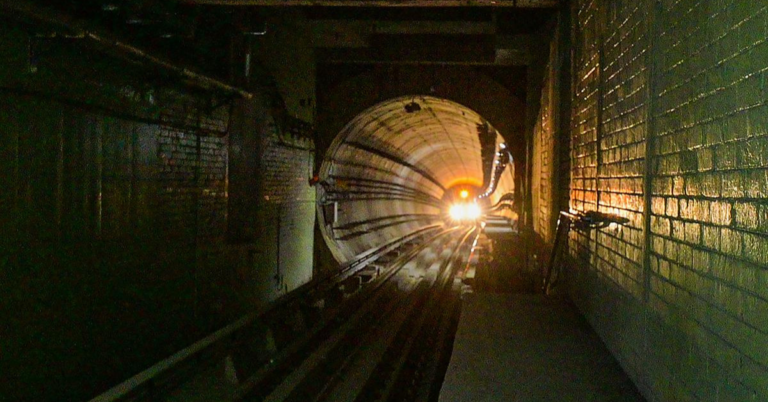
Shri Reddy started today’s inspection from Howrah Maidan Metro station this afternoon. He travelled up to Esplanade Metro station under the river Hooghly in a Metro. On his way to Esplanade, Shri Reddy stopped at each station and inspected all passenger amenities and work progress as these stations were almost ready for commissioning. While evaluating the work progress on all the underground stations from Howrah Maidan to Esplanade o­n-the-spot, he also inspected these stations’ ventilation and air-conditioning systems. 

Inspection 02

Shri Reddy expressed his satisfaction after seeing the work progress and advised everyone to complete all the pending jobs within the deadline.

Inspection 03

Discover the endless possibilities of our city’s Metro at InnoMetro, our flagship Expo and Conference. Be an active participant in shaping its future towards a more sustainable tomorrow. Stay informed and join us to take a step towards a brighter future.

Advertisement1
InnoMetro_2026

Chennai Metro Awarded with the Green Champion Award 

0
Chennai Metro Awarded with the Green Champion Award

CHENNAI (Metro Rail News):  CMRL has been conferred the Green Champion Award, one of the highest honours bestowed by the Indian Green Building Council (IGBC) for leading the green MRTS movement in India. The award ceremony occurred on 24th November 2023 as part of the “Green Building Congress,” IGBC’s flagship conference and expo on the Green Built Environment, held at the Chennai Trade Centre. Thiru. T. Archunan, Director (Projects), CMRL, received the prestigious award on behalf of the organisation. 

Green Champion Award for CMRL

It may be recalled that CMRL has recently been given international recognition for its continued and committed pro-environment initiatives in all its activities. The Green Apple Award 2023 – Gold was conferred by The Green Organization, London, United Kingdom, last week on 20th November 2023 in an award ceremony held in London. Earlier this year, in an award ceremony held in April 2023 in Miami, the USA, CMRL received the Green Champion Award 2023 – Silver for the Environmental Best Practice “Carbon Reduction” category. 

These awards underline CMRL’s position as a leader in promoting and implementing environmentally conscious practices in creating world-class transportation infrastructure for the people of Chennai and encourage team CMRL and associated stakeholders, including its contractors, to continue striving for excellence in quality and sustainable development. 


Discover the endless possibilities of our city’s Metro at InnoMetro, our flagship Expo and Conference. Be an active participant in shaping its future towards a more sustainable tomorrow. Stay informed and join us to take a step towards a brighter future.

Advertisement1
InnoMetro_2026

Knorr-Bremse Partners with Alstom to Equip Metro Trains for Megacities Bhopal and Indore

0
Bhopal Metro
Bhopal Metro

NEW DELHI (Metro Rail News): Knorr-Bremse, on behalf of Alstom India, is fitting braking and climate control systems to 52 Movia metros ordered by Madhya Pradesh Metro Rail Corporation Limited. 

  • The trains will serve on metro lines currently under construction in Bhopal and Indore
  • Knorr-Bremse systems are in high demand for major projects in the emerging Indian rail market
  • For Knorr-Bremse, the order value is in the lower double-digit million-euro range

Knorr-Bremse is to equip more metro trains destined for major cities in India in partnership with Alstom. The equipment includes braking and climate control systems for 52 Alstom Movia trains, with 156 railcars ordered by Madhya Pradesh Metro Rail Corporation Limited (MPMRCL) for Bhopal and Indore. Knorr-Bremse will also provide comprehensive services for these technologies over 15 years. With this order, Knorr-Bremse benefits from the dynamic development of India’s transportation sector while contributing to safe, reliable, eco-friendly mobility in the country’s mass transit segment.

Dr Nicolas Lange, Member of the Executive Board of Knorr-Bremse AG and responsible for the Rail Vehicle Systems division: “We’ve been working closely with local markets and customers in India for the last 30 years. The understanding and expertise we’ve acquired are paying off in the form of long-term customer relationships. For example, our high-quality systems solutions have proved their worth in many other Indian metro fleets in cities like Delhi and Mumbai. And now we’re bringing our high standards of dependability and market-leading quality to this new Alstom project in Madhya Pradesh.”

Olivier Loison, Managing Director, Alstom India, said, “Our integrated rolling stock and signalling project with MPMRCL for the Bhopal and Indore metro is a strong step forward in the infrastructure modernization in both the cities. Our global partnership with Knorr-Bremse allows us to provide the best-in-class solutions to our customers transforming the passenger experience. We look forward to our continued engagement and success in India.”

Safe and reliable rail mobility for significant cities

To serve Bhopal and Indore, MPMRCL has ordered 52 metro trains from Alstom, totalling 156 railcars. Starting in 2024, they will go into service on overground and underground lines in both cities, travelling at speeds of up to 80 km/h. Of the metro trains, 27 are destined for Bhopal (31 km, 30 stations) and 25 for Indore, some 200 kilometres away (first construction phase: 33 km, 29 stations). The trains will play a vital role in India’s mass rapid-transit systems (MRTS), intended to provide reliable connections for commuters in the country’s rapidly growing cities. India has recently implemented several innovative, large-scale projects involving metro transit systems in various parts of the country.

Quick deliveries, long-term service

Knorr-Bremse was able to impress Alstom with three benefits in particular: punctual deliveries of high-quality products, dedicated technical support at all stages of the project, plus the two companies’ shared experience of India’s most recent major metro project, Agra-Kanpur, for which Knorr-Bremse is also providing equipment. Generally, Knorr-Bremse is a crucial partner for several customers in the ongoing development of the Indian transportation sector.

The brake control unit at the heart of Knorr-Bremse’s braking systems is based on market-leading software expertise from the company’s Technology Center in Pune, India (TCI). At TCI, Knorr-Bremse employs more than 800 people and recently expanded the facility to host 1,300 specialists and engineers.

The energy-efficient and highly reliable climate control systems supplied by the Group’s Merak brand are already installed in several Indian metro systems, working to ensure onboard passenger comfort. The systems have an energy-saving free cooling function, feature CO₂ sensors and an intelligent, fresh air control mode for optimised in-train airflow. Knorr-Bremse will start to supply Alstom with the technologies for Bhopal and Indore in the immediate future; deliveries are expected to continue through mid-2025. At the same time, Knorr-Bremse will take responsibility for the long-term servicing of the brake and climate control systems, thus contributing to the high availability and reliability of metro services.


Discover the endless possibilities of our city’s Metro at InnoMetro, our flagship Expo and Conference. Be an active participant in shaping its future towards a more sustainable tomorrow. Stay informed and join us to take a step towards a brighter future.

Advertisement1
InnoMetro_2026

NCRTC to Roll Out Co-Branding Rights of RRTS Stations Soon 

0
RRTS -train (representational)

NEW DELHI (Metro Rail News): NCRTC aims to roll out the co-branding rights process for the 5 RRTS stations very soon. This would help NCRTC to explore non-fare box revenue options. 

Why? 

NCRTC aims to explore the non-fare box revenue to generate handsome revenue into the system and bring financial stability & sustainability. 

Rights Include 

The Co-branding rights include 

  1. Add prefixes or suffixes with the name of the station. 
  2. Brand Colors on the stations 
  3. Advertisements at Entry/Exit points. 
  4. Comprehensive Coverage of Civil Structures 
  5. Audio Announcements of the Co-branded names 

The bidding process for these is underway. 

Non-Fare Box Revenue 

Money from any source other than fares or freight revenue falls in the category of Non-fare box revenue. This allows the organisations to explore their facilities for advertisements of brands to increase their revenue and, in turn, stabilise their income & financial standing. 

Big Opportunity

This presents a big opportunity for the brands as RRTS covers many commuters commuting to and from Delhi. This will expose the brands to many consumers, increasing its footprint across the cities covered by RRTS. 

Further Development 

NCRTC will also facilitate privileges and perks like media rights, F&B, retail spaces, telecom access rights, virtual stores, etc. It will also significantly impact the Delhi and NCR region’s economic paradigm.

RRTS

The Rapid Rail Transit System (RRTS) is a mass rapid transit network stretching 82.15 kilometres, connecting Delhi’s Sarai Kale Khan with Ghaziabad and Meerut. The construction of the Delhi-Ghaziabad-Meerut corridor, with a total cost of Rs 30,000 crore, is underway. The inaugural phase of the priority corridor, spanning 17 kilometres, was inaugurated by Prime Minister Modi. This segment includes five stations: Sahibabad, Ghaziabad, Guildhar, Duhai, and Duhai Depot.

On October 20th, Prime Minister Narendra Modi officially launched India’s inaugural RAPIDX train, Namo Bharat, departing from Sahibabad Station. These trains are designed to operate at a top speed of 180 kmph, with ticket prices ranging from Rs 20 to Rs 50 for standard coaches and Rs 50 to Rs 100 for premium coaches.

The RRTS project entails semi-high-speed rail corridors connecting Delhi to Meerut in Uttar Pradesh, Alwar in Rajasthan, and Panipat in Haryana.


Discover the endless possibilities of our city’s Metro at InnoMetro, our flagship Expo and Conference. Be an active participant in shaping its future towards a more sustainable tomorrow. Stay informed and join us to take a step towards a brighter future.

Advertisement1
InnoMetro_2026

BMRCL to Begin Land Acquisition for Bangalore Metro Phase 3

0
Bangalore Metro
Bangalore Metro (representational Image)

BANGALORE (Metro Rail News): Bangalore Metro Rail Corporation (BMRC) plans to begin the land acquisition for Bangalore Metro Phase 3 very soon once it receives the nod from the state finance department. 

Preliminary Stage 

In the preliminary stage, BMRCL will acquire 100 acres of land to construct depots and viaducts on some of the stretches of the Bangalore metro. Firstly, the survey process will be undertaken only to begin the work of land acquisition. 

Metro Depot 

Among the 100 acres of land to be acquired, 75 acres will be utilised for constructing a metro depot near Byadarahalli Police Station on Magadi Road. It will serve both the lines of  Phase 03. It will be the city’s second-largest metro depot after the Peenya depot. 

Further Plans 

BMRCL has been asked to submit the land acquisition requirement for every 10-kilometre stretch of the proposed lines. The lines have been aligned to run on the viaducts in the middle of the roads. The stations are to be constructed based on various considerations. 

DPR Deadlock 

The DPR for the Bangalore Metro Phase 3 still lies with the central government. Approval still needs to be obtained from the central government. Following the directives from MoHUA, BMRCL has also adjusted the procurement of Rolling Stock for the Magadi Road line. 

Kanpur Metro, Phase 3 

Phase 3 of the Kanpur Metro entails two metro lines: 

  1. Kempapura- J P Nagar (32.1 Km) 
  2. Hosahalli- Kadabagere ( 12.5 Km) 

The estimated cost of the project is estimated to be Rs 15,600 Crores. 


Intrigued by the future of Metro and its impact on our city? Join us at our upcoming Inno Metro event to delve deeper into this vital issue. Stay informed, get involved, and let’s ride the Metro towards a brighter, more sustainable future together.

Advertisement1
InnoMetro_2026

A Boost to Gurugram’s Own Metro Network for the Development of the Region

2
Gurgaon Metro
Gurgaon Metro/Representational Image

Gurgaon (Gurugram) Metro, also commonly referred to as Rapid Metro, is a single metro line with 11 stations built and developed by Rapid MetroRail Gurgaon (RMRG), a subsidiary of Infrastructure Leasing & Financial Services Limited (IL&FS). A 5.1 km route was developed in Phase 1 of the project to connect the Delhi Metro’s Sikanderpur Station (Yellow line) with the DLF Cybercity commercial and business districts. On November 14, 2013, this line became commercially operational. On March 31, 2017, a 7-kilometer extension of the line opened to connect Sikanderpur Station with Sector 55-56 via new and additional stations on Golf Course Road. The entire line is served by twelve 3-coach trains supplied by CSR Zhuzhou Electric Locomotive Works under a Siemens subcontract.

The Delhi Metro Rail Corporation (DMRC) has assumed control of the line’s operations. On October 22 2019, after its original operator (RMRG) expressed its inability to continue operations amidst low and sluggish footfall of passengers and overpowering operational expenditures. The corridors have been proposed to connect Gurgaon with numerous new metro lines to its surrounding communities and region, including old Gurgaon, Dwarka, Bawal, Manesar, Faridabad, and Sohna, to be approved by the Haryana Government. The Haryana Mass Rapid Transport Corporation (HMRTC) is the primary body and nodal agency with the charge and responsibility of carrying out and executing these lines.

Key Information & Project Details (Line-1)

  • Top Speed: 80 kmph
  • Average Speed: 35 kmph
  • Track Gauge: Standard Gauge – 1435 mm
  • Electrification: 750 V DC Third Rail
  • Signalling: Cab Signalling/Distance to Go
  • Operational: 12.1 km
  • Approved: 28.8 km
  • Under Construction: 0 km
  • Proposed: 170.19 km
  • Rolling Stock: 36 coaches (12 train sets x 3)

Gurgaon Metro Operational Route

Line-1: Moulsari Avenue (Cybercity) – Sector 55-56

  • Length: 12.1 km
  • Type: Elevated
  • Depots: Sector 24 and Sector 54
  • Number of Stations: Eleven (11)
  • Stations (Built in Phase 1): Sikanderpur, DLF Phase 2, Vodafone Belvedere Towers, IndusInd Bank Cyber City, Micromax Moulsari Avenue, DLF Phase 3
  • Station Names (Built-in Phase 2): Phase 2 Stations (5): DLF Phase 1, Sector 42-43, Sector 53-54, Sector 54 Chowk and Sector 55-56

Gurgaon Metro Approved New Routes

New Line: HUDA City Centre – Palam Vihar – Moulsari Avenue

  • Length: 28.8 km

(This line, known as the New Gurgaon-Old Gurgaon link, has been designed to form a ring line. A consortium of RITES and the School of Planning and Architecture – SPA developed its DPR. The HMRTC board approved its directors in December 2019 and the Haryana state government’s Cabinet in August 2020).

  • Stations: Sector 45, Cyber Park, District Shopping Centre, Sector 47, Subhash Chowk, Sector 48, Sector 72 A, Hero Honda Chowk, Udyog Vihar Phase 6, Sector 10, Sector 37, Basai village, Sector 9, Sector 7, Sector 4, Sector 5, Ashok Vihar, Sector 3, Bajghera Road, Palam Vihar Extension, Palam Vihar, Sector 23 A, Sector 22, Udyog Vihar Phase 4, Udyog Vihar Phase 5, Moulsari Avenue (DLF Cyber City) Total 27

Gurgaon Metro Proposed New Routes

New Line: Gurgaon – Manesar – MBIR (82 km)

  • Length: 82 km
  • Phase 1: Gurugram Railway Station to Panchgaon in Manesar (35 km)
  • Phase 2: Panchgaon (Manesar) to Dharuhera (22 km)
  • Phase 3: Dharuhera – Manesar Bawal Investment Region (MBIR) (25 km)

(As part of the Delhi – Mumbai Industrial Corridor (DMIC), an 82-kilometer-long line with 39 stations has been proposed to connect Gurgaon with the Manesar Bawal Investment Region (MBIR). Its DPR was prepared and developed by AECOM and presented to the Haryana government by DMICDC in 2016. In addition, two spurs have been planned in Phase-1A (12 km from Global City to Sector-112) and Phase-1B (12 km from MBIR to Rewari), bringing the overall route of the line to 108 Km).

New Line: Gurgaon – Faridabad

  • Length: 31 km

(This route seeks to connect Sector 45 in Gurgaon (south of Huda City Centre) with Bata Chowk in Faridabad. To establish and develop an interchange, the Yellow Line needs to be extended by 1 km).

New Line: Sector 21 Dwarka – IFFCO Chowk Gurgaon

  • Length: 12.225 km

(In 2015, the Delhi Metro Rail Corporation Ltd. (DMRC) prepared the Detailed Project Report (DPR) for this line, recommending an extension of Line-3 (Blue Line) for Rs 5150 crore.). A revised and updated DPR proposes three alternatives:

  • Option 1: Extending the current Airport Express service to IFFCO Chowk
  • Option 2: Expansion of Line 3 from Sector 21 Dwarka to IFFCO Chowk.
  • Option 3: Independent express line from Sector 21 Dwarka to IFFCO Chowk with an independent depot

New Line: HUDA City Centre – Gurugram Railway Station

  • Length: 11.15 km

(This route includes Subhash Chowk, Rajiv Chowk, and New Colony Mor.)

New Line: HUDA City Centre – Dwarka

  • Length: 27.48 km

(This route is proposed to run through Subhash Chowk on Sohna Road, Hero Honda Chowk, Sector 33, 34, 37, Sector 10 A, 10, 9, 9 A, ESI Hospital, Sector 4, Sector 5, Railway Station, Sector 23, and Dwarka).

Extn of Line-1: Sector 55/56 – Vatika Chowk (6.34 km)

  • Length: 6.34 km

(This line is proposed to run from Sector 55/56 to Vatika Chowk along the Southern Peripheral Road (SPR), with five new metro stations at Sector 56, Sushant Lok, Sushant Lok Phase-3, Rosewood City, and Vatika Chowk. In September 2019, the DMRC completed the Techno-Feasibility Report for this line).

Latest Update on New Gurgaon Metro Line 

The Haryana Mass Transport Corporation Ltd. (HMRTC) recently released a request for bids to begin constructing the new Gurgaon Metro line after the Cabinet approves of the process. Following the invitation for bids, three firms bid to work on constructing the projected metro line.

image

Conclusion

The recently approved Gurgaon Metro shall run through Old Gurgaon and connect Huda City Centre to Gurgaon Cyber City. After years of deliberation, the central government has finally approved the proposal. When completed, the project will connect the two sides of Gurgaon. The Metro’s total length is approximately 28.5 kilometres. The main line will be approximately 26.65 kilometres long, with the remaining 1.85 km constructed as a spur from Basai village to the Dwarka expressway. Over 2.5 million people are expected to benefit from the Huda City Centre to Cyber City metro line.

The metro line’s construction will also promote the area’s economic development. According to the officials, the line’s estimated ridership in 2026 will be around 5.4 lakh individuals, growing to 7.26 lakh by 2031. The Haryana Mass Transport Corporation Ltd (HMRTC) is developing a well-defined project safety plan. The project is being designed as a special-purpose vehicle (SPV). The SPV is supported both by the GoI and the Government of Haryana. The initial proposal was presented years ago. However, delay has been observed due to several revisions in the project plans. Below are some of the critical components of the recently approved Gurgaon Metro.

Key Features of the New Gurgaon Metro Line 
Gurgaon Metro Line beginning station HUDA City Center, Gurugram
Gurgaon Metro Line ending station Gurgaon Cyber City 
Number of stations on the line 27 (including one depot)
Total length of the Gurgaon metro line 28.5 kms
Current status Approved by Cabinet, work to commence soon
Expected completion date 2027
Estimated cost of construction Rs 6,800 Crores 
Metro line and station type Elevated 
OwnerHaryana Mass Transport Corporation Ltd (HMRTC)

The new Gurgaon metro line, which connects Huda City Centre to Gurgaon Cyber City, will have 27 stations. These are the Gurgaon Metro stations:

List of Approved Gurgaon Metro Stations
HUDA City CenterSector 45, GurugramCyber Park
Sector 47, GurugramSubhash ChowkSector 48, Gurugram
Sector 72A, GurugramHero Honda ChowkUdyog Vihar Phase 6
Sector 10, GurugramSector 37, GurugramBasai Village
Sector 9, GurugramSector 7, GurugramSector 4, Gurugram
Sector 5, GurugramAshok ViharSector 3, Gurugram
Bajghera RoadPalam Vihar ExtensionPalam Vihar
Sector 23A, GurugramSector 22, GurugramUdyog Vihar Phase 4
Udyog Vihar Phase 5Cyber CityDwarka Expressway (Sector 101)

Connectivity of Gurgaon Metro Stations 

The newly approved Gurgaon Metro line’s main feature is connecting the New Gurgaon district to Old Gurgaon. The improved connectivity will aid in the development of the old Gurgaon area. The development in the old Gurgaon area has been somewhat slow. No metro line currently connects Old Gurugram to the rest of the city. Udyog Vihar Phase 6, Sector 10, Sector 37, Basai Village, Sector 9, Sector 7, Sector 4, Sector 5, Ashok Vihar, Sector 3, Bajghera Road, Palam Vihar Extension, Palam Vihar, Sector 23A, Sector 22, Sector 24, Udyog Vihar Phase 4, and Udyog Vihar Phase 5. Huda City Centre, Sector 45, Cyber Park, Sector 47, Subhash Chowk, Sector 48, Sector 72A, and Hero Honda Chowk are Gurgaon Metro Stations in the New Gurugram region.

Cost of Construction  

The overall construction cost is projected to be around Rs 6,800 crores. The investment expected by different parties and stakeholders includes:

  • The Government of India’s shareholding will be about Rs 896.19 crore.
  • Haryana’s government shall contribute approximately Rs 1432.49 crore.
  • Haryana Urban Development Body will invest approximately Rs 300 crores.
  • PPP investment (lifts and elevators) is estimated to be around Rs 135.47 crores.
  • The Pass-through aid loan component will be worth approximately Rs 2688.57 crores.

The construction of the Gurgaon metro will significantly boost economic growth in the Gurgaon area, particularly the sectors in the old Gurgaon area. The following are some of the areas that are predicted to flourish and develop along the planned metro line:

  • Sector 4, Gurugram: It is a growing and upcoming community close to significant economic and employment centres. The area includes a combination of builder floors and single-family homes. The surrounding places and areas in proximity are rich in social infrastructure and civic amenities and infrastructure. Sector 4 is easily accessible through different kinds of transportation options. It is located along the old railway route near the railway station.
  • Palam Vihar: One of the earlier regions and localities of the area. It is well connected to both the Delhi and Gurugram regions. The location is very near to NH 48. The surrounding area offers excellent social infrastructure, including educational institutions, hospitals, and leisure centres. Palam Vihar is close to the Delhi International Airport and other nearby areas. The area features a substantial number of independent residences and builder floors.
  • Sector 9, Gurugram: Sector 9, Gurugram, is a reasonably priced residential sector. The locality is near several other residential colonies and is only a few minutes from Basai Road.
  • Ashok Vihar: It is one of Gurugram’s most affordable residential zones. The community is located near Old Railway Road and Sheetla Mata Mandir. The area primarily comprises builder floors, detached houses, and low-rise flats. The region is also close to numerous business and employment hubs and excellent schools, hospitals, and shopping places.

Summing It Up on Gurgaon Metro 

The Union Cabinet has approved metro connectivity from HUDA City Centre to Cyber City in Gurugram, with a spur line to Dwarka expressway, significantly boosting Gurugram’s metro network. The project’s estimated cost is Rs 5,452 crore. The 28.5-kilometre metro route from Huda City Centre to Old Gurgaon and, after that, to Cyber City will be elevated. The project is expected to be completed in four years. The main corridor from Huda City Centre to Cyber City would be 26.65 kilometres long, while the Basai Village to Dwarka expressway – spur will be 1.85 kilometres long.

There will be up to 27 stations along the line, including one interchange station. According to the Gurugram Metro DPR (detailed project report), the metro route will include the following stations: HUDA City Centre, Sector 45, Cyber Park, District Shopping Centre, Sector 47, Subhash Chowk, Sector 48, Sector 72A, Hero Honda Chowk, Udyog Vihar Phase 6, Sector 10, Sector 37, Basai Village, Sector 9, Sector 7, Sector 4, Sector 5, Ashok Vihar, Sector 3, Bajghera Road, Palam Vihar Extension, Gurugram currently has only 17 km of metro line – the 5.3 km Yellow Line of the Delhi Metro and the 11.7 km Rapid Metro. Since 2017, when the second stretch of the Rapid Metro on Golf Course Road (6.8km) opened to commuters, no metro service has been expanded here. Rapid Metro was built privately and is presently operated by the government under DMRC. The previous corridor to be built was the Delhi Metro’s Yellow Line up to Huda City Centre in 2010.

Haryana Chief Minister Manohar Lal Khattar had stated that work on three additional Metro lines in Gurugram could begin this fiscal year. The entire Gurugram metro line would be elevated, stretching 28.5 km from Huda City Centre to Old Gurgaon and Cyber City. The construction of the new Gurgaon metro line is expected to be helpful in the resolution of connectivity concerns within the city. Gurgaon currently has few inter-city commute options and possibilities. It is also expected to contribute to Old Gurugram’s general economic development. Finally, it is predicted to positively impact the area’s socioeconomic development, particularly in the ancient Gurugram community.


Intrigued by the future of Metro and its impact on our city? Join us at our upcoming Inno Metro event to delve deeper into this vital issue. Stay informed, get involved, and let’s ride the Metro towards a brighter, more sustainable future together.

Advertisement1
InnoMetro_2026

Communication-Based Decentralised Train Control System with Blockchain

0
Communication-based decentralised train control system with blockchain

Human transportation vision encompasses the idea and notion of safer, faster, smarter, more environmentally and user-friendly mobility systems. The development of ‘the rail digital transformation’ is one of the key components in developing the next generation of railway systems. Internet of Things, Big Data Analytics, Cloud Computing, FRMCS (5G), and Automation and Robotics constitute the primary technologies and solutions considered digital transformation accelerators. Adopting these technologies will result in the transition to ‘Railway 4.0’ or ‘Digital Railway.’ Railway technology has made significant strides towards automation and digitalisation, from traditional signalling systems to remote condition monitoring systems. Organisations and businesses increasingly rely on digital technology to improve performance, safety, and reliability. Data is required to realise the goal of the digital revolution.

Railways worldwide acquire a lot of data, and a few have been looking for better ways to use it by ensuring that it is integrated and accessible to stakeholders in a productive way that provides value. Because data integration and knowledge mining are challenging, organisations have been looking for better ways to integrate data and extract more relevant and applicable information. Blockchain contributes to this goal by providing security and decentralisation—promises to deliver a new data integration enabler for many stakeholders in the railway and transportation industries. Block-chain, a Distributed Ledger Technology, has been regarded as a critical enabler for greater railway automation and higher digitalisation.

Smart Contract

Smart Contracts are block-chain applications that are used to transact data across chains. They are also known as ‘Decentralised Applications’ (DApps). They allow users to interact with blockchain users about the type of data being carried across the network. These programmes run independently based on predefined characteristics and instances. In the context of trains, various condition-monitoring sensors would be the blockchain blocks, whereas preventive executable maintenance software is the Smart Contract. Another example is track circuits, axle counters, trackside signals, and machines and trains (rolling stock) to be linked and connected as network blocks, with the Decentralised Application or Smart Contract serving and functioning as the control code and scheduling program.

Blockchain in Railways

The usage of IoT applications has been identified as one of the primary considerations in the future development of higher levels of automation in railway systems. This can be observed through the development and improvement of the next generation of control and monitoring systems. IoT applications rapidly expand across numerous industries worldwide, from the ocean to space. The IoT application shall consist of three layers: a presentation layer, a network layer and an application layer. Blockchain within these layers promises to provide a very high level of security, decentralisation, and automation services.

Interestingly, blockchains have been identified and employed as a decentralised cooperation system among smart things. Current IoT subsystems, on the other hand, are cloud-based computing infrastructure, which has certain limitations and shortcomings, such as the difficulty of enabling time-critical IoT applications, security and trust-related obstacles and challenges and expensive cloud-server maintenance costs. Although blockchain has helped overcome these challenges and difficulties, actual and feasible experiments and prototypes continue to be developed worldwide.

Potential areas for the application of Blockchains

  • In a multi-tier IoT design, the blockchain can store access control data as data storage systems.
  • Identity management, as well as the exchange of products and data
  • System of evaluation and rating
  • Manage IoT device firmware updates.
  • Manufacturing upon demand
  • Smart and Intelligent diagnostics, machine maintenance, and traceability
  • Supply chain tracking and product certification
  • Consumer-to-machine and machine-to-machine transactions

Tracking the identities of suppliers and registering assets and inventories

Blockchain for Railway Applications

Blockchain as a data-driven facilitator for remote condition monitoring: Remote condition monitoring is a common concept in the railway industry for determining and recognising the status of physical and operational conditions of various railway system assets (track, trains, switches, point machines, and so on) to be monitored through a network of sensors providing data on malfunctioning or the need for effective maintenance required for a specific asset. This has created the path for even greater automation in railway operations and maintenance. The utilisation and adoption of sensor data by several stakeholders in the railway sector and the actual cost/benefit analysis have opened a challenge for the organisation. Several enablers, such as enterprise software bus (EBS), ontologies, linked open data, and blockchain, must be adopted and implemented to improve stakeholder data utilisation. Blockchain provides numerous benefits to the railway industry, including improved IoT node security, data integration, and utilisation via a micropayment scheme. However, there are issues, such as illegal and illicit content distribution over the blockchain, which may include ‘innocent nodes’ because all transactions that occur on the blockchain are concurrently recorded in all blocks.

Though technology has not yet reached the maturity required for widespread adoption, the moment has come to construct prototypes and explore. Several organisations are working with blockchain technology for various rail sector applications. DB System, for example, is working on the digitalisation of the railway industry and has successfully mapped and structured a whole supply chain, resulting in the automation of internal accounting processes and the execution of contracts between machines and objects. Similarly, Russian Railways (RZD) successfully transported over 5,000 freight consignments across a nine-month period using an electronic trading and business platform powered by Blockchain technology. Thailand’s State Railway (SRT) invests in blockchain technology and IoT to manage signalling, passenger information systems, ticketing, and commodities delivery.

Challenges & Opportunities

Blockchain presents opportunities for IoT applications in railways, such as reduced cloud server maintenance costs, support for time-critical applications, resilience and security, trust, scalability, and decentralisation. Cost, scalability, anonymity, integrity, efficiency, privacy, regulation, awareness, smart-contract vulnerabilities, building trust, gaining full participation of all stakeholders, and data standardisation are some of the challenges encountered with blockchain usage in IoT applications, particularly in the railway industry. Building trust, gaining the full participation of all stakeholders, overcoming technological obstacles and challenges, and standardising data are the four preconditions for the rail and logistics industry to harness and successfully exploit the projected benefits of the blockchain.

Decentralising train control — Architecture and Technologies

Train control systems are conventionally centralised in two distinct manners: technically and cognitively or logically. Logically, the control system is operated by only one business and corporate entity, the ‘infrastructure operator.’ This is the only party that has the full access rights. It may or may not allow ‘ read-only’ access to train operators at its discretion. Technically, the control system is most centralised since economic considerations do not necessitate a multi-location/multinode setup.

In addition, a ‘hot standby’ or even ‘active-active’ set-up or configuration requires data to be replicated completely before it can be considered ‘written through,’ which can increase latency while also putting the burden on data lines between locations. The proposed design or architecture is based primarily on technical decentralisation on several nodes. The train’s block-chain identity is the entity or player that selects and orders paths (i.e., performs reservations of an infrastructure element for a given timeframe); it interacts with the infrastructure element’s block-chain identity via the Gatekeeper (ensuring consistency and a safe global state).

The Smart Contract is the entity that modifies should be’ part or portion of the global state. The situation is more complicated when it comes to logical decentralisation. Logical decentralisation implies that multiple parties own nodes. This immediately raises issues of authority, contracts, duty, and liability. Strong authority is the usual choice regarding safety and human life. A single authority implies a single (central) responsibility. In the aviation industry, the pilot and co-pilot can be examples where tight authority standards in a multi-party setting are utilised to prevent a deadlock because there is no arbitrator to act as an intermediate between the parties. Logical decentralisation is intrinsically more complex than logical centralisation since it must deal with failing/unreachable nodes, disagreeing minorities, party fragmentation, and unpredictable behaviour. Finally, the distributed ledger-based solution architecture is technically appropriate for both logically centralised and logically decentralised setups as the solution appears to use a private-consortia (non-public) Block-chain as the ‘engine’ to run algorithms and store data, and additional nodes and parties can be added.

It is critical to emphasise that reservations (and payments) are handled peer-to-peer between trains and infrastructure elements (such as switches); the infrastructure element’s IoT (Digital) Twin controls the element’s blockchain wallet. On the other hand, a blockchain is the event bus and the recording ledger, but it is not a first-level, self-aware, autonomously active entity with its own interests. At the same time, blockchain network participants protect the outcome of peer-to-peer transactions because these transactions (for example, admitting a train into a track segment) are safety-relevant and affect all peers, not just two.

Blockchain-based rail control system

Railway operations are governed by intricate laws and regulations, with advanced, powerful, complex, and centralised systems to manage trains, staff, and infrastructure components. These systems have an extensive background, but their high cost and complexity impact railways’ competitiveness and operational stability at a time when zero-emission vehicles, self-driving algorithms, ridesharing/car-sharing, and changing travel patterns increase the pressure to become more cost-effective. The adoption and uptake of cutting-edge technology like ETCS and ERTMS has progressed slowly and steadily.

The Block-chain-based Railway Control System (BRCS) is a method of automating traffic management and (re-)dispatching by relying on software-defined safety procedures, decentralised train control, interlocking, and train protection. AI and 5G (FRMCS) are examples of cutting-edge technology that can help with deployment. In the initial phase of implementation, BRCS intends to meet the needs of secondary lines by providing a streamlined ‘safety core’ for the bare necessities of train operations: train collision avoidance, interlocking control, signal control, interfacing automated train protection (ATP) such as PZB, and so on. Simultaneously, the BRCS strategy addresses operational efficiency by utilising traffic management characteristics. For the interlocking core, BRCS relies on a distributed and replicated software solution that can also run in a cloud environment, eliminating the requirement for expensive proprietary hardware. BRCS relies on established and high-performance Blockchain technology to effectively develop the BRCS implementation with tamper-proofness, resilience, high availability, and self-healing. BRCS will include both externally sourced and project-created layers. Inconsistencies in intricate, complex, layered components applications can be avoided with rigorous configuration management and acceptance testing (even for ‘standard’ externally supplied COTS dependencies). Updates are frequently designed to be incremental or differential to save time and space, at the risk and expense of needing to verify that such updates are applied in the correct order, atomically, and in a durable manner.

Using Blockchain for Safety Critical CCS Applications

The potential of blockchain in rail extends to several sectors, including CCS. Factors such as crew handling, weather disruptions, equipment performance, locomotive reliability, maintenance, delivery, and so on can be tracked using specialised devices and preserved as a permanent record, alerting every node (the railroad, shippers, and other stakeholders) about updates and changes in real-time. This is accomplished by preserving all information within the blockchain, which instantly communicates updates to all participating entities, making the transaction transparent and events traceable. Blockchain can lower the risk of fraud or misinformation at every stage by making operations less error-prone, quicker, and trackable. Blockchain technology trials are taking place all around the world. Russian Railways (RZD) successfully transported over 5000 goods consignments ordered on RZD’s own blockchain-powered platform in 2017. Similarly, Thailand’s State Railway is investing in blockchain to manage signalling, passenger information systems, and ticketing.

Next Generation Communications to Unlock Blockchain

5&6G is the most recent iteration of cellular technology, designed for applications that require real-time response. 5G is intended to significantly boost the speed and responsiveness of wireless networks and the amount of data that can be transmitted. Further, 5G supports network slicing. Network slicing allows the construction of many virtual networks within a single network. It has the potential to enable wireless network connections to support specific uses offered as a service, resulting in significant increases in network capacity and potential industry applications. Although fourth-generation LTE (4G) has already been integrated into many parts of train management systems (including advanced terrain analysis), it is now frequently referred to as a basis for the 5G network. Because of the millimetre wave spectrum, 5G signals may be carried via many cell stations, as compared to LTE, and the cell stations can be put on rooftops or light poles, eliminating the need for big, high-power cell towers.

Many blockchain projects, from system management to high-performance distributed computing nodes, are linked and associated with developing 5G networks. By incorporating blockchain into old and new systems, operations can become more secure, autonomous and profitable. The technical challenges to taking blockchains beyond the proof-of-concept stage are associated with key industrial participants’ participation with private organisations and government regulators. Although the system’s benefits can be realised in smaller projects and initiatives, it has a far greater impact when implemented on a wider scale – the greater the number of businesses and organisations in the rail sector that use blockchain, the clearer the structure and the better the functionality of the system.

Blockchain and Communication-based train control (CBTC) Signalling Systems

There are several information security threats and challenges in the existing Communication-Based Train Control (CBTC) system, particularly in train-ground communication, so CBTC system information security protection measures must be cyber-secured. Blockchain technology trains ground communication of the CBTC system to increase information security. CBTC system information security testing environment is set up using blockchain technology. The testing outcomes and conclusions show that the train-ground communication information security of the CBTC system based on blockchain overcomes the single-point failure of centralisation key management and has no effect on the system’s operation time. Moreover, the Future Railway Mobile Communication System (FRMCS), envisioned by ETSI and UIC and based on the principles of 5G of 3GPP and IMT-2020 of ITU, viz. virtualisation, slicing and layering, as well as securing, adds to communication security in addition to enhanced throughput, reduced latency, high connection density, and availability. The primary feature of FRMCS is the separation of the Application and Service Layers from the underlying Infrastructure (Transport) layer, which increases flexibility, efficiency, and ease of use. CBTC Wayside equipment, CBTC Train-Borne equipment, and CBTC Data Communications equipment are the primary subsystems. Also, all CBTC systems have ATP (Automatic Train Protection) and ATS (Automatic Train Supervision) technologies. ATO (Automatic Train Operation) and ATC (Automatic Train Control) systems may also be included in some CBTC systems.

Balises and Interlockings are CBTC Wayside equipment. Other CTBC auxiliary equipment includes ATS-ATP or ATO control centres. CBTC train-borne equipment is a computer aboard the train that manages the authority to move the train using and relying on the driver, train, and other communication modules. The radio communication system combines software and hardware equipment, including a data communication computer, an antenna, and a Wi-Fi control centre. It oversees radio communication between the train and the wayside. The CBTC system is based on two-way continuous digital communication between each controlled train and the railway’s control centres.

The line on a railway equipped with a moveable block system is typically divided into areas or zones. A computer controls each zone and has its own radio communication system. Each train sends its identification, location, direction, and speed to the regional computer, which does the necessary calculations for safe trains and delivers the results to the next train. The radio link between each train and the zone computer is constant and continuous, so the computer always knows where all the trains in its jurisdiction are at a particular set of times. These radio links broadcast and convey the train’s position in front of it to each train and give it a curve to stop before reaching or hitting the train in front. If the train fails to comply with the commands, the ATP or ATS system automatically slows down and stops the train. Using the information about the route status and type of route defined, the state of the elements on the route, and the train location information already determined from the train messages. The CBTC system transmits a movement authority message to each train, which includes the following vital information:

  • Gradient profile
  • Static speed profile

Blockchain in Indian Railways

The ubiquity of digital technology has been demonstrated to be a major changer in the present corporate landscape, ushering in a new era of global commercial operations. Blockchain technology is gaining popularity in different industries, particularly in India. As blockchain applications grow, industry professionals and experts devise and work on novel ways to tailor the technology to various use cases. As more organisations discover the potential benefits of blockchain technology in terms of security, efficiency, effectiveness, and cost savings, there has been a surge in interest in blockchain adoption and deployment.

A rising number of businesses and organisations in areas such as telecommunications, healthcare, retail, life sciences, travel, hospitality, and energy are investigating and looking into the possible applications of blockchain technology to improve their current and existing business models. Data management and security have become top priorities and goals for organisations looking to avoid risks and achieve cost reductions as digital records have grown exponentially. Thus, blockchain technology is an appealing alternative for businesses wishing to streamline their cost-effective operations while protecting sensitive information from cyber threats. Blockchain is based on digitally storing enormous amounts of data and information. This entails dividing the data and content into smaller chunks and spreading them across numerous platforms and users. One of the primary problems with data storage is security, which blockchain technology addresses using an encryption technique known as cryptography. Traditional data storage methods expose data to unauthorised access, revisions, modifications, erasure or edits. With blockchain technology, however, each piece of data is encrypted and can only be read and accessed by the user with the key to open and unlock it. This ensures the data is secure and protected from unauthorised changes and modifications.

For the first time, the Indian Railways has made the historic decision to integrate blockchain technology. This came after a highly informative and interesting session at the National Academy of Indian Railways (NAIR) in Vadodara, Gujarat. This exercise was conducted in collaboration with ChainCode Consulting and Polygon Labs. This ground-breaking workshop took place over three days, from the 15th to the 17th of February, 2023.

During the event, officials from Indian Railways’ zonal offices participated actively. They received information and guidance on the relevance of blockchain as well as new-age technologies that can help in the overall improvement of railway operations. Several use cases were presented, as well as the challenges that the officers and the railway ecosystem as a whole face and encounter. One of the issues identified was the need for a single certificate validation to certify the necessary skills and required abilities and knowledge of railway personnel. According to the experts, the issue of NFT-oriented credentials could effectively address that vital and important factor, with the help of which it shall be feasible to adequately manage, monitor, and validate the competencies of required and identified Railway officials.

In this case, ChainCode Consulting, in partnership with the Indian Railways, has supplied unique Phygital NFT Certificates duly minted on the Polygon Ecosystem for the benefit of all participants. The task had been accomplished through the use of NFTrace. The goal had been to familiarise the officials involved with how it works through hands-on experience. Information was also provided about the advantages of adopting smart contracts. ChainCode Consulting is, without a doubt, the leading provider of enterprise-level products and services for boosting enterprises’ ability to operate using decentralised, access-controlled, and secure paradigms. Conversely, Polygon is a blockchain development platform pioneer that provides Web3-compatible, upgradeable, safe, and sustainable blockchains.

Recent Developments

The Indian Institute of Technology (IIT) is actively developing a secure signalling system for railways, which is a crucial step towards assuring greater safety and control of train operations. Using the power of blockchain technology, this new solution attempts to establish a tamper-proof infrastructure with superior safety features. This system will revolutionise how train operations are monitored and managed by supplementing the existing Data Logger, also known as the ‘Black Box,’ used in rolling stock.

  • Enhancing Safety: Blockchain technology has earned widespread acclaim for its ability to record information that cannot be tampered with, hacked, manipulated or altered. The suggested method improves security, transparency, and efficiency by storing data in a distributed ledger and using cryptography to assure data integrity. The indigenously built tamper-proof signalling system at the Indian Institute of Technology will enable secure data transfer among stakeholders while automating operations with smart contracts and producing tamper-evident audit trails.
  • Improved Control & Operations: The blockchain-enabled tamper-proof signalling system is expected to significantly influence train safety and control. It maintains accountability by securely recording all events in the train and control room, eliminating the risk of manipulation or bypassing. This transparency boosts and improves the system’s trust, confidence, and integrity. In addition, the system also provides real-time data on train movements and conditions, allowing for fast responses to possible threats or emergencies. Station masters, section controllers, signal engineers and other stakeholders will have access to real-time train movement information with the help of this technology, paving the way for more efficient and safe operations.
  • Preventing Accidents: The development of the proposed system becomes all the more important in the context of the disastrous train tragedy that occurred on June 2, 2023, at Bahanaga Bazar railway station in the Kharagpur Division of the Southeastern Railway. The new blockchain-enabled tamper-proof signalling system seeks to avoid such mishaps by assuring data integrity and prohibiting unauthorised changes and alterations. With this system in place, occurrences like the one at Bahanaga Bazar can be avoided, improving passenger safety and lowering the likelihood of accidents.
  • Efficiency and Automation: Besides enhanced security and safety benefits, the blockchain-enabled signalling system also aims to improve the efficiency and automation of train operations. The solution minimises manual involvement, streamlines operations, and eliminates human errors by automating procedures with smart contracts. This facilitates speedier decision-making, more effective resource allocation, and enhanced overall performance. In addition, the distributed nature of blockchain technology ensures that stakeholders have access to the most up-to-date information, allowing for seamless coordination and collaboration.
  • Future Implications: Introducing and implementing a blockchain-enabled tamper-proof signalling system will have far-reaching consequences for the Indian Railways. The system shall not only improve safety and control, but it will also prepare the path for new creative technologies and digital transformation in the railway industry. The use of blockchain can be extended to other areas, such as supply chain management, ticketing systems, and maintenance records, helping to strengthen, boost and enhance overall efficiency and accountability.

Conclusion

Railways all over the world are embracing technology to improve their operations. Blockchain is a novel technology that can facilitate data integration, trust, and security challenges. It offers advantages such as lower cloud-server maintenance costs, support for time-sensitive applications, resilience and security, trust, scalability, and decentralisation. However, the technology must be improved to address scalability, security, anonymity, and cost.

Railways increasingly rely on digital technology to improve performance, safety, and reliability. Adaptation to new digital economy drivers is visible in the growth of Industry 4.0, led by AI/ML and blockchain, as well as an emphasis on digitalisation activities in railways. Rail businesses worldwide are using digital technologies to create a wide range of new services and applications, whether for delivering more information and leisure activities on board, improving asset monitoring, or automating operations. Many stakeholders see the changes by digitisation in railways as both an opportunity and a challenge. Indeed, it necessitates a shift in mentality and new business strategies. Rail digitalisation necessitates significant capital investment as well as a cyber security policy. Blockchain is a novel technology that can facilitate data integration, trust, and security challenges. It has numerous advantages and uses, including reduced cloud server maintenance costs, support for time-critical applications, resilience and security, trust, scalability, and decentralisation. However, the technology must be improved to address scalability, security, anonymity, and cost.

Blockchain technology has vast and fascinating possibilities, notably in the financial industry. During the demonetisation, financial institutions faced huge challenges in processing the enormous volume of transactions, as they relied primarily on a centralised expert to handle the responsibility. To address such issues, the Reserve Bank of India (RBI) has pushed and encouraged banks to adopt Blockchain technology, which has the potential to provide several benefits, such as cost and time savings, faster and speedier processing, and safe operations that are resistant to cyber-attacks. Besides financial institutions, Blockchain technology can be extremely beneficial to organisations involved in supply chain management. Blockchain can increase transparency and supervision by documenting transactions in a distributed ledger, eliminating errors and delays while tracking costs, employment, and releases at every stage of the supply chain. It is worth mentioning, however, that this strategy may have an influence on our ability to comprehend and monitor the environmental impacts of products. Additionally, by tracking goods back to their original source, the decentralised ledger may be used to validate its legitimacy and fair-trade status.

The blockchain technology use case in offline retail has numerous benefits, such as identifying the need of the smallest retailer based on the potential of past business numbers/ geography and customer profiling, consolidating the demand of these small retailers to streamline the bulk order of a regional distributor and placing the final order with the manufacturer/ Brand/ OEM. Thus, Blockchain technology has the potential to transform the way we conduct transactions and manage supply chains by providing a secure and transparent means of doing business and accomplishing tasks.


Intrigued by the future of Metro and its impact on our city? Join us at our upcoming Inno Metro event to delve deeper into this vital issue. Stay informed, get involved, and let’s ride the Metro towards a brighter, more sustainable future together.

Advertisement1
InnoMetro_2026

Ruby to Ramwadi Stretch of Pune Metro Eyes Operations by the Next Month

0
Pune metro
Pune metro

PUNE (Metro Rail News): Maharashtra Metro Rail Corporation Limited (Maha Metro) has said that the Ruby Hall Clinic to Ramwadi stretch of the Pune Metro will be ready for operational use by next month.  

Current Situation 

Maha Metro has started the speed trials of rakes till Ramwadi. Technical teams are already monitoring the alignment of tracks, curves, elevation and other technical parameters such as signalling & telecommunication. 

Four New Stations 

The stretch will be introducing four new stations on the route, namely: 

  1. Bund garden 
  2. Yerawada 
  3. Kalyaninagar ‘
  4. Ramwadi 

It will enable smooth and hassle-free commutation from the city’s central area. It will ease the difficulties faced by the commuters going to the airport. 

CMRS Inspection 

The line is yet to be inspected by the Commissioner of Metro Rail Safety (CMRS) to certify it is in compliance with the safety guidelines to be followed by a metro line. 

Last Mile Connectivity 

There is still a need for last-mile connectivity from the last metro station, as it is difficult to find cabs or autos to reach the desired locations from the metro station. 

Trial Runs 

The trial for the Pune metro route, spanning from Ruby Clinic to Ramwadi, occurred on Friday at 7:30 P.M. The trial involved a round trip from Ruby Hall Clinic to Ramwadi, and the entire journey took one hour to complete. The objective was to assess all the components related to metro operations.

A Good News 

This marks a noteworthy milestone in the progress of the city’s ambitious Aqua Line, moving it closer to becoming operational. Upon completion, the 15.7 km Aqua Line will become a reality, significantly improving residents’ daily lives.

Pune Metro 

The Pune metro is a rapid transit system serving the city of Pune, encompassing three lines totalling 54.14 km. Currently, two lines are in operation:

  1. Purple Line: Connects PCMC Bhavan to Swargate.
  2. Aqua Line: Runs from Vanaz to Ramwadi.
  3. Line 3: Extends from Hinjawadi to Civil Court via Balewadi.

Intrigued by the future of Metro and its impact on our city? Join us at our upcoming Inno Metro event to delve deeper into this vital issue. Stay informed, get involved, and let’s ride the Metro towards a brighter, more sustainable future together.

Advertisement1
InnoMetro_2026

Delhi Government Releases Its Share of RRTS Expenditure to NCRTC 

0
RRTS -train (representational)

NEW DELHI (Metro Rail News): The Delhi government released its share of Rs 415 Crore to the Regional Rapid Transit System  (RRTS) through its transport department on Friday. Kailash Gahlot, Transportation Minister in the Delhi Government, has shared the information. 

Court Orders

Last week, the Apex court ordered the Delhi government to release its share of funds for the RRTS project to NCRTC, failing which its ad budget will be allocated for that purpose. The court had also expressed disappointment with the Delhi government, owing to Non-compliance with its earlier orders. 

The delay caused by Finance Secretary 

In a statement, the Delhi government informed that the Finance Secretary had caused the delay as it had already sent the file to the concerned authority for approval. The remaining funds were awaiting clearance from the Finance Secretary. 

RRTS

The Rapid Rail Transit System (RRTS) is a mass rapid transit network that spans 82.15 kilometres, linking Sarai Kale Khan in Delhi to Ghaziabad and Meerut. The ongoing construction of the Delhi-Ghaziabad-Meerut corridor, with a total budget of Rs 30,000 crore, is in progress. The initial phase of the priority corridor, covering 17 kilometres, was inaugurated by Prime Minister Modi and includes five stations: Sahibabad, Ghaziabad, Guildhall, Duhai, and Duhai Depot.

On October 20th, Prime Minister Narendra Modi officially launched India’s first RAPIDX train, Namo Bharat, departing from Sahibabad Station. These trains are designed to operate at a maximum speed of 180 kmph, and ticket prices range from Rs 20 to Rs 50 for standard coaches and Rs 50 to Rs 100 for premium coaches.

The RRTS project involves semi-high-speed rail corridors connecting Delhi to Meerut in Uttar Pradesh, Alwar in Rajasthan, and Panipat in Haryana.


Discover the endless possibilities of our city’s Metro at InnoMetro, our flagship Expo and Conference. Be an active participant in shaping its future towards a more sustainable tomorrow. Stay informed and join us to take a step towards a brighter future.

Advertisement1
InnoMetro_2026

MMRC Honoured with the ‘Tunnelling Project of The Year’ and ‘Safety Initiative of the Year’ Awards

0
MMRC Honoured with the 'Tunnelling Project of The Year’ and 'Safety Initiative of the Year’ Awards

MUMBAI (Metro Rail News): Mumbai Metro Rail Corporation (MMRC) was conferred the ‘Tunnelling Project of the Year’ and ‘Safety Initiative of the Year’ awards by the prestigious Tunnelling Association of India. 

The Tunnelling Association of India (TAI) is the Indian Chapter of the International Tunnelling and Underground Space Association (ITA) and was established in the year 1991 under the aegis of the Central Board of Irrigation and Power under the Govt. of India. 

The awards were presented during the ongoing Tunnelling Asia 2023 International Conference on “Climate Resilience and Sustainability in Tunnelling and Underground Space” held in Mumbai. Mr Hardeep Singh Puri, Hon’ble Minister of Housing and Urban Affairs and Minister of Petroleum and Natural Gas, Govt. of India, graced the conference’s inaugural session on 23rd November 2023. 

ITA AWARD TO MUMBAI METRO 01

This is the 9th Edition of the ITA Tunnelling Awards 2023. Tunnelling Asia’ 2023 is the biennial international conference organised by the Tunnelling Association of India under the aegis of the International Tunnelling and Underground Space Association. Since 2015, the ITA Tunnelling and Underground Space Awards has recognised the most ground-breaking innovations and outstanding projects in tunnelling and underground construction. 

“It is an honour to receive the award in the Tunnelling Project of The Year category. The project has been an engineering marvel due to its complexities of being executed in Mumbai’s most difficult topographical, geological, and logistical conditions. The project has had several challenges, like its passing through congested areas, traffic management, rehabilitation of PAPs, and tunnelling close to the coastline and even below the water body. These challenges have been successfully surmounted with the help of the use of advanced technology and engineering acumen. The support of the Government of Maharashtra and its agencies have facilitated the project to the present stage”, said Ms Ashwini Bhide, Managing Director, MMRC. 

“Executing this project while ensuring the safety and structural integrity of buildings, their occupants, the safety of city dwellers and the construction workers has been paramount for us right from the beginning. 250 million manhours with a loss time injury frequency rate of 0.34 could be achieved over more than seven years by implementing detailed procedures and protocols, mandatory safety training for each worker deployed on the project and elaborate instrumentation and monitoring mechanisms. The achieved injury frequency rate is well below the international standard of 0.5 for a mega project.” said Mr Subodh Gupta, Director (Projects), MMRC.

ITA AWARD TO MUMBAI METRO 03

The Awards were received by Ms Ashwini Bhide, Managing Director, MMRC, Mr Subodh Gupta, Director (Projects), and other senior officials of MMRC. 


Intrigued by the future of Metro and its impact on our city? Join us at our upcoming InnoMetro event to delve deeper into this vital issue. Stay informed, get involved, and let’s ride the Metro towards a brighter, more sustainable future together.

Advertisement1
InnoMetro_2026