Home Blog Page 160

SAIL Bags Patna Metro’s Contract Worth Rs 11.34 Crores 

0
Patna Metro Rail Network

PATNA (Metro Rail News): Steel Authority of India Limited has bagged a contract worth Rs 11.34 Crores from Delhi Metro Rail Corporation (DMRC) for the Patna metro. 

Scope of the Contract 

The contract scope ranges from manufacturing to Supply of 1200 MT 90 UTS, UIC 60, 13 m, Class A 880 Grade Rails, IRS-T-12-2009 for New ISBT Patna Depot of Patna Metro. The contract comes with a one-year deadline, too. 

Contract PT-7R 

It is a retender of the package PT-7, which had received only one bid from JSPL, approximately 16.47% higher than DMRC’s original estimate. Further, the negotiations failed, and a retender PT-07 was brought to public notice. 

Package PT-7R & Package PT-8R combined are dedicated towards track installation within the New ISBT Depot. Package PT-8R is concerned with the laying of ballastless tracks.  

New ISBT Depot 

The construction of the new ISBT Depot for the 30.91 km Patna Metro Phase 1 project is underway, managed by Quality Buildcon through Package PC-02. This facility will serve as the maintenance and stabling point for trains operating on Line-1 (Danapur Cantonment – Khemni Chak) and Line-2 (Patna Junction Railway Station – New ISBT) of the Patna Metro. 

Bids 

DMRC had received two bids for the same with the following specifications: 

  1. SAIL- Rs 11.34 Crores 
  2. JSPL- Rs 11.59 Crores. 

Patna Metro 

It is an under-construction MRTS line in the City of Patna, India. It will be completed in 5 phases and owned and operated by  Patna Metro Rail Corporation. It consists of 2 lines: 

  1. East-West Line or Red Line – It will run from Danapur cantonment to Khemnichak with eight elevated & 6 Underground stations 
  2. North-South line or Blue line – It will run from Patna Junction to New ISBT with five elevated & 7 Underground stations 

Intrigued by the future of Metro and its impact on our city? Join us at our upcoming InnoMetro event to delve deeper into this vital issue. Stay informed, get involved, and let’s ride the Metro towards a brighter, more sustainable future together.

Advertisement1
InnoMetro_2026

Ghaziabad-Jewar Airport RRTS Corridor Gets a Boost 

0
Representational Image

NEW DELHI (Metro Rail News): The Uttar Pradesh (UP) Government has finalised an RRTS route connecting the Noida International Airport in Jewar with Ghaziabad RRTS Station through Greater Noida West, Surajpur and Pari Chowk. 

Alignment 

The corridor proposed by NCRTC spans 72 kilometres and has 12 elevated stations. The Northern Terminal will be located at the already existing Ghaziabad RRTS Station, while the Southern Terminal will be at Jewar International Airport. 

Phases of the Corridor 

It has been proposed to be developed in 2 phases: 

  1. Phase 1: Ghaziabad – Kasna with seven new stations at – Ghaziabad South, Greater Noida West Sector 4, Greater Noida West Sector 2, Knowledge Park V, Surajpur, Pari Chowk and Ecotech 6
  2. Phase 2: Kasna – Jewar Airport with four new stations at Dankaur, YEIDA North Sector 18, YEIDA Central Sector 21 and Jewar Airport

Further Plans 

Further developments include the preparation and approval of DPR, Projections, Exact Routes, etc. The DPR would then go through various stages of approval, where the project’s fate would be deliberated upon. 

Earlier Plans 

The UP government had asked NCRTC to explore a possible RRTS corridor from Delhi’s Sarai Kale Khan via DND Flyway, Noida Expressway and Yamuna Expressway to the Greenfield airport and another through Greater Noida West and Greater Noida City’s central part to the airport in Jewar.

Funding 

The proposed plan for the funding is as follows: 

Agency Share 
Government of UP 50%
Government of India 20%
YEIDA + Greater Noida 30%

Location Advanatg for Jewar Airport 

In the future, the Jewar Airport is expected to function as a station for the planned 865 km Delhi – Varanasi Bullet Train project initiated by India’s National High-Speed Rail Corporation Limited (NHSRCL). 

Operationalisation 

The project is expected to be operational by 2030 if everything goes as planned. 


Intrigued by the future of Metro and its impact on our city? Join us at our upcoming InnoMetro event to delve deeper into this vital issue. Stay informed, get involved, and let’s ride the Metro towards a brighter, more sustainable future together.

Advertisement1
InnoMetro_2026

Chief Minister Greenlights Lucknow Metro Expansion Plans 

1
Lucknow Metro

LUCKNOW (Metro Rail News): The Chief Minister of Uttar Pradesh participated in the review meeting of Uttar Pradesh Metro Rail Corporation (UPMRC), where he suggested extending the Lucknow Metro. 

Extension Route 

The CM suggested expanding the metro on a new route from Charbagh to Vasant Kunj via Chowk. The existing Lucknow Metro will be extended to IIM Sitapur on the one side while SGPGIMS on Rae Bareli on the other. 

DPR Preparation 

The Chief Minister directed the UPMRC officials to prepare the DPR for the new metro route from Charbagh to Vasant Kunj via Chowk in Lucknow. 

Further Survey 

The UPMRC official has also been directed to conduct Primary Soil Testing and Suitability Tests for the possible alignment of the metro stations, underground or elevated. 

Safety & deadline Concerns 

The CM also directed the UPMRC officials to ensure proper safety measures for the people working in the underground stretches in the ongoing metro projects. The officials have also been directed to ensure the timely completion of the ongoing metro projects. 

Commercial Activities 

The Chief Minister has also encouraged the UPMRC officials to enhance commercial activities in the metro rail complexes. 

Lucknow Metro 

A 22.87 Kilometre Mass Rapid Transit System runs from CCS International Airport to Munshi Pulia in Lucknow City. The line is called Red Line and falls under Phase 1 of the Lucknow metro. It was built at an estimated cost of Rs 6,928 Crore. 


Intrigued by the future of Metro and its impact on our city? Join us at our upcoming InnoMetro event to delve deeper into this vital issue. Stay informed, get involved, and let’s ride the Metro towards a brighter, more sustainable future together. 

Advertisement1
InnoMetro_2026

CM Naveen Patnaik Lays Foundation Stone for Bhubaneswar Metro 

0
CM Naveen Patnaik Lays Foundation Stone for Bhubaneswar Metro

BHUBANESWAR (Metro Rail News): Chief Minister Naveen Patnaik laid the foundation stone of Bhubaneswar Metro Phase:01 yesterday. 

Inauguration 

The inauguration occurred yesterday at Trishulia Square, north of the Bhubaneswar metro. Addressing the gathering after laying the foundation stone, Patnaik said: “This new year day will always remain special in the history of Odisha’s development journey.”

Odisha metro 04

The Chief Minister of Odisha announced on April 1, the statehood day of Odisha, revealing that he will personally be inaugurating the metro project. 

Bhubaneshwar Metro Phase:01 

Phase 01 of the Bhubaneshwar Metro, spanning approximately 26 kilometres from the Airport to Trishulia Square, is underway with a budget of Rs 6,255 Crore. The state government approved the Detailed Project Report on October 7, 2023.

Comprising 20 stations on elevated viaducts, the first phase is managed and funded entirely by the Bhubaneshwar Metro Rail Corporation, a fully-owned entity of the Odisha government. The stations along the route include Biju Patnaik Airport, Capital Hospital, Sishu Bhawan, Bapuji Nagar, Bhubaneswar Railway Station, Ram Mandir Square, Vani Vihar, Acharya Vihar Square, Jaydev Vihar Square, Xavier Square, Rail Sadan, District Centre, Damana Square, Patia Square, KIIT Square, Nandan Vihar, Raghunathpur, Nandankanan Zoological Park, Phulapokhari, and Trisulia.

The central Depot of the Metro Rail Project will be situated near Trisulia Square, housing the command and control centre and stabilising facilities for the metro trains.

Odisha metro 02

Approval & DPR 

A high-level committee has also been formulated to oversee the metro project to ensure expeditious outcomes. The DPR has been approved with a deadline to complete the project in 48 months. 

Governing Body 

The government of Odisha has constituted Bhubaneswar Metro Rail Corporation (BMRC) under the Companies Act, which the Government of Odisha itself wholly owns. The Government of Odisha itself will bear the entire cost of the project. 

DMRC 

DMRC itself has prepared the DPR for the metro. DMRC signed an MoU with the Bhubaneswar Metro Rail Corporation on 20th November for Bhubaneshwar Metro Phase 01.  

The MoU between DMRC & BMRC aims to assign DMRC as the turn-key consultant for the Bhubaneswar Metro Phase 01 at a Rs. 326.56 Crore fee. Its role here would be the same as in the Jaipur, Kochi, and Mumbai Metro. Its role would be limited to that of an implementer. The Project is to be completed within a four-year deadline. 

Odisha metro 03

Connectivity Boost 

The project is poised to improve connectivity within Bhubaneswar by linking key central locations. Looking ahead, the metro system is slated to extend its reach, connecting Puri to the twin cities of Cuttack and Bhubaneshwar.


Intrigued by the future of Metro and its impact on our city? Join us at our upcoming InnoMetro event to delve deeper into this vital issue. Stay informed, get involved, and let’s ride the Metro towards a brighter, more sustainable future together. 

Advertisement1
InnoMetro_2026

A New Year Greeting from the Managing Editor

0
New Year Greeting
New Year Greeting

They say change is the way of life, but some changes impact us profoundly. One such change is the change in a year, minimal yet effective and forbearing. 

Happy New Year to all our readers who have always supported us, the editorial advisory board whose dedication and guidance have inspired us to achieve more and more throughout and, above all, the collective idols of the industry. This day, we extend our earnest greetings of a minimal yet effective change to you all. 

2023 had been quite hopeful and promising for the urban mobility sector in India and, consequently, for us. The year gave us a shining RRTS corridor with a promise of a better and enhanced commutation experience across NCR, New Vande Bharat Trains on many routes, an advancing bullet train project and many metros – Bhubaneshwar, Chandigarh, Kochi extension, Gurgaon to count a few. 

India’s rapidly advancing urban mobility sector promises a vibrant and Optimistic future for all stakeholders, ranging from readers to suppliers and manufacturers to authorities. Amid all this, we stand committed to serving the industry with all our efforts and resources to advance it and contribute to its growth. 

While we are celebrating with either a glass of wine or a visit to the temple, the Bullet train project is approaching its inauguration, and metros are eyeing expansion; established metros are developing models for Non-fare revenues, while IR is eyeing an overhauled development of its railway stations, all promising a dazzling and glittering vision unfolding for a mobility-friendly future. 

The year will be an icing on the cake as we celebrate our 10th Foundation Day. On this auspicious countdown, we are delighted to announce a way bigger and better 4th Edition of Our Flagship event for the sector InnoMetro while also Commemorating Metro Rail News Awards to honour the innovation and innovators of the industry. 

Stay tuned with us to keep yourself updated! 

I wish you a Happy New Year again.

Stay Safe, Stay Healthy!!

Advertisement1
InnoMetro_2026

Metro Rail News Commemorates the MRN AWARDS on Its 10th Foundation Day 

0
Metro Rail News Commemorates the MRN AWARDS on Its 10th Foundation Day

New Delhi, India — Date: 01- 01- 2024. 

Metro Rail News, India’s leading monthly magazine and news portal for the Metro and Railway Industry, proudly announces the METRO RAIL NEWS AWARDS on its 10th foundation day. A one-of-a-kind celebration marking the publication’s illustrious 10th foundation day. This groundbreaking event, set to take place in November 2024 in the heart of New Delhi, promises to be an unforgettable night that will shine a spotlight on the visionary achievements within the dynamic realm of metro rail. This groundbreaking event aims to recognise and celebrate excellence, innovation, and leadership within the dynamic landscape of the metro & rail industry.

Decade of Progress, A Night of Recognition

As Metro Rail News commemorates a decade of insightful journalism and unwavering commitment to the metro & rail industry, the METRO RAIL NEWS AWARDS emerge as a testament to the transformative power of innovation, dedication, and leadership. This exclusive awards ceremony is designed to honour outstanding contributions and elevate the industry’s recognition globally.

Celebrating Visionaries Across Diverse Categories

The METRO RAIL NEWS AWARDS boast an extensive list of categories, ensuring that every facet of the metro rail industry is acknowledged and celebrated. From Rail Business of the Year to Excellence in Sustainability, these awards cover the spectrum of achievements that have defined the last ten years in the industry.

Each category is carefully crafted to honour and inspire excellence, from Manufacturers/Suppliers and OEMs to Sustainability Initiatives and Young Professionals.

The Nomination Profiles include: 

S No. Nomination Profiles 
1Manufacturers/Suppliers
2OEMs
3Ticketing & Security
4Construction & Infra Companies
5Infrastructure Developers
6Engineering and Maintenance Services
7Technology and Software Providers
8Transportation Authorities
9Sustainability Initiatives
10Individual Professionals
11Consulting Firms
12Refurbishing Services

The Award Categories include: 

The awards span a diverse range of categories reflecting the breadth and depth of contributions to the metro rail sector, including:

S. No Award Categories
01Rail Business of the Year
02Excellence in Station Development
03Infrastructure Project and Station Excellence
04Innovation of the Year
05Industry Leader of the Year
06Asset Management & Maintenance Excellence
07Railway Maintenance and Reliability
08Excellence in Project Management
09Excellence in Signalling and Tracking Services
10Excellence in Sustainability & Environmental Maintenance
11International Collaboration and Integration
12Employee Training and Development
13Rolling Stock Manufacturer of the Year
14Safety & Security Excellence Award
15Excellence in Innovative Fare Collection System
16Logistics Excellence
17Young Professional Award
18Achievement in Electrical Innovation
19Start-up of the Year
20Excellence in Refurbishing/Coating
21Excellence in AI/IOT Solutions
22Excellence in Coaches’ Interior Solutions
23Excellence in Welding Solutions
24Excellence in Telecommunication & Signalling Solutions
25Excellence in Testing Equipment
26Innovation in Automation Solutions
27Excellence in Implementing Atmanirbhar Bharat/Make in India

Exclusive Limelights

The METRO RAIL NEWS AWARDS will not only highlight excellence but also spotlight two extraordinary achievements:

  1. The Lifetime Achievement Award is a prestigious acknowledgement of an individual’s lifelong dedication to shaping the metro rail landscape.
  2. The Business Reformer of the Year Award recognises an entity, specifically a policy maker or a government official, that has ushered transformative initiatives into the industry, redefining the very fabric of the metro rail business.

Nomination Process

Nominations for the awards can be submitted through a dedicated form, and the final decisions will be made by a distinguished jury of industry experts and thought leaders. This is an opportunity to spotlight the outstanding contributions that have shaped the industry over the last decade. The nomination process is simple yet impactful, fostering a sense of community and shared achievement within the metro rail sector.

More than just accolades, these awards symbolise recognition that can propel individuals and companies to new heights. Each category is carefully crafted to honour and inspire excellence, from Manufacturers/Suppliers and OEMs to Sustainability Initiatives and Young Professionals.

Metro Rail News invites everyone to join in this momentous occasion as we honour the best and brightest, shaping the future of metro rail together.

Metro Rail News

Metro Rail News is India’s #1 monthly magazine and news portal dedicated to providing comprehensive coverage of the metro rail sector, offering insights, updates, and in-depth analyses of the latest developments in the industry.


Discover the endless possibilities of our city’s Metro at InnoMetro, our flagship Expo and Conference. Be an active participant in shaping its future towards a more sustainable tomorrow. Stay informed and join us to take a step towards a brighter future

Advertisement1
InnoMetro_2026

Innovating Rail Operations and Management through Big Data Technology

0
Big-data
Big-data

The rail industry has played a pivotal role in transportation for centuries, connecting regions and facilitating the movement of people and goods. However, managing rail operations presents numerous complexities, from maintaining infrastructure to ensuring safety and improving efficiency. In recent years, the advent of big data analytics has offered unprecedented opportunities to revolutionize rail operations and management.

Big data refers to large volumes of structured and unstructured data generated by various sources, including sensors, ticketing systems, maintenance records, and social media. This data is characterized by its velocity, variety, and volume. When analyzed effectively, it can provide valuable insights that drive informed decision-making. The integration of big data analytics in rail operations has the potential to transform the industry in several ways. Firstly, it enables operators to gain a comprehensive understanding of their systems by analyzing vast amounts of data. This understanding is crucial for effective decision-making and resource allocation.

One significant area where big data analytics contributes is infrastructure management. By implementing predictive maintenance techniques and condition monitoring technologies, rail operators can identify potential failures in tracks, signals, or trains before they occur. This proactive approach minimizes downtime, reduces maintenance costs, and enhances overall operational reliability.

Operational safety is another critical aspect that benefits from big data analytics. By analyzing historical incident data and real-time information from various sensors and monitoring systems, rail operators can identify patterns and predict potential safety risks. This allows for the implementation of proactive measures such as collision avoidance systems and intelligent signalling systems that significantly reduce the likelihood of accidents.

Moreover, big data analytics enables rail operators to optimize operational efficiency. By analyzing passenger demand patterns, operators can optimize routes and schedules to accommodate peak travel times effectively. This reduces overcrowding on trains while improving overall service quality. Additionally, energy efficiency optimization techniques can be implemented to minimize environmental impact and reduce operational costs. The utilization of passenger data is another area where big data analytics proves invaluable. By analyzing customer preferences and behaviours, rail operators can personalize services, enhance ticketing systems, and improve crowd management. This leads to a more satisfying passenger experience and increased customer loyalty.

However, with the immense benefits provided by big data analytics, concerns related to data security and privacy must be addressed. Safeguarding sensitive information and ensuring compliance with privacy regulations are paramount. The integration of big data analytics has the potential to revolutionize rail operations and management. From infrastructure management to operational safety, efficiency, and customer satisfaction, leveraging big data insights enables rail operators to make informed decisions that optimize resources, improve services, and pave the way for a more sustainable future in the rail industry.

Understanding Big Data in Rail Operations

Big data plays a crucial role in revolutionizing rail operations by providing valuable insights and optimizing decision-making processes. Here are key aspects to consider when understanding big data in rail operations:

  1. Definition and Characteristics of Big Data: Big data refers to large and complex datasets that cannot be effectively managed or analyzed using traditional data processing techniques. It is characterized by the three Vs: volume (large amounts of data), velocity (data generated at high speed), and variety (data from diverse sources and formats).
  2. Role of Big Data in Rail Operations: Big data analytics enables rail operators to extract actionable insights from various data sources, including sensors, ticketing systems, maintenance records, weather data, and social media. These insights help optimize infrastructure management, enhance safety measures, improve operational efficiency, and provide personalized services to passengers.
  3. Challenges and Opportunities of Implementing Big Data Analytics: Implementing big data analytics in rail operations comes with challenges such as data integration from disparate sources, ensuring data quality and accuracy, managing infrastructure for data storage and processing, and addressing privacy concerns. However, overcoming these challenges offers significant opportunities to enhance decision-making, operational efficiency, safety measures, and passenger experience.

By effectively harnessing big data analytics in rail operations, operators can gain insights that were previously inaccessible. This understanding leads to more informed decision-making processes across various areas of rail management.

Enhancing Rail Infrastructure Management

Big data analytics plays a significant role in enhancing rail infrastructure management by providing valuable insights and enabling proactive maintenance. Here are key aspects to consider when looking to improve rail infrastructure management:

  • Predictive Maintenance: By leveraging big data analytics, rail operators can implement predictive maintenance techniques. This involves analyzing data from various sources, such as sensors, maintenance records, and historical data, to identify potential failures before they occur. By detecting maintenance needs in advance, operators can minimize downtime, reduce costs, and optimize resource allocation.
  • Condition Monitoring: Big data analytics enables real-time condition monitoring of rail infrastructure components. By collecting and analyzing data from sensors embedded in tracks, signals, and trains, operators can detect anomalies or signs of wear and tear. This information helps prioritize maintenance activities and ensure the reliability and safety of the rail system.
  • Asset Management: Big data analytics provides insights into the performance and lifespan of rail assets, including tracks, trains, and signalling systems. Operators can optimise asset lifecycle management strategies by analyzing historical maintenance records and sensor data. This includes determining the optimal time for replacements or upgrades to maximize efficiency and minimize costs.
  • Network Optimization: Big data analytics facilitates network optimization by analyzing factors such as passenger demand patterns, train schedules, and historical performance data. Operators can identify opportunities to optimize routes, improve train schedules during peak hours, and allocate resources effectively. This leads to improved operational efficiency, reduced congestion, and enhanced service reliability.
  • Safety Enhancement: Big data analytics contributes to safety enhancement by analyzing incident data, real-time sensor information, and weather conditions. Operators can identify safety risks or potential hazards proactively. This allows for the implementation of measures like intelligent signalling systems or collision avoidance systems to prevent accidents and ensure passenger safety.

By utilizing big data analytics in rail infrastructure management, operators can make more informed decisions regarding maintenance planning, asset management, network optimization, and safety measures. This leads to improved operational efficiency, reduced costs, enhanced reliability, and a safer rail system overall.

Improving Operational Safety

Big data analytics plays a crucial role in improving operational safety in various industries, including rail operations. Here are key aspects to consider when looking to enhance operational safety using big data analytics:

  • Real-time Monitoring: Big data analytics enables real-time monitoring of various safety-related parameters, such as train speeds, track conditions, and weather conditions. By continuously analyzing this data, operators can identify potential safety risks and take proactive measures to mitigate them.
  • Predictive Analytics: Big data analytics allows for predictive analytics models that can identify potential safety hazards or incidents before they occur. By analyzing historical data, sensor readings, and other relevant factors, operators can anticipate risks and implement preventive measures to avoid accidents or disruptions.
  • Anomaly Detection: Big data analytics can detect anomalies in the vast amount of data collected from sensors, surveillance systems, and other sources. Operators can use these insights to identify abnormal patterns or behaviors that may indicate safety concerns or security threats. This helps in taking immediate actions to minimize risks and ensure safe operations.
  • Safety Performance Analysis: Big data analytics enables the analysis of safety performance indicators to assess the effectiveness of existing safety measures and identify areas for improvement. By analyzing incident reports, near-miss events, and other relevant data, operators can gain insights into trends, patterns, and root causes of safety incidents. This information helps in implementing targeted safety interventions and training programs.
  • Integration of Multiple Data Sources: Big data analytics allows for the integration of multiple data sources, including sensor data, maintenance records, weather information, and historical incident reports. By combining and analyzing these diverse datasets, operators can gain a comprehensive understanding of safety-related factors and make informed decisions regarding safety protocols and risk mitigation strategies.

By leveraging big data analytics for operational safety improvement, rail operators can enhance risk management practices, prevent accidents or disruptions proactively, and ensure the well-being of passengers and staff.

Increasing Efficiency in Rail Operations

Big data analytics plays a significant role in increasing efficiency in rail operations by providing valuable insights and optimizing various aspects of the system. Here are key aspects to consider when looking to enhance efficiency using big data analytics:

  • Demand Forecasting: Big data analytics enables accurate demand forecasting by analyzing historical passenger data, ticket sales, and other relevant factors. This helps operators optimize train schedules, allocate resources effectively, and ensure that capacity meets demand, leading to improved operational efficiency.
  • Route Optimization: Big data analytics allows for route optimization by analyzing factors such as train speeds, track conditions, and traffic patterns. By identifying the most efficient routes for different trains and considering factors like congestion, operators can minimize travel times, reduce delays, and improve overall system efficiency.
  • Energy Management: Big data analytics can optimize energy consumption in rail operations by analyzing data from power systems, train performance, and weather conditions. Operators can identify energy-saving opportunities, optimize train speeds, and implement energy-efficient practices to reduce costs and environmental impact.
  • Maintenance Planning: Big data analytics helps optimize maintenance planning by analyzing sensor data, historical maintenance records, and performance indicators. By identifying patterns or trends in equipment failures or wear and tear, operators can schedule maintenance activities more efficiently, minimize downtime, and extend the lifespan of assets.
  • Crew Management: Big data analytics facilitates efficient crew management by analyzing factors such as staff schedules, availability, and skills. Operators can optimize crew assignments based on demand patterns, reduce overtime costs, ensure adequate staffing levels, and improve overall workforce productivity.
  • Fare Optimization: Big data analytics enables fare optimization by analyzing factors such as passenger profiles, travel patterns, and market conditions. Operators can adjust fare structures accordingly to maximize revenue while ensuring affordability for passengers.

Through, big data analytics in rail operations, operators can make informed decisions regarding demand forecasting, route optimization, energy management, maintenance planning, crew management, and fare optimization. This leads to improved operational efficiency, reduced costs, enhanced customer satisfaction, and a more sustainable rail system overall.”

Leveraging Passenger Data for Enhanced Services

Passenger data can be leveraged to provide enhanced services in the rail industry. Here are some ways in which passenger data can be used to improve services:

  • Personalized Travel Experience: By analyzing passenger data such as travel preferences, past behavior, and demographics, rail operators can offer personalized travel experiences. This could include personalized recommendations for routes, amenities, and services based on individual preferences, making the journey more enjoyable and tailored to the passenger’s needs.
  • Efficient Crowd Management: Passenger data can help operators effectively manage crowds by analyzing historical and real-time data on passenger flows. This information can be used to optimize platform operations, schedule additional trains during peak hours, and provide real-time crowd updates to passengers for a smoother and more efficient travel experience.
  • Timely Service Alerts: By analyzing passenger data and combining it with operational information, operators can send timely service alerts and notifications to passengers. This could include updates on delays, platform changes, or disruptions, allowing passengers to plan their journeys accordingly and minimize inconvenience.
  • Targeted Marketing and Promotions: Passenger data can be used for targeted marketing and promotions. By understanding passenger preferences and travel patterns, operators can offer personalized promotions, loyalty programs, or relevant advertisements that cater to individual needs and interests.
  • Enhanced Safety and Security: Analyzing passenger data can help improve safety and security measures in rail operations. By identifying patterns or anomalies in passenger behavior or identifying potential security threats, operators can take proactive measures to ensure the safety of all passengers.
  • Customer Feedback Analysis: Passenger data, including feedback and reviews, can be analyzed to gain insights into customer satisfaction levels and identify areas for improvement. This information can help operators make informed decisions about service enhancements or modifications that align with passenger expectations.

By using passenger data effectively, rail operators can offer personalized experiences, optimize crowd management, provide timely updates, target marketing efforts, enhance safety measures, and continuously improve services based on customer feedback. This leads to higher customer satisfaction, increased loyalty, and a better overall travel experience.”

Ensuring Data Security and Privacy

To protect data security and privacy in the context of leveraging passenger data in the rail industry, the following measures should be implemented:

  • Data Encryption: Implement robust encryption protocols to protect sensitive passenger data during transmission and storage. This ensures that only authorized individuals can access and decrypt the data.
  • Access Control: Implement strict access control mechanisms to ensure only authorized personnel can access passenger data. This includes user authentication, role-based access controls, and monitoring of user activities to detect any unauthorized access attempts.
  • Anonymization and Pseudonymization: Apply anonymization and pseudonymization techniques to mask or replace personally identifiable information (PII) with non-identifiable or pseudonymous data. This helps protect passenger privacy while still allowing for analysis and service improvements.
  • Data Minimization: Only collect and retain passenger data necessary for specific purposes. Minimizing the amount of data collected reduces the risk of data breaches and unauthorized access.
  • Regular Security Audits: Conduct regular security audits to identify vulnerabilities in passenger data systems. This includes assessing network infrastructure, software applications, and physical security measures to ensure compliance with industry best practices.
  • Employee Training: Provide comprehensive training programs for employees on data security practices, including proper handling of passenger data, recognizing potential risks, and reporting any security incidents or breaches promptly.
  • Compliance with Privacy Regulations: Ensure compliance with relevant privacy regulations such as GDPR (General Data Protection Regulation) or CCPA (California Consumer Privacy Act). Understand the legal requirements for handling passenger data, including obtaining appropriate consent when necessary.
  • Data Breach Response Plan: Develop a robust plan to respond promptly and effectively in case of a data breach. This includes incident response procedures, communication protocols, and coordination with relevant authorities to mitigate the impact on passenger data security.

Rail operators can ensure data security and privacy by implementing these measures while leveraging passenger data for service enhancements and operational improvements.

Big data in the O&M segment in Indian Railways

Big data is helping railways in India’s Operations and Maintenance (O&M) segment in several ways:

  • Predictive maintenance: Big data analytics enables railways to predict and prevent equipment failures by analyzing large volumes of data collected from sensors and systems. This helps in scheduling maintenance activities proactively and minimizing unplanned breakdowns.
  • Performance optimization: Big data analytics helps railways monitor and optimize the performance of trains, tracks, and other infrastructure components. It provides insights into factors affecting efficiency, such as energy consumption, train speed, route congestion, and timeliness.
  • Safety enhancement: Big data analytics allows railways to analyze real-time data from various sources to identify potential safety risks or hazards. This helps in taking proactive measures to prevent accidents and ensure passenger safety.
  • Capacity planning: By analyzing historical data on passenger traffic, big data helps railways forecast demand for different routes and plan capacity accordingly. This ensures efficient resource allocation and improved customer satisfaction.
  • Real-time monitoring: Big data enables railways to monitor train operations in real-time, including speed, location, and schedule adherence. This information can be used to make instant decisions, reroute trains during disruptions, and improve overall operational efficiency.

Overall, big data analytics is crucial in optimizing operations and maintenance activities in Indian railways by enabling predictive maintenance, enhancing safety, improving performance, optimizing capacity planning, and facilitating real-time monitoring.

Operations & Management and Big data in global rail system: Use Cases

Big data has revolutionized the global rail system’s Operations and Maintenance (O&M). Some of the notable examples and use cases are cited as under:

  • Predictive Maintenance: Big data analytics allows railways to proactively predict equipment failures and schedule maintenance. This approach minimizes unplanned downtime and reduces maintenance costs. For example, General Electric’s Predix platform uses big data analytics to predict maintenance needs for locomotives and optimize their performance.
  • Real-time Monitoring and Alerts: Big data enables real-time railway infrastructure monitoring, including tracks, signalling systems, and rolling stock. This ensures early detection of faults or anomalies, triggering timely alerts for maintenance or corrective actions. Siemens’ Railigent system uses big data to monitor train fleets and send alerts for potential failures or malfunctions.
  • Traffic Optimization: Big data analytics optimizes train operations by analyzing data on train speeds, routes, schedules, and passenger demand patterns. This helps minimize delays, improve punctuality, optimize energy consumption, and enhance efficiency. Germany’s Deutsche Bahn uses big data to optimize train timetables and improve network capacity utilization.
  • Enhanced Safety Measures: Big data analytics is critical in identifying safety risks by analyzing various data sources such as CCTV footage, sensors, and incident reports. It helps promptly identify potential hazards or security threats and facilitates preventive measures for passenger safety. The New York City Subway system uses big data to monitor video feeds for real-time threat detection.
  • Customer Experience and Service Improvements: Big data enables railways to analyze passenger behaviour patterns, preferences, and feedback to enhance customer experience and improve service. This includes personalized recommendations, targeted marketing campaigns, efficient crowd management, and timely service updates. London Underground’s ‘Smart Tunnel’ project utilizes big data to provide personalized travel experiences and optimize crowd management.
  • Demand Forecasting and Planning: Big data analytics helps railways forecast demand accurately by analyzing historical and real-time data on passenger volumes and travel patterns. This information aids in optimizing capacity planning, ticketing systems, train frequency, and other operational aspects. India’s Indian Railways uses big data to forecast demand and plan train schedules accordingly.

These examples and use cases demonstrate how big data has revolutionized O&M in the global rail system, improving maintenance practices, optimizing operations, enhancing safety measures, and providing better customer experiences.

Conclusion

Integrating big data analytics in rail Operations and Maintenance (O&M) has ushered in a new era of efficiency, reliability, and safety. The notable examples and use cases demonstrate how this revolutionary approach has transformed the global rail system. Big data analytics enables predictive maintenance, real-time monitoring, traffic optimization, safety improvements, customer experience enhancements, and demand forecasting.

However, several challenges need to be addressed to implement big data analytics in rail O&M. These challenges successfully include data management, ensuring data quality and standardization, privacy and security concerns, integration of legacy systems, and addressing the skills gap.

Despite these challenges, several of the latest trends are shaping the future of rail O&M and big data analytics. The integration of Internet of Things (IoT) devices, Artificial Intelligence (AI), and Machine Learning (ML) algorithms is enhancing real-time monitoring and analysis capabilities. Edge computing and cloud-based solutions offer scalability and flexibility for processing large volumes of data. Advanced visualization techniques provide user-friendly insights for better decision-making.

Looking ahead, the scope for future development is vast. Enhanced predictive maintenance models will optimize maintenance practices, while autonomous maintenance systems driven by big data analytics and AI will reduce human intervention. Intelligent traffic management systems will optimize train schedules and routes in real-time for seamless operations. Personalized passenger experiences will be delivered by analyzing passenger data to provide tailored recommendations and services.

Furthermore, integrating rail O&M data with innovative city initiatives will lead to more efficient transportation systems and improved urban planning. The potential benefits of big data analytics in rail O&M are immense. The utilization of big data analytics in rail O&M has already demonstrated significant improvements in maintenance practices, operational efficiency, safety measures, customer experiences, and planning capabilities. Overcoming challenges and embracing emerging trends will pave the way for a future where railways are smarter, more reliable, and better equipped to meet the evolving needs of passengers and operators alike. The possibilities for innovation and optimization in rail O&M through big data analytics are boundless, promising a future of enhanced performance, sustainability, and seamless connectivity in the global rail system. In conclusion, big data analytics has emerged as a game-changer in the rail industry, enabling operators to tackle challenges and improve operations in unprecedented ways. From infrastructure management to operational safety and efficiency, integrating big data analytics can enhance decision-making processes, optimize resource allocation, and provide better passenger experiences. As the rail industry moves towards a more data-driven future, embracing big data will be crucial for staying competitive and ensuring sustainable growth

Advertisement1
InnoMetro_2026

Vande Bharat: Indigenous Journey for New Age Transportation

0
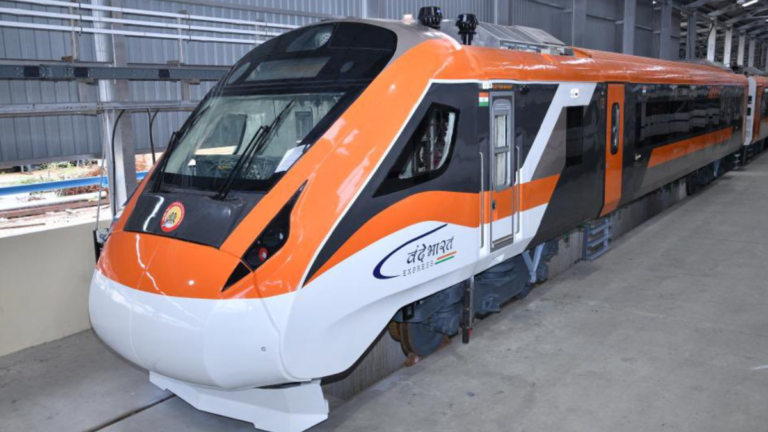
Orange-white variant of the Vande Bharat Trains

Vande Bharat, also known as Train-18, is an example of the rapid technological revolution in India regarding railway transportation. The Vande Bharat, which is designed and manufactured indigenously by the Integral Coach Factory in Chennai, signifies the country’s growing technical capabilities in manufacturing and production of indigenously developed smart transport systems. The Vande Bharat redefines the passenger’s travel experience, making it an amalgam of comfort and speed. It traverses India’s vast landscapes at 160 kilometres per hour and dramatically shortens the distances between cities. The self-propelled EMU design makes it efficient, eliminating the need for a separate locomotive further streamlining the operations. The newly developed train is a shining example of India’s burgeoning technological expertise. Its design and development are entirely indigenous, showcasing the capabilities of Indian engineers and scientists. The train’s success is a testament to India’s commitment to innovation and ability to compete at the global forefront of railway technology.

Its presence on the Indian rail network serves as a source of inspiration for the country’s ability to achieve technological breakthroughs and the nation’s potential to become one of the global innovation leaders. The train represents a significant milestone in the growth journey of Indian railways, paving the way for a future characterized by high-speed, comfortable, and sustainable rail travel. The Indian Railways’ plans to manufacture 100 more Vande Bharat trains by 2024 signify a commitment to expanding this revolutionary technology across the nation’s vast railway network, transforming how people travel in India. As the train traverses the length and breadth of the country, it carries with it the hopes and aspirations of a nation on the rise. Vande Bharat remains one of the significant achievements of Indian railways.

Initial Development & Conceptualization

Conceptualized and designed by the Integral Coach Factory (ICF) in Chennai, India, in collaboration with other Indian organizations, including RDSO (Research Designs and Standards Organisation) and the Indian Railways, the Vande Bharat Express stands as a testament to India’s unwavering commitment to modernization. The genesis of the Vande Bharat Express can be traced back to 2016, when Prime Minister Narendra Modi envisioned a modernized railway system that embraced sustainable transportation practices. Recognizing the need for an indigenous high or semi-high-speed train that could bridge distances swiftly while offering modern amenities, the government set about developing this concept. Taking up the challenge, ICF embarked on a journey to design and develop the Vande Bharat or Train-18, which it was initially named. Drawing inspiration from the Shatabdi Express, the famous Indian train known for its comfort and speed, ICF meticulously crafted the Vande Bharat Express, utilizing domestic resources and expertise.

Before embarking on its maiden voyage, the Vande Bharat underwent rigorous testing and trials to ensure its safety, efficiency, and passenger comfort. On February 15, 2019, the train made its inaugural journey from New Delhi to Varanasi, covering a distance of 759 kilometres in just 8 hours. Since its launch, the Vande Bharat has captured passengers’ hearts, symbolising India’s progress and innovation. The government, recognizing its growing demand and popularity, decided to expand the train’s operations, extending its reach to more routes across the country. The success of the Vande Bharat has catalyzed further innovations in India’s high-speed rail sector. Inspired by its achievements, other indigenous high-speed trains are now under development, propelling India’s railway system towards a brighter, modernized and sustainable future.

Launch & Inaugural Run

On February 15, 2019, Prime Minister Narendra Modi flagged off the country’s first Vande Bharat train, the nation’s first indigenously built semi-high-speed train. This marked a significant milestone for Indian Railways, heralding a new era of enhanced comfort, speed, and sustainability in rail travel. The launch of the train was met with immense excitement and anticipation. It symbolized India’s unwavering commitment to technological advancement and its ability to compete at the global forefront of railway innovation. The train’s design, conceptualized and developed entirely in India, showcased the nation’s engineering capabilities and potential to revolutionize the transportation sector.

Since its launch, the train has been hailed for its eco-friendly features, aligning with the nation’s growing emphasis on efforts for sustainable development. The train’s energy-efficient technologies, including regenerative braking and LED lighting, significantly reduce its carbon footprint. Additionally, its bio-vacuum toilets and waste management systems enhance its environmental credentials. The reception of the Vande Bharat by passengers has mainly been positive. Many lauded the train’s comfort and convenience, particularly its spacious seating, air-conditioning, and ample legroom. Its speed and punctuality have also been appreciated, as it significantly reduces travel times between major cities. The train’s modern amenities, including infotainment systems, Wi-Fi connectivity, etc., further enhance the passenger experience.

Barring a few minor criticisms, the launch and reception of the Vande Bharat Express has undeniably been positive developments for Indian Railways. The train’s success has paved the way for further advancements in high-speed rail technology, with plans to expand its operations to more routes across the country.

Need & Importance

Vande Bharat, a symbol of India’s unwavering commitment to rail modernization, stands as a testament to the nation’s technological prowess and its vision for a future of streamlined, sustainable, and comfortable rail travel. Its high speed, modern amenities, and energy efficiency have transformed the passenger experience and significantly enhanced India’s transportation infrastructure.

  • A Boon for Travellers: The Vande Bharat Express has revolutionized long-distance travel in India, significantly reducing travel times between major cities. For instance, its journey between New Delhi and Varanasi has been shortened by nearly forty per cent from 14 to 8 hours. This transformative speed has made it easier and more convenient for passengers to travel long distances, saving them time and money. Furthermore, the Vande Bharat has played a crucial role in promoting tourism by making popular pilgrimage sites and tourist destinations more accessible. Its operation between New Delhi and Katra, the gateway to the revered Vaishno Devi temple, has made it easier for pilgrims to embark on their spiritual journeys.
  • Sustainable Transportation: In line with India’s commitment to environmental sustainability, the Vande Bharat is powered by a self-propelled electric multiple unit (EMU) system, a far more energy-efficient and sustainable alternative to traditional locomotives. This eco-friendly approach has significantly reduced carbon emissions, contributing to India’s cleaner and more sustainable transportation sector.
  • India’s Engineering Prowess: The train is a shining example of India’s engineering capabilities. Designed and developed entirely within India, the Integral Coach Factory (ICF) in Chennai has meticulously crafted this train, showcasing the nation’s expertise in railway technology. Its sleek and modern design, advanced features, and cutting-edge technology have garnered worldwide attention and admiration, positioning India as a formidable player in global rail technology.
  • Elevating the Passenger Experience: Vande Bharat epitomizes the future of rail travel, offering passengers many modern amenities and unparalleled comfort. Wi-Fi connectivity, CCTV cameras, GPS-based passenger information systems, and bio-toilets are just a few of the features that elevate the passenger experience, making train travel more enjoyable and convenient.

The train marks a pivotal moment in India’s railway modernization journey. Its speed, energy efficiency, and modern amenities have transformed the passenger experience and instilled confidence in India’s ability to compete at the global forefront of railway innovation. As India continues to expand the Vande Bharat network, it is poised to revolutionize rail travel, making it the most preferred mode of transportation for millions of passengers across the country.

Operational Challenges and Solutions

Despite its promising debut, the indigenous semi-high-speed train encountered operational challenges in its early days. These obstacles stemmed from technical glitches and operational hurdles, necessitating immediate attention from the Indian Railways.

  • Technical Glitches: A prominent technical issue that plagued the Vande Bharat Express was the failure of its electrical systems. These systems, responsible for powering the train’s air conditioning, lighting, and other essential features, frequently experienced malfunctions, leading to delays and cancellations. Concerns arose regarding the train’s brakes, which exhibited suboptimal performance, particularly during emergency stops. These technical issues were primarily attributed to the train’s relatively new status and the inexperience of the staff in operating a high-speed train.
  • Addressing the Challenges: The Indian Railways quickly responded to the operational challenges faced by the Vande Bharat trains, implementing a series of measures to address the underlying issues. A crucial step involved enhancing the train’s electrical systems, ensuring a more reliable and stable power supply. Staff members underwent comprehensive training in operating the train, equipping them with the necessary skills to handle its unique demands. Regular maintenance and check-ups were meticulously conducted to identify and rectify any potential problems before they could disrupt operations. Moreover, the brakes and other technical systems underwent thorough scrutiny and improvements, enhancing the train’s reliability and safety.
  • Journey Towards Smooth Operations: The Indian Railways’ proactive approach to addressing the operational challenges faced by the Vande Bharat yielded positive results. The train’s performance witnessed a remarkable turnaround, becoming more reliable and punctual. Cancellations and delays significantly decreased, providing passengers a more predictable and hassle-free travel experience. The improved performance grew confidence in the train’s capabilities and reaffirmed the Indian Railways’ commitment to providing a world-class rail transportation system.

Impact, Future Growth & Potential

  • A Catalyst for Transformation: Vande Bharat, a symbol of India’s unequivocal commitment to innovation and progress, has left an indelible mark on the nation’s transportation landscape. Its introduction has revolutionised passenger travel and ushered in a new era of sustainable and efficient rail infrastructure, propelling India towards a future of seamless connectivity and enhanced mobility.
  • Enriching Passenger Experiences: The train has redefined passenger expectations, offering a travel experience that is both swift and comfortable. Its impressive speed, reaching a maximum of 160 kilometres per hour, has significantly reduced travel times between major cities, saving passengers valuable time and effort. Moreover, the train’s modern amenities, including plush seating, Wi-Fi connectivity, and infotainment systems, have transformed train travel into a more enjoyable and enriching experience.
  • Beacon of Sustainability: In alignment with India’s growing emphasis on environmental sustainability, the Vande Bharat Express is a beacon of eco-conscious innovation. Powered by a self-propelled electric multiple unit (EMU) system, the train boasts superior energy efficiency, significantly reducing carbon emissions and promoting a cleaner transportation sector. Its eco-friendly design, regenerative braking and energy-efficient lighting further underscores its commitment to environmental stewardship.
  • Transport Infrastructure: Vande Bharat has catalyzed the modernization of India’s transportation infrastructure. Its success has paved the way for developing dedicated high-speed rail corridors and dedicated tracks explicitly designed for high-speed trains. These corridors will enable the operation of more high-speed trains in the future, further expanding the reach and impact of this transformative technology.
  • Benchmark for High-Speed Trains in India: As the fastest train in India, Vande Bharat has set a new benchmark for high-speed rail travel. Its speed, coupled with its modern amenities and energy-efficient design, has positioned India as one of the formidable players in the global arena of high-speed and semi-high-speed rail technology. The train’s success has instilled confidence in the nation’s ability to develop and operate world-class transportation solutions.
  • Paving the way for future innovations: Vande Bharat has transformed the present and laid the foundation for a future of even faster, more efficient, and sustainable rail travel in India. Its success has inspired further innovations in high-speed rail technology, with plans to develop trains reaching up to 200 kilometres per hour. As India continues to push the boundaries of rail technology, the Vande Bharat appears to be a testament to the progress and innovation which Indian Railways continues to embark upon.

Vande Bharat, a symbol of India’s commitment to technological advancement, has not only revolutionized passenger travel but also laid the foundation for a future of even faster, more efficient, and sustainable rail transportation. Its remarkable success has inspired further innovations and expansion plans, ensuring that the Vande Bharat trains shall continue to shape the future of transportation in India.

Expansion Plans

In a bold commitment to sustainable and modernized transportation, the Indian Railways is poised to transform into a carbon-neutral entity by the end of the decade. This ambitious goal will be achieved through a series of transformative initiatives, including the expansion of the Vande Bharat network and a significant increase in capital expenditure. The Indian Railways has set an inspirational target of achieving net-zero carbon emissions by 2030. This commitment aligns with India’s broader sustainability goals and demonstrates the Railways’ undying dedication to environmental stewardship. The adoption of energy-efficient technologies, such as electric locomotives and regenerative braking systems, will play a crucial role in achieving this ambitious objective.

India’s semi high-speed train is indigenously developed train which speaks about India’s technological capabilities and size. Vande Bharat is a new train launched in 2019 whereby passengers have speed, comfort, and modern amenities in one place. The Railways has set a target of rolling out 75 train sets or 150 services in the current fiscal year, with plans to operate over 800 train sets by 2030. This expansion will significantly enhance connectivity and provide passengers with a world-class travel experience. The government’s staunch commitment to the modernization and expansion of the Indian Railways is evident in the unprecedented allocation of capital expenditure. In 2022-23, the Railways achieved the highest-ever capex of Rs 2,03,983 crore, marking a four-fold increase from Rs 53,989 crore in 2013-14. This substantial investment will fuel the Railways’ ambitious plans, enabling the development of dedicated high-speed rail corridor, the electrification of tracks, and the procurement of modern rolling stock.

The Indian Railways’ vision for the future is one of sustainability, efficiency, and seamless connectivity. By embracing carbon neutrality, expanding the Vande Bharat network, and investing heavily in modernization, the Railways is poised to transform itself into a world-class transportation provider, catering to the needs of a growing nation while preserving the environment for future generations. The Railways’ journey towards a carbon-neutral, modernized future is a testimony to India’s commitment to innovation, progress, and sustainable development.

Latest Update

Building upon the resounding success of the Vande Bharat Express in bridging major cities across India, Chennai’s Integral Coach Factory (ICF) has unveiled plans to introduce a specialized version of the train specifically designed for the unique climatic conditions of Jammu and Kashmir. Scheduled for launch next year, these customized Vande Bharat trains will incorporate heating provisions within their compartments to combat the region’s frigid temperatures. Additionally, specialized pipes will be installed to prevent water lines from freezing and potentially bursting during the harsh winters. Currently, the semi-high-speed Vande Bharat Express operates on the Delhi-Mata Vaishno Devi Katra route within the Jammu province of Jammu and Kashmir. With the completion of the 272-km Udhampur-Srinagar-Baramulla Rail Link (USBRL), these enhanced Vande Bharat trains will seamlessly connect Jammu and Srinagar, offering a faster and more comfortable travel experience for residents and tourists alike.

ICF’s strategy extends beyond tailoring the Vande Bharat Express for Jammu and Kashmir. The factory is also committed to developing a diverse range of Vande Bharat variants to cater to specific transportation needs. A sleeper version of the Vande Bharat train is in the works, catering to long-distance travellers. For intercity commuters, a Vande Metro variant is being designed to provide swift and efficient short-distance travel. Additionally, the Gati Shakti train, a freight-centric variant, will revolutionize cargo transportation within the Vande Bharat platform, facilitating the movement of e-commerce goods, fast-moving consumer goods, and refrigerated commodities. The introduction of these customized Vande Bharat trains underscores India’s undue commitment to innovation and technological advancement. By adapting the train to the unique requirements of Jammu and Kashmir and developing diverse variants, ICF is not only enhancing passenger comfort and convenience but also strengthening India’s position as a global leader in rail technology.

As of November 25, 2023, India’s Vande Bharat Express network has expanded to encompass 34 trains operating on 34 routes across 15 zones. This impressive fleet comprises fourteen 16-car services and twenty 8-car services, exemplifying India’s dedication to efficient and rapid rail transport. With 68 trains (Up/Down) traversing the country on diverse routes, the Vande Bharat Express has become a preferred choice for both tourists and locals alike. India’s current network of thirty-four trains is strategically deployed on various routes to provide passengers with a more seamless and convenient travel experience. These indigenously developed, high-speed automated train units represent a remarkable achievement for India, showcasing the nation’s technological prowess and capabilities in rail transportation. Equipped with cutting-edge passenger amenities, the Vande Bharat Express offers a swifter, exceedingly comfortable, and remarkably convenient travel experience.

Vande Bharat is meticulously designed to elevate the passenger experience. Its state-of-the-art amenities include plush reclining seats, ample legroom, Wi-Fi connectivity, infotainment systems, and bio-toilets. Additionally, the train features automatic doors, CCTV cameras, GPS-based passenger information systems, and regenerative braking systems, further enhancing safety, convenience, and environmental sustainability.

Vande Bharat has become a symbol of India’s commitment to transforming the rail transportation sector. Its success has spurred the development of new high-speed rail corridors and inspired the design of specialized Vande Bharat variants, such as the sleeper version for long-distance journeys and the Vande Metro variant for intercity short-distance travel. As the Vande Bharat network continues to expand, it will undoubtedly play a pivotal role in revolutionizing rail travel in India, connecting cities faster, enhancing passenger comfort, and fostering economic growth across the nation.

Vande Bharat Sleeper Trains

The iconic Vande Bharat Express, India’s pride in high-speed rail transportation, is set to embark on a new chapter with the introduction of sleeper coaches. These innovative trains, boasting a remarkable 857 berths, including 823 for passengers and 34 for staff, will redefine overnight travel experiences, offering passengers a blend of speed, comfort, and convenience. The manufacturing of these sleeper trains is a testament to India’s commitment to technological collaboration and innovation. A consortium of India’s Rail Vikas Nigam Limited (RVNL) and Russia’s TMH Group will produce 120 of these trains, while the remaining 80 will be manufactured by a consortium of Titagarh Wagons and BHEL.

The introduction of Vande Bharat sleeper trains is a strategic move by Indian Railways to cater to the growing demand for comfortable and faster overnight travel options. These trains are expected to eventually replace the iconic Rajdhani Express trains, further streamlining and modernizing the railway network. In addition to the 200 sleeper Vande Bharat trains, Indian Railways is also finalizing plans for 100 aluminium Vande Bharat train sets, marking a pioneering step towards lightweight and energy-efficient rail travel. This ambitious project underscores the government’s commitment to transforming the railway network and enhancing passenger experiences.

The Vande Bharat sleeper trains hold immense promise for the future of Indian Railways. They represent a significant step towards providing passengers with a seamless, comfortable, and time-efficient travel experience, particularly for overnight journeys. As these trains take to the tracks, they are poised to revolutionize rail transportation in India, setting new standards for passenger comfort, speed, and sustainability.

Vande Metro Services

The Indian Railways is poised to unveil a revolutionary new rail service, the Vande Metro, designed to transform short-distance, intercity travel. This innovative train will operate on a dedicated network, seamlessly connecting major cities within a radius of approximately 100 kilometers. With an impressive design speed of 130 kilometers per hour and a high-frequency schedule (4-5 trips per day), the Vande Metro is set to redefine regional rail connectivity and redefine passenger experiences.

The Vande Metro is strategically positioned to replace the existing MEMU (Mainline Electric Multiple Unit) services, which have long served as the backbone of regional rail connectivity. While MEMU trains have played a crucial role in connecting towns and cities, they are often limited in terms of speed and frequency. The Vande Metro’s enhanced capabilities will address these limitations, providing passengers with a faster, more convenient, and more comfortable travel experience.

The Vande Metro’s impact extends beyond passenger convenience; it is also envisioned as a catalyst for regional development. By facilitating faster and more efficient travel between neighboring cities, the Vande Metro will boost economic activity, encourage tourism, and foster closer ties between communities. The Vande Metro embodies Indian Railways’ commitment to innovation and technological advancement. Its sleek design, modern amenities, and energy-efficient features showcase India’s expertise in rail technology. The train’s high-speed capabilities and ability to operate at high frequencies will set new benchmarks for regional rail connectivity.

The Vande Metro’s introduction marks a significant milestone in India’s journey towards a modern, efficient, and sustainable rail transportation system. By revolutionizing short-distance rail connectivity, the Vande Metro is poised to transform the way people travel, fostering regional growth and enhancing passenger experiences.

Advertisement1
InnoMetro_2026

NCRTC Conducts Trial Runs of Namo Bharat Trains to Meerut South Station 

0
NCRTC Conducts Trial Runs of Namo Bharat Trains to Meerut South Station

NEW DELHI (Metro Rail News): NCRTC conducted the trial run of the Namo Bharat trains on the 12.1 km stretch between Modinagar South & Meerut South on the 82 km Delhi-Meerut RRTS Corridor. 

Trials 

The trials between the Modinagar South and Meerut South were conducted on Friday. The NCRTC team conducted the trials manually with 40 Alstom trains at a low speed of 10 Kmph between Duhai and Meerut south, roughly 24.8 Km. 

Objective 

The trials aimed at conducting tests of all subsystems and equipment. Further tests will be conducted to evaluate the integrated performance of the train and verify its coordination with various subsystems such as Signalling, Platform Screen Doors (PSDs), Overhead supply system, etc.

Earlier trials 

The trials on the preceding action between Duhai and Modinagar South were conducted three weeks back on the preceding section of the priority stretch spanning from Sahibabad to Duhai. 

Namo Bharat Trial run 25 Km 02

The trials confirmed no physical obstruction, corroborating the train’s interaction with the civil structure as well as the Schedule of Dimensions (SoD) Clearances. 

Stations 

The 25 km stretch, currently under trial, will be operationalised after the Priority Stretch, which entails stations such as Murad Nagar, Modi Nagar North, Modi Nagar South, and Meerut South.

Update on stations 

Returning to the Duhai – Meerut South segment, all four stations (Muradnagar, Modinagar South, Modinagar North, and Meerut South) along this 25-kilometer stretch are currently undergoing different construction phases. Activities such as station architectural finishing, PEB roof work, and station entry/exit work are underway at these stations.

Work Progress 

Shri Kaushal Kishor, The Minister of State (MoS) for the Ministry of Housing & Urban Affairs (MoHUA), informed the Rajya Sabha in a written reply that the RRTS has achieved nearly 67% progress on Physical construction. 

RRTS

The Rapid Rail Transit System (RRTS) is a comprehensive mass rapid transit network spanning 82.15 kilometres, linking Delhi’s Sarai Kale Khan with Ghaziabad and Meerut. The construction of the Delhi-Ghaziabad-Meerut corridor is currently in progress, with a total expenditure of nearly Rs 30,000 crore. Prime Minister Modi inaugurated the initial phase of the priority corridor, covering 17 kilometres and featuring five stations: Sahibabad, Ghaziabad, Guldhar, Duhai, and Duhai Depot.

On October 20th, Prime Minister Narendra Modi officially launched India’s first RAPIDX train, Namo Bharat, off Sahibabad Station. These trains are engineered to reach a maximum speed of 180 km/h, offering ticket prices ranging from Rs 20 to Rs 50 for standard coaches and Rs 50 to Rs 100 for premium coaches.

The RRTS initiative encompasses semi-high-speed rail corridors connecting Delhi to Meerut in Uttar Pradesh, Alwar in Rajasthan, and Panipat in Haryana.


Discover the endless possibilities of our city’s Metro at InnoMetro, our flagship Expo and Conference. Be an active participant in shaping its future towards a more sustainable tomorrow. Stay informed and join us to take a step towards a brighter future

Advertisement1
InnoMetro_2026

Aarey-BKC Metro Line Likely to Begin Commercial Operations From April 

0
Mumbai Metro
Representational Image

MUMBAI (Metro Rail News): The crucial and much-needed 33.5 km long Mumbai Metro Line 3 is expected to begin its commercial operations by April next year, and the Aarey depot is nearing completion by January. 

Announcement 

Smt Ashwini Bhide, MD-MMRC, hinted about the line’s opening while speaking at an event organised by Mumbai Maratha Patrakar Sangh event. 

Update on Work 

Work on Mumbai MMetro Line 3 is moving fast, with the Aarey Dept nearing completion by Juanary and other specifics like metro routes approaching 98.9% & stations approaching 96.6% completion. 

Innovative Metro Stations 

Mumbai metro has acquired the tag of innovatively done or built for Sahar Metro Station and two tunnels connecting it. 

Road Restoration 

As per the latest updates, the road restoration goes as follows: 

  1. 1.2 km of road length out of the total 3.8 km has been restored, which was barricaded on the Aarey-BKC route.
  2. A 1.3 km road from the 8.5 km road barricaded on the BKC-Cuffe Parade section has been restored. 

Update on Rakes 

The MMRC has already acquired the maximum number of rakes, 9, to facilitate operations on the metro line 3. Out of 9, 7 will be used for operations, while one rake each will be dedicated for maintenance. 

Previous Trials 

A 17 km trial was held from MIDC to Vidyanagari metro station and back to SEEPZ. Tracklaying work a very short distance from the Aqua Line still needs to be completed. 

Mumbai Metro Line 3 

The Mumbai Metro Line 3, also called the Aqua Line, is expected to run between Navy Nagar in the far south to Aarey depot in the North centre. It will be fostering metro accessibility & connectivity in Financial hubs like Colaba, BKC and Aarey. 

It is a 33.5 Km-long line called Aqua Line 3 or Colaba-Bandra-SEEPZ line, the first underground Metro Line of Mumbai. 


Discover the endless possibilities of our city’s Metro at InnoMetro, our flagship Expo and Conference. Be an active participant in shaping its future towards a more sustainable tomorrow. Stay informed and join us to take a step towards a brighter future.
Advertisement1
InnoMetro_2026