Home Blog Page 151

MPMRCL Invites Bids for Indore Metro’s IN-05 Contract Worth Rs 2550 Crore 

0
Indore Metro
Indore Metro P.C: Amit Kumar Yadav

INDORE (Metro Rail News): Madhya Pradesh Metro Rail Corporation Limited (MPMRCL) has invited bids for the Package IN-05 of the Indore Metro’s Yellow Line. 

Package IN-05 

The IN-05 underground package, spanning a length of 8.626 kilometres, will link a ramp east of Indore Railway Station to a ramp west of Devi Ahilya Bai Holkar Airport in Indore. The route includes seven underground stations at Indore Railway Station, Rajwada, Chota Ganpati, Bada Ganpati, Ramchandra Nagar, BSF/Kalyani Nagar, and the Airport.

Scope of the Contract 

The scope of the contract ranges from the Design & Construction of a Twin Tunnel (Up & Down by Shield TBM), Cut & Cover, Cross-passages with/without a sump, Ramps, Seven (07) Underground Stations (Indore Railway station, Rajwada, Chota Ganpati, Bada Ganpati, Ramchandra Nagar, BSF/Kalani Nagar and Airport) to Architectural finishing, Plumbing (Water Supply, Sanitary Installation, Drainage facilities and other Plumbing work as directed by the Engineer) works in entire Underground Section for Indore Metro Rail Project.

Key Specifications 

The key specifications of the tender are: 

  • Deadline: 1456 days (4 years)
  • Estimated Cost: Rs. 2550 crore
  • Bid Submission Deadline: April 22, 2024 at 4 PM
  • Technical Bid Opening: April 23, 2024 at 4:30 PM

Alignment of the Package 

The IN-05 Package runs from Indore railway Station to the Airport. To the east, it will link up with Package IN-04, secured by RVNL – URCC JV in December 2023. To the west, connectivity will extend to Package IN-03, which is currently being constructed by URCC through a subcontract from RVNL since 2021.

Finances 

This contract is set to be financed through a pending approval by the Asian Development Bank (ADB) for a USD 225 million loan.

Status on Yellow Line, Indore Metro 

This marks the sixth and ultimate civil package from Yellow Line to advance to the bidding stage.


Discover the endless possibilities of our city’s Metro at InnoMetro, our flagship Expo and Conference. Be an active participant in shaping its future towards a more sustainable tomorrow. Stay informed and join us to take a step towards a brighter future. 

Advertisement1
InnoMetro_2026

Titagarh to Start Supply of Driverless Coaches for Bangalore Metro By April

0
Bangalore Metro
Bangalore Metro (Representational; Image)

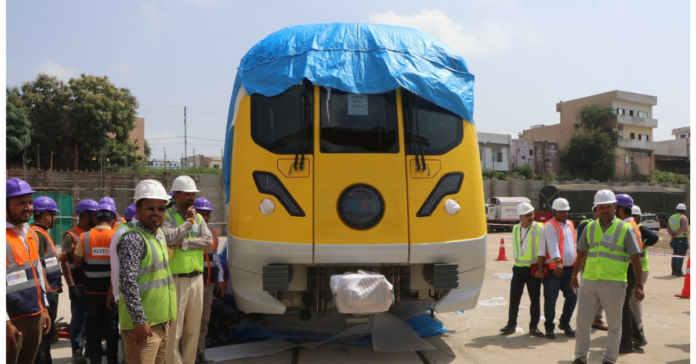
NEW DELHI (Metro Rail News): Titagarh Rail Systems has made it public that it’ll start delivering the driverless coaches for the Bangalore Metro by April. 

Preparations 

As per the information received by Moneycontrol, 

  1. All the assembly lines are ready 
  2. The availability of Machines has been confirmed 
  3. It will be commissioned in the upcoming 45-60 days 
  4. After this, the manufacturing would begin 

Deliveries 

The delivery for the metros would begin In April, with Titagarh delivering two trains of six coaches monthly to BMRCL. 

Total Trains 

BMRCL has received the initial two sets of six-car trains, comprising 12 coaches, from China, with the remaining 204 coaches slated for production by Titagarh Rail in India.

Trains from China 

The driverless trains for the Yellow Line arrived at the Hebbagoddi Depot of the Yellow Line on the morning of 14 February at 3.30 AM. 

The Driverless Technology 

The forthcoming driverless coaches are set to be seamlessly integrated into the Communication-Based Train Control (CBTC) System, commonly called “Driverless Technology.” This integration aims to decrease the headway to 90 seconds from the current two and a half minutes. Although the trains will operate without drivers, BMRCL has appointed Loco Pilots to ensure passengers’ safety.

First foray into Driverless Metros

Bengaluru is on the brink of introducing its first driverless metro service along this route, aimed at improving connectivity to significant hubs housing major corporations like Infosys and Biocon in South Bengaluru.

Big Boost in Connectivity

The objective is to enhance connectivity to key areas housing major companies such as Infosys and Biocon, as well as South Bengaluru. This initiative will significantly alleviate the daily commuting challenges metro passengers face in Bangalore. Furthermore, it will enhance the overall metro network within the city, ensuring seamless and efficient travel.

Yellow Line, Bangalore Metro 

Spanning 18.82 kilometres, the ongoing metro line construction will link RV Road to Bommasandra. This fully elevated route comprises 16 stations and intersects with the Green Line of the Bangalore Metro at RV Road Station and the Pink Line at Jayadeva Hospital Station. Anticipated to be operational by early 2024, the project faced several deadline extensions, initially slated for completion by 2021. The Yellow Line extension will serve stations including Bommamanahalli, BTM Layout, HSR Layout, and Jayadeva Hospital.


Discover the endless possibilities of our city’s Metro at InnoMetro, our flagship Expo and Conference. Be an active participant in shaping its future towards a more sustainable tomorrow. Stay informed and join us to take a step towards a brighter future. 

Advertisement1
InnoMetro_2026

MoU Signing for the Delhi Metro’s Phase 4 Greenlighted by Delhi Government

0
Delhi Metro
Delhi Metro/ Representational image only.

NEW DELHI (Metro Rail News): Although a routine procedure but a major milestone in the easy conduct of the projects held by Delhi Metro Rail Corporation (DMRC) was accomplished yesterday with the Delhi government greenlighting the signing of MoU with the centre. 

The CMO 

The CMO said, “CM Arvind Kejriwal has approved the signing of the MoU between the Delhi Government, DMRC and Central Government. This (corridors) includes Janakpuri West to Ramakrishna Ashram, Delhi Aerocity to Tughlakabad station and Majlis Park to Maujpur corridor. After this, construction of these corridors will accelerate.”

Purpose 

The Delhi government is signing the MoU with the centre to deal with all the obstacles related to the transfer of either private or government land to the DMRC, which would, in turn, expedite the construction work and allow DMRC to achieve its targets in time.

A High Power Committee (HPC) 

Under the MoU, a High Power Committee (HPC) will be established to expedite the land transfer processes. It will be presided over by the Chief Secretary, with the secretaries being a part of the body. It will allow for speedy action and efficient outcomes without any lagging. 

The 3 Approved Corridors 

The three approved corridors under the Delhi Metro’s Phase 4 are: 

  1. Maujpur to Majlis Park
  2. Janakpuri West to RK Ashram
  3. Tughlakabad to Aerocity

The 3 Corridors Pending 

The three corridors of the Delhi metro pending approval with the central government are: 

  1. Rithala-Bawana-Narela
  2. Inderlok-Indraprastha
  3. Lajpat Nagar-Saket G-Block

Delhi Metro Phase 4 

Phase IV of the Delhi Metro is a network expansion to new housing areas in the National Capital Region. On March 7, 2019, the union cabinet approved three ‘priority corridors’ out of six corridors of Metro’s Phase 4: 

Total length of approved ‘Priority Corridors‘: 61.679 km 

Estimated project cost: Rs 24,948.65 crore

Total length of six corridors: 103.93 km

Total Estimated Project Cost: Rs 45,000 crore

Expected Ridership: 1.5 million passengers per day

Phase – IV

Approved New Lines

Line 10 (Golden Line): Aerocity – Tughlakabad

Length: 23.622 km

Type: Elevated (4.279 km) & Underground (19.343 km)

Depot: Sarita Vihar (shared with Violet Line) & possibly Vasant Kunj

Number of Stations: Sixteen

Stations: Aerocity, Mahipalpur, Vasant Kunj, Kishangarh, Chhatarpur, Chhattarpur Mandir, IGNOU, Neb Sarai, Saket G-Block, Ambedkar Nagar, Khanpur, Sangam Vihar, Maa Anandmayee Marg Junction, Tughlakabad Railway Colony (Pul Prahaladpur) and Tughlakabad

Approved Extensions

Line 7 (Pink Line): Mukundpur – Maujpur

Length: 12.558 km

Type: Elevated (12.58 km)

Number of Stations: Eight

Stations: Burari Crossing, Jagatpur Village, Surghat, Khajuri Khas, Bhajanpura, Yamuna Vihar and Maujpur

Line 8 (Magenta Line): Janakpuri West – R.K. Ashram (28.92 km)

Length: 28.92 km

Type: Elevated (21.18 km) & Underground (7.74 km)

Number of Stations: 22

Station Names: Krishna Park Extn, Keshopur, Paschim Vihar, Peeragarhi, Mangol Puri, West Enclave, Pushpanjali, Deepali Chowk, Madhuban Chowk, Prashant Vihar, North Pitampura, Haiderpur Badli Mor, Bhalaswa, Majlis Park, Azadpur & Ashok Vihar, Derawal Nagar, Rajpura, GG Sabji Mandi, Pulbangash, Sadar Bazar, Nabi Karim and RK Ashram Marg


Discover the endless possibilities of our city’s Metro at InnoMetro, our flagship Expo and Conference. Be an active participant in shaping its future towards a more sustainable tomorrow. Stay informed and join us to take a step towards a brighter future. 

Advertisement1
InnoMetro_2026

Udhampur- Srinagar- Baramulla Rail Link To Be Open By Feb 20th

0
Udhampur- Srinagar- Baramulla Rail Link

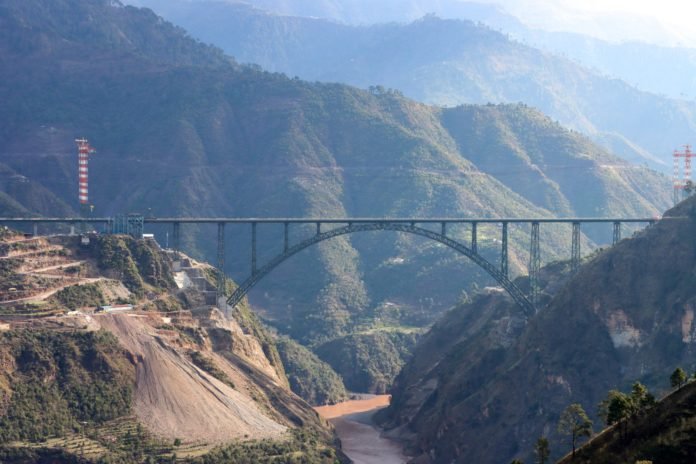
SRINAGAR (Metro Rail News): Train services on the Banihal-Khari-Sumber-Sangaldan section, a pivotal 48.1-kilometre stretch of the Udhampur-Srinagar-Baramulla Rail Link project, is set to commence on February 20 by the Indian Railways.

The Inauguration 

The Prime Minister will likely inaugurate the project virtually by flagging off the train from Sangaldan. 

The USBRL Project 

The USBRL project aims to connect the Kashmir Valley with the Jammu region and the national rail network, covering 272 kilometres, with 161 kilometres already operational.

Bridges on the route 

It includes 16 bridges: 11 major bridges, four minor bridges, and one road overbridge.

Tunnels

Over 90% of this segment comprises 11 tunnels spanning 43.37 kilometres. Among these is the nation’s lengthiest transportation tunnel, T-50, extending 12.77 kilometres within the Khari-Sumber section.

Three escape tunnels measure 30.1 kilometres in length for safety and rescue purposes. Furthermore, within this section, 30 curves extend over 23.72 kilometres.

Other Safety Measures 

Numerous advanced features have been integrated to elevate passenger safety and comfort to new heights, including ballastless tracks and canted turnouts—marking a pioneering move for the Indian Railways.


Discover the endless possibilities of our city’s Metro at InnoMetro, our flagship Expo and Conference. Be an active participant in shaping its future towards a more sustainable tomorrow. Stay informed and join us to take a step towards a brighter future.
Advertisement1
InnoMetro_2026

Braithwaite Bags Order Worth Rs 180 Crore from Indian Railways for 500 Wagons

0
Wagon
Wagon (representational image)

KOLKATA (Metro Rail News): PSU Braithwaite & Co Ltd has received an order worth Rs 180 Crores from Indian Railways to supply 500 BCVM-C Type Wagons. 

Confirmation 

“We have secured an order of 500 wagons this month valued at Rs 180 crore”, Braithwaite chairman and managing director Yatish Kumar told PTI. 

Business Composition 

The PSU has diversified into services and construction to achieve a sustainable turnaround and drive substantial growth. In 2018, wagons accounted for 95 per cent of the business, but their contribution has now decreased to 55 per cent.

Company goals

Diversification is the cornerstone of Braithwaite’s strategic roadmap, aiming to achieve listing as a Rs 2,500 crore CPSU by 2025-26.

BCVM-C Wagons 

BCVM-C wagons, or Bogie Covered Vans with Centre Pivot, are extensively employed in India’s railway freight operations for transporting goods. Their design includes a covering to shield goods from external elements during transit.

These wagons boast a substantial carrying capacity, facilitating the efficient transportation of diverse cargo types such as bulk goods, machinery, raw materials, and finished products. They are widely embraced by industries, logistics firms, and railway networks for transporting goods across various regions of the nation.


Discover the endless possibilities of our city’s Metro at InnoMetro, our flagship Expo and Conference. Be an active participant in shaping its future towards a more sustainable tomorrow. Stay informed and join us to take a step towards a brighter future. 

Advertisement1
InnoMetro_2026

166.996 Acres Given to RLDA Remains Undeveloped: Parl Panel

0
Indian Railway
Indian Railways (Representational Image)

NEW DELHI (Metro Rail News): The public accounts committee of the Lok Sabha has found that the Rail Land Development Authority (RLDA) has failed to utilise the land parcels that were given to it in 2007 for commercial use. 

Allotment  

RLDA was allotted 49 sites by the Indian Railways for redevelopment into commercial spaces. Out of the 49 allotted, 17 have been taken into the ambit of review. 

Observations of the Committee 

The committee observed the following things: 

  1. “The committee observed that the audit reviewed the development of 17 sites, which were entrusted to the RLDA in 2007 when it was constituted and found that none of these sites had been developed.”
  2. “Audit findings revealed that there were delays in the engagement of consultants, in the submission of reports by the consultants, taking permission from state governments for change of land use plan, deficiencies in entrustment of land to RLDA by the concerned zonal railways by providing encumbered land, identifying wrong site or sites with incomplete papers etc which resulted in non-development of these sites of 166.996 acres.” 
  3. “While the RLDA incurred an expenditure of Rs 102.29 crore towards establishment, consultancy charges and advertisement, etc from 2006-07 to 2016-17, it only earned Rs 67.97 crore from the development of Multi-Functional Complexes (MFCs) at railway stations, which was not part of the earnings from commercial development of the entrusted lands.”

Status of 17 land parcels 

Development was initiated on only three sites, while seven were revoked, and the handover of the remaining seven was postponed for reasons such as legal proceedings, valuation by consultants, and termination of Letter of Administration (LOA), among others.


Discover the endless possibilities of our city’s Metro at InnoMetro, our flagship Expo and Conference. Be an active participant in shaping its future towards a more sustainable tomorrow. Stay informed and join us to take a step towards a brighter future.
Advertisement1
InnoMetro_2026

Bengaluru Metro to Extend to Tumakuru and Devanhalli, CM Announces 

0
Bangalore Metro
Bangalore Metro (representational Image)

BANGALORE (Metro Rail News): Karnataka’s Chief Minister, Shri Siddaramaiah, has announced the extension of the Bangalore Metro to Tumakuru & Devanhalli in the budget speech presented in Karnataka’s assembly. 

The Budget Speech 

The feasibility report for extending the Metro rail from Bangalore International Exhibition Centre (BIEC) to Tumakuru and Kempegowda International Airport (KIA) to Devanahalli on a Public-Private Partnership (PPP) basis will be prepared,” Karnataka Chief Minister Siddaramaiah said in his budget speech.

The 2 Corridors 

The work is to be taken on  a Public-Private Partnership (PPP) model on two corridors, namely: 

  1. BIEC to Tumkur (50 Kms) 
  2. Kempegowda International Airport to Devanahalli (13km) 

Existing Lines 

The existing metro stations in the Bnaglore metro out of the above proposed are: 

  1. BIEC Station – Green Line 
  2. Kempegowda International Airport – Blue Line 

BIEC-Tumkur Line  

The upcoming opening of the 3 km Nagasandra-BIEC (Green Line) Metro section is anticipated within a few months, with further extension plans reaching Tumakuru, spanning approximately 50 km. This extension is poised to stimulate real estate growth in the northwest region of Bengaluru.

KIA to Devanahalli Line 

The Metro rail is set to expand its route from KIA to Devanahalli, spanning about 15 kilometres, promising significant development for the northern region of Bengaluru. Additionally, the suburban rail corridor from KSR Bengaluru City to Yelahanka and Devanahalli will further enhance connectivity to Devanahalli.

Metro Milestones 

The Chief Minister also announced that by March 2025, another 44 kilometres of Metro line will be integrated with the current 74-kilometer network.


Discover the endless possibilities of our city’s Metro at InnoMetro, our flagship Expo and Conference. Be an active participant in shaping its future towards a more sustainable tomorrow. Stay informed and join us to take a step towards a brighter future. 

Advertisement1
InnoMetro_2026

New MD Conducts Inspection on the Priority Stretch of the Bhopal Metro

0
New MD Conducts Inspection on the Priority Stretch of the Bhopal Metro

BHOPAL (Metro Rail News): Yesterday, on Friday, 16th February 2024, Shri Sibi Chakraborty IAS assumed the charge of managing director of Madhya Pradesh Metro Rail Corporation (MPMRCL). Concurrently, he conducted a comprehensive review meeting and site inspection concerning the Bhopal Metro Rail Priority Corridor.

Review Meeting 

During the review meeting, the Managing Director engaged with senior officials of the Metro Rail Corporation, along with the General Consultant and contractors, to discuss pertinent matters regarding the Bhopal Metro Priority Corridor. 

Subhash Nagar Metro Station 

Subsequently, MD Shri Chakraborty proceeded to the Subhash Nagar Metro Station site for a firsthand construction progress inspection. He closely observed the ongoing works, expressed satisfaction with the progress made thus far, and issued directives to ensure the timely completion of the remaining tasks under the Priority Corridor.

Bhopal metro Insoection 02

Officials Accompanied 

The inspection program, led by the Managing Director, saw the participation of key officials, including Sh. Ajay Sharma, Director (Project), Sh. Shobhit Tandon, Director (System), Sh. YC Sharma, General Manager (Civil), Sh. Sanjay Singh, General Manager (Civil), Sh. Ajay Gupta, General Manager (Track), Sh.N.D. Shakyawar, General Manager (E&M), Sh. Manish Gangarekar, General Manager (Rolling Stock), officials from the General Consultant and representatives of Metro construction contractors.

Bhopal metro Insoection 03

Bhopal Metro  

Bhopal Metro’s Phase 1 project’s DPR (Detailed Project Report ) with routes of 27.90 km was approved by the state government in December 2016 and by the Central Government’s cabinet in October 2018. It consists of 2 lines: 

01. Line-2 or Orange Line: Karond Circle – AIIMS – 14.99 km

02. Line-5 or Blue Line: Bhadbhada Square – Ratnagiri Tiraha – 12.91 km

Bhopal Metro’s Priority Corridor will be completed and opened in March 2024. 

Bhopal metro Insoection 04

Discover the endless possibilities of our city’s Metro at InnoMetro, our flagship Expo and Conference. Be an active participant in shaping its future towards a more sustainable tomorrow. Stay informed and join us to take a step towards a brighter future.

Advertisement1
InnoMetro_2026

Alstom Successfully Delivers The First Trainset for The Meerut Metro Project

0
Shri Vinay Kumar Singh, MD NCRTC and Mr. Olivier Loison, MD, Alstom India and the management committee of NCRTC at the flag off.
Shri Vinay Kumar Singh, MD NCRTC and Mr. Olivier Loison, MD, Alstom India and the management committee of NCRTC at the flag off

GUJARAT (Metro Rail News) – Alstom, a global leader in smart and sustainable mobility, has successfully delivered today the first indigenously manufactured trainset for Meerut Metro to the National Capital Region Transport Corporation (NCRTC), as part of a contract signed by Alstom in 2020 for the delivery of 210 cars for the Regional Rapid Transit System (RRTS). The first trainset was flagged off at a ceremony held at Alstom’s manufacturing facility at Savli in Gujarat, in the presence of Shri Hardeep Singh Puri, Hon’ble Minister of Housing and Urban Affairs & Petroleum & Natural Gas (virtually), Shri. Vinay Kumar Singh, Managing Director of NCRTC, and Oliver Loison, Managing Director of Alstom India.  The Meerut Metro is an urban Mass Rapid Transit System (MRTS) that will operate across the 25-km stretch of Line-1 (~14.80 km elevated and 4.6 km underground), connecting Partapur to Modipuram via 11 stations. For the convenience of the residents of Meerut, three stations on this line will provide connectivity to India’s first Regional Rapid Transit System (RRTS), connecting Delhi and Meerut. Alstom will supply thirty coaches to serve the line in 10 train sets of three cars each. The rolling stock is based on Alstom’s Adessia commuter train family, incorporating worldwide experience. The primary purpose of this Mass Rapid Transit System (MRTS) is to serve as a feeder to RRTS and a metro for the Meerut region. 

Meerut Metro 01

Shri Vinay Kumar Singh, Managing Director – NCRTC, said, “Namo Bharat trains and Meerut Metro are a testament to our unwavering commitment towards the realization of the Hon’ble Prime Minister’s Gati Shakti National Master Plan. In a first-of-its-kind initiative in the country, both these services will run on the same RRTS infrastructure. The modern Meerut Metro trainsets have been designed and manufactured indigenously under the Make-in-India initiative. Alstom team has worked hard in ensuring timely delivery of these MRTS trainsets in sync with the preparedness of infrastructure.”

Commenting on the delivery, Olivier Loison, Managing Director, Alstom India, said, “The Meerut Metro project is a step forward in the country’s ambition to modernise intra and intercity rail travel, and we are delighted to be delivering our next-generation products towards realising this vision. With its connectivity to the Namo Bharat line, the combined service will drive a long-term positive impact for business and leisure travel in the northern belt.”

Designed at Alstom’s Hyderabad engineering centre and manufactured at Savli (Gujarat), these trains are indigenous, in line with the government’s Make-in-India and Aatmanirbhar Bharat ambitions. The trainset will undergo testing and validation upon arriving at the Meerut depot. 

Shri Vinay Kumar Singh MD NCRTC and Mr. Olivier Loison MD Alstom India at the ceremonial key handover of the first Meerut Metro trainset

Alstom and Meerut Metro Project Commitment

In 2020, Alstom was awarded the contract. The scope of work includes:

  • Design, build, and deliver the trainsets – 30 transit train cars
  • Design, supply and install the signalling, train control and telecommunication system, platform screen door & long-term evolution, which is completed for the ~ 17km priority section for the launch
  • Provide comprehensive maintenance services for 15 years. 

The outstanding ergonomics, safety and comfort, low life cycle costs and high recyclability make these new commuter trains an attractive, sustainable choice to promote public transport, thereby reducing traffic congestion, air pollution and fuel consumption. They help save travel costs and time and change the lives of millions of citizens by connecting suburban places with the region’s economic centre. 

Meerut Metro 04

The MRTS trains:

  • Resemble the appearance of conformist metro trains 
  • Present a mix of longitudinal and lateral cushioned seating 
  • Offer a range of passenger-centric amenities, including overhead luggage racks, miniature screens within the coaches, wi-fi connectivity, and multiple USB sockets near the seats. 
  • Feature designated wheelchair spaces for individuals with disabilities and stretcher space for emergency medical transfers. Emergency communication capabilities are also integrated into the coaches, designed, and manufactured in alignment with International Safety Standards. 
Meerut Metro 03

The Meerut Metro will promote the region’s balanced and sustainable economic development. The advanced, eco-friendly design will bring significant efficiencies by incorporating energy-saving technologies, including the modern car body, reliable batteries, efficient propulsion system, and regenerative braking. 


Discover the endless possibilities of our city’s Metro at InnoMetro, our flagship Expo and Conference. Be an active participant in shaping its future towards a more sustainable tomorrow. Stay informed and join us to take a step towards a brighter future

Advertisement1
InnoMetro_2026

Bhopal Metro: Bridging Bhopal with a Rapid Transit Network

0
The first trainset for Bhopal–Indore metro projects built by Alstom being unloaded at the Indore Depot

Bridging Bhopal with a Rapid Transit Network

Bhopal, the vibrant capital of Madhya Pradesh, is gearing up for a transformation under the Bhoj Metro project. This ambitious mass rapid transit system (MRTS) will soon traverse the city, offering residents a fast, efficient, and eco-friendly way to travel. Phase 1 of the project, slated for completion in 2027, will encompass two lines and 28 stations. The Priority Corridor, a crucial phase segment, is expected to be operational by March 2024, slightly beyond its initial August 2023 target.

The long-term vision, captured in a 105 km master plan, envisions six metro lines seamlessly connecting different parts of Bhopal. For Phase 1, lines 2 and 5 have been prioritised, covering 27.9 kilometres. The project’s Detailed Project Report (DPR) received necessary approvals from both the state government (December 2016) and the Central Government (October 2018). Financing for this transformative project comes from a diverse pool of sources. The Asian Development Bank (ADB) has extended an official development assistance (ODA) loan, while the European Investment Bank (EIB) contributed a significant 400 million euro loan in December 2019. Construction work began in January 2019 and is now in full swing and aims for completion by 2026.

The project’s cornerstone was laid in September 2019 by then Chief Minister of the state, Mr Kamal Nath, aptly naming it the Bhoj Metro, a tribute to the legendary King Bhoja, who ruled over the Malwa region in medieval times. This initiative promises to revolutionise Bhopal’s urban mobility and boost its economic growth and sustainability. The Bhoj Metro project represents a pivotal step towards a modern and connected Bhopal. With its efficient and eco-friendly transportation system, the city is poised for a brighter future, where residents can easily commute and enjoy the benefits of a well-integrated urban infrastructure.

Need & Importance of Bhoj Metro

The Bhoj Metro project aims to provide a fast, convenient, and eco-friendly mode of transportation for the residents and visitors of Bhopal, the capital city of Madhya Pradesh. The project has several historical, tourism, and cultural benefits. Some of them are:

  • The Bhoj Metro will help preserve and promote the rich cultural heritage of Bhopal, representing the revered legacy of great king Raja Bhoj, who ruled over the entire Malwa region in medieval times. The city was founded by King Bhoj in the 11th century, who named it after himself. The city has many monuments and landmarks that reflect its glorious past, such as the Taj-ul-Masajid, the Bara Imambara, the Rani ki Vav, and the Bhojeshwar Temple. The metro will make accessing these places easier without depending on private vehicles or public buses.
  • The Bhoj Metro will also boost the tourism industry of Bhopal, which is one of the fastest-growing sectors in the state. The city attracts millions of tourists annually for its natural beauty, religious diversity, and cultural festivals. The metro will enhance the connectivity and accessibility of various tourist attractions in and around Bhopal, such as Sanchi Stupa, Ujjain Mahakaleshwar Temple, Omkareshwar, Orchha Fort, Khajuraho Temples, and Bandhavgarh National Park. The metro will also reduce the traffic congestion and pollution in the city and improve the quality of life for its residents.
  • The Bhoj Metro will also contribute to Bhopal’s economic development and social welfare. The project will create employment opportunities for thousands of people during its construction phase and generate revenue for the government through taxes and fares. The project will also reduce the dependence on fossil fuels and encourage green mobility among its users. The project will also improve its users’ public health and safety by providing them with a safe, comfortable, and reliable mode of transport.

These are reasons why the Bhoj Metro is an important project for Bhopal.

Project Details & Key Information

The key specifications of the project are as follows:

  • Top Speed: 80 kmph
  • Average Speed: 34 kmph
  • Track Gauge: Standard Gauge – 1435 mm
  • Electrification: 750 V DC Third Rail
  • Signalling: Communications-based Train Control (CBTC)
  • Operational: 0 km
  • Under Construction: 6.22 km
  • Approved: 21.65 km
  • Proposed: 77.13 km
  • Estimated Cost: Rs. 6941.40 cr
  • Estimated Daily Ridership: 2.20 lakh/day (2027)

Routes & Corridor

  1. Proposed Lines

Line-1 (Green Line): Bairgarh – Awadhpuri

  • Number of Stations: 24 (Twenty Four)
  • Stations: Bairagarh, Bairagarh Stadium, Hemu Kalani, Hala Pura Bus Stand, Lal Ghati Square, Idgarh Hills, Collectorate, Cambridge School MG Hospital, Curfew Wali Mata Mandir, Kamala Park, Polytechnic Square, Roshanpura Square, TT Nagar Stadium, Mata Mandir, Jain Mandir, Sharda Mandir, Nutan College, Mansarovar Complex (Habibganj Station), Khushabhau Thakrey ISBT, Anna Nagar, Carmel Convent, Piplani Gurdwara Square, Mahatma Gandhi Square, Awadhpuri

Line-3 (Red Line): Bhauri Bypass (NH12 Junction) – Vasant Kunj Bus Stop

  • Number of Stations: 24 (Twenty Four)
  • Stations: Bhauri Bypass/NH12 Junction, Peepainer Village (Aerocity), Airport Road, Gandhinagar, Airport Tiraha, Manubhan Tekri, Lalghati Square, Idgarh Hills, Collectorate, Cambridge School MG Hospital, Curfew Wali Mata Mandir, Kamala Park, Polytechnic Square, Roshanpura Square, TT Nagar Stadium, Mata Mandir, Jain Mandir, Sharda Mandir, Nutan College, Mansarovar Complex (Habibganj Station), Habibganj Naka, 10 No. Square, Sai Board, Vasant Kunj Bus Stop

Line-4 (Yellow Line): Ashok Garden Auto Stand – Mother Teresa School

  • Number of Stations: 21 (Twenty-One)
  • Stations: Ashok Garden Auto Stand, Krishna Campus, Railway Station, Jumerati Road, Curfew Wali Mata Mandir, Kamala Park, Polytechnic Square, Roshanpura Square, TT Nagar Stadium, Mata Mandir, MACT Square, Panchsheel Nagar Bus Stop, Ekant Park, Sahapura Lake, Bhoj University (Chunnabhatti), IIPM Sarvadham, Mansarovar School, CI Height Nayapura Bus Stop, Sanskar Marriage Garden, Bhairagarh Chichali, Mother Teresa School

Line-6 (Brown Line): Habibganj Naka – Mandideep

  • Number of Stations: 12 (Twelve)
  • Stations: Habibganj Naka, RRL, BU University, Bagsewania Bus Stop, Ashima The Lake City Mall, Sri Ram Colony, C21 Mall, Scope College (Bharopur), Regional 1 / NH-12, Harigangar Nagar, Regional 2, Mandideep
  1. Phase 1 Lines (Approved)

Line-2 (Orange Line): Karond Circle – AIIMS

  • Length: 14.99 km
  • Type: Elevated & Underground
  • Status: 6.225 km is under construction between AIIMS and Subhash Nagar
  • Depot: Subhash Nagar Underpass (Jinsi)
  • Number of Stations: 16 (Sixteen)
  • Stations: Karond Square, Krishi Upaj Mandi, DIG Bungalow, Sindhi Colony, Nandra Bus Stand, Bhopal Junction, Aish Bagh Crossing, Bogda Pul (interchange), Shubhash Nagar Underpass, Kendriya Vidyalaya, DB City Mall, Sangam Cinema, Himansarovar / Habibganj Station, Habibgang Naka, Alkapuri Bus Stand, AIIMS

Line-5 (Blue Line): Bhadbhada Square – Ratnagiri Tiraha

  • Length: 12.91 km
  • Type: Elevated
  • Depot: Subhash Nagar Underpass (Jinsi)
  • Number of Stations: 14 (Fourteen)
  • Stations: Bhadbadha Square, Depot Square, Jawahar Chowk, Roshanpura Square, Minto Hall, Lily Talkies, Bogda Pul (interchange), Prabhat Square, Govindpura,  J.K.Road, Indrapuri, Piplani (BHEL Township) and Ratnagiri Tiraha

Conclusion

Bhopal, the city once graced by the reign of Raja Bhoj, is poised for a modern transformation with the Bhoj Metro project. This ambitious mass rapid transit system promises not just to ease commutes but also to revitalize the city’s ancient soul in several ways:

  • Connecting History and Modernity: The metro’s lines will weave through historically significant areas, bringing ancient landmarks like the Upper and Lower Lakes within easy reach. Passengers will experience a seamless blend of Raja Bhoj’s era and contemporary marvels, creating a unique travelogue through time.
  • Accessibility to Hidden Gems: The metro’s reach will extend beyond the usual tourist hotspots, unlocking lesser-known historical sites and cultural hubs. This will allow visitors to delve deeper into Bhopal’s heritage, unearthing hidden treasures illuminating the city’s past.
  • Sustainable Preservation: By reducing traffic congestion and pollution, the Bhoj Metro will act as a guardian of Bhopal’s historical wonders. A cleaner city environment will enhance the visitor experience and safeguard the delicate fabric of its ancient monuments.
  • Cultural Tapestry Revived: Improved connectivity will foster cultural exchange within Bhopal, connecting diverse communities and reviving traditional practices. This will strengthen the city’s unique cultural identity and create a vibrant atmosphere steeped in its rich heritage.
  • A Global Platform for History: The Bhoj Metro will showcase Bhopal’s historical significance on the world stage. The increased visibility can attract investment and recognition, placing Raja Bhoj’s city on the map as a cultural treasure trove for international travellers.

In essence, the Bhoj Metro is not just a transportation system; it’s a bridge between the ancient and the modern, a promise to honour Raja Bhoj’s legacy while propelling Bhopal towards a sustainable and vibrant future. As the metro takes shape, it whispers a tale of a city poised to rediscover its historical grandeur while embracing the promise of tomorrow.


Discover the endless possibilities of our city’s Metro at InnoMetro, our flagship Expo and Conference. Be an active participant in shaping its future towards a more sustainable tomorrow. Stay informed and join us to take a step towards a brighter future.

Advertisement1
InnoMetro_2026