Home Blog Page 129

Mumbai-Ahmedabad Bullet Train Project Advances with the Completion of ADIT Tunnel

0
ADIT Tunnel, Mumbai Ahmedabad Bullet Train Project

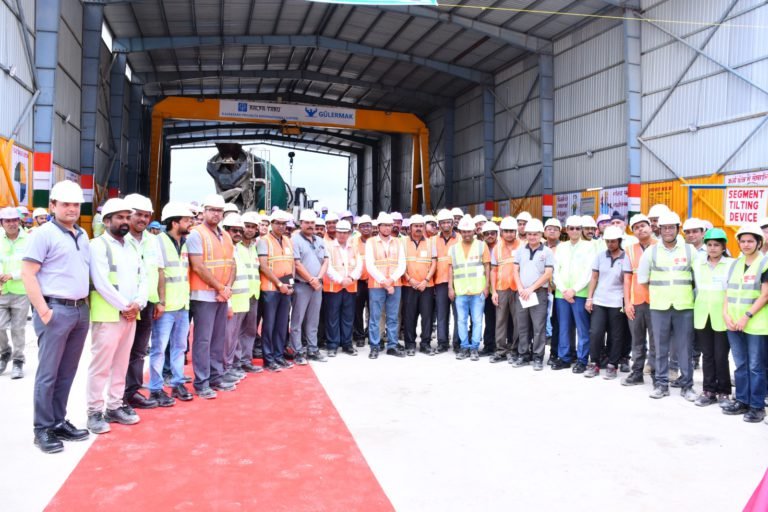
Navi Mumbai (Metro Rail News): On 22 May, India’s ambitious 508.17km long Mumbai-Ahmedabad Bullet Train project achieved a major breakthrough when Afcons Infrastructure successfully completed the excavation work of a 394-meter-long Additionally Driven Intermediate Tunnel (ADIT) in Navi Mumbai.

Mumbai-Ahmedabad Bullet train project's ADIT Tunnel
Image credit: Sajal Bhoyar

Afcons completed the construction of the ADIT tunnel in just half a year on the eastern side of the underground Package C-2, which spans 20.377 km from Bandra Kurla Complex (BKC), Mumbai, to Shilphata, Thane, in Maharashtra. This tunnel features a 42-meter deep inclined shaft and serves as access for initiating excavation work for the main-line tunnel, which will be done using the New Austrian Tunneling Method (NATM).

NATM drill’s last day at work on May 22
Photo by Sajal Bhoyar

The portal of the ADIT tunnel falls in Ghansoli, Navi Mumbai. From its furthest point, NATM tunneling will extend in two directions – westward towards Sawli’s Shaft-3 for a distance of 1.6 kilometers, and eastward towards Shilphata’s tunnel portal, covering an approximate distance of 1.8 kilometers. 

Package C-2’s scope of work

In June 2023, Afcons Infrastructure bagged Package C-2 from the National High-Speed Rail Corporation Ltd, at Rs crore 6397.27 with an 1888-day deadline. Under this package, Afcons is responsible for constructing three shafts at BKC Station, Vikhroli, and Sawli, each at approximate depths of 36m, 56m, and 39m respectively. These shafts will serve as launch and retrieval points for three Mega Tunnel Boring Machines (TBMs). The TBMs will bore approximately 16 kilometers of tunnel.

Mumbai-Ahmedabad Bullet Train Project

The Mumbai-Ahmedabad High-Speed Rail Corridor (MAHSR) stands as India’s first bullet train project, covering approximately 508 km. It features 12 strategically positioned stations along its route. Engineered for high-speed travel, the corridor is designed to accommodate bullet trains operating at speeds of up to 320 kmph. Minister of Railways, Ashwini Vaishnaw, has indicated that operations are expected to commence in August 2026.

Advertisement1
InnoMetro_2026

Nagpur Metro: RVNL Secures Rs 187.34 Crore Contract of 6 Stations

0
Nagpur Metro

Nagpur (Metro Rail News): Maharashtra Metro Rail Corporation (Maha Metro) has declared Rail Vikas Nigam Ltd as the lowest bidder to carry out the work of civil package C8 of the Nagpur Metro Phase 2 project, which spans 43.8km through 2 corridors. 

Nagpur Metro's Phase II Map
Nagpur Metro’s Phase II Map

Scope of work

This contract entails the construction of six elevated metro stations on the northern extension of the Orange Line’s Reach 2B. These stations will be located at Cantonment, Kamptee Police Station, Kamptee Municipal Council, Dragon Palace, Golf Club, and Kanhan River.

Nagpur Metro: RVNL Secures Rs 187.34 Crore Contract of 6 Stations

In January 2024, MahaMetro issued a call for bids for this contract, setting a 900-day (2.5-year) completion period. By March 2024, when the technical bids were opened, only two bidders emerged: RVNL and the joint venture of YFC Projects – BBG Infrastructure. RVNL’s bid of Rs. 187.34 crore (Rs. 187,34,07,260) positioned it as the lowest bidder.

Advancements in Nagpur Metro Phase 2 Project

In August 2023, MahaMetro awarded the contract to LKT Engineering Consultants for their services as the Detailed Design Consultants (DDC) for these six stations. LKT Engineering Consultants is currently playing a crucial role in ensuring the detailed design aspects of these stations meet the project’s requirements and standards.

Advertisement1
InnoMetro_2026

NCRTC’s Solar Initiatives Push Sustainable Transit in Delhi-Ghaziabad-Meerut RRTS Corridor

0

DELHI (Metro Rail News): The National Capital Region Transport Corporation (NCRTC) is revolutionizing sustainable transit with its robust integration of solar power across the Delhi-Ghaziabad-Meerut Regional Rapid Transit System (RRTS) corridor. With an impressive current generation of 2.21 Megawatts peak (MWp), NCRTC’s initiative significantly reduces carbon emissions, saving over 2,300 tons of CO2 annually.

Strategically positioned solar power plants at Guldhar and Sahibabad RRTS stations each boast a capacity of 729 kWp. The Duhai Depot and its station add 585 kWp and 108 kWp, respectively, to the network’s capacity. Smaller installations include the Murad Nagar Receiving Sub Station (RSS) and the Ghaziabad RSS, with capacities of 43 kWp and 20 kWp, respectively. Further installations are underway, expanding the reach and impact of this green initiative.

This transition to renewable energy is a core element of NCRTC’s mission to enhance sustainability and operational efficiency across its network. The goal is to achieve a solar power capacity of 11 MW, which would cut CO2 emissions by approximately 11,500 tons annually, aligning with the ambitious targets of the National Solar Mission.

NCRTC’s commitment to sustainability is showcased by the solar-equipped Guldhar and Sahibabad stations, each fitted with 1620 high-efficiency panels. These facilities are expected to generate around 10 lakh units of electricity annually per station. Notably, the Guldhar station will use about 5 lakh units annually, while Sahibabad will consume approximately 7.3 lakh units for auxiliary loads, positioning both stations as “Carbon Negative.”

By promoting greater use of public transport through sustainable initiatives, NCRTC aims to reduce environmental impact and enhance public health and urban livability. The operational segment of the corridor already includes eight stations between Sahibabad and Modi Nagar North, with further construction progressing swiftly towards the project’s completion in June 2025.

Through these efforts, NCRTC sets a precedent for eco-friendly public transport solutions and significantly contributes to the region’s sustainable development.

Advertisement1
InnoMetro_2026

Matrix Showcases Advanced Security Solutions at InnoMetro, 2024 in New Delhi

0
Matrix Comsec Team at InnoMetro 2024

Matrix successfully demonstrated its cutting-edge security products and solutions at InnoMetro 2024, held from May 21st to 22nd at the Hotel Taj Vivanta. As a pioneering Indian company, Matrix proudly presented its RDSO 6.0-compliant network cameras, specifically
designed for Indian Railways, at Booth No. H1.17.

metro camera


During the event, Matrix highlighted its commitment to cybersecurity with network cameras certified by STQC, Delhi lab, adhering to OWASP ASVS 4.0 L2 norms. These cameras ensure the security of video data during transmission and storage, safeguarding critical passenger
information against cyber threats.


Matrix captivated attendees with its state-of-the-art IP Video Surveillance, Access Control, and Time-Attendance solutions tailored for Metro Rail Systems. A standout attraction was the newly launched Ruggedized IP Camera, compliant with EN50155 standards, designed to withstand vibrations and shocks, and ideal for transportation monitoring. This camera delivers high-quality video, exceptional low-light sensitivity, and robust performance in dynamic transit environments.

Advertisement1
InnoMetro_2026

Kolkata Metro to introduce CBTC system in 2 corridors at Rs 800 crore

0
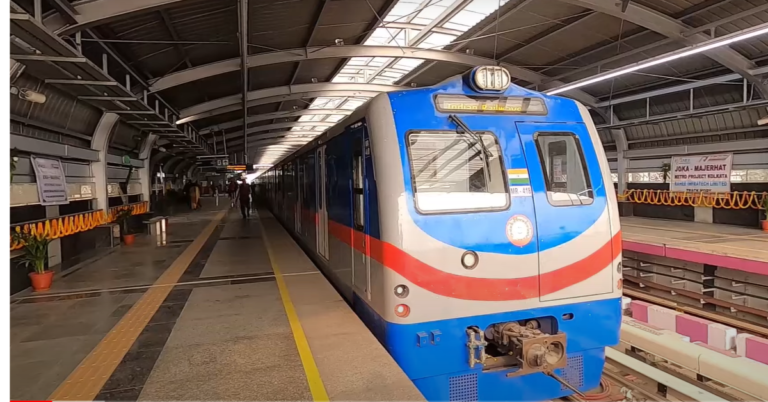
Kolkata Metro
Kolkata Under Water Metro

Kolkata (Metro Rail News): India’s first metro, Kolkata Metro is set to undergo a crucial upgrade with the implementation of the Communication-Based Train Control (CBTC) system (driverless technology) on 2 routes at Rs 800 crore to start driverless train operations. This advanced signalling system will enable metro trains to operate automatically, eliminating the need to have motormen on the train.

Kolkata Metro corridors to adopt CBTC system

Kolkata Metro is implementing the Communication Based Train Control (CBTC) system on the Joka-Esplanade and Kavi Subhash-Biman Bandar Metro routes. According to the officials, this system is already in use on the East-West Metro corridor.

Kolkata Metro Aerial View

Role of ATO (Automatic Train Operations)

Implantation of the ATO (Automatic Train Operations) mode of the CBTC Signalling System in Kolkata Metro will limit the role of Motormen.  The motormen will primarily be responsible for closing the doors and initiating train departure from stations.

A way forward

In addition to the new corridors, the authorities are upgrading the 40-year-old North-South Metro Corridor, India’s first metro system, with the CBTC signalling system at Rs. 500 crores. Over the next five years, the entire Kolkata Metro network will be equipped with the ATO mode of the CBTC signalling system. This upgrade will enhance the commuting experience and provide the flexibility to increase train frequency as needed.

Advertisement1
InnoMetro_2026

RITES to deliver 200 passenger coaches to Bangladesh Railways

0
RITES' locomotive
Representational image only | image copyright: Respective Authority

New Delhi (Metro Rail News): In a major boost to India’s “Make in India” initiative, RITES Ltd. (formerly Rail India Technical and Economic Service Limited) has inked a pact with Bangladesh Railways. Under this pact, RITES will be responsible for supplying 200 broad gauge passenger coaches to Bangladesh at Rs 915 crore.

Additionally, RITES will also provide prowess in design, spare parts support and training for the same. The contract is slated to be executed in 36 months followed by a 24-month warranty.

Funding of project

European Investment Bank will facilitate the funding of this project through a global competitive bidding process.

RITES’ collaborations with Bangladesh Railways

This contract aligns with the “Make In India” initiative of the Government of India as it encourages the export of indigenously made rolling stock. Previously RITES had delivered 120 broad gauge passenger carriages, 36 broad gauge locomotives and 10-meter gauge locomotives to Bangladesh Railways.

Previous Developments

On November 1st, 2023, Prime Ministers Narendra Modi of India and Sheikh Hasina of Bangladesh took a crucial step forward in regional connectivity by inaugurating three key infrastructure projects. The three projects were:

  • Akhaura – Agartala Cross-Border Rail Link
  • Khulna – Mongla Port Rail Line and
  • Unit – II of the Maitree Super Thermal Power Plant.

The centrepiece of the inauguration was the Akhaura-Agartala Cross-Border Rail Link. This 12.24-kilometer rail line, built with a grant of ₹392.52 crore from the Indian government, establishes the first direct and shortest rail connection between India’s northeastern state of Tripura and Bangladesh.

Advertisement1
InnoMetro_2026

Wabtec Inaugurates New Manufacturing Campus in Rohtak India

0
Wabtec Inaugurates New Manufacturing Campus in Rohtak India

On May 20, 2024, Wabtec Corporation (NYSE: WAB) inaugurated its new manufacturing campus in Rohtak, India. The new plant represents a $18 million (Rs. 150 crore) investment and will initially manufacture transit rail components and subsystems followed by other Wabtec product lines in the coming years.

Several Wabtec executives were on hand for the grand opening including Pascal Schweitzer, President – Transit Business, Sujatha Narayan, Senior Vice President and India Regional Leader, and Ajay Mani, Managing Director – Transit India.

“India is an important growth market for Wabtec, especially for the transit business,” said Schweitzer. “The new site will further improve Wabtec’s ability to deliver enhanced value through our diverse product offerings for both Indian and global customers.”

The factory, set on 10,000 square meters will start off producing axle-mounted disc brake systems, distributor valves, brake calipers, and actuators, as well as friction material for freight cars, metro coaches, and locomotives for Indian Railways and metros. This campus is expected to host many products in the coming months and years that serve the rail, mining, and industrial segments, a testament to Wabtec’s commitment to the Indian market and the “Make in India” initiative. 

“We intend to grow this site with plans to invest an additional $10 million (Rs. 80 crores) over the next few years,” said Narayan. “We currently employ 300 people and as the business grows, we do intend to add another 200 employees with a keen focus on diversity hires.”

Wabtec’s Transit business in India offers diverse solutions through its manufacturing sites in Hosur and Rohtak, which includes brake systems, couplers, pantographs, relays, air-conditioning systems, passenger access doors, and friction solutions. The company’s large engineering presence in Hosur and Bengaluru also provides engineering and service support for Wabtec operations around the world.

Wabtec is one of the largest rail equipment manufacturers in India, having supplied more than 600 locomotives to Indian Railways and with an installed base of subsystems in over 18,000 LHB (Linke Hofmann Busch) coaches and locomotives. The company currently employs 3,000 people in India.

About Wabtec


Wabtec Corporation (NYSE: WAB) is revolutionizing the way the world moves for future generations. The company is a leading global provider of equipment, systems, digital solutions and value-added services for the freight and transit rail industries, as well as the mining, marine and industrial markets. Wabtec has been a leader in the rail industry for over 150 years and is the worldwide leader in the decarbonization of freight rail

Advertisement1
InnoMetro_2026

MAHSR Corridor: The Casting of Tunnel Lining Segments Begins in Thane

0
MAHSR Tunnel Lining Segment Casting Facility

Thane (Metro Rail News): The work on the 508 km long Mumbai-Ahmedabad High-Speed Rail (MAHSR) Corridor is advancing at a rapid pace. Currently, construction is underway for a 21-kilometre tunnel between the Bandra Kurla Complex and Shilphata for the Mumbai-Ahmedabad Bullet Train Project. A total of three TBMs will carry out the construction of the 16 km section of the tunnel, while the remaining 5 kilometres will be built using the New Austrian Tunnelling Method (NATM).

Casting yard 1

For the 16-kilometer section with TBMs, 76,940 segments will be cast to form 7,441 rings. These ring segments are specially designed for the tunnel lining, with each ring comprising nine curved segments and one key segment. Each segment is 2 meters wide and 0.5 meters thick.

Image 4 2

To ensure structural integrity and durability NHSRCL is utilising M70 grade concrete for this work. NHSRCL has already started setting up a casting and stacking yard, covering an area of 98,898 square meters (9.9 hectares) in Mahape, Thane district, Maharashtra. The yard will have nine sets of moulds, each with ten pieces, with four sets already being installed on-site.

The yard is equipped with cranes, gantries, and machines to automate and streamline the casting operations, ensuring quality control during the casting and stacking of the segments. The facility will also feature casting sheds, a stacking area, a batching plant, and a steam curing area.

MAHSR Corridor

The Bullet trains or High speed trains on Mumbai-Ahmedabad High Speed Rail Corridor will run at a speed of 320 Km/hr covering a distance 508 Km and 12 Stations. There will be 35 trains per day/one direction, with a frequency of 20 mins in peak hours and 30 mins in non-peak hours. 

The entire journey will take about 2 hours 7 minutes, including limited stops (at Surat, Vadodara and Ahmedabad) and all stops service will take 2 hours 58 minutes. The Operations Control Centre for the MAHSR corridor will come up at Sabarmati.

Advertisement1
InnoMetro_2026

Bhubaneswar Metro: 22 Firms Submit Bid For Phulapokhari Depot’s Construction

1
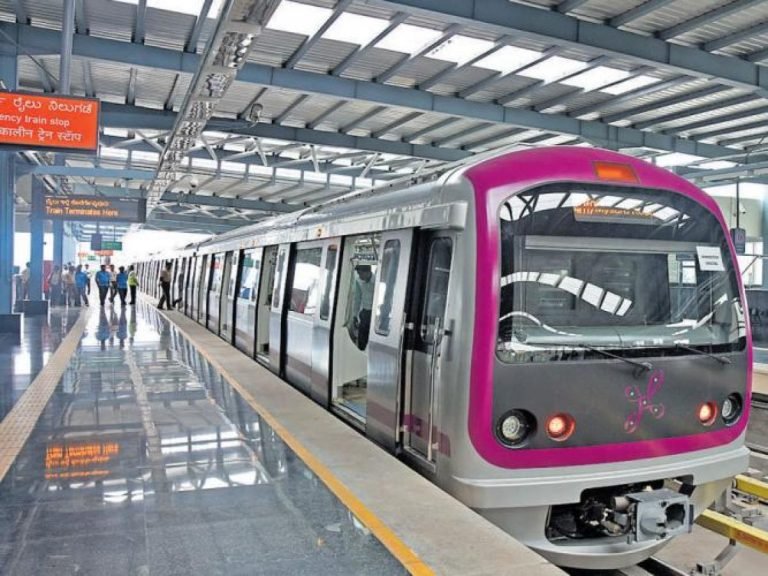
Metro Depot
For Representation Purpose Only

Bhubaneswar (Metro Rail News): In April, the Delhi Metro Rail Corporation (DMRC) opened the technical bids for the civil construction work of the Phulapokhari Depot & Workshop, which is a part of the Bhubaneswar Metro Phase 1 project. A total of twenty-two firms submitted bids for this development.

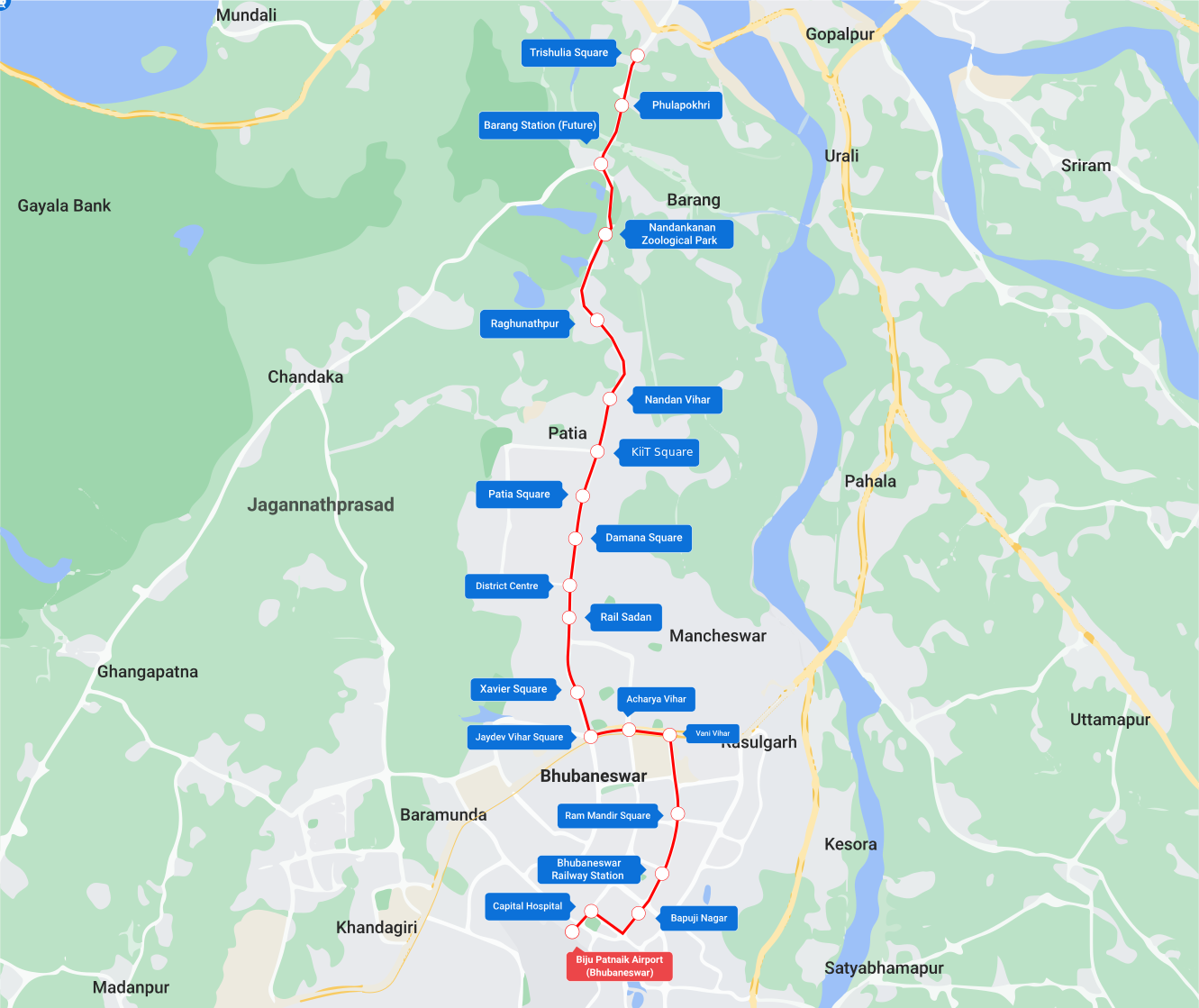
route map Bhubaneswar Metro
Bhubaneswar Metro Phase I Route

Phulapokhari Depot will be developed on a 16-hectare site in Phulapokhari as part of Package BBC-02. This facility will serve 3-coach metro trains, supporting operations for the 26 km Line-1, which spans from Trisulia Square to Biju Patnaik Airport and includes 20 elevated stations.

Bidders for Package BBC-02:

  • Ahluwalia Contracts India Ltd..
  • Amara Raja Infra Pvt. Ltd.
  • Bridge and Roof Co India Ltd.
  • Dineshchandra R. Agrawal Infracon Pvt. Ltd.
  • Diversified Energy Solutions Pvt. Ltd.
  • Himcon Engineers India Pvt. Ltd.
  • ISGEC Heavy Engineering Ltd.
  • Lisha Engineers Pvt. Ltd.
  • Metcon India Realty and Infrastructure Pvt. Ltd.
  • MIA Construction Pvt. Ltd.
  • Pragati Construction Consultants
  • PREMCO Rail Engineers Ltd.
  • Quality Buildcon Pvt. Ltd.
  • Ranjit Buildcon Ltd.
  • Shree Balaji Engicons Ltd.
  • S K Construction
  • SPD Constructions Ltd Ltd.
  • UDRA Construction Pvt. Ltd.
  • URC Construction (P) Ltd.
  • Varindera Constructions Ltd.
  • Vishal Builders
  • YFC Projects Pvt. Ltd.

Scope of work

Under this package, the contractor will undertake the design and construction of the Bhubaneswar Metro Depot Cum Workshop, OCC Buildings, including plumbing, drainage, external development works, and road works for the Bhubaneswar MRTS Phase-I Project.

In January 2024, the Delhi Metro Rail Corporation (DMRC) floated the tender for the construction work of the Phulapokhari Depot at an estimated cost of Rs. 104.74 crore with a 36-month deadline.

In January 2024, the Delhi Metro Rail Corporation (DMRC) floated the tender for the construction work of the Phulapokhari Depot at an estimated cost of Rs. 104.74 crore with a 36-month deadline.

Currently, the bids are under evaluation, which can take a couple of months to complete. Once the evaluation is completed, the financial bids of the technically qualified bidders will be opened to identify the lowest bidder..

Bhubaneswar Metro Phase I Project

Phase I of the Bhubaneswar Metro extends over 26.024 km, featuring a single corridor linking Trisulia Square to Bhubaneswar’s Biju Patnaik Airport through 20 elevated stations. Phase 1 was approved in November 2023 at an estimated cost of Rs. 5926.38 crore. Odisha CM Shri Naveen Patnaik laid the foundation stone of this project on 1 January 2024.

Advertisement1
InnoMetro_2026

Successful Kavach Trial of Vande Bharat Train between Palwal and Vrindavan

0
Vande Bharat Express - Indian Railways
Vande Bharat Express

NEW DELHI (Metro Rail News): Railway Board Chairperson and CEO Jaya Verma Sinha, accompanied by senior officials from North Central and Northern Railways, inspected a Kavach trial of the Vande Bharat train between Palwal and Vrindavan on 14 May. The trial, overseen by Kush Gupta, Deputy Chief Signal and Telecommunication Engineer, showcased the effectiveness of the Kavach system in ensuring the train stopped at red signals automatically.

Jaya Vera Sinha travelled in the eight-car Vande Bharat train, which operated at speeds of up to 160 kmph, gaining first-hand experience of the Kavach system at various operational points, including red signals, loop lines, and speed restriction zones.

The trial highlighted the Kavach system’s ability to follow speed restrictions without the loco pilot’s interference. For example, the train precisely slowed down to 30 kmph to enter the loop line near Chhata station on the Palwal-Vrindavan route. Officials highlighted that Sinha was highly impressed with Kavach’s efficiency.

Detailed Inspection

Sinha boarded the Vande Bharat at 9:15 AM from Palwal station with other senior railway officials, including the General Managers of North Central and Northern Railways, the Principal Chief Signal and Telecom Engineer of the NCR Zone, the Principal Executive Director of the Railway Board, and the Divisional Railway Manager of Agra. The train reached Sholaka station at 9:38 AM, where it successfully stopped just 9 meters before a red signal at Hodal, using the Kavach system’s automatic braking.

After reaching Vrindavan at 10:45 AM, Sinha inspected the Kavach system installed at the station. The return journey started at 11:10 AM, with the train arriving back in Palwal by 12:30 PM. 

Extensive Kavach Network

All Vande Bharat trains are equipped with the Kavach system, which is designed to automatically apply brakes in emergencies. Before Sinha’s inspection, under Kush Gupta’s supervision, the Agra division conducted three successful Kavach trials at 140 kmph and 160 kmph for various trains, including mail, express, and Vande Bharat services. 

Technological Advancements

The Agra division has established an extensive Kavach network spanning an 80-kilometre stretch from Mathura (excluding the station) to Palwal. This involves placing RFID tags on tracks, installing stationary Kavach units at stations, and setting up towers and antennas along the tracks. Developed by the Research Designs and Standards Organisation (RDSO), the Kavach system ensures trains can apply brakes automatically during emergencies when drivers fail to act promptly.

High-Speed Capabilities

According to RDSO officials, the 125-km stretch between Delhi and Agra is the only section of the Indian rail network where trains can run at a maximum speed of 160 kmph. Other sections across India have a maximum speed limit of 130 kmph. This high-speed track was initially laid for India’s first semi-high-speed train, the Gatimaan Express, which was launched in April 2016.


Discover the endless possibilities of our city’s Metro at InnoMetro, our flagship Expo and Conference. Be an active participant in shaping its future towards a more sustainable tomorrow. Stay informed and join us to take a step towards a brighter future.

Advertisement1
InnoMetro_2026