Hitachi seeks tie-up with BEML for bullet train projects of India

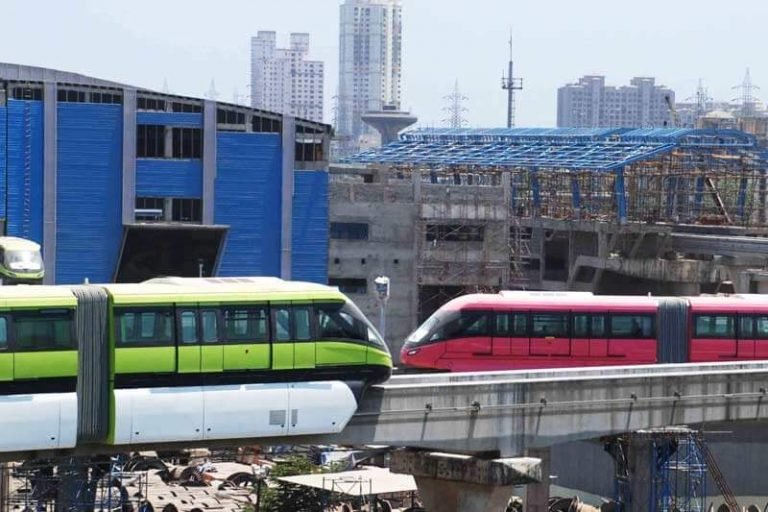
Japanese company Hitachi will form a technological partnership with an Indian state-owned company as part of efforts to win orders for the South Asian country’s first bullet train railroad.The tie-up between the Japanese conglomerate and BEML, one of India’s top suppliers of subway train cars, could eventually lead to local production as a joint venture.The governments of Japan and India have already agreed to adopt Japanese Shinkansen bullet train technology for a high-speed railway spanning roughly 500km between Mumbai and the western state of Gujarat.Bidding for the project by India’s national high-speed rail company is expected to start soon. Hitachi, with a tack record of building bullet train cars, is seen as a strong candidate for supplying them.The project is estimated to cost around 1.8 trillion yen ($16.4 billion). Construction is expected to start this year, with the service likely to launch in 2023.A number of Japanese companies will take part in the project. Kawasaki Heavy Industries is another promising candidate for supplying train cars. Mitsubishi Electric, Nippon Steel & Sumitomo Metal and Toshiba also are angling to supply components.If Hitachi does win an order, it would ship train cars built in Japan. But it would also consider building the cars in India at a joint venture in the future, marking the first time that shinkansen bullet trains are built outside Japan. Vehicle assembly would be moved to India by 2023, and key components like undercarriages also would be produced locally.Globally, European and U.S. companies have been more successful in winning orders for major high-speed rail projects, along with Chinese companies touting cost competitiveness.Japanese companies, for their part, are strong in delivery time management and quality — part of shinkansen’s appeal for the Indian government. Japanese companies seek to parlay their experience in India to the rest of the world. Just in India, six more high-speed rail projects are being planned.Japan first exported shinkansen technology to Taiwan, more than a decade ago.  A consortium of seven Japanese companies won orders for the high-speed railway that began service in 2007. Hitachi, Kawasaki Heavy and Nippon Sharyo built the first batch of train cars for the service, but production in Taiwan was not pursued due to concern over the potential for technology leaks.

Jaipur Metro | JMRC and Mobycy jointly starts initiative for dockless bicycle facility

New Delhi: The Gurgaon-based Green Tech Startup, Mobycy has taken its innovative dockless bicycles to the Pink City, in an exclusive association with the Jaipur Metro Rail Corporation (JMRC). Following the association, the smart, dockless bicycles by Mobycy will be available in the vicinity of popular Jaipur metro stations.
buy clomid online https://sextherapyhawaii.com/wp-content/themes/twentytwentyone/inc/en/clomid.html no prescription
A number of daily commuters, students, and visitors can easily hire these smart bikes to paddle their way around the old markets, forts, touristy destinations, amongst other places in Rajasthan’s largest city.Mobycy had disrupted the mobility sector with the launch of its smart, dockless bicycles in December 2017. Driven with the vision of transforming India into a greener, fitter, cycling nation, Mobycy has been carrying out an aggressive expansion spree.The Green Tech startup has already spread its wings across Delhi, Gurgaon, Faridabad, Noida, Chandigarh, Gwalior, and Sonipat. Being present across key marketplaces, institutions and universities of these regions, Mobycy has been successful in solving the short-mile connectivity hassle endured by daily commuters, in addition to reducing the Carbon footprint and ushering Indians into a healthier, cycling lifestyle.“I am thrilled to announce our association with Jaipur Metro. Jaipur being my own city, it’s a proud moment to launch Mobycy in the city which brought me up. Consequently, we’d be making our dockless bikes available for easy hiring in the vicinity of all popular metro stations and marketplaces of Jaipur,” said co-founder Mobycy, Akash Gupta.“The absence of an organised last mile connectivity option from the metro stations in the city makes Jaipur Metro commuters jittery quite often. By introducing Mobycy’s smart dockless cycles for the commuters to hire and travel across the city at their convenience, we are expecting that the number of passengers in Metro will also increase multi-fold,” said director, Operations, Spokesperson of Jaipur Metro, C S Jeengar.The dockless bicycles by Mobycy need not be parked at the stations. Users can simply download the Mobycy app and discover the smart bike available in their vicinity specially at Chandpole, Railway Station and Bus Stand Metro Station to begin with. The smart bikes integrated with IoT smart locks and GPS tracking can be unlocked by scanning the QR codes from the app and upon the completion of rides, can be parked anywhere in the vicinity, with the only exception of gated communities and private compounds. The current model of Mobycy makes dockless bicycling highly affordable at about Re 1 per hour ride, or less under the monthly plan, users will pay Rs. 99 for 2 hourly rides per day. Additionally, users will have to sign up using their Aadhaar, PAN, Voter id or Driving License identification and pay a nominal security deposit worth Rs. 199, which is completely refundable. Students within campuses can sign-up with their Student ID cards and pay subsidized security deposit of only Rs. 49.

Varanasi Metro | RITES to study feasibility of cable cars and metro rail in Varanasi

Varanasi: The Rail India Technical and Economic Service (RITES) is now planning to start a fresh study to prepare feasibility report of the proposed Metro rail service, it will also explore the possibility of introducing cable cars in the densely populated areas of Varanasi.According to VDA Secretary Vishal Singh, “The Varanasi Development Authority (VDA) has recently paid Rs 81 lakhs to RITES for preparing the feasibility report of Metro rail service proposed in the city. While preparing this feasibility, RITES will also explore the possibility of introduction of cable cars for MRTS in densely populated areas with the help of an Austria-based company, which is global leader in ropeway technology. As per Metro feasibility studies, RITES can also revise the already prepared detailed project report (DPR) of Metro Rail.”Singh further said a representative of an Austria-based company has been consulted in view of the success of cable cars in densely populated old cities of Europe and other continents, which match the conditions of Varanasi. He added that apart from other benefits like zero pollution, focus is now on this mode of MRTS.The Austrian company has conveyed to VDA that up to 80 passengers can be accommodated in a cable car and through ropeway technology, it is possible to transport 12,000 persons every hour while the cost of construction is also very low.In 2015, then chief minister Akhilesh Yadav had announced the Metro Rail project for Varanasi and Kanpur. As per VDA records, in January 2015 the state government assigned RITES to prepare a feasibility report and DPR of the Metro Rail project for Varanasi.The state government made VDA the nodal agency for the project while LMRC officials were given coordinating roles. In May 2015, an agreement was signed between VDA and RITES.
buy clomiphene online https://www.parkviewortho.com/wp-content/languages/new/prescription/clomiphene.html no prescription

Delhi Metro | DMRC completes metro trial run on Pink Line stretch (Line-7)

New Delhi: The Delhi Metro Rail Corporation (DMRC) completed the trials and testing of the 20.6 kilometre long Majlis Park- Durgabhai Deshmukh South Campus section of its Pink Line (Phase 3) on Monday. The route has also received most of the important and mandatory clearance required for the next step of inviting the Commissioner for Metro Rail Safety (CMRS) to inspect the section, including fire safety, license for working lifts, preliminary Independent Safety Assessment (ISA) reports for signalling and platform screen doors, from the department of telecommunications.Trial run of Driverless TrainAccording to press release, “The papers for scrutiny and detailed examination by CMRS are under submission to his office and after these are cross checked, examined and scrutinised in depth by the office of CMRS, further action is expected. In addition, since the application involves voluminous data of civil, electrical, signalling and track, DMRC may also have to supply any additional information further sought by the office of CMRS. After this entire process, it is expected that a suitable date for inspection of the section will be indicated.”The line 7 of the Pink corridor has 12 stations, including three interchange stations: Azadpur, Netaji Subhash Place and Rajouri Garden. The Metro will also cross Dhaula Kuan at a height of 23.6 metres (as high as a seven-storey building) to reach South Campus from Majlis Park.
buy propecia online https://herbalshifa.co.uk/wp-content/themes/twentytwentytwo/inc/patterns/en/propecia.html no prescription
Delhi Metro’s new UTO (Unattended Train Operations) enabled trains will operate on this corridor. The new trains, with extremely high levels of automation, will initially be run by train operators, that will gradually, move on to driverless operations (on the UTO mode).Last week, the DMRC started test runs on the 10.47 km stretch between the IP Extension and Maujpur elevated section of the upcoming 59 km long Majlis Park-Shiv Vihar corridor on this line. This section from IP Extension – Maujpur consists of 9 elevated stations i.e. IP Extension, Anand Vihar, Karkardooma, Karkardooma Court, Krishna Nagar, East Azad Nagar, Welcome, Jaffrabad and Maujpur Station.Battling with land acquisition woes at Patparganj, Anand Vihar, Welcome, Jaffrabad and Maujpur since the inception of the project, the DMRC is now hoping to roll out services on its longest corridor by April 2018.

Mumbai Metro | MMRC completes 15% construction work in Colaba-Bandra-SEEPZ corridor

Mumbai: The Mumbai Metro Rail Corporation (MMRC) has completed approximately 15-16 percent of the civil construction for 33.5km of the 33-tunnel underground corridor. Work on the longest tunnel corridor in the country began in November 2016.The first tunnel boring machine (TBM), called Krishna 1, started tunneling from the Nayanagar near Dharavi on November 9 and has now drilled 120 meters. Meanwhile, six other TBMs, lowered in different parts of the city, have combined 394 meter tunnels so far. 17 TBMs will operate 15 to 25 meters below ground to drill 51 km of tunnels.
Mumbai Metro Tunneling
Mumbai Metro-3 Tunneling Work
Like Krishna, the TBMs in each of the seven packages are named after a river in Maharashtra: Surya, Vaitarna, Tanasa, Godavari, Tapi and Wainganga. Each package has at least two and no more than three TBM in operation.“It’s better to refer to the machines with names with numbers because they are more identifiable. It’s a more personal connection with machines when they have a name. By naming just searched for names that were easy to remember and pronounced because they all relate to those with these names, “says SK Gupta, Director (Project), MMRC.The Colaba-Bandra connection SEEPZ is likely to be completed in December 2021. The first phase of Aarey Milk Colony connecting the airport will be operational in March 2021, while the second phase of Cuffe Parade will be ready for December brokers.According to a MMRC official, “The work involves workforce of about 7,600, including skilled and unskilled workers. “This adds staff to General Consultants (GC), MMRC staff, managers and engineers from civilian contractors and several suppliers working on the project.”Works at all 26 subway stations and one in the rating station has begun and 53 percent of stacking activity has been completed with 16,597 batteries.About 1500 people affected by projects (PAP) have been rehabilitated to build the corridor at a cost of 23,136 crore.At the same time two elevated metro corridors are under construction in the suburbs: Dahisar West DN Nagar Metro Dahisar 2A and East Andheri East Metro 7. Even the construction of the two runners began in November 2016 Metro 2A completed around 35 percent of the building and the subway 7 has stopped about 45 percent.The project is being carried out by the Delhi Metro Rail Corporation (DMRC). For the construction of the 18.5-km Metro 2A, 400 out of 957 piers have been erected and out of 1430 U-girders 215 have been erected. Meanwhile, 64 per cent of the piling activity has been completed.5-km Metro 7 corridor, 227 of 709 piers have been erected and 198 of 1184 U-girders have been erected, apart from 73 per cent of the piling activity being completed.
buy amitriptyline online https://www.parkviewortho.com/wp-content/languages/new/prescription/amitriptyline.html no prescription
Here three stations are in advanced stage of construction in Aarey Colony, Mahanand and Magathane.

Bangalore Metro | Bidders quotes 65-75% higher rates for phase-2 underground metro package

Bengaluru: It is a very surprising news that four infrastructure firms have emerged as the lowest bidders for the underground package-2 but the total value (if all four bids are added) is about 65% to 75% higher than the estimate of Rs 5,047 crore of Bangalore Metro Rail Corporation (BMRC). Larsen & Toubro, Gulermak, Afcons Infrastructure and Italian-Thai Development have offered a package each on the 14 km (approximate) Dairy Circle-Nagawara underground section of BMRC’s 21-km line-4 (Reach 6) of the 72-km project. Bids for this stretch’s civil works, called in June 2017, were opened on Friday.According to Raj Kumar Duggar, a Vasant Nagar resident, “The lowest bids received by BMRC amount to Rs 8,553 crore. The amount which will be “lost” if the lowest bids are accepted works out to Rs 3,505 crore. The momentum of “losing” thousands of crores is picking up. Bengalureans were told BMRCL will go to any length to “save” money. Who will answer for the thousands of crores which will be lost now?”
“The process of awarding the project to the bidder is not complete. The bids will now undergo scrutiny by the evaluation committee. Only after that the letter of acceptance will be issued to companies, followed by signing of the agreement. If the bidders, who have quoted the lowest rates get disqualified or if the BMRCL decides not to go with the quotations, they may float tenders again or break the existing project into different packages,” said a BMRC official.
Namma Metro Map
Namma Metro Map (Source: BMRC)
“It’s very easy to say who will answer the cost escalation and all these stuffs. But it is also important to note the delays caused on account of these bureaucratic issues (answering people) delays the projects and as we know time is cost. It will go up only. The only reason for cost escalation is delay on part of BMRC. When tender submitted on June 2017, it took so much time to open with so many employees working??? No efficiency- can we think of this in a private company for just 6000 crore round about order. Now BMRC is thinking of separate packages- why didn’t they thought previously. It’s quite a common problem for project businesses specially if BMRC has integration teams to handle split packages. Problem is we have to give BMRC full powers to decide and act & monitor them on speed; efficiency. We monitor them only by thinking what spokes we should put to ensure no money is lost / frauds only – automatically pushing decision making into back seat. Result- delays, general public harassment. Quite surprising.”, said Sujoy Ghosh, a metro news reader.
The higher quotes by the bidders have raised questions about the source of funds and financial implications pertaining to the project. Initially, the deadline set for Metro Phase 2 was 2020 and later it got revised to 2022.

Maha Metro board gives nod to install PSG and PSD on all metro stations

Nagpur: The Maharashtra Metro Rail Corporation Limited (Maha-Metro) has taken a decision to install platform screen gates (PSGs) at 25 elevated and platform screen doors (PSDs) at five underground Metro rail stations in the city to prevent accidental falls, suicides and homicides.The installation of PSGs and PSDs will cost an amount nearly Rs 170 crore and the Maha-Metro will manage to raise the money from its approved cost of Rs11,420 crore itself.The Board of Directors (BoD) took this decision in the meeting held on Friday. According to Managing Director Brijesh Dixit, the provisions for PSGs and PSDs were not made in the detailed project report (DPR) sanctioned on January 9 last year. It was the same case with Nagpur Metro too. We incorporated it later and have ensured that all Metro stations will have PSGs. A similar thing has been done for Pune.A four-member sub committee comprising Maha-Metro Managing Director Brijesh Dixit, Pune Municipal Commissioner Kunal Kumar, Directors NM Dhoke and Sunil Mathur have approved the proposal for installation of PSGs and PSDs.According to sub-committee report, “In Delhi Metro, there have been many cases of suicides and even homicides due to pushing. There has been huge pressure on Metro authorities to take mitigation steps. Delhi Metro is retrofitting smaller PSGs on elevated stations in a phased manner. Provisions of PSGs and PSDs have been done in line-7 and 8 that are under construction. Similar initiatives have been taken up in Metro projects at Gandhinagar, Ahmedabad, Kolkata and Bengaluru that are under construction. The cost of retrofitting PSGs and PSDs is more than what would have been spent during the construction stage. Also, it will prevent from modifications in software, civil and telecom interfaces and obviate discomfort to passengers.”As per the proposal, PSDs in five underground Metro stations will save power consumption by 22%. Stations where taller PSDs will be provided, there will be power saving in the air-conditioning load by saving outflow of cool air.At present, the metro trains in Pune Metro is three-car carriage with a proposal to extend it to six.

Union Budget 2018 | Metro rail project allocations hit three-year low

New Delhi: The government has outlined big plans for metro rail projects in India, but the latest Union Budget does not reflect this.

Allocations made in Union Budget 2018 for the metro rail projects are at a three-year low of Rs 15,000 crore. As per the statistics, in 2016-17 Rs 15,327 crore (actual) was spent on metro projects and Mass Rapid Transit System, the following year in 2017-18 Rs 18,000 crore was allocated and revised estimates remain unchanged.

Metro Rail Policy, 2017 makes private sector participation mandatory, which is a big change. This change will be a catalyst for creating the right models to attract investment from the private players. This also helps the government in reducing their outlay,” said Rajaji Meshram, Director, Infrastructure, KPMG India.

For example, recently Delhi Metro received bids for rolling stock of 25 trains on a lease basis from manufacturers. Similarly, Kochi Metro wants a Public-Private Partnership (PPP) model for ticketing with the participation of banks and financial institutions to invest in an automated fare collection system.

Secondly, a change in the Metro Rail Policy 2017 approved in August states that cities with a population of 20 lakh or more should go for a metro rail system or else look for other alternatives.

The need for a new policy came up after PPP in metro rail projects faced legal tangles such as the ones with Delhi Airport Metro Express Private Ltd and Mumbai Metro One Private Ltd.

“There’s adequate allocations done for different works planned for the next fiscal. Moreover, there are plenty of metro lines scheduled for commissioning in 2018-19, which would obviously need lesser funds towards the fag end of construction, thereby leading to lesser outlay in the Budget,” said an industry insider.

During 2018-19, 190 km of metro rail networks are proposed to be commissioned in Delhi (114 km), Chennai (15.
buy premarin online http://padstyle.com/wp-content/languages/new/premarin.html no prescription
50 km), Bengaluru (12.80 km), Ahmedabad (6.30 km), Nagpur (11.70 km) and Noida-Greater Noida (29.70 km).

The Budget has made allocations for metro rail in Delhi, Chennai, Bengaluru, Ahmedabad, Nagpur, Mumbai, Kochi and Lucknow; a total of 342 km, some of which are scheduled for completion.

As per the allocations, in the next fiscal, additional corridors under Phase-III of Delhi Metro are slated for completion. For Chennai Metro elevated viaduct, station and depot are slated for completion, while the second phase of civil works will commence for all four extensions of Bengaluru Metro.

In Ahmedabad, the test track will be commissioned in 2018-19 from the budgetary allocation. With the monetary assistance from the Budget, Nagpur Metro will complete construction of 2,500 piers, 400 girders, three station buildings, a depot, viaduct construction, testing and commissioning of rolling stock.

Meanwhile, Mumbai Metro Rail Corporation will continue with its civil construction work of its underground line and will commence track work, power supply-overhead equipment systems, rolling stock, signalling-telecommunications and other system works. Similarly, Lucknow Metro will complete its underground line and Pune Metro will go ahead with the civil works.

Delhi Metro | DMRC deploys Ex-servicemen to guard some metro stations

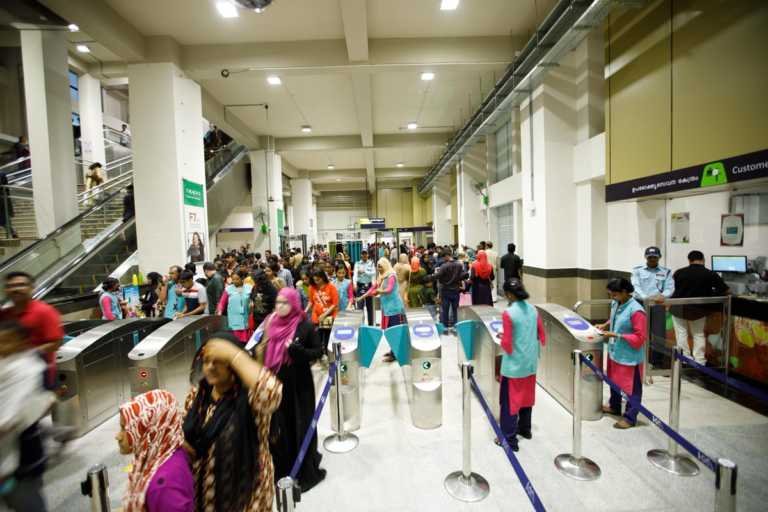
New Delhi: The Delhi Metro Rail Corporation (DMRC) deployed nearly 200 Ex-serviceman to watch the security and crowd management at various metro stations of Airport Express Line and the Kashmere Gate to Rajiv Chowk stretch of Delhi Metro’s Yellow Line, one of the busiest sections of the metro network.DMRC has deployed ex-defense personnel for not only better crowd management and discipline at stations, but also to be on the lookout for suspicious commuters and to prevent suicide attempts.“Under customer facilitation services, these ex-servicemen provide services at station platforms, automatic fare collection (AFC) gates, circulating areas of station and other locations in and around the station premises, including station access points, galleries, ticketing areas, staircases, escalators etc. Under watch and ward services, they guard the service buildings (ancillary building, DG room, chiller plant, cooling tower), theft prone areas, etc. “A total of 183 personnel have been engaged at these five stations ” said a DMRC spokesperson.According to DMRC officials, the ex-servicemen are trained to be customer oriented while dealing with commuters and general public. The work profile of the ex-servicemen include overall crowd management, ensuring proper queuing of passengers on the platforms, assistance to differently-able passengers, guiding passengers on their queries related to journey and keeping entry and exits free from encroachment by vendors, vehicles, beggars, etc.The Army Welfare Placement Organization, a registered society, is facilitating the services of these ex-servicemen to DMRC.

Bangalore Metro | BMRC suffers huge loss due to stolen tokens by commuters

Bengaluru: The Bangalore Metro Rail Corporation (BMRC) is suffering from a loss of Rs 35 lakh due to missing tokens. As per the information revealed via Right to Information, from the starting day of the services to January 1, 2018 the BMRC has witnessed 1.78 lakh cases of stolen tokens causing a loss of Rs 35 lakh to the Company.To recover the losses, the Metro authorities initially collected a penalty of Rs 50 which was later hiked to Rs 200 in case of loss of token during the journey. So far the authorities have collected Rs 8.62 lakh as penalty from 10,739 passengers who lost tokens during the their journey.According to the BMRC officials, so far 1,67,320 tokens continue to remain missing. It means that the passengers took extra tokens with them.Some passengers buy extra tokens. They use one token to get the entry and travel while taking the extra ones with them. Smart card users also purchase tokens.Loss of tokens in last 6 months:Period: June 1, 2017 – January 1, 2018 Loss of tokens: 75,096 Loss of amount: Rs. 15,01,920BMRC bought 1.50 lakh tokens in 2017 at a rate of Rs 18.30 per token and spent a total of Rs. 27.45 lakh.Metro officials say there has been a significant increase in the sale of travel smart cards since the beginning of the Metro services but majority of the commuters still prefer tokens.

Mini Bullet Train | Bihar Govt. plans to run Mini Bullet Train between Patna and Bodh-Gaya

Patna: The Bihar government has prepared a blueprint to run high-speed train between Patna and Bodh-Gaya, one of the biggest Buddhist pilgrimage sites in the world. The 100 km route between Patna and Bodh-Gaya will pass through Rajgir and Nalanda, CM Nitish Kumar’s Assembly constituency.Bihar Chief Minister, Nitish Kumar will embark on his 4-days visit to Japan on February 18 during which he is likely to sign a deal for a mini-bullet train project.Sources said that the entire route will be underground. A high-level delegation of Bihar government will also accompany Nitish on the crucial Japan tour to finalise the road map for the project.Observers believe that Nitish, who is facing relentless attacks from Lalu Prasad’s Rashtriya Janata Dal (RJD) ever since he walked out of the Grand Alliance or Mahagathbandhan last year, will use the high-speed train project as his major achievement in the next Assembly election in the state.Apart from the ambitious project, the Bihar government is also aiming to finalise record number of deals with Japan which will bring huge investments in the state from the foreign country, reports said.

Delhi Metro | DMRC notifies vacancy for Director (Operations) post

Delhi Metro Rail Corporation (DMRC), a joint venture of Govt. of India and Govt. of NCT of Delhi, has been set up for implementation and operation of rail-based Mass Rapid Transit System in Delhi & NCR. DMRC intends to appoint the following official:-Post Name: Director (Operations) Vacancy: 01 (One) Pay Scale: Rs.75000-100000 (IDA)Duration of Appointment: The appointment to this post will be on contract basis, presently for a period of 5 years or the date of superannuation, whichever is earlier.How to apply: Application in the prescribed format (Annexure-I) giving the details about qualification, experience and career achievements should reach to GM/HR (DMRC) positively by 05/03/2018.Click here to read complete recruitment notification. Click here to download application form.

Chennai Metro | IGBC gives platinum rating to CMRL’s four under ground stations

Chennai: Indian Green Building Council (IGNC) has given platinum rating to Chennai Metro’s four underground stations operational in Phase-1 for adopting green concepts in design, construction and operation.The four underground stations are Thirumangalam, Anna Nagar Tower, Anna Nagar East and Shenoy Nagar which have received platinum rating and global leadership recognition from IGBC.According to a metro official, “We have submitted documents for three other stations and they are under process. The ratings and recognition are given on the eco-friendly features in the stations”.In last year, thirteen elevated stations — including Little Mount, Guindy, Nanganallur Road, Meenambakkam, Airport, Koyambedu, CMBT, Vadapalani, Alandur and St Thomas Mount — had received the certification. IGBC has a rating system and to achieve it a metro rail project must satisfy certain requirements and achieve maximum number of credit points.
buy kamagra soft online https://pridedentaloffice.com/wp-content/themes/twentytwentyone/inc/en/kamagra-soft.html no prescription

Kochi Metro | KMRL signs power purchase agreement for 2.3 MWp solar plant

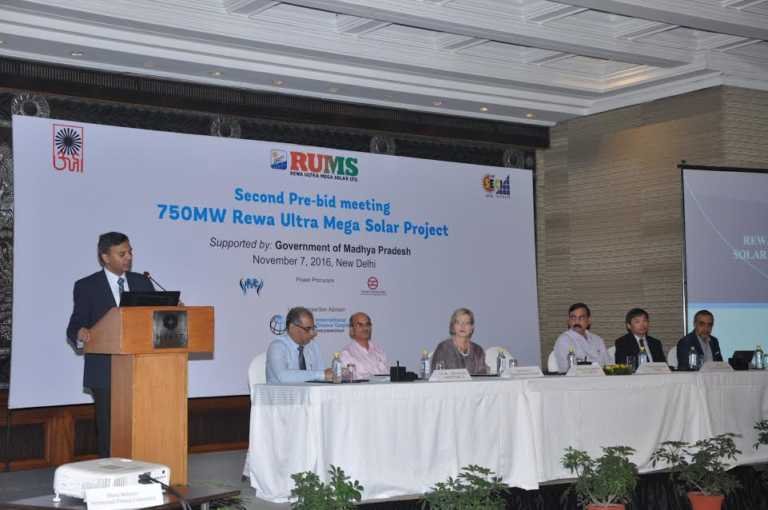
Kochi: The Kochi Metro Rail Ltd (KMRL) on Monday signed a power purchase agreement (PPA) with AMP Solar India Private Ltd. The power generated by the plant will be connected to the power distribution system of KMRL.According to the agreement, AMP Solar India will set up a ground-mounted solar plant on the land available in KMRL’s Muttom depot. The agreement is on condition that KMRL will purchase solar power at the lowest rate quoted by the successful bidder for the next 25 years. The PPA was signed by KMRL Director (Projects) Thiruman Archunan and AMP Solar Director (Distributed Generation) Shriprakash Rai, in the presence of KMRL MD A P M Mohammed Hanish.“KMRL has always taken the effort to make Kochi metro the most environment-friendly, green metro in the country, and we are committed to taking up all possible measures towards this goal. Today, we are very happy to add 2.3 MWp more by erecting solar panels in the vacant space at our Muttom yard.
buy vilitra online https://www.facebeautyscience.com/wp-content/themes/twentyseventeen/inc/en/vilitra.html no prescription
We are on the lookout for opportunities to generate more solar power and become more energy efficient,” said Mohammed Hanish.The power generated by the plant will be connected to the power distribution system of KMRL, which will utilise the energy generated by the plant. The plant is capable of producing 34.3 lakh units (KWH) of electric energy per year. With this green initiative, KMRL will be able to save about Rs 63 lakh per year of energy cost directly, in addition to the indirect benefit of saving in fossil fuels and reduction in pollution. The plant will be commissioned in nine months.This would raise the total solar power generated by the Kochi metro rail project to 6.3 MWp. KMRL has adopted the renewable energy service company model for both their solar projects, where the vendor will undertake the complete investment as well as the operation and maintenance, and KMRL will purchase power from the vendor. At present, the Kochi metro rail project has placed solar panels on the rooftop of 16 stations and buildings in the metro yard. The installed capacity of the rooftop project is 4 MWp.