Nagpur Metro Recruitment 2020 – For Manager/Assistant Manager posts

NAGPUR, India (Metro Rail News): Maharashtra Metro Rail Corporation Limited (Maha Metro) invites applications from the qualified and experienced applicants for the position of Manager/Assistant Manager for Nagpur Metro Rail project on contract/deputation basis.

Read more about the eligibility guidelines specified below for the vacancy and eligible applicants can submit their application directly to Maha Metro. The last date to apply is 06-03-2020.

Nagpur Metro Recruitment 2020Details
 Job RoleManager/Assistant Manager
Education RequirementB.Tech/B.E
Total No. Vacancy5 Posts
Job LocationsNagpur
Age Limit40-35 Yrs
Experience5-10 yrs
Salary60,000 – 180000/Per Month
Posted on15-02-2020
Last date to Apply06-03-2020

Qualification Details:

1. Position: Manager(Work)- E2/ Assistant Manager (Work)-El (For NMRCL Project)
2. Qualification: Full-time B.E, B.Tech. in Electrical / Electronics /Electronics Telecommunication or equal discipline from a Govt. recognized Institute / University.
3. Minimum Experience (Post Qualification): At least 05 years’ of Executive / 05 yrs’ Supervisory experience in Operation Management in Metro Rail /Railways / Railway PSU’s / Metro Related Infrastructure Industries along with given;
i. The applicants having the experience in Metro Rail / Railway / Railway PSU’s: The applicants must be currently working in scale below in the IDA Pay Scale or CDA Pay Matrix with Level-IO / Level-08 (7th CPC) QR worked at least 03 yrs in the two-scale below in the IDA Pay Scale or CDA Pay Matrix with Level-08 / Level-07 (7th CPC), as on closing date.
ii. The applicants having the experience in Metro Related Infrastructure Industries: The applicants of Metro Related Infrastructure Industries, who have more than 05 yrs’ Executive / 05 yrs’ Supervisory experience in Operation Management and are drawing salary (CTC) of Rs. 1,00,000/- Rs. 80,000/-per Month (almost) are qualified to apply. The candidates either from ‘i’ or ‘ii’ should be well conversant with Train Operation, Maintenance, Training, Traffic works etc. of Railway / Metro Rail. Specific work Experience in Training of Operation Staff, Documentation for various statutory approvals, risk management is desirable. Professional Certifications of PMP, IAPM, CAPM or any other shall be included advantage.
4. Salary: The salary will be Rs. 60,000-180000 50,000-160000

Age Limit:

40 Yrs-35 Yrs

Pay-Scale

  • Manager: Rs 60,000-1,80,000 (IDA)
  • Assistant Manager: Rs 50,000-1,60,000 (IDA)

Selection Procedure

  • Shortlisted candidates will be called for Personal Interview followed by Medical Examination.
  • Preference will be given to candidates having experience from Railways, Metro Railways, Rail PSUs etc.

How to apply

Eligible and interested candidates can join by submitting their applications in prescribed format which can be downloaded from below.

Application Fee

Rs 400.00 for the unreserved (General & OBC) category. However, women and persons from SC/ST category are exempted.

Where to apply

To apply against vacancies under the Nagpur Metro Recruitment 2020, please submit your duly filled application form to the following authority by or before 6th March 2020.

The General Manager (HR)
Maharashtra Metro Rail Corporation
Metro Bhawan, Opp. Dr. Babasaheb Ambedkar College
Diksha Bhoomi, Vasant Nagar, Ramdas Peth,
Nagpur – 440010, Maharashtra

Click here to Download Application Form

To get jobs information from the other metro and railway projects, stay in touch with our Jobs Section.

State Govt allocates Rs 3,100 crore for Chennai Metro Phase 2 Project

CHENNAI, India (Metro Rail News): In a significant push to one of the Chennai’s most ambitious transport projects, the state has allocated 3,100 crores for 2020-21 for construction of Chennai Metro Rail Phase 2 Project spanning over 118.9km. The state government has also requested the Centre to approve funding for the project and provide 50% equity share capital as was done for Chennai Metro phase 1 project.
“In the budget for 2020-21, a sum of 3,100 crores has been allocated for the Chennai Metro Rail Project as share capital assistance, subordinate debt and pass-through loan assistance,” said Deputy CM and Finance Minister O Panneerselvam.

During the 2019-20 budget, the state allocated 2,681 crores for the phase-2 project as share capital and debt.

Funding from Japan International Co-operation Agency (JICA) has been obtained for a stretch of 52.01km from Madhavaram to Sholinganallur and from Madhavaram to Chennai Mofussil Bus Terminus (CMBT).
buy black cialis generic over the counter

Detailed designs are ready, and construction work on the project will begin shortly.

Financing from multilateral agencies including Asian Development Bank (ADB), Asian Infrastructure Investment Bank (AIIB) and New Development Bank is being firmed up for the remaining stretches of phase-2 from CMBT to Sholinganallur, Sholinganllur to SIPCOT, Siruseri and from Light House to Poonamallee bypass.

“Chennai now has a fully functional metro rail system. The reach of the Chennai Metro network must be extended further to get the benefits from it. Hence, the government accords high priority to the expeditious implementation of the three metro rail corridors of a total length of 118.9km, identified in phase-2 of the Chennai Metro Rail Project,” said Panneerselvam

Metro Rail News Published Feb 2020: Union Budget Special issue

Dear Readers,

Metro Rail News published February 2020 – Union Budget Special issue, which will help you out to seeks the business opportunity in Metro and Railway Sector, Our February issue focuses on interesting topics such as an innovative idea for Metro & Rail in 2020 and also provides a cover story on Rail Industry Innovation Ideas for 2020. Union Budget 2020 Highlights and Industry Leaders Reaction. Mumbai Metro is chosen as our project of the month and exclusive Interviews of Shri Shri Vinod Kumar Yadav, Chairman, Railway Board, along with other regular columns such as new development in metro project, technology updates, Article, opinions, Awards, appointments, product watch, live tenders, Industry contract, upcoming events and current job openings.

Finance Minister Nirmala Sitharaman presented the most difficult budget of the decade on February 1, 2020, and This was for the second time that Sitharaman presented the Railway Budget along with Union Budget. Which brings more opportunity in Metro, Railway, RRTS and High-Speed Rail sector.

1.7 Lakh crore rupees to be provided for transport infrastructure in the coming financial year and Indian Railways to set up a Kisan rail for the transport of perishable goods. Centre will fund 20% of the 148 km Bengaluru Suburban Railway Network project, costing 18,600 crores with metro-like fares, will help raise 60% of the project cost.

In the next five years, 13.69 lakh crore would be invested on infrastructure for Railway Projects and target to achieve 11000 electrifications of Railway tracks. Station Redevelopment Projects and operation of 150 trains to be done under the PPP model. 550 Wi-Fi facilities to be installed at railway stations. National Logistics Policy will soon be released, creating a single-window e-logistics market.

To achieve higher export credit, a new scheme to be launched which provides higher insurance cover reduced premium for small exporters and simplified procedure for claim settlements. More TEJAS-type trains will connect iconic tourist destinations.

Large solar power capacity to installed alongside rail tracks, on land owned by Railways. High-speed train between Mumbai to Ahmedabad would be actively

To read the Metro Rail News February 2020 issue, kindly subscribe

Pune-Nashik Semi high-speed Rail corridor by 2024

MAHARASTRA (Metro Rail News): Maharashtra Railway Infrastructure Development Corporation (MRIDC) Seeking Approval from Railway board and Govt. of Maharashtra for Pune-Nashik semi high-speed train service, which aims to reduce the travel time between the two towns of Maharastra, will become a reality by 2024. Currently, the travel time among the two cities is around five hours.

Past week, the Central Railway gave its approval for the revised detailed project report (DPR) prepared by MRIDC. The agency will now ask approval from the Railway Board and Maharashtra government to begin work on the 231.716-kilometre double line.

The Maharashtra Rail Infrastructure Development Corporation Ltd (MRIDC also called MahaRail), a joint venture of the Maharashtra government and Ministry of Railways on 50:50 basis, will be executing the project.

The proposed train running speed will be 200 kmph and stop at a total of 24 stations — eight primary and sixteen small ones — crossing through the three districts of Pune, Ahmednagar and Nashik.
buy female viagra online no prescription

“The DPR for the ‘Greenfield Semi High-Speed Double Line Railway Network’ has received approval on February 10 from Central Railway. Now we are seeking formal approval from the state govt to start the construction between Pune and Nashik. Once, the approvals are granted by respective authorities, the project is estimated to be completed in 1,200 days from the date of financial closure,” Said MRIDC official.

The complete cost of the project has been pegged at about Rs 16,039 crore, of which Rs 3,208 crore is to be developed by both state and central govt’s, and the remaining cost will be borrowed from national and international agencies. The project will require the acquisition of about 1,300 hectares of land. Throughout the path of the route, the broadway double line will pass through 20 tunnels, which will have to be constructed.

“The semi-high speed trains will complete the Pune-Nashik journey within two hours. MRIDC has envisaged the coaching configuration of six rakes with a carrying capacity of 450 passengers per train… a total number of 48 trips made by six rakes in a day, for the initial phase, has been planned,” said an official.

The project target is to reduce the travel time between two rapidly growing cities of Maharashtra significantly along with act as a catalyst for the growth of the industrial corridor along the way by providing seamless connectivity to the industrial zones of Pune and Nashik such as Alandi, Chakan, Khed, Manchar, Narayangaon, Sinnar and Satpur.

“Apart from these MIDC areas, the proposed line will cater to another important special economic zone (SEZ), in Khed, Narayangaon and Manchar. This project will also benefit tourism and pilgrimage sites located on the Pune-Nashik corridor,” the official said.

This will be the first low-cost, semi high-speed railway corridor in the country. The project will also have other parts such as container depots along the rail corridor, a private freight terminal, dry port, a multimodel and commercial hub and warehouses at places suggested by local industries.

IRCTC to roll out Third Private Train Between Varanasi-Indore from Feb 20

New Delhi(Metro Rail News): The Indian Railway Catering and Tourism Corporation (IRCTC) is ready to introduce the third private train on the Varanasi-Indore route from February 20.

The Third private train named as the “Kashi Mahakal Express” will also have a night service, the PSU stated on Wednesday.

Another two private trains served by the IRCTC are the Lucknow-New Delhi Tejas and the Ahmedabad-Mumbai Tejas Expresses. Besides being a superfast air-conditioned train, the IRCTC has also prepared to offer tour packages covering the famous religious sites on the train’s route, a said by the IRCTC.

“Being the first long-distance overnight journey train, IRCTC has geared up to provided a host of facilities and services to passengers, including high-quality vegetarian food, onboard bedrolls and housekeeping services and onboard security services,” the statement read.

“Besides, every passenger travelling on the train will be covered with complimentary travel insurance of Rs 10 lakhs during the journey.” it is stated.

The booking for the train “Kashi Mahakal Express” can be made only on the IRCTC official website and also by its mobile application, ‘IRCTC Rail Connect’.

Moreover, the train will also have a pre-reservation period of 120 days with quotas reserved for general and foreign tourists.

The current booking facility will be open to the passengers at the station after the first reservation chart is ready, four hours to five minutes before scheduled departure. On top of that, passengers will also be automatically refunded the complete fare on cancellation of both waitlisted and confirmed e-tickets.

“The train will connect Jyotirlinga-Omkareshwar (near Indore), Mahakaleshwar (Ujjain) and Kashi Vishwanath (Varanasi), besides connecting the industrial and educational hub of Indore and Bhopal in Madhya Pradesh. The train will operate thrice a week between Varanasi and Indore via Ujjain, Sant Hiradnagar (Bhopal), Bina, Jhansi, Kanpur, Lucknow/Prayagraj and Sultanpur,” the IRCTC stated.

The tour packages will cover Kashi, Omkareshwar, Mahakaleshwar, Bhopal, Sanchi, Ujjain, Bhimbetka, Ayodhya and Prayag, as per the statement.

Nexus awards Stadler a contract worth 700 million pounds to deliver 42 metro trains

ENGLAND, United Kingdom (Metro Rail News): Nexus has declared that they have signed a deal with the Swiss train builder Stadler to produce the new train fleet for the Tyne and Wear Metro.

Stadler was announced as the producer for the new trains recently. However, now official thanks to the signing of this contract. The new trains will be delivered up to 2024 and will enhance comfort and reliability on the Metro Train.

The new upcoming trains will cut Metro’s high voltage power consumption by 30% while giving about 15 times better reliability than the current fleet. Modern features will provide benefit to the passengers that include wifi, charging points, AC and step-change inaccessibility. An automatic sliding step at each door of the new trains will make travel a breeze for wheelchair passengers along with people with children’s buggies, luggage or bicycles.

Stadler will produce 42 new trains, along with the option for ten more, build a new Metro maintenance depot and carry out 35 years of maintenance for the new fleet, and the deal is worth around 700 million pounds.

Works are scheduled to commence in 2023-2024 the new trains will completely replace the existing fleet. Stadler will work with local suppliers from the North-East of England to construct the new trains.

“The contract with Nexus represents an important milestone for Stadler in Great Britain. After Glasgow and Liverpool, this is the third metro operator to opt for a Stadler vehicle. We look forward to working with Nexus and our suppliers in the North East of England”, Ansgar Brockmeyer, sales director at Stadler, said.

“We have secured the best train builder in the world to make the new Metro fleet. It’s a historic moment in the proud 40-years history of the Tyne and Wears Metro service”, Director-General of Nexus, Tobyn Hughes, said.

“I am delighted that has now been made official with the signing of the contract with Stadler. The hard work now starts in making our new train fleet become a reality. It heralds a very exciting future for Metro, its passengers, and its workforce.

“We asked for the best trains for the best price, transforming the passenger experience and delivering huge energy savings. Stadler has delivered on all fronts, and we look forward to working with them and the extensive UK supply chain which will support them over the coming years.”

Mumbai Metro shortest line to be most beneficial

MUMBAI (Metro Rail News): Presently just two of the Mumbai Metro projects which are under execution, have a projected Financial Internal Rate of Return (FIRR) of over 10% showing that the govt expects to justify financing prices for most lines through indirect profits from the projects. The FIRR is the return an investor can expect from a project for funds invested. If the FIRR is over the cost of funds, the project is viable.

Of the eight lines presently under execution, 6 have FIRR ranging between 6% to 8.65%. The Complete Project Report of any metro project requires to give at least 8% FIRR to get a nod from the Centre and foreign agencies for loan disbursement.

“Financial internal rate of return is how a private developer would look at a project. It is based on costs and direct benefits. Economic IRR is used by the government or public sector to make decisions as it includes FIRR plus the indirect benefits for the state including the addition to tax revenue due to the project,” senior director, Sachin Gupta said, Crisil Ratings. Incidentally, all Metro projects have a high Economic IRR reaching between 15% to 25%.

“For a private developer, the FIRR is useful in deciding whether to invest in the project. For a project to be viable, FIRR would have to be above 10%, which is a ballpark figure on the cost of debt,” Sachin Gupta said.

Highest FIRR two lines are Metro 4A which is (Kasarvadavali to Gaimukh) and 2B which is (Dn Nagar to Mandale). Metro 4A has a projected FIRR of 12.68% because of the property increase in the region. an official stated, “This route lacks hi-speed public transport and roads in Thane are conducted which people which switch to Metro in large numbers.”It is expected that the 32.5 km Wadala-Kasarwadavali single route will carry more than 12 lakh commuters each day, which will have a cascading effect on the 4A line as well.

A recommended extension—9km from Gaimukh to Shivaji Chowk in Kashimira called Line 10—also has a FIRR of 10.91% as it is assumed to carry 7.5 lakh commuters regularly. This is another important east-west Metro link that will connect western suburbs once it gets linked to Metro 4.

The second most valuable among the Metro lines would be the DN Nagar to Mandale 2B stretch, it is expected to carry 10.5 lakh passengers on its 23.5-kilometre long route. It will have a FIRR of 10.78%. which means every Rs 100 invested in this line will get Rs 110.78 before covering financing charges. “The route is an important east-west connector with links to the suburban railway at Bandra, Kurla and Mankhurd. It will also connect via Bandra-Kurla Complex which is a major hub of economic activity and employment,” MMRDA official said.

High FIRR is also connected to the scope for non-fare revenue through promoting rights and leasing of commercial space. Interestingly, a longer route does not certainly translate into higher ridership. Metro 5 (Thane-Bhiwandi-Kalyan) is 24 km long but will have 3.
buy Cipro generic buynoprescriptionrxonline.com over the counter
03 lakh ridership as the population is sparse balanced Thane-Mumbai and there is little scope for non-fare revenue. The FIRR from this route is expected to be lowest at 6%.

Noida Metro to be booked for a birthday, pre-wedding party at Rs 5,000 per hour

NOIDA (Metro Rail News): The NMRC announced on Wednesday that its coaches can now be booked for events. People can now book the Noida Metro coaches for birthday parties, pre-wedding and other celebrations, the Noida Metro Rail Corporation has announced.

The Noida Metro, which manages the rapid transport service among the twin cities in Gautam Buddh Nagar district, done the announcement on Wednesday as part of its “non-farebox” action.

“After the Hiring of Premise Policy for Film Shooting And Photography on NMRC premises, the Noida Metro has also formulated one more attractive policy for birthday party, pre-wedding celebrations and other celebrations on wheels which means that now Noida Metro in addition to mode of travel, will also become an accessible, attractive and affordable destination for entertainment and celebrations that too at a very reasonable cost,” the rail service officials said in a statement.

Interested persons can ask for one or more rail coaches to the maximum of four coaches in a train. To initiate the booking, they have to submit an application at least 15 days in advance that would be considered on a first come first serve basis, the NMRC stated.

“Once the booking is confirmed by the NMRC, the applicant would have to submit a license fee which will vary from Rs 5,000 to Rs 10,000 per hour per metro coach excluding taxes depending on the category chosen like decorated or undecorated coach in a running metro or a static metro etc according to the terms and conditions prescribed under the policy,” also added.

Although the applicants would also be required to pay a refundable interest-free security deposit of Rs 20,000 for the booking, the Noida Metro said. A maximum of 50 people, including adults and kids, shall be permitted per coach for any event.

The NMRC will give one centre table, dustbins and housekeeping staff along with a supervisory staff as deemed appropriate by it for a party, the rail service told.

“The applicants at all times would be governed by the guidelines as prescribed under the policy regarding security check, loss or damage to the metro property, hampering of operational activities, conduct, consumption of alcohol or use of fire, gunfire and explosives and others etc,” the NMRC stated.


RZD International shows interest in Ahmedabad-Rajkot Semi High-Speed Rail Project

AHMEDABAD (Metro Rail News): Russian Railways shows interest in Ahmedabad-Rajkot Semi High-Speed Rail Project between Ahmedabad and Rajkot in Gujarat, India.

The meeting with the CM Vijay Rupani, Consul General of the Russian Federation, Mumbai, Aleksei V Surovtsev and RZD International’s Vladimir Finov shown their readiness to participate in Ahmedabad-Rajkot Semi High-Speed Rail Project, a state govt. said through a press release on Wednesday.

“RZD International showed their interest in participating in the project as it presents the tremendous potential for economic and all-round development of the two areas,” Russian officials stated.

RZD International had in the past made DPRs for 580-km high-speed rail among Nagpur and Secunderabad in India.

The complete report on the semi high-speed rail project between Rajkot and Ahmedabad, a distance of around 230 kilometres, is being developed by the Gujarat Rail Infrastructure Development Corporation Ltd (G-RIDE), a Special Purpose Vehicle (SPV) formed from the joint venture between the Ministry of Railways and the Gujarat govt.

“The Russia Railway company would like to go ahead with the Ahmedabad-Rajkot Semi High-Speed Rail Project’s detailed engineering design, project execution and complete finance after consultation with Gujarat and Indian government,” the release stated.

Russian representatives assured the govt that the company would complete the Ahmedabad-Rajkot Semi High-Speed Rail Project within six years of design preparation.
buy cymbalta online https://herbalshifa.co.uk/wp-content/themes/twentytwentytwo/inc/patterns/en/cymbalta.html no prescription
Rupani told this semi high-speed rail project would be vital in reducing heavy traffic load on Ahmedabad-Rajkot road and help to the travel time.

RZD International had come into an MoU with the Ministry of Railways for modernisation of railways and the signalling system. In Gujarat too, it is eager to work with G-Ride Company for the Ahmedabad-Rajkot Semi High-Speed Rail Project.

Vladimir Finov also showed the interest of RZD International to contribute to a new project in increasing rail connectivity for freight corridors from ports as well as to increase the existing speed of passenger rail and freight trains, the release said.

Matrix 5MP IP Cameras – Higher Resolution for Better Surveillance

With the continued demand for IP Video Surveillance in Small and Medium-scale Enterprises, new solutions that produce better image quality in the most challenging conditions are needed. To meet the growing needs of SMBs, Matrix has strengthened its offerings by adding 5MP IP Cameras to its existing range of 2MP and 3MP IP Cameras. 

Equipped with Sony STARVIS sensor with Exmor technology our 5MP IP Camera delivers a true, 104-degree Horizontal field-of-view (FOV) and exceptional low light performance in the light as low as 0.01 lux.  With its H.265 compression, users can reduce storage consumption by up to 30%. Available in Dome and Bullet variants, Matrix 5MP IP Cameras are ideal for both indoor and outdoor applications. 

Key Features:

  • Better Quality Images with 5 MP Resolution
  • Sony Starvis series Sensor with Exmor Technology for Exceptional Low Light Performance  
  • Larger Field-of-View (FOV) – 104 degrees HFOV
  • Colour Images in Light as Low as 0.01 lux
  • IP67 and IK10 Protection
  • Latest H.265 Compression Technology
  • True WDR – to Deliver Consistent Images in Varying Light Conditions

 “Higher resolution and detailed images enable 24*7 effective surveillance. Matrix’s existing range delivers exceptional quality low light images, and the new 5MP resolution takes it to a completely new level. Owing to the high resolution, these IP cameras provide sharper and brighter images with even more details.” said Vihar Soni, Marketing Manager, Matrix Comsec.

About Matrix

Established in 1991, Matrix is a leader in Security and Telecom solutions for modern businesses and enterprises. As an innovative, technology-driven and customer-focused organization, the company is committed to keeping pace with the revolutions in the Security and Telecom industries. With around 40% of its human resources dedicated to the development of new products, Matrix has launched cutting-edge products like Video Surveillance Systems – Video Management System, Network Video Recorder and IP Camera, Access Control and Time-Attendance Systems as well as Telecom Solutions such as Unified Communications, IP-PBX, Universal Gateways, VoIP and GSM Gateways and Communication Endpoints. These solutions are feature-rich, reliable and conform to international standards. Having global footprints in Asia, Europe, North America, South America, and Africa through an extensive network of more than 2,500 channel partners, Matrix ensures that the products serve the needs of its customers faster and longer. Matrix has gained trust and admiration of customers representing the entire spectrum of industries. Matrix has won many international awards for its innovative products.www.MatrixComSec.com

For further information, please contact:
394-GIDC, Makarpura, Vadodara-390010, India
Call – 00 91 9998755555
E-Mail:  Inquiry@MatrixComSec.com
Website: www.MatrixComSec.com


NHSRCL invites bids for Mysore-Chennai High-Speed Rail route design

CHENNAI, India (Metro Rail News): The National High-Speed Rail Corporation of India (NHSRCL) has called bids for executing stage-1 preliminary route development (alignment and aerial design) for The Mysore-Chennai High-Speed Rail corridor

The maximum running speed of the trains is over 300km/hr on a high-speed corridor.

Even Bengaluru is waiting for the central cabinet approval of having a full-fledged suburban rail system as what is already have in other big cities in the country despite decades of delay. The matter of fact is, the Cabinet Committee of Economic Affairs (CCEA) which met on Wednesday did not take up the issue even though it was again named in the Union Budget presented on 1st February, and has gone through excessive delays in the past.

The omission of the Bengaluru suburban rail issue in Wednesday’s CCEA meeting has prompted not happy answers within activists in Bengaluru on social media. Srinivas Alavilli, “Are we on the CCEA agenda today? If not, why not? Co-founder of Citizens for Bangalore said.

At the same time, the Mysuru-Chennai route is among five corridors on which the tenders for route development have been called.

Previously, a German expert delegation had taken a technical feasibility study for running trains at high speeds of 300 kilometres/hr. Newly in June 2019, Railway Minister Piyush Goyal had said the parliament that although the feasibility study was done, there was no cabinet note done at that point.

The other routes identified are Delhi-Jaipur-Udaipur-Ahmedabad (886 km), Mumbai-Nasik-Nagpur (753 km), Delhi-Chandigarh-Ludhiana-Jalandhar-Amritsar (459 km), and Mumbai-Pune-Hyderabad (711 km). The Mumbai-Pune-Hyderabad (711 km) route will also feature Kalaburagi as an intermediate station.

This announcement introduced by the NHSRCL comes after at the end of January, the Railway Board Chairman VK Yadav stated the detailed project report (DPR) on the six lines will be available within a year’s time.

Although, the already confirmed Mumbai-Ahmedabad rail corridor has been proceeding at a slow pace with the Maharashtra govt not keen on the project and the Supreme Court set to hear disputes related to land acquisition.

Even specialists have opined that instead of spending on high-speed rail corridor infrastructure, the Railways should utilise existing support far more efficiently.

“Bengaluru-Chennai already is on a semi-high speed route. But the Mysuru-Bengaluru route does not match the semi-high speed standards. But it also does not make sense to invest in high-speed infrastructure in a suburban structure as you have to provide stoppages in between,” Chitresh Srivastava, a railway policy columnist said. 

“High-speed rail is not a viable idea compared to Train18 or Tejas Express as they can run on the existing tracks,” he also added.

Railway Minister Piyush Goyal Flags off Kolkata East-West Metro corridor

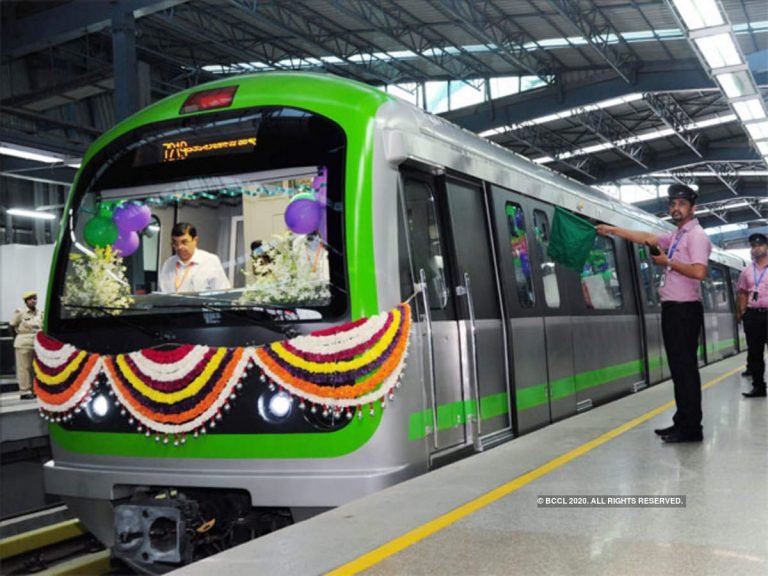
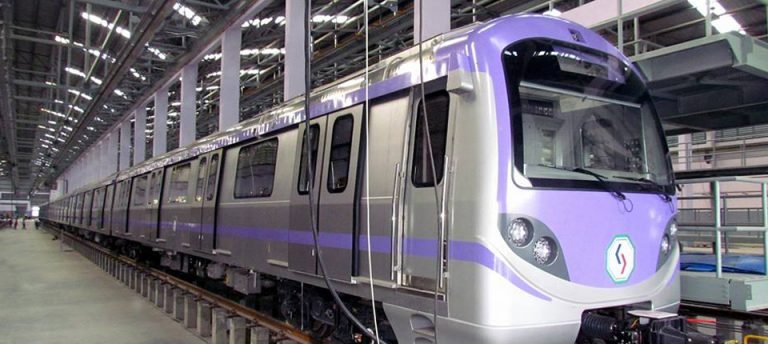
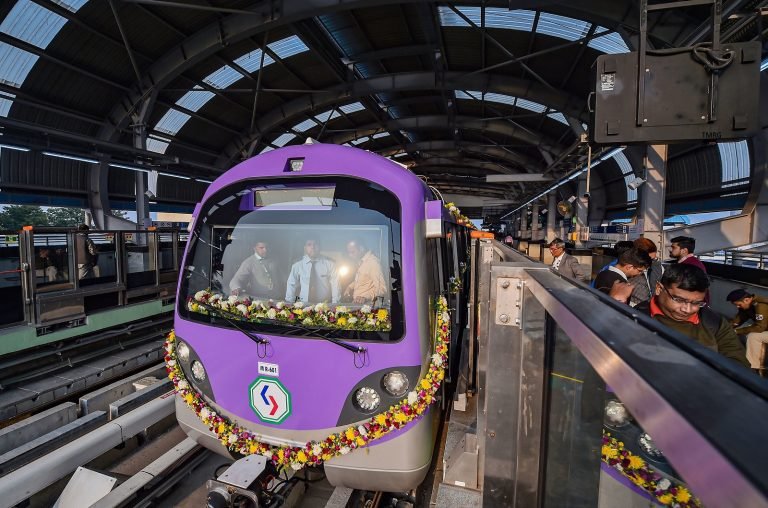
Kolkata(Metro Rail News): Minister of Railways and Commerce & Industry, Shri Piyush Goyal today inaugurated and flagged off the Phase I of East-West Metro corridor of Kolkata Metro connecting Salt Lake Sector V and Salt Lake Stadium and dedicated various other Railway projects to the Nation at a function in Kolkata.

“Today is a very good coincidence when we are going to launch the first phase of East-West Metro Corridor of Kolkata Metro on Sarojini Naidu’s birthday”, Piyush Goyal said.

“The entire East-West corridor up to Howrah Maidan will be completed by December 2021 and expressed the hope that Kolkata Metro will become the preferred mode of transport for the people of the city” He added further.

The daily commercial services connecting Sector V, Karunamoyee, Central Park, City Centre, Bengal Chemical and Salt Lake Stadium stations will commence on Friday, the official said.

Siemens designed, tested and commissioned power supply systems, including cutting-edge supervisory control and data acquisition system (SCADA) and operation control centre and advanced intelligent infrastructure features such as passenger safety and digital simulation.

It is going to be a Poised to be an engineering marvel after completion, the East-West Metro corridor between Sector V and Howrah Maidan stations comprises both elevated viaduct crossing 5.8 kilometres and an underground section of 10.8 kilometres. The underground section of the metro corridor passes through some of Kolkata’s most-congested areas.

This is for the first time in the country, tunnels have been bored within the Hooghly river to join the twin cities of Kolkata and Howrah through the rapid transit system. The first phase of the service will be conduct on the overground viaduct section.

The metro project suffered an unexpected hurdle previous year when an aquifer burst while tunnelling work, leading to huge ground settlement and the collapse of several buildings in the Bowbazar area of central Kolkata. Still, Completion of the entire project, which was scheduled in June 2021, may get delayed by a year owing to the incident, as per to a senior official of the Kolkata Metro Rail Corporation Limited (KMRCL).

Shri Babul Supriyo, Union Minister of State for Environment, Forest and Climate Change, and other dignitaries along with senior Railway officials were present on occasion. Currently, Metro services are run in Kolkata on only one North-South corridor from Noapara to Kavi Subhas stations over a length of 27.3 Km. This corridor was inaugurated 36 years ago in 1984.
Shri Piyush Goyal also dedicated to the Nation 140 km of railway electrification project in Katwa-Azimganj and Monigram-Nalhati sections of Howrah and Malda Divisions. The commissioning of 140 km new railway electrification project at the cost of Rs. 219 Crores (approx.) covering Katwa-Azimganj and Monigram-Nalhati sections will help in ensuring seamless electric train operations on different routes of Eastern Railway and reducing diesel fuel consumption substantially. 83% route kilometres of Eastern Railway has now been electrified, and the balance is in progress to achieve 100% electrification by 2021.
In keeping with the vision of Prime Minister Shri Narendra Modi and to promote Indian Railways as an environmentally sustainable transport system, harnessing green and clean solar energy and thus minimizing the carbon footprint is a mission area of Railways. Shri Piyush Goyal dedicated to the Nation 3 MW rooftop solar power plant at Howrah station which has been installed without incurring any capital expenditure by Railways. It will supply electricity @ Rs. 3.62 per unit for 25 years as against the present rate of Rs. 8.50 per unit. The total cumulative revenue saving will be Rs. 40 Crores (approx.) over the next 25 years.

Shri Piyush Goyal dedicated to the Nation 41.13 km of double/third line over Howrah, Malda & Sealdah Divisions. Eastern Railway has commissioned double line in Nimtita-Dhulianganga (11.38 km), Sujnipara-Nimtita (6.72 km) of Malda Division, Mile 5B-New Alipore (1.67 km) of Sealdah Division, Lalbagh Court Road-Khagraghat Road (7.40 km) and Debipur-Rasulpur 3rd line (13.96 km) of Howrah Division at the cost of approx. Rs. 550 Crores. With this, the throughput of the section has increased, and flexibility in operation has been enhanced. The punctuality of coaching trains has been improved due to this work by about 5%.
Shri Piyush Goyal also flagged off Train No 13064 Balurghat Howrah Express through video link. The frequency of the train number 13063/64 Howrah- Balurghat- Howrah Intercity Express has been increased from bi-weekly to five days a week. This Train fulfils the demand of people of Dakshin Dinajpur district for better connectivity with Kolkata.

Phase I of East-West Metro

East-West Metro is a 16.5 km long stretch which connects Howrah on the West bank of River Hooghly with Salt Lake City on the East bank. The project is being executed by Kolkata Metro Rail Corporation Limited (KMRCL). 10.8 km of the stretch is underground, and 5.75 km will be on an elevated viaduct. It is India’s first-ever transportation project where trains will ply under the mighty river, Hooghly. This project will be immensely helpful in easing the traffic congestion of Kolkata – a 300 years old city and also in reducing vehicular pollution. Phase-I of East-West Metro which was inaugurated today, is a 5.3 km long stretch having six elevated stations.

Features of the Project:

  • The first-ever transportation tunnel under any river in India.
  • Platform Screen Doors to prevent accidents or intentional fall.
  • Communication-Based Train Control System (CBTC) having enhanced safety features like anti-collision and automatic train control mechanism.
  • Passenger friendly features like lifts, escalators, the concept of barrier-free movement, designated parking for differently-abled, State of the art absorptive type noise barriers provided near hospitals/schools to reduce the Train generated noise for comfort of the public.
  • The estimated budget for Phase- I is Rs 2431 Cr. out of the total project cost of Rs 8574.98 Cr.
  • Emergency Announcement and Fire Detection Mechanism in all coaches

CMRL begins feasibility study of Light Metro Rail to link Tambaram-Velachery

Chennai(Metro Rail News): Chennai Metro Rail Limited (CMRL) has recently started the feasibility study for the Light Rail project that will provide a link between Tambaram and Velachery. As per the Chennai Metro Rail Limited (CMRL) executives, the study, carried out by the firm Systra, is expected to be finished within five months.

“The study will analyse and recommend the possible routes that can be taken to connect Tambaram with Velachery. It will give an estimate of how much the project is likely to cost, the period of construction and how far it may benefit people,” an official stated.

The CMRL has taken Light Rail along this stretch as the localities it will traverse are densely populated with not sufficient road space. Light Rail can take sharp curves and the period of construction will be less than what it takes to build Metro Rail, the officials said.

At a high-level meeting held recently, the Chennai Metro was asked to finish the feasibility by July thus the project can be taken up at the earliest.

The top-brass in the govt was instructed about the various options and how much it will require if the stretch is built at-grade level, elevated and underground. “It is most likely to be built at-grade and will cost about ₹100 crore per kilometre,” an official told.

Since the State govt clears the feasibility report, the Chennai Metro will take up the complete project report. “The DPR will be voluminous and elaborate, covering all aspects of the project, the estimated traffic and other details. If it gets approved by the State government, then the construction will begin,” an official stated.

Alstom to Buy Bombardier’s Rail Business for USD 7.6 billion

Saint-Ouen, France (Metro Rail News): French Rolling Stock manufacturer Alstom SA is now in advanced talks to buy the entire rail business unit of Bombardier Inc, according to people familiar with the matter, as the embattled Canadian firm Bombardier Inc offloads assets following an expensive expansion in aerospace.

Specialists said that both Alstom and Bombardier could sign an agreement as early as this week. Alstom may acquire the entire Rail Business of Bombardier Transportation in 7 billion euros (US$7.6 billion). Bombardier is also planning to sell its assets to raise much-needed cash.

This deal would make Alstom beat chines Rolling Stock manufacture CRRC Corporation, which is increasingly targeting global sales. The France-Canadian agreement would come after a merger between Alstom and Siemens AG was rejected by the European Union last year.

The talks between Alstom and Bombardier on this secret deal was the first time disclosed by Bloomberg last month. Bombardier’s stock continues decreasing and shocked the market last month by warning of disappointing fourth-quarter sales.

“The planned combination of Alstom and Bombardier’s Berlin-based rail division will also face close antitrust scrutiny, having a near 50% share of the market for electric multiple units and a leading position in Europe’s urban transport market,” said German consultancy SCI Verkehr.

The acquisition of Bombardier’s rail business by Alstom would mark the latest attempt by some of the world’s biggest train makers to counter growing competition from China. Earlier in 2017, Bombardier held talks to combine its rail operations with its competitor Siemens AG. Still, Siemens AG suddenly opted to pursue a deal with Alstom, which was ultimately failed later.

On another side, the European planemaker Airbus has also reached a deal to buy the remaining stake of Bombardier in the A220 passenger jet program.

“The deal signals Bombardier’s exit from commercial aviation by transferring its remaining interest in Airbus Canada to the main parent Airbus SE company and the government of the Canadian state of Quebec”, reported Reuters.

Airbus will acquire the aviation business Bombardier in US$591 million, net of adjustments, and will no longer have future funding capital requirements for Airbus Canada. The company assured that the deal would not affect the Airbus jobs in Quebec.

Sources from Bombardier said that the transaction would also help the company to improve its overall financial position.