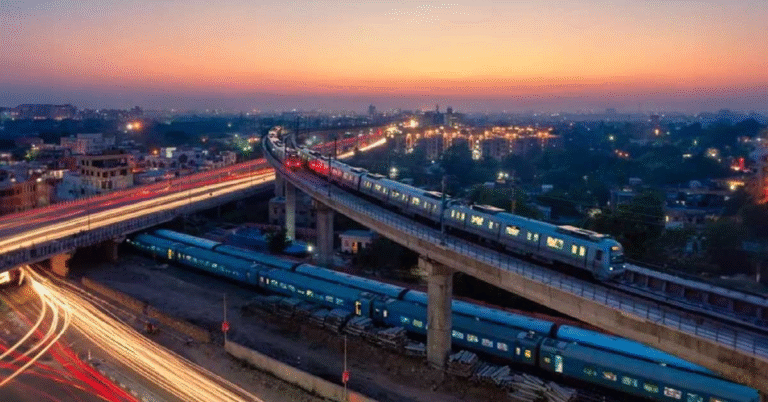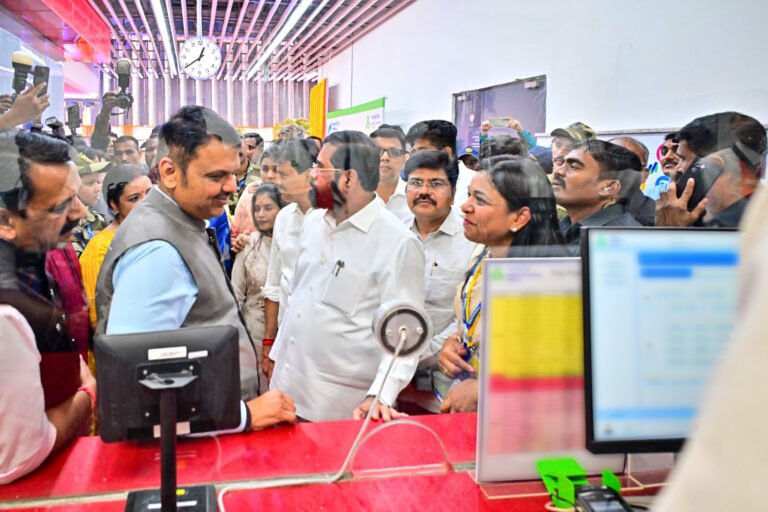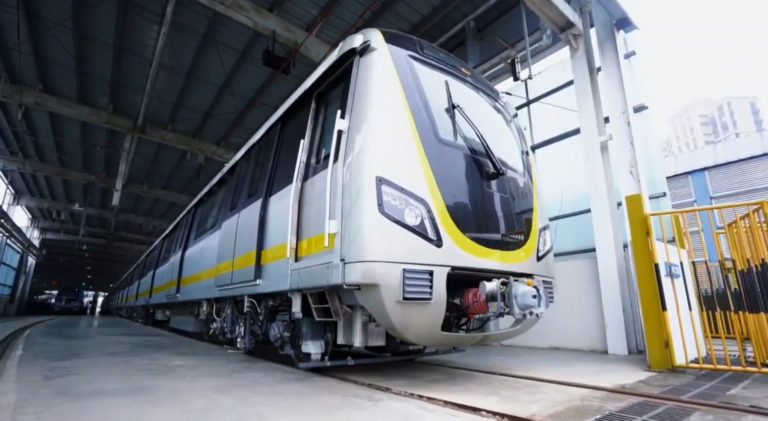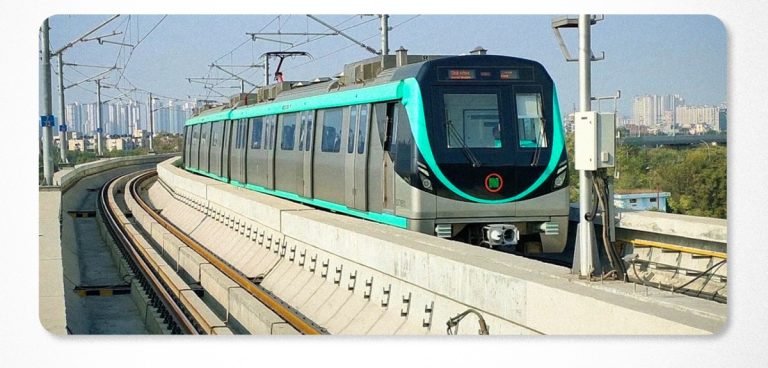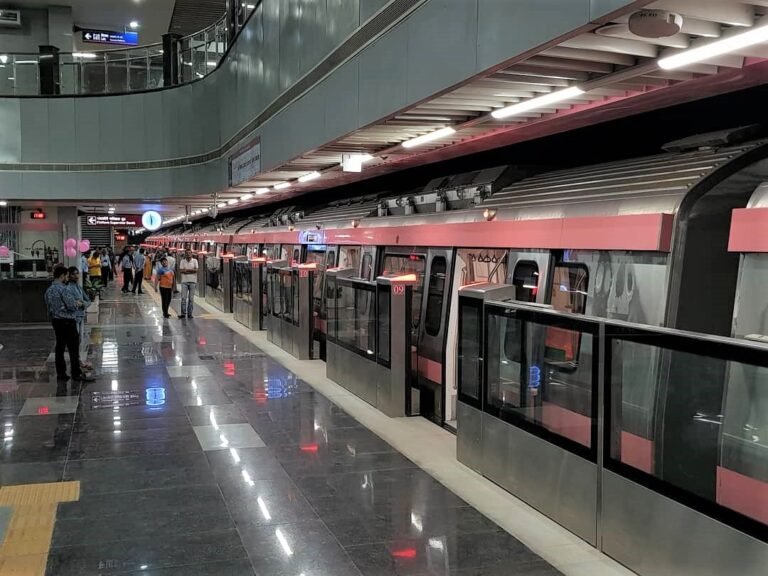
New Delhi: Prime Minister Narendra Modi has flagged-off the Delhi-Faridabad Metro Line that would allow hassle free travel for around two lakh daily commuters between the national capital and the industrial hub in Haryana.The extension of the Delhi Metro connects Badarpur to Escorts Mujesar in Faridabad.The total cost of the project from Badarpur to Escorts Mujesar is nearly Rs. 2,500 crore. Out of this, Rs. 1,557 crore was borne by the Haryana Government, the Centre contributed Rs. 537 crore, while the Delhi Metro provided Rs. 400 crore.The nine stations in this section include, Sarai, NHPC Chowk, Mewala Maharajpur, Sector 28, Badkal Mor, Old Faridabad, Neelam Chowk Ajronda, Bata Chowk and Escorts Mujesar. buy kamagra polo online https://lasernailtherapy.com/wp-content/themes/twentytwentytwo/inc/patterns/en/kamagra-polo.html no prescription
All these are elevated and located on either side of the Delhi-Mathura Road (NH-2).“The nine-station metro corridor which was 95 per cent indigenously built will provide people a safe, affordable, quick, comfortable, reliable, environment-friendly and sustainable transport facility,” a Haryana government spokesperson said.Haryana Chief Minister ML Khattar, addressing a press conference on Saturday, had thanked the Prime Minister for “gifting” the Metro service which would take the city to “another level of progress” with better connectivity with other NCR towns.He had also said that the Prime Minister would be announcing the go-ahead for connecting Gurgaon with Faridabad by Metro.
THANE (Metro Rail News): The Maharashtra Metro Rail Corporation Limited (Maha Metro) has floated a tender for the modification of 110kV/220kV Extra High Voltage (EHV) overhead transmission lines to facilitate the ongoing Thane Integral Ring Metro Project.
Tender Information:
Tender No.:
T1-016/ELE-01/2025
Cost of Work
₹ 95.51 Cr.
Bid Submission Date
27 NOV 2025
Bid Opening Date
28 NOV 2025
Maha Metro’s Brief Scope of Work: Modification of 110 kV/220 kV EHV d/c overhead lines at a. ch-11350m near Patlipada flyover junction, b. ch-14050m near Waghbil Station and c. ch-20950 between Balkum Naka to Balkum Pada Station, for Thane Integral Ring Metro Project.
The Thane Metro, officially known as the Thane Integral Ring Metro, is a circular metro line. It was approved in 2024 to serve the city of Thane, Maharashtra. The 29-kilometer circular line will run within the city of Thane, connecting key areas like Wagle Estate, Manpada, Waghbil, and Balkum.
The estimated cost of the entire project is approximately $1.4 billion (₹12,200 crore), with funding from the governments of India and Maharashtra, along with bilateral agencies.
Building on a decade of trust, Metro Rail News is pleased to announce the Metro Rail News Awards to recognise organisations and leaders for their outstanding contributions to the rail transit industry. The awards will be presented across 30+ categories, with the ceremony scheduled for 12 December in New Delhi.Get Recognised for Your Contribution & Innovations – Nominate Now
CHENNAI (Metro Rail News): Faiveley Transport Rail Technologies India Private Limited and Chennai Metro Rail Limited (CMRL) has signed a contract agreement for “Design, Supply, Installation, Testing and Commissioning of Anti Drag Feature in all the saloon doors of 52 trains of CMRL Phase-1.
The contract has been awarded to Faiveley Transport Rail Technologies India Private Limited at a contract price of Rs.48.33 crores (including GST).
The contract agreement was signed today by Thiru. A. R.Rajendran, Chief General Manager (RS, S&T), CMRL, and Thiru. Puneet Mehrotra, Senior Director, Faiveley, Thiru. C. Balamurugan, Additional General Manager (Rolling Stock), along with other officials and staff of CMRL and Contractors were present during the event.
Currently, Chennai Metro trains are equipped with automatic sliding doors featuring an obstacle detection system that identifies objects obstructing the doors during closure at stations. The new Anti-Drag Passenger Door Safety System will further enhance passenger safety by detecting thinner objects such as sarees, bag straps, or belts that may get trapped between doors during boarding or deboarding.
This advanced system can detect any “pull” or “drag” force. If such an item is dragged as the train begins to move, the system will automatically trigger the emergency brake and provide an instant alert to the train operator through the driver’s console for immediate action.
Building on a decade of trust, Metro Rail News is pleased to announce the Metro Rail News Awards to recognise organisations and leaders for their outstanding contributions to the rail transit industry. The awards will be presented across 30+ categories, with the ceremony scheduled for 12 December in New Delhi.
Get Recognised for Your Contribution & Innovations – Nominate Now
The Centre has issued an official announcement for land acquisition to develop the much-awaited Mohali–Rajpura railway line.This a major infrastructure step toward improving Punjab’s connectivity with the Union Territory of Chandigarh and neighboring Haryana.
The Ministry of Railways, designating it as a special railway project and has written to the Punjab government seeking its cooperation in acquiring the required land. According to official details, about 53.84 hectares of land spread across Patiala, Fatehgarh Sahib, and Mohali districts will be acquired for the project.
The proposed railway line will extend 18.11 kilometers and directly connect the Mohali with Rajpura. Estimated to cost around ₹443 crore, the project will be jointly executed, with the Punjab government responsible for land acquisition and transfer to the Centre for construction activities.
Mohali Deputy Commissioner Komal Mittal confirmed that the district administration will initiate the acquisition process upon receiving the final alignment and technical details from the Railways. “The notification and alignment plan are awaited. Once received, we will move ahead with the necessary formalities,” she stated.
Officials highlight that the Mohali–Rajpura rail link will serve as a game changer for the Malwa region, offering direct connectivity between Chandigarh and southern Punjab. The route will streamline travel to key destinations such as Sirhind, Bathinda, Sirsa, Fazilka, Abohar, and parts of Haryana including Jind and Hisar.
Building on a decade of trust, Metro Rail News is pleased to announce the Metro Rail News Awards to recognise organisations and leaders for their outstanding contributions to the rail transit industry. The awards will be presented across 30+ categories, with the ceremony scheduled for 12 December in New Delhi.
Get Recognised for Your Contribution & Innovations – Nominate Now
Ericsson and Saudi Railway Company (SAR) have signed a Memorandum of Understanding (MoU) to collaborate on advancing rail operations through 5G technology.
The partnership aims to elevate Saudi Arabia’s railway communication systems, enhance passenger experience, and accelerate the digital transformation of the transportation sector in line with the National Transport and Logistics Strategy under Saudi Vision 2030.
Through this collaboration, Ericsson will leverage its global expertise in 5G and Future Railway Mobile Communication System (FRMCS) technologies to deploy advanced solutions, infrastructure, and technical support that enable secure and reliable rail operations. The initiative focuses on introducing mission-critical 5G capabilities that support next-generation rail communication, safety, and performance.
Under the MoU, Ericsson and SAR will deploy mission-critical 5G capabilities to ensure reliable and secure rail communications and enhanced rail performance services. They will also develop and test FRMCS-based use cases, and high-speed broadband solutions for passengers (“Gigabit train”).
The collaboration will also involve establishing a test lab or innovation center to validate 5G applications in a rail context, creating training programs to upskill SAR’s teams in FRMCS/5G rail technologies, and conducting a trial deployment of Ericsson’s solutions on one of SAR’s existing rail lines to evaluate integration and performance in real-world conditions. It will also enable use cases such as train control, staff communications, real-time video streaming, and Internet of Things (IoT) connectivity onboard trains.
Building on a decade of trust, Metro Rail News is pleased to announce the Metro Rail News Awards to recognise organisations and leaders for their outstanding contributions to the rail transit industry. The awards will be presented across 30+ categories, with the ceremony scheduled for 12 December in New Delhi.
Get Recognised for Your Contribution & Innovations – Nominate Now
The Indian Railways has approved a new Superfast train directly connecting Bengaluru and Mumbai, nearly 30 years after the Udyan Express began service.
Union Minister Pralhad Joshi mentioned “I had requested the Union Railway Minister for this train, which has been our long-standing demand. This Super Fast train will run via the central Karnataka route of Tumakuru, Davanagere, Haveri, Hubballi-Dharwad, and Belagavi to the commercial city of Mumbai, benefiting lakhs of people through this rail connectivity and further boosting trade and commerce,” as reported by The Indian Express.
The new train will cover a distance of 1,153 km in approximately 23 hours and 35 minutes, offering daily service with stops at key stations including Tumakuru, Davanagere, Haveri, Hubballi-Dharwad, Belagavi, and others along the central Karnataka corridor.
Currently, the Udyan Express connects Bengaluru and Mumbai via the Bengaluru-Guntakal-Solapur route. This new Superfast train will provide an alternative route, enhancing connectivity for travelers and traders moving between these two major cities.
The Udyan Express, which runs daily, covers the Bengaluru to Mumbai route in about 23 hours 35 minutes, stopping at 31 stations including Bengaluru Cant, Yelahanka, Dodballapur, Hindupur, Penukonda, Dharmavaram, Anantapur, Solapur, Pune, Lonavala, Kalyan, and Dadar.
With this new service, passengers from central Karnataka regions will have improved access to Mumbai, facilitating regional growth and economic integration between Karnataka and Maharashtra.
Building on a decade of trust, Metro Rail News is pleased to announce the Metro Rail News Awards to recognise organisations and leaders for their outstanding contributions to the rail transit industry. The awards will be presented across 30+ categories, with the ceremony scheduled for 12 December in New Delhi.
Get Recognised for Your Contribution & Innovations – Nominate Now
KOCHI (Metro Rail News): Godrej and Boyce Manufacturing Company Limited has received a Letter of Acceptance (LoA) from Kochi Metro Rail Limited (KMRL) for the electrical and mechanical work contract for Kochi Metro Phase 2.
The Phase 2 of Kochi Metro consists of one metro corridor (Pink Line). The Pink Line of Phase 2 is currently under construction and spans 11.2 km between JLN Stadium and Infopark II covering 11 stations.
Contract Scope of Work: Electrical and Mechanical (E&M Electrical, Ventilation & Air Conditioning (VAC) and Fire Protection) Works from JLN stadium Station (Excluding station) to Infopark station including 10 Elevated Stations, Property Development (PD) areas and associated Viaduct for Phase II of Kochi Metro Rail Project.
Recently, KMRL also announced Godrej and Boyce Manufacturing Company Limited as the lowest bidder for the architectural finishing contract of Kochi Metro Phase 2.
Contract Scope of Work: Architectural and finishing works including Block work, Plumbing and other interior works of Five elevated metro stations (Palarivattom Junction, Alinchuvadu, Chembumukku, Vazhakkala an Padamughal for Phase- II of Kochi Metro Rail Ltd.
Currently, the Phase 1 of Kochi Metro which consists of one metro corridor (Blue Line) is completely operational. The Blue Line spans 27.96 km from Aluva – Tripunithura. The construction for the Phase 1 of Blue Line spanning 25.16 km connecting Aluva to Petta with 22 stations started in June 2013. In 2014, the extension of Blue Line ( Phase 1A &1B) was approved with 3 new elevated stations.
Building on a decade of trust, Metro Rail News is pleased to announce the Metro Rail News Awards to recognise organisations and leaders for their outstanding contributions to the rail transit industry. The awards will be presented across 30+ categories, with the ceremony scheduled for 12 December in New Delhi.
Get Recognised for Your Contribution & Innovations – Nominate Now
KANPUR (Metro Rail News): Uttar Pradesh Metro Rail Corporation Limited (UPMRCL) has announced Efkon India Private Limited as the lowest bidder for the electrical and mechanical system works contract of Line 2 of Kanpur Metro. The Line 2 of Kanpur Metro spans 8.38 km from Agriculture University to Barra-8.
UPMRC invited bids for this contract with a completion deadline of 420 days. Technical bids were opened on 29 April 2025 revealing that 5 firms have submitted bids for the contract. The technical evaluation, conducted on 24 September 2025, resulted in the disqualification of one firm. Subsequently, financial bids were opened on 3 October 2025, and their evaluation on 24 October confirmed that Efkon India emerged as the lowest bidder for the contract.
Contract Scope of Work: Design Verification, Detail Engineering, Supply, Installation, Testing & Commissioning of Electrical and Mechanical System, DG Sets, Environment Control System, Tunnel Ventilation System and Building Management System for three underground metro stations (viz. Double Pulia, Kakadeo and Rawatpur Railway Station) of Corridor-2 of Kanpur MRTS Project at Kanpur, Uttar Pradesh, India.
Building on a decade of trust, Metro Rail News is pleased to announce the Metro Rail News Awards to recognise organisations and leaders for their outstanding contributions to the rail transit industry. The awards will be presented across 30+ categories, with the ceremony scheduled for 12 December in New Delhi.
Get Recognised for Your Contribution & Innovations – Nominate Now
KOLKATA (Metro Rail News): Metro Railway, Kolkata has invited bids for the provision of high conductivity aluminium third rail in the elevated section of the North South Corridor (Blue Line) of Kolkata Metro Rail Project.
Contracts Scope of Work: Provision of High Conductivity Aluminium Third Rail in Elevated Section of North South Corridor of Metro Railway, Kolkata (Phase-III).
The Blue Line is the main operational corridor of Kolkata Metro, extending 32.25 km from Dakshineswar to Kavi Subhash, with 26 stations along the route. It carries the highest passenger volume among all metro corridors in the city.
Recent expansions of other metro corridors have led to an increase in passenger traffic on the Blue Line due to improved network connectivity. Among the stations, Dum Dum records the highest daily footfall, with over 66,000 passengers in late September. The planned installation of high conductivity aluminium third rail is expected to improve operational reliability, reduce maintenance requirements, and ensure consistent power supply for train operations. This initiative aligns with Metro Railway’s efforts to upgrade existing infrastructure.
Building on a decade of trust, Metro Rail News is pleased to announce the Metro Rail News Awards to recognise organisations and leaders for their outstanding contributions to the rail transit industry. The awards will be presented across 30+ categories, with the ceremony scheduled for 12 December in New Delhi.
Get Recognised for Your Contribution & Innovations – Nominate Now
JAIPUR (Metro Rail News): The Rajasthan Metro Rail Corporation Limited (RMRC) has issued a tender for major civil works under Jaipur Metro Phase-II, which is a key development in the project’s implementation process. The tender is valued at ₹1,145.14 crore, and it comes under Package NCB: 2C-01. The work under this contract includes the Design and Construction of an Elevated Viaduct and 10 Elevated Stations
The stations covered under this package include Prahladpura, Manpura, Bilwa Kalan, Bilwa, Goner Mod, Sitapura, JECC, Kumbha Marg, Haldighati Gate, and Pinjrapole Gaushala.
Tender Details
Opening Date
23 Oct 2025
Closing Date
3 Dec 2025
EMD
₹ 1,00,00,000
Tender Id
2025_JMRC_508748_1
Tender No
NCB/2C-01
Completion period of the Work
34 months
Pre-bid Meeting
07.11.2025
Brief Scope of Work: Design and Construction of Elevated Viaduct and 10 Elevated Stations viz. Prahladpura, Manpura, Bilwa Kalan, Bilwa, Goner Mod, Sitapura, JECC, Kumbha Marg, Haldighati Gate, and Pinjrapole Gaushala (excluding Architectural finishing) from Chainage (-) 600 m to 11400 m, including spur line towards Depot of Jaipur Metro Phase-II MRTS.
This tender forms part of the civil infrastructure package for Jaipur Metro Phase-II (MRTS), which is planned to extend metro connectivity toward the southern part of the city. The alignment passes through key areas such as Sitapura Industrial Area and the Jaipur Exhibition and Convention Centre (JECC), thereby improving access to major economic and institutional zones.
Building on a decade of trust, Metro Rail News is pleased to announce the Metro Rail News Awards to recognise organisations and leaders for their outstanding contributions to the rail transit industry. The awards will be presented across 30+ categories, with the ceremony scheduled for 12 December in New Delhi.
Get Recognised for Your Contribution & Innovations – Nominate Now
NCRTC has been awarded the Platinum Rating by the Indian Green Building Council (IGBC) for the Anand Vihar Namo Bharat (Underground) Station. Platinum is the highest rating under the IGBC Green Certification and recognizes the station’s strong commitment to sustainability.
This achievement reflects NCRTC’s ongoing efforts to adopt environmentally friendly practices across the Namo Bharat project. All major project establishments including stations, depots, Receiving Substations (RSS), and other facilities have been registered with IGBC, in line with NCRTC’s vision of promoting sustainable urban transport.
This certification was based on six environmental categories as defined by the IGBC Green Mass Rapid Transit System Rating, which include Site Selection & Planning, Water Efficiency, Energy Efficiency, Material Conservation, Indoor Environment & Comfort, and Innovation in Design & Construction. NCRTC has successfully addressed each of these areas, which contributed to Anand Vihar Station achieving the Platinum Rating.
Since inception, sustainability has been incorporated at every stage of the project. The station features low-carbon construction methods, energy-efficient systems, well-ventilated interiors, and rainwater harvesting. Landscaping under the Namo Bharat viaduct further helps reduce the overall carbon footprint during both construction and operations.
NCRTC aims to meet around 70% of its total energy needs from renewable sources. Under its solar policy, it is targeting to generate 15 MW peak in-house solar power on rooftops of stations, depots, and other buildings, with 4.7 MW already operational. Efforts are also underway to increase the share of renewable energy used for traction.
The IGBC Platinum Rating for Anand Vihar Station highlights NCRTC’s focus on sustainable urban transport and its commitment to international best practices in environmental conservation.
Established in 2001, IGBC, an autonomous body of CII, promotes green building practices and provides certification for offices, buildings, factories, and mass rapid transit systems, supporting both national and global sustainability goals.
Through its initiatives, NCRTC continues to lead the transformation of urban transportation in India, with sustainability and innovation as the cornerstones of its mission.
Building on a decade of trust, Metro Rail News is pleased to announce the Metro Rail News Awards to recognise organisations and leaders for their outstanding contributions to the rail transit industry. The awards will be presented across 30+ categories, with the ceremony scheduled for 12 December in New Delhi.
Get Recognised for Your Contribution & Innovations – Nominate Now
Today, urban areas play a major role in the economic growth of the nation. They have become hubs for employment, education, manufacturing, and healthcare, which has led to a continuous migration of people and businesses toward cities. This migration, however, has placed immense pressure on urban centres and slowed their pace of growth. The influx of people has strained infrastructure, particularly transport systems, which form the backbone of city life and are struggling to keep up with rising demand.
India’s urban population is expected to cross 600 million by 2036 (World Bank), which accounts 40% of total population. This situation necessitates a strong infrastructure to match the pace with this growth. In addition to this, the infrastructure will play a critical role in propelling India towards its vision of becoming a developed nation by 2047 which also signifies 100 years of India’s independence.
Since nearly 70% of the urban infrastructure needed by 2047 is yet to be built. This study will particularly focus on the evolving transport infrastructure in urban areas. A major share of India’s sector-wise growth relies on urban transport. The more efficient urban transport systems become, the better utilisation of resources will take place.
The rail transit, among other modes of transport, holds a crucial value in urban areas due to its efficiency, affordability, and capability to serve millions of passengers of each economic section. The journey of rail transit in Indian cities began with the Mumbai Suburban Railway in 1853, which today carries more than 8 million than passengers every day, making it one of the busiest commuter rail systems in the world. Trams in Kolkata and other cities also played a role in early urban mobility. The Kolkata Metro, inaugurated in 1984, introduced the first modern rapid transit system in the country. A new phase began in 2002 with the Delhi Metro, which set new benchmarks in efficiency and planning for metro systems to become a central part of urban mobility strategies.
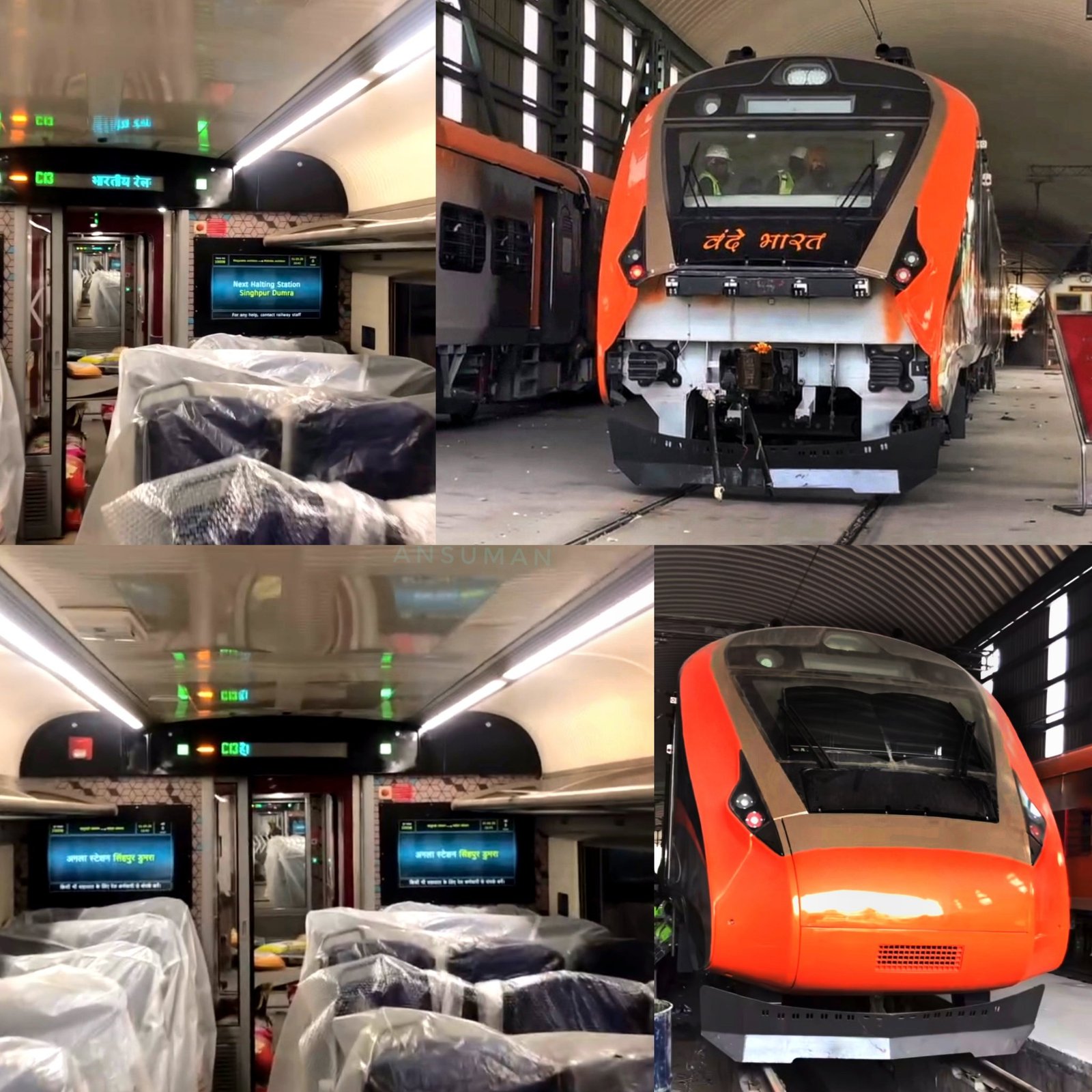
At present, India has over 1000km of operational metro rail across more than 20 cities, while several projects are under construction. Advanced rail systems such as the Regional Rapid Transit System (RRTS), Vande Metro, and the Mumbai–Ahmedabad High-Speed Rail corridor are expanding the scope of rail-based mobility into new dimensions of speed, technology, and regional connectivity.
This paper will navigate through the evolving landscape of rail transit in urban centres and assess its impact on the growth of cities.
The Beginning of Urban Rail Mobility in India
Suburban Rail Network
Mumbai, India’s economic capital, was the first city in the country to have a dedicated railway line. The service began on 16 April 1853, with the first train running between Boribunder (now Chhatrapati Shivaji Maharaj Terminus) and Thane. Over the last 172 years, this suburban rail network has expanded into a vast system of 465 km, carrying nearly 8 million passengers daily. Its scale and indispensability have earned it the title of the lifeline of Mumbai.
The success of Mumbai’s suburban railways highlighted the potential of such systems in addressing the mobility needs of rapidly growing urban centres. Suburban railways are designed to connect satellite towns and peripheral areas with central business districts.
Inspired by Mumbai’s model, other cities also adopted suburban rail networks. Cities like Kolkata, Lucknow, Hyderabad, Delhi, Pune, and Bengaluru gradually developed their own systems, each contributing to urban expansion and offering commuters a cost-effective alternative compared to other modes of transport.
India’s Suburban Rail Network at a Glance
City
Length in Km
Kolkata
1501
Chennai
1,211
Mumbai
465
Hyderabad
123
Pernem-Karwar Suburban Railway
117
Lucknow-Kanpur
72
Barabanki-Lucknow
65
Pune
63
Delhi
35
Bengaluru
149 (Under Construction)
The suburban rail network has long played a vital role in helping Indian cities address the mobility challenges brought about by rapid urbanisation and population growth. While several suburban systems have reached saturation, networks in cities such as Chennai, Mumbai, and Lucknow, are still expanding.
However, ageing infrastructure and outdated rolling stock, have limited their ability to meet the rising expectations of commuters, who increasingly demand modes of transport that are not only faster but also safer and more comfortable.
Despite these challenges, the significance of suburban rail cannot be overlooked. To maintain their relevance and effectiveness, there is a need to revitalise these systems by upgrading infrastructure, modernising rolling stock, and integrating them with other transport networks. Such improvements would ensure that suburban rail continues to act as a strong backbone for urban mobility in India.
Trams in Colonial and Post-Independence India
During the colonial era, India developed an extensive network of tramways in several cities, including Madras (now Chennai), Kolkata, Delhi, Kanpur, Bhavnagar, and Mumbai. These tram systems supported early urban mobility and contributed to the growth of commercial and residential areas.
The first electric tram began operating in Chennai in 1895, which was a milestone in modern public transport in India. Soon after, Kolkata also introduced its own electric tram system. At the time, the adoption of electric trams was regarded as a marker of progress and modernisation, which reflected a city’s aspiration to match global urban standards.
However, after India’s independence, urban transport priorities shifted. Many city planners considered trams outdated and began focusing on alternative modes of transport, such as buses and road expansion. The rapid growth of private vehicles further complicated matters, as trams and automobiles shared the same road space, which led to congestion.
Tram services were unable to compete with the demands of a rapidly motorising society, and in most cities were gradually phased out. The last holdout was Kolkata, where trams continued to operate for over a century. Finally, in late 2024, Kolkata discontinued its last commercial tram service, which was the end of an era for India’s tramways.
The Emergence of Metro Systems in India
The rapid expansion of cities in India prompted large-scale migration from rural to urban areas, as people sought better economic and social opportunities. This swift urbanisation exerted immense pressure on road transport infrastructure. Although road networks expanded considerably, they soon became inadequate in handling the growing volume of vehicles, resulting in severe traffic congestion.
Public transport systems, primarily buses and suburban rail lines, also struggled to cope with the surging demand. The challenge was especially acute in metropolitan cities such as Kolkata and Delhi, which serve as key drivers of the nation’s economy.
Kolkata was the first Indian city to introduce a metro system to address this crisis. The decision stemmed from the city’s unique constraints: a dense, historic urban core with narrow roads that left little scope for road network expansion. To provide a sustainable alternative, the Kolkata Metro project was initiated, and on October 24, 1984, the city experienced the inauguration of India’s first metro line.
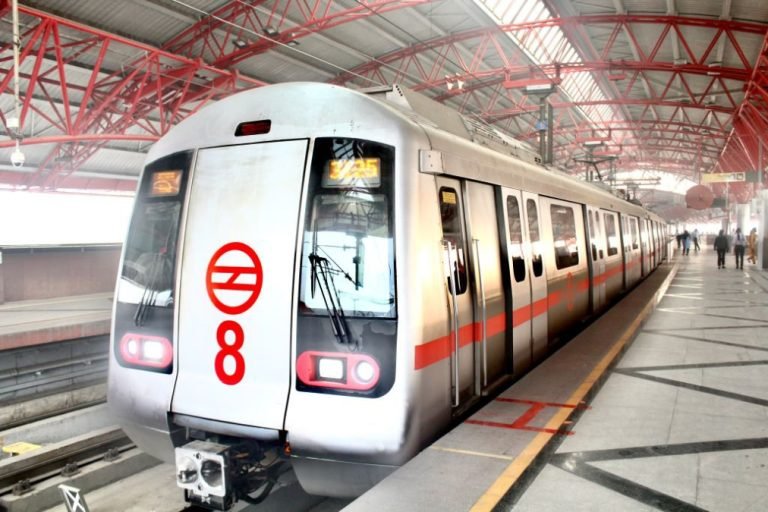
Nearly two decades after the inauguration of the Kolkata Metro, India witnessed another milestone in urban transport with the commissioning of the Delhi Metro in December 2002. Delhi Metro was designed with modern technology, international standards of safety, and efficiency, and it quickly transformed the way people commuted in the national capital region.
Its success in minimising road congestion, providing reliable services, and meeting the mobility needs of a rapidly growing metropolis demonstrated the potential of metro rail as a sustainable urban transport solution. The Delhi Metro soon became a benchmark for other Indian cities, and it led to the development of metro systems across the country.
The last decade has been the most progressive period for metro systems in India. The data mentioned below outlines the growth in metro rail infrastructure, daily ridership, and budgetary allocations, which highlights how metro rail has evolved into a key pillar of urban mobility in the country.
Metro Rail Network Growth in India between FY 2014 – 2025
India’s operational metro network has grown from 248 km in 5 cities in 2014 to 1,013 km in 23 cities by May 2025. This means 763 km of new lines have been added in 11 years. The average pace of expansion has also changed: while metro projects moved at around 0.68 km per month before 2014, they are now being commissioned at close to 6 km per month.
The Increase in the Annual Budget for Metro Development 2014-2025
Average daily ridership has increased from about 28 lakh in 2013–14 to more than 1.12 crore by 2025, reflecting the growing role of metro systems in daily urban travel.
The Increase in Ridership of Metro Systems 2014-2025
The annual metro budget for 2025–26 has been allocated at ₹34,807 crore, more than six times higher than ₹5,798 crore in 2013–14.
Initiatives for the Advancements of Metro Systems in India
Make in India Drive for Metro Rail Systems
As part of the government’s Make-in-India initiative, metro rail projects are being developed with a strong focus on domestic manufacturing. Policy provisions mandate that at least 75% of metro coaches and 25% of critical equipment and sub-systems be procured from within the country. This push not only strengthens self-reliance in urban mobility but also supports indigenous industries and job creation.
Over the past decade, India has invested nearly ₹2.5 lakh crore (US$ 28.86 billion) in metro network expansion. Public Sector Undertaking BEML Ltd., under the Ministry of Defence, has played a leading role in this effort, supplying over 2,000 metro coaches to major systems including Delhi, Jaipur, Kolkata, Bengaluru, and Mumbai.
Metro Rail Policy, 2017
The Metro Rail Policy 2017 introduced a structured framework for planning and implementing metro projects in India. It mandates cities to prepare Comprehensive Mobility Plans (CMPs) and establish Unified Metropolitan Transport Authorities (UMTAs) to ensure that metro development is aligned with sustainability, economic viability, and integrated urban mobility objectives.
To qualify for central financial assistance, metro projects must demonstrate a minimum Economic Internal Rate of Return (EIRR) of 14%. The policy also makes private sector participation mandatory, primarily through Public-Private Partnership (PPP) models, to improve efficiency, innovation, and long-term financial sustainability.
As India moves toward becoming the world’s third-largest economy with a projected GDP of $7.3 trillion by 2030, the role of reliable public transport will become increasingly important. Metro rail systems, in particular, are expected to provide a sustainable and efficient means of urban mobility. With continued policy support and systematic execution, India is on course to expand its metro network further, making it an integral part of the country’s urban transport framework.
Regional Rapid Transit System-New Heights of Speed & Safety in Urban Rail Transit
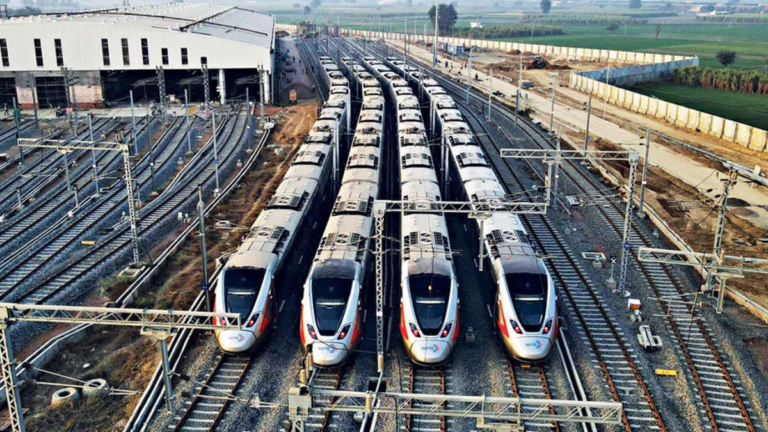
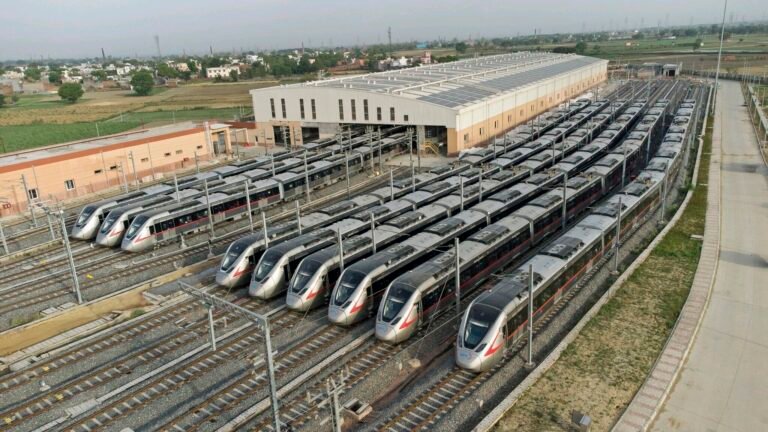
The nation’s first Regional Rapid Transit System (RRTS) is being developed between Delhi and Meerut via Ghaziabad. Unlike metro systems, which primarily serve short-distance urban travel, the RRTS is designed to provide high-speed, long-distance connectivity between regional nodes in the National Capital Region (NCR). The trains are designed for a maximum speed of 180 km/h and an operational speed of 160 km/h. Once fully operational, the Delhi–Meerut RRTS is expected to reduce approximately 2.5 lakh tons of CO₂ equivalent emissions annually.
Current Status: As of September 2025, the Delhi–Ghaziabad–Meerut RRTS corridor is partially operational, with the 55-kilometer section from New Ashok Nagar (Delhi) to Meerut South open to the public.
Future Outlook of RRTS System: Alongside the Delhi–Meerut corridor, other RRTS corridors are planned to strengthen regional connectivity in NCR:
Delhi–Alwar Corridor (164 km)
Delhi–Panipat Corridor (103 km)
Delhi-Jewar Corridor (72.44 km)
The RRTS systems are planned to address the mobility requirements of urban and regional centres by providing reliable, high-speed intercity connectivity. These systems will minimise travel times between major nodes, improve passenger capacity, and ease pressure on existing road and rail networks.
High-Speed Rail Operations: The Future of Urban Mobility
India is entering a new phase of urban and regional mobility with the launch of the country’s first Bullet Train Project the Mumbai–Ahmedabad High-Speed Rail (MAHSR) corridor. The MAHSR corridor will span 508 km and connect Mumbai in Maharashtra with Ahmedabad in Gujarat. The corridor is designed for an operating speed of 320 km/h, and it will reduce travel time while strengthening economic linkages between key cities such as Mumbai, Vapi, Surat, Anand, Vadodara, and Ahmedabad. The project, being developed at an estimated cost of ₹1,08,000 crore (USD 17 billion). Its initial section is going to be operational by August 2026.
Challenges and Barriers in the Path of Urban Transportation Development
Financial and Funding Constraints: The development of metro systems, suburban rail networks, RRTS corridors, and high-speed rail projects demands high capital investment. Although India is currently the fourth-largest, but ensuring consistent and adequate funding for such large-scale infrastructure projects continues to be a major challenge for implementing agencies and urban authorities.
Land Acquisition and Regulatory Hurdles: Urban transit projects in India frequently encounter difficulties in acquiring land and securing necessary regulatory clearances. These challenges often result in delays, escalate project costs, and complicate the timely implementation of essential infrastructure.
Sustainable Development and Infrastructure Balancing: One of the major challenges in urban transit development is to ensure sustainability while building efficient and inclusive systems. This requires addressing the mobility needs of growing urban populations without compromising environmental objectives.
Conclusion
India’s urban transportation landscape is undergoing a transformative shift, and it is imperative to accommodate rapid urbanisation, growing populations, and increasing commuter demands. From the historical roots of tramways and suburban rail to the metro systems, RRTS corridors, and high-speed rail projects, the country is heading towards a more connected and sustainable future.
Key developments, such as the Delhi Metro, Mumbai-Ahmedabad Bullet Train, and Delhi-Meerut RRTS, exemplify India’s commitment to modernising urban mobility. These projects not only alleviate traffic congestion and reduce carbon emissions but also promote economic growth by improving accessibility and promoting regional development. Technological advancements, sustainable practices, and innovative funding models are shaping these endeavors to ensure efficiency and eco-friendliness in operations.
However, achieving this ambitious vision requires continued investments, policy support, and public-private collaboration. By prioritising intelligent, sustainable, and inclusive transportation solutions, India can achieve equitable urban growth while addressing the challenges of climate change and urban sprawl. As the nation progresses, these advancements in urban transit highlight India’s resilience and its resolve to usher in a new era of mobility.
The demand for faster, safer, and more sustainable modes of transportation is influencing the global mobility landscape. As metropolitan regions continue to expand and populations surge, existing transport systems are struggling to keep pace with the growing need for efficiency, reliability, and reduced travel times. Railways, traditionally known for their ability to move large volumes of passengers and freight, have undergone an evolution over the decades. The introduction of high-speed rail, often referred to as bullet trains, has improved intercity travel by drastically minimising the journey times and offering a viable alternative to air transport on many routes.
Despite their success, conventional high-speed rail faces inherent limitations. Factors such as wheel–rail friction, aerodynamic drag, and energy consumption restrict trains from surpassing certain speed thresholds efficiently. To overcome these barriers and push the boundaries of rail transport, engineers and innovators have turned to futuristic alternatives such as magnetic levitation (Maglev) and Hyperloop systems. Both technologies represent a paradigm shift in high-speed travel. Maglev trains operate by eliminating physical contact between the train and the track through electromagnetic suspension, thereby reducing friction and enabling speeds far beyond those of conventional rail. Hyperloop, on the other hand, envisions passenger pods travelling through near-vacuum tubes at supersonic velocities. While Maglev technology is already operational in countries like Japan and China, the Hyperloop remains largely in the experimental and developmental phase, with various prototypes and pilot projects being tested across the world.
Together, these emerging technologies are creating a new era in high-speed transportation. This study aims to explore the evolution of high-speed rail beyond conventional bullet trains, with a particular focus on Maglev and Hyperloop systems. It will examine their technological principles, potential advantages, and challenges in large-scale implementation.
A Journey Through Time: Tracing the History of High-Speed Rails
Speed has always been a defining parameter in the modernisation of rail transportation. Over time, the pursuit of reduced travel times has driven the transition from conventional rail to dedicated high-speed systems. The International Union of Railways (UIC) defines high-speed rail as services operating at commercial speeds of 250 km/h or more on purpose-built infrastructure.
However, the UIC also recognises a secondary operational threshold in specific corridors where competition with air travel is minimal or where geographical and demand conditions make extreme velocity unnecessary. In such cases, sustained speeds between 220–230 km/h, or at a minimum above 200 km/h, are considered sufficient to ensure a modal shift from conventional rail and road transport, while maintaining operational efficiency and economic viability.
Early Planning and Experiments
Germany (1899–1903)
The pursuit of higher rail speeds can be traced back to Germany at the end of the 19th century. Between 1899 and 1903, the Prussian State Railway, in collaboration with ten electrical and engineering firms, electrified a 72 km stretch of track between Marienfelde and Zossen for experimental purposes. These trials were the first systematic effort toward high-speed rail. By 1903, experimental electric railcars reached a maximum speed of 210.2 km/h. However, these trains were confined to testing and never entered regular passenger service.
Diesel-Electric Advancements in Germany (1930s)
DRG Class SVT 877 Hamburg Flyer 1932
The introduction of the DRG Class SVT 877 Hamburg Flyer (Fliegender Hamburger) in 1933 was another achievement in regular high-speed service. This diesel-powered train operated between Hamburg and Berlin at a top commercial speed of 160 km/h. Three years later, in 1936, the steam-powered Henschel-Wegmann Train also entered service with similar performance parameters. Although the outbreak of the Second World War curtailed further advancements.
Early Developments in the United States (1930s)
Parallel to German efforts, the United States also made progress in high-speed rail technology during the 1930s. The Zephyr, introduced in 1934, demonstrated operational speeds of 124 km/h, with test runs reaching up to 185 km/h.
United Kingdom 1938: Breaking world speed record for steam locomotives
In 1938, the United Kingdom established a speed benchmark for steam-powered locomotion. The locomotive “Mallard” achieved a world-record speed of 202.58 km/h on 3rd July 1938. Although the achievement was largely symbolic, it highlighted the maximum potential of steam technology before the widespread transition to diesel and electric propulsion systems.
First Bullet Train Enters Commercial Operations: 1964
While many countries were still experimenting with higher-speed rail systems, Japan took the decisive step of launching the world’s first high-speed rail service. On 1 October 1964, the Shinkansen, popularly known as the “bullet train,” began operations between Tokyo and Osaka. The initiative was approved by the Japanese Diet in March 1959, with a clear timeline: completion before the 1964 Tokyo Olympic Games. This ambitious schedule gave the project less than five years for design, construction, and commissioning. The target speed was over 210 km/h (131 mph).
Japan’s success with the Shinkansen in 1964 became the beginning of global high-speed rail development. Inspired by this model, several countries in Europe and Asia initiated their own high-speed rail systems in the following decades. A major milestone was reached in 1990, when France introduced the TGV Atlantique, the first high-speed train to operate commercially at 300 km/h (186 mph). The service was launched on the Paris–Le Mans and Paris–Tours sections of the LGV Atlantique line, which set a new benchmark for operational speed in passenger rail transport.
Current Developments in Bullet Train At present, China’s Fuxing Hao CR400 is the fastest conventional bullet train in the world. The train is certified for a design speed of 400 km/h (249 mph), while its regular operational speed is capped at 350 km/h (217 mph) to ensure safety, energy efficiency, and long-term reliability of track and rolling stock components.
India’s Drive for High Speed Rail Operations
India, currently the world’s fourth-largest economy, has set its sights on attaining developed nation status by 2047. Achieving this goal requires advancements in infrastructure, where transportation plays a critical role. India’s first high-speed rail corridor, spanning about 508 km, is currently being developed between Mumbai and Ahmedabad, a major commercial hub of the country. By 2026, bullet trains are expected to begin operations on the initial section of this corridor.
The Beginning of the Maglev Era: A Leap in High Speed Rail
Despite achieving higher speeds, conventional bullet trains faced inherent limitations that restricted further advancements. The reliance on wheel-to-rail contact introduced friction, wear and tear, and noise at high speeds, which makes sustained operations above 350–400 km/h less efficient. Additionally, aerodynamic resistance increased as trains approached higher velocities, which further constrained performance. These factors collectively encouraged the transition towards magnetic levitation (maglev) technology, which eliminates wheel-rail friction, reduces noise, and allows trains to operate at much higher speeds while providing efficiency, safety and passenger comfort.
Evolution of Maglev Technology: A Track from Blueprint to Reality
Robert Goddard (1904): Robert Goddard was an American professor who wrote a paper on a frictionless system that would use electromagnetic repulsion to raise a train from its track in 1904.
Emile Bachelet (1914): In 1914, French-born American inventor Emile Bachelet introduced the concept of a magnetically levitated vehicle and demonstrated it with a working model
Hermann Kemper 1922: German engineer Hermann Kemper began systematic research on magnetic levitation in 1922. By 1933, he constructed a working circuit that demonstrated hovering based on electromagnetic attraction. His efforts culminated in 1937, when he was granted a German patent for a magnetic levitation train powered by linear motors.
1962: Japan began research on a linear motor propulsion magnetically levitated railway system in 1962
1969: Building upon the theory of Kemper, the German government sponsored the first full-scale maglev model, the Transrapid TR01
1970s: Japan developed superconducting magnet-based electrodynamic suspension (EDS) systems and began test runs.
1979 – The Transrapid 05 became the first passenger-carrying maglev, showcased at the International Transportation Exhibition in Hamburg (Germany).
1984 – The Birmingham Maglev became the world’s first commercial maglev train. It was a slow-speed (up to 42 km/h / 26 mph), short-length (600 m / 2,000 ft) shuttle between the Birmingham Airport and the Birmingham International railway station.
1991: A 42.8 km maglev test track was built in Yamanashi Prefecture to advance EDS-based technology.
1997(Germany): The Transrapid 07 achieved over 450 km/h on the Emsland test track.
2004: The Shanghai Maglev Train (SMT), also known as Shanghai Transrapid, began commercial service in China.
2005: Japan’s first commercial maglev, the Linimo (Tobu Kyuryo Line), opened for the 2005 World Expo in Aichi.
2015: Japan Railway Central’s L0 Series maglev sets a world record speed of 603 km/h on the Yamanashi Test Track.
2021: CRRC Qingdao Sifang unveiled a prototype maglev train capable of 600 km/h, which is the fastest ground vehicle developed in China.
2025: China reported a new world speed record where a maglev train prototype reached the top speed of 650 km/h.
The Principle of Maglev Technology
Maglev (Magnetic Levitation) technology is based on the principle of using magnetic forces to lift, propel, and guide a vehicle instead of relying on wheels, axles, and bearings. The system eliminates physical contact between the train and the track, which minimises the friction and allows for higher speeds and smoother rides.
The principle of maglev technology rests on three main concepts:
Magnetic Levitation: The train is equipped with strong magnets which lift the train above the guideway. This removes rolling resistance, as there are no wheels in contact with the track.
Magnetic Propulsion: For moving the trains, Linear motors (Linear Induction Motor or Linear Synchronous Motor) are employed, which generate a moving magnetic field. This magnetic field pulls and pushes the train forward along the guideway.
Magnetic Guidance: The same magnetic forces are used to keep the train aligned laterally and prevent it from drifting sideways. This becomes possible with the help of sensors and control systems, which constantly adjust the magnetic field to ensure stability and safety.
Types of Maglev Systems: There are two types of Maglev trains, electrodynamics suspension trains (EDS) and electromagnetic suspension trains(EMS).
Electromagnetic Suspension trains
Electromagnetic Suspension (EMS) technology relies on the principle of magnetic attraction to achieve levitation. In this system, powerful electromagnets are installed on the underside of the train, which partially wrap around the guideway. The guideway itself contains a complementary arrangement of magnets with opposite polarities. The attraction generated between these two sets of magnets is carefully controlled so that it counterbalances the train’s weight, creating a stable lift. This allows the train to hover at a distance of around 1.3 centimetres above the guideway, while an additional clearance of 8–10 centimetres is maintained between the lower body of the train and the underside of the track. One of the distinct advantages of EMS is its ability to sustain levitation even when the train is at rest.
The train movement is facilitated using linear motors, where alternating magnetic fields embedded in the guideway interact with the propulsion system housed on the train. This arrangement eliminates the need for traditional wheels, axles, or rails.
Germany has been at the edge of EMS research and development. Transrapid International (TRI), a collaborative initiative between Siemens AG and ThyssenKrupp, began systematic studies of electromagnetic levitation in 1969. That same year, they produced the first prototype of an EMS vehicle. Over subsequent decades, eight successive generations of EMS trainees were developed. The culmination of this research was realised when the final two generations entered commercial service in Shanghai in January 2001.
Electrodynamic Suspension (EDS) trains
In contrast to Electromagnetic Suspension (EMS), which relies on magnetic attraction, Electrodynamic Suspension (EDS) trains use the principle of magnetic repulsion to counteract Earth’s gravitational pull. This system makes extensive use of superconductors, which are special materials that conduct electricity with zero resistance when cooled below a certain threshold known as the critical temperature. Once an electric current is induced in a superconductor, it can circulate indefinitely without energy loss, even for years. They can generate extremely powerful magnetic fields and withstand forces thousands of times greater than their own weight.
In EDS trains, superconducting magnets mounted on the vehicle interact with conductive coils arranged along the guideway. When the train moves, the changing magnetic fields induce currents in the guideway coils, creating opposing magnetic fields. The interaction produces a repulsive force that lifts the train above the track, allowing it to levitate. Unlike EMS systems, EDS maglev trains are equipped with retractable wheels that support the vehicle at low speeds and are withdrawn once the train reaches the critical speed required for stable levitation. The EDS Maglev can not levitate in the standing position.
Propulsion in EDS systems is achieved using a configuration similar to linear motors but inverted. The guideway is lined with sequential coils which carry alternating currents. By carefully switching the polarity of these coils, a moving magnetic wave is created along the track. The superconducting magnets on the train are repelled by the coils behind them and attracted to the coils ahead, pulling the train forward. As the coils continuously change polarity in synchronisation with the train’s position, this cycle repeats. The faster the switching frequency, the faster the train travels.
Japan has established itself as a global leader in developing EDS-based maglev technology. It has carried out extensive testing on the Yamanashi Maglev Line, where trains have achieved record-breaking speeds exceeding 600 km/h.
Maglev in Operations
At present, Maglev trains are operating in 3 countries.
Japan
In Japan, the Linimo line in Aichi was built for the 2005 World Expo and remains in operation today. The line covers 9 km, has nine stations, and runs at speeds of up to 100 km/h.
In addition, the SCMaglev (Superconducting Maglev) is currently under construction for the Chūō Shinkansen line between Tokyo and Nagoya. The trains on the new route are expected to operate at speeds exceeding 600 kmph.
South Korea
South Korea operates two commercial maglev systems. The first is the Korean Rotem Maglev in Daejeon, which opened in 1993 and covers a 1 km stretch between the Expo Park and the National Science Museum. The second is the Incheon Airport Maglev which was inaugurated in 2016. It covers 6.1 km via six stations between Incheon International Airport and Yongyu Station.
China
China has three maglev systems in operation. The Shanghai Maglev, opened in 2003, is the world’s first high-speed commercial maglev line. It runs for 30 km between downtown Shanghai and Pudong International Airport, with trains reaching speeds up to 430 km/h.
The Changsha Maglev was launched in 2016. It connects Changsha Huanghua International Airport to the South Railway Station over an 18.5 km route at a speed of 100 km/h.
The third system is the Beijing Subway S1 Line, which was opened in 2017. It spans 9 km with seven stations and operates at 100 km/h as part of the city’s metro network.
China Sets New Maglev Speed Record
China reported a new world speed record for a maglev train after a prototype reached 650 km/h during a trial. The test was conducted on June 17 2025, at the Donghu Laboratory High-Speed Magnetic Levitation Electromagnetic Propulsion Technology Innovation Centre in Hubei province.
The Obstacles in Bringing Maglev into the Mainstream
Cost Concerns over Innovative Rail:
The single biggest obstacle for maglev technology is the need for a completely new infrastructure. The cost per kilometre of maglev construction (estimated at USD 50–120 million) is higher than conventional HSR. Maglev trains cannot run on existing conventional rail tracks, which means new, dedicated guideways must be built for the entire route. This makes initial construction costs astronomically high compared to upgrading existing rail lines.
Non-Interoperability with Conventional Rail:
Unlike high-speed rail (HSR), maglev vehicles are not compatible with steel-wheel tracks. This lack of interoperability prevents integration into existing railway corridors.
Energy and Power Demand
Although rolling resistance is eliminated in Maglev trains, but high-speed maglev systems exhibit high aerodynamic drag at velocities above 400 km/h. In electrodynamic suspension (EDS) systems, cryogenic refrigeration is required to maintain superconductivity, which adds to the base-load power demand. In this situation, sustaining propulsion at ultra-high speeds (≥ 500 km/h) requires continuous high-capacity power supply infrastructure.
Complexity of Electromagnetic Systems & Technological Gaps
Both Electromagnetic Suspension (EMS) and Electrodynamic Suspension (EDS) technologies require highly sophisticated electromagnetic control systems to ensure safe levitation, stability, and propulsion. The integration of these systems demands extensive research and development (R&D) in advanced materials, superconducting technology, and real-time control algorithms. Furthermore, their deployment necessitates a specialized and highly skilled workforce trained in areas such as power electronics, high-frequency control systems, and cryogenic engineering expertise that is not yet widely available within the existing conventional railway ecosystem. This gap in technical competency acts as a major barrier to mainstream adoption.
Evacuated Tube Transport & Hyperloop Systems
The demand for high-speed transportation will continue to grow as urbanization intensifies and cities evolve into megacities. In such environments, the efficiency of supply chains will remain critical to sustaining urban life and economic activity. However, conventional transportation systems are constrained by physical and technological speed barriers, which limit their ability to meet future requirements. The emerging concepts such as Evacuated Tube Transport (ETT) and Hyperloop present potential solutions by offering ultra-high-speed, energy-efficient, and sustainable transit systems which are designed to overcome these limitations.
Evacuated Tube Transport (ETT)
The origins of Evacuated Tube Transport (ETT) can be traced to the early 20th century, when Dr. Robert Hutchings Goddard proposed the concept of a vactrain. His idea involved a magnetically levitated vehicle operating within a vacuum-sealed tube, aimed at reducing aerodynamic drag to enable higher travel speeds.
The concept was later developed further by Daryl Oster, founder of ET3, who received a patent for ETT. Theoretically, such a system could achieve speeds in the range of 6,000–7,000 km/h under controlled conditions.
In practice, implementation faces major constraints. Constructing and maintaining long-distance vacuum tubes requires substantial capital investment, precision engineering, and advanced material technology to ensure structural integrity and energy efficiency. Additionally, safety systems for passenger operations in such an environment remain underexplored. For these reasons, ETT has not advanced beyond the conceptual stage. Although continued progress in relevant technologies may enable more applied research in the future.
The Era of Hyperloop: A Practical Approach for High Speed Transportation
On August 12, 2013, Elon Musk, then serving as the CEO of Tesla and SpaceX, released the Hyperloop Alpha white paper. The document outlined a conceptual design for a high-speed transportation system that would use low-pressure tubes and pod-like vehicles to achieve speeds exceeding 1,000 km/h. The proposed system combines principles of magnetic levitation (Maglev) with near-vacuum conditions to minimise aerodynamic drag and rolling resistance.
The foundational principles of the Hyperloop system bear a strong resemblance to the earlier concept of Evacuated Tube Transport (ETT). However, a crucial distinction lies in their operational environments: while ETT envisions capsules moving through tubes maintained at a complete vacuum, the Hyperloop proposes travel within low-pressure tubes. This approach avoids the technical and financial challenges of maintaining a perfect vacuum over long distances while still minimising aerodynamic drag.
The white papers state, much like how aircraft ascend to high altitudes to fly through thinner air, the Hyperloop concept encloses capsules in a tube where air pressure is drastically reduced. Specifically, the operating pressure of the Hyperloop is proposed to be around 100 Pascals, which is approximately 1/6th the atmospheric pressure on Mars. Under these conditions, the drag force on a moving pod would be reduced by nearly 1,000 times compared to sea-level conditions, creating an effect equivalent to travelling at an altitude of over 150,000 feet.
Global Initiatives for the Development of Hyperloop Systems
Hyperloop technology is still in its developmental stage, and currently, multiple companies and research institutions worldwide are working to translate the concept into a commercially viable transportation system.
Virgin Hyperloop (formerly Hyperloop One): Virgin Hyperloop, established in 2014, constructed a test facility in Nevada, USA, where it conducted the first full-scale Hyperloop test in May 2017. In November 2020, the company performed the first human passenger trial, where the pod reached approximately 160 km/h. Although this was a significant step, it remained well below the projected speeds of over 1,000 km/h.
In 2022, Virgin Hyperloop shifted its focus from passenger transport to freight systems due to regulatory, financial, and technical challenges. By 2023, reports confirmed that the company had closed operations and sold its assets.
Other Global Efforts: In addition to Virgin Hyperloop, several other companies and organisations are actively exploring hyperloop systems:
TuTr Hyperloop (India): A startup from the Indian Institute of Technology Madras (IIT Madras), TuTr Hyperloop, has entered into partnerships with international companies and is developing a freight-focused hyperloop system.
Hardt Hyperloop (Netherlands): Hardt Hyperloop was founded in 2016 and operates from Delft, Netherlands. It has developed a test facility and focuses on key technologies such as lane-switching mechanisms, which allow pods to change tracks within the tube.
TransPod (Canada): TransPod, headquartered in Toronto, is developing the “FluxJet,” a pod system based on Hyperloop principles.
Current Status: While these initiatives highlight a strong global interest, hyperloop technology still faces engineering, financial, and regulatory challenges. Issues such as vacuum maintenance over long distances, passenger safety in emergencies, land acquisition, and infrastructure costs remain major hurdles. As of now, no commercial hyperloop system is operational.
Conclusion
Maglev and Hyperloop technologies show very potential in high-speed ground transportation. Urban-scale applications of Maglev, including Japan’s Linimo and South Korea’s Incheon Airport Maglev, have shown the practicality of medium and low-speed systems in improving travel time, passenger comfort, and reducing environmental impacts. At the same time, high-speed test lines, such as the Yamanashi Maglev in Japan, demonstrate the potential for intercity connections at higher speeds. The concept of the Hyperloop builds on Maglev technology by combining it with low-pressure tube environments to minimise aerodynamic drag. Despite its potential, Hyperloop systems and Maglev face major technical, financial and regulatory challenges. Further research and phased implementation are necessary to determine the long-term feasibility of both Maglev and Hyperloop. If successfully developed, these technologies could serve as complementary or alternative solutions to conventional high-speed rail.
NAGPUR (Metro Rail News): Nagpur Metro Rail Project progressed as the Maharashtra Metro Rail Corporation Limited (MahaMetro) has initiated the feasibility study for Nagpur Metro’s proposed Phase 3 corridor linking Sitabuldi to Koradi.
MahaMetro Managing Director Shravan Hardikar stated, “We started analysing the feasibility of this stretch, which includes the PHPDT (Peak Hour Peak Direction Traffic), implementation aspects, and corridor alignment. The study will help us assess ridership potential and identify the most suitable model for the project’s execution.” as reported by Times of India.
As part of the technical assessment, MahaMetro’s team is evaluating existing road patterns, available right-of-way (ROW), and adjoining urban development zones to ensure minimal disruption and enhanced commuter accessibility.
According to the Comprehensive Mobility Plan (CMP), the Sitabuldi–Koradi corridor is projected to handle a PHPDT of about 5,600 by 2031, rising to 8,050 by 2041 and 11,800 by 2054. The overall daily ridership is expected to reach 65,000 by 2031, 91,000 by 2041, and 147,000 by 2054.
The feasibility study will also consider financial viability, funding mechanisms, and multimodal integration with city bus and feeder services to promote seamless travel. The findings of this study will form the foundation for preparing a Detailed Project Report (DPR), which will subsequently be submitted to the state and central governments for approval.
Building on a decade of trust, Metro Rail News is pleased to announce the Metro Rail News Awards to recognise organisations and leaders for their outstanding contributions to the rail transit industry. The awards will be presented across 30+ categories, with the ceremony scheduled for 12 December in New Delhi.
Get Recognised for Your Contribution & Innovations – Nominate Now
Indian Railways has approved the construction of a new fourth railway line between Tambaram and Chengalpattu in Tamil Nadu, a move aimed at improving train operations and regional connectivity in the Chennai division. The 30.02-km project will come under the administrative control of the Southern Railway (SR) zone.
The project will be implemented under Plan Head–15 (Doubling) and has been categorized as part of the ‘Energy, Mineral & Cement Corridor’ of Indian Railways. The estimated cost of the work stands at Rs 713.56 crore, which is expected to reach Rs 757.18 crore upon completion.
Presently, the Tambaram–Chengalpattu section is a three-line stretch on the Chennai Beach–Villupuram–Tiruchchirappalli–Kanyakumari main line. It plays a crucial role in handling both suburban and long-distance train services.
In a statement, Southern Railway said the line capacity utilization between Tambaram and Chengalpattu currently stands at around 87%, and is expected to rise to 136% if the project is not undertaken. The proposed fourth line, it added, will help ease congestion, extend the dedicated suburban network up to Chengalpattu and encourage a shift from road to rail – benefiting both passenger and freight movement. As reported by The Indian Express.
Building on a decade of trust, Metro Rail News is pleased to announce the Metro Rail News Awards to recognise organisations and leaders for their outstanding contributions to the rail transit industry. The awards will be presented across 30+ categories, with the ceremony scheduled for 12 December in New Delhi.
Get Recognised for Your Contribution & Innovations – Nominate Now