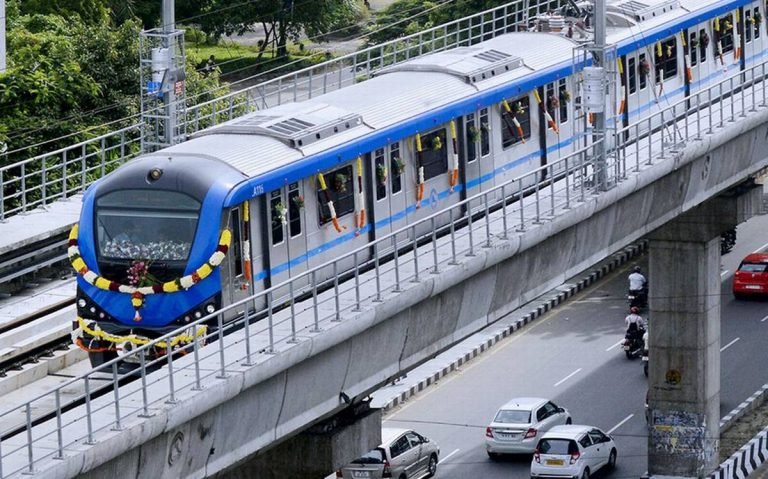
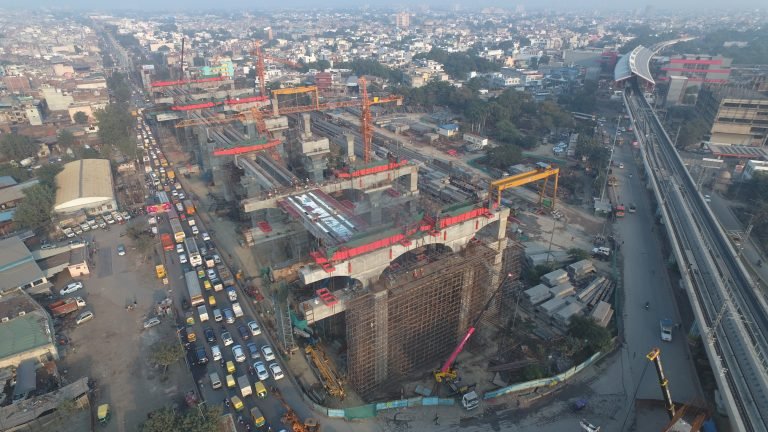
New Delhi: Prime Minister Narendra Modi has flagged-off the Delhi-Faridabad Metro Line that would allow hassle free travel for around two lakh daily commuters between the national capital and the industrial hub in Haryana.The extension of the Delhi Metro connects Badarpur to Escorts Mujesar in Faridabad.The total cost of the project from Badarpur to Escorts Mujesar is nearly Rs. 2,500 crore. Out of this, Rs. 1,557 crore was borne by the Haryana Government, the Centre contributed Rs. 537 crore, while the Delhi Metro provided Rs. 400 crore.The nine stations in this section include, Sarai, NHPC Chowk, Mewala Maharajpur, Sector 28, Badkal Mor, Old Faridabad, Neelam Chowk Ajronda, Bata Chowk and Escorts Mujesar. buy kamagra polo online https://lasernailtherapy.com/wp-content/themes/twentytwentytwo/inc/patterns/en/kamagra-polo.html no prescription
All these are elevated and located on either side of the Delhi-Mathura Road (NH-2).“The nine-station metro corridor which was 95 per cent indigenously built will provide people a safe, affordable, quick, comfortable, reliable, environment-friendly and sustainable transport facility,” a Haryana government spokesperson said.Haryana Chief Minister ML Khattar, addressing a press conference on Saturday, had thanked the Prime Minister for “gifting” the Metro service which would take the city to “another level of progress” with better connectivity with other NCR towns.He had also said that the Prime Minister would be announcing the go-ahead for connecting Gurgaon with Faridabad by Metro.
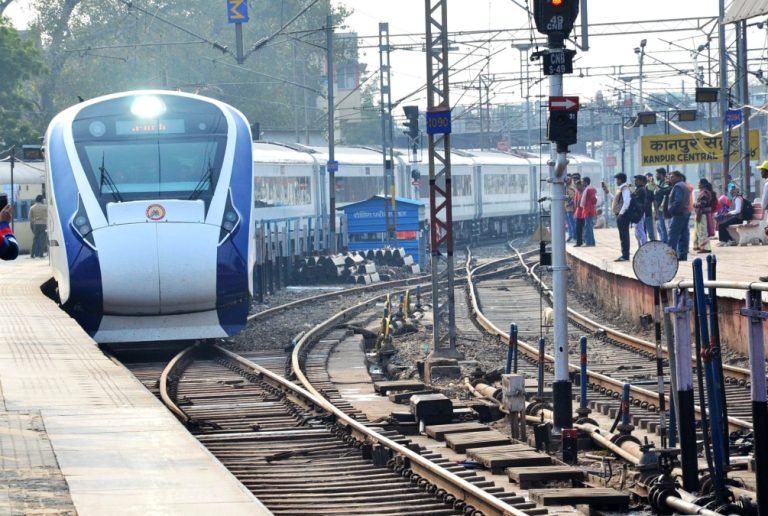
DELHI (Metro Rail News): According to current and former senior executives of Indian Railways, rolling out 400 Vande Bharat Express trains will generate roughly Rs 40,000 crore in revenue and jobs and other advantages.
Nirmala Sitharaman, the Indian Finance Minister, announced in her presentation of the Union Budget for 2022-23 that 400 new energy-efficient Vande Bharat trains will be launched in three years. The Integral Coach Factory (ICF) devised, developed, and built the Vande Bharat Express, a semi-high-speed train, for a cost of Rs 100 crore.
According to anonymous Indian Railways officials, the introduction of 400 Vande Bharat trains over the next three years is not only a headline-grabbing declaration. It’s a Rs 40,000 crore business opportunity with 15,000 jobs and a slew of other advantages.
There are now only two Vande Bharat trains operating: one from Delhi to Varanasi and another from Delhi to Katra. A senior official at ICF told IANS with pride told that Since they were put into service a few years ago, the trains without a pair have been running six days a week without a breakdown. Perhaps the Vande Bharat Express is the first train without a pair of. It is a typical example of ‘Make in India,’ and it is significantly less expensive than equivalent trains produced by overseas companies.
Officials had told IANS that the train contains just approximately 15% import material, which will drop even further if manufacturing volumes improve. According to an ICF official, the third prototype is being delayed because of production difficulties and logistical challenges caused by the Covid-19 outbreak.
The Rs 40,000 crore question is how the government plans to meet its aim of 400 Vande Bharat Express trains in the next three years. While it is an ambitious goal, authorities believe it can be delivered in stages, with the government providing more clarity on its objectives.
The improved Vande Bharat train is projected to be ready for testing in April, with commercial production beginning in August/September 2022, according to Indian Railway Minister Ashwini Vaishnaw. “I would think that a more realistic target of say 100-150 trains in three years would have been better. This target itself would need very concerted and committed action by railway executives, particularly at ICF,” Sudhanshu Mani, retired General Manager, ICF and the Creator of Vande Bharat Express, told IANS.
According to him, commercial manufacturing and necessary testing of the improved train would not begin until September 2022; therefore the target should be achievable. “Rolling out the trains in large numbers may not be an issue. But where are they going to be deployed? The routes also have to be finalised,” Mani added.
Mani continued ICF to begin work on Vande Bharat trainsets, including the sleeper model (code-named Train 19) and 300 aluminium body trainsets (code-named Train 20). For the production of aluminium body trains, a foreign partner could be engaged. 400 trains might be there in 5-6 years, “He remarked.
When pointed out that the train could be rolled out by other coach manufacturing facilities in the country, Mani said: “Initially only ICF should roll out as they understand the technology and other aspects. Spreading out the production to other units will result in quality issues.” Concurring with him, a senior official not wanting to be quoted told IANS: “Only ICF should make it. It needs special skill sets, and trained people are not available in other units.”
Officials also stated that spreading out the manufacture will result in not only quality concerns but also the eventual demise of the train, which has been running without a hitch six days a week for the previous few years.
While ICF would initially be in charge of rolling out the trainsets, the other entities would be in charge of maintenance and acquiring production know-how. The availability of the vendors is also a concern. Vendors may not be able to increase their production capacity unless the government provides a clear plan, authorities added.
The official exclaimed “The supply chain will take time to gear up. They can supply only at a steady rate. Out of the 400 trains, during the first year only 20 trains can be rolled out and 380 trains in the remaining two years is not possible.”
Furthermore, vendors and ICF officials are hesitant to touch the Vande Bharat train project following a witch hunt in the shape of a vigilance inquiry that was recently undertaken and finished without uncovering any discrepancies.
Only after long-term contracts say, 60 trains for the next ten years — can vendors set up production facilities, according to officials. Furthermore, they added, Tenders and procurement processes should be designed in such a way that vendors may participate without fear of losing their jobs.
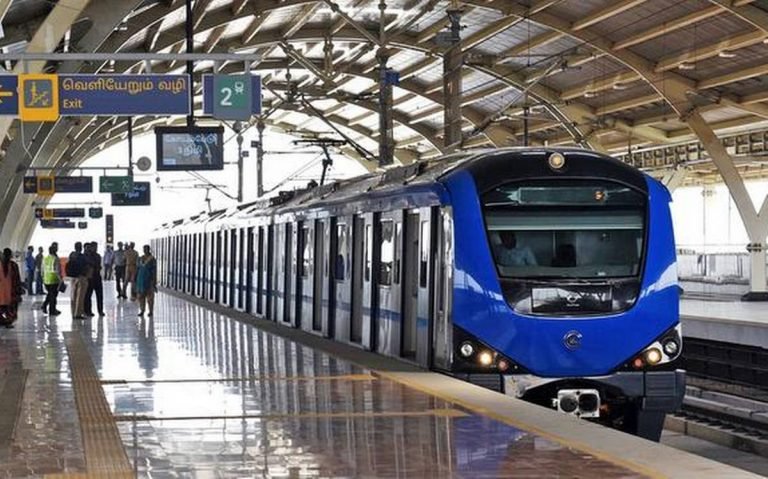
CHENNAI (Metro Rail News): For guiding passengers to their destination, LED screens would be installed in metro trains, displaying information about approaching stations landmarks around it and feeder services would be available. Chennai Metro Rail Limited (CMRL) is set to conduct a trial with prototypes of these screens.
These audio-visual screens have been customised to fit and will be linked to signalling and the communication system, said by metro rail official. The screen will be only 70% of the size of the present displays and will be replaced by the dynamic route map that displays blinking lights now installed above the train doors.
Next month, trials will be conducted as prototypes are ready and are being installed. After regular service hours every night, one train will be operated
across the entire phase-1 stretch. Once the trails are made, the train will be operated during the service hours and monitored. Once approved, the software will be given to us. According to officials, it will take two to three months.
The current route map installed above the train doors has the dynamic and the static route. The dynamic display has lights blinking next to each station name as the train approaches that station.
The route-related information in CRML two-corridor phase-1 and phase-1 extension lines and inter-corridor operations between corridor-1 and corridor-2 will have automatic visual and audio broadcasting on the screen, an official stated.
A route map for 10 seconds will be displayed on the screen, followed by the nearby stations. The approaching station, amenities, feeder services and intermodal services available at the station, and the landmark around the station, including a symbol to indicate the opening and closing of train doors, will also be displayed on the screen. There will be 16 display screens on a train with four screens in a coach.
The officials said that “a limitation would be there as only a maximum of two minutes available for train to be operated from one station to another. However, within that time limit, information should be displayed, and commuters can expect more information than what they have now in the train”.
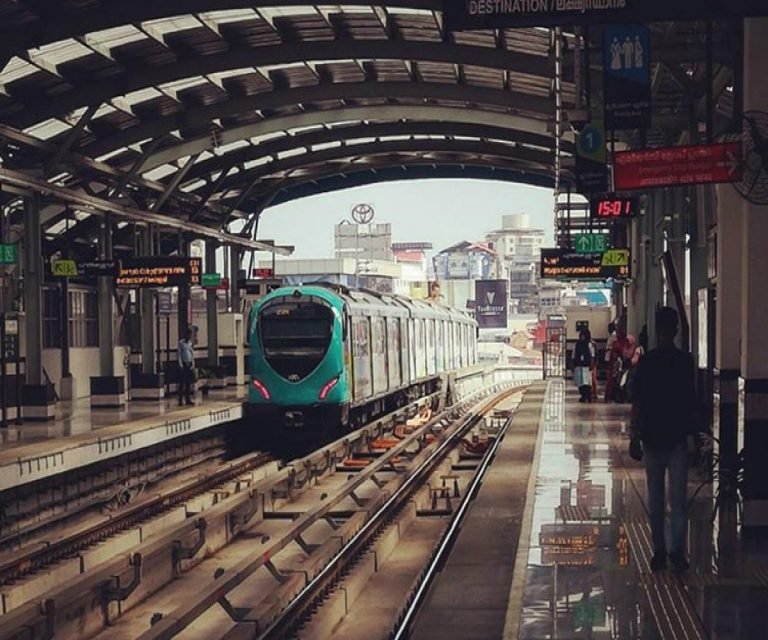
KOCHI (Metro Rail News): On February 13, a trial run of metro trains between Petta and SN Junction will begin. As part of the trial run, which mostly includes track testing, one of the metro trains with three coaches will be rolled out on the new section. After the track test, the signalling work will be tested, and the new section will be ready for commissioning by April after the Metro Rail Safety Commissioner’s inspection.
The new stretch is part of Kochi Metro’s Phase 1 (A) extension, which includes two stations: Vadakkekotta and SN Junction. The total number of metro stations will increase to 24 after the services are extended to SN Junction. At the moment, the metro runs between Aluva and Petta, stopping at 22 stations. Last December, the approximately ‘300-crore extension plan was supposed to be finished. The Covid outbreak, however, threw the plans into disarray.
On the new section, the work on the stations is nearly complete. The job of laying the tracks was also completed. According to a Kochi Metro source, “once the trial run and other requirements are finished, Kochi Metro will finalise the date of the stretch’s inauguration after consulting the state government.” On the new route, there are a total of 259 viaducts.
In December 2021, the average daily ridership of the Kochi Metro reached 65,000. Ridership has plummeted since the third wave of Covid peaked after the Omicron variant. When the services are expanded up to SN Junction, Kochi Metro Rail Ltd (KMRL) officials hope that daily average ridership will reach one lakh.
Meanwhile, work on Phase 1 (B) extension from SN Junction to Tripunithura is ongoing, which includes the construction of a single metro station (Tripunithura Terminal) near the railway station. 40 percent of the total land necessary for the extension has already been given to the metro agency. The revenue department has acquired the remaining land, which will be turned over to KMRL soon. The Tripunithura extension is expected to be completed by March 2023.
The first phase of Kochi Metro will be finished after services are extended to Tripunithura. Aluva and Tripunithura, two significant towns in the suburbs, will be connected by train. The feeder services, which include electric buses, offered by KMRL would improve the traffic network, assisting in the decongestion of city roadways, the source noted.
CHENNAI (Metro Rail News): Switching between two stretches — Corridor 4 and Corridor 5 — will be seamless when commuters travel in the Metro train under the Phase II project in around four years, since they will run parallel to each other for five kilometres. This will primarily benefit residents of Poonamallee, Kattupakkam, Karambakkam, Porur, and surrounding areas who wish to go to any northern or southern part of the city.
The construction of the Phase II project in the city has begun, with three corridors — Madhavaram to SIPCOT (Corridor 3), Light House to Poonamallee (Corridor 4) and Madhavaram to Shollinganallur (Corridor 5) — costing 61,843 crores with funding from the State and Union governments as well as international banks.
It’s critical to have well-planned transit stations in such a large public transportation system so that commuters don’t get lost switching trains. Corridor 3 and Corridor 5 intersect in this project in Shollinganallur and Madhavaram, while Corridor 3 and Corridor 5 intersect at Thirumayilai. However, Corridors 4 and 5 each feature four transit stations because the alignment goes for nearly 5 kilometres in the same direction, with one corridor running above the other.
The double-decker line would contain four stations built on two levels, according to authorities from Chennai Metro Rail Ltd. (CMRL) – Alwarthirunagar, Valasaravakkam, Karambakkam, and Alapakkam. While Corridor 4 will be built on the first level, at a height of 13.5 metres above the ground, Corridor 5 will be elevated to a height of 21 metres.
According to the official “The work has been going on for a few months now and after soil testing, the contractor has been executing pile work after which pillars will be raised. These two stretches will run with shared pillars for 5 km. And, there will be common concourse (ticketing level) and two different platforms.”
The benefit is that commuters from Porur may get to destinations like Adyar, Mylapore, Shollinganallur, Taramani, Madhavaram, Retteri, Majambakkam, and CMBT in a short period of time.
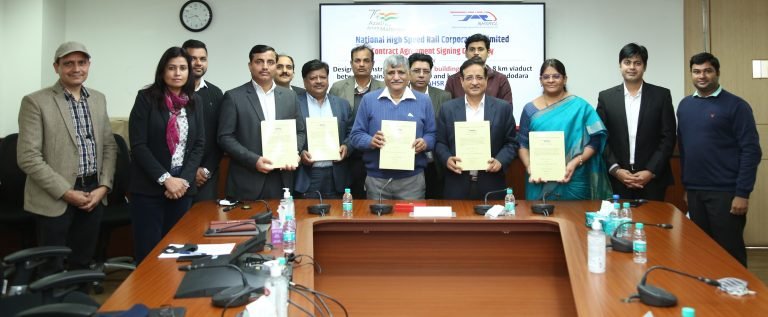
DELHI (Metro Rail News): National High-Speed Rail Corporation Ltd (NHSRCL) and construction company Larsen & Toubro (L&T) signed a Rs 2,460.88 crore agreement to design and develop an 8-kilometre viaduct route including high-speed rail (HSR) station in Vadodara, Gujarat For the Mumbai-Ahmedabad High-Speed Rail (MAHSR).
NHSRCL has awarded 100% civil contracts for building MAHSR alignments in Gujarat, comprising eight HSR stations and two rolling stock depots in Sabarmati and Surat.
According to NHSRCL spokesperson ‘Sushma Guar,’ The Vadodara HSR station is proposed over the existing platform seven at the Indian Railways’ Vadodara station to ensure a seamless connection with the railways. Passengers would be able to travel more conveniently between HSR and Indian Railways stations as a result of the integration.
The Mumbai-Ahmedabad High-Speed Rail Corridor, which is now under development and will connect India’s financial metropolis of Mumbai with Gujarat’s commercial hub of Ahmedabad, is the country’s first bullet train project, 348 kilometres of the entire project length are in Gujarat, 4 kilometres are in the union territory of Dadra & Nagar Haveli, and the remaining 156 kilometres are in Maharashtra. Of the expected Rs 110,000 crore budget, the Japan International Cooperation Agency (JICA) is funding Rs 88,000 crore.
The project, which was launched in September 2017 by Prime Minister Narendra Modi and his Japanese counterpart Shinzo Abe, was supposed to be completed by 2023. The deadline has been extended to 2028 due to difficulties in land acquisition in Maharashtra and the statewide lockdown was declared in March 2021 to contain the first wave of the Covid-19 pandemic.
As of now, Gujarat has completed 98.63 per cent of land acquisitions, Dadra & Nagar Haveli has completed 100 per cent, and Maharashtra has completed 60.2 per cent. The first bullet train will be tested on a 50-kilometre stretch between Surat and Bilimora in 2026, according to the country’s railway ministry.
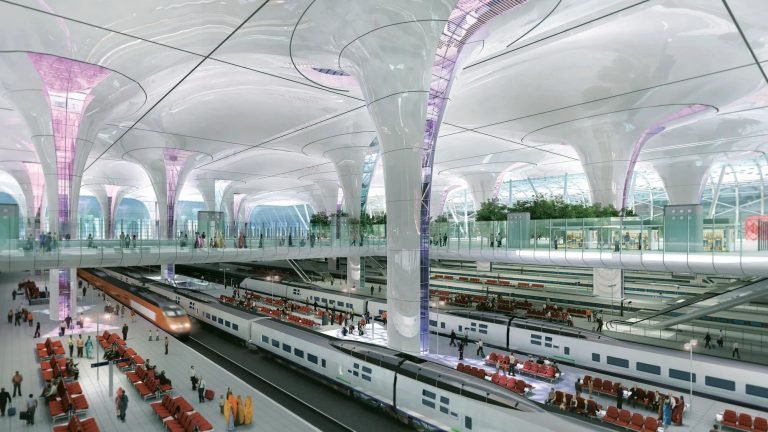
Indian Railways initially plans to redevelop 400 stations across 100 cities with approximately 2,700 acres of encroachment free land available for commercial development in multiple phases. The program has an outlay of over INR 01 Lakh crore. The successful execution of a program of this scale requires detailed execution roadmap, learning from global and comparable programs, proper organisation and governance structure, new and suitable capabilities, robust analysis and modelling, funding, and continuous interaction with large number of stakeholders.
While the program will continue to evolve and incorporate innovations and feedback, the first set of stations are already in the public domain for bidding. The multiple facets of station development initiative and to lay out the current and potential thinking about this program for all interested participants and stakeholders is detailed under which covers an introduction to the program, learnings from other parts of the world, various modes of station development being deployed by the Indian Railways, program details of the first set of stations available for bidding under PPP (Public Private Partnership) and learning on PPP opportunities, challenges and key imperatives to make this program a successful one.
The highlight of various aspects of Station Redevelopment Program in India is as under:
Many Railway systems across the world have or are trying to redevelop and transform Railway stations. In addition to the passenger experience, redeveloped stations also contribute to the revenue. Ancillary revenues contribute up to 20 percent of the total revenues in many Railways systems.
The Indian Railways is taking many paths to achieve the station redevelopment goal. These include a modified form of Swiss challenge model (PPP), PPP through traditional model, collaboration with state governments, G2G arrangement, and collaboration with PSUs, Ministry of Defence (MoD), Ministry of Urban Development (MoUD), other ministries and agencies. Modified Swiss Challenge model is the selected mode for the first set of 23 stations, which have approximately 140 acres of commercial land available and more than 3.3 million footfalls daily. In addition, IRSDC (Indian Railway Station Development Corporation Limited) is redeveloping another 12 stations through traditional PPP and EPC (Engineering Procurement Construction) models.
PPP programs and the challenges encompassing them have been studied in the past. The Indian Railways is pursuing PPP at a large scale through this program. This report highlights perspectives on making PPP work by highlighting learnings from many programs.
Successful execution of the station redevelopment program needs well-defined organisation structure, capability building, funding, O&M (Operations and Maintenance) plan, fine-tuned revenues and cost models, policy and phasing of stations proposed under redevelopment.
Each stakeholder is important in such a program and knowing their point of view can be helpful for right design and successful execution.
Introduction
The Indian Railways is one of the largest railway systems in the world and continues to be one of the main vehicles for the socio-economic development of the country. According to an article by Press Information Bureau of Government of India, a rail system is six times more energy-efficient and four times more economical than a road system. Rail construction costs are approximately six times lower than road construction costs for comparable levels of traffic.
The Indian Railways accounts for approximately one percent of the Gross National Product (GNP) of India and is the backbone of freight needs of the core sector. It also provides six percent of the total employment in the organised sector directly and an additional 2.5 percent indirectly.
The Indian Railways has achieved impressive business in both freight and passenger traffic. However, Indian economy is witnessing many changes like evolving government policies to push for renewable energy, new economic activities requiring shorter and responsive supply chains, and increased development in transportation across various sectors such as aviation, roads and shipping. Massive investments are now required to expand Railway infrastructure and make the Indian Railways a modern transportation vehicle to remain relevant in this changing landscape. Investments are required across all elements, including capacity augmentation, debottlenecking, safety measures and passenger amenities. Capital and capabilities to manage many of these investments and projects are scarce. In this context, projects like redevelopment of Railway stations are unique. They provide an opportunity under PPP that leverages private capital and capabilities and provides good returns to Railways and develop one of their core assets— Railway stations.
Commercial Development of Railway Land: Business Opportunity & Challenges
India has a long history of development of railways. Over the past 180 years, a huge network of rail lines and stations have been developed. Rail networks were brought into the centre of cities, and as a result, the city centres further got intensified and cities spread outward. Over the decades, rail stations emerged as significant urban nodes with commercial developments all around, attracting heavy traffic congestion and strained infrastructure. Even so, these centrally located areas, owing to their intrinsic characteristics, have also become expensive locations. Large tracts of land acquired by the railways in the yesteryears for operational, residential and other purposes have now become prime real estate. Buildings have either become obsolete, derelict or even abandoned. Currently, Indian railways has a portfolio of around 43,000 hectares of land and is perhaps the largest land holder in the country.
Rail Land Redevelopment
The Rail Land Development Authority (RLDA) was set up in 2007 for the development of vacant railway land for commercial use for the purpose of generating revenue by non-tariff measures. Land which is not required for operational purposes in the foreseeable future were identified by the zonal railways and the details advised to the Railway Board. Such plots of land then were handed over to the RLDA by the Railway Board in phases for commercial development. The first batch of 13 sites was entrusted to the RLDA for commercial development by the Ministry of Railways in February 2007. Till date, around 100 plots of land have been entrusted to the RLDA by the ministry. A variety of commercially viable mechanisms, including public-private partnerships, would be employed by the RLDA to get these lands developed on commercial lines so as to generate maximum revenue. While the city gets more built space and old/ outdated properties get redeveloped, the railways would be in a position to increase their internal revenue generation for deployment in other operational areas. A win-win for several stakeholders is envisaged.
Rail Station Redevelopment
While on the one hand, an initiative has been taken to utilise the vacant lands/ redevelop lands where dilapidated buildings exist, the rail stations themselves are also in for a major revamp. The Indian Railway Stations Development Corporation (IRSDC) was set up in 2012 with the objective of developing/ redeveloping the existing/ new railway station(s) including upgrading passenger amenities by new constructions/ renovations and redevelopment of the station buildings, platform surfaces, circulating area, etc, to better standards for serving the need of the passengers. A total of 12 projects have already been initiated up by the IRSDC. An international design competition has also been floated recently for the stations of Gwalior, Nagpur and Bengaluru (Byappanahalli). Further, an ideas competition called SRIJAN (Station Rejuvenation Initiative by Joint Action) for 635 railway stations has also been initiated.
Emerging Challenges
The setting up of RLDA and IRSDC has brought about fresh thinking, innovation and market-driven concepts into the age-old railways. Nevertheless, many challenges persist and need urgent attention.
Rail Station Heritage: While railway quarters and other buildings surrounding railway stations are either in an abandoned state or dilapidated and ready for redevelopment, many stations themselves are pieces of valuable architectural heritage which merit conservation. In fact, as per the Heritage Inventory of the Indian Railways, there are over 70 buildings/stations of the railways in the heritage category. It is a good idea to modernise the physical infrastructure of the railway stations and provide for more space and better amenities, but at the same time, there is an urgent need to also conserve the heritage buildings and precincts. The challenge is not mere restoration but long-term maintenance of these as also to integrate new buildings and facilities with the old.
Informal Sector in the Precincts: Almost all railway station precincts are highly crowded, congested and intensely developed. Invariably, the stations attract huge numbers of daily wage labourers, poor migrants, informal sector vendors and a wide variety of transportation modes. Frustrating traffic snarls around railway stations are a common occurrence. Railway stations are generators of huge economic momentum and have many forward and backward economic linkages. Tackling the livelihoods of the poor population living off the railway stations is a major challenge to be addressed. This can neither be simply wished away nor wiped away.
Surrounding Infrastructure Plug-in: Seamless entry and exit of freight, passengers and a wide variety of vehicles are essential for the success of the functional performance of railway stations. Further, with redevelopment, the surrounding densities are bound to rise manifold. Rail land development/redevelopment, as well as station development/redevelopment, calls for a careful plug-in and integration of people, vehicles, and land uses. In many cases, the conflicts between motorised and non-motorised modes of transport cause a spiral of problems; the mix of buses, taxis, tempos, cars, scooters, rickshaws, carts, cycles and pedestrians all go to create a complex web. Also, integration of the local metro train, the local (suburban) train and the long-distance train is also a challenge. Long-term and short-term parking and drop-offs are also another part of the problem that needs resolution.
Real estate Industry Issues: For a variety of reasons, the real estate industry in the country has been in the doldrums for a long. The enactment of the Real Estate Regulatory Act and the introduction of the GST regime is yet to bring about the transparency required in operations fully. Added is the high-risk weightage attached to the real estate industry for raising capital. Further, the Railway’s policy to only lease out the property and not to sell out on a freehold ownership basis has its own implications.
Approval Glitches: The system of approvals for real estate projects in the country is quite a maze. Lack of clarity, delays, going around from pillar to post to various departments, and lack of certainty makes the entire process cumbersome and can easily throw the financials into a quandary. ‘Ease of Doing Business’ has to improve further.
Market viability beyond Arithmetic: It is good to undertake financial market viability studies and assessments in advance. However, the market reality could always be different as real estate markets are known to be defiant, particularly in recent times. When markets do not respond to the offerings the way they were envisaged, the spiral of delays, overruns and financial upset can take place. Therefore, while the initial arithmetic can be fine, the reality could be risky.
Personnel Issues: The RLDA and IRSDC initiatives of the Government of India can be seen as bold and disruptive policy departures. The implementation calls for market-savvy commercial approaches and not the conservative and conventional bureaucratic mindset. Running these organisations with conventional railway staff on deputation for a short period would not take them far. Appropriate personnel and compensation packages need to be developed to attract and retain the right kind of technical, financial and managerial drivers to steer the organisations towards their desired goals.
Towards Smart Urban Rail Nodes, need for Integration: Rail lands and stations are an integral part of the city. There is a strong interdependence and correlation between the city systems and the rail properties. They have historically so far been working mostly in isolation of each other and, therefore, remotely connected. Further, redevelopment has to be seen beyond architecture and urban planning. There is also a need for integration of policies across ministries; railways, urban affairs, tourism, culture, commerce and finance. There is enormous economic potential in the development of smart urban rail nodes which can contribute to employment, civic development, urban aesthetics, municipal health and wealth creation. Therefore, there is an urgent need to integrate policies, institutions, professions and instruments so as to tap this potential for wholesome national development.
Digital Solutions in Station Redevelopment
For smooth passenger flow, different types of traffic simulations can identify potential hotspots of pedestrian congestion at stations. Hence, the effective planning of space including location of retail centers can be done using such simulations enhancing the customer experience. As for safety, data analytics and artificial intelligence can be used to make stations more secure along with integrated security systems.
Digital solutions can also be used to enhance the passenger experience. Currently, most of the digital solutions are limited to travel planning and booking stages. Another important element is to develop sustainable infrastructure. The infrastructure design should adhere to the green building concepts, which imply alternate sources such as solar should be used for power and heating purposes. Energy-efficient lights, waterless urinals and use of biodegradable material are few features of green buildings that can be deployed at stations.
Digital Features
The new digital features used in station redevelopment can be stated as under:
Station Information & Navigation App for railway stations to get F&B, retail, parking and other station information.
Integration of digital screens embedded in train windows for work and entertainment.
Kiosk for ticket booking/status check.
Digital ticket checking machines.
Digital platform for onboard food and beverage order.
Tourist information App.
Information on connecting public transport.
Summary & Conclusion
One of the most ambitious and visible programs launched by Government of India and Ministry of Railways is redevelopment of Railway stations through PPP model. This would be done by exploiting the commercial development of spare Railways land and ploughing back the surplus for redevelopment of stations. The behemoth station redevelopment plan has an outlay of more than INR 1 lakh crore, offering opportunities to private sector players, both Indian and Foreign, to participate through various public-private partnership modes and to various government agencies. Overall, Indian Railways has more than 8,000 stations, many of which it intends to redevelop to better standards and passenger’s facilities. Currently, the stations are classified into seven categories based on annual earnings from passenger traffic. Of these, around 400 railway stations are classified as A1 and A category stations where passenger earnings are high due to their location in metros, important tourist destinations, and pilgrimage centers. Hence, they are prioritised for redevelopment. The Railway Board has created a database for these 400 stations and has made it available on its website.
Real estate available at Railways stations for one of the stations, is a key asset that the Railways plans to leverage to fund this journey. The 400 Railway stations, across 100 top cities of India, will be offering approximately 2,700 acres of prime encroachment free land for commercial development along with the Railway stations development.
In addition to A1 and A stations, Indian Railways has many other significant station assets. Prime among these stations are those located on commuter routes in metros. Railway stations like Churchgate and Chanakyapuri stations can offer once in a lifetime redevelopment opportunity. While the focus of this report is largely on A1 and A category stations as they have been initiated first in the program, Indian Railways intends to move comprehensively on all other stations through appropriate models.
Station Redevelopment in Multiple Phases
The Indian Railways plans to roll out the redevelopment program for these 400 stations in multiple phases, with 23 stations in the first phase, about 50 stations in the second phase and remaining stations subsequently.
The Indian Railways has set up the Indian Railway Stations Development Corporation Limited (IRSDC) as a specialised agency to anchor some of the redevelopment projects through EPC or PPP mode. The IRSDC is developing 12 stations through Public-Private Partnership (PPP) and through EPC models. The Indian Railways intend to speed up redevelopment projects for the 400 A1 and A category stations and involves multiple agencies, including all Zonal Railways. As announced in Rail Budget 2015-16, the stations will be opened for redevelopment on ‘as is where is’ basis.
Leasing of Land
The Indian Railways intends to lease out spare Railways land for a period of up to 45 years to private entities for commercial development and use the surplus generated to modernise and maintain the railway stations.
This will have dual benefits: New and modern amenities will be provided at railway stations, and world-class infrastructure will be developed in the vicinity of these stations. Some of the amenities envisaged include segregating arriving and departure streams of passengers, surface or basement parking, seamless accessibility for the specially abled, swipe ticket entry machines, well-lit circulating area, clean and modern washrooms, free and paid Wi-Fi options, pharmacy, ATMs, CCTV with integrated security system, medical facilities or standby ambulances, LED lights, ramps for differently abled, tourist information and facilitation center, F&B and entertainment facilities, hotels, lounges and conference facili- ties along with basic amenities.
The Indian Railways is also taking various steps like appointment of nodal officers with dedicated teams in each zone and partner- ships with state governments for expedited clearances to ensure timely and hassle-free implementation of the program. All these steps should encourage the private sector to participate in the program enthusiastically.
Salient Features of Station Redevelopment Program in India
Encroachment-free land with clear titles
Hundred percent FDI allowed
Forty-five years lease period
Bidding by consortium allowed
Transparent and objective selection process
Key Elements of Station Redevelopment
Below mentioned are 12- Key elements of a successful station redevelopment program:
Safe and secure passenger movement
Cleanliness and hygiene
Ease of access to stations
Customer experience – Holistic customer service, comfort and safety
Commercialisation – Revenues from NF and RE
Character of the city – Welcoming gateway to the city
Digital solution
Green sustainable infrastructure
Passenger communication
Smooth passenger flow
Individual and organisation capability development
Stakeholder Management (e.g local authorities)
Conclusion
Indian Railways is going through a transformational change. Some of the major benefits and opportunities related with Station Redevelopment program can be concluded as:
Investment in stations development need to be undertaken in a planned and integrated manner. This is because it takes time to develop the overall assets.
Customer interest has to be kept foremost in any design and redevelopment.
If done well, Railway stations can become an iconic landmark of the city.
Use of technology is both an imperative and an opportunity.
PPP is successful for assets which have high commercial viability.
Metro Rail News is conducting a 2nd Edition InnoMetro 2022 on 28-30 April 2022, virtually focusing on Seamless Mobility. Join InnoMetro 2022 for a detailed discussion on the topic “Business Opportunities & Challenges in Station Redevelopment and Commercial Development of Railway land”.
Workforce diversity means similarities and differences among employees in terms of age, cultural background, physical abilities and disabilities, race, religion, gender, and sexual orientation. No two humans are alike. People are different in not only gender, culture, race, social and psychological characteristics but also in their perspectives and prejudices. Society had discriminated on these aspects for centuries. Diversity makes the workforce heterogeneous. In the current scenario, employing a diversified workforce is a necessity for every organisation but to manage such a diversified workforce is also a big challenge for management. Workforce diversity is strength for any organisation but people still stick to their views related to caste, religion etc and so consider diversity as a problem but if managed properly, can increase productivity.
In transportation and telecommunications technology in short we can say that day by day the world is becoming a global village due to globalisation. In this interdependent global economy, an American might drive to work in a car designed in Germany that was assembled in Mexico, components made in the United States and Japan that were fabricated from Korean steel and Malaysian rubber. From Indian perspective also, the world has now recognised India as one of the prime economic driver in the global scenario. Various companies are coming India to explore this opportunity. In order to survive in this type of cut throat competitive world the organisations have to hire an effective and efficient workforce that can handle such a competitive environment. Employing diversified workforce is a very essential for every organisation. In the current scenario the organisations that employ quality and competitive workforce regardless of their age, attitude, language, gender, religion, caste can only compete at the marketplace.
Human resource is an important asset for any organisation. Capital and physical resources, by themselves, cannot improve efficiency or contribute to an increased rate of return on investment.
Workforce Diversity
It is through the combined and concerted efforts of people that monetary or material resources are harnessed to achieve organisational goals. But these attitudes, efforts and skills have to be sharpened from time to time to optimise the effectiveness of human resources and to enable them to meet greater challenges. Without employees, the organisation cannot move an inch. Therefore, the management of this resource is also an important issue. Human resource management is concerned with managing ‘human aspect’ of the organisation in such a way that organisational objectives are achieved along with employee development and satisfaction.
Each individual is different from each other because of their different religion, educational background to which they belong, age and the perception. When different types of people in terms of thinking, perception, generation come together to work at the same place then definitely a situation may come where all these different types of
people may not agree at the same point. At that point, of time it is going to affect the interpersonal relationship among people.
Impact of Workforce on Productivity
Due to the increased rate of globalisation, privatisation and liberalisation we can view the change at our workplace also, gone were the days where the people of same age, same professional qualification, same experience and same religion come together to work in an organisation. Now day’s females are also working in the equal ratio with males. Next aspect that affects the work climate is language. People may speak different languages at workplace because of different geographical region to which they belong. Due to which the people may find some problem. Employees coming from various geographical regions with their different mindset create contradiction among employees. Gender discrimination is also a major problem at Indian workplace.
Cordial interpersonal relationship among the employees is one of the major ingredients for smooth functioning of an organisation. An organisation is a network of people who work together to achieve some common objective and if this network has some loopholes then it would be very difficult for any organisation to achieve those objectives effectively.
Interpersonal Relationships
Productivity shows whether the activity of an organisation is efficient and effective. Though the terms like productivity, efficiency and effectiveness are used together and practicians sometimes alternate their meanings, however we must not identify productivity with efficiency and/or effectiveness. Productivity requires both efficiency and effectiveness, because a certain activity will not be productive if it is only efficient, but not effective, or effective, but not efficient. Productivity in economic position is defined as the relation between output and input.
Input element in an organisation consists of resources used in the product creation process, such as labour, materials, energy. The output consists of a given product, service and the amount of both. The amount of output per unit of input (labour, equipment, and capital). A measure of the efficiency of a person, machine, factory, system, etc., in converting inputs into useful outputs is known as productivity. There are many different ways of measuring productivity. For example, in a factory productivity might be measured based on the number of hours it takes to produce a good, while in the service sector productivity might be measured based on the revenue generated by an employee divided by his/her salary.
Advantages of a diversified workforce
An organisation’s success and competitiveness depend upon its ability to embrace diversity and realise the benefits. When organisations actively assess their handling of workplace diversity issues, develop and implement diversity plans, multiple benefits are reported such as:
Diversity stimulates innovation and productivity and creates a world-class culture that can outperform the competition.
A multicultural organisation is better suited to serve a diverse external clientele in a more increasingly global market. Such organisations have a better understanding of the requirements of the legal, political, social, economic and cultural environments of foreign nations.
In research-oriented and hi-tech industries, the broad base of talents generated by a gender-and ethnic- diverse organisation becomes a priceless advantage. It goes with the opinion that creativity thrives on diversity.
Multicultural organisations are found to be better at problem-solving, possess a better ability to extract expanded meanings, and are more likely to display multiple perspectives and interpretations in dealing with complex issues.
Organisations employing a diverse workforce can supply a greater variety of solutions to problems in service, sourcing, and allocation of resources.
Employees from diverse backgrounds bring individual talents and experiences in suggesting ideas that are flexible in adapting to fluctuating markets and customer demands.
A diverse collection of skills and experiences (e.g. languages, cultural understanding) allows a company to provide service to customers on a global basis.
A diverse workforce that feels comfortable communicating varying points of view provides a larger pool of ideas and experiences.
A diversified workforce is a latest and current trend in every organisation today. Moreover, the major concern for every organisation is to improve its productivity because organisations are economic activity and can only survive by competing in this cutthroat competitive world by increasing their profits. Due to the diversified workforce in some or the other way, people are facing lot many problems at the workplace.
In most of the cases a diversified workforce may experience less cooperation from some of their colleagues but to achieve the organisational goals each member must be effective in terms of its functioning in the particular department. Hence, ways should be sought to manage the diversified workforce in such a way that people can easily work with the diversified workforce and can bring quality results altogether.
It can be summarised that an organisation’s major objective is to earn profit and to enhance its productivity. It is imperative to mention that employing diversified workforce is the very essence in today’s scenario but to manage such a diversified workforce is a big challenge in front of the management.
Hiring a diversified workforce in any industry will definitely lead to improved productivity, but may prove to disaster if the same workforce is not managed properly. Below mentioned are few general steps of managing a diversified workforce in a multi-dimensional industry today:
Encouraging the use of common language in the organisation among the employees.
By conducting various motivational and mentorship programs.
By keeping the channels of communication open among the employees and employers.
By encouraging employee participation.
For improving productivity quality has to be maintained and for enhancing quality one should continuously work towards skill development.
Technical Skills Gap: An Overview
Skill Gap is the difference between the skills required on the job and the actual skills possessed by the employees. The skill gap presents an opportunity for the company and the employee to identify the missing skills and try to gain them. Employees are recruited by companies to work on fulfilling company objectives. Hence, people with the correct skill sets are recruited by companies. However, often it happens that employees lack certain knowledge & training which creates a skill gap. Because of this the employee is unable to perform the complete job. The technical skills gap is the lack of technical competence in an employee to perform any task requiring technical skill.
Tech Skills Gap and Tech Skills Shortage
Tech skills gap and Tech skills shortage, these two terms describe two similar yet distinct challenges that the global industry is facing today. Many people mistakenly use them interchangeably. The tech skills shortage describes a pressing manpower issue faced by the entire tech industry. It is used to describe the global shortage in qualified personnel for tech positions. This shortage is felt in nearly every profession in the tech world. The tech skills gap is an entirely different issue altogether. This terminology describes the difference between individual’s existing skill set and the skills that the industry needs them to have to effectively perform their job roles. Gaps exist among many fresh graduates whose alma maters didn’t give them the practical skills they need for tech jobs as well as among experienced professionals who didn’t learn the latest programming languages.
Forward-thinking companies that understand the value of retaining their workforce are already tackling this issue. Most companies globally are investing in reskilling and upskilling their workforce, devoting significant resources to ensure that their employees have the skills that the companies need to succeed. Infosys for e.g; has increased its reskilling efforts by 150 percent during the last year, focusing on training in the fields of cloud technology, AI, machine learning, data analytics, IoT, user experience, and digital networking.
Bridging the Gap and Fixing the Shortage
Upskilling and reskilling are two pedagogical approaches to solving the tech skills gap and the tech skills shortage.
Upskilling is focused on upgrading the skill sets of individuals who already have tech skills to those newer tech or soft skills that are in high demand. For example, a mainframe specialist would be trained in cloud computing, or an IT specialist would become a cyber analyst at a NOC. As the individual already has formidable tech skills, retraining them would require less of an effort than training someone with no tech experience.
Upskilling also has the added benefit of retaining experienced employees and their knowledge within the organisation instead of hiring new ones, which is a difficult and costly effort given the skills shortage. Another example may be upskilling a talented software engineer about to get promoted to team leader to learn soft skills like empathy, leadership, and feedback.
Reskilling is an entirely different matter. This discipline is about taking individuals who work in a different, non technological domain and giving them the knowledge and skills needed to enter the tech world and land their first tech job. An example of reskilling would be a tour guide who saw the travel industry hurt and decided to become an entry-level data analyst.
As the COVID-19 pandemic’s disastrous effects on the economy have put entire sectors out of business, reskilling is increasingly considered a high-impact method of restarting people’s careers and making a living once again. Each reskilled individual, once employed, reduces the tech skills shortage by one. Governments and enterprises need to launch initiatives that enable the reskilling of millions.
Benefits of Skill Gap Analysis
Identifying skill gaps benefits companies as it ensures that the workforce is well trained, knowledgeable and better equipped to perform the job. Skill gaps are identified through the process of skill gap analysis
Helps to improve and define an individual’s skills the company needs.
Points to the critical skills employees need to work on.
Helps in the recruiting process as it defines the need for skills or interests which current employees don’t possess.
Skills gap solutions
Better training of employees.
Giving the employees better resources which will help them improve their knowledge.
Hiring a third party with the required skill to execute the job
Recruiting better-skilled employees
Indian Railways: Need of Workforce Diversity & Technical Skills Gap
India has the fourth-largest railway system in the world, behind only US, Russia and China. The railway sector of India has 123,542 km of total tracks over a 67,415 km route and about 7,300 stations. The railways run close to 13,523 passenger trains and 9,146 freight trains daily on its network. In the fiscal year ending March 2020, Indian Railways carried 8.1 billion passengers. In addition, the railway sector in India has successfully and transported 1.23 billion tonnes of freight in FY 2020-21, which is 1.93 % higher compared to last year’s loading for the same period. Indian Railways is the single largest employer in India and eighth largest in the world; employing close to 1.3 mn people.
Vision 2024 has been envisaged to achieve targets of 2024 MT freight loading by 2024
Mumbai-Ahmedabad high-speed rail project sanctioned at a total cost of $15 bn
The railway sector of India aims to electrify the entire network by 2023 which will lead to annual energy savings of $1.55 bn
Broad gauge railways network stands at 64,689 Route kms, of which 71% is electrified
India Railways is focused on 2,843 km dedicated freight corridors by June 2022 and redevelop 123 railway stations into world-class transit hubs
Indian Railways has commissioned Wi-Fi at 6,000 Railway stations across the country
In order to achieve its green mission, Indian Railways has solarised more than 960 stations across
1806 Kisan Rails run on 153 routes (upto 24.12.2021) and carried around 5.9 lakh tones of agricultural products
2000 Km of railway network to be brought under Kavach, the indigenous world-class technology and capacity augmentation in 2022-23.
400 new generation Vande Bharat Trains to be manufactured during the next three years.
100 PM GatiShakti Cargo terminals for multimodal logistics to be developed during the next three years
Further, the railway sector in India aims to aspire about 1.5% to the country’s GDP by building infrastructure to support 45% of the modal freight share of the economy. The Indian Railways clocked a 3% increase in freight revenue in 2020-21, and the quantum of goods loaded grew by 1.93%.
Two Dedicated Freight Corridors (DFC), one on the Western route (Jawaharlal Nehru Port to Dadri) and another on the Eastern route (Ludhiana to Dankuni), have been fast-tracked.
The railway sector in India has the highest ever planned capital expenditure of $29.5 bn in 2021-22
The average speed of freight trains increased to 45.6 kmph in March 2021, marking an 83% increase over the previous year
Railway Electrification works completed on a total of 6,015 Route kms during 2020-21
Conclusion
Based on the analysis it can be easily summarised that in a globalised economy today industries and organisations can’t improve or develop if the workforce isn’t experienced or skilled in these changing dynamics. As the findings state: social skills – such as persuasion, emotional intelligence and teaching others – will be in higher demand across industries than narrow technical skills, such as programming or equipment operation and control to managed a diversified workforce. In essence, technical skills will need to be supplemented with strong social and collaboration skills’.
For a mammoth organisation like Indian Railways with such a size and scale amidst future challenges of modernisation and technological upgrade need of a diversified and talented work pool with least skill shortage becomes mandatory. The vast number of users and a huge group of stakeholders associated with industry demand critical efforts on skill up-gradation, skilling, up-skilling and re-skilling. Indian Railways like most of the rail systems has already started working towards it. This would not only help the rail industry address operational and project challenges but also would make it more attractive to potential future challenges and goals.
Metro Rail News is conducting a 2nd Edition InnoMetro 2022 on 28-30 April 2022, virtually focusing on Seamless Mobility. Join InnoMetro 2022 for a detailed discussion on the topic “Workforce Diversity: Helping Industries & Organisations Grow”.
The 534-km Rs 01 trillion Mumbai-Ahmedabad High-Speed Rail project that will operate trains with average speeds of 200-250kmph will be a game-changer in terms of inter-urban connectivity and establish India as a market for such technologies. Japan, which has matured in evolving such technologies and is seeking opportunities for investments, is providing a loan that would cover 80% of the estimated project cost at 0.5% interest, with a 15-year moratorium followed by a 35-year payback period. While it is of great value that the nation has both financial and technological support from Japan for building this line, multiple challenges need to be overcome, illustrated as under:
Issues Related to Route design
Detailed Alignment Choice: Detailed alignment choice is one of the major concerns, especially when it is overground, keeping in view land acquisition challenges versus providing access to the population along the corridor. If the alignment goes closer to urban growth areas to provide access, there would be issues of land acquisition, pulling down buildings, the possibility of destroying heritage structures etc.
Location of Stations: The location of stations is an important issue to be addressed. Various questions relating to whether the stations should be the city centre connecting existing railway stations, or in an adjacent station, or periphery of an urban node need to be answered judiciously.
The trade-offs are providing better access and connectivity versus costs due to land and structures. From a long-term point of view, being in the periphery of an urban node, apart from reducing costs, could help generate urban growth around the station and even in shifting the centre of gravity of the urban area. In the short run, however, traffic ramp-up will take time. This would be required to be mitigated through excellent feeder services.
The specific location of the terminal station in Mumbai is still courting controversies. The Maharashtra government does not seem willing to give land in a major commercial growth node, as requested. Instead, the state government is suggesting that the station could be located in the land that belongs to the railways. This could have implications on the catchment at the Mumbai end.
Number of Stations: In general, for MAHSR, there would be a demand for more stations. While this will increase the catchment, it could reduce the average speed due to a higher number of stops. One way around this would be to have different service categories like fast (stopping at all stations) and super-fast (only at major cities). It should be noted that the bigger catchment will be from the smaller cities that may not have access to airports. For example, while an Ahmedabad-Mumbai passenger may still consider air a viable option, the high-speed train is a great boon for the Anand-Mumbai or Ahmedabad-Vapi passenger. Having stations with connectivity to airports like at Ahmedabad, Vadodara and Mumbai will increase catchment of long distance air passengers who could then connect to the cities in this corridor and vice-versa.
Evacuation facilitation: At each station, it would be important to have fast and multiple means of evacuation, to increase the catchment and propensity to travel.
To begin with, efficient bus services, as well as accessible parking lots for private vehicles, should be provided.
In Mumbai and Ahmedabad, where metros are under construction, it would be important to provide seamless metro connectivity.
At major stations, where passengers could move to other trains, the transfer must be seamless.
Land Acquisition: This is a critical issue, especially where the alignment would veer off from existing railway lands. The challenges can be best addressed by the line going over the ground, where the actual acquisition would be limited to the footprint of the pillars. Designs would be required to be developed in such a way that the footprint is minimised. Experience from land acquisition for transmission lines and metro corridors would come in handy.
Human Resource Development: It would be important to train a large number of Indian engineers and managers for design, construction and operations at standards that would be essential for high-speed rail, including for stringent safety standards. It would also be important to train Japanese senior management, who need to spend considerable time in India to train and oversee the required activity. The Japanese managers would need to be oriented towards Indian conditions and the prevalent professional culture. In recognition of this, as part of the project, a large training centre is being put up. Along the same lines, IIM Bangalore is setting up an India-Japan Study Center with the mission of improving India-Japan mutual understanding and complementary skill building in the domain of management including for infrastructure.
Future Expansion: It would be useful to have a perspective on how the expansion of this line would happen. Once the proof of concept of High-Speed Rail is established, there would be demands for expansion. In an earlier proposal, the line was actually to go beyond Mumbai to Pune, but was not found to be viable initially. Such visioning would be useful in bringing greater support from the government of Maharashtra.
Introduction
In 2022, as India marks its 75th year of independence, Indians were expected to experience the thrill of a bullet train ride. But the railway minister recently said that the likely date for Ahmedabad-Mumbai high-speed rail project has been pushed back by several years—to 2026, perhaps. The project is entangled in land acquisition battles and construction delays.
Crucially, by 2026, only a 50 km stretch between Surat and Bilimora in Gujarat—a mere 10% of the overall 508-km corridor—is expected to be up and running. Pilot runs would commence on this stretch, with the train clocking a speed of 300 km per hour; much faster than any train currently operational in India, but far slower than the global benchmark for high-speed trains.
Mumbai-Ahmedabad High-Speed Rail (MAHSR)
The plan for the MAHSR corridor was first set into motion in 2013. In 2014, a study was commissioned, and the final report was submitted in July 2015 by the Japan International Cooperation Agency (JICA). The Japanese government also agreed to fund the project via loans offered at concessional rates. The Union cabinet approved the project in December 2015. An agreement was signed with Japan International Cooperation Agency (JICA). The project was inaugurated in 2017 and was scheduled for its first run in 2022.
It is the first and only approved bullet train till now. It will connect Gujarat’s capital with India’s financial capital, Mumbai. It will pass through three districts in Maharashtra, eight in Gujarat and will cut through Dadra and Nagar Haveli. National High-Speed Rail Corporation (NHSRCL) is the implementing agency of the project. So far, the NHSRCL has completed the final location survey and geotechnical investigation and has obtained the statutory clearances.
Other High-Speed Rail Projects
According to a report, the Union budget 2022-23 may announce a New Delhi to Varanasi high-speed rail corridor. A Mumbai-Nagpur corridor is also likely depending on the clarity with regard to funding. The NHSRCL is in the process of preparing detailed project reports for at least five more proposed corridors: Delhi – Ahmedabad, Delhi-Amritsar, Mumbai-Hyderabad, Chennai-Mysore and Varanasi-Howrah.
Importance of High-Speed Rail Projects (HSR)
After the Metro train projects, the bullet train project is considered as a second transport revolution. The reasons can be detailed as under :
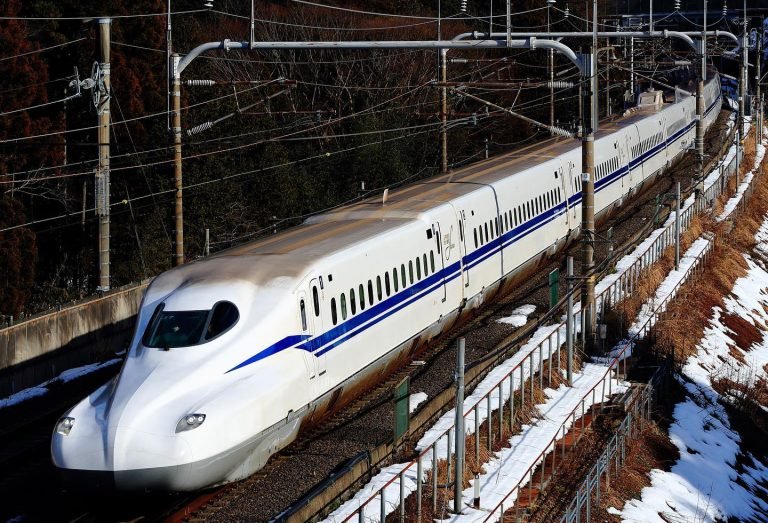
Global Experience: The HSR has an economic multiplier effect. Since the introduction of the first Shinkansen in Japan in 1964, high-speed trains have proven to be an undeniable technological, commercial and popular success. Many countries like the UK, France, Germany, Spain, China and, most recently, the US have adopted the technology.
Role of the trains in India’s development: In India, trains have played a significant role in shaping the growth of the domestic economy since the late-1800s. Currently, Indian Railways operates one of the largest rail networks in the world—transporting more than 22 million passengers a day and moving more than 1.2 billion tonnes of goods every year. The high-speed rail network, once in place, is expected to further catalyse India’s economic growth and act as a stimulus for the development of satellite towns.
Improve India’s GDP: According to a study conducted by the London School of Economics and Political Science and the University of Hamburg in 2008, cities that are connected to HSR systems tend to witness a rise in their gross domestic product (GDP) by at least 2.7 percentage points compared to their neighbours that do not have an HSR station. The reason for the differential was improved market access with faster and more efficient commuting.
Technological Revolution: The HSR corridor will pass via Thane creek in Mumbai, which is a protected sanctuary housing mangroves and a population of flamingos. In order to avoid disturbing this habitat, the rail corridor has been proposed to traverse through a 21 km tunnel, of which 7 km will be under the sea. Several new technologies are expected to be used for the first time in India to surmount this construction challenge. Similarly, Light detection and ranging (LiDAR) technology will also be deployed for the first time in a railway project in India.
Cleaner Transport Mode: According to the International Association of Railways (UIC), high-speed rail is eight times more energy-efficient than airplanes and four times more efficient than automobile use. It will also decrease greenhouse gas emissions and improve air quality.
The project is also expected to create a lot of employment opportunities, increase economic activity, boost productivity and improve mobility.
MAHSR: Various Challenges
Challenges in Land Acquisition: Land acquisition has been completed in most stretches that fall within Gujarat and Dadra Nagar Haveli, especially after the Gujarat High Court dismissed a string of petitions filed by farmers. But the rail corporation is facing significant challenges in acquiring land in Maharashtra, especially in Palghar and Thane districts. In Palghar, the Panchayats (Extension to Scheduled Areas) Act, 1996 protects the Adivasi community’s access to land and resources as most of the land here belongs to tribal people and communities belonging to scheduled caste. Land acquisition, whether for a public or a private purpose, often requires prior community consent via the Gram Sabha. The villagers fear displacement and financial insecurity. An estimated 14,884 households stand to lose their land and over 37,000 trees are slated to be cut down.
Significant engineering Challenges: NHSRCL also has to tackle significant engineering challenges, particularly in the final leg of the corridor, which will enter Mumbai from under the sea.
Other Challenges:
With the advent of new technologies like Hyperloop Transportation Technologies , which proposes making travel as fast as 760 miles per hour, investing a humongous capital on bullet trains seems like an outdated investment.
The Indian Railways is in a worrying state. There is a need to strengthen the present infrastructure of the railways. At this time, the operation and maintenance of HSR will pose many challenges even if it is privatised.
A project report by the Indian Institute of Management, Ahmedabad estimates that at least 1 lakh passengers at fares approximately Rs. 1,500 per 300 km would be required daily for the project to make investments even. Considering the low airfares in India, it is challenging.
The estimated cost of MAHSR is Rs. 1.1 lakh crore, which is massively expensive. Though India receives funding from Japan (81%), the power demand and up-gradation of existing infrastructure will be more costly. Hence, India cannot afford such enormous public expenditure now, especially when India is facing the Omicron threat.
Steps required for speedy implementation of HSR projects in India
The government has to understand that the water-forest-land is an asset for the Adivasi community, it is their identity and culture. Hence, the policymakers and administration should give priority to systematic, sustainable development work.
State governments need to be actively involved in the land acquisition process to get clearances faster.
Ideally, the Central government should complete the impediments of the MAHSR before announcing any other bullet train projects. This can help prevent of diversion of attention and resources, which usually slow things down.
The government has to push for technology transfer of HSR. This is because there is no mention of the transfer of technology anywhere in the agreement.
The HSR projects will revitalise India’s smaller towns and cities by opening up avenues for mixed land use, tourism and business opportunities. Though India is ready for bullet trains, land acquisition policies and others are not ready to welcome the development. Hence, India needs to reform those policies that hinder the HSR projects.
Summary & Conclusion
Since the introduction of first Shinkansen in Japan in 1964, high-speed trains have proven to be an undeniable technological, commercial and popular success. Many countries since then have adopted the technology and invested in what today has become a vast network of high-speed rail lines. Most notable among them being countries like U.K, France, Germany, Spain, China and most recently U.S.A, Australia and South Africa among others. In India after a long wait of more than seven decades post-independence, the 508 km long first Mumbai-Ahmedabad High Speed Rail project is still underway, there are countries that have in the past adopted HSR and are now in the process of expansion because its efficiency resulted in a positive long-term spillover effect in the regions served by it.
Though, the opinion-makers may question the suitability of developing an expensive infrastructure such as HSR at a time when the world economy is unstable. But the silver lining is that by focusing on developing a project like this right now can reap long term socio-economic benefits that in turn can elevate India’s position as a stable and sustainable economic power in the times to come.
Below mentioned are some of the economic benefits India’s Bullet Train project can generate and with an overall impact on its people.
The long-term economic impact of the HSR project
It has been observed globally that countries or cities that have HSR network are more competitive and are better positioned to attract tourism, businesses, jobs, and skilled workforce. Countries like Japan, Germany, France, UK, South Korea, USA and Russia that have successfully adapted the HSR technology and have seen an upsurge in their economic status. As a developing economy, India’s chances of matching up to these bigger economies can get a boost with the completion of Bullet Train project as it will not only put India at a higher pedestal of technology & connectivity but also open doors for more foreign investment, development of new businesses and enhanced lifestyle for many.
Travel Time: HSR world over have proven to be a great time saver. Because they are reliable and promise faster and efficient transportation of passengers, it helps them save time, energy and money. With the completion of the MAHSR project, the travel time between Mumbai and Ahmedabad will be brought down to under 02 hours, which otherwise by road is around 8-9 hrs (depending on the traffic situation) and by plane is 4-5 hrs (including time taken to reach the airport from the destination, check-in, boarding, total flight & landing time) right now. People who often commute between these two states for business or work purpose can this way reach their destination much faster, carry out their work and even return to their hometown in much lesser time and at lower cost. To top it, they can save some energy for the next day’s grind as well- all in a days’ time. Being stuck in traffic for longer hours adds stress to daily life that often leads to lower productivity. With ease of connectivity that the HSR project offers, people working along the belt of the corridor can take a sigh of relief. Also, the money saved here can be pumped back in the businesses, which can in turn help boost the economic prospects of not just individuals but also that of the country’s overall economy.
Free from weather constraints: In India, during monsoons water logging leads to traffic congestion and road blockages everywhere and being stranded on the road for hours becomes a norm. With people spending most of the time stranded on the roads, not being able to reach their destination on time, flight cancellations, train delays, meetings getting cancelled and other chaos especially in big metropolitan cities like Mumbai. All this leads to a loss of a lot of money not just for individuals or businesses but to overall economy as well.
Bullet train although, may not be the ultimate solution to dealing with the monsoon situation in the country and nor does it promise to provide answer to commute woes during monsoon but since it can operate in all weather conditions, it can indeed provide some relief in the traffic congestion situations during not just monsoon but any other weather problem like hail, storm etc.
HSRs generally, are not subject to road congestions so they operate on schedule every day without delay- especially during peak travel time or rush hours. A strong case for this has been built by Japanese Bullets Trains, which are globally known for their punctuality and known to run efficiently during all seasons. Such is the reputation of the trains that when a delay happens even by a matter of seconds, it makes for national headlines and apologies to the passengers are issued. It does help that the technology being used to lay the tracks, designing of the train and other matters related to its operations is world-class. Confidence can be drawn from the fact that a similar operational & management efficiency is expected in India with the completion of the project since it’s the same Japanese technology that will form the base of country’s first Bullet Train project. With more and more people reaching their destinations on time and without any hassle, it will become another reason for enhanced productivity at work and money being pumped in the economy.
Economically viable and beneficial in long Run: Not just people, but even cities along the line of the corridor are expected to have greater connectivity and experience a jump in their socio-economic status. All the 12 stations of the project — BKC, Thane, Virar, Boisar, Vapi, Bilimora, Surat, Bharuch, Vadodara, Anand, Ahmedabad and Sabarmati – are expected to gain big time with the completion of the project. HSR projects in various countries has successfully spurred the revitalisation of smaller towns and cities and bridged the gap between metropolitan and tier 1, 2 and 3 cities by opening up avenues of not just commute but also of mixed land use, employment, tourism and business.
Here are some benefits of making inroads in smaller towns with Bullet train and how it can foster economic development in smaller cities and towns along the project route: An HSR project like Bullet train can link cities together into an integrated region that can then function as a single stronger economy. For example; Vapi is famous as the city of chemicals. As the largest industrial area in Gujarat in terms of small scale industries, the kind of impact it can make to the economy of not just Gujarat but that of the country can be imagined if it has better connectivity to a financial hub like that of Mumbai. Faster connectivity between the two cities using the HSR can give a jump to the demand for the products being produced in Vapi, which can lead to a positive effect on the entire production chain. With the similar model replicated for all the other cities along the length of the HSR project corridor, one can expect nothing but a great deal of economic surge in the country. Greater need for production means increased need for labour and other workforce. An HSR project can have a direct as well indirect impact on the labour market as well. Direct impact can be seen from the skilled workforce that would be required immediately for the work related to the project.
According to an estimate, the bullet train project is expected to create 4,000 direct job opportunities, along with 35000 to 40000 indirect jobs. Approximately, 40,000 construction workers are also expected to be employed during the set up period of Ahmedabad-Mumbai bullet train. MAHSR will also give rise to the tourism industry along the corridor. Be it Upvan Lake in Thane, Arnala Fort in Virar, Wilson hills in Vapi or Gira Falls in Bilimora, the corridor is filled with numerous tourist attractions. It also includes historical sites like Pavagadh Fort (Anand), Surat Castle (Surat), Lakshmi Vilas Palace (Vadodara) among many others. Places like Dang Darbar in Bilimora, Dashashwamedh Ghat in Bharuch, Gandhi Ashram in Sabarmati will make popele witness the true culture of these places. Advent of Bullet Train will catapult the tourism sector of this area resulting in giving boost to the hospitality industry as well.
Moreover, the HSR Stations will also act as destination spots and will enhance the economic activities. From mixed use real-estate development to hospitality & tourism and from needing labour in big and small industries that will eventually come up in the area to the need for engineers, architects, designers, manufacturers, skill development & training, logistics, marketers etc. It will also offer workers a wider network of employers to choose from. Surge in jobs would mean more influx of money which in a way can help the economy at both state and country level to grow as well. For someone running businesses in both Mumbai & Ahmedabad, HSR project will not only make travelling between the two cities easy but also cut on the cost and time that they’d incur while travelling through roadways or airways.
Promoting Skill Development: For any country to climb up the ladder of social & economic prosperity, its human resource can be a critical and essential determinant. Low skills perpetuate poverty and inequality whereas skill development can reduce unemployment, raise income and overall improve the standard of living of people and communities. Therefore, a project like the Bullet Train India makes a lot of economic sense as it is not only going to open up doors for employment generation but also skill development for the existing as well as potential workforce. With new innovative projects and technologies coming into the country, a lot of potential for the young workers to upgrade their skills, learn newer ways of working and have a critical scaffolding can be envisaged that can help them move ahead in their careers and plan for a better future for themselves and their families.
For the Bullet Train project in particular, both India and Japan is going to play a major role in helping train the employed workforce of the project to develop skills that make more economic sense. As part of the transfer of technology, employees will be sent to Japan as well as be trained here in the country. Since, the technology used for the project is coming from Japan, gaining mastery of the tools, technology, material and systems will help the workforce to adapt effectively to higher global demands going forward. It will increase their prospect to stay relevant in the constantly changing landscape of technology and have access to better and improved systems and procedures which when applied to any field can yield benefits.
Along with this, in order to establish smooth operations of MAHSR and to generate a work force that is effective& equipped with high level of knowledge, NHSRCL is developing a world-class HSR Training Institute in Vadodara, Gujarat. At its completion, the institute is expected to become the hub of knowledge, technology for skilled engineers and operators who will be at the core of delivering excellent service quality. The HSR Training Institute will be imparting training through customised training programs for fields as diverse as Construction, Project Implementation & Management, Operations, Maintenance, and Customer Care among others.
Self Reliance, Make in India: Another interesting aspect of the project is giving thrust to the ‘Make In India’ initiative. The amalgamation of Japan’s technology and India’s expertise in creating world-class parts can prove to be a boon for the project. As part of Transfer of Technology (ToT) aspect of the project, for the parts that are to be made in India, Japan will share their blueprints and methodology behind their creation with their Indian counterparts. Further then, India, under the ‘Make in India’ scheme, will then replicate and recreate these elements related to the project as per the terms of the plan. It is through the promotion of these two drivers that India will set up manufacturing facilities in the country, generate new jobs, upgrade the skills of its existing workforce, give a boost to allied industries (steel, cement, electrical components & infrastructure etc.) and get a toehold on the new and upcoming technologies being used by Japan. While the technical prowess will be brought in from Japan, Indian companies will play a major role in India-level requirements such as creation of parts as well as fitting the tracks when complete. Target items for ‘Make In India’ & ‘Transfer of Technology’ mainly include in the field for Track Works, Electrical Work, Civil Works. The various sectors in India that would be directly benefitted are :
OHE Steel Mast
Rail Turnover Prevention Device
Embedded Inserts
Cement Asphalt Mortar (CAM)
Boom in Real Estate: A project like Bullet train needs support of an equally world-class infrastructure. With the increase in passenger movement along the length of the project corridor, it is but given that other big small real-estate projects like schools, townships, commercial hubs, industrial buildings, independent houses, big and small retail and commercial shops, office complexes, entertainment hubs, Hospitality (highways, railway sheds etc). will also come up. With so much of economic activity happening around these towns, a boom in the real-estate market of these areas cannot be underestimated. No doubt, there will be plenty of development opportunities along the 508 km route of the Mumbai-Ahmedabad High Speed Rail Project.
With more people coming and staying in areas near HSR a boost in business of ancillary industries and other amenities in the mix like malls, shops, hospitals, educational institutes, hostels, hotels, restaurants etc., will also have to be developed. This again leads to a better economic prospect for the country. Social leveller: The HSR development overall will bring in positive results for those involved in the process directly or indirectly. Right from project beneficiaries to those who will be providing construction or any other kind of support, improved standards of living await on the upside. Improvement and better opportunities for livelihood is at the center of the planning of the HSR project, therefore, one can expect a more efficient economy going forward. For those who have given up their personal land for the project, an upliftment from their previous lifestyle beckons. With more money flowing in the family, they can provide better education to their children and increase their prospect of a prosperous life ahead.
Metro Rail News is conducting a 2nd Edition InnoMetro 2022 on 28-30 April 2022, virtually focusing on Seamless Mobility. Join InnoMetro 2022 for a detailed discussion on the topic “Opportunity & Challenges in India’s First High-Speed Rail Project”.
Railway and Metro systems have complex technologies, with a wide range of human actors, organisations and technical solutions. To control such complexity, a viable solution is to apply intelligent computerised systems. Industry 4.0 refers to the so-called fourth industrial revolution characterised by smart systems and Industrial internet-based solutions. The transportation sector, especially railways, has largely adopted Industry 4.0.
The use of new and emerging technologies is leading to improved quality of services, new savings, enhanced resource utilisation and efficiency. It has also facilitated the development of new services and business models based on the capability of the industrial internet and the analytics capabilities of big data. Big data has the potential to transform the current state-of-the-art railway technology platforms into a network of collaborative communities seamlessly moving freight and passengers and delivering services in a planned way. The current trend of automation and data exchange is towards adopting and adapting the new and emerging technologies to achieve new levels of effectiveness and efficiency. Big data in railways comes from interconnected stakeholders, which provides intelligence to the Railway, Metro, MRTS and various other transport systems.
The complete big data architecture includes cyber-physical systems, the Internet of Things (IoT) and Cloud computing, all of which work together to create ‘Smart Railways’. An application area generating considerable excitement with possibility of better O&M through self-learning and smart systems that predict failure, make diagnoses and trigger maintenance actions. These systems make high demands on data access and data quality and use multiple data sources to extract relevant information.
Use of Big Data & IoT in Railways
Big data analytics in Railway O&M is based on the use of advanced technologies to perform predictive analytics and make decisions based on the analysis of huge amounts of data. Providing O&M services involves data collection, analysis, visualisation, and decision-making for assets. The use of big data in O&M addresses a sort of common achilles heel in asset management that of status forecasting, commonly called prognosis. The estimation of the remaining useful life of an asset, in order to ascertain the probability of its mission accomplishment, constitutes the basis for any operation or maintenance service and, as such, is key to the success of any organisation.
Big Data for O&M
The objective of big data in railways and metros is to enable predictive algorithms from heterogeneous data sources, scalable data structures, real-time communications, and visualisation techniques. Such research is challenging in infrastructure asset maintenance in the railway environment in three particular areas: railway system component degradation prediction modelling; railway infrastructure and vehicle maintenance cost prediction modelling; and infrastructure and vehicle condition monitoring. The objectives of big data analytics in the railway industry are as follows:
Create real-time predictive algorithms from heterogeneous data sources that cope with privacy preserved processing, feature and instance selection, discretisation, data compression, ensemble classifiers and regression models, and data spatial and temporal alignment.
Create scalable data structures based on cross-domain data source acquisition by means of a virtualisation layer between the data acquisition process and data analytics. This includes new solutions that combine new database capabilities to integrate heterogeneous data sources in a high-performance accessing system based on the cloud.
Enables big data communications using open interface gateways with monitoring systems providing timestamp and position synchronisation, heterogeneous communication support, including mobility and aggregation, and priority protocols for real-time transmission of information.
Positive effects of Big Data Analytics for Railway Networks
Big data analytics have the potential to influence several dimensions of the railway sector and can overcome organisational, operational and technical complexities, including economic and human effects and information handling.
Need for Big Data Technology
Traffic Management Systems (TMSs) comprise sub-systems, often with limited integration capabilities and non-standardised interfaces and display rules. In fact, the number and varied nature of assets makes the integration of data sources extremely difficult; therefore, the network asset status information cannot be widely understood or exploited to inform TMS decision-making. Even more challenging is the integration with other information domains such as maintenance related services, energy resources etc., as this must be done manually. In summary, O&M are completely disconnected in terms of incoming data sources and decision-making. The estimation of the remaining useful life (RUL) to check the probability of mission accomplishment by the asset constitutes the basis of any operations or maintenance service.
Effect of Big Data on Operations
Big data enables automated, interoperable, interconnected, and advanced traffic management systems; scalable and upgradable systems, using standardised products and interfaces that enables easy migration from legacy systems. Due to use of big data a wealth of data and information on assets and traffic status is created with information management systems adding the capability of now casting and forecasting critical asset statuses. The positive effects of being able to accurately forecast an asset’s status does not just provide benefits for maintenance planning, but also benefits other areas, for example, traffic management. The use of big data in railways leads to improvement in the following operational areas:
A standardised approach to information management and dispatching system enabling an integrated Traffic Management System (TMS).
An Information and Communication Technology (ICT) environment supporting all transport operational systems with standardised interfaces and with a plug and play framework for TMS applications.
An advanced asset information system with the ability to nowcast and forecast network asset statuses with the associated uncertainties from heterogeneous data sources.
Organisational effects of Big Data
The various organisational effects of Big data analytics in railways can be briefly summarised as under:
Long-term needs and socio-economic growth: Big data develops a common methodology for improving infrastructure capacity, safety, and environmental impacts for the users and participating groups.
Smarter Railway Processes: SMARTness in transportation is closely related to operation and maintenance methodologies aiming for self-configuration, self-maintenance, and self-repair systems to maximise capacity and asset use by minimising shutdowns. Instrumented, interconnected, and intelligent assets that is maintained in a very different way.
System integration, safety, and interoperability: New O&M policies based on big data harmonises RAMS (Reliability, Availability and Maintainability) analysis and calculations across borders, leading to greater interoperability. Safety increases as a consequence of the increased reliability. In addition, there tends to be a common way to integrate systems, creating complex assets as system of systems, but in such a way that reliability is not affected by the complexity along international corridors.
Last but not least, big data analytics have potential benefits for energy and sustainability in the railway domain. Better O&M decreases the energy consumption and reduce the carbon footprint of assets, both rolling stock and infrastructure. The use of big data in the railway sector optimises operation and maintenance methodologies by taking an holistic approach, considering the entire lifecycle of the asset in a ‘cradle to the grave’ approach and contributing to the sustainability of the transportation system in a significant way.
Use of Big Data for Asset Management in Indian Railways
Indian Railways is an organisation of such epic proportions that words such as ‘gigantic’ and ‘enormous’ seems inadequate. With route length of 1,26,511km (Dec 31, 2021), Indian Railway (IR) carried 1.2123 billion tonnes of freight and 8.086 billion (808.6 crore) passengers during fiscal year ending March 2020, making it the world’s largest passenger carrier and fourth-largest freight carrier. What this also means, from an operational analytics standpoint, is a lot of data. However, Indian Railways currently lack abilities to use this data to derive accurate, contextual, and actionable insights for its business.
Applications of Data Analytics in Railways
Data analytics technologies and techniques provide a means to analyse data sets and draw conclusions about them which help organisations make informed business decisions. Big data analytics is a form of advanced analytics, which involves complex applications with elements such as predictive models, statistical algorithms and what-if analysis powered by high-performance analytics systems.
There is a whole range of opportunities which IR can explore in the area of big data analytics. Some of these applications include customer experience, train scheduling, timetabling, improving security at railway stations, automatic charting, network optimisation, crew management, inventory management, and IRCTC ticket management. The existing data from the passenger reservation system, operating control, CCTV cameras at stations, maintenance depots and stores can be used intelligently to yield business benefits in the above areas. Current IT systems such as the real-time train information system (RTIS), the nation train enquiry system (NTES), and the control office application (COA) are some examples where data is being used to derive useful information.
One significant area where the use of data analytics is crucial is asset management. Asset management includes conducting an inventory of system assets, providing adequate staffing and training, performing preventative maintenance, and demonstrating adequate funding. In order to meet these requirements, an organisation must identify its needs and costs and develop long-range financial plans. This is called asset management planning. It consists of developing a plan to reduce costs while increasing the efficiency and the reliability of the assets.
Asset management in Indian Railways
Asset maintenance is part of part of asset management and involves condition monitoring of different assets through IoT devices. Indian Railways is a custodian of significant asset base. Indian Railways asset base includes approximately:
126,511 Track Kms
45,881 Route Kms of Electrified Track
3,207 Route Kms of Automatic Signalling
12,729 Locomotives
2,93,077 Freight Wagons
76,608 Coaching Stock
7,500 Stations.
Indian Railways maintains huge terabytes of asset data. Using connected IoT sensors, historic data and analytics, the data can be turned into useful information to improve asset utilisation and availability. As of now, some efforts have been made to improve asset availability by adopting better maintenance strategies. These efforts have been made in departmental silos and lack a comprehensive approach. There is an opportunity to take a collective initiative to improve overall asset utilisation on Pan-India basis.
Existing condition monitoring and data collection systems in IR
Signalling Systems: Through data loggers, the health of gears such as track circuits, point machines, axle counters and other internal circuits, is monitored and SMS are generated for various fault alerts. Furthermore, out of 7,500 stations, more than 5,500 stations have been equipped with Wi-Fi facilities. Though the capabilities exist, they are not utilised to the full extent. It is required that a more rigorous approach should be adopted to collect all kinds of asset data through sophisticated sensors and modern data analytics techniques be used to reduce maintenance requirements.
Rolling Stock: Indian Railways is envisaging converting its ‘freight examination yards’ into technology-driven ‘Smart Yards’ for automatic detection of faults / defects / deficiencies in freight wagons. The automatic defect detection equipment of a Smart Yard shall provide advance data about hot axles and wheels, wheel flats, wheel profiles and diameter, load imbalance, loose and hanging parts, etc. even before the rake arrives at the maintenance yard. It will then use this information for objective fault assessment and proactive staffing, thereby, reducing turn-around time while boosting safety and improving productivity.
Locomotives : Remmlot enables health monitoring as well as fleet management of locomotives. The system monitors various operating parameters to achieve fuel saving and helps in analysis in case of untoward incidences. Electric locomotives have developed a remote diagnostic system (RDS). This GPS-based system monitors the current location of a locomotive and generates SMS-based alerts to maintenance staff with respect to isolation of key sub-systems. The system also has the capability to monitor traction motor voltage, status of auxiliary machines like compressor, traction motor blower, etc. However, the existing system generates alarms only on isolation.
Over-head equipment (OHE) : Oliver ‘G’ is an over-head line inspection system with video recording and GPS tracking for improving the reliability of OHE. However, mostly manual inspections of OHE are done and various parameters are measured at regular interval unless there is any change in track parameters or there has been any OHE modification work.
Track: The existing system for monitoring the health of the track includes OMS Car, TRC Run, Oscillograph Car and other field inspections. Indian Railways is working towards introduction of an Integrated Track Monitoring System that shall consist of:
Track parameters recording system
Full rail profile and wear measurement system
Rear Window Video Recording of track
Video recording of track components and analysis by image processing for status of track components
Other Transducers/Sensors.
Though several systems have been installed for data collection and condition monitoring for different assets, the analytics capacity of these systems is very limited. Furthermore, all these data collection systems work in technical silos, each with its own acronym, making it difficult to integrate data to acquire useful information.
Creating a data-driven Railway
A lot of work is required to be carried out in the area of data collection, data management and data service provision so that the benefits of data analytics can be reaped for improved asset reliability. Some pointers are:
The creation of a supplier ecosystem with IoT-based capability
Data collection across all asset types and provision of new data collection equipment and platforms
The opportunity for managed services through a single service integrator
Integration of asset data, operation data, asset data and maintenance using adequate interfaces
Easy mechanism to exchange asset data throughout the lifecycle of assets
Decision modelling and risk analysis tools to identify bottlenecks
Raise maintenance alerts for different assets to enable safe, efficient and effective delivery of the operational railway
Strategic maintenance planning and creation of reports for easy accessibility of asset information.
Distribution of tablets to field maintainers and direct access to asset data and maintenance requests from central system through existing Wi-Fi facility, thus removing paperwork.
Indian Railways must absorb these huge banks of data and capture them in a national intelligence model; one that can serve this data-driven railway in a cohesive, safe and cost-effective manner.
Reasons for emphasis on IoT & Big Data
As the Internet of Things (IoT) and Big data gets more pervasive, industrial engineers are looking at new possibilities on how the technology can be leveraged for greater business impact. The rail industry is in a position where it can exploit the potential of industrial IoT and evolve without substantially increasing its investments in infrastructure.
Below narrated are five different ways in which IoT & Big Data can and has started redefining the railways and metro transportation bringing in increased efficiency and enhanced passenger experience:
Greater Reliability and Safety: A train that suddenly breaks down on the track can ruin the day of its passengers, lead to delays across the network, and essentially throw the entire system off-gear. However, recent developments in preventive maintenance practices prompted by IoT & Big data have helped to revive the reliability of even the oldest assets. By integrating IoT sensors crucial components like brakes, wheel sets, and engines, trains become more sensitive to their operations for more efficiency.
Maintenance of rail tracks also benefits from IoT. By deploying sensors across track systems, operators can be on top of track stress and conditions, temperatures, and other variables that have predictive values for maintenance teams. If problems with wagons and tracks can be identified proactively, the operators can take pre-emptive actions for safer operations.
Fewer Maintenance Delays: Undesirable downtime due to sudden repairs can soon be a thing of the past for the railways. Predictive and preventive maintenance is feasible and more effective in the IoT era. Smart sensors and analytics across the train engine, coaches, and tracks allow rail systems to be remotely checked and repaired before a small issue magnifies into huge trouble. Asset health monitoring through IoT insights implies less of maintenance delays and helps in extending the life of rail infrastructure.
Advanced Analytics for Streamlined Operations: The operators can control their trains more efficiently by tracking them across networks and processing the data using analytics. Some companies also employ IoT to check the flow of passengers—those waiting at the stations, travelling in each train coach, and the times when the passenger flow is the highest. Analytics on such data can guide operators on optimisation of travel schedules as per commuters’ needs and demands.
Weather also affects rail system in a region. It can impact the condition of rolling stock and its regular operations. The IoT savvy operators have started to incorporate predictive weather modelling in their operations to be ready for and avoid service interruptions caused by adverse weather conditions.
Restructured and Optimised Passenger Experience: Consumers have fast adapted to digitalisation in the retail and banking space. The transport industry, including rail companies, is also transforming to meet passenger expectations with superior services. They offer e-tickets, scheduling information, and other solutions to travellers via smartphones and emails.
IoT can help take this experience a step ahead. It can help operators personalise the travel experience for individual passengers. For instance, services can be priced differently for different travellers as per the frequency of their travelling. Rail operators can enjoy greater passenger loyalty using IoT systems to understand customer experience history and make improvements for a more comfortable and convenient journey.
Better Product Development in the Industry: Rail OEMs and operators can leverage IoT not only for better operations with the given infrastructure but also in the manufacturing processes of locomotives, wagons and train coaches. Conventional engineering solutions were not devised to support systems of systems. There can be delays and constraints in production when the process entails developing a requirements definition and then following it up with design, build, and tests.
Feedback on manufacturing processes is an inherent part of product development with the Internet of Things concept. Engineers can use analytics with operations and performance data to derive valuable, actionable insights. This helps them understand the manufacturing procedures more dynamically and enhance final product’s quality sooner than in traditional methods. Continuous engineering and IoT can help to quicken the delivery of more sophisticated and connected products in the rail industry.
In a nutshell, IoT is bringing together two families of technology:
Enterprise IT for improved resource planning, customer relationship management, and decision support systems.
Operations technology to monitor and manage field equipment, production, and manufacturing processes
To be viable stakeholders and innovative contributors in the digital future, rail companies will need to make essential changes in their strategies. And the time to push further with the IoT is now.
Smart Trains and Connected Railway
With the advent of autonomous vehicles and improved cargo management the industrial ‘Internet of Things’ has a major impact on the transportation industry. One area that has seen less coverage is the connected railway. The fact that trains operate at such high speeds through tunnels and extreme weather conditions, presents real challenges when it comes to deploying IoT systems. But advances in networking have made smart trains a possibility, and one that could provide significant benefits when transporting goods, providing comfort for passengers and increasing operators’ return on investments.
Legacy infrastructure is gradually being replaced by train management systems in which trains become interconnected communication hubs, transmitting data among themselves and to network control centers, and receiving instructions from control centers. Machine-to-machine communication, with some help from the cloud, enables operators to utilise equipment, tracks and stations more efficiently, while dramatically reducing safety risks.
Safety: Key area of Concentration
Safety of course is a primary element of IoT applications and solutions when it comes to train management. One safety use case is on-board train location and detection systems that enable trains to be ‘aware’ of the positions of other trains. This reduces the risk of collisions while allowing trains to operate safely in close proximity to one another.
Speed monitoring and control is another important safety application. Systems have been developed that can display train velocity for drivers and report speeds back to central control systems. On-board monitoring systems are interconnected with outdoor signalling systems that can regulate train speeds or even remotely command trains to stop based on track conditions, the positions of switches, the presence of other trains on the track and other factors.
Rail and Metro experts across globe arguably state that there are three major systems within railroads that automation and the IoT can bring significant benefits: Signalling, Interlocking and Level Crossings Control.
Signalling Systems control the movement of a train by remotely adjusting train speed and braking. More traditional signalling systems are based on radio-frequency identification along the train track, but wireless train to ground signalling is getting more and more common in both railroad and metro systems. Interlocking avoids conflicting movements on the tracks at junctions and crossings by using red and green light signals. The interlocking system works in conjunction with the signalling system to prevent a train from getting a signal to proceed if the route is proven to be unsafe. The IoT can further improve the system’s level of automation and its integration with the signalling system. Level crossings control is the third system that impacts safety on railroads. Studies reveal that IoT can help decrease the accidents related to level crossings significantly deploying cameras and sensors for increased safety.
Other Benefits
The automation of toilets can significantly reduce the cost incurred by the train operator and, at the same time, provide a better service to passengers who will less likely find a toilet out of order. Currently, most train operators are unable to determine the status of the on-board toilets in real time and a significant amount of manual checking is required.
Management of the video recordings on board. Many rail operators have to send personnel on board their trains to manually pick up the hard drive when video recordings are requested by a law enforcement agency for investigation of an incident.
Food and drinks can be easily refilled at the upcoming station if data is available in real time regarding the items sold.
Temperature can be remotely controlled to avoid issues with refrigerators that might not be working at all times but whose temperature is critical to preserve the food quality over time.
Predictive and preventive maintenance can dramatically increase the percentage of times a train is in use rather than sitting in a maintenance or repair shop, and also improve the passenger experience and safety.
Summary & Conclusion
The Internet of Things (IoT) is a term widely used in today’s discussion about emerging technological trends. Definitions vary, but common characteristics include:
Intelligent devices with unique identification codes
Communicating with multiple devices
Devices include electronics, software, sensors, and potentially actuators
Operation within the (Internet-) network infrastructure
Real-time analytics
For the railway and metro industry, this is not a new concept; elements of IoT are integrated into every modern train with multiple control units managing technical systems while communicating with each other. Examples include the mechanical and electrodynamic brake system, and the train control unit as a ‘master’ of the information infrastructure in a train. This is true for both train-based and wayside systems. However, in the past, the focus has been predominantly on the function of the individual sub-systems. Rarely have the information processing systems on the train been leveraged as a source of valuable information and insights.
This had significant consequences:
Sensors were deployed sparingly, only as far as necessary for the individual system function.
Data collection acted only as a support for maintenance crews for fault-finding purposes.
Only recently have trains begun collecting and communicating information to the wayside for further use to a larger extend.
Flexibility and the possibility for upgrades have been neglected. This makes addition of an intelligent system on a train—or even a few additional sensors—an effort-intensive exercise for integration and (re-)certification.
What makes the concept of IoT in railway systems even more challenging is the access/ exposure to the internet, which may leave rail systems vulnerable. However, it must be remembered that internet access in rail systems must be allowed only under well defined and controlled frameworks to ensure seamless safety and security.
The increasing use of the Internet of Things (IoT) has profound implications across industries including the railways. Sensors, devices, systems, and applications are integrated on smart networks and work in a collaborative and cohesive railway ecosystem to enhance passenger safety, improve asset reliability and efficiency, and lower capital and operating expenses. The shift from legacy infrastructure to building a holistic, cloud-based train management system is the way forward for railway organisations if they are to use assets, tracks, equipment, and stations resourcefully and significantly bringing down safety threats.
Potential Impact of IoT on Reliability and Safety
Achieving an increase in reliability and safety parameters by even a few percentage points is a rare statistical event, given that both these factors are already performing at very high levels. Despite this high-performance rate, incidents where a train must be taken out of service or is delayed, may create problems. Passengers may not be able to reach their connections in time or may be delayed in reaching their destinations. Given the domino effect of a single delayed train, extensive rescheduling may have to be undertaken across the whole network. To some extent, the current schedules maintain reserves to accommodate such delays, which means that the infrastructure is not used as efficiently as it could have been and the service to passengers is not as good as it should be. On the safety side, while trains generally offer one of the safest modes of transportation, there is a consensus that every person harmed is one too many, and that safety must improve continuously. Hence, IoT should not be used to collect data on accidents, but to collect data based on which the probability of accidents can be reduced. Some areas where a further investigation for IoT-based solutions might be fruitful to improve reliability and safety include:
Monitoring of failure-prone systems on locomotives, such as the engine or electrical systems can increase the reliability significantly.
Supervision of mechanical systems such as running gear and track. The failure of mechanical systems causes several hundred deaths per year, which could be significantly reduced. Collecting acceleration data from bogies will, in many cases, make the identification of potential track failures possible
Train doors could be monitored to see if they are properly closed. However, this would require operational changes as well, since passengers often leave doors open or even cling to the outside of the train in case of overloaded trains.
Warning systems (light/acoustic) in case a train nears areas, which are prone to accidents with people crossing the tracks.
Monitoring of bridges regarding material stress or dynamic behavior to detect changes indicating future failure
Monitoring the speed of trains by GPS-driven speed measurements. Evaluating the speed profiles to validate the adherence of drivers to speed limits, but also to have real time train location to optimise traffic.
Major Challenges in enhancing the efficiency and competitiveness of Railways:
Deploying consistent Safety Standards
Ensuring streamlined asset availability
Reducing greenhouse gas emissions
Mitigating operating and maintenance costs
The augmenting capacity of the rail network
The various segments of rail operations that IoT and Big Data Analytics can improve:
Machine to machine communication
Signalling systems
Wayside Communication
Level Crossings
Station Information
Endpoint security
Best Practices for deploying IoT and Big Data in Railways
To integrate IoT to make it future proof
Identify areas for IoT and Big Data implementation
Demarcate what aspects can be outsourced
Partner with an experienced service provider
Various advantages of using IoT and Big Data
Improved Operational efficiency
Enhanced Automation
Higher Safety Levels
Better Passenger Experiences
Reduced Risk of Downtime
The creation of smart, environment and user-friendly mobility systems is among the high priority directions in the evolution of transport worldwide. Rail transport is recognised as a vital part of this process. Meanwhile, radical advancement in the business environment, facilitated by ICT technologies, requires the existing business models and strategies adopted by rail operators to be brought up to date. The thorough understanding of the concept of digital transformation is paramount in the development of rail transport in the New Economy.
Digitalisation, as an ongoing process of convergence of the physical and virtual world, is bound towards cyber-physical systems and is responsible for innovation and change in multiple sectors of the economy.
The main technologies and solutions which have accelerated digital transformation in the railway sector in recent years are:
Internet of Things (IoT)
Cloud Computing
Big Data Analytics (BDA)
Automation and Robotics.
The adaptation to the new conditions of the digital economy is visibly marked by the emergence of the concept Industry 4.0 as well as, recently, Railway 4.0 and Digital Railway. Mobile applications, e-ticketing, digital train control, signalling and traffic management, digital platforms for predictive maintenance are the key areas of digitalisation in the rail sector.
New products and services are becoming an integral part of the operations of railway undertakings, infrastructure managers and manufacturers for the industry. As such they contribute to the creation of added value for multiple stakeholders in public transport initiatives, which facilitate the implementation of new concepts of mobility.
Metro Rail News is conducting a 2nd Edition InnoMetro 2022 on 28-30 April 2022, virtually focusing on Seamless Mobility. Join InnoMetro 2022 for a detailed discussion on the topic “New age transportation: Use of Big Data & IoT in Railways & Metros”.
As one of the most asset-intensive industries globally, the rail industry invests nearly 20% of its revenue in asset maintenance to ensure safe operations. What’s more, significant challenges such as spiralling maintenance costs, narrow maintenance windows, non–availability of talent for remote condition monitoring, and heightened customer expectations, plague the industry. Therefore, railways are moving from the traditional scheduled maintenance strategies to asset condition-based predictive maintenance to enhance utilization, reduce costs, and safeguard the durability of their railway networks.
Predictive maintenance involves deploying sensor-based diagnostic monitoring in real-time for assets and sub-systems that provide enough time to act – based on the recorded condition parameters. It is important to understand the various ways through which railways can use next-gen digital technologies such as remote sensors, edge computing, IoT platforms and Big Data analytics to formulate predictive maintenance strategies. Understanding the impact of such strategies in driving signficant improvements in reliability, asset availability cost eficiency, and customer satisfaction also is of greater importance.
Need of Predictive Maintenance Analysis in Railways
In railways equipment failures can result in fatal consequences; unplanned outages and unreliable operations can severely impact revenues as well as customer satisfaction and safety. Time-based traditional maintenance strategies fail to capture the exact state of an asset, and lead to unnecessary maintenance and high operating costs. Hence, needless to say that predictive maintenance is a hot button issue in the rail industry today. The approach allows users to monitor assets continuously, proactively identify probable defects, and initiate necessary maintenance work before an asset fails, enhancing system availability and reducing maintenance costs. Sensors placed along railway tracks or mounted onboard rolling stock help railways remotely capture critical parameters associated with rolling stock as well as fixed infrastructure – in real-time.
Along with asset-related data, other data like weather and geographical conditions can also be captured to enable superior asset management. The data captured across the network of sensors is fed into a predictive model, enabling proactive maintenance operations to eliminate unplanned downtime of assets.
The benets do not end there. Accurate forecasting of spare parts requirements through predictive analytics helps cut down on their procurement and shipping costs. Accurate insights into manpower requirements also help drive precise maintenance crew scheduling. Predictive maintenance solutions also play a critical part in supplier contract negotiations. They provide relevant data such as warranty information, supplier details, traceability and demand forecasting to help railway companies negotiate the best price, including terms and conditions for the new contract.
Four major approaches of a successful predictive analysis
Ascertaining how can railways develop a successful predictive maintenance strategy following four approaches can be stated to be important:
Identify data needs: Most current systems in rail organizations are incapable of meeting the data requirements needed for predictive maintenance. One of the first steps is to obtain the data required for the solution development process using a top-down approach. Clearly defining the business objectives allows solution developers to drill down and pinpoint the required data.
Define the right system requirements: This is the most crucial step in developing a predictive maintenance solution. It is important to define the scope of the solution and identify business-critical needs and parameters for prediction. A wrong system can lead to unsuccessful outcomes and limit user confidence.
Blend data analytics with domain expertise: While data scientists help develop predictive algorithms, rail domain expertise is essential to guide data scientists in building the right algorithm aligned with specific business needs.
Create an environment for value-addition: The scope of a predictive management solution goes beyond predicting failures to predicting several business scenarios, deploying suitable prescriptive actions and improving maintenance-related performance indicators. These include suggesting the next maintenance activity, just-in-time inventory planning for replacement of parts, identifying systems that need an upgrade in their design due to their continued poor performance, and so on.
Smart Maintenance Strategies: Role of Digital Technologies
It is clear that adopting relevant emerging technologies such as sensors help achieve new levels of success and efficiency across the rail industry using predictive maintenance strategies. But with the sensor data volumes growing phenomenally over time, data management and analysis needs are growing. To turn this enormous data into actionable insights, major railroad companies are turning to cloud-based IoT and Big Data technologies.
Big Data analytics can help connect the dots across the entire rail network such as rails, bridges, stations, and so on. It enables the railways to develop predictive algorithms from heterogeneous data sources, real time communications, and scalable data structures which helps in obtaining rapid insights from disparate sources of information to help improve asset availability and service levels, reduce service delays due to unplanned outages, and implement smarter maintenance strategies.
Roadblocks: An Introduction
Despite the promise of predictive maintenance strategies, many rail organizations continue to delay investing in them. The reason seems to be an obvious one – It is difcult to shift from traditional, scheduled maintenance to a predictive model in one leap. Nature of maintenance practices, resources, as well as geographic and weather conditions vary from region to region, as a result of which trains and networks are designed and developed to meet specific requirements – a major barrier to the adoption of predictive maintenance.
The additional challenges that include may be summarized as under:
Developing confidence in the predictions: Rail companies that are in the initial stages of IoT implementation are facing the challenge of ’false alarms’. To mitigate this, along with accurate predictive algorithms, it is necessary to incorporate noise correction methods.
Meeting regulatory compliance demands: Safety is paramount to railway transportation, leading to regulatory constraints on the asset maintenance and certification procedures.
Developing the required tool kit and desired skill set: Predictive maintenance requires the deployment of latest technologies, making it difcult to create large scale skill sets in new technologies within the organization. Similarly, it is also important to develop the necessary skills to understand the predictions and historical data and correlate the facts to drive accurate asset status, what-if analysis and improved decisions.
Need for large capital outlays: Railways typically deal with a large asset base that operates in harsh operational conditions. Migrating large scale operations from traditional to predictive maintenance demands huge investments in terms of time, money, and technology along with meticulous planning.
A software that can predict failures and trigger maintenance workflows and interventions need extensive access to high-quality data from multiple sources such as diagnostic vans, wayside sensors and so on. To produce rapid ROI while transforming the maintenance procedures completely, the solution must be truly flexible, scalable and integrated to meet dynamic requirements.
It is believed that an IoT-based platform with the following capabilities is best-suited to monitor and analyze asset health data for metro & railways:
Data capture and management: The platform should host a diverse range of sensors to capture asset data from various condition monitoring devices- irrespective of the data format, data source, or the type of sensor. This raw data can be processed at the edge and stored in databases or file systems, depending on the type.
Analytics and business intelligence: The platform should use the available sensor data along with other relevant data to develop meaningful insights using various analytics tools such as machine learning algorithms for anomaly detection and real-time warnings, predictive asset health assessment, stream analytics and so on. With dashboards based on historic asset condition data and predictive analysis of sensor data, the platform will enable business intelligence and drive superior decision-making.
Integration with enterprise applications: The platform should seamlessly integrate with enterprise asset management (EAM), data warehouse, and other enterprise IT systems using standard middleware platforms to create a united view and trigger events and workflows for subsequent activities.
Cloud-enabled: The platform should be deployed on the cloud to allow for scale and adjustments based on changing business requirements.
Summary
Rail customers today demand flawless, reliable, and safe services. For railways catering to these growing expectations requires the deployment of next-gen digital technologies to redefine and re-imagining several organizational processes in addition to upskilling its workforce. As a result, the time is ripe for data analysts, computer professionals, and rail domain experts to collaboratively drive predictive monitoring strategies through digital technologies such as IoT, Big Data technologies, and sophisticated predictive analytics algorithms.
Metro Rail News is conducting a 2nd Edition InnoMetro 2022 on 28-30 April 2022, virtually focusing on Seamless Mobility. Join InnoMetro 2022 for a detailed discussion on the topic “Challenges faced by women in Public Transport: A contemporary issue”.
BENGALURU (Metro Rail News): Alstom has always focused on having a diverse & inclusive workforce, leading to better ideation, foster innovation, and higher participation at the workplace. With a strong order backlog of close to €4 B from its operations, and the optimism for the Indian market, Alstom is looking to add a 15% additional workforce to its talent pool by the end of 2022.
Certain that every individual should have equal weight of importance, Alstom’s aim has always been to hire people of all gender identities, and abilities making their workforce more diverse and inclusive. With the continued focus on hiring across the value chain – from production to methods, supplies, and functions, the recruitment will be a mix of engineers, technicians, and data science specialists.
Further, the global Top Employers institute has re-certified Alstom as a Top Employer 2022 in the country and Asia-Pacific region along with Europe, North America and 13 other countries. Being the only organisation in the heavy engineering and mobility sector in India to be re-certified, Alstom continues to demonstrate its commitment towards creating a better workplace through excellent people practices.
Employee strength in the sub-continent has grown consistently over the past few years, from 2000++ in 2016 to roughly 9000++ team members today. Career progression has been an important part of Alstom’s people policy and strategic tie-ups with multiple leading institutes, including ISB Hyderabad and BITS Pilani for various work-integrated learning programs has added value. The company also has a dedicated program RENEW, for women candidates with 3+ years of experience and a career break of over 12 months, giving them an opportunity to join back and enhance their corporate careers. The company heavily invests in nurturing and training talent across levels, from young graduates to engineering experts to senior leaders who are contributing to smart and sustainable mobility.
Commending this achievement and announcing the new opportunities to pursue a career at Alstom, Alain SPOHR, Managing Director, India & South Asia, Alstom said, “We are extremely proud to have received the Top Employer certification once again. At Alstom, our people agenda is central to business. It is all about keeping people engaged with us and ensuring that they feel empowered and supported in their career aspirations. This also underscores our strong belief in building the right environment for our employees to continue exceling in their respective domains. As a result, our teams have continued to deliver outstanding performance even while some of them have been working remotely during the pandemic. Alstom acknowledges and celebrates the sheer dedication and commitment of our people.”
Curious minds with an innovative spirit and a desire to help reinvent mobility, by making it more digital and sustainable, can view the vacancies at: https://www.alstom.com/careers.
Alstom Group is looking to recruit 7,500 talents worldwide in 2022
As a global leader in smart, sustainable and green mobility, Alstom needs to respond to the growing demand for greener, more modern train, metro and tram fleets with optimized capacity throughout the world. With an order book worth €77.8 billion, the Group is looking to recruit 7,500 talents worldwide in 2022. This includes around 6,000 engineers and managers, mostly in Europe and Asia-Pacific, and around 1,500 workers and technicians, primarily in Europe, North America and Latin America. Alstom offers the possibility of starting a career with a wide range of opportunities for moving between jobs and geographical mobility to suit any aspiration. These recruitment requirements are defined for the long term, based on the Group’s growth. They open career opportunities within motivated teams, as shown by the latest employee survey, in which over 80% said they were proud to work for Alstom.
DELHI (Metro Rail News): Jindal Steel and Power (JSP) reported a meaningful recovery in Steel Sales in the month of January 2022 despite low Railway rake availability. Sales volume increased 20% Y-o-Y to 6.95 lakh tonnes as compared to 5.81 lakh tonnes in January 21.
Inventories continued to decline for the second consecutive month with JSP posting Steel Production of 6.82 lakh tonnes. Marginal improvement in rake availability during the month, resulted in export share rising to 31% (from 28% in December 21).
“We have surpassed our targets for the last calendar year, and we are confident that we will also achieve our envisaged targets for the financial year. We firmly believe in India’s growth story which is expected to grow for FY22 9.2%, which will be the highest amongst major economies, and for FY23 GDP is also estimated to be robust at 8. buy singulair online https://lasernailtherapy.com/wp-content/themes/twentytwentytwo/inc/patterns/en/singulair.html no prescription
0-8.5%. We would like to thank Government of India for the announcements made in budget with regards to coal gasification, coal to liquid initiative and extension of manufacturing timeline for claiming 15% concessional income tax rate on green field projects to 31 March 2024 are highly appreciated”, said Mr V R Sharma, Managing Director, JSP in a statement. Mr. Sharma added “Government’s push on infrastructure and increase in outlay for capital expenditure will support growth for steel, cement and other related sectors in the coming year”,
About JSPL:
JSPL is a leading Indian Infrastructure Conglomerate with a presence in the Steel, Power, and Mining sectors. With an investment of approximately 12 billion USD (90,000 Crore Rupees) across the globe, the Company is continuously scaling its capacity utilization and efficiencies to contribute towards building a self-reliant India.
DELHI (Metro Rail News): NCRTC is using Precast construction technique on a massive scale in implementing India’s first Regional Rapid Transit System (RRTS) corridor. The technique has been adopted comprehensively for construction of RRTS Stations and Viaduct to minimize public inconvenience during construction and for timely completion of Delhi – Ghaziabad – Meerut corridor.
All elevated RRTS Stations of Sarai Kale Khan, New Ashok Nagar, Sahibabad, Ghaziabad, Guldhar, Duhai, Muradnagar, Modinagar North, Modinagar south and all elevated stations of Meerut, including concourse and platform level are constructed with the help of Pre-cast primary & secondary beams, Pier arms etc. which is casted at the casting yards and joined together at stations & viaducts using high-capacity rigs & cranes. Even ancillary works like RCC drain, Water harvesting pits etc. have been designed as pre-cast to ensure quality and saving time during construction.
Elevated RRTS Viaduct is already being constructed using launching gantries (तारिणी) which lifts and joins segments of the girder to construct a viaduct. Pre-casting is being used in an innovative manner for this project with some of the structures being pre- casted first time in the country for such a large-scale complex project. More than 70 to 80% of the structural elements are being pre-casted and erected on with Auto Launching Gantries (Tarinis) and advanced high-capacity cranes for viaduct and stations. This whole process runs parallel to on-site construction which reduces overall project duration significantly. Pre-cast Box girder segments, OHE parapets, I-Girders, portal U-shells, track slabs, station structures etc. are enabling fast construction of viaduct. Intensive quality checks being ensured before using the precast structures.
However, handling of such a huge quantum of pre-cast elements is not an easy task. To cater for these elements along the entire stretch of 82 kms, presently 10 state-of-the-art precast yards are working 24 X 7 on a massive scale with high-tech facilities at different locations of Delhi, Ghaziabad and Meerut. These yards are also equipped with CCTV cameras and each activity is being monitored critically.
Unlike the conventional on-site construction which requires mobilization of huge quantities of 3Ms (Materials, Machinery and Manpower) at site, pre-casting of various structural elements has significantly reduced the traffic chaos, public inconvenience, and environmental issues at site. Such technology reduces the construction time significantly and results in high-end precision of casting, good aesthetics, negligible defects, safe working environment at site. It also reduces the duration of site occupancy and barricades are removed from the roads in a timely manner.
This technique proved to be a game-changer in taking up construction work during the pandemic (Covid-19) period. Pre-cast yard being a more controlled site, it is easier to train manpower, monitor and implement COVID-19 related norms amongst the labour.
RRTS is a mega infrastructure project that is set to transform the way people adopt public transport and travel across the National Capital Region. It will provide seamless connectivity across the key-urban nodes of NCR via a high-speed regional rail network.
Delhi-Ghaziabad-Meerut RRTS corridor, which is the first among eight corridors envisaged in NCR, passes through thickly populated areas of Ghaziabad, Muradnagar and Modinagar where the major portion of the alignment is along the median of Delhi-Meerut Road (erstwhile NH-58). The alignment also passes through the densely populated and congested areas of Delhi and Meerut.
Decongestion of the National Capital, reducing vehicular traffic & air pollution, and balanced regional development are some of the reasons behind project implementation. NCRTC is adopting cutting-edge technology to ensure safe and timely completion of the works while minimizing inconvenience to the road users, local passer-by, business owners and residents along the entire stretch. One of the techniques being used extensively for the project is pre-casting of various civil structures and reducing in situ construction at the site.
Despite three waves of Covid 19 pandemic, NCRTC has been able to keep the pace of construction on schedule due to large scale use of pre-cast technology. Presently the 20th Launching Gantries (Tarini) has been deployed to ensure rapid progress on the entire Delhi-Ghaziabad- Meerut corridor.
Kondakal (Metro Rail News): K.T. Rama Rao, IT Minister, Telangana is preparing to inaugurate India’s largest private Rail Coach Factory of Medha Servo Drives in Kondakal, near Shankerpallyon on the outskirts of Hyderabad soon.
According to him, this will be India’s largest private rail coach facility, which will manufacture ship out rail coaches.
Mr. Rao laid the foundation stone for the facility in August 2020, worth Rs 1,000 crore.
Its annual manufacturing capacity is 500 coaches and 50 locomotives of various sorts. The Adibhatla aviation centre and factory, which makes components for Boeing, Apache, and Sikorsky aircraft and helicopters, a tractor plant in Zaheerebad and a bus building facility in Hyderabad have been praised as the next in line.
Not only will coaches and locomotives be produced, but also facilities for the inner city train set, metro trains, and monorail, among other things, providing direct employment to at least 1,000 people at the Medho Servo Drives private rail coach factory and indirect employment to another 1200 people.