Challenges faced by women in Public Transport: A contemporary issue

Public Transport & Women: Global Scenario 

Public transport is a shared passenger transport service which is available for use by the general public, as distinct from modes such as taxicab, carpooling or hired buses which are not shared by strangers without private arrangement. Public transport modes include buses, trolleybuses, trams, rapid transit (metro/ subways/ undergrounds etc.) and ferries.

Public transport between cities is dominated by airlines, coaches, and intercity rail. High-speed rail networks are being developed in many parts of the world. Most public transport runs to a scheduled timetable with the most frequent services running to a headway. Share taxi offers on-demand services in many parts of the world, and some services will wait until the vehicle is full before it starts. Paratransit is sometimes used in areas of low – demand and for people who need a door–to–door service. There are distinct differences in urban public transit between Asia, North America, and Europe. 

In Asia, mass transit operations are predominantly run by profit-driven privately owned and publicly traded mass transit and real estate conglomerates. In North America, mass transit operations are predominantly run by municipal transit authorities. In Europe, mass transit operations are predominantly run by outsourced private transport operators. Public transport services can be profit-driven by use of pay–by–the–distance fares or funded by Government subsidies in which flat rate fares are charged to each passenger. Services can be fully profitable through high ridership numbers and high farebox recovery ratios or can be regulated and possibly subsidised from local or national tax revenue. Fully subsidised, zero-fare (free) services operate in some towns and cities. 

The following are the main modes of transport system : 

  1. Airlines
  2. Railways
  3. Waterways
  4. Road transport system

An airline provides scheduled services with aircraft between airports. Air travel has high up to very high speeds, but incurs large waiting times prior and after travel, and is therefore often only feasible over longer distances or in areas where lack of ground infrastructure makes other modes of transport impossible. Bush airlines work more similar to bus stops, an aircraft waits for passengers and takes off when the aircraft is full of luggage. 

Passenger rail transport is the conveyance of passengers by means of wheeled vehicles specially designed to run on railways. Railways allow high capacity on short or long distance, but require track, signalling, infrastructure and stations to be built and maintained. Urban rail transit consists of trams, light rail, rapid transit, people movers, commuter rail, monorail suspension railways and funiculars. 

India has about 14,500 km of navigable waterways which comprises rivers, canals, backwaters, creeks, etc. Over 10 million metric tonnes of cargo corresponding to 09 million metric tonnes in FY 2019 was transported in FY-20 by Inland Water Transport (IWT). Its operations are currently restricted to a few streches in the Ganga-Bhagirathi-Hooghly Rivers, The Brahmaputra, the Barak River, the rivers in Goa, the backwaters in Kerala, inland waters in Mumbai and the deltaic regions of the Godavari-Krishna rivers. Besides the organised operations by mechanised vessels, country boats of various capacities also operate in various rivers and canals. 

Road transport use buses on conventional roads to carry numerous passengers on shorter journeys. Buses operate with low capacity (i.e., compared with trams or trains), and can operate on conventional roads, with relatively inexpensive bus stops to serve passengers. Therefore buses are commonly used in smaller cities, towns, and rural areas, as well for shuttle services supplementing other means of transit in large cities. 

Bus rapid transit is an ambiguous term used for buses operating on dedicated right–of–way, much like a light rail. Trolleybuses are electric buses that employ overhead wires to get power for traction. Online Electric Vehicles are buses that run on a conventional battery, but are recharged frequently at certain points via underground wires. Coach services use coaches (long-distance buses) for suburb–to–CBD or longer–distance transportation. The vehicles are normally equipped with more comfortable seating, a separate luggage compartment, video and possibly also a toilet. They have higher standards than city buses but a limited stopping pattern. Public transport allows transport at an economy of scale not available through private transport.

The social role of public transport system: Women Safety

Advocates of public transport claim that investing in mass transit will ultimately reduce the total transport cost for the public. Time saved can also be significant, as less cars can translate to less congestion and faster speeds for remaining motorists. Transit-oriented development can both improve the usefulness and efficiency of the public transit system as well as a result in increased business for commercial developments. 

An important social role played by public transport is to ensure that all members of society are able to travel, not just those with a driving license and access to an automobile – which include groups such as the young, the old, the poor, those with medical conditions, and people banned from driving. Automobile dependency is a name given by policymakers to places where those without access to a private vehicle do not have access to independent mobility. 

Above that, public transportation opens to its users the possibility of meeting other people, as no concentration is diverted from interacting with fellow – travellers due to any steering activities. Adding to the above – said, public transport becomes a location of inter–social encounters across all boundaries of social, ethnic and other types of affiliation. In the contemporary world women no longer lag behind in terms of career they are keeping themselves shoulder to shoulder with opposite sex. However even today they are expected to do multitasking they have to take care of family and household even if they are working. 

Working women refer to those unpaid employment. They works as lawyer, nurse, doctor, teacher etc., women have to face problem by virtue of their sex. For centuries women have been subjected to exploitation and torture physically, mentally and sexually. There are innumerable challenges and problems faced by them both at home and workplace.

The women in modern world has a changing perspective. Many women are working outside their homes to support their families and using the local transport to reach destinations. Travelling becomes a painful experience for them because of stares from both the drivers and the passengers. Women feel unsafe while travelling by public transport. The World Health Organization estimates up to 69 percent of women have been physically hit or harmed by a male partner at some point in their lives, and approximately one in five women experiences rape or attempted rape during her lifetime. While the local transport system facilitates the people, especially women, it has many drawbacks that need serious attention. 

International status: The problem of violence against women is international in scope. A similar incident took place in neighbouring Nepal’s hilly region in May 2012, where a 21-year-old Buddhist nun was gang-raped in a public bus by five men, including the driver and his staff. Incidents of sexual harassment and assault in public transport are part of everyday life in Nepal, although, like India, most of them remain unreported. Nearly half of all Japanese women report at least one experience of being harassed on public transportation. The problem has also been reported in Hong Kong, Jakarta, and, not surprisingly, India, where nearly two-thirds of women reported having been the victims. Research conducted by one of the authors in Kathmandu, Nepal, found sexual harassment in public transport is experienced by the vast majority of women: Women in Islamabad have stressed on the need for a new women-public transport system, where they would not have to commute with men.

Safety Issues and Challenges for Women in Public Transport

Many people living in a metropolitan city may have at least one story to tell about having gone through some level of discomfort in a closed public space. While some of such stories fade away with time and are eventually forgotten, others remain ingrained in a person’s memory- sometimes resurfacing, voluntarily suppressed the next moment.

People, mostly women, face various levels of sexual harassment in public transportation which are rarely expressed and even if they are little or nothing is done about it. Incidents involving a person violating another’s personal space and freedom to travel with peace of mind has become a frequent topic of discussion.

Many such incidents pass without much noise or notice is given that public transports are crowded and with many unknown faces overfilling the cramped spaces. The discomfort and embarrassment, however, lingers on. The embarrassment which should have been felt by the perpetrator hits the wrong end. The withdrawal happens in a bid to avoid the attention of the crowd because we have for long been taught that even if we have been wronged, the shame is ours.

Hence, an obvious question arises do men feel the same level of discomfort and awkwardness when they are mistakenly or intentionally touched by a stranger in a public space, especially during a public commute, as women do?

Other common but not as a widely discussed issue that women face while using public transport is manspreading. Manspreading, a term which was initially coined by women on online forums expressing dissent over a peculiar habit exhibited by men, has now been formalised by Oxford Dictionary. The dictionary defines manspreading as the practice in which a man, especially on public transportation, takes a sitting position with his legs wide apart, in such a way as to encroach on an adjacent seats.

A man may not even realise the way he is seated or how it is bothering someone else. But a woman or any other passenger sitting next to a ‘manspreader’ will be discomforted by such clumsiness.

It is always best to speak out, react to inappropriate behaviour – whether molestation or manspreading – so that such behaviour doesn’t go unchecked. However, that is easier said than done. A victim under such circumstances may find it difficult to react for various reasons, the most common reason being the fear of being misunderstood. 

The viability of such a scenario is certainly questionable on the ground of possibility. But shouldn’t there be a better way to tackle the situation where respect for fellow travellers comes naturally without being asked for.

Because basic civic sense is not so common, responsible state mechanisms could perhaps formulate regulations to protect commuters from sexual harassment in public transportation. A decade or so ago, women and girls would not have spoken out for their reserved seats in public transportation. But now, especially after the campaign to enforce the provision of reserved seats on public vehicles stated by various Motor Vehicles and Transport Management Acts, the scenario has changed. It has to some extent safeguarded women and girls from the perpetrators of abuse.

There’s more that can be done. The solution lies inside the human mind and within human sensibility. The solution is multi-dimensional. Everyone has a role to play and a sentiment to understand. The main idea is to be open that it could happen to anyone and what we as individuals can do is speak out.

Most common concerns for women on public transport

Safety is the biggest concern for women using public and private transport in five of the world’s biggest commuter cities – London, New York, Cairo, Mexico City and Tokyo according to a global poll conducted by Thomson Reuters Foundation . In a poll over 1000 women following had been the findings :

  1. Security was the top concern cited by 52 percent of women.
  2. Time spent travelling was the second concern cited by 33 percent.
  3. Women in Mexico City were most worried about safety with nearly three in four fearing sexual harassment, abuse and violence.
  4. Cairo’s transport system was seen by women as the second most dangerous after Mexico City.
  5. Women in Tokyo felt most confident about their safety and also were most in favour of single-sex carriages.
  6. Time spent travelling was the top concern for women in New York with many saying this has swayed decisions over jobs.
  7. Women in London were most worried about cost with nearly three in four saying public transport was expensive.
  8. Women in London were most confident that other passengers would come to their help if they were being abused.
  9. Women in Tokyo were most confident other travellers would give up a seat for a pregnant or elderly women without being asked.
  10. More than half of women – 56 percent – said emergence of ride-hailing apps had improved their ability to get around

Various ways to improve women safety in Public Transport

5u yLP4DzoBmoMqI0lHlzZWjoJ7ClTT 8mLIb6hMiDBVYoCI e6hXL4d CCZ D5wo0adMaOFWq0fATRIjlw00UWwKR7TCE0QScWfI 9v4IpT4AUb14dlIg2FifQ51g3FrUMMJv M

According to the UN, women often ‘chain’ their activities by combining multiple stops and destinations within a single, longer trip as a result of their household and caretaking responsibilities. This makes it costlier for women to use public transport, since they may have to pay for numerous single-fare, one-way tickets throughout a chained trip. Additionally, women may be travelling with children, elderly parents, or groceries, adding complications and inconvenience if transport isn’t reliable, simple to use or physically accommodating. Finally, transport routes beyond the central commuter corridors may not be in service during off-peak hours, when women are most likely to need public transport to access their social and economic networks.

In many cases, women have more domestic responsibilities like taking care of children, running household errands, and maintaining familial and community ties. Public transport has the potential to make employment opportunities, healthcare resources, and education accessible to women. However, due to poor transport planning, women often do not have equal access to public transport, putting these resources out of reach and limiting financial autonomy. Furthermore, sexual harassment and violence in stations and vehicles remain persistent problems for cities around the world. When women continually feel unsafe and lack the ability to report incidents, public transport ceases to be an equitable and accessible form of mobility.

  1. Good design can go a long way in making public spaces more inclusive of women, but ensuring gender equity should also be a priority in the planning, procurement, operation, and evaluation of all modes of public transport. So how are cities changing to make safety and access a reality for women.
  2. London’s public transport operator, Transport for London (TfL) uses information technology to enhance women’s safety. For instance, the Technology Innovation Portal at TfL allows users to submit innovative technological ideas and solutions to meet key challenges, like women’s safety. In 2004, TfL created the Women’s Action Plan, which called for discounted fares as well as low-floor and step-free buses. TfL consulted 140 women’s advocacy groups in London and launched an annual Safer Travel at Night campaign in order to better understand their specific concerns. Today, TfL’s Women’s Action Plan and Gender Equality Scheme have been lauded by the Transportation Research Board as the most comprehensive efforts by transport operators to meet the distinct needs of women.
  3. Metropolitan Toronto Action Committee on Violence Against Women and Children (METRAC) is a collaborative relationship formed by various community-based women’s organisations, the Toronto Transit Commission, and the Toronto Police Department to conduct comprehensive safety audits of the city’s transport system. The partnership works to empower women in the community by developing research and policy recommendations based on its safety audits. Then, METRAC engages government actors to create safer neighbourhoods, schools, campuses, workplaces, institutions and public spaces. In the past, METRAC has successfully delivered designated transport waiting areas, well-lit parking garages, assault prevention programs, and better safety policies and practices in hospitals and other workplaces.
  4. Jagori, an Indian NGO, addresses issues of women’s safety in Delhi by focusing on the right to participate in equitable, democratic, and inclusive city life, free from violence and fear. Jagori emphasises the responsibility of local governance and urban planning circles to include women in their decision-making. Since its launch in 2004, Jagori’s Safe Delhi Campaign has conducted over 40 reviews with the help of the app Safetipin, which maps safety scores for public spaces and identifies ways areas of improvement that matter for women.

Women safety in public transport system in India

TLK1kuSOWBBVifl4pp5mFDZ18J2q IX YRrzVLnrmyFtDcNHkqb6JDzqk4iRdqB 61ZMi0aQbWFrK0SH8AlYOFZZ525nmiCYGrryV2MKNCQT9eIUdOPD6r Qjeswc

With growing urbanisation, the phenomenon of sexual violence in cities has become a serious issue. Sexual harassment has an effect on women’s mobility, accessibility and confidence. Lack of safety and security in public spaces and public transport affects women’s human rights and their ability to participate equally in the city.

Sexual harassment is unwanted sexual behaviour that includes physical harassment such as touching and groping, verbal harassment including commenting and whistling, and visual harassment such as staring and leering. There have been several studies conducted in India over the past few years that have explored the nature and extent of sexual violence that women and girls face in Indian cities, specifically in public spaces including public transport. 

A study conducted in Delhi in 2010, reported that over 90 per cent of women had faced some form of sexual harassment in the past year. The same study showed that 51 per cent of women faced harassment inside public transport, and another 42 per cent while waiting for public transport. Similar studies in Mumbai, Kerala, Guwahati and Bengaluru showed high levels of sexual harassment and everyday violence. In a study of two cities in Kerala by Sakhi in 2010, Kozhikode reported that 71 per cent of women respondents faced harassment while waiting for public transport while 69 per cent faced it while using public transport. 

Similarly, in Trivandrum, over 80 per cent faced sexual harassment while either waiting for or riding public transport. In Mumbai, a survey done by Akshara in 2013 also showed that 46 per cent of women reported facing sexual harassment inside buses and 17 per cent inside trains. In a study done by Safe Safar with UCL, London in Lucknow, 88 per cent of the respondents said that they had faced sexual comments while in public transport. 

A Bengaluru Metropolitan Transport Corporation (BMTC) survey among female commuters in 2013 found that two out of three commuters faced regular harassment. The 2014 Thomson Reuters Foundation survey on unsafe transport in capital cities around the world found Delhi to have the fourth most unsafe public transport among the cities surveyed after Bogota, Lima and Mexico. A 2008 National Association of Software and Services Companies (NASSCOM) study showed that female employees in the IT sector across India depended heavily upon the transport provided by the company as it was considered safer than public transport.

While there are occurrences of gruesome and violent crimes, the defining characteristic of violence against women is its normalisation and ordinary and continuous nature. This forces us to examine violence within the frame of rights and its violations. ‘Although feeling unsafe is not confined to women, the fear that women feel in urban areas is quite particular. It is to do with physical and psychological honour. Although not all women have been raped or attacked; all have felt at some point that indescribable feeling of unease which ranges from merely feeling uncomfortable to paralysis. 

Further, there is high underreporting of violence against women in public spaces and of sexual harassment in public transport as it takes place during a journey making it more difficult to report the offence. It is sometimes difficult to identify the harasser in a crowded space and know whom to report to. In a metro train, it is possible to have a button, which directly links to the security at the next station where the woman can lodge her complaint as well as identify the harasser, but in most situations, women just move away from the harasser or at the most confront him and make a noise. Women and girls fear using public transport because of violence and the fear of violence. Crowded public transport is often a space where women face sexual harassment, because the crowd offers anonymity. This has led to interventions such as women only carriages in metro trains or women only buses. Consequences of the violence and insecurity that women face leads to forced immobility. Simultaneously, women and girls are subject to forced mobility when they have to undertake trips, which are often unsafe because of lack of services, such as water and sanitation

Safety in Public Transport: A social responsibility & growth indicator

WiC0jM2GJvi2e3 NGIDNfbZgRXpMeYU PJiJs4zSQKXpPIYaSmqEeoQrlMDUX9m7dDxBkwJ668VklvsTFw jYXBzW121bRE5DxKSVqZ6YH8e78C7oxdAHafUzwLMof2o z6pmN 1

The increase in women’s participation in the workforce has led to a pronounced effect on the economy across the world. In India, women and girls constitute 50 percent of the urban population. The Indian Census of 2011 was the first time mobility data was recorded in an official survey. According to the Census, women and girls comprise merely 19 percent of “other workers” and 84 percent of their trips are in the forms of public, intermediate public and non-motorised modes of transport. While 73 percent of trips by “other workers” in urban areas is through sustainable modes of transport, women and girls’ share is only 14 percent.

According to the McKinsey Global Institute, if women played an equal role in the labour markets, USD 28 trillion could be added to the global economy by 2025. In this scenario, USD 2.9 trillion can be added to the annual GDP of India in 2025. Yet, in urban India, the workforce participation rate for females is 25.51 percent against 53.26 percent for males. A big reason could be that transport or mobility plans often do not take to consideration the needs of women and their safety, security, and comfort. Women decline employment opportunities that are far from their homes in favour of lower-paid, local opportunities. This is due to the dearth of reliable and affordable public transport solutions. Safe, comfortable, and convenient transport not only contributes to fulfilling women’s practical needs, including access to schools and markets but also contributes to their strategic empowerment by facilitating access to social and economic opportunities. Gender-based violence and harassment often result in forced immobility and duress when travelling.

Studies conducted in India by organisations like Jagori have demonstrated that women face harassment not only at night or in secluded spaces but also during the day. 

A 2020 study of over 5,000 men and women conducted in Delhi showed that women and girls faced high levels of sexual harassment in public transport, buses, and at roadsides. About one in three women worldwide have experienced violence in their lifetime, according to global estimates published by the World Health Organisation. As many as 51.4 percent of the women surveyed for the Jagori study reported that they were harassed while using public transport, while 49 percent of the men reported that they witnessed women being harassed. Women and girls fear using crowded public transport – this is a space where women often face sexual harassment as the crowd offers anonymity. This has led to interventions such as women-only carriages in metro trains or women-only buses. The consequences of the violence and insecurity faced by women, unfortunately, leads to forced immobility.

The transport needs of women and men vary, owing to their different social and economic roles and activities. The constraints experienced by women in accessing, using and paying for transport services are largely different from that of men. Transport can play a cardinal role in ameliorating the living conditions of women and therefore it is important to mainstream gender-related considerations into road transport projects to improve development effectiveness, sustainability, and to reduce gender inequality.

Several measures can be taken to improve gender inclusion in public transport.

  1. Gender policy dimensions for transport projects : It is imperative to enhance gender awareness needs at all levels of government to ensure that the national gender policy is incorporated in transport policies and planning. A multi-sectoral framework for addressing gender can be very effective and should be equipped with technical support from gender experts well versed with the transport sector. Data on user needs and access constraints must to be gender-disaggregated and collected through routine transport project monitoring and evaluation processes. In cases where data on routine measures is not gender disaggregated or unavailable, capacity building might be essential. The social and cultural context of gender differences that are affecting and affected by transport need to be analysed at household and community level. This can include the number of hours devoted to social, economic, and household-related tasks. The transport interventions designed to alleviate the transport burdens of women can be ineffective if this knowledge is not provided.
  2. Evaluating gender trip patterns and mobility constraints : Transport provides access to employment, childcare, and education to women. Women tend to make trips that are complex and higher in number in comparison to men, in urban as well as rural areas. This makes the trip more expensive for them as they have to pay numerous single-fare tickets during a chained trip. As women’s travel is characterised by trip chaining, the most predominant mode of travel for low-income women in developing countries is walking. The transportation costs can make transportation – especially public transport – fairly prohibitive, with women spending a higher share of their income on average than men. Designing options to improve the affordability of public transport could include the use or increase in subsidies in order to reduce fares or increase services and the provision of integrated fare. The right combination of fares and service quality has to be selected in order to address women’s needs and constraints adequately.
  3. Ensuring safe accessibility : The construction of exclusive sidewalks as components of the road and public transport improvement projects satisfy the travelling needs by increasing pedestrian accessibility and safety. It is imperative to incorporate design features that focus on safe pedestrian design such as bike parking facilities, speed bumps, traffic lights, and pedestrian safety islands. New and rehabilitated footpaths should be designed to separate vehicles and people. Also, there should be a distinction between the inclusion of pedestrian signals and footbridge connections wherever necessary. Intermediate means of transport (IMTs) such as rickshaws, bicycles, mopeds, and motorcycles can provide women with more flexible routes, schedules, and lower fares. Motorised two-wheeled transport is more affordable than cars and provides flexibility and convenience in crowded traffic conditions. There should be a physical separation between motorised and non-motorised road users as well as proper pedestrian crossing and traffic signage. Traffic calming measures (speed bumps, traffic lights, signs). public traffic safety education and safety equipment like helmets should be adopted.
  4. Addressing personal safety concerns : Safety design measures that can respond to women’s safety concerns include good lighting and landscaping at transit stops and along roadways to replace dark empty spaces with shops and public presence. The measures also involve surveillance cameras, emergency phones, panic/alarm buttons, and recruitment of uniformed and non-uniformed officers to patrol public buses and stops. Additionally, women-only services, improved security personnel present, and employment of female conductors and drivers on mass transit are steps to improve women’s safety. In India, women-only subways, buses and train cars have been introduced to combat sexual aggression and harassment. Women-only taxis have entered the market as well.

At present, women are particularly under-represented in India’s economy with respect to their potential. At 17 percent, India has a lower share of women’s contribution to GDP than the global average of 37 percent and the lowest among all regions in the world. Women perform 9.8 times the amount of unpaid care work in comparison to men. If that unpaid work were valued and compensated in the same process as paid work, it would contribute USD 0.3 trillion to India’s economic output. A fair proportion of this unpaid work may be performed willingly but it neither translates into wage-earning opportunities for women nor promotes their financial independence. 

Additionally, it may be noted that men and women use public transport in different ways because of their distinct social roles and economic activities. Since women’s reasons for travelling generally differ from men’s, the purpose, frequency, and distance of their trips are also different. Additionally, safety and perceived social status play a complex role in shaping women’s transport behaviour as they move between urban, suburban, and rural areas. Equitable access to public transport is about making the transport system work for women and meeting their needs for safe, efficient, sustainable mobility.

Urban transport should equitably serve all city residents, regardless of gender. Women don’t have genuine access to transport if transport systems aren’t designed to meet their distinct mobility needs and if public spaces aren’t safe or even perceived as safe. For truly sustainable, equitable cities, we need to make public transport work for women, too.


Metro Rail News is conducting a 2nd Edition InnoMetro 2022 on 28-30 April 2022, virtually focusing on Seamless Mobility. Join InnoMetro 2022 for a detailed discussion on the topic “Challenges faced by women in Public Transport: A contemporary issue”.

Join as a delegate: 

Join as a Speaker: 

Join as a Partner:

Namma metro to run its metros on solar power from 2023

BENGALURU (Metro Rail News): Bangalore Metro Rail Corporation (BMRCL) is planning to use solar power to run its trains. This is a major step towards eco-friendly transport. BMRCL is viewing to install solar panels in all phase 2, 2A and 2B Metro stations by March 2023.
Currently, solar panels are installed in five stations that are Konanakunte Cross, Doddakallasandra, Vajarahalli, Talaghattapura, and Silk Institute on Kanakapura Road Metro corridor. While solar energy cannot be utilized in stations on Metro phase 1, which is already operational, BMRCL chief PRO BL Yashwanth Chavan said, “We are planning to install solar panels in all phase 2, phase 2A and phase 2B stations”

Metro uses a third-rail system that provides electric traction power to trains. The officials said that a major share of power required for the third rail and auxiliary requirements such as lighting, escalators and AC at stations will be utilized by using solar energy.
“The current monthly power requirement for the third rail alone is around 65 lakh units (kWh) for the 56km operational network. The estimated monthly requirement will be 205 lakh units once phases 2, 2A and 2B (175km) are completed,” Chavan said. He also said that the current monthly power expense for third rail alone is around Rs 3.9 crore. BMRCL now generates 1.8 lakh units through solar panels and saves Rs 10.8 lakh a month.

By taking this step BMRCL aims to reduce its dependency on non-renewable sources which will cut down its energy bills. “BMRCL’s monthly electricity bill now is around Rs 5.8 crore. The estimated bill after the commissioning of phases 2, 2A and 2B is Rs 19 crores. The estimated monthly solar power generation is 28.5 lakh units by 2023 (excluding phase 2A and 2B). This will reduce our bill by around Rs 1.7 crore by March 2023,” Chavan said.

Trains also use regenerative braking system technology to generate power every time brakes are applied. The three-phase traction motors in trains act as generators whenever brakes are applied, turning the kinetic energy of the train into electrical energy.
“At present, trains meet around 15% of the power needs (lighting and running auxiliary systems onboard) on their own. We are now working on a technology to ensure power generated by trains is completely used and transferred to the grid so we can reduce dependency on power supplied by Bescom,” Chavan said.


All stations are designed to utilise natural lighting and are equipped with LED-based lights, another official said, adding that BMRCL will install platform screen doors (PSDs) at phase 2 underground stations (14km Dairy Circle-Nagawara) that will reduce the AC load from 900T to 400T per station.

India’s first stainless steel FOB opens at Naupada Junction

NAUPADA (Metro Rail News): Jindal Stainless has supplied stainless steel for India’s first-ever stainless steel foot-over-bridge (FOB) which is inaugurated at Naupada, Andhra Pradesh. With this, the Company launched its most cost-effective and superior quality stainless steel for structural applications that is, Jindal Durasafe. This modern FOB was disclosed at a ceremony by Divisional Railway Manager (DRM), Waltair Division, East Coast Railways, Mr Anup Kumar Satpathy along with Jindal Stainless’ senior management including Director, Mr Tarun Khulbe and Sales Head, Mr Rajeev Garg.  

Managing Director, Jindal Stainless, Mr Abhyuday Jindal said, “This foot-over-bridge usher in an era of sustainable infrastructure in stainless steel and Jindal Stainless is proud to collaborate with Railways for this momentous challenge. We are committed to providing tailor-made, corrosion-free, and eco-friendly solutions for the Indian climatic conditions, and bolster the Atmanirbhar spirit of the Indian stainless steel industry.”

DRM, Waltair Division, East Coast Railways, Mr Anup Kumar Satpathy said, “India’s coastal railway infrastructure has, for long, been marred by corrosion. We congratulate Jindal Stainless for developing an optimum stainless steel grade to rise to the challenge. RDSO’s approval of the grade strengthens our confidence in this choice. We look forward to strengthening India’s railway infrastructure with sustainable choices going forward as well.”  

In 2019, Indian Railways invited proposals for renewing FOBs in coastal areas, which were deformed by a corrosion-prone environment, rising pollution levels, and negligible maintenance. Jindal Stainless developed the most cost-effective and superior stainless steel for structural applications – Jindal Durasafe, especially for coastal areas. The grade, IRS 350 CR, has 10-12% chromium, a key ingredient in fighting corrosion, and has been designed for zero maintenance, ~100 years’ service life, and lower life cycle cost and carbon footprint.

It comes in offerings like plates, girders, and channels. The Company collaborated with RDSO (Research Designs & Standards Organization) and IIT Roorkee for testing, approval and endorsement of the grade, which eventually led to its formalisation for coastal railway infrastructural applications.  

Jindal Stainless has gratified the whole requirement of stainless steel for the Naupada project, supplying 140 MT. The Company accomplished the overall manufacturing and installation of this FOB project in nearly 5 months in coordination with the Indian Railways and trusted fabricators. Strengthening its 50 years of industry experience, the company diligently provided technical assistance, cost-effective stainless steel fabrication techniques like saw welding and spray painting, and acted as a bridge between Railways, RDSO, and policy makers for developing custom-made solutions for the Indian Railways.


DMRC to conduct customer satisfaction survey from today

NEW DELHI (Metro Rail News): With the aim to improve passenger service and quality, the Delhi Metro Rail Corporation (DMRC) will conduct a survey from today, March 28 to May 1.

It is the 9th edition of the online customer satisfaction survey that will be conducted by the Transport Strategy Centre (TSC), London, which manages the COMET benchmarking group.
buy prelone online https://herbalshifa.co.uk/wp-content/themes/twentytwentytwo/inc/patterns/en/prelone.html no prescription

The DMRC Officials said that the main purpose of this survey is to know what commuters think about different aspects of Metro operations including feedback/suggestions on improving the quality of service. DMRC also said that commuters who wish to participate in the survey can visit their website, www.delhimetrorail.com. The survey form is available in both English and Hindi.

Commuters can give feedback on various important aspects of metro functioning such as availability, accessibility, ease of use, information prior to travel, information during travel, reliability, customer care, comfort, crowding, security and overall satisfaction.

Construction of underground metro stations in Patna to commence soon

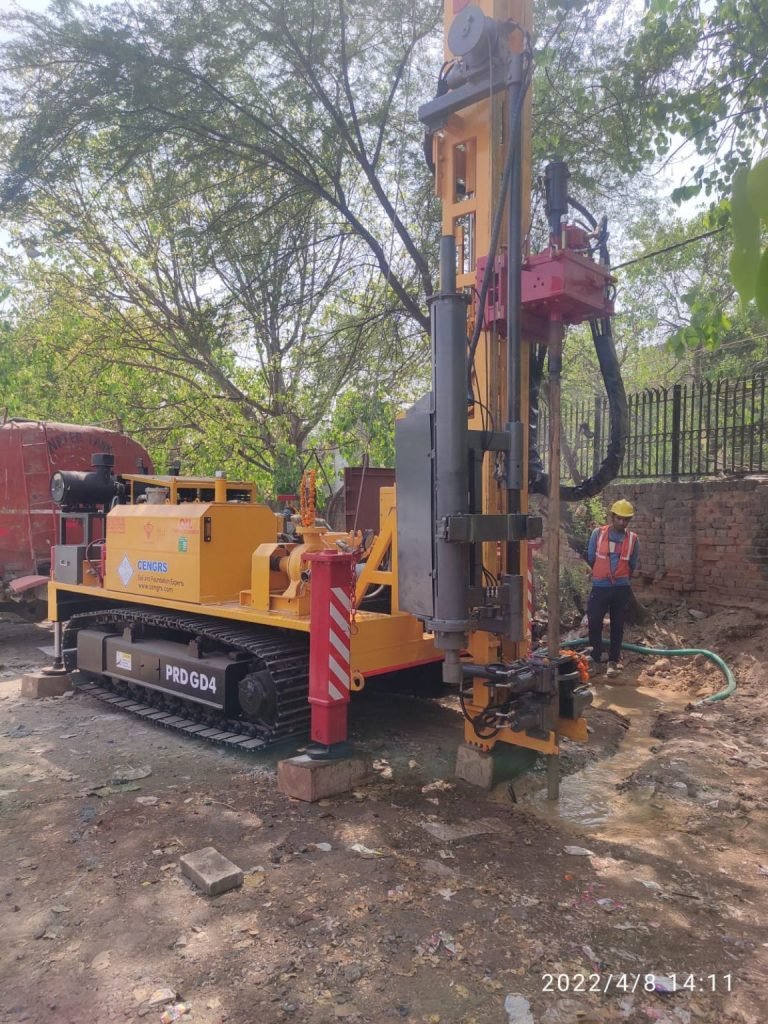
PATNA (Metro Rail News): The proposed preliminary work like soil test and basic engineering for three underground metro stations that are Gandhi Maidan near Bapu Sabhagar, PMCH and Patna University (PU) near NIT Mor has commenced in Patna. A Patna Metro Rail Corporation (PMRC) official said that the area near Gandhi Maidan, PMCH and PU has been barricaded for soil testing and other engineering work. Work on the construction of the three stations is expected to begin in the next 2-3 months.

Around 5% of work has been completed on the elevated part of Corridor II, which is also the priority corridor. The overall physical and financial advancement of the Patna metro rail project is 1.6% and 2.79%, respectively, till February 2022. So far, Rs 615 crore has been consumed on construction work on the priority corridor and Rs 1,333 crore has been released for this project by the state government and the Centre.

This is a milestone for Corridor II between Patna Junction and Patliputra Bus Terminal via Gandhi Maidan of the Patna Metro rail project, which has been saddled with several missed deadlines. The selected firm has also started the geological and geotechnical test, which is important to understand subsurface layers and prevent any failures in tunnel construction.

“Unlike elevated part, stations will be developed first in the underground section after which the network will be made. To connect underground stations with networks, ramps and twin tunnels will be constructed. In elevated section, we will first construct the networks and it will be followed by the construction of stations. The work tender was awarded for construction of underground section of Corridor II in December last year and the preliminary work has already started,” the official added.

The soil test will also study the erosion aspect and other features before the tunnel boring machines can be pressed in to dig and burrow the twin tunnels. Six underground stations (7.9-km-long), an underground ramp and twin tunnels from Akashvani to Rajendra Nagar will be constructed with Rs 1,989 crore expenditure. The project was awarded to L&T Construction. The underground construction work on Corridor II involves the design and construction of twin tunnels, an underground ramp at Rajendra Nagar and six underground metro stations – Rajendra Nagar (interchangeable station), Moin-ul-Haq Stadium, PU, PMCH, Gandhi Maidan and Akashvani. The total length of this corridor is 14.5km, including 6.6km elevated metro lines, which have five stations from Malahi Pakri to Patliputra ISBT via Khemni Chak Bhoothnath and Zero Mile.

The estimated cost of the Patna metro project is Rs 13,365 crore (excluding land acquisition cost, which will be borne by the state government). Twenty per cent of the project cost will be borne by the state government, 20% by the Centre and the remaining 60% will be borrowed as loan from JICA.

“The state government has made available 4.26 hectares of land out of 4.32 hectares required for the Patna Metro rail project. The JICA officials are likely to visit the state by next month. We expect the release of funds by JICA after the officials’ visit,” an urban development and housing department official said.

NCC Ltd casts first pile cap of Bangalore Metro Airport Line

BANGALORE (Metro Rail News): NCC Ltd. on Saturday, 27th March, casts the first pile cap of Bangalore Metro’s 37 km Airport Line. This line will link Bengaluru’s Kempegowda International Airport (KIA) to KR Puram. Bangalore Metro Phase 2B project’s new metro line, comprises of 3 civil packages ranging from 11 to 15 kms.

NCC was awarded 3 Letter of authorization (LOA) contracts in November 2021 for 15 elevated stations & viaduct construction work, with completion deadlines that range from 24 to 27 months. Their various teams began test piling and other pre-construction activities in January 2022 followed by piling for construction in February. The size of pile cap for Pier AP665 near Bagalur Cross is 4.3m x 4.3m x 1.5m. The pier cage on top of it has a diameter of 1.6 meters.

This pile cap is located on the line’s 11.678 km Package-2. The scope of this civil package includes the construction of a viaduct between Hebbal – Bagalur Cross (chainage 10072m to 21500m), a 250m pocket track, and 5 elevated stations at Hebbal, Kodigehalli, Jakkur Cross, Yelahanka and Bagalur Cross.

Longjian – KEC JV launched their first CLC gantry for Yamuna Bridge

DELHI (Metro Rail News): Longjian – KEC JV on Friday 26th March, launched their first cantilever construction (CLC) gantry for a new bridge over the Yamuna River which is a part of Delhi Metro Pink Line’s 12.375 km extension between Maujpur and Majlis Park.

From pier P188 to P196, Phase 4 project’s new Yamuna Bridge (Delhi Metro’s 5th) north of Signature Bridge at Wazirabad will be 560 meters long. The construction of this bridge was approved by the National Green Tribunal (NGT) in January 2020.

Longjian – KEC JV was awarded Delhi Metro Phase 4’s Package DC-02 (Maujpur – Sonia Vihar – Majlis Park) in November 2019. The contract value of this package was Rs. 1,080 crore with a completion deadline of 30 months. Their scope of work includes building the line’s 12.375 km viaduct, bridge over the Yamuna River, a PWD double-decker flyover and 8 stations at Yamuna Vihar, Bhajanpura, Khajuri Khas, Wazirabad Surghat, Jagatpur Village, Jharoda Majra and Burari and Sonia Vihar.

The first test pile for the bridge was bored and concreted in June 2020 to a depth of 29 meters. Another gantry will be erected in the coming weeks to cast the bridge’s segments in-situ on either side. Back in December, TPL-CCECC JV completed Ahmedabad Metro’s 165m CLC bridge at Thaltej.

DFCCIL to cross NMRC Metro Line between Sector 145 & Sector-146 stations

NOIDA (Metro Rail News): Dedicated Freight Corridor Corporation of India Limited’s (DFCCIL) alignment between Faridabad- Dadri sections will now be crossing over Noida Metro Rail Corporation Limited’s (NMRC) Aqua Line between Sector 145 & Sector-146 station.

DFCCIL construction 2

Launching of 6 girders, deck slabs, cross girders and ballast retainer walls will be done by DFCCIL in a phased manner.This is a crossing of freight corridor over the metro line and the launch will be done with the help of two high capacity cranes. All these activities will be conducted during non-operational hours of metro services under the supervision of DFCCIL & NMRC officials.

Duhai Depot’s administrative building almost ready for India’s first Regional Rail

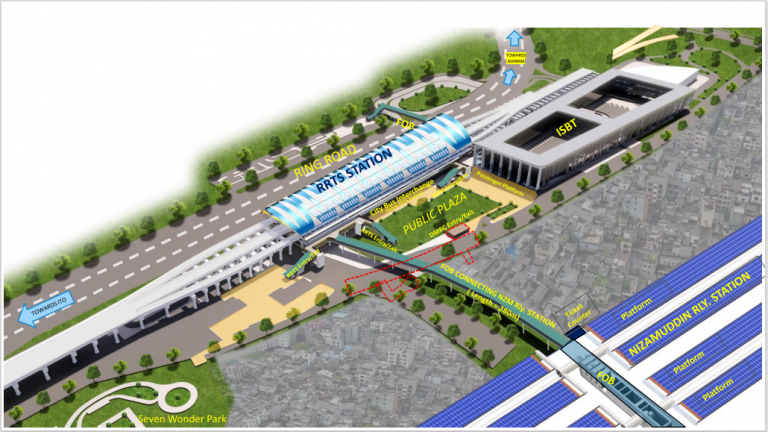
GHAZIABAD (Metro Rail News): The construction work of the Administrative Building of RRTS being built at Duhai Depot, Ghaziabad has almost been completed for the operation of India’s first Regional Rail. This building will be equipped with the latest technology, along with various modern systems, modern labs, simulator rooms, central work and various equipment rooms.

This building is designed to have multiple rooms/facilities, which include labs for various sophisticated systems such as Automated Fare Collection (AFC) Lab, Platform Screen Door (PSD) Lab, Supervisory Control and Data Acquisition (SCADA) Lab, Telecom Lab etc., and Equipment Rooms Such as Signal Equipment Room and Telecom Equipment Room, IT Server Room, Bridge Management System (BMS) Panel Room etc.

This administrative building will also be equipped with a train simulator room, where information about the operations of the train and its system along with training on how to deal in real-time and real situations will be imparted to the trainees. A lecture hall, conference room and library are also being built here for the trainees and officials. The basement of the building will also have a recreation room and a cafeteria for entertainment and food services.

Duhai Depot is part of the priority section of RRTS that covers an area of ​​17 km from Sahibabad to Duhai in Ghaziabad. Hence, the functioning of Duhai Depot is being expedited for the upcoming operations. The work of laying the RRTS track and installation of OHE at the depot is being completed on a priority basis.

The operational control centre of the RRTS corridor will also be set up at this depot. All the administration work of this depot will be undertaken through this administrative building. One more depot and one stabling yard for RRTS trains are being set up at Modipuram and Jangpura respectively.

The interiors of the Regional rail train coaches featuring its commuter-centric facilities were recently unveiled at the Duhai depot. The coaches will soon be delivered to the depot from Savli in Gujarat. The maintenance and subsequent cleaning facilities of the RRTS trains will be provided at this depot.

NCRTC, through its ambitious RRTS project, endeavours to make the overall experience of the commuters pleasant and enjoyable and encourage people to use public transport.

D-Wall Construction Starts at Chunniganj Metro Station in Kanpur

KANPUR (Metro Rail News): Under the Kanpur Metro Rail Project, the construction work of underground section-I (Chunniganj-Nayaganj) of the first corridor (IIT-Naubasta) is progressing at a brisk pace. Today on 26th March the work of preparing the diaphragm wall (D-wall) for the construction of Chunniganj Underground Metro Station of this section has been commenced. At the other three stations of the said section namely Naveen Market, Bada Chauraha and Phoolbagh-Nayaganj, D-wall construction is ongoing and at Naveen Market and Bada Chauraha, this work is expected to be completed by the end of April month.

The work of D-Wall was first started at Naveen Market Metro Station. 102 D-wall panels have to be lowered in this station, out of which 87 have already been placed. At the same time, 84 out of 100 D-wall panels have been placed at Bada Chauraha Metro Station and 68 out of 107 at Nayaganj Metro Station.

What is D-Wall?

A D-wall can be understood as the boundary of an underground metro station. Before starting the construction of an underground metro station, this wall is constructed as a security enclosure around it. The D-Wall is formed with rectangular RCC panels. The length of the panels for D-wall in Kanpur’s Underground Section-I, will be around 5 meters and the width will be around 800 mm and approx 100 such panels will be used to form the D-Wall around each station. This wall will exist up to a depth of about 21 meters.

India’s first Aluminium body metro train for Pune Metro flagged off today

KOLKATA (Metro Rail News): India’s first light-weight metro train which is made of aluminium metal has been flagged off by Mr Manoj Joshi, Secretary, Ministry of Housing and Urban Affairs (MoHUA) today, 26th March. The event was held at Uttarpara, Kolkata.

This train is built by Titagarh Wagons Ltd. which is based in West Bengal, India under the Atmanirbhar Bharat initiative. The light weight aluminium body metro train is built for MahaMetro’s Pune project. Maha Metro MD Dr Brijesh Dixit, OSD, MoHUA Shri Jaydeep, Director (Rolling Stock) Shri Sunil Mathur and officials of Titagad Wagons were prominently present on the occasion.

Speaking on the occasion Shri Manoj Joshi said that a new eco-system is being developed in the country because of metro projects in the country. The manufacture of such a train is a big step towards the Make In India concept. He also congratulated Maha Metro MD Dr Dixit for taking a bold decision to use an aluminium-made train. Ten years back, such a decision couldn’t even be thought off, he said and also greeted Titagad Wagons for the risk it has taken in this field. He added that having made this train, its maintenance and ensuring quality is also a challenge.

Dr Brijesh Dixit, MD, Maha Metro said that the manufacturing of such a light-weight aluminium–body train in India for the first time and its use for Maha Metro project is a major step. Work on the Nagpur Metro project was started in 2015 and then there was not a single company manufacturing metro trains in the country. Much progress has been achieved in this direction since then. Two lines of Pune project have been recently launched and passenger services on the remaining project will soon be started he added. The state government has given extensive co-operation in executing Metro projects in the state, he said.
buy stromectol Canada langleyrx.com/stromectol.html no prescription

Mr Jaydeep, OSD, MoHUA, in his speech, spoke about the use of aluminium coach was a major achievement for Mass Rapid Transit System projects in the country. This is a landmark decision, he said this is a step towards fulfilling the concept of Atma Nirbhar Bharat as envisaged by the government. The chairman, Titagarh Wagons Shri J P Chaudhari and Managing Director Shri Umesh Chaudhari addressed the gathering and spoke about the project of the aluminium-body metro train.

The salient features of Aluminium-body train are as follows:

• The lightest Metro Coaches in India (6.5% lighter than the conventional stainless-steel coaches).
• The first-time aluminium car body metro cars getting manufactured in India.
• The most energy efficient metro cars due to their lighter weight.
• Being an aluminium Car Body have a longer life and low maintenance.
• Total 34 Trains, each with three car compositions, (Total 102 coaches).
• 3 Car Composition, Total Passenger Capacity: 978 passengers for 3 car train [Driving Motor Car-315, Trailer Car-348], Seats=140 [Driving Motor Car-44, Trailer Car-52 (including 2 wheelchairs)
• 66% Powering with More than 30% energy regeneration- Regenerative braking from 70 kmph to 10 kmph.
• Panic Button for the safety of passengers-4 no. in each car. The passenger can communicate with the driver directly in case of any emergency.
• In-train CCTV Coverage: 98%.

Mumbai to get its second metro line after a wait of 8 years

MUMBAI (Metro Rail News): Mumbai will now get a second metro line after eight years which can make the commute for people travelling in the western suburbs of the city more effortless.

The first-ever 11.40 km elevated Metro line which was constructed eight years back that connects Ghatkopar-Andheri-Versova, now two additional lines will be partially operational soon. The inspection on the lines was conducted after which The Commissioner of Metro Railway Safety (CMRS) gave the clearance.

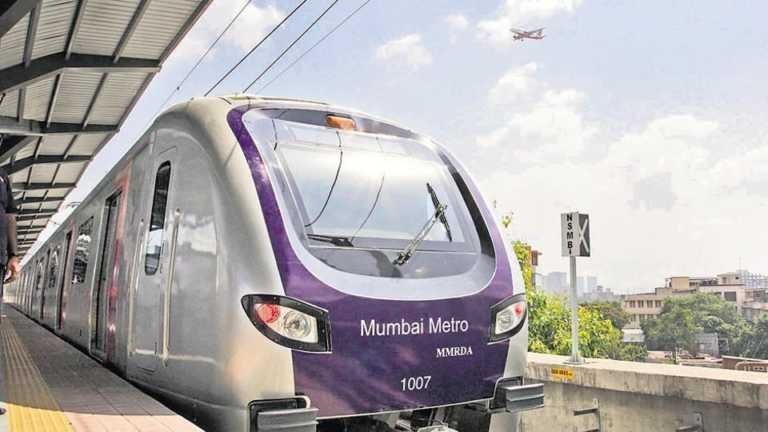
As per the sources, the Mumbai Metropolitan Regional Development Authority (MMRDA) is constructing a 35-km stretch of two elevated Metro corridors – Line 2A between Dahisar and D N Nagar, and Line 7 between Dahisar East and Andheri East for which the Commissioner of Metro Railway Safety (CMRS) has given a green signal. The CMRS started inspection on these two lines on February 20, after which it was permitted for operations. The CMRS while conducting an inspection several times has communicated flaws or rectifications that are needed on the lines to the MMRDA, which the MMRDA claims it has rectified. 

The two new metro lines, 2A and 7, will run parallel in the east and west side of the suburb, with the aim to ease the traffic on the Western Express Highway which is the major roadway of Mumbai. After the whole 35 km of corridor is operational, the commuters can travel between Dahisar and Ghatkopar by Metro without exiting the Metro station. The commercial operation of both lines has been planned in two phases. In Phase 1 of the project, 2A and 7 corridors will cover 18 stations and the two lines will be joined.

Bharat Earth Movers Limited (BEML) has supplied all the 10 Metro rakes to MMRDA for starting operations on these lines. The rakes are completely indigenous and can be driverless.

Prime Minister’s response to the SilverLine project “favourable”: Kerala CM

KERALA (Metro Rail News): Kerala is broiled in major controversy due to the SilverLine semi-high speed rail corridor project. Pinarayi Vijayan, Chief Minister, Kerala on Thursday, 24th March met Prime Minister Narendra Modi and looked for his intervention for speeding up necessary approvals from the central government. Vijayan after the meeting said that the Prime Minister’s response to the project was favourable.

The Rs 63,491-crore ambitious SilverLine project has been facing massive protests over the survey and marking of the corridor boundary.
buy kamagra soft online https://healthcoachmichelle.com/wp-content/themes/twentytwentyone/inc/en/kamagra-soft.html no prescription
Hours before the Chief Minister met the Prime Minister, MPs from the UDF which is Kerala’s Opposition alliance took out a protest march to Parliament against the K-Rail project, which turned into a brawl between them and the police.

Vijayan said that in the meeting, Prime Minister Modi heard him with full interest and his responses were healthy. “It was a good discussion… he said he will have a detailed discussion with the Railway Minister and see what can be done. We hope that the meeting with the Prime Minister will lead to a speedy sanction of permissions. We also had an informal interaction with the Railway Minister…. The Prime Minister’s stand on the project was favourable,” he said.

Previously Railway Minister Ashwini Vaishnaw in Lok Sabha said that the concerns over the environmental issues linked to the project are real and a final decision will depend upon the detailed techno-economic feasibility of the project.

After his meeting with PM, Vijayan told the reporters that there was a “political conspiracy” behind the protests against the project and that Kerala requires a safe, speedy and modern transport network as the current facilities in the state are not good. he also said that the vehicle density in Kerala is high whereas the roads are not sufficient to handle it. Due to this, the accident rates are also very high therefore the state needs a stable transport network.

The concerns over forthcoming impact on nearby houses and buildings due to the SilverLine project have emerged. The Detailed Project Report (DPR) has totally hinted at challenges to the houses and buildings near the proposed railway line. K-Rail has claimed that only a 10-metre buffer zone is needed to protect the surroundings whereas DPR suggests construction activity will require stretch of land more than that.

According to the renowned academician and environmentalist RVG Menon, the DPR is not detailed in regards to the challenges it would pose to the locals and therefore he termed the DPR as incomplete.

Telangana Govt. plans to take up semi-high speed rail connectivity to Warangal and Vijayawada.

HYDERABAD (Metro Rail News): The Telangana Government plans to take up semi-high speed rail connectivity to Warangal and to Vijaywada. The Hyderabad Unified Metropolitan Transport Authority (HUMTA) has invited proposals from major firms to carry out a pre-feasibility study for the proposed semi-high speed rail connectivity to these corridors.

The project’s aim is to provide fast, safe and comfortable commuter systems at a rational fare for intra-regional movement of passengers. Warangal and Vijaywada corridors have been proposed because the passenger movement is high on these two corridors. The major difference between semi-high speed rail and the conventional railway is that the former will provide reliable, high frequency, point-to-point regional travel along a committed pathway. The motive of this system is to reduce dependence of commuters on road transportation and to ease the traffic.

This study will be based on secondary information, site visits and limited primary surveys for passengers, cargo and traffic/trips on competing facilities and based on the terrain and other technical requirements, a suitable system will be suggested for various sections of the corridor after reviewing the existing travel characteristics and estimation of the current and future travel demand for passenger and cargo traffic. The social and environmental aspects will also be assessed as part of the required measures for development.
buy professional pack online https://blackmenheal.org/wp-content/themes/twentytwentytwo/inc/patterns/en/professional-pack.html no prescription