UP CM Yogi Adityanath inspects Delhi-Ghaziabad-Meerut RRTS corridor

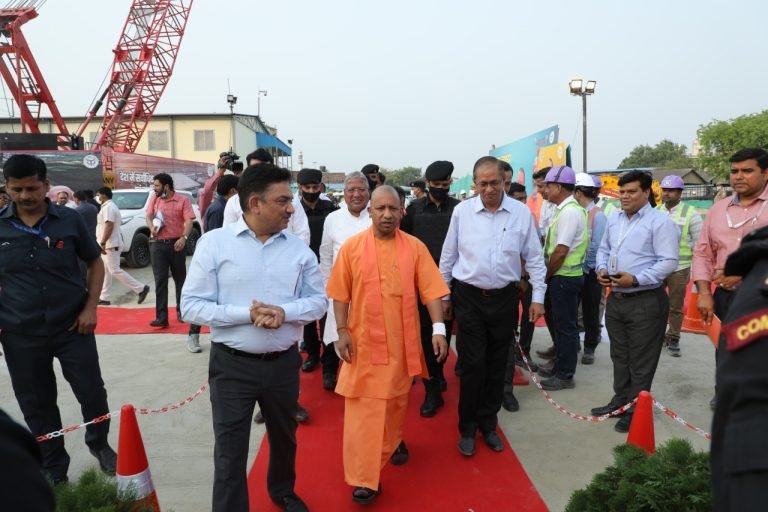
MEERUT (Metro Rail News): Uttar Pradesh, Chief Minister, Yogi Adityanath, inspected the construction of the Delhi–Ghaziabad–Meerut RRTS corridor at Bhaisali, Meerut on May 10. He took stock of the ongoing construction activities being carried out on the entire corridor and inspected tunnelling activities at Bhaisali, Meerut.

NCRTC had set up a photo exhibition at the venue showcasing the pace of the project implementation of India’s first RRTS corridor. The photo exhibition depicted the three-year journey of the Delhi-Ghaziabad-Meerut RRTS corridor right from the foundation stone laying by the PM Narendra Modi to the recent rolling out of the first trainsets from Savli, Gujrat.

It also showcased the significant progress made on the 17 KM priority section in a short span and various milestones achieved by NCRTC in the past three years.

Vinay Kumar Singh, Managing Director, NCRTC in a walkthrough of the photo exhibition, apprised the CM on various aspects of the project including the accomplishments made during the project execution and how NCRTC is leveraging various technologies in project implementation.

The CM acknowledged the way NCRTC is implementing this transformational project with diligence and by adopting new edge technologies. He was also contented to note the pace of construction of the Delhi-Ghaziabad-Meerut RRTS corridor despite the three waves of COVID.

Chief Minister during his visit to the Bhaisali station keenly observed the tunnelling work being undertaken at the station.

Four Tunnel Boring Machines (TBMs – Sudarshan) are to be lowered at Bhaishali for making tunnels in the both directions of Meerut South and Begumpul stations. In these, one TBM has already started working for making of longest tunnel of Meerut of around 2 km from Bhainsali to Meerut Central. The second TBM is also being assembled at this location for making the second tunnel from Bhansali to Meerut Central.

The Bhaishali is the only station in Meerut where four tunnel boring machines will simultaneously work to make tunnels.

The 82km long Delhi-Ghaziabad-Meerut RRTS corridor will have 25 stations including two depot stations on the Delhi-Ghaziabad-Meerut RRTS corridor. Local transit services will be provided on the RRTS network in Meerut. With 13 stations in the span of 21 km for the local transit needs.

The construction work on the 17 km priority section between Sahibabad to Duhai is progressing at a rapid speed. The construction of the viaduct of the priority section is nearing completion and the installation of signalling and telecom systems is also being undertaken.

The priority section will have a total of 5 stations, Sahibabad, Ghaziabad, Guldhar, Duhai and Duhai Depot, and their construction work is in progress. The road ahead for the implementation of Over Head Electrical wires is now clear and the track laying work is being carried out within its stipulated time frame.
buy viagra black online no prescription
The construction work of stabilizing and inspection lines and rolling stock maintenance yard for maintenance of RRTS trains at Duhai Depot is also on track.

The construction of the administrative building of RRTS equipped with various labs, simulation rooms and different types of classrooms being built for training is also underway.

At present 23 launching gantries (Tarini) have been installed on the 82 km long Delhi-Ghaziabad-Meerut corridor and the speed with which this project is being carried out is exemplary for the construction of any urban transport infrastructure project in the country. NCRTC is targeting to start the operation on the priority section by early next year and commission the entire corridor by 2025.
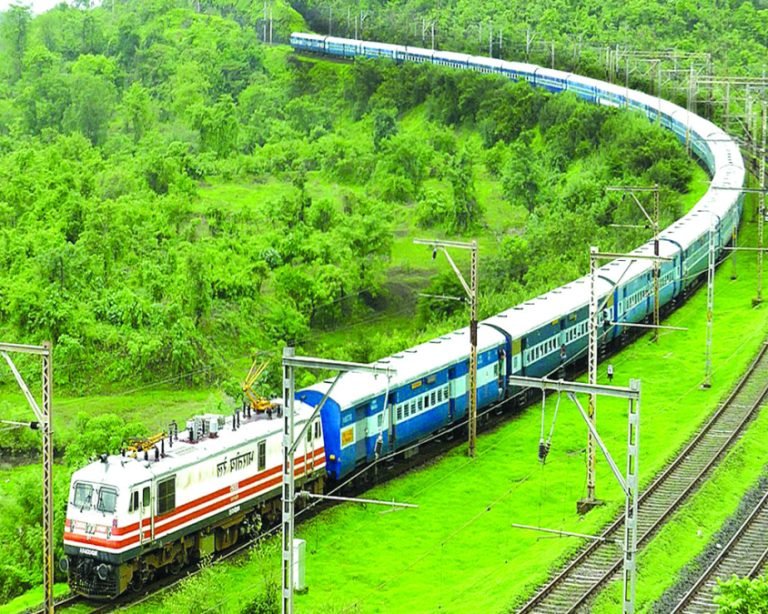
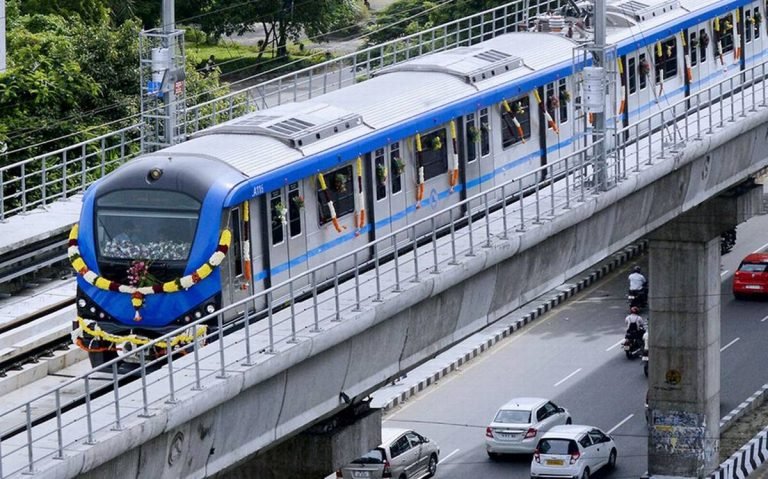
Railway Board approves construction of 27 ROBs in Kerala

THIRUVANANTHAPURAM (Metro Rail News): The Railway Board has given K-Rail the approval for the construction of 27 Railway over Bridges (ROB) which will help in tackling the traffic in the state. The construction of overbridges will be a major development initiative which will be executed by K-Rail, which is also implementing the SilverLine semi-high-speed rail project.  

Previously permission for 5 ROB was given last September. These are the Palli gate between Puthukkad and Irinjalakkuda stations; Thrippakkudam between Ambalappuzha and Harippad; Pattikkad between Angadippuram and Vaniyambalam; and the Nilamboor yard and Ezhimala gates between Payangadi and Payyannoor stations. Now, permission has been given for the remaining ROBs.

The social impact assessment, ahead of land acquisition, for 7 ROBs has already been completed for which reports were submitted to the respective district collectors as well. Other than 5 ROBs in the starting phase, SIA for the Uppala and Vellayil gates have also been completed. Tender proceedings are progressing for the Palli and Nilamboor yard gates. The ROBs’ construction is being carried out as per the MoU signed between the state government and the railway ministry last July. The construction cost of these ROBs will be handled equally by the state government and the Railways. 

The DPR for phase-1 of the Coimbatore MRTS to be presented to the govt. soon: FM Rajan

CHENNAI (Metro Rail News): The Tamil Nadu government together with Southern Railways, will conduct a feasibility study to introduce air-conditioned coaches and coaches with facilities which are preferred by commuters, in Chennai suburban trains, mainly those trains which run from the Beach to Chengalpattu.

Finance Minister Palanivel Thiaga Rajan, announced this in the assembly and said that the government would continue to take steps for securing the Union government’s approval for the proposal of Chennai Metro Rail Limited (CMRL) to take over the operation and maintenance of the Mass Rapid Transit System (MRTS) from Southern Railway.

A feasibility study would be conducted for the extension of Corridor 3, to be formed under Phase II of the Chennai Metro Rail Project, from Siruseri to Kelambakkam and from Kelambakkam to the Kilambakkam bus terminus through Mambakkam and Vandalur which would link the National Highways 45 with the Old Mamallapuram Road. Similar exercises will be carried out to cover the Poonnamallee bypass-Sriperumpudur stretch (as part of the extension of Corridor 4) and Thirumangalam-Avadi (Corridor 5). 

The detailed project report (DPR) for the first phase of the Coimbatore MRTS would be presented to the government soon. The feasibility report for the Madurai MRTS was expected by the end of this month. The preliminary work was underway for the 11th Agriculture Census with 2020-21 as the reference period, and phase I of the census would be taken up in July, the Minister added.  

MoHUA to seek Union Cabinet’s approval for Delhi-SNB-Alwar RRTS

NEW DELHI (Metro Rail News): The Ministry of Housing and Urban Affairs (MoHUA) will get the Union Cabinet’s consent for its Delhi-SNB-Alwar Regional Rapid Transit System (RRTS ) corridor on priority within a month.

Officials have informed that NCRTC will execute the second RRTS corridor as well for which the preparations including the detailed project report (DPR) and the pre-construction activities have already been completed.

“We will be moving for the approval (for the Delhi-Alwar corridor) from the Cabinet in a month or so. I cannot say about the approval (when it will be granted) as it is the Cabinet to decide but this is the plan so far,” Secretary in the ministry, Manoj Joshi, while attending the event organised to handover the first train set to the NCRTC by Alstom in Savli, Gujarat.

Vinay Kumar Singh, MD, NCRTC said that the preparatory work on the Delhi-SNB-Alwar corridor is already in the advanced stage.

“Approvals for utility shifting has been taken and the utility diversion work on the Delhi-SNB-Alwar corridor is nearing completion. Road widening work, shifting of pipelines and high tension lines is being done on the corridor,” Singh said.

Delhi-SNB (Shahjahanpur, Neemrana, Behror)-Alwar RRTS will start from Sarai Kale Khan and pass through INA, Munirka, Delhi airport, Gurugram, Manesar and then to Shahajahanpur along the National Highway and will then turn towards Alwar.

Singh said that they have already received most of the approvals for the corridor and now only the central government’s consent is required.

As per the NCRTC officials, the second corridor will be constructed in three phases. The first phase will cover the 107-km stretch from Sarai Kale Khan in Delhi to SNB Urban Complex (Shahjahanpur-Neemrana-Behror). In the second phase, the line would be extended from SNB to Sotanala (33.
buy light pack online https://calibudsman.com/wp-content/themes/twentytwentytwo/inc/patterns/en/light-pack.html no prescription
3km), with Shahjahanpur, Neemrana and Behror in between. In the third phase, the corridor will be extended to Alwar in Rajasthan.In the first phase the corridor will run 83 km in Haryana, 22 km in Delhi and two km in Rajasthan. In Delhi the entire line will be underground, Singh said.

R.K. Ashram to be Central Delhi’s new Interchange Hub: DMRC

NEW DELHI (Metro Rail News): The Delhi Metro Rail Corporation (DMRC) on Saturday, 7th May announced on Twitter that R.K Ashram Marg Metro station on Blue Line is being converted into an interchange hub. It will be connecting R.K Ashram Marg Metro station of Magenta Line. Commuters will have access to alternate & shorter routes from Central to North Delhi because of this development. The new underground station will be constructed adjacent to the existing elevated station. This interchange will provide a convenient mode of transit and will help in decongesting the busy blue line.

This development comes a day after the Delhi government said that it will start a project to improve last-mile connectivity for commuters at the IIT Delhi and the Panchsheel Park metro stations. Delhi’s Deputy Chief Minister Manish Sisodia approved the construction work of two multi-modal integration systems which will be constructed at the cost of Rs 4.59 crore and will be completed with the combined efforts of the Public Work Department (PWD) and the DMRC, that will result in cost reduction of the project as well as save time.

Alstom hands over first RRTS train to NCRTC today

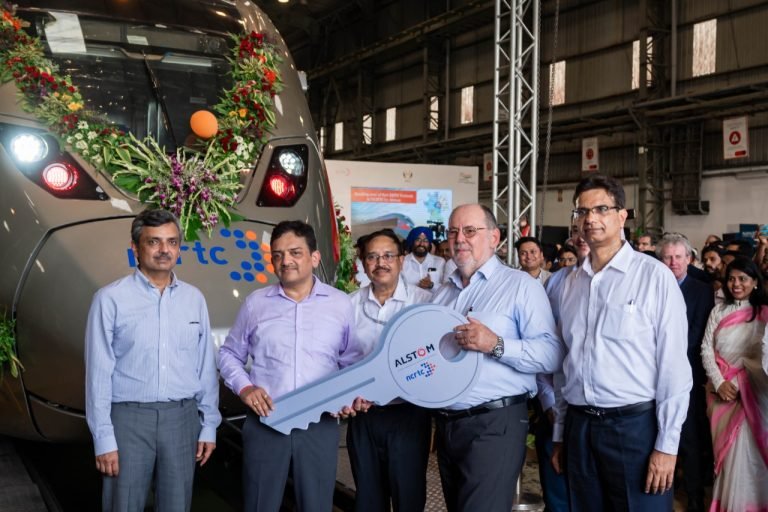
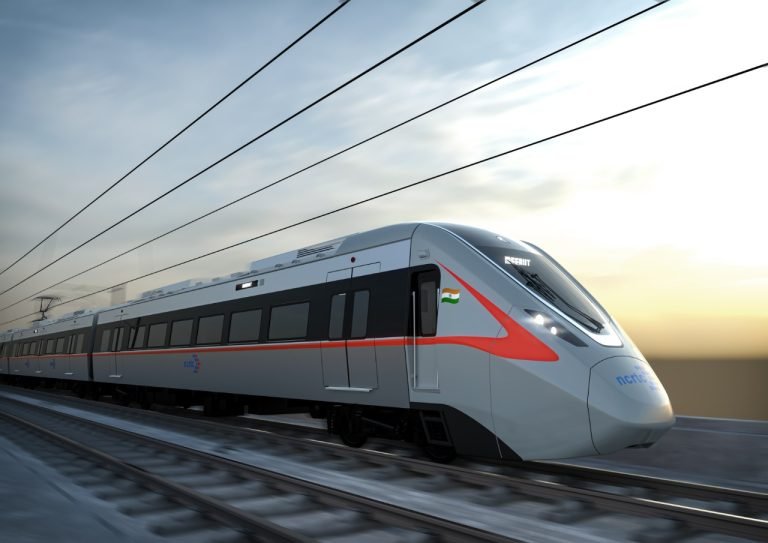
GUJARAT (Metro Rail News): Mr. Vinay Kumar Singh, MD, NCRTC, along with other dignitaries from NCRTC and Alstom India flagged off the first RRTS trainset today in an event held in presence of Mr. Manoj Joshi Secretary, MoHUA, Mr. Hardeep Singh Puri, Minister of Petroleum & Natural Gas and Housing & Urban Affairs and other dignitaries.

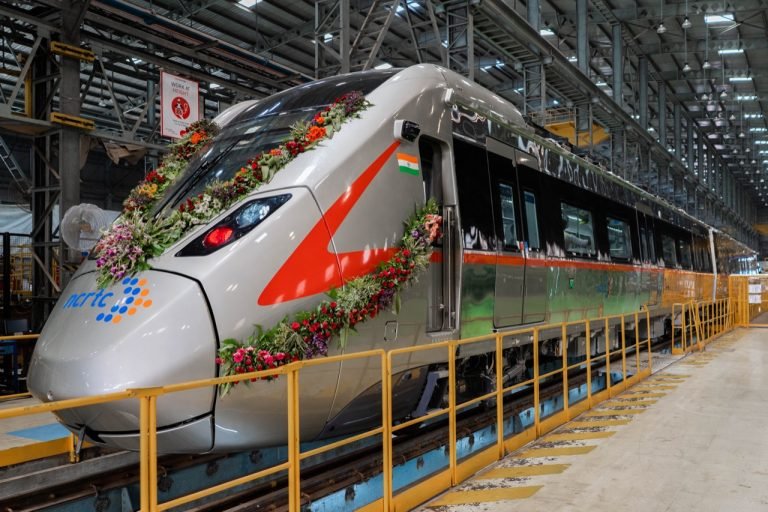
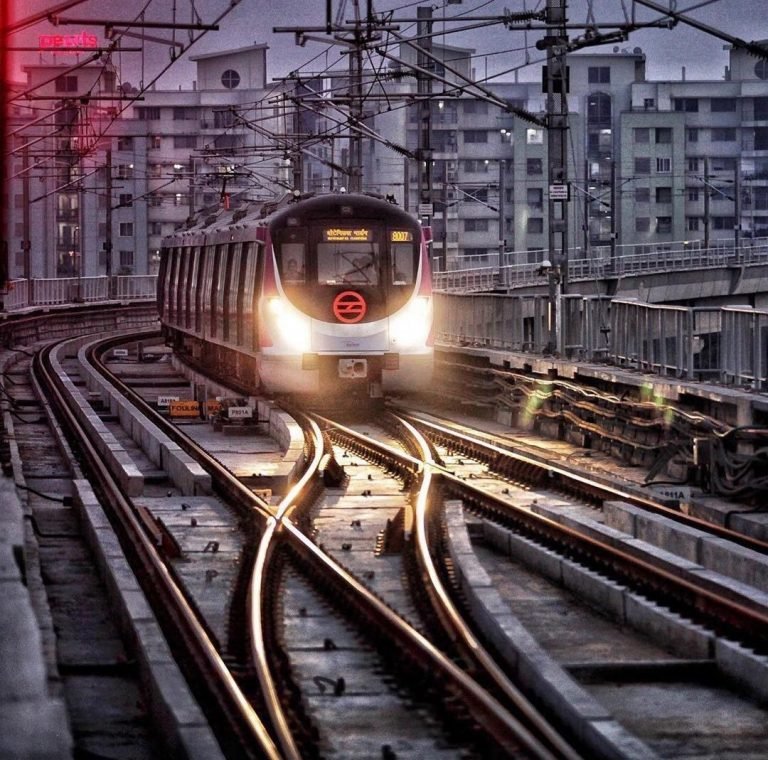
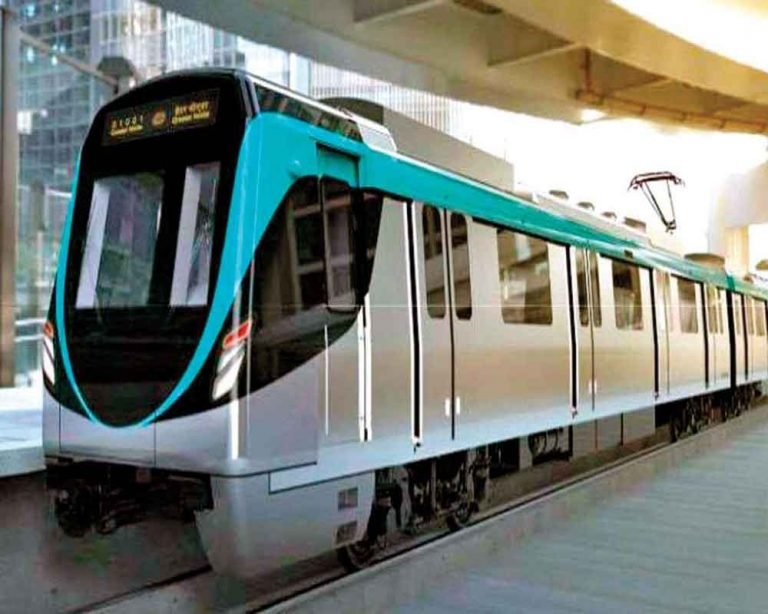
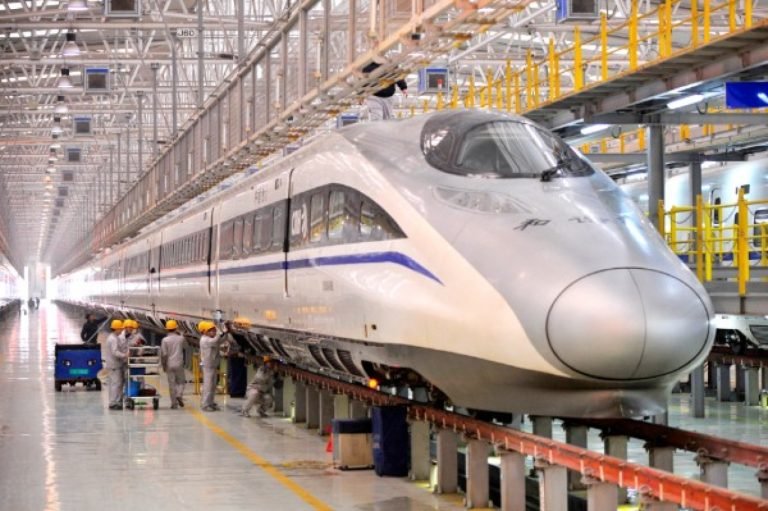
The ceremony of handing over the manufactured trainsets to NCRTC has been organised at the manufacturing plant of Alstom, where the keys of the RRTS trainsets were handed over to NCRTC. Under the Make in India initiative, 100 per cent of these state-of-the-art RRTS train sets are being manufactured in India, at the Alstom’s factory in Savli, Gujarat.

“RRTS is a strategic intervention of Government of India, aimed at enabling balanced and sustainable development of the region to realise Hon’ble Prime Minister’s vision of new age infrastructure for New India,” said Mr. Hardeep Singh Puri.

“Not only trainsets for India’s RRTS & MRTS systems are being manufactured at this facility, but trainsets for high-speed rail systems across the globe are also being manufactured & exported from here, shows India’s giant leap in technology & manufacturing,” Mr. Manoj Joshi said.

These trainsets will be brought on the large trailers to Duhai depot being developed at Ghaziabad at a rapid pace for the Delhi – Ghaziabad – Meerut RRTS corridor. All facilities of operation and maintenance of these trainsets are nearing completion at this depot.

The interiors along with the commuter-centric features of India’s first RRTS trains have recently unveiled on March 16, 2022, at the Duhai Depot, Ghaziabad. These RRTS trains will be the fastest trains in India with a design speed of 180km/h, operational speed of 160km/h and an average speed of 100 km /h.

The modern RRTS trains will have ergonomically designed 2×2 transverse cushioned seating, wide standing space, luggage racks, CCTV cameras, laptop/mobile charging facility, dynamic route maps, auto control ambient lighting system, Heating Ventilation and Air Conditioning System (HVAC) and other amenities. The air-conditioned RRTS trains will have Standard as well as Premium class (one coach per train) along with one coach reserved for women commuters. It will also have a premium coach, luggage space in coaches and space for stretchers/wheelchairs to ferry ailing patients. Every seat has a USB charging point and wider gangway than metro rail for standing commuters.

The manufacturing facility at Savli will be delivering a total of 210 cars for the first RRTS corridor. This includes trainsets for operating regional transit services on the Delhi-Ghaziabad-Meerut corridor and for local transit services in Meerut.

The construction work on the RRTS corridor is going on full swing. After the arrival of the trains, initial trial runs are expected to commence on the priority section by the end of this year. The 17 km Priority Section, between Sahibabad to Duhai, is targeted to be commissioned by 2023 and the full corridor by 2025.

Delhi Govt. approves multi-modal integration projects at IIT, Panchsheel Park metro stations

NEW DELHI (Metro Rail News): Delhi government on Friday, 6 May has approved the construction of two multi-modal integration (MMI) projects at the IIT metro station and Panchsheel Park metro station. The project intends to decongest the roads near metro stations and provide facilities such as last-mile connectivity.

As per the Delhi government, the project will boost convenience for the people, and the passengers travelling in the metro train, bus or taxi will not face any problems in reaching anywhere in the city. After the Public Works Department (PWD) and Delhi Metro complete their part of the project, the transport department will work on the other modes of transport.

The cost of this project is estimated at Rs 46 crore, meanwhile, PWD minister Manish Sisodia has said that the united efforts of PWD and Delhi Metro Rail Corporation (DMRC) on the initiative actually reduced the cost of the project.

“The Arvind Kejriwal government is determined to provide hassle free commuting to the residents of Delhi. Our focus is to integrate the development works with the help of various agencies and in the process, reduce the cost of the projects and save time required for completing the project,” Deputy CM said.

Various agencies will work on the project together as the spaces outside the metro station fall under the jurisdiction of different government bodies such as PWD and the municipal corporations. Lieutenant governor Anil Baijal has directed DMRC to prepare a detailed MMI plan for the various agencies to implement in their areas.

GMRC conducts trial run on underground section and Sabarmati Bridge of Ahmedabad Metro

AHMEDABAD (Metro Rail News): Gujarat Metro Rail Corporation (GMRC) has conducted a trial run on the underground and river bridge section of the Ahmedabad Metro rail project on 3rd May, 2022. The train testing was launched by GMRC on a 10.2 km section between Apparel Park and Gujarat University stations on the east-west blue line of Ahmedabad Metro.

“Gujarat Metro has started running trials on the East-West corridor from Thaltej to Old High Court. These trials include running of trains and their interface testing with all other systems such as traction, signaling and platform screen doors,” GMRC tweeted.

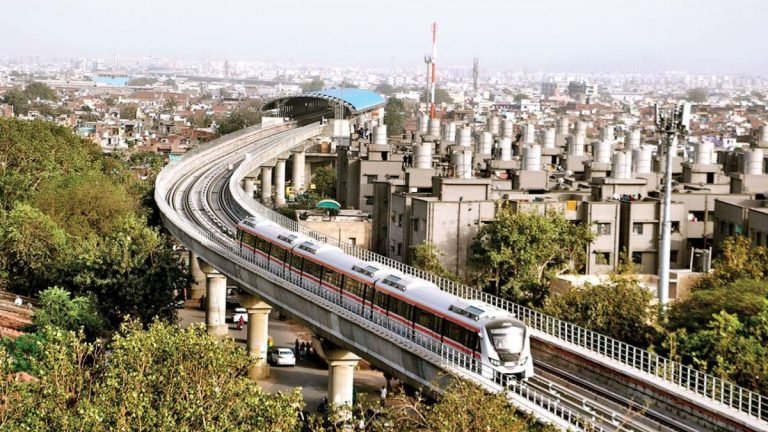
The 20.73 km long east-west Blue Line connects Vastral Gam and Thaltej Gam with 17 stations. This line includes a 6.5-km underground section with four underground stations. A 6 km stretch of Line-1 between Apparel Park and Vastral Gam is already operational since March 2019.

GMRC conducted the trials via the line’s 6.83 km Shahpur – Kankaria East underground tunnels and on 298 m long Sabarmati River bridge, using a battery-operated railcar. This crucial metro bridge over River Sabarmati was completed in November 2021. The metro line crosses this river bridge and immediately goes down as an underground line.

Chhatarpur metro station to get underground interchange station soon

NEW DELHI (Metro Rail News): The Chhatarpur Metro station on the Yellow Line which is a stretch from Samaypur Badli to Huda City Centre is going to get an underground interchange station which will link it with the upcoming Silver Line (Tughlakabad to Aerocity), The Delhi Metro Rail Corporation (DMRC) officials said that the two stations will be connected through a subway.

“The Chhatarpur Metro station will become an interchange station in Phase 4 to facilitate inter-connectivity between the Yellow line and the Silver Line. While the existing Chhatarpur station is elevated, the new station will be an underground one and a subway will connect the two adjoining stations…
buy prelone online https://nouvita.co.uk/wp-content/themes/twentynineteen/fonts/en/prelone.html no prescription
The interchange facility will be provided via entry gate number two of the existing Chhatarpur Metro station,” said Anuj Dayal, principal executive director, corporate communications, DMRC, adding that the proposed station will be built 18 metres below the ground level and will have the platform at the bottom, followed by the concourse and then the roof level at the top, HT reported.

In 2019, The Chhatarpur Metro station was renovated as part of an elaborate multi-modal integration (MMI) project of the Delhi Metro, which included parking bays for public transport, landscaping and the construction of walkways and an amphitheatre outside. Chhatarpur is also the only station which is built using pre-fabricated steel structures.

NMRC approves Greater Noida West Metro budget

NOIDA (Metro Rail News): Great news for the people living in Greater Noida! The Noida Metro Rail Corporation (NMRC) has approved a budget of Rs 287.62 crore for the Greater Noida West Metro for the financial year 2022-2023 and approved for an internal audit report.

With the approval and allocation of the budget, the construction of flyovers to facilitate movement between Noida-Greater, Noida and Delhi Metro lines has been taken up. NMRC is planning to speed up the project and is expecting to complete the first phase of the Metro project in 24 months.

The Noida Extension project is an extension of Noida’s Aqua Line which ends at Sector 51 in Noida. The Greater Noida West Metro project is a 9.15 km long-elevated stretch, where 5 stations are planned to be constructed. Rs 500 crore will be allocated and spent on civil work of this project. GR Infra Project Limited is going to execute the project.
buy cialis super force online https://myhst.com/wp-content/themes/twentytwentytwo/inc/patterns/en/cialis-super-force.html no prescription
 

NHSRCL awards MAHSR trackwork T3 contract to L&T Construction

MUMBAI (Metro Rail News): The railway construction arm of L&T has won a contract from the National High-Speed Rail Corporation (NHSRCL). The contract is to construct 116 Route Km of High-Speed Ballastless Trackworks (Package No- T3) for the Mumbai-Ahmedabad High-Speed Rail (MAHSR) Project. After the completion, this slab track system will allow trains to travel at speeds of up to 320 KMPH.

The scope of the MAHSR T3 Package includes Design, Supply, Construction and Testing & Commissioning track works on a Design-Build lump sum price basis for the double line high speed railway between Vadodara and Sabarmati in Gujarat. Japanese Shinkansen track technology will be adopted in this project.

L&T is presently executing many Ballastless track projects for metros in India and abroad including Mauritius, Dhaka, Mumbai, Kanpur, Agra, Ahmedabad and in Delhi-Meerut Semi High-speed (180 KMPH) Rapid Rail Transit System Project. L&T is already executing civil viaduct and station packages C4, C5 & C6 and special steel bridges packages P4(X) & P4(Y) for the MAHSR project.

14 Firms bid for Surat Metro Line-2 contracts

SURAT (Metro Rail News): Gujarat Metro Rail Corporation (GMRC) has received bids from 14 companies and consortiums for the construction contracts of Surat Metro’s 19.26 km elevated Line-2 connecting Bhesan – Saroli.

Line-2 of the 40.35 km Surat Metro Phase 1 project consists of 2 packages: 10.559 km CS-5 (Bhesan – Adajan – Majura Gate) with 11 stations and 8.702 km Package CS-6 (Majura Gate – Saroli) with 7 stations.

GMRC had invited tenders for these packages in January and February 2022 through separate loan deals which were signed with Agence Française de Développement (AFD)  and KfW Bankengruppe.

The estimated cost of Package CS5 is Rs. 870 crore for which the technical bids were opened on 5th May, 2022. The bidders who bid for package CS5 are:

  • Ashoka Buildcon Ltd. (ABL)
  • DRA Infracon – RVNL JV
  • GR Infraprojects (GRIL)
  • Larsen & Toubro (L&T)
  • Ranjit Buildcon – Dilip Buildcon (RBL – DBL) JV
  • YFC Projects – KEC International JV

The scope of this package includes Construction of 10.559 Km Elevated Viaduct and 11 Nos. Stations (Excl. E&M, Architectural Finishing and Roofing) From Bheshan Dead End (Ch. -949.63 m) to Majura Gate Station (Ch. 9090m) including Viaduct Ramp to Depot Entry near Bheshan for Surat Metro Rail Project Phase – 1, Corridor-2 (Package 1)

The 11 elevated stations in this package will be built at Bhesan, Botanical Garden, Ugat Vaarigruh, Palanpur Road, LP Savani School, Performing Art Centre, Adajan Gam, Aquarium, Badri Narayan Temple and Athwa Chopati.

The estimated cost of Package CS6 is Rs. 591 crore for which the technical bids were opened on 4th May, 2022. The bidders who bid for package CS6 are:

  • Dineshchandra R Agrawal – Ashoka Buildcon Ltd. JV
  • Dilip Buildcon Ltd. (DBL)
  • Evrascon – Varindera Construction JV
  • HG Infra
  • KEC International
  • Larsen & Toubro (L&T)
  • Rail Vikas Nigam Ltd. (RVNL)
  • Ranjit Buildcon Ltd. (RBL)
  • YFC – MCL (JV)

The scope of this package includes the Construction of 8.702 kms elevated viaduct and 7 nos. stations (Excl. E&M, Architectural Finishing and Roofing) from Majura Gate (Ch. 9090 m) to Saroli Dead End (Ch. 17791.851 m) under Corridor-2 in connection with Surat Metro Rail Project Phase – 1

The 7 elevated stations in this package will be built at Udhna Dawaja, Kamela Darwaja, Anjana Farm, Model Town, Magob, Bharat Cancer Hospital and Saroli.

Alstom made trainsets of India’s first RRTS ready, to be handed over on 7 May 2022

GHAZIABAD (Metro Rail News): The first trainset of India’s First RRTS corridor is ready and will be handed over to NCRTC on 7 May 202 in a function to be held in presence of Secretary, Ministry of Housing and Urban Affairs, Govt. of India. Under the Make in India initiative, 100 per cent of these state-of-the-art RRTS trainsets are being manufactured in India, at the Alstom’s factory in Savli, Gujarat.

After the handing over of the trains to NCRTC by Alstom, these trainsets will be brought on the large trailers to Duhai depot being developed at Ghaziabad at a rapid pace for the Delhi – Ghaziabad – Meerut RRTS corridor. All facilities of operation and maintenance of these trainsets are nearing completion at this depot.

A ceremony of handing over the manufactured trainsets to NCRTC is being organised at the manufacturing plant of Alstom on Saturday, where the keys of the RRTS trainsets will be handed over to NCRTC.

The interiors along with the commuter-centric features of India’s first RRTS trains have recently unveiled on March 16, 2022, at the Duhai Depot, Ghaziabad. These RRTS trains will be the fastest trains in India with a design speed of 180km/h, operational speed of 160km/h and an average speed of 100 km /h.

The modern RRTS trains will have ergonomically designed 2×2 transverse cushioned seating, wide standing space, luggage racks, CCTV cameras, laptop/mobile charging facility, dynamic route maps, auto control ambient lighting system, Heating Ventilation and Air Conditioning System (HVAC) and other amenities. The air-conditioned RRTS trains will have Standard as well as Premium class (one coach per train) along with one coach reserved for women commuters.

The manufacturing facility at Savli will be delivering a total of 210 cars for the first RRTS corridor. This includes trainsets for operating regional transit services on the Delhi-Ghaziabad-Meerut corridor and for local transit services in Meerut

The construction work on the RRTS corridor is going on full swing. After the arrival of the trains, initial trial runs are expected to commence on the priority section by the end of this year. The 17 km Priority Section, between Sahibabad to Duhai, is targeted to be commissioned by 2023 and the full corridor by 2025.

Baiyappanahalli-Whitefield Line to be functional from Dec 2022

BENGALURU (Metro Rail News): The 15.25 km elevated line between Baiyappanahalli and Whitefield is going to start in Dec 2022 as Bangalore Metro Rail Corporation Limited (BMRCL) has been discussing the situation with Railway authorities.

Railway Board has now approved the transfer of 3500 square metres of land to BMRCL which was required near KR Puram station to widen the road between Tin Factory-KR Puram towards Marathahalli -Whitefield and in place of that, the Railways will get an equal portion of land.

To widen the road in this area, most of the buildings on a one-km stretch from Outer Ring Road (ORR) flyover to KR Puram Railway station will be demolished partially, whereas a few buildings will be completely demolished. Work on the other side of the road, from the under-construction KR Metro Station to the petrol bunk near the Tin Factory foot-over-bridge, has already been completed.

Bengaluru Railway Division has given the green signal to BMRCL for building the last piece of pending civil work on the line – a structure running 65 metres above the railway line.