

Third Vande Bharat to run between Gandhinagar and Mumbai Central
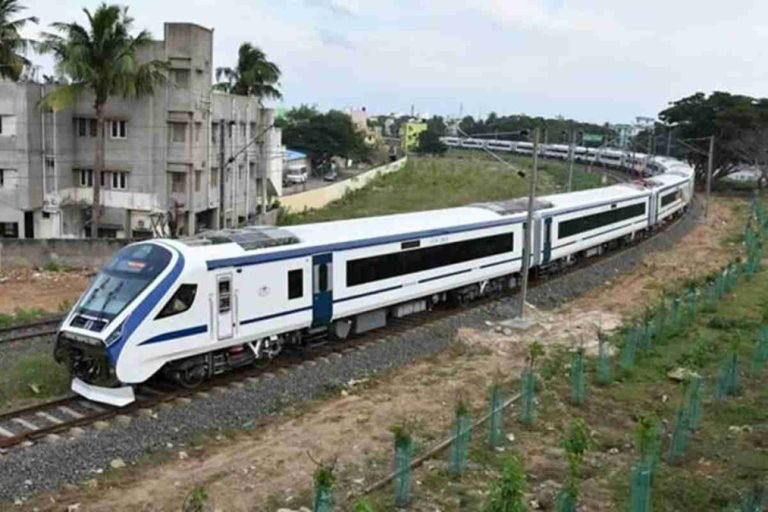
NEW DELHI (Metro Rail News): The third Vande Bharat Express shall be launched on September 30. The train will run between Gandhinagar Capital and Mumbai. Prime Minister Narendra Modi will flag off the new and upgraded version of Vande Bharat Express between Gandhinagar and Mumbai at Gandhinagar station at around 10:30 am. He will also travel by train from Gandhinagar to Kalupur railway station. The two other Vande Bharat Express trains are : New Delhi to Varanasi (inaugural run on February 15, 2019) and New Delhi to Shri Mata Vaishno Devi Katra (inaugural run on October 3, 2019).Prime Minister Modi declared that 75 Vande Bharat trains will connect every section of the nation during the 75 weeks of the Amrit Mahotsav of Independence in his address to the nation on August 15, 2021 from the Red Fort’s ramparts.The characteristics of this train are its speed, safety and service. Integral Coach Factory (ICF) Chennai, has been the force behind the system integration of these rails in just 18 months. The Vande Bharat Express has similar travel classes like Shatabdi Train and can travel at a top speed of 160 kmph, but it offers passengers a superior travelling experience. In terms of convenience and speed, this train represents Indian Railways’ next significant advancement.Due to faster acceleration and deceleration, it may reach high speeds and will cut the travel time by 25% to 45%. Automatic doors, a GPS-based audio-visual passenger information system, onboard hotspot Wi-Fi for entertainment, and exceptionally comfortable seating are equipped on all coaches. Additionally, the executive class has rotating chairs.
All washrooms have bio-vacuum toilets. There are two types of lighting: diffused for overall illumination and individual for each seat.All classes will now have access to the side recliner seat feature that is currently only offered to Executive Class passengers. 180-degree rotating seats are an added bonus for the Executive Coaches. Additionally, the train will offer touch-free bio vacuum toilets.Each Vande Bharat Express has a total seating capacity of 1,128 passengers. Every coach has a pantry where hot food and hot and cold drinks can be served. To increase passenger comfort, the insulation is designed to keep heat and noise at very low levels. The Vande Bharat 2.0 trains have the KAVACH (Train Collision Avoidance System) for enhanced safety in operations. There will be improved security with four emergency windows added in every coach. There will be four platform side cameras including rearview cameras outside the coach instead of two earlier.Finance Minister Nirmala Sitharaman announced that 400 new-generation Vande Bharat trains will be developed and manufactured during the next three years.
Patna Metro’s tunneling work to start in November
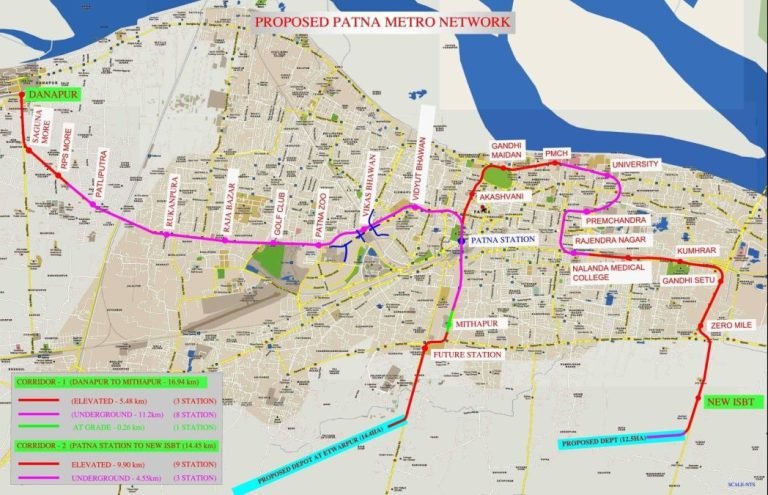
PATNA (Metro Rail News): The tunneling work for the Patna Metro Rail Project will take place in the underground section of Corridor II in November. The state capital should receive the first Tunnel Boring Machine (TBM) by the end of the next month.The nodal organisation for the Patna Metro Project, Delhi Metro Rail Corporation Limited (DMRC) will procure two TBMs from a Chinese company. The equipment will be used to construct twin tunnels connecting Patna Junction and Rajendra Nagar. The tunnel will be constructed using Earth Pressure Balancing (EPB) Technology and its concrete lining will be made of precast tunnel rings as stated by a DMRC official.There will be two phases to the tunnel-digging process. After a survey and utility diversion, the machine will be lowered in the first phase in a dug-up area close to Moin-Ul-Haque Stadium.The machines will drill tunnels up to the Patna University where it would be extracted. The second machine will start digging from Gandi Maidan to Patna University. The excavation work will be done in the second phase between Gandhi Maidan and Patna Junction as well as between Moin-Ul-Haq Stadium and Rajendra Nagar. At Rajendra Nagar, Moin-ul-Haq Satidum, Patna University, PMCH, Gandhi Maidan and Akashvani on Frazer Road, underground stations for Corridor-II are being constructed.Four TBMs will be mobilised altogether. Two machines have already been ordered. “By the end of October, it’s anticipated that the machines will arrive in Patna,” an official said. According to the official, the tunnelling project for Corridor II’s underground section should be finished in 24 to 30 months.Depending on the geological conditions, TBMs can bore nearly 8 to 10 metres per day. A difficult situation would cause the progress to slow down. The machine is designed specifically so that the concrete tube and debris clearance happen simultaneously.
Indian Railways to modernize Bengaluru Cantonment
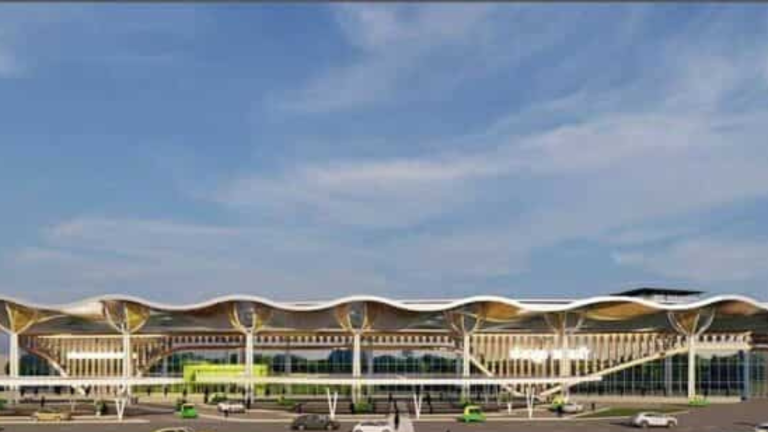
BANGALORE (Metro Rail News): Indian Railways have planned to modernize the Bengaluru Cantonment. The amenities suggested in a proposed developed station are congested-free, conflict-free access and exit for train passengers.The world-class stations Gandhinagar Capital (Gujarat) under the Western Railway, Rani Kamlapati Railway Station (Madhya Pradesh) under the West Central Railway and Sir M. Visvesvaraya Terminal (Bengaluru) under the South Western Railway all have been commissioned by Indian Railways.The Indian Railways have now decided to revamp the Bengaluru Cantonment with modern features and the amenities suggested in a developed station include segregation of passenger arrival and departure and congestion-free, non-conflicting entry/exit to the station premises for railways passengers.The new building will include a spacious concourse that won’t be crowded, integration of the city’s two sides and other transportation systems, such as bus, metro train, etc. shall be available whenever possible and with user-friendly international signage. The newly renovated Bengaluru Cantonment station will include a well-illuminated circulation area, enough space for drop-off and pick-up, parking, etc.“Development of railway stations at this scale is first of its kind and complex in nature and requires detailed techno-economic feasibility studies and various statutory clearances from urban/local bodies etc,” said a top railway official of South Western Railway.The Ministry of Railways has developed several development plans for railway stations, including the Model, Modern, and Adarsh Station Schemes for upgrading, modernizing, and expanding stations on the Indian Railways, including stations in numerous small and large towns.A fresh plan for the railway station’s significant upgrade was recently launched. The amenities included in this plan include the reconstruction, improvement, and enlargement of the station building, congestion-free, non-conflicting entry and exit to the station premises, segregation of passenger arrival and departure, an adequate concourse without crowding, integration of both sides of the city whenever possible, user-friendly signage, a well-lit circulating area, and adequate provision for drop-off, pick-up, and parking, among other things, as well as all Divyangjan facilities. So far, this approach has identified 41 stations for major upgradation under this scheme.
NCRTC installs lifts and escalators at RRTS stations
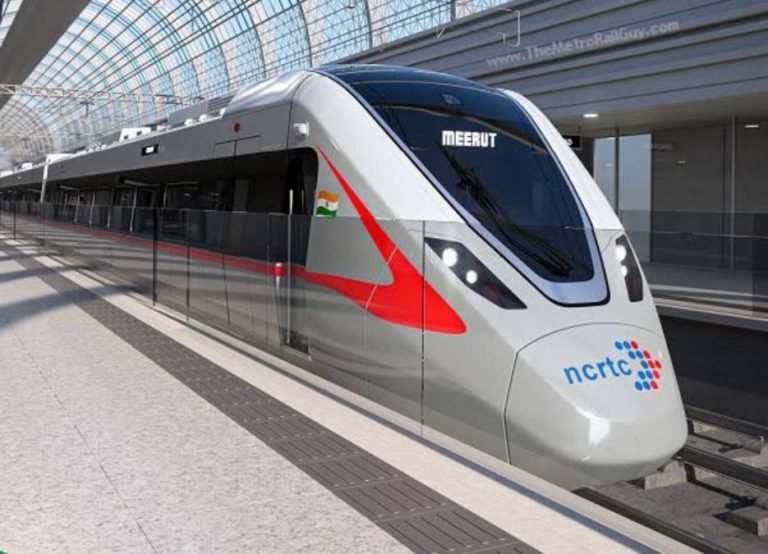
GHAZIABAD (Metro Rail News): Lifts and escalators are being installed at stations by the National Capital Region Transport Corporation (NCRTC) to improve passenger access to the Regional Rapid Transit System (RRTS).The 30,274 crore RRTS project is on track to get completed in March 2025 with stations in the priority segment beginning to take shape. However, a 17-Kilometer priority segment in Ghaziabad will open in March 2023 as the nation’s first RRTS stretch to commence passenger operations.The entire 82-Km long corridor is expected to have a huge footfall at the 25 stations as the daily ridership figures as projected by the NCRTC stand at 800,000 passengers.“While keeping in mind commuter-centricity, we have started with provisions of lifts and escalators at stations. Most of the RRTS stations will have three to four levels and there is a need to enhance accessibility while ensuring hassle-free journeys for passengers. So, the process for provision of lifts and escalators has started. This will be helpful for passengers, especially for the elderly, specially-abled, children and women,” said Puneet Vats, NCRTC Chief Public Relations Officer.“The escalators are equipped with state-of-the-art technology and these will also have energy-saving features. They are getting manufactured in Pune. The lifts on the other hand are getting manufactured in Bengaluru. The escalators will have ‘V’ type handrails for firm grip and will also have four flat steps with yellow lines and lights for easy boarding and deboarding. There will be additional emergency stop switches at the top and bottom for stopping the escalator if needed,” said an NCRTC officer.According to officials, finger guards will be installed on the handrails and skirt guards will be installed on the escalators to prevent clothing from being tangled. They continued by saying that a number of automatic safety devices, such as anti-reversal, drive chain broken, handrail broken, escalator Overspeed device, step sag/step broken, upthrust, and handrail monitoring devices, etc., will also be installed for increased safety.Stretchers and wheelchairs will also have designated spaces on the RRTS trains.The 17-Km priority segment which has stations in Sahibabad, Ghaziabad City, Guldhar, Duhai and Duhai Depot is reportedly undergoing expedited construction.The installation of thirty-six escalators and 26 lifts will be completed at the five stations and construction has already begun at Sahibabad and Guldhar stations as stated by an official.The first RRTS train’s priority section trial run is anticipated in the month of November.
DMRC’s Airport Express Line to acquire a new station
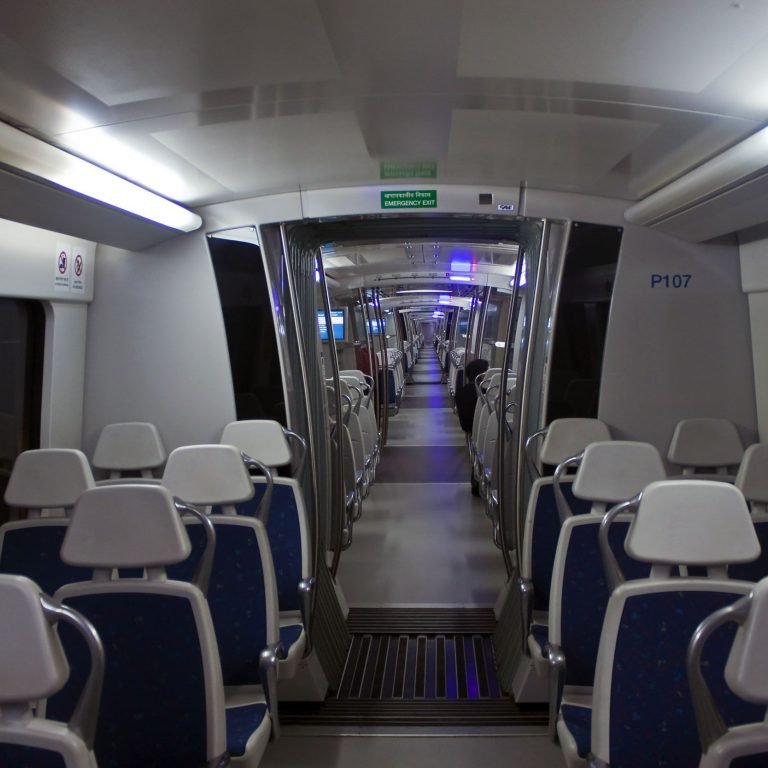
NEW DELHI (Metro Rail News): The Airport Express Line of the Delhi Metro would probably acquire a new station by the end of the month. This would be the seventh station on this line and the first extension since, it was initially opened on February 23, 2011.The officials added that currently, trials are being done on the 2-Kilometre section between the current Dwarka Sector 21 Station and the new IICC Station. The India International Convention Centre (IICC) Metro Station in Dwarka’s Sector 25 is scheduled to open at a yet-to-be-determined date.“The station is likely to become operational by next month. A date is yet to be ascertained, however, it is believed that this stretch will be ready next month,” said a Delhi Metro Rail Corporation (DMRC) official.All signalling systems are being tested during trial runs on this 2 Km length which began in June, 22 to make sure there are no glitches occurring when the station is put into service. Before it can be officially opened, it must pass necessary inspections by a number of approving bodies, including the CMRS after the trial runs are finished.Anuj Dayal, Principal Executive Director, Corporate Communications at DMRC confirmed trial runs on the 2 Km stretch were progressing as per plans. “All necessary statutory clearances mandatory for opening of the section are being obtained after which the CMRS (Commissioner of Metro Rail Safety) will be invited for inspection. We are hopeful of opening the section after all these clearances are received,” he said.The IICC is being built to be the biggest exhibition and convention centre in India. This facility which is now being built, will have modern amenities including convention centres, auditoriums, hotels, office spaces, etc. The IICC Metro Station will serve this new centre, with special entry-exit points leading directly to the metro station as stated by DMRC.The metro station is underground and has been built at a depth of about 17m. It has seven entry and exit points. Fourteen escalators and four lifts with each lift having a carrying capacity of twenty passengers have been installed. “In the earlier stations, the lifts had a capacity of either 13 or 8 persons,” an official said.
NHSRCL invites bids 3rd time for MAHSR Package C-2

NEW DELHI (Metro Rail News): National High-Speed Rail Corporation Ltd. (NHSRCL) has re-invited bids for the third time to build the 20.378 KMs Package C-2 for the 508.17 KMs Mumbai-Ahmedabad High-Speed Rail (MAHSR) / Bullet Train Project.Package C2 of the Main Road between (East-end of Bandra-Kurla Complex Station) and Shilphata will be entirely underground and contains approximately 3 Km ‘Underwater’ tunnels under Thane Creek. Therefore, the designated contractor will be required to use at least three large TBMs with a diameter of approximately 14.5 meters.The NHSRCL initially invited bids for this package in 2019 with a clause that required a Japanese contractor to be a key partner in the event of a partnership. Unfortunately, that round got zero bids. The second tender was again launched in November 2021 and cancelled in February 2022, due to land acquisition issues for TBM launch shafts and uncertainty of Bandra Kurla Complex Station’s land where a pop-up COVID hospital was built in 2020.Package No.: MAHSR-C-2Project’s Scope: Construction of Tunnelling Works including Testing and Commissioning for Double Line High-Speed Railway using (TBM) and New Austrian Tunneling Method (NATM) between Mumbai Underground Station at Bandra-Kurla Complex and Shilphata.Here’s the important information related to the tender:· Deadline: 1888 days (Approx.)· Pre-bid Meeting: 21st October 2022 at 11:00 AM· Date & Time of Submission of Tender: 19th January 2023 at 03:00 PM· Date & Time of Opening of Tender: 20 January 2023 at 03:00 PM
Three key stations to be revamped : Railway Minister
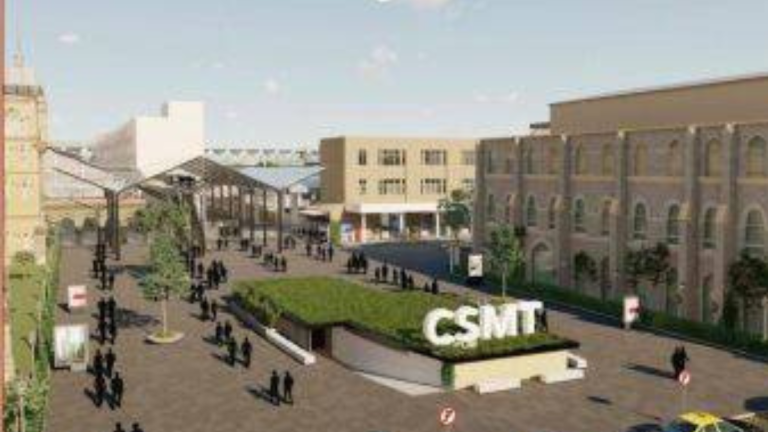
NEW DELHI (Metro Rail News): The Union Cabinet approved the Indian Railway’s ₹10,000 crore proposal for the reconstruction of three key Railway Stations — New Delhi, Ahmedabad and Mumbai’s Chhatrapati Shivaji Maharaj Terminus (CSMT) on 28th September.Passengers will be able to take advantage of amenities like a food court, waiting lounge, children’s play area, place to shop for local goods, proper lighting, lifts, escalators and travelators amongst others, once after the redevelopment which is anticipated to be finished in 2.5 to 3.5 years.Railway Minister Ashwini Vaishnaw said, “A master plan had been prepared for the smooth movement of traffic with adequate parking facilities. The stations, which will make use of green building techniques with solar energy, water conservation/recycling and improved tree cover, will be integrated with other modes of transportation such as metro and bus.”“The stations will be safe with the installation of CCTV and access control. There will be segregation of arrival/departures, clutter-free platforms, improved surfaces and fully covered platforms … special care will be taken to provide Divyang-friendly facilities,” according to an official release.Briefing the reporters, the Minister added that the government would be funding the redevelopment project so as to not put any extra monetary burden on passengers. “Railways cater to the middle class and lower middle class so any extra burden on passengers is not good. So, it has been decided to invest the budget money in the Railways and take it up with investment from the government. So, it is a conscious decision to not redevelop these stations in PPP mode,” he said.The Minister, however, added that efforts would be made to complete the redevelopment in two years. “We will try to do this in two years. We will be using new technology for construction — modular construction. Once we are able to master this technology through implementation on these stations, it can be used in other projects as well in the country,” he said.
RRTS tunnelling moves into next Phase with construction of 1.5 km Long Tunnel in Anand Vihar
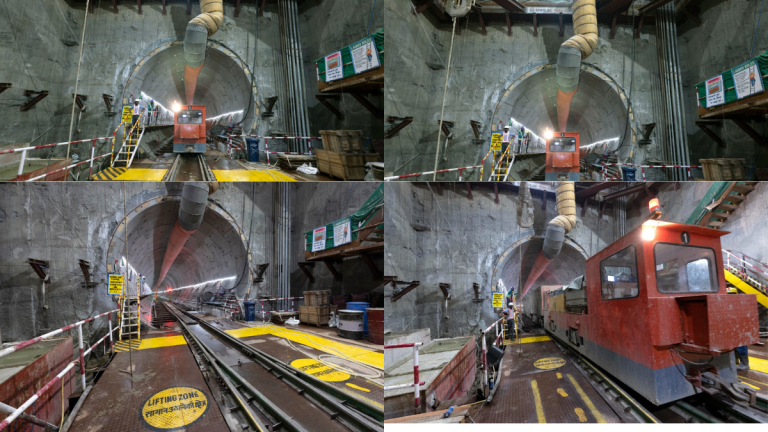
NEW DELHI (Metro Rail News): RRTS tunnelling work for India’s first Regional Rail moves into next phase with the construction of around 1.5 km long tunnel by Sudarshan 4.1 (Tunnel Boring Machine) from Anand Vihar to New Ashok Nagar. The 90 meters long machine Sudarshan 4.1 (TBM) has completed tunnel boring of half the total distance of around 3 km long tunnel.The Delhi-Ghaziabad-Meerut RRTS corridor is 82 km long, of which 14 km is in Delhi. The Delhi Section has four stations, Jangpura, Sarai Kale Khan, New Ashok Nagar, and Anand Vihar, with only Anand Vihar station being underground.Two Sudarshans (TBMs) are in operation to construct two 3 km long parallel tunnels from Anand Vihar station towards New Ashok Nagar. Out of this, the first Sudarshan, 4.1 has already bored 1.5 km tunnel to date, while the second Sudarshan, 4.2 has also constructed about one kilometre of tunnel so far. To retrieve these Sudarshans, after the completion of the construction of the tunnels, a retrieving shaft has been built near the New Ashok Nagar station, from where the corridor gets elevated.On the other hand, about 2 km long parallel tunnels will be constructed from Anand Vihar towards Sahibabad, Uttar Pradesh, which will terminate in front of Vaishali metro station. At present, one Sudarshan, 4.3 is boring a tunnel, and the other Sudarshan, 4.4 is in the final stages of assembling which will soon be launched to construct the tunnel.Tunnel rings are made underground by TBM with the help of tunnel segments. Seven (7) tunnel segments are generally used to form a tunnel ring. The Tunnel Segments are being manufactured at NCRTC‘s Casting Yard with assured quality control. Due to the large rolling stock and a high design speed of 180 mph, the width of RRTS tunnels is being constructed as 6.5 m. diameter. Compared to the metro systems, this is for the first time that a tunnel of such a large size is being constructed in the country.For the movement of trains in the underground parts of RRTS, two parallel tunnels are being built. Along with this, provision has also been made for various security measures to ensure the safety of the passengers. There will be a cross-passage approximately every 250 meters in the underground sections for the safety of passengers in case of any emergency. In addition, the tunnel will also have a side walkway of 60 cm-90 cm wide which will assist in maintenance activities as well as in case of emergency. Ventilation ducts will also be provided to ensure the movement of air in the tunnel.
Pune metro submits draft DPR for Phase 2 to PMC
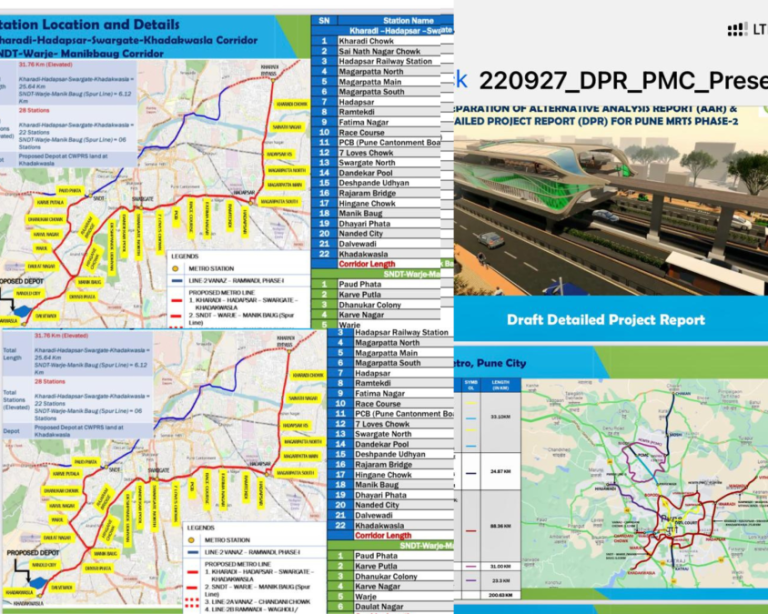
PUNE (Metro Rail News): Pune Metro team made presentations before the PMC commissioner and other officials. Preliminary discussions were on 27th September, it will be followed by a site visit along the proposed draft DPR next week.
Shri. Atul Gadgil-Director (Works) Pune Metro, Shri. Vikram Kumar-PMC Commissioner, Shri. P.K. Acharya-Advisor, Shri. Shrinivas Bonala-Chief Engineer Project, PMC, and Shri. Hemant Soanwane- Executive Director (PR) was present during the presentation on DPR Phase 2.
Sonawane said, “Pune Metro recently submitted the draft Detailed Project Report (DPR) for the second phase before the municipal corporation. Metro officials and Pune Municipal Corporation (PMC) officials held the primary discussion on 26th September and will go for site visits for proposed metro sites in the coming weeks.”

Metro officials said that by including phase one and the proposed phase two plan, total metro corridors would be 200 km in the city. Under the second phase, circular connectivity has been proposed for the metro route as citizens can move in any locality by metro, officials said.
Pune Metro line 3 pier erection scores century in just 6 months
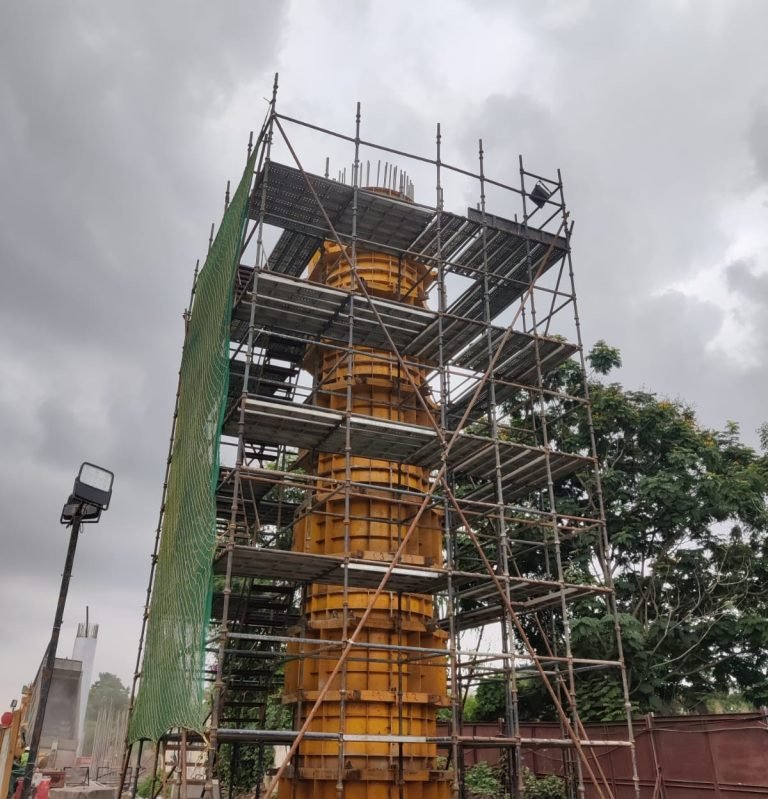
PUNE (Metro Rail News): The overall work of the Pune Metro Line 3 project connecting the IT hub of Hinjewadi with the central hub of Shivajinagar has gained a definite pace across several sections now. The work of construction of piers is also going on vigorously on this route on 27th September morning, the centenary of the construction of metro piers was reached. This 100th pier (viaduct+station) of Metro Line 3 has been erected in front of Balewadi Stadium.
The notable part is developers have managed to achieve this milestone of erecting the 100th pier within the period of just six months after starting the pier work in March 2022.
The work of Pune Metro Line 3 on the Hinjewadi to Shivajinagar route has been jointly undertaken by Tata Group and PMRDA on the basis of the Public Private Partnership (PPP) and Tata Group has established Pune IT City Metro Rail Limited as a special purpose vehicle (SPV) company for its implementation.
It is worth mentioning that the progress of the PMRDA–governed Pune Metro Line 3 is on a full spree. And the notable part is that after erecting the 50th pier on 23 August 2022; the developers have managed to complete the erection of another 50 piers and thereby achieve the milestone of erecting 100 piers, within the timeframe of just one month.
The Pune Metro Line 3 piers having a circular shape with a diameter of 2000 mm are very special in nature. These piers are being made to be fully compliant with the design parameters of the metro rail system. Also, they strictly follow all construction safety parameters as mentioned in the design and construction manual of the Bureau of Indian Standards (BIS). Pune IT City Metro Rail Limited has ensured that the safety standards are vigilantly followed.
The construction of the metro between Hinjewadi and Shivajinagar will provide easy, convenient, and affordable public transport options. It is the policy of the Tata Group not to compromise on quality and safety in all phases of the project, which was undertaken for the convenience of the citizens.
About Pune Metro line 3:
The Pune Metro line III is a 23 Km elevated Metro rail project connecting the IT hub of Hinjawadi to the Central business district of Shivajinagar. It is a Public Private Partnership (PPP) project awarded by the Pune Metropolitan Region Development Authority (PMRDA) to a consortium consisting of Tata Group’s TRIL Urban Transport Private Limited (TUTPL) and Siemens Project Ventures GmbH. The Project would be developed & operated on Design, build, finance, operate & transfer (DBFOT) basis by a special purpose vehicle (SPV), Pune IT City Metro Rail Limited (PITCMRL) for a Concession Period of 35 years including the construction period.
Maha Metro MD Dr Dixit Briefs Minister Dr Karad about Aurangabad Project Status
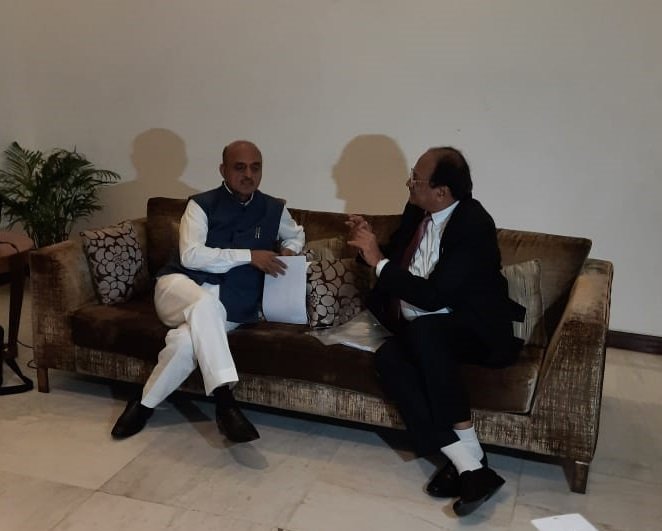
PUNE (Metro Rail News): Maha Metro MD Dr Dixit today met Union Minister of State for Finance Dr Bhagwat Karad in New Delhi. Dr Dixit briefed the Union Minister about the Detailed Project Report (DPR) being prepared for the Aurangabad Project. It may be recalled that Maha Metro has now been tasked with preparing Detail Project Report for the Metro Rail Project for the city of Aurangabad.
Dr Dixit gave a presentation on the status of the proposed DPR. After successfully implementing Metro Rail Projects in Nagpur & Pune and having prepared DPR for similar projects in the cities of Nasik, Thane and Warangal (State of Telangana), Maha Metro is now working on similar projects in the city of Aurangabad.
As part of the proposed project for which DPR is being prepared, two Metro sections – Waluj to Shendra MIDC and Bidkin to Harsul are proposed to be constructed. In fact, given Maha Metro’s expertise in implementing infrastructure projects like RoB, and RuB, other than Metro Rail Project, the organization has also been asked to prepare a plan for Fly-over, which will run parallel to Metro Track, as has been executed in Nagpur. Metro via-duct and fly-over will run parallel from Waluj to Shendra MIDC of Aurangabad. A comprehensive DPR will be prepared for fly-over and two lines.
In that regard, a meeting was held at Aurangabad in January 2022 and was chaired by Dr Karad. The meeting was then attended by Aurangabad Municipal Corporation and senior officials from other local & civic departments, besides Maha Metro officers.The double-decker at Aurangabad will be constructed on the lines of a similar project in Nagpur. Maha Metro has executed Multi-Layer Transportation Project on Wardha Road and is in the process of doing so on Kamptee Road. Three-layer transportation project has been implemented on Wardha Road with an existing road at the bottom, a fly-over over it, and a Metro route at the top of all. A similar project is also being implemented on Kamptee Road which also includes the unique four-layer transportation structure at Gaddigodam, which has an existing road and Railway track as the first two levels, followed by a Fly-over and Metro via-duct at a height of 24 meters. Multi-Layer Transportation Project on Wardha Road was inaugurated on 13th November 2020.
India ask Japan to float tender for Mumbai Ahmedabad HSR
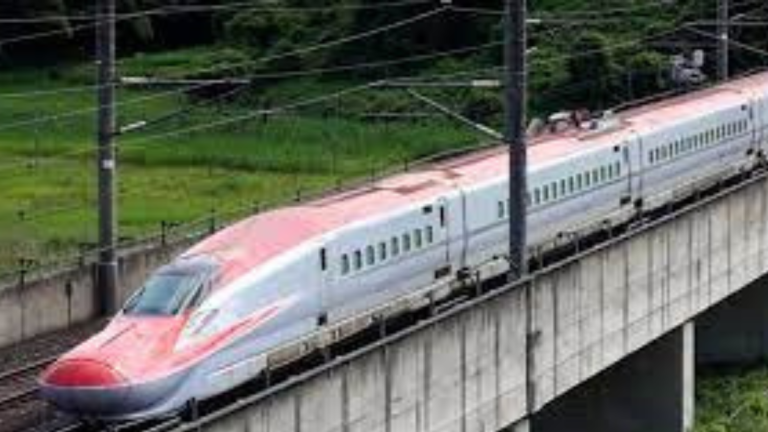
MUMBAI (Metro Rail News): India has informed Japan that the project’s land issues appear to have been resolved and tenders for the electrical and signalling systems and the rolling stock for the Mumbai-Ahmedabad High-Speed Rail corridor should be floated immediately.According to sources, Japan and India have agreed to set a limit on the cost of the systems and rolling stock. If the prices quoted by Japanese companies for these items exceed that limit, the Japanese side will be responsible for paying the difference outside the parameters of the loan agreement for the project.This resolves a long-standing project impasse, as it had been reported that the cost of many essential items to be supplied by Japanese companies had increased up to 90 per cent higher than project consultants’ estimates.The Japanese government’s Japan International Cooperation Agency is covering 80% of the cost of the bullet train project with a soft loan that forces India to purchase all essential components from Japanese suppliers. The estimated cost of the project is Rs. 1.6 lakh crore.According to officials, the corridor of the Gujarat section should be fully operational by 2027 followed by the Maharashtra section by 2029.“Since there is a cap agreed by both parties and since civil works are now being executed at a fast pace, there is no roadblock to floating the systems tenders for the Japanese firms,” a source said.The Indian side informed their Japanese counterparts at the sixth Joint Working Group meeting for the Mumbai-Ahmedabad High-Speed Project that the tenders for the systems, particularly the electrical and signalling should be awarded by December to March.V K Tripathi, the Chairman and CEO of the Railway Board and Satoshi Suzuki, the Japanese Ambassador, the meeting held earlier this month was co-chaired by them.The National High-Speed Rail Corporation, the project’s implementing organisation floated the tender for the 21-km tunnel in the state on 23rd September which is a significant indication that the project may finally be able to put its land-related problems in Maharashtra behind it. The tunnel will be seven kilometres long and will be under the sea.The tunnel is the 502-km corridor which is the most difficult civil engineering project. The tunnel tender is open to international competition and companies from Japan and India are both permitted to team up with other international players to submit bids.The procurement of the rolling stock or the actual train sets was another issue for the project. Only Kawasaki and Hitachi are eligible to provide the rolling stock in Japan. According to sources, the Indian side had wished to prevent a scenario in which both companies jointly submitted a bid which might increase the price.
First tunneling work of CMRL Phase II project to begin in Madhavaram
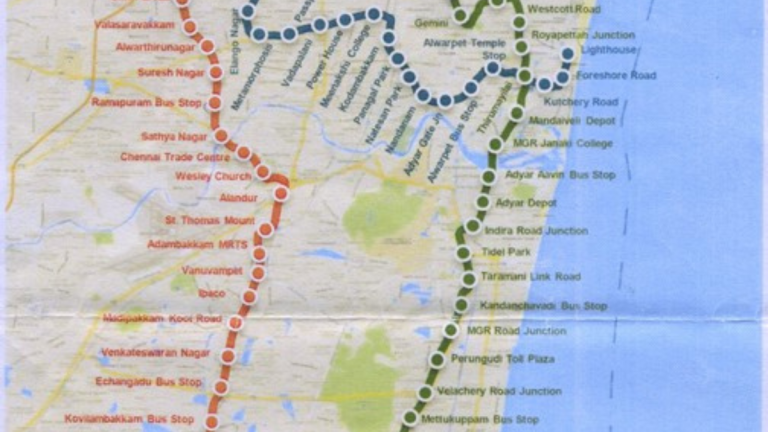
CHENNAI (Metro Rail News): The first tunneling activities for Metro Rail’s Phase-II project will start in Madhavaram by the middle of October.According to representatives of Chennai Metro Rail Limited (CMRL), the first tunnel boring machine (TBM) that arrived from China more than two months ago was lowered into the construction site last week. One TBM will commence the initial tunneling operation at Madhavaram and drill toward Kellys to construct a subterranean section. A second TBM will be utilized a month later.Work will first start on the subterranean portions from Madhavaram to Kellys in the 118.9-Km Phase II Project’s three corridors: Madhavaram to SIPCOT, Light House to Poonamallee and Madhavaram to Shollinganallur (a part of Madhavaram-SIPCOT corridor). Two more TBMs will begin operating between Kellys and Taramani later this year. The underground work will eventually spread to other parts of the city as well.“Usually, we give a gap of a few weeks between the deployment of the two TBMs. It is always better to operate with a space of 100 m or more. Before starting the tunneling work at Madhavaram, we completed surveys and utility diversion work. We have to track and plug the borewells within residences,” an official said.The underground stretch in various sites of the Phase II Project, which was developed at a cost of 61,843 crores, would be constructed using 23 TBMs by Chennai Metro Rail. The majority of the equipment used this time including 12 machines from Tamil Nadu and one from Pune would be refurbished domestically. According to another official there will also be one from Germany and five from China. These will hasten the underground stretch’s completion.“Some of the machines have already arrived and will soon gear up for the work. TBMs can usually bore nearly 8-10 m a day but, if the geological conditions are tough it could slow down to as much as 5 m. We have been planning well to see that there aren’t too many delays in the completion,” he added.
More Train Tracking Devices to be installed by Indian Railways
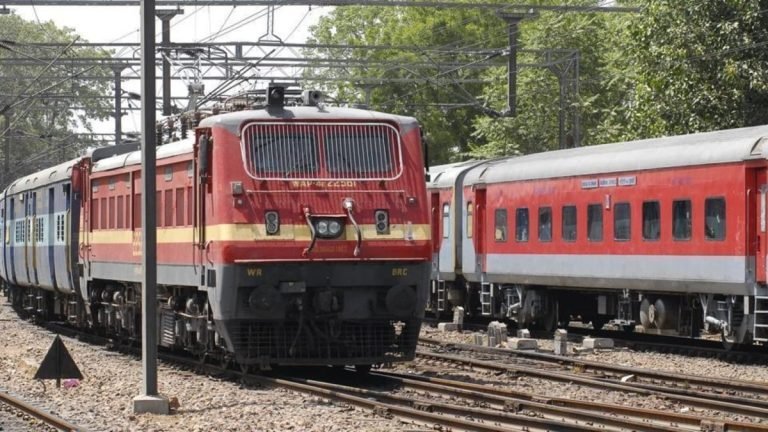
NEW DELHI (Metro Rail News): A Real-Time Train Information System (RTIS) is being used by Indian Railways to track trains.The RTIS device which has been developed in partnership with the Indian Space Research Organisation (ISRO) enables the automatic acquisition of train movement time at stations, including the time of arrival and departure or run-through. The RTIS is already being used on 2,700 locomotives in 21 electric locomotive sheds.The GPS-based technology is anticipated to be installed in 6,000 more trains across 50 Loco-Sheds by using ISRO’s Satcom hub. The device enables speed and location tracking of RTIS-enabled locomotives and trains while removing the need for manual intervention. It can provide mid-section updates with a 30-second periodicity to railway passengers.The Indian Railways unveiled the Kavach Automatic Train Protection (ATP) System earlier this year. Direct Loco-to-Loco Communication is a feature of the technology that enables trains to run in adverse weather conditions and prevent collisions.It was developed in collaboration with three Indian vendors by the Research Designs & Standards Organisation (RDSO). The Indian Railway Ministry said in a statement: “Currently, GPS feed from around 6,500 Locomotives (RTIS and REMMLOT) is being directly fed into the Control Office Application (COA). This has enabled automatic charting of trains and real-time information flow to passengers through COA and NTES integration.”