

DMRC invites tender for construction of four elevated stations
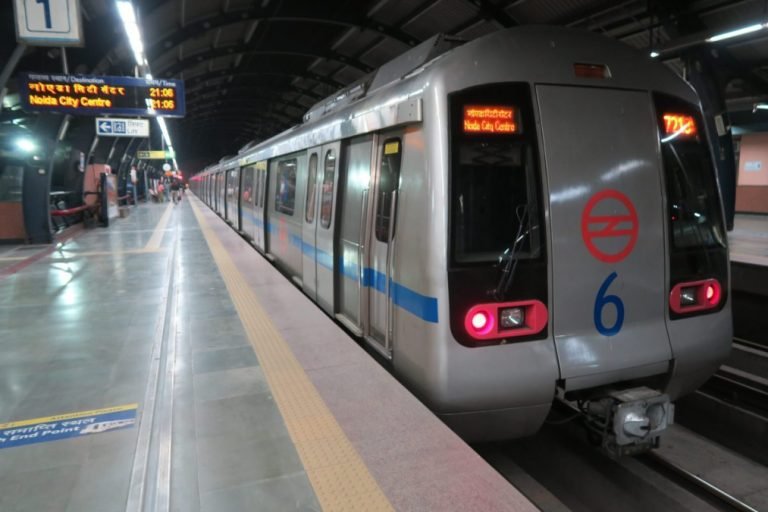
NEW DELHI (Metro Rail News): Delhi Metro Rail Corporation (DMRC) Ltd. has invited online open e-tenders from eligible applicants for the work of Part Design and Construction of Elevated Viaduct and four Elevated Stations viz. Keshopur, Paschim Vihar, Peeragarhi & Mangolpuri of Janakpuri West to R.K. Ashram Corridor (Extn. of Line-8) of Phase- IV of Delhi MRTS.Amount of Tender Security: INR 1.00 Crores.Completion period of the Work : 24 months.Cost of Tender documents: INR 23,600/- (inclusive of 18% GST) Non RefundableLast date of Seeking Clarifications: 29.09.2022 up to 17:00 hrsPre-bid Meeting: 30.09.2022 at 1100 hrs.Last date of issuing addendum (if any): 20.10.2022Date & time of Submission of Tender online Tender submission start date: 27.10.2022Tender submission end date: 03.11.2022 (1500 hrs)Date & time of opening of Tender online : 04.11.2022 at 1500 hrs
Rs. 1,407 crores new orders for KEC International
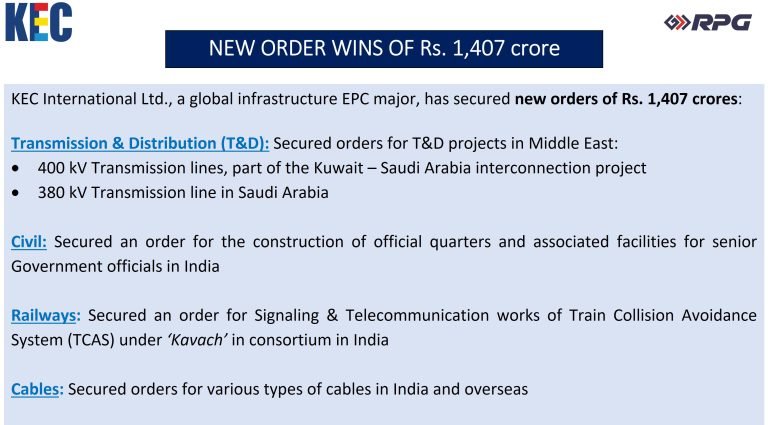
MUMBAI (Metro Rail News): KEC International Ltd., a global infrastructure EPC major, an RPG Group Company has secured new orders of Rs. 1,407 crores.
Transmission & Distribution (T&D): The business has secured orders for T&D projects in the Middle East:
- 400 kV Transmission lines, part of Kuwait – Saudi Arabia interconnection project
- 380 kV Transmission line in Saudi Arabia
Civil: The business has secured an order for the construction of official quarters and associated facilities for senior Government officials in India.
Railways: The business has secured an order for Signaling & Telecommunication works of the Train Collision Avoidance System (TCAS) under ‘Kavach’ in the consortium in India.
Cables: The business has secured orders for various types of cables in India and overseas.
Mr. Vimal Kejriwal, MD & CEO, KEC International Ltd commented, “We are pleased with the continuous order inflows across businesses. Our YTD order intake now stands at Rs. 8,400 crores, with robust growth of 50% vis-à-vis last year. The orders in the Middle East consolidate our presence in the region and significantly expand our T&D order book, particularly in the international market. The large order in Civil has enhanced our presence in the growing public spaces segment and further diversified our clientele. We are also enthused by the second Railway order in the TCAS segment under ‘Kavach,’ which aims to enhance the safety of Indian Railways with world-class technology. These orders along with the orders announced earlier, reaffirm our confidence in achieving the targeted growth going forward”
KEC International wins New Orders of Rs. 1,407 crore across its various businesses. #PressRelease #neworders pic.twitter.com/DZOnwwEGG5
— KEC International (@KEC_Intl) October 3, 2022
About KEC International LimitedKEC International is a global infrastructure Engineering, Procurement and Construction (EPC) major. It has a presence in the verticals of Power Transmission and Distribution, Railways, Civil, Urban Infrastructure, Solar, Smart Infrastructure, Oil & Gas Pipelines and Cables. The Company is currently executing infrastructure projects in 30+ countries and has a footprint in 110+ countries (including EPC, Supply of Towers and Cables). It is the flagship Company of the RPG Group.
About RPG EnterprisesRPG Enterprises, established in 1979, is one of India’s fastest-growing business groups with a turnover of US$ 4 billion. The group has diverse business interests in the areas of Infrastructure, Tyres, Pharma, IT and Specialty as well as in emerging innovation-led technology businesses.
Hyderabad Metro launches WhatsApp eTicketing feature first time in India

HYDERABAD (Metro Rail News): L&T Metro Rail Hyderabad Limited (L&TMRHL) in collaboration with its delivery partner Billeasy, has become the first metro in India to launch an end-to-end digital payment-enabled metro ticket booking through WhatsApp eTicketing feature.After multiple trials over the past few months, Hyderabad Metro Rail has partnered with Billeasy and AFC partner ShellinfoGlobalsg, Singapore for the technological integration, to provide a new method of digital ticket booking via WhatsApp, the well-known messaging app.Commuters can now just purchase an e-Ticket on their own WhatsApp number, which can be exhibited at the Automatic Fare Collection (AFC) gates to proceed on the journey. This service is offered in addition to TSavaari and other third-party payment apps, which are other digital ticket booking options.To complete this, commuters must either scan the QR code located at metro stations to obtain an OTP (valid for 5 minutes) and an eTicket booking URL or book the ticket over WhatsApp and start a WhatsApp chat by sending a message “Hi” to Hyderabad Metro Rail Phone Number +918341146468.Commuters will need to click the eTicket booking URL to open the E-ticket gateway web page, choose their journey route and journey type, and make their payment (with a debit card, Gpay, PhonePe, Paytm, or Rupay). They will then receive the metro E-ticket URL on their registered WhatsApp number.
Footfalls in Kolkata Metro crosses 07 lakh passengers in festive rush
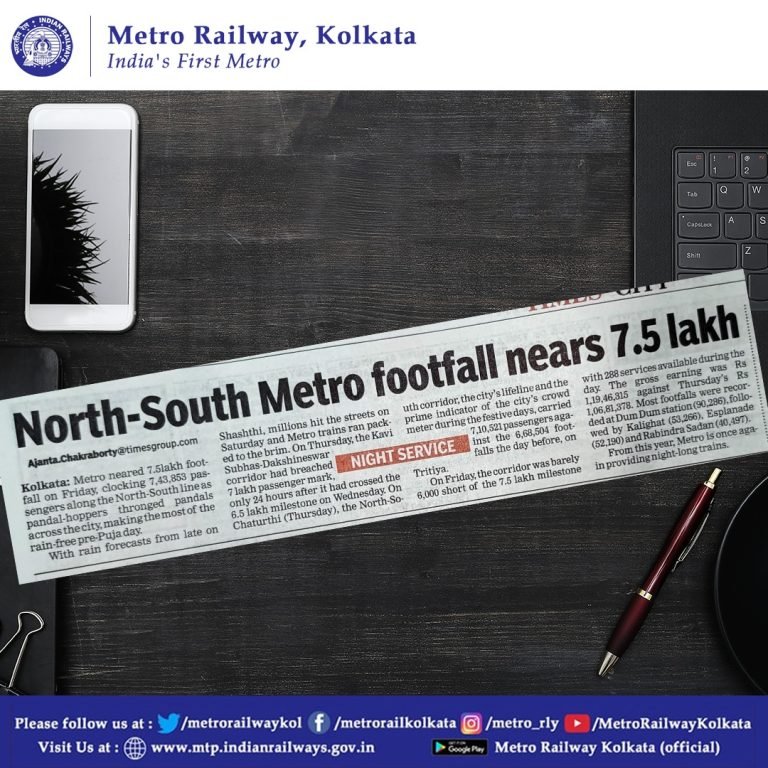
KOLKATA (Metro Rail News): Pandal hoppers flocked to pandals all over the city to make the most of the rain-free pre-Puja day. The Metro recorded 7,43,853 footfalls of passengers along the North-South line.With rain expected starting late on Shashthi, millions of people hit the streets on 1st October, and Metro trains were jam-packed. On 29th September, the Kavi Subhas-Dakshineswar corridor exceeded 7 lakh passengers only 24 hours after it had crossed the 6.5 lakh milestone on 28th September.
Footfalls in Kolkata Metro has crossed 7 lakhs mark. North-South Metro carried 7,10,521 passengers on 29th September (Chathurti). Total of 288 services were run on that day to cater to the Metro users. Metro has earned Rs.1,06,81,378 by selling tokens, Smart Cards and recharging Smart Cards on that day.On 29th September, the maximum footfalls of 88,687 were recorded at Dumdum. Esplanade recorded 52,127 footfalls, followed by Kalighat 44,997 and Rabindra Sadan 41,962 footfalls.Last time on 27.11.2019 Metro carried more than 7 lakhs passengers. on that day 7,01,149 passengers travelled in North-South Metro.East-West Metro carried 42,866 passengers on 29.09.2022.7.5 lakh people throng the North-South Metro on the pre-puja day of Shasthi pic.twitter.com/t5Ng52RkUZ
— Metro Rail Kolkata (@metrorailwaykol) October 2, 2022
Western Railways to introduce first solar power AC EMU
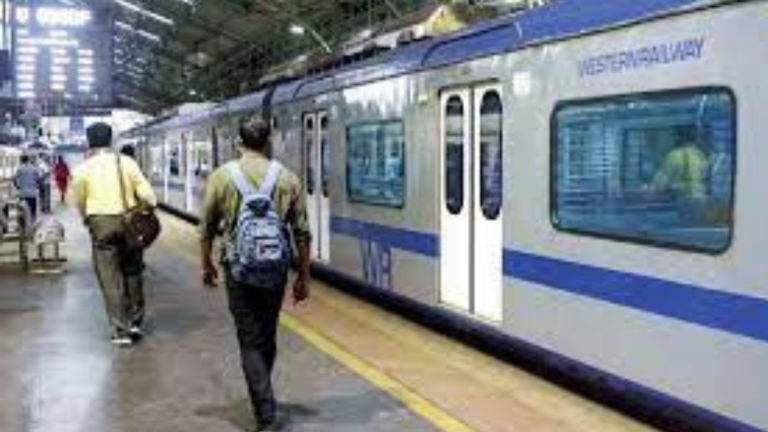
MUMBAI (Metro Rail News): The Western Railways is getting ready to introduce solar-powered AC local Electric Multiple Units (EMU) which will be a first for Mumbai. A high-powered particularly designed train modeled after Train 18’s Semi-High Speed design will be the new EMU. The groundbreaking underslung motor-equipped train is built to operate on Mumbai’s flooded tracks and provides travelers with a hassle-free ride in any circumstance.Since, it was first introduced in 2018, the design and concept have reportedly been tested in a number of different ways. According to certain reports, an underslung motor may not function efficiently in the case of waterlogging problems. However, according to the ICF, the train has undergone several trials on various surfaces and zones and no problems with the underslung motors have been noted.The flexible, lightweight solar panels on the solar-powered AC local train can produce 3.6 kilowatts of electricity which can run the train’s lights and fans. Additionally, the seating capacity is increased from 1,028 to 1,116 due to the design of these rakes.The Western Railways also incorporated several features such as wider gangways for more people to walk on, CCTV surveillance, a regenerative braking system that allows up to 35% power savings and anti-skid rubberized flooring for passengers’ safety, to ensure traveler-centric services on the new rakes. Following a quick passenger survey more local trains will be equipped with solar panels.
Two hundred stations to revamp with modern facility : Ashwini Vaishnaw
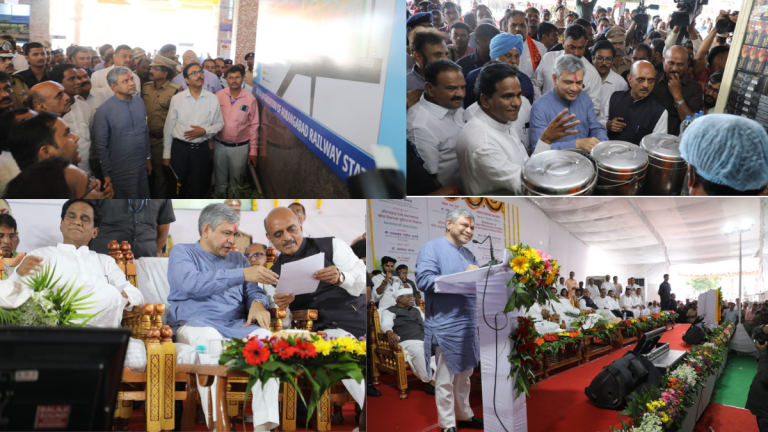
AURANGABAD (Metro Rail News): Railway Minister Ashwini Vaishnaw on 3rd October announced the modernisation of around 200 railway stations across the country. He announced while attending the foundation stone laying ceremony for the Development of Coach Maintenance Facilities at Aurangabad & Jalna Railway Stations in Maharashtra.
“Tendering process for 47 railway stations is completed while physical work has started at 32 stations. The railways are being transformed. The government has prepared a master plan to revamp 200 railway stations. Overhead spaces will be created on the stations which will have world-class facilities including waiting lounges and food courts besides amusement facilities for children,” the minister stated during the inaugural ceremony.Railway Minister Ashwini Vaishnaw stated that the railway stations will serve as a platform for the sale of local goods. He also highlighted the role played by the Marathawada region in the construction of the Vande Bharat Express train, stating that 100 of the 400 Vande Bharat trains that will be built for India will be manufactured in the coach factory at Latur, Marathawada.According to the Minister, the government didn’t provide any justification for “Rate of Return” to approve a project. Ashwini Vaishnaw praised the country’s connectivity infrastructure, stating thanks to the PM Gati Shakti scheme, all areas of the nation are now connected via either highways or railways. He assured the people that sufficient connectivity would also be offered to Marathawada.The Aurangabad coach maintenance facility can now accommodate 18 coaches, but Ambadas Danve, the leader of the opposition in the Maharashtra Legislative Council has called for the capacity to be increased to 24 coaches.In response, Vaishnaw has ordered a review of the demand and also instructed the officials to send a proposal for the same in the next 15 days.Enhancing safety of Rolling Stocks & Train Operations!
— Ministry of Railways (@RailMinIndia) October 3, 2022
Development of Coach Maintenance Facilities at Aurangabad & Jalna Railway Stations will ensure the highest standards of coach cleanliness & enhance the potential to introduce more trains.#RailInfra4Maharashtra pic.twitter.com/olRFaWCL5U
NCRTC MD leads a series of inspections in the Priority Section
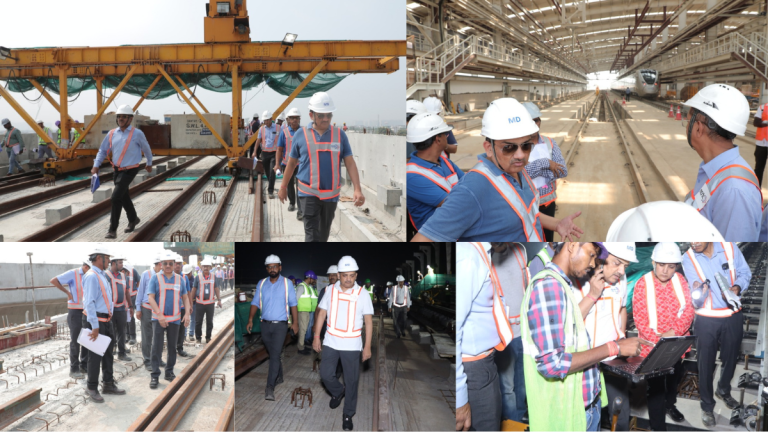
NEW DELHI (Metro Rail News): Shri Vinay Kumar Singh, Managing Director, NCRTC along with other senior officials inspected the implementation progress in the Priority Section. The team is gearing up for trial runs of the country’s first RRTS train.Two days back, they witnessed the crucial track laying activities near Guldhar and Duhai Depot stations. During the visit, conducted at night, Shri Singh took stock of the ongoing works and had detailed discussions with the field engineers & contractors about efficient deliveries. On 1st October, Shri Singh, along with other senior members of Team NCRTC, inspected the activities being carried out for the installation of systems and sub-systems including OHE, Signaling, Track laying, Escalators & Lifts, etc. at several sites in the Priority Section.The team inspected the works being carried out at Guldhar Station to Duhai Station then the viaduct from Duhai Station to Duhai Depot Station on foot and finally Duhai Depot. The inspection at Duhai Depot which is key for the operations in the Priority Section, covered the Admin Building, Centre of Innovation ‘Aparimit’, preparations for train trial runs, etc.
NCRTC is all set to start operations on the Priority Section, Sahibabad to Duhai of the Delhi-Ghaziabad-Meerut RRTS Corridor early next year.
GMRC floats tender for Customer Facilitation Services at Metro Stations
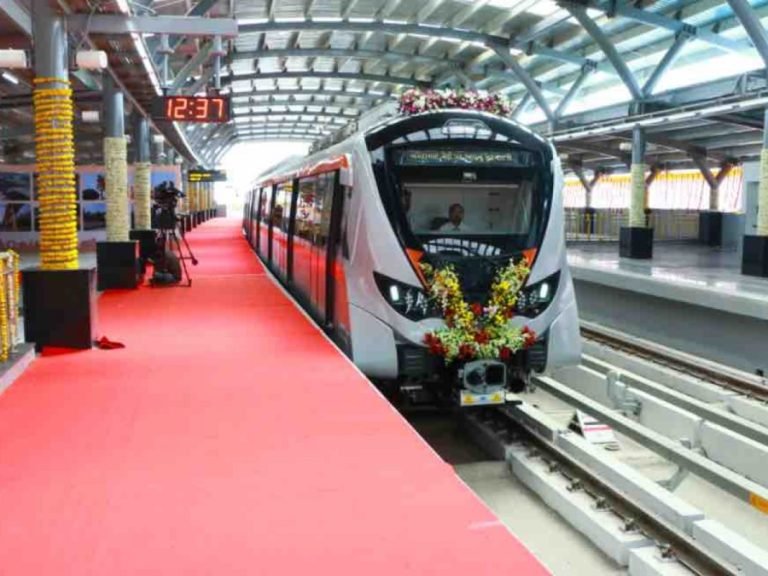
AHMEDABAD (Metro Rail News): GMRC floats tender for eligible bidders for ‘Contract for Customer Facilitation Services at Metro Stations of Ahmedabad Metro Rail Project Phase-1′.Tender No: GMRC/O&M/CFS-01(R)/2022Name of Work: Contract for Customer Facilitation Services at Metro Stations of Ahmedabad Metro Rail Project, Phase-1.Approximate Cost of Work: INR 15 CroreTender Security: INR 15 LakhCompletion Period of Work: 02 YearsDocument Download Start Date: 29th September 2022Document Download End Date: 20th October 2022Pre-Bid Meeting: 04th October 2022Bid Submission Start Date: 29th September 2022Bid Submission End Date: 20th October 2022Tender Opening Date: 20th October 2022Tender Fees and Tender Security is exempted for Micro & Small Enterprises (MSEs) registered with District Industries Centre or Khadi & Village Industries Commission or Khadi & Village Industries Board or Coir Board or National Small Industries Corporation or Date of Handicraft & Handloom or any other bodies specified by Ministry of Micro, Small & Medium Enterprises for appropriate category, and have valid registration certificate as on date of tender submission.
The MSEs would not be eligible for exemption of Tender Fees and Tender Security if they are not registered for the appropriate category or they do not have valid registration as of the date of tender submission.
Metro Rail Projects in India overtakes Japan : Hardeep Singh Puri
AHMEDABAD (Metro Rail News): Union Minister for Housing and Urban Affairs, Hardeep Singh Puri said that India with 810 km of Metro Rail has overtaken Japan with regard to the length of Metro projects. “After the inauguration of Ahmedabad Metro, the coverage of Metro Rail in India reaches 810 km. It is a matter of pride that India is among leading countries with respect to the total length of Metro Rail,” Puri said, adding that the country has not only overtaken Japan, but also has 982 km of metro rail under construction.“Once this (982 kilometers of Metro Rail) finishes, India will overtake South Korea and United States and will reach the second position in the world. I am expecting this to happen within next 1-2 years,” he added. Puri said that the metrorail network in India was limited to 248 kilometers between 2002-14.The first modern network was started in Delhi in 2002 by Vajpayee government. Only 248 kilometres of the metro network expanded up till 2014. There has been noticeable progress in the development of the metro since Prime Minister Narendra Modi took over the development of the nation in May 2014, he remarked.According to Puri, barely Rs 1.57 lakh crore was invested in urban development in India between 2004 and 2014. However, Rs 16.5 lakh crore has been invested during the past eight years. It is around ten times greater. By 2030, Ahmedabad would rank as India’s eighth megacity.Kawazu Kunihiko, Chargé d’Affaires ad interim, Embassy of Japan said that “We would like to congratulate on the successful completion of the project and the ceremony held on the occasion of the 70th anniversary of the establishment of diplomatic relations between India and Japan. Due to the rapid expansion of population and economic activities, traffic congestion and traffic pollution have become a major concern for the city. Ahmedabad metro will provide the alternative choice of city transportation and shall also ease traffic congestion and pollution.” “ The metro is well planned as a part of the integrated urban transportation of the city. Further, it is expected to contribute to further economic development and the further transaction in Ahmedabad,” Kunihiko added.“JICA has been assisting India in achieving its socioeconomic development goals, and this Metro Rail System Network is one example”, stated Saito Mitsunori, Chief Representative of JICA’s India Office.
BMRCL all set for trial run on Baiyappanahalli – Whitefield stretch

BANGALORE (Metro Rail News): Bangalore Metro Rail Corporation Limited (BMRCL) is all set to run the trial on the Baiyappanahalli – Whitefield stretch of Namma Metro’s Purple Line by the end of October.New roads were laid on 28th September night at the entrance to the Whitefield depot to make it easier to transport Metro’s new coaches from Peenya to Whitefield. The process of shifting new coaches will soon start there and trial runs between Baiyappanahalli and Whitefield are likely to start in the third week of October.BMRCL MD, Anjum Parwez stated that, “We will be shifting six coaches one by one in trailers during nights.” “Seven new trains manufactured by BEML Ltd will be inducted into this line. The roads were laid to make them wider for transportation,” he added.While work at the Whitefield depot was delayed by rain, the landing platform is ready. “Trial runs using trolleys are already underway,” he said. “We are trying to launch by the first quarter of 2023,” he said.People will be able to travel from Whitefield in the east of the city to Kengeri in the west once the Purple Line will be operational. The extended Purple Line from Mysuru Road station to Kengeri is already operational. It is anticipated that the line connecting Kengeri and Challaghatta will be operational next year. Construction of a depot at Challaghatta is in progress.Meanwhile, BMRCL has issued a public notice about test charging 750 V DC third rail sections between Whitefield and K.R. Puram stations with effect from October 15. “The general public is advised against entering the viaduct in these places without authorization. The BMRCL will not be liable for any investigation or casualty resulting from the unlawful act”, stated an official.
Ahmedabad Metro Rail Project : Dilip Buildcon emerges as lowest bidder
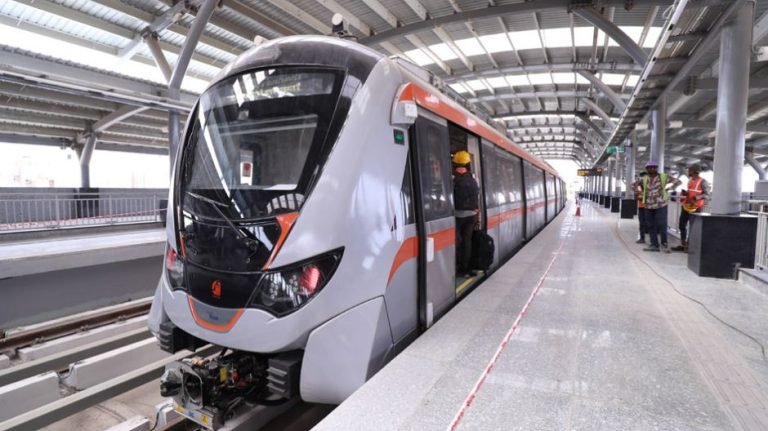
AHMEDABAD (Metro Rail News): Dilip Buildcon has been designated as the Lowest bidder for the Gujarat Metro Rail Corporation (GMRC). The project entails building a 7.553 Km elevated viaduct and seven stations including E&M, architectural finishing, roofing, plumbing, signage and others from Sector I to the Mahatma Mandir in Gandhinagar, Phase 2 of the Ahmedabad Metro Rail Project (Package C3).The third and last segment of this 28.254 Km phase will see the north-south Red Line of Ahmedabad extended by 22.838 km from Motera Stadium to Mahatma Mandir via 20 new stations, as well as a 5.416 km spur from GNLU to GIFT City that contains 2 new stations.In February 2022, Gujarat Metro Rail Corporation (GMRC) floated tenders for its civil construction contract with an estimated cost of Rs. 610 crores. The project would take 24 months to complete and will cost Rs 723.45 crore (GST excluded).Construction projects in the roads and irrigation sectors are Dilip Buildcon’s core business. They specialize in building city roads, state and national highways, culverts, and bridges. The 7 elevated stations of this section are Sachivalaya, Akshardham, Juna Sachivalaya, Sector-16, Sector-24 and Mahatma Mandir.DBL’s bid of Rs. 723.45 crore was 18.59% greater than GMRC’s estimate. Hence, the deal will undoubtedly go to negotiations table to be finalized. This section’s design was prepared by SYSTRA MVA Consulting (India) as the DDC and its construction will be financed by Agence Française de Développement (AFD). The DDC hired SYSTRA MVA Consulting (India) to design this segment, and Agence Française de Développement will finance its construction (AFD).
PM Modi to inaugurate 6th edition of IMC, launch 5G services
NEW DELHI (Metro Rail News):Ushering in a new technological era, Prime Minister Narendra Modi will launch 5G services on Oct 01 at 10 AM in Pragati Maidan, New Delhi. 5G technology will provide seamless coverage, high data rate, low latency and highly reliable communications. It will increase energy efficiency, spectrum efficiency and network efficiency.Prime Minister will also inaugurate the sixth edition of the India Mobile Congress (IMC). The IMC 2022 is scheduled to be held from 1st to 4th October with the theme of “New digital Universe”. It will bring together leading thinkers, entrepreneurs, innovators, and government officials to discuss and showcase unique opportunities emerging from the rapid adoption and spread of digital technology.The demonstration of the working of 5G services from an underground tunnel of the Delhi Metro‘s upcoming station in Dwarka Sector 25 is also expected on the event. The Airport Express Line is being extended by Delhi Metro Rail Corporation (DMRC) from Sector 21 Metro Station to the upcoming India International Convention Centre (IICC) at Sector 25, Dwarka. “A portion of the tunnel at upcoming IICC premises has been chosen to showcase the working of the 5G network inside the tunnel to the prime minister,” a source said.The prime minister will be shown various activities during the demonstration and he is also expected to interact with those present on the occasion, the sources said. The lieutenant governor recently met with representatives of DMRC, a private telecom business and other officials to discuss the event’s preparations. There is a 5G setup inside the tunnel equipped with cameras, optical fibre connections and telecom equipment. The DMRC has offered logistical help for the 5G roll-out demonstration.
The 5G testbed is a significant step for self-reliance in the direction of vital and modern technologies, the prime minister said in a speech at the Telecom Regulatory Authority of India (Trai) silver jubilee celebrations. Currently, India has 3G and 4G communication networks and companies are preparing to introduce and develop 5G services. Agriculture, health, education, logistics, and other industries will benefit from the 5G network.The endeavour to bring out the 6G network by the end of this decade has already been initiated by a task force.
Mumbai Monorail’s fleet soon to get one more rake
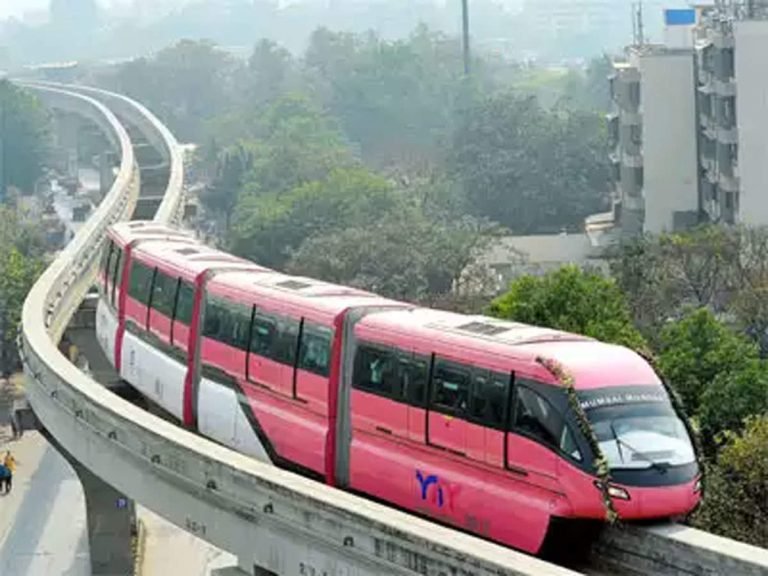
MUMBAI (Metro Rail News): The Mumbai Monorail service will shortly receive a new rake which will increase the frequency of service on the line.The new rake was compiled indigenously in Wadala. “This new rake was already provided by the Ex-Contractor Scomi engineering, the Malaysia-based company. However, it was never used as it was unfit for operations. We have fitted it with the requisite machinery that was procured indigenously and have assembled the rake here in Mumbai,” an official claimed.The original developer and operator of the service SCOMI, had a contract with the transport company that had previously been canceled due to failure in fulfilling contractual obligations“The rake did not have any spare parts and there were not even seats inside. Thus, it was deemed unfit for operations. We have built the rake using indigenous components completely. And now it is ready for operations. In the next few days, the said rake will be added to the fleet.”There will be eight monorail rakes in use after the new rake is added. With only one rake expected to run every 22 minutes, Monorail services are erratic due to a lack of rakes. The schedule is frequently difficult to adhere to, and passengers frequently complain about delays in monorail services. The increased rake will increase service frequency to every 15 minutes.The official stated that it is anticipated that the number of trips would increase to 142 and that daily ridership will rise to 25,000 with the launch of the new rake which was entirely built by the Monorail authority. The Mumbai monorail currently has seven running rakes with 22-minute service intervals. The monorail logs 15,000 ridership daily and does a total of 114 trips every day.Meanwhile, the first prototype should be delivered to the transport authority by April 2023. The authority has purchased 10 new monorail rakes. The contract for designing these rakes has been awarded to an Indian manufacturing company, Medha Servo Drives Private Limited.
PM Modi inaugurates and travels in Ahmedabad Metro Phase I
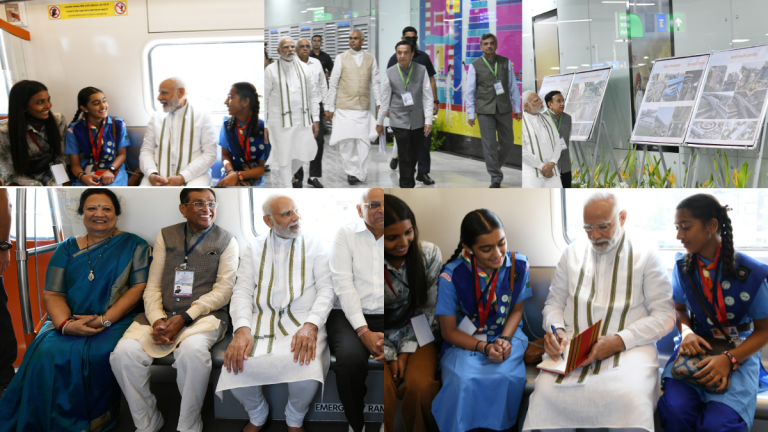
AHMEDABAD (Metro Rail News): Prime Minister Narendra Modi inaugurated Phase 1 of the Ahmedabad Metro Rail Project between Thaltej and Vastral and also travelled on the train on 30th September.He flagged off the Vande Bharat Express train from Gandhinagar railway station in the morning and arrived at Kalupur station, where he launched the project on the metro rail’s east-west corridor.At Kalupur station, the prime minister signalled the metro train to depart. From there, he boarded the train and travelled to the Thaltej metro station. Bhupendra Patel, the chief minister of Gujarat, travelled with him along with party MPs CR Paatil and Kirit Solanki.The 21-Km corridor project having 17-station between Thaltej and Vastral become operational after the inauguration. According to a press release from the Gujarat Metro Rail Corporation (GMRC), this route comprises a 6.6 Km subterranean stretch with four stations.On March 4, 2019, the prime minister inaugurated a section of Phase 1 of the project that spans 6.5 Kilometres from Vastral to Apparel Park. The project received approval in 2014. According to the GMRC, metro rail tickets will cost between Rs 5 and Rs 15.The project’s second phase which will essentially be an extension of the first phase will connect Gandhinagar to Ahmedabad. Two corridors will be included in this phase: one would be a 22.8-km route from Motera Stadium to Mahatma Mandir with 20 stations, and the other will be a 5.4-Km route from Gujarat National Law University to GIFT City with two stations. The entire project route of Phase 2 will be elevated.