

Nirmala Sitharaman Allocates Rs 2.40 Lakh Crore: Highest Ever Capital Outlay For Railways
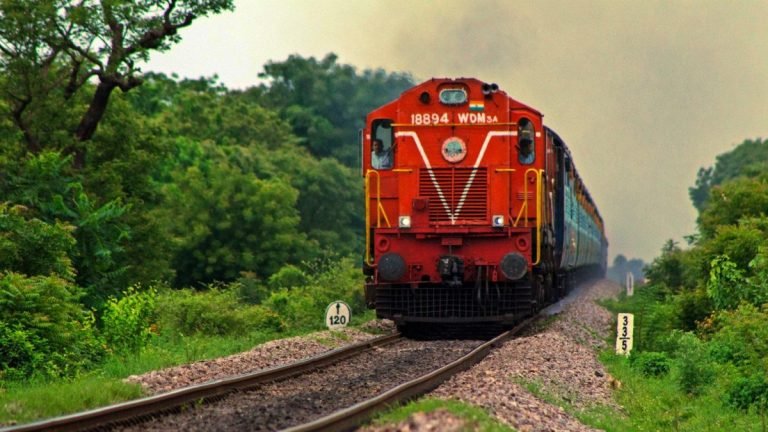
NEW DELHI (Metro Rail News): Nirmala Sitharaman, the Finance Minister, has announced the highest ever capital outlay of Rs 2.40 lakh crore for Railways, which is almost nine times the amount allocated during the financial year 2013-14. The primary focus of this year’s railway budget will be on completing current projects and developing infrastructure to have high-speed trains operational shortly.In the Union Budget 2022, Finance Minister Nirmala Sitharam emphasized the Gati Shakti National Master Plan, which is expected to remain a priority for the Government.Funds allocated this year are expected to go towards building new tracks, increasing the number of semi-high-speed Vande Bharat trains, introducing hydrogen-powered trains, and the Ahmedabad-Mumbai bullet train project.
Country’s first RRTS project receives budgetary allocation
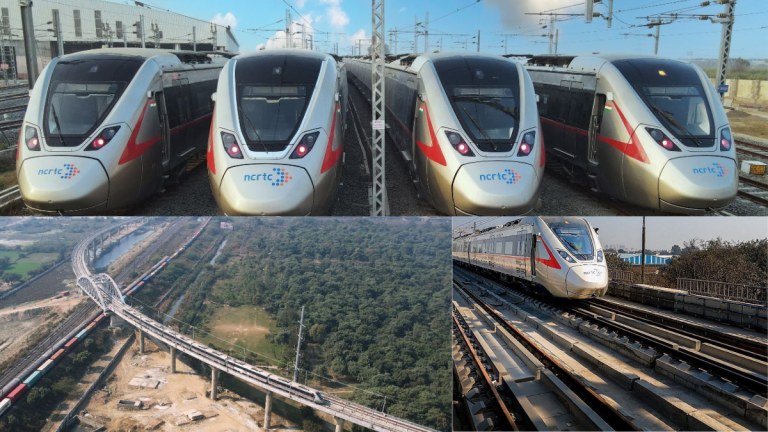
NEW DELHI (Metro Rail News): Government of India has allocated Rs. 3596 crores to country’s first Regional Rapid Transit System (RRTS) project in the union budget presented today in the parliament.India’s first Regional Rapid Transit System (RRTS) corridor, Delhi-Ghaziabad-Meerut is being constructed at a rapid pace at various locations of Delhi, Ghaziabad and Meerut. Stations on the corridor are taking shape specially the stations of the priority section.More than 14,000 workers and 1100 engineers are working day and night at various sites. So far, construction of 65% elevated viaduct, in addition of 35% of underground section (tunnel) have been completed for the corridor.The operation of the priority section of the corridor is to be started in this year for which train testing is being done on the RRTS tracks. The upcoming operation of this section will open new regional rail services in NCR and will provide a modern, air-conditioned, fast and reliable transport service to the commuters. The complete corridor will be opened for public by 2025.With a design speed of 180 kmph and operational speed of 160 kmph, the RRTS trains will be unique and one of its kinds in India. The aerodynamic coaches will be self-propelled on electric traction with 25KV AC System. The RRTS trains are being designed with the state-of-the-art latest technology
Chennai Metro Phase-II Corridors: Tata Projects Commemorates Assembly of Third Terratec EPBM
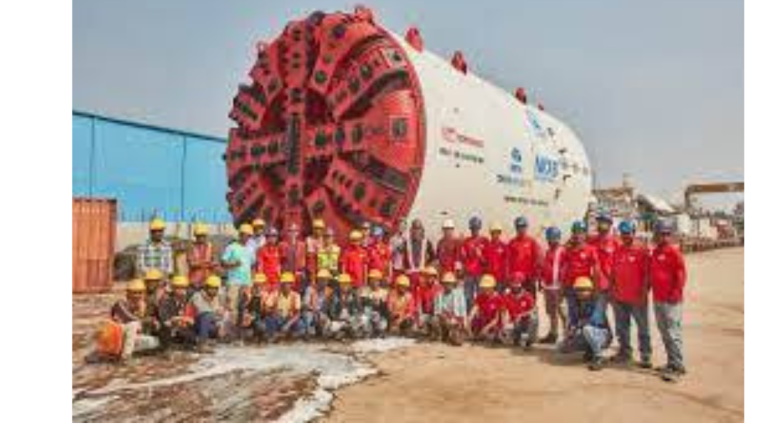
CHENNAI (Metro Rail News): Tata Projects Ltd, the contractor, commemorated the assembly of the third out of five 6.61m diameter Terratec EPBMs they ordered for use in their underground works contracts with the Chennai Metro Rail Phase-II Corridors project in India.Terratec is providing five of the total seven TBMs needed for the package. These TBMs will be used by Chennai Metro Rail Limited (CMRL) to construct Phase 2 – Corridor 3, Package-TU01, from Venugopal Nagar Station to Kellys Station. This project entails making a pair of tunnels for a total of 18km in length, spanning 9km.In October 2022, TBM S96 was the first to commence operations among all the TBMs, beginning excavation towards Madhavaran High Road.TBM S97 followed suit, also beginning excavation from the same shaft – Madhavaran Colony – heading towards Venugopal Nagar (of Line-5) to Kellys Station. TBM S98 has also been dispatched, while TBM S99 is currently in the midst of the on-site assembly. Additionally, the fifth machine (S81B) has passed the Factory Acceptance Test (FAT) in Pune for Package TU01 of the 118.9km Chennai Metro Phase 2 project. It is noteworthy that this Ø6.61m EPBM was refabricated as per the ITA guidelines, a first-time occurrence in India.It was initially used to construct a 2144m tunnel between Swargate and Budhwar Peth stations for the 16.6km Purple Line of the Pune Metro Phase 1 project back in 2021-2022.Phase 2: Corridor 3 of the Chennai Metro project, Package TU01, includes the building of diaphragm walls and entrance/exit structures at Madhavaram Milk Colony Station, Murari Hospital Station, Ayanavaram Station and Purasaiwakkam High Road Station, as well as the launching and retrieval shafts at these stations.One of the significant difficulties of the project is tunnelling beneath existing structures in densely populated areas. The TBMs have a dome-style cutter head designed to work efficiently in various geologies – mainly sand, silt, clay and occasionally weathered rock. As the TBMs advance, 1,400mm wide and 275mm thick universal reinforced concrete lining rings are installed, consisting of five segments and a key.
PM Sheikh Hasina to Launch Construction of Bangladesh’s First Mass Rapid Transit Line-1
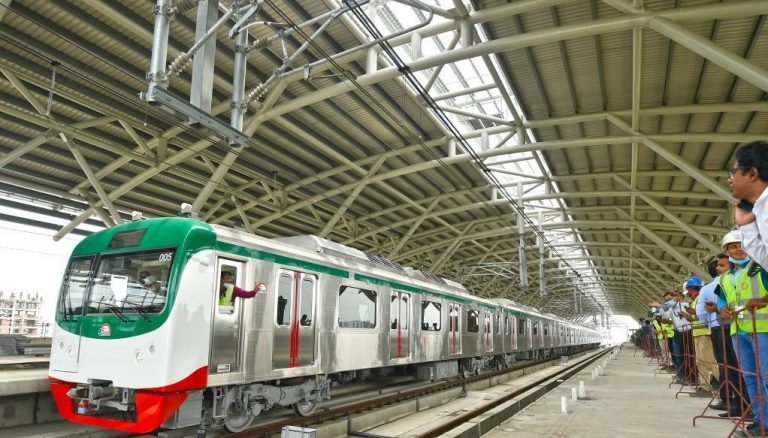
BANGLADESH (Metro Rail News): Sheikh Hasina is slated to launch the work for the country’s first-ever Mass Rapid Transit Line-1 at 11:00 am on February 2 at Sector-4, Purbachal. This was reported on+ January 30 by the Managing Director of Dhaka Mass Transit Company Limited, MAN Siddique.The government will be constructing a 31.241-kilometre route between Airport-Kamalapur and Purbachal-Natun Bazar-Pitalganj, Rupganj, which will be both underground and elevated.He stated that the DMTCL had taken the initiative to initiate the mega project. Per the project specifications, the first railway depot of MRT Line-1 will be constructed in the Pitalganj area of Narayanganj, and all necessary arrangements have been made to commence the construction works. It was also reported that part one of MRT Line-1 is the Airport Route (from the Airport to Kamalapur), which is 19.872 kilometres long and is underground, with 12 stations. Part two is the Purbachal Route (from Natun Bazar to Pitalganj Depot, Rupganj), with 11.369 kilometres in length and is elevated, having nine stations; seven of these stations will be above-ground, while Natun Bazar and Nadda stations will be underground, as part of the Airport route.The Managing Director declared that Natun Bazar station would offer an interchange service with MRT Line-5 (Northern Route), enabling travellers to reach the Airport route from Purbachal or Purnachal through the interchange.The project report stated that MRT Line-1 would take twenty-four minutes from Dhaka airport to Kamalapur, with a stop at twelve underground stations, and twenty minutes to travel from Notun Bazar to Purbachal, with a stop at seven stations. Furthermore, it reported that when MRT Line 1 is launched, this route will afford eight lakh passengers to travel.The MRT Line-1 will consist of underground and elevated stations. The ticket counter and other related facilities will be situated on the first basement level for the underground stations, and the platform will be located on the second level.The ticket counter and platform will be on the third floor for the elevated stations. In addition, elevated and underground stations will be conveniently equipped with lifts, stairs and escalators.The Dhaka Mass Transit Company Limited has contracted with Japan’s Tokyo Construction Company Limited and Bangladesh’s Max Infrastructure Limited for the project, which will be executed in twelve packages.
Southern Railways and ICF Constructing Replicas of Steam Locomotives to be Run on Electricity
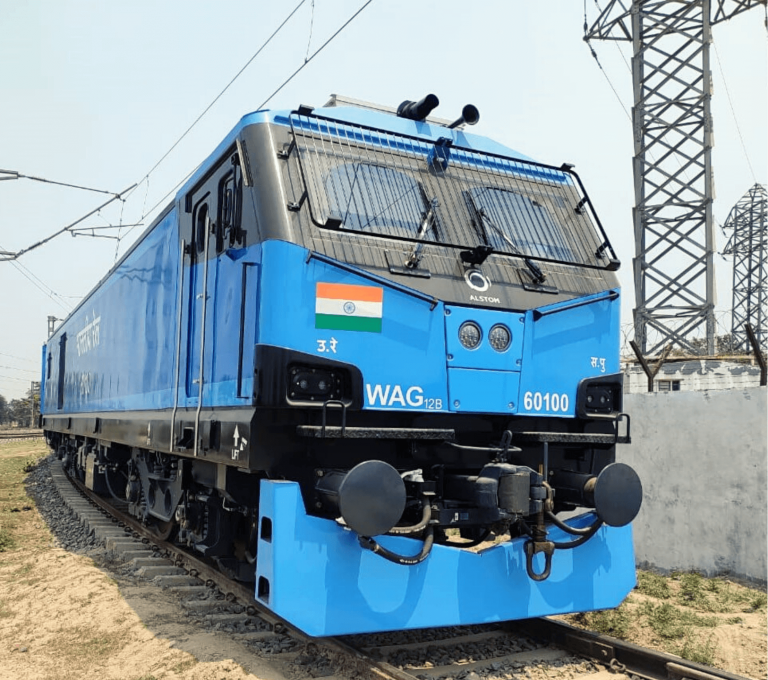
CHENNAI (Metro Rail News): Southern Railways and Integral Coach Factory (ICF) in India are constructing replicas of steam locomotives running on electricity.According to The Times of India, it is anticipated that the replica, created by Southern Railway, will be completed in three to four months, with the shell already completed.The locomotive will have a pantograph to gather power from the overhead cable. Additionally, based on the Vande Bharat design, ICF will soon begin designing a locomotive with a steam engine theme. Avadi EMU car shed fabricates a heritage engine based on the EMU platform.Southern Railway divisional railway manager Ganesh quoted the news publication: “A major disadvantage of steam locomotives is that due to the capacity of coal, they can only travel at limited speed and distance.”Southern Railway tested a commercial run of the locomotive a few years back, which has led to the decision to make new locomotives with a similar design to the steam locomotive EIR 21 from Egmore to Kodambakkam to allow the special heritage train to travel further and faster.Additionally, in August last year, ICF announced their manufacturing of metro rail coaches for Maharashtra Metro Rail Corporation (Maha Metro) to execute the metro rail projects in Nagpur and Pune.
Two bidders bids for Mumbai Metro’s Electrification Contract Package CA-40

MUMBAI (Metro Rail News): The Technical bids for the electrification contract package CA-40 of Line 28 for the Mumbai Metro Rail Project has recently been opened by the Mumbai Metropolitan Region Development Authority (MMRDA).The Authority has revealed that only two bidders, KEC International Ltd and Siemens Ltd, have put forward bids to deliver 25kV OHE and associated systems for Line 2B of the Mumbai Metro.The scope of work includes design, manufacture, supply, installation, testing & commissioning of 2 nos 110 KV RSS, including 110 KV. 33kV, 25kV cabling work, complete 25ky OCS with SWS, 33kV aux power distribution system including 33/0.415 KV ASS and complete SCADA systems for the main line and depot of Mumbai Metro Line 28.In November 2022, a tender notice was issued for the contract package with an estimated cost of Rs 443.36 crore and a completion deadline of 3 years.Both bids have now been sent for technical evaluation by the Mumbai Metropolitan Region Development Authority (MMRDA).The 2B (Yellow Line) of the Mumbai Metro Rail Project is a 23.649 km extension of the existing 18.6 km Line 2A (Dahisar-DN Nagari). It will connect D.N. Nagar to Mandale via BKC, with 22 elevated metro stations.The stations will be built at ESIC Nagar, Prem Nagar, Indira Nagar, Nanavati Hospital, Khira Nagar, Saraswat Nagar, National College, Bandra, MMRDA Office, Income Tax office (TO), ILES, MTNL Metro, SC Barve Marg, Kuria Terminal, Kuda (EL EEH, Chembur, Diamond Garden, Shivaji Chowk, BSNL, Mankhurd and Mandale.
Residents looking forward to extension of Chennai Metro Rail Line

CHENNAI (Metro Rail News): More than 10,000 commuters use Chennai Airport Metro Rail station every day, with many air passengers taking the Metro to get to the airport and hundreds from southern areas such as Pallavaram, Chromepet, Chitlapakkam, Tambaram and other nearby places using the Metro to travel around the city.V. Santhanam, a Chromepet resident, expressed that the population is looking forward to the Chennai Metro Rail’s project to extend the line from the Airport to Kilambakkam, as it will reduce commute times for numerous people.He remarked that when governments announce such projects, it brings about high expectations among commuters and that the proposed extension would improve mobility and profoundly impact the lives of thousands of commuters.Dayanand Krishnan, a resident of Chitlapakkam, stated that many rely on Metro Rail for their daily commute to areas such as Anna Nagar, Anna Salai, and Koyambedu. He went on to express his opinion that “Though there is a feeder bus from Chennai airport, the services are not adequate and the longer the government takes to act, the cost of the project will continue to increase. Therefore, it is vital for the authorities to hold inter-departmental meetings frequently, address any issues, and then take the necessary steps for financing and construction.”An official from Chennai Metro Rail Ltd. (CMRL) reported that the detailed project report on the section had been sent to the government. The official further noted that “The project is actively being reviewed by the State government. The proposal has been presented to the 24th High Power Committee for approval and has been recommended for the approval of the Government of Tamil Nadu.” K.P. Subramaniam, a former professor of Urban Engineering at Anna University, commented on the fact that while projects of this scale take into consideration execution time, it is essential to reduce any system-related delays and to expedite it as quickly as possible.Shreya Gadepalli, an urban transport expert and founder of Urban Works Institute, stressed that priority must be given to special projects if they are to be carried out on time, particularly the Kilambakkam Bus Terminus as it is essential for providing commuters with easy access.She further stated that until Metro Rail is completed, the people require a swift solution, and the government should thus invest significantly in the fleet of MTC buses. She noted that buses, once the source of pride in Chennai, have become unreliable and unpopular.Despite the immense amount of money put into Metro Rail, buses have not received any support for the past decade. Gadepalli stated that an Airport-Kilambakkam extension would be enough to double the number of buses in Chennai and make them all-electric or AC with dedicated lanes so that they could quickly transport people to their destinations.
Vaishali to Mohannagar and Sahibabad Metro Extension Plan Postponed by UP Government

GHAZIABAD (Metro Rail News): Residents of Ghaziabad and Vasundhara of Uttar Pradesh were taken aback when the proposition to extend the Metro from Vaishali to Mohannagar and Sahibabad was put on hold, thus prohibiting the Metro from travelling beyond Vaishali.The Uttar Pradesh government has requested the DMRC and CDA for a detailed report regarding the expenditure for the project. Notably, the locals had been agitating for nearly a year to extend the Metro from Vaishali to Mohan Nagar and Sahibabad. The metro corridor intended to be constructed between Vaishali and Mohannagar was 5.04 km in length and was planned to be built on an elevated structure. Four proposed stations included Prahladgarhi, Vasundhara Sector-14, Sahibabad and Mohannagar, from where passengers could board the Metro to their destination.The projected cost of this project was estimated at Rs 1908.22 crore, and a Detailed Project Report was formulated five years ago.A unique characteristic of this corridor was that Sahibabad Metro station would have joint entry and exit with the Delhi Meerut RRTS station.A survey indicated that 37,438 passengers would benefit directly from this track’s construction each day. Therefore, the people approached various senior officials and ministers in Lucknow with their demand for the expansion of the Metro on both these routes.The Sangharsh Samiti, the Federation of AOA and even some councillors were involved in this. As a result, it is said that this is the only project that can replace the Metro.
Bhopal Discoms Propose Rs 6.10 Per Unit Tariff For Metro Rail System

BHOPAL (Metro Rail News): In the annual revenue requirement petition filed for the 2023-24 financial year, Discoms have proposed a particular metro rail power tariff category. This includes a tariff of Rs 6.10 per unit and separates fixed charges to accommodate Bhopal’s upcoming metro rail system.Additionally, the tariff at which metro rail is charged in other states is also being considered, with Delhi having a rate of Rs 6.25 per unit, Telangana at Rs 4.95 per unit, Uttar Pradesh at Rs 7.30 per unit, Maharashtra at Rs 6.86 per unit, and Karnataka at Rs 5.75 per unit (in addition to the fixed charges imposed based on consumption).For the Fiscal Year 2023-24, Bhopal and Indore expect new connections of Metro Rail for Traction and Non-Traction activities.The Petitioners have attempted to attain the details regarding the projected load, load factor, etc., from the Madhya Pradesh Metro Rail Corporation Limited, yet have yet to be successful. In their Annual Performance Report, the Discoms informed the regulator that they are ready to cater to the connection demands of PMRCL, having analysed the tariffs applicable to Metro Rail in other states. Thus, the Petitioners have proposed a separate tariff and Tariff Category for this purpose, as the nature of services, load factor and other parameters are distinct from other categories, including Railways.
MMRC to Construct Proposed Underground Metro Line 11 from Wadala to CSMT
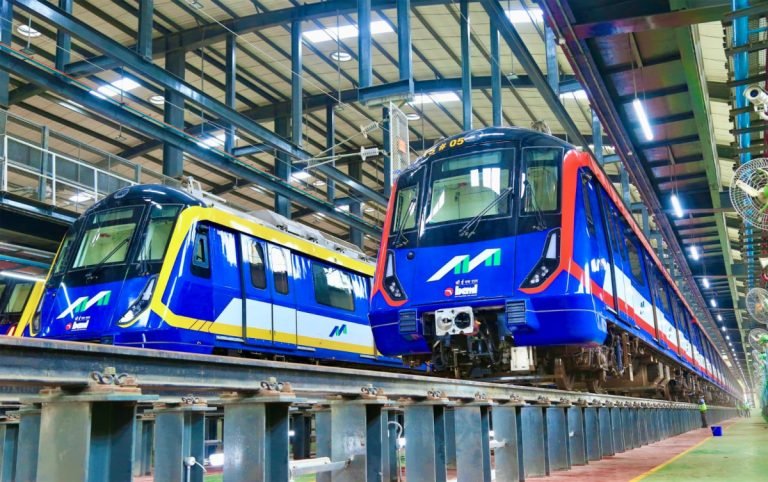
MUMBAI (Metro Rail News): Sources have indicated that the MMRC might be tasked with constructing the proposed underground Metro Line 11 from Wadala to CSMT (Chhatrapati Shivaji Maharaj Terminus). It was earlier thought that the MMRDA would be in charge of the Metro Line 11 project. Nevertheless, officials have declared that the state government has moved the assignment from the MMRDA to the MMRC as the latter is already engaged in constructing the underground Mumbai Metro Line 3, running from Colaba to SEEPZ via Andheri.Due to the considerable worth of the land, the MMRDA had planned for Line 11 to be partially underground and partially elevated. However, the MBPT still needed to provide the final authorization for their land to be used for the construction of Line 11, leading to the creation of the DPR. According to an official, no development on the ground has taken place thus far.The MMRDA had been negotiating with the Mumbai Port Trust to transfer land that would accommodate the underground metro, with plans to build the metro and monetize the land above it to finance other development activities. A Memorandum of Understanding (MoU) was discussed for this purpose.An official highlighted that the MMRDA could soon transfer the project to the MMRC, given that they may now be responsible for carrying out additional developments related to Metro Line 11.It is noteworthy that the MMRC constructed the city’s first underground line, Metro Line 3, and the tunnelling work began in September 2017, with the entire project taking five years to complete. At this point, the construction of stations, installation of systems, and other tasks such as track laying is being worked on. The MMRC aims to inaugurate Phase 1 (BKC to SEEPZ) of the metro line by December 2021.The MMRDA presented a plan to construct the 12.70 km-long Metro Line 11 (Wadala to CSMT) for Rs 8,739 crore in the DPR, which the Maharashtra government approved in 2019 with an expected completion date of October 2026. Japan International Cooperation Agency (JICA) agreed to fund Rs 2,022 crore of the project cost. Metro Line 11 is an expansion of the already underway Metro Line 4 (Wadala-Ghatkopar-Kasarvadavali), a 32.32 km-long fully elevated Metro Line 4 corridor with 32 stations, but unfortunately behind schedule. The work on Metro Line 4 started in October 2018.
Chennai Metro Rail’s Phase 2 Project: 82% of Required Land Acquired
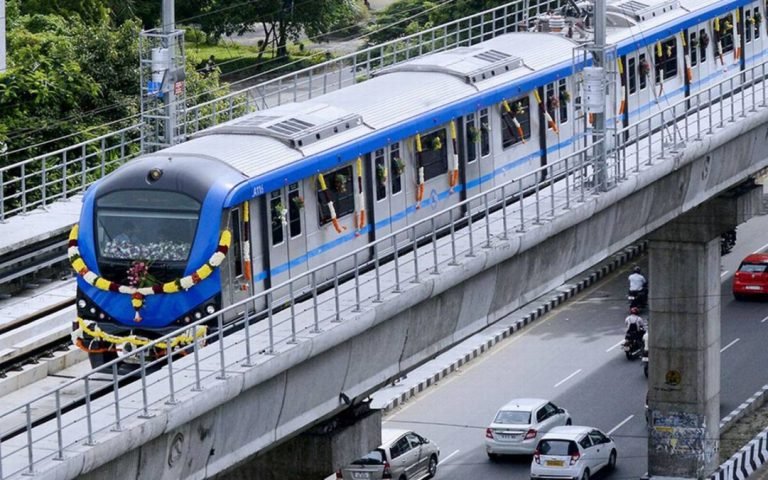
CHENNAI (Metro Rail News): The land acquisition process for the Chennai Metro Rail’s Phase 2 project is close to completion, with 82% of the required land already acquired.According to CMRL officials, out of the 112.72 hectares of land that the 118.9-km project needs, 93 hectares have been acquired. There are, however, some challenges in acquiring the remaining land in certain pockets, such as Kaliamman Koil Street, Vadapalani, and Arcot Road. The officials have stated that they are working to resolve these issues as soon as possible, as the contractors are keen to begin the project. Specific measures have been taken to simplify the land acquisition process for the ₹61,843 crore project. For instance, the stations have been reduced in size from 220 metres in Phase 1 to just 150 metres in Phase 2, and each station will have only two entry and exit points instead of four.The officials stated that measures were taken to make land acquisition more accessible and faster for the Phase 2 project, which is being executed at the cost of ₹61,843 crore. To that end, the size of stations was significantly reduced from 220 metres in Phase 1 to 150 metres in Phase 2, and the number of entry and exit points decreased from four to two.“We strived to avoid using private land as much as possible and only resorted to it when it was unavoidable,” an official said.Chennai Metro Rail aims to run the Poonamallee-Power House stretch within three years.
Tree Relocation Delays Phase 4 Corridors of Delhi Metro Rail Project
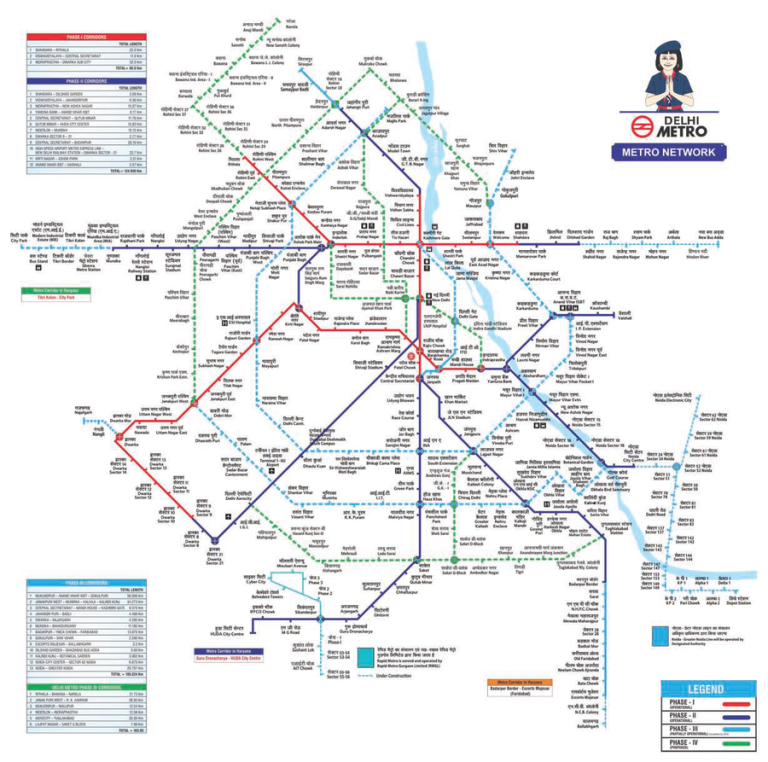
NEW DELHI (Metro Rail News): The Phase 4 Corridors of the Delhi Metro Rail project are suffering from a delay due to the lack of permission for felling and relocating trees located along the alignment, causing a cost increase of 15% and a delay of up to 30 months in certain sections. This has resulted in an additional expenditure of Rs 1,568.8 crore to the estimated cost of Rs 10,479.6 crore, thus bringing the total cost to Rs 12,048.5 crore for the Delhi Metro Rail Corporation (DMRC).Three of the six corridors proposed under Phase 4 of the Delhi Metro Rail Project Aerocity to Tughlaqabad, Mukundpur to Maujpur and Janakpuri West to RK Anam – were classified as priority corridors and were approved by the Central Government cabinet in March 2019.Most of the civil contracts for these corridors have been awarded to the selected bidders. However, the construction has been delayed due to the Department of Environment and Forest of the Delhi Government taking an “unjustifiably and inordinately long time” to grant permission to fell or translocate nearly 2,500 trees. Despite the delays causing a 15% cost overrun, the retendering of the work on these corridors might further increase the cost that will have to be borne by the Delhi Metro, according to an official. Additionally, files seeking approval from the Environment and Forest Department to fell and translocate trees have been pending for 30 months.As reported by sources, the Sonia Vihar to Yamuna Bridge stretch of the Maujpur to Majlis Park (Mukundourt) corridor has been delayed by almost 29 months, while the Yamuna Vihar to Bhajanpura and Sonia Vihar to Khajuri Khas stretches are running late by over 15 months. Similarly, the sources added that the Sangam Vihar to Saket G stretch of the Tughlaqabad-Aerocity corridor is delayed by 30 months.
CMDA To Raise Floor Space Index (FSI) For Properties Near MRTS and Chennai Metro Rail Routes
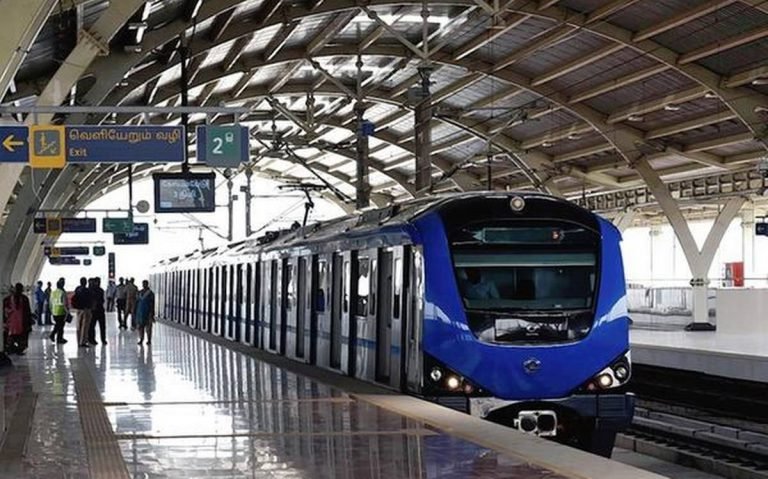
CHENNAI (Metro Rail News): The Chennai Metropolitan Development Authority (CMDA) is considering raising the floor space index (FSI) for properties near the MRTS and Chennai Metro Rail routes to 6.5 for the first time in Tamil Nadu. The state’s previous highest allowable FSI level was 4.87.According to sources, the action aims to increase commercial development along transit lines, improve employment accessibility and mobility, and build cheap housing in areas designated for such development.Development zones along railway lines have been split into three groups based on policies and procedures used in Mumbai, Gurugram, Ahmedabad, and Hyderabad, according to a study conducted by the Gujarat-based Center for Urban Planning and Policy (CUPP), Centre for Research on Architecture and Urbanism (CAU), and CEPT Research and Development Foundation.The categories are station area zones, which include plots within a 500-meter radius of rail station entrances and exits, transit-oriented development area zone 1 (TOD-1), which includes plots adjacent to other CMDA-designated corridors and plots along and above transit lines, and TOD-2, which includes plots within TOD zones but not included in TOD-1 or station area zones.The FSI limit has been suggested to be raised to 6.5 (up from 4.87) for plot areas of 3,000 square metres and above with a right-of-way of 18 metres under station area and TOD-1 zones. The study’s recommendation for TOD-2 calls for an FSI of 5.7 for plots larger than or equal to 3,000 square metres. According to the study, plot size and right of way have an impact on FSI use, and plots smaller than 3,000 square metres will not be able to use FSI of more than 4.87.In Indian cities, FSI regulations are in place to control the amount of construction allowed on a given plot size. For instance, an FSI of 1 permits the construction of either one story of 100 square feet or two levels of 50 square feet each on a parcel of land measuring 100 square feet. A FSI of 2 permits either four levels of 50 sq. ft. on the same plot or two floors of 100 sq. ft. each.An FSI of 2.5 along metro routes and an FSI of 4 along the Outer Ring Road were suggested in the prior comprehensive mobility plan, which is currently being amended, to encourage development outside of municipalities.
Chennai Metro to Get ‘Lite Metro’: CUMTA Begins Feasibility Study
CHENNAI (Metro Rail News): The “Lite Metro” may soon be added to Chennai’s public transportation system. The Chennai Unified Metropolitan Transport Authority (CUMTA) has chosen to carry out a first feasibility study on putting the Lite Metro project into action.The choice was made to increase ridership on the city’s Metro Rail network in mind, which necessitates assuring last-mile connectivity. The present Metro network will be connected to the Lite Metro lines.The study will examine potential locations for Lite Metro lines and their viability within the Comprehensive Mobility Plan (CMP) of CUMTA.The Chennai Metro Rail Corporation has implemented several steps to enhance last-mile connection for its commuters. Recently, Metro officials surveyed customers at a few stations to learn more about their last-mile connection needs.Currently, the Chennai metro offers feeder bus services from various sites to the metro stations.Greater Chennai Corporation (GCC) plans to construct multi-modal transport hubs in two critical areas in the city in yet another effort to improve connectivity between various forms of transportation, including the Metro rail. After getting off other forms of transportation, commuters will find it easier to access the Metro at the proposed hubs in Guindy and Washermenpet.The Metro network’s construction is moving forward in several parts of the city. Given that the CMRL has completed more than 80% of the land acquisition process, construction of Phase II is likely to begin quickly. Out of the 112.72 hectares total, as much as 93 hectares of land have already been secured.Even though the number of passengers has been rising consistently, people of the city have yet to show a higher range of patronage for the Chennai Metro. Between June 2015 and December 2022, more than 15 crore trips were taken, according to CMRL data. Six crore passengers used the Chennai Metro in 2022 alone.