

Work begins on FoB to Ease Pedestrian Movement at KR Puram Railways, Metro stations intersection
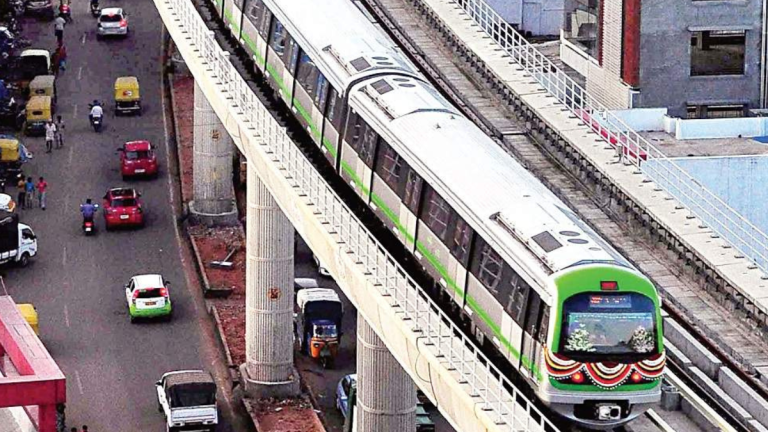
BANGALORE (Metro Rail News): Crossing the intersection of Old Madras Road and Outer Ring Road at KR Puram can be a real challenge for pedestrians, particularly senior citizens and children emerging from the railway station. This difficulty is likely amplified with the inauguration of the KR Puram Metro station in March, bringing increased passenger movement. Fortunately, Bangalore Metro Rail Corporation Limited has taken the initiative to construct a 30-metre-long foot overbridge, which will link the concourse level of the Metro station to the existing parking area of the railway station, providing a much-needed respite to pedestrians.BL Yashwanth Chavan, chief PRO of BMRCL, has stated that the groundwork for a footbridge in the middle of the road has begun. First, however, he must confirm if the FOB will be ready when Whitefield Metro is operational.A South Western Railway official reported that BMRCL is required to acquire land from BBMP in exchange for railway land and give it to the railways. However, Shyam Singh, Bengaluru divisional railway manager, mentioned that, in principle, the railways have already approved specific conditions. KR Puram is one of the most crowded railway stations in the city, and once it’s ready, KR Puram Metro will be an interchange station (Purple and Blue lines).Many passengers have been asking for a FOB at KR Puram for a while. Vinay B, a regular passenger, suggested that BMRCL install an elevator/lift for the proposed FOB. Hitesh K, a techie, brought attention to the fact that the junction is always congested due to the absence of FOB/subway for pedestrians. He suggested that SWR and BMRCL ensure the project is finished without holdups.
GA Infra to construct India’s first National Metro Rail Knowledge Centre

NEW DELHI (Metro Rail News): GA Infra Pvt Ltd, a leading infrastructure company in India, has been awarded the contract for designing and constructing the country’s first National Metro Rail Knowledge Centre. The centre will be located at the Vishwavidyalaya Metro Station in Delhi and built on a Public-Private Partnership (PPP) model.The National Metro Rail Knowledge Centre will serve as a hub for knowledge and innovation in the metro rail system, providing a platform for stakeholders to exchange ideas and collaborate. It will be a one-of-a-kind facility in India, aimed at promoting the growth and development of the metro rail sector. The centre will provide training and capacity-building opportunities for metro rail professionals, support research and development activities, and facilitate technology transfer and knowledge sharing.The centre will also play a crucial role in developing the metro rail sector in India. The Indian metro rail sector has witnessed significant growth in recent years, with several new metro projects being commissioned across the country. The National Metro Rail Knowledge Centre will provide a platform for stakeholders to come together and share best practices, innovations, and experiences, which will help further drive the sector’s growth.GA Infra is well-known for its expertise in delivering large-scale infrastructure projects in India. The contract award for the National Metro Rail Knowledge Centre is a testament to the company’s commitment to providing high-quality infrastructure solutions to the country. The company has a proven track record in delivering complex infrastructure projects and has a team of experienced professionals who are well-equipped to handle the design and construction of the centre.The National Metro Rail Knowledge Centre is expected to be a state-of-the-art facility that will provide world-class training and development opportunities for metro rail professionals. The centre will also serve as a platform for research and development activities, which will help to advance the metro rail sector in India. The facility will be equipped with modern training and simulation equipment, classrooms, conference facilities, and research labs, providing a comprehensive platform for learning and development.In conclusion, the National Metro Rail Knowledge Centre is a significant milestone in the development of the metro rail sector in India. The centre will provide a platform for stakeholders to exchange ideas, collaborate, and share best practices, which will help drive the sector’s growth and development. GA Infra is well-positioned to deliver the centre, and its award of the contract is a testament to the company’s commitment to providing high-quality infrastructure solutions to the country. The centre is expected to play a key role in promoting the growth and development of the metro rail sector in India and will be a valuable resource for metro rail professionals for years to come.
No Proposal for Vizag Metro Rail Project Received by Central Government: Kaushal Kishore
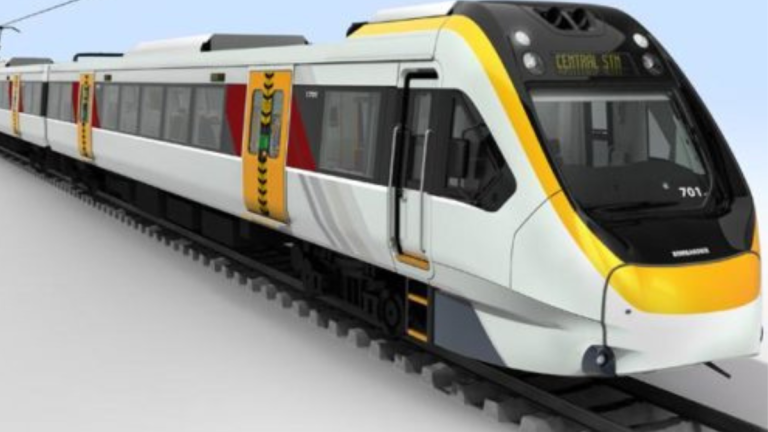
VISHAKHAPATNAM (Metro Rail News): In a written reply to Vizag MP MVV Satyanarayana and Anakapalli MP Beesetti Venkata Satyavathi, Union Minister of State for Housing and Urban Affairs Kaushal Kishore reconfirmed in the Lok Sabha on February 2 that the Union Government has not yet received any proposal concerning the Vizag Metro Rail Project. The former TDP government had created a detailed project report (DPR) for the metro rail with a stretch of 42.5 kilometres and an estimated cost of 8300 crores.A global expression of interest was issued in September 2017, and the DPR was then submitted for external financial assistance from the Export-Import Bank of Korea. In the first quarter of 2019, five selected bidders submitted their quotations, yet the successful bidder’s name was announced after the 2019 elections. The Korean bank decided to exit the project in 2019, conveying its inability to finance it. After the new government in AP had taken office in 2020, they retracted the tenders released by the previous government, bringing the project back to the drawing board. The AP Metro Rail Corporation Limited was then assigned to prepare separate DPRS for the proposed metro project and tram corridors.
CMRL Completes DPR for Coimbatore Metro, Awaits CM’s Approval

CHENNAI (Metro Rail News): The CMRL, being the Project Executing Agency (PEA), has compiled the Detailed Project Report (DPR) for the Coimbatore metro and has identified several critical areas for the construction of the mass rapid transit system. However, the Chief Minister’s office has yet to approve the DPR.This was stated in response to the Right to Information (RTI) petition filed by Dayanand Krishnan, a Chitlapakkam local, in May 2022.The initial phase-I of the project, estimated at Rs 9,424 crore, has identified a list of corridors to be implemented in stages, as per the details provided in the RTI reply from the CMRL in January.These areas include Kaniyur to Ukkadam bus stand (along Avinashi Road) for 26 km, Bilichi to Ukkadam bus stand (along Mettupalayam Road) for 24 km, Karanampettai to Thannerpanthal (along Trichy Road and Thadagam Road) for 42 km, and Ganeshapuram to Karunya Nagar (along Sathyamangalam Road to Perur Road) for 44 km.The CMRL official revealed that the agency is currently debating between the Lite Rail Transit (LRT) and Mass Rapid Transit System (MRTS). While LRT is more cost-efficient, MRTS is more sustainable and can carry a more significant number of passengers. In addition, the officials are also contemplating the ‘at grade’ option for Coimbatore, beyond the city limits.
New executive appointments at Hitachi Rail and Hitachi Europe

EUROPE (Metro Rail News): Hitachi, Ltd on 1st February announced its annual executive update, which includes news that Andrew Barr, currently Group CEO of Hitachi Rail, will become the Vice President and Executive Officer, in charge of Regional Strategies (EMEA), and President of Hitachi Europe Ltd, effective 1 April. The new Group CEO of Hitachi Rail will be Giuseppe Marino, effective 1st April.In the newly created role, Mr Barr will lead the EMEA region corporate headquarters. Mr Barr will report directly to Mr Keiji Kojima, Hitachi, Ltd.’s Representative Executive Officer, President & CEO.“I’m excited by this new opportunity to deliver Hitachi’s ambitions to serve customers and society across the many sectors in which Hitachi is present in Europe,” said Andrew Barr, Group CEO, Hitachi Rail. “Over the last four years as Group CEO for Hitachi Rail, I am proud to have led our teams through the global pandemic, delivered the global integration of our signalling capabilities, driven the significant expansion of our presence in the USA and Canada, and launched our new Smart Mobility business.“With his strong background in international management and transportation “With his strong background in international management and transportation engineering, I am confident of Giuseppe’s ability to lead our teams to deliver Hitachi Rail’s commitments under the mid term management plan.”Mr Marino is currently CEO and General Manager of Ansaldo Energia Group, and previously held senior leadership roles in Hitachi Rail, including Group COO of Rolling Stock. Mr Marino, who has a strong background in engineering and international management, brings with him experience from the automotive and security technologies sectors. In his previous role at Hitachi Rail, Mr Marino drove the integration of Ansaldo Breda and Ansaldo STS; delivered the ETR1000, Italy’s flagship very high speed train now operating in Spain and France, and ensured operational excellence at Hitachi Rail’s Newton Aycliffe factory in the North East of England.“I am proud to be returning to Hitachi Rail at this very exciting time,” said Giuseppe Marino, CEO and General Manager Ansaldo Energia Group. “Andrew’s leadership of Hitachi Rail has seen it grow considerably in recent years, and the roadmap established in the mid-term management plan is just as exciting. I am committed to ensuring that we will remain focused on serving our customers and society, leading our teams to pioneer greener and more digital solutions, and successfully closing the planned acquisition of Thales’ Ground Transportation Systems (GTS) business.”
Union Budget 2023-24 Boosts Kolkata Metro Rail with INR 2550 Crore Investment

KOLKATTA (Metro Rail News): The Indian government has just announced a major investment of INR 2550 crore (approximately $346 million) for the Kolkata Metro Rail in the latest Union Budget 2023-24. This boost will provide significant support for the development and improvement of the city’s transportation infrastructure.With this investment, Kolkata Metro Rail will be able to upgrade its existing systems, expand its reach, and provide a more efficient and comfortable experience for commuters. The government’s decision to invest in this project highlights its commitment to improving the public transportation system in the city and providing better connectivity for its residents.
J Kumar Infraprojects Completes TBM Disha Factory Acceptance Test for Mumbai Metro Line 7A Project
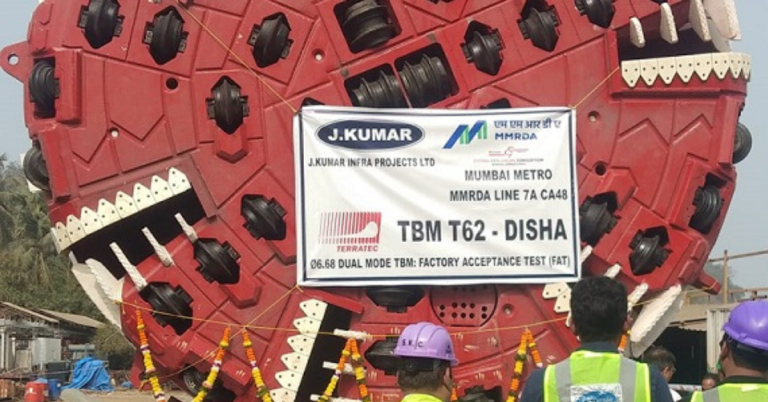
MUMBAI (Metro Rail News): J Kumar Infraprojects has recently achieved a major milestone with the successful completion of the factory acceptance test for its TBM (Tunnel Boring Machine) named “Disha.” The test was carried out as part of the Mumbai Metro Line 7A project and was conducted to verify the machine’s performance and functionality against established standards.As a well-established infrastructure development company with a proven track record in constructing metro rail projects, J Kumar Infraprojects has once again demonstrated its technical proficiency and commitment to delivering high-quality work.The successful completion of the TBM “Disha” factory acceptance test is a significant step forward in the Mumbai Metro Line 7A project, which aims to improve transportation services for the city’s residents. This positive development brings the project closer to completion and will contribute to upgrading the city’s transportation infrastructure.In summary, the successful completion of the TBM “Disha” factory acceptance test by J Kumar Infraprojects for the Mumbai Metro Line 7A project is a testament to the company’s technical expertise and dedication to quality work.
Delhi to Murthal in 30 Minutes: RRTS to Cut Down Journey Time by One-Third

NEW DELHI (Metro Rail News): Delhiites often travel to Murthal due to its popular food-eating spots. However, the trip between the two locations is lengthy, taking up to one and a half hours to navigate the traffic and cover the 70-kilometre distance. But, when the RRTS corridor between Delhi and Karnal becomes operational, the journey will be reduced to just 30 minutes, cutting the travel time by one-third.The RRTS corridor will also cut down the two-a-half hours from Delhi to Karnal to one hour and similarly reduce the journey from Delhi to Hisar to one and a half hours. Furthermore, one metro train will be available every ten minutes.A report by DNA has highlighted the Delhi-Panipat Regional Rapid Transit System, which will have 17 stations along the route – Sarai Kale Khan, Indraprastha, Kashmere Gate, Burar Crossing, Mukarba Chowk, Alipur, Kundli, KMP Expressway Interchange, Rajiv Gandhi Education City, Murthal, Barhi-Ganaur, Samalkha, Panipat South, Panipat North, Panipat Depot, IOCL Panipat, Gharaunda, Madhuban and Karnal.The corridor length is 103 kilometres, and the train will travel at an average speed of 120 km/h, with a maximum velocity of 160 km/h. The journey from Delhi to Panipat will be completed in just one hour.The NCRTC has also prioritized RRTS along two additional corridors: the 180 km Delhi-Gurugram-Rewari-Alwar line and the 111 km Delhi-Sonepat-Panipat route.On the other hand, India’s urban rail network will be equipped with advanced trains with wi-fi, air conditioning, and other amenities comparable to suburban railway systems in Europe.
Prime Minister Sheikh Hasina Inaugurates Construction Work of Nation’s First Underground Metro Rail
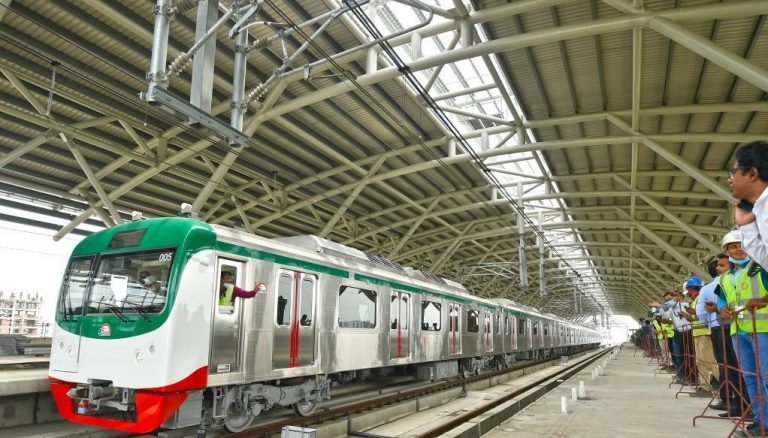
BANGLADESH (Metro Rail News): Sheikh Hasina, the prime minister, inaugurated the construction of the nation’s first underground metro rail just a month after inaugurating the metro rail from Uttara’s Diabari to Agargaon. Addressing a civic rally at sector four at Purbachal of Pitalganj in Rupganj of Narayanganj district, the prime minister unveiled the plaque of the Mass Rapid Transit Line-1.Accompanying Prime Minister Sheikh Hasina on December 28, when she unveiled the plaque for the 11.73 km portion of the Mass Rapid Transit Line-6 from Diabari to Agargaon, were Road Transport and Bridges Minister Obaidul Quader, Textile and Jute Minister Golam Dastagir Gazi, Dhaka North City Mayor Atiqul Islam, Japanese Ambassador to Bangladesh IWAMA Kiminori, Road Transport and Highways Division Secretary ABM Amin Ullah Nuri, and Dhaka Mass Transit Company Limited Managing Director MAN Siddique.The government plans to finish construction of the MRT Line-1, which will have both underground and elevated sections, from the Airport to Kamalapur and Purbachal to Natun Bazar, by 2026 at an estimated cost of Tk 52,561.43 crore. In total, six metro rail routes are expected to be put into service in Dhaka by 2030.The MRT Line-1 is to be constructed in two parts – the Airport route, an underground 19.872km line with 12 stations, and the Purbachal route, an 11.37km elevated line with seven stations Natun Bazar and Nadda will be underground.The Bangladesh government and the Japan International Cooperation Agency will cover the project’s costs, amounting to Tk 52,561.43 crore, of which the JICA will contribute Tk 39,450.32 crore and the government will pay Tk 13,111.11 crore. A Japanese firm-led consortium will be responsible for constructing the Airport-Kamalapur-Purbachal metro line.Per the project, the journey from Airport to Kamalapur along the MRT Line-1 will take 24 minutes and 30 seconds, with 12 stops at underground stations.With seven stops, the trip from Natun Bazar to Purbachal will take 20 minutes and 35 seconds. Passengers can reach Purbachal from Kamalapur with an interchange in Natun Bazar in only 40 minutes and 16 stops. Once the MRT Line 1 is launched, it will be able to transport eight lakh passengers daily.
First Factory Acceptance Test of Herrenknecht TBM Successfully Conducted at HK Factory
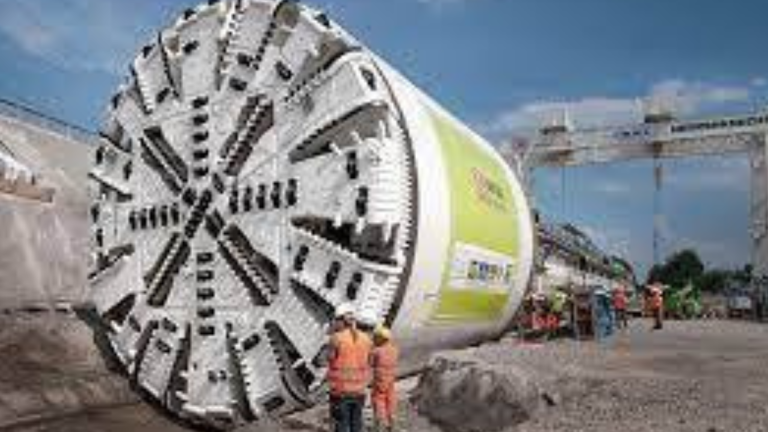
CHENNAI (Metro Rail News): CMRL is currently constructing the underground section of corridor 4, which comprises two portions, UG1 and UG2, each containing four km of twin tunnels.To complete the 16 km of upline and downline tunnels, four tunnel boring machines have been planned to be used. ITD Cementation India Limited, the contractor, has procured these machines from The German company, Herrenknecht.Recently, the first factory Acceptance test of the first tunnel boring machine was conducted at the HK factory in Ponnery in the presence of CMRL project director T Archunan. This TBM, known as S1073B, has a bore diameter of 6.670 metres and an earth pressure balance of 110 metres. The weight of the massive machine is approximately 700 tonnes, which will be dismantled for transportation and placed at the destination, Light House station.Construction for a launch shaft to house the Tunnel Boring Machine (TBM) is currently in progress at Light House station and is projected to be complete by May.
This TBM will be sent down Corridor 4 and travel up to 29 metres below ground, starting from Light House, Kutchery Road, Tirumaylal, Alwarpet, Bharatidasan, until it reaches Boat Club by May 2025.
The second stage of the Metro Rail project, spanning 118.9 km and consisting of 128 stations, is currently underway.
Reaction of Alstom on Union Budget 2023-24
NEW DELHI (Metro Rail News): “India’s economic growth rate is the result of a resilient economy and prudent fiscal policies of the government. The Union Budget for 2023-2024 continues its focus on this path and the commitment to ‘green growth’ approach, will further boost the economy.Infrastructure is the most critical aspect of any economy and the highest ever capital investment outlay of 10 lakh crores is most commendable. Combined with the enhanced capital outlay of Rs 2.40 lakh crore provided for railways, these steps will go a long way in upgrading infrastructure, assets, systems, and facilities by leveraging technology and promoting a sustainable approach.More importantly, the government is promoting greater private sector participation in infrastructure and railways. This is critical for the growth of the sector as it will help enhancing accessibility and mobility, connecting people and communities, integrating markets, and facilitating trade, and generating greater job opportunities.We are glad to see the continued focus on infrastructure projects to improve connectivity and facilitate movement of goods and products across the country, will support in the development of indigenous industries, thereby contributing to the ‘Make in India’ ambition and making India ‘Aatmanirbhar’. This will lead to an uptake in sustainable and modern urban mobility solutions, like metros, in Tier II & III cities as well. To encourage logistics, we expect more impetus on freight movement by rail, which will create the demand for more electric locomotives of high horsepower, which will increase capacity and speed of goods transportation, while reducing emissions, to bring better efficiencies of scale and attain the vision of net zero emissions.The National Hydrogen Mission will support India’s ambition of becoming the world’s first Green Railways, with a growing fleet of hydrogen-powered passenger trains. As the world’s first and only hydrogen train manufacturer with passenger service, we are following with great attention Indian Railway’s interest for hydrogen trains in coming years. Alstom would be glad to contribute to the transition to zero-emission solutions in India.” Said Mr. Olivier Loison, Managing Director, Alstom India
Union Budget 2023-24: Government Allocates Rs 19,518 Crores to Metro Projects Across India
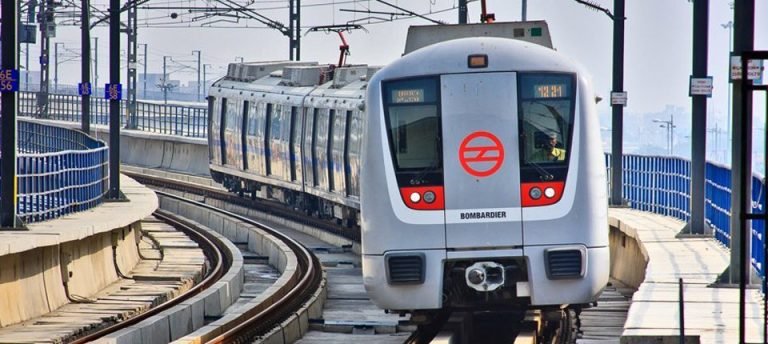
NEW DELHI (Metro Rail News): Officials declared on 1st February that the government had allotted Rs 19,518 crore to all metro projects around India in the Union Budget 2023-24. In her speech in Lok Sabha, Finance Minister Nirmala Sitharaman articulated her ambition for the ‘Amrit Kaal’, which involves a proficient technology and knowledge-based economy with strong public finances and a firm financial sector.She also highlighted the importance of Jan Bhagidari through Sabka Saath Sabka Prayas to accomplish this.A senior representative of the Union Ministry of Finance asserted that the total budgetary outlay for the year 2023-24 for all metro-related projects in India is Rs 19,518 crore.This figure is over the Rs 19,130 crore allocated in the previous financial year of 2022-23, with the revised budget estimates for the same being Rs 15,628 crore, as stated in the budget documents. This year’s outlay comprises Rs 4,471 crore in equity investment, Rs 1,324 crore of subordinate debt and Rs 13,723 crore of pass-through assistance.The National Capital Region Transport Corporation (NCRTC) has been provided with Rs 3,596 crore by the Centre for the Regional Rapid Transit System (RRTS) project, which is a decline of 23 per cent from the previous budget.In Budget 2022-23, the government had also set aside Rs 4,710 crore for the NCRTC. According to a statement issued by the NCRTC after the Budget announcement, the Delhi-Ghaziabad-Meerut RRTS corridor is being developed rapidly in multiple areas, and the stations on the route are being constructed at a fast rate, particularly those on the priority section.
BMRCL Alters Standard Operating Procedure Following Report on Pillars’ Collapse

BANGALORE (Metro Rail News): In response to the report submitted by Professor Chandra Kishen of the IISc on the collapse of the reinforcement cage on January 10, the BMRCL has altered their standard operating procedure of casting the reinforcement cage.Anjum Parvez, the managing director of BMRCL, announced that the construction of pillars over 12 metres would be halted in the 2A and 2B Metro phases linking Central Silk Board and Kempegowda International Airport.Parvez stated, “We are changing to two-stage casting for pillars taller than 12 metres. Additionally, we have suspended work on all reinforcement cages above 12 metres. However, work on reinforcement cages under 12 metres is still being done.”Prof Kishen, who submitted a 27-page report to BMRCL, averred that the 18-metre structure which led to the deaths of a mother and her son was not a single component but consisted of two parts that were overlapping.He clarified that the combination of the overlapping structure and the preliminary design of the supporting reinforcement cage caused the entire 18-metre reinforcement structure to come down. Parvez added that improvements to the standard operating procedures for constructing the pillars would be put into effect according to the report from IISc, such as switching to a two-stage casting process and concretising the structure as soon as possible.
CMRL Awards Rs 404.45 Crores Contract to Linxon India for Phase 2 Corridors
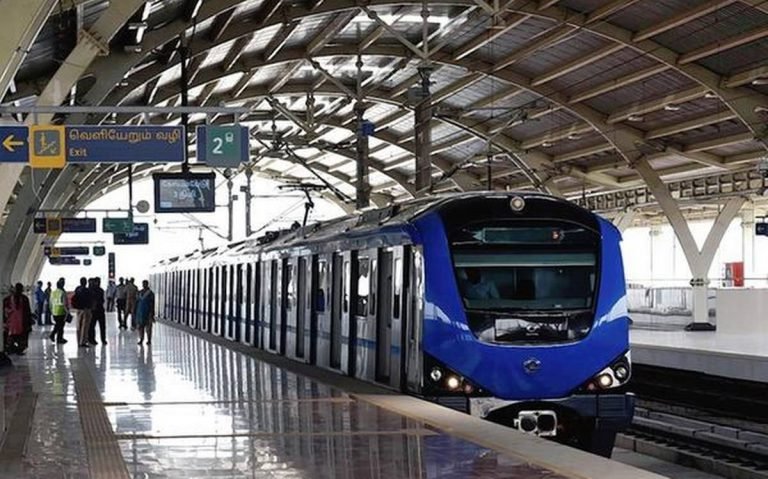
CHENNAI (Metro Rail News): CMRL on 31st January granted Linxon India Private Limited a contract worth Rs 404.45 crores for installing and commissioning critical systems for the operation, remote monitoring, and control systems along the 39km of the 118.9km phase 2 corridors.This encompasses the design, manufacture, supply, installation, testing, training, and commissioning of Receiving Substations (RSS), Auxiliary Substations (ASS), Supervisory Control and Data Acquisition (SCADA), Overhead Equipment (OHE), and switching stations for corridors 3 (9.38km from Sholinganallur to Sipcot 2) and 5 (29.05km from CMBT to Sholinganallur).These systems will provide the power supply and OHE functions at the 37 elevated stations, including nine in corridor 3 and 28 in corridor 5.