

EIB Grants €150 Million Loan to Support Metro Rail Development in Pune

PUNE (Metro Rail News): The European Investment Bank (EIB) announced a €150 million loan for the next 20 years to support the development of Pune’s metro rail on 9th February. This project, which Maharashtra Metro Rail Corporation handles, is estimated to benefit 159 million passengers annually with 31.25 km of metro construction and 30 stations. Furthermore, it will make travelling easier for more than three million people living in the city, reducing their commuting time and providing them with a safe and accessible mode of transportation. Additionally, improved transport will improve the quality of life and business and reduce the city’s greenhouse gas emissions. Special measures have been planned to ensure the safety of women travellers.Once finished in 2023, the Pune metro will generate about 900 new job opportunities. This project is co-funded by Agence Française de Développement (AFD) as part of the EU’s Global Gateway Initiative. It seeks to improve global and regional connectivity in the digital, climate, transport, health, energy, and education sectors.Kris Peeters, Vice President of the European Investment Bank, stated, “The EIB-funded Pune metro rail will, upon completion, provide transportation to over 3 million inhabitants of the city of Pune.This EUR 500 million loan for sustainable transport investment will make commuting to workplaces, healthcare, education and markets more accessible and cheaper while safeguarding the environment and improving air quality in the city.”Ugo Astuto, EU Ambassador to India, underlined that sustainable mobility and green transition constitute a fundamental pillar of the EU-India strategic partnership and that the European Investment Bank (EIB) investment in the Indian Metro system expresses our dedication towards modern, clean and eco-friendly public transport.He added that the Pune Metro Rail project would bring about secure, efficient and sustainable public transport for its inhabitants, in line with the aims established for Team Europe by the EU Global Gateway initiative. Moreover, this project will fulfil numerous Sustainable Development Goals, including climate action, urban sustainability, and gender equality.
Surat Railway Station to Become the ‘New Railway Station of New India’
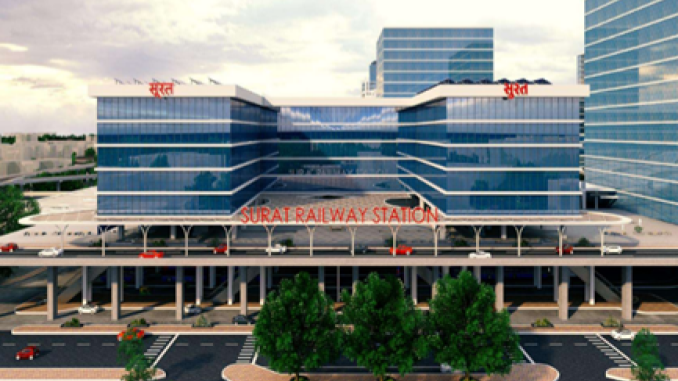
SURAT (Metro Rail News): Surat is one of the fastest-growing cities in the country. It is an epicentre of trade & commerce with bustling economic activity, which has boosted employment opportunities. Western Railway runs many trains in various directions of the country, catering to the demands of the people of Surat.Indian Railways is accelerating the work of transforming significant stations across the country into modern & world-class stations. One thousand two hundred seventy-five railway stations across the country have been identified for upgradation & modernization under the Amrit Bharat Station Scheme, out of which 87 stations are in Gujarat. Surat station is also one of them, which will be given a major facelift and is set to become the “New Railway Station of New India“.According to a press release by Shri Sumit Thakur – Chief Public Relations Officer of Western Railway- Surat station’s redevelopment work has commenced and is progressing in full swing. The work is being undertaken by Surat Integrated Transport Corporation (SITCO), which is a Special Purpose Vehicle (SPV) formed between the Indian Railways & Government of Gujarat.The station is being redeveloped at an estimated cost of Rs. 1475 crore, including the share of Gujarat Govt. of Rs. 462 crores. In Phase I, the work of Rs 980 crore will be undertaken, out of which the Railway’s share is Rs. 683 crore, while that of the Gujarat Govt. is Rs. 297 crore. It is targeted to be completed by May 2027.Giving further details, Shri Thakur stated that Surat station is being developed as a Multi–Modal Transport Hub (MMTH), which will integrate Railways, GSRTC City Bus Terminal station, Metro, etc., to provide seamless connectivity. In addition, Surat station has been designed with an architectural ambience which will ensure that the entire station premises have an overall look and feel of a business centre of international standards.The unified theme through appropriate facades, finishes, colours, materials, and textures will add to its splendour. The work under Phase I of this project has already commenced. Shifting the utilities, such as electrical cables & pipelines, is in progress at the east side Railway station building. A 164-meter-long and 87-meter-wide building will be built at this site, targeted to be completed in one and a half years.The excavation work is also in progress at the GSRTC site for building the foundation and drainage diversion. The station building on the western side will be demolished once the east side building is ready, and necessary offices and installations on the West side will be shifted to the new Eastside station building.Additionally, the station is well-equipped with adequate areas for various amenities & facilities. For example, the plan includes segregated Arrival / Departure Passenger Plazas, Congestion free & conflict-free Entry / Exits in Station Premises, underground parking arrangements, etc.The concourse of more than 10900 sqm with adequate seating, a waiting area & vast circulation space will have lounges & retail spaces and will be connected by skywalks across the MMTH for a better user experience. The concourse/waiting spaces will also consist of passenger amenities & facilities above the platforms to avoid overcrowding on platforms.The railway station will be 100% Divyang Friendly. Forty-one lifts and 70 escalators will be installed in the entire station complex. The station building will be a Green Building of Platinum rating with features for efficient use of energy, water and other resources, renewable energy, etc. The station will also be equipped with state-of-the-art safety & security technology consisting of intelligently designed features for better station management, including SCADA and BMS.
UPMRC invites E-Tenders for Construction of TBM Tunnels, Stations for Kanpur Metro Corridor-2
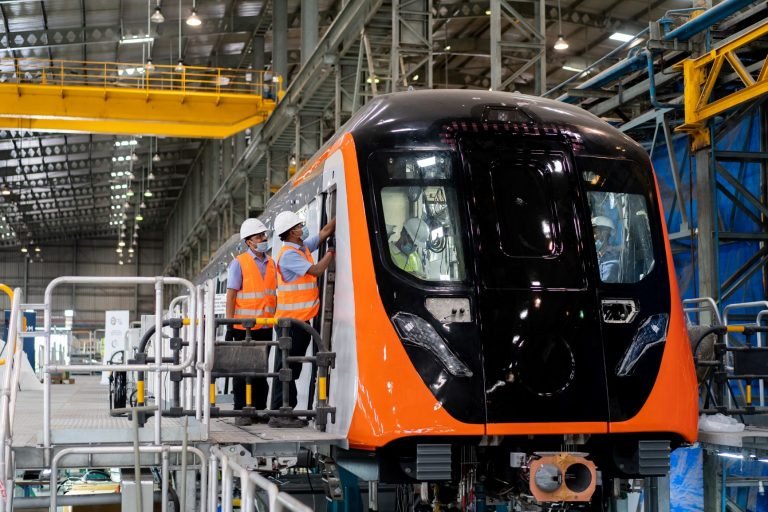
KANPUR (Metro Rail News): UPMRC Ltd. is calling for electronic tenders to create designs and construct the TBM tunnel, cut & cover tunnel, ramps after Double Pullia, ramps in the agricultural depot, and three underground metro stations (Rawatpur, Kakadeo, and Double Pullia) with architectural finishes and other related elements for Corridor-2 of the Kanpur Mass Rapid Transit System in Kanpur, Uttar Pradesh, India.
- Tender Reference Number: KNPCC-11
- Name of Work: Design and construction of TBM tunnel, cut & cover tunnel, ramp after double pulled, ramps in agriculture depot for mainline and depot connections and three underground metro stations (viz. Rawatpur, Kakadeo and Double Pullia) including architectural finishes etc., on corridor-2 of Kanpur MRTS project at Kanpur, Uttar Pradesh, India.
- Approximate cost of work: INR 1025.00 Crores
- EMD: INR 20.50 Crores
- Completion Period: 30 Months
- Document Download / Sale Start Date: 07th February 2023
- Document Download / Sale End Date: 05th April 2023
- Pre-Bid Meeting Date: 13th March 2023
- Bid Submission Start Date: 23rd March 2023
- Bid Submission End Date: 05th April 2023
- Bid Opening Date: 06th April 2023
Voltas wins CMRL construction contract for Corridor 4
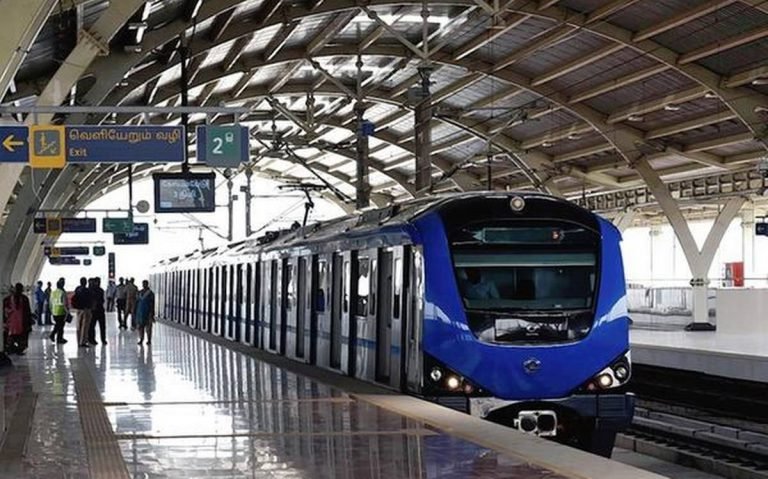
CHENNAI (Metro Rail News): CMRL has granted the contract to Voltas Limited to carry out electrical, maintenance, and air conditioning works for Corridor 4 construction at Rs 134.9 crore.According to the press release of CMRL, this contract consists of supplying, installing, testing, commissioning and training in electrical fire protection, ventilation and air-conditioning works.The work will include constructing 18 elevated stations from Kodambakkam powerhouse station to the Poonamallee bypass metro station, plus a viaduct between the stations, an approach ramp, and a depot in Poonamallee.Rajesh Chaturvedi, the director of systems and operations of CMRL, and Jayant Deshpande, the business development head for Voltas Limited, signed off the agreement.
Indian Railways to Increase Vande Bharat Production Threefold by 2023-24
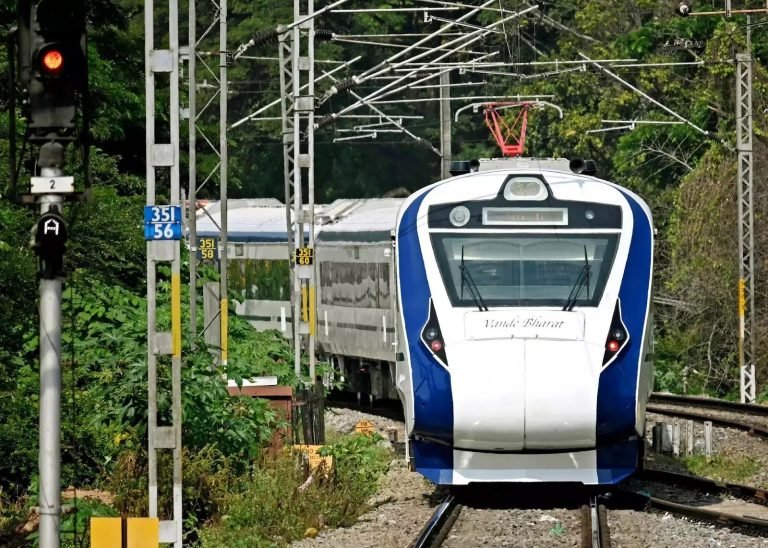
NEW DELHI (Metro Rail News): Railway Minister Ashwini Vaishnaw announced that Indian Railways is determined to raise its production of Vande Bharat trainsets to three per week by the end of the coming financial year.The launch of this niche product in 2019 has been well-received, with eight trains already operational and two more to be added to the service on February 10. This move to increase production will enable the Railways to meet the demands for VB services in each zone across the country, connecting many small and big cities.He declared that owing to the record GBS of Rs 2.40 lakh crores given in the Budget, India’s national carrier has been allowed to produce 500 more Vande Bharat trains in the next three years. Additionally, with the addition of the three factories in Sonipat (Haryana), Rae Bareli (Uttar Pradesh), and Latur (Maharashtra) to the ICF Chennai facility, the production of the trains must be increased. By the end of the next financial year, the aim is to manufacture two or three Vande Bharat trains per week, thus fulfilling the Prime Minister’s vision of covering every major city and small town with these trains.The Railway Minister Vaishnaw noted that the eight VB trains had travelled a combined distance equaling around 52 times the earth’s circumference with no significant technical difficulties, paving the way for a rapid increase in the production of rolling stock.He added that the ministry is also constructing Vande Bharat Metro trains, which would provide a top-notch shuttle service to citizens who reside in the 50-60km vicinity of major cities. “We are developing a metro-style version of the Vande Bharat trains, offering a world-class experience,” he said. Furthermore, the Minister declared that the production and design would be finished in 2021, and the production of Vande Bharat Metro will commence in 2024-25.
HMRL and HAML Receive Rs 2,500 Crore in State Budget 2023-24
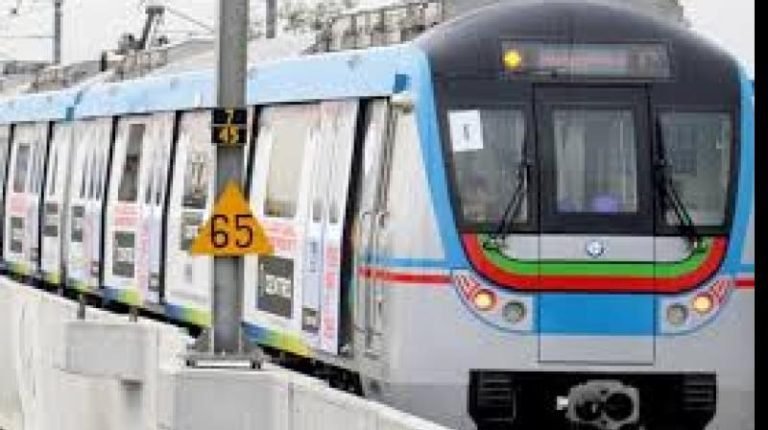
HYDERABAD (Metro Rail News): In the State Budget 2023-24, the lion’s share was received by the Hyderabad Metro Rail Limited (HMRL) and Hyderabad Airport Metro Limited (HAML), with the former allocated Rs 2,000 crore and the latter Rs 500 crore.This Rs 2,000 crore for HMRL included Rs 500 crore for the 5.5 km MGBS-Falaknuma Metro Rail line. As a result, the HMWS&SB was given a lower amount of Rs 1,961 crore compared to the Rs 1,625 crore during the financial year 2022-23, the HMDA Rs 200.1 crore, the Musi Riverfront Development Corporation Limited (MRDCL) remained at Rs 200 crore, and the GHMC was given Rs 95.60 crore.With the Rajiv Gandhi International Airport (RGIA) at Shamshabad having seen a sharp rise in the number of travellers, Finance Minister T. Harish Rao stated that the expanded facilities costing Rs 7,500 crore, expected to be ready by June, will be able to handle four crore passengers annually.He declared that the Metro Rail connection to the airport, costing Rs 6,250 crore, could be finished within three years with state financing. Of the Rs 500 crore for the Airport Metro, Rs 377.25 crore is to be apportioned from the Scheduled Castes Special Development Fund (SCSDF) and Rs 45.4 crore from the Scheduled Tribes Special Development Fund (STSDF). Rs 500 crore was also allotted last year for the Falaknuma line, yet it appears not to have been accepted.
Chennai Metro Rail launches feeder Service for DLF Cybercity IT Park Commuters
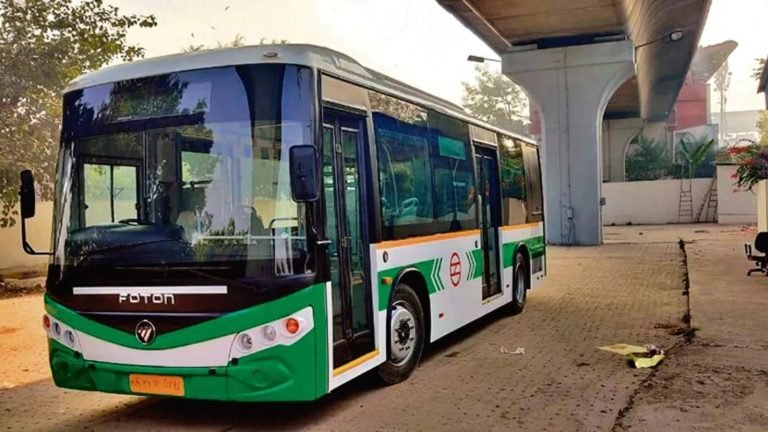
CHENNAI (Metro Rail News): Commuters from the Chennai Metro Rail who work at the DLF Cybercity IT Park will be provided shuttle services on four 12-seater AC tempo travellers between the Arignar Anna Alandur Metro station and DLF Cybercity Alandur. The tempo service, launched on 6th February, will be priced at Rs 40 per passenger and operate between 6 am and 10 pm on weekdays.Fast Track cabs will collect the fare through a QR code (UPI) and mobile app. In addition, DLF Cybercity Chennai will mark pick-up and drop locations inside their campus and provide financial support to the operator. The operator will be responsible for the operation and maintenance of the service and vehicles, while Chennai Metro will offer passenger guidance and coordinate between the client and the operator.MA Siddique, Managing Director of Chennai Metro Rail, mentioned that the work on the elevated stretch under the second phase should be completed by 2026.He also said that traffic congestion along the metro rail elevated corridors stretch, which is currently under construction, should reduce within a year as the barricades along the pillars will be removed after the caps are laid, freeing up more space for motor vehicles. Siddique further said that a feasibility report from both Coimbatore and Madurai Metro had been accomplished, and a detailed project report for the Coimbatore Metro is currently being undertaken.
Chennai Unified Metropolitan Transport Authority Invites Bids for ‘Lite Metro’ Feasibility Study

CHENNAI (Metro Rail News): The Chennai Unified Metropolitan Transport Authority (CUMTA) is exploring the possibility of introducing the ‘Lite Metro‘ to the city’s public transportation system. This Metrolite or Light Urban Rail Transit System is a step below a metro, having most of the rail surface at ground level instead of elevated.As part of the preliminary feasibility assessment, CUMTA on 6 February invited financial bids for the feasibility study, which would be conducted by Chennai Metro Rail Limited (CMRL). The project would involve the construction of dedicated tracks isolated from the roads to reduce costs.M A Siddique, the managing director of Chennai Metro Rail, has stated that the feasibility study under the comprehensive mobility plan is considering the adoption of Metrolite, a cost-effective alternative to the metro rail, which will interface with Chennai Metro rail and MRTS lines, to increase patronage.As per CUMTA specifications, Metrolite trains with a maximum 12T axle load and three non-separable coaches that can accommodate up to 300 passengers will be used for a passenger capacity between 2,000 and 15,000. Furthermore, I Jaykumar, the CUMTA special officer, has reported that the final decision on whether Phase III metro will be an average metro or Metrolite will be taken under the study, for which the bids will be finalised soon.
Join InnoMetro 2023 for visibility and exposure in the Rail and Metro industry. Be a part of the global platform for innovative ideas and network with industry professionals.
Join InnoMetro 2023 for visibility and exposure in the Rail and Metro industry. Be a part of the global platform for innovative ideas and network with industry professionals.
Kaushal Kishore Informs Parliament of Namma Metro Phase 3 Proposal
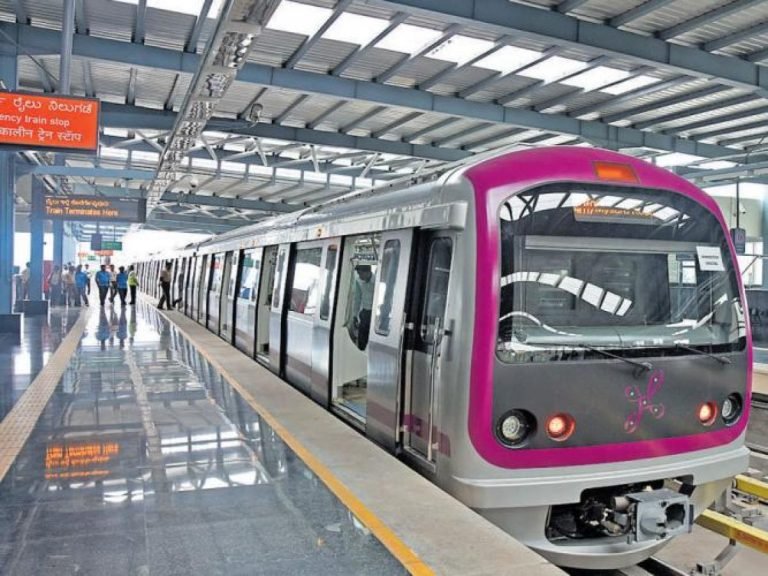
BANGALORE (Metro Rail News): Last week, in response to a query posed by Bengaluru Central Lok Sabha member P C Mohan, Union Minister of State for Housing And Urban Affairs Kaushal Kishore informed Parliament that they had received a proposal from the Karnataka Government to implement the third phase of the Namma Metro Project.This phase will have two corridors, the first being a 32.15 km route with 22 stations extending from Kempapura to JP Nagar Phase IV, which will create a circular metro line around the Outer Ring Road (ORR) once complete.The second corridor, with a length of 12.5 km and nine stations, will stretch from Hosahalli to Kadabagere along Magadi Road.In November 2022, the State government gave in-principal approval to the Phase III of the Namma Metro project and asked the Union government to support the implementation of the plan.For Corridor 1 of the project, there are plans for stations at JP Nagar (IV, V phases), Kamakhya bus depot, PES Institute of Technology, Nagarbhavi Circle, Sumanahalli Cross, Hosakerehalli Cross, Kanteerava Studio, Peenya, BEL Circle, Mysuru Road, and Hebbal. Similarly, Corridor 2 is likely to include stations at Hosahalli, Sumanahalli Cross, Herohalli, Vinayak Nagar, Byadarahalli, Sunkadakatte, and Kadabagere on the Magadi Road section.The project, estimated at Rs 16,368 crore, is set to take five years to finish from when the Central government approves it.The Union government and the State government will split 40 per cent of the cost, whereas the remaining 60 per cent will be sourced through debt. Moreover, the Centre is expected to offer additional funds through the PM Gati-Shakti programme to speed up transport infrastructure projects.The Bengaluru Metro referred to as “Namma Metro”, is a Mass Rapid Transit System (MRTS) with two lines and 51 stations in Bengaluru, the capital and biggest city in Karnataka. The project is managed by Bangalore Metro Rail Corporation Limited (BMRCL), a joint venture of the Government of India and Karnataka.
First Trial Run on Whitefield-K R Puram Metro Line Successfully Completed
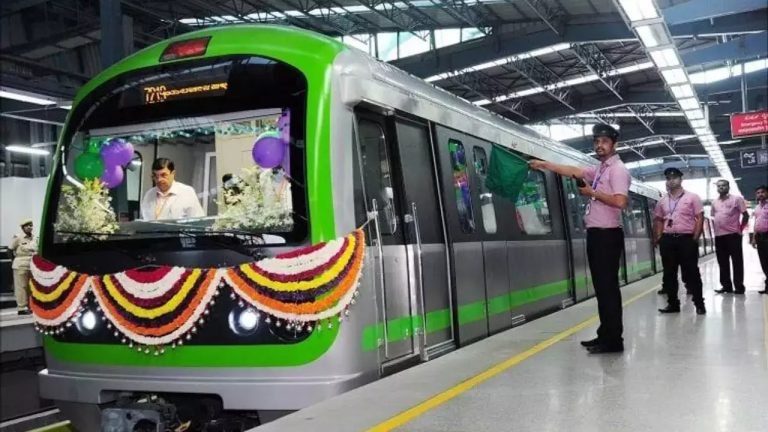
BANGALORE (Metro Rail News): The first train to run at 80kmph between Whitefield and K R Puram Metro stations operated smoothly on February 5 afternoon. According to Metro officials, the successful trial run is a milestone in inaugurating Metro services on the Purple Line extension in March. They informed me that the journey of 13 km was completed in 12 minutes at the maximum permissible speed.The high-speed trial run started at 11 am and was attended by around 50 BMRCL personnel, including members of the Rolling Stock, Signalling, Traction and Track teams, who were all on board.A top official of BMRCL informed that there were no stoppages at any of the ten stations on the route, resulting in the trial run taking longer than usual.He added that the exact time between the two endpoints would be known only after the service trial begins on February 11. He further shared that three round trips between Whitefield and KR Puram were conducted between 11 am to 3.30 pm.During the runs, the speeds were gradually increased from 25 kmph to 40 kmph, 60 kmph and finally, 80kmph to test the safety parameters. He concluded by saying that the corporation is almost done with the commissioning of this line.He added that several practices, such as train trials, service trials and inspections conducted by the Commissioner of Metro Rail Safety, must be completed before the new line is launched.Five trains are planned to be deployed at ten-minute intervals. The stations along this route include Whitefield, Channasandra, Kadugodi, Pattandur Agrahara, Sadarmangala, Nallurhalli, Kundalahalli, Sitharama Palya, Hoodi Junction, Garudacharpalya, Saraswati Nagar and K R Puram. However, due to the ongoing civil works, the last 2.5 km stretch between K R Puram and Baiyappanahalli will take a few more months.
Join InnoMetro 2023 for visibility and exposure in the Rail and Metro industry. Be a part of the global platform for innovative ideas and network with industry professionals.
Join InnoMetro 2023 for visibility and exposure in the Rail and Metro industry. Be a part of the global platform for innovative ideas and network with industry professionals.
Union Budget Allocates 35,960 Million Dollars for Delhi-Meerut RRTS Route
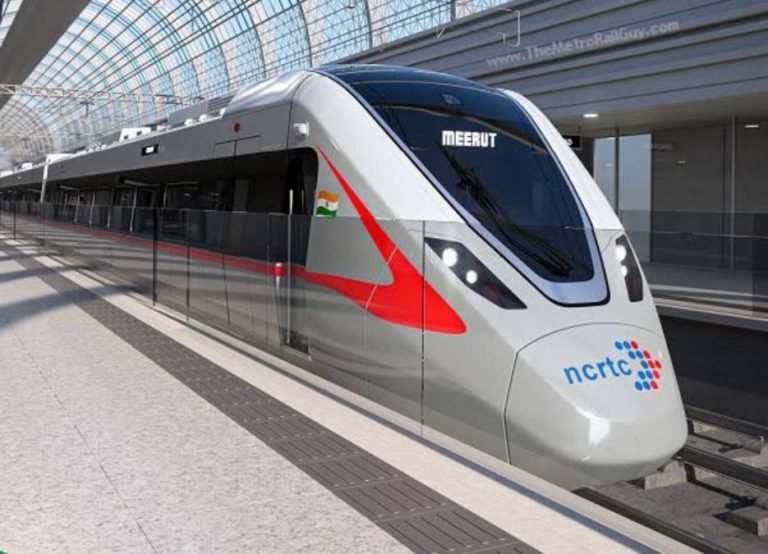
NEW DELHI (Metro Rail News): A significant amount of 35,960 million dollars was allocated to first high-speed Regional Rapid Transit System (RRTS) route in India, which is being built between Delhi and Meerut, in the Union Budget, although it was less than 44,720 million from the previous year.No separate allocation was made for the Delhi Metro Rail Corporation‘s Phase IV expansion, consisting of three priority lines. Instead, 195,180 million dollars were allotted for all national metro rail projects across India.As per a source, the Union finance ministry has been providing a budget for all metro train projects in India in its entirety instead of for each venture, rather than granting funds to the DMRC separately in the past. The source further mentioned that DMRC would request funding in line with the Union Housing and Urban Affairs Ministry’s regulations, which serve as the nodal agency for all metro projects.The National Capital Region Transport Corporation, the executing agency, has revealed that the allocation for metro projects is 13,240 million in subordinate loans, 44,710 million in equity investment, and 137,230 million in pass-through aid.The Regional Rapid Transit System (RRTS) is working on the prioritised segment with 1,100 engineers and 14,000 personnel employed full-time. As per their report, 35% of the underground segment has been completed, and 65% of the elevated viaducts have been constructed.Furthermore, four stations in Delhi, Anand Vihar, Sarai Kale Khan, New Ashok Nagar, and Jangpura, are situated along the 82-km Delhi-Ghaziabad-Meerut corridor. Train testing is now ongoing in preparation for launching the priority segment later this year, which will offer passengers a front line, conditioned, quick, and dependable transportation service. By 2025, the entire route will be made public.
CM Yogi Adityanath inaugurates Underground tunnel construction work at Ramlila Maidan
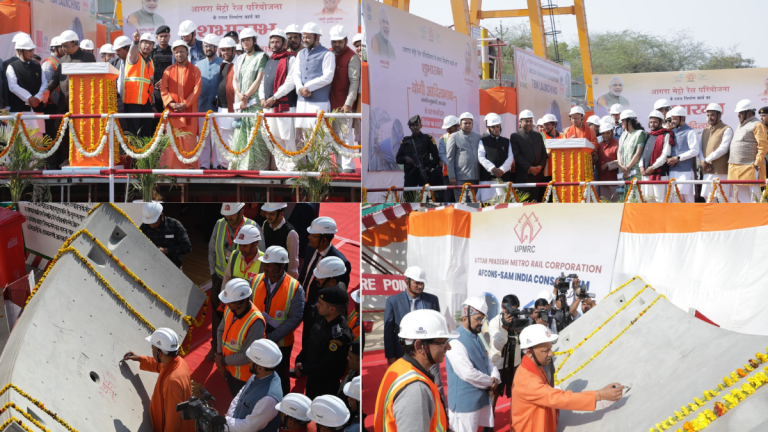
AGRA (Metro Rail News): TBM ‘Yamuna’ was launched by Hon’ble Chief Minister of Uttar Pradesh Shri Yogi Adityanath on 6th Feb 2023 at Ramlila maidan for tunnel construction work, Agra Metro Rail Project.Speaking on the occasion, Hon’ble CM said, “Agra is a historical city and when it comes to environment and due to its heritage and culture. UP Metro officials are doing a commendable job and executing the project timely. Uttar Pradesh has the maximum number of cities that has operational metro services. Agra will also emerge as a metro city in future and give plenty of employment opportunities, enhanced tourism and boost its image on the world map. ““ UPMRC is putting all efforts into achieving this target 6 months ahead of its schedule. The schedule is marked for August 2024 and the team of UPMRC is planning to execute the project by early 2024. Metro services will be operational for the people of Agra by the beginning of 2024”, he added.MD UPMRC Shri Sushil Kumar said that, “UPMRC has always executed metro projects timely and ahead of schedule. This time as well we will achieve the same milestone, by delivering a world class metro to the people of Agra ahead of the set timeline.”The two TBM machines have been named as ‘ Yamuna and Ganga. Yamuna commenced tunneling work today while Ganga to start tunneling after two weeks from from Launching Shaft/Crossover section at Ramlila Maidan.Before this, Hon’ble Chief Minister arrived at the crossover site and inspected the world class safety park built at the site and got acquainted with the safety features followed at the site.There on, he signed on the pre cast ring segment and gave his blessings and pressed the button for inaugurating the tunnel boring machine.After the first breakthrough at Agra Fort Metro Station, the TBM will then go towards Taj Mahal Metro Station (Purani Mandi Chauraha) and will be retrieved thereafter from retrieval shaft.One TBM will weigh around 450 tonnes and it’s length is approximately 85 metres. The TBM operates for around average 10-12 metres everyday.
Minister of Railways Ashwini Vaishnaw Expresses Disappointment over Telangana Govt’s Lack of Cooperation
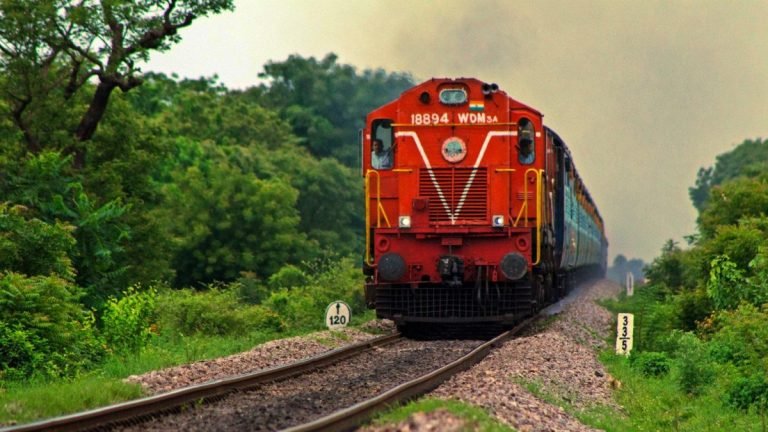
TELANGANA (Metro Rail News): Union Minister for Railways Ashwini Vaishnaw expressed his disappointment on 5th February about the Telangana Government’s lack of cooperation in the fast-tracking of railway projects, despite multiple letters and follow-up attempts from the Centre.While speaking to the media, Vaishnaw pointed out that the Central Government was doing all that was required. Still, the state government must also take the initiative to ensure land acquisition and provide their share to accelerate the projects.Elaborating further, he mentioned that as part of the Andhra Pradesh Re-organisation Act, the Centre had initiated a tender for the construction of a Railway Wagon manufacturing unit in Kazipet in January which was dependent on the state government allocating 160 acres of land. Although the state had only provided 150 acres, the Centre was still pressing forward with the project so production could begin in the next four to five years.He declared that Telangana received an unprecedented amount of Rs 4,418 crore in the railway budget, much higher than the Rs 850 crore given to the combined Andhra Pradesh in 2009-14.Despite this, he lamented that the state government had little support and cooperation and seemed to prioritize politics over infrastructural development. He added that if the state government could provide their share and precise land acquisition and permissions, the allocation could be further increased.He then informed that the Amrith Bharat Scheme (ABS) would involve the modernization of many railway stations in Telangana, Secundrabad station being redeveloped with Rs 715 crore. Apart from this, the minister revealed that feasibility studies had been conducted to introduce Vade Bharat trains from Telangana on various routes.He firmly denied the Centre’s intentions of privatizing the railway and said IT Minister KT Ramarao should be aware of the facts. He continued by saying that the emergence of Hyderabad as an IT hub, a hub for Artificial Intelligence, Machine Learning, and other high technologies, led to the decision to start two centres of excellence in the city for 6G technologies and railway technology related to IoT, AI and ML, at IIT, Hyderabad and IRISAT, respectively with Central funds.Lastly, he spoke of the plans to test and introduce world-class Vande Metro trains between cities within a 40 km to 100 km distance and said that it would take 12 to 16 months to develop a prototype and then test it for a year.
MPMRCL Strengthens Workforce to Meet Deadline of Indore Metro Project

INDORE (Metro Rail News): The MP Metro Rail Corporation Limited (MPMRCL) has increased its workforce by 25 times to meet the deadline of its proposed Indore Metro in Super Priority Corridor’s trial run set for September 2023.On February 4, MP Shankar Lalwani and MPMRCL officials, including managing director Manish Singh, reviewed the progress of the Indore Metro Rail Project. By the first week of September, the trial run of the 6 km stretch of the Super Corridor is expected to start. Singh said all the issues, such as approval of drawings and designs, had been resolved with the cooperation of the relevant agencies. The same efforts are being made to quicken the work till Hotel Radisson Square.The MD declared that DGMs, senior DGMs and managerial-level officials had been stationed in Indore and Bhopal to observe the undertaking, as well as a 25-fold increase in the staff and night shifts to finish the construction works to help meet the deadline. He also noted that the coaches they expect to receive by the end of May are currently being manufactured in Baroda. Furthermore, he mentioned that the works at stabling yards, inspection pits, and depots are rapidly progressing. The third-party inspection of the tracks, which is due, is expected to be delivered to Indore by February 20. Additionally, a different agency has commenced preparations to lay the tracks on the elevated corridor. He concluded by saying that the work to start a trial and then operation run of the Metro Rail is being done at a fast pace and satisfactorily, as well as the construction of the stations, which will have advanced facilities have already started. Lalwani stated this information.