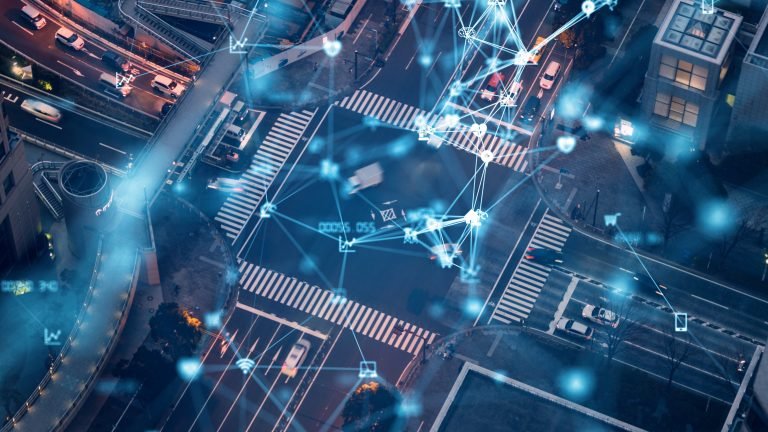
IoT telematics is emerging as an influential force in the ever-changing fleet management landscape. IoT telematics enables fleet managers to optimise operations, improve driver safety, and increase efficiency by seamlessly integrating real-time data and advanced analytics. This technology ushers in a new era of fleet management, in which data-driven insights drive smarter and wiser choices and pave the way for a more sustainable and cost-effective future.
IoT in Fleet Management
The Internet of Things has significantly influenced the world of fleet management. Fleet management oversees and coordinates a fleet of vehicles, including trucks, vans, and cars, used and employed for various operations, including transportation and logistics. Here’s how the Internet of Things has impacted and influenced the fleet management:
- Real-time Tracking: Fleet managers can monitor vehicles’ real-time location, speed, and status using IoT-enabled GPS tracking devices and vehicle sensors. This improves route optimisation, saves fuel, and increases driver safety.
- Predictive Maintenance: IoT sensors can measure engine performance and other vital metrics to monitor vehicle health. Fleet managers can schedule maintenance based on the actual state of the vehicle, eliminating unplanned downtime and maintenance expenses.
- Driver Behavior Monitoring: Data about driver behaviour, including speeding, harsh and forceful braking, and idling, can be collected by IoT devices. This data assists fleet management in coaching drivers to drive more safely and efficiently, lowering accidents and operational expenses.
- Asset Security: IoT technology helps and supports the prevention of vehicle theft and unauthorised use. Alarms, immobilisers, and geofencing features can all be operated remotely to protect and safeguard valuable assets.
- Data Analytics: Data from IoT devices is collected and analysed to provide insights on fleet performance. This data-driven strategy makes better decision-making, cost savings, and operational efficiency possible.
According to Allied Market Research, the global IoT fleet management market is expected to reach $16 billion by 2031, growing and rising at a CAGR of 9.8% between 2022 and 2031. This expansion is driven by the increasing adoption of IoT solutions in the transportation and logistics industries, where fleet management systems are becoming increasingly crucial for optimising operations, enhancing safety, and lowering costs. In the coming years, the ongoing advancement of IoT technology is likely to improve the capabilities and impact of fleet management.
IoT-based Telematics in Fleet Management
Telematics powered by IoT has transformed fleet management by offering real-time data and analytics to optimise vehicle and driver performance. Telematic devices may generate massive amounts of data in real time for fleet, property, and financial management people. Telematics is a technique that combines telecommunications and informatics to monitor and manage many elements of fleet vehicles. It uses automobile hardware devices like GPS trackers and sensors to collect data on vehicle position, performance, driver behaviour, and other factors. This data is then sent to a centralised system in the cloud, which is processed and analysed to optimise fleet operations.
IoT-based Devices in Fleet Management
IoT-enabled devices, such as GPS fleet tracking devices, telematics devices, and sensors, play an essential role in data collection and transmission to centralised or cloud-based systems. These devices are essential to the Internet of Things (IoT) ecosystem, allowing businesses and organisations to collect real-time data, make informed and sensible choices, and optimise operations. Here’s a rundown of these gadgets and devices and their functions:
- GPS Fleet Tracking Devices: GPS fleet tracking devices and systems monitor and manage fleet vehicles. They use Global Positioning System (GPS) technology to identify vehicle locations. These sensors collect data on the vehicle’s location, speed, direction, and other information, such as fuel usage and engine problems. Data is often transferred via cellular networks to a centralised system for processing and analysis. Fleet managers can use this data to track vehicle travels, optimise routes for efficiency, improve driver behaviour, and improve overall fleet management by using web-based or mobile applications.
- Telematics Devices: Telematics devices are more technologically advanced than simple GPS tracking and monitoring devices as they provide more comprehensive data about the vehicles’ and drivers’ actions and behaviours. Telematics systems capture vehicle speed, engine performance, fuel consumption, and driver behaviour (e.g., harsh and forceful braking, acceleration, and cornering) and GPS data. The data is sent to centralised systems, often analysed in real-time to improve vehicle maintenance, driver safety, and operational efficiency. Insurance companies also use telematics data to provide usage-based insurance (UBI) policies.
- Sensors: Sensors are a vital component of the Internet of Things ecosystem, with applications ranging from smart homes to industrial automation. Temperature, humidity, pressure, light, motion, and other characteristics can all be measured with the help of sensors. Sensor data is transferred to centralised or cloud-based systems via wired or wireless networks. Sensors are essential for predictive maintenance, process optimisation, and quality control in industrial settings. Sensors can be used in smart cities and places to live for energy management, security, and environmental monitoring.
Role of IoT in Enhancing Fleet Management
Here’s how IoT can assist in improving fleet management.
- Real-Time Data: Telematics systems based on the Internet of Things give real-time data on vehicle location, driver behaviour, and other important considerations. This real-time data allows fleet managers to make quick decisions, such as rerouting trucks to avoid traffic or addressing driver safety concerns.
- Data Analytics: Telematics systems generate massive amounts of data that can be analysed to uncover trends, patterns, and opportunities for development. Fleet management can use this data to optimise routes, minimise fuel usage, and improve driver safety.
- Predictive Maintenance: Telematics devices track and monitor vehicle diagnostics and can forecast when maintenance is required. This proactive and preventative approach lowers vehicle downtime and maintenance expenses.
- Cost Savings: IoT-based telematics can save fleet operations significantly by optimising routes, lowering fuel consumption, and improving driver behaviour. In fleet management, IoT-based telematics involves using connected devices such as GPS trackers and sensors to gather and transmit data, which is then processed and analysed in real-time or later. This technology improves traditional fleet management by offering real-time insights and analytics for better decision-making, cost reduction, and operational efficiency.
Benefits of Telematics IoT
The Internet of Things (IoT) has transformed the telematics and vehicle tracking industries by enabling real-time monitoring, better route planning and optimisation, fuel and maintenance management, and enhanced safety protocols. Below discussed each of these points in greater detail:
- Real-time monitoring for Route Planning and Optimization: IoT telematics solutions enable organisations to track their vehicles and assets in real-time. GPS sensors, in-vehicle sensors, and communication devices offer real-time information on the location, speed, and even the conditions of the surrounding environment. This real-time information is beneficial for route planning and optimisation.
- Optimized Routes: Businesses can make real-time route changes by continuously monitoring vehicle whereabouts and traffic conditions. This minimises and lowers travel time and fuel consumption and improves on-time delivery.
- Reduced Idle Time: Real-time monitoring identifies instances of excessive idling, which can be reduced to save fuel and cut carbon emissions.
- Customer Satisfaction: Accurate arrival time forecasts enabled by IoT data increase customer satisfaction by minimising wait times and ensuring delivery arrives on time.
Fuel and Maintenance Management
Through constant monitoring and data analysis, IoT can have a substantial impact on fuel consumption and usage and maintenance requirements:
- Fuel Consumption Monitoring: IoT devices may track Fuel consumption in real time. This data helps identify fuel-wasting practices such as excessive speeding or idling, resulting in lower operational expenses.
- Predictive Maintenance: IoT devices gather information about vehicle health, such as engine performance, tyre pressure, and other vital factors. This data can be used to predict and forecast when maintenance is required. This proactive strategy minimises downtime, lowers maintenance costs, and extends vehicle lifespan.
- Parts Inventory Management: IoT systems can also help and support the effective management of spare parts and inventories by analysing and forecasting when specific parts are likely to go out and fail or require replacement.
Safety Enhancements
By monitoring driver behaviour, IoT-powered telematics systems may significantly improve and enhance safety standards and prevent accidents:
- Driver Behaviour Monitoring: IoT devices can monitor speed, acceleration, and braking behaviour and patterns. This information enables businesses and companies to identify and address unsafe and risky driving behaviours, enhancing safety.
- Real-time Alerts: In-vehicle sensors and IoT connectivity can deliver real-time notifications to drivers and fleet management regarding potentially hazardous acts such as sudden and rapid braking or sharp and fast turns, minimising the likelihood of an accident.
- Driver Training: Companies can use IoT data to provide tailored and customised instruction to drivers who showcase risky and unsafe behaviours, further improving road safety.
- Insurance Benefits: Some insurance organisations provide discounts to fleets that utilise IoT-based telematics systems to monitor driver behaviour. Better and safer driving practices result in fewer accidents and reduced insurance premiums.
Use Cases of IoT-based Telematics in Fleet Management
Telematics technology based on IoT has transformed fleet management by offering real-time data and insights that allow organisations to optimise their operations, increase efficiency, and improve safety. Here are some of the most critical applications of IoT-based telematics in fleet management:
- Fleet Predictive Maintenance: IoT sensors can detect characteristics such as engine performance, tyre pressure, and brake wear to monitor the health of vehicles in real time. Fleet managers can use this data to schedule maintenance before problems become significant, saving downtime and preventing costly failures.
- Asset and Cargo Management: The location and status of assets and cargo in transit can be tracked using IoT devices and sensors. This guarantees that items are secure and that any signs of manipulation or theft are detected immediately. It also contributes to increased supply chain visibility.
- Fuel Management: Fuel usage and consumption, driving behaviour, and vehicle idling can all be tracked via telematics devices. This information can optimise routes, reduce fuel waste, and identify drivers requiring more fuel-efficient training.
- Route Planning and Optimization: Telematics based on IoT enables real-time tracking of vehicles, traffic conditions, and weather. Fleet managers can use this data to plan and optimise routes, minimise travel time, and improve customer experience by providing precise delivery ETAs.
- Driver Safety: Telematics systems can monitor driver behaviour and deliver real-time feedback to drivers. They can detect speeding, forceful braking, quick and sharp turns, and other potentially hazardous behaviours. This data can be used and employed to implement driver training programmes and lower the risk of accidents.
- Compliance and Regulatory Reporting: Telematics data can be used to guarantee that industry regulations and governmental mandates are followed. This includes keeping proper records for inspections and recording driving hours for drivers.
- Environmental Impact Reduction: By optimising routes and eliminating wasteful fuel consumption, telematics can assist companies and organisations in lowering their carbon footprint. This is economical, cost-effective, and beneficial and considerate of the environment.
- Customer Service and Communication: Telematics system data in real-time enables more outstanding customer communication. Companies may provide accurate arrival times to clients, keep them updated on delays, and improve overall service quality.
- Theft Recovery and Security: Telematics can assist law enforcement in tracking stolen vehicles and automobiles and providing crucial information to recover vehicles.
- Productivity Improvement: Telematics can provide insights into driver productivity, allowing and assisting businesses in identifying areas for development and optimising their workforce.
- Remote Diagnostics: Telematics systems can identify vehicle defects and provide mechanics or fleet management diagnostic data, enabling remote diagnosis and reduced downtime.
Challenges in IoT applications and ways to overcome
- Initial Investment: The cost of telematics implementation can be substantial. The potential return on investment (ROI) and leasing or financing possibilities can be examined and assessed to address this.
- Data Overload: Telematics can produce massive volumes of data. Only necessary data can be acquired to manage this, and then advanced analytics may be utilised to derive valuable insights.
- Resistance from Drivers: Drivers may be reluctant to telematics because they have reservations and are concerned about constant surveillance. This can be overcome by explaining the advantages, protecting their privacy, and involving them in the process.
- Data Security: Implementation of encryption, access controls, and regular security audits to solve data security problems.
- Technical Challenges: Technical issues, such as device malfunctions or network disruptions, may arise. Therefore, a support mechanism can be created to resolve these issues immediately.
- Regulatory Compliance: Maintaining compliance with data protection rules by staying current on applicable regulations.
- Scalability: The system must be scalable as the fleet grows. A well-diagnosed solution that is easily expandable regarding vehicles and data can be selected.
- Change Management: Managing the organisational and cultural changes that arise with the implementation of telematics is vital. Communicating the advantages and providing training and support should be done.
- Integration Complexity: Integrating telematics with existing fleet management software can be difficult. Collaboration with software suppliers is often recommended. Otherwise, a comprehensive solution should be considered.
Fleet Management in railways
Rail fleet management is a collection of actions to maintain and improve the condition and performance of rail assets. The ultimate goal is to improve utilisation efficiency, reduce downtime, and give the highest ROI possible. Rail fleet management is a crucial administrative process for all parties involved in rail freight transportation who deal with rolling stock, such as railroads, shippers, leasing companies, and logistics service providers. Most organisations focus primarily on asset tracking and maintenance, but additional activities are involved. We can summarise the following significant features of rail fleet management.
- Rolling stock tracking: Everyone wants to know where their equipment and shipments are. One method is to obtain location information from the railway website manually. One must collect data from various sources if multiple rail firms operate long-distance transportation.
- ETA forecasting: Knowing and understanding when the train is likely to arrive is equally essential for shippers and other supply chain players. Most Class I railroads have adopted and implemented PSR (precision scheduled railroading) to ensure that goods trains run on time. It helps a lot, yet things still happen unexpectedly. ETA calculation is also an essential component of a fleet manager’s daily routine for smaller railroads that do not have consistent and stable timetables.
- Asset condition monitoring: All railroads use an increasing number of wayside detectors, and rolling stock is getting equipped and outfitted with onboard sensors in more significant numbers. Fleet managers must closely monitor all readings to respond quickly if any irregularities are identified.
- Scheduling and conducting maintenance activities: Preventive maintenance has become the industry norm with its planned routine servicing. However, careful planning is required to balance necessary repairs with the inevitable downtime. Further, suppose one is in charge of maintenance activities. In that case, there are a lot of extra processes to consider, such as work assignments, parts inventory management, personnel scheduling, documentation, and so on.
- Monitoring railcar availability and creating assignment schedules: Fleet managers must always know the available rolling stock and plan for future workloads. Maintaining the appropriate amount of assets is critical to meet transportation demand and freight requirements. Simultaneously, you should avoid bloating your fleet to reduce storage/demurrage rates and other expenses.
- Managing demurrage and other accessorial charges: Speaking of demurrage, this is another factor that must be closely managed and monitored. If someone owns and operates a railway system, he must precisely calculate demurrage and other accessorial charges that must be paid and compensated. If you were charged as a shipper or carrier, the payment is unavoidable, but you must retain records in case of a dispute (and for analytical purposes as well). Having precise tracking data is required for this.
- Managing lease contracts: Regarding railcar leasing, one must organise and keep their contracts up to date, keeping an eye out for expiration dates, mandatory renewals, etc.
- KPI monitoring and analytics: Strategic decisions based on data and analytics are the most effective. Performance indicators must be continuously analysed to identify a company’s problem areas and development prospects.
Hardware and technologies in rail fleet management
The railroad industry now significantly relies on modern and advanced technologies for safety and tracking. Nowadays, rail companies are widely and commonly using sensors, scanners, detectors, and other smart devices to help replace time-consuming and error-prone human checks. Here are a few nifty gadgets that the railroad industry uses.
- Rail defect detectors: Rail defect detectors are machines with sensors that scan passing trains for flaws or defects. These devices are mounted alongside the railway track (wayside flaw detectors) and integrated into the tracks. As the train passes, some defect detectors automatically communicate the condition of the axles/wheels/bearings and any abnormalities discovered over the radio to inform the train crew and operator. Various technologies are used in these sensors, ranging from infrared beams to lasers to acoustic and sound analysis. Hotboxes or hot bearing detectors, hot wheel detectors, wheel profile systems, acoustic bearing detectors, bogie performance detectors or bogie geometry monitors, dragging equipment detectors, rail brake monitors, weigh-in-motion sensors or imbalance detectors (beneficial to ensure double-stacked containers are not shifted or loose), high car or shifted load detectors (sometimes combined with wide-load detectors) are some of the industry’s most popular sensors.
- Cameras: Apart from the benefits of these broad sensors, railroads continue to innovate and invest in better, more efficient equipment inspection systems. Union Pacific, the second largest railroad in the United States, has created Machine Vision, a system based on image recognition technology that can remotely scan a mile-long train travelling at 70 mph. Thousands of photos are collected every second by specialised cameras, which are then analysed by algorithms to discover anomalies – all in the blink of an eye.
- Onboard sensors: In addition to external sensors located in or near rail tracks, data loggers and other smart devices can be mounted to various components of locomotives or railcars to record crucial metrics (temperature, vibration, noise, and so on) from inside the train while it is running. For example, locomotives on the Norfolk Southern Railway (another technologically advanced Class I railway system) are outfitted with onboard sensors that feed more than 200 readings and diagnostic components in real-time and assist predictive service.
- Tracking technologies: RFID tags, GPS, etc. In present-day rail operations and businesses, automatic equipment identification (AEI) systems based on RFID technology are widely established and implemented. Train tracking is another application for GPS-based telematics systems. In tunnels where satellite signals are lost, ultra-wideband (UWB) or Bluetooth Low Energy (BLE) data-transmitting beacons and readers are frequently used to supplement GPS.
IoT and telematics in rail
All of the devices discussed are sources of large volumes of data. They form the Internet of Things (IoT) infrastructure linked to cloud-based storage and processing technologies. This interconnected network of linked devices provides real-time monitoring and tracking, data gathering, storage, and processing, resulting in actionable insights and valuable analytics findings. Telematics is one example of IoT implementation in transportation, specifically rail. Telematics devices assist in monitoring vehicle position and activity, diagnosing engine issues, and collecting other critical performance data.
Tracking and ETA forecasting in railway
Tracking is typically defined as knowing the precise position of an asset, package, or everything. A strong track and trace system, on the other hand, allows managers in the rail industry to go beyond that and acquire actionable information on the state and condition of their rolling stock. This, in turn, leads to better asset utilisation, more balanced assignments, and more convenient scheduling.
- Railcar and shipment tracking – Fleet managers can use tracking software to see their equipment’s location in real-time, commonly accompanied by a map view. It’s also easier to keep track of mileage, availability, delays, arrivals/departures, and other critical status updates via dashboards and customised tables.
- ETA forecasting – As previously stated, PSR (precision scheduled railroading) has introduced some regularity and order to freight transportation. However, when disruptions occur, a backup solution is required. As a result of having real-time tracking data, software can create precise, dynamic ETA predictions.
- Demurrage management – Railway companies have different prices, restrictions, and procedures. In an ideal scenario, one can optimise the flow of cars and align them with facility capacity after all the requirements are in place. Things frequently go wrong, delays occur, and penalties are incurred. One must be in command to prevent overpaying and understand what an individual is paying for. When automobiles are transported, constructively placed, genuinely-placed, or released, and how many days are held, tracking software shall notify the users and customers.
If a railroad operator, one shall also be able to calculate and monitor storage costs. The system shall automatically calculate demurrage charges considering the company’s daily rates and credit days and create invoice-ready reports. Another benefit is that a complete historical record of shipping cycles and railroad service issues (e.g., delayed cars, switching failures, cars ordered but not placed) can be retained and kept for future analysis in case any disputes arise.
Rail fleet maintenance
Timely maintenance is critical for safe and effective rail equipment operation, just as in any other business and industry. It also allows for avoiding unanticipated and costly breakdowns, which cause downtime, financial losses, and delayed shipments. Maintenance-related modules in fleet management software typically assist with health monitoring, service scheduling, failure history, spare parts consumption, other related operations, and documentation. It can also be a stand-alone computerised maintenance management system (CMMS) platform.
- Equipment profiles: Fleet management software is a single database for all assets. It’s helpful to have profiles of each piece of equipment for quick reference. They include travel specifics, technical specifications, service dates and charges.
- Condition monitoring and alerts: Numerous sensors and detectors are installed on major railroads and rolling stock to assist in identifying problems and notification of impending and probable breakdowns. However, if we have specialised software, we can monitor the health of the rolling stock in a single system. We can obtain critical condition updates and notifications if abnormalities are found or breakdowns are predicted.
- Repair scheduling: Preventive maintenance entails routine inspections and scheduled servicing. Planning and completing these actions on time is critical to avoid breakdowns as much as feasible. The software can assist in managing plans (so that the shipping process is not disrupted) and alerting when servicing or repairs are necessary. For organisations that undertake asset maintenance, some systems additionally allow staff scheduling, work order creation, parts inventory management, etc.
- Predictive maintenance in rail: Predictive maintenance (PdM) continuously monitors equipment conditions and performance, identifies unhealthy trends, and predicts potential problems. It enables users to accurately schedule repairs in advance using sophisticated analytics to minimise operating disruptions. A complex, custom-built IoT infrastructure is required to collect and analyse equipment metrics. Sensor measurements, historic CMMS records, and external data such as weather, geographical conditions, and so on are used to obtain the most complete and accurate image. IoT-based predictive maintenance necessitates investment and meticulous project planning. Maintenance specialists and engineers must collaborate closely with data science professionals to determine which data is required, how it can be gathered and collected, and how it should be processed to achieve the best outcomes and solve specific business objectives.
Planning, reporting, and analytics
To optimise operations, we must have complete visibility into all parts of the company. We can effectively organise the operations and uncover possibilities for development if we have complete information at our fingertips.
- Optimizing asset utilisation: Software can help us understand how our rolling stock is used by monitoring the availability of each piece of equipment via handy dashboards and customised tables. The scheduling functionality aids in the automation of planning procedures and the optimisation of asset utilisation. An appropriate and optimal assignment schedule is developed by considering a variety of parameters such as actual transit times, shipment volume, anticipated repair activities, seasonality, and so on. Such a schedule will help keep all our equipment busy, and we’ll be able to control our fleet size.
- Performance monitoring: As stated earlier, it is critical to monitor how our fleet performs to understand its flaws and possibilities for growth. Rail-specific software may provide reports and assist us in monitoring key performance indicators (KPIs) that illustrate fleet performance, cycle times, sizing requirements, cost breakdown, utilisation capacity, and much more. Data and business intelligence can assist in identifying chances for improvement and making sound strategic decisions.
Future of IoT-based Telematics in Fleet Management
The future of IoT-based telematics in fleet management appears bright, considering the various emerging trends and advancements affecting the sector. Telematics, an integration and combination of telecommunications and informatics, is critical in assisting fleet management in optimising their operations, improving safety, lowering costs, and increasing overall efficiency. Here’s a look at the developing trends and prospects of IoT in fleet management:
- Enhanced Connectivity and 5G: Fleet vehicles will have access to faster and more dependable connectivity as 5G networks become more widespread. This will enable real-time data transfer and support high-bandwidth applications such as video streaming, remote diagnostics, and software updates. The reduced latency of 5G will also increase IoT device responsiveness.
- Advanced Data Analytics: IoT devices create large amounts of data in fleet management. Advanced data analytics, such as machine learning and artificial intelligence, will be critical in making sense of this information. Predictive analytics can help fleet managers anticipate repair needs, optimise routes, and make better decisions.
- Integration with Other Technologies: Telematics based on IoT is expected to progressively integrate with other developing technologies. Integrating IoT with autonomous vehicle technologies, for example, can result in self-monitoring and self-reporting vehicles and automobiles. Blockchain technology could be utilised for safe data exchange and supply chain tracking, while augmented reality (AR) technology can help drivers with navigation and maintenance.
- Electric and Autonomous Vehicles: IoT telematics will be critical in monitoring and controlling fleets migrating to electric and autonomous vehicles. Electric vehicles will require data on battery health, charging status, and route optimisation, while autonomous vehicles will rely on IoT for real-time monitoring and remote control capabilities.
- Enhanced Safety and Compliance: Telematics based on IoT will continue to improve safety by monitoring driver behaviour, delivering real-time feedback, and guaranteeing regulatory compliance. Safety features such as collision avoidance systems, drowsiness detection, and predictive maintenance shall help improve safety standards.
- Cybersecurity: With a growing reliance on IoT devices and the risk of data breaches and vehicle hijacking, cybersecurity will play a significant role and shall be an essential consideration in the telematics business and industry. The security of data and devices will be of the utmost importance with cybersecurity.
- Global Expansion: Telematics based on IoT will continue to grow in popularity worldwide. Standardised IoT solutions that work effortlessly across borders would benefit companies with worldwide fleets, assisting in global operations.
Conclusion
To summarise, IoT-based telematics has transformed the landscape of fleet management in previously considered hard-to-imagine and unattainable ways. This game-changing technology has given fleet operators a formidable set of tools for improving operating efficiency, safety, and cost-effectiveness. IoT-based telematics has enabled real-time monitoring, data-driven decision-making, and increased communication by connecting vehicles, automobiles, drivers, and the central management system. One of the most significant benefits of IoT-based telematics is its capacity to optimise vehicle performance and maintenance, decreasing downtime and associated expenses. It enables the early detection of maintenance issues and helps to extend the life of fleet assets. Further, the capacity to monitor driver behaviour and performance has helped to increase safety and compliance, resulting in fewer accidents and mitigating corresponding costs and expenses.
In addition, the information gleaned from IoT-based telematics provides valuable insights into route optimisation, fuel efficiency, and overall resource allocation. This data-driven strategy decreases operational expenses and manages and reduces environmental and ecological imprints, helping businesses and organisations achieve sustainability goals. Adoption of IoT-based telematics, on the other hand, comes with its own set of obstacles and challenges, including data security and privacy concerns, the initial expense of deployment, and the requirement for extensive staff training. To effectively reap the benefits of this technology, fleet operators must handle these issues and challenges and adapt to evolving best practices constantly.