Sustainable & Green Mobility: Green Initiatives of Metro & Railways in India

Abstract

India has a population of more than 1.3 billion people split and spread across a large geographical area. With urbanisation and the development of cities, mobility has become even more important and crucial. The transport industry shall continue to be one of the vital enablers of development and, therefore, needs to keep growing in order for the country to accomplish its developmental goals. Transport accounts for more than half of all petroleum consumption in India and more than a quarter of total energy requirements. It accounts for approximately thirteen per cent of total GHG emissions. Given the relative efficiency of rail-based transport, increasing the share of rail for both passenger movement (regional, suburban, and urban) and freight movement is of greater importance for increasing the energy efficiency of the transport sector, thereby lowering and mitigating the country’s GHG emissions.

Rail-based transportation is the most environmentally friendly mode of mass transportation due to the inherent benefits it delivers in terms of energy efficiency and resource optimisation. When compared to road transport, railways are approximately 12 times more efficient in freight traffic and 3 times more efficient in passenger transportation. Mobility shall be an important component as the Indian economy transforms, with economic growth and sustainable development as twin goals. It has been projected that for the Indian economy to develop sustainably, the intermodal share and proportion of freight transportation by rail should increase from the current thirty-six per cent to an estimated forty-five per cent by 2030. Hence, Indian Railways is planning a significant expansion and growth to accomplish such an increase in inter-modal share by expanding its network and rolling stock fleet, as well as increasing productivity.

An integrated approach, with resource efficiency at its core, would thus be necessary for the railways and metro systems in the country to be a low-carbon mass transportation system working for a green environment. As the nation’s lifeline, the national transporter established the Environment Directorate in the Railway Board in January 2015 to oversee all environmental management programmes across the Indian Railways. Since then, the railways and metro systems have taken steps to streamline their environmental management efforts, with notable initiatives including Energy Efficiency, Renewable and Alternate Energy, Water Conservation, Afforestation, Waste Management, and Green Certifications.

Developments in Energy Efficiency in Rail Transportation 

  • Energy Efficiency in Electric Traction: Energy-efficient initiatives are being implemented. The use of three-phase locomotive technology has been projected to save 500 tonnes of CO2 per year. These locomotives are outfitted with regenerative braking, which allows the engines to regenerate electricity when brakes being applied and feed it back into the grid. Regenerative braking has been introduced in Conventional Electric Locomotive WAG7 as well, and the first such locomotive was manufactured by BHEL Jhansi in February 2019.

The first ‘Made in India’, 12000 HP WAG12 electric locomotive manufactured by Madhepura Electric Locomotive Pvt. Ltd. (MELPL), is yet another step. This is a cutting-edge IGBT-based, three-phase drive, 12000 horsepower electric locomotive with regenerative braking that saves significant energy during operation. These high-horsepower locomotives will help to decongest the overcrowded lines by increasing goods trains’ average speed and loading capacity.

  • ESMON Systems: Energy cum Speed Monitoring (ESMON) systems have been installed across all electric locomotives to monitor the performance of Loco Pilots in terms of energy conservation. Loco Pilots are encouraged to use regenerative brakes on three-phase electric locomotives to lower traction energy bills. The Crew Management System monitors energy use and regeneration in each trip by every single crew.

Improvement in Fuel efficiency in Diesel Traction

(i) Auxiliary Power Units (APU) have been installed in almost a thousand diesel locomotives to save fuel while idling. When the loco idles for more than 10 minutes, the APU system shuts down the main engine and starts a small 25 HP engine to charge the batteries and air brakes pipes. The APU uses only 5 litres of diesel per hour, compared to the main engine’s 18 litres. Other than fuel savings, there would be a reduction in lubricating oil use and engine wear and tear. It also reduces CO emissions and other pollutants such as HC, NOx, and CO.

(ii) A computerised fuel management system (FMS) has been built, and RCDs have begun entering all HSD issuance and receipt data into the FMS system on a daily basis. The technology is being improved to allow for real-time data entry. This improves data processing, which aids in managing and regulating diesel consumption for traction purposes.

(iii) Diesel Consumption Reduction – In comparison to the previous fiscal year, the Railways cut its diesel use by more than half in 2020-21. The Railway’s diesel consumption was 26,41,142 kilolitres in 2018-19, which was reduced by nearly eleven per cent in 2019-20 and further lowered by 50.29 per cent to 11,75,901 kilolitres in 2020-21. 

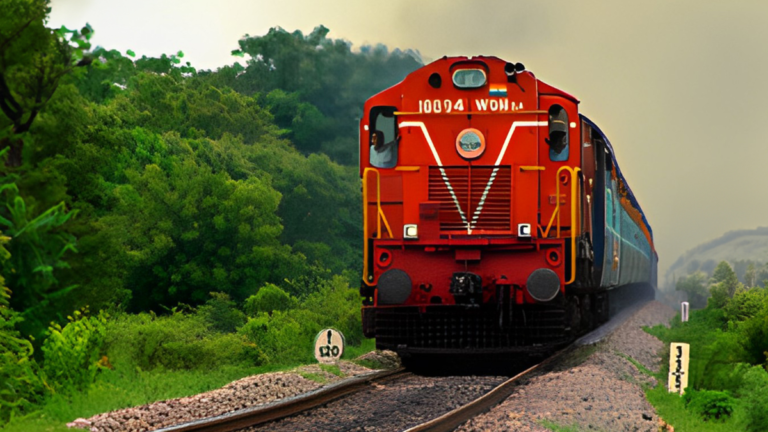
(iv) Reduced Carbon Emission: IR has taken on the responsibility of further decreasing diesel locomotive emissions and standardising them in accordance with international & worldwide emission practices and procedures. Diesel locomotives for Indian Railways are now being constructed exclusively at the Diesel Locomotive Factory/Marhowra, which meets UIC-624-I Emission Standards.

(v) Dual-mode Locomotive – There are a number of stations/yards/sidings where traction changes occur owing to a mix of diesel and electric tractions. It is significantly easier to develop an electro-diesel locomotive (Dual mode) with modern electronics that can run at prescribed speeds on both electrified and non-electrified territories. In case of a major crash, accident or natural calamity, such as a cyclone, or at locations where the OHE gets disrupted, a dual-mode loco will provide excellent operational flexibility by operating on diesel until normalcy is restored. RDSO has designed and created a dual-mode loco prototype which was readied in March 2020 at DLW, Varanasi. The prototype shall now be put through necessary operational and safety tests and trials.

Improving Energy Efficiency with Rolling Stock:

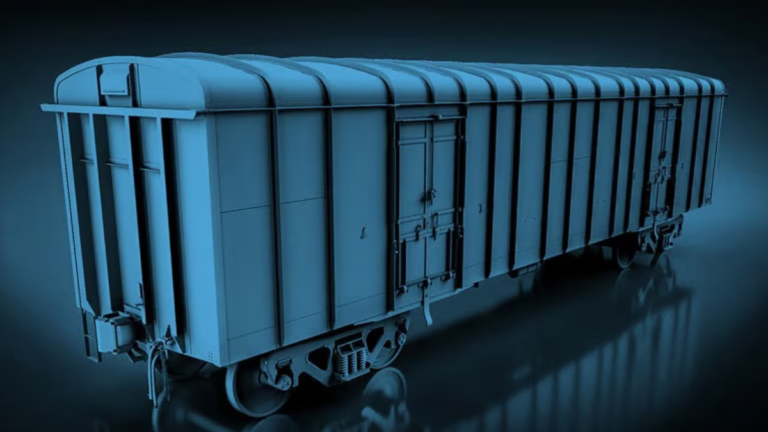
(i) In 2018-19, BFNSM waggons were introduced for Steel Coils, increasing rake output to 4100 tonnes per rake, thirty-five per cent greater than standard BFNS and BRN waggon rakes. BFNV waggon has been designed to allow forklift loading of steel coils from the side.

(ii) A dwarf container has been developed that can travel with double stack loading even in electrified areas and sections, allowing for increased throughput.

(iii) In August of 2018, the commercial operation of multimodal Road-Railers began.

(iv) These solutions shall increase throughput and/or shift some road traffic to rail, resulting in lower GHG emissions for the same freight traffic.

  • Coaches: Enhanced design Coaches made of stainless steel have a greater carrying capacity. As the share of such coaches increases, the PKM to GTKM ratio gets better, resulting in lower GHG emissions for carrying the same passenger volume.
  • Train Sets: Train-18 (later renamed Vande Bharat), India’s first semi-high speed train set produced under the ‘Make in India’ initiative by ICF in 2018-19, is an energy-efficient train. It has three-phase IGBT-based underslung propulsion equipment, an innovative and advanced regenerative braking system, with the elimination of the need of power cars. These features can save as much as thirty per cent of energy. In addition, the train’s aerodynamic design assists to reduce air drag and, consequently, energy consumption.
    A picture containing transport, train, public transport, vehicleDescription automatically generated
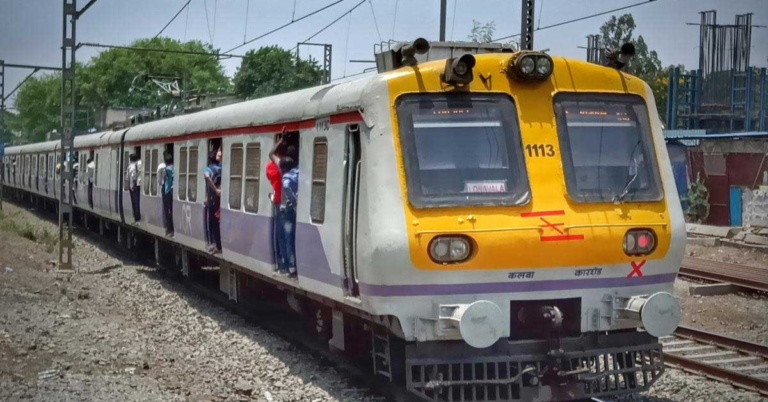
  • EMU/MEMU: The use of an energy-efficient three-phase IGBT-based propulsion system with regenerative braking was first introduced and has since been maintained.

Head on Generation System

End-on-Generation (EOG) LHB trains require power cars equipped with Diesel Alternator (DA) units to feed air conditioning, train lighting, and other electrical requirements in the coaches. Each such train has two power cars, each with two DA sets. This technology has the problem of causing air and noise pollution. Power is drawn through converters provided in locomotives in the HOG system. The electrical power drawn by the locomotive’s pantograph is appropriately converted and supplied for air conditioning, train lights, and other electrical loads in the train. 342 trains have already been converted to HOG till date. This has helped in saving nearly Rs 800 crore. The way ACs work and power is supplied in train compartments is going through new developments. New innovations and technical transitions are expected to save approximately 1400 crore rupees in foreign exchange every year.

Energy Conservation Initiatives

Given the vast magnitude of its operations, it is not unexpected that the Indian Railways has a growing demand for power usage. Indian Railways consumes roughly 20 billion kWh of electricity each year, accounting for approximately two per cent of overall power consumption in the country. With rail traffic expected to increase in the next years, it is anticipated that the Indian Railways’ demand for energy will rise during the next decade.

Indian Railways has undertaken a number of measures to conserve energy, procure power under Open Access, and harness Renewable Energy to reduce its energy consumption and rationalise its energy procurement process. Railways also conduct regular energy audits at various spots of power consumption. The use of 5-Star electrical equipment is being encouraged and promoted.

  • Complete LED replacement at all railway stations (over 8,000) and all railway facilities and structures (over 20,000). LED lighting has been provided on a one-time basis in all residential quarters (about 5 lakh quarters). The hundred per cent LED fitting across all railway infrastructure and facilities is expected to save around ten per cent of total energy consumed on non-traction, resulting in savings of approximately 240 million units of power, accounting to a saving of Rs 180 crore per year. 
  • CFL/FL lights in TL/AC and self-propelled (EMU/MEMU) coaches have been replaced with energy-efficient LED lights by Zonal Railways. LED light fixtures are being provided in all newly constructed coaches from production units. On an average, each such coach helps in saving approximately Rs. 25000/- every year.

Harnessing Renewable Energy

Since Indian Railways consumes a substantial amount of energy, identifying cost-effective options for achieving and realising an energy system with the least environmental impact is essential. Indian Railways has taken a number of initiatives to implement clean and efficient energy. The Indian Railways’ Vision 2020 document specifies that the primary objective of railways is to obtain and utilise at least ten per cent of its energy requirements from renewable sources.

Some of the key steps taken in this regard are as under :

  • Harnessing Solar Energy to be used in various ways by IR
  • Solar Plants along the Railway Track for traction purposes
  • Harnessing the wind energy
  • Hundred per cent green-powered station
    A picture containing outdoor, track, sky, urban areaDescription automatically generated

Alternate Fuel and Clean Energy initiatives – IROAF

With a growing global population and increased energy consumption, the expanding usage of coal and oil poses a threat to the continued existence of humanity. These fuels are the major emitters of GHGs and pollutants such as NO2, SO2, Volatile Organic Compounds (VOCs), and particulate matter (PM). The Indian Railways Organisation for Alternate Fuel (IROAF) has been established to look into the possibility of expanding new sources of environmentally friendly fuels and energy in Indian Railways. IROAF has made the following initiatives in this direction:

  • Blending of Bio-diesel with HSD – Bio-based fuels made from renewable biomass and other natural resources are environmentally friendly because the CO2 emitted by burning these fuels is absorbed and captured again by trees and plants, neutralising the negative environmental impact. Pollutants produced by the combustion of traditional fossil fuels because of Sulphur and other toxic elements included in fossil fuels are absent in bio-fuel, resulting in significantly lower emissions. H.S.D. substitution with bio-diesel leads in a 44% reduction in hydrocarbons (HCs), an 89.3% reduction in carbon mono oxide (CO), and no sulphur content in exhaust. On June 5, 2015, Indian Railways began blending 5% biodiesel with HSD. Bio-Diesel blends of as much as five per cent have begun at nearly a hundred Indian Railways RCDs across the country.
  • CNG/LNG-based Dual Fuel Diesel Engines for DEMU Trains – Indian Railways is the only railway in the world that uses CNG-powered locomotives for passenger transportation. IROAF is pioneering the use of CNG-based dual fuel fumigation technology on 1400 hp CNG DEMUs DPCs to achieve up to 20% diesel substitution. At the Shakurbasti and Vijayawada Diesel Sheds, a number of DEMU diesel power cars have been converted into CNG-based dual-fuel engines.

IROAF is now progressing to the next phase of forty per cent HSD substitution with CNG/ LNG. Contracts have been issued for the conversion of ten dual-fuel DPCs with a forty per cent substitution of CNG and ten dual-fuel DPCs with a forty per cent substitution of LNG.
railways-iroaf-e

Various Solar Energy based solutions for Rolling Stock of IR

Indian Railways has taken a number of initiatives to provide solar energy-based solutions for rolling stock and passenger services, including the following: 

(a) Provisions of Solar Panels on trains

(b) Solar energy-based solution for guards of freight trains

(c) Solar panels on rail workshops and stations

 The other initiatives include – 

(i) Use of Natural Gas at Workshops / Production Units / Railway Premises

(ii) Use Fuel Cell Technology

Indian Railways is also working on energy conservation projects, which include as follows:

  1. Water Recycling Plants are provided in major consumption centre locations (stations/sheds, etc.) where there is a high demand for water and the provision of the same is economically viable.
  2. Water Bodies – The Ministry of Railways has decided to access and review the water bodies existing on railway land, including those that are currently non-functional, and take actions to make sure that all existing water bodies are safeguarded and nurtured and that all non-functional water bodies are restored as soon as possible.
  3. Water Audit – To minimise the waste of water, Zonal Railways have been instructed to conduct water audits at significant water consumption sites by a third party for both quality and quantity and to begin work on water recycling plants based on the water audit report. 
  4. Rain Water Harvesting – To improve water conservation, Indian Railways has installed Rain Water Harvesting (RWH) systems at various locations in accordance with existing policy. Railways received instructions in 2001 to employ rooftop rainwater collection to recharge groundwater, particularly in areas experiencing seasonal water shortages, and to seek support from Regional offices of the Ministry of Water Resources.

In 2013, it was decided that the RWH scheme would be an essential subset of all project estimates for built assets such as service buildings, hospitals, station buildings (including remodelling), railway quarters, workshops/sheds, yard modelling, as well as doubling, new line and gauge conversion, and sidings. Roof Top Rain Water Harvesting installation is being monitored across all railway zones. 

  1. Deployment of Quick Watering Systems – Quick Watering Systems have been introduced across Indian Railways for watering coaches at stations. The Quick Watering System conserves water by reducing waste. 
  2. Afforestation – Railway departmental afforestation on vacant railway land in between sections is carried out in order to protect Railway land from illegal and unauthorised occupation.

Green Built up Spaces

IR has taken the lead in pursuing Green Rating Certification for a number of Railway establishments, including industrial operations. Such certification primarily assesses factors that have a direct influence on the environment, such as energy-saving measures, the use of renewable energy, the impact on GHG emissions, water conservation, solid and liquid waste management, green cover, and so on.

(a) Green Buildings- Green Buildings can be stated to be attempts to lessen the negative environmental impact of buildings and structures during construction and use. The aim and objective of green buildings are to reduce demand for non-renewable resources, improve and enhance resource utilisation efficiency, and maximise the reuse, recycling, and utilisation of renewable resources.

(b) Green Railway Stations – The Confederation of Indian Industry (IGBC-CII) has set up Green Railway Stations Rating system to analyse, access, and facilitate the redevelopment, transformation and conversion of existing railway stations into environmentally friendly ones.

Few Other Key Initiatives

In order to fulfil its goal to become a green transportation system, Indian Railways has undertaken the following efforts as additional measures to establish itself as an eco-friendly and non-hazardous transportation system:

  1. Environment-Friendly Bio-Toilets for Passenger Coaches
  2. The use of Bio Vacuum Toilets
  3. Focus and emphasis on Solid Waste Management
  4. Environment Management Shield
  5. Drinkable water at an affordable price
  6. EMS (Environment Management System) and IMS (Integrated Management System) Certification
  7. Efforts to reduce noise in power cars
  8. Implementation of e-office operations
  9. TPaaS (Telepresence-as-a-Service) provisions
  10. Centralised Traffic Control with Electrical/Electronic Interlocking

Green Initiatives in Metro Railways

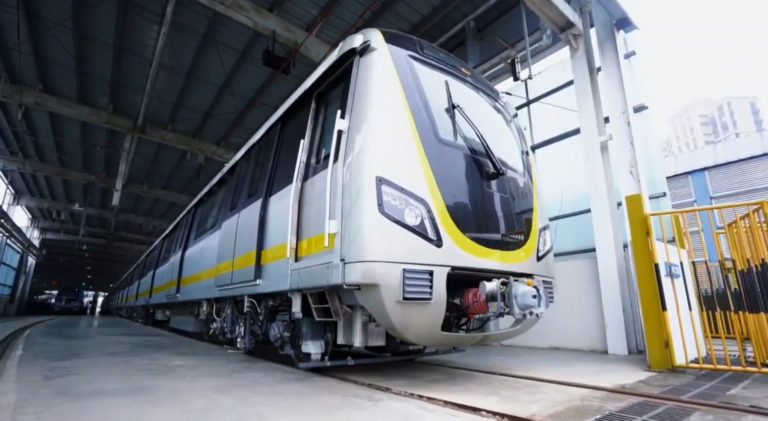
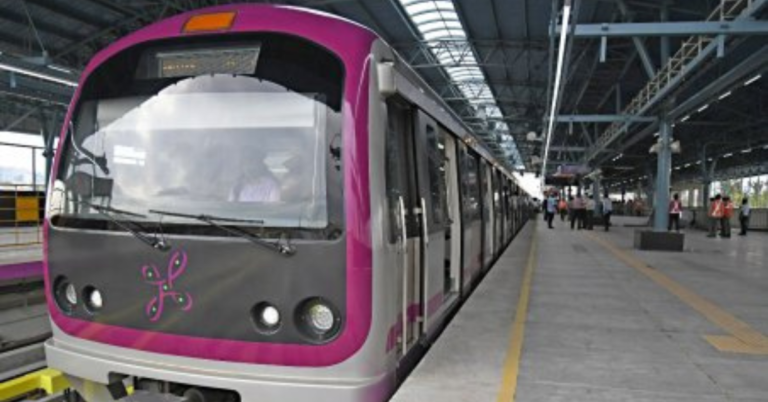
Indian Railways and Metro Rail Corporations are working tirelessly to transform the country’s railways, metros, RRTS and MRTS transportation systems into ‘green’ transportation systems that reduce carbon footprints through efficient power consumption, rainwater harvesting and other processes. It is mandated to provide passengers with an entirely different experience each time they ride and use the transportation system. The operation of the transport system is intended to contribute to and develop an environmentally friendly environment. Some of the benefits of the country’s ‘green’ Metro project are highlighted below:

  • Use of rainwater harvesting in the premises to charge groundwater.
  • Efforts to reduce volatile organic compounds from the environment using various techniques such as regenerative braking systems, the planting of trees in and around stations and depots, residential complexes, solar roofs, and so on, thereby significantly reducing carbon footprints.
  • The use of innovative rolling stock helps to reduce CO2 emissions, making metros a more viable public transport choice and option.
  • Use of environmentally friendly chemicals and materials for housekeeping and artwork at metro stations to save energy consumption. The use of LED lights and energy-efficient electric equipment to cut energy consumption is one of the various techniques being used and undertaken by the railways and metro systems in the country towards their green initiatives and projects.
    A picture containing transport, train, public transport, train stationDescription automatically generated

Conclusion

Energy consumption in India has risen by nearly seven hundred per cent in the last 40 years, and it is expected to increase by threefold further by 2030. This necessitates action by the urban transport sector, which consumes the most energy, to work towards energy savings and environmental sustainability. Metro corporations in India already have a few methods in place, such as minimising their carbon footprint by installing solar power systems across their networks, creating roofs of highly reflecting material, and insulating the walls and roofs of stations. Almost all metro systems being built in the country intend to generate one-sixth of their power from solar energy within the next five years, supporting renewable energy.

Global energy demand is constantly increasing, with consumption expected to double and even triple in the coming years. With major countries such as China, India, and the United States at the vanguard of this use, it has become important to act. Fortunately, India has taken the first step towards reducing its ecological footprint and burden on the environment by attempting to make the metro systems green and sustainable. Conforming to the initiatives, the Delhi Metro, the nation’s capital metro system, has been made completely green.

The Delhi Metro has also been designated as the ‘World’s First Green Metro’ as a result of the Delhi Metro Rail Service’s (DMRC) ongoing efforts to construct an eco-friendly and energy-efficient metro system. It has achieved this coveted status by adhering to the Indian Green Building Council’s (IGBC) green building standards. In addition, the Delhi Metro was the first in the world to acquire carbon credits from the United Nations in 2008 for its efforts and contribution to reducing greenhouse gas emissions. The DMRC also became the first metro to be included in the United Nations’ Clean Development Mechanism in 2015. Further, the DMRC has received various green certifications for its Phase III and Phase IV stations, substations, and depots. Similar efforts and initiatives are being taken by other metro systems being developed in the country. The metro systems being constructed in other cities are also being developed in an environmentally friendly manner, advocating and prioritising environmentally friendly initiatives. The Indian Railways is already working towards its goal of becoming more sustainable and environment-friendly by 2030.

As a result, it goes without saying that the overarching goal of adopting green initiatives in a metro is to satisfy the dual goals of sustainable development and low emissions while mitigating climate change concerns. With characteristics such as conservation practices, power efficiency, renewable energy utilisation, rainwater harvesting, material sustainability and elevated commuting facilities, these green metro projects provide consumers with a one-of-a-kind experience. Green metro is also a ‘smart’ answer for our future smart cities.

The major goal of green projects is to pave the way for long-term sustainability. The green impact stipulated through these commute-based projects is to reduce the effects of natural disasters and human-made mistakes in nature. These also provide access to green spaces while also addressing the environmental effects of urban areas. Breakthrough inventions have the potential to change the way we commute by providing more efficient, environmentally friendly, and convenient forms of transportation. Green metro initiatives strive to nest their presence inside nature without interfering with it; they have multiple good effects.

Latest Update

Vande Bharat has transformed the train travel experience for the common middle-class commuter. Vande Bharat trains, a fine instance of ‘Make in India,’ have come a long way from their debut in 2019. Vande Bharat has proven to be an initial uplift towards a faster and enhanced travel experience, with a minimum speed of 160 kmph and facilities superior to Shatabdi trains. The years ahead are expected to be important for Indian Railways, with Vande Metro trains leading the way. Following the success of the high-speed Vande Bharat Express trains, the launch of Vande Metro trains in 2023 is expected to augment commuters’ journey and travel time with the best of services. 

India’s First Hydrogen-Powered Vande Metro Trains

The Indian Railways has begun manufacturing hydrogen-fuel cell-powered eco-friendly Vande Metro trains to replace the ageing trains developed in the 1950s and 1960s. Railway Minister Ashwini Vaishnaw recently stated that these trains will be a significant step forward because the focus will not be on the end user. Vande Metro trains fuelled by hydrogen will serve the middle and lower classes. It is safe to state that these trains will have a profound impact on every Indian’s daily life.

This is one of the most significant ecological and green initiatives undertaken by the Indian Railways, as hydrogen trains require less fuel and produce low noise, resulting in nearly no pollution. According to reports, these trains will only generate steam and evaporated water. This will be India’s first and the world’s second hydrogen train, with Germany having debuted the world’s first hydrogen-powered trains. Although the specific launch date is yet to be announced, the Railway Minister has stated that the design should be available between May and June 2023.

image

Vande Bharat 3.0: Sleeper-Class Vande Bharat Express

The Indian Railways is developing the Vande Bharat-3 design, which will include sleeper class and make longer-distance travel easier. According to official information released by the Ministry of Railways, a tender for the production of 200 new rakes of these new-generation Vande Bharat trains has been issued. All 200 Vande Bharat rakes will be developed solely for the sleeper class. According to reports, these trains will most likely have an aluminium body and will be 2-3 tonnes lighter than previous Vande Bharat variants. The sleeper class coaches would include Wi-Fi and LED panels that will display passenger information. The trains will also include automatic fire sensors and GPS systems to make travel easier, safer, and more enjoyable.

Amrit Bharat Station Scheme: Revamping the railway stations

The Indian Railways has inaugurated the Amrit Bharat Station scheme, with the long-term goal of upgrading the infrastructure of more than 1,000 stations on a continuous basis. According to the official announcement, the project would ensure that all station categories have high-level platforms (760-840 millimetres). In fact, the Master Plans created under this concept will fundamentally transform the appearance of stations. This would entail widening roads, demolishing unsightly constructions, correctly designed signage, dedicated pedestrian walkways, well-planned parking areas and improved lighting. Considering the limited space at railway stations, efforts will be made to combine different grades/types of waiting areas and provide good cafeteria/retail facilities as much as feasible. In waiting rooms, suitable low-level partitions can be constructed.

Prime Minister Lays Foundation Stone For 508 Railway Station Redevelopment Nationwide

NEW DELHI (Metro Rail News): On Sunday, Prime Minister, Shri Narendra Modi, made a historic move by laying the foundation stone for the redevelopment of 508 Railway Stations across the country through video conferencing. The ambitious project is estimated to cost more than Rs 24,470 crores. The selected 508 stations for redevelopment are spread across 27 states and union territories. States like Rajasthan and Uttar Pradesh have 55 stations each, Bihar has 49 stations, Maharashtra has 44 stations, West Bengal has 37 stations, Madhya Pradesh has 34 stations, Assam has 32 stations, Odisha has 25 stations, Punjab has 22 stations, and Gujarat and Telangana have 21 stations each. Additionally, Jharkhand has 20 stations, Andhra Pradesh and Tamil Nadu have 18 stations each, Haryana has 15 stations, and Karnataka has 13 stations, among others.

Addressing the gathering, the Prime Minister emphasized that the country is moving towards the goal of Viksit Bharat (Developed India) and is entering the Amrit Kaal. He expressed that there is new energy, inspiration, and determination in the country, which marks the beginning of a new chapter in the history of Indian Railways. He announced that almost 1300 prime railway stations in the country will be redeveloped as ‘Amrit Bharat Stations’, ushering in modernity and giving them a new lease of life.

The Prime Minister stressed that this redevelopment project will not only benefit the railways but also contribute to overall infrastructure development in the country. The benefits of this initiative will be extended to all states, with 55 Amrit Stations to be developed in Uttar Pradesh at an approximate cost of Rs 4,000 crores, and another 55 stations in Rajasthan. Similarly, 34 stations in Madhya Pradesh will undergo redevelopment at a cost of around Rs 1,000 crores, 44 stations in Maharashtra at approximately Rs 1,500 crores, and prime railway stations in Karnataka, Tamil Nadu, Kerala, and other states will also be redeveloped.

The Prime Minister applauded the Ministry of Railways for undertaking this historic project and congratulated the citizens on this significant step towards progress and development.

The revamp will offer modern passenger amenities, seamless traffic flow, inter-modal integration, and well-crafted signage for passenger guidance. The station buildings’ designs will draw inspiration from the region’s local culture, heritage, and architectural styles.

Enhancing Metro Rail Usage by Citizens

Abstract

The provision of Metro Rail in cities is welcomed by citizens; however, the ease to use the facility has been a challenge for most. The intent of this paper is to create citizen interest in promoting the usage of the Metro in their city with active participation with authorities.

The idea is to evolve practical solutions which can be jointly implemented by authorities with citizen participation.

Background

The intent of Metro is to promote mass transport, thereby reducing traffic on city roads and contain pollution caused. It is observed that there is reluctance amongst citizens to give up cars/two-wheelers and ride the metro for a variety of reasons. A WRI study shows that except Mumbai, amongst all other cities where the Metro is functional, the actual ridership is much lower (i.e. 5- 10%) than the potential for which the Metro is designed (WRI, 2023).

Apart from this, there are challenges faced by citizens in attempting to use the public transport facilities offered in cities in addition to Metro, as the services are not conceptualised based on end-user expectations; further, these transport options often do not complement each other to get a synergy for their usage.

Non-usage of Metro leads to investments turning non-viable, leading to loss and deteriorating facilities over time for lack of maintenance on account of the shortage of funds. It’s the behaviour we intend to change by addressing the underlying causes.

Literature Review

Different studies have been carried out for the feasibility of urban transport systems with respect to traffic conditions in cities; however, the post-implementation usage data, as cited above, reveals very low usage in cities barring Mumbai. For the analysis of end-user requirements, it is important to understand the Macro map of the process one follows to use public transport, as explained in Figure 1 below.

 The end user requirements of secondary transport to reach the metro station is a challenge in the process due to

  1. 1. Non-availability of feeder buses/autos/taxis from the starting point of the user.
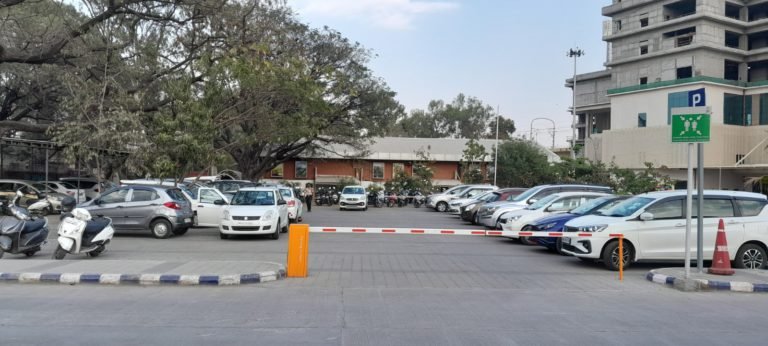
  2. 2. Non-availability of parking spaces at metro stations.
  3. 3. Non-availability of secondary transport at the alighting station to reach the destination.

The ticket buying is simplified reasonably with metro cards / mobile apps / QR codes/ monthly passes at stations to save on time. Further, amenities at stations are decent, plus the comfort of commuting in Metro is provided. But secondary transport at the alighting station is still a challenge.

C:\Users\Lenovo\Downloads\Macromsp.jpg

Figure 1- Macro-map of citizen Activities to use Metro

There are studies done for the feasibility of Metros and Bus transport independent of each other as such, the routes of these are found to be non-converging leading to minimal change over points for modes of public transport in cities. As such, Transit Oriented Development (TOD) initiatives are forced to provide measures to bridge the gap among the modes of transport, as mentioned above. This leads to TOD projects mainly converging to improve the ease of shift for travellers between two modes. The focus of TOD is to bring in land use interventions to ease accessibility to stations and improve walkability, as illustrated in Figure 2.

A picture containing diagram, line, screenshot, plotDescription automatically generated

Figure 2 – TOD Policy Measures – Illustration

Parking management is a key thrust area in TOD policy by the Ministry of Housing and Urban Affairs (MOHUA), and the idea leverages this focus to promote citizen participation and proposes to integrate the initiative as part of TOD initiatives to encourage citizens to participate. In addition, a little focus on the end-user requirement, as illustrated in Figure 3 below, shall help to make the commute easier and more beneficial to both the provider and consumer. A picture containing text, screenshot, font, designDescription automatically generated

Figure 3 – Approach to identify solutions for fulfilment of Citizen expectations on Service

There is a need to analyse citizen requirements, as explained in the graphic above, where an approach to identify suitable solution sets for the viability of bus service is illustrated. These solutions need to be prioritised based on viability to fulfil user as well as provider requirements.

The reason for the distinctly low usage of metro rail in cities, despite efforts to make stations good with amenities, ease of ticket buying etc., is the visibly striking gap in transfer between two modes of transport like in the ease of reaching the station and availability of hop on services etc. The idea is focused on this aspect with the intent of identifying avenues to complement TOD policy with citizen participation.

Approach for measures to enhance the usage of Metro rail

The idea behind the solution is built around the TOD policy of MOHUA for enhancing land use in the vicinity of the transit nodes and improve parking facilities. The idea thus focuses on:

  1. Encouraging citizens to reach the nearest point to take the metro/feeder bus to a metro station.
  2. The target audience is users of cars and two-wheelers by providing them with a facility to park near the metro station or close to a feeder bus stop.
  3. The element of service assurance shall be built into the solution thereby, the usage can scale up with information on parking availability.
  4. Focus on the involvement of citizen/housing societies in the vicinity of the station or on the route of feeder buses to the metro station.
  5. Idea leverages the existing Metro App, Maps, Metro Cards and Payment channels like UPI for easily locating available parking, booking of available lot and payment of parking fees.
  6. For implementation, a partnership of Local authority is proposed for parking lot mapping and tariff fixation with an arrangement to share benefits with participating citizens by Metro along with local authority.
  7. The idea shall surely have a prerequisite solely with participating authorities who need to show constructive interest in implementation, with assurance to participating citizens for any conflict resolution if it arises.

Potential Solution

The solution proposed has two components A – Spatial components, which constitute

  • Initiative by Metro and Local ULB to encourage citizens to offer spaces within their premises closer to metro stations for parking provisions/ bicycle stands.
  • Provide channel to citizens to express their interest and get empanelled post validation of locations/parking potential.
  • Plan a feeder bus route linking parking lots offered for commuting those willing to use parking lots to finally use Metro.
  • Also, include a bicycle option to provide cycles on rent by extending current ongoing initiatives.
  • The point-to-point service offering via e-auto rickshaw with a fixed fare to be paid via MetroCard.

B – Technological components of the idea constitute

  • Make available the offered slots for pre-booking by the existing metro app.
  • Bus route and cycle booking options to be part of the metro app.
  • Provision of payment of fees through various payment options
  • Assurance of vehicle security with insurance on lines of the railway at a low premium.
  • Revenue sharing via app for participating citizen / Metro / ULB
  • Some of the solutions for improving bus service outlined in Figure 3 can also be developed.

 Figure 4 A and B below illustrate the Spatial & Technical components of the idea.

A map of a cityDescription automatically generated with low confidence

   Figure 4 – A and B – Spatial and Technical Components of Idea

Testing Plan

 The idea is proposed to be run as a pilot with clear actions defined by participating stakeholders and user citizens, as outlined in Figure 5 below.

A picture containing text, screenshot, font, numberDescription automatically generated

Figure 5 – Provider and User Actions for Idea Testing and Implementation


Conclusion

Increasing awareness amongst citizens regarding the potential of public transport towards contribution for reduction in pollution and the need for citizen contribution to the environment is the central theme of the idea.

The element of Incentive-based service provision is taken as a driver for encouraging citizens to participate in implementing initiatives of such nature. The idea leverages the synergy amongst the currently ongoing initiatives like

  • As a Unique Selling Proposition (USP), the idea ropes in citizens (Users and Residents) to participate with city administration in the initiative by offering their premises at a use-based charge.
  • Promoting cycles / fixed fare e-rickshaw as part of TOD initiatives
  • Promoting TOD policy measures of land use interventions in the catchment area around metro transit routes.
  • Integrates ongoing initiatives like feeder bus/bicycle rentals / insurance-based assurance (like railways) to promote active citizen participation in the usage of public transport like Metro.
  • Giving citizens to contribute to the environmental protection measures.


    By Dr Praful Gharpure Architect – Urban Planner Sr. Consultant
    Infrastructure Planning & Development Tata Consultancy Services

SBI Files Insolvency Plea Against Mumbai Metro One to Recover Rs 416 Crore Dues

MUMBAI (Metro Rail News): State Bank of India (SBI) has taken legal action against Mumbai Metro One (MMOPL) by approaching the National Company Law Tribunal (NCLT) to initiate the Corporate Insolvency Resolution Process (CIRP). MMOPL is a joint venture between Mumbai Metropolitan Regional Development Authority (MMRDA) and Reliance Infrastructure (RInfra).

SBI has filed a petition with NCLT’s Mumbai bench to recover its dues of over Rs 416 Crore from MMOPL, also known as Metro Line 1 in Mumbai City. Other lenders involved are IDBI Bank, Canara Bank, Indian Bank, Bank of Maharashtra, and India Infrastructure Finance Company (UK).
Reliance Infrastructure stated that MMOPL is seeking legal advice to protect its interests in this matter. The financial impact on the company is uncertain and depends on the outcome of the proceedings.

This project, awarded on a public-private partnership basis, involves the design, financing, construction, operation, and maintenance of a 12 Km elevated metro between Versova and Ghatkopar with 12 stations en-route.

Reliance Infrastructure owns 74% stake in the metro line operator, while the remaining 26% is held by MMRDA. MMRDA is reportedly looking to take over the operation from MMOPL.

In 2007, the Mumbai Metropolitan Region Development Authority (MMRDA) awarded the Versova-Andheri-Ghatkopar corridor to the Reliance infrastructure consortium through a global competitive bidding process on a public-private partnership framework. Subsequently, a special-purpose vehicle called Mumbai Metro One was established to carry out the project.

₹800 Crore Railway Projects Sanctioned for Visakhapatnam: Ashwini Vaishnaw

NEW DELHI (Metro Rail News): Union Minister for Railways, Ashwini Vaishnaw, disclosed that Visakhapatnam has been allocated nearly ₹800 crore for various railway infrastructure projects this year, in response to a query from BJP’s Rajya Sabha member G.V.L. Narasimha Rao.

The newly-sanctioned projects include:

1. Railway line project of 3rd and 4th lines between Visakhapatnam and Gopalapatnam (15.3 km) at a cost of ₹159.47 crore.

2. New railway line project of 3rd and 4th lines between Duvvada and Simhachalam North (20.543 km) sanctioned at a cost of ₹302.20 crore.

3. New railway line project of 3rd and 4th lines between Vadlapudi and Gate Junction cabin including Tie line between Gangavaram Port-Visakhapatnam Steel Plant (12.04 km) sanctioned at a cost of ₹154.28 crore.
4. Flyover between Pendurthi and Simhachalam North at Simhachalam (7.135 km) was also sanctioned at a cost of ₹183.65 crore.

The Minister highlighted that these projects were sanctioned to address capacity constraints, reduce train detention, and cater to future traffic growth in Visakhapatnam. Land acquisition works for these projects have already been initiated.

Shri G.V.L. Narasimha Rao, who was recently nominated from Parliament as a Member of the Railway Users’ Consultative Committee of East Coast Railway, expressed his gratitude to Prime Minister Narendra Modi and the Railway Minister for the substantial financial allocations for railway projects in Visakhapatnam. He hopes that these projects will significantly improve the growth of railways in the Visakhapatnam region and enhance passenger convenience.

PM to Lay Foundation Stone for 508 Railway Station Redevelopment at Rs. 24,470 Cr

NEW DELHI (Metro Rail News): On 6th August, Prime Minister Shri Narendra Modi will take a historic step by laying the foundation stone for the redevelopment of 508 railway stations across India through video conferencing.

The Prime Minister has consistently emphasized the importance of providing state-of-the-art public transport. With railways being the preferred mode of transport for people all over India, PM Modi’s vision is to ensure that passengers receive world-class amenities and services.

To fulfill this vision, the government launched the Amrit Bharat Station Scheme, which aims to redevelop a total of 1309 railway stations across the nation. As part of this ambitious plan, the foundation stone for the redevelopment of 508 stations will be laid by PM Modi himself. These stations are set to undergo a transformative makeover with a budget of over Rs 24,470 crores.

The redevelopment project comes with a comprehensive approach, as master plans are being prepared to develop these stations as ‘City Centres’. The objective is to create well-integrated spaces that seamlessly blend with the surrounding areas and cater to the overall urban development of the cities where the stations are located.

The selected 508 stations for redevelopment are spread across 27 states and union territories. States like Rajasthan and Uttar Pradesh have 55 stations each, Bihar has 49 stations, Maharashtra has 44 stations, West Bengal has 37 stations, Madhya Pradesh has 34 stations, Assam has 32 stations, Odisha has 25 stations, Punjab has 22 stations, and Gujarat and Telangana have 21 stations each. Additionally, Jharkhand has 20 stations, Andhra Pradesh and Tamil Nadu have 18 stations each, Haryana has 15 stations, and Karnataka has 13 stations, among others.

The revamp will offer modern passenger amenities, seamless traffic flow, inter-modal integration, and well-crafted signage for passenger guidance. The station buildings’ designs will draw inspiration from the region’s local culture, heritage, and architectural styles.

Patna Metro to Implement Best CBTC Systems for Communications

PATNA (Metro Rail News): All Stations and depots of the Patna Metro Rail Project will use the best Communication-based Train Control (CBTC) system for communications.

CBTC is a cutting-edge signalling system that aids in managing train movement on the Mass Rapid Transit System (MRTS). In this communications system, information is transmitted wirelessly between trains and the control centre.

CBTC will benefit the commuters in Patna greatly as it will have:

  1. Improved sustainability: CBTC is more energy efficient than traditional manual operation. With automatic speed regulation provided by the system, unnecessary acceleration and braking are not required, which leads to big energy savings. Environmental sustainability will improve with reduced power consumption, and there will be less air pollution.
  2. Improved Safety: CBTC allows for real-time monitoring and control of train movements, which helps to prevent accidents and collisions. The system also automatically detects and reacts to any abnormalities or malfunctions in the train system, increasing the overall safety of the metro.
  3. Increased Capacity and Efficiency: CBTC can increase the frequency and speed of train operations, resulting in faster travel times and more efficient use of the metro system. This allows for more passengers to be transported in a shorter amount of time, reducing crowding and wait times.
  4. Reduced Maintenance Costs: CBTC systems can help reduce maintenance costs as the system constantly monitors and alerts the maintenance team to any potential issues or failures. This allows for preventative maintenance, reducing the likelihood of major failures or disruptions in train services.
  5. Enhanced Passenger Experience: CBTC allows for smoother and more predictable train operations, which can improve the overall passenger experience. Passengers can rely on a more efficient and punctual service, and the system can also provide real-time information on train schedules and delays.

    It is to be noted that the CBTC system will reduce the waiting period between two trains and also increase passengers’ commuting capacity. The technology relies on continuous two-way digital communication between each train and the control centre. Each train transmits its location, direction and speed to the control system, which makes necessary calculations for safe travel. The implementation of Communications-Based Train Control (CBTC) technology in the upcoming Patna Metro project is expected to revolutionize the way passengers travel in the city.

Installation of Two Special Steel Spans Completed in Kondali, Delhi for RRTS Corridor

DELHI (Metro Rail News): NCRTC has successfully installed two special steel spans for the RRTS Corridor in Kondali, Delhi. These special steel spans are part of a total of six special span structures being installed to cross the Ghazipur drain from New Ashok Nagar towards Anand Vihar.

The combined length of these 6 special steel spans is 360 meters. This is the only place on the entire RRTS corridor where such a long viaduct is being constructed with steel spans. Out of these 6, two special steel spans have been successfully installed, and work on the third is being done. These two special steel spans, weighing 540 tonnes, have been installed in the Kondli area near the New Ashok Nagar RRTS station.

The RRTS corridor is progressing parallel to the Ghazipur drain. These special steel spans are being installed where the corridor will cross the drain. These spans will also cross over the road near Kondli Chowk. Out of these 6 special steel spans, the length of 3 spans will be approximately 70 meters each, and the remaining 3 will be 50 meters, each weighing 380 tonnes.

DJI 0456
default

The spans installed parallel to the Ghazipur drain is about 70 meters long and 14 meters wide. It was placed on the pillars, at the height of about 6 meters from the ground level, with the help of big cranes. Another four spans to be installed in the area are under construction, out of which construction of another 70-meter-long span is almost 50 per cent complete. A little ahead of these spans in the direction of Khichripur, an underground ramp is being constructed, which will connect this elevated section to the underground Anand Vihar Station via Underground tunnels.

NCRTC usually erects pillars at an average distance of 34 meters for the construction of an elevated viaduct of the RRTS corridor. These pillars are joined by pre-cast segments with the help of a launching gantry (Tarini) to form the RRTS viaduct span. However, in some complex areas where the corridor is crossing rivers, bridges, rail crossings, metro corridors, expressways or other such existing infrastructure, it is practically not possible to maintain this distance between pillars. In such areas, steel spans are being used to connect the pillars.

The installation of the steel span near the 40-50 meters wide Ghazipur drain, which is flowing diagonally to the corridor alignment, is a challenging task. Team NCRTC, following all the norms and taking all the precautions, completed it successfully.

Special steel spans are massive structures consisting of beams made of structural steel. Segments of structural steel are first manufactured in the factory and then laden onto trailers brought to the site during the night to avoid any traffic problems.

These parts are then assembled at the site by systematically joining together with the help of a special process. The shape and structure of these steel spans are specially designed to suit all the requirements of construction, installation and usage.

So far, six special steel spans have been installed on the Delhi Meerut RRTS corridor, including a 50-meter-long span at Meerut on the Delhi-Meerut Expressway (DME), a 73-meter-long special span at Vasundhara on the main line of the railway, a 150-meter long span Steel Spans Near Ghaziabad station, two 45 m long steel spans for RRTS viaduct going towards Duhai Depot and 73 m long span for crossing EPE.

Kanpur Metro Initiates Rail Lowering in Chunniaganj-Nayaganj Underground Section

KANPUR (Metro Rail News): Under Corridor-1 (IIT to Naubasta) of the Kanpur Metro Rail Project, the process of lowering the rail commenced at under construction Bada Chauraha underground station of the Chunniganj-Nayaganj underground section. An 18-meter rail (track) weighing 1 ton was lowered about 17.5 meters below the existing cut-out at the station. In the coming days, about 228 such rails will be brought down, which will be laid in the ‘upline’ and ‘downline’ tunnel between Bada Chauraha and Nayaganj underground station. With this, the process of laying the metro track inside the underground tunnel will begin.

WhatsApp Image 2023 08 03 at 15.11.38

A few days back on July 30, the FBW (Flash Butt Weld) plant at the said station has already been brought down. This plant is utilized for the welding of tracks. Like the elevated metro, the ballastless track will also be utilized for the underground metro.

Advantages of ballastless track:

  • Ballastless tracks are used in the Metro Projects as they don’t have ballast (stones), and the least maintenance is required.
  • Metro trains operate continuously for 15-16 hours with tight schedules, leaving minimal time for maintenance. Therefore, an efficient system is crucial to ensure high ridership while minimizing maintenance needs.
    There are additional benefits of a long life-cycle, stability & ride comfort with such tracks.

    At present, under the first corridor of the Kanpur Metro Rail Project, construction work is progressing at a fast pace on the Chunniganj-Nayaganj underground section, on the Kanpur Central-Transport Nagar underground section and also on the Baradevi-Naubasta elevated section.

Mr. C.P. Singh Assumes Role as Director – Works & Infrastructure at UPMRC

LUCKNOW (Metro Rail News): Shri Chandra Pal Singh has joined as Director (Works and Infrastructure), Uttar Pradesh Metro Rail Corporation Limited. Shri C.P. Singh was working as the Executive Director in DMRC before joining UPMRC. He has successfully handled significant civil responsibilities in Delhi Metro (DMRC) for the last 17 years. During his tenure, the Noida-Greater Noida Metro created the record of launching 200 U-girders in 1 month twice and was recognised by the LIMCA Book of Records for its fast construction on this 30-kilometre-long section.

Shri CP Singh joined Delhi Metro in 2005 as Deputy Chief Engineer, and in his tenure of 17 years, he has played an essential role in the construction of 42 upstream metro stations built on a total of 60 kilometres.

Under his direct supervision, the construction of the tunnels and 1 metro station of the 2-kilometre-long stretch were executed successfully. In his vast expertise in metro construction, he also made exceptional contributions to the construction work of 2 depots – Greater Noida – NGN Line and Badli – Line – 2.

A civil engineer by profession, he has a vast experience of 30 years in the construction of underground and elevated metro projects, along with other civil structures. Before Delhi Metro, Shri Singh has worked for other Public Sectors under the Ministry of Heavy Industry and Misntry of Health, completing many large civil engineering projects.

Managing Director, UPMRC Shri Sushil Kumar, congratulated Shri CP Singh on taking over as Director (Works & Infrastructure), UPMRC. He said that with his expertise and experience, he will be an asset to UPMRC.

Chennai Metro Phase 1 to Add 28 Trains with ₹2,820.90 Crore Approval

CHENNAI (Metro Rail News): The Tamil Nadu government has given the green light to acquire 28 six-coach trains at a cost of ₹2,820.90 crore for Chennai Metro Rail’s phase I project, including its extension. The decision comes in response to the growing demand and an increasing number of passengers using the metro service.

Chennai Metro Rail Limited (CMRL) conducted a study to assess the need for additional trains in the existing 54-km phase I stretch, and the findings were presented to the State government for approval. The State government’s Planning, Development, and Special Initiatives Department stated that the proposal for external funding from multilateral funding agencies through the Government of India would be made.

Currently, CMRL operates train services for 19 hours a day, from 5 a.m. to midnight, and has 45 trains in operation. However, due to the rapidly rising number of metro users, with passenger numbers reaching 82.5 lakh in July, the decision to purchase 28 more trains with six coaches each was taken to meet the future passenger demand by the year 2028. The estimated cost for this procurement is ₹2,820.9 crore, with funding expected from multilateral funding agencies.

The move is aimed at preparing Chennai Metro to efficiently handle the increasing demand and provide a comfortable commuting experience to its passengers.

Chennai Metro Phase II: TBM S1075B Clears Factory Acceptance Test

CHENNAI (Metro Rail News): Chennai Metro Rail Limited (CMRL) is working on an ambitious Phase II project, aiming to build a network of 116.1 kilometres, the first of its kind in India. This extensive project includes three corridors and a total of 119 Metro Stations.

The three corridors are as follows:
Corridor-3: Madhavaram to Siruseri-SIPCOT, covering a distance of 45.8 kilometres.
Corridor-4: Light House to Poonamalee Bypass, spanning 26.1 kilometres.
Corridor-5: Madhavaram to Sholinganallur, with a length of 47 kilometres.

Currently, CMRL is constructing the underground metro rail project corridor 4, which connects Light House Station at Marina Beach to Kodambakkam Flyover. The underground section is divided into two packages, UG-01 and UG-02, each comprising 4 km of twin tunnels. To complete approximately 16 kilometres of tunnelling for both Upline and Downline tunnels, CMRL plans to use four Tunnel Boring Machines (TBMs) manufactured by the renowned German company M/s Herrenknecht, assembled at Herrenknecht India Pvt. Ltd (HAI) in Chennai. These TBMs will be operated by M/s ITD Cementation India Limited, the contractor for CMRL.

The successful Factory Acceptance Test of the 4th and final Tunnel Boring Machine (TBM) for the corridor, which is the 2nd TBM for UG-02 package, took place at the HK factory in Thiruvallur District, Ponneri Thaluk, Alinjivakkam village, Chennai, in the presence of R. Ranganathan, General Manager (Construction) CMRL, and various officials from General Consultants, M/s AEON Consortium.

The Tunnel Boring Machine, known as S1075B, has a bore diameter of 6.670 meters and is 110 meters long Earth Pressure Balance Machine. It weighs approximately 700 metric tons. The machine will be dismantled into parts, packed, and transported to its destination at Panagal Park Station, T Nagar. The construction of the TBM launching Shaft at Panagal Park Station is currently in progress and is likely to be completed for lowering and assembly of the TBM by October 2023.

The Tunnel Boring Machine (TBM) will tunnel at a maximum depth of 26 meters below the ground, starting from Boat Club, Nandanam, Panagal Park, Kodambakkam, and finally reaching the retrieval shaft after Kodambakkam Flyover in September 2024.

Mumbai Metro Expansion: Connecting Suburbs and Peripheral Areas

According to SVR Srinivas, Metropolitan Commissioner of the MMRDA, “The important thing is that for the first time in Mumbai, we have a metro network,” “That is significant.” It has been almost a year since the partial launch of Mumbai metro lines 2A and 7. With the inauguration of Phase 2 of the lines by Prime Minister Narendra Modi, Mumbaikars can now travel the length of the city from Dahisar to Andheri in 40 minutes, via Line 2A in the west and Line 7 in the east.

The six-car trains with a capacity of 2,280 passengers will easily be the speedier and more enjoyable option for travel, running parallel to the Western railway line and Western Express Highway (WEH) at 80 kilometres per hour. Their connection to Metro Line 1, which runs from Andheri to Ghatkopar, opens up the east-west corridor to passengers. It is not surprising, then, that the Mumbai Metropolitan Region Development Authority (MMRDA) estimates a tenfold rise in ridership, from a maximum number of riders from around thirty thousand to three lakh per day. It has been projected that by the year 2031, ridership on both lines shall double to almost 6 lakh passengers.

Upcoming Summary

Mumbai’s developing metro network continues to remain far from being completed as planned: 14 lines, 300+ kilometres, over 225 stations, and many interchanges. However, Mumbai residents are now on the verge of another lengthy gap before any new metro rail corridor opens up for them. Many metro lines will open by the end of 2025, but some may be ready to begin operations in 2024.

LineColourCorridorLength (Km)StationsStatusLaunch
Line-1BlueVersova – Andheri – Ghatkopar11.412Operational2014
Line-2AYellowDahisar – DN Nagar18.617Operational2023
Line-2BYellowDN Nagar – Mandale23.620Under Construction2025
Line-3AquaColaba – BKC – SEEPZ33.527Under Construction2025
Line-4GreenWadala – Kasarawadavali32.330Under Construction2025
Line-4AGreenKasarawadavali – Gaimukh2.92Under Construction2025
Line-5OrangeThane – Bhiwandi – Kalyan23.517Under construction2025
Line-6PinkSwami Samarth Nagar – Vikhroli14.713Under Construction2025
Line-7RedDahisar – Andheri (E)16.514Operational2023
Line-7ARedAndheri (E) – CSI Airport3.22Under Construction2025
Line-8GoldCSI Airport – NMIA357Planned
Line-9RedDahisar – Mira Bhayander11.48Under Construction2025
Line-10GreenGaimukh – Mira Road94Tendering
Line-11GreenWadala – Chhatrapati Shivaji Maharaj Terminus12.710Tendering
Line-12OrangeKalyan – Dombivali – Taloja20.717Tendering
Line-13PurpleMira Road – Virar2320Planned
Line-14MagentaKanjurmarg – Badlapur4540Planned

 The current status and expected year of the launch of each Mumbai metro 

Partial opening in 2024 possible

Line 2B: Andheri West to Mandale, in the eastern suburbs

Line 2B, an important east-west connection, is one of the lines that could see a partial start in 2024. It would connect the newly operational Line 2A from its end in DN Nagar in Andheri West to Mandale in the eastern suburbs. It will cross the upcoming Line 3 in Bandra, the Line 4 and the trains at Kurla, and shall meet and connect to the monorail in Chembur. The popular east-west segment, however, will not be the first to open. Only thirty per cent of the construction on the line has been completed. However, Mumbai’s largest Mandale depot has more than fifty-four per cent of its civil work been completed. If Phase 1 opens in 2024, it will only connect DN Nagar to National College in Bandra.

Line 3: Colaba to BKC to SEEPZ

Mumbai Metro 4 1

To say the least, the last year has been an eventful period for the underground Line 3. All of the tunnelling work has been accomplished, more than fifty per cent of the track installation has been completed, and about ninety per cent of the stations have also been constructed. Bids for the Navy Nagar extension were invited. A trial run with the first prototype rake has been performed and carried out successfully, and a second train has also been delivered. Work on the controversial depot in Aarey, which was transferred due to environmental concerns to Kanjurmarg, where it had been stalled in litigation, is now picking up the pace with the construction work now approximately forty per cent complete, up from thirty per cent when it had been paused and suspended. Still, there is a lot of work to be done on the highly awaited line. Phase 1 has been planned to run between BKC and SEEPZ and is expected to begin late this year or early next year. Phase 2 is scheduled to complete a viable alternative to the Western railways and the Western Express Highway (WEH) to Cuffe Parade and, eventually, till Navy Nagar.

Line 4 and 4A: Wadala to Kasarvadavali to Gaimukh

The green Line 4 runs parallel to Line 3 in the eastern suburbs, from Wadala in the south to Kasarvadavali in Thane in the north. It has been planned to travel through Ghatkopar, BS Marg, and Ghodbunder Road until reaching Kasarvadavali. Line 4A, an extension, shall connect the corridor to Gaimukh. It shall intersect with metro lines 2B, 5, 6, 8, the central railway, and the monorail along the route. Forty-three per cent of the civil work on the line has been completed, demonstrating little development since this time last year, when 40-50% of the work had been claimed to be finished. For the past four years, land acquisition for the depot in Mogharpada on Ghodbunder Road has been stalled. The MMRDA requested the land in a letter to the revenue department in January. Bids have been sought for the car shed. Fresh tenders for rolling stock shall also be required, as contracts were cancelled due to the slow development. Line 4A, which consists of two stations, is 45% complete.

Line 5: Thane to Kalyan

The initial and first phase of the orange Line 5, which connects Thane and Bhiwandi, is seventy per cent complete. Phase 2 construction, which would span between Bhiwandi and Kalyan, will begin this year. This phase will be underground in order to avoid the demolition of nearly 1,500 establishment and structures that are both residential and commercial. However, it is on hold due to the Maharashtra government’s pending clearance. The current deadline is December 20, 2025.

Line 9 and 7A: Augmenting Line 7 between CSIA and Mira Road

Lines 9 and 7A are expansions to the recently opened Line 7 between Dahisar and Gundavali in Andheri East. Line 9 shall stretch and extend the corridor north of Mumbai to Mira Road, while Line 7A will connect it to Chhatrapati Shivaji International Airport (CSIA) Terminal 2. The civil work on both the lines has been completed to nearly twenty-five per cent. Farmers in Mira Bhayandar’s Rai, Morve, and Murdha villages have all opposed the depot, fearing for their livelihoods. However, since there are no feasible alternatives, the MMRDA is proceeding with their proposal.

 A map of all the metro lines planned for Mumbai

Under construction

Line 6: Lokhandwala to Vikhroli

Line 6 will be another east-west connector connecting Swami Samarth Nagar in Lokhandwala, Andheri, and Powai to Vikhroli through the Jogeshwari Vikhroli Link Road (JVLR). It is planned to build an elevated road on the first level, allowing for an additional vehicle lane. The civil work on the line is 65% finished. The Maharashtra government is yet to approve the proposed depot at Kanjurmarg on saltpan land for this route. Given the bids for rolling stock, signalling, and communication still needs to be solicited and carried, it may be fair to predict that the line will begin operations in 2025 or later.

In planning

Line 8: Airport Express

In comparison to the other lines proposed for Mumbai, the gold Line 8 is an oddity. It connects the Chhatrapati Shivaji Maharaj International Airport (CSIA) to the Navi Mumbai International Airport (NMIA) through an express route. The 35-kilometre stretch has been planned to have only seven stations. Considering that the NMIA is not expected to begin operations until late 2024 or 2025, there has been minimal development on this route.

Lines 10, 11 and 12: To be tendered

Following an unsuccessful attempt in 2020, the company SYSTRA – DB JV was appointed general consultant for lines 10 and 12. The survey and alignment drawing are currently being prepared. Last August, a draught MoU for cost-sharing with the Mumbai Port Trust has been pending, and the tendering process is yet to begin. Lines 10 and 11 are extensions of the green line; the first connects the Gaimukh, Thane terminus of Line 4 to Mira Road. Line 11, on the other hand, will connect Wadala to CSMT in the south. Line 12 is an extension of Line 5, which runs from Thane to Kalyan, Dombivali, and Taloja.

Lines 13 and 14: Connecting the outskirts of Mumbai

Lines 13 and 14 are two more that are in the planning stages. Line 13 would connect Mira Road and Virar, while Line 14 will connect Vikhroli and Badlapur. Line 14 has emerged as an especially sought line, with a number of campaigns and letters submitted to speed up its construction. It serves the people of Badlapur, Kalyan, Dombivli, Ghansoli, and Airoli who have to commute between Navi Mumbai and Mumbai through crowded central and harbour line trains or congested roads and highways. The MMRDA has planned to assign a consultant to the corridor soon.

Summary & Latest Update

The Metro Rail network in India’s financial capital has been planned to expand to a significant level in the near future. According to the state economic assessment released before the budget, as many as nine Metro lines and stretches are under development in Mumbai, with two of them projected to be operational by 2024. According to the economic analysis, five more metro lines will open in 2025, with two additional lines joining the network in 2026.

Metro 3, commonly known as the ColabaBandra-SEEPZ Line, will be the first to open. Nearly eighty per cent of the construction work has been done, and the route has been planned to open in two stages. The Aarey-BKC section will hopefully open in December 2023, while the BKC-Cuffe Parade section has been scheduled to open in July 2024. Another corridor set to open in 2024 is the Metro Line 6, which will connect Swami Samarth Nagar in Lokhandwala to Vikhroli. This 15.31-kilometre link being an important stretch, shall connect the Western and Eastern Express Highways, passing through Jogeshwari and Powai. In addition, the Mumbai Metro 2B has also been planned to be partially operational in 2024. The 5-kilometre segment between Diamond Garden and Mandale is likely to be operational within a year. The corridor extends from DN Nagar to Mandale.

A 5km segment of Line 9 between Dahisar and Mira Road is also expected to open within a year. Line 9 is an expansion of Line 7 that connects Andheri to CSMIA and Dahisar to Mira Road, thereby stretching and extending the Red Line. The 32.32-kilometre-long Metro Line 4 from Wadala (Mumbai) to Kasarvadavali (Ghodbunder road, Thane) via Ghatkopar, Mulund, and Teen Hath Naka is also under construction. The Mumbai Metro Rail Corporation (MMRC) is in charge for 32.5 kilometres of the 185-kilometre-long Metro 3 route and project, while the remaining section is being developed and executed by Mumbai Metropolitan Region Development Authority (MMRDA).

Mumbai Metro Route in Nutshell

  • The Mumbai Metro Line 1 Aqua Line, also known as the Versova-Andheri-Ghatkopar Line, includes 12 stations. 
  • The Mumbai Metro Line2A (Yellow Line) runs from Dahisar East to Dhanukarwadi. There are a total of nine stations. The Yellow Line is expanding, with eight new stations under construction. It will begin in Dhanukarwadi and terminate at DN Nagar. 
  • The planned and proposed route of the Yellow Line, Line 2 B is D.N. Nagar – Bandra – Mandale, with 22 stations in the middle. 
  • The Aqua Line, also known as Line 3, has twenty-two stations in total. 
  • Line 4 (Green Line) runs through Bhakti Park, Ghatkopar, Thane, and Kasarvadavali. 
  • Line 5 is another name for the Orange Line, which connects Thane, Bhiwandi, and Kalyan through seventeen metro stations along the route. 
  • Line 6 is known as the Pink Line, and it has thirteen stations which stretches from Swami Samarth Nagar to Vikhroli.
  • The Red Line, also known as Metro Line 7, has only four stations. 
  • The Mumbai Metro Orange Line connects Navi Mumbai with Kalyan-Dombivali city. Mumbai metro lines go on, with Line fourteen being the last one.

L&T Wins INR 2447Cr Contract for Kolkata’s Joka-Esplanade Metro Corridor

KOLKATA (Metro Rail News): Larsen and Toubro Construction has been awarded a significant contract by Rail Vikas Nigam (RVNL) to design and construct the Joka-Esplanade Metro Corridor’s underground metro project in the city. The contract is valued at INR 24,47,91,31,603, as stated in the official announcement.

According to a press release, the major works for the project involve Design and Construction of the Ramp and Underground Metro Railway Works from Mominpur (Excl.) to Esplanade, 5.05 Km ( chainage 9063.00m to 14113.00m), including four underground stations (viz. Khidderpore, Victoria, Park Street and Esplanade), tunnels by Tunnel Boring Machine (TBM) and Cut & Cover methods, architectural finishing works, track works, etc.

Additionally, L&T Construction received another order from a reputable client in the Middle East. This contract involves rehabilitating structures for strategic purposes, making it the first of its kind for L&T in the Middle East market.