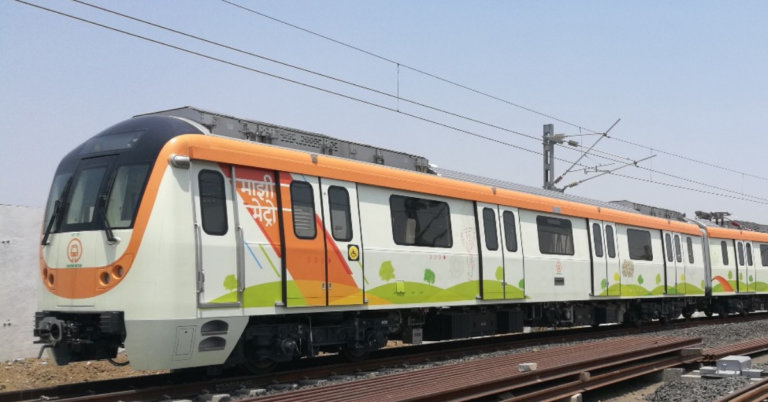
9 New Vande Bharat Express Trains To Hit The Tracks Soon

DELHI (Metro Rail News): The Indian Railways plans to launch 9 new semi-high-speed trains of which the majority will be deployed in the poll-bound states of Rajasthan & Madhya Pradesh. The Integral Coach Factory, Chennai, will be developing the coaches for the same. 

Developed by the Integral Coach Factory, Chennai, Vande Bharat is India’s first semi-high-speed train developed indigenously to facilitate easy & efficient commutations. The Indian Railways now plans to hit the tracks with 9 more Vande Bharat trains, of which 5 have been finalised while 3 have been given to the Southern Railways, for which the routes are yet to be decided, and the details of the 4th train are not known yet. These are: 

  1. Indore – Jaipur Vande Bharat Express
  2. Jaipur-Udaipur Vande Bharat Express
  3. Puri – Rourkela Vande Bharat Express
  4. Patna-Howrah Vande Bharat Express
  5. Jaipur-Chandigarh Vande Bharat Express

There are plans underway to launch these trains after a careful and well-thought-out event to be held by the Indian Railways. 

Shri Ashwini Vaishnaw, Railways Minister, while addressing a gathering in Madhya Pradesh’s Neemuch said,” It is time for Vande Bharat to run on this route. Your Member of Parliament (MP) Sudhir Gupta has already requested for the same. Vande Bharat Express will run on your route soon”. Some media reports also suggest that the Puri -Rourkela route Vande Bharat is likely to be flagged off by PM Modi on 30th September. 

Among the 25 active Vande Bharat trains, the Nagpur-Bilaspur Express reported the highest occupancy of 106.40%. As per the railways, the total number of passengers who travelled in Vande Bharat trains in the Central Railway region from 15 August-8 September is 1.22 lakh, while the revenue generated in this period is 10.72 crores. 

Vande Bharat offers its travellers high-class amenities with easy & efficient commute. It has been built using state-of-the-art technology that offers the best possible experience in commutation. On average, it reduces travel time by about 15%. Challenges to the project include operational costs, demand-supply compliance and sanctions. 

While it is imperative for the railways to continuously explore new technologies and make them available to the commuters to make the flow easier and more efficient, Vande Bharat has been proven to be the most successful of the available technologies so far. 

Northeast Frontier Railway Developing Drowsiness Detection Device for Train Drivers

NEW DELHI (Metro Rail News): The Northeast Frontier Railway (NFR) is in the process of developing an artificial intelligence-based device designed to monitor the alertness of train drivers by analyzing their eye movements. This innovation aims to detect signs of drowsiness in drivers and respond by issuing alerts or even applying emergency brakes if necessary.

The Railway Board had instructed NFR in June to create a device that could assess the alertness of train drivers based on their eye blinking patterns. The resulting device, known as the Railway Driver Assistance System (RDAS), will not only raise alarms but also trigger emergency brakes if a driver shows signs of losing alertness over a certain period.

Currently, RDAS is in the developmental phase and trial stage to ensure its functionality. The NFR’s technical team is actively working on refining the system, and it is anticipated that it will be ready for deployment in a few weeks.

On August 2, the Railway Board formally requested the NFR to accelerate the in-house development of RDAS. The plan is to incorporate this system into 20 goods train engines (WAG9) and passenger train engines (WAP7) as part of a pilot project. Furthermore, all railway zones have been asked to provide feedback on the system’s performance once implemented to facilitate any necessary improvements.
However, the Indian Railway Loco Runningmen Organisation (IRLRO) has expressed skepticism about RDAS, deeming it unnecessary. They argue that existing high speed train already feature mechanisms to keep drivers alert.

Mr. Sanjay Pandhi, the working president of IRLRO, explains that existing high-speed train engines are equipped with a foot-operated lever (pedal) requirement. Drivers are required to hit this lever approximately every 60 seconds. If a driver fails to do so, the system automatically triggers emergency brakes, bringing the train to a stop. According to Pandhi, this current system effectively ensures driver alertness.

Mr. Pandhi suggests that the railway should instead focus on addressing other aspects of driver safety, such as fatigue, working hours, and rest breaks. Many train drivers, including women, often work for over 11 hours without breaks for meals or restroom visits. Addressing these issues, Pandhi argues, would obviate the need for RDAS in train engines.

NCRTC Invites Tenders for Reliable Mobile Network on Delhi-Meerut RRTS Corridor

DELHI (Metro Rail News): The National Capital Region Transport Corporation (NCRTC) has initiated a tender process to enhance mobile network connectivity for train commuters traveling on the Delhi-Ghaziabad-Meerut RRTS Corridor. This encompasses the allocation of licensing space for in-building solutions (IBS) to facilitate shared mobile coverage within the corridor’s underground section.

The corridor has a 12-kilometer underground segment, which includes a 5-kilometer tunnel section with one underground station at Anand Vihar, Delhi, and a 7-kilometer tunnel section with three underground stations, Meerut Central, Bhaisali, and Begumpul in Meerut.

The motivation behind this initiative is to address the common issue faced by commuters in existing urban transportation systems, namely, disrupted or nonexistent mobile network coverage in underground sections. Unlike elevated sections, where coverage is ensured by established telecom infrastructure, underground areas often suffer from connectivity problems. The aim is to ensure that passengers using the Rapidx train services do not encounter similar challenges.

According to the tender invitation, a single neutral host provider will be delivering IBS through common infrastructure for all existing and future mobile operators. This approach is intended to streamline mobile operators’ ability to serve their customers effectively.

The chosen provider will offer shared solutions that cater to various types of telecom operators and their respective technologies, including GSM, UMTS, LTE, and 5G. This initiative by NCRTC is geared towards ensuring uninterrupted mobile services for commuters within the tunnels connecting underground stations and at the stations themselves.

Furthermore, this initiative serves as a means to increase the non-fare box revenue of NCRTC. The commercial potential of the Delhi-Ghaziabad-Meerut RRTS Corridor will be harnessed to generate funds, which will be directed towards covering operational expenses, as outlined by officials.

In summary, the National Capital Region Transport Corporation is taking steps to enhance mobile network connectivity for commuters traveling on the Delhi-Ghaziabad-Meerut RRTS Corridor, with a particular focus on addressing connectivity issues in underground sections. This initiative aims to ensure seamless mobile services and generate additional revenue to support operational costs.

RAPIDX: Shri Vinay Kumar Singh Inspectes Construction Works of Duhai to Meerut South Section

GHAZIABAD (Metro Rail News): Shri Vinay Kumar Singh, the Managing Director of NCRTC, conducted an inspection of the construction progress in the section extending from Duhai to Meerut South Station, which is ahead of the Priority Section on the Delhi-Ghaziabad-Meerut Corridor. During this visit, Mr. Singh assessed the ongoing construction activities, including track laying, overhead electrical (OHE) installation, and electrical infrastructure, at all the stations and the viaduct within the section.

image 13

The distance between Duhai and Meerut South Station spans approximately 25 kilometers, and construction of the viaduct for this segment has been successfully completed. Within this section, there is a total of 50 kilometers of both up and down lines, with over half of the tracks already laid, as stated by the National Capital Region Transport Corporation (NCRTC).

image 14

The NCRTC has announced that the priority section of the Delhi-Ghaziabad-Meerut RRTS Corridor under the RAPIDX project is now prepared for operations, and train services on this section are expected to commence in the near future.

image 15

The NCRTC aims to open the entire 82-kilometer-long Delhi-Ghaziabad-Meerut corridor to the general public by the year 2025. However, before achieving this milestone, the corporation intends to inaugurate a 17-kilometer-long “priority section” that stretches from Sahibabad to Duhai Depot. Once this corridor is fully operational, it is anticipated to significantly reduce the travel time between the national capital and Meerut to less than one hour.

Kanpur Metro Phase 1: TBM S93 Achieved a Remarkable Breakthrough at Bada Chauraha Station

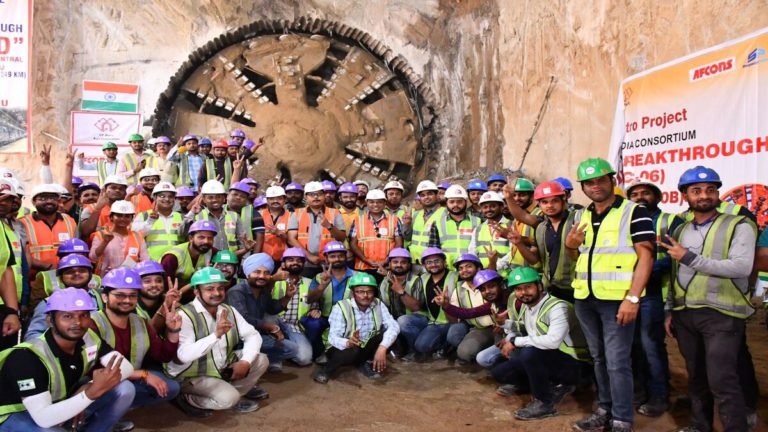
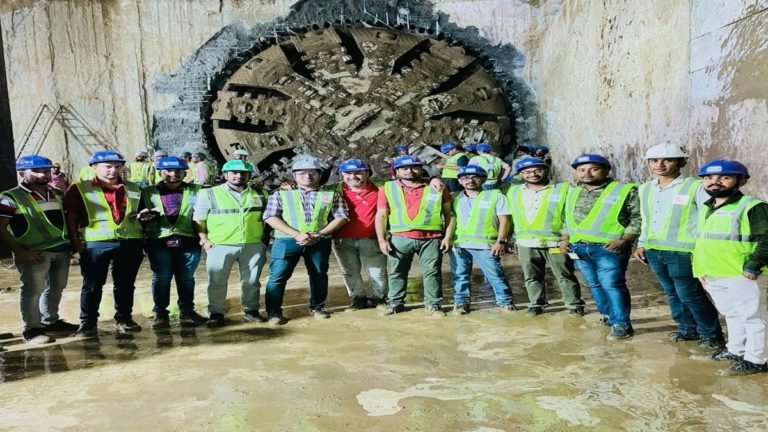
KANPUR (Metro Rail News): On Sunday, Tunnel Boring Machine (TBM) S93 achieved a breakthrough at the Bada Chauraha Station, marking its third successful tunnel breakthrough in the ambitious Kanpur Metro Phase 1 project. The TBM completed the construction of the up-line tunnel from Naveen Market to Bada Chauraha, spanning approximately 510 meters. This accomplishment is part of the larger plan that involves a total of 8 breakthroughs in the 3.619 km Package KNPCC-05 section, which connects the Permat Ramp to Nayaganj Station.

image 12
TBM “Nana” Achieved Breakthrough at Bada Chauraha Station/ Image by UPMRC

The TBM responsible for this feat is the Terratec TBM, known as “Nana” after Nana Saheb Peshwa, with a diameter of 6.52 meters and a length of 120 meters.

The Nana TBM was launched at the New Market Metro Station on July 15, 2023. In just 57 days, the Nana TBM completed the task of installing 362 rings and reached the 510-meter long ‘up-line tunnel’ at Bada Chauraha. Now, this TBM will be removed from the Bada Chauraha Metro Station and lowered at the launching shaft at MacRobertganj.

Additionally, another TBM, ‘Tatya’ is also deployed in the construction of the ‘down-line’ tunnel between New Market and Bada Chauraha. So far, this TBM has completed the construction of approximately 300 meters of tunnel, involving the installation of 210 rings. The tunnel construction work will be completed soon. On the other hand, preparations are underway to launch the fourth TBM to create an underground track from Kanpur Central Station to Nayaganj.

Metros, Cosmos, and Everything in Between

This verse (यथा पिंडे तथा ब्रह्माण्डे) from ancient Vedic texts roughly translates to “As is the individual, so is the universe.” It means that the microcosm reflects the macrocosm and the laws that govern one level of existence also apply to other levels. 

Visualising the above philosophy under the lens of science, we can well emphasise on the fact that – Just as the harmony and balance in the universe are maintained by following specific principles, the quality and consistency of products are ensured through standardisation.

This timeless wisdom finds relevance even in the realm of Mass Rapid Transit Systems (MRTS), where standardisation plays a pivotal role in ensuring efficient, safe, and sustainable transportation. As cities worldwide embrace the need for faster, reliable, and eco-friendly transit options, adhering to standardised practices becomes the key to unlocking the full potential of MRTS networks.

Too Jargonish? 

Let’s cut down on English a bit to simplify our discussion. Let’s go back in time as much we can. The first passenger train in India ran from Bori-Bander to Thane way back in 1853. It was hauled by three steam locomotives, the “Sahib, Sindh and Sultan.” That movement was a pathbreaking moment and a landmark achievement for a country which was stereotyped with elephants, snakes, and bullock carts for few preceding centuries. 

The Indian railways network has expanded leaps and bounds with great speed since then. Today, Indian Railways is the fourth largest railway network in the world and is the largest railway network in Asia. Indian Railways has an extensive route length, connecting numerous towns, cities, and remote areas. It operates under different divisions and zones, each responsible for a specific geographical region. The network provides both passenger and freight services, making it an integral part of the country’s economic and social fabric. 

Even a peek into the vastness of Indian railways is enough to get overwhelmed. It is incredibly diverse in terms of the types of trains it operates, the regions it covers, and the services it provides. Most of its diversity stems out of the country’s diverse geography, culture, and historical development. There is no denial to the fact that this diversity provides much-needed flexibility to our system for adapting to local preferences and conditions. But this diversity also has bred Non-Standardisation in Indian Railways. Diverse gauges, Varied train-types, Different Coach Designs, Isolated Zonal Practices, Diverse Ticketing Systems, locally implemented solutions, Varied infrastructural amenities, etc. The list can go on.

Yes, it does reflect the country’s diversity and local needs. But at the same time, operational efficiency, maintenance, and passenger experience often get affected due to the non-standardised nature of the Indian Railways network. While this characteristic has certain advantages in terms of flexibility and cultural relevance, it also poses evident challenges in terms of safety and modernisation

Now, changing the entire framework of Indian Railways and moving towards Standardization will need a juggernaut-level effort at the very least. Yes, things like ‘Setting up of Maintenance standards for various assets on Zonal Railways’, and ‘Development of standards for quality control’ are being initiated at the central level. Kudos to that. But we all can very well agree with hands-on heart that diversity in Railways is at its soul, and making 180-degree shifts will not only be challenging to implement but also will not help the cause. 

Wait, isn’t the Metros Still Very Youthful?

Yes indeed. And that brings us to the current timeline. Indian MRTS network is maybe the perfect landscape of sowing the standardised practices and reaping the fruits out of it. We are neither too young to make rookie mistakes, nor too old to be bogged down due to our own inertia. With almost 25 Years of rich experience (hopefully), we indeed are smart and flexible enough to make swift, subtle, and required changes at policy level, execution level, and operation level. At this stage of our learning curve, with Metro services operating in 18 cities of India and several others in pipe-lines; the experience can be leveraged to attain economies of scale.

Just as the various celestial bodies in the universe are interconnected by gravitational forces, standardisation will create seamless connectivity within MRTS networks. Standardised track gauges, Signaling systems, and operational protocols will facilitate the integration of different transit lines and modes, allowing commuters to effortlessly traverse the urban landscape. 

When MRTS systems operate on a unified platform, passengers experience smoother transfers, reduced waiting times, and enhanced overall commuting experiences. And that precisely is the vision of any urban transporter across the world. 

But What Gains Does it Bring to The Table?

  • Operation: Adherence to standardised safety measures ensures that MRTS networks operate with maximum reliability. From standardised construction materials to safety protocols, standardised practices minimise risks, mitigate accidents, and instill confidence in both operators and passengers. Moreover, standardised maintenance procedures always lead to improved system longevity, reducing downtimes and costly repairs.
  • Design: Standardised MRTS components and technologies drive operational efficiency and cost-effectiveness. When cities adopt standardised rolling stock, energy-efficient technologies, and ticketing systems, economies of scale come into play, reducing procurement costs, and promoting sustainability. Additionally, standardisation facilitates knowledge-sharing and best practices, allowing SPVs to learn from one another’s successes and challenges.

Planning: The universe is ever-evolving, and so are the demands of urban mobility. Standardisation in MRTS systems acts as a foundation for innovation and future-proofing. By setting uniform benchmarks, standardisation encourages researchers, engineers, and urban planners to think beyond the status quo and explore groundbreaking solutions. This approach enables the seamless integration of new technologies and adaptation to changing urban landscapes, preparing MRTS networks for the challenges of tomorrow.

Let’s Talk Technical a Bit

As cities grapple with the challenges of rapid urbanisation and increasing vehicular traffic, standardised MRTS networks emerge as a beacon of hope for eco-friendly and sustainable urban mobility. Talking specifically on technical aspects for any Metro Network, the undermentioned systems appear to be front runners in terms of Standardising possibility:

  • Axle load of Rolling Stock, the car length and width, and the Standard gauge of tracks. Top of the rail height of trains. 
  • Train performance parameters viz. acceleration and deacceleration rates vis-à-vis train’s passenger loading and corresponding speeds.
  • Train’s jerk rate, its max. operating speed and design speed. 
  • Tunnel Diameter, Schedule of Dimensions. Uniform fastening systems

Just as the balance of ecosystems sustains life in the universe, standardised MRTS systems contribute to sustainable urban living. Adding to the obvious benefits of standardisation, it will also help promoting energy-efficient technologies, optimising ridership, and reducing emissions. The standardised mass transit systems help mitigate environmental impacts and combat climate change in a true sense. 

Okay! Driving Home the Point

In the tapestry of the universe, the principle of “Yatha Pinde Tatha Brahmande” serves as a reminder of the interconnectedness of all things. In the context of Mass Rapid Transit Systems, standardisation embodies this cosmic harmony by connecting cities, enhancing safety, optimising efficiency, fostering innovation, and promoting sustainability.

As urban centres embrace the vision of smarter, greener, and more interconnected transportation, standardised MRTS networks stand as a testament to human ingenuity and our ability to align with the grand design of the cosmos. By embracing standardisation, cities can usher in a new era of seamless, safe, and sustainable urban mobility, benefiting both current and future generations.

Afterall, given a choice, who would like to reinvent the same wheel time and again. Isn’t it?

By Mr. Raghav Bharadwaj

Manager (Technical & Quality – Rolling Stock) at Delhi Metro Rail Corporation

Shri Alok Sharma Takes Charge as Principal Chief Commercial Manager of Western Railway

MUMBAI (Metro Rail News): Shri Alok Sharma, an officer from the 1989 Batch of the Indian Railway Traffic Services, has assumed the role of Principal Chief Commercial Manager at Western Railway. Prior to this appointment, he held the position of Chief Claims Officer at Western Railway.

Shri Sharma brings a wealth of experience and knowledge to his new role. He earned his Masters degree from IIT Bombay in the year 1989.
With a career spanning nearly 34 years, Shri Sharma has served in various capacities within the Indian Railways, including roles in the Operating, Commercial, and Safety Departments of both Northern Railway and Western Railway. Notably, he also served as the General Manager/TS & CO at the Dedicated Freight Corridor Corporation of India Ltd., a PSU under Indian Railways, located in New Delhi.

Haryana’s Contribution Pending for Tricity Metro Project’s DPR

CHANDIGARH (Metro Rail News): The Chandigarh administration has been waiting for Haryana to provide the necessary financial support for the development of the Detailed Project Report (DPR) for the Tricity Metro project. The Rail India Technical and Economic Service (RITES), which has already prepared a comprehensive mobility plan for the Tricity Metro, has requested written approval from the administration to proceed with the preparation of the DPR.

Punjab has promptly fulfilled its share of ₹1.37 crore for the Tricity Metro project, while Haryana’s contribution is still outstanding. The agency responsible for preparing the detailed project report, RITES, is in a holding pattern until they receive the necessary consent from the UT administration. The project’s first phase has recently seen an expansion from 66 km to 77 km and is projected to commence in 2027, with the second phase scheduled for development after 2037.

The overall estimated cost of the Metro project stands at approximately ₹10,570 crore, with the states contributing 20%, the central government 20%, and the remaining 60% being covered by a lending agency.

A senior official from Haryana involved in the project has mentioned that they are still finalizing whether to provide the funds through Haryana Shahari Vikas Pradhikaran (HSVP) or establish a new head.

On the other hand, a senior officer of the UT administration has indicated that once they receive the funds from Haryana, they will promptly grant consent to RITES to proceed with the preparation of the DPR.

In a significant decision made in July, the Chandigarh administration committed to involving all stakeholders, including Haryana and Punjab, in the development of the AAR and DPR for the Metro Rail project, in line with the central government’s guidelines.

The Unified Metro Transportation Authority (UMTA), consisting of 23 members, met on July 18 and approved the Tricity Metro Project. It also extended the scope of the first phase from 66 km to 77 km. The first phase will now commence from Parol in New Chandigarh (Mohali) and conclude at Panchkula Extension in Sector 20.

The first phase will encompass three proposed routes: Parol, Sarangpur, ISBT Panchkula to Panchkula Extension (29 km); Rock Garden to ISBT Zirakpur via Industrial Area and Chandigarh Airport (35 kilometre); and from Grain Market Chowk, Sector 39, to Transport Chowk, Sector 26 (13 Kilometer).

In the second phase, slated for development after 2037, the Metro will be extended from Airport Chowk to Manakpur Kallar (5 km) and ISBT Zirakpur to Pinjore (20 km), with most tracks running overground. RITES has been tasked with preparing the AAR and DPR for the project, with an estimated cost of ₹6.54 crore, and both reports are expected to be ready by March 2024.

Chennai Metro Phase II: L&T Deploys Third TBM Siruvani For Tunneling

CHENNAI (Metro Rail News): On Wednesday, Larsen & Toubro (L&T) commissioned tunnel boring machine (TBM) DZ1040, named Siruvani, for the Chennai Metro Phase 2 project. This 6.65-meter earth pressure balance (EPB) machine marks the third of eight TBMs commencing tunneling activities on Line-3’s Package TU-02, connecting Kellys and Taramani Road Junction stations.

WhatsApp Image 2023 09 08 at 17.50.30
Image by Rohit Bandagale

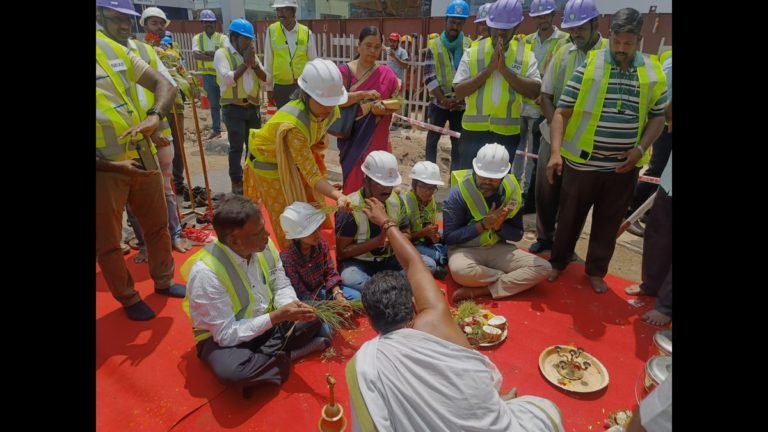
Manufactured by China Railway Construction Heavy Industry (CRCHI), TBM Siruvani successfully passed factory acceptance tests in the summer of 2022. It is now set to travel southward from Chetpet Station towards Sterling Road, covering an initial distance of approximately 705 meters.

WhatsApp Image 2023 09 08 at 17.50.30 1
Pooja Ceremony for deploying TBM Siruvani / image by Rohit Bandagale

L&T, the project contractor, will deploy TBM Siruvani and seven other TBMs to construct 12 twin tunnels, (a total of 24 kilometres) between Kellys and Taramani Road Junction stations. The contract for Package TU-02, valued at Rs. 2385 crore, was awarded to L&T by Chennai Metro Rail Ltd. (CMRL) in May 2021, with a 42-month deadline.

WhatsApp Image 2023 09 08 at 17.50.32
Image by Rohit Bandagale

In addition to tunnel construction, L&T will also be responsible for building diaphragm walls and entry/exit structures at various stations, including Chetpet Station, Royapettah Government Hospital Station, Thiruvanmiyu Station, and part of the diaphragm wall at Greenways Road Station. This encompasses the launching and retrieval shafts at these stations.

In June, L&T initiated the process of lowering the parts of TBM Siruvani into Chetpet Station. So far, the machine has built two temporary rings inside the shaft for its initial drive, with its backup gantry set to be attached later for the primary drive.

Transforming India’s Railways: The Digital Revolution

Introduction

India’s railway system is one of the largest in the world, catering to millions of passengers and transporting a significant amount of freight across the country. Rail transport plays a vital role in India’s development, integrating markets and connecting communities. The Indian railway system has played a fundamental role in transporting people and goods throughout its vast territory. Rail passenger traffic in India has increased by almost 200% since 2000 and freight traffic by 150%, yet latent demand for mobility in India remains huge. The Indian Railways is the primary operator of rail operations throughout the country and is the single largest employer in India, employing approximately 1.3 million people. The railway industry in India is projected to account for 40% of the total global share of rail activity by 2050.

According to the Ministry of Railways, Indian Railways carried 808.6 crore (8.086 billion) passengers in 2020 and transported 1418.1 million tonnes of freight in 2022. However, the Indian Railways system is still plagued by several issues that require immediate attention, such as safety, late trains, lack of passenger facilities, including cleanliness at railway stations, lack of security arrangements on the railways, which leads to robbery and dacoities, and political pressure and intervention.

The Need for Digital Transformation in Indian Railways

Indian Railways, one of the world’s largest railway networks, is in need of digital transformation to modernize its operations and provide better services to passengers. Digitalization is essential in developing rail transport in the contemporary economy. The Indian Railways has adopted digitalization across various spheres of its operations, including passenger information systems, train signaling, ticketing, computerized wagon allocation systems, real-time monitoring, traffic management, and more. The fundamental areas determined by the Indian railways for digital transformation include a partnership with technology and logistics partners for technological advancements, passenger-friendly applications, application integration for a cooperative Indian railways platform, freight consumer convenience, data analytics, cashless commerce, dashboards and alerts, and mobile applications.

The Indian Railways has unveiled a National Rail Plan (NRP) for India, with an aim to make a ‘future ready’ railway system by the end of this decade. The new plan is aimed at reforming and making railways more sustainable, efficient, and modern while ensuring cheaper and safer transport, either in the passenger or freight segment. By framing strategies based on both commercial policy initiatives and operational capacities, the NRP also aims to increase the Railways’ modal share in freight to 45%.

Digitalization Initiatives in Indian Railways

To catch up with the rest of the world, Indian Railways has already embarked on a journey of digital transformation. Initiatives such as the Integrated Coaching Management System (ICMS), the e-Ticketing system, and the Railways’ mobile app have revolutionized the passenger experience. These digital platforms have simplified ticket booking, provided real-time information, and enabled passengers to track their trains. Additionally, the Freight Operation Information System (FOIS) has improved the efficiency of freight transportation, reducing transit times and enhancing customer satisfaction.

The Indian Railways is leveraging Industry 4.0 and digital railway concepts to modernize rail transport. The integration of data analytics can play a crucial role in transforming the railway network and addressing the various challenges faced by the Indian Railways.

The Indian Railways has created a Real-Time Train Information System or RTIS, which helps the Indian Railways prepare a computerized chart and the passenger train data. Furthermore, the railways also now employ automated management charting for over 6,500 locomotives, reducing the railway employees’ manual burden.

The Future of Rail Transport in India: A Digital Perspective

The digital future of rail, as conceived by the International Energy Agency, consists of three main components: driverless trains, real-time operations centres, and fully integrated mobility systems.

The Indian Railways is promoting the Digital India initiative to encourage digital transactions, facilitating digital methods of transactions for the purchase of food items through catering units at railway stations. At present, a digital payment facility, for making key purchases, is available at about 8878 static catering units across railway stations for the purchase of food items.

Investment in rail infrastructure is set to rise significantly. Between 2013 and 2017, it was at US$ 58.96 billion, but it’s expected to reach US$ 124.13 billion from 2018 to 2022. Looking further ahead, India plans to invest Rs 50 lakh crore (equivalent to US$ 715.41 billion) by 2030. To make trains more environmentally friendly, India aims to electrify its entire railway network by 2023. This move will result in annual energy savings of about $1.55 billion.

Digital transformation has the potential to revolutionize rail transport in India. By embracing emerging technologies such as the Internet of Things (IoT), Artificial Intelligence (AI), and Big Data analytics, Indian Railways can optimize operations, enhance safety, and improve the overall passenger experience. Countries like Japan and China have successfully implemented digital transformation in their railway systems, resulting in increased efficiency, reduced costs, and improved customer satisfaction. India can learn from these success stories and adapt them to its unique requirements.

Challenges of Digital Transformation in Indian Railways

Implementing digital transformation in Indian Railways comes with its own set of challenges.

Technical challenges: Implementing digitalization in railways requires advanced technical expertise and infrastructure. The railway sector needs to ensure that the digital solutions are compatible with the existing infrastructure and can handle the high volume of data generated by the railway system.

Data quality: The accuracy and reliability of data are critical for the success of digitalization in railways. The railway sector needs to ensure that the data collected is of high quality and can be used for analysis and decision-making.

IoT and Big Data: The railway sector generates a massive amount of data, and managing this data can be a significant challenge. The sector needs to ensure that the data collected is secure and can be analyzed to derive insights that can improve the efficiency and safety of the railway system.

Security and Cybersecurity: The railway sector needs to ensure that the digital solutions implemented are secure and protected from cyber threats. The sector needs to invest in cybersecurity measures to protect the data and infrastructure from cyber-attacks.

Different projects = different requirements: The railway sector needs to ensure that the digital solutions implemented are tailored to the specific needs of the project. Different projects have different requirements, and the sector needs to ensure that the digital solutions implemented meet these requirements.

Digital Transformation in Indian Railways: The Way Forward

To achieve successful digital transformation, Indian Railways needs cross-industry leadership, a well-defined strategy, and decisive action. Collaboration with technology companies, startups, and research institutions can bring innovative solutions to the table. The establishment of dedicated research and development centers can foster innovation and drive the adoption of emerging technologies. Furthermore, the government’s support in terms of policy reforms and increased funding is crucial for the sustained growth of digital transformation in Indian Railways.

Conclusion

Digital transformation is not just an option but a necessity for Indian Railways to overcome its challenges and unlock its true potential. By embracing digital technologies, Indian Railways can enhance operational efficiency, improve passenger experience, and ensure the safety of its vast network. The initiatives already implemented are a testament to the positive impact of digital transformation. However, there is still a long way to go. It is imperative for stakeholders to collaborate, invest in infrastructure, and adopt a forward-thinking approach to drive the digital revolution in Indian Railways. The future of India’s railways lies in the hands of digital transformation, and it is crucial for the country’s economic growth and sustainability.

Trains Every 12 Minutes: Kolkata’s East-West Metro Under-River Run to Start in December

KOLKATA (Metro Rail News): The Kolkata Metro Rail Corporation (KMRC) is making strides in its efforts to launch the East-West Metro’s under-river run by year-end.

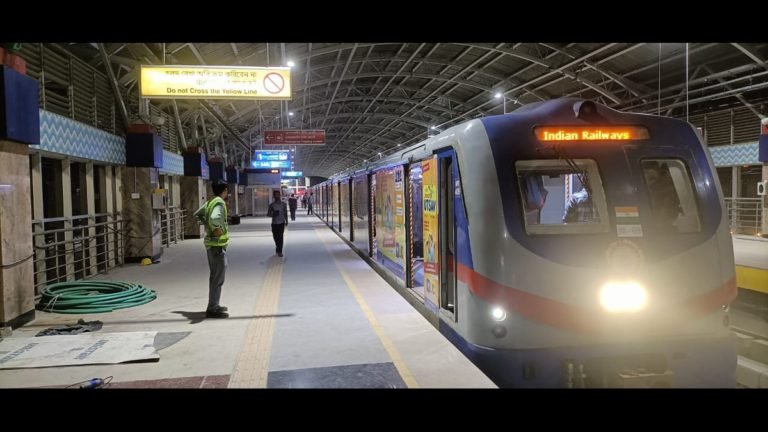
According to KMRC MD V K Srivastava, the trains are set to run at every 12 minutes when the East-West Metro begins its under-river run by December 2023. The agency is working toward a December 2023 deadline for the 4.8km Esplanade-Howrah Maidan stretch, with the entire 16km corridor set to begin operations in June 2024.

The nation’s first underwater Metro project has encountered a series of intricate construction challenges, primarily associated with the most significant issue being the subsidence-affected 2.4km Sealdah-Esplanade section. These challenges have caused delays in the corridor’s linear run from Sealldah to Howrah Maidan.

The East-West Metro project, heralded as India’s first under-river Metro, has encountered a series of intricate construction challenges, primarily associated with the most significant issue being the subsidence-affected 2.4km Sealdah-Esplanade section. These challenges have caused delays in the corridor’s linear run from Sealdah to Howrah Maidan.

As per Srivastava, train trials are currently underway in the under-river section, and there are plans to invite the Commissioner of Railway Safety, responsible for safety approvals, for inspection by the end of November. Limited services are anticipated to commence by the end of December due to the complexities faced in the Sealdah-Esplanade section.

Addressing the maintenance aspect, Asim Majumdar, KMRC’s director (rolling stock), has mentioned that when operations begin, two rakes will be transported to the Central Park depot every week for regular upkeep, as the state-of-the-art BEML rakes necessitate regular maintenance.

Due to the lack of a stabling yard at the Howrah Maidan end, the two rakes undergoing trials had to be transported from the Central Park depot in Salt Lake. This involved pulling them with a battery-powered locomotive through the challenging Sealdah-Esplanade section and placing them on temporary tracks through the unfinished gap in the eastbound tunnel before trails commenced on April 13.

To address soil-related challenges, the KMRC has engaged the services of Norway-based GeoFrost to implement ground frosting techniques at Nirmal Chunder Street. This innovative technique involves freezing the ground, including the water table, to create conditions suitable for micro-tunnelling. The objective is to initiate this work before the Pujas festival.

L&T Commissions Automated Concrete Distribution System At The Casting Yard

CHENNAI (Metro Rail News): Chennai Metro Rail Limited (CMRL) is making significant progress in its Phase 2 project, aimed at expanding the city’s Metro network. A crucial development in this endeavor is the commissioning of an automated concrete distribution system at the casting yard by Larsen & Toubro (L&T), the project contractor.

L&T commenced tunneling operations between Kellys and Taramani in Corridor 3 contract TU02 in February 2023. A total of eight Tunnel Boring Machines will be utilized by L&T in TU02. This contract needs a total of 18,000 concrete segment rings, with 17,100 rings measuring 1.4 meters in width, while 900 rings are 1.2 meters wide (for curved sections).

In May 2022, L&T initiated segment manufacturing after commissioning a tunnel segment casting yard in Vanagaram, Chennai. To date, they have produced 4,400 rings. Each segment bears a unique barcode and RFID tag for future traceability.

The highlight of this development is the recent commissioning of an automated concrete distribution system at the casting yard on September 7, 2023. This state-of-the-art system streamlines the delivery of concrete from the batching plant to the segment moulds, significantly enhancing production capacity while reducing the need for manual labour and minimizing carbon emissions. This eco-friendly technology is provided by Elematic OYJ of Finland.

It’s worth noting that Chennai Metro proudly marks its position as the first project in India to adopt this advanced technique, spearheaded by the contractor.

image 11
Thiru. T. Archunan, Director, Projects, CMRL along with other officials from L&T and CMRL was present during the inauguration of this system.

The inauguration of this system was led by Thiru. T. Archunan, Director Projects of CMRL, in the presence of senior officials and staff from both CMRL and L&T. This achievement signifies a crucial step forward in Chennai’s expanding Metro network.

Western Railway Achieves Milestone: 3rd Line Commissioned Between Surat and Udhna

SURAT (Metro Rail News): In a recent development, Western Railway has successfully achieved infrastructural work of Surat – Udhna 3rd line project and it has been commissioned for passengers as well as good traffic. The project involved adding a 2 km 3rd line, electrification work, and implementing Route Relay Interlocking (RRI) at Surat Yard.

The decision to undertake this project was prompted by persistent congestion and delays on the Surat – Mumbai mainline, particularly affecting trains bound for Jalgaon. The heavy passenger and goods traffic headed towards both Mumbai and Jalgaon had intensified the congestion between Surat and Udhna. The doubling of the Udhna – Jalgaon section had further amplified passenger & and goods traffic. To alleviate these challenges and improve the movement of passengers and goods, the construction of a third line on the east side between Surat and Udhna was initiated.

As part of the Surat – Udhna 3rd Line project, significant work was undertaken to remodel Surat Yard and implement Route Relay Interlocking (RRI). The complex task was executed within a span of approximately 56 hours. A major block was undertaken for carrying out the Non – Interlocking (NI) work at Surat Yard from 09.30 hrs of 26th August upto 17.30 hrs of 28th August. The upgraded Surat Yard now boasts a SIEMENS-designed RRI with ABB metal-to-metal relays. 18 routes have been for the 3rd line connection, totaling 154 routes in the RRI system. The Surat – Udhna 3rd Line project promises several benefits, including improved train punctuality, the elimination of congestion in the Surat – Udhna section, separation of Main Line traffic from the Udhna – Jalgaon Line traffic, enhanced safety through electronic interlocking, and the facilitation of direct reception and diversion of UP trains to the Udhna-Jalgaon section without disrupting the flow of trains along the Surat-Mumbai main line. This project is a significant step in enhancing railway infrastructure and streamlining traffic for Western Railway.

Hon’ble Railway Minister Inspects Nimach – Ratlam – Nagda Section

NIMACH, MP (Metro Rail News): During a recent visit to Madhya Pradesh, the Hon’ble Minister of Railways, Shri Ashwini Vaishnaw, conducted a comprehensive inspection of Nimach station’s passenger amenities and facilities. Accompanying him was Shri Sudheer Gupta, the Hon’ble MP of Mandsour, alongside other senior officials from both Headquarters and Division, including Shri Ashok Kumar Misra, the General Manager of Western Railway, and Shri Rajneesh Kumar, the Divisional Railway Manager of Ratlam Division.

image 9

Shri Vaishnaw, during his inspection, also oversaw the progress of various ongoing Western Railway projects. He took a keen interest in the ‘One Station, One Product’ (OSOP) stall at Nimach station, where he assessed the product quality and discussed sales. Encouraging digital payments, he led by example, making digital payments for purchases at the OSOP stall and a catering stall at Nimach. His emphasis on digital transactions aligns with the vision of ‘Digital India.’

image 10

Subsequently, Shri Vaishnaw conducted a window trailing inspection of the Nimach-Ratlam section. During this inspection, he evaluated the construction progress of a new Road Over Bridge, which is being built in lieu of Level Crossing (LC) No. 141 near Piplia Mandi station on the Nimach-Ratlam route. The Minister engaged with young railway officers and urged them to play pivotal roles in the railway system’s development. He emphasized the importance of their contributions, which are instrumental in achieving India’s goal of becoming a developed nation by 2047.