Good News! Vande Bharat Sleeper Coaches And Vande Metro to Be Launched By Next Year

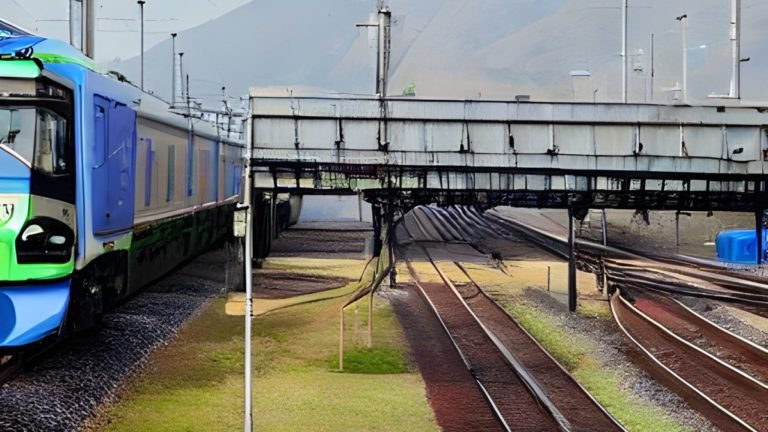
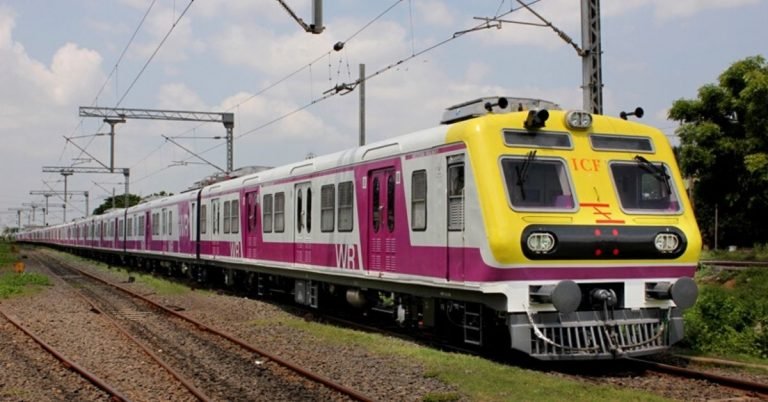
DELHI (Metro Rail News): According to BG Mallya, General Manager of Integrated Coach Factory (ICF), Indian Railways is about to roll out the sleeper coaches of the Vande Bharat train very soon. “Sleeper coach of Vande Bharat will be rolled out in the current financial year where the first train is under production and will be rolled out in March 2024”, Mallya said. 

It will be a significant addition to the fleet of Indian Railways as these sleeper coaches would allow the passengers to cover long distances overnight. It would allow the Indian railways to make the Vande Bharat Trains more widely recognised.  

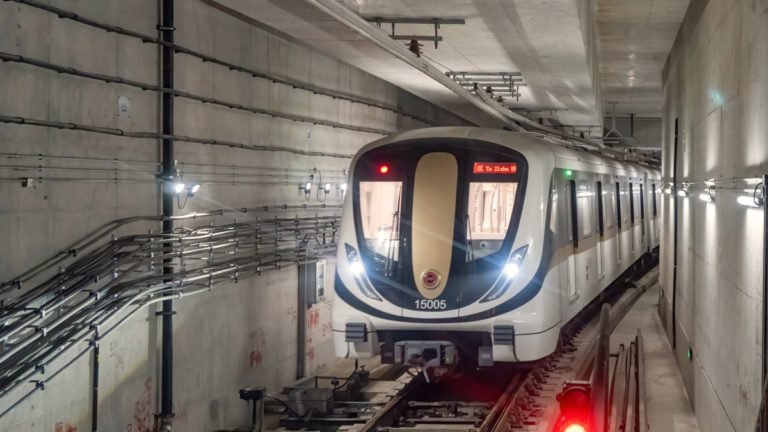
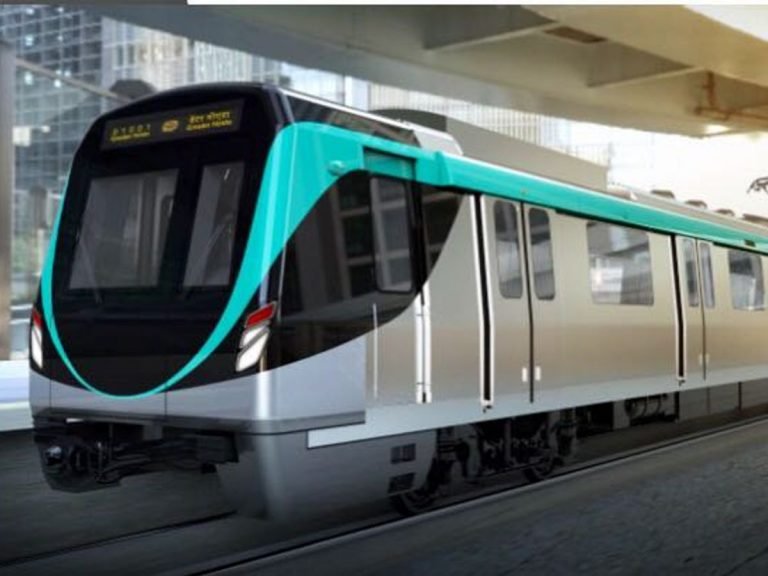
At the same time, Indian Railways is also planning to roll out the Vande metro in the coming times, which will be a 12-coach train that will be used for short-distance travel. It is expected to be rolled out by January 2024. 

“We’ll be launching the sleeper version of the Vande within this financial year. We’ll also be launching the Vande Metro this financial year. And we’ll be launching this train for non-air conditioned passengers, which is called a non-AC push-pull train, which will have 22 coaches and a locomotive. And that launch is going to happen before 31st October…,” Mallya said.

A total of 200 trains will be manufactured, out of which 120 Sleeper trains will be manufactured by a consortium of India’s RVNL & Russia’s TMH Group & a consortium of Titagarh Wagons & BHEL will manufacture 80. 

Vande Bharat is India’s semi-high-speed train. The first Vande Bharat train was flagged off on February 15, 2019, by the PM of India. The trains are manufactured at the Integrated Coach Factory (ICF), Chennai. The train achieved a maximum 1280 Km/hr speed on the Kota-Sawai Madhopur Section. 


“Intrigued by the future of Metro and its impact on our city? Join us at our upcoming event Inno Metro to delve deeper into this vital issue. Stay informed, get involved, and let’s ride the Metro towards a brighter, more sustainable future together.”

Mumbai Metro Update: Line 2B to be Extended Till Cheetah Camp

MUMBAI (Metro Rail News): Mumbai Metropolitan Region Development Authority (MMRDA) issued an order stating the extension of metro line 2B from Mandale to Cheetah Camp. The line starting from DN Nagar in Andheri West will be extended by a Kilometer to Cheetah Camp. 

The order states that the project connecting DN Nagar to Mandale was approved on October 25, 2016, at an estimated cost of Rs 10,896 Crore. It will pass through areas like SV Raod, BKC, Chembur etc. 

The extension of the metro line will be completed at an estimated cost of INR 205 Crores, which includes the extension as well as a metro station in that area. It amounts to about 1.88% of the estimated project cost. 

The extension will facilitate better commutation for the people in the city by ensuring smooth metro connectivity and accessibility along with a reduction in travel time. 


Intrigued by the future of Metro and its impact on our city? Join us at our upcoming event Inno Metro to delve deeper into this vital issue. Stay informed, get involved, and let’s ride the Metro towards a brighter, more sustainable future together.

PM Modi Inaugurates Yashobhoomi Metro Station as Airport Express Line Gets Extension

Delhi (Metro Rail News): PM Modi inaugurated the Yashobhoomi Dwarka Sector-25 Metro Station on Sunday, 18th September, which falls on the newly developed 2.5 Km patch of the Airport Express Line in New Delhi. It became operational for the public from 3:00 PM onwards. 

Yashobhoomi Dwarka Sector-25 metro station is an underground station & has three subways, including a 735-m long subway that connects the metro station to the convention centre. The Airport Express Line now has a total number of 7 stations. The Metro Station has 8 lifts, each having a capacity of 20 people at a time. 

“In addition to serving the convention centre, this new station will also provide connectivity to the residents around Sector 25, Dwarka, and the new sectors along the Dwarka Expressway in neighbouring Gurugram. As a result, residents of these areas will be able to reach central Delhi in about half an hour,” Shri Anuj Dayal, principal executive director, of corporate communications at Delhi Metro Rail Corporation (DMRC), said.

The speed of the lines has also been increased from the existing 110Km/hr to 120 Km/hr, which will bring down the travel time between New Delhi & IGI Airports to 15 & a half minutes. This is the third time that the operational speed of the Airport Express Line has been increased this year- DMRC increased its speed from 90 Km/hr to 100 Km/hr on March 22 & further increased to 110Km/hr on June 22. 


Intrigued by the future of Metro and its impact on our city? Join us at our upcoming event Inno Metro to delve deeper into this vital issue. Stay informed, get involved, and let’s ride the Metro towards a brighter, more sustainable future together.

Chennai Metro Celebrates TBM S99 Breakthrough at Venugopal Nagar 

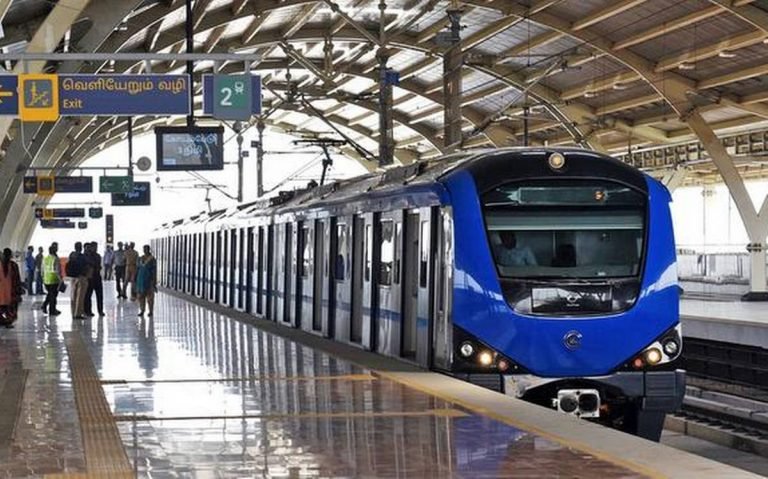
CHENNAI (Metro Rail News): A major development unfolded in the 116.1 Km Chennai Metro Phase-02 project, with the TBM S99 recording a breakthrough at Venugopal Nagar Shaft. It was the very first tunnel breakthrough and the 3rd of 24 breakthroughs planned on 45.4 Km Line 3’s Civil Package TU 01 going from Venugopal Nagar to Kellys. 

TBM Chennai 02

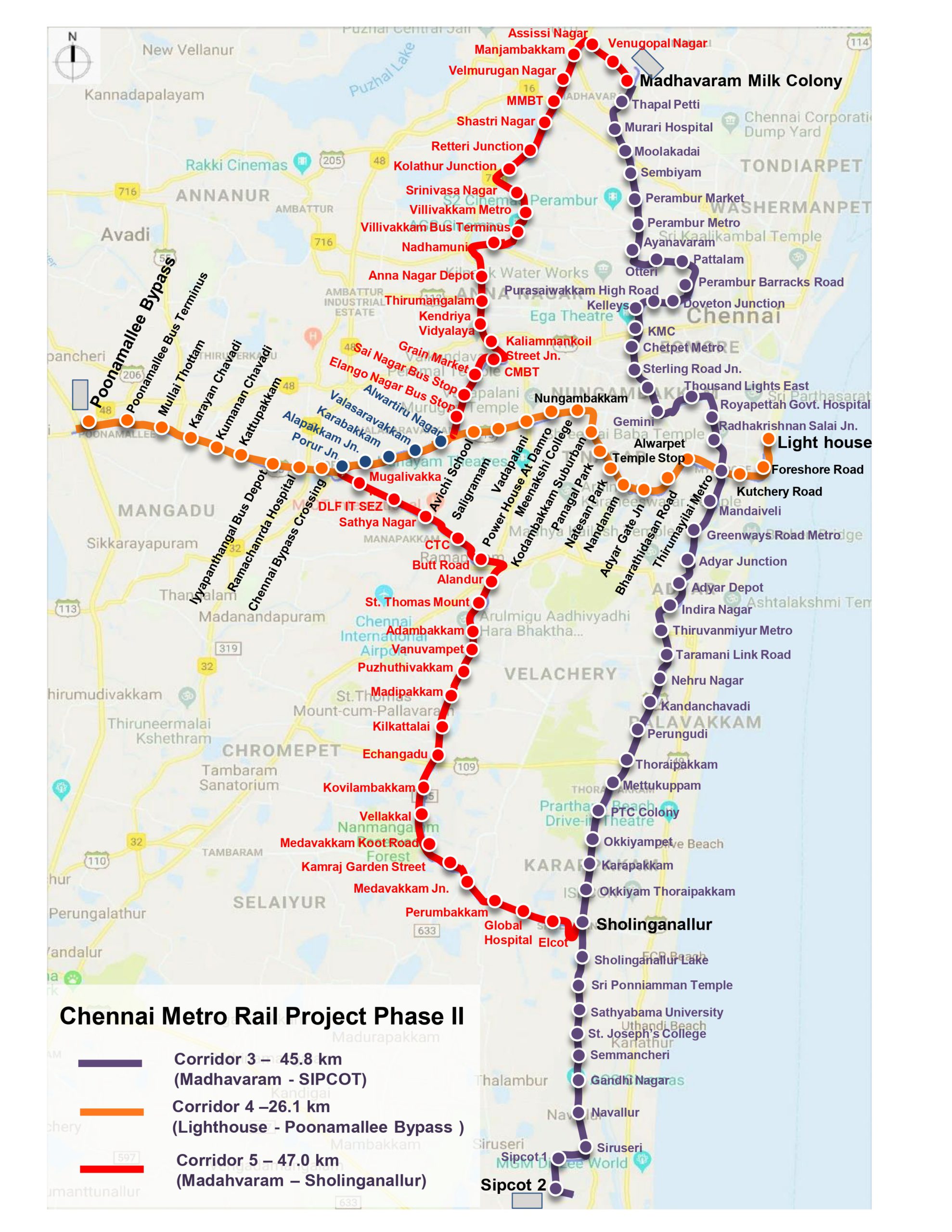
The contract for the TU-01 Civil Package was awarded to Tata Projects by Chennai Metro Rail Limited (CMRL) in May 2021 with a 42-month deadline. Phase-02 comprises 3 corridors: Madhavaram to SIPCOT (corridor-3), Light House to Poonamallee (corridor-4), and Madhavaram to Sholinganallur (corridor-5). 

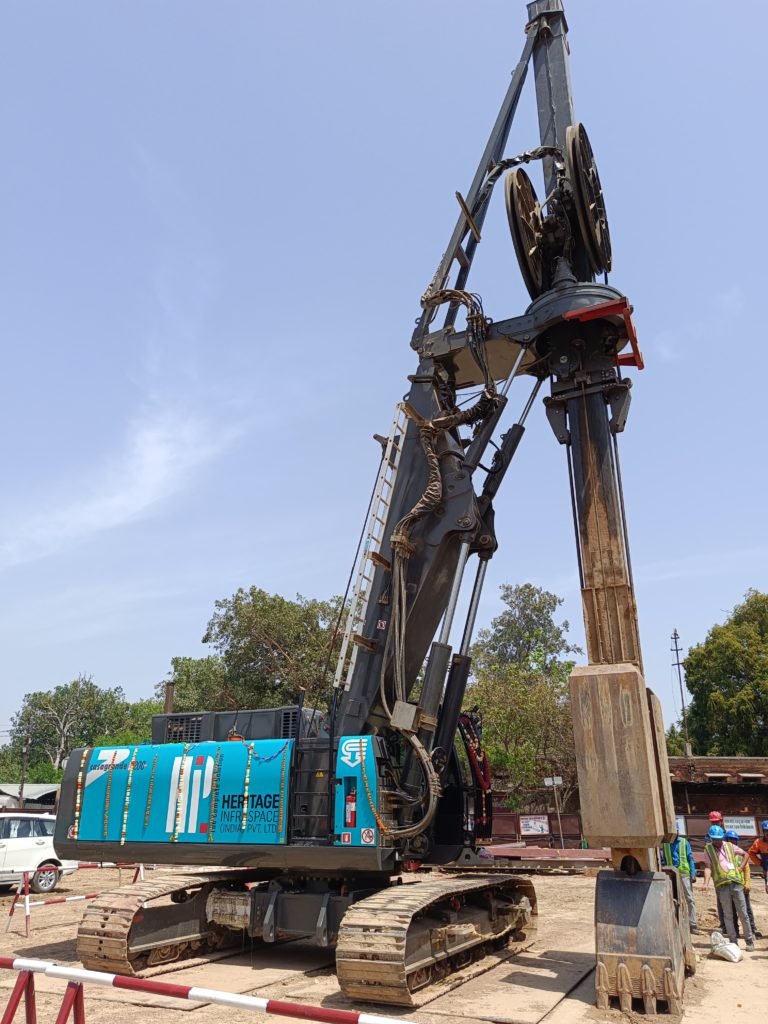
The 6.61-diameter TBM was commissioned at Madhavaram Milk Colony station’s North Shaft in May 2023. The machine travelled 415m to build the down-line tunnel towards Venugopal Nagar Shaft in approximately 4 months.

TBM Chennai 01
TBM comes out at Venugopal Nagar

Intrigued by the future of Metro and its impact on our city? Join us at our upcoming event Inno Metro to delve deeper into this vital issue. Stay informed, get involved, and let’s ride the Metro towards a brighter, more sustainable future together.

RRTS Viaduct Crossing Over Alignment of Delhi Metro Blue Line Successfully Constructed in Delhi

Being constructed as a part of a long-term strategic solution to the pollution and congestion conundrum of Delhi, the Delhi-Ghaziabad-Meerut RRTS corridor has achieved an important milestone in Delhi. The construction of the viaduct of the RRTS corridor crossing over the viaduct of the Blue Line of the Delhi Metro corridor has been completed successfully.

This viaduct of the RRTS corridor crosses the Delhi Metro corridor at a height of about 20 meters at this point near the New Ashok Nagar Metro Station. Carrying out construction work at such a height over the existing and already operational metro track successfully is a big achievement from the engineering point of view.

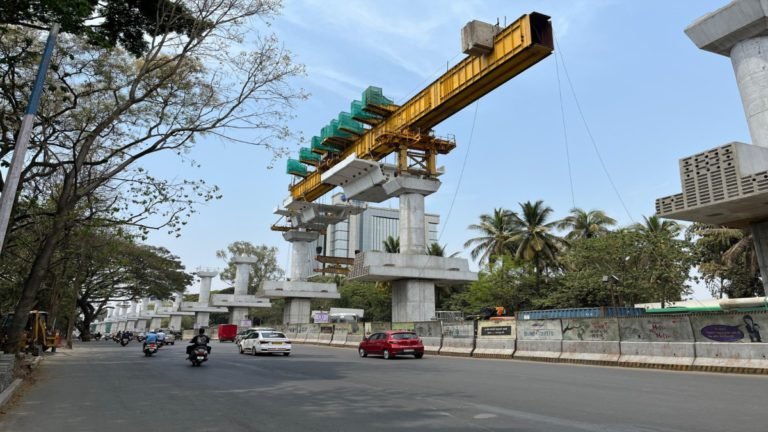
Moving from Sarai Kale Khan RRTS station towards New Ashok RRTS station, the elevated alignment of the RRTS corridor crosses the viaduct of the Blue Line of Delhi Metro which provides services to a large number of people every day. To ensure the convenience and safety of commuters travelling from this station, construction of this part of the viaduct has been done during the night time only with the help of Tarini (Launching Gantry). In this process, segments of the girder were lifted and joined together to construct the full span of the viaduct. NCRTC received unwavering support from DMRC during this whole construction. The construction was completed safely by NCRTC while ensuring uninterrupted services of the metro.

Multi-modal integration is the guiding principle of the RRTS project being implemented by NCRTC. To facilitate this, RRTS stations have been strategically planned in such a way that they can be built as close as possible to the existing modes of public transport. Provisions have been made to provide seamless connectivity for a smooth and uninterrupted travel experience for commuters. NCRTC, while ensuring this, has also had to face many complexities related to construction and civil engineering but with innovative techniques and strategic planning, it was made possible.

New Ashok Nagar Metro Station receives a large number of commuters from Noida. Once the RRTS corridor is operational, commuters will have the option to travel towards Meerut or other RRTS corridors from this station.

To provide connectivity between the RRTS station and metro station at this point, NCRTC is constructing about 90-meter-long and 6-meter-wide Foot-Over Bridge (FOB) which will be connected from the concourse level to the concourse level of both stations. The height of this FOB will be 8 meters above the ground. This will facilitate seamless movement of commuters between both modes of transport without exiting the station premises. This will also ensure stress-free travel for commuters and play a major role in controlling traffic jams and congestion outside the station. It will especially ensure a convenient and comfortable travel experience for women, the elderly, children, and commuters travelling with luggage. Moreover, to provide better connectivity and accessibility to the station from the nearby areas, NCRTC is also constructing two more FOBs at this station to connect residential areas.

So far, construction of a more than 5-kilometer-long viaduct has been completed in Delhi out of a total 9 km elevated section. 90 per cent of the pillar construction work has also been completed. Delhi has around 14 km long section, the rest is the underground section for which construction of tunnels has already been completed.

NCRTC aims to operationalize the entire Delhi-Ghaziabad-Meerut corridor by the year 2025. Before that, the 17-km long Priority Section will be commissioned for the public soon this year.

Patna Metro Launches First U-Girder on Corridor-I

PATNA (Metro Rail News): A significant development unfolded yesterday, with YFC Projects – Montecarlo JV launching their first 170-ton Precast Viaduct U-Girder of Patna Metro’s 17.93 Km Corridor-I on the East-West Line. 

It was launched on Friday, 16th September 2023. The length of the U-Girder is 28 meters, and the launching was done on National Engineers Day at Pier/pillar number 133-134 at the viaduct between RPS More Station & Patliputra Station.

Corridor I has a total of 14 stations, underground & elevated included. Elevated stations include Danapur Cantonment, Saguna More, RPS More, Patliputra, Mithapur, Ramkrishna Nagar & Jaganpura while the underground stations include: Rukanpura, Raja Bazar, Patna Zoo, Vikas Bhawan, Vidyut Bhawan, Patna Station. It also facilitates an interchange at Patna Station and Khemni Chak stations. 

The U-girders are casted at the casting yard and transported to the sites with the help of a crane. It is launched between two Pier Caps on which the metro track will be finally laid.

Pune Metro: Pier Erection on Metro Line 3 Sets a Record as it Enters into the Final Phase

PUNE (Metro Rail News): The pier erection work on the 22.3 km long stretch of Pune Metro Line 3 has reached its final phase. It is a record-breaking achievement as it was delivered in just 17 months. The project involved the construction of 923 pillars, out of which 715 piers, approximately 80% have been completed. 

The 715th pier, near Agriculture College Square, is a testament to the engineering excellence inaugurated on 14th September 2023. It also marks the beginning of the final phase of pier erection for the Pune Metro. 

The Pune Metro, also called Puneri Metro, line 3 is a 23 Km elevated Metro Rail Project connecting the IT hub of Hinjawadi to the Central Business District of Shivajinagar. Pune Metropolitan Regional Development Authority (PMRDA) has undertaken the responsibility of Puneri Metro Line 3 as a Public-Private Partnership (PPP) Project for which the Tata Group has established a Special Purpose Vehicle company named Pune IT City Metro Rail Limited to carry it out. 

In addition to the pile erection work, the Pile Cap Work for the Pune Metro Line 3 has also entered its last Phase, with 810 out of 923 pile caps now completed. Shri Alok Kapoor, the Chief Executive Officer of Pune Metro Line 3, emphasised that these piers boast a unique circular design with a diameter of 2000 mm, meticulously crafted to meet the exacting standards of the metro rail system while adhering unwaveringly to construction safety guidelines outlined in the Bureau of Indian Standards (BIS) manual.

It is one of the significant developments unfolding in Puneri Metro as it aims to alleviate the problems of the common masses residing in Pune. It will offer a seamless, cost-effective & convenient public transportation system to the people of Pune. 

Good News! MPMRCL Conducts First Safety Trial Run of Indore Metro

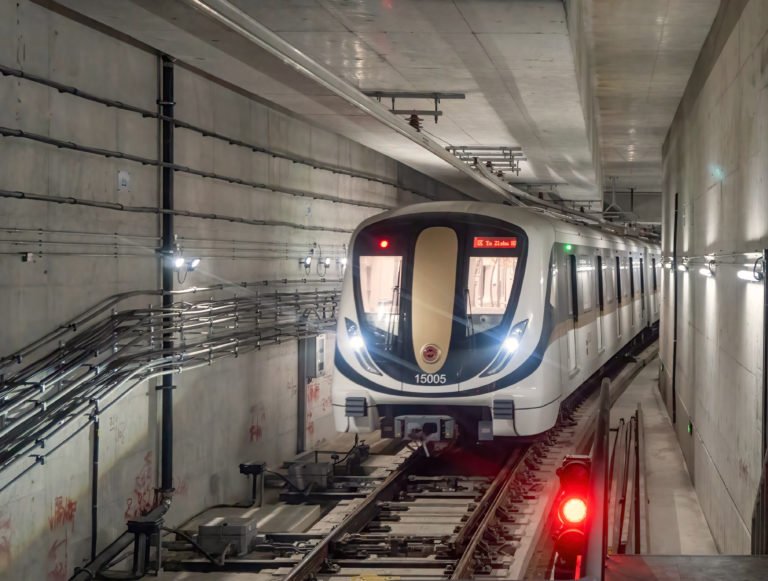
INDORE (Metro Rail News): The first safety trial of the Indore Metro was conducted on 13th September, Wednesday from Gandhi Nagar to Super Corridor-03 metro station. It marks the preparation of trial runs to be conducted afterwards before the anticipated opening in May or June 2024.

The 31.3 Km Yellow Line of Indore Metro has 28 stations, including 21 elevated & 7 underground stations. It is being built at an estimated cost of Rs 7,500.80 Crores. Indore metro will initially have three metro coaches in a single train, with a peak hour frequency of 2 minutes. 

During the safety trial, the metro covered a distance of 5.9 Kms at a speed of 8-9 Km/hr. It was carrying 15 people, including technicians & engineers from the manufacturing company & the track staff. More trial runs will be conducted in the upcoming days before the formal opening. 

The development marks an important milestone in the Indore metro project, as the sentiments attached to the same are of high priority, and Madhya Pradesh enters into elections later this year. 

Moscow Inaugurates MCD 4 Line

MOSCOW (Metro Rail News): Last Saturday marks an important day in the public infrastructure system of Moscow. President of the Russian Federation, Vladimir Putin, and the Mayor of Moscow, Sergey Sobyanin, launched the Moscow Central Diameter-4 Line, a suburban commuter line that runs across the Moscow city. It is the longest among the diameters- its length is 86 Kilometers. 

It runs from West to East through Moscow & connects 7 central railway terminals of the capital. It facilitates 18 transfer stations with 36 options of interchange to the metro. It connects more than 20 districts of Moscow & 4 cities in the Moscow region. 

“We forecast that it will be used by 260-270 thousand people per day by the end of 2023. At the same time, the infrastructure is designed to accommodate future growth in passenger traffic. We will continue to develop the diameter after the launch of MCD-4: we will build two Moscow city stations, Begovaya and Rizhskaya, and renew the rolling stock,” – said Maksim Liksutov, the Deputy Mayor of Moscow for transport.

Such trains run on the new line: EP2D & EP2DM, which run at intervals of up to 5-5.5 minutes during peak hours & without interruptions during the daytime. It is expected to decrease the footfall on other metro lines by 9% while its daily passenger count may reach 455 thousand people.

RITES Wins Safety Innovation Award, 2023

DELHI (Metro Rail News): RITES Limited has been honoured with the Safety Innovation Award, 2023, for implementing “Innovative Safety Management Systems” in its operations. The event was organised by The Institution of Engineers (India), the largest multi-disciplinary professional body of engineers. The event was held at Hotel Le Meridian, New Delhi.

RITES Limited, earlier known as Rail India Technical & Economic Service Limited, is a Miniratna Schedule ‘A’ Public Sector Enterprise sharing expertise in Transportation Consulting and engineering Services in India. It has accumulated a wealth of experience by working in about 55 countries over 49 years. 

RITES remains committed to providing the best safety practices at worksites and places otherwise. It upholds stringent safety protocols at work & otherwise, not considering geographical or logistical challenges

Hindalco Collaborates with Metra SpA to Provide Best-In-Class Coaches for Vande Bharat Express Trains

DELHI (Metro Rail News): Hindalco, the metals flagship company of Aditya Birla Group, signed a contract with Metra SpA, Italian Italian-based firm, a leading company in aluminum extrusion technology.  This comes at a time when Indian Railways is not only expanding its network across the nation but also planning to launch new trains for efficient and effective communication across the nation. 

With a heavy focus on modernisation and equipping the railways with next-level technology and infrastructure, the Indian Railways has undertaken several measures. It includes the upgradation of Railway Platforms, the Introduction of Vande Barat Traims etc. 

Hindalco, in collaboration with the Metra SpA, plans to invest Rs. 2,000 crore to develop coaches for the Vande Bharat Trains to ensure a wave of modern and convenient solutions to regular commutation and travelling needs. This Collaboration aims to make the makeover challenge undertaken by the Indian Railways more exciting and productive for the passengers of the Indian railways. 

This will get India into the group of nations that currently use Aluminum extrusion technology, which is limited to  Europe, China, Japan and a few other countries. 

“We are pleased to join forces with Metra to introduce a new era of aluminium extrusions for passenger trains in India,” said Mr Satish Pai, Managing Director of Hindalco Industries.

“Collaborating with Hindalco Industries presents an exciting opportunity to showcase the capabilities of our aluminium extrusion technology on a global stage,” Mr Enrico Zampedri, CEO of Metra SpA, stated enthusiastically. “Together, we are poised to redefine aluminium extrusions for high-speed train manufacturing in India, creating a fusion of strong Italian expertise in this field and Indian market knowledge.”

Aluminium coaches will prove to be the most beneficial for the Indian Railways, as Aluminium ensures reduced aerodynamic resistance, transmission loss and lower wear and tear to rolling stock along with efficiency that would make possible the speed of 200km/hr for vande Bharat. Currently, such technology is being used in the Metros. 

Additionally, Aluminium is the new Green metal as its acceptance is gradually increasing across the Globe because of its efficient operation due to its aerodynamic resistance. One rake of Aluminium can prevent over 14,500 tonnes of CO2 from entering the environment during its lifetime.

Initially, the Railways plans to use these coaches in the Vande Bharat Sleeper Version Trains only, but later on, expand it to other trains such as Rajdhani & Shatabdi Express.

Chennai Metro Phase II Update: CMRL Signs ₹ 4,058 Crores Contract with RVNL for Underground Stations

DELHI (Metro Rail News): Chennai Metro Rail Limited has signed a contract with the Rail Vikas Nigam Limited (RVNL) under its 116.1 Km Phase II program for the construction of 12 Underground Metro Stations & 4 Underground Metro Works other than the diaphragm wall from Kilpauk Metro to Taramani.   

The Phase II of the Chennai metro spans 116.1 km and includes 3 corridors: 

  1. Corridor 3,  45.8 km long, from Madhavaram to SIPCOT
  2. Corridor 4, 26.1 km long , from Lighthouse to Poonamallee Bypass
  3. Corridor 5, 47 km long, from Madhavaram to Sholinganallur

The anticipated opening of the Phase II metro is between 2026 & 2028 at a total estimated cost of Rs 61,843 Crores. 

As stated in the press note, a Letter of Acceptance (LOA) has been issued, which delegates Rs 1730.60 crore for Corridor 3, Rs 1461.97 for Corridor 4 and Rs 865.63 crore for Corridor 5. The total sum of all three works has been estimated at Rs 4058.20 crore. The project is completely funded by the Japan International Cooperation Agency (JICA). 

DMRC Signs MoU with BEL to Develop Indigenous Communication-Based Train Control System

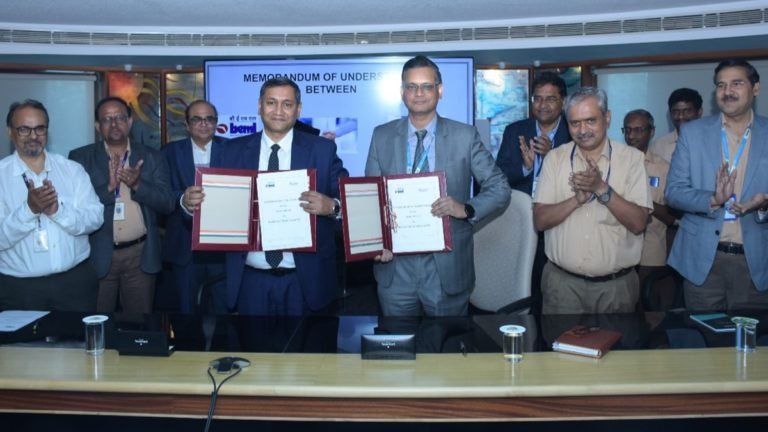
DELHI (Metro Rail News): Delhi Metro Rail Corporation has signed a Memorandum Of Understanding (MoU) with Bharat Electronics Limited (BEL) to develop an indigenous Communication-based Train Control System. It will foster the era of ushering self-reliance & innovation in the field of train control signalling systems. 

This system basically employs telecommunication between the trains & track equipment in order to manage the traffic & infrastructure. It allows for more accurate information as compared to the traditional signalling systems. 

These days, it is being used in the majority of the metro rail projects & other rail projects too.  The DMRC has already deployed the indigenous Automatic Train Supervision System (i-ATS) on the Red Line, with modifications & adjustments to suit Indian conditions. 

By embracing this cutting-edge Communication-Based Train Control System, which is widely adopted by leading metros worldwide, the DMRC aims to optimise train operations, increase frequency, and enhance passenger services while efficiently utilising rail infrastructure,” the statement released by DMRC said.

The project is being operated by 50 engineers combined from DMRC & BEL, well-informed & well-prepared in the Signalling Technology, Software Development, Hardware Development, Safety Processes, RAMS, Testing, and more. The team currently sits at the i-CBTC lab of the DMRC. 

“The i-CBTC project signifies a significant leap forward for the Delhi Metro. By embracing this cutting-edge Communication-Based Train Control System (CBTC), which is widely adopted by leading metros worldwide, DMRC aims to optimise train operations, increase frequency, and enhance passenger services while efficiently utilising rail infrastructure,” said Anuj Dayal, the DMRC spokesperson.

Along with offering Improved Safety, Increased Punctuality and ease of Maintenance, an Indigenous Communication-Based Train Control (i-CBTC) System will be a major boost for Make in India as well as Aatmanirbhar Bharat. This comes at a time when India is aspiring to achieve self-sufficiency in its majority aspects as a nation and economy. 

Good News for Chandigarh Residents as Chandigarh Metro Receives the Green Nod.

DELHI (Metro Rail News): There has been quite a buzz about the Chandigarh Metro, for which the discussions have been going from as early as 14 years. It is again creating a buzz because of the submission of the inception report by the RITES (Rail India Technical and Economic Service) to the Chandigarh administration. 

An inception report aims to acknowledge the mutual agreement of both parties on the timeline & plan of action suggested in order to conduct the evaluation. 

After 14 years of deliberations & discussions, the Chandigarh metro is about to get on its feet, with the first phase to cover 77 kms of distance spanning across 3 cities, namely Mohali, Chandigarh & Panchkula. That’s where it gets its name from, the Tricity Metro. In the first phase, the metro will be developed on three routes, namely: 

  1. Paroul, Sarangpur, ISBT Panchkula to Panchkula Extension (30 km)
  2. Rock Garden to ISBT Zirakpur via Industrial Area and Chandigarh Airport (34 km)
  3. Grain Market Chowk, Sector 39 to Transport Chowk, Sector 26 (13 km)

The 1st phase of the ambitious project will be developed from 2027-2037. 

Pradhuman Singh, Director, UT Transport, said, “We have received the inception report, and now RITES will give us a detailed presentation in a couple of days as to how they will go ahead with the alternative analysis report (AAR). Once the AAR is prepared, the DPR will follow.”

Chandigarh is in high need of a metro rail system because of several reasons that include 

  1. High Number of Vehicles on the Road. 
  2. Increasing Population around Chandigarh. 
  3. Growing Affluence & Investment in Chandigarh. 

With the hope of a Good Public Transport system, Chandigarh residents will be looking forward to the deployment of the metro service in the city.