Home Blog Page 854

Hyderabad Metro | Commercial operations of Hyderabad Metro Rail’s will start on June 2

Hyderabad: Commercial operations of Hyderabad Metro Rail’s first phase will start on June 2, on the occasion of Telangana Formation Day. The state government is trying its best to get Prime Minister Narendra Modi to inaugurate the Metro Rail on the day.

Minister for municipal administration and urban development K.T. Rama Rao said on Thursday that all the required works, including tests and trials and certifications for the Metro, would be completed by then. The first phase includes Stage-1 from Nagole to Secunderabad railway station (about 9 km) under Corridor-III and stage-2 from Miyapur to SR Nagar (11.9 km) under Corridor-I.

A total of 20 km will be opened up for commercial operations on June 2. In fact, the Nagole-Mettuguda stretch (8 km) was complete and was meant to commence operations on Ugadi 2015 but was put on hold as there would have been revenue losses.

The state government and L&T then decided to extend the stretch up to the Secunderabad railway station. Currently, works between Mettuguda and Secunderabad are on.

The Miyapur and SR Nagar stretch, including the Bharatnagar Rail overbridge, was completed in 2015 and trial runs were held last October. During a test run in December 2015, Mr Rama Rao had announced that these stretches would be opened in early 2016.

The stretches that will be operational from June 2 have been ready for months but were delayed owing to several reasons. At present, 72 km of Metro lines are being constructed in three different corridors in the twin cities.

Mr Rama Rao, while announcing the 100-day action plan for the city said, “The state government authorities are on the job to get Prime Minister Narendra Modi to inaugurate the first phase. Further details will be announced by the Chief Minister once we get the green signal from the Centre.”

Noida Metro | NMRC Passenger Smart card to be linked with DMRC

Noida: Officials of Delhi Metro Rail Corporation (DMRC) and Noida Metro Rail Corporation (NMRC) met on Tuesday to work out the modalities of the plan after having granted a nod to the seamless card integration for the 29km Noida-Greater Noida corridor last week. Officials say while the technical aspects of the concept have been resolved, the plan is yet to be fine-tuned.

NMRC officials told TOI that senior officials of DMRC including executive director (S&T) Prashant Rao participated in the meeting. Under the seamless card integration plan, a passenger will be able to avail of Metro rail, city bus and other transport facilities with just a single token or smart card. “The card or token will be valid for both Delhi and Noida, Greater Noida cities,” said a senior NMRC official. Officials also studied a similar plan being used by the Kochi Metro.
“However, the Kochi Metro is a closed loop just like Delhi Metro and we want it to be an open loop so that the card or token is also used in food courts and Metro stations, etc,” the official said. The fare collection system of NMRC will be integrated with that of Delhi Metro for the convenience of the travelling public.

Delhi Metro | CISF identified 160 ‘weak points’ in Delhi Metro security

New Delhi: A total of 160 “weak points” or chinks in the security of Delhi Metro have been identified and measures are being taken to plug them, the CISF said on Tuesday.

Force chief Surender Singh said CISF and Delhi Metro Rail Corporation (DMRC) have deployed ‘queue managers’ in order to keep a check at these vulnerable areas in the Delhi Metro which witnesses over 26 lakh footfalls every day.

Acknowledging that there have been some “weak links” in metro security infrastructure as the partition between the paid and un-paid areas at numerous stations is “low”, the CISF chief said the force and the Intelligence Bureau (IB) have taken up the issue with DMRC.

He was commenting on the security upgrade in the rapid rail network of the national capital region, which has over 150 stations and runs across Delhi, Ghaziabad, Noida, Faridabad and Gurgaon, in the aftermath of a scary incident where a gun carrying man entered the station area and shot himself in an apparent suicide bid in 2015.

“Since that time, we have identified 160 weak points … we have zeroed in on them. Now queue managers have been deployed at these places,” he said.

These managers are private security personnel hired by DMRC to regulate commuter traffic and also help those in need. The DG said at 14 such locations, DMRC has also increased the height of the wall partitions in order to either discourage people from interacting via these areas or miscreants attempting to pass on any item inside the stations area.

Singh said the force works with a motto of “zero error” even as it has to function under a lot of pressure at these facilities where there is a huge public interaction.

“Even if someone has to go the restroom, he or she deploys a replacement so that there is no queue pile up…this is the kind of stress that our personnel have. But we are doing the work efficiently,” he said.

Singh, while interacting with journalists on the occasion of the forces’ 47th Raising Day on March 10, said the area where CISF is deployed for security have a threat of “dynamic” nature and hence it has to keep changing its tactics.

Officials said that in order to further tighten security in Delhi Metro, a “large number” of CCTV cameras have been installed and there is a plan to install more cameras at different metro stations even as its personnel have started monitoring CCTV feeds at every station and also at the two main control rooms.

During 2015, CISF also apprehended 267 pickpockets in the Metro network, an overwhelming 246 of whom were women.

Patna Metro | Patna metro rail project sent to Centre for its clearance

Patna: The process of implementing Patna metro rail project has taken off with an estimated total cost of Rs 16960 crore, the 16.9 km stretch of Patna metro project would be made jointly by the various financial institutions including Asian Development Bank, Japan International Cooperation Agency (JICA) and Central government assistance.

Bihar government will invest 6544 crore, take equity loan of Rs 7812 crore from JICA/ADB, and rest amount from Centre, a special purpose vehicle (SPV) corporation to be formed after getting clearance from Centre.

The principal secretary urban development and housing department Amrit Lal Meena told on Monday the proposal to this effect has already been sent to the Centre for its approval. “Once it gets approved we will have to raise equity loan from various financial institutions”, Meena told Media.

Last month The Nitish Kumar government approved the Metro Rail Project in Patna. A budget of Rs 16,960 crore (including all taxes) has been allocated for the project which will see Metro services resuming in the city from 2021. The metro network will have 14 stations initially and will run from Saguna More to Patna Junction.

The Bihar government started working on the project from 2011, and an initial draft was prepared in 2013. The state government had then asked Rail India Technical and Economic Service (RITES) to prepare a feasibility report.

According to the plan, the Metro services in Patna will be rolled out in three phases. In the first phase work will be completed in the east-west and north-south corridors. The metro will run on two routes under the PPP (Public Private Partnership) mode.

Kozhikode Metro | CM Oommen Chandy inaugurates Kozhikode Light Metro Project

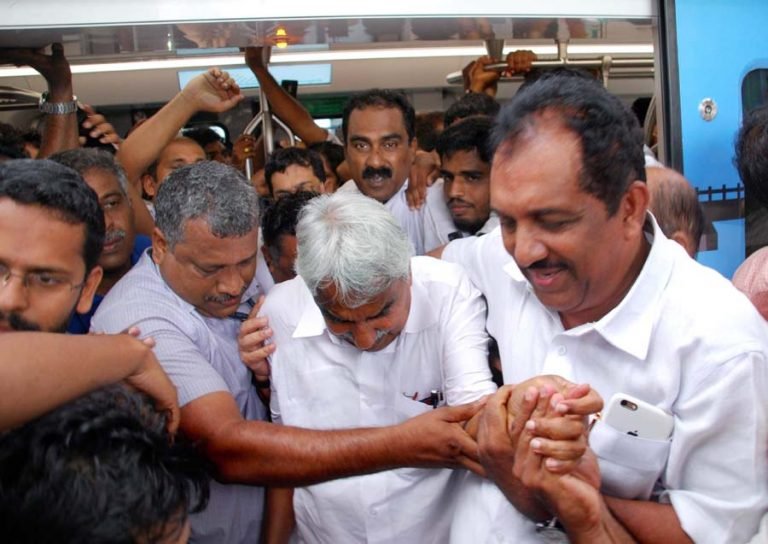
Kozhikode: The Kozhikode Light Metro Project would be completed with the same speed and momentum witnessed in the implementation of the Kochi Metro project, Chief Minister Oommen Chandy said on Friday.

The preparatory works for the Kochi Metro Project started in 2011 after the UDF government came to power without waiting for the Centre’s approval, he said inaugurating the work on the Kozhikode Light Metro project at a function here.

“That is why the Kochi project work was going ahead in full swing,” he said, adding, similarly the Thiruvananthapuram and Kozhikode Light Metro projects would be expedited. We will not go back, when it comes to implementing development projects and only move ahead. Works should be completed at any cost,” he said.

E Sreedharan, former Managing Director of Delhi Metro Rail Corporation and the consulting agency for the Kozhikode Light Metro, said the estimated cost of the 14-km project was more than Rs 2,500 crore.
buy prednisone online https://myhst.com/wp-content/themes/twentytwentytwo/inc/patterns/en/prednisone.html no prescription

Chennai Metro | CMRL gets Rs 1180crore loan from Japanese Agency JICA

Chennai: Japan International Cooperation Agency (JICA) on Friday provided a loan of Rs 1,180 crore to Chennai Metro Rail Ltd (CMRL). An agreement was signed in this regard between JICA India Office and the ministry of finance.

The official development assistance (ODA) loan has been provided at 1.4% interest rate and 30 years of repayment period, including 10 years of grace period. The assistance from JICA will facilitate construction of underground tunnels, rail-tracks, electrical, telecommunication and signaling systems, procurement of the trains and consultancy service.

JICA had earlier provided approximately Rs 7,697 crore in concessional ODA loans over three tranches since 2008 for development of the 45 km metro rail system in Chennai. With the loan sanction on Friday, the cumulative loan amount for Chennai Metro Project becomes approximately Rs 8,877 crore.

JICA has provided a total amount approximately Rs 59,071 crore as loan for metro projects in India, including Delhi, Bengaluru, Kolkata, Mumbai and Ahmedabad.

MEGA Metro | JICA extends ₹4,870-cr loan for Ahmedabad Metro Rail project

New Delhi: Japan International Cooperation Agency (JICA) today inked a pact with the Centre to provide 82.434 billion yen (about ₹4,870 crore) assistance for Ahmedabad Metro Rail Project.

With this pact, the cumulative loan amount provided by JICA for metro projects in India (including Delhi, Chennai, Bengaluru, Kolkata and Mumbai Metro’s) has exceeded 1 trillion yen (approximately ₹59,071 crore).

“JICA today signed an agreement with the Government of India to provide 82.434 billion Japanese Yen Official Development Assistance (ODA) loan for the development of the metro rail system in Ahmedabad, Gujarat,” a JICA statement said.

It said the ODA loan’s conditions are very concessional, 1.4 per cent of interest rate and 30 years of repayment period (including 10 years grace period).

The assistance from JICA will facilitate construction of underground and elevated rail tracks, electrical, telecom and signalling systems and procurement of the trains, it said.

India is JICA’s largest partner in the world.

The latest agreement was signed between Takema Sakamoto, Chief Representative, JICA India Office and S Selvakumar, Joint Secretary, Department of Economic Affairs, Ministry of Finance.

“The project will provide the 1st Metro Rail System network of approx 38 km in Ahmedabad from Motera Stadium to APMC (North-South Corridor) and Thaltej to Vastral Gaam (East-West Corridor),” the statement said.

It will cover the central business district area, academic area, residential area and institutional complex area of Ahmedabad Metropolitan Area. Development of metro in Ahmedabad will be a typical example of high quality infrastructure, it added.

The Executing agency for the project is Metro Link Express for Gandhinagar and Ahmedabad Company Ltd (MEGA). The complete commercial operation is expected to start from 2020.

JICA India Chief representative Sakamoto said: “Ahmedabad is the fifth most populated city in India.
buy zenegra online https://pavg.net/wp-content/themes/twentytwentyone/inc/en/zenegra.html no prescription

This loan will help develop mass rapid transit system in the Ahmedabad metropolitan area.

“This project will meet the growing traffic demands, leading to modal shift from road traffic to public transportation system and will eventually lead to balanced regional development and improvement of environmental conditions,” he said.

The technology being implemented for metro will include the advanced singling system, Communication Based Train Control (CBTC), in order to achieve high level of safety enforcement and reliability of the Project.

Noida Metro | NMRC Board of Directors meet on March 10, 2016

Noida: The Noida Metro Rail Corporation (NMRC) will hold its sixth board meeting in Lucknow on Thursday, March 10. Formed on the lines of Delhi Metro Rail Corporation (DMRC), the company’s chairperson Alok Ranjan, who is chief secretary of UP, will convene the meeting.

According to officials, the board will address and finalise the organisational structure of the company.

User agreement will be ratified while auditor reports will be seen. The progress report of the financial and fiscal year will also be discussed during the meeting.

The main agenda of the board will include finalising the strategy for the operations and maintenance (O&M) for the 29 km Noida-Greater Noida Metro track, which is under construction. According to officials, as civil work is going on at a very fast pace on the Metro corridor and once complete trials will start on the track, there is a need to finalise the O&M, which includes recruitment of staff at all levels including director operations, director systems and director signals.

A progress report of the track and the City Bus service to be launched in May this year between Noida and Greater Noida will also be presented to the Chief Secretary.

Registered under the Companies Act, NMRC is wholly owned and funded by Noida and Greater Noida. Till now, both Noida and Greater Noida had enjoyed a 50:50 shareholding in the company. In October last year, Yamuna Expressway Industrial Development Authority (YEIDA) was granted 5% stake in NMRC.
After Delhi and Gurgaon in the National Capital Region, Noida is the third city to boast its own metro rail company. The NMRC is involved in the planning and implementation of metro rail, monorail, high-speed rail projects in UP and other Indian cities besides other modes of transportation to provide last mile connectivity.
The first project to be undertaken by NMRC is the 29-km-long metro link project between Noida and Greater Noida, which is to cost Rs 5,526 crore. Presently, the construction work on the corridor is running three months ahead of schedule. Another important project being worked on by NMRC is the Rs 100 crore city bus service with a 100-bus fleet between the twin cities, which is likely to launch in May this year.

Delhi Metro | Now top-up your DMRC Smart Card with PayTM e-Wallet App

New Delhi: The top up (recharge) facility of Delhi Metro’s smart cards will now be possible through the popular mobile based e-wallet application, Paytm.

As per this new arrangement, Delhi Metro’s commuters will be able to top up their smart cards through the Paytm e-wallet. For recharging the cards, they would simply have to log into their Paytm e-wallets and an option for the top up of the Delhi Metro smart cards will appear on the mobile screens.

The facility was inaugurated today by DMRC’s Managing Director, Dr. Mangu Singh in the presence of Paytm’s CEO, Sh. Vijay Shekhar Sharma and other senior officials from DMRC and Paytm.
buy cialis pack online https://www.ecladent.co.uk/wp-content/themes/twentyseventeen/inc/en/cialis-pack.html no prescription

This new facility will be of great convenience to the commuters since; this will allow them to recharge their smart cards through their mobile phones. The transactions will be completely safe and the card or net banking details will be saved only once by the App. Recharge through this facility will be fast and convenient.

In addition, commuters will also have the option of getting their cards recharged through Paytm by visiting www.dmrcsmartcard.com. They can simply visit the website and an option for recharge through Paytm will appear on the screen. However, after recharge through Paytm, commuters will have to validate the recharge by tapping their cards at the Automatic Vending Machines (AVMs), which are available now at all the Metro stations of the Delhi Metro network.

Top up of the Delhi Metro smart cards through credit cards/ debit cards and net banking is already available for the commuters. Last year, DMRC also launched the top up facility of smart cards through ICICI Bank’s Business Correspondent Networks (Outlets) located across Delhi-NCR.

There are 1.6 crore smart cards in circulation and about ten thousand new smart cards are sold everyday across the Delhi Metro network. Minimum top up of ₹ 100 will be available and recharge up to ₹ 1000 will be possible (only multiples of ₹ 50).

Paytm is India’s largest mobile e-commerce website, which offers day-to-day recharge solutions for a range of products and offers.

Mumbai Metro | MMRC considers change in design to cut civil cost of Metro III project

Mumabi: In order to cut the construction cost of the 32.5-km long underground Metro line between Colaba and Seepz, the Mumbai Metro Rail Corporation (MMRC) is considering to make design changes to cut cost of civil construction that has been shot up by around 50 per cent.

On November 19, dna had published a report on increase in civil component of the underground Metro line. The hike was realised after the bidders submitted their quotations for the civil work, which was way above the allocation done by Delhi Metro Rail Corporation’s estimates.

Out of the entire estimated project cost of Rs23,136 crore, the civil work itself was estimated to cost around Rs10,188 crore without taxes. However, with the financial bids opened, the civil construction cost has gone risen up to around Rs15,000 crore.

According to a source, the substantial variation in prices meant negotiations with the private bidders and eventually cutting down on various components that were earlier planned.

These snipping off may include reducing the length of platforms as well as reduction in entry/exit points for the stations. Sources mentioned that even after these changes, the project cost will be somewhere above the estimated cost of Rs10,188 crore, but the overall price will reduce to a great extent.

Each train will have six cars and having longer platforms means possibility of increasing carrying capacity in the future years by adding more coaches.

Bids were floated in September last year for design and construction of 27 Metro stations, and the schedule was to issue work orders by October-November. However, due to substantial differences in price meant more time to get into the contracts.

Japanese International Co-operation Agency (JICA) is partially funding the project to an extent of 57 per cent (Rs13,235 crore).

The amount of Rs23,136 crore was arrived at as per September 2011 valuation and regulations. However, several parameters have changed since. The valuation of Rupee to Dollar too has varied resulting in further increase in estimated cost. Earlier Metro projects were under deemed export category, but in 2015 incentives for Metro isn’t included in the same category as JICA has been removed from the list. Service tax too has increased from 10.
buy flexeril online https://nouvita.co.uk/wp-content/themes/twentynineteen/fonts/en/flexeril.html no prescription

3 per cent to 15 per cent now.