Home Blog Page 849

Delhi Metro | Advisory board says, stop contract labour system in DMRC for ticketing jobs

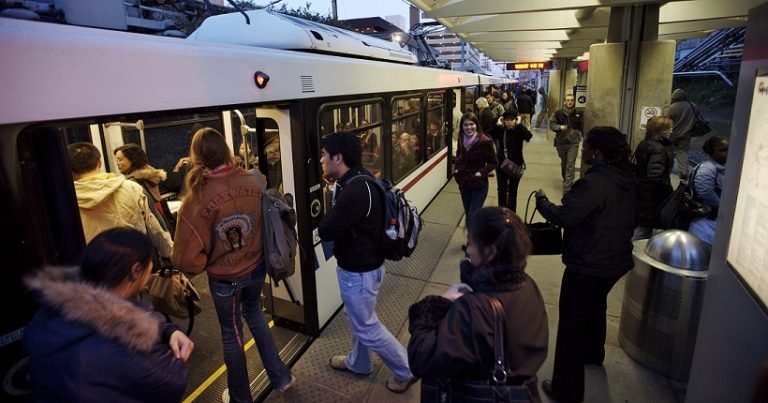
New Delhi: The Central Advisory Contract Labour Board has urged the Ministry of Labour and Employment to abolish contractual labour in ticketing jobs at Delhi Metro and make the posts permanent.
buy penegra online https://www.adentalcare.com/wp-content/themes/medicare/editor-buttons/images/en/penegra.html no prescription

If the ministry accepts this recommendation, it will benefit nearly 3,500 contractual workers.

The advisory board constituted a committee to look into the issue and passed its recommendations to the ministry last month. Based on the findings of the committee, it decided to “recommend for abolition of the contract labour system in the jobs of TOM (token operating metro) operators in the establishment of DMRC”.

After several inspections, the committee found there was a phenomenal rise in the number of ticket operators over the years and Delhi Metro Rail Corporation (DMRC) was justifying the employment on a short-term contractual basis by promising that it was working towards reducing dependence on manual ticketing and mechanising the process completely.

“It is evident the semi-automated system of fare collection is continuing… and the phasing out of it by installing TVMs (token vending machines) is far from reality… The installation and operation of TVMs during the last 13 years has not been able to substitute the requirement of TOM/CCC (customer care centres),” the committee said in its report.

The committee also noted that as a result of employing staff on a contractual basis for work that was essential and “perennial” to the daily functioning of Metro services, there was increased scope for exploitation, especially arbitrary hiring and firing policies, as per DMRC’s contract agreement.

The committee noted outsourcing of ticket vending system through contractors on the basis of four-hour shifts was compelling the contractors to engage a large number of people, which in turn created scope for exploitation of workmen by denying them wages and welfare facilities available to regular staff.

The advisory board set up up the committee on a complaint by Rajni Saxena, a contractual ticket operator who was sacked along with 3,500 others by DMRC in 2012 after four years of service.

Saxena, now a homemaker, said, “Our contractor had been siphoning off crores, paying us only half of the mandated minimum wages and stealing parts of our salaries on the pretext of providing us health benefits, but it was never deposited. When I complained to government authorities, the DMRC terminated its contract with our contractor to wash its hand of the labour law violations our contractor was committing.”

She added, “I was one of the hundreds fired without notice. That is when I decided to take up the matter with higher authorities, requesting them to abolish the system of contractual labour in ticketing in the DMRC.”

The DMRC has over the years terminated contracts of three companies, laying off thousands of workers. At present, the DMRC has contractual ticket operators through two other private companies.

U Bhupati, who was chairman of the Central Advisory Contract Labour Board till March 31, said, “The recommendations of the board are advisory in nature. They become binding on the DMRC only after the ministry approves them. The ministry can return the recommendations for reconsideration if it wants.”

A senior official at the labour ministry told Media, “The Board has made recommendations, however, we have not yet received them.”

A DMRC spokesperson said, “We will take action and put the reforms in place only after the ministry issues a notification to this effect. As of now, operations and hiring policies continue as before.”

Delhi Metro | DMRC celebrates its 22nd Foundation day

New Delhi: The Delhi Metro Rail Corporation (DMRC) today celebrated its 22nd foundation day with annual awards being presented to 43 deserving employees for their outstanding contribution to the Delhi Metro along with three special prizes.

Vice Chairman, NITI Aayog, Dr. Arvind Panagariya presented the awards in the presence of Chief Secretary, Government of NCT of Delhi Sh. Kewal Kumar Sharma, Additional Secretary, Ministry of Urban Development, Sh. DS Mishra, DMRC’s Managing Director, Dr. Mangu Singh and other senior officials.

Dr. Panagariya appreciated the performance of the Delhi Metro and said, “it is absolutely astonishing how within a span of 15 years or so, the Delhi Metro has come from zero to over 200 kilometres. The Metro is clean, bright and the trains run on time. It is an island of excellence.”

“The standards set by DMRC in designing structures is very high and such standards should be followed by other engineering organisations,” Chief Secretary, Government of NCT of Delhi, Sh. Sharma said on the occasion.

Dr. Mangu Singh highlighted the various initiatives taken by Delhi Metro towards providing comfortable and eco friendly travel to the commuters. “In the upcoming phase, we have taken a quantum leap in terms of the technology which will be employed by DMRC. Modern trains, which will eventually run without drivers, highly sophisticated signalling technology known as CBTC (Communication Based Train Control) will be introduced,” he said.

Dr. Singh also informed that the Delhi Metro had already commissioned over 6 MW of solar power and had awarded contracts for another 20 MW. He said that as per an MoU with the Solar Energy Corporation of India (SECI), an off-site solar power plant would be established from where DMRC would get power directly. Such a site had already been identified in Madhya Pradesh where a solar plant with capacity of 750 MW was being planned.

Additional Secretary, Ministry of Urban Development, Sh. DS Mishra also congratulated DMRC on the occasion and said, ”The development of Metro all over the country  is taking place on the basis of what the Delhi Metro has achieved.”

The Mandi House Metro station was adjudged the ‘Best Metro Station’ and Sh. Rajeev Kumar Verma, Senior Group Station Manager (Malviya Nagar and Saket) received the Metro Person of the year award. The Metro Women of the Year Award, was given to Smt. Shikha Bhatnagar, Sr. Train Operator/Red Line

Besides these, 43 more employees from various departments were also awarded for their meritorious performance. An employee from the Central Industrial Security Force (CISF) was also awarded for his contribution towards maintaining security in DMRC.

Chennai Metro | CMRL, Gammon agree for arbitration

Chennai: The legal tussle between Chennai Metro Rail Limited (CMRL) and Gammon India Limited is likely to end amicably as they have agreed for arbitration before the Madras High Court.

The First Bench of Chief Justice S.K. Kaul and Justice M.M. Sundresh appointed a three-member arbitration committee presided over by retd. Justice A.P. Shah, former Chief Justice of the Delhi High Court and former chairman of the Law Commission.

The decision of the CMRL in July 2015 to terminate the order placed to Gammon — due to delay in completion of the tunnelling project after Gammon’s joint venture partner Mosmetrostroy, a Russian company, abandoned the project — led to the legal battle as Gammon approached the High Court.

In 2011, Gammon bagged the Rs. 1,947-crore contract along with Mosmetrostroy to design and construct seven underground stations for the CMRL.

In a recent hearing, when the parties agreed for arbitration, the Bench said, “With the positive approach of the senior counsels, the controversy has been resolved and it is agreed that all the parties would go in for arbitration to resolve their disputes.”

Kirti Dave, Charted Engineer, techno-legal consultant based in Mumbai, was nominated as a member to the arbitration committee by Gammon.

Similarly, CMRL nominated P.V. Amarnadha Prasad, techno-legal expert, arbitration consultant and advocate based in Hyderabad.

The parties also agreed to the suggestion made by the court to appoint Justice A.P. Shah as presiding arbitrator as legal issues are involved in these matters, apart from technical issues.

The Bench then directed to keep alive the six bank guarantees given by Gammon to the tune of Rs. 115 crore during the period of arbitration.

Gammon approached the HC after its contract was terminated in July 2015.

Delhi Govt. to launch Common Mobility Card for metro & buses from July

New Delhi: Come July and Delhiites will be able to travel on metro trains, DTC and cluster buses using a ‘Common Mobility Card’, with the city government deciding to launch the project for seamless travel on modes of public transport.

The Delhi government is finalising the modalities of the project which will be launched in a phased manner in the national capital.

“We will launch ‘Common Mobility Card’ project in July this year through which passengers can travel in Metro trains, DTC buses and cluster buses (orange) run by DIMTS. The project will be launched on a trial-basis in Delhi,” Delhi Transport Minister Gopal Rai told Media.

The Minister said by the end of June, fares will be charged in all DTC buses and Cluster buses through e-ticketing machines (ETM) and thereafter government will move towards the launch of ‘Common Mobility Card’.
buy vigora online https://www.adentalcare.com/wp-content/themes/medicare/editor-buttons/images/en/vigora.html no prescription

“We are currently in talks with the Delhi Metro Rail Corporation (DMRC) for finalising a revenue sharing model. In July, commuterss can travel in metro, DTC buses, and Cluster buses through Common Mobility Card.

“As per the plan, while boarding the bus a commuter will have to give this card to conductor who will swipe it in an e-ticketing machine and, just before getting off the vehicle, he or she will again have to swipe the card in the ETM and fares will be automatically deducted like the metro,” the transport minister said.

Common mobility card had been proposed during the Commonwealth Games but the project did not take off due to financial reasons.

As part of strengthening public transport system, the AAP government has chalked out a concrete plan, including buying 3,000 new buses till December this year, installation of CCTV cameras and wi-fi services in buses.

CCTV cameras have already been installed in over 200 DTC buses so far.

(Source: PTI)

Namma Metro | Bangalore Metro’s EW Underground Section Inaugurated

Bangalore: After a two-year delay, the underground corridor of Namma Metro was finally inaugurated amid much fanfare and excitement on Friday. “It was a great ride; it did not feel like we were in a tunnel at all. I cannot wait to take the entire trip in the morning tomorrow,” said Sangeetha K., one of the passengers, who experienced the inaugural ride.

The Purple Line connecting Baiyappanahalli in the east to Mysuru Road in the west will be operational from 6 a.m. on Saturday. Excited citizens are looking forward to a test ride ahead of using the metro to commute to work on Monday.

The five underground stations on the line promise to be a completely new experience for commuters. With massive stations, escalators, air-conditioning and services like Wi-Fi, which will come up soon, a trip through the underground corridor is something to look forward to.

“I can now take the metro from the S.V. Road Station in Indiranagar to my workplace at Mysuru Road. I will have to walk only a hundred metres to the station, instead of changing three buses,” said Arvind S., a resident of Indiranagar. “Of course, I will take the metro on Saturday to see how fast it is.”

During the inauguration ceremony, Chief Minister Siddaramaiah put pressure on the Bangalore Metro Rail Corporation Ltd. to complete the entire phase 1 network of 42 km by November 1, and to start operations on Karnataka Rajyotsava.

The earlier deadline set by BMRCL was December 2016 for starting operations.

Kanpur Metro | European Investment Bank ready to fund Kanpur Metro Rail project

Lucknow: A three-member European Investment Bank (EIB) team visited the workshop of Kanpur metro and the proposed stations to come up on the first route between IIT-Kanpur and Naubasta on Thursday. The EIB team stated that the bank will render help. But it did not disclose the amount that would be provided by the bank.

The team acknowledged that there is a need for rapid and convenient mode of public transport in Kanpur. The team stated that keeping in view the vastness and population of the city, Metro service would be a best.

On Wednesday, EIB team had seen a presentation on Kanpur metro in Lucknow, where officials of Lucknow Metro Rail Corporation (LMRC), RITES and KDA were present.

Divisional commissioner Iftikharuddin, during a meeting with the EIB officials, said that the file of Kanpur metro project has already been sent to Union government. He said that all formalities related to the metro project have been completed.

The team said that the land, which has been acquired for metro project, belongs to government and that there is no dispute. He also said that all those who have been displaced or establishments displaced will be rehabilitated properly.

The team was apprised by officials of Kanpur Development Authority (KDA) that a total of 31 metro stations would be made on two routes. This will include 19 elevated and 12 undeground metro stations.
buy zovirax online https://pridedentaloffice.com/wp-content/themes/twentytwentyone/inc/en/zovirax.html no prescription

They were also told that a total of Rs 13,221 crore would be spent in the project.

EIB is second after Japan International Cooperationn Agency (JICA) which had evinced interest in funding the Kanpur metro project. If both JICA and EIB provide loan to Kanpur metro project, it will reduce pressure on the UP and the Central governments.

The loan from EIB would be for a 20-year period and provided at a very low rate of interest.

Er. Annie Sinha Roy | India’s only Woman Tunnel Engineer in Bengalore Metro

Er. Annie Sinha Roy is a proud woman. Working in a male-dominated realm, she is least bothered about what’s to come tomorrow. Precisely because being India’s first and only woman tunnel engineer, she has played a monumental role in the Bengaluru Metro Project.

Annie has helped develop the 4.8 km east-west underground track of Namma Bangalore – the country’s first underground metro line in southern India – that will run from Cubbon Road to Vidhana Soudha.

Annie, who hails from a middle-class family in North Kolkata, wanted to earn a post graduation degree after studying Mechanical Engineering from Nagpur University. However, things turned out differently after her father passed away. She got a job to help with her family’s financial crunch which led to her joining Senbo, a contractor company with Delhi Metro in 2007.

On her first day of the job, Annie heard someone say: “she must be a visitor.”

Recalling one of her first experiences as a tunnel engineer, Annie said, “After a couple of hours, I was standing in front of a huge machine that had to break the ground but it was stuck. A German engineer and my boss asked me to get inside it and open a nut. Even before I realized what I was doing, my face was gushed by hydraulic oil. The colleague said my face would glow for the rest of my life. Today tunnelling is my life.”

It was in 2009 when she took up work with Chennai Metro, after which she flew to Doha in 2014 for six months. She started working with Bangalore Metro Rail Corporation (BMRC) in 2015 as assistant manager.

In BMRC, Annie single-handedly steered Godavari – the tunnel-boring machine that recently finished carving out the underground track from Sampige Road to Majestic. She called it her tunnel because the moment she hopped on board, the machine got damaged.

After that moment, Annie started spending eight hours in the tunnel every day.

“Sometimes when people see me with the helmet and jacket and learn that I work for Namma Metro, they would only ask when the work will get over,” added Annie.

When asked what message she had for all the women out there, Annie said, “I want women to drive a tunnel boring machine. I want them to work in the tunnel.”

Mumbai Monorail services loses Rs 8.5 lakh every day

Mumbai: Two years after launch of phase I, Mumbai Monorail loses Rs 8.5 lakh every day as only 16,000 people regularly use Wadala-Chembur service, termed by some as a transit system to nowhere.

At 10 am when Mumbai kicks into a state of hyperactivity and there’s a scramble for space on trains, metro and roads clogged with honking lines of cars, autos and buses, the monorail runs near-empty rakes between Wadala and Chembur.

The 8.9-km elevated route with seven stations barely registers a bump in passenger traffic as the day progresses. On an average, the transit system, whose phase I alone cost the state around Rs 1,000 crore, transports 16,000 people in a day, less than half the number of spectators the Wankhede accommodates for an IPL match.

Over two years after India’s first monorail was launched in the city, it is increasingly being viewed as a symbol of bad planning and wasteful expenditure. Some urban transport experts even describe it as a vehicle for joyrides.

From 2014 to 2015, Mumbai Monorail, which makes over 130 trips every day, managed to increase its daily passenger count by only 2,607, from 14,071 to 16,678. Every day, it loses Rs 8.5 lakh, a gap the operator hopes will shrink next year after the monorail extends services till Jacob Circle near Mahalaxmi under phase II. The work on the 11.2-km line is expected to be completed by December.

Till January this year, Mumbai Metropolitan Development Authority (MMDRA) had spent over Rs 2,554 crore on the entire project, overshooting the initial estimate of Rs 2,460 crore.

The monorail has suffered a completely different fate than Mumbai Metro One, which was launched just four months later. The 12-km Versova-Andheri-Ghatkopar metro line sees over 2.75 lakh passengers every day and has slightly eased the burden on railway networks.

There are a number of reasons why the monorail has not clicked: poor selection of route; absence of commercial hubs in areas serviced by the system; lack of feeder services to and from stations; and poor link-up with suburban train networks.

“Mumbai Monorail has been a disaster as it was planned as a standalone transit system. The northern end of the corridor should have started from near Ghatkopar railway station before running to Chembur and finally culminating at Grand Road. More people would have used the service then,” said transport expert Ketan Garodia.

“MMRDA avoided popular routes as it didn’t want to tackle problems such projects face in congested areas. The operational monorail route is a road to nowhere.”

The original project plan was changed several times before the Wadala-Chembur route was finalised. Phase I construction was supposed to be end in December 2010, but it dragged on for over three years.

“The planning that went into the project is a prime example of sheer stupidity. Why was the original route proposal changed?” asked RTI activist Anil Galgali.

Public transport expert Rishi Aggarwal said the monorail was currently not a viable option for commuters, but the situation might improve after the Wadala-Jacob circle line became operational.

“The second phase will be completed by December. We hope the number of passengers will increase then,” said Dilip Kawathkar, joint project director (PR), MMRDA.

In February, on an average over 17,000 people used the service every day. The number dropped to 15,274 in March. Six monorail rakes, each with four coaches, make a total of 131 daily trips between 6 am and 10 pm with stops at Wadala depot, Bhakti Park, Mysore Colony, Bharat Petroleum, Fertilizer Township, VNP & RC Marg and Chembur.
In in its first year of operation, Mumbai Monorail earned Rs 4.24 crore from ticket sales. The figure rose marginally to Rs 4.33 crore last year. Since February 2014, MMRDA has spent Rs 17.18 crore on operations and maintenance.

Many riders Mirror spoke to last week said they rarely used the service. Karjat resident Manju Nath Jorawar said often monorail coaches had only joyriders on board. “It is a poorly planned system,” he said.

High Speed Train | Indian Railway to start trial run of high speed Talgo train very soon

New Delhi: Passengers will now be able to cover the 1200-kilometers Delhi-Mumbai journey in just 12 hours as compared to over 17 hours at present with the high speed Talgo train.

Known for its high speed and light trains, Spanish train maker Talgo’s nine state-of-the-art train coaches have already reached Mumbai and will undergo crucial test run by the Railways next month.

Dispatched in a cargo ship from Barcelona on March 27, they will be put on trial on the existing tracks for validation test.

“Talgo coaches have arrived at the Mumbai port. These coaches will be transported to Izzatnagar Depot after getting customs clearances,” a senior Railway Ministry official said.

The Spanish train-maker has offered to test run its lighter and faster trains free of cost on the existing Indian Railways network.

“The first Talgo train trial will be conducted between Bareilly and Moradabad rail route at a maximum speed of 115 kmph for oscillation test. This will be followed by another trial between Palwal and Mathura route at a maximum speed of 180 kmph,” the official said.
buy zenegra online https://pridedentaloffice.com/wp-content/themes/twentytwentyone/inc/en/zenegra.html no prescription

The third one will be carried out between Delhi and Mumbai at a maximum speed of 200 kmph.

According to Railways, Talgo trains are capable of running at speeds varying between 160-200 kmph on the existing infrastructure without any upgrade.

Barring minor changes, there will be no need for overhauling the tracks for the trial run, the official said, adding, the cost of import of coaches and customs clearances will be borne by Talgo.

Besides reducing travel time, Talgo’s lighter trains consume 30 per cent less energy which will help railways reduce the power bill as well. (With inputs from PTI).

Bullet Train Project | Indian Railway to start construction work of Rs 98,000 Crore project

New Delhi: Government of India is going to launch the first high speed train of India between Mumbai to Ahmedabad in 2017. Railway has stepped up ground work for starting construction work of the Rs 98,000 crore project in 2017.

The Railway Ministry said that Our aim is to start the work as early as possible. It would take about seven years to complete the first high speed train after the awarding of the contract for the project. A lot of new technologies would be used to construct the high-speed corridor between Mumbai and Ahmedabad. The Railway Ministry has officially involved in the Bullet Train Project.
buy eriacta online https://herbalshifa.co.uk/wp-content/themes/twentytwentytwo/inc/patterns/en/eriacta.html no prescription

The Government formed the Special Purpose Vehicle(SPV) to implement the Mumbai-Ahmedabad high speed Bullet Train project. The SPV is meeting tomorrow to finalise the technical details include the standardization of construction of tunneling, pillars, fencing and the other requirement for the mega project.

The Special Purpose Vehicle has been named as National High Speed Rail Corporation Limited. It comprises Senior Railway officials and the national transporter is in the process of appointing CEO for the job.

Railway will have 50% equity in the SPV, while Maharashtra and Gujarat will have 25% equity each.

At present, Duronto Express takes about seven hours to cover the distance between the two financial centres Mumbai and Ahmedabad.

Estimated cost of Bullet Train Project about Rs 97,636 crore, 81 per cent of the funding for the Bullet Train Project will come by way of a loan from Japan. The project cost includes possible cost escalation, interest during construction and import duties.

Railway Ministry Officials said that It is a soft loan for the 50 years at 0.1 per cent annual interest with 15 years’ moratorium.

For timely completion of the project, a joint committee has been formed under the vice-chairman of NITI Aayog with the secretaries of the Department of Industrial Policy and Promotion (DIPP), Departments of Economic Affairs and Foreign Ministry as its members along with the Railway Board Chairman.
This is the very big project in the Indian Railway history and it is dreamed by  the Prime  Minister Narendra Modi.