Home Blog Page 797

Hyderabad Metro | HMRL hopes to start metro train services in end of the year

1
Telangana
Representational Image

Hyderabad: The State Government has permitted the HMRL to complete the entire Hyderabad Metro Rail Project, other than the 5 km stretch in the Old City and 1 km stretch between Hitec city and Raidurg, latest by November 2018.

The original deadline for construction was ended on Tuesday.  Some delays were caused in completion of the project due to multiple court cases in acquisition of some properties at critical points. So, Government has agreed for extension of deadline by 17 months, according to Managing Director HMRL, NVS Reddy.

Further, Chief Secretary, S.P.Singh reviewed the progress of the project and noticed that that some properties to be acquired are not coming in the way of the Metro Project.
buy viagra online no prescription

He gave instructions to both the Collectors of Hyderabad and Ranga Reddy districts and Commissioner, GHMC to complete acquisition of the remaining properties for widening of roads in Sultan Bazar and Nampally.

The State Government advised HMRL to gear up for launching the completed stretches of the project in the next few months and also to complete corridor-I (Miyapur-LB Nagar: 29 km) and corridor-III (Nagole-Hitec City: 27 km) by the end of this year.

Source: The Hans India

Advertisement1
InnoMetro_2026

Bangalore Metro | HCC JV bags Rs 797 cr order from BMRC

0

Hindustan Construction Company (HCC) today said its joint venture firm has bagged a contract worth Rs 797 crore from Bangalore Metro Rail Corporation.

“Hindustan Construction Company, a lead partner in the joint venture with URC Construction, has been awarded Rs 797.29 crore contract by the Bangalore Metro Rail Corporation Ltd,” HCC said in a BSE filing.

The contract is for construction of 6.
buy vidalista online https://www.mydentalplace.com/wp-content/themes/twentytwelve/inc/en/vidalista.html no prescription

340 km long elevated corridor and five elevated stations between HSR Layout station and RV Road Station.

HCC’s share in the JV is 51 per cent (Rs 406.61 crore). The project is to be completed in 36 months.

Advertisement1
InnoMetro_2026

Delhi Metro | DMRC launches cashless transaction facility for token/smart card recharge through QR

0
DMRC Chief Mangu Singh purchasing token after using QR code payment

New Delhi: The Delhi Metro Rail Corporation (DMRC) today launched the cashless token sale/smart card recharge facility by using the Bharat Quick Response (QR) Code displayed at the Token Counters & Customer Care Centres of Metro stations. This facility was launched by DMRC’s Managing Director, Dr. Mangu Singh at Rajiv Chowk Metro station in the presence of senior officials.

With this facility, the commuters will now be able to use the Bharat QR Code, which is being provided by HDFC Bank, displayed at the Token Counters/Customer Care Centres through their respective Bank’s App installed in their smartphones. All Bank wallet and savings account holders can make payments using Bharat QR by logging into their Bank App and scanning the QR code available at stations.

Currently, this facility is made available at five Metro stations namely, Rajiv Chowk, Rajendra Place, Seelampur, Pitampura and Nehru Place only. Subsequently, the facility will be introduced in a phased manner at all Metro stations of the Delhi Metro network.

Speaking on the occasion, Dr. Mangu Singh, Managing Director, DMRC said, ‘The DMRC is making all efforts to push the cashless mode of transaction initiated by the Government of India. This new cashless facility is expected to provide the commuters a more convenient and fast access to the Delhi Metro network besides helping in managing the problem of change/coins at the stations.

The Bharat QR Code was recently launched by the Union Government in a bid to promote cashless transactions and this code works with all major banks in India. It is a form of a bar code that uses the bank’s information (merchant name & account number) required for the payment.

Here is procedure for using the Bharat QR Code by the Delhi Metro commuters:-

  • Login to your Bank App and select to pay using the QR code option.
  • You will then need to scan the QR code displayed at token counter/customer care at the station to get the merchant details (DMRC is merchant in this case)
  • Enter the amount (for the desired token value/smart card recharge value) and confirm.
  • The transaction will be authenticated using the PIN/OTP details etc. Both the merchant as well as the customers will receive instant notification after the successful transaction.
  • If you are using Bharat QR for the first time, you will need to grant the App to access the camera on your phone.

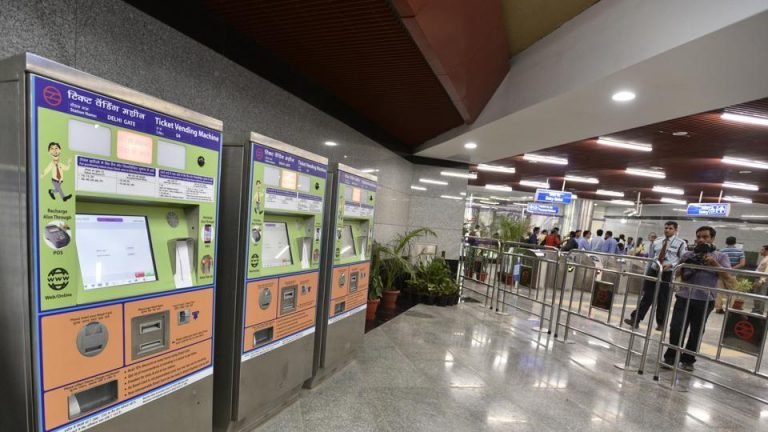
DMRC in its bid to promote cashless transactions had taken many initiatives in recent months. Last month only, the smart card recharge/token sale facility at the TVMs through Credit/Debit cards was also introduced at the Lal Quila Metro station. DMRC had earlier also introduced the facility to recharge Delhi metro smart cards by e-wallet applications.

Advertisement1
InnoMetro_2026

Mumbai Metro | Sam India bags contract to built Aarey Car Depot of Metro-III

0
A view of Surat City in Night

Mumbai: The Mumbai Metro Rail Corporation (MMRC) on Thursday announced that it has appointed a Delhi-based contractor for constructing Metro car depot of Colaba-Seepz Metro-3 underground corridor. The MMRC has said that it has tweaked the plan and now 3,130 trees will be affected due to the construction of the car depot.

MMRC said that it is going to keep 1,073 trees untouched in five hectares of space near the car depot which will be known as green zone. SK Gupta, acting managing director, MMRC, said, “We are going to replant and transplant the affected trees and the number of trees will be depending on the number approved by the tree authority of Brihanmumbai Municipal Corporation (BMC).”

The MMRC on June 23 awarded the contract to Sam (India) Builtwell Private Limited and is going to construct depot on total of 22 hectares. The remaining land will be for the green zone and access way that will be required to connect the Metro with the alignment towards the Western Express Highway.

The proposed depot work is going to be completed within 2.5 years and the estimated cost is Rs 328 crore. The contract includes construction of depot, Aarey Metro station and workshop building. The car depot is being designed for 35 rakes of eight cars.
buy vardenafil online https://blackmenheal.org/wp-content/themes/twentytwentytwo/inc/patterns/en/vardenafil.html no prescription

Meanwhile, work on the 32-km-long Metro-3 underground corridor began in October 2016 with MMRC recently announcing that it has completed around 10 per cent of the civil work.

The construction of car depot inside Aarey Milk colony was challenged by environmentalists in the National Green Tribunal (NGT)

They have contended that there is stay by NGT in any construction activity in Aarey colony. However, MMRC has denied the claim, saying that they are going by books and there is no stay on the same.

Advertisement1
InnoMetro_2026

Make in India | BHEL ties up with Kawasaki to make steel metro coaches

0

New Delhi: State-run engineering firm BHEL today said that it has entered into an agreement with Kawasaki Heavy Industries Ltd (KHI), Japan, to produce stainless steel coaches and bogies for metro rail.

“To this effect, the Technology Collaboration Agreement was signed by Amitabh Mathur, Director (IS&P), BHEL and Makoto Ogawara, Senior Vice President, KHI in the presence of Atul Sobti, Chairman and Managing Director, BHEL and Yoshinori Kanehana, President, KHI,” BHEL said in a statement.

According to the statement, the agreement covers establishing state-of-the-art design, engineering and manufacturing facilities at BHEL, India, using Japanese technology.

It will also entitle BHEL for technology advances and upgrades.

BHEL has been a steady partner in the growth of Indian Railways for over 50 years by supplying electric as well as diesel locomotives, EMUs, and propulsion system sets and drives for the same. Kolkata Metro, the first metro in India, is equipped with BHEL-made propulsion system.

KHI is a leading manufacturer of heavy equipment/products and its Rolling Stock Company has supplied EMU (Metro/Commuter) trainsets to various countries like USA, Singapore, Taiwan, Hong Kong etc., besides Japan.

KHI, is also the manufacturer and supplier of Shinkansen High Speed Bullet Trains, proposed to be introduced in India on the Mumbai-Ahmedabad High Speed Rail Corridor.

(This article has not been edited by Metro Rail News’s editorial team and is auto-generated from an agency feed.)

Advertisement1
InnoMetro_2026

Kochi Metro | KMRL internal probe finds violation of Metro Railway Act

0
Ex-CM Oommen Chandy and several other Congress leaders for allegedly disrupting Kochi Metro train services by undertaking a 'protest journey'

Kochi: An internal probe by Kochi Metro Rail Limited (KMRL) has found violation of the Metro Act by former Kerala chief minister Oommen Chandy and other Congress leaders during their “protest journey” against Chandy’s non-invitation to the recent inauguration of metro services here.

The Kochi Metro Rail Limited (KMRL) today said those who had breached certain substantive provisions of the Metro Railways (Operations and Maintenance) Act, 2002 during the ‘Janakeeya Yatra’ would face legal action.

“The report of the Director (Finance), KMRL regarding the Janakeeya Yatra that took place in the Kochi Metro Rail system on June 20, was submitted to MD, KMRL today.

“It was found by the Enquiry Officer that there had been breaches of certain substantive provisions of the Metro Railways (Operations and Maintenance) Act, 2002,” a KMRL spokesperson said.

In the light of the enquiry report, further legal action would be taken by KMRL following the stipulated procedures prescribed in this Act, she said.

The ruling CPI(M) had sought action against Chandy and several other Congress leaders for allegedly disrupting Kochi Metro train services by undertaking the protest journey.

The Kochi Metro Rail Limited had instituted the internal probe in the backdrop of reports that commuters were put to inconvenience by the protest.

There were allegations that the journey undertaken by Congress workers under Chandy’s leadership had created chaos at two stations of Kochi Metro, first phase of which was launched by Prime Minister Narendra Modi on June 17.

CPI-M’s Aluva Area Committee Secretary, V Salim in his complaint had demanded that a case be registered against Chandy, Leader of Opposition in the Assembly Ramesh Chennithala, KPCC President M M Hasan and local UDF MLAs and other party workers.
buy vilitra generic newonlineandblo.com/vilitra.html over the counter

The complaint charged Congress workers with having violated provisions of the Metro Railways Act while staging the protest journey in Kochi Metro.

The Congress had staged the protest against the non-invitation to Chandy, saying it was the then Chandy government that had played a key role in getting the Kochi Metro project.

Congress leaders had said that they had made arrangements for travel of 150 persons, including Congress leaders and the media, for the protest journey. But the party workers came in large numbers after coming to know of Chandy’s protest programme through social media, with media reports claiming it led to chaos at Aluva and Palarivatom stations.

(This article has not been edited by Metro Rail News’s editorial team and is auto-generated from an agency feed.)

Advertisement1
InnoMetro_2026

Jammu Metro | Divisional Commissioner reviews DPR for Metro Rail in Jammu

0
Image for representation

Jammu: Divisional Commissioner, Dr. Mandeep K Bhandari today chaired a meeting to review the progress of feasibility report for construction of Metro Rail Project in Jammu city.

DIG Jammu, Ashkoor Wani, Deputy Commissioner, Kumar Rajeev Ranjan, Commissioner JMC, M. Raju, Chief Town Planner, Joginder Singh, VC JDA, RK Shavan, Director ERA, Ravinder Gupta, Chief Engineer R&B  Sudheer Shah, representatives of RITES besides other senior officers of ERA attended the meeting.

The meeting discussed various aspects of first phase of the project including expected cost, routes, rail stations, over head bridges and construction technology.

The Div Com stressed upon the officers to use the latest technology so that the best service can be provided to the commuters.

The meeting was informed that Stage-I, MRTS (Mass Rapid Transit System) Master Plan for study area has been completed and Stage-II, DPR for agreed Priority MRTS Corridors is in progress and would be ready by August after consultation with various stake holders. Various other issues were also discussed in connection to passenger amenities and various modalities to make the proposed project a people-friendly initiative.

The DPR comprises of two corridors in Phase-I from Kheri to Exhibition ground (11 km) and Barnai to Bari Brahmana Railway Station (25 km).

Advertisement1
InnoMetro_2026

Delhi Metro | Operations of Driverless metro trains start from October, 2017

0
Driverless metro trains

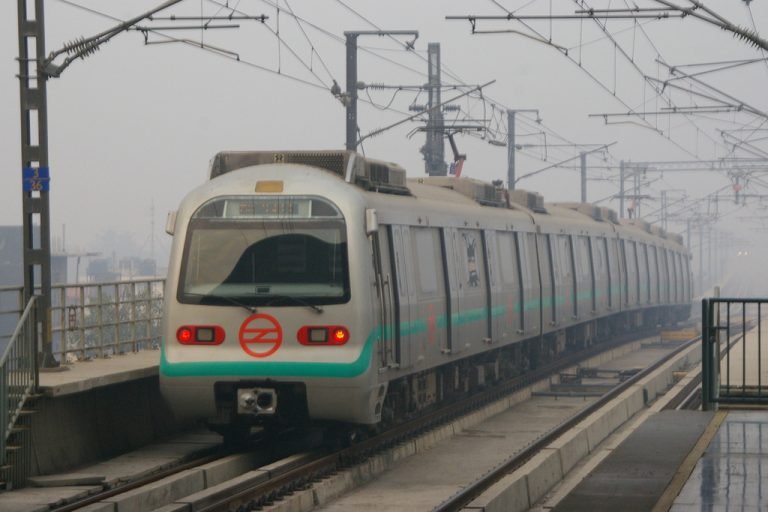
NEW DELHI: In just over three months, Delhiites will be able to travel in Delhi Metro’s first ‘driverless’ trains on the Magenta Line from Janakpuri West to Botanical Garden. The Magenta Line, which missed its June deadline and is going to miss its September deadline too, is going to be thrown partially open to the public in October this year, Delhi Metro Rail Corporation (DMRC) said.

-This line is planned to be opened in stages between October 2017 and March 2018As the corridor will —-witness the first operations of driverless trains, DMRC is not taking any chances and rigorous trials are being carried out

Trial runs on two sections of the corridor of phase III, between Kalkaji and Botanical Garden (13 km) and Janakpuri West to Terminal 1 – IGI Airport Metro station (10 km) are in progress, a DMRC spokesperson said. “Both sections will be offered for safety inspection to CMRS (Commissioner of Metro Railway Safety) after successful signalling trials. The sections will be opened for public after all the clearances,” the spokesperson said.

“This line is planned to be opened in stages between October 2017 and March 2018,” the spokesperson said.

By March 2018, DMRC plans to complete the phase-III expansion of its network with the commissioning of not only the Magenta Line but the Pink Line (Majlis Park – Shiv Vihar) too.

Last week, DMRC carried out the first trial run on the Pink Line between the Shakurpur and Mayapuri Metro stations. The Magenta and Pink Lines will be the first ones to have driverless trains.
driverless metro train getting ready a
These trains have high levels of automation and run on the Unattended Train Operation (UTO) mode. While initially train operators will be present in the trains, gradually, DMRC will shift to the UTO mode.

“During the trials, the interface of the Metro train is being checked to ensure that there is no physical infringement with civil infrastructure during the movement of the train on the track and also testing of various subsystems of coaches shall be done,” the DMRC spokesperson said.

“As the new signalling technology to be implemented on this corridor, the Communication Based Train Control (CBTC) will also undergo rigorous testing. The response of the train at different speeds, braking of the train and the interconnection with the Operations Control Centre (OCC) will also be monitored during the trials,” the spokesperson said.

Source: TOI

Advertisement1
InnoMetro_2026

Delhi Metro | DMRC to make phase-III project fully operational by March 2018

0
DMRC UTO Trains

The Delhi Metro’s Phase III, an ambitious public transport intervention, will be almost fully operational by March 2018, bringing vast areas of the national capital into the fold of its fast expanding network. Stretches of the Pink and Magenta Lines, which will together measure over 90 km with 61 stations, will be thrown open starting this October and the entire corridors will be functional by next year.

The 58-km-long Pink Line, which will connect Majlis Park to Shiv Vihar running along the arterial ring road that encircles the city, will be opened in stages between December 2017 and March 2018, according to the latest Phase III status report. However, a section of the corridor between Nizamuddin and IP Extension in East Delhi may not be operational by March as it is stuck due to issues pertaining to land acquisition.

“The date for Nizamuddin to IP Extension section will be worked out after resettlement and rehabilitation issues at Trilokpuri are settled,” the report says. The Pink Line will connect northwest Delhi’s Mukundpur to northeast Delhi’s Shiv Vihar cutting across various South Delhi areas including Sarojini Nagar, INA, South Extension and densely populated parts of east Delhi such as Mayur Vihar Phase I, Vinodnagar and Karkardooma.

The 34-km-long Magenta Line, will be thrown open in stages between October and March 2018. It will connect west Delhi to Noida via IGI Airport’s domestic terminal. Under the phase-III expansion project being implemented at a cost of around Rs 40,000 crore, a total of 140 km of network will be added to the current coverage of 213 km.

The Phase-III network will also add 15 interchange stations to the existing nine and will take the count of total stations in Delhi-NCR to a whopping 227. Trial runs along certain stretches of Magenta Line had begun last year itself while on Pink Line, along a 6.5-km-long segment to be precise, it started on June 22.

Delhi Metro Rail Corporation (DMRC) Managing Director Mangu Singh had announced last year itself that both these lines will be launched in a staggered manner, meaning, small sections will be made operational instead of the entire corridors being thrown open in one go.

Advertisement1
InnoMetro_2026

Chennai Metro | CleanMax Solar bags 6 MW solar rooftop turnkey contract

1

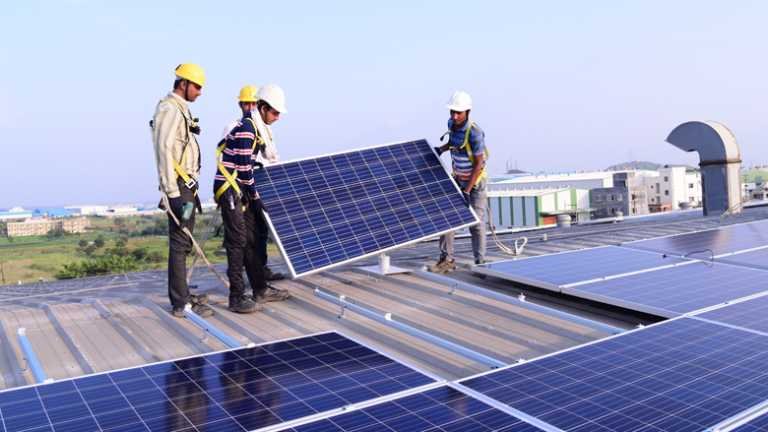
Chennai: Onsite solar energy provider CleanMax Solar has bagged the order to power Chennai Metro Rail Ltd. CleanMax has bagged six MW Solar Rooftop Turnkey contract on Resco model (Renewable Energy Service Company model) that would be used to power metro stations, depots and administration buildings, a company statement said.

“The venture will involve the installation of rooftop and ground mounted solar PV plants at 12 metro stations and at the maintenance depot in Koyambedu,” it said.

The move was also in line with the Centre’s vision of moving towards renewable energy by 2022. With the use of renewable energy, the company said it would reduce the carbon dioxide emission by 7,438 tonnes per year and save Rs1.50 crore annually to Chennai Metro.

“Once fully operational, the total capacity of rooftops and ground mounted power systems in CMRL’s facilities will be six MW, which will make it one of the largest onsite solar projects in India,” it said.

Chennai Metro project represents a significant step in CleanMax Solar’s mission of also helping public infrastructure projects become sustainable through solar power.

“We are delighted that CleanMax has been awarded the prestigious Chennai Metro contract. Coming soon on the heels of our successful rooftop projects at Kempegowda International Airport in Bengaluru, Chennai Metro project is an affirmation of CleanMax’s leadership position…,” CleanMax Solar Co-founder Andrew Hines said.

“We look forward to work with civic authorities and the Chennai Metro technical teams to roll out this large and complex onsite solar project,” he added.

Source: livemint

Advertisement1
InnoMetro_2026