
Home Blog Page 715

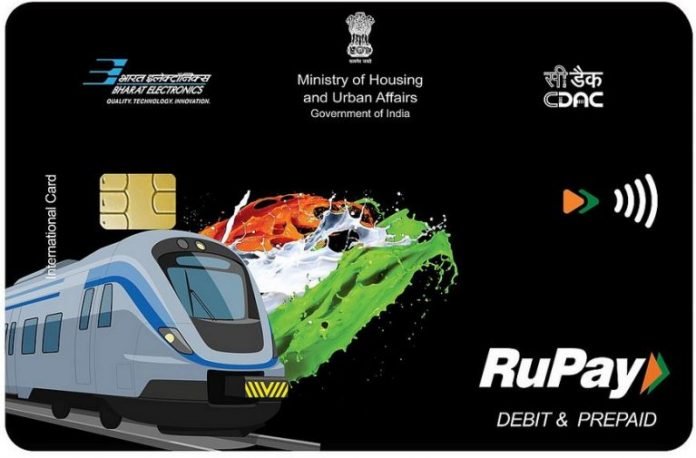
National Common Mobility Card: Metro, Bus ,Toll payment across the country with one card

0

The National Common Mobility Card is one big step towards the urban development. This would help the cities and people in the task management and settlement of payment. It works as an e-wallet and used for transportation as well. The card will be an open system can use a bus, train, and metro etc. It promotes digital transaction and road transport. This is the best way to make cities smarter and hassle-free as the people can save time. It is basically the electronic card system which makes the life of people.

Advantages

  • It helps commuters to save time and efforts.
  • It promotes smart travel as a card can be used in different modes of transport.
  • It gives the high degree of convenience to the people as they have no longer stand in a line for the ticket.
  • It works as a debit card ensures proper customer support services.
  • It cuts the cost and there is a less usage of paper for making tickets.
  • This method is very easy and time efficient and cashless.

Disadvantages

  • It is very much worse for the people who are uneducated as they are unable to read and write sometimes people take the wrong advantage for them and that occurs a problem.
  • As the technology changes the whole process of a transaction even the upgrade affects the people while transaction.
  • Sometimes delay leads to poor customer service.
  • Due to a larger dependency on the technology so there will be a large setting up cost and for solving the problem of the public more manpower is needed.

AFC (Automatic Fare Collection) System 

AFC is a smart system for payment for the intelligent transport system for payment for intelligent transport system or approves ticket to pass through electronic system or gates to allow commuters to access.

The AFC system in the bus stand as if we have it in the metro station would help with fair tickets and gives a unique way to travel.

AFC Keeps the account of the money and the whole team keep the check on the transaction and help in the customer support system.

In the AFC system, the bank and their apps will work for the hand in hand as the transaction will be done via. Bank account

Common Mobility Card under trials

Delhi: Delhi government start a trial of common mobility card and the card can be used in both DTC and metro.  The whole concept is introduced by the head of the Delhi chief minister Arvind Kejriwal. The aim of a single card system is to make travel people cashless and convenient. The card had 2000 SAM Chips fitted with ETM This would help in real time and in fare transaction in metro and buses.

Kochi: (KMRL) Kochi metro is the first city in the country where the entire public transport system like bus, metro, and autorickshaws use this card and these are working together with a common method of the single card.

Kolkata: Kolkata starting with oyster and multipurpose card system . it is the card system for all the transaction. They start up the GPS system installed in bus and CCTV installed in their project so as to ensure safety.

Mumbai:- NCMC is working on the cities like Mumbai and Pune and the making the cities more modern and helping the most populated cities hassle free this method. The GPS System would help in calculating fair ticketing and the AFS system at the station would help in it. The same card will be used for parking too.

The single card system is something that is used for multi-purpose work and this card would immensely help the people but the single card system is kind difficult for some people too but the operators at the station can help the people. This card would help in future if this system gets passed and successful as this card would help in modernizing the cities and making the cities rush free.
Advertisement1
InnoMetro_2026

Hyderabad Metro | HMRL project expects to break even in 6 years

0
Hyderabad Metro
Hyderabad Metro

HYDERABAD: Prime minister Narendra Modi in November last year inaugurated a stretch of Hyderabad Metro which was between Miyapur and Nagole. The 30 km stretch which was out of the 72 km long elevated metro project consisting 24 stations. This project is being built across the three corridors by the concessionaire L&T metro rail (Hyderabad) limited HMRL.

A top official today said that the Hyderabad Metro Rail Limited (HMRL) project expects to break even in six years.

After launching e-scooters of Metro Bikes for first and last mile connectivity at metro stations NVS Reddy, HMRL Managing Director told reports that as per our financial model, L&T Metro Rail (Hyderabad) Limited will incur losses for about four-five years and the sixth year it will break even that’s what our expectation is.

HMRL Managing Director told reports that as per our financial model, L&T Metro Rail (Hyderabad) Limited will incur losses for about four-five years and the sixth year it will break even that’s what our expectation is.

Reddy also added that in the Sixth year we expect the break-even. Because the debt burden is very high. Out of about Rs 16,500 crore which they are investing Rs 3,000 crore is their equity and Rs 12,500 crore plus is debt. Interest burden alone per annum will be Rs 1,300 crore. That’s the main challenge.

In the operational 30 km stretch of Miyapur-Nagole Hyderabad Metro is recording footfall of 80,000-85,000 passengers per day.

I am expecting that it will be five lakh passengers per day once we open remaining two sections and from there 15 lakh passengers in the next couple of years, he said.

The malls at Erramanzil (80 percent space is booked), Punjagutta and Hitec City,(already 90 percent of space is booked) and with regard to Moosarambagh, which is under construction (50 percent space is occupied). With regard to the stations, he said 70 to 80 percent space is already booked, Reddy said.

Advertisement1
InnoMetro_2026

Delhi Metro | DMRC seeks subsidiary firm to manage last-mile connectivity

0
DMRC planned to procure electric buses to provide last mile connectivity to metro users

New Delhi: The Delhi Metro Rail Corporation (DMRC) has proposed to establish its subsidiary company to encourage last-mile connectivity in Delhi. The Housing and Urban Affairs Ministry told the parliamentary panel.

The ministry said 52 new metro feeder buses routes have been identified in five different zones which are central, east, west, north, and south.
buy zocor generic mexicanpharmacyonlinerx.net/zocor.html over the counter

In these areas, last mile connectivity would be provided using air-conditioned or CNG buses.

The government has told the panel that DMRC has planned to introduce 530 AC buses as a cluster service on gross cost model for providing feeder service in almost every part Delhi. According to an action taken a report on the recommendations of the Standing Committee on Urban Development, which was today tabled in Parliament.

aa Cover aqpkpd0e9rr60eg48t0nrcb491 20170922025306.Medi
Delhi Metro Feeder bus

the ministry told the committee “In order to strengthen the last mile connectivity, a wholly owned subsidiary company of DMRC is proposed to be established by DMRC”

the ministry told the committee “In order to strengthen the last mile connectivity, a wholly owned subsidiary company of DMRC is proposed to be established by DMRC”

It’s expected that other metro companies are also planning to introduce feeder bus service with the help of state transport corporations in order to provide last-mile connectivity for commuters.

Metro rail policy, 2017, the committee talked about the last mile connectivity in the proposal and also have mentioned in the Detailed Project Report (DPR).

The survey for last mile connectivity highlights the importance of direct services provided for public transport. Nearly 72% of the total women surveyed said that availability of direct services was very important.

with last mile connectivity its easy for commuters to reach their destination and good for DMRC as well, if commuters will get last mile connectivity to there destination they will prefer traveling from metro more.

Advertisement1
InnoMetro_2026

Mumbai Monorail | MMRDA agrees to pay higher trip cost to LTSE

0

Mumbai: For Mumbai Monorail Project soon will come to at its final cost. The agreement between Larsen & Turbo Scomi -Engineering and Mumbai Metro Regional Development Authority (MMRDA)

MMRDA admitted paying to LTSE higher per -trip cost so as to run the service and some negotiations are at the final stage.

LTSE has been arguing for a few years with MMRDA about per trip cost Rs 3,131 is not efficient for the operations and maintenance of monorail system. Earlier the proposal was given to continue its service at a price of 18000 per trip. The LTSE sent its quotation in the O&M bid by IL&FS and it was the lowest bid in April 2008. L&T is the lead partner in the consortium and civil work and socio-economic bring the leading stock as per the contract

A final per-trip price is soon be declared for Mumbai monorail services.

As per the sources, MMRDA is agreeing to continue with LTSE. It is only weakening because of court arbitration. The final cost decision taking a lot of time which also leads to a delay in the operations.

Metropolitan commissioner Sanjay Khandare “Our negotiations continue with IL&FS rail and we have asked for break off their cost”

Metropolitan commissioner Sanjay Khandare “Our negotiations continue with IL&FS rail and we have asked for break off their cost”

He also told that It can be extended if IL&FS agree for it with rates quoted and negotiated.

Last week RA Rajeev, MMRDA Commission met LTSE representative to sort out differences that lead to delay in monorail services. In the meeting, the plan was LTSE fix the system and then the operation will start fix from October.

LTSE has agreed to refurbish the three unfit trains so that they can be put back into service apart from supplying the balance five trains,” said Khandare.

LTSE will work on the renovation of three trains till December. As MMRDA have safety certification for  20 km, the service would restart from the first phase and for the second phase, operation commences by mid-2019.

Advertisement1
InnoMetro_2026

Hyderabad Metro | Telangana CM K Chandrasekhar Rao to inaugurate Metro stretch

1
Hyderabad Metro
Photo Copyrighted: HMR

Hyderabad: The Hyderabad metro network starting from Ameerpet to LB Nagar will soon be inaugurated by Chief Minister K. Chandrasekhar Rao in August. Earlier in November 2017, the first two stretches were launched by Prime Minister Narendra Modi.

Presently, trial runs are going on for the Ameerpet to LB Nagar stretch. If the Hyderabad Metro Rail Ltd authorities get all necessary clearance with regards to safety, then this stretch will be inaugurated in August. The date of opening the lines will be fixed on CM gives his availability on a particular date.

A senior officer from the metro rail shared that only after successful trial run will the authorities receive safety clearance. Currently, several parameters for passenger safety and train are under evaluation. Post trail run success, the authorities will apply for safety clearance. The CM will be briefed about the progress and all the other aspects. A request will be put forward to sought CM’s time to finalise the inauguration date.

If all goes well that this stretch will complete connecting 30km LB Nagar to Miyapur that has 27 stations. As per the plan, a total of 16 stations are there between the Ameerpet and LB Nagar stretch.

Interestingly, LB Nagar to Miyapur will soon be the biggest stretch connecting two different ends of the city via metro rail.
buy Alphagan generic andnewbloonline.com over the counter

  The entire project covers 72 km and the conclusion of this line will give the real picture of the usage of the Metro Rail service by the commuters of the city.

Looking at the ridership rate, currently 80,000 commuters use the metro daily from the Nagole to Ameerpet and the one from Ameerpet to Miyapur.

Metro officials on the other hand are rolling out interesting promotional programmes to encourage people to take Hyderabad Metro. They are also facilitating a switch but ironically numbers are not tallying as per the pattern of use that was projected before the study began.

With metro in place, it is expected to bring down peak hour traffic at road level. Unfortunately, the traffic remains the same notwithstanding partial beginning of the Metro Rail services in the city.

Advertisement1
InnoMetro_2026

Bangalore Metro | Ads to be placed inside six-coach trains by BMRCL

0
bangalore metro
bangalore metro

Bangalore: Bangalore Metro Rail Corporation Ltd (BMRCL) is toying with the idea of placing ads within the trains. The aim is to increase non-operational revenue that will help in support other functions. The ads would be places outside the coaches; instead they will be within the coaches.

BMRCL feels that they would not be placing ads on the exteriors as it will shadow the identity of the services offered by metro. They will display advertisement inside the six-coach metro coaches.

Chief public relations officer of BMRCL, UA Vasanth Rao shared that it would not be a good idea to place ads in three-car train. The coaches are congested and commuters might not see the ad. Once six-car train coaches start to ply on the network, ridership will increase wherein they will get better ad rates.

Currently, BMRCL has only one six-car train with 49 three-car trains getting additional coaches. This will happen once Bharat Earth Movers Ltd (BEML) delivers them by June 2019.

Rao also said that they are exploring various advertising models that will not hamper the aesthetic aspect of the train. BMRCL is looking to have panels within the coaches to avoid scratches and scuff marks.

BMRCL registers a daily ridership of around 4 lakh that generates fare revenue anywhere between Rs 90 lakh and Rs 1.3 crore.

Bangalore Metro offers advertisement option at pillars and within the metro station premises. As per their official statistics with regards to revenue earned from advertisement, the figure show an increased from Rs 8.2 crore in 2016-17 to Rs 12.5 crore in 2017-18. Additional 4 crore revenue was generated between April to June this year itself.

The BMRCL officials also shared that advertisements placed on hand rails and standees have received good response from the firms advertising their services.

Ironically, BMRCL has registered a rise in ridership yet it has incurred a loss of Rs 538 crore during the financial year 2017-18.
buy fildena generic bloinfobuy.com/fildena.html over the counter

Advertisement1
InnoMetro_2026

Women ignored in male dominated Construction Industries in India

4
Women ignored in male dominated industries
It has come to light that some reputed Construction Industries are denying job to female candidates at higher positions on the pretext that ladies can’t be posted at project sites due to the reasons best known to them.

Surprisingly, while our government is making all possible efforts for the upliftment of women in all directions, such companies opt to deny even their normal rights which is a highly anti-social and anti-nation practice.

It is really very unfortunate and demoralizing for the women who are confident of their capabilities, prepared to work in tough conditions and accept challenges.  It is a well-known fact that today’s women are doing well in all fields, including space, defence and what not. So, instead of harming the women candidates by denying their right of job, our entrepreneurs should contribute in the society and nation’s interests by way of helping the female candidates in all possible ways.

Construction Industries in India

Recently have an interaction with a lady who had rich experience in Construction industries  with MNC company. When she applied for vacant position in other construction Industries in India. She got reply from HR of company that they don’t appoint ladies at sites. This is not about one company. She heard same reply from other Indian construction companies too. Do you think this kind of discrimination should be there? She is not able to apply to many positions simply because being female candidate. She said that she have exposure to work at project site also with this MNC. Now, it has become very difficult for her to find job in her experienced field. Hope, the CEOs of such companies would understand their responsibility towards nation and the society.

On one side our society says that we should uplift ladies. On other this kind of action being done with ladies. Denying job to female candidates on such whimsical grounds is a clear disrespect to our Country where women had been great leader even when India was not completely Independent country.

Advertisement1
InnoMetro_2026

Delhi-Gurgaon Metrino | India’s first Pod Taxi on the way

0
Delhi-Gurgaon Pod Taxi Project
Delhi-Gurgaon Pod Taxi Project (Representative Image)
Due to the increasing population of the metropolitan cities, the traffic jam is a co mon sight in big cities. As these big cities have many options to earn, so many people rush towards these cities for possibilities of good jobs. Other than this the cities itself have so many permanent citizens also. And with all these, the human and the vehicular traffic is also increasing. The main cause for all these traffic jams is also that everyone nowadays wants to have their own vehicles and besides that, there are many people who have more than 1 or 2 vehicles of their own and all these leads to add fuel to the fire.

Another big reason is that the public does not have any sense of proper traffic rules. To reduce all these traffic congestions the Indian government is now planning to introduce pod taxi in India. Pod taxi’s, pod cars also referred to as personal rapid transit (PRT) is a type of public transport. It is a small vehicle which carries 3-6 passengers at a time. The PTR is currently working in Morgantown in West Virginia since 1975. Now the government is planning to start it in India too as the traffic jams are the biggest problems in urban areas nowadays.

Pod Taxi (PRT)
Pod Taxi (PRT)

What is Personal Rapid Transit System

  • Sized for individual or small group travel, personal rapid transit (PRT) is a transport mode combining small automated vehicles, known as pods, operating on a network of specially built guideways.
  • The network consists of a number of stations or stops for passengers to get on and get off.
  • The personal rapid transit system consists of driverless vehicles in the shape of pods, which can hold two to six people each, and run along a predetermined course at 80-130 km per hour.

In December 2017, the National Highway Authority of India (NHAI) had called the expression of interest (EOI) for launching India’s first driverless pod taxi systems on a 70 km stretch from Dhaula Kuan in Delhi to Manesar in Haryana. Three companies have submitted their EOI and bids for this project will be finalized soon. Pod taxi is basically an advanced public transport which is mainly for the services of small groups of travelers. It will work electronically. In India, it will work on the roadways upon the bridges. This will be a high-speed vehicle which will be beneficial for the traffic jams and moreover it will be driverless too.

The National Highway Authority of India (NHAI) has been ordered to start it on Delhi-Gurugram route(12.30km) Delhi – Haryana border to Gurugram Rajeev Chowk. This will benefit a lot in Delhi traffic jams. This project is estimated to be of Rs. 4,000 crore. The entire project of Pod Taxi has been set up from Delhi’s Dhaula Kuan to Manesar. The public and private sector have been said to invest in this project. This pod taxi project is mainly a dream project of road transport highway minister Nitin Gadkari. In this project for technical and safety standards, a five-member committee has been set up and this project is headed by SK Dharamadhikari. The pod taxi will follow the American standards of safety which are laid by the American society of civil engineers. These taxies will use the Automated People Mover (APM) standards which includes the design, construction, operation and maintenance of the various sub-systems of the APM systems.

We recently tested planes that can run on water. I call it a flying boat, while the aviation ministry calls it a seaplane. It is my dream to see seaplanes running like taxis do in India said Nitin Gadkari Minister for Road Transport & Highways, Shipping and Water Resources, River Development & Ganga Rejuvenation in the Govt. of India.

We recently tested planes that can run on water. I call it a flying boat, while the aviation ministry calls it a seaplane. It is my dream to see seaplanes running like taxis do in India said Nitin Gadkari Minister for Road Transport & Highways, Shipping and Water Resources, River Development & Ganga Rejuvenation in the Govt. of India.

This taxi will perform various functions like arrival audio and visual warning, platform stopping, CCTV surveillance, and break down vehicles. The average speed of the pods is 60 kilometer per hour. The work on the Delhi-Gurgaon Pod Taxi corridor will be carried on Public-Private Partnership (PPP mode) as a pilot project The pod taxies will cover head network which is usually about 5-10 meters above the ground. These taxi’s and the networks are designed in a way that they will not be affected by adverse weather conditions. They will be able to move along dense crowded and congested roads and localities. Sources said that there is a plan to run 800 to 1100 pod taxies / PRT cars in the first year so that 38 thousand people can travel in one hour. This service will be without extra burden on people’s pockets. It saves fuel, cost of transportation, pollution and it will be fully air-conditioned.

Advertisement1
InnoMetro_2026

Sreedharan- India’s metro man to head Modi’s bullet train project

0
Chennai-Mysuru high speed rail line project is on full swing
Image for representation purpose only copyright: respective Authority

New Delhi: From 1995 to 2012, Sreedharan, a retired Indian Engineering Service (IES) served as the managing director of Delhi metro. Now the Narendra Modi government has chosen E Sreedharan to head the committee for the bullet train project and to lay down standards for metro rail systems in the country. Now the Sreedharan has banged the Prime Minister Modi’s ambitious bullet train project.

During an interview, the Sreedharan said Bullet trains will cater only to the elite community. It is highly expensive and beyond the reach of ordinary people. What India needs is a modern, clean, safe and fast rail system.

During an interview, the Sreedharan said Bullet trains will cater only to the elite community. It is highly expensive and beyond the reach of ordinary people. What India needs is a modern, clean, safe and fast rail system.

By August 2022 the bullet train is expected to be constructed. The Japan-backed Mumbai-Ahmedabad bullet train project costs $17 billion.

For the Modi’s pet ‘Make In India’ campaign this project is being called as a crucial project. Modi has aimed at lifting the share of manufacturing in India’s $2 trillion economies.  Through this project, the government is also hoping to generate hundreds of jobs.

Sreedharan has also claimed that the railways have improved. A lot of things including engines, trains, and stations to food and bookings are getting a makeover under the Modi’s ambitious project to transform the railways.

As the next Lok Sabha elections are less than a year away, the Modi government is trying to complete all its promises and to changing the way Indians travel on trains.

Sreedharan is not impressed however he said I do not agree that the Indian Railways has made rapid progress. Apart from bio-toilets, there is no technical upgradation. Speed has not increased. In fact, the average speed of most prestigious trains has come down. Punctuality is worst – officially 70%, actually less than 50%. Accident record has not improved. Many also die on tracks, at level-crossings, in suburban sections. Almost 20,000 lives are lost on tracks yearly. I feel Indian Railways is 20 years behind those of advanced nations.

Sreedharan said on standardization of the metro service across the country, I have been pushing for standardization and indigenization of metro service for long. It is a welcome move. With standardization, efficiency will go up and reduce the cost considerably. We can manufacture coaches and other parts indigenously. I feel we can convert the metro into a ‘Make in India’ project. Delhi Metro has set a standard and triggered a metro revolution in the country. Results are there to see. Today there are 13 metros under construction. Within 20 years, Delhi Metro has reached a size of 260 km and is the fastest growing metro in the world. I also feel really proud of the work culture of Delhi Metro Rail Corporation (DMRC).


Advertisement1
InnoMetro_2026

Bhoiguda underpass to unclog by Hyderabad Metro Rail Over Bridge

0

Hyderabad: Hyderabad Metro Rail Limited (HMRL) officials shared the news that they have completed erection of a Metro Rail Over Bridge (ROB). The facility has come up at the congested and narrow Bhoiguda underpass. NVS Reddy, managing director, HMRL post inspection on Sunday of ROB made an announcement that the project has been completed successfully.

This project had to face several hurdles and challenges with regards to engineering, location and covering issue of space. But despite of these challenges, HMRL authorities completed the ROB within the stipulated period of time.

Having completed this ROB that is part of Corridor- II (JBS-Falaknuma) of the Hyderabad Metro rail, L&T—the concessionaire for the Metro project has constructed 8 ROBs in across the city till date.

At a special factory located in Ghaziabad, the complete steel bridge was made employing simulating site conditioning technique at Bhoiguda.

The dismantled bridge was then transported to the location in special containers at the Old Gandhi Hospital premises in Monda Market area of Secunderabad, informed the authorities.

Once the dismantled bridge reached the location, it was reassembled as per the design. The authorities used high strength steel plates and about 51,000 imported HSFG (high strength friction grip) bolts, between Secunderabad West Metrostation (of Corridor – II) and Bhoiguda Road Under Bridge (RUB).

HMRL explained that the reassembled steed bridge weighed nearly 960 MT. It was transported gradually and pulled using special pulling arrangements provided above the Metro pillar and on top of specially erected steep support structures.

Reddy shared with the Time of India that “Due to the curvy nature of the rail track, which takes a sharp left turn over the existing Bhoiguda RUB of Indian Railways, the Metro ROB had to be designed as a very wide steel bridge with a width of 64 ft and a length of 221 ft at a height of about 40 ft over the road level in the shape of a box. Inside this box bridge, a composite deck slab — a mixture of steel and reinforced cement concrete slab is being laid to accommodate two tracks.”

During the final installation process, the entire task was successfully carried out in within six hours of ‘traffic block’ – a time given by Indian railways that had temporarily suspended train operations during the process.

Advertisement1
InnoMetro_2026