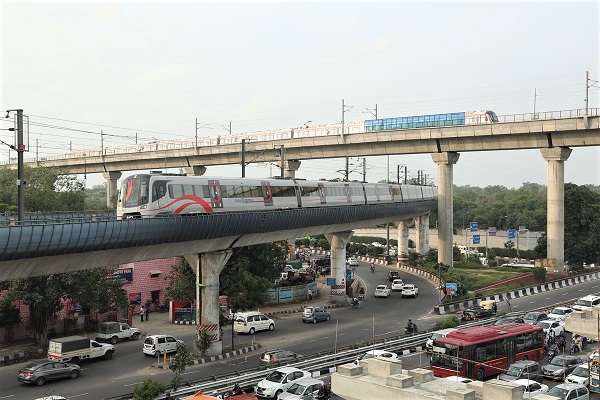
New Delhi: Prime Minister Narendra Modi has flagged-off the Delhi-Faridabad Metro Line that would allow hassle free travel for around two lakh daily commuters between the national capital and the industrial hub in Haryana.
The extension of the Delhi Metro connects Badarpur to Escorts Mujesar in Faridabad.
The total cost of the project from Badarpur to Escorts Mujesar is nearly Rs. 2,500 crore. Out of this, Rs. 1,557 crore was borne by the Haryana Government, the Centre contributed Rs. 537 crore, while the Delhi Metro provided Rs. 400 crore.
All these are elevated and located on either side of the Delhi-Mathura Road (NH-2).
“The nine-station metro corridor which was 95 per cent indigenously built will provide people a safe, affordable, quick, comfortable, reliable, environment-friendly and sustainable transport facility,” a Haryana government spokesperson said.
Haryana Chief Minister ML Khattar, addressing a press conference on Saturday, had thanked the Prime Minister for “gifting” the Metro service which would take the city to “another level of progress” with better connectivity with other NCR towns.
He had also said that the Prime Minister would be announcing the go-ahead for connecting Gurgaon with Faridabad by Metro.
It plans to increase passenger footfall from the current 80,000 passengers a day to a whopping 15 lakh a day in just two years.(photo: Telangana Today)
Hyderabad: The Hyderabad Metro Rail Limited (HMRL) has set an ambitious target for itself. It aims to increase passenger footfall from the current 80,000 passengers a day to a whopping 15 lakh a day in just two years.
“Ameerpet-LB Nagar stretch(16km) and Ameerpet-Shilparamam(10km) will become operational by August and November respectively. This will push ridership from the current 80,000 to 5 lakh per day,” he said. “The entire first phase of the project — excluding the 6 km stretch between MGBS and Falaknuma — would be thrown open to the public by May next year.”
The stretch between Shilparamam and Raidurgam, which was earlier added to phase-I, would also be open by end of 2019, he said. “When all three corridors of Metro, covering 66 km — become operational, the ridership would go up to 15 lakh,” Reddy claimed. He also said that the frequency of trains is likely to get a boost over the next couple of years from the current 6.5 minutes during peak hours to one train every 3 minutes.
Regarding Phase-II expansions, he said that detailed project reports (DPRs) were being prepared and the report for Airport Express Corridor, between Raidurg and Shamshabad (30 km) that is estimated to cost Rs 4,645 crore, would be submitted to the State government soon. Expansion plans from BHEL to Lakdi-ka-pul (26 km), Nagole to LB Nagar (5 km) and also expansion plans to Airport from Falaknuma and LB Nagar are also being planned, with main aim to provide connectivity to the airport in a hassle-free manner from all corners of the city, NVS Reddy added.
Image for representation purpose only copyright: respective Authority
New Delhi: The ambitious Bullet Train project finds itself in the headline since the project was announced. In an interesting development, from managing director to the staff members associated with Bullet Train are in race to learn Japanese. In fact, most people now greet other with this line – “O genki desu ka? O hai yo go zai masu.” This means ‘how are you’ in English.
All employees of National High Speed Rail Corporation Limited (NHSRCL) are learning Japanese with gusto. These staff members are busy rolling out country’s first bullet train, a high speed rail system from Japan.
It is indeed interesting to note that all employee spend alternate day of the week to learn one of the toughest language in the world. Japanese is the ninth most spoken language and NHSRCL staff members associated with Mumbai-Ahmedabad train are been taught this language via professional teacher.
The class is compulsory and no one is allowed to miss out on them. Students’ batch comprises of the managing director, four chief project managers working in staff offices in Mumbai, Surat, Vadodara and Ahmedabad. They learn via video link and attendance to these classes is mandatory.
The officials inform that it is not just the train they are bringing to India. They are also integrating the culture that operated one of the best transport systems in the world.
As reported by the Indian Express “The linguistic course has textbooks comprising of Marugoto- the course on Japanese language and culture, developed by the Japan Foundation and based on the established standard for Japanese-Language Education. The course book is designed with an emphasis on using Japanese to communicate, and on understanding and respecting other cultures.”
Managing director of NHSRCL shares that those who fail to master Level 1 will not be sent for on-the-job training necessary for the project. There is Level 2, an advanced version. All employees are expected to pass in language proficiency in order to be part of the ambitious project.
Training to start from October
NHSRCL officials will be sent to Japan in October to learn finer nuances of the Shinkansen. These officials will then train approximately 3,000 personnel at a training institute in Vadodara, those who will be operating the Bullet Train.
The first batch of officials will be sent for around three months to Japan. The subsequent will be sent for six month to gain on-the-job training.
Japanese Embassy in Delhi has arranged for professional language teacher. Students appear for a test post each module. Marks are tabulated for performance review as well.
In fact, NHSRCL will import the complete customer service manual of the Shinkansen. It is this manual that determines customer-service ethos and practices of the transport system’s operations.
Khare shares that language classes are important to facilitate easy communication with Japanese counterpart during training.
Kolkata: The largest underground facility of India to be set up at Metro Railway’s Biman Bandar (airport) station yard. The construction work of the project is expected to be completed by 2021.
The general manager of metro, Ajay Vijayvargiya reviewed the progress of the construction along with senior officials. He stressed on the need to fasten up work to meet the deadline.
At Biman Bandar, the station to integrate and connect Netaj Subhas Chandra Bose International Airport to Tollygunge, Garia, Salt Lake, Howrah and later Barasat.
Metro Railway CPRO Indrani Banerjee said that they are using top, down, cut and cover methodology for construction. The site is situated at old elevated Biman Bandar station of Circular Railway, not in use at the moment.
Banerjee added that the underground facility is 550m-long and 41.6m-wide yard, it will have six tracks. Construction work is happening at breath neck speed, diaphragm wall and plunge piles are nearing completion and building of top slab in progressing well.
Even the East-West Metro Corridor linking Howrah Maidan and Salt Lake Sector-V is too scheduling a loop to the airport.
Banerjee said that the yard will be made with modern facilities comprising of reversal of rakes and stabling.
The Noapara-Airport extend is element of the 18.13-km-long Noapara-Barasat link. It is expected that two Kolkata Metro stations – Dum Dum Cantonment and Jessore Road – will come up between Noapara and Airport. Work at these two stations is nearly 70% complete. Viaduct for the project has been concluded for 2.48 km.
An official shared that the progress of the project has been good during 2018-19, registering an overall financial progress of 23.49%. In 2018-19 itself 14.4% was achieved. Till June 2018, a total of 30.89 crore was spent on the project. In order to complete the project, 750 sqm land to be acquired and three residential buildings in Digla mouza is necessary, added the official.
Image for representation purpose only copyright: respective Authority
Mumbai-Ahmedabad high-speed rail has delayed in acquiring land corridor project it may push back the date of its launch, but the railways are going ahead in finalizing various components of the bullet train’s rolling stock and passenger facilities.
There will be facilities for sick person passengers will get a dedicated room for child feeding and washrooms for men and women would be separate all these being firsts on the Indian rail network. There will be luggage space for passengers each train will have 695 seats for standard class and 55 seats for business class.
There will also be two extra-spacious toilets for wheelchair-bound passengers in the 10-coach high-speed train. Services will also have baby changing rooms comprising baby toilet seats, tables for diaper disposal and a low sink for children for washing hands.
According to a senior Railway Ministry official involved with the Rs 1 trillion project. A new generation Japanese high-speed train will also introduce wall mounted type urinals for men, according to the blueprint finalized by the Railways, the 750-seater E5 Shinkansen.
Urinals and toilets will be installed in alternate coaches in the train. For example, toilets will be installed in coach number 1, 3, 5, 7 and 9 while urinals will be available in coach number 2, 4, 6 and 8. Washrooms for men and women will also be placed in a similar way. Coaches will have comfortable automatic seat rotation system.
Coaches will have LCD screens to display current station, next stopping station and destination, schedule and expected time to reach next stop and destination stations.
Most of the Mumbai-Ahmedabad corridor will be elevated, except for a 21 km underground tunnel between Thane and Virar, of which 7 km will be under the sea.
An official said that the undersea tunnel was chosen to avoid damaging the thick vegetation present in the area.
The corridor will begin at the underground station in the Bandra-Kurla Complex in Mumbai and then traverse 21 km underground before emerging above ground at Thane.
Kochi: The detailed project report (DPR) for Kakkanad extension is ready and Kochi Metro Rail Limited (KMRL) to submit the same to Center. The metro officials are set to handover the report to Urban Development Ministry to get approval.
The DPR to be submitted today is for the 11-km long Kakkanad extension. The agency is getting ready to start piling for the extension starting from December this year.
State sanctioned is accorded and a Government order is also issued for the same.
Managing director, KMRL, A.P.M. Mohammed Hanish is expecting positive response from the central government. The metro body is geared up to begin piling work for the Kakkanad extension from end of the year. Basic preparatory work to be wrapped up before the approval, this comprises of widening the corridor to 22 meters. Hanish also informs that a social impact assessment study is underway before going ahead with land acquisition.
If the central government gives approval in coming months, the ₹2,310 crore extensions up to Infopark is set to be realised by early 2023.
A possible roadblock -UMTA Act
The unexpected delay in passing the Unified Metropolitan Transport Authority (UMTA-Kochi) Act by the State Assembly is seen as one of the hiccup in getting necessary approval. Owing to the delay in passing the act, KMRL has to wait to get Centre’s permission for 11.20km long Kakkanad extension.
The revised Metro Rail Policy 2017 states that the constitution of UMTA to ensure seamless integration of different modes of public transport is a pre-requisite. It is based on this, the Centre to accords sanction for new metro projects and extension of existing ones. D. Dhanuraj, chairman of city-based think tank CPPR says that the policy also lays much importance on the feasibility of metro rail – whether there will be ample patronage for hewing out a metro corridor along a definite stretch.
Dhanuraj also adds that there are other mass transit options that can be explored, like the Bus Rapid Corriodr (BRT) or tramway.
Stress on Transit Oriented Development (TOD)
The need to prepare ground work for TOD is of prime significance adds D. Dhanuraj. TODs need to be there for either side of the corridor before work on metro or other mass transit start their operations.
In a media interviews Dhanuraj shares that such corridors ought to be densified. This implies that necessary steps to be taken to ensure more people reside and work or frequently visit the site within 700 meters of the route.
This can only happen if civic agencies and metro bodies work together – to lay footpaths, drainage systems, road infrastructure, adequate power and water supply. Efforts to be made to remove encroachers and streamline haphazard parking, avers Dhanuraj.
MD of Kochi Metro responding to the appeal of Dhanuraj shares that he is hoping UMTA Act will be passed by the Assembly in next session.
Hanish also informs that center is laying emphasis on generating non-ticketing revenue. For this one of the ways is to build township in order to monetise metro corridor. Even offering feeder transport to make sure last mile connectivity to metro commuters, shares Hanish.
Bengaluru: Sunday ride for commuters turned ugly with Bangalore metro train’s brakes jammed at RV Station. The technical snag forced officials to stop the train from operating temporarily on one section of Metro’s Green Line.
Over 500 metro commuters were asked to de-board the train till the issue was fixed. This caused a delay of 20 minutes and the spill over effect was seen on other two train schedule. The trains headed towards Kempe Gowda Metro station was delayed.
A senior metro official informed that the incident took place at 11.36. The brakes jammed just when the train was about to depart from RV Road Station. It was heading towards Jayanagar Metro Station.
A passenger on board narrating the experience shared that the train had to be steered in reverse direction by use of a rear engine to Yelachenahalli. The train was back after the problem was resolved.
Passengers were asked to alight from the train few seconds before the train’s departure. Public system was not use to inform the commuters. It was a metro staff present at the location who informed riders about train’s mechanical failure.
In absence of no information, passengers were agitated as they were clueless on when the journey would resume. They had waited for nearly 20 minutes before the empty resumed journey after the issue was fixed.
The entire incident caused high level of discomfort for passengers as there were others who were waiting for their next train. There was mad rush and total chaos. Executive director of Operations and Maintenance, Bangalore Metro Rail Corporation Limited (BMRCL), A S Shankar, had confirmed of the technical snag at RV Road Station.
The Loco pilot has understood that brakes could not be released, shared Shankar.
He said that the Loco pilot realised that the brakes could not as the train was not moving despite of applied pressure. As the train’s operations are automated it cannot be rectified by Loco pilot. Officials decided to halt the train to nearest station Puttenahall by employing other engine. The metro was programmed to travel up to Nagasandra.
Subsequent to reaching Puttenahalli, the brakes were released manually and the train was brought back to RV Road station, he explained.
Shankar assured a detailed analysis of the brakes jamming issue post operation. BMRCL ‘s Chief Public Relation officer U A Vasanth Rao informed that one Bangalore Metro train was delayed by 10 minutes at Banashankari Metro station. At the same time an additional metro train was delayed by 6.5 minutes at JP Nagar Metro station.
Lucknow: The Lucknow Metro Rail Corporation (LMRC) has completed the work of track laying for the Upline Metro tunnel between Hussainganj and Sachivalaya Metro Stations. This was observed today by Shri Kumar Keshav, Managing Director/LMRC, during his project site visit in the 3.5 km long underground section between Charbagh and Hazratganj in the capital city of Lucknow.
Lucknow Metro completes track laying work between Hussainganj and Sachivalaya Metro
1 of 5
The track laying work in the Downline Metro tunnel between Sachivalaya and Hussainganj is also at an advanced stage and is likely to be completed by next month.
Starting his inspection from the Hussainganj Metro Station in the morning, the Managing Director saw the ongoing construction work for tiles where more than half of the tiles work have been completed at the station and the work for white wash have also commenced.
The Managing Director then saw the ongoing work at the Sachivalaya Metro Station where the work of tiles and flooring are being done at the concourse level along with the work of the Electrical, ECS, and Water Tank. The work of the Station Control Room (SCR) at this Metro Station is in its final stages.
The civil work for the areas earmarked for property development at the Station are also being done in full pace. The construction of Excess Structure, Security Room, ECS and Electrical room has been completed by the contractor. He expressed his satisfaction over the progress of the works after concluding his visit.
Delhi by Metro : There is no better way to travel in Delhi than by Delhi Metro, the country’s largest metro system will take you to each and every look of the capital city with ease and comfort. My visit to Delhi was for 3 days and the incredible metro network helped me to cover 15 tourist destinations and shopping hubs in such a short period of time.
Having arrived by flight, I took the Airport Express line of the metro from IGI Airport station in terminal 3 which brings you to the city centre in just 20 minutes. If you are arriving in Terminal 1 or 2, you can take the metro from the new Terminal-1 IGIA station (Magenta Line). I checked into my hotel in the morning at Paharganj, a busy market area that is filled with a number of hotels and restaurants attracting both domestic and foreign tourists. The neighborhood is advantageous for all tourists since it is situated in Central Delhi with its main bazar road having the New Delhi Railway station on its east and RK Ashram Marg Metro station on its west end. So, area suggestion for budget travellers: Paharganj!
The plan, metro and blog overview
I visited Delhi for the first time this year for 3 days and slotted another day in between for Agra. The ideal time to visit Delhi is August-October and February-April so as to avoid the city’s extreme weather conditions.
Delhi Metro is one of the ten biggest metro systems in the world spanning over 300 km with 8 colour coded lines. If Phase IV expansion happens as planned, it will become the 3rd biggest metro system. Although it has eight lines, all the famous tourist attractions can be covered by the Yellow and Violet Line itself.
The entire blog has been written in a chronological order and all the locations are put-up in an order of comfort as it was planned and done after taking into consideration of all the locations, distances and the metro stations. The sub-headings are to be read as Time: Location Name – Metro Station Name (Metro Line Name). So, what are we waiting for? Let the journey begin!
Delhi by Metro: 15 tourist destinations in 3 days
1 of 13
Jama Masjid
Purana Quila (Old Fort) Delhi
Qutab Minar
Delhi Lal Quila (Red Fort)
Humayun's Tomb Delhi
Rashtrapati Bhawan
Tomb of Safdarjung
India Gate
Lotus Temple Delhi
Indira Gandhi Memorial Museum Delhi
Jantar Mantar Delhi
Connaught Place Delhi
Chandni Chowk Delhi
DAY 1
The first day can be covered entirely on the busy Yellow Line that connects Samayapur Badli in North Delhi to HUDA City Centre in Gurgaon, south of Delhi.
11.00 am: Rashtrapati Bhavan – Central Secretariat (Yellow/Violet Line)
Rashtrapati Bhawan
02.00 pm: Qutub Minar – Qutub Minar (Yellow Line)
Qutab Minar
Although the station is named after the monument, it’s a couple of kilometres away and you would have to take the bus or preferably an auto to reach the Qutab complex. The towering minaret which was constructed storey wise by different dynasties of the Delhi Sultanate is only one of the principal attractions in the complex. The Quwwat-ul-Islam mosque, an incomplete Alai Minar, the iron pillar of Delhi and a few other monuments constructed by various empires make you wonder about the importance of the area in Indian history.
05.00 pm: Tomb of Safdarjung – Jorbagh (Yellow Line)
Tomb of Safdarjung
A 5-minute walk from the Jorbagh metro station lies the Tomb of Safdarjung, the tomb of the finest statesman under the Mughal empire. The red sandstone and marble mausoleum are surrounded by a large garden and are one of the few less crowded tourist attractions in the city despite the monument being picturesque.
06.00 pm: Lodhi Garden – Jorbagh (Yellow Line) The road opposite to the Tomb of Safdarjung is the busy Lodhi road and a 10-minute walk along its tree-lined footpaths will take you to the Lodhi Gardens. The park which is now used by residents of New Delhi for walking was only created to landscape the tombs of Mohammed Shah and Sikander Lodi, an idea given by Lady Willingdon in 1936. Although the tombs here are not a great attraction that requires more than a look, take a break in the vast park as the evening breeze sets in before heading to the final spot for the day.
07.30 pm: India Gate – Central Secretariat (Yellow/Violet Line)
Head back to the metro station where the day began and walk down the Rajpath. If you are tired and wouldn’t prefer the 30-minute walk, take a bus directly from Lodhi Garden to India Gate. Designed by Edwin Lutyens, the memorial is for the Indian Army soldiers who died in World War 1 and the Third Anglo-Afghan War, the war memorial is best seen when it’s illuminated after sunset. The stillness beneath the memorial delivers a patriotic feeling, at least on your first visit.
India Gate
Travel Tip: Make sure to get your entry tickets for all monuments from the ASI website with ease in one click thereby saving a lot of time on the trip by avoiding the long queues especially in the world heritage sites of Qutab Minar, Red Fort and Humayun’s Tomb.
DAY 2
The second day is going to be through another North-South corridor – Violet Line which connects Kashmere Gate to Faridabad in Haryana. A stretch of this metro line vowing to its historical locations has been named as the Heritage line. So, let’s hop on!
11.00 am: Red Fort – Lal Quila (Violet Line)
Delhi Lal Quila (Red Fort)
As you emerge out of the underground station, you are welcomed by the majestic red sandstone walls of the Red Fort – home of the Mughal dynasty for two centuries and was built by Shah Jahan. Despite the inside of the Fort containing several magnificent structures, remember these are only those that survived the plunder and destruction by Persian ruler Nadir Shah in 1747 followed by the British in 1857.
12.30 pm: Jama Masjid – Jama Masjid (Violet Line)
Jama Masjid
Jama Masjid is less than a kilometre away from Red Fort, either walk or just hop on the metro and get down at the next station. The moment you come out of the station, the atmosphere immediately transforms from a calm, less crowded metro station to a buzzing bazaar where you have to walk through the crowd with a slowly emerging view of the facade of the Masjid. The mosque was built by Shah Jahan in 1656 and was also the Mughal emperor’s last monument.
03.00 pm: Purana Qila – Khan Market (Violet Line)
Purana Quila (Old Fort) Delhi
Post lunch, get on the metro and head straight towards Khan Market Metro station and walk for 15 mins or take an auto to Purana Qila situated adjacent to the Delhi Zoo. Purana Qila is one of the oldest forts in the country, although the current form of the structure was built by Sher Shah Suri, there are also claims based on excavations that this could be the site of Indraprastha, the capital city of the Pandavas. The fort also has a Baoli (step well) and the Sher Mandal – an observatory tower cum library built by Babur where Humayun fell to death.
04.30 pm: Humayun’s Tomb – JLN (Violet Line)
Humayun’s Tomb Delhi
Take an auto from Purana Qila to Humayun’s Tomb, the resting place of the great Mughal emperor built by his wife Haji Begum. The complex is also referred to as the ‘Dormitory of the Mughals’ as a number of members of the Mughal family have been buried here, including Dara Shikoh, the first son of Shah Jahan who lost the succession battle to brother Aurangazeb. The Persian style architecture of the tomb along with its elegant Mughal styled gardens makes it a must visit place in the city.
06.30 pm: Nizamuddin Dargah – JLN (Violet Line)
A 10-minute walk down Lodhi road from Humayun’s Tomb will take you to the dargah (mausoleum) of Khwaja Nizamuddin Auliya, one of the most famous Sufi saints of all time. The place will give an altogether different vibe, especially during the night hours. The famous Qawwali sessions that happen every Thursday are a must visit but unfortunately, it has been stopped for a while. The revered Sufi poet and musician Amir Khusrau, one of the finest disciple of Nizamuddin Auliya is also buried in the same vicinity.
Travel Tip: Most of the monuments in Delhi are closed on Mondays, so if your trip follows a weekend, make sure you head out and visit Agra.
The Lotus temple, also the house of worship of the Bahai faith is a modern architectural marvel that also sees one of the highest tourist footfalls in the city. The lotus flower themed marble-clad attraction is a house of worship for the Bahai faith, although no ritual activities take place, all visitors are taken to the main hall, where one can choose to meditate or just be astonished by the pin-drop silence.
12 pm: Indira Gandhi Memorial Museum – Lok Kalyan Marg (Yellow Line)
Indira Gandhi Memorial Museum Delhi
Leaving the Lotus temple with a state of tranquillity, its time to get back on the all-time rush hour Yellow line before winding up the trip. The house-turned-museum of the former Prime Minister has a number of her belongings and photos that take you through her life and also of her family’s. The office-cum-library has been left untouched and is a highlight of the museum, the spot of her assassination is also marked on the outside. Although initially, I was reluctant to visit here due to time constraint, it was totally worth it.
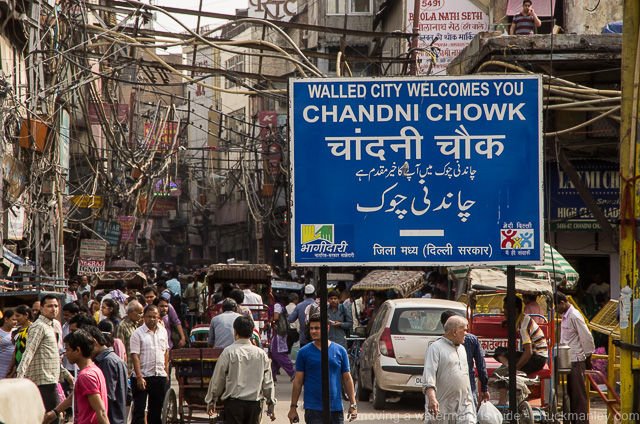
Post lunch, get on the yellow line and head to the buzzing Chandni Chowk, a Mughal era market which is now also one of the country’s biggest. The market not only has a name for shopping but also for its several iconic eateries including a number of Paratha shops in Paranthewali Gali.
LAST STOP! Rajiv Chowk! A 5-minute walk from Delhi’s busiest metro station will take you to city’s Jantar Mantar, one of the 5 observatories built by Maharaja Jai Singh. It is one of the very few ancient architectures surviving in the middle of an urban jungle. It takes some time for us to understand the science behind each structure with a lot of confusion but surely leaves you astonished by the knowledge in astronomy by the Maharaja and his people.
5.30 pm: Connaught Place – Rajiv Chowk (Blue/Yellow Line)
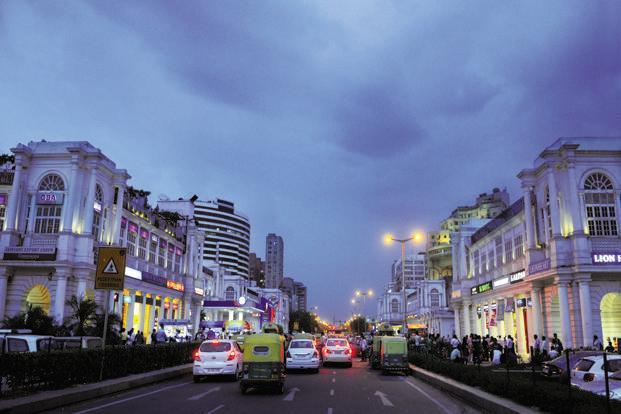
Connaught Place is the go-to-go hangout place for anyone from the city or visiting it. CP is just not the address businesses wants but also an architect’s fantasy, courtesy of Edwin Lutyens and a tourist’s most loved spot in the city, thanks to all the shopping spots and the restos including some iconic names like Keventers, Wenger’s Deli, just to name a few. Even just taking a seat in one of the benches facing the shops or the Central Park in itself gives a soothing pleasure and the mammoth metro station right under the park makes you grateful on how both British era and modern architecture has combined to make CP a wonderful place of what it is today. End of the trip!
Connaught Place Delhi
Delhi is such a historic, finely planned and a well-connected place that makes it a must-visit city for all. Credits to the Mughals for the monuments they built, Edwin Lutyens and Herbert Baker for the planning of New Delhi and E. Sreedharan & his team for building the incredible Delhi Metro. To make your trip even better, get hold of William Dalrymple’s ‘City of Djinns’ book and read it either before, during the journey or after. I have fallen in love with Delhi at first sight and I hope everyone will.
To get more update on Delhi Metro, please get stay connected with Metro Rail News. If you have similar stories or want to share your articles, ideas, case studies or project report on metro and railways projects please write us to editor@metrorailnews.in
Mumbai : The Mumbai Metro Rail Corporation (MMRC) inviting application to fill up various posts on deputation and contract basis. MMRC aims to recruit the qualified and experienced professional. Interested and the eligible candidate must submit their application in the prescribed format before 10 August 2018 or sooner.
MMRC Recruitment 2018: Details of vacancies are as under-
Executive Assistant to Managing Director– Pay scale: (Rs.70,000-2,00,000/- (E4), Eligibility criteria -Degree in Electrical/ Electronics/ Telecom/ Civil/ Mechanical Engineering
Executive Assistant to Director (Projects) – Pay scale: (Rs. 70,000 – 2,00,000/- (E4) – 1 post , Eligibility criteria -Degree in Civil Engineering from the recognized and reputed university.
Executive Assistant to ED (Planning) -Pay scale: (Rs. 50,000 – 1,60,000/- (E2) – 1 post , Qualification -Degree in Civil Engineering from recognized and reputed university
Accounts Officer – Pay scale: Rs. 50,000 – 1,60,000/- (E2) -2 posts , Eligibility criteria : Degree in Commerce from recognized and reputed university and knowledge of Indian Accounting standards.
Deputy Engineer (Track) -Pay scale: (Rs. 50,000 – 1,60,000/- (E2) -1 post, Eligibility Criteria : Degree in Civil Engineering from a recognized and reputed university.
Deputy Engineer (Civil) -Pay scale: (Rs. 50,000 – 1,60,000/- (E2) – 1 post, Eligibility Criteria : Degree in Civil Engineering from a recognized and reputed university.
Jr. Engineer- II (TVS/ ECS)– Pay scale: (Rs. 35,280 – 67,920/- (W6) -1 post , Eligibility Criteria : Degree/ Diploma in Mechanical Engineering or Electrical Engineering from recognized university. buy Cymbalta online medstaff.englewoodhealth.org/wp-content/languages/new/ no prescription
Jr. Engineer -II (Civil) – Pay scale: (Rs. 35,280 – 67,920/- (W6) -3 posts, Eligibility Criteria : Degree/ Diploma in Civil Engineering from a recognized and reputed university
Jr. Engineer- II (Rolling Stock)– Pay scale: (Rs. 35,280 – 67,920/- (W6) – 1 post, Eligibility Criteria : Degree/ Diploma in Electrical Engineering from a recognized and reputed university.
Sr. Assistant (HR)-Pay scale: (Rs. 34,020 – 64,310/- (W5) -2 posts, Eligibility Criteria: Graduate in any discipline with 02 years full time Post Graduate Degree in PMIR/IRPM/LSW/MSW/HRM
Driver -Pay scale (Rs. 20,160 – 35,640/- (W3) -2 posts , Eligibility Criteria : S.S.C. or any other equivalent exam from recognized board. Should possess Light Motor Vehicle Driving License without any adverse remarks.
How to apply?
Step 1 -Visit the official website.
Step 2 – Click on career.
Step 3 – Complete the registration so as to get User ID and password.
Step 4 – Fill the form according to the instructions given on the official site on the official site of MMRCL.
Step 5 – Submit the form with the required documents such as the letter of qualification and experience.
For detailed information about recruitment rules, eligibility requirements and other instructions for filling the above posts please visit https://www.mmrcl.com/. Online registration will start on 11th July 2018 at 10:00 Hrs. and will end on 10th August 2018 at 23:59 Hrs.
Chennai: The Chennai metro operates across the city’s vein for last three years. Chennai Metro Rail Limited (CMRL) is yet to run the metro trains services on automatic mode.
Metro train run on two modes – the automatic train operation (ATO) and the automatic train protection (ATP). When a train is operated via ATO, all that is operator is required is to close the door. All the operations of the train are automatic and managed from a centralized operations control centre.
On the other hand when trains are run on ATP mode, all operation is manual. During the emergency the system takes over. Those operating the train use the master console and control the brakes and traction systems in non-peak hours. The personnel at the operation control center are only monitoring the operation.
CMRL is using manual mode in order to train the operators, as per the official.
A metro official said that they use ATP mode in the non-peak hours. buy Tretinoin generic onlineandnewblo.com over the counter
The manual mode is used to equip train operators to use master controller (the console of the train) in case there is an emergency.
The official added that they use automatic mode during peak hours in order to maintain frequency of trains entered into the operating system. Currently, CMRL has 88 train operators trained and certified by them.
The employment of manual mode is leading to several technical glitches. These include non-syncing of platform screen doors (PSD) of the train door in the underground Chennai metro station. The metro train either stop before time or behind the station – not syncing with the time and stoppage/destination. The operators have to sync the doors by moving the train backward or forward.
CMRL officials however, assert that the non-syncing of door has nothing to do with door operator’s skill. It depends on the signalling system.
The Chennai Metro official shared, that the if the train operator applies more brake or traction then necessary during the ATP mode, the train system will take care. This is so because it comes in protection more with negligible chance of error.
For phase 2 project CMRL is aiming to operate driverless trains for the 107.55km stretch.