Home Blog Page 698

India in talks to buy 18 E5 Series bullet trains from Japan for ₹70 billion

0
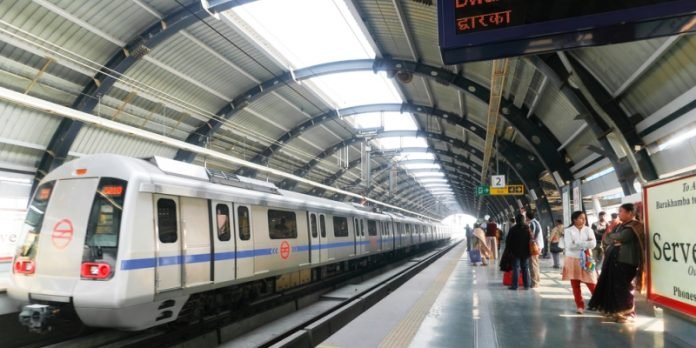
Image for representation purpose only copyright: respective Authority

New Delhi: If things go as planned then the Indian government will launch country’s first bullet train by 2023. As per information center is setting grounds to purchase 18 E5 Series bullet trains from Japan for ₹70 billion. The Bullet Train project is financed via soft loans from the Japan International Cooperation Agency (JICA).

India is likely to spend around ₹70 billion on procuring the first batch of Bullet Train. The train will run between Mumbai and Ahmedabad route.

Very soon tender for purchasing Bullet Train from manufacturers in Japan will go live. The model will be the very popular Shinkansen E5 Series. This model was launched in 2011 and can travel up to a speed of 320 km/hr.
buy flexeril online www.adentalcare.com/wp-content/themes/medicare/fonts/engl/flexeril.html no prescription

It will have three classes of seating arrangements.

In keeping with ‘Make in India’ initiative Hitachi and Kawasaki manufactures from Japan will set up production facilities in the country. This will give a major boost to the initiative and help in creating employment in the country.

The soft loan for developing the project will come from JICA with a total credit of approximately ₹880 billion and is to be paid over 50 years at a nominal rate of 0.1%.

JICA and India have a long and fruitful partnership. JICA financed country first metro train network in Delhi. JICA offered both technical assistance and loan for the project.

Bullet Train project highlights:

  • The Bullet Train corridor is 508 km long
  • Built in tandem with Japanese experts
  • As per plan 12 stations will be there on route
  • The starting fare is expected to be ₹3000

The shorter route between Surat and Billimora to be operational in 2022

High-Speed Training Institute to come up in Vadodara for the project

The central government is hopeful of making the project operational by 2023. This can only happen if they managed to acquire land. Currently, there are many protests going on in Gujarat and Maharashtra over land acquisition.

Villagers whose land will be acquired are demanding for jobs and a much higher compensation. However, with all this resistance, officials from the National High-Speed Rail Corporation (NHSRCL) are optimistic about meeting the deadline. They are positive on meeting 2018 December deadline for land acquisition. In Maharashtra, the deadlock between NHSRCL and villagers might end soon.
Advertisement1
InnoMetro_2026

Mumbai Metro | Plan for taller buildings around Metro,rail corridors

0
Mumbai Metro Rail
Mumbai Metro

Mumbai: There is a plan to permit taller buildings and allow additional buildable space to construction firms developing properties around Mumbai’s public transport corridors has been put on hold for now.

The contentious proposal won’t be a part of Mumbai’s new development control regulations, for now, the new rules will kick in from September 1, said the government official.

The Mumbai municipality has drafted the city’s new Development Plan (DP) which was later rejected to the idea of providing higher floor space index (FSI) around transit corridors. The Maharashtra government had been continuously pushing it in order to raise resources for Metro rail routes.

The Floor Space Index, which is known as Floor Area Ratio one of the development tools that define the extent of construction permissible on a plot. The ratio of FSI is the built-up area of a plot to the plot area.

The longtime CM-led Mumbai Metropolitan Region Development Authority (MMRDA) has been demanding to allow developments to construct up to four times the plot size or FSI 4 within 500 meters of the existing and proposed Metro rail corridors, contending that 50 percent of the premiums collected from the additional FSI can be used for funding Metro rail projects, said BMC Commissioner Ajoy Mehta.

For this, the Mumbai municipality had red-flagged the plan, drafted new DP Mumbai. In these DP report, the government has given approval it in May. The idea was flawed in several many ways, as it would make the already congested station areas more congested, the government stated.

The state government had plans to incorporate it in the new regulations before they are implemented. But there is the need for “transit-oriented development (TOD)” approach for permitted higher construction densities.

In September the government gave share his intention for such an idea. The Cabinet had granted an in-principal approval to providing additional floor space index for the development of properties within 500 meters of the proposed Metro rail corridors.

Advertisement1
InnoMetro_2026

Kanpur, Agra and Meerut to get metro network soon Yogi government sends DPR to Centre

1
CM Yogi Adityanath
CM Yogi Adityanath

Uttar Pradesh: Chief Minister Yogi Adityanath on Wednesday said the Detailed Project Report (DPR) of proposed metro rail services in three major cities of Agra, Kanpur, and Meerut had been sent to the Centre for approval.

On January 17, the Adityanath cabinet had cleared that the three proposed metro projects totaling about Rs 471 billion. The funds would be raised through share equity, debt, and borrowings from financial institutions. Agra, Kanpur, and Meerut metro rail projects would span investment of Rs 139.36 billion, Rs 183.42 billion and Rs 148.90 billion, respectively. The three metro services are projected to be operational by 2024.

Yogi Adityanath said “The government was keen to expand metro services in other cities to add to the existing urban centers of Noida, Lucknow, and Ghaziabad. The state had formed UP Metro Rail Corporation (UPMRC) to centralize all operational and proposed metro rail services and speed up the projects.”

“We have to plan the urban public transport system keeping in mind the needs of the next 50-100 years,” he said addressing a function to mark the first anniversary of commercial operations of Lucknow Metro Rail, which had over the past one year clocked 6,90,000 km, roughly equaling the distance of 17 round the earth trips.

Waxing eloquence on Lucknow Metro, the CM said it was earlier believed that the metro rail’s operational cost would be quite high, however, Lucknow Metro Rail had maintained a balance between its running cost and revenues.

“When Lucknow Metro project completes all its phases, it would be a big achievement for not only the city but the state as well,” Adityanath observed adding metro rail services had become a status symbol for the residents of a city that they aspired to have a similar network in their places.

Meanwhile, the CM inaugurated the ‘Lucknow Metro Day’ to mark the occasion, apart from unveiling its mascot and mobile app. In its first year, Lucknow Metro had added 3.45 million commuters, which is more than the population of Lucknow city.

Besides, LMRC is the first metro in the world to install roof cameras for continuous pantograph and overhead wire monitoring. It has also been awarded

  • International British ‘Royal Society for the Prevention of Accidents (RoSPA)’ Award (2018)
  • Technology Sabha Award’ (2018)
  • Best Urban Mass Transit Special Award’ (2017)
  • International European Society for Quality Research (ESQR) Choice Prize’ (2016)
  • International Quality Summit Award’ (2016)
  • Best Metro Project for ‘Excellence in Innovative Designs’ (2016)
  • APJ Abdul Kalam Memorial Award’ (2016)

And many other prestigious national & international award.

Advertisement1
InnoMetro_2026

Bentley’s SACS provides advanced analysis and workflow enhancements for offshore Structures

0
Bentley recognized for helping MRTC for rail project.

The Bentley Systems announces enhancements to its latest release of SACS CONNECT Edition. This is an offshore structural analysis application that offers fully automated and integrated 3D modeling, analysis and design to efficiently manage large, complex models for the evolving digitalization in the offshore market.

The new release of SACS includes capabilities that help eliminate disjointed workflows and data, enhances interoperability with other applications, ensures safe structural performance during extreme events, and removes the need for a separate finite element analysis (FEA) application.  Also, this extended analytical cloud services for SACS Wind Turbine with the help of this turbine engineers can perform multiple wind turbine structural analyses in parallel in minutes rather than days.

Bentley’s SACS CONNECT Edition now offers:
A unique, combined results database which saves time and eliminates disjointed workflows through combining the results of multiple design phases from independent analyses into a single unified visualization to enable holistic interrogation and design review across all phases simultaneously.  A new, advanced collapse solver for non-linear analysis and design ensures the more realistic structural performance during extreme events, such as hurricanes, and allows for more accurate predictions in regard to lateral torsional buckling.

The Joint meshing and automatic stress concentration factor (SCF) extraction which mainly to speed up non-tubular fatigue joint design. With the use of this new advanced technology FEA in SACS, users no longer need a separate FEA application, such as ANSYS.  This technology has merged all-in-one application saves a tremendous amount of time, money, and eliminates the need for multiple software application investments.

Intra-operability between SACS – Auto PIPE  with the use of this technology up to 90 percent reduction in project non-conformances now using Bentley’s ISM technology it also delivers shorter design cycles. This replaces traditional manual methods by electronically transferring pipe support loads to the structural model and integrated structural – piping models for more accurate design loading and engineering collaboration.

Advertisement1
InnoMetro_2026

Delhi Metro Rail Corporation to take action against contractor of Kochi metro

0

KOCHI: On Tuesday, the Delhi Metro Rail Corporation (DMRC) issued a statement that agency will take action against the contractors-Cheriyan Varkey Constructions- following the incident in which an iron rod fell on a moving car. “The incident of an iron rod falling on a moving car and damaging the windscreen at MG Road Metro construction site on Monday has caused concern for DMRC.

After a detailed discussion on the incident, DMRC has taken this issue very seriously and action is being taken against the contractor for the serious safety lapse as per the contract conditions,” according to the statement.

After a detailed discussion on the incident, DMRC has taken this issue very seriously and action is being taken against the contractor for the serious safety lapse as per the contract conditions,” according to the statement.


On Monday evening a four-meter-long iron rod fell on the car driven by Fort Kochi ASI Sukumaran. Though the car suffered major damages, the family inside the car had a miraculous escape. Following the incident, criticism was raised by many against the lack of safety measures by the contractors. Also last month, a cement block fell upon an autorickshaw near the Lissie Station.

Controversy over DMRC’s role:

In December 2011, Kerala Minister V.K. Ebrahim Kunju announced that the work would be offered by global tender. And the Delhi Metro Rail Corporation (DMRC)  former Managing Director E.Sreedharan said that he would not be interested in participating unless the DMRC was involved. And the citing the examples of metros in Bangalore and Chennai, he also said that they decided to take up the work on their own but had to depend on the DMRC for many things.

Some government ministers and IAS official alleged that Central Vigilance Commission (CVC) norms do not allow the awarding of a contract to an agency which did the consultancy for a project. Even though the DMRC principal adviser E. Sreedharan has stated that the CVC norms would not apply in this case, as the contract is between two government agencies. Apart from this, there is some another issue for the metro was that DMRC had to obtain the permission of its director’s board to undertake projects outside Delhi.

On 8 January 2013, after  a high level meeting attended by Oommen Chandy (then Chief Minister), Minister of Overseas Indian Affairs Vayalar Ravi, Union Minister K.V. Thomas, DMRC Principal Advisor E. Sreedharan, Union Urban Development Secretary Sudheer Krishna, Chief Secretary Jose Syriac, KMRL MD Elias George, DMRC MD Mangu Singh, Union Minister for Urban Development Kamal Nath officially confirmed that DMRC would undertake the work of Kochi Metro.

Advertisement1
InnoMetro_2026

Lucknow Metro | Uttar Pradesh inaugurates an exhibition on the occasion of Lucknow Metro Diwas

0
Lucknow Metro Diwas

Lucknow Metro: On 5th September Shri Yogi Adityanath, Hon’ble Chief Minister, ’, 2018 at the Transport Nagar Metro Depot to commemorate the completion of one year of Metro operations. He also unveiled Lucknow Metro ‘Mascot’ and the Lucknow Metro ‘Mobile App’ on the occasion and lauded the efforts of Shri Kumar Keshav, Managing Director and Lucknow Metro Rail Corporation (LMRC) for providing an excellent and quality public transport to the people of Lucknow.

The Chief Minister aspired that such a quality public transport should be made available for other cities in Uttar Pradesh for the comfort of the public. Shri Suresh Khanna, Hon’ble Parliamentary Affairs Minister, Urban Development, Government of Uttar Pradesh also emphasized the need for developing and starting Metro in other cities of Uttar Pradesh on the occasion. According to him, Metro is perceived to be an engine of infrastructural and economic development of the city/town wherever it comes up.

IMG 20180905 WA0009
Lucknow Metro

Shri Durga Shankar Mishra, Chairman/LMRC and Secretary, Ministry of Urban and Housing Affairs (MoUHA), Government of India also commended the stupendous efforts of LMRC for implementing Metro in Lucknow in such a short span of just three years and for being awarded many international and national awards for its achievement in. He said that the Government of India (GoI) is committed to implementing Metro in other cities throughout the Country and the coming time will see building and commissioning of more ‘Metro’ with a much faster pace.

The occasion turned out to be memorable for LMRC as the Hon’ble Chief Minister, Uttar Pradesh unveiled Lucknow Metro’s ‘Mascot’ in the newly built auditorium at the Transport Nagar Metro Depot. He also inaugurated ‘Lucknow Metro App’ for the online convenience of the Metro passengers who will now find it easy locating Metro station, calculating fare, getting the train timings.

The Hon’ble Chief Minister also gave away MD’s Gold Medal award to LMRC employees namely Mr. Arjun Shrivastava, Assistant Manager (Civil) and Ms. Neetu Gupta, Station Controller/Train Operator for displaying outstanding performance in the Projects and Operations department during the year 2017 – 2018. He also awarded MD’s Silver Medal award to Mr.
buy wellbutrin online blackmenheal.org/wp-content/languages/new/wellbutrin.html no prescription

Gaurav Sharma, Junior Engineer (Rolling Stock) and Mr. Amit Kumar, Junior Engineer (Electrical) for showing exemplary performance in the rolling stock and electrical work for the company during the year 2017 – 2018. The Charbagh Metro Station was adjudged the ‘Best Kept Station’ by the Hon’ble Chief Minister on the occasion for its overall performance throughout the last year of Metro operations

Advertisement1
InnoMetro_2026

Delhi Metro | DMRC unreadable metro cards to be turned into smart cards

0
DMRC Metro Card

New Delhi: In a bid to improve customer service, Delhi Metro Rail Corporation (DMRC) has simplified the process of reclaiming unreadable cards. These cards end up becoming unreadable due to technical issues when presented at the entry point at the automatic fare collection gates.

These cards were earlier deposited at the metro station and later collected by users. The physical cards had to be reclaimed after five days. Now DMRC plans to turn these physical cards into brand new smart cards for commuters.

Riders have to collect the smart cards from the customer care desk at Delhi Metro station. This service is offered free of cost to commuters as per metro officials.

These new cards can be recharged as per the requirement of the customers. Alternatively, they can use the card or token made available on the station. The idea is to offer seamless travel to patrons of the metro.

DMRC had to take this step to reduce customer grievance. As per the current situation, if the card becomes unreadable owing to technical faults, customers had to wait for five or more days to reclaim it.
buy doxycycline online https://herbalshifa.co.uk/wp-content/themes/twentytwentytwo/inc/patterns/en/doxycycline.html no prescription

They had to deposit the card at customer care desk and then come after five days or more to collect. There were instances when a rider had to come to wait for longer days before the technical issue was sorted for their card.

DMRC feels that with this new system customers will no longer have to wait or waste time to reclaim the card. For unreadable cards, customers will have to hand over the card at metro counters and get a brand new smart card. This will reduce customer inconvenience and facilitate hassle-free travel.

The smart card can be used after five days from the date it has been issued. This card will have the balance amount which can be used for paying the metro fare at any of the stations.

Advertisement1
InnoMetro_2026

Hyderabad Metro | HMRL registers an overwhelming 20 million patronage

0
hyderabad Metro
hyderabad Metro

Hyderabad: Metro rail is soon becoming a preferred mode of public transport in Hyderabad.  The L&T Metro Rail (Hyderabad) Limited shared that Hyderabad Metro patronage has touched to a whopping 20 million. The metro rail officials are ecstatic over the overwhelming support received from the people of Hyderabad.

This figures come as good news and hint at the positive attitude of people towards metro travel. The Hyderabad Metro official shared the figures on Tuesday and thanked the people of the city for making metro service popular.

KVB Reddy, managing director and chief executive officer of LTMRHL in his statement “thanked the Hyderabadis for welcoming and embracing Hyderabad Metro Rail services in an “overwhelming” manner”.

His statement also added, “We have touched this number earlier than expected with only the Nagole-Ameerpet-Miyapur operational stretch, and we are sure that these numbers will increase manifold with the inauguration of Ameerpet-LB Nagar stretch.”

It was November last year that Prime Minister Narendra Modi had launched the 30 km stretch between Miyapur-Ameerpet-Nagole out of the 72-km long elevated Hyderabad metro project.

As per the floor plan, there are 24 metro stations in the 30 km stretch that is made operational. It is the consortium of L&T Metro Rail (Hyderabad) Limited that is constructing the Hyderabad Metro Rail Limited (HMRL) project diagonally all the three metro corridors.

As per the MD, the reason for such a wonderful response is the last and first-mile connectivity features. This has significantly improved the ridership rate with passengers have multiple options to travel to reach metro station.

Reddy stressed they will take all necessary initiative to improve customer service and ensure stress-free travel. Metro officials have also offered free water and restroom facilities for commuters at all the metro stations.

Reddy says that they are planning to several other facilities soon. The focus to consistently improve and upgrade services offered to metro commuters.

Advertisement1
InnoMetro_2026

Chennai Metro | CMRL may not carry work on proposed airport tunnel

0
Metro Train Standing at Chennai Central Metro Station
Representational Image only. Source: Wikimedia Commons

Chennai: The airport tunnel work that will connect new satellite terminal with current terminal will now be carried via tendering process by Airport authorities. Earlier Chennai Metro Rail Limited (CMRL) was going to build it.

As per recent development, CMRL will not be constructing the terminal. The Airport Authority of India (AAI) will now invite tender for the same. The AAI also stated that CMRL can participate in the tendering process.

The airport tunnel work is designed to connect new satellite terminal with the existing one at the Chennai airport.

AAI will now float a tender to finalize the contractor to take up the construction work. The winning bidder will then construct the tunnel and both the terminals.

In the beginning, it was planned that CMRL would take up the tunnel work. But now there is a change of plan, the reasons for which is not clear.

AAI official informs that CMRL can participate in the tendering process. In case, they win all the work will be done by them once they get selected.
buy antabuse online https://myhst.com/wp-content/themes/twentytwentytwo/inc/patterns/en/antabuse.html no prescription

The official also shares that they want the work to begin at the earliest.

The CMRL officials, on the other hand, shared that they are not aware of the recent development.

The AAI wants to build a tunnel and a satellite terminal as the current one is reaching a saturation point and largely remains congested.

As per the plan, the tunnel will link the current domestic terminal with the international terminal of the airport via satellite terminal. This will be positioned between the main and secondary runway and also nearer to the remote bays (supplementary bays in the apron for aircraft).

Along with this project, Chennai airport has planned various infrastructure development works. This includes building an integrated terminal along with various runway related works.

CMRL official shared that they are not aware of the new development with regards to terminal work.

Advertisement1
InnoMetro_2026

Bullet Train | Is the ambitious Bullet Train Project is financially viable in India?

0
High Speed Bullet Train Project in India
Image for representation purpose only copyright: respective Authority
Vadodara: Environmental activists from Gujarat Rohit Prajapati and Krishnakant have shared Railway Committee report (2014-15) that stated Bullet Train not financially viable project.
They shared the findings of the report with Metro Rail News. Here is the copy of the article shared by them.
Farmers, families, villagers, and many others rightfully protest land acquisition for and raise some valid questions about the proposed Mumbai Ahmedabad Bullet Train Project. Interestingly, earlier, the Indian government’s committee too had raised some questions and deemed the project financially unviable. In simple terms, it is a very costly and a loss-making proposition. The committees instead stated that the funds being earmarked for this “unviable” project should be used judiciously for long pending railway projects.
The Dinesh Trivedi, the Chairperson, Standing Committee on Railways (2014 – 2015), of Ministry of Railways (RAILWAY BOARD) of 16th Lok Sabha, on 17 December 2014 clearly states in the report “HIGH-SPEED TRAINS 17. The Committee learned that the Railways have proposed to introduce bullet train on the already identified Mumbai – Ahmedabad sector, … The Ministry has justified this project even though it is financially unviable stating that as compared to other big railway projects, bullet train project has additional unique feature contributing to improved economic rate of return in terms of value of time saved of passengers, environmental benefits, appreciation in real estate value and residual value of infrastructure, besides enhancing the country’s prestige internationally.
The committee is not fully convinced with the above justifications given by the Ministry. The Committee feels that if the amount equivalent to that proposed to expanded for bullet train is used for execution of the long-pending railway projects, the benefits to the general public would be much more.
The Committee, therefore, desire that before going ahead with the bullet train project, the Ministry should conduct a cost-benefit analysis for the project vis-à-vis other pending railway projects so that the scarce resource of the Railways are utilized optimally and judiciously.”
Incidentally, this very report, for reasons best known to them, also contradicts itself: “However, the proposal for introduction of the high-speed train on the Mumbai-Ahmedabad sector is laudable.”
It is apparent that the government chose to focus on only some of the positive points of the report and not on its drawbacks that outweigh the assumed benefits. Who demanded the bullet train in the first place? What are the government compulsions to continue to opt for and insist on an unviable project? The Indian citizen and taxpayer deserve immediate and complete clarification.
We strongly feel that the statements of the committee for Bullet Train Project though it is financially unviable. The Committee feels that if the amount equivalent to that proposed to expanded for bullet train is used for execution of the long-pending railway projects, the benefits to the general public would be much more… the scarce resource of the Railways are utilized optimally and judiciously.” need full explanations and disclosure from the Government of India.
The people have a right to know the reasons why the government undermines the clearly spelled out observation of a committee it set up. Does the taxpayer assume that this all-party committee was either “browbeaten” or “convinced” to pitch in a few positive points to contradict its own observations?
The Bullet Train Project, in its very conception, ignores the crucial issues like financial viability and prudence, judicious prioritizing of India’s resources, and democratic consensus for a public project.
buy finasteride online https://nouvita.co.uk/wp-content/themes/twentynineteen/fonts/en/finasteride.html no prescription
Are we suffering from a misplaced inferiority complex, and is that why the Government wants to show off to the world that we do have a Bullet Train? Does the Bullet Train represent the symbol of ideal Development? What type of Development and accompanying false sense of pride or ego does it satisfy? At what and whose cost? For whom?
If this project satisfies the sense of pride or ego, why not nurture it with more positive international examples that adapt better technological and scientific advances and also promote regenerative models of development?
It is the time that we all raise pertinent questions and work towards wiser and viable alternatives for public transportation and all kinds of so-called “development” projects in India.
Advertisement1
InnoMetro_2026