Home Blog Page 622

Pune Metro trials to begin before December

MUMBAI (Metro Rail News):  Officials said that before December 2019 Maharashtra Metro Rail Corporation (Maha-Metro) is planning to start the trials of Pune metro rail, on two priority corridors, namely, Vanaz to Garware College and Pimpri-Chinchwad to Dapodi.

Maha-Metro’s work progress is as per the schedule and we are hoping to start the metro rail operations before December 2019 on priority stretches. The decision on the date and time to inaugurate the project will be taken by the political leadership said by Brijesh Dixit, managing director, Maha-Metro.

Officials said, among all the metro corridors, attention has been focused on the Vanaz to Ramwadi corridor and Pimpri- Chinchwad to Dapodi corridors. While the electrical wiring has been taken up, the signal system will be installed soon.

According to Maha-Metro, even as work order has been issued for 102 coaches, the trial run would be done on coaches brought from Nagpur.

Dixit said, “Maha-Metro will conduct the trial runs soon, but we have not taken the decision whether to continue the metro’s commercial operations immediately after the inauguration.

During the groundbreaking ceremony of the Hinjewadi to Shivajinagar metro line, Prime Minister Narendra Modi had announced that Pune Metro’s operation would start by December 2019. Consequently, attention was focused on the priority sections.
100th pile foundation completed on a 17-km section of Sahibabad-Duhai

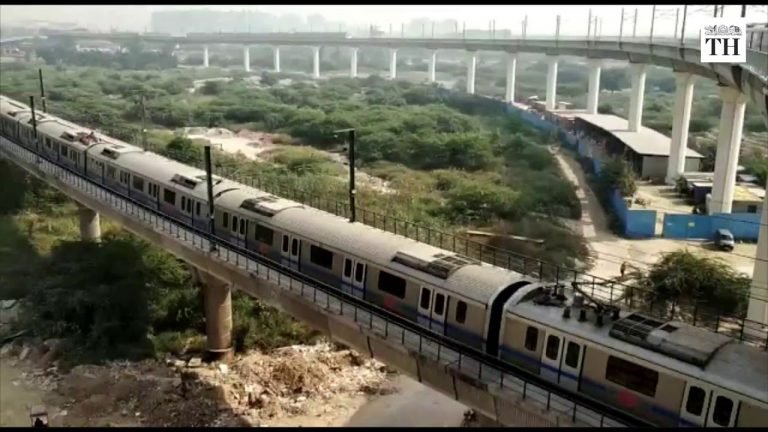
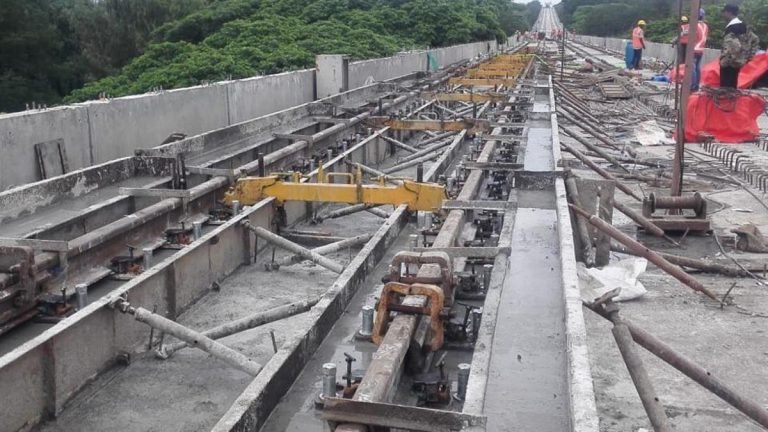
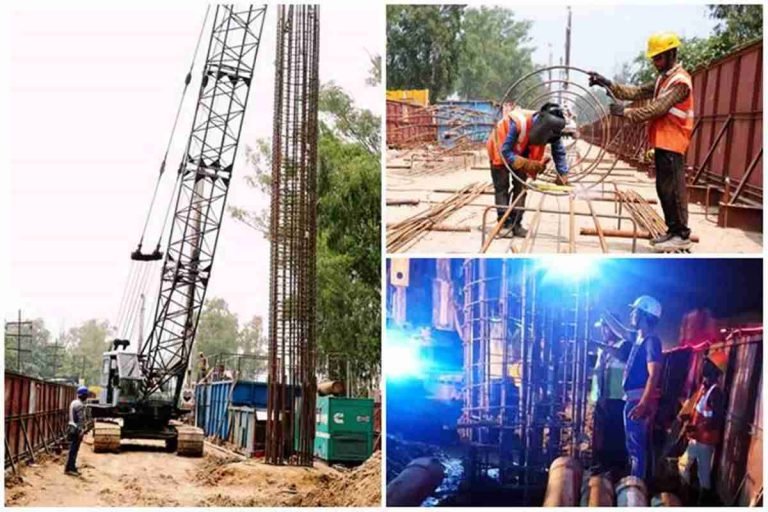
DELHI (Metro Rail News): As part of India’s first RRTS, the National Capital Regional Transport Corporation (NCRTC) has recently completed the foundation of 100th pile on the 17-kilometers long priority section from Sahibabad to Duhai of the Delhi-Ghaziabad-Meerut corridor.  

According to NCRTC, the priority segment of Sahibabad to Duhai has been targeted for completion by the year 2023. The first semi-high speed transit corridor of the regional rapid transit system (RRTS) is the 82-km long Delhi-Ghaziabad-Meerut RRTS corridor which will reduce the travel time between Delhi and Meerut to just 55 minutes. NCRTC is the organization which is implementing the RRTS project in the national capital region (NCR).

According to information shared by NCRTC, the execution and construction of the Delhi Meerut RRTS’s priority section are in full swing. The RRTS project aims to completely transform the regional transportation system of NCR.

The Sahibabad-Duhai section of the Delhi-Meerut RRTS corridor will have four stations namely, Guldhar, Duhai, Ghaziabad and Sahibabad, besides a depot which will come up in Duhai.

By the year 2025, the entire Delhi-Ghaziabad-Meerut RRTS corridor has been targeted for completion. The RRTS trains will run with an operational speed of 160 kmph and will be three times more efficient than the Delhi Metro trains. Apart from the Delhi-Ghaziabad-Meerut, the other two RRTS corridors in Phase-1 are Delhi-Gurugram-Alwar and Delhi-Sonipat-Panipat.


Kochi Metro Maharaja’s College to Thykoodam stretch open for public

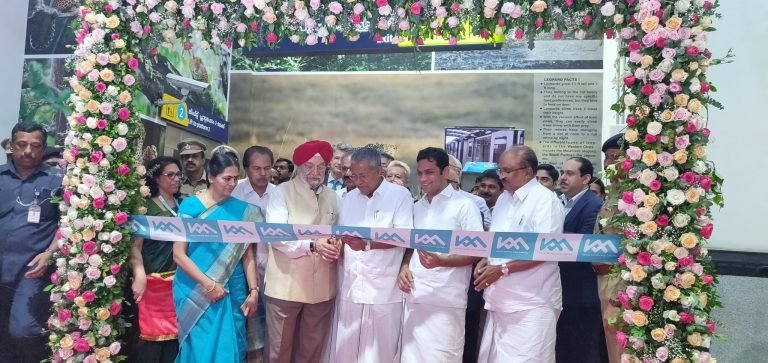
KOCHI (Metro Rail News): Kerala CM Pinarayi Vijayan along with Union Minister for Housing & Urban Affairs Shri Hardeep Singh Puri inaugurated Metro Services on Maharaja’s College-Thykoodam stretch of Kochi Metro today. During the inauguration State Transport Minister Sh AK Saseendran, MP Shri Hibi Eden, Metro Man Dr E Sreedharan, Dy German Amb Dr Jasper Weick and Shri Durga Shanker Mishra, Secretary, Ministry of Housing & Urban Affairs, Govt. of India where also present.

The newly-inaugurated Maharaja’s College Junction to Thykoodam, a 5 km long stretch takes the total distance covered by the Kochi Metro so far to around 24 km. Now the Kochi Metro added a total of five new stations — Ernakulam South, Kadavanthra, Elamkulam, Vyttila and Thykoodam in its network.

“Systems of mass rapid transport such as metro and light metro were inevitable, since over 60 crore Indians would be living in urban areas by 2030” Said Shri Hardeep Singh Puri, Union Minister for Housing and Urban Development.

873 km of metro rail systems are under construction in 27 cities, he added. The Centre issued specifications for light metros in July since metro rail was capital intensive, he said. The 5.6 km extension of the Kochi Metro will go up to Thykoodam. Metro trains will operate in the extended corridor from Wednesday.

Chief Minister Vijayan and Union Minister Hardeep Singh Puri also flagged off the groundbreaking ceremony of Terminal 1 of India’s first water metro project in Kochi and laying of foundation stone ceremony of Petta-SN Junction section of Kochi Metro. After inaugurating the function. The remaining one-kilometer stretch which will connect Petta, in the first phase, is expected to be completed by January next year.

Kerala Chief Minister Pinarayi Vijayan said that the first modern ferry for the ₹740 crore water metro project would be launched in March 2020. CNG-run buses will operate in feeder routes in the islands linked by water metro ferries, said the Chief Minister.

Yulu Bike ties up with Delhi Metro for last mile connectivity

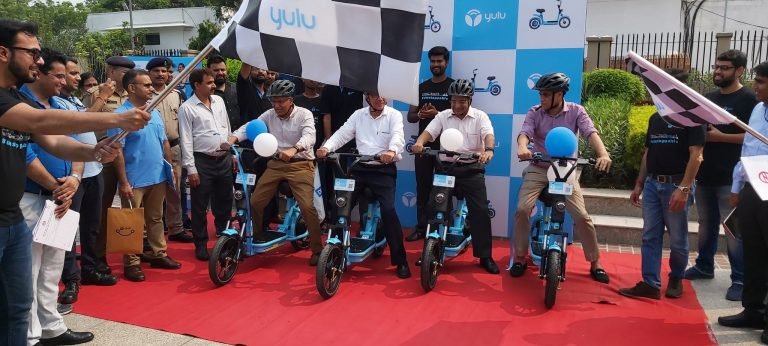
NEW DELHI (Metro Rail News): Yulu- Mobility as a Service (MaaS) provider today announced the introduction of the YULU-Miracle in Delhi. In the first phase, Yulu services will be available at 40 Yulu Zones ( Pick up and drop points), at and around 9 metro stations on the blue and yellow line from Dilli Haat INA  to JLN Stadium in Central Delhi.

  • Yulu-India’s leading Mobility as a Service (MaaS) provider, in collaboration with DMRC, aims to transform the way people commute in Delhi by solving the first and last-mile connectivity problem through its electric two-wheeler – Yulu Miracle.
  • In the first phase, Yulu services will be available at 40 Yulu Zones ( pick up and drop points), at and around 9 metro stations on the blue and yellow line from Dilli Haat INA  to JLN Stadium in Central Delhi.
  • Yulu’s mission is to make Urban Mobility Seamless, Shareable and Sustainable.
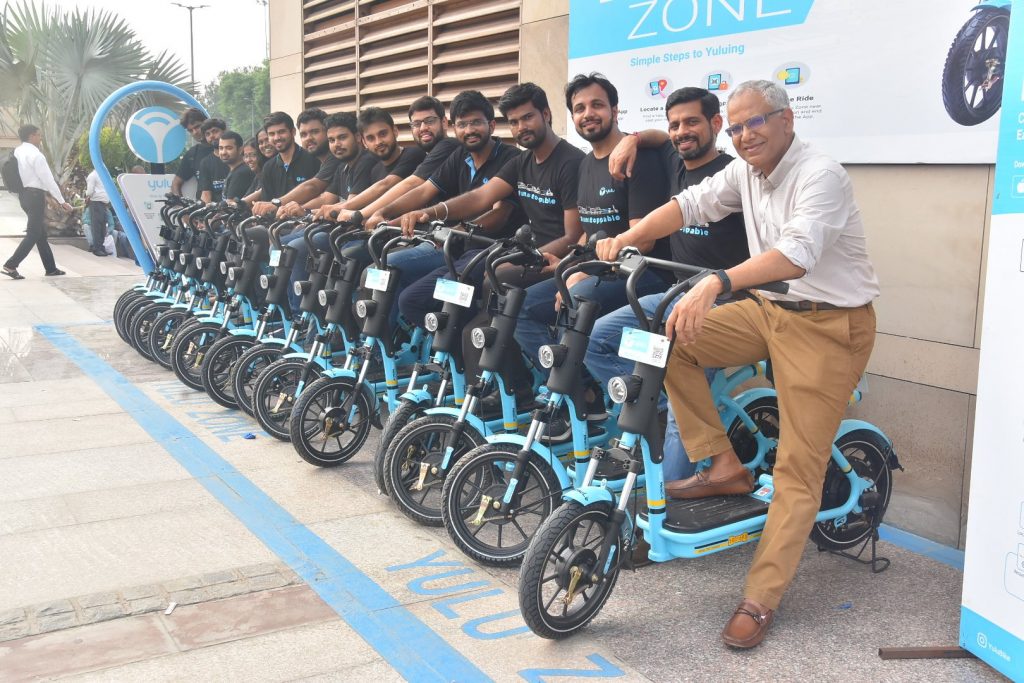
Amit Gupta, co-founder, Yulu with Team during the launch event
Mr. Amit Gupta, co-founder, Yulu with Team

The company launched its services in collaboration with Delhi Metro Rail Corporation(DMRC) to solve the complex problem of first and last-mile connectivity for commuters and to reduce congestion and pollution in the National Capital. The service was launched by Dr. Mangu Singh, MD- Delhi Metro from Mandi House metro station.

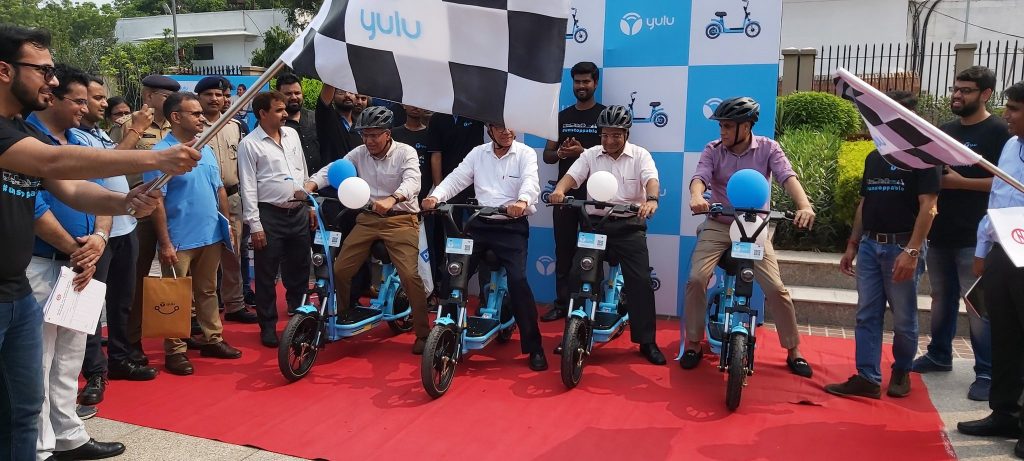
Inugration of Yulu
Yulu bike inauguration by DMRC MD Mangu Singh


Yulu – India’s leading Electric micro-mobility provider, aims to solve the first and last-mile commute problems for citizens of Delhi by deploying 5000 YULU Miracles across metro stations by end of Dec 2019. The service will be further extended to all the metro stations in the NCR Region in early 2020, by deploying up to  25000 Yulu Miracle. “Yulu Miracle” is a unique battery operated, lightweight, easy to ride, small two-wheeler requiring no vehicle registration or driving license.

Launch of operation of Yulu bike

After successfully running operations in Bengaluru, Mumbai, Pune & Bhubaneswar, now commuters in Delhi too can take eco-friendly Yulu rides at pocket-friendly prices reducing carbon footprint.   “Delhi has been ranked as one of the most polluted cities in the world. We at Yulu are committed to promoting eco-friendly commute options in all Indian cities to reduce pollution and congestion. With the launch of our operations in Delhi, we are providing a green commute option to the residents of Delhi and are committed to expanding our services to the whole NCR region. We are proud to collaborate with DMRC for a common vision of better first and last-mile connectivity, reducing congestion and improving air quality” said Mr. Amit Gupta, CEO -Yulu Bikes

“DMRC is connecting Delhi by offering residents an affordable and sustainable mode of mass transport. Today DMRC is the preferred choice of commuters in Delhi & NCR region. Our Public Bike Sharing(PBS) initiative with YULU will provide much needed first and last-mile connectivity to our users. It is one of its kind collaboration to make mobility seamless & sustainable” said Dr. Mangu Singh, Managing Director- DMRC

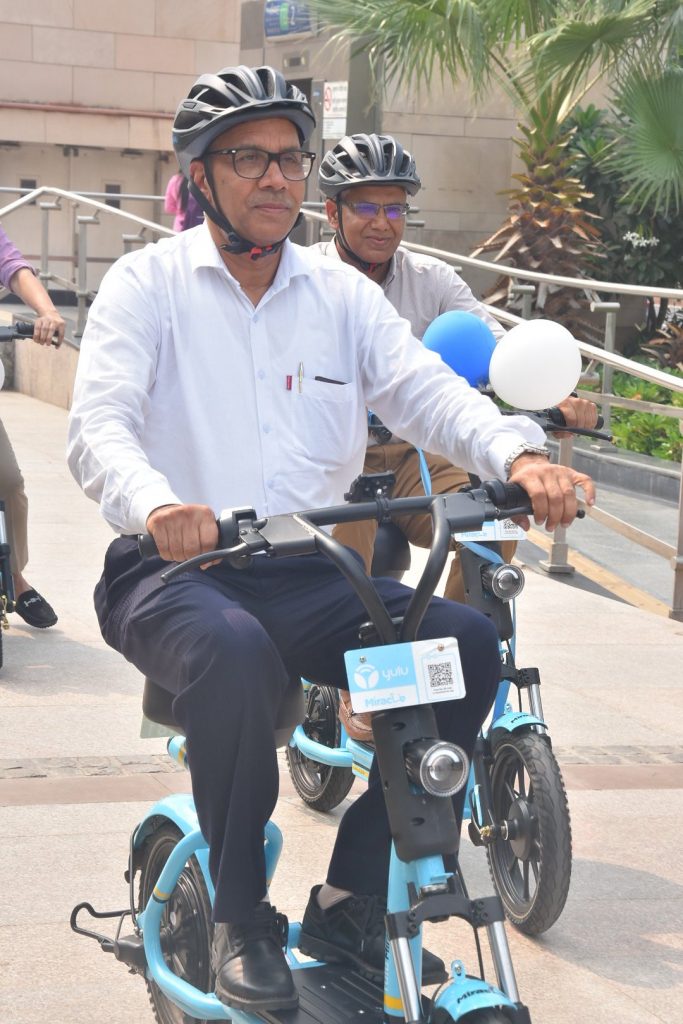
DMRC MD Mangu Singh on Yulu Bike while driving

Shri Mangu Singh, DMRC, MD, inaugurated the service from Mandi House metro station

About Yulu

Yulu is a leading shared and sustainable micro-mobility platform to reduce traffic congestion and air pollution. Yulu’s mission is to create sustainable cities of tomorrow by revolutionizing the way people commute through its human and battery-powered vehicles that uses innovative technologies like IoT, ML & AI. Yulu runs its operations currently in Bangalore, Pune, Greater Mumbai, and Bhubaneswar, having the largest fleet of human-powered bicycles (Yulu Move) and lightweight electric two-wheelers (Yulu Miracle). Yulu is building the largest EV ecosystem of India and is committed to providing smart, shared, sustainable and seamless mobility solutions with better accessibility and affordability.


From October 6-car metro trains to run on Namma Metro’s Green Line

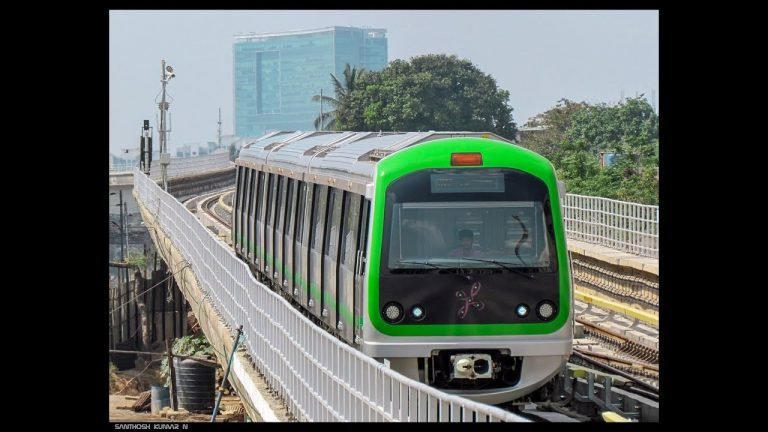
BANGALORE (Metro Rail News): Passengers traveling on Namma Metro’s Green Line (Nagasandra-Yelachenahalli) can finally heave a sigh of relief as the authorities have promised to introduce six-car trains on the route from next month.

In a release, Bangalore Metro Rail Corporation Limited (BMRCL) said that 25 trains of three-car sets have been converted into six-car trains till now but they could not be introduced on the Green Line due to prevailing issues related to power supply for such trains.

“The constraints in the local capacity of receiving substation have since been addressed. From October 1, onwards BMRCL is committed to induct more 6-car train sets on the north-south (Green) line at the rate of three or four trains per month.

We are targeting to complete commission of the 50 train sets by March 2020,” BMRCL Chief Public Relations Officers Yashvanth Chavan said.

Though two six-car trains have been deployed on the line, they have failed to make any positive impact. In comparison, commuting on Purple Line (Baiyappanahalli-Mysore Road) has become convenient after the introduction of the six-car trains. “All the trains on the east-west corridor (Purple Line) are now running with six cars,” the release said.

PM Modi to lay the foundation stone for Nagpur broad gauge metro

NAGPUR (Metro Rail News): Prime Minister Narendra Modi will be visiting poll-bound Maharashtra on September 7 to inaugurate a few projects.

A party official said on September 1, he will land in Mumbai on the morning of September 7 before heading to Aurangabad in the afternoon and then to Nagpur on the same day. The details of the PM’s visits are yet to be out.

Meanwhile, Union minister Nitin Gadkari said in Nagpur that the prime minister will perform the ground-breaking ceremony of a metro coach manufacturing facility located in Sindi dry port on September 7 evening.

Gadkari said while addressing a program that the prime minister will also lay the foundation stone for a broad gauge metro connecting Vidarbha’s largest city with adjoining Wardha, Narkhed, Ramtek, and Bhandara.

Both the projects are being undertaken by Maharashtra Metro Rail Corporation Limited, popularly known as Maha Metro, a 50:50 joint venture between the Union and Maharashtra governments.

Meanwhile, BJP national president and Union Home Minister Amit Shah on Sunday began his two-day visit of Maharashtra.

He addressed a rally in Solapur on September 1 night.

During his visit to Mumbai on Monday, Shah is expected to visit some prominent Ganpati mandals, and hold discussions with senior party functionaries.

With the state Assembly polls expected in October, such visits are likely to be the staple as the BJP, along with ally Shiv Sena, look to decimate the opposition Congress-NCP to capture another term, said office-bearers.

Hyderabad airport metro soon to have an underground section

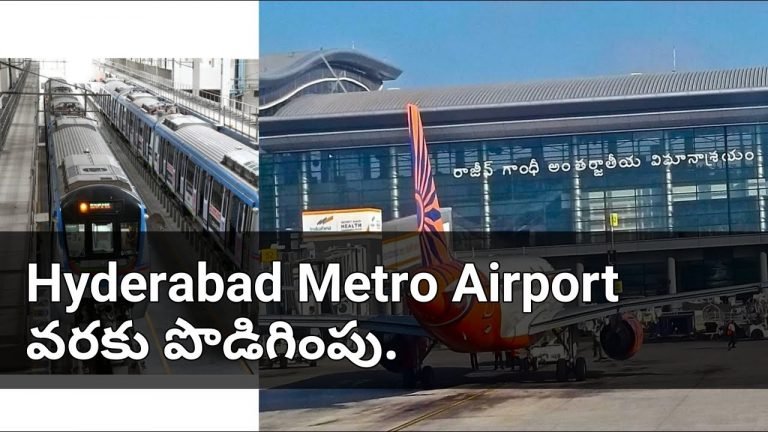
HYDERABAD (Metro Rail News): The proposed high-speed metro rail to Rajiv Gandhi International Airport (RGIA) at Shamshabad from Raidurg/Mindspace junction will be essentially an elevated one but will also have a 2.5-km underground section to connect to the airport terminal.

According to Managing Director N.V.S. Reddy, Hyderabad Airport Metro Rail (HAML), the government’s special purpose vehicle formed to build the 31-km ‘Airport Express Metro Corridor’ with 27-km elevated and another 1 km on ground, is looking at ‘innovative financing model’ to make the project financially viable.

The project estimated to cost up to ₹ 5,000 crores is awaiting the government’s nod to call for financial and technical bids. It will essentially be a government-funded and owned metro unlike the ongoing Hyderabad Metro Rail project, which is under the public, private, partnership (PPP) model, with L&T Metro Rail Hyderabad building and maintaining the phase one.

He explained, that the private sector will be involved extensively for optimizing of costs for Airport Metro. “We have the option of seeking the Central government’s financial assistance available for up to 10% of the total cost which will come with its own rules and regulations or we can take up the entire work on our own.

Lighting at Delhi metro stations to be upgraded

NEW DELHI (Metro Rail News): Delhi Metro Rail Corporation (DMRC) has taken the initiative to upgrade the lighting system of all the 126 metro stations of Phase I and Phase II from the conventional lights to a modern LED lighting system.

Notably, there have been several complaints about the dark spots around the Metro stations with cases of snatching, sexual harassment, and flashings being reported frequently. 

The metro corporation had extensively used LED lighting at Phase-III stations from its inception for conserving energy and also promoting renewable energy.  

“All stations of Phase-I & II (145) were provided with conventional fluorescent lighting at the time of their commissioning. However, the existing lighting system is getting replaced with the advent of the modern-day LED lighting concept.

DMRC is now planning to cover the stations of Phase-I & II (around 126) with the same LED type of lighting.

The tendering process will take around six months time and thereafter, it is expected to cover all these stations in a year’s time,” said a Delhi Metro Rail Corporation spokesperson. 

Currently, work is under progress to switch to LED lighting at 10 elevated Metro stations of the Red Line, which is likely to be completed in next 2-3 months, he added. 

The Delhi Metro undertook the exercise of changing the lighting fixtures from conventional to modern as a pilot project at two underground Metro stations of Rajiv Chowk and Barakhamba Road. 

“Based on the feedback at these two stations, the same was introduced at seven other Underground Metro stations of Yellow Line recently — Kashmere Gate (UG), Chandni Chowk, Chawri Bazar, Patel Chowk, Mandi House, Vishwavidyalaya and New Delhi,” the spokesperson said.  

Soon, Kashmir to have Metro rail in Srinagar

SRINAGAR (Metro Rail News): Jammu and Kashmir administration is all set to launch Srinagar Metro. A detailed project report for the same has been prepared and construction work is slated to begin from 2020.

The 25-kilometer-long Metro line will be built in two phases and divided into two corridors namely Corridor 1 and 2. A total of 12 stations will be built in each corridor with the total stations in the line being 24. Reportedly, the cost of the project will be five thousand crore rupees. Senior Civil Engineer and retired Indian Railways Service of Engineers (IRSE) popularly known as ‘Metro Man‘ has been made the head of the project.

Speaking to the correspondent, Deputy Commissioner of Srinagar, Dr. Shahid Choudhary said, “We are preparing the future of Srinagar. In the coming days, the population of Srinagar will increase, for which the Metro is needed.” “We will start the operation of the Metro train in Srinagar by 2024. Each kilometer of this Metro project will create jobs for 25 youths. The process of bidding will start very soon,” added Choudhary.

The new technologies of the token and smart card will be used for the completely elevated Metro line. The three-coach Metro will start first. About 250 people will be able to travel together in a compartment, i.e. 750 people can travel together on a Metro train. In summer, the Srinagar Metro will run for 17 hours, then in winter, this Metro will run for 14 hours. Mini feeder buses will also run from outside each station. Around 35 mini feeder bus services will run in Srinagar.

There will also be special attention on the security system of Srinagar Metro, CCTV, Bag Scanner, Bomb Detection Equipment, wireless sets, sniffer dogs will be available at every Metro station.

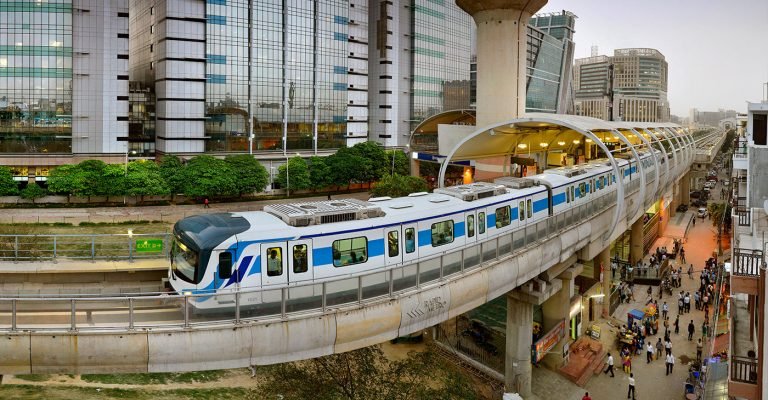
Metro lines cover only 3% of Gurugram

GURUGRAM (Metro Rail News): Major cities in the country are fast expanding their metro network, but poor urban planning and the lack of a mobility framework has held it up in Gurugram.

As a result, the city where lakhs of people come to work finds itself not only far behind Delhi in terms of metro’s reach but also Noida, which now has multiple connections with the capital and a direct line to the domestic airport.

The last time Gurugram saw an inter-city metro connection being built was in 2010 when the Yellow Line made the difficult trek across rocky Aravali terrain to Huda City Centre, taking its terminal station 15km further south from Qutub Minar.

It was a feat of engineering that bridged two cities, which would enter a phase of rapid symbiotic growth: Delhi as the political power center, Gurugram as an emerging corporate hub.
buy aciphex online https://pavg.net/wp-content/themes/twentytwentyone/inc/en/aciphex.html no prescription

Gurugram’s growth has, over these years, been swift, staggering even government planners, who struggled to fortify the city with the additional resources it needed even as its human capital grew organically with the local economy, turning Delhi’s satellite city into a metropolis with the country’s third-highest per capita income.

But inter-city metro connectivity remains today exactly where it was in 2010, resulting in the development of an urban ecosystem that’s highly dependent on cars and a pollution problem that the city just cannot tame. Just a year before the Yellow Line came to Gurugram, the Blue Line had in 2009 made the journey to Noida. A decade on, the Uttar Pradesh city has raced far ahead of Gurugram in metro connectivity — Noida now has 34 metro stations with multiple connections to Delhi, a link that’s at the doorstep of Ghaziabad, and a direct line to IGI airport’s domestic terminal.

Gurugram, over these years, has only seen the private Rapid Metro network of 15 stations being built. The government has strangely not expanded the metro network an inch despite two demands that residents and corporate houses have been making for years — connections to IGI airport and Dwarka. Gurugram’s total metro coverage area is a mere 20km, which is only around 3% of the city’s total area.

Yet, the previous decade has been one of the big metro push, not just in Delhi whose network now has 250 stations, but across India, with large metro networks now operational in Bangalore, Hyderabad and Chennai and smaller ones in Kochi and Lucknow. Elsewhere in the country— in Kolkata — the metro is all set to run under a river. Across major Indian cities, metro tracks now cover 640km across 450 stations.