Home Blog Page 617

East-West Metro soil test in yield zone

KOLKATA (Metro Rail News): Samples of soil are being collected from the Bowbazar area that has been affected after a machine boring an East-West Metro tunnel hit a sand aquifer containing a large amount of water, leading to subsidence.

Engineers said an analysis of the samples would reveal how soft the soil had become after the accident and whether it would be able to bear further stress once the tunneling work resumed and collapsed buildings rebuilt.

Kolkata Metro Rail Corporation, the implementing agency of East-West Metro that aims to connect Salt Lake Sector V with Howrah Maidan, started the exercise on Monday, the first of its kind since the collapse on August 31.

A KMRC engineer said samples of the soil from this region in Bowbazar would be analyzed by our soil experts. The idea is to understand the degree of disturbance on the soil because of the accident underground and then calculate its stress-bearing capacity.

A team of workers led by engineers set up conical structures in Gaur De Lane on Monday and used it to bore a pit underground with the help of a steel shaft. The shaft was thrust inside the pit using an iron pulley. An engineer said, “After subsidence, we want to check the exact character of the soil on the surface and below”.

As workers went about boring, several residents who have been evacuated but who still keep returning to have a look at their houses, stood and watched the lane where they have been living for decades suddenly lose its character.

The mid-afternoon calm was replaced by the buzz of generator sets as engineers poured into their tabulation sheets with every sample of soil that was pulled out. Engineers said that during tunnelling the impact on the surrounding soil was not limited to those near the tunnel alone but also in the adjoining areas.

Settlement of soil gradually decreases with the increase in the distance from the center of the tunnel underground. Over the last week, a team of engineers has been checking the structural stability of some of the buildings across Durga Pituri Lane, Gour De Lane, and Shakrapara Lane.

A separate team has been working on strengthening the foundation of some of the buildings by injecting a solution of sodium silicate and cement underneath a process known as grouting. After the soil test is completed, engineers said they would sit down and analyze the results to understand if more buildings were at risk in this cave-in zone.
Andhra government suggests Amaravati Metro Rail Corporation to ‘level down’ rail project

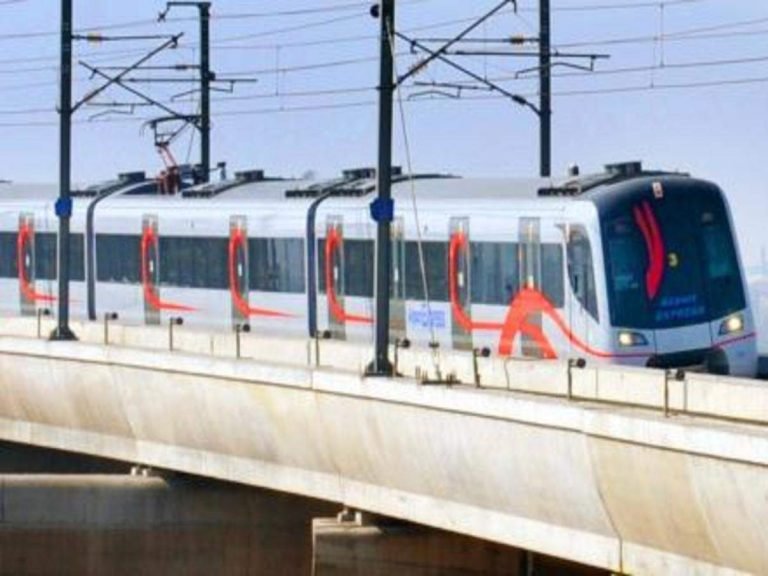
VIJAYAWADA (Metro Rail News): In a bid to promote sustainable transportation between Vijayawada-Amaravati-Guntur-Tenali, the State government has decided to shelve the earlier designed elevated corridor, Semi-High Speed Circular Rail project and instead take it as an ‘at grade section’ project (at the same level of the road), if the plans materialize.

The project, when conceived by the previous TDP government, was an elevated one but the new government wants to change the project design to bring down the cost.

On Monday, Amaravati Metro Rail Corporation Limited (AMRCL) managing director NP Ramakrishna Reddy said the government has proposed the project to provide quick mode of transportation to the capital Amaravati from nearby cities and towns, to reduce undue population pressure on the road network and to help in the economic growth of the satellite cities and towns.

Gurugram-based Urban Mass Transit Company (UMTC) was entrusted with the task of preparing a feasibility report and detailed project report in coordination with the AP Capital Region Development Area (APCRDA), he said. In its preliminary feasibility report submitted earlier, the agency had estimated the project length to be 104 km at an estimated cost of Rs 10,000 to Rs 12,000 crore.

In a recent review meeting with the AMRCL officials, Chief Minister YS Jagan Mohan Reddy directed the officials to materialize the project as ‘at grade section’ to reduce the cost of expenditure following the Suburban Rail Policy-2017. He also suggested to take up the project according to top priority on developing modern facilities and greenery alongside the existing railway lines and through utilizing the lands on a lease basis.

Elaborating further, the AMRCL chief said that the Ministry of Railways will take up about 19-km-railway line works between Amaravati-Namburu section, following the Andhra Pradesh Reorganisation Act- 2014. The remaining 85 km length of the railway line will be developed under joint venture model with 20 percent equity from the State government and the Ministry of Railways funding for 60 percent of the balance can be availed in form of soft loan from banks and financial institutions, according to the provisions stated in the Suburban Rail Policy.

Metroman says DMRC ready with design to rebuild flyover

NEW DELHI (Metro Rail News): Metroman E. Sreedharan has said that the Delhi Metro Rail Corporation (DMRC) has readied the design to reconstruct an expansion-joint-less, four-lane flyover at Palarivattom on the lines of the one at Edappally to replace the one whose cracked girders will be pulled down.

He added, while 100 of the 102 girders and the deck above will be pulled down, the piers and pier caps will be wrapped using reinforced concrete. The method is stronger and durable than carbon-fiber-wrapping that had been suggested earlier.

Mr. Sreedharan told that the design was readied in advance on Chief Minister Pinarayi Vijayan’s suggestion, to save on time. He wants me to recommend someone to supervise the rebuilding work, and I will get back to him in two weeks. The work will be executed by the Kozhikode-based Uralungal Labour Contract Cooperative Society Ltd.

The Metro man said that the estimate and tender documents will be readied in 15 days. DMRC will not be associated with the reconstruction work since our personnel here who are engaged in metro work are being diverted to other work sites. Neither will I supervise it. I will give technical guidance, in my personal capacity.

Elaborating on the scale of damage sustained by the flyover, he said since 97 of the 102 girders had suffered major or minor cracks within less than three years of the flyover being commissioned, casting doubts about the safety and longevity of the structure.

 “The replacement of girders will ensure that the flyover on the Edappally-Aroor NH Bypass has a lifespan of 80 to 100 years.

He said, “The girders, which were built using the deck-continuity method, will be replaced with pre-stressed girders as was done on the Edappally flyover which was built by DMRC. The two special spans at the center of the flyover will not be replaced. Thus, vehicles can continue to go beneath the structure”.

Pre-casting will be done away with at the flyover site, so that the existing girders can be simultaneously pulled down without throwing traffic into disarray.

Mr. Sreedharan said, all bearings must be replaced. Care will have to be taken so that vehicles can proceed without being caught in snarls and by making optimal use of space on service roads.

Chennai metro employees union moves HC to prosecute MD

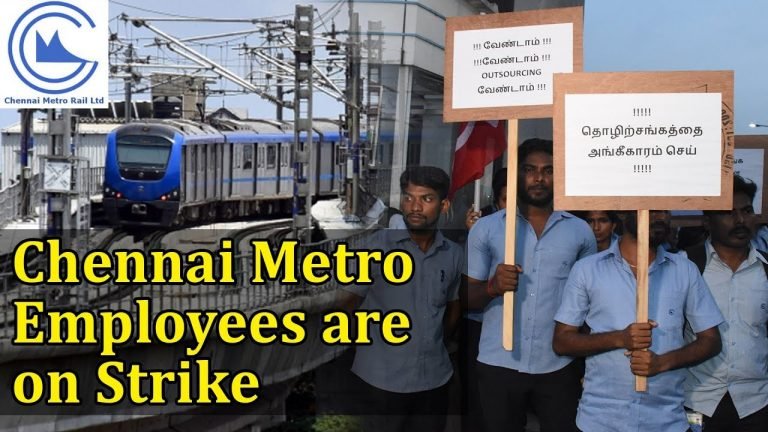
CHENNAI (Metro Rail News): The Chennai Metro Rail Limited (CMRL) Employees Union has filed a written petition in the Madras High Court seeking a direction to the State Government and the Commissioner of Labour to initiate criminal action under the Industrial Disputes Act of 1947 against the Managing Director and other top officials of metro rail for taking vindictive action against its members.

On Monday, Justice S.M. Subramaniam ordered notices to the government, Labour Commissioner as well as the MD and other officials of CMRL on the petition filed by the employees union represented by its president A. Soundararajan, 72, of Centre of Indian Trade Unions (CITU). Alternatively, the petitioner urged the court to grant permission to the union to launch a criminal prosecution.

In an affidavit, the union stated that a total of 254 employees in the cadre of the technician, train operator, station controller, and junior engineer were recruited by CMRL in 2013 and 2014.
buy amoxicillin online https://blackmenheal.org/wp-content/themes/twentytwentytwo/inc/patterns/en/amoxicillin.html no prescription
All these employees were getting 30% of their basic pay towards House Rent Allowance and 35% towards cafeteria allowance which was inclusive of education, transport, washing, and medical allowances.

However, while revising the pay with effect from January 1, 2017, CMRL reduced the HRA from 30 to 24% took away the cafeteria allowance totally. This led to the nonexecutive cadre employees losing Rs.8,960 to Rs. 15,580 a month through the HRA was reduced from 30 to 24% and the cafeteria allowance was reduced from 35 to 20% for those working in the executive cadre.

Further, by a circular dated July 21, 2018, CMRL withdrew benefits such as 15 days paternity leave and 20 days of half pay leave. These measures led to various forms of protest and the formation of the trade union. After CITU began taking up for the cause of the employees, the management first suspended and then eventually dismissed seven office bearers from service.

Even as conciliation proceedings were pending before the Assistant Commissioner of Labour and an appeal having been preferred by the seven office-bearers against their dismissal, the management had suspended nine more workers and issued charge sheets to 15 more workmen in connection with a strike, the union said and sought permission for prosecuting the top brass.

2 Metro stations on track, to be operational in December

PUNE (Metro Rail News): By December this year, the city will have its first two Metro stations. According to the Maharashtra Metro Rail Corporation Limited (MahaMetro), which is executing two phases of the project in Pune and Pimpri Chinchwad, the Sant Tukaramnagar and Phugewadi, says that facilities will be ready for Metro operations by then.
buy antabuse online https://nouvita.co.uk/wp-content/themes/twentynineteen/fonts/en/antabuse.html no prescription

Work on the foundations of the remainder of the elevated corridor on this line, between Dapodi and Range Hills, has been progressing slowly, mostly because of problems related to land acquisition.

MahaMetro has already started work on the 5km underground stretch, between the Range Hills and Swargate Metro stations. The train will go underground just after Range Hills, near the College of Agriculture, and proceed underground till Swargate.

Enroute, it will have stops at Shivajinagar, Civil Court (also being planned as a multimodal transport hub), Budhwar Peth, and Mandai. “About 38% of the civil work on the Sant Tukaramnagar station and 22% on the Phugewadi station has been completed so far. Each station will have three entry/exit points in the first phase,” a MahaMetro official said.

Across the two lines, MahaMetro has identified a total of 12km as priority sectors. Work on these stretches PCMC-Dapodi (7km) and Vanaz-Civil Court (5km) has been fast-tracked, as MahaMetro aims to make the Metro operational by the end of the year.

Two other stations at Anandnagar and Garware College on the Vanaz-Civil Court stretch will be ready by January, officials said. “The construction of Metro stations on the elevated section is completely different from constructing the viaduct and so, different firms have been appointed,” a MahaMetro official said. “Work on the stations, which was slow off the blocks, has now gained momentum,” the official added.

Each Metro station will comprise two levels a concourse, which will have ticket counters and other amenities, and the platform where commuters will board and get off the Metro trains.

A MahaMetro official said they were in the process of acquiring land private and government-owned to set up the entry-exit points for the stations, each of which will boast of lifts and escalators for commuters to reach to the platforms.

6-coach trains may be delayed in Bengaluru metro

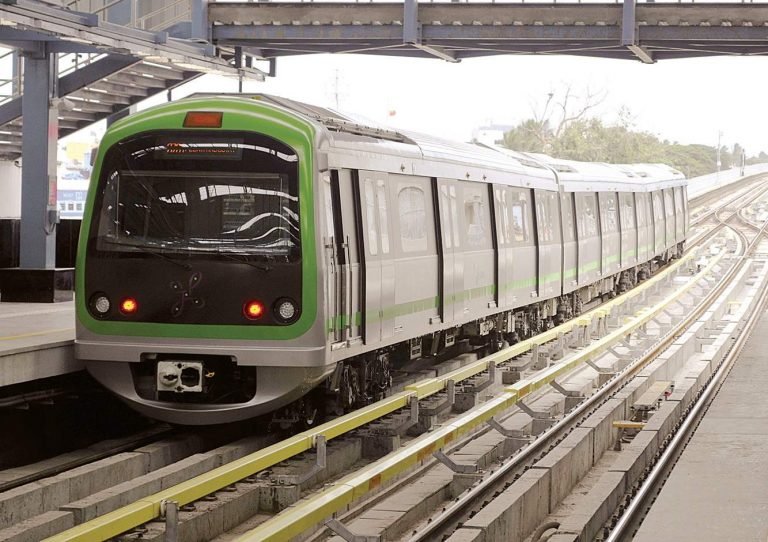
BENGALURU (Metro Rail News): Bangalore Metro Rail Corporation Limited (BMRCL)’s plan to convert all 50 existing three-car trains into 6-coach ones is likely to be delayed.

Bharat Earth Movers Limited (BEML), which manufacturers Metro coaches, on Friday in a release, stated: “Against a BMRCL contract of 192 cars, BEML has so far supplied 105 cars for conversion into 6-car train sets and the rest will be delivered by June 2020, which will help decongest Bengaluru.”

BMRCL had earlier set September 2019 as the deadline for the conversion, which was later extended to March 2020. However, even the March 2020 deadline is unlikely to be met now. Namma Metro’s average daily ridership is 4.5 lakh and each of the six-car trains can carry up to 2,002 passengers compared to the maximum capacity of 975 in three-car trains.

The coach behind the loco pilot’s cabin is reserved for women. Trains on both lines are packed during peak hours and women commuters are the worst hit. Commuters using Green Line services are massively affected due to chaos at stations, especially Majestic.

In March 2017, BEML received a Rs 1,421 crore contract from BMRCL to supply 150 intermediate Metro coaches by December 2019. On September 2, BMRCL had said all Purple Line trains were running with six-car trains and only two six-car trains were deployed on the Green Line.

Bids invited for signaling work BMRCL has invited a tender for design, manufacture, supply, installation, testing and commissioning of signaling and train control and communication systems for Reach 5 of Phase 2. The 18.8km from RV Road to Bommasandra (Reach-5) is fully elevated with 16 stations and is likely to be operational by 2021.
buy stendra online https://www.facebeautyscience.com/wp-content/themes/twentyseventeen/inc/en/stendra.html no prescription

Tunnel boring machine set to be shipped from China for Pune metro

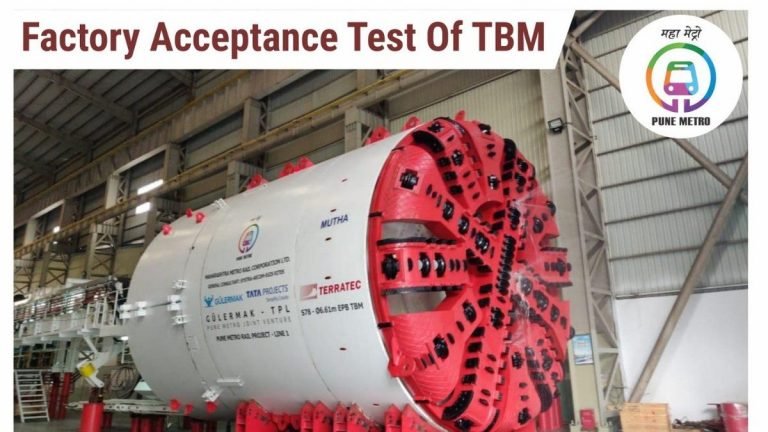
PUNE (Metro Rail News): The Maharashtra Metro Rail Corporation Limited (MahaMetro) recently inspected the first tunnel-boring machine assembled for the underground phase of the Pune Metro project.

A team of MahaMetro officials visited the plant in China and carried out the factory acceptance test for the machines, which were made to specification for the project. The company will ship the machine by the end of the month.

A MahaMetro official said, “It is expected that the machine will reach Pune via Mumbai Port by the end of October”. Four machines will be introduced in phases to dig the 5km long tunnel from the College of Agriculture in Shivajinagar to Swargate. According to officials, an inspection of the next tunnel-boring machine is scheduled in a month.

MahaMetro has completed digging a vertical shaft at agriculture College to lower the machines. Work on another shaft is in progress in Swargate. The plan is to deploy two tunnel boring machines from each end, digging two tunnels — one for each direction said, officials. The underground route is part of the 16.
buy light pack online https://www.ecladent.co.uk/wp-content/themes/twentyseventeen/inc/en/light-pack.html no prescription
59km Pimpri-Swargate Metro corridor.

The route will be elevated from Pimpri Chinchwad Municipal Corporation to Range Hills, after which it will go underground. The underground portion will have five stations — Shivajinagar, Civil Court, Budhwar Peth, Mandai and Swargate.

Chennai Metro Rail conducts another trial run

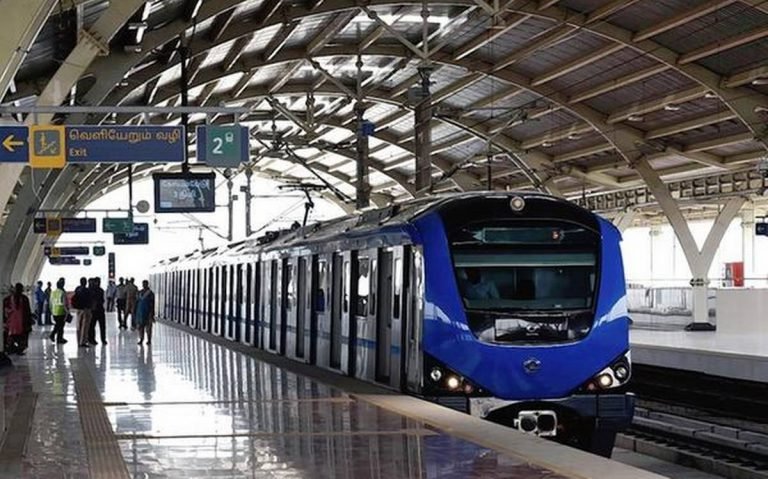
CHENNAI (Metro Rail News): Chennai Metro Rail will conduct yet another trial with a 2.5 minutes frequency of trains on Saturday night that will go up till Sunday early morning.

As a result of this, the direct train service from Chennai Central Metro Rail station to Chennai airport Metro Rail station will be suspended and passengers have to change trains at Alandur Metro Rail station.

Officials said, around 8 p.m., onwards, Chennai Metro Rail will suspend the direct train services and the trial run will start at 10 p.m. between St. Thomas Mount Metro Rail station to Chennai Central Metro Rail station with trains available within a frequency of 2.5 minutes.

This is not the first time that Chennai Metro Rail has been conducting a trial run with a 2.5 minute frequency and has already tried it before. If there are no signaling or any other train-related issues, then it is likely that Chennai Metro Rail will run services with a frequency of 2.5 minutes.

CM Kamal Nath performs ground-breaking for Indore metro rail

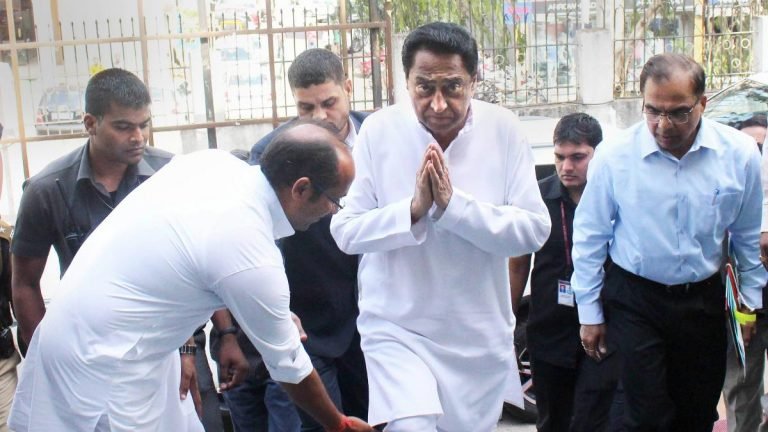
MADHYA PRADESH (Metro Rail News): On 14th September, Madhya Pradesh Chief Minister Kamal Nath laid the foundation stone for Rs 7500.80-crore metro rail project in the state’s commercial capital.

Amid chanting of mantras, Nath performed the ‘Bhumipujan’ (ground-breaking) ceremony for the project on MR-10 Road here.

State Urban Development Minister Jaiwardhan Singh and other ministers were present on the occasion. Under the project, a 31.55-km-long corridor is proposed to be built in the city.

Officials said, while most of the metro section will be elevated, a portion will run underground, adding that the metro rail corridor will pass through Nainod, Bhanwarsala intersection, Radisson intersection, and Bengali Chauraha.
buy acyclovir online https://healthcoachmichelle.com/wp-content/themes/twentytwentyone/inc/en/acyclovir.html no prescription

A total of 29 stations would be built on this route.

The project, conceived during the tenure of erstwhile BJP government in the state and approved by the Centre in October last year, is expected to be completed by August 2023.

Solar-powered Hyperloop system could be coming to a city near you

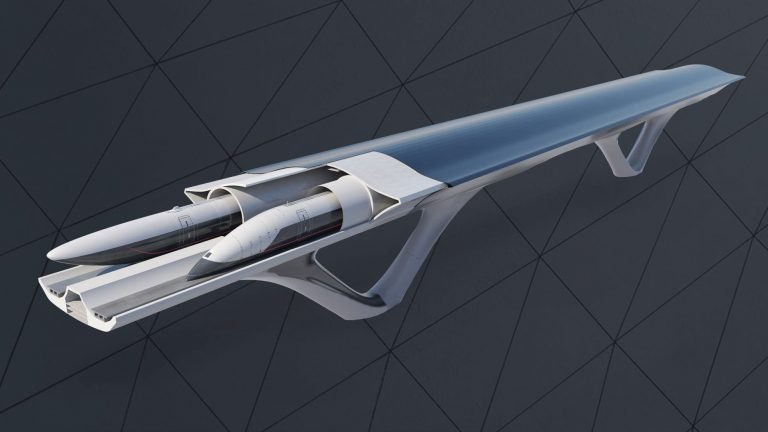
NEW DELHI (Metro Rail News): An eco-friendly version of the Hyperloop network is in the works, powered by a skin of solar-powered modules and wind turbine forests, and complete with parks and urban farming spaces.

Hyperloop is the superfast, cutting edge transport technology first envisaged by business magnate Elon Musk. It’s designed to transport people through low-pressure steel tubes at speeds to match a typical passenger aircraft.

The team says, the new sustainable design, by Chinese architects MAD, is made in collaboration with Hyperloop Transportation Technologies and aims to create “enhanced connectivity between cities and people.

Will be fitted with “bendable solar panel skin modules” that will power the Hyperloop itself and interactive information boards, said by the transportation tunnels, MAD.

Meanwhile, bladeless wind turbine forests will also be built along with the Hyperloop system a move the designers hope will generate power for the transportation network and lower the project’s energy costs.

The Hyperloop system itself will be built almost 7 meters above the ground keeping the structure out of the way of other road traffic and freeing the land up for other use. As well as raised green walkways along the tunnel roof, designers have planned parks and recreation areas in the spaces below.

Architects have also embedded urban farming opportunities within the design, incorporating crop growing facilities at the base of each fiberglass pylon to create a “truly organic infrastructure. The designers haven’t yet revealed where the Hyperloop would be built but said the structure could be adapted to fit in “a bustling city center to rural farmland to the remote desert.

Big companies are investing serious money into projects to get Hyperloop — both literally and figuratively — off the ground, with pilot tubes being erected in Dubai’s deserts and futuristic pods unveiled in European warehouses. Hyperloop has been proposed for many cities, but turning the concept into a real-life mode of transport is proving a long process.

Earlier this year, a spokesman for Virgin Hyperloop One told that the company hoped to have a service up and running by 2029, and experts predict that the concept could be a reality by 2030.