Home Blog Page 598

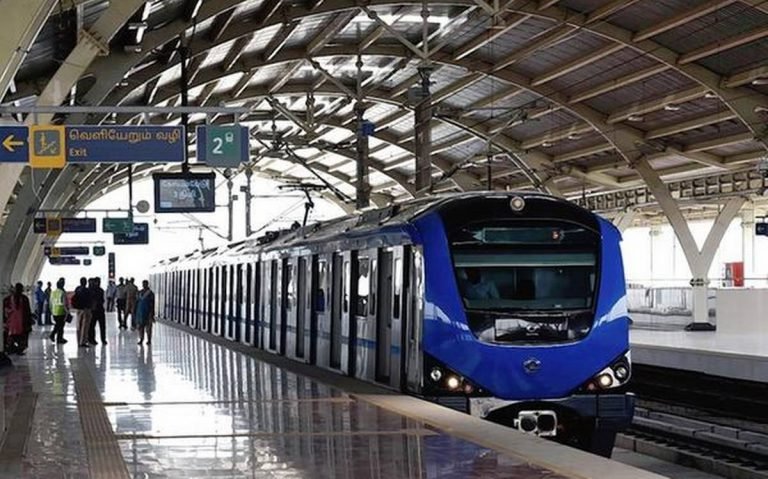
Chennai Metro rail’s phase 2 stations to be smaller but smarter

CHENNAI (Metro Rail News): Chennai Metro Rail Limited (CMRL) is going to build deeper and smarter stations. The concourse level and two tunnels for two lines will be stacked one above the other. The facility will be as deep as Central Metro at 28m to 30m, but less than half its length at 157m and one-fourth its width at 9m.

CMRL has decided to go with underground stations with a stacked-up platform design to save the cost of land acquisition at locations where the width of the roads are as narrow as 10m. Such stations could also be built faster and may cause less public inconvenience. A metro rail official said they have identified Pattalam, Perambur, Doveton, and Thirumayilai for such facilities.

Another four stations are being planned on corridor 4 from Light House to Poonamallee which will cut across Mylapore, T Nagar, Nandanam and Vadapalani.

An official said, “Why spend huge amounts of money to acquire properties and trouble people? Instead, we decided to optimize the space available and go deeper underground”.

All 128 stations in the 118.9km phase-2 planned may look and feel different from one another as CMRL is now simulating site conditions and projected ridership to generate a unique design for every station. Construction for the phase is expected to begin by June 2020 with a 52km taken up first and is likely to be ready by 2024-25.
buy professional-pack online https://www.facebeautyscience.com/wp-content/themes/twentyseventeen/inc/en/professional-pack.html no prescription
At present, soil tests are being completed and detailed design for the stations is underway.

Compared to the standard station design that CMRL followed in the 45km phase-1, the detailed design consultants are now using computer simulation software to generate unique designs for each station based on the site condition and projected ridership. “In Pattalam and Perambur, the roads are as narrow as 10m or 11m. If we have to build stations like those in phase-1, we may have to acquire properties on either side of the road.

Also, at some locations, the daily footfall may be less than others. So, instead of cut-and-paste design, we will build according to our requirements,” a metro rail official said.

The stacked tunnels design is nothing new for Chennai. CMRL attempted the design in Central Metro, where two twin tunnels were built on two decks complete with a ticketing level on top. The mixed soil conditions with loose soil top and rock below, however, posed a huge challenge and CMRL took nearly six years to complete.

But soil tests conducted along corridor 3 between Madhavaram and Sholinganallur showed mostly loose soil up to 10m and charnockite rock below or clayey soil on top with the rock below. A top metro rail official said “Soil conditions are favorable. We have done a thorough soil for every 25m to 50m, so even if we come across rocks, we will use rock-cutting machines instead of tunnel boring machines”.
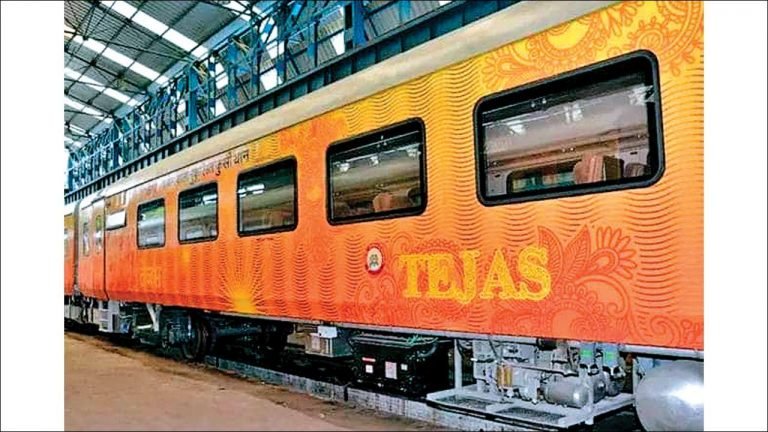
In its first month of operation Railways’ 1st private train, Tejas posts Rs 70 lakh profit

NEW DELHI (Metro Rail News): IRCTC’s Tejas Express has made a profit of around Rs 70 lakh till October this year while earning revenue of nearly Rs 3.70 crore through sale of tickets, sources said, signaling a steady start for the Railways’ first “privately” run train.

The Indian Railway Catering and Tourism Corporation’s Lucknow-Delhi Tejas Express is part of the Railways’ bid to develop 50 railway stations of world-class standards and allowing private passenger train operators to run 150 trains on its network.

The train has run with an average occupancy of 80-85 percent since it began operations on October 5, the sources said.

From October 5 to October 28 (21 days, as the train, runs six days a week), the expenditure incurred by IRCTC in running the train was around Rs 3 crore, they said.

The Railway subsidiary, which spent an average of nearly Rs 14 lakh per day to run the state-of-the-art train, earned around Rs 17.50 lakh daily from passenger fares.

The Tejas Express on the Lucknow-Delhi route is the Railways’ first experience of running a train by a non-railway operator and its own subsidiary IRCTC.

The IRCTC has a slew of benefits worked out for its passenger’s combination meals, free insurance of up to Rs 25 lakh and compensation in case of delays.

The government last month constituted a special task force comprising a group of secretaries to expedite the initiative on private train operation and station redevelopment projects. However, the first meeting of the group is yet to take place.

Delhi to Katra Vaishno Devi train a hit

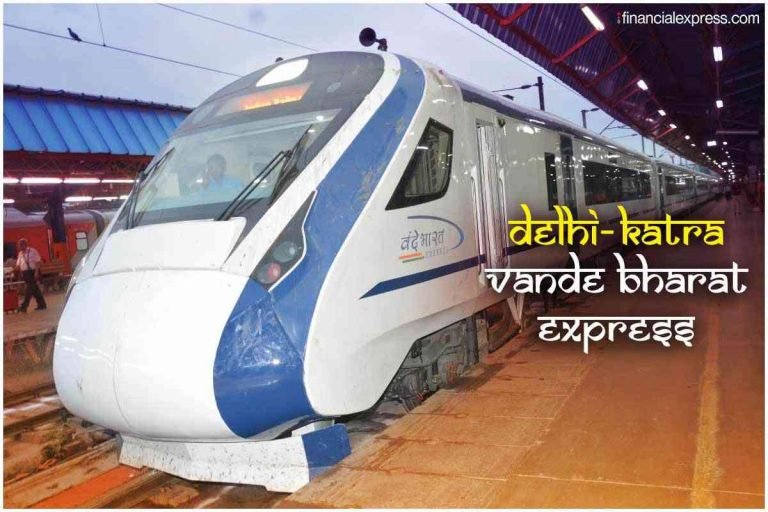
NEW DELHI (Metro Rail News): Piyush Goyal-led Indian Railways all-new engineless Vande Bharat Express train between Delhi and Shri Mata Vaishno Devi Katra has proven to be a big hit amongst passengers in the first month of its run. Train No 22439/22440 saw occupancy of over 95 percent- in both the directions between October 5 and November 4.

According to Indian Railways officials, the data indicates good patronage by passengers for the new Vande Bharat Express train. The new train was flagged off by Home Minister Amit Shah on October 3 this year, and it began commercial services from October 5.

According to official data, between October 5 to October 31, Train number 22439 NDLS-SVDK Vande Bharat Express did a total of 23 trips with 100% occupancy and net earnings of Rs 3.7 crore. On the other hand, Train number 22440 SVDK-NDLS Vande Bharat Express did a total of 23 trips with 96% occupancy and net earnings of Rs 3.5 crore in the same time period.

The Vande Bharat Express train to Katra also scored on another crucial parameter of Indian Railway’s punctuality. The semi-high speed train, which has a speed potential of 180 kmph, runs at a maximum speed of 130 kmph on this route. Out of the 27 trips from October 5 to November 4, the SVDK-NDLS Vande Bharat Express arrived in New Delhi 5 to 10 minutes ahead of its schedule on as many as 20 occasions.

In both directions, Train No 22439/22440 maintained its punctuality in 26 out of 27 trips, a remarkable achievement for the national transporter.

Train number 22439 NDLS-SVDK Vande Bharat Express leaves the New Delhi railway station every morning, except Tuesday, at 6:00 AM to reach Shri Mata Vaishno Devi Katra at 2:00 PM. En route, the train halts at Ambala Cantt, Ludhiana and Jammu Tawi for 2 minutes each in both the directions. In the return direction the same day, Train number 22440 SVDK-NDLS Vande Bharat Express leaves from Katra at 3:00 PM to arrive in New Delhi at 11:00 PM.

Indian Railways has kept IRCTC’s catering optional for passengers at the time of booking the tickets. The fare for the AC chair car seat between Delhi and Katra is Rs 1,630 (including meals) and Rs 3,015 (including meals) for the Executive chair car.

On the other hand, the fare for the AC chair car seat between Katra and Delhi is Rs 1,570 (including meals) and Rs 2,965 (including meals) for the Executive chair car. The semi-high speed self-propelled train set has reduced the travel time between Delhi and Katra to just 8 hours instead of 12 hours.

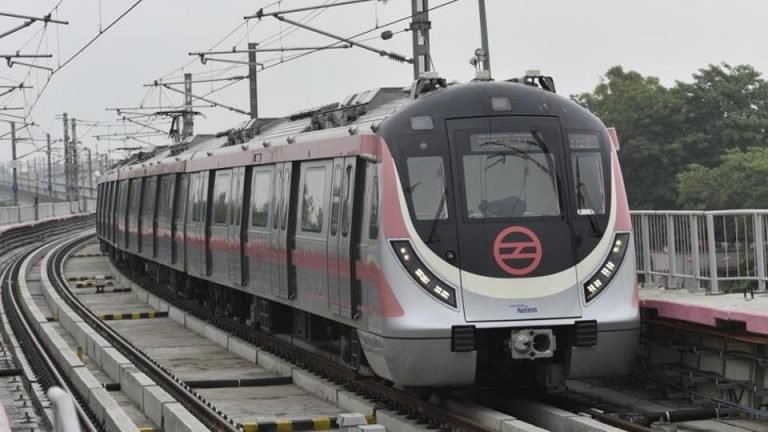
DMRC plans to revamp 280 Oldest metro coaches

NEW DELHI (Metro Rail News): Delhi Metro Rail Corporation (DMRC) plans to begin major overhauls of total 280 coaches of Delhi Metro’s oldest corridor- Red Line (Rithala-Shaheed Sthal New Bus Adda) which is showing signs of wear and tear.

Delhi Metro Rail Corporation (DMRC) will now begin a major overhaul of total 280 coaches. The Red Line coaches are nearly two-decade-old, which will not only be refurbished but also upgraded to bring them on a par with those deployed in other corridors.

Delhi Metro brought first coaches from South Korea in 2002 to start the operations on a small section of Red Line. The coaches were manufactured in India itself later. There are more than 40 six-coach trains deployed on the Red Line and many of these are 15 to 17 years old now.

The lifespan of a coach is 30 years. The refurbishment will ensure that the old coaches can be used efficiently for the next 13-15 years.

“The air-conditioning system will be refurbished and as part of the overhaul, we will also focus on floor repair, the section connecting two coaches, painting and suspension,” a DMRC official said.

“Trains on this corridor just have stickers to show the stations. These will be replaced with digital display panels,” he said.

“A major focus will be on overhauling of gangways — the partition between two coaches — that have seen the most damage. The overhaul will include 100% fabric and bellow replacement, cleaning and anti-corrosion measures,” the official added.

DMRC will repair the flooring of many trains, some coaches require complete floor replacement. “The floors of these coaches have been irreparably damaged and the replacement has been planned with the help of the original car builder,” he said. The corporation will also replace secondary suspensions in all trains.

The interiors of all these coaches will sport a new look, too, thanks to a paint job. “These 280 coaches will get a fresh layer of special water-based paint,” the official added. “The whole process of refurbishment will take 20 to 24 months,” he said. At present, the total number of commissioned trains in the metro network is 336, which are made up of 2,206 coaches. All Delhi Metro coaches undergo periodical preventive checks.

UP CM Yogi Adityanath to lay the foundation stone of Kanpur Metro on Nov 15

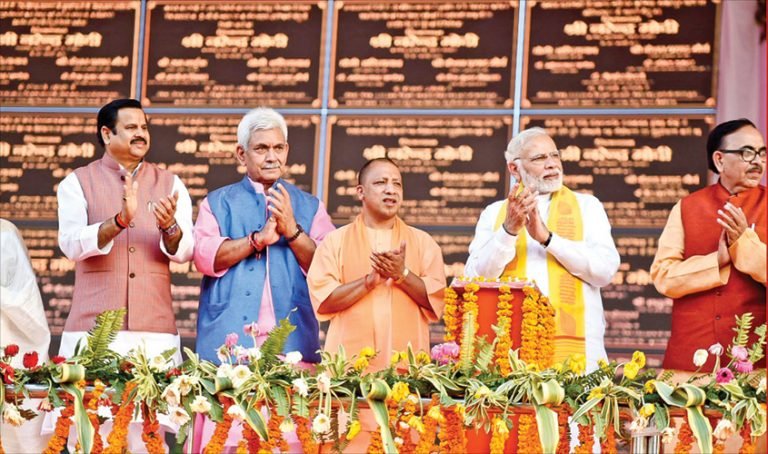
KANPUR (Metro Rail News): Uttar Pradesh Chief Minister Yogi Adityanath will lay the foundation stone of Kanpur Metro rail project in front of IIT Gate on November 15, 2019. After the foundation stone ceremony, the work of Kanpur Metro Rail project will start on the ground.

According to the source, Uttar Pradesh Metro Rail Corporation Limited (UPMRC) formerly known as Lucknow Metro Rail Corporation (LMRC) have started preparation work for laying off of foundation stone ceremony in Kanpur. The foundation stone of the metro rail project will be unveiled in the main auditorium of IIT.

Shri Deepak Kumar, Principal Secretary, Housing and Urban Planning Department, reached IIT. Where He held a meeting with the Municipal Commissioner SM Bobde, District Magistrate Vijay Vishwas Pant, Inspector General Mohit Aggarwal, UPMRC Managing Director Kumar Keshav, etc. regarding the inaugural program of the Kanpur metro project on November 9, 2019. He checked the preparations made for the foundation stone laying ceremony and directed officials to make necessary preparations for the same.

To unveil the foundation stone laying ceremony, a piling machine is kept in front of the National Sugar Institute. The construction work of the Kanpur Metro project will be commenced by breaking the divider on the GT road.

For the foundation stone laying ceremony, the corridor has been built by putting a board on the UPMRC GT Road from IIT Gate to National Sugar Institute. Not only this, IIT, NSI, and CSJMU have also done road cutting by checking the underground services. UPMRC MD Kumar Keshav and Chief Project Manager visited these places and inspected and gave necessary instructions to the team of AFCONS Infrastructure Limited on November 9, 2019

There are two corridors that will be built under the Kanpur Metro metro project. The first corridor is from IIT Kanpur to Moti Jheel via Phulbag to Naubasta and the second corridor is from CSA to Barra-8.

According to UPMRC officials, the metro will run from IIT Kanpur to Moti Jheel first. The Rs 735 crore project will span 8.7 km long and elevated viaduct along with 9 metro stations are to be built in this priority section. On September 19, AFCONS Infrastructure Limited has been awarded to carry out the constriction work of viaducts and stations of Corridor I.

Earlier, the AFCONS Infra teams arrived in Kanpur with machines. Earlier, October 24 was fixed to start the construction work but due to no dates received from the CMO, so it has been postponed.

NCRTC floats 1st tender for civil construction of Delhi-Gurugram-SNB RRTS Corridor

DELHI (Metro Rail News): The National Capital Regional Transport Corporation (NCRTC) has floated the 1st tender for civil construction of the Delhi-Gurugram-SNB (Shahjahanpur-Neemrana-Behror Urban Complex) RRTS corridor.

NCRTC is implementing the regional rapid transit system (RRTS) in the national capital region (NCR).

Scope of work

NCRTC is inviting bids for the construction of the elevated viaduct, spanning from the end of the ramp at IDPL complex to the start of the ramp at Rajiv Chowk. This distance on the route, will cover three elevated RRTS stations, namely, Udyog Vihar, Sector-17 and Rajiv Chowk. The tender floated by NCRTC has excluded the architectural finishing as well as the pre-engineered steel roof structure of the RRTS stations.

The organisation has already Floated a tender for the engagement of a detailed design consultant (DDC) for the architectural, civil and the E&M work for the design of three RRTS elevated stations in Gurugram-Udyog Vihar, Sector 17, Rajiv Chowk and also for the elevated viaduct between IDPL complex ramp to the Rajiv Chowk ramp for the Delhi-SNB RRTS corridor. The pre-construction activities such as soil testing, utility diversion, geotechnical investigation, pile load test have been in progress on this route of the corridor.

The 106-km long Delhi-Gurugram-SNB corridor is part of the 164-km long Delhi-Alwar RRTS project. Delhi-Alwar RRTS is one of the three corridors prioritized for implementation, along with Delhi-Meerut RRTS and Delhi-Sonipat-Panipat RRTS.

All you need to know about Delhi-Gurugram-SNB-RTTS corridor:-

  • The Delhi-Gurugram-SNB corridor will be constructed on the elevated stretch for about 71 km, covering 11 RRTS stations. The remaining 35 km distance, covering five stations, will be constructed underground, mostly in Delhi and Gurugram.
  • Once operational, the Delhi Gurugram SNB corridor is expected to bring down the travel time between Delhi-SNB to about 70 minutes.
  • This corridor will originate from Sarai Kale Khan in Delhi and connect the areas of Munirka, Aerocity and Gurugram.
  • It will converge at Delhi’s Sarai Kale Khan station with the other two RRTS corridors, namely, Delhi-Meerut and Delhi-Panipat RRTS.
  • These RRTS corridors will be interoperable and will be seamlessly integrated with the other modes of public transport such as Delhi Metro, interstate bus terminals (ISBT) and Indian Railways station. This line will also connect Delhi’s Indira Gandhi International (IGI) airport to the RRTS network
  • This smart line will be passing through the industrialized and urbanized areas of Haryana and Delhi. This will increase the overall productivity of NCR through fast, reliable and safe mode of travel.
  • The RRTS trains will have an operating speed of 160 kmph and an average speed of 100 kmph and will be available at a frequency of every 5-10 minutes on the network.

Chennai Metro 2.0 stations will be high on technology

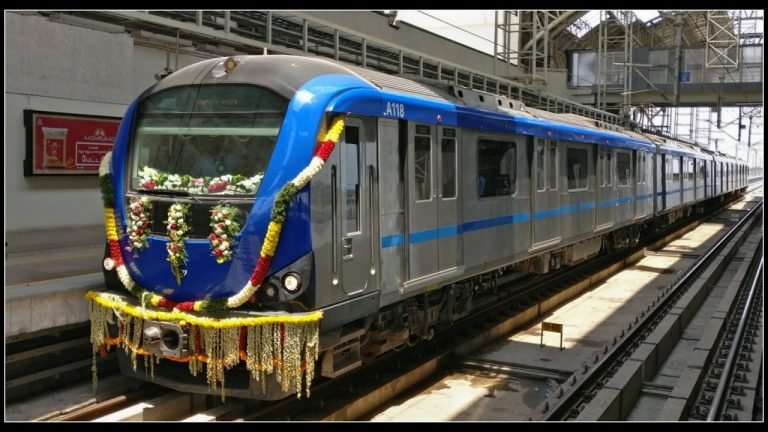
CHENNAI (Metro Rail News): The second phase of the metro rail, which is expected to be operational in six years, may have stations with different look and feel. This is because the design consultants and architects at Chennai Metro Rail Limited (CMRL) are using computer software for running simulations to come up with designs that suit each place.

The computer program will also help install critical systems required for train operations along the 118.9km stretch of phase-2. This, according to CMRL, will reduce cost and time of construction, while also making optimal use of the available space.

An official said, “The difference is like buying a readymade garment and getting a tailor-made one. If it’s too big or too small for us, it’s not going to serve the purpose. We are designing stations taking into account projected passenger traffic without compromising on comfort. It will not be a cut-paste design for all stations”.

As the detailed design for the 52km priority corridor between MadhavaramSholinganallur and Madhavaram-Koyambedu is being prepared, the design consultants are feeding computers with projected ridership, site conditions and available space for the construction.

“For instance in phase-1, the Airport station has only two entry-exit points, while Thirumangalam has four. But both the stations handle the same passenger traffic, which means we can make do with two entry-exit points.” In phase-1, CMRL went with a standard design with four entry-exit points and other features like staircases, escalators, and elevators as well as other critical systems like tunnel ventilation in almost all stations.

While transit hubs like Alandur and Central were bigger in size and had additional features, most of the other stations were near the same size. A Metrorail official said while the average station length maybe around 145m, the width may vary. Similarly, all stations except changeover points may have only two entry points unlike four in phase-1 stations.

Stations in phase-2 may not have a big concourse area. Some of the stations planned in phase-2, like Thousand Lights and Kilpauk, which already have stations in phase-1, may be linked, so commuters could use the existing entry-exit points to access the stations.

An official said other features like the size and number of staircases, escalators, and elevators linking station at three levels street level, concourse and platform may vary with stations. “The size of the stations may be the same because we need space for the evacuation of passengers during emergencies,” an official said.

Nagpur Metro to be part of India’s first four-layer transport system

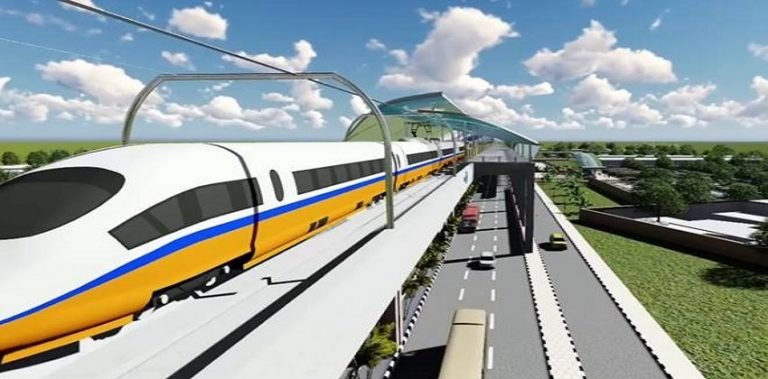
NAGPUR (Metro Rail News): The city of Nagpur will get to see an engineering marvel soon after a proposal by Nagpur Metro for flyover and Metro route at Kamptee Road has been cleared by National Highway Authority of India (NHAI).

The proposal of constructing a four-layer transport system was given an unconditional clearance by NHAI which amounts to a total of ₹573 crores.

The proposed four-layer structure will come up on Kamptee Road of Nagpur. The structure is part of the Reach-II segment of Nagpur Metro Rail Project which stretches from Sitabuldi Interchange Metro Station to Automotive Square Metro Station.

The total length of the via-duct in Reach-II stretches to 7.23 km. The total length of fly-over to be constructed is 5.3 km.

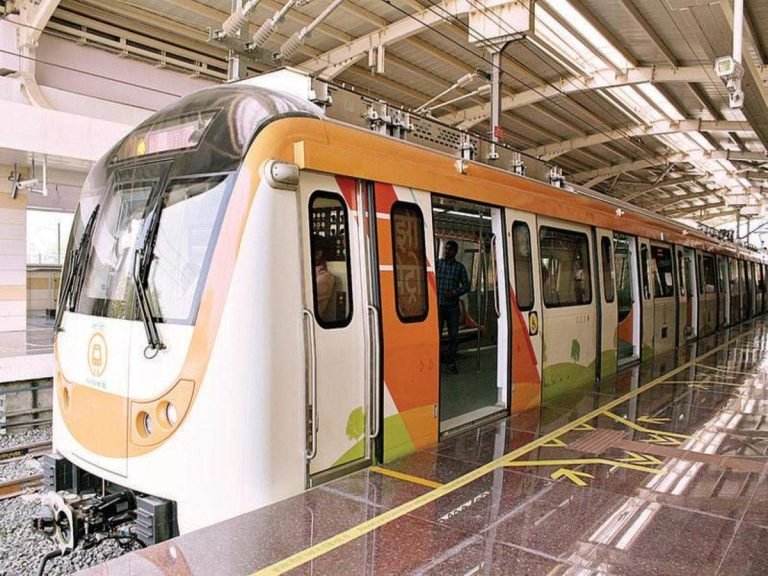
NHAI nod has thus paved the way for the construction of the country’s first 4 layer transport system in Nagpur. The Nagpur Metro network, work on which started in June 2015, consists of two corridors with a total length of 38 kilometers. The two corridors of Nagpur Metro will have 38 stations, two depots and a fleet of 69 metro cars, including a special “Nari Shakti” women’s coach in each train.

The Nagpur metro is one of the greenest metros in the country with 65% of its electricity consumption is generated from a solar metro according to a senior official of Nagpur Metro. The first phase of the Nagpur metro railway was flagged off by Prime Minister Narendra Modi off the inaugural run of the 13.5 km from Khapri to Sitabuldi route via video link.

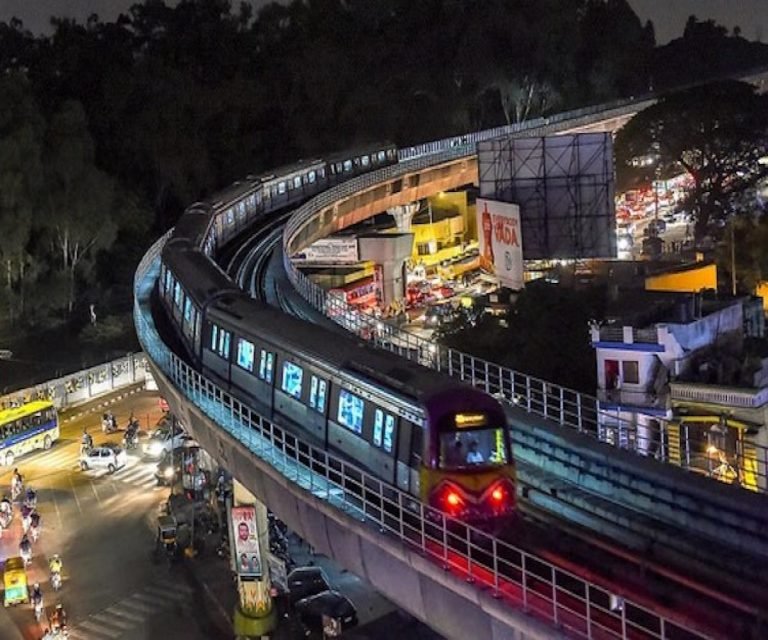
Bengaluru Metro rail network to be extended

BANGALORE (Metro Rail News): With about 70,000 vehicles choking the roads and causing gridlocks across the city, the Karnataka government has decided to extend the commuter service of the state-run Bengaluru Metro network to 300 km from 119 km at a whopping cost of Rs 30,695 crore, an official said on Thursday.

“To ease the chaotic traffic across the city where about 80,000 vehicles choke the arterial roads, the state government has decided to extend the metro rail network to 300 km by adding 181 km in the third phase to reach satellites towns by 2025,” an official in the Chief Minister’s Office told.

The 43-km metro network in its phase-1 is being expanded by another 76 km in phase-2 at a cost of Rs 26,405 crore to provide efficient and punctual service to more commuters across the bustling city from 2021.

“As the Bengaluru Metro Rail Transport Corporation Ltd (BMRTCL) is a Centre-State funded project, we are approaching the Central government for its equity share and approvals to fast-track its third phase,” said the official monitoring the project.

In phase-3, the service will be extended to Hoskote on the city’s eastern outskirts from K.
buy nolvadex online https://pridedentaloffice.com/wp-content/themes/twentytwentyone/inc/en/nolvadex.html no prescription
R. Puram, up to Electronics City in the southern suburb from Silk Board under construction in phase-2, Ramangaram from Kengeri in south-west, and Nelamengala from Nayandanahalli in the north-west and to Devanahalli from M.G. Road station in the northern suburb, connecting the city with the airport, about 40 km away.

“An extended metro service and a 162-km suburban rail service will not only ease pressure on roads, highways, and flyovers but also minimize migration of people from towns and villages around the city to reduce pressure on the civic amenities,” the official said.

The metro services on the east-west and north-south routes ferry about 4-5 lakh citizens on the 43-km route, easing pressure on the state-run bus service plying across the city.

To promote public transport and discourage the use of cars and two-wheelers for commuting across the city, the state government has decided to hire about 6,000 buses to be operated by the state-run Bengaluru Metropolitan Transport Corporation (BMTC).

“Bengaluru Mobility Management Authority will soon be set up to jointly regulate and maintain the traffic of buses, metro, and suburban rail services across the city,” the official added.

KEC bags Rs 955 cr civil contract from Delhi Metro for Phase IV project

New Delhi (Metro Rail News): KEC International, a global infrastructure building EPC major, has bagged new contracts as the lowest bidder (L1) for the first civil construction package of Delhi Metro Phase IV project. The Delhi Metro Rail Corporation (DMRC) has opened price bid of the contract package DC-01 of Delhi MRTS Phase IV today.

There is a total of three contractors viz. KEC International Limited, Larsen and Toubro Limited (L&T Construction) and Tata Projects participated in the contract package DC-01 of Phase IV of Delhi Metro Rail Project whereas L&T Construction and Tata Projects emerged as L2 and L3 respectively.

Bidders Bid Amount

L1. CCECC-KEC JV 954.86 Cr.
L2. L&T 1009.00 Cr.
L3. TPL 1015.67 Cr.

This is the third MRTS (including RRTS) work order which has been secured by the KEC International Limited in India. 

Scope of work: Contract DC-01

Part Design and construction of Elevated Viaduct, Elevated Ramp, Sliding line and Ten Elevated Stations viz. Keshopur, Paschim Vihar, Peeragarhi, Mangolpuri, West Enclave, Pushpanjali, Deepali Chowk, Madhuban Chowk, Prashant Vihar and North Pitampura (Excluding Architectural Finishing at stations, Steel FOB and PEB works of stations) of Janakpuri West to RK Ashram Corridor (Extension of Line 8) of Phase – IV of Delhi MRTS.

The tender was floated in the first week of July and the estimated value of work was Rs.896.69 crores. The technical bid was opened on August 14, 2019.

Estt. Cost: INR 896.00 Cr.
Length: 12.50 km
Bid Due Date: 11/09/2019

Recently, KEC International Limited secured two civil contracts worth Rs.845 crores from the National Capital Region Transport Corporation (for Rs.580 crores) and Kochi Metro Rail Limited (Rs.265 crores).

KEC International Limited is involved in various verticals of infrastructure development viz. Power Transmission and Distribution, Railways, Solar, Civil, Smart Infrastructure and Cables. The company is currently executing infrastructure projects in 30+ countries and has a footprint in 100+ countries (including EPC & Supply).