Home Blog Page 587

UPMRC to Conduct Online Written Exams for various Posts on 20-22 Jan 2020

LUCKNOW (Metro Rail News): UP Metro Rail Corporation has released the revised date of online written exams (CBT Mode) against the recruitment advertisement No. LMRC/HR/Rectt/P/18/2019 dated 20th November, 2019, towards recruitment of various Executive and Non-Executive posts in Uttar Pradesh Metro Rail Corporation Limited (UPMRCL) for the Kanpur and Agra Metro projects.

The online written examination has now been scheduled on 20.01.2020 & 22.01.2020 for different cities and the candidates can view their date and centre of examination on their admit cards which would be available online.

The applicants must regularly check our official website (www.upmetrorail.com) for further information and updates in this regard.

RITES to Submit light metro and ropeway project DPR for Varanasi

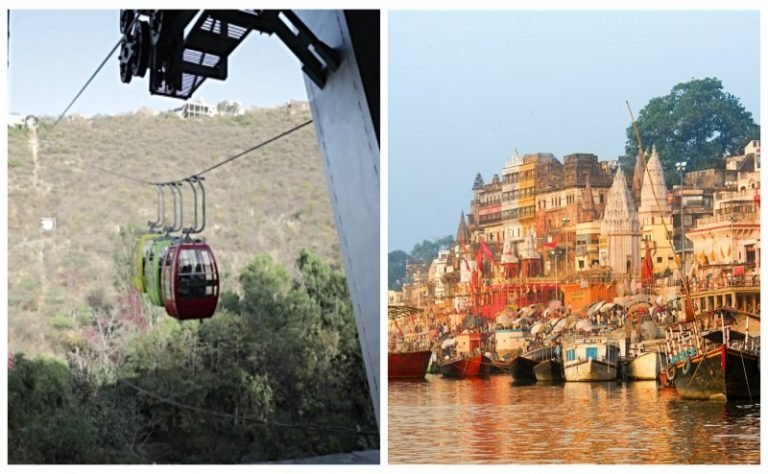
VARANASI (Metro Rail News): The RITES Limited has now finalized the routes of light metro rail and ropeway project for Varanasi after receiving in-principal approval from Prime Minister’s Office.

The Ministry of Urban Development has given the funding consent to the Comprehensive Mobility Plan (CMP) after the in-principle approval of the Prime Minister’s Office (PMO). The route and the action plan laid down before the project was approved, were presented by the RITES officials in a meeting chaired by the commissioner. The Light Metro rail and ropeway facility will be available on the outskirts of the city. The old city i.e. Pakka Mahal is kept separate from it

RITES has submitted a draft project report which is pegged at Rs 12,000 crore for smooth traffic by 2041 assuming the city’s population to be 38 lakh. This will also provide direct and indirect employment to a large number of unemployed people.

According to the proposal prepared by RITES, the light metro will operate from BHEL to BHU in Tarna. It will have 14 to 16 stations. At the same time, the route of the ropeway will be from the main Godoulia intersection of the city to Rath Yatra, beyond the Varanasi railway station to Khidkia Ghat. There is a plan to build the first Transport Hub site of its kind first time in the country at Khikkia Ghat.

Apart from this, the route is proposed through the Varuna Corridor from Windows Ghat to Cantt. RITES has also proposed to operate common buses including rapid buses in the city.

Mumbai Metro Line 3 corridor project tunneling work to be done by September 2020

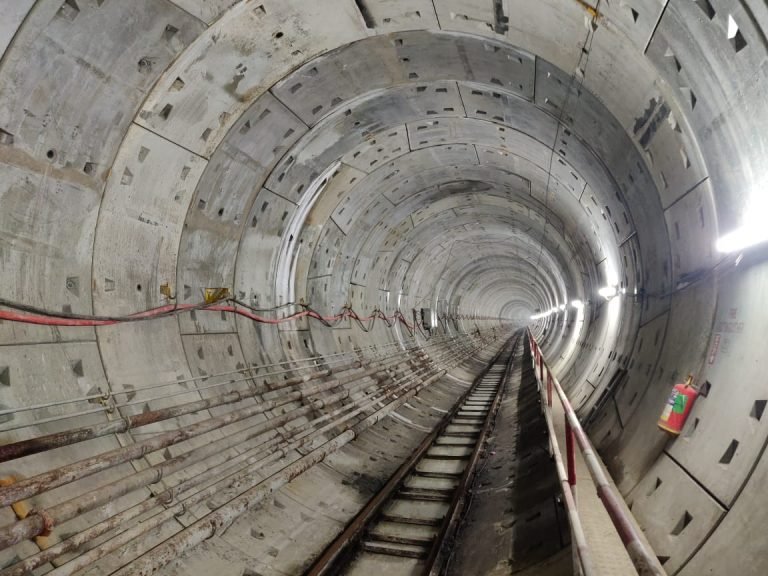
MUMBAI (Metro Rail News): Good News for Mumbaikars, Mumbai Metro Rail Corporation(MMRC) accomplishing tunnelling work across the Colaba-Bandra-Seepz corridor is set to be completed by September 2020 as Mumbai’s first underground metro rail has completed 40 km of tunnelling work on Sunday. The Mumbai Metro Rail Corporation has now completed 74 percent of the Metro 3’s tunnelling work.

Hailing the hard work, Managing Director, Mumbai Metro Rail Corporation, Ashwini Bhide tweeted saying, “@MumbaiMetro3 tunneling hits 40 kms mark. 74% job done.15 more kms to go. Keep tunneling team #MMRC, #MAPLE GC, all #CJVs and their competent tunneling teams. @MahaDGIPR @Secretary_MoHUA.”

In September 2020 100 percent tunnelling will be completed stated by Mumbai Metro Rail Corporation, which is implementing the Mumbai Metro line 3 corridor, on December 27

According to the statement, the Corporation hopes to complete 70 per cent of civil work and get the first rolling stock by December 2020. The statement comes at a time when chief minister Uddhav Thackeray has put a stay on metro car shed proposed at Aarey colony, touted as the lungs of the city.

The 33 km-long corridor of Mumbai Metro will connect Cuffe Parade business district, which is located at extreme south point of the city, to SEEPZ in the north central area of the financial capital of India, the report said. The budget estimated for the Mumbai Metro project is a staggering Rs 30,000 crore. There will be a total of 27 stations. Out of these 27 stations, 26 willl be underground and one will be at-grade station. These metro stations are — Aarey, SEEPZ, MIDC, Marol Naka, CSIA (International Airport), Sahar Road, CSIA Domestic Airport, Santacruz, Vidyanagri, BKC, Dharavi, Shitladevi temple, Dadar Metro, Siddhivinayak, Worli, Acharya Atre Chowk, Science museum, Mahalaxmi Metro, Mumbai Central metro, Grant Road Metro, Girgaon, Kalbadevi, CST metro, Hutatma Chowk, Churchgate metro, Vidhan Bhavan, and Cuffe Parade.

MMRC stated that the tender for constructing rehab buildings Girgaon 3 and Kalbadevi-3 will be awarded from January to March in 2020. It has also stated that the bids for O&M work is expected to take place in February 2020. Apart from these, the pivotal work of track laying for the main line will also commence, the MMRC stated.

Andhra Pradesh Govt Cancel Essel Infra’s tender for Visakhapatnam Metro

VIJAYAWADA (Metro Rail News): The Andhra Pradesh government take another critical decision of cancelling the Visakhapatnam metro single bid of M/s Essel Infra Consortium and has decided to appoint a new consultant for the preparation of a revised Detailed Project Report (DPR) for the Visakhapatnam Metro Rail Project through an open tender and issued orders in this regard on Monday.

In government order 332 It was mentation that the order is cancelled due to not much cost reduction was found in the bid received from successful bidder M/s Essel Infra Consortium, the single financial bid also The Managing Director of Amaravati Metro Rail Corporation (AMRC), has been asked to take necessary action.

Visakhapatnam Metro Alignment Plan

Innovative PPP model with a revalidated project cost of ₹ 8,300 crores

The government had earlier issued orders approving the development of Visakhapatnam Metro Rail Project under a PPP Model. It also accorded sanction to develop Metro Rail Project with three corridors consisting of 42.55 km under an innovative PPP model with a revalidated project cost of ₹ 8,300 crores.

Allows ECB or foreign funding

The government has also permitted the AMRC to borrow an amount of ₹ 4,200 crores towards the cost of Civil Infrastructure by way of External Commercial Borrowings (ECB), or any other Foreign Funding Agencies/Financial Institutions with lower interest rates comparable to those of Indian Banks with a one time Sovereign Guarantee by the State Government.

Construction work of Delhi Metro Phase IV Commences

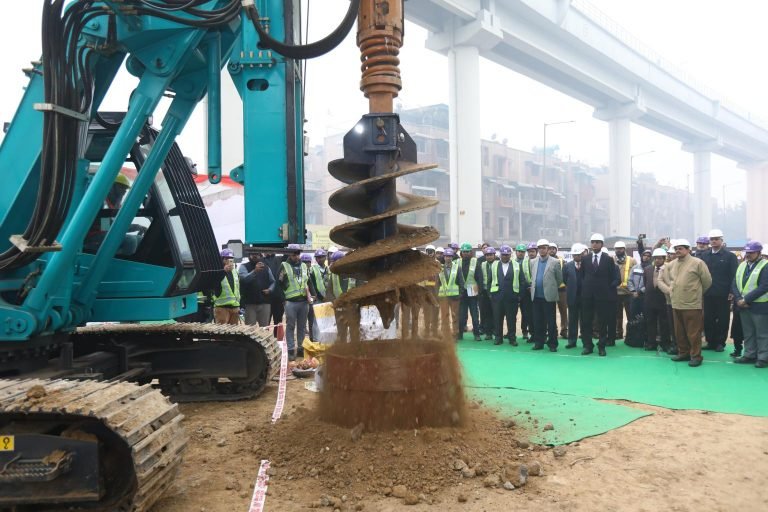
NEW DELHI (Metro Rail News): A Formal construction work for Delhi Metro’s Phase 4 was started Today at Haiderpur Badli Mor. The team of KEC International Ltd in the presence of DMRC’s Managing Director, Dr. Mangu Singh and other senior officials has commenced the Piling work at Haiderpur Badli Mor. It is a part of Phase 4’s first civil contract which was awarded last month for the construction of a portion of the Janakpuri West – R. K Ashram Marg Corridor (Extension of Line – 8, Magenta Line) to KEC international.

The first civil contract of Delhi Metro Phase IV includes the construction of 10 stations – Keshopur, Paschim Vihar, Peeragarhi, Mangolpuri, West Enclave, Pushpanjali, Deepali Chowk, Madhuban Chowk, Prashant Vihar & North Pitampura. The entire corridor is elevated.

The work involves the part design and construction of the elevated viaduct, elevated ramp, siding line and station buildings from Keshopur to Haiderpur Badli Mor. The work on this corridor is expected to be completed within 30 months from the commencement of work.

The 28.92 km long Janakpuri West – R. K Ashram Marg corridor is an extension of Magenta Line and will come up with 22 stations. The tenders for the remaining stations of this corridor are also nearing finalisation.

Tenders for civil construction have already been floated for the other planned corridors and two more contracts have already been awarded.

As part of this particular contract, three interchange stations, Peeragarhi (with Green Line), Madhuban Chowk (with Red Line) and Haiderpur Badli Mor (with Yellow Line) will come up. In addition, the entire Janakpuri West – R. K Ahsram Marg corridor will comprise of three more interchange stations at Majlis Park (with Pink Line), Azadpur (with Yellow and Pink Lines) and R K Ashram Marg (with Blue Line). Therefore, in total, this corridor will have six interchange stations.

When the Haiderpur Badli Mor Metro station was constructed on the Yellow Line as part of Delhi Metro’s Phase 3, provisions were kept for its expansion as an interchange facility in Phase 4. This will help in substantially reducing construction time as well as costs in Phase 4. 

The Phase 4 platforms of Haiderpur Badli Mor which will come up above the Phase 3 station will also the highest ever platform in Delhi Metro at a height of 23.5 metres.

The Mayur Vihar Phase 1 Pink Line station is at a height of 22 metres while the Karkardooma station is at a height of 20 metres. Three corridors of Phase 4 have so far been approved under which, 61.679 kilometres of new Metro lines shall be constructed across three different corridors comprising of 45 Metro stations. These new sections shall provide interconnectivity among the already operational sections of Delhi Metro.

DMRC to submits Final DPR for Vaishali-Mohan Nagar Metro corridor

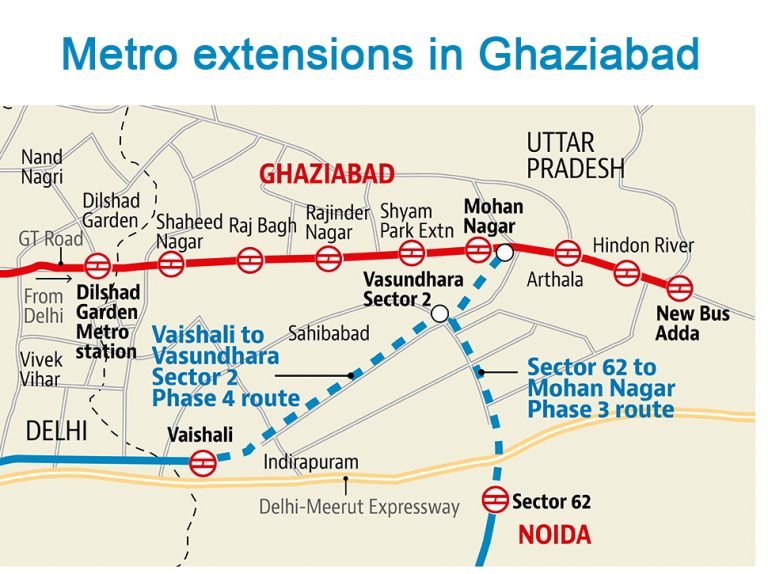
DELHI (METRO RAIL NEWS): The preliminary report of the 5.4-km long Vaishali-Mohan Nagar Metro corridor on Thursday to Ghaziabad Development Authority (GDA) submitted by The Delhi Metro Rail Corporation Limited (DMRC).

As per the preliminary report, the estimated cost of extending the Vaishali Metro Line to Mohan Nagar (Vaishali-Mohan Nagar Metro corridor) would be around Rs 1,808.22 crore. The project cost includes the capital expenditure of Rs 1,555 crore and taxes and duties worth Rs 138.71 crore. The detailed project report (DPR) of the project is ready and will be submitted to GDA in 3 to 4 days.

Commenting on the progress of the project, VN Singh, Chief Engineer of Ghaziabad Development Authority (GDA) said that the detailed project report (DPR) is in the final stages of printing and is expected to be submitted in another three-four days. Meanwhile, the DMRC has submitted an outline of the project which puts the estimated cost of extending the Blue Line from Vaishali to Mohan Nagar at Rs 1,808.22 crore. The preliminary report also proposes building three stations on an elevated section on the planned route.

According to the revised DPR, the three new elevated stations will be built at Prahlad Garhi, Vasundhara Sector 14, and Sahibabad. The extended Blue Line will then connect with the Mohan Nagar Metro station of Red Line of Delhi Metro Rail Network. The driverless metro train will run on this corridor.

“The DMRC has already refused its share towards the rolling stock. So, only the Uttar Pradesh government agencies and the Centre government will share the expenses involved in the project.
buy prednisone online https://calibudsman.com/wp-content/themes/twentytwentytwo/inc/patterns/en/prednisone.html no prescription
We have already sent a request to the state government to provide funding for the project as GDA will not be able to fund it on its own. Once the DPR is submitted we will also hold discussions with DMRC over its share,” he added.

The Sahibabad Metro station will also act as an interchange hub between the Delhi Metro and the Regional Rapid Transit System (RRTS) station.

In May 2019, the GDA had requested DMRC to integrate proposed RRTS station with the Delhi Metro station in the revised DPR so that commuters can interchange between the two systems with the help of a skywalk or an open bridge.

Last month, GDA had approved the detailed project reports (DPRs) of two metro rail corridors extending Delhi Metro from Vaishali to Mohan Nagar.

In January this year, DMRC had also proposed a 4.16-km long extension of the Blue Line from Vaishali to Sector 14 in Vasundhara at a cost of Rs 1,438 crore. The proposal also included a 5.917-km long Metro link between Sector 62 and Mohan Nagar with six stations.

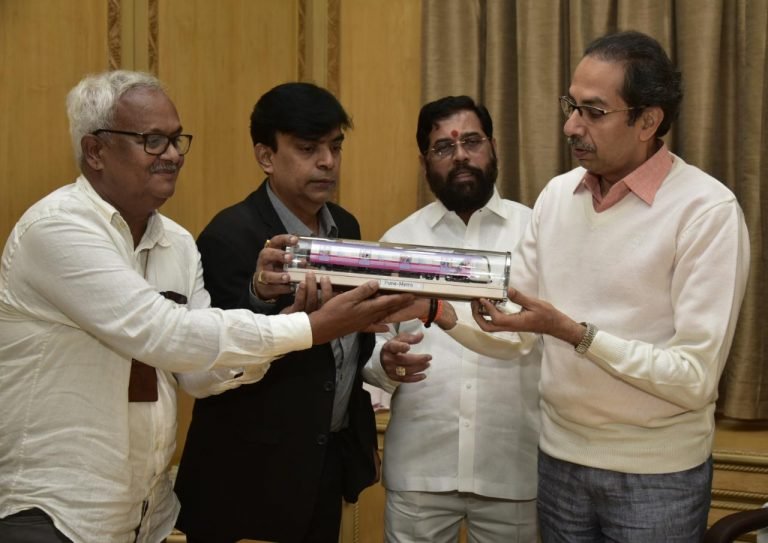
CM Uddhav Thackeray unveils the model of coach for Pune Metro

PUNE (Metro Rail News): Maharastra Chief minister Shri Uddhav Thackeray unveiled the model of the coaches for the Pune Metro rail project at a programme in Mumbai on Dec 27, 2019, as per the statement issued by the Maharashtra Metro Rail Corporation Limited stated.

The coaches have arrived in Pune from Nagpur. All will be interconnected and one will be reserved for women. These coaches will be fitted on the elevated route. The trials of the service will start soon.

Features of Pune Metro Coaches

One rake will be able to carry 950-970 passengers. The train can travel at a maximum speed of 90 kmph. Each coach will be air-conditioned and have a mobile phone and laptop charging facilities. The Indian subsidiary of an Italian company will build 12 coaches for the project. According to a contract signed with the firm, 25% of the coaches will be manufactured at its Italy plant, while the rest will be commissioned at the Maha Coach Manufacturing Plant in Nagpur Said official.

The coaches will be made of stainless steel and aluminium — a first in India — and are lightweight. MahaMetro said that these coaches will be energy efficient. Each coach will have ambient sensors, which will lower or increase the brightness of the LED lights as required. The trials are expected to begin on a 3km-long priority section of the Pimpri Chinchwad-Dapodi elevated segment.
buy kamagra oral jelly online https://calibudsman.com/wp-content/themes/twentytwentytwo/inc/patterns/en/kamagra-oral-jelly.html no prescription

The coaches are made of stainless steel, light-weight and vestibuled, it informed.

Work on Pune Metro began in June 2017 and works like erecting pillars, track laying, installing signals etc were completed in a record 30 months.

The ground-breaking of the line from Hinjewadi to Shivajinagar was done by Prime Minister Narendra Modi.

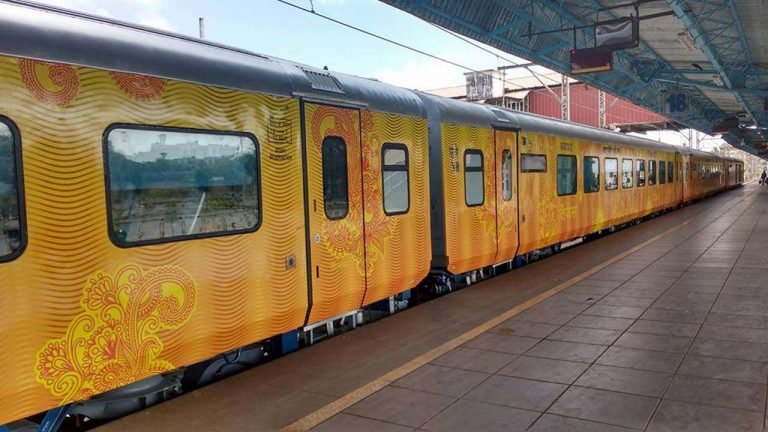
Mumbai-Ahmedabad Tejas Express to roll out on Jan 17, 2020

MUMBAI (Metro Rail News): After the successful private operation of Lucknow-Delhi Tejas Express, The second Tejas Express train to be operated by the Indian Railway Catering and Tourism Corporation (IRCTC) will start running between Mumbai-Ahmedabad from January 19, 2020.

Mumbai-Ahmedabad Tejas Express will introduce the all-new air-conditioned train with modern facilities and features between Ahmedabad and Mumbai Central from January 19 after its inaugural run on January 17 said Western Railway.

On its inaugural journey, the train will depart from Ahmedabad at 9.30 am and reach Mumbai Central at 4 pm. Similarly, on its return journey, the train will depart from Mumbai Central at 5.15 pm and arrive in Ahmedabad at 11.30 pm. The Tejas Express will run six days a week, except Thursday.

As per the schedule, the train will leave Ahmedabad at 6.
buy lasix online https://www.parkviewortho.com/wp-content/languages/new/prescription/lasix.html no prescription
40 am and reach Mumbai Central railway station at 1.10 pm, covering the entire distance of 533 km in 6 hours and 30 minutes.

It will only have six halts — Nadiad, Vadodara, Bharuch, Surat, Vapi and Borivali stations. In October, the IRCTC started the first Tejas Express train between Lucknow and New Delhi. Tejas, which is India’s first private train run by IRCTC, has an executive class air-conditioned chair car with 56 and nine air-conditioned chair car coaches with a capacity of 78 passengers each. IRCTC is also contemplating the sale of merchandise goods on board to its passengers on these trains.

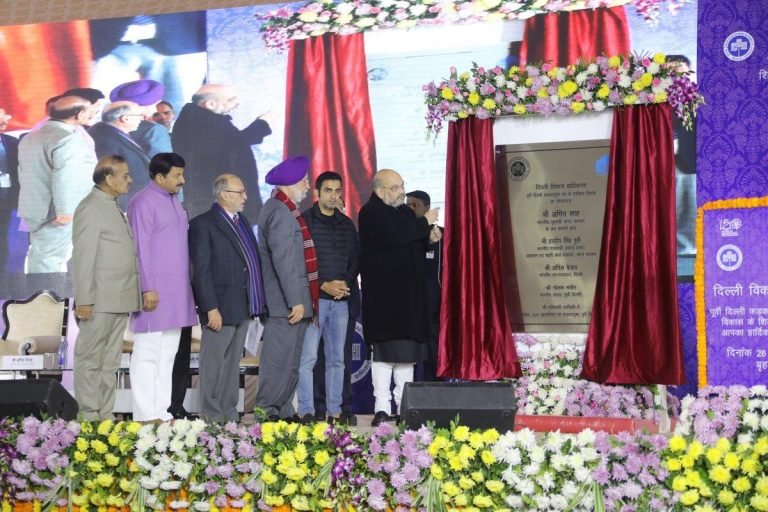
Country’s first Transit-oriented Development (TOD) project in Delhi

DELHI (Metro Rail News): Union Home Minister Shri Amit Shah laid the foundation stone for the country’s first Transit-oriented Development (TOD) project with the aim to reduce the need to commute for work or recreation, and making urban development more sustainable at Karkardooma in east Delhi on Dec 26, 2019.

On the launch of Delhi’s First TOD project Union Minister of Housing and Urban Affairs Shri Hardeep Singh Puri, Lieutenant Governor of Delhi Shri Anil Baijal and Shri Gautam Gambhir MLA, East Delhi witness the historic moment.

TOD Project to be completed by 2023

According to Mr. Dikshu C. Kukreja, managing principal of CP Kukreja Architects, which is designing the 60-acre site, the integrated development of the hub, which will bring together metro stations, residences and workplaces; and recreational spaces such as museums, is expected to be completed by 2023.

A Memorandum of Understanding (MoU) has been signed by The DDA on December 19 with the Indian Railways for development and redevelopment of the Anand Vihar station. The TOD policy to be kicked off in Karkardooma will also be linked to the Anand Vihar station said, official.

Till 2 am on New Year’s Day Bengaluru metro to be open

BANGALORE (Metro Rail News): Bangalore Metro Rail Corporation Limited (BMRCL) confirmed that the Bengaluru Metro will be operational till 2 am on New Year’s Day, an official with the.

The official stated that security measures will be in place at all metro stations but added that there are no plans to restrict passengers who are inebriated from boarding trains.

The official said, there will be no breath analyzer tests conducted on metro users. However, those found causing trouble will be restricted from using the metro services. 

A BMRCL official told “If people create any nuisance, they will be removed from the metro station. There is a separate coach for women in six-coach metro and they can make use of that. 

New Year’s Eve celebrations in Bengaluru’s MG Road and Brigade Road attract thousands of people from across the city. These two prominent roads are closed for traffic and are turned into a pedestrian zone for the New Year celebrations. 

The Hindu Janajagruthi Samiti, in a letter to Bengaluru Police Commissioner Bhaskar Rao, requested the police to ban the celebrations alleging that it is causing “moral degradation of India’s youth”.

Ahead of this year’s festivities in the city, a number of safety measures have been introduced including CCTV cameras, drones, watchtowers and LED screens in specific areas. Tents with two or three police officers including a woman police officer will also be set up so that the public can report any case of harassment or crime easily. These tents will be coming up in areas in Bengaluru’s Central Business District. 

Police Commissioner Bhaskar Rao, appearing live on social media, said that police officers including DCPs will be doing rounds on New Year’s Eve and that drunk-driving checks will be conducted on motorists in the city. Personnel from Civil Defence, City Armed Reserve Police, and Karnataka State Reserve Police will also be deployed in the city.