Home Blog Page 571

Kerala semi-high speed rail to get Japanese coaches for the project

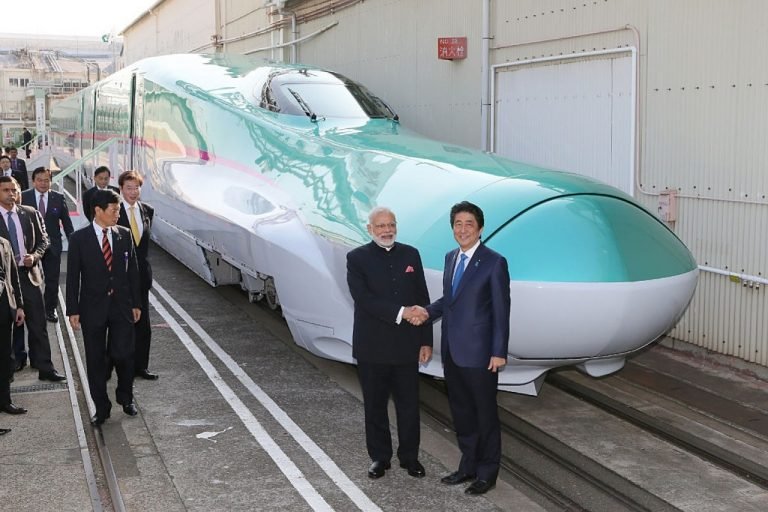
THIRUVANANTHAPURAM (Metro Rail News): The Japan companies have moved here to review on the Kerala semi-high speed rail project with Thiruvananthapuram-Kasaragod. This kind of companies which develop coaches and signals for bullet trains and will make talks with the Railway Development Corporation to manufacture coaches and signals for the determined project.

The coaches would cost Rs 4000cr where Ro-Ro service coaches that transfer goods truck would cost Rs 1000 cr. The telecom and signal systems would cost Rs 3000 cr. The entire estimated cost for this semi-high speed rail is around Rs 66,405 cr but it will most probably cost approximately Rs 70,000 cr once the project finishes in 2024.

The govt would have to avail of foreign loans of Rs 35,000 cr. JICA has initiated forward offers. The interest rates will be within 0.2% to 0.5%. This can be up to 6% because of the variations in dollar rates. The payback time is 20-30 yrs and the moratorium time is 10 yrs. The last alignment of the high-speed rail would be made this week.

The Railway Development Corporation would get the details of land which needs to be acquired. The rail for the project requires to be formed parallel to the existing rails. The railway has two hundred hectares of land and will need to acquire a more 1226 hectares.

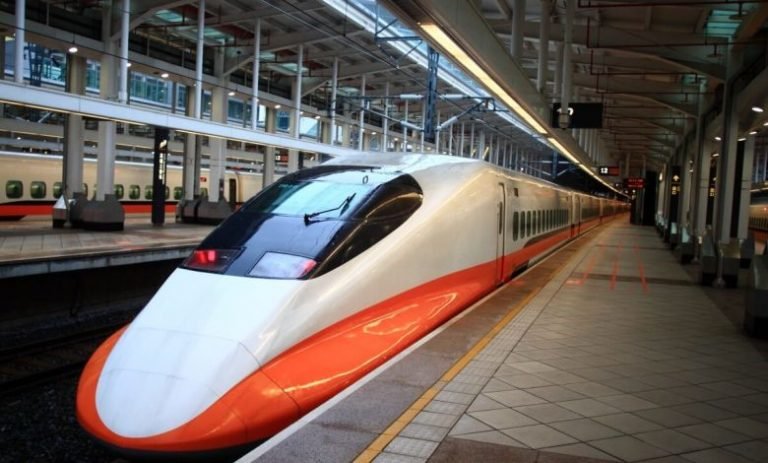
Earlier finished a journey in the semi high-speed rail from the capital to Kasaragod will take only four hours. The rail coaches could travel at a speed of 200 kilometres per hour. The coaches would be air-conditioned. The advanced telecom system will be effective in any climate. Stations and yards will be of the world-class level.

Chennai Metro partnered with SugarBox, offers free WiFi in Metro

CHENNAI (Metro Rail News): The passengers using Chennai Metro are in, for a treat as Chennai Metro Rail Limited (CMRL) has partnered with SugarBox Networks to provide trains with a technology which enables users to access apps. SugarBox Zones have been set up in many Metro trains over the city where the passengers can sign in to SugarBox and enjoy their favourite movies or listen to music at a button click.

The SugarBox is a local Wi-Fi network that eliminates the users’ dependence on mobile data and gives them continuous access of apps. Currently, there are no data charges or usage limits over apps on SugarBox. Users could access content on the SugarBox app on both iOS and Android devices. As per a press release, Rohit Paranjpe SugarBox Networks CEO stated, “It is a matter of great honour to have been taken by Chennai Metro.

We would install SugarBox servers in all Chennai Metro Rails. Users would be able to run movies and TV shows through their commute. In the long run, the SugarBox platform would also support e-commerce, gaming, music streaming, last-mile transport booking, food ordering and many other relevant value-added services. This enables users to continue using their desired apps in places without internet connectivity as well as without any data cost.” 

Process of SugarBox work on Chennai Metro

  • Firstly, find the ‘SugarBox’ in your WiFi settings, and connect that
  • Open SugarBox app, register by putting your mobile number
  • Stream and download movies without any buffer or data charges

21 residents shifted from Kolkata Metro cave-in zone

KOLKATA (Metro Rail News): As tunnel-boring machine Urvi went into the cave-in zone on Tuesday, a total of 21 residents from Gour De Lane off Bowbazar were evacuated. The range of subsidence that found out the buildings fall like a pack of cards begins here. KMRC, the agency executing the Kolkata East-West Metro project, had commenced evacuation on Sunday by shifting twelve residents.

Kolkata Metro Rail is extremely cautious this time. Nobody wants a repeat of 31 August when the TBM digging the westbound tunnel of the Kolkata Metro project hit an aquifer and water flooded the tunnel, bringing with it sand and soil. Several buildings had fallen and many others were damaged in the subsidence that could be arrested only after twelve days. “On that time, our house was destroyed even though the TBM was digging at a distance. This time, the tunnelling will be carried out right below our building. We all are extremely worried,” stated Suneet Sarkar of 4B, Gour De Lane.

The Durga Pithuri Lane and Shyakrapara Lane were the worst-hit.
buy valtrex online https://www.facebeautyscience.com/wp-content/themes/twentyseventeen/inc/en/valtrex.html no prescription
Buildings of Gour De Lane nearby Shykrapara Lane were also affected. “The last time we had to wait in a hotel for around 28 days. When we got back, found some cracks in the walls of the house,” the 68-year-old told. “The Kolkata Metro Rail Co. notice tells we can return on Sunday but so many people haven’t been able to return on the scheduled date. The tunnelling we were said, is slow and hence the delay,” Sarkar said.

Although 5 homes can be evacuated Somnath Banerjee of 2B Gour De Lane denied to leave his house. “I shall not move until my nephew gets the Rs five lakh compensation. He denies to pay the electric bills and house tax because I got the money and he didn’t,” said Banerjee.

Urvi’s twin Chundee which hit the aquifer is presently lying defunct below Durga Pithuri Lane. It was building the westbound tunnel. Urvi was building the east-bound tunnel also had dug till the Nirmal Chunder Street-Chaitan Sen Lane crossing at the same time of the tunnelling fiasco and had been stuck ever since.

As per a Calcutta high-court order to continue tunnelling works, it continued digging on Feb 18. It has made around 1,100 rings till now. As the TBM burrows an industrial robot places segments of a 1.2meter extended pre-cast concrete ring. And thus a 12meter stretch of the tunnel gets built regularly. But thanks to Urvi’s slow progress, only around 100meter has been covered in the last fortnight.

HMRL beats Hong Kong metro in terms of lowest manpower

HYDERABAD (Metro Rail News): Hyderabad Metro which is the 2nd largest metro project in the country after Delhi metro has now created its mark globally by attaining lowest manpower in terms of its services.

As per the Hyderabad Metro Rail Ltd managing director NVS Reddy, Hyderabad metro has beaten Hong Kong metro in lowest manpower. “While the Hong Kong metro has 25 personnel per km for its operations HMRL has eighteen personnel for each kilometre,” stated Reddy adding that the achievement shows the efficiency of Hyderabad metro.

The Hyderabad metro rail ltd is termed as the largest metro rail network carried out in Public-Private Partnership model. “More of the services will be implemented soon for the convenience of the passengers,” declared NVS Reddy.
buy suhagra online https://pavg.net/wp-content/themes/twentytwentyone/inc/en/suhagra.html no prescription

The HMRL has now moved its focus on the phase-2 after the launch of services between Jubilee Bus Station (JBS) and Mahatma Gandhi Bus Station (MGBS). Phase-2 of the metro is may have 3 corridors out of that 2 lead to the Rajiv Gandhi International Airport (RGIA).

Bullet train project has been acquired only 40% of the land

GUJARAT, INDIA (Metro Rail News): In Gujarat state assembly released information that only around 40% of the land has been required for the bullet train project between Ahmedabad-Mumbai. The state govt tabled the third annual report 2018-19 of the central government’s flagship project. info@indomedtrip.com

On Monday, Gujarat Deputy CM Nitin Patel tabled the 2018-19 annual report of the ‘National High-Speed Rail Corporation Limited’. As per the report, only about 40% of the land requirement for the PM Narendra Modi dream project bullet train between Ahmedabad-Mumbai, is acquired. The acquisition is based upon the joint measurement survey. The total land needed for the complete project is 1,380 hectares, where 939.69 hectare comes in Gujarat, 431.2 hectare comes in Maharashtra along with 8.70 hectares in Dadra and Nagar Haveli.

The NHSRCL has envisaged integration of commuter terminals of the bullet train with the Railways and Metro at Sabarmati and Ahmedabad. For this integration, many Railway facilities will be needed to be shifted. Also, electrical overhead lines and civic utilities such as water and Drainage pipes, roads, telecom cables and infrastructure would also be needed to be shifted to accommodate the bullet train network.

NHSRCL company has obtained many environmental clearances like the CRZ clearance across Narmada river in Bharuch district, the wildlife clearance for Thane Creek Flamingo wildlife sanctuary and the Sanjay Gandhi National Park and Tungareshwar Wildlife Sanctuary. NHSRCL has also carried out tree transplantation at many areas in Ahmedabad. About 3,000 trees would be axed for the project in Ahmedabad as per the project.

UPMRC erects the first Pier-Cap of Kanpur Metro Line-1

KANPUR (Metro Rail News): Kanpur Metro project is being implemented in the city by Uttar Pradesh Metro Rail Co. On Monday the Afcons workers erected the 9.6-m first wide pier cap for the 8.728-km elevated priority corridor of Kanpur Metro. UP Chief Minister Shri Yogi Adityanath inaugurated the civil construction of Kanpur Metro’s Priority Corridor on 15th November 2019.

KM 3 1

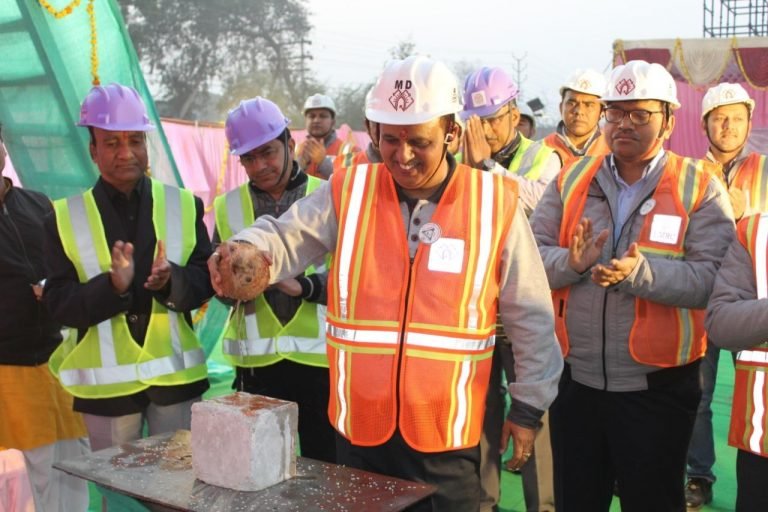
Within just around 3 and a half months, the Metro team has successfully erected the 1st Pier-Cap of the corridor on Monday around 6.30 am. Managing Director of UPMRC Shri Kumar Keshav done rituals at the construction site and the 1st Pier Cap was erected with a Crane after the Pooja Ceremony. This Pier-Cap has been erected at the Piller No. 19, i.e. among the IIT Kanpur & National Sugar Institute.

UPMRC has accomplished this achievement around three months before as compared along with the Metro Project of Lucknow. Lucknow Metro is being accredited with the name Fastest Constructed Metro in India and the construction work of Kanpur Metro Project is faster as compared to Lucknow. It shows a constant approach of UPMRC engineers to upgrade themselves and give a more innovative and refined MRTS to the Public.

KM 1

On the event, Shir Keshav reiterated the commitment of the whole team of UPMRC in undertaking this prestigious project in record time to give the city a world-class Metro system in the least possible time.

KM 4 1

About Pier-Cap 

A base that is created to place the U-Girder on the top of a Pillar is termed as Pier-Cap. The U-Girder is the particular unit of Metro’s civil structure, on which the Metro track is laid and the structure that is in between the Pillar. Pier-Caps are 2-m in height, 9.3-m long and 2.8 meters wide, having a weight of about 70 tons.

KM 5 1

Update of Construction Work

As the inception of the construction work, the civil construction work speed of Kanpur metro project has become a matter of discussion thanks to the skilful leadership of UPMRC MD Mr. Kumar Keshav and the exceptional efficiency of Metro engineers. Within about 3 and a half months, above 600 piles and 42 Piers have previously been completed under the ‘Priority Corridor’. Simultaneously the casting of U-girders and Pier-caps is growing rapidly in the Metro’s Casting Yard and the casting work of 24 U-Girders and ten Pier-caps has also been developed.

MMRDA invites stakeholders to a workshop for Metro Line 2A & 7

MUMBAI (Metro Rail News): The Mumbai Metropolitan Region Development Authority has called stakeholders to a workshop on last-mile connectivity for Metro Line 2A & 7. The Authority would hold the workshop on 3rd March 2020.

As per the MMRDA press release, the workshop would be prepared to obtain feedback and suggestions on giving connectivity and also decide on the design, construction, O & M arrangement, terms & conditions, and other modalities. Metro Line 2A & 7 are in the advanced stage of end and both these lines are supposed to be commissioned by the end of 2020.

The Metro corridors pass by heavily urbanised areas and the Metro stations are generally located in close proximity to residential and commercial development areas, there is an opportunity to give last-mile connectivity from Metro stations to nearby areas that would help decongest roads and increase pedestrian safety.

The Mumbai Metro Master Plan is developed to improve the traffic and transportation in Mumbai Metropolitan Region also to provide a metro system within a 1-km reach. MMRDA has planned a metro network of 14 lines of more than 337 kilometres long with more than 225 stations. A significant length of the network will be operational in the next 3-4 years.

Maharashtra CM & Minister Aaditya Review Mumbai Metro 3 Project Work

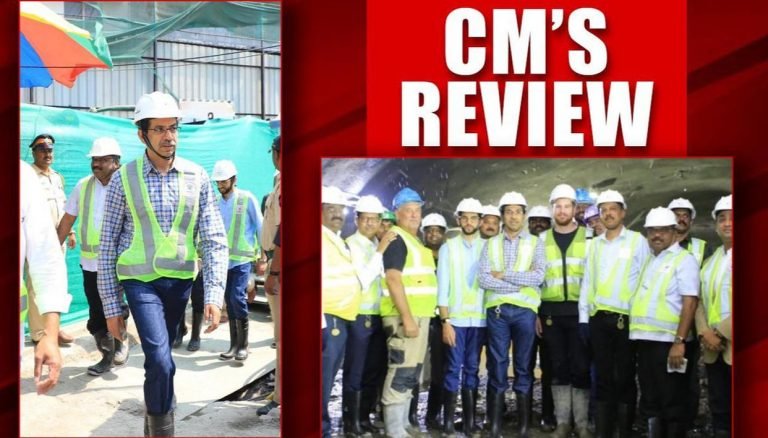
MAHARASTRA, INDIA (Metro Rail News): Maharashtra CM Uddhav Thackeray and minister Aditya reviewed the ongoing construction work of the Mumbai Metro 3 from Colaba-Bandra-Seepz corridor on Saturday. Chief Minister Uddhav Thackeray dressed in casuals throughout his visit and also visited the Sahar metro station and investigated the work there. Maharashtra Tourism Minister Aaditya Thackeray was also present while inspection.

CM also investigated the work details from Metro employees working at the project. The total growth of the construction in the Mumbai Metro 3 project currently stands at 59% and the progress of tunnelling stands at 63%. At the same time, the development of Sahar Metro station has been 48%.
buy levitra soft online https://www.adentalcare.com/wp-content/themes/medicare/editor-buttons/images/en/levitra-soft.html no prescription

MMRC which is implementing the Colaba-Bandra-Seepz corridor last year had declared that 100% tunnelling work of the project would be finished by September next year. Besides this, the Corporation hopes to complete 70% of civil work and get the first rolling stock by December 2020, MMRC stated in a statement.

CM Uddhav Thackeray back in December had put a stay on the metro car shed proposed at Aarey colony, touted as the lungs of the city. The almost Rs 30,000-cr project will connect Cuffe Parade business district in the extreme south of the town to PZ in the north-central with 26 underground and one at-grade station.

MMRDA plans mobile app, card to access all lines

MUMBAI (Metro Rail News): The MMRDA is working on a mobile app which allows users to book Metro tickets. The authority launched Metro travel card dummy on Friday which will provide users to access all lines in the Metro network. The card would be available to commuters by December when 2 more Metro lines – Metro 7 and Metro 2A– would be operational.

MMRDA is working on the construction of 14 lines with a total distance covering over 350 km. Currently, in Mumbai only Versova-Ghatokopar line is operational. The features of the application are as follows – to book tickets, check train timings & schedule, purchase season passes and figure out interchangeable metro stations. The app would map the Metro stations and the Metro network. “It is in a nascent stage and details are being discussed,” stated an MMRDA official.

MMRDA showcased the dummy common metro card for all metro rail lines under the integrated ticketing system, which would be available in 2 designs. The new card will have a chip containing all the essential information embedded in it and looks similar to a debit/credit card. “We have shortlisted the designs of these two cards after scrutinizing over twenty different designs. This ‘single card’ for all metro lines will be available for people by December when the two Metro lines of metro-7 and metro-2A will be ready,” stated RA Rajeev, MMRDA commissioner.

Officials told Mirror that the card could also be integrated to gain access to other modes of transport as well as the suburban local trains, BEST buses, taxis and Autos. Subsequently, it may even be connected to bank accounts and people can use it to shop also. However, this card has been a bone of contention among the Indian Railways and MMRDA due to technical differences over the last 3 years.

The MMRDA has finalised the designs that how the Metro stations on these 2 lines would look. The Metro-7 on Dahisar (E)-Andheri (E) line would be called ‘Redline’ where the Metro-2A in Dahisar (W)-DN Nagar would be called ‘Yellow line’.The background of all the signages would be in black. The other indicators including station names would be in red or yellow, as per the metro line.

Chennai Metro inter-modal connectivity at Egmore

CHENNAI (Metro Rail News): Chennai Metro plans to remove the fencing between Egmore Metro station and the suburban platform so that passengers can quickly walk across while changing their mode of transport. As per the officials of CMRL, now if people exit the station, then they have to cross the parking lot climb the foot over-bridge and then get to the suburban platform of Egmore Railway station.

“If we remove the iron fencing, they can reach the suburban platform immediately. We didn’t earlier foresee that passengers would have to take a circuitous route to reach that platform. The idea of providing inter-modal connectivity is that passengers should never feel the strain of switching from 1 mode of transport to another. In the coming weeks, we will remove the fencing and put up signage as well,” said an official.

Presently CMRL has also inter-linked the concourse level of Egmore Metro station to the foot over-bridge that would take passengers to the suburban platform of Egmore Railway station. The pathway from the concourse level that would lead passengers to the lift and it would take them to the foot over-bridge said, officials. They have installed signage at many places to supervise passengers as well.

Egmore Metro station is an important station as thousands of passengers go to the railway station to catch outbound trains from Chennai. Sources told that there should also be signage at the Egmore Railway station at some important areas, telling commuters the way to the Egmore Metro station and they should also put up Metro Rail timings.