Home Blog Page 563

Chennai Metro plans to operate trains on lease for Phase-II

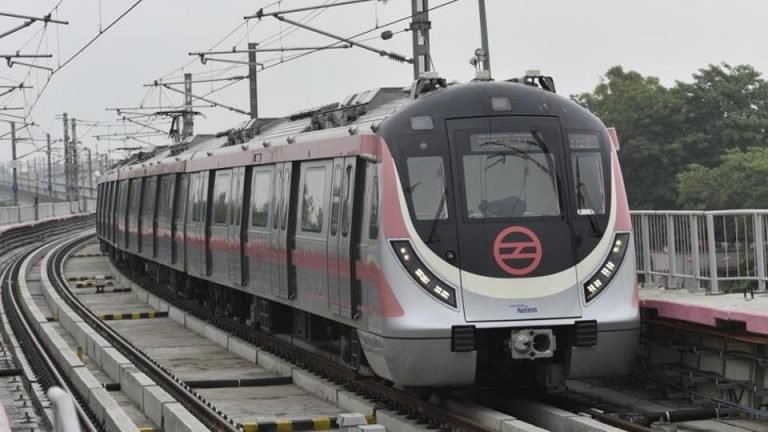
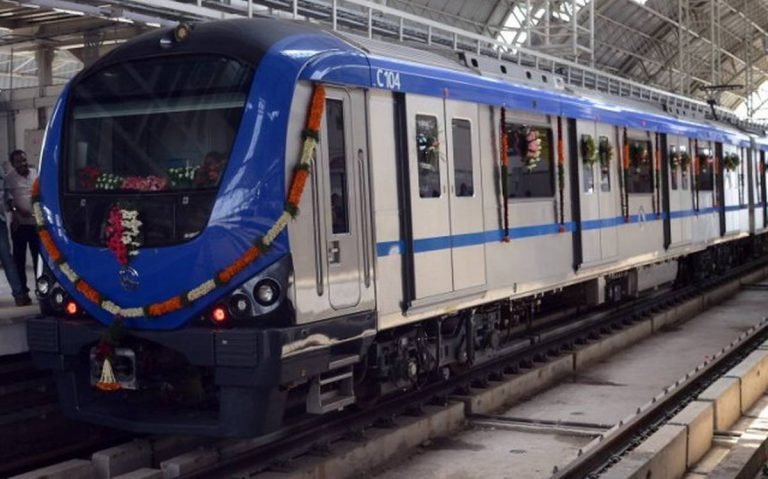
CHENNAI (Metro Rail News): The Chennai Metro Rail Limited (CMRL) is preparing to run around 25% metro rails on lease for Phase-II corridors having the target to save time & expense on procurement, operation, along with maintenance of the coaches.

However, this plan was made by DMRC to execute trial runs on lease in their Line-1 & Line-2 of Delhi Metro Rail network & floated tenders to get the answer from private operators.

Delhi Metro got responses from an entirety of eleven private operators but there is no additional development done after that the plan put on hold. “CMRL would follow a wet-lease model, where the company which rents out the trains would also operate and maintain. The train would come with crew and maintenance staff,” stated an official. Once we complete floating tenders for civil work, we would begin calling tenders for systems that include trains. It would be similar to govt departments hiring cars from an agency and let them run and maintain them,” he further added.

Chennai Metro is in expectation of to start the development of tunnels along with the 52 km priority corridor at the start of 2021 and the corridor is supposed to be available in next 5 yrs. As per the project rules funding body Japan International Cooperation Agency, CMRL would procure coaches from Japan for the upcoming corridors between Madhavaram-Sholinganallur and Madhavaram-CMBT. And for the left corridors, the CMRL would seek assistance from private operators to operate trains on a lease basis.

“We would have 3 types of rolling stock which are: trains from Japan by international competitive bidding & by wet-lease model. There is no metro rail networks in the country have used trains, but only NITI Aayog is now executing it necessary for coming metro projects to follow the wet-lease model,” the official.

“We do not know that we would save any money by taking trains on rent but we don’t have to worry about operations and maintenance. If in case any breakdown or any emergency the constructor would handle it,” an official announced. According to the DPR of Chennai Metro Phase-II, it would initially need 138 trains to cater to an expected everyday ridership of 19.2 lakh.
BVG awards €3 billion contracts to Stadler for supply of 1,500 Metro cars

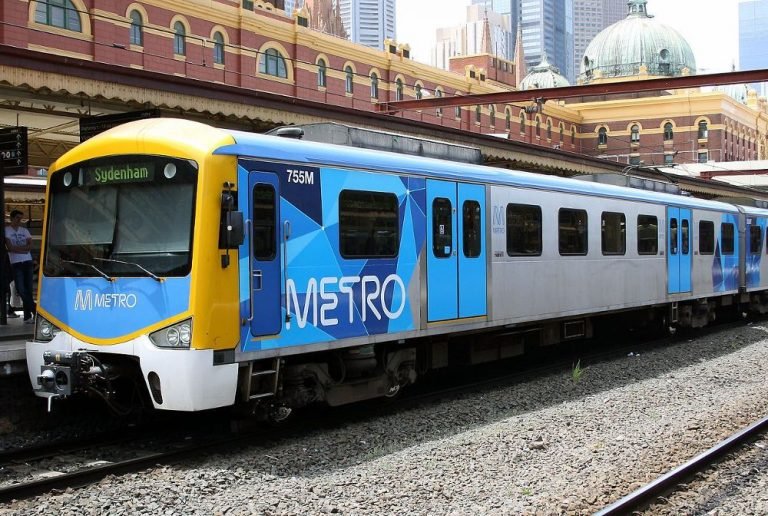
SWITZERLAND (Metro Rail News): A tender announced by the Berliner Verkehrsbetriebe (VBG) won by Stadler for delivery of up to 1,500 cars for use on the underground network in the German capital.

The framework agreement that entire volume shows up to 3 billion euros also covers the supply of spare parts for around 32 years. Unsuccessful bidders had started a survey procedure but the appeal has now been refused by the Berlin Court of Appeal in the last instance of appeal.

Stadler has come out on top in another international tender. It opens the way for the contract to be formally given and the order to be placed by the Berliner Verkehrsbetriebe.

The agreement includes a minimum fixed order quantity of 606 cars. Therefore Stadler would supply 376 cars for 2-4 car vehicle units for the small and large profile segments of the network in a 1st call-off order from 2022 onwards. Further 230 cars have been directed on a firm basis but the corresponding call-off order would be located at a later date.

Also, the agreement provides for different optional call-off order for 894 extra cars. The quantity of the firm order costs around 1.2 billion euros and involves the supply of spare parts. This contract to modernise the fleet for the Berlin underground network is an innovative chance for Stadler & BVG to work unitedly.

Swiss rail vehicle producer is now ensuring environmental-friendly mobility in the German capital thanks to their IK series within use for Stadler trains BVG on underground lines U1, U2 & U5. The new series that is referred to as J/JK via BVG is based on the familiar Stadler-METRO vehicles.

“We are happy that BVG has decided to resume its successful cooperation with our company. We are proud to have won one of the largest delivery contracts ever given in Europe and to be able to finish the order in Berlin for Berlin. We have chosen to bring forward our planned investments in the Stadler place in the German capital in order to create an optimal basis for the implementation of this major project”, CEO of Stadler in Germany explains Jure Mikolčić.

Stadler had also declared that it will invest up to 70 million euros in the Berlin-Pankow site. The new operating concept not only includes the development of a new production hall but also the creation of new optimised space for logistics & commissioning.

Indian Railway runs trains to carry essentials goods of e-commerce and local firms

INDIA (Metro Rail News): With the continuing nationwide lockdown due to COVID-19, Piyush Goyal led Indian Railways is extending their train duties to e-commerce companies for transfer of goods.

Indian Railways is offering unhindered help of Parcel rails for the transportation of necessary things along with other goods that are needed for the public over the country. As per the Railway Ministry the local industries, e-commerce companies, any curious groups, organizations, individuals, as well as prospective loaders can contact the officials of Indian Railways at the zonal level.

Further, the contact parts of Indian Railways’ officials at many railway stations have been distributed with made possible so that anyone can contact to arrange the parcel, stated by Indian Railways.

Necessary commodities to different parts of India by its freight train services already transporting by the national transporter. With the freight trains operations, Indian Railways is meeting the requirements of bulk transportation of basic items like edible oil, food grains, milk, salt, sugar, coal, cement, fruits, vegetables etc.

Where parcel train services are transporting different commodities that require to be delivered in comparatively fewer quantities. So far, the national transporter has loaded thirty special parcel trains to different targets across the nation.

An overview of parcel train services:

  1. Carrying milk from Gujarat-Delhi Region
  2. Carrying miscellaneous commodities from Jalgaon-New Guwahati
  3. Carrying miscellaneous commodities from New Tinsukia-Nagpur
  4. Carrying basic goods from Gujarat-New Guwahati
  5. Carrying dry grass from Palghar-Jammu
  6. Carrying milk products from Ahmedabad-Kanpur
  7. Carrying miscellaneous goods from New Guwahati-Gujarat
  8. Carrying milk from Renigunta-Nizamuddin
  9. Carrying agri seeds from Salem-Bathinda
  10. Carrying milk products from Moga-Guwahati
  11. Carrying milk powder from Ahmedabad-Howrah
  12. Carrying fruits from Bhopal-Gwalior
  13. Carrying miscellaneous commodity from Nagpur-New Tinsukia
  14. Carrying FMCG products from Nangal Dam-Guwahati
  15. Carrying miscellaneous goods from Chennai-New Delhi
  16. Carrying miscellaneous goods from Yeswanthpur-Howrah
  17. Carrying medical goods and masks from Bandra Terminus-Ludhiana
  18. Carrying miscellaneous goods from Rewa-Anuppur
  19. Carrying miscellaneous goods from Bhopal-Khandwa, Itarsi-Bina
  20. Carrying medicine & books from Chennai Egmore-Nagercoil
  21. Carrying agri seeds from Salem-Hisar
  22. Carrying miscellaneous goods from New Delhi-Howrah
  23. Carrying miscellaneous goods from Gujarat-Guwahati

Learn more about the Coronavirus and Coronavirus News here

Using Vodafone 5G network Thales starts trial of the driverless train

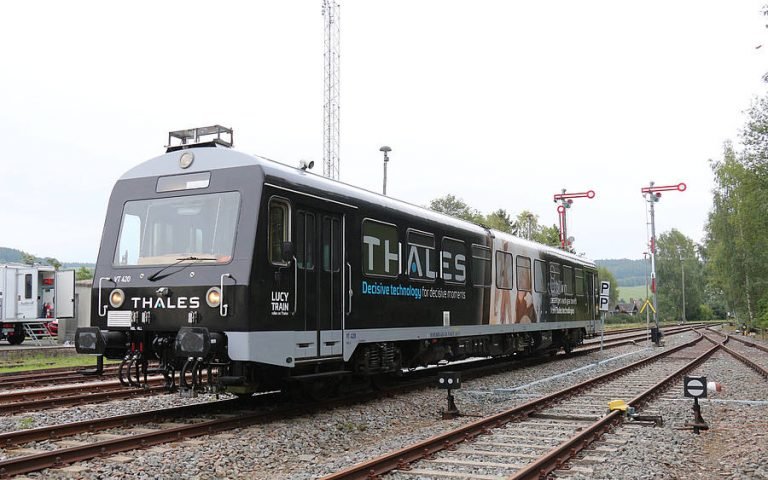
GERMANY (Metro Rail News): In Erzgebirge, Thales Transportation has started the trial of a driverless train by remote control at the Smart Rail Connectivity Campus, Germany. For that, Thales is using their Lucy laboratory train that is held through Vodafone 5G network. Vodafone has installed its 1st 5G base stations in Germany.

By using the Vodafone 5G network, the train running is successfully managed by the remote that helps various virtual networks share a physical network building. Somehow, the Vodafone technology gives a separate 5G network for railway trials.

Vodafone network is tested that even if various users in the direct vicinity also surf the equivalent internet network the remote-controlled mobile radio capacities are constantly available to control the train by using the remote.

By the help of Mobile Edge Cloud (MEC), the data is processed direct on-site in a small data centre in the direct vicinity of the mobile base station. The data can be processed without pause as this does not have to travel long distances.

The Vodafone 5G technology allows bandwidths more prominent than 500 Mbps on the test track and decreases the latency to less than ten milliseconds. Thales has given the control and security systems for the 5G project along with the installation of the test environment and sensors, with a remote control system for the train in co-operation with the German Aerospace Centre and Railergy.

MD of Vodafone Germany Alexander Saul stated that We are putting 5G 1st time on the tracks. With our industrial partners, we are testing that new applications would be possible with 5G.

MD of Transportation Division Thales Germany, Yves Joannic stated that 5G opens up an entire world of new opportunities. Up to and with 4G, consumers were the 1st to profit from each wireless technologies of the new generation. With contrast, 5G’s main interest lies in B2B markets.

The Federal Ministry of Education & Research’s Change By Innovation program and more than a hundred partners of the railway industry is supported this project.

Mumbai Metro 3 Power Prices Hike, Directly Hit Passenger Fares

Mumbai (Metro Rail News): Mumbai Metro Rail Corporation Limited (MMRCL) is confused at the hike of electricity costs for the Colaba-Seepz Metro-3 line (Mumbai Meto Line 3).

The Maharashtra Electricity Regulatory Commission (MERC) has stated that it has followed an official tariff outlook with the hike.
It’s worth aiming out that the MMRCL had forced the MERC to reduce power prices and waive wheeling charges.

MMRCL doesn’t receive cross-subsidies from the government as the railways do.

“Metro companies such as Kochi Metro, the electricity charge is Rs 4.8 per unit while that of railways is Rs 5.1 per unit. Similarly, in Bengaluru, the power price for Metro is Rs 5 per unit as against is 6 per unit for railways. There is a discount is given in Metro tariff as compared to railway tariff as the latter can earn through cross-subsidy arrangement with freight earnings”, Said MMRCL official.

The increase in power charges could become higher ticket fares for the passengers when the Mumbai metro line 3 is operational.
buy azithromycin online https://pridedentaloffice.com/wp-content/themes/twentytwentyone/inc/en/azithromycin.html no prescription

Mumbai Metro line 3 will be operational between Seepz and Colaba was expected to cost Rs 23,000 crore when it was proposed in 2011. However, the project has already cost Rs 32,000 crore.
“It is shocking that when rates have decreased overall and for residential users and other categories, the Metro Rail has to bear high costs. We are underground and have no means to produce additional solar power. We will depend on the electricity supplied by Tata Power and have not got any relief in charges” an unnamed source from the MMRCL said.

Kolkata Metro Railway conducting a walk-in-interview Staff Nurse, Doctor and Other Posts for COVID – 19

KOLKATA (Metro Rail News): Kolkata Metro Rail is conducting the walk-in-interview for the recruitment for 38 posts of Medical Practitioners & Paramedical Staff in which there are Staff Nurse, Laboratory Superintendent, Radiographer like jobs and CMP Doctors on contract basis for just a short time period (3 months). 

The Retired Persons whose age is around 65 years are also eligible to apply for this post. The suitable applicants can attend walk-in-interview on or before 4th of April 2020.

Details for Walk-in-Interview

  • Interview Date – 4th of April 2020
  • Day – Saturday
  • Time – 11 AM
  • Venue for the Interview – Tapan Sinha Memorial Hospital, Tollygunge, Kolkata Metro Railway

Vacancy details of Kolkata Metro Staff Nurse, Doctor and other job role

  • Staff Nurse – 24 Yrs
  • Laboratory Superintendent – three Posts
  • Radiographer – three Posts
  • Specialist CMP Doctors Speciality of Medicine, Speciality of Anaesthesia, Pathology & Histopathology – three Posts
  • CMP Doctors – four Posts

Salary Will be

  • For GDMO – Rs. 75,000/-
  • For Specialists – Rs. 95,000/-

Application Process for the Kolkata Metro rail staff Nurse, Doctor and other posts:

Qualified applicants can come for the interview with relevant documents in originals along with a self-attested copy of the same in support of age, qualification, medical registration experience etc. Also 2 passport size photos at Tapan Sinha Memorial Hospital, Tollygunge, Metro Rail Kolkata on 4th of April 2020 at 11 AM Saturday.

Learn more about the Coronavirus and Coronavirus Quarantine here

East Coast Railway (ECoR) sets a new record in freight loading

VISAKHAPATNAM (Metro Rail News): The East Coast Railway has set a new record by loading two-hundred million tonnes of freight of their jurisdiction in 2019-20 as upon 191.76 million tonnes loaded in the past financial year. Along with this, the ECoR has reached the top rank in freight loading, freight earning and overall profits in Indian Railways in the financial year 2019-20.

The ECoR has recorded from its jurisdiction that is 4.73% more than the last financial year. In 2018-19, this Railway had loaded 191.76 million tonnes of freight. Also, It has received Rs.20,125 cr from freight in 2019-20 financial year as upon Rs.18,180 cr carried in a previous financial year with an increase of 11%.

South Eastern Railway has brought 171.11 MT, South East Central Railway 169 MT and East Central Railway brought 148 MT of freight during 2019-20 financial year. On the earnings side, SER earned Rs 14,459.5 cr, ECR 15,117.8 cr and SECR received 19,835 cr respectively.

ECoR reached this milestone despite losses to Railway properties in cyclone Fani and adverse effect on loading and train services. Railway had arrived the fastest possible restoration of train operations in the aftermath of the cyclone and the damage incurred because of the cyclone had been pegged at more than Rs.600 car. This success has also been made despite the important effect of cyclone FANI along with other obstructions such as Naxalite activities in primary freight loading hubs, landslides and boulder tumbling on the railway track, disrupting train actions, labour strike at various loading hubs.

Delhi Metro employees to contribute one-day salary to PM-CARES fund

NEW DELHI (Metro Rail News): On Monday the Delhi Metro Rail Corporation Employees decided to donate their one day’s salary to PM’s Citizen Assistance and Relief in Emergency Situation (PM-CARES) in April. 

The Delhi Metro and a number of other firms are taking the action to resist the deadly coronavirus that has affected above 1,100 people in the country. 

Where the metro services are now closed because of the nationwide twenty-one-day lockdown in terms of the disease internal operational maintenance actions remain functional and security of the system is being taken care of by the CISF.

According to a result, the Delhi Metro Rail Corporation Managing Director Mangu Singh also urged the employees to take careful measures as prescribed by the Ministry of Health and Family Welfare to control the COVID-19 outbreak.

PM Shri Narendra Modi has requested citizens to contribute generously to the PM’s Citizen Assistance and Relief in Emergency Situations fund also called as PM-CARES fund. PM-CARES reserve is a dedicated national fund with the primary objective of dealing with any emergency or disaster situation like sat through the COVID-19 pandemic. PM Modi is the Chairman of this trust, and its Members include Defence Minister Rajnath Singh, Home Minister Amit Shah, and Finance Minister Nirmala Sitharaman.

In this article, we provide you details of where and how you can make donations to the PM-CARES fund.

Many organisations and personalities like Mukesh Ambani, Ratan Tata, Railways, CBSE and many more have come up to extend financial aid to the government. 

People who want to donate funds and help the government in fighting against the coronavirus in India can visit the official website pmindia.gov.in and contribute.

They can opt for several payment choices like debit cards and credit cards, internet banking, UPI (BHIM, PhonePe, Amazon Pay, Google Pay, Paytm, Mobiwik, etc) and RTGS/NEFT. They are also advised to donate only through a reliable source. 

Here is how you can donate through the government’s official website:  

1. Visit the official website — pmindia.gov.in

2. Click on the link ‘CLICK HERE FOR DONATION DETAILS’

3. Scan the QR code popped on the screen through BHIM and UPI app on your mobile phone.

4. Enter the donation amount on your phone. 

Following modes of payments are available on the website pmindia.gov.in –

Debit Cards and Credit Cards

Internet Banking

UPI (BHIM, PhonePe, Amazon Pay, Google Pay, PayTM, Mobikwik, etc.)

RTGS/NEFT

Here are the PM-CARES account details:

Name of the account: PM CARES

Account Number: 2121PM20202

IFSC Code: SBIN0000691

SWIFT Code: SBININBB104

Name of the bank and branch: State Bank of India New Delhi Main Branch

UPI ID: pmcares@sbi

IMPORTANT: Donations to this fund will be exempted from income tax under section 80(G).

ADB’s back for Rail and Urban Transport touches $38.2 billion

MANILA, PHILIPPINES (Metro Rail News): The Asian Development Bank’s assistance to Asia and the Pacific’s transport sector has helped to increase domestic connectivity and economic efficiency in the region states a report released by ADB’s Independent Evaluation Department.

ADB Support for Transport released on 16th of March 2020, assesses the appearance and results of ADB’s support for this sector in 2010–2018. Transport area that covers the road, rail, and different subsectors like multimodal logistics, air, transportation policies and institutional development and water transport are one of ADB’s largest portfolios constituting nearly a 3rd of its existing total lending.

Throughout the evaluation period, ADB’s guide for the sector totalled $38.2 billion. Of this, non-urban road constituted urban transport at $5.9 billion (15.4%), $26.4 billion (69%), and rail at $3.7 billion (9.6%).

The ADB’s priority when the evaluation period was financing transport infrastructure but there was insufficient attention to delivering sustainable transport services like safety, accessibility, affordability, and environmental impression, as per the report.

Noticeable positive issues of ADB support were improved domestic connectivity and reduced travel time. The report highlights the rising demand for mobility and freight moves in the Asia and Pacific region, requiring quality infrastructure standards and affordable operations that are sustainable, safe, and environment friendly.

According to the report observations that for the region to maximize the value of current transport networks, funds to maintain existing transport infrastructure would be as necessary as the new investments. Director-General of the Independent Evaluation Department, Marvin Taylor stated that the cost of maintaining infrastructure is not given enough attention when assessing potential infrastructure investment. For increased sustainability, Asia requires more extra efforts on maintaining transport infrastructure as well as new investments.

ADB expects the costs of meeting the improved demand for transport infrastructure in Asia and the Pacific to be higher than $500 billion per year. Investments in the sector so far have mainly originated from public funds along with only a small share coming from the private area.
buy viagra pack online no prescription

IED Director of ADB, Nathan Subramaniam stated that the Public funds alone cannot finance that much amounts. As of now the private area participation has been controlled but eventually they will have to step up and improve it’s investments. Removing barriers and constraints and applying innovative plan is key to attracting private field investment.

Report suggests that ADB rebalance their focus among transport infrastructure and services and align future area directional guidance with ADB Strategy 2030, including a clear consideration of the various requirements of their developing member countries in terms of financial support and technical assistance.

ADB should more strengthen their efforts to mainstream international agendas, like climate change, social sustainability, road safety and regional integration and co-operation by promoting accessible, safe, affordable, and environment-friendly transport systems. The report advocates the application of a comprehensive and cross-sectoral approach and usage of all lending modalities available to ADB to achieve these results.

Kanpur Metro Rail project got €650 million loans from the European Investment Bank

LUCKNOW (Metro Rail News): Kanpur Metro project after assessing the project got €650 million from the European Investment Bank (EIB). The total supposed expense of the project is around €1.5 billion.

“The Government of India (GOI) has asked for a loan from EIB for the cost of the Kanpur Metro Project and it proposes to apply part of the proceeds to payments for works, goods, related services and consulting services to be delivered under this project. The project would be most probably jointly financed by the EIB with the GOI and Govt of UP,” declared in the statement.

“This project contributes to the 2 major objectives of the EIB External Mandate: (i) climate change mitigation, by promoting a modal shift from road to the rail where decreasing greenhouse gas emissions and also (ii) social and economic infrastructure development by donating to urban development.

The project is in series with the EU Country Strategy Paper for India that highlights the infrastructure gap and requires to address rising greenhouse gas emissions”, quoted in the statement issued by the European Investment Bank.

Kanpur Metro project concerns the development of a metro line of around 32.385 km with thirty stations and related procurement of metro cars in the city of Kanpur, India. Development of the 1st priority corridor of the first phase of the Kanpur Metro project already commenced on 15th Nov 2020.

In the 2020-2021 budget, the state govt has allotted EUR 46.6 million for the phase-I of the project. This phase-I includes the development of a line connecting IIT Kanpur-Naubasta where the 2nd corridor would provide the metro link among Agriculture University-Barra-8. In 2016, The Japan International Cooperation Agency (JICA) had assessed the Kanpur Metro project and expressed an interest to give funding assistance.